All posts by rightfromthestart

What Exactly is a Field Day?

Field dayToday was Field Day at my daughter’s school. In the usual fashion, we had a letter that said we could come along or volunteer if we wanted but no explanation as to exactly what a Field Day is.

I asked a friend in the playground.

So what exactly is a Field Day? Is it the same as a Sports Day?

No not really, they set up lots of activities around the school grounds and the children can join in with what they want to. Some are sports but others are fun games and things.

Slightly better informed I decided to give it a go.

So What is a Field Day?

A number of physical activities are set up around the school grounds with an adult manning each one.

The children have a checklist that they hang around their neck. They move around the various activities and when they complete them (successfully of not) they have the activity crossed off their checklist. Once they have completed 10 they can get a popsicle (ice lolly). If you complete all the activities your name is added to ‘the ball of fame’.

What Sort of Activities?

Their favourite activity was playing catch with water bombs.

The girls had fun and it was nice to have something that the little ones could be involved in so they weren’t left standing around watching. Somehow though, I felt it lacked the atmosphere of a traditional sports day with races and cheering crowds. Where were the prizes for the child who completed the obstacle course in the shortest time, or a little prize if you knocked all the cans down? It somehow felt a little flat without any competitive edge.  It was a cross between a Summer Fete, a P.E lesson and a traditional sports day – I’m not really sure I understand the point of it but the girls enjoyed it. It’s probably just a little structured to be my idea of fun.

Ideas for Teaching Literacy through Play – Painting with Feathers

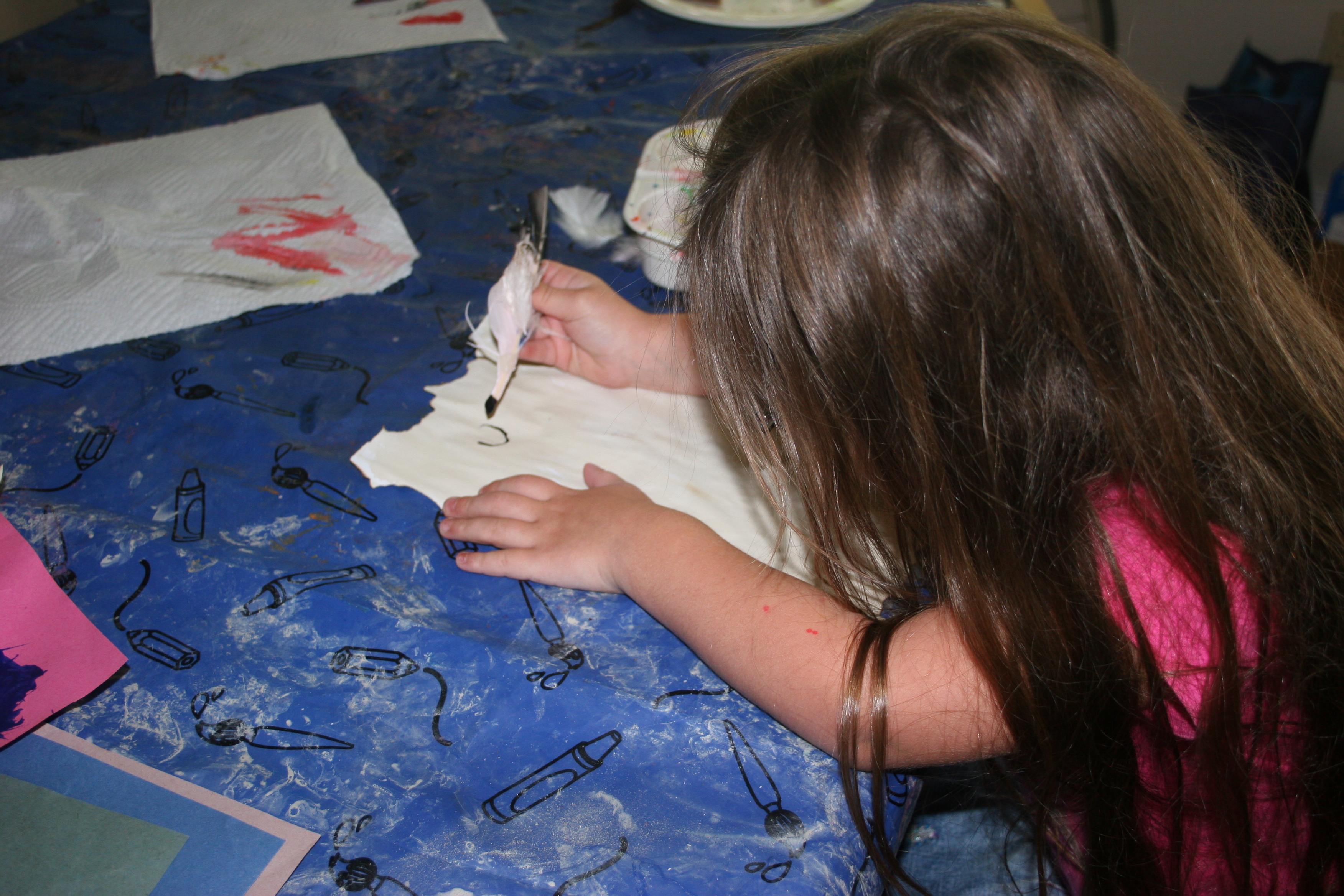
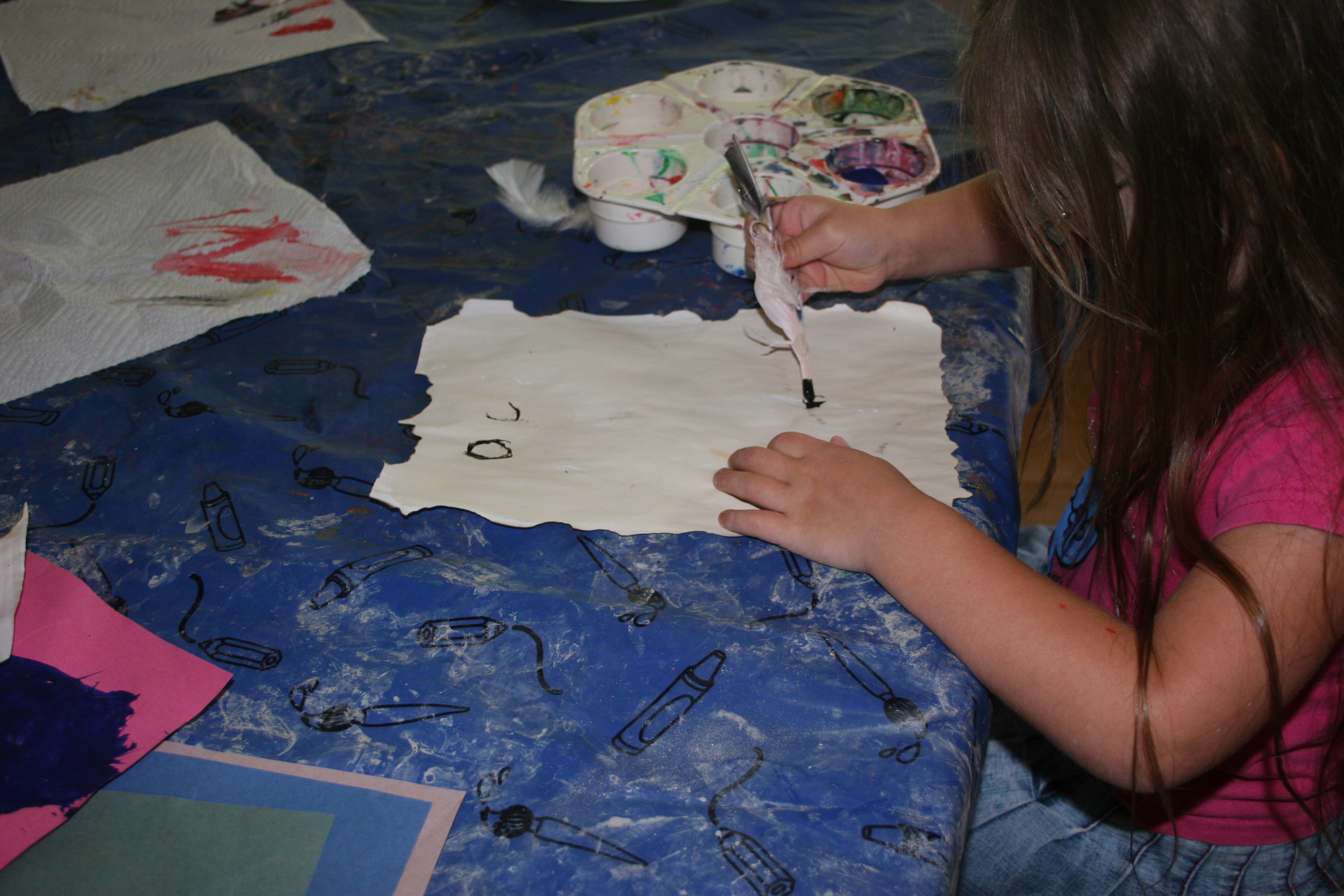
painting with feathersOn the way home from school we were talking about quills. My Harry Potter obsessed 9-year- old had made a quill by putting a biro refill into a feather.

My four-year old asked

Do we have any ink?

No but we can use paint.

We painted with feathers when I was little didn’t we?

We can do that tomorrow if you like. We could use the Peacock feathers we collected at Remlinger Farm.

This slideshow requires JavaScript.

I set the paints up with a few feathers.


My 2-year-old suddenly declared

I wrote the word ‘buh’

Buh for bat.

She has been playing a Sesame Street alphabet game on the iPad and is beginning to talk about letters and letter sounds.

Her 4-year old sister asked

How do you spell bat?

How do you think you spell it? What does it begin with?

Buh

That’s right and what other sounds are in bat?

Bat….    t

Yes, so what is the middle letter?

Bat…b…a…t…..    a.     B..a..t spells bat.

After a little bit of impromptu literacy I had a brain wave. The girls are really interested in pirates at the moment and I thought we might be able to do some writing with feathers, make a pirate map or maybe we could make a wizard’s spell.

I stained paper with coffeemaking paper look old

When it was dry I singed the edges to make it look like an old scroll.


I asked the girls what they would like to do. They decided on a Wizard’s spell.

It will be funny because we don’t even know how to read and write……………. Maybe Wizards write differently to people.

quills

writing with a quill

I think this would be a great way to encourage boys in their mark making.

  • Set up a desk in a role play pirate ship with ink and quills
  • Make a spell book for children to add their own spells
  • Add a few feathers and a small pot of paint to your mark making area
  • Make treasure maps and encourage the children to mark the treasure with an X.

Literacy for under 5’s shouldn’t be about sitting at a table learning letters, tracing over letters or using flashcards. It can be brought into any aspect of play and when children are ready and interested in letters and sounds they will talk about it, ask questions and experiment. Make it fun, make it relevant and they will learn.

Outdoor Play: When They Would Rather Play with Sticks and Stones (The Theory of Loose Parts)

child playing in the dirt
I hid my stick, can you find it?

I laughed to myself as I watched my 2-year-old playing in the borders, hiding a stick in the bushes and drawing in the dirt.  A few feet away was a very expensive sensory playground with musical instruments, water features and a little bear cave. It was very impressive, but the lure of a stick was just too great. Given the choice I’m sure regardless of the expensive equipment we provide, most children are happy with a stick, a pile of stones, or a tub of water.

My eldest was obsessed with tiny stones when she was small. Everywhere we went she would stop to pick them up or take them home in her pockets. If we were in the garden she would make collections of little stones and spend hours moving them from one place to another. She was very young at the time but I never stopped her for fear that she may swallow them. I simply made sure I was sat nearby so that I could see what she was doing.

playing with loose parts
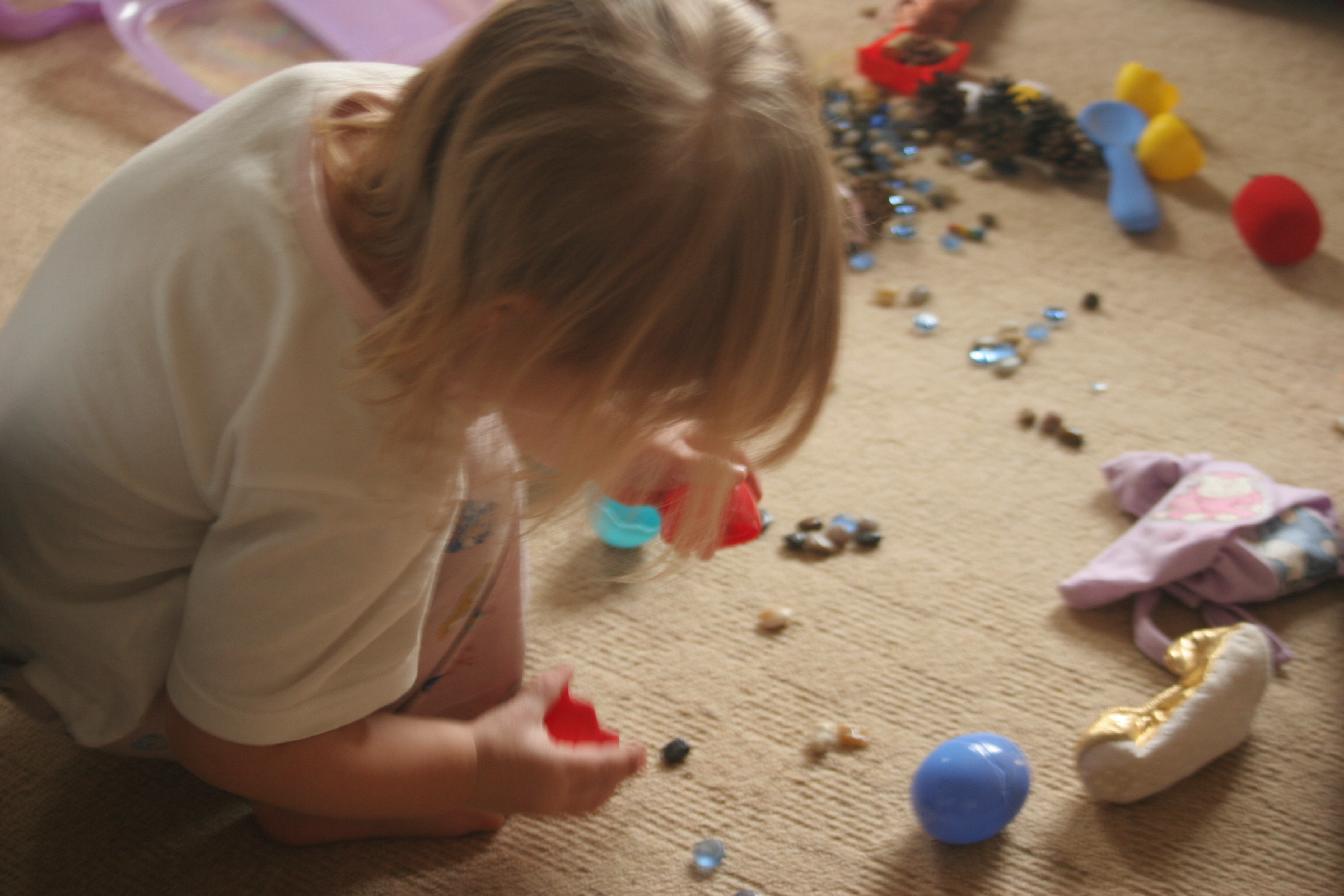
filling eggs with stones and glass beads.

My 2-year -old loves sticks. We have 2 rules:

  • No sticks in the house
  • Do not point sticks at people’s eyes.

Sometimes they are magic wands, Sometimes fishing rods or sometimes simply something to carry around. Every stick is greeted with equal excitement.

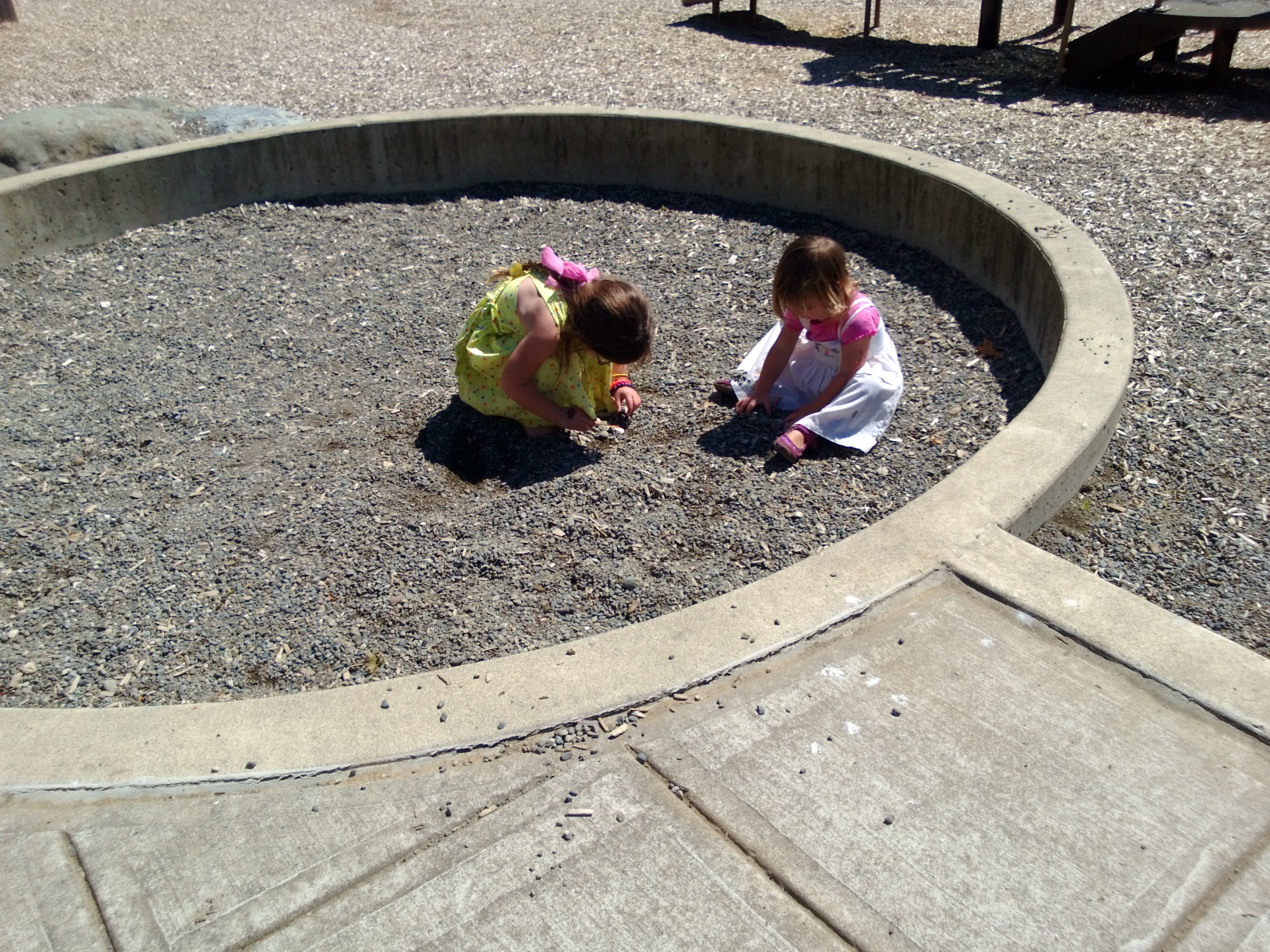
playing in the dirtAll 3 children play for hours in the sand pit. When I first moved to the US I didn’t think the girls would like the grey, gravelly play sand they have here. I was wrong, they love it as much, if not more than the fine golden sand we had in the UK. Even at the park they chose to play in the dirty gravel rather than on the equipment.

The Theory of Loose Parts

In 1972 the architect Simon Nicholson devised the Theory of Loose Parts. It grew from the notion that all children love to interact with variables. Variables can be anything from materials and shapes to media such as gases and fluids and are used to discover, invent and have fun. The theory of loose parts is as follows

‘In any environment, both the degree of inventiveness and creativity, and the possibility of discovery are directly proportional to the number and kind of variables in it.      (Nicholson 1972)

Put simply, the playground with static play equipment will not offer a child the opportunity to discover and create their own scenarios as freely as one that is less predictable or restrictive and offers moveable objects that can interact with the child’s play. A swing is a swing but the gravel can be a home for a bug, fairy dust, a cake, something to draw in, a track for a car and other endless possibilities.

We have the perfect garden for playing with loose parts, with an abundance of trees, pine cones, stones, dirt etc. I decided to organise these a little to see if it would change the way the children played with them.

Storage for Loose Parts

garden equipmentWe had an old clothes horse in the garden that was waiting for a purpose. I bought a few hanging baskets and hung them on the clothes horse along with a few other baskets I  had found. I also clipped a variety of containers to the clothes horse using  an underwear dryer (we also use this for drying paintings).

Using the clothes horse means that it is fully portable making  it easy to move out of the rain or to the sandpit, paddling pool or lawn .

The Slide show illustrates some of the things we collected .

This slideshow requires JavaScript.

Other ideas for loose parts that can be stored outdoors

  • sticks, twigs
  • glass beads, marbles, buttons, bells, beads
  • feathers
  • lolly sticks
  • pegs
  • acorns, conkers and seeds,
  • string
  • large things like pallets, tyres, flowerpots, fabric, boxes, pots and pans, tubes, guttering, bamboo canes, bricks, planks, logs, driftwood.

I love to see the children using their environment to stimulate imaginative and creative play. Here are some of my favourites.

Learning for Life

Country Kids from Coombe Mill Family Farm Holidays Cornwall

Outdoor Play: Bubble and Straw Painting.

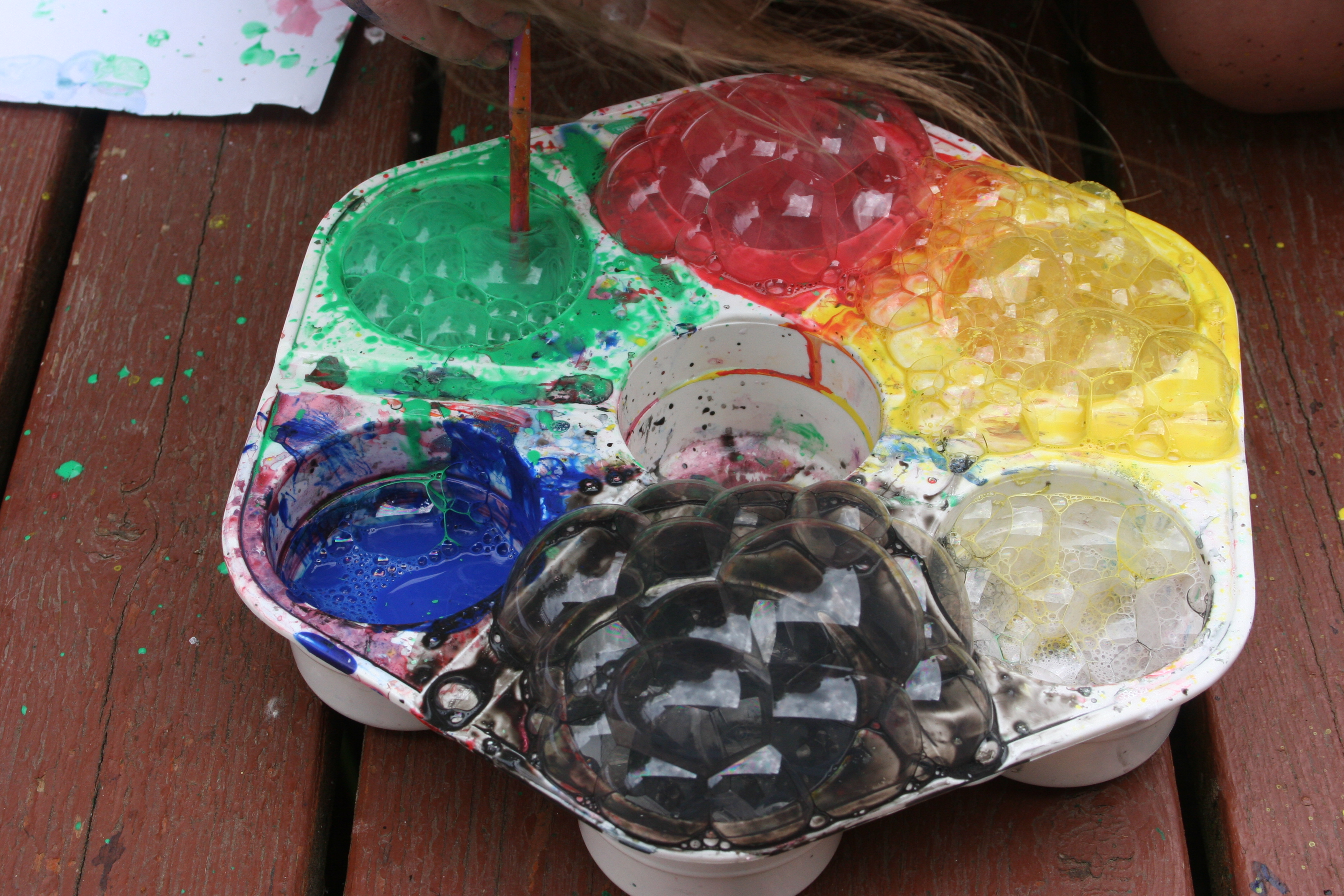
bubble paintingMy kids love messy activities but sometimes it’s just a little too much to handle indoors.

We decided to do some outdoor painting.

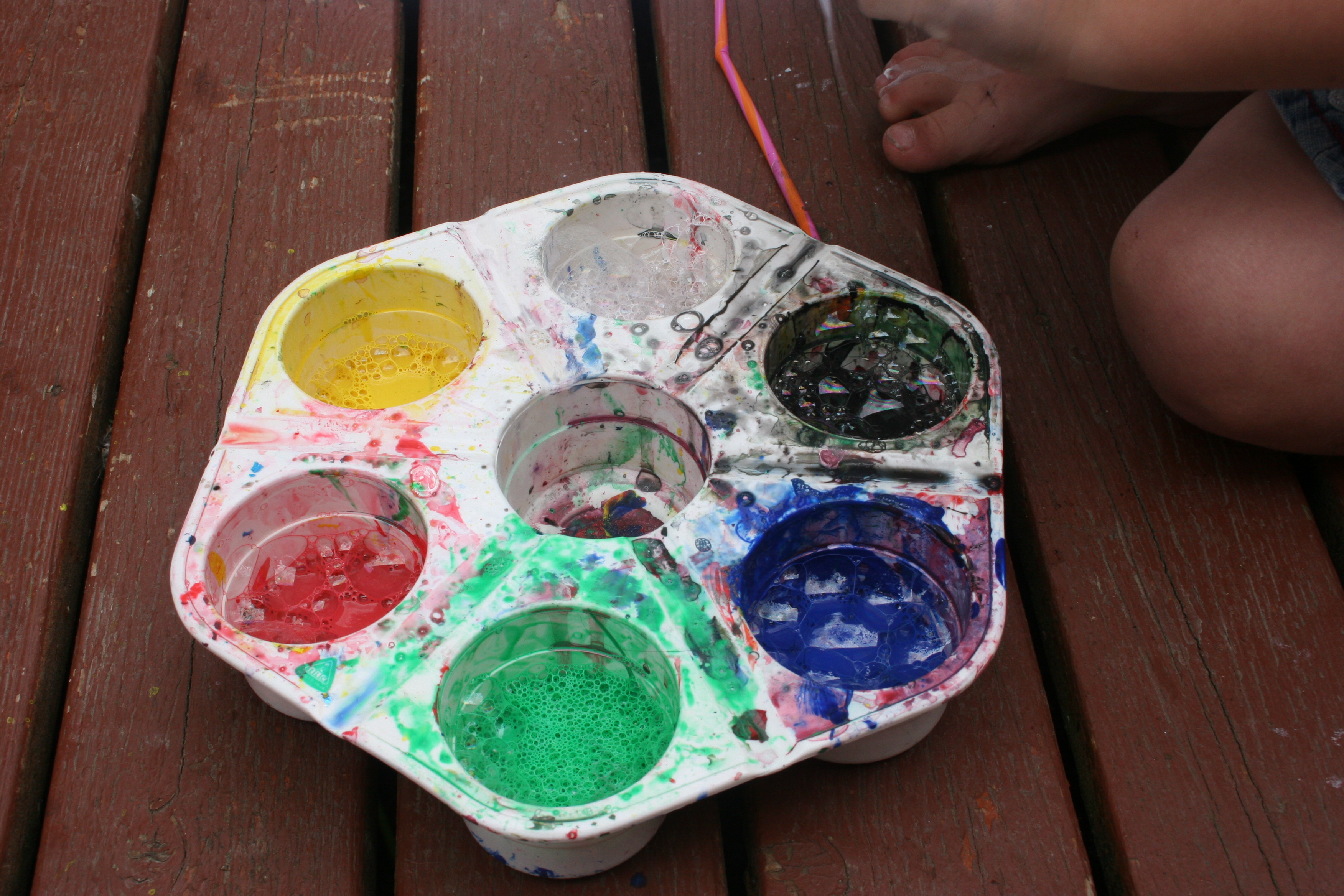
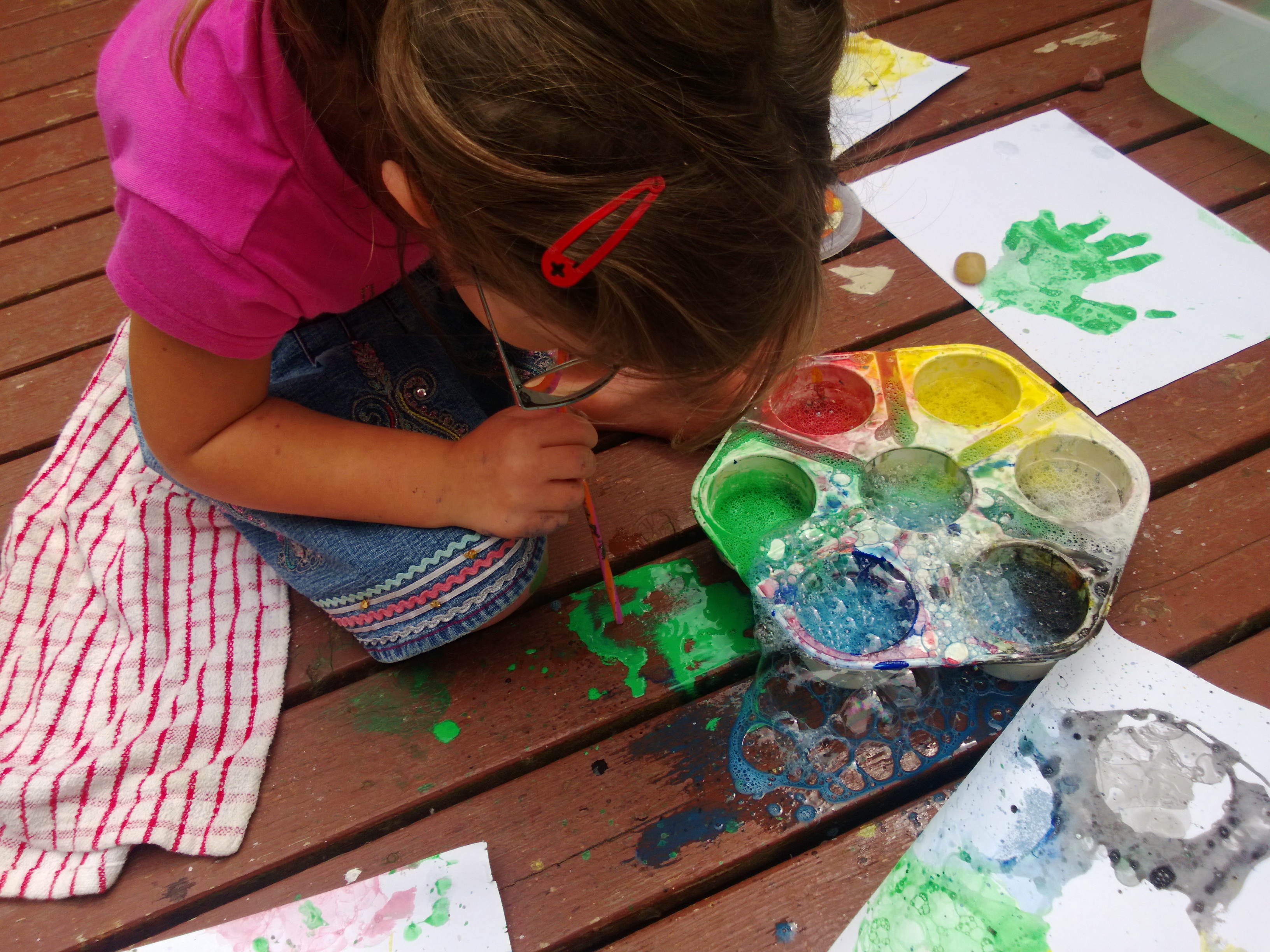
A small amount of paint, a squirt of washing up liquid and a few drops of water were mixed in our pallet.

I showed my 4-year-old  how to blow bubbles with a straw. We talked about the difference between blowing and sucking.

What will happen if you suck the straw?

I’ll drink the paint. Yuck!

It’s like the wind, the wind blows but it doesn’t suck.

blowing paint
We tried to make the bubbles come over the top. We found that we needed to blow gently. They still didn’t quite bubble enough so we carefully added more water and tried again.

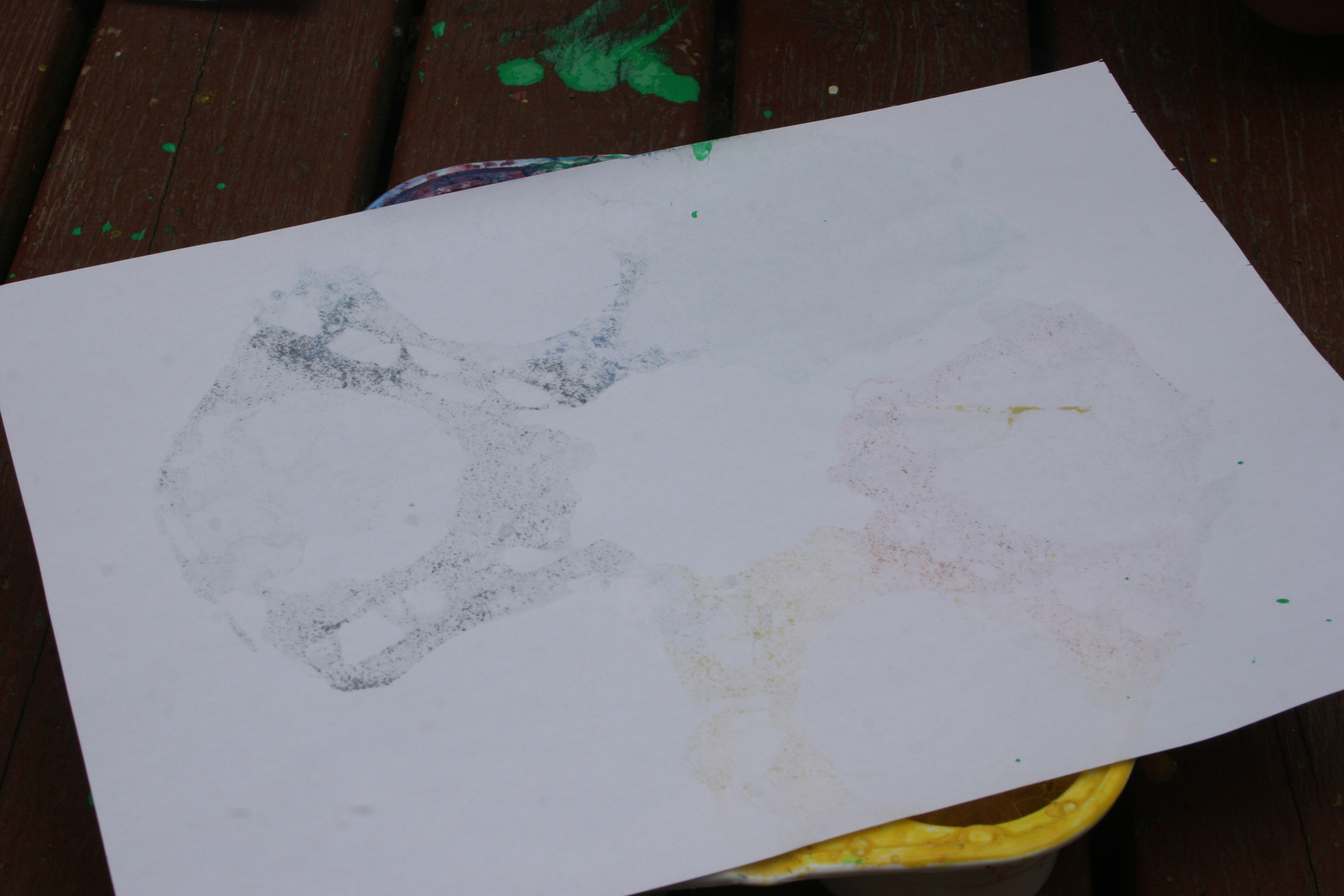
We placed the paper on top to make bubble patterns.

placing the paper on a bubble printbubble print

Next she made a bubbly hand print.

Time to get clean.
Time to get clean.

When the paint overflowed onto the deck she discovered that you could do something else with the straw.


The paint moves and makes patterns when you blow it with a straw.


Blowing the paint on the paper with the straw made a whole new type of painting.

blowing paint with a straw

Save the Children Food for Thought – The Link Between Literacy and Nutrition

save the children, food for thoughtI write a lot about the pre-requisite skills to learning to read.  Talking with children, playing with language, reading to your child and developing listening skills are all important but for some children even with these things they will fail to thrive educationally.

Why? Because of poor nutrition.

Malnutrition is an underlying cause of 2.3 million children’s deaths a year, and for millions more children contributes to failures in cognitive and educational development. As a result, the life chances of millions of children around the world are devastated. The long-term consequences of child malnutrition for health and resilience to disease are well established. But new evidence commissioned by Save the Children, for the first time identifies the impact of malnutrition on educational outcomes across a range of countries.

The Story of Ngouth a 12-Year Old from South Sudan

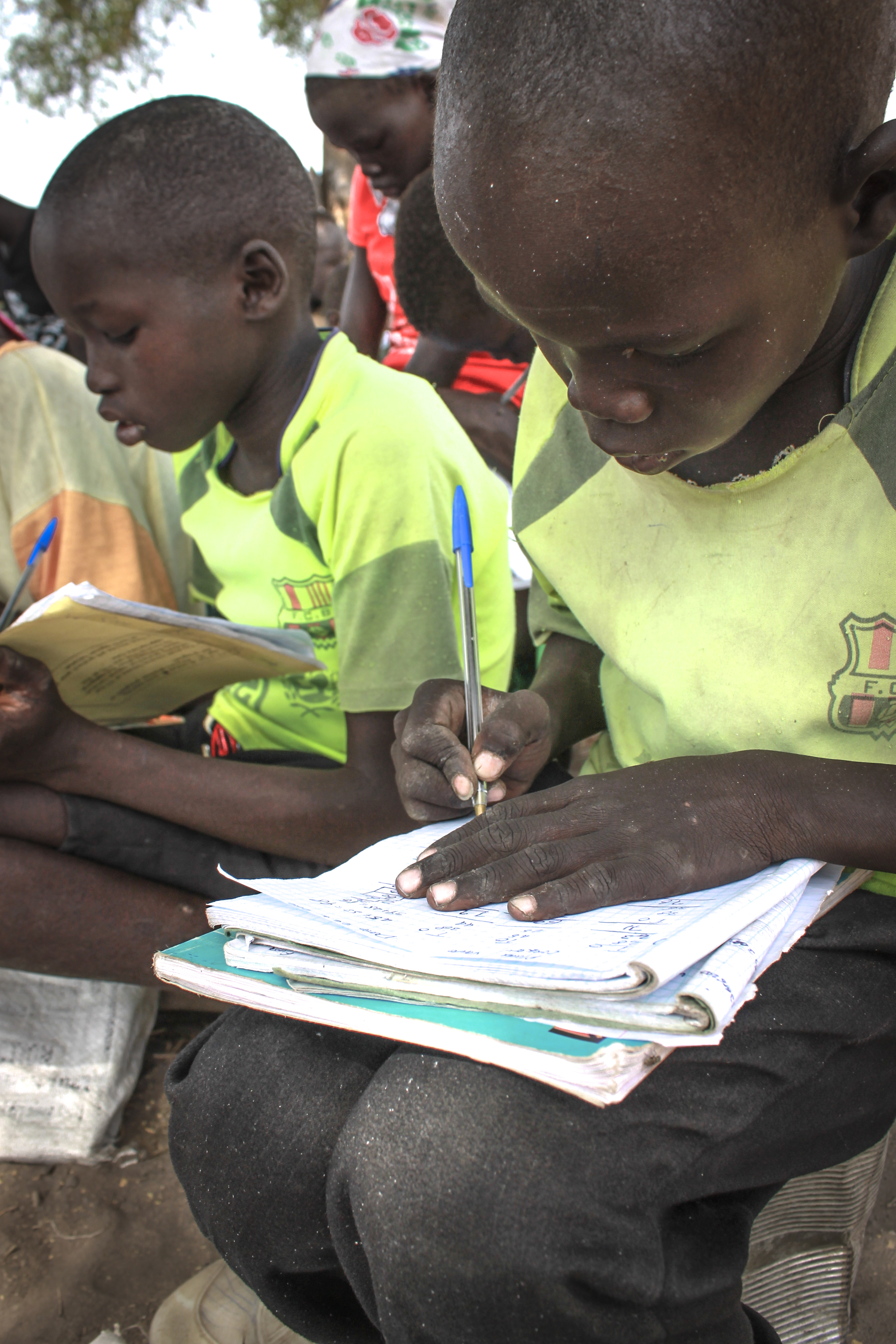
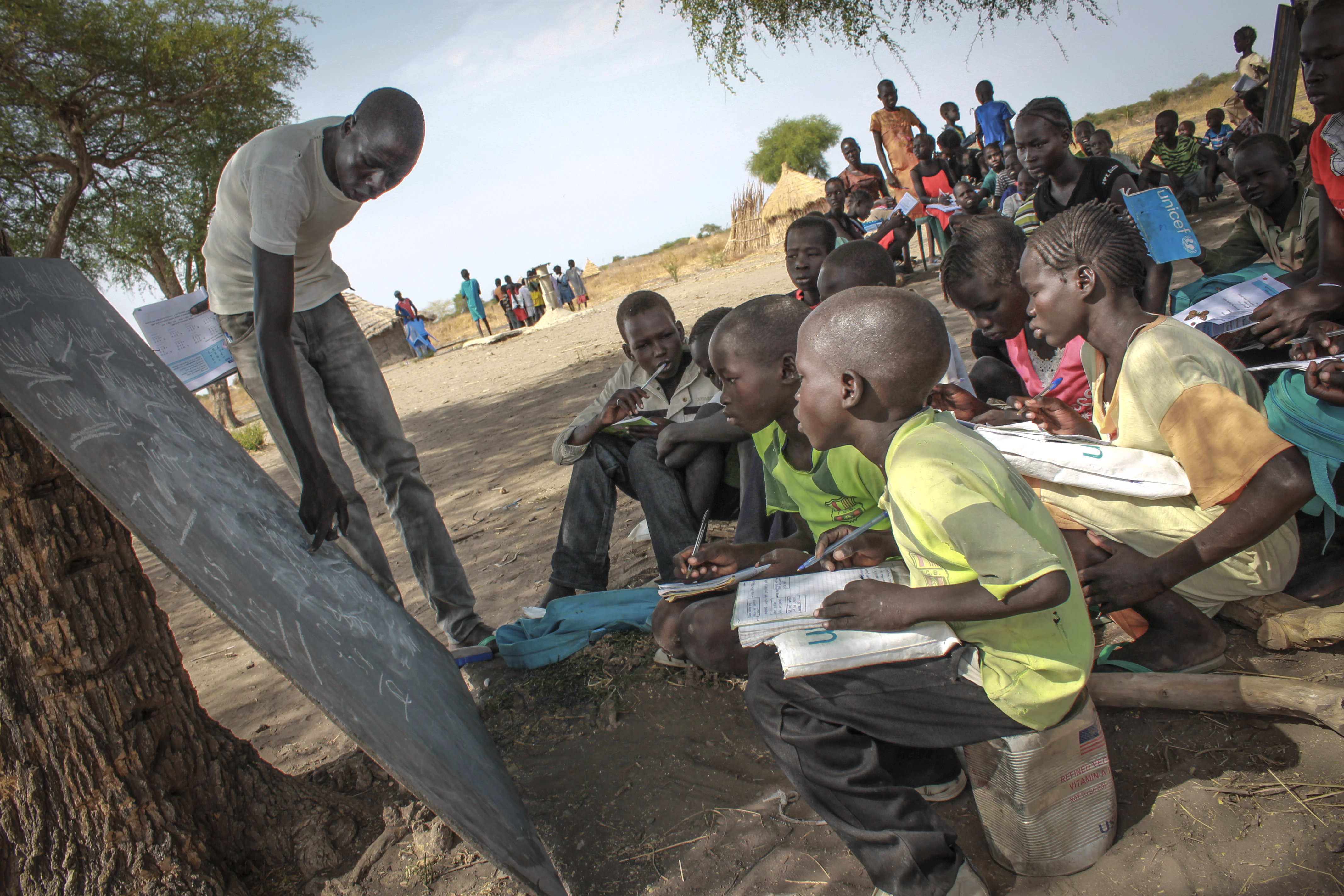
RS55849_Nguoth studying_Wechpuot Primary School1Although he is 12 years old, Nguoth looks about eight. Like many students in his class, for two years he had to drop out of school because there wasn’t enough food at home. He still misses school at least two days a week to go into the bush to find wild fruits. On the other days, he comes to school hungry. In 2010, the UN declared Akobo, the region where Nguoth lives, the ‘the hungriest place on earth’. Drought, floods and inter-communal conflict have left a third of children malnourished.

I was five years old when I started school. Sometimes I had to stop coming because I was hungry.  For two years I dropped out because I had to go to the river to fish and to the bush to collect wild fruits for my family. I think the situation is getting worse and more children are stopping coming to school to help their family.

Hunger is very bad in this area. We have no gardens to grow food because the floods destroyed them. The people are angry with each other and there’s no peace [referring to inter-communal conflict and cattle raids affecting the area]. People are very sick, malaria is very high and lots of children are absent from school. It’s hard for children to be happy and take part in class because they’re hungry.

My favourite subject is science and when I finish school I’d like to be a doctor.

RS55844_Nguoth in class_Wechpuot Primary School_Akobo5Nguoth is currently studying at one of 20 schools supported by Save the Children through a DFID funded project in Akobo East. Save the Children is providing these schools with text books, desks and other school supplies, training teachers and has set up and is supporting Parent Teacher Associations and Student Advocacy Teams that encourage more children to enrol in school.

To enable  Ngouth and thousands of children like him to achieve their dreams they  need adequate food.

Food for Thought forms part of the IF campaign where 170 charities have joined together to call for the G8 to take action on World Hunger. A number of high-profile children’s authors have also agreed to support the Food for Thought report with an open letter to G8 leaders – these include Julia Donaldson, Eric Carle and Philip Pullman.

Julia Donaldson, the Children’s Laureate and author of the bestselling book The Gruffalo, said:

“The devastating impact of malnutrition shouldn’t be underestimated. It stunts a child’s development, sapping the strength of their minds as well of their body, depriving them of the chance to be able to read or write a simple sentence”

How can you help?

Read the full report

Sign the petition

Follow the IF Campaign

Follow the campaign via Britmums

Spitter Spatter Stain Free Anti-Bacterial Children’s Clothing Giveaway

spitter spatter logoI have an exciting giveaway for my readers today from a new children’s clothing company Spitter Spatter.

What is Spitter Spatter?

Spitter-Spatter is a new children’s clothing range for 0-5 year olds with anti-bacterial properties woven into the fabric and also claims to be stain and odour resistant.

Spitter Spatter builds revolutionary antibacterial performance into the fibres of every fabric, without altering the natural breathability or feel of the fabric. Using a proprietary process to modify fabric at the molecular level by creating an invisible barrier on the exterior of the fabric to defend against over 100 different types of germs.

As you can see from many of my posts I love to get my kids outdoors in the dirt. Getting dirty and picking up germs are a natural and necessary part of childhood fostering independence and  building up their immune system.messy play outdoors

So what on earth am I doing reviewing anti-bacterial clothing?

  • I love my kids to get messy, but that doesn’t mean I want them to ruin their clothes.  Through the weaning stage I lost count of the number of t-shirts that had to be thrown away because the stains wouldn’t come out.

Stain Free, Odour free clothing; that interests me

  • I have twin nephews who were born prematurely. Their immune systems are weak and since attending nursery they seem to pick up every bug going and of course pass it to each other. I can see that for children like this Spitter Spatter clothing could be a worthy investment.
  • Many moons ago I worked as a nursery teacher. As any teacher will tell you in the first few months of working in a new school you pick up all of the children’s germs. Working with young children involves lots of sitting on the floor, playing with messy materials, wiping noses and cleaning up spills.  I would always go home feeling grubby, needing a shower and a change of clothes.  If Spitter Spatter had made our uniforms it may have made a difference.

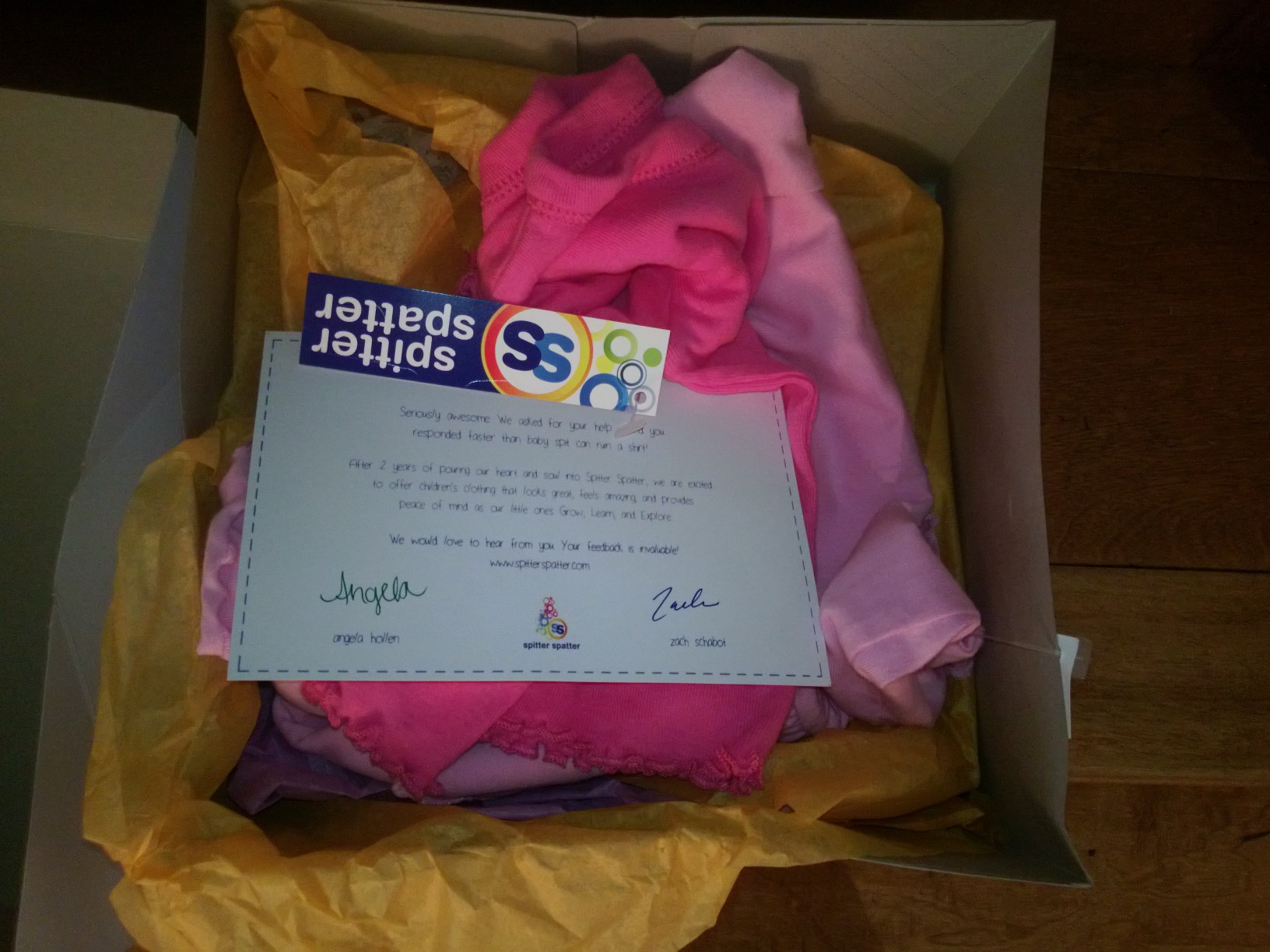
spitter spatter parcelOur Spitter Spatter parcel arrived beautifully presented in a cake box, wrapped in tissue and a note attached.

It contained a dress for my 4-year-old and a t-shirt for my 2-year-old. The clothes are pretty yet practical.  The dress can be worn on its own or with leggings and the t-shirt with pretty ruffled sleeves is great for wearing under sundresses or with trousers.

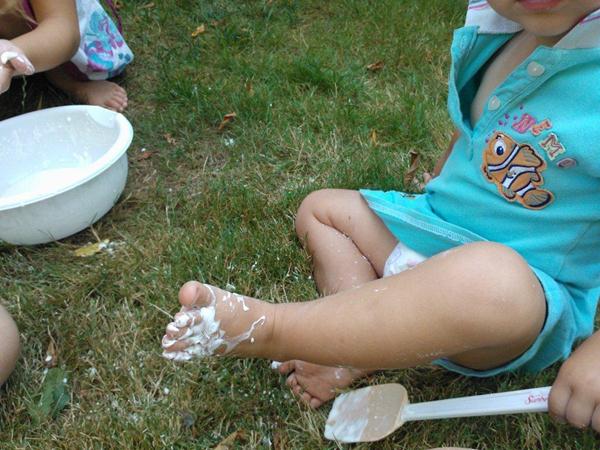
On the first day the dress was worn my neighbour invited the girls to play. She gave them a home-made slime mixture to play with coloured with blue colouring. A  few spots got on the dress but after washing I was impressed to see that they were gone. I gave the girls permission to eat chocolate ice-cream and get it on their clothes to test it further. Again the dress came out clean.

I only have one small suggestion for improvement. My 4 -year-old chooses her own clothes. She doesn’t often choose the Spitter Spatter dress because she only chooses her ‘prettiest dresses’. I think if it had a patterned fabric she would put it in this category.

Giveaway
The competition is open to readers in the UK and the US.
One reader will be chosen at random to receive a piece of Spitter Spatter clothing in the form of a voucher code that can be redeemed on the Spitter Spatter website.

Competition closes on 25th May 2013 at 12pm PST

To enter follow this link:

a Rafflecopter giveaway

Outdoor Play: Catching Butterflies

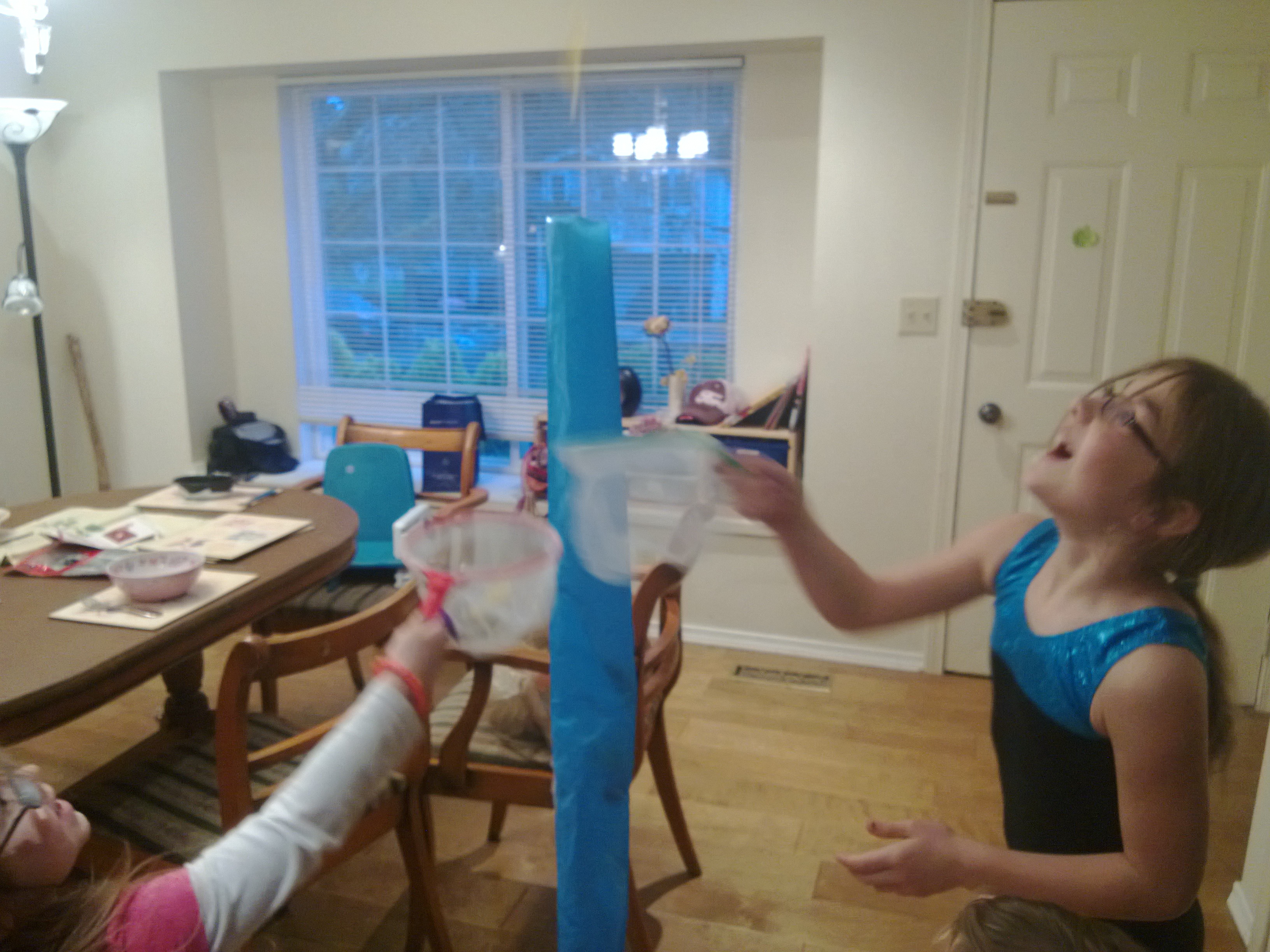
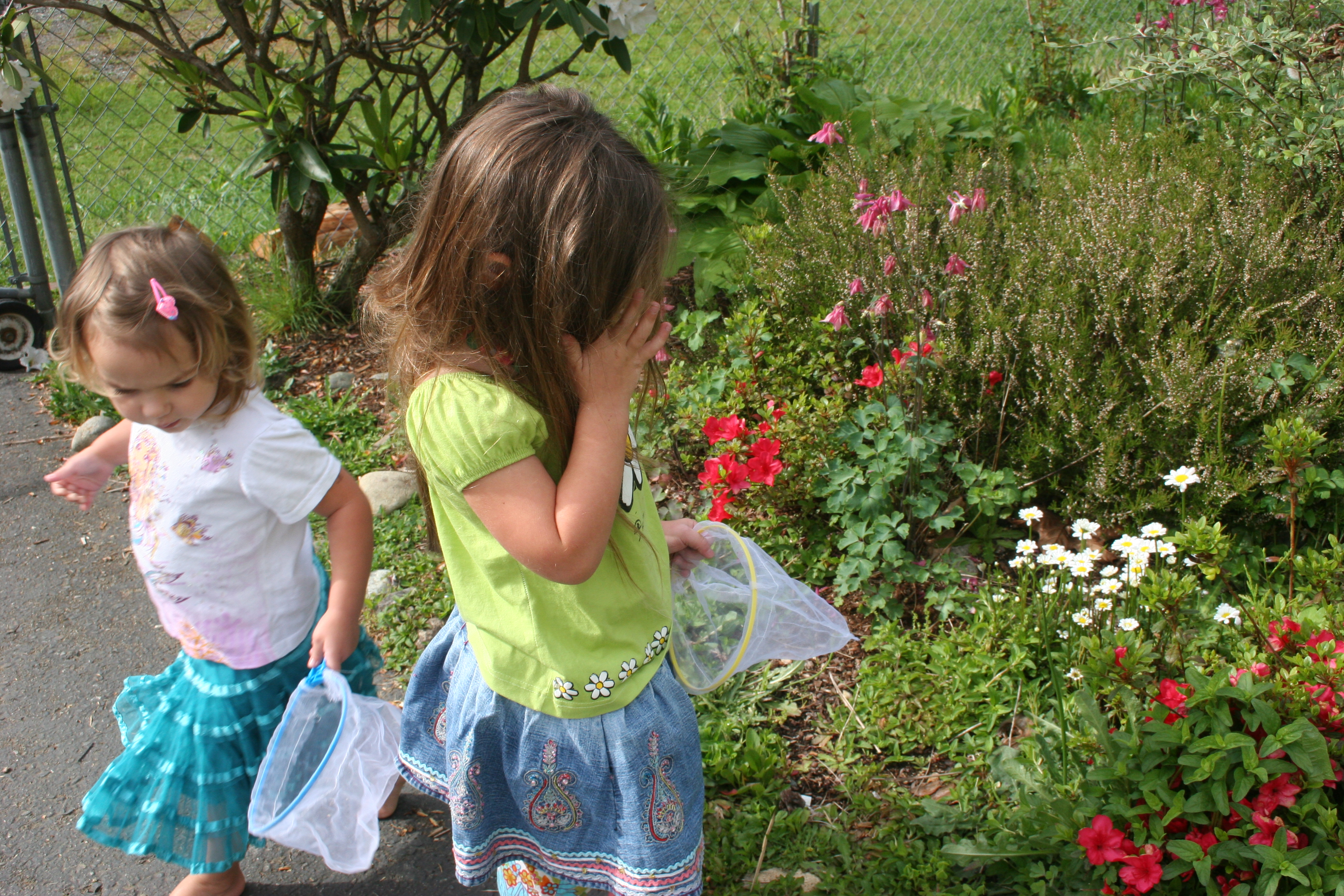
ElefunThis morning we were playing a game of Elefun, the game where fabric butterflies are blown from an elephant’s trunk for the children to catch in nets.

 I know, let’s go and catch butterflies outside.

My 4-year -old quickly ran outside to look around the garden for butterflies. I explained that we needed to be quiet and still if we were to find any butterflies.  Butterflies are attracted to red, yellow, pink and purple so we looked for flowers in these colours and waited.

I might find a butterfly, they like red and yellow so they might land in my net.

 
If we are very quiet we might catch a butterfly.

The hunt for butterflies was not very successful so they started to look for other creatures instead.

They found a woodlouse (or roly-poly as the kids here call them) and lots of bees but no butterflies.

I know let’s make some butterflies out of paper.

I cut out some paper butterflies. The girls wanted to decorate them with stickers but I could only find white ones.

I know let’s draw patterns on the white ones.  Now you hide them and we can find them and catch them in our nets.


Outdoor Play: Making Potions


This slideshow requires JavaScript.

My eldest daughter has been an avid potion maker all her life.  We are always finding concoctions in her bathroom and when she was young she would leave them on the windowsill of her bedroom or on the side of the bath and if you knocked them off whilst having a relaxing bath the cold would give you the shock of your life.  She is now a huge Harry Potter fan, having read all of the series 4 times and her potions are taking on new meaning. Her younger sister is following in her footsteps. Now that the weather is nicer I set up a little potion station for them in the garden – they love it.

It is a great  sensory play activity and science experiment, they got their hands in, testing and smelling the potions and used all kinds of things from the garden. Best of all I love how the imaginary play scenarios evolved.  I suggested to my 9-year-old that she might like to make a book of potion recipes.

‘Yes’ she exclaimed excitedly, ‘ But we’ll need about 70 pages, the McClary recipe book’


This slideshow requires JavaScript.

Country Kids from Coombe Mill Family Farm Holidays Cornwall

Autism Awareness Month: Parenting a Child on the Autistic Spectrum # Story 3: The Wilkins Family–A Step Parent’s Story.

188974_210144349012735_4390559_nThe Wilkins family; Kirsty, Mark and Connor(4). Kirsty separated from Connor’s father when he was small. Kirsty and Mark lived in Local Authority housing and were expecting a child together. Connor received a diagnosis of autism at the age of 3 years 2 months. A home tutor visited the home for 2 sessions per week focusing largely on behaviour and communication.  Connor attended full time nursery in a specialist nursery school with a support worker.

Causes of Stress

Kirsty had no experience of parenting a child without ASD thus it was difficult to say whether or not it was more or less stressful.  Parenting any child was difficult but when she compared him to other children his behaviour was better.

“I wouldn’t change him for the world, it (autism) is part of him, part of his characteristics.”

The only aspect that she found more difficult than parenting a ‘normal’ child is that he required more supervision because he had no sense of danger.

1. Communication/Understanding

The majority of Connor’s difficult behaviours stemmed from communication problems. Connor understood simple sentences and commands and spoke in short phrases, though some of it was difficult to understand. Kirsty found it frustrating that he didn’t understand what she was saying and that she couldn’t always understand him. His language improved since attending nursery full time and having input from speech therapists, a play worker and tutor but Kirsty still found it difficult.

Connor’s lack of understanding meant he would do things that were not allowed but had no concept of why it was wrong.  He would take food from the fridge just before mealtimes or play with the toilet and bathroom products.

They couldn’t ask him what he was doing because he was unable to answer; they had to go into the room to check what he was doing.

“With a ‘normal’ child you can say don’t touch that and they will say ‘why?’. With Connor you say it is hot and he has to touch it to find out what hot means”

As Connor’s understanding improved and he was able to ask for things he became a much happier child and therefore family stress reduced.

2. Disobedience

Mark didn’t find Connor’s behaviour stressful, but the effect that this had on Kirsty was.   Kirsty felt that there were a number of behaviours that Connor only displayed for her,

“He is like any kid, he will play up for his mum”.

This included running away and when Kirsty said ‘no’ to him he treated it as a game,

“Sometimes I feel like I am always yelling at him, I know it’s not his fault but then I feel stressed because I feel guilty for yelling at him….it’s a no win situation”.

Kirsty also acknowledged that if Connor started the day badly this affected her stress levels all day. If she began the day badly, small things caused her stress that wouldn’t usually.

Mark and Kirsty felt that Kirsty’s family had a tendency to give in to Connor and allowed him to do things that they wouldn’t normally allow. They feel that because of this it was difficult to set boundaries for his behaviour.

3. Going to Public Places

Going anywhere outside of the house was particularly stressful for Kirsty. She didn’t drive and anytime she walked Connor anywhere he would run away and has no road sense.  Kirsty avoided going places on her own. Kirsty’s mum would take Connor out because she had a car and often had Kirsty’s sister to help.  His behaviour improved, he stopped wearing reins and would walk around shops without running. The difficulty for Kirsty was getting him to the shops in the first instance.

4. Concerns about the New Baby

Kirsty worried that when the new baby was born Connor would regress. He liked to imitate babies and animals therefore the family worried that he would want to wear nappies or have a dummy like the baby. The family prepared him for the baby by talking to him, involving Connor in shopping for the baby and decorating the baby’s room. Nursery,his tutor and play worker also encouraged  imaginative play using baby dolls.

Coping Strategies and Support
1. Support from Professionals

Kirsty felt that all professionals were extremely supportive. Since Connor attended full time nursery his understanding and behaviour improved significantly. He developed many good habits such as eating different foods and sitting still for a period of time. Having a tutor and play worker come to the home  helped Connor to cope with new people. In the past he was frightened of people outside of the family but he became more sociable. Kirsty also found the tutor valuable as a source of information. Mark felt that if Connor continued to progress at the same rate as he had in the last 6 months then they would not have any significant worries about his future.

2. Support from Parents

Kirsty felt able to turn to her mum for advice and as a primary school teacher she often had useful strategies. Kirsty’s mother looked after Connor overnight every Wednesday; this gave Kirsty a regular break, which she found particularly helpful.

A Wish List for the Future

Kirsty and Mark couldn’t recommend any further/ different support as they valued all the help they got from professionals. The only thing that might help slightly would be for Kirsty to be on her own less so that when she was feeling stressed she could take a few minutes to calm down without being in the heat of the situation.

Story 2 is a Single Parent’s Perspective and Story 1 Taking Time off Work

Disclaimer: all names are pseudonyms.

Autism Awareness Month: Parenting a Child on the Autistic Spectrum # Story 2 : The Simpson Family–A Single Parent’s Perspective

autism awareness monthThe Simpson family are Leanne, Chloe (age 6) and Robert (age 3). Leanne separated from the children’s father before Robert was born. Robert received a diagnosis of autism when he was 2 years 4 months. The main concerns at this time were communication and social interaction. Leanne also felt that she needed a lot of information because she knew very little about autism. Robert attended pre-school for 5 mornings per week supported by a tutor, a tutor also visited at home.
Causes of Stress

Leanne felt that parenting a child with ASD wasn’t significantly more stressful than parenting any other child but different things caused her stress. The knowledge that he would always be autistic in particular changed the way she thought about things.  Once she knew that he was autistic she felt unable to allow him to be content to do his own thing, there was pressure  to ‘get him to do things’ so that he would reach his full potential’.

  1. Smearing

Robert as a very tactile child  often sought sensory stimulation, including tickling, walking on bricks and exploring paint, water and sand with his hands. Often, when he had dirtied his nappy he would play with the contents and smear it over the room. This usually only occurred when he was on his own. At night Robert wore an all in one pyjama suit with the fastenings sewn together so that he couldn’t  get his hands in his nappy. This worked well,  and Robert stopped smearing every night. Leanne felt that bathing him after an incident was offering him a reward because he enjoyed baths. Leanne avoided  this and instead made minimal fuss and put Robert in the shower (which he disliked).

The most stressful aspect of this behaviour was that it had to be dealt with alone. Leanne felt that school would help with other things, like communication but this was primarily a home problem.

2. Communication

On the whole the most stressful aspect of parenting a child with ASD was communication.

“Smearing is the most stressful thing day by day but communication is the most stressful thing on the whole”

Robert’s inability to communicate was less stressful than his inability to understand. It was often possible to guess what Robert wanted or offer alternatives.

Robert’s communication improved significantly since his home tutor first became involved. Initially Robert’s only form of communication was to push Leanne towards desired objects.   A picture exchange system (PECS) was introduced to enable Robert to exchange a picture for a desired object. Initially this was very difficult for Robert to grasp and although he was able to pass one card to an adult he could not make a choice between 2 or more. Eventually Leanne discovered that he was interested in fridge magnets, the pictures were mounted on magnetic strips and placed on the fridge. Desired objects were placed out of Robert’s reach and each time he would reach for something Leanne would ask ‘What does Robert want?’ whilst signalling to the pictures. Robert quickly learned to pass the correct picture spontaneously. Robert developed a wide range of vocal sounds and used some words in context including ‘go’ and ‘again’.

3. Going to Public Places

There were 2 difficulties when taking Robert to public places: –

  1. Throwing himself on the floor and refusing to walk .
  2. Grabbing things from shop shelves.

Robert had a large pushchair that was generally used when Robert went out. This enabled Leanne to visit a variety of places that would not otherwise be possible. However, Leanne was anxious that as he got older it would be less appropriate to take him out in a pushchair. When Robert was expected to walk even short distances (e.g. from the car to his sister’s school) he would drop to the floor and refuse to move. Leanne’s main strategy for dealing with this was to walk away and wave good-bye, Robert usually responded by following. When this didn’t work Leanne tried to make it into a game. Robert enjoyed playing ready, steady go games and running on the word ‘go’. The game was used to encourage him to walk.

4. Impact on Siblings

Chloe was old enough to be aware that Robert was autistic but Leanne found  it difficult to explain things to her in a comprehensive manner,

“Only the other day she said ‘if I was autistic Robert wouldn’t be’, which is quite hard.”

As a single parent it was also difficult to go to places that Chloe would like to visit. Leanne found it difficult to cater for both of their needs.

5. Diagnosis

The diagnostic process in itself was not stressful but Leanne felt that her health visitor/doctor did not prepare her for a diagnosis of autism,

“When they were asking me questions that I know now was to do with autism, nobody mentioned to me at all; it could be this, which meant that when I did go to the paediatrician and they said it probably was autism it shocked me”.

Leanne would have liked to have been prepared for the possibility so that she could have found more information.

6. Nursery and Schooling

Finding the right nursery place for Robert was stressful for Leanne. Robert was offered a place at a specialist nursery from September but in the meantime Leanne felt it would be valuable to attend a local pre-school to see how he would interact with other children. Many of the pre-schools she visited didn’t feel right, as it seemed they had no experience of autism and were less than enthusiastic about taking him. On the contrary Hawthorn’s pre-school had experience of autism and appeared very flexible in their approach.

After a few weeks at the pre-school Leanne became worried because nursery workers gave comments that they were unhappy about Robert attending without a support worker,

“Hawthorn’s was a complete nightmare that really did stress me out…knowing what I do now I wouldn’t have put him in that school”.

With time and negotiation Leanne felt more comfortable about Hawthorn’s but feels that it was an unnecessary burden.

Leanne was also worried about choosing the right school for Robert; she felt that ultimately it was her decision but that it was a huge weight on her shoulders,

“If you get the right school and the right help then wherever he goes in life that will help him get to the highest potential, because that will be the majority of his learning.”

Coping Strategies and Support

1. Professional Support and Information

The Support Leanne had from professionals was particularly valuable, the most notable of these being his home tutor and the Early Bird course. These helped share information about autism and suggested strategies for dealing with problem behaviour.

Leanne had a particularly good experience with her Early Bird group. The group of parent’s bonded particularly well and they continued to support one another and meet socially both with and without their children.

The most important contribution from the home tutor was the introduction of PECS. Leanne felt that she needed to be taught from scratch how to communicate with Robert and the regular contact with the tutor helped. They also helped Leanne to see what Robert was capable of,

“Before I used to say he is never going to do that, it’s taught me not to think that way”

Having someone to talk to on a regular basis, particularly someone with knowledge of autism and experience with other children was invaluable. The flexibility of the early intervention programme and informal relationship with the tutor meant that there was no pressure,

“You feel like you aren’t on your own”.

2. Support from Friends

Leanne’s close friend Helen had a child slightly older than Robert who was also autistic. They spent a lot of time together both with and without the children. Leanne often telephoned Helen when she was having a particularly stressful time. Helen had first hand experience of autism and the practical advice she gave was refreshing,

“I don’t want to hear ‘aah’, I want to hear ‘yes I’ve been through that as well’ ”.

A Wish List for the Future

Leanne would like to continue having someone help her develop strategies for dealing with Robert’s behaviour.

If Leanne could have any additional help the most useful thing would be to have a regular break.  Someone looking after the children for one night per week would give Leanne something to look forward to.  It would be important that she could trust the person caring for her children, being sure they were safe would help her relax.  Leanne felt  support of this kind was lacking, her parent’s would baby-sit but never have the children overnight.

“ If you don’t have anything to look forward to it is a constant thing. If you’re having a bad week, which you do, and your child’s having a bad week as well you can see no end to it.”

As a single parent this is particularly important. Single parents are more likely to require  respite care and support from other families.

Story 1 : Taking Time off Work Story 3: The Step Parent’s Perspective

Disclaimer: all names are pseudonyms.