All posts by rightfromthestart

CBeebies – Magic Hands: Translating Poetry into British Sign Language

cbeebiesOften as parents we are unsure about  introducing  children to poetry, fearing that it is difficult to understand. My children however love poetry and will often choose to read it rather than prose. A new CBeebies programme Magic Hands launching soon will make poetry even more accessible to children.
CBeebies Magic Hands  is a brand new and groundbreaking series for the channel featuring poetry translated into British Sign Language.

A co-commission with BBC Learning, Magic Hands  presents modern and classic poetry for children in a way that has never been seen before. Across the series, the Magic Hands presenting team – Ashley, Donna, Aimee and Simon – perform some of the best children’s poetry entirely in British Sign Language (BSL).

From Robert Louis Stephenson to Roger Stevens and Michaela Morgan, the programmes are fun, five-minute packages that mix sign language, the spoken word, music and vibrant animation to bring the poems to life and capture the imaginations of both deaf and hearing children.

The series is made for CBeebies by Remark Ltd, a company that is owned, staffed and run by people who are deaf.

Series producer, Judith Bunting, says: “Translating modern and traditional poems for children into BSL on such a scale is a first. There are deaf poets and deaf theatre companies but no national television company has ever tried translating children’s poetry into BSL.

The Magic Hands presenters are all new to television and have been profoundly deaf since birth. On set they worked with professional interpreters along with the series’ artistic director, Jean St Clair, and both deaf and hearing production crew.

Each episode of Magic Hands is based around a single verse, interpreted for children. The selection comes from poets including Christina Rossetti, Kenn Nesbit, Gareth Lancaster, Henry Wadsworth Longfellow, Katharine Pyle, Charles Kingsley, James Carter, Sarah Coleridge, Maya Angelou, Rabindranath Tagore and Grace Andreacchi as well as Shakespeare.

Controller of CBeebies, Kay Benbow, says: “We are delighted to bring Magic Hands to CBeebies. The mix of sign language, music and lively animation creates spellbinding poetry that we are sure all our young viewers will enjoy.”

Magic Hands will be broadcast in the Spring.

Child Initiated Play – Playing with Shaving Foam

‘Dad can I play with your shaving foam?’

Yes of course

*mum goes to fetch a tray.

Can we have some toys in it?

Yes of course, go and see what you can find.

Outdoor Play:Water Painting

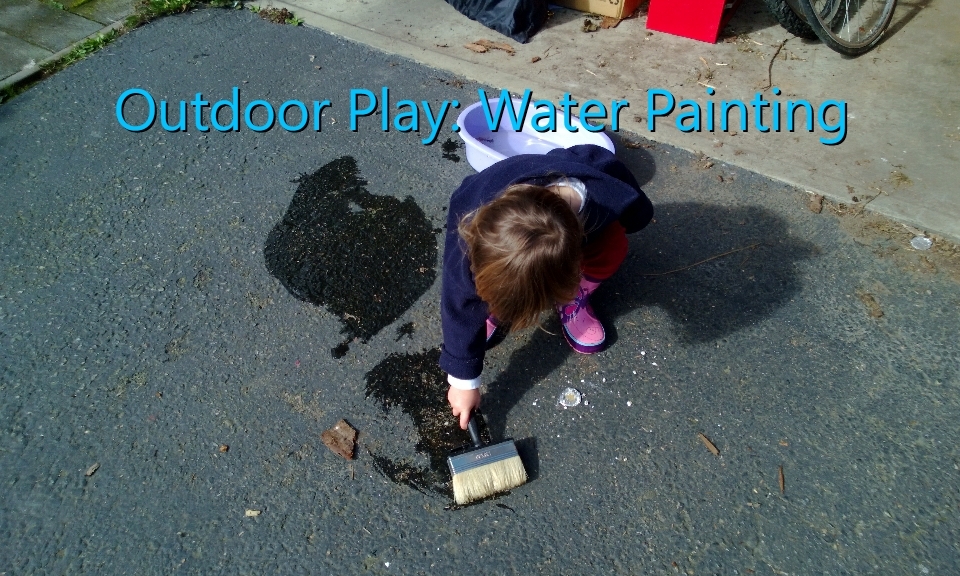
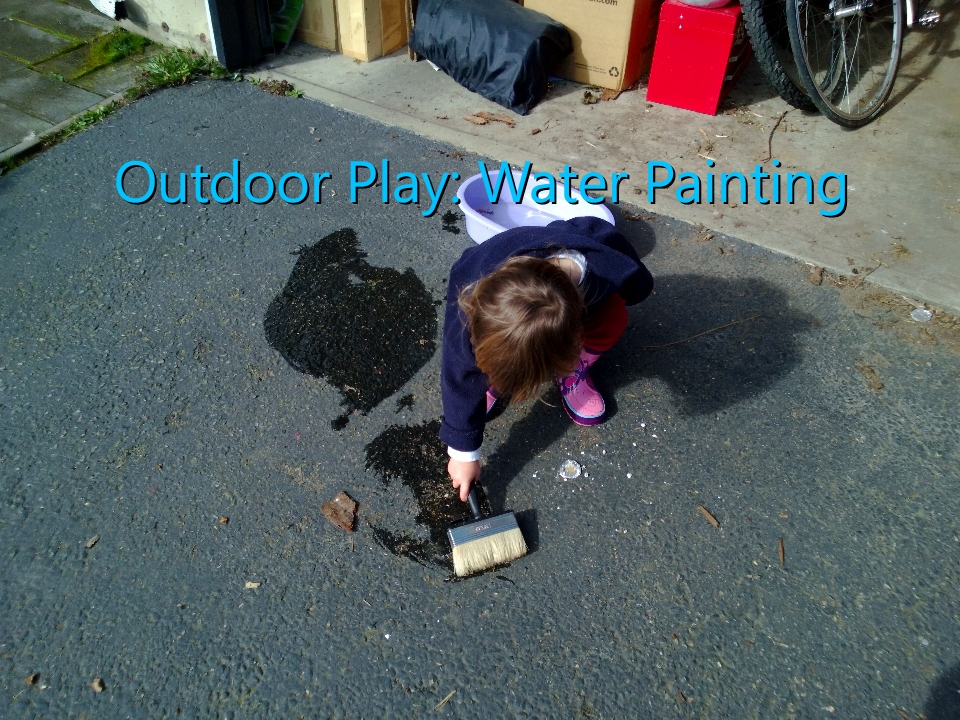
mark making toddlersGetting my children to put things away when they are finished is often a struggle but sometimes it has its advantages. A tub and paintbrush were left on the driveway. After a few rainy days it inevitably filled with water. My 2-year-old picked up the brush, dipped it in the tub and proceeded to paint the garage.

On a sunny day she returned to the tub but couldn’t find her paintbrush. I brought a selection from the garage and as she discovered the different lines the brushes made. Painting on a dry driveway was a very different experience. I later found a paint roller – below are her remarks as she played.

This slideshow requires JavaScript.

Steady Beat Action Rhymes

My Children are big fans of Beat Baby and love to play rhyming games. Some of these activities and the way they help with early literacy development are documented in a previous post about Musical Games . Recently we were reading Ros Bayley’s Action Raps and then continued to make up some of our own.

After a few rhymes with me leading the way, my 4-year-old decided to have a try.

Outdoor Play: Finding The Alphabet in Nature

Having recently discovered some of the amazing hikes in the Seattle area we are really keen to encourage the children to appreciate the wonders around them. My kids love outdoor play, especially in the woods but a 4 mile steep hike can be hard work for an 8, 4 and 2-year old. To keep them going on our last hike I asked them to see how many letters of the alphabet they could spot in the surrounding area. The letters had to be found in nature and they weren’t allowed to create a letter by moving an object.

Here are some of the letters we found

American Valentine’s Day Traditions: Things Every Expat Mum Should Know (or Ignore).

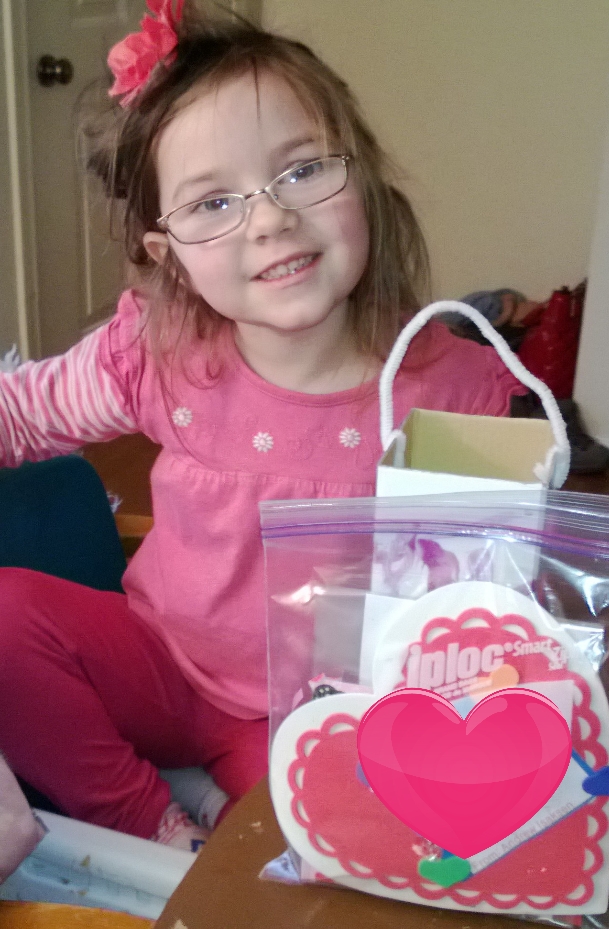
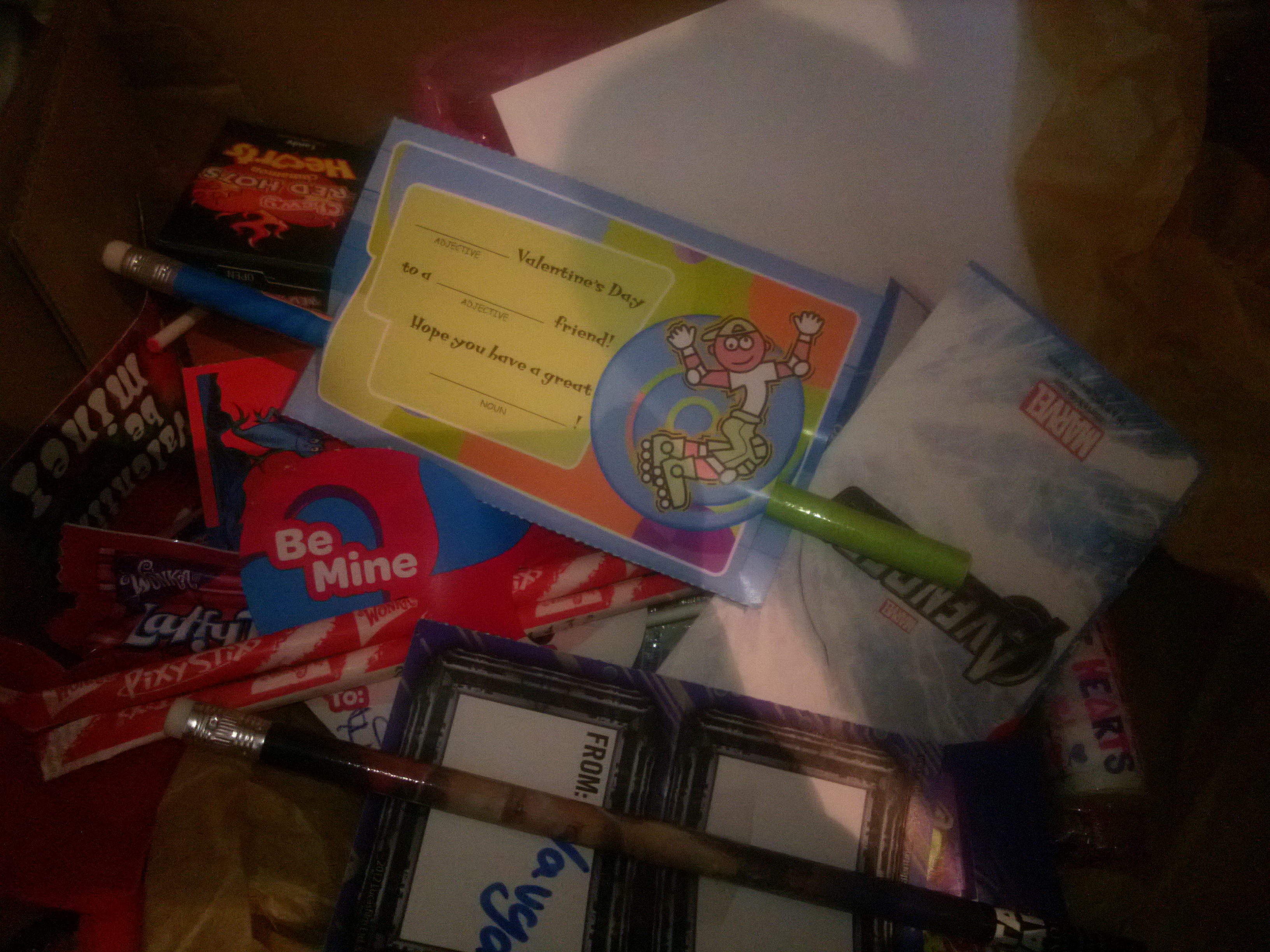
valentine's day traditionsA letter came home from school last week asking us to decorate a shoe box and make a hole large enough to fit a greeting card. My daughter dutifully created her box ready for the school Valentine’s party. I expected the box to come home with a few cards from her closest friends, until  her younger sister came home from pre-school with a bag laden with goodies. Her bag contained lots of little cards with sweets attached from both her teachers and all of the children at pre-school. Had I missed something somewhere? Was there a letter asking us to bring in Valentine’s treats? I think there was an assumption that we would know what to do – now I feel like the mean, lazy parent.

My eldest went off to school today armed with her box. She returned laden with gifts.

American Valentine Traditions

That explains why we were given a letter with the names of all the children in the class. I assumed it was so we would know how to spell a name if we wanted to send a Valentine to a special friend.

If you want to avoid being the odd one out you need to :

  • Send a card to every child in the class
  • Attach a sweet or small gift to the card
  • Sign your child’s name.

Hold on a moment

Isn’t Valentine’s Day meant to be about showing appreciation for those you love or sending a message to someone you admire? Isn’t it about giving not receiving?

My children came home excited about what they had received. There was no sentiment attached to any of the cards, nobody said ‘I’m giving you this because I think you are a great friend.’ It strikes me as another example of greed and an expectation that we load the children with lots of stuff because no child can be left out. I think my 4-year-old got the sentiment right when she decided it would be nice to send a Valentine to the friends she misses from home to tell them she is thinking about them.

I’m sure next year the girls will want to send Valentine’s to the whole class to fit in with their friends. I’d like to think that they will at least find one nice thing to say about each person they give them to. Isn’t it bad enough that adults are driven to spend 4 times the usual price for flowers just in case their partner is offended? Let children believe it is about love and friendship at least for a little while.

For a Lady that I Do not Know

There is a lady that I do not know,
She gazed at her sleeping baby
And found that life had left her.
Her soul released a desperate cry.

There is a lady that I do not know,
Her milky breasts are heavy and ache
As she searches for ways to explain
That their sister has gone.

There is a lady that I do not know
She’s planning her baby’s funeral
Deciding how best to say goodbye
Without a hug or a kiss.

I can’t write about what my children have played
Or how my life moves from day to day.
I can’t show you pictures of beautiful views
Or comment on the latest news.

There is a lady that I do not know
I can’t feel her pain or sorrow
But her life could easily be my life
And it haunts me.

For Jennie at Edspire a lady that I do not know.

A Digital Postcard from TeamHonk – Celebrating 25 Years of #GoodWork for Comic Relief

GoodWork

One of the things I love about the blogging world is the people I have met. I don’t find making friends easy but I’ve made some great new friends through blogging.  One such friend Penny is part of Team Honk; 3  bloggers on a trip to Ghana to mark the 25th Anniversary of Red Nose Day.  Comic Relief are celebrating the progress of Africa and the difference the money raised by the public has made, both in Africa and here in the UK.

I remember the first Red Nose Day, walking around school as a 6th form student sporting the famous Red Nose. Now I feel old.

This is a digital postcard sent from TeamHonk (www.mammasaurus.co.ukwww.aresidence.co.ukwww.mummybarrow.com)  during their travels with Comic Relief in Ghana celebrating #goodwork.
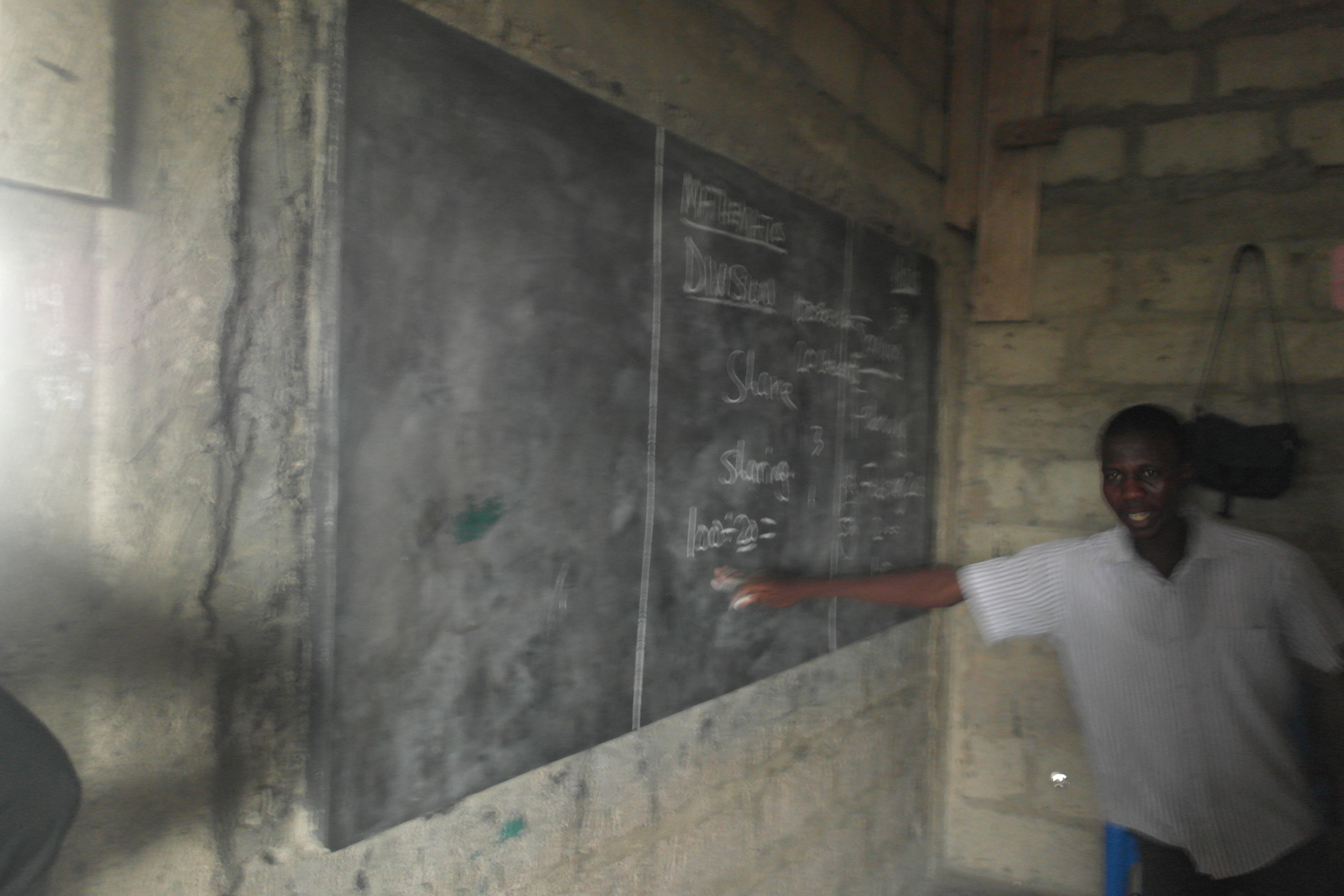
school in Ghana
This school is on the edge of a slum in Accra. A slum that is home to 75,000 people. All of whom that we saw waved, high fived us, and wanted to show us their homes. The school has 250 pupils ranging from 2 to 16 and was started 10 years ago.

For  the past 25 years the money raised through Red Nose Day has been changing the  lives of the poorest and most disadvantaged people in the UK and Africa. Let’s  Keep Up the Good Work. Find out how at rednoseday.com

Moving Abroad with Children – What Do My Children Think of Their New Home in America?

It is difficult to know what my children really think of their new life in America. They seem happy and my 8-year-old says she enjoys school. I know she misses her friends but I sometimes wonder whether she really fits in with her loud American classmates who chatter endlessly about One Direction.

We have recently allowed her to have her first laptop so now for the first time she can check email on a regular basis. In some weird late at night moment, I decided to email her some questions about life in America to share here and asked her to think of some questions for me that she could post on her blog. I’m still waiting for those but here are her thoughts.

  1. What do you like best about living in America?

The best thing is the fact that I have my own bathroom. (Yes she does spend a lot of time in it, a taste of things to come I fear).

2. Are there any things that annoy you here in America?

Adverts ie. bla bla bla very fatty pizza 🙂

3. If you could bring one thing from England to America what would it be?

My friends  (ditto).

4. What do you miss most from England?

I miss my old school.

5. If you were to go back to England, what would you miss from America?

I would miss laughing when people try to do a British accent

6. Are American children different from English children and if so how?

Children are different mainly because of the words they use i.e. perenthusees.

7. What advice would you give to someone moving here?

Be prepared for the adverts.

What I found interesting about her responses was her focus on the immediate, day-to-day aspects of life. I expected  places we had visited or new activities to feature in her answers.

I tried asking my 4-year-old the same questions. We had to spend additional time talking through the questions and she was keen to see what her sister had said before answering but she gave some interesting responses.

As expected the things she misses most are friends and her old playgroup. When asked whether children were different here she thought for a while before saying

They don’t know how to share. All the children in my old playgroup shared their things but none of the children here do.

She found it very difficult to say what she liked about America because she couldn’t think of anything she  likes to do here that she can’t also do in England – she likes learning to do cartwheels with her imaginary friend, playing nail salons with her big sister, making up shows and playing Mastermind.

Not a Parent’s Evening but a Goal Setting Conference.

school childrenThis week is school conference week. The kids finish at lunchtime and during the afternoons the teachers meet with parents and students to set goals for the coming term. School reports (report cards) are sent home every term and tomorrow we will meet with my daughter’s teacher to talk about what we need to work on. Each conference is 25 minutes – a far cry from the 10 minute annual slot we had in the UK.

Here are my thoughts on the first school conference:

I’ve just attended my 8 year olds first parents’ evening at school.  It is called a goal setting conference which I expected to be some flowery name for ‘Let’s talk about your child and  agree what they need to work on’. I was pleasantly surprised to find it actually was a goal setting conference focusing on the whole child at home and at school.

The children had already completed a survey deciding what they felt they should work on in both academic and social areas. They highlighted their strengths and chose 3 or 4 things as areas of improvement. Some things were highlighted from work that had been done in class and observations that had been made.  The teacher discussed each of the goals with my daughter agreeing with her how they might be achieved before looking to me for support from home.  My daughter had highlighted that she didn’t always respond to instructions straight away in class. Her teacher commented

You know what I’ve noticed? I think you are one of those people who take a little time to get going.  Maybe then we should turn this one on its head . Think about how you can help yourself to start your work quicker so that you do not feel that you are rushing to finish and late getting on to the next thing.

How great is that; a teacher who actually notices what your child does and how your child learns and wants to help them to find ways to improve.

My daughter and her teacher had talked about the need to be more organised. On a couple of occasions my daughter has forgotten her folder and her teacher discussed ways of avoiding this. Recognising my daughter as an avid reader she immediately asked

Do you read in the mornings before school?

Yes sometimes when I am eating my breakfast.

So why not do everything you need to do first and then have reading as a reward? 

How can we help you not to forget things?

I suggested a check list that she runs through each morning.

And how about we put that on your kindle so you know you won’t miss it?

There was a strong focus on taking responsibility for her own actions and not expecting mum to do everything for her. Mum has enough to do (I may be quoting this a lot over the next few weeks).

What a great parent’s evening and an amazing teacher. I feel like she knows my daughter better in a few weeks than some of her previous teachers did in a year. The focus on the whole child rather than academic achievement was like a breath of fresh air.

Maybe I could borrow her to organise the whole family.