All posts by rightfromthestart

My Top 5 Books for Under 5’s

To mark World book day, I thought I would list my top 5 books for under 5’s .  I have chosen the books that the children enjoy, but also that I do not get tired of reading. There were lots on the shortlist but I think these are my favourites.

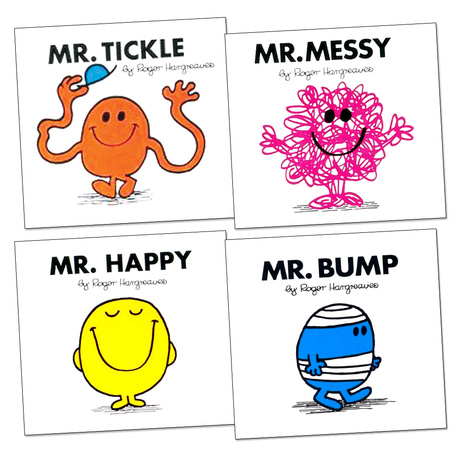
  Any of the original Mr Men books by Roger Hargreaves.  I loved these as a child and my children love them too.  The stories are witty and clever without being too long and my eldest learned some really sophisticated vocabulary from them when she was 3 .  When I was a child (much older than 5) my aunt worked in a bookshop and we would visit her and sit by the Mr Men shelf reading all the ones we didn’t have.  Timeless.
Winnie the Pooh by AA Milne – not strictly for under 5’s but my eldest had a real thing about Winnie the Pooh when she was 3, to the point that Piglet was her imaginary friend and went everywhere with us.  We used to have to listen to the audio books (with Stephen Fry and Judy Dench) in the car, but I never tired of them.  This is a book that I first read as a university student and found it endearing and hilarious.  Thankfully the children love it too.  Some of the best quotes come from Winnie the Pooh.


 Something Else by Kathryn Cave and Chris Riddell  This is a heart warming story about a creature who is teased because he is different and then strikes up a friendship with another creature.  It has beautiful illustrations and a quirky twist at the end.
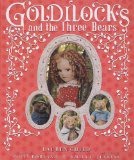
Goldilocks and the Three Bears by Lauren Child  – I love this one, a traditional story retold in an intelligent and witty way,  in the way that only Lauren Child can.  On my first reading it made me say ‘Wow!’  If you love Charlie and Lola you will love this too.


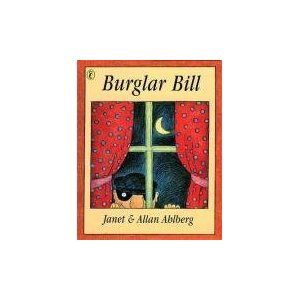
Burglar Bill by Janet and Alan Ahlberg –The comical story of a burglar who steals a box and later finds a baby inside. I really enjoy reading this one and acting out the voices of Burglar Bill and Burglar Betty.  There are lots of funny bits in it that make the children laugh out loud.



Simply Pure – A Review

I often describe my laundry basket as the ever flowing porridge pot from the fairy tale.  Therefore, when my tubs of Simply washing tablets were delivered courtesy of Netmums, an opportunity to finally empty it presented itself. I should be the ideal candidate to review washing powder.  My eldest suffers from nose bleeds,  middle child is prone to falling in muddy puddles, the baby has just started on solids, I wash my own nappies and my clothes permanently have baby sick shoulder.

I have to say that washing powder is not something I am generally enthusiastic about. I’m not brand loyal , usually favouring  own brand products and I still use old fashioned powder as it usually goes further.   

First impressions

I liked the neat little plastic tubs and could easily see them being useful for storing the kids little bits once they were empty.  One  thing that did strike me however was that 15 washes per tub wasn’t an awful lot and since Simply has an eco friendly label there could be a lot of wasted packaging.  I wonder whether they could do a refill service to save on packaging?

The Washing

So now to put it to the test.  My first load was a coloured wash, I washed with 2 tablets on 30° as recommended on the instructions.  I expected a delicate fragrance but was surprised  when the washing came out with no fragrance at all.  However, I did find that despite  the lack of fragrance , the washing smelt really clean and fresh.  My next wash was a whites wash, again on a 30° with 2 tablets.  The whites came out much brighter than they would with my usual powder, however one of the shirts did not smell fresh on a low temperature wash, when I put it back in on a higher temperature it came out smelling clean.

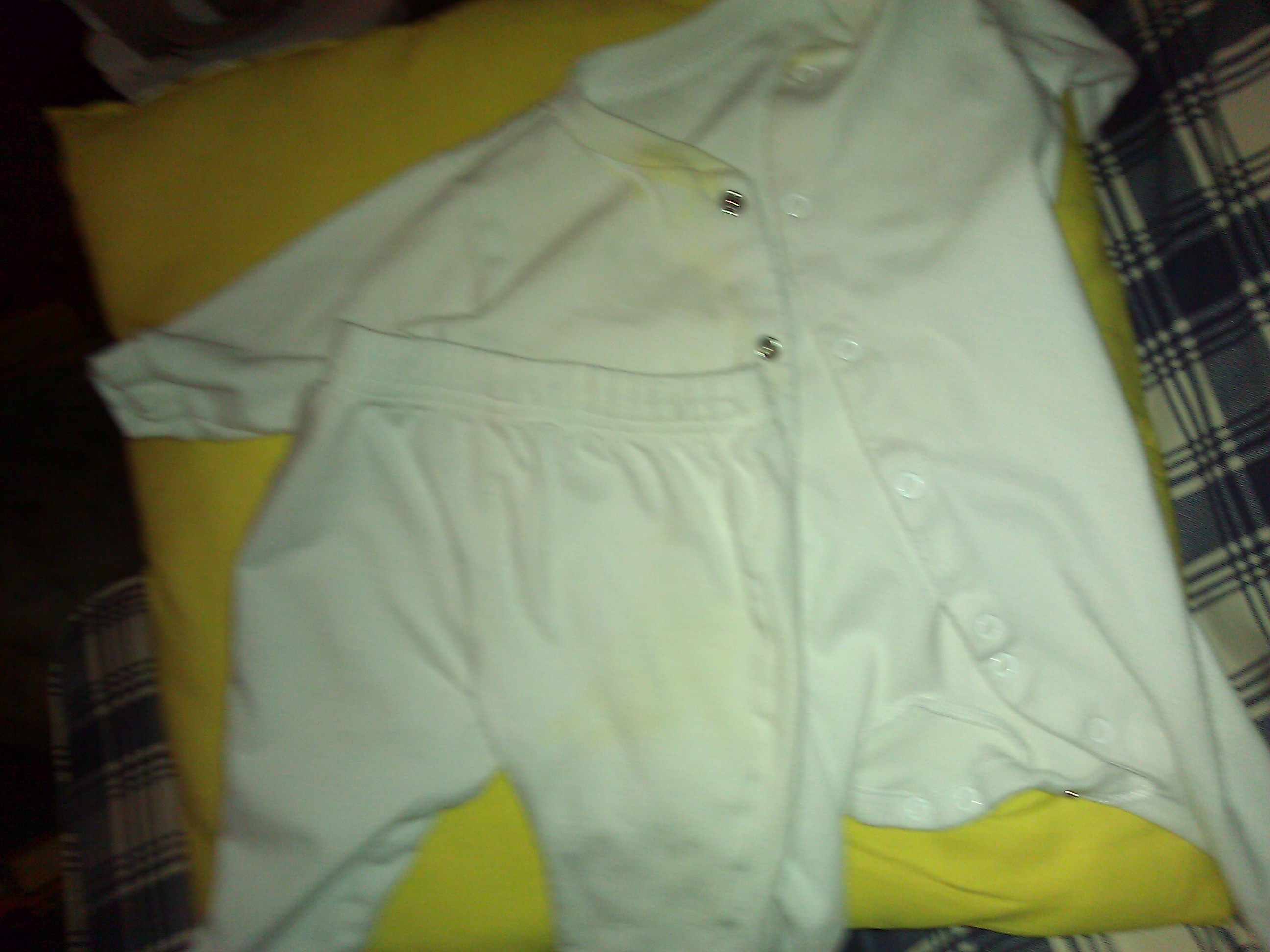
I was concerned that the lack of fragrance would mean that the nappies  would smell. The nappy wash at 60° was the most impressive of all.  The nappies came out much softer than they would with my usual powder (fabric softener is not recommended when washing nappies as it reduces the absorbency) and they were clean and smelt really fresh.  By the 3rd wash the lack of fragrance was really growing on me, the freshness is much nicer than an artificial fragrance.  But most impressive of all were some heavily soiled baby clothes that I included in the wash.

WP_000128                                          

Though there was a slight trace of the stain it was barely noticeable. The washing was tumble dried and had they been line dried I am certain that even this faint staining would have been removed by the sun.

I am looking forward to using the rest of my supply and who knows I may even be converted long term.  With Netmums current special offer of buy 6 packs get £7 off,  the tablets are cheaper than my current own brand powder and at the usual price of £2.89 for 30 tablets are still excellent value.

I am a member of the Netmums Blogging Network, a unique community of parent bloggers from around the UK who have been handpicked by the Netmums team to review products and brands on their behalf. I am paid an expenses fee to cover my time (and childcare if the fee is big enough!) but Netmums have no editorial control whatsoever about what I blog about. Being a member of the Netmums Blogging Network means that I get to try out products and brands and get my expenses covered but that I retain full editorial integrity

Who are the experts?

A recent TED talk about the limitations of experts led me to pose the above question.  In the education of our children – who are the experts?  For some it is the teacher’s job to teach reading , writing  and good behaviour and it is felt they cannot be questioned  because they are the experts.  For some teachers it is the parents’ responsibility to teach their children to behave properly and encourage enthusiasm for learning, so when this doesn’t happen it is the parents’ fault.

As parents we are all experts on our own children, we know them best, their likes , dislikes, strengths and weaknesses and what makes them tick.  The expert teacher may say, ‘he doesn’t join in at music time, I don’t think he likes singing. ‘ The expert parent may reply – ‘he sings the songs all the time at home, he just isn’t comfortable in a large group.’  In contrast, the parent may question  their child’s inability to write his name  and the teacher is able to explain all the things that their child is doing in their play that will build the underpinning skills that are necessary before this will occur.

This highlights to me that we are all experts and as experts together, we need to question and challenge each other to provide the best possible education for our children.  If we believe that we are the only expert with a valid opinion and don’t listen to those who question us, we limit the possibilities for our children.

Of course this creates challenges for schools, nurseries and parents.  In a busy school day it is difficult to find time for parent/teacher discussion so we need to challenge ourselves to find  new ways to share expertise.

http://www.ted.com/talks/noreena_hertz_how_to_use_experts_and_when_not_to.html

Breast Milk Ice cream


This made me chuckle.  I was just reading a news item on Netmums about an ice-cream parlour in Convent garden who are selling Breast Milk flavour ice cream.  They have paid £15 to mums for donating milk and they’re charging £14 an ice cream.

My middle daughter loved ice cream when she was a baby and this would have been heaven for her.  However at £14 a go – maybe not …. maybe I could have made my own.

Who on earth would buy this ? Even out of curiosity at £14 an ice cream I’m not really sure. Good marketing ploy, but not sure it would go down too well in our little village shop.

Who touched your life when you were a child? – Michael Morpurgo’s Richard Dimbleby Lecture

I have finally managed to watch Michael Morpurgo’s Richard Dimbleby Lecture.  How refreshing to hear someone from outside of the world of Education recognising how undervalued the Early Years profession is.  The lack of financial reward and status means that many of the UK’s brightest individuals are discouraged from entering the Early Years profession.  Working with our youngest children is one of the most important occupations of all, as Morpurgo put it

‘a pound spent in the early years can save ten pounds later’

Thank goodness some of us care enough not to desert the profession.

The lecture also decried the target driven education system we have in this country.  When everything relies upon targets and league tables it is easy to forget about the individuality of each child and how their needs can be met.  Morpurgo explained how  in New Zealand children enter school on their 5th birthday, thus allowing teachers time to get to know each child individually , rather than having a class of 30 all arriving at once. Also in Finland, which comes 2nd in the OECD World Education rankings, children do not start school until they are 7 years old.   With an education system built on targets and children starting school at such a young age we are setting our children up for failure.  No wonder we  keep seeing headlines about how boys are failing to read.

Morpurgo argues that the most important part of a child’s education is building trusting relationships, focusing on the unique qualities of each child. When teachers and adults are passionate about a subject, be it reading, music, sport or science they enthuse children to enjoy those things too.  This reminded me of Sir Ken Robinson’s book ‘The Element’.  In this he talks about how each of us have something that we excel at , that we enjoy and is at the core of our very being.  Many of these things are discovered by perceptive and enthusiastic adults when we are children, others of us do not find our ‘element ‘ till much later in life, if at all.

There are a number of people who helped me to find a passion.  My mother read me books, took me to the library and showed me that books were special, instilling in me a love for reading.  The primary school teachers who first put me on the stage in school shows and sowed the seeds for a love of performing and my secondary school English teacher who recognised my talent for writing and called me her ‘shining star’ helped me to believe that I could.

It also made me think of another thought I had earlier in the day as I taught my eldest daughter to play clock patience.  I thought about all the things my grandfather taught me to do when I was young.  Not only clock patience, but how to make a paper hat and paper aeroplane, how to play pick up sticks and two little dickie birds with pieces of paper on your fingers – things that I hope I remember well enough to pass down.

Working in Early Years Education I am sure that we touch children’s lives in many ways, with the experiences we give them, through listening to them and sharing their worlds and understanding their needs.  In some ways it’s a bit sad that few of the children we teach will remember the influence we had on their lives, they wont cite us as someone who touched their life, but I’m pretty certain we did.

For a full transcript of the Dimbleby Lecture    http://www.michaelmorpurgo.com/news/read-michaels-dimbleby-lectur/


Turning 40

treowen

As my 40th birthday approaches, my plans for celebrating it with all my friends in a large house together have been thwarted.  I had booked a beautiful manor house in Monmouthshire www.Treowen.co.uk , and was looking forward to partying in the huge rooms, playing their grand piano and celebrating with all my friends together.  However, a number of people have had to drop out (for valid reasons) and as it wouldn’t be quite what I had envisaged without them, I have decided to cancel.

So back to the drawing board – how should I spend my 40th birthday?  I have a lot to live up to since I spent my 30th birthday in Paris, was proposed to on the top of the Eiffel Tower, spent the day at the opera house and the evening listening to Mozart’s Requiem .

I asked the children this morning what I should do. My 6 year old suggested I go on holiday ‘ somewhere near here – maybe Wales …. or Japan?’  My 2 year old said ‘ eat biscuits’.  Hmm… Japan sounds good , but not quite in the budget.

So what to do?  Will I be whisked away somewhere romantic?  Could I do that study tour to Reggio Emilia I have always wanted to do?  Or shall I just treat it like a normal day and postpone the celebrations till a later date? 

Maybe I’ll just eat biscuits!

Hooray for Kindle!

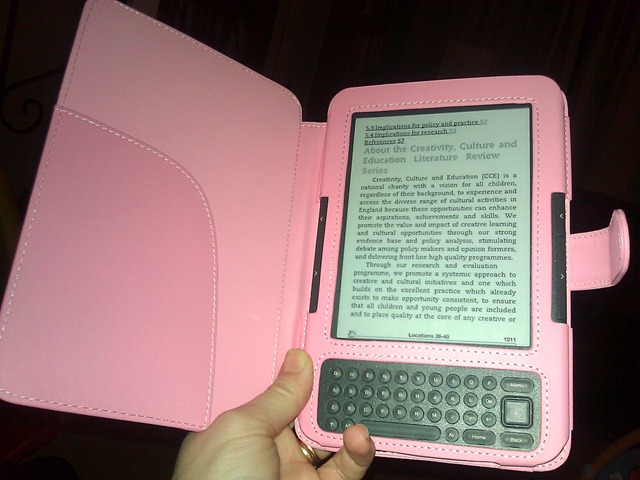
kindle My most useful recent purchase has to be my Amazon Kindle.  As part of a de-clutter my husband suggested selling/giving away our room full of books and replacing the ones that we really like on a Kindle.  I wasn’t really sure at first but it has been just fabulous.

I often find myself downloading pdf documents that I think might be interesting or useful for work and then they sit around on my laptop without being read.  Occasionally I will read a few pages before my eyes get tired from reading on screen.

Now that I have my Kindle all I need to do is email them to my Kindle email address with the subject ‘convert’ and they are instantly transferred to my Kindle in an easy to read format.  Now I can sit and read them like a book without having to print them and they are always to hand.  I can organise them into folders so that I can find them easily and there is even a function for defining words that you do not understand (very useful when reading journal articles).

When I’m bleary eyed I can change the size of the text and the unlit screen isn’t harsh, but slightly brighter than a standard book. I could happily read by the light of the fish tank when researching a few nights ago.

I’m hoping that as more books become readily available I won’t have to carry piles of books or study with a stack of books next to me.  They will all be contained in my little slimline friend.

We are even considering buying one for my daughter’s 7 th birthday – she is such a bookworm .  I could make some much needed space in her bookcase and as an able reader who usually reads alone, she would be able to look up anything she didn’t understand. I think  this would bring her reading to another level.  Though stopping her from ordering endless books on my credit card may be an issue.

And as an added bonus you will be able to subscribe to this blog on your Kindle in the next few days.

I see and I forget, I hear and I remember,I do and I understand.


The Chinese proverb above illustrates the common practice of active learning in early years education, except that maybe we would say ‘ I play and I understand’.

Early years educators are often criticised for having an easy job, because all we do is play.  I would argue that play is one of the most important things we do, not only as children, but also into adulthood.  Play gives us freedom as it is one of the few things that we do that has no external goal.  Play is both therapeutic and a way of self regulating experience (Jennings).  In play we can select our own materials and are free to choose what to do with them, helping  to work out solutions to conflicts and understand one’s self.  Maybe we should all take time out from our busy lives to play.

As an adult I rarely play, we might play with our children, but generally this is following their agenda or playing a rule based game.  How many of us play for play’s sake ? Why don’t we build dens in the woods or take out a lump of clay and model with it?

I was once on a course with Jenny Moseley who asked us to sit for 5 minutes with an egg.  We had to stay in our own space and were allowed to do whatever we liked with the egg in that time.  Who would have thought that a simple egg could be so absorbing?  It became my complete focus for that 5 minutes and we were then asked to put our thoughts on paper to share with others – the words poured out of me without hesitation.826egg

I think that real understanding is achieved through more than just play.  If we look at some of the most highly respected early years establishments, in particular the pre- schools of Reggio Emilia,  there is one thing that sets them apart.  The schools founder Loris Malaguzzi describes the teachers role as learning and relearning with the children. A favourite saying is ‘catching the ball that the children throw us’. That is not simply asking the children to tell you what the teacher already knows but retaining what the children give with a sense of wonder.  We can learn a lot about the way children think by listening to them.  Often they are viewed as funny or cute comments – like when my 2 year old saw manure on the road and asked ‘Mummy has the road done a poo?’, but these little comments tell us a lot about the way children think.

In the pre-schools of Reggio Emilia  projects are based around what the children say and do.  They would go that extra step to give the children a complete experience .  A project on supermarkets for example, led them to not only visit during the day but also when the shop was closed, helping to encourage further discussion and enhance the children’s play.  In the Reggio schools understanding is not achieved through simply ‘doing’ but also by having the chance to reflect and build on those experiences. It is important that when children ask questions we ask what they think and that their interpretation is seen as important.  It is not the answers that are important but the process of discovery.

In our own work as teachers and parents we can learn so much from our children if we listen , share and take time to reflect both alone and together. In our own lives too , if we take time to step back and really absorb ourselves in something as with the egg exercise, we learn far more than rushing around doing things. Rather than always focusing on the present, the reflection time helps us to work out what to do next.  I believe therefore that the proverb should be

I see and I forget

I hear and I remember

I do and with reflection I understand.

For further information on Jenny Mosley’s work  http://www.circle-time.co.uk

For further information regarding the schools of Reggio Emilia  http://www.sightlines-initiative.com/


Brain Food – Junk Food may lower IQ.

As parents we are keen to get our children the latest educational toy, send them to the best nurseries and pre-schools and give them the best preparation for school that they can.    A research study conducted by the University of Bristol released today suggests that diet at the age of 3 may have an effect on how intelligent our children are at the age of 8.

The study bases its findings on participants in the Avon Longitudinal Study of Parents and Children (ALSPAC) which tracks 14,000 children born between 1991 and 1992.  It suggests that a diet of predominantly processed,  high fat and sugary foods up to the age of 3 may lower IQ at the age of 8.5. In contrast A diet rich in vitamins and nutrients may do the opposite.  Parents were asked to complete diaries outlining the food and drinks their children consumed at age 3, 4, 7 and 8.5.  IQ was measured at the age of 8.5.  After taking other influential factors into account it was found that children with a predominantly processed diet at the age of 3 were associated with a lower IQ at the age of 8.5, irrespective of whether their diet had improved by that age. Similarly children with a healthy diet at age 3 were associated with higher IQ’s at the age of 8.5.  Diet at the ages of 4 and 7 had no impact on IQ.  Though the findings are modest, the results are in line with previous research which shows that quality of  diet at the age of 3 is related to school performance and behaviour. A possible explanation is that the brain grows at its fastest in the first 3 years of life, therefore good nutrition may lead to optimal brain growth.

toddler-apple-snack-420x-420x0

So much marketing is aimed at parents and children, making parents feel guilty that they are not buying the child the latest ‘educational’ toy or taking them to classes to improve their language and social skills.  So why not use this as an opportunity to market nutritious food for the youngest children as brain food. Three years isn’t that long a time to limit processed foods and it sets children up with good habits for life.  So maybe next time my 2 year old is nagging for a biscuit or sweet I’ll suggest a healthy alternative –  ‘ Have some special magic food , it will make you clever’.

http://www.bristol.ac.uk/alspac

Storytelling and memory

This week is National Storytelling Week.  I was going to write about my experiences of story telling with young children.  However,something else that I have been talking about this week seems to relate very well to story telling.

I have been having a sort out of the endless ‘stuff’ we accumulate in our house. One part of that has been to thin out all the things we have stored that we never use  and  collate our photographs in one place.  During this process my husband found a box full of old letters, certificates and notebooks which contain memories that would otherwise be forgotten.  We looked at photos of years gone by and the way that we remember things.  I also had a conversation relating to memory with a neighbour who recently had a large family gathering.  She talked about how when they all got together and talked about past shared events, they each remembered it differently.

How much of our lives get lost because we don’t document it?  When we need to find evidence of how we felt, often we can only say, I don’t remember it like that but maybe that is how it was.  Sometimes I wish I had documented my life so that I could look back and say with confidence , that is what happened, this is how it happened and this is how I felt.

At times I have kept diaries, mostly during my teenage years. I was so embarrassed by my thoughts when I  came across them years later, that I threw them away but a part of me wishes I hadn’t.  I have kept diaries of my pregnancies and early days of the children because the children won’t remember those times. I hope that one day I will be here to answer their questions about it but maybe, like my own mother, I will be gone by the time those questions arise.  I kept a journal during my honeymoon, I don’t often read it but sometimes it’s comforting to look back on the best times in your life.

My point is that when we think of story telling we automatically think of fiction, but our lives are a story – often the most interesting stories come from real events.  What may seem irrelevant or waffly thoughts right now will someday mean something to our children and grandchildren.  My most treasured possession is a letter that my mother wrote when she was in hospital after having me.  My dad found it after she had died and it is my only account of how she felt to be a mother for the first time .  Stories don’t have to be about dragons and adventures, let’s not forget that our own stories matter too.  For National Storytelling week I will not tell a story but will try to begin to tell my story so that I don’t forget and will not be forgotten.