The lead up to Christmas was a great time for writing messages in our house. Our visiting elf Christopher Poppinkins left notes for the girls and they responded with their own notes, we made gifts for the neighbours with a little note attached, wrote Christmas cards for the family, shopping lists and yesterday the girls helped me write a list of songs for my music class.
As children approach school age, parents are often anxious about their children’s emerging literacy and how best to support them at home.
When is the right time to introduce writing?
Does my child need to be able to write their name before they go to school?
How do I start?
Do they have to form letters in a particular way?
Writing is a complex skill involving much more than the correct formation of letters. I can’t guarantee that my girls will continue to love writing but I think we are headed in the right direction.
If you are interested in finding out how I encourage the girls to write and keep it enjoyable I am sharing some of my experience in a guest post for ‘What to Expect.’
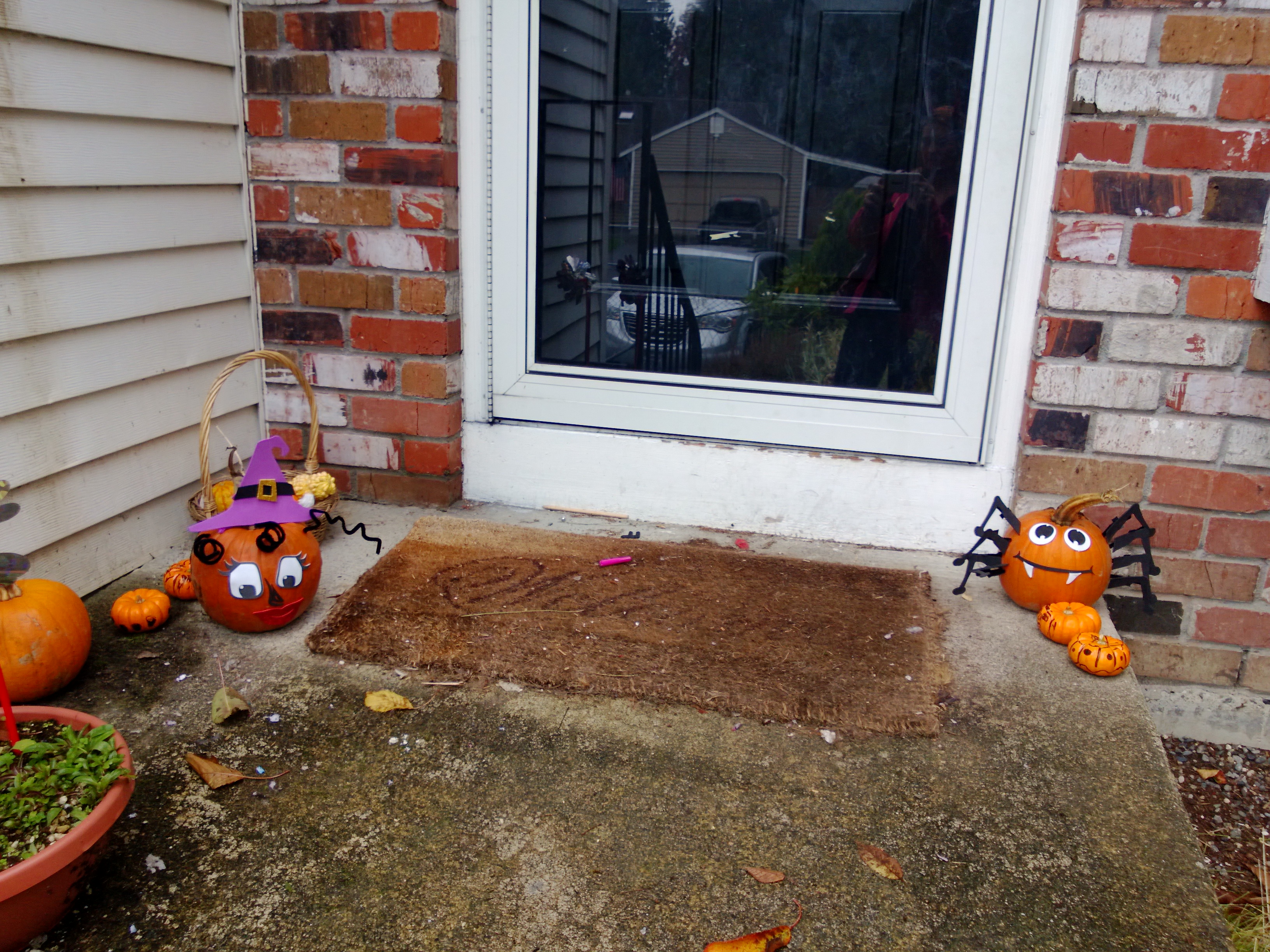
We were a little disorganised this year and didn’t get our pumpkins until Hallowe’en. It seemed such a shame to throw them away almost as soon as we had made them. To avoid this the pumpkins were incorporated into our play, building on the children’s interest in pattern making and investigating some of the questions and discoveries they made when we visited the pumpkin patch.
One of the things I love about living here is that we don’t have to go to the supermarket to buy our pumpkins because there are pumpkin patches everywhere. I love that the children can find out how pumpkins grow by wading their way through the leaves and mud to find the perfect pumpkin.
This slideshow requires JavaScript.
Pumpkin Play
Exploring Inside a Pumpkin and Learning about Seeds
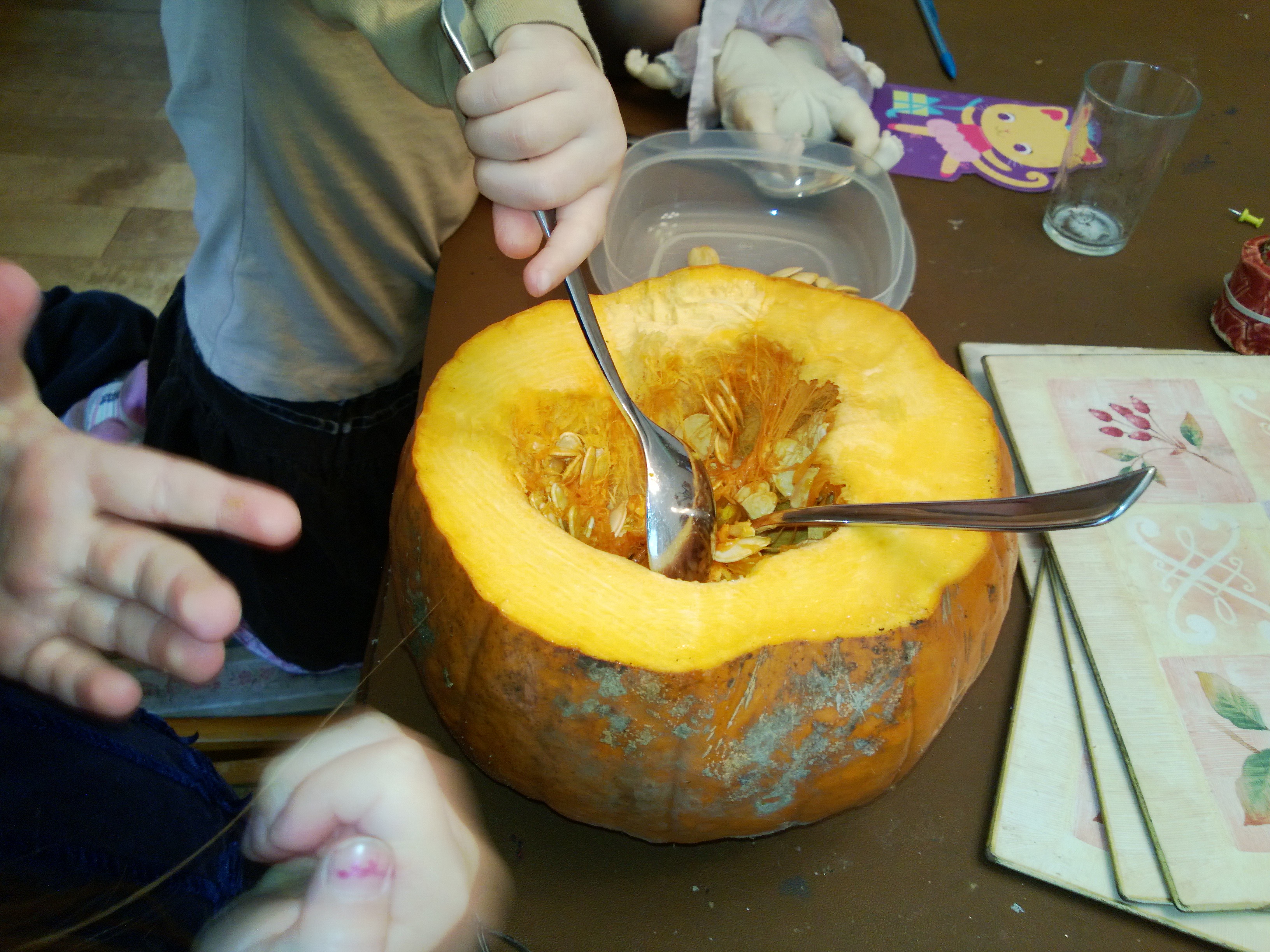
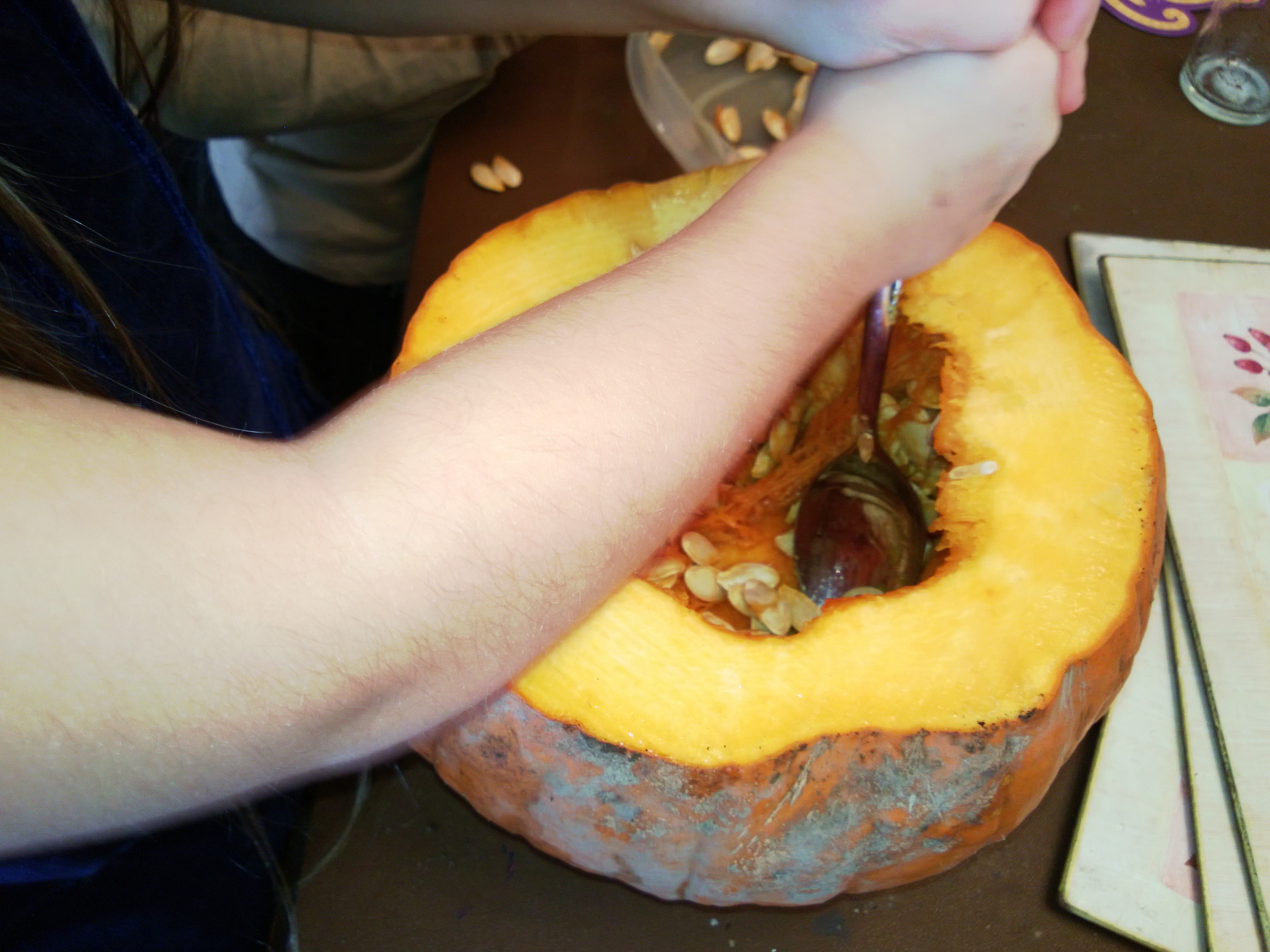
I removed the top of one of the pumpkins and gave the girls spoons to explore what was inside.
Look at all the seeds, they look like lemons but with no other sideIt’s a slother pumpkin. It feels really cold. There are lots of stringy bits, they look like messy hair.
We talked about saving the seeds for the Spring, so that we could try to plant pumpkins in the garden next year. This lead to a discussion about how the seeds were spread.
How do the seeds get out of the pumpkin if they are in the pumpkin patch?
The pumpkin gets mouldy and then the seeds can come out.
Do you know how the seeds are spread?
No
What happens to a dandelion seed?
Where are the dandelions seeds?
The seeds are on the dandelion clock.
Oh so they get blown around.
Yes. Does this happen to the pumpkin?
No
We talked about how the animals spread the seeds – the girls thought it was a bit disgusting to talk about poo so we left it at that but later read ‘The Tiny Seed’ by Eric Carle to remind ourselves how other seeds are spread.
2. Scientific Experiments
How Does the Pumpkin get Soft?
I think we eat this bit because it’s all juicy but it is hard. How do we make it soft?
Hmm, can you think of any ideas?
I know we could make it wet and then dry it.
We could sprinkle it with soft sugar.
We could cover it with a bag.
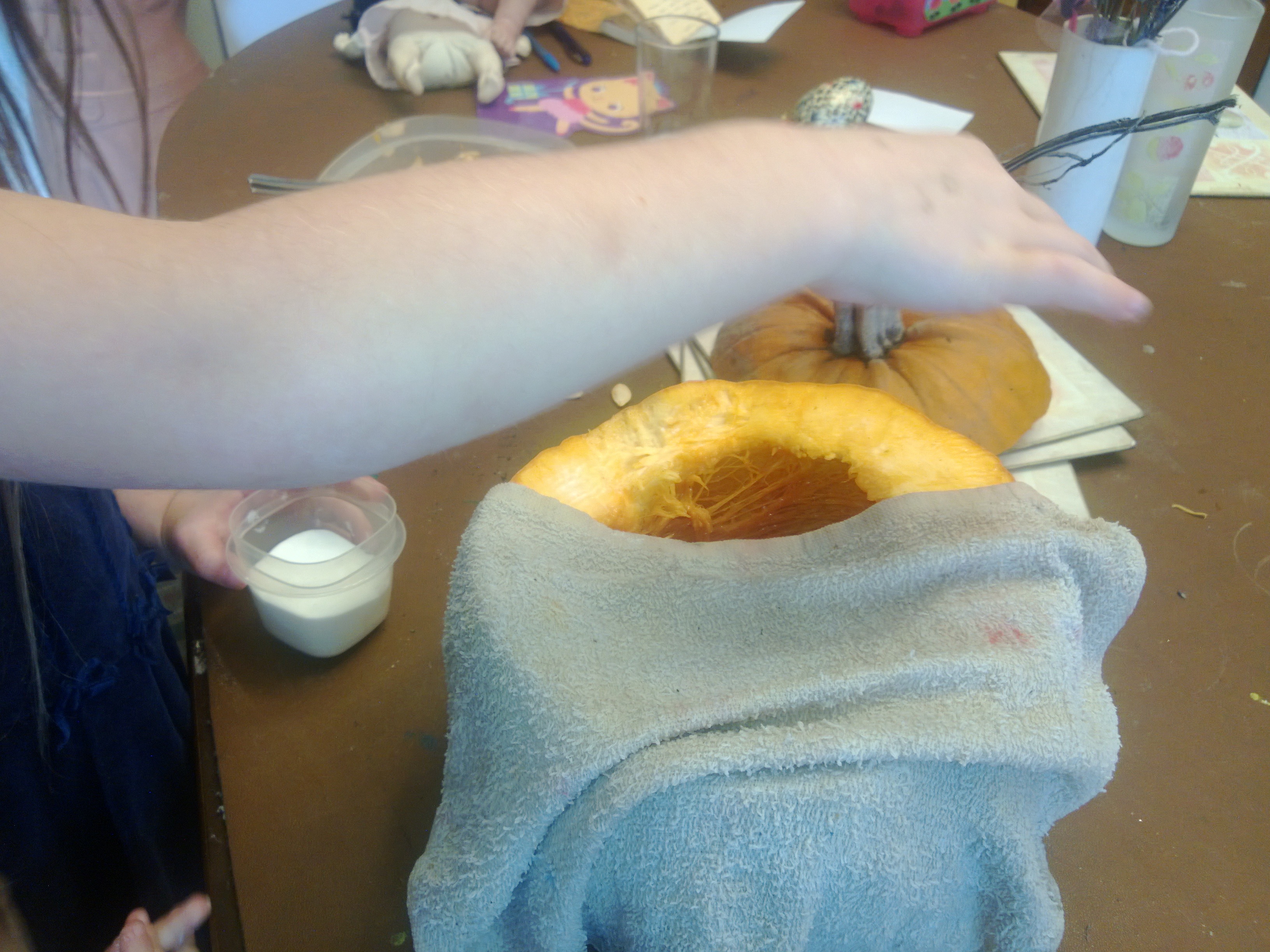
We covered one half of the pumpkin with a warm flannel to see what would happen.
We sprinkled the other half with caster sugar.
After 30 minutes we checked to see what had happened.
It didn’t work, it just got wet on my side.
What about the sugary side?
It feels softer, the sugar is softer but the pumpkin is hard.
I asked the girls if they could remember how I made spaghetti squash soft (when I tried to cut it, it was so hard I cut my finger instead). They couldn’t remember. I said that they had been along the right lines when they decided to warm it.
How could we warm it?
Put it in the microwave
or?
The oven.
Yes that’s how I made the squash soft.
3. Paint a Pumpkin
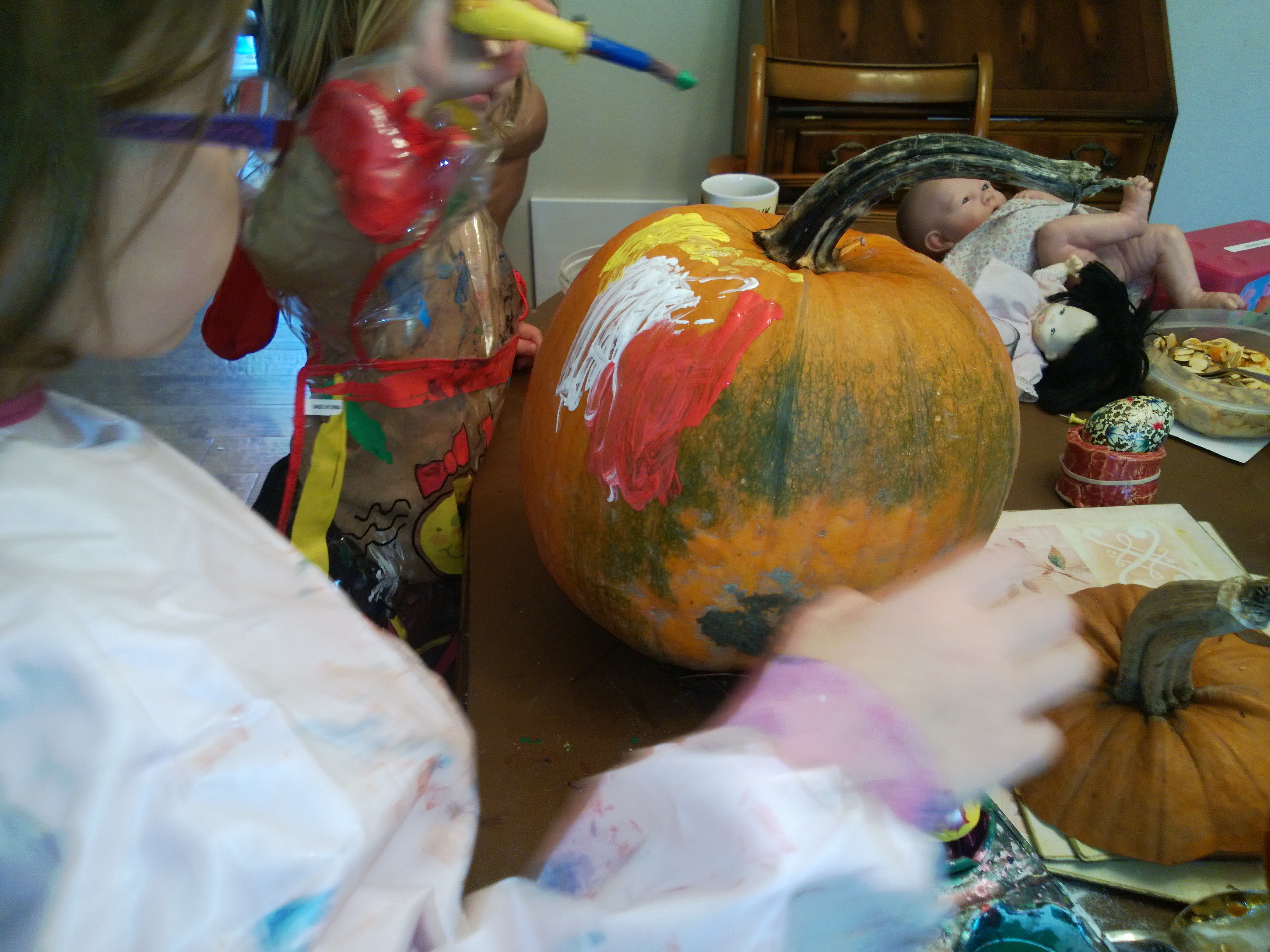
We painted our largest pumpkin with acrylic paint. The acrylic paint remains shiny .
4. Make a Squirrel Feeder
With the painted pumpkin we made a squirrel feeder by removing a section at the front and sprinkling it with birdseed. We often have squirrels in the garden but this gave us a good opportunity to watch them close up.
Filling the feeder with seed
Here comes the squirrel
squirrel feeding
5. Fairy Toadstools
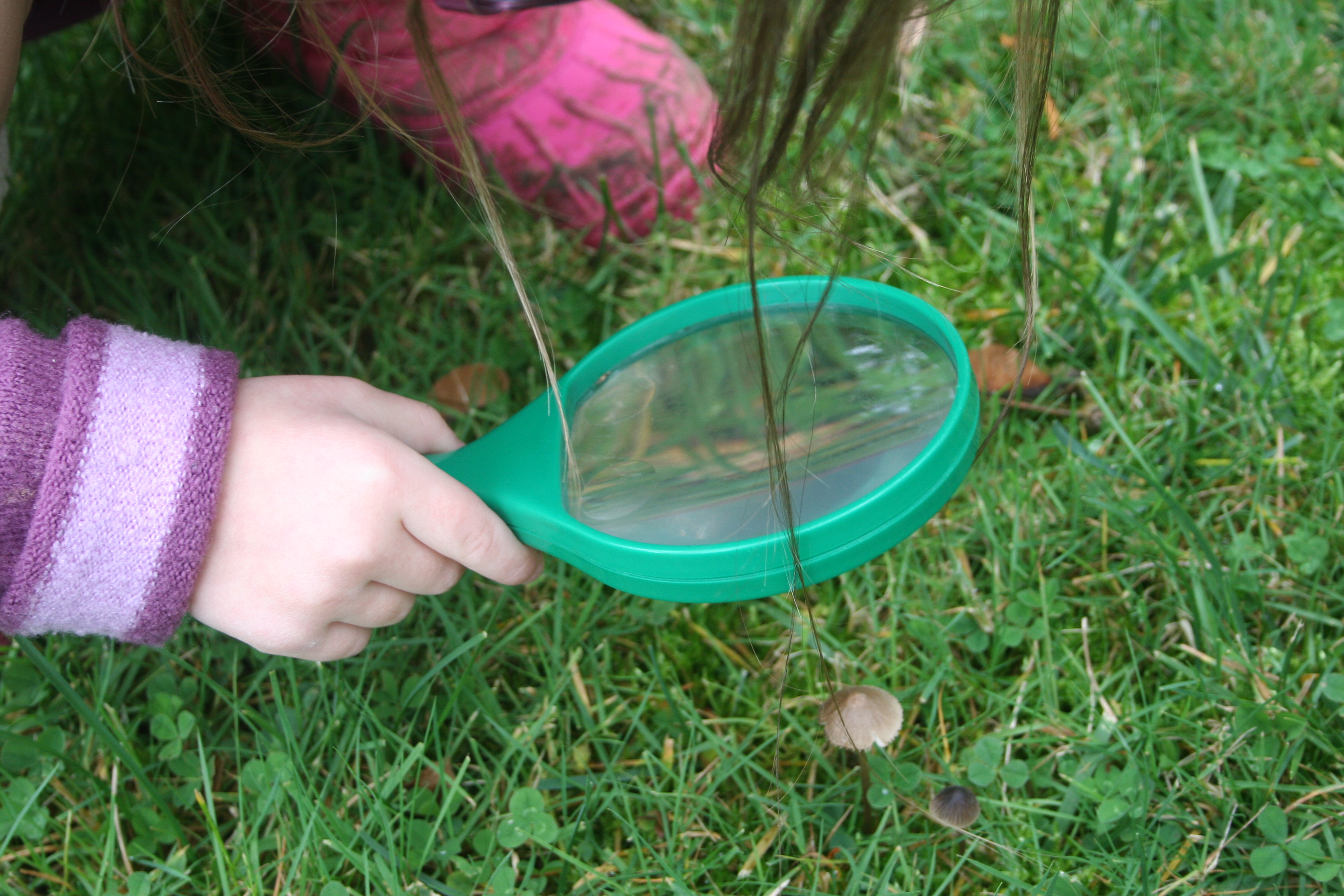
Our garden is full of toadstools in this damp Autumnal weather and we have been exploring them to see if we could find any fairies.
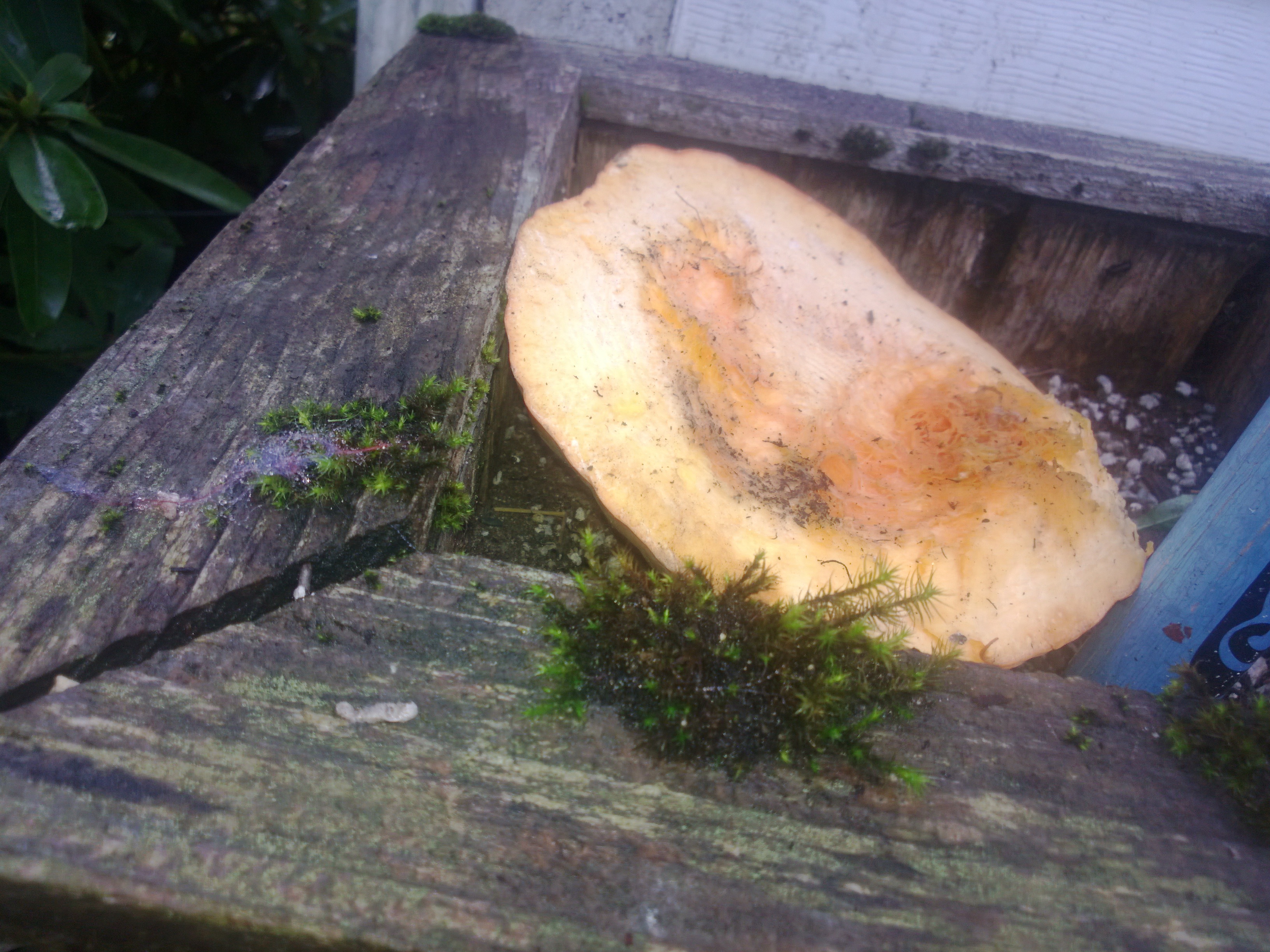
Turning the top of the pumpkin upside down made a perfect fairy toadstool for our flower-pot. We are also going to watch and document what happens as the pumpkin starts to decay. It might make a nice art or photography project for the girls.
6. Pumpkin Poetry
I helped the girls to make up a poem about a pumpkin using some of the descriptions I had recorded them saying.
Pumpkins by my 5-year old
Pumpkins are very orange
Inside they have seeds
The seeds look like lemons
And feel slimy and cold.
Around the seeds it is orange and stringy
It looks like crazy hair.
The bottom is lumpy and chunky
I call it the core.
7. Pumpkin Juice.
I sliced and peeled the pumpkin we had been exploring and we used it to make pumpkin juice.
Ingredients (quantities according to taste)
Pumpkin
Apple
Carrot
Ginger
Sprinkle with cinnamon.
8. Seed Collage
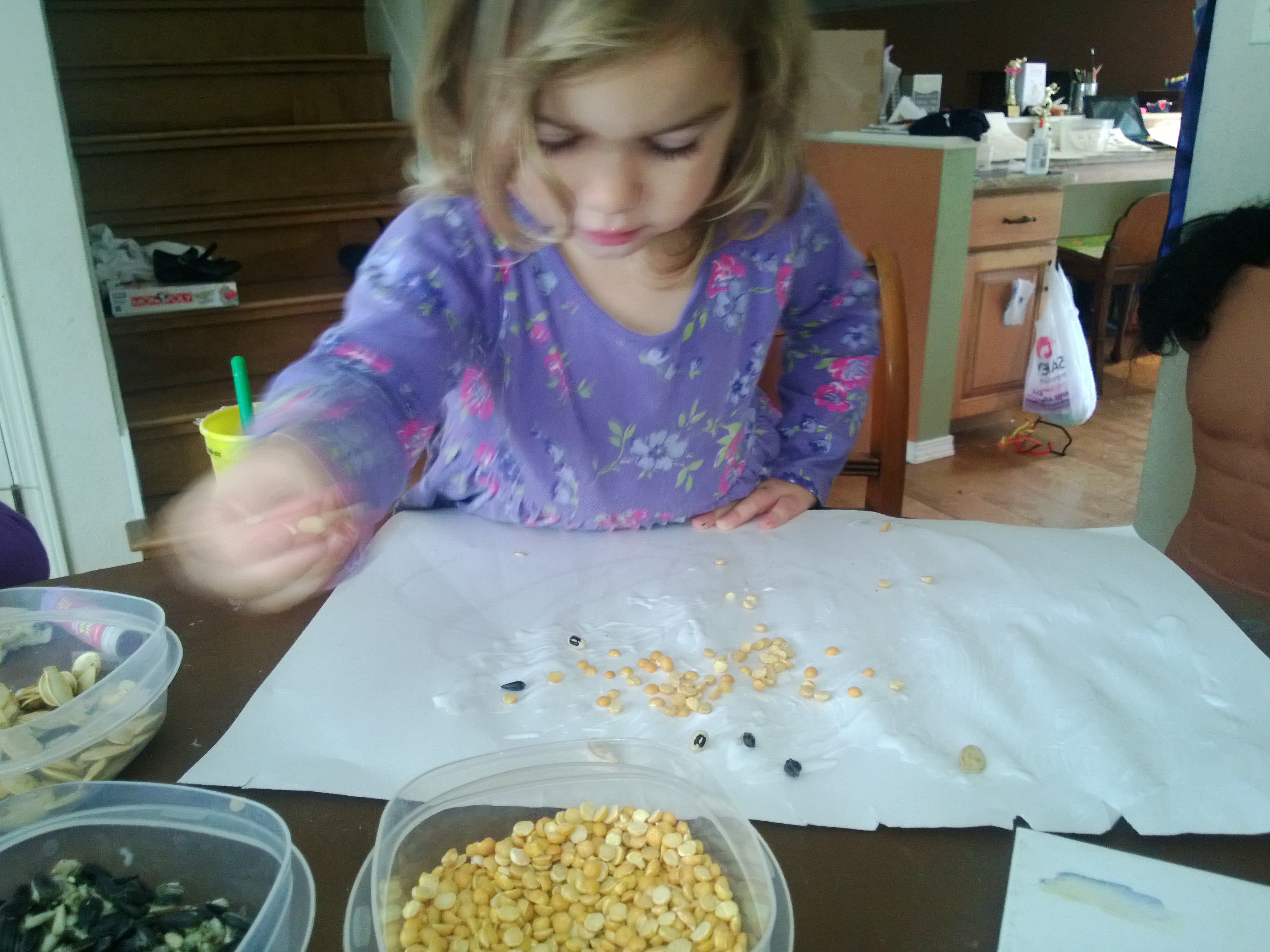
One of our current topics is pattern. We used the pumpkin seeds alongside other seeds and pulses to make collages.
9. Roasted Pumpkin Seeds
As a healthy snack we tried roasted pumpkin seeds. Sprinkle with oil, salt and pepper and roast in the oven for 25 minutes.
10. Mr Potato Head
We still have one small sweet pumpkin left to make into a pumpkin curry.
Further ideas
Use the seeds for measuring in a balance scale
Use the seeds in a play or mud kitchen
Put a hollow pumpkin in the water tray
Make pumpkin cookies
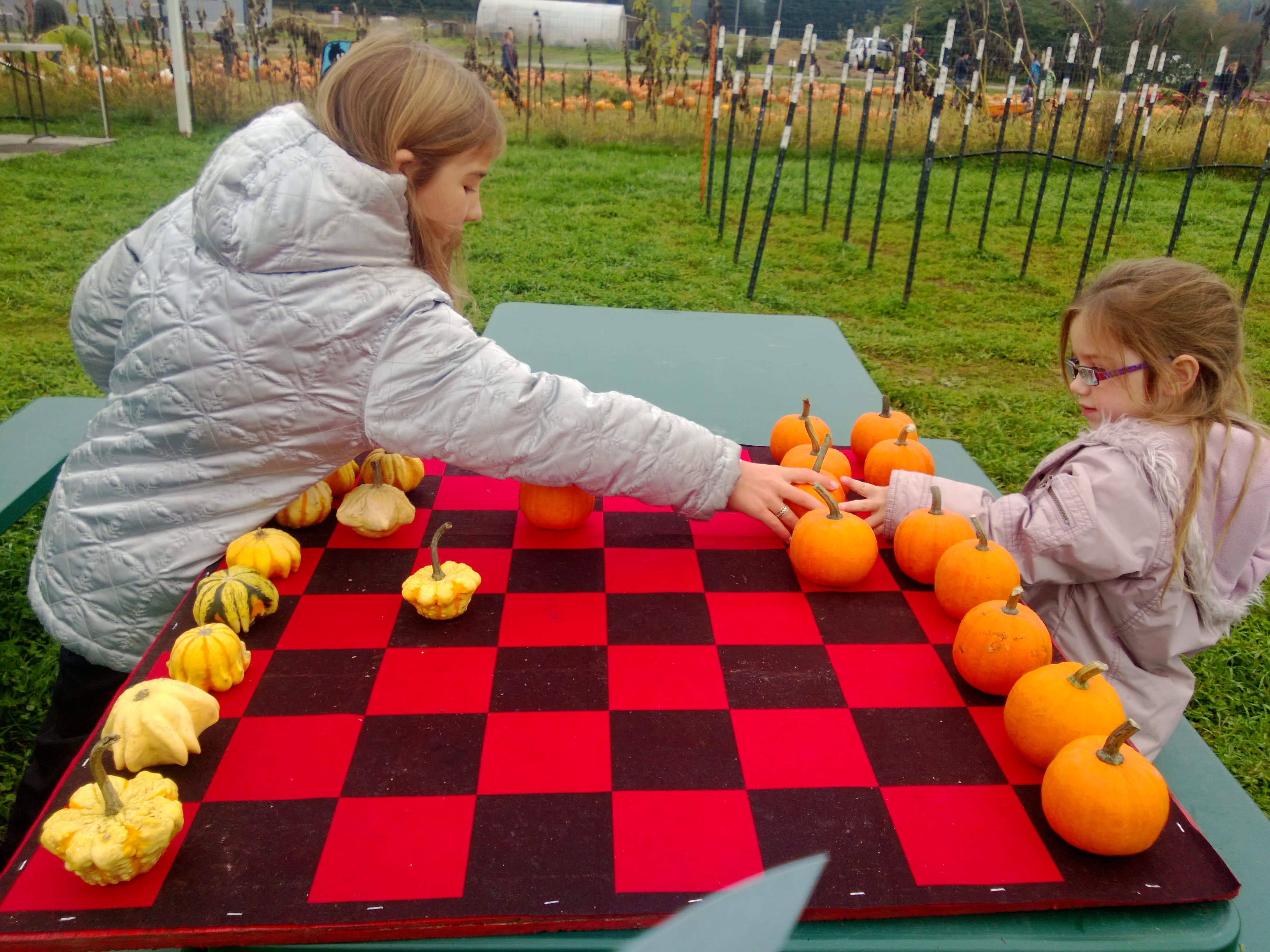
Make pumpkin drafts or checkers
Roll pumpkins down a hill and see which one reaches the bottom first.
Give children trays of seeds with scoops and containers.
Use the seeds with clay or pumpkin scented playdough.
We have had hours of fun with the endless possibilities of pirate jokes around the dinner table. My youngest daughter’s recent addition is
What is a Pirate’s favourite fruit?
An arrrringe.
Pirate jokes are a great way to practice oral phonics and rhyme.
My middle daughter is beginning to learn to read and write so I decided to use International Talk Like a Pirate day to introduce the ‘ar’ sound.
What Sound does a Pirate make?
arrrrrr
What sound does the letter ‘r’ make?
rrr like rrrabbit and rrred.
So even though it is called an ‘r’ it doesn’t make an ‘ar’ sound. We need more than just a letter ‘r’ to make a pirate sound. We make a pirate sound with a and r together.
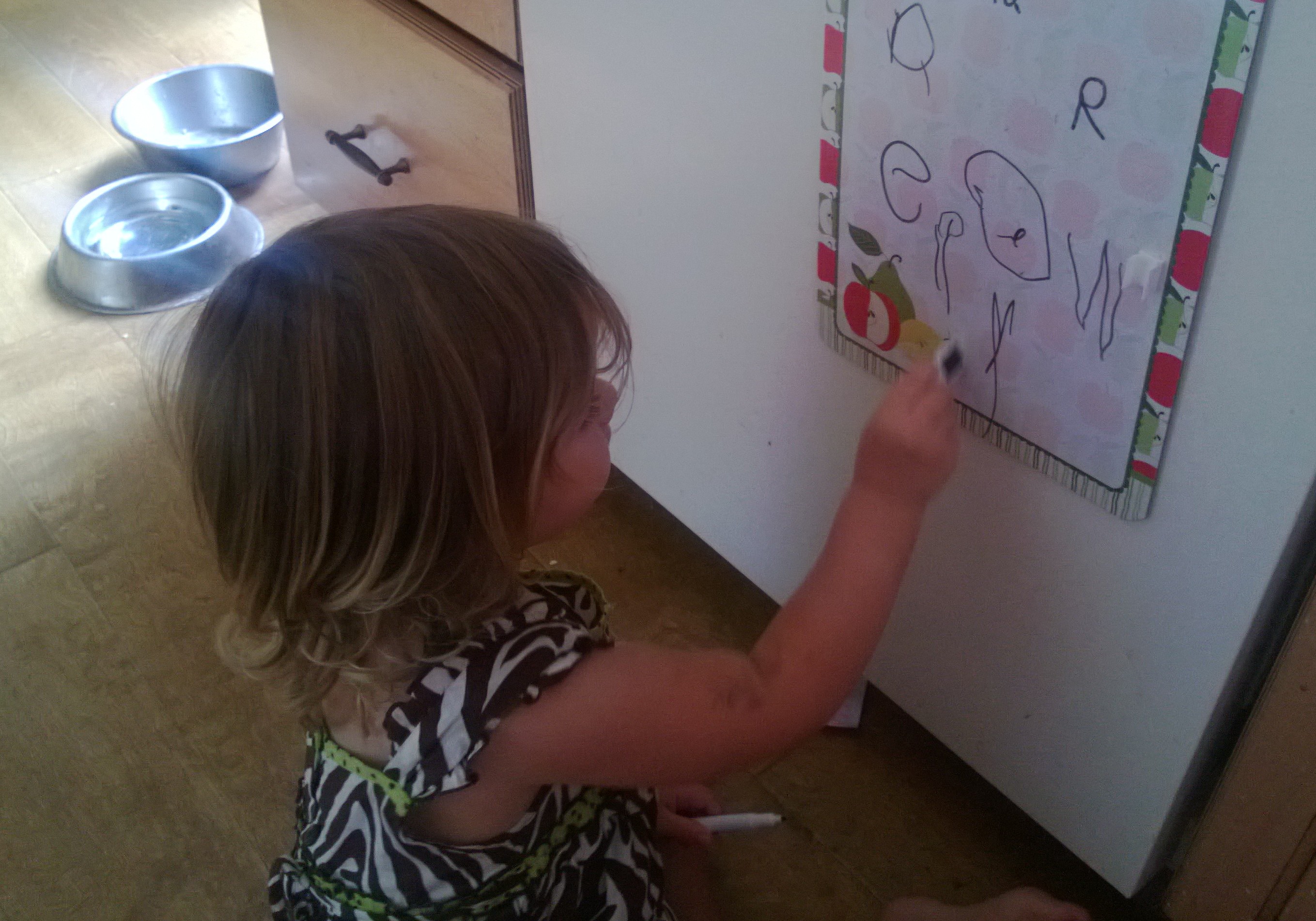
I gave her a magnetic ‘a’ and ‘r’ on a board along with a number of consonants. We used the magnetic letters to make as many word with ‘ar’ in them as we could exaggerating the ‘arrrrr’ sound in a pirate voice.
My daughter moved letters around to make different words and blended the sounds to read them out.
I wrote down the words for her in a list
jar
mars
bar
star
tar
car
Martha
arm
art
far
farm
Martin
She then dictated a story using the words and I underlined the ‘ar’ words for her to read .
Once upon a time there was a pirate called Martin. He loved to eat a jar of pickles. He also loved to go to the scarecrow farm which was far away. He also like to do art. He had a pet wolf called Martha. One night there were lots of stars. He went out in the car to see his cheeky friend. He always called his girlfriends funny names. Martin threw a bottle of tar on his friend’s arm. So he ate a Mars Bar.
As we read the story we said all the ‘ar’ words in a pirate voice.
As we were walking around the museum at the weekend she said
Mummy, I’ve thought of another pirate word ‘guitarrrr’
Some of Roald Dahl’s books are a little gruesome for pre-schoolers but I have just started reading some of the less scary ones to my 4-year old. We are currently reading ‘James and the Giant Peach’, she has watched the film of ‘Charlie and the Chocolate Factory’ and we recently finished ‘George’s Marvellous Medicine’.
One of her favourite activities is potion making, so she really loved the story of a boy who empties out every container in the house to make a special medicine. I have to leave the girls toiletries out of reach to avoid them emptying bottles to make potions but that doesn’t stop them sneakily taking their dad’s, sister’s or my toiletries or climbing onto the stool to get food colourings from the cupboard.
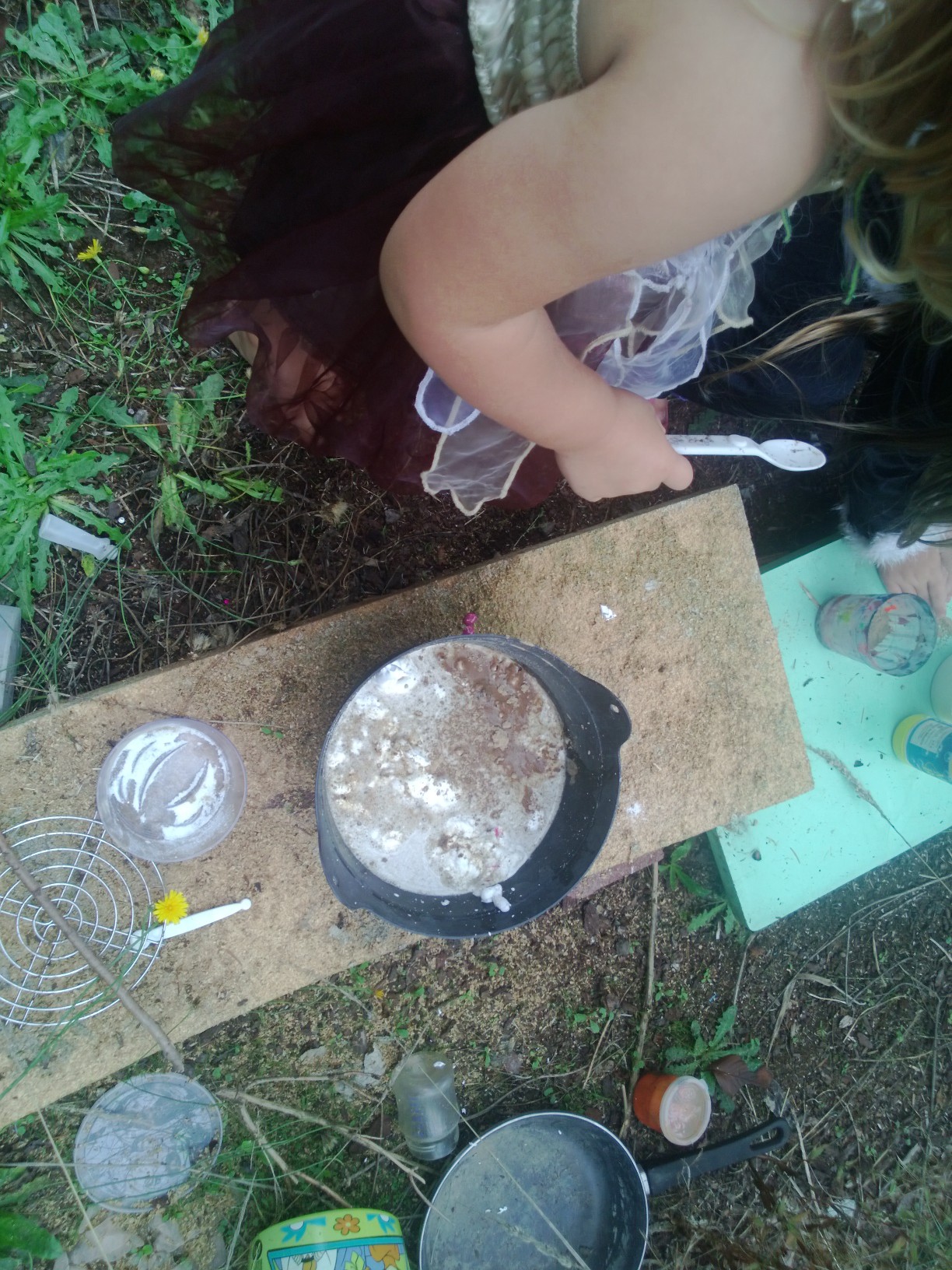
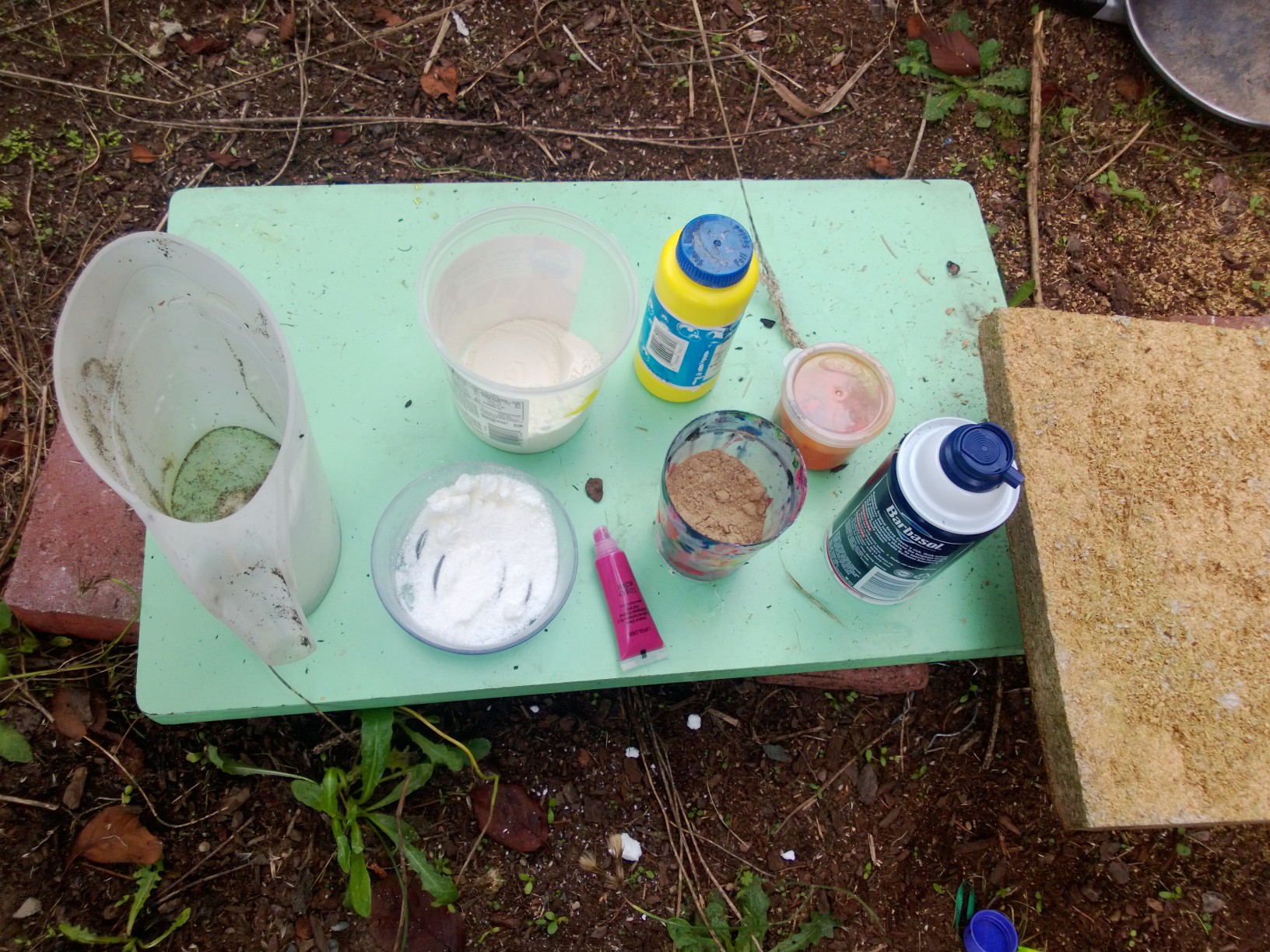
I set up the mud kitchen in the garden with some of the ingredients from George’s Marvellous Medicine and a cauldron for mixing it in.
On the way home from school we were talking about quills. My Harry Potter obsessed 9-year- old had made a quill by putting a biro refill into a feather.
My four-year old asked
Do we have any ink?
No but we can use paint.
We painted with feathers when I was little didn’t we?
We can do that tomorrow if you like. We could use the Peacock feathers we collected at Remlinger Farm.
This slideshow requires JavaScript.
I set the paints up with a few feathers.
painting with the feathery part made some nice patterns
My 2-year-old suddenly declared
I wrote the word ‘buh’
Buh for bat.
She has been playing a Sesame Street alphabet game on the iPad and is beginning to talk about letters and letter sounds.
Her 4-year old sister asked
How do you spell bat?
How do you think you spell it? What does it begin with?
Buh
That’s right and what other sounds are in bat?
Bat…. t
Yes, so what is the middle letter?
Bat…b…a…t….. a. B..a..t spells bat.
After a little bit of impromptu literacy I had a brain wave. The girls are really interested in pirates at the moment and I thought we might be able to do some writing with feathers, make a pirate map or maybe we could make a wizard’s spell.
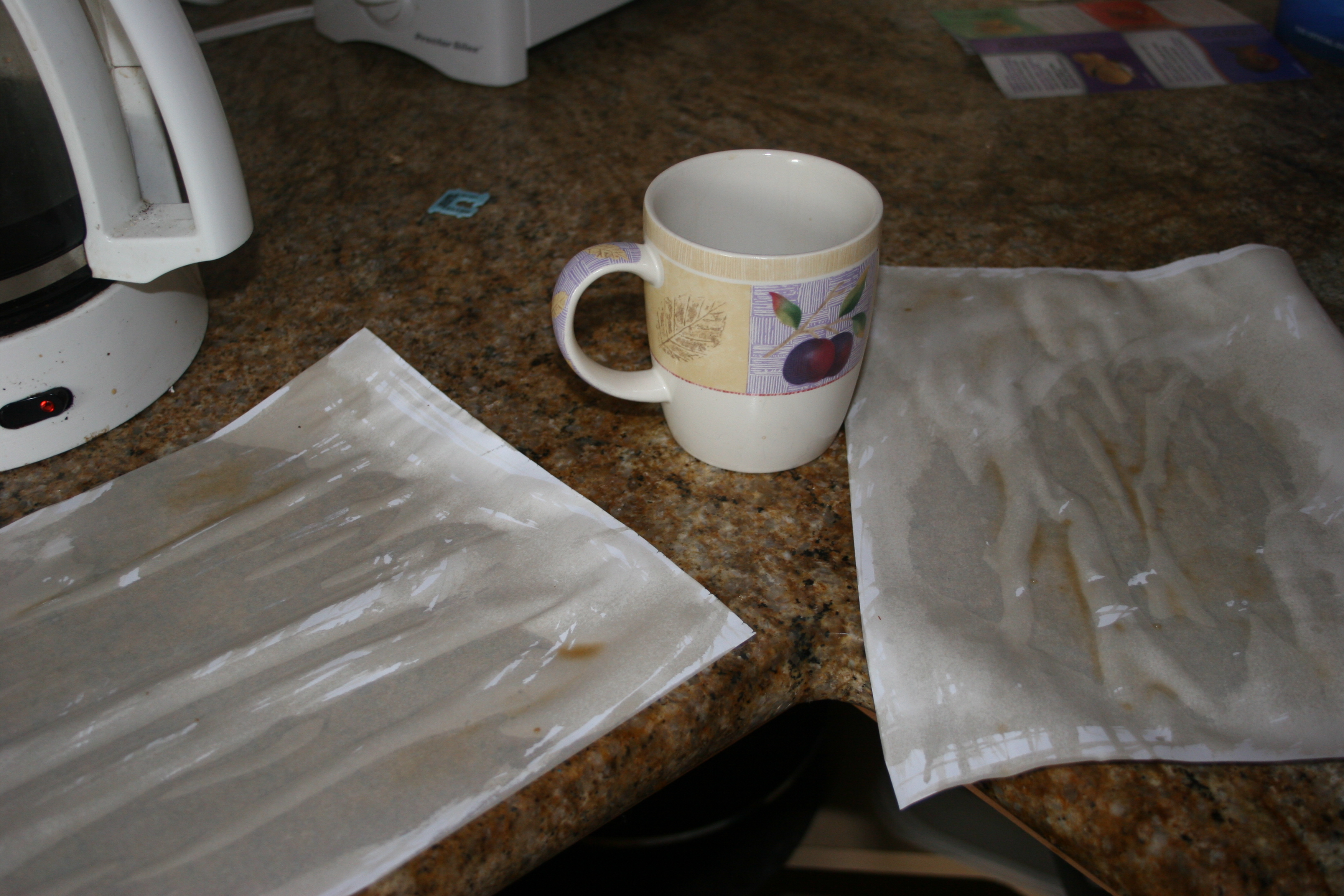
I stained paper with coffee
When it was dry I singed the edges to make it look like an old scroll.
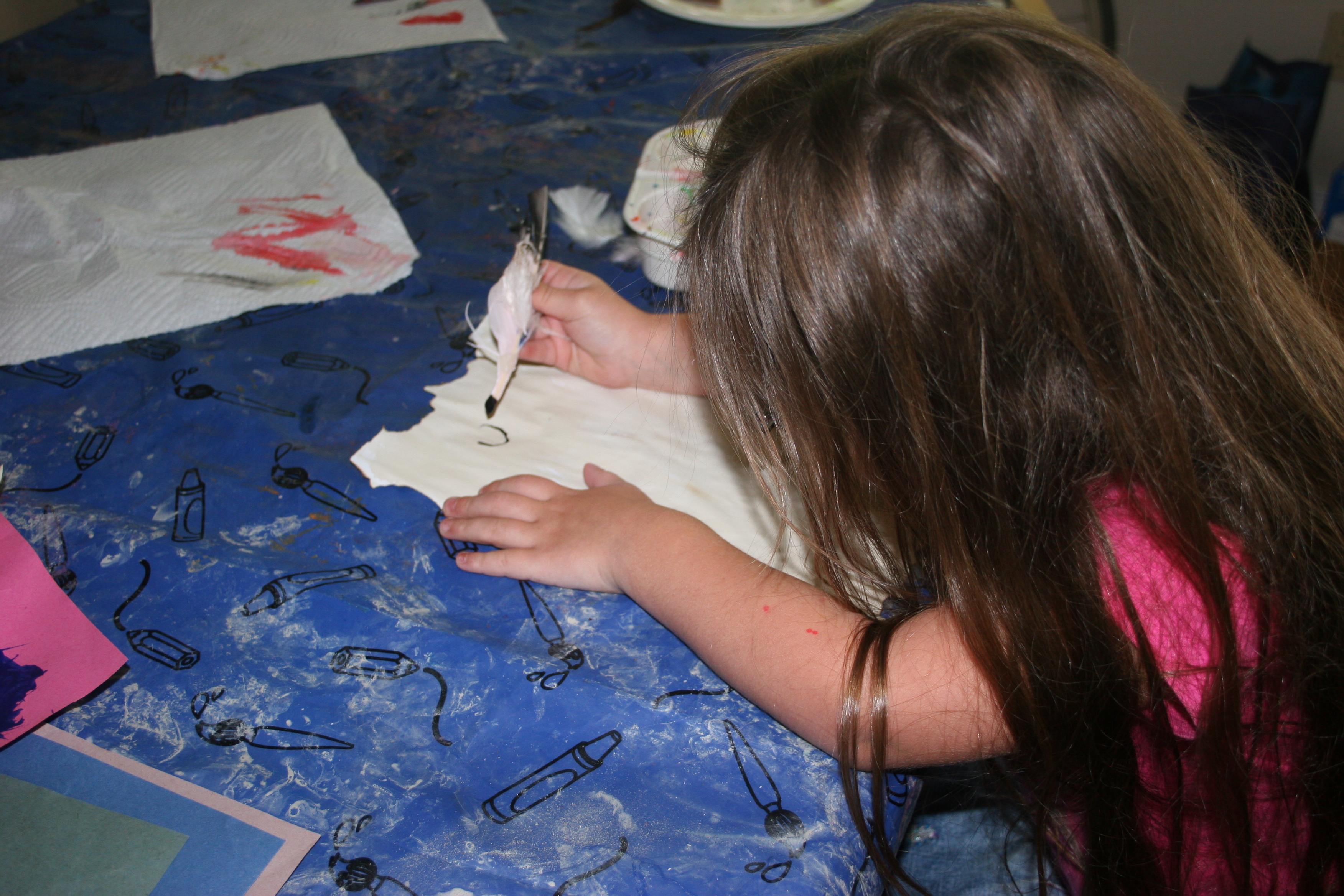
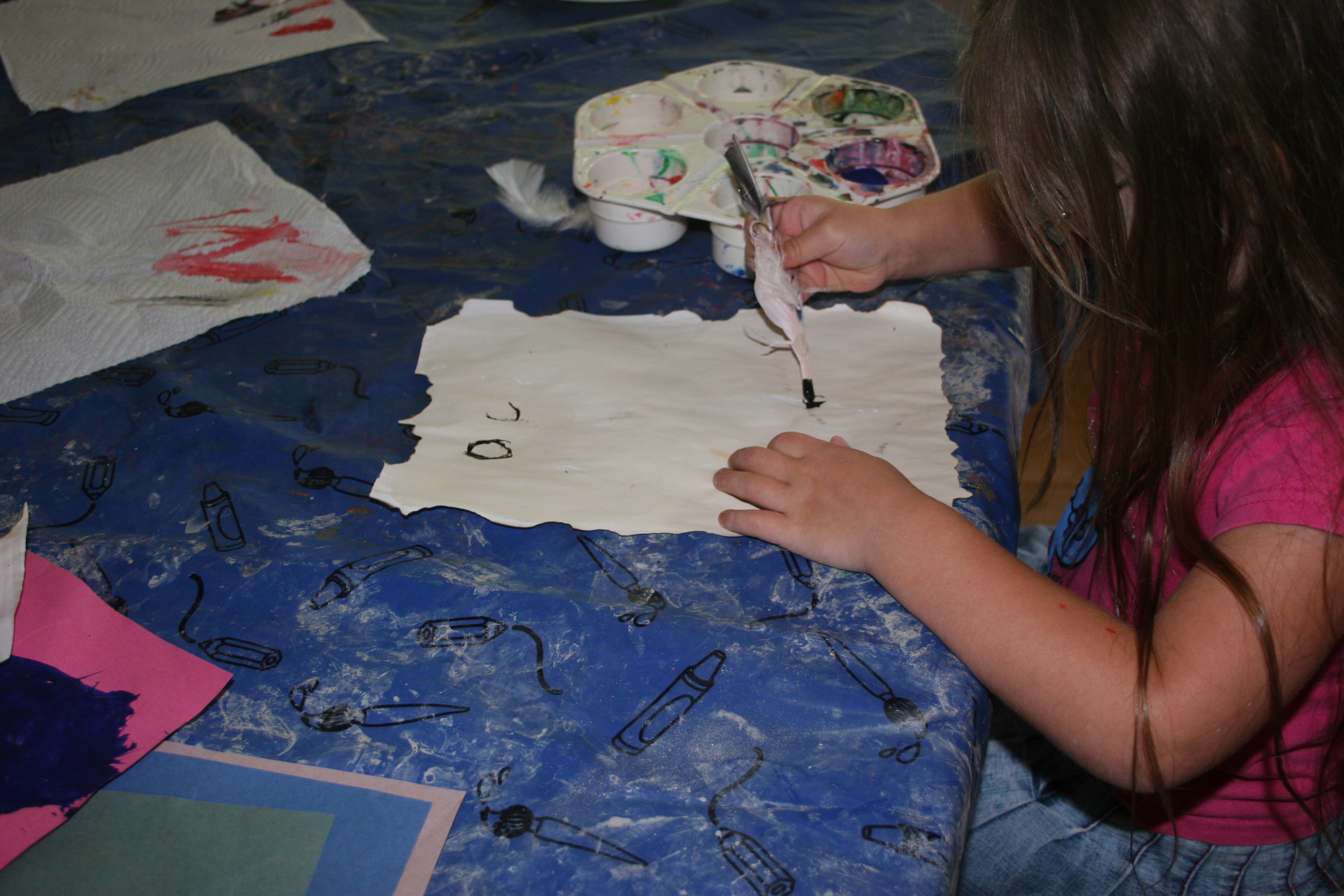
I asked the girls what they would like to do. They decided on a Wizard’s spell.
It will be funny because we don’t even know how to read and write……………. Maybe Wizards write differently to people.
I think this would be a great way to encourage boys in their mark making.
Set up a desk in a role play pirate ship with ink and quills
Make a spell book for children to add their own spells
Add a few feathers and a small pot of paint to your mark making area
Make treasure maps and encourage the children to mark the treasure with an X.
Literacy for under 5’s shouldn’t be about sitting at a table learning letters, tracing over letters or using flashcards. It can be brought into any aspect of play and when children are ready and interested in letters and sounds they will talk about it, ask questions and experiment. Make it fun, make it relevant and they will learn.
I write a lot about the pre-requisite skills to learning to read. Talking with children, playing with language, reading to your child and developing listening skills are all important but for some children even with these things they will fail to thrive educationally.
Why? Because of poor nutrition.
Malnutrition is an underlying cause of 2.3 million children’s deaths a year, and for millions more children contributes to failures in cognitive and educational development. As a result, the life chances of millions of children around the world are devastated. The long-term consequences of child malnutrition for health and resilience to disease are well established. But new evidence commissioned by Save the Children, for the first time identifies the impact of malnutrition on educational outcomes across a range of countries.
The Story of Ngouth a 12-Year Old from South Sudan
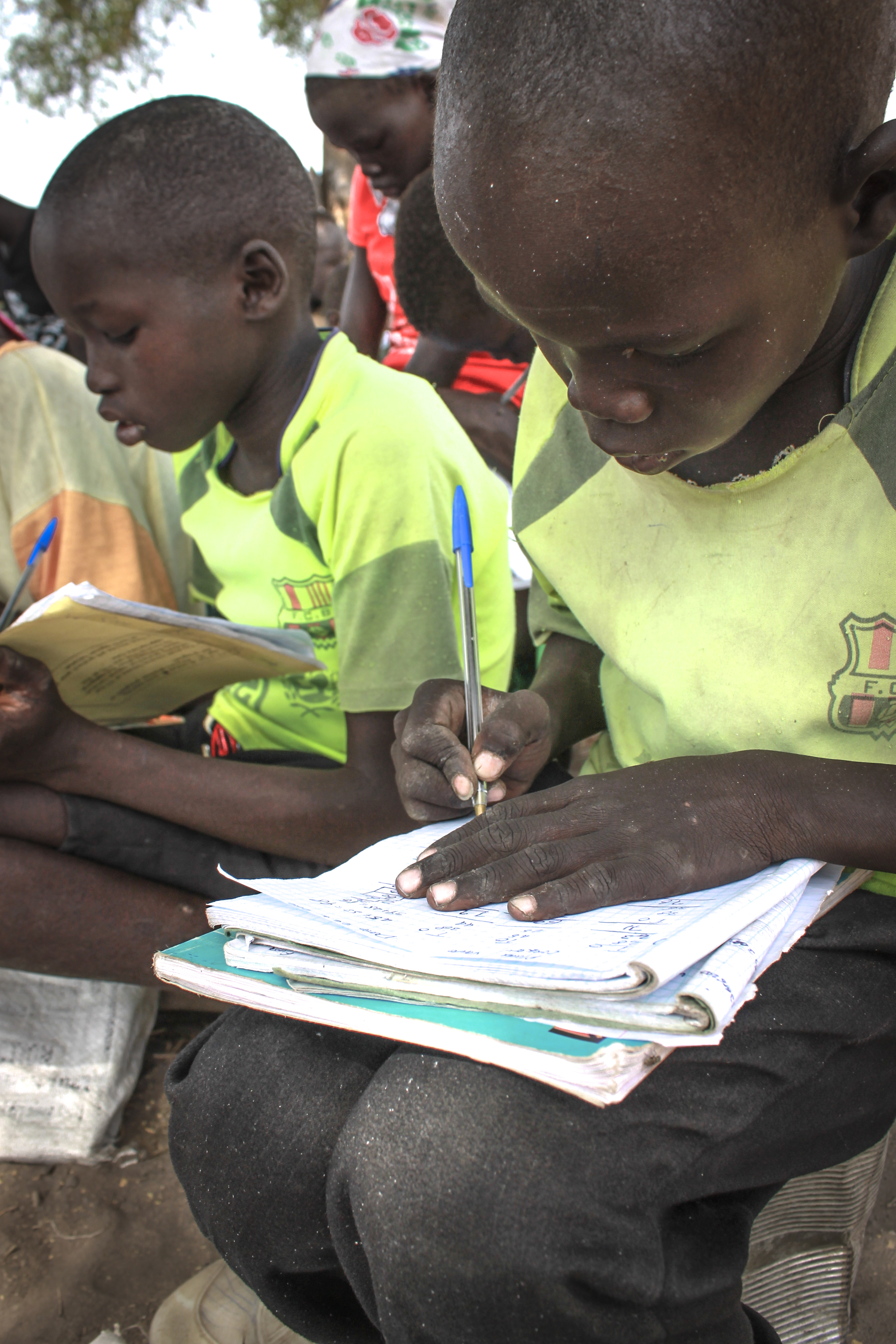
Although he is 12 years old, Nguoth looks about eight. Like many students in his class, for two years he had to drop out of school because there wasn’t enough food at home. He still misses school at least two days a week to go into the bush to find wild fruits. On the other days, he comes to school hungry. In 2010, the UN declared Akobo, the region where Nguoth lives, the ‘the hungriest place on earth’. Drought, floods and inter-communal conflict have left a third of children malnourished.
I was five years old when I started school. Sometimes I had to stop coming because I was hungry. For two years I dropped out because I had to go to the river to fish and to the bush to collect wild fruits for my family. I think the situation is getting worse and more children are stopping coming to school to help their family.
Hunger is very bad in this area. We have no gardens to grow food because the floods destroyed them. The people are angry with each other and there’s no peace [referring to inter-communal conflict and cattle raids affecting the area]. People are very sick, malaria is very high and lots of children are absent from school. It’s hard for children to be happy and take part in class because they’re hungry.
My favourite subject is science and when I finish school I’d like to be a doctor.
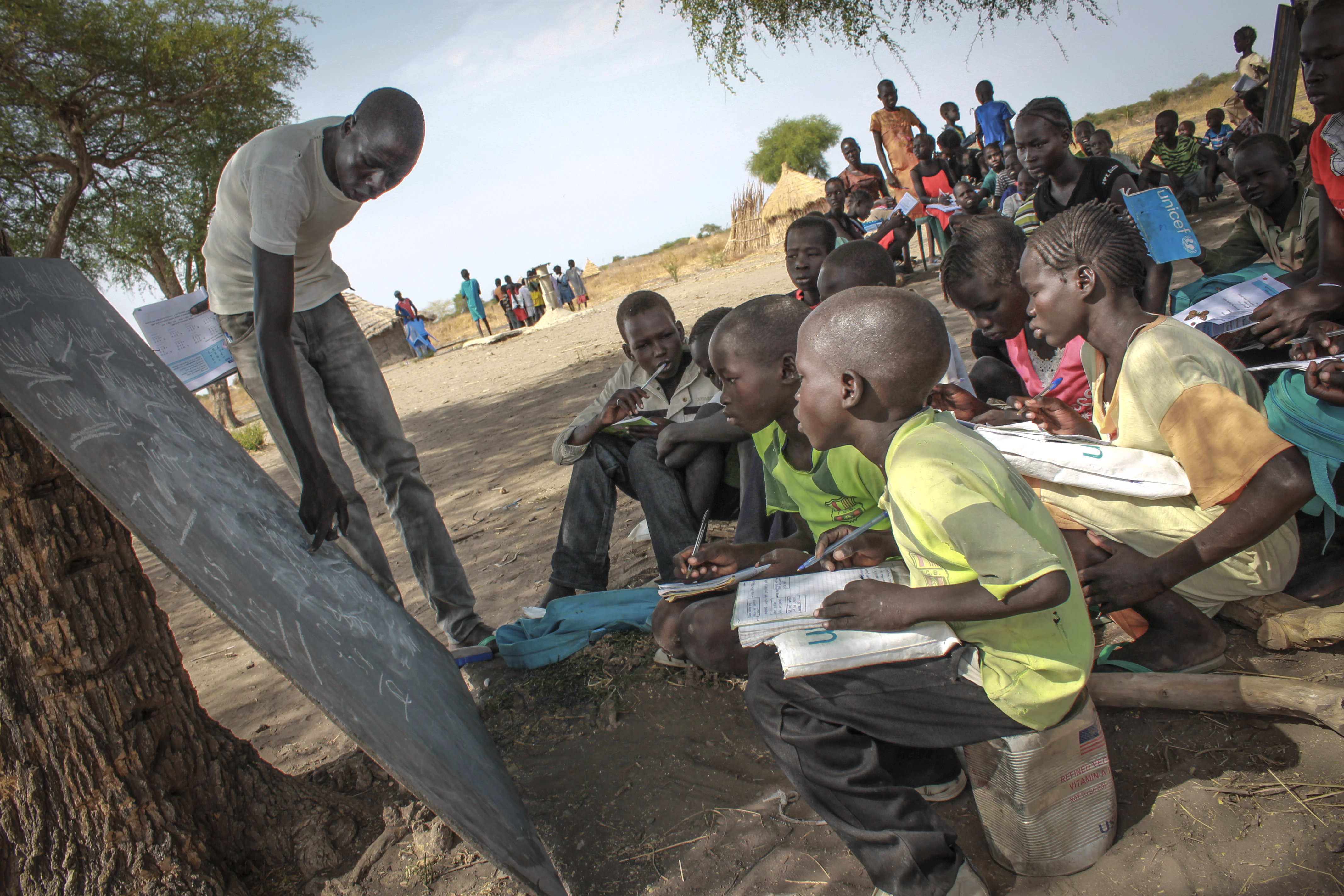
Nguoth is currently studying at one of 20 schools supported by Save the Children through a DFID funded project in Akobo East. Save the Children is providing these schools with text books, desks and other school supplies, training teachers and has set up and is supporting Parent Teacher Associations and Student Advocacy Teams that encourage more children to enrol in school.
To enable Ngouth and thousands of children like him to achieve their dreams they need adequate food.
Food for Thought forms part of the IF campaign where 170 charities have joined together to call for the G8 to take action on World Hunger. A number of high-profile children’s authors have also agreed to support the Food for Thought report with an open letter to G8 leaders – these include Julia Donaldson, Eric Carle and Philip Pullman.
Julia Donaldson, the Children’s Laureate and author of the bestselling book The Gruffalo, said:
“The devastating impact of malnutrition shouldn’t be underestimated. It stunts a child’s development, sapping the strength of their minds as well of their body, depriving them of the chance to be able to read or write a simple sentence”
To celebrate the 40th birthday of one of the world’s most famous picture books, I have 10 Hungry Caterpillar inspired activities.
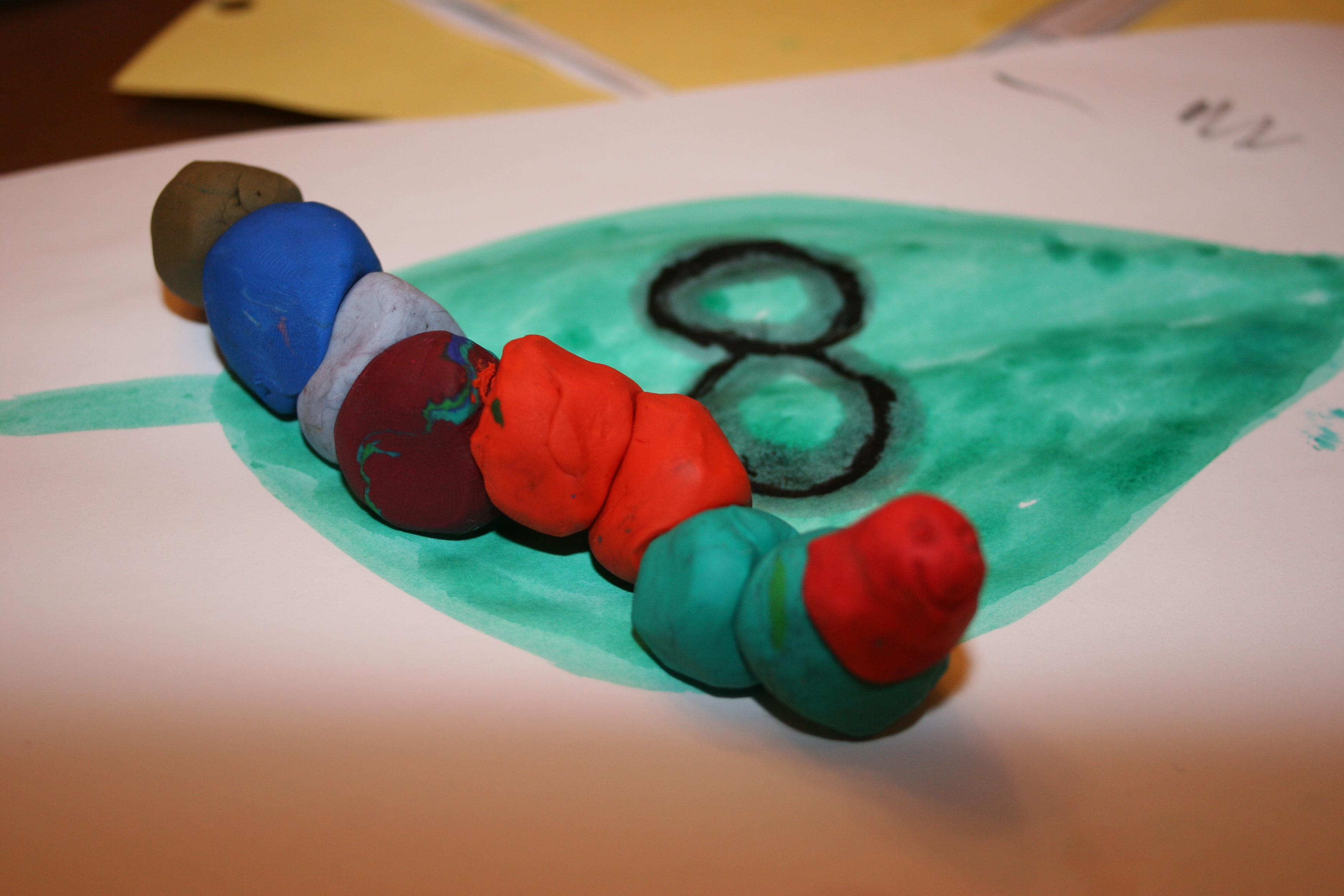
Maths: Build caterpillars from dough or clay. Count the number of segments that make up the caterpillar. Play a matching game – place the correct caterpillar on the leaf with the matching colour or number of segments.
2. Imaginary Play: My eldest followed an enveloping schema for years. She would hoard things in little bags and containers and if you ever left anything around that she could climb into, you would find her inside. On one occasion I left a fabric storage bin in her room. She promptly climbed inside declaring that she was in her cocoon and soon emerged as a beautiful butterfly. Provide material, boxes, play tunnels, blankets, wings and deely boppers.
3. Song and Rhyme: Sing the caterpillar on a leaf song or sit behind your child and pretend to crawl a caterpillar up their back. Teach them to ask ‘Whose that climbing up the garden wall?’ and you reply in a caterpillar like voice ‘It’s me’ said the caterpillar ‘I’m learning how to crawl’.
4.Paint symmetrical butterfly pictures: I’m sure we all remember these from school days. Paint on one side, fold the paper over to create a symmetrical print on the other. This can also work well by painting a piece of string, placing it between the folded paper and then pulling it out whilst the paper is still folded.
5. Movement: Read the Hungry Caterpillar and give the children movements to follow during the story. Egg – curl up in a ball, caterpillar – crawl along the floor moving to eat different types of food, big fat caterpillar – stretch out wide, cocoon – spin slowly then hang their head between their legs, staying very still, butterfly – flap their wings and fly.
6. Discovery – it is a little cold yet but once the weather is warmer, grow your own butterflies. We have done this very successfully using kits from Insectlore. It is fascinating to watch how quickly the tiny caterpillars grow and then instinctively hang upside down. You soon get to recognise when the butterflies are ready to emerge and can feed them indoors for a day or 2 before releasing them into the garden. The species that they use tend to stay within your local area for a few days after being released so you can spot them in the garden.
Find out about the butterflies and caterpillars that can be found in your locality, and print pictures of more exotic species.
7. Food: Make a fruit salad using the fruits eaten by the Hungry Caterpillar or taste some of the more unusual foods he ate. We are a big juicing family so we are going to make Hungry Caterpillar juice using:
1 apple
2 pears
3 plums
4 strawberries
5 oranges
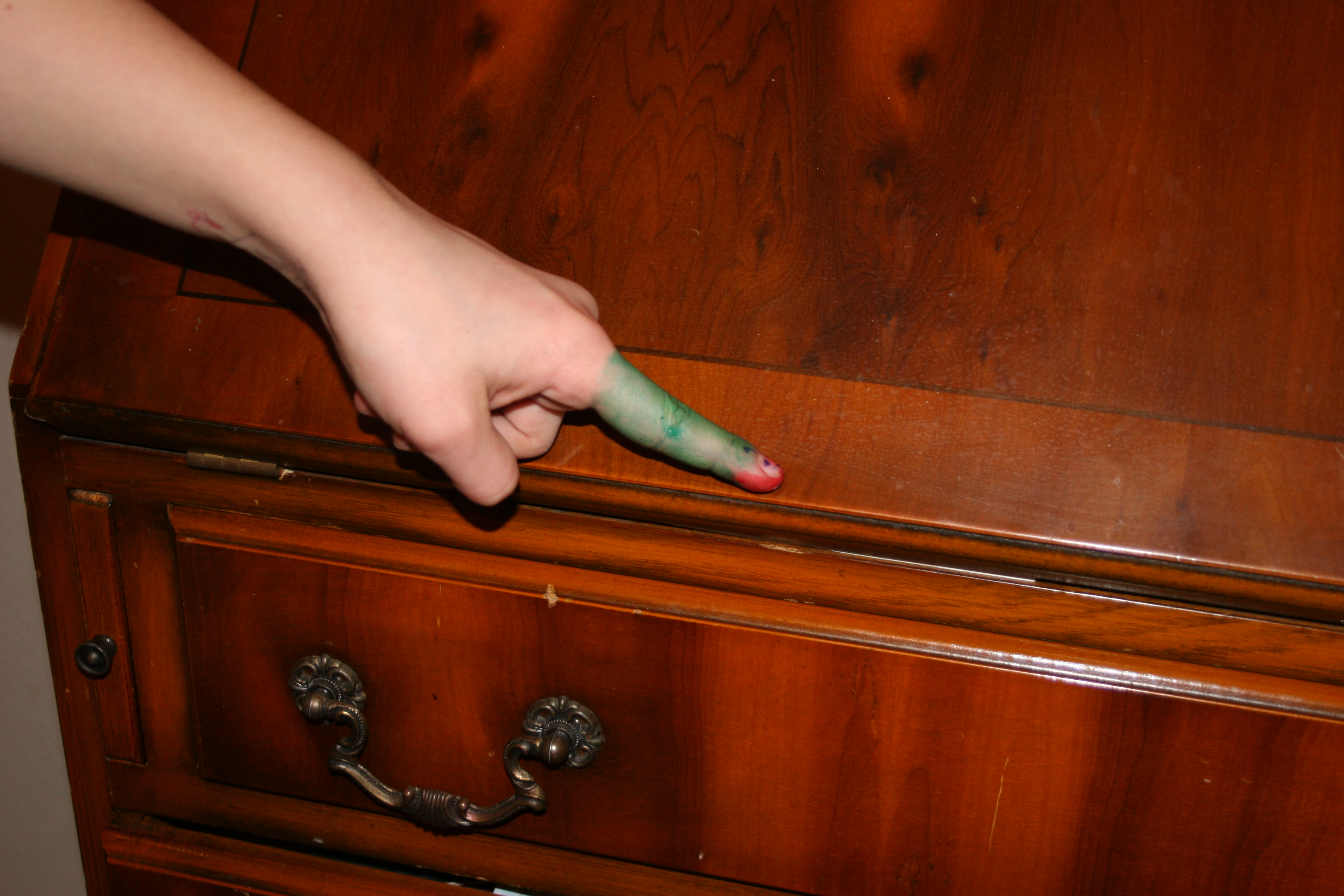
8.Maths: Turn your finger into a crawling caterpillar and measure things in caterpillar steps.
9. Outdoors – Grow a butterfly garden. I saw some amazing butterflies in our garden last year that are fairly commonplace in this area. I’m definitely going to learn about how I can attract them this year.
10. Visit a Butterfly Farm. I can highly recommend the butterfly house at Bristol Zoo and Felinwynt Rainforest Centre in West Wales. In Seattle there is the Butterfly House at the Pacific Science Centre . Feel free to add any recommendations in the comments.
My Children are big fans of Beat Baby and love to play rhyming games. Some of these activities and the way they help with early literacy development are documented in a previous post about Musical Games . Recently we were reading Ros Bayley’s Action Raps and then continued to make up some of our own.
After a few rhymes with me leading the way, my 4-year-old decided to have a try.
Having recently discovered some of the amazing hikes in the Seattle area we are really keen to encourage the children to appreciate the wonders around them. My kids love outdoor play, especially in the woods but a 4 mile steep hike can be hard work for an 8, 4 and 2-year old. To keep them going on our last hike I asked them to see how many letters of the alphabet they could spot in the surrounding area. The letters had to be found in nature and they weren’t allowed to create a letter by moving an object.
Here are some of the letters we found
X
t
V
Y
C
B
L
U
The view from the top is always worth it (and the promise of snacks).
This year the UK government introduced phonics screening tests at the end of Year 1 and there is a firm commitment to the teaching of synthetic phonics as the primary method of teaching reading.
For me there are 2 key questions in this discussion:-
1. How important is phonics instruction for producing fluent readers?
2. Is it appropriate to test young children’s phonic knowledge?
1. The Importance of Phonics
Clearly, phonic knowledge is important. I learned to read using the phonetically regular Meg the Hen books and was always an advanced reader.
Phase 1 of Letters and Sounds (a resource for pre-school children published by DFES in 2008) gives an excellent grounding for later phonic skills. The materials introduce phonics through listening and playing with sounds before any focus is put on the written letters. My own children could recognise rhyme and alliteration at the age of 3 through playing games, and joining in with songs and rhymes. In my opinion it is this groundwork in early life that is sometimes missing in failing readers therefore phonic instruction in later phases becomes meaningless and sterile rather than fun. Building the underpinning skills through play is therefore an important factor.
There are numerous studies that cite the size of a child’s vocabulary in the pre-school years as an accurate indication of how easily they will learn to read. Further studies suggest the importance of children understanding story structures and the language involved in re-telling stories. Children develop vocabulary through talking and listening but to an even greater extent through reading. When a child is unable to read or in the early stages of reading, the importance of adults reading to them cannot be underestimated. Not only does it encourage an interest in books but it also enriches vocabulary considerably. As evidence to this point my 8 year old who is an advanced reader has a rich vocabulary and writes with mature language and expression. She enjoyed advanced books such as Winnie the Pooh and Pippi Longstocking in her pre-school years. She now reads Harry Potter, Little Women and the Narnia books and regularly inquires as to the meaning of words developing her vocabulary even further. As a writer myself I am very aware of the impact reading has on the quality of my writing.
There is little doubt that there is a percentage of children who are failing to learn to read, having a detrimental effect on future academic success. I would be interested in analysing the statistics to see what proportion of these are boys. Most girls enjoy reading, mark making, role play and other early literacy related play. Many boys do not. In my opinion more needs to be done to channel boys natural interests in physical play and technology into literacy activities. This does not have to exclude phonics as one of my colleagues demonstrated when she encouraged her pre-school boys to explore rhyme and rhythm by dressing them up as rappers, using electronic beats and encouraging them to make up their own raps.
To some extent therefore it is not what is taught that is the issue but the way that it is taught. If phonic instruction is to be the key method of reading instruction then it must be engaging or children will switch off from day 1.
2. Phonic Testing
I understand the reasons for introducing this test and would by no means undermine the fact that we need to highlight failing readers early to give them the extra support they need. However, I do feel that most teachers know the children who are struggling to read without the test. Certainly as a parent who has helped with reading in class this was easy to spot and it was also clear which children were struggling to decode using phonics. I think that putting children under pressure at a young age and giving parents another thing to worry about or be competitive about is wrong. I don’t have children who have been through these tests and from feedback from other parents I think that schools are handling them sensitively, ensuring that children are unaware that they are being tested, however I still feel that they are wrong.
Some children will be exposed to all of the experiences mentioned above but will still struggle to learn to read. Perhaps the tests will help to identify and address these children’s needs at an early stage but I am wary that catching children when they are failing is not the best starting point to addressing the problem.
A further point that was raised in the discussion is that all children do not learn in the same way and that the ability to decode words does not automatically produce fluent readers. I used to work with children on the autistic spectrum. One of these children had a fascination with letters and sounds, he could read phonetically regular words before he started school but his understanding was at the level of a 1 year old. When we read books together they were of the ‘Where’s Spot?’ type and anything more complex was beyond his understanding. I realise that this is an extreme case but I believe that it is a cautionary tale to those who may think a good phonics test result means that their child is reading fluently.
I will be watching with interest as my children move through the US education system (especially as they will start school a year later than in the UK) to see how literacy teaching differs and whether there are similar worries about levels of attainment.















 Right from the Start