Category Archives: music education

A Musical Family Christmas with Jingle Bells Music Book

mfk100089My idea of the perfect family Christmas is a little clichéd but involves mince pies, mulled wine, a roaring fire and singing around the piano. This is becoming a reality in our house.  With an array of instruments including piano, guitar, clarinet and saxophone and a whole family who enjoy singing and music, we are loving making and recording music together. When I was asked if I would like to review Jingle Bells, from music-for-kids, I thought it would be a good chance to add Christmas songs to our repertoire.

The Jingle Bells book and CD features 18 well-known Christmas carols and songs. The book is nicely presented with each song displaying the notes of the melody plus chords written along the top.  There is also a handy chord chart at the back of  the book for both guitar and ukulele. Being a beginner, I photocopied the chord sheet to make it easier to reference while I was playing guitar. With my basic guitar skill, I found that there were a few too many chord changes to play many of the tunes with confidence but with most songs you could leave some of the chords out.

The piano music is basic (right hand melody and chords) and was great for my 8-year-old to practice sight-reading and play a simple tune . The chords could be added by a more experienced pianist to play accompaniment, I even managed to sing along to my own rudimentary playing during silent night.

The CD contains all the songs in the song book and is a nicely sung collection of Christmas carols. Younger children may find the keys too high.

mfk100089_lb02_iMy little ones enjoyed filling out the sticker pages and singing along to Jingle Bells while their sister played the recorder.  I was disappointed that there weren’t more songs for the little ones like ‘Rudolph the Red Nosed Reindeer’, ‘When Santa got Stuck up the Chimney’ or ‘Away in a Manger’.  They joined in with Jingle bells and We Wish you a Merry Christmas and there are a few other simple melodies that they could learn but I would have liked to have seen more simple songs that weren’t carols.

If you are looking for a simple book and CD of traditional Christmas Carols, at £7.95 this is excellent value.


No payment was a received for this review, a copy of  the material was received for review purposes.

Traditional Childrens’ Parties Promote Communication Skills.

Many of us provide elaborate parties for children under the age of 5 and then find that they are happy just ‘playing’.  I’ve adapted my parties over the years. I found that before the age of 3 my children were happy to have one or 2 friends visit to play games and eat cake. Even when they were a little older they mostly enjoyed a few crafts, games and dancing.

According to a recent study by I CAN the communication charity, my children are not unusual. In a survey of 1500 parents they found that the top 5 party pursuits for under-5’s were:-

  1. Dancing games like Musical Chairs, Musical Statues and Musical Bumps
  2. Party games like Pass the Parcel and Pin the Tail on the Donkey
  3. Playing outdoors with other children
  4. Eating party food
  5. Singing and rhyming  games like the Hokey Cokey and Row, Row, Row Your Boat

I CAN Communication Advisor, Kate Freeman said “The top five activities all involve communicating and socialising with their friends – from pass the parcel, which boosts turn-taking and listening skills to singing and rhyming games like the Hokey Cokey. This type of activity enhances children’s understanding of the structure and meaning of language – and there is no better environment for a child to develop their confidence than with a group of friends and adults in a relaxed and fun setting like a party”. Furthermore, mealtimes and snack times are a fantastic opportunity for young children to continue to develop communication skills.

Fun games to play at parties to develop children’s communication skills include:

  • Singing and rhyming songs – a great way to help children learn vocabulary and have fun making music together
  • Playing clapping games (Pat-a-Cake) –  to help children to develop their coordination, control and movement as well as learning vocabulary and social skills
  • Word Games (Simon Says and I Spy)  – to help to develop children’s vocabulary about the world around them and to listen to instructions  (These games can be adapted to easier versions for younger children)
  • Turn taking games (Pass the Parcel) – to help children to learn when to talk and when to listen
  • Games like musical statues to encourage children to listen carefully.   Listening skills can be developed further by saying ‘Stop’ in a quiet voice instead of pausing the music.
  • Imaginative play like toys’ tea parties  help children to expand their language.

When I was teaching in nurseries we often used to play ‘ring games’ like ‘Farmers in the Den’ and ‘Hokey Cokey’ if we had bad weather and it was difficult for the children to play outside. They were always a firm favourite.  The children also loved playing picnics or tea parties.

I CAN is inviting nurseries, pre-schools, childminders or community groups to take part in their annual fun and educational event . This year I CAN is partnering with Entertainment One to make its pre-school character Humf the brand ambassador. The 2013 Chatterbox Challenge: Mad Chatter’s Tea Party with Humf  asks groups to organise sponsored tea parties where children can join in with popular songs and rhymes to develop their communication skills in an enjoyable way. I organised an event years ago with my pre-school music group. We learned  new songs and the children were awarded stickers and certificates for their achievements.

The singing and rhyming activities for the 2013 Chatterbox Challenge: Mad Chatter’s Tea Party with Humf have been developed by I CAN speech and language therapists and teachers. Lesson plans, which include Humf and his friends in the activities and illustrations, link to key aspects of the new Early Years Foundation Stage including Communication and Language, Physical Development, and Personal, Social and Emotional Development. All the activities are aimed at supporting and developing children’s speech and language skills.

Being involved with the Chatterbox Challenge: Mad Chatter’s Tea Party with Humf encourages children to think about communication, whilst helping support those who find talking and understanding difficult.

Chatterbox Challenge week is 1st – 8th March 2013 and most groups will be holding their Tea Party with Humf during this week, though groups can actually take part at any time during 2013.

To register and get involved in this year’s Chatterbox Challenge: Mad Chatter’s Tea Party with Humf, go to www.chatterboxchallenge.org.uk

Musical Games to Help Young Children Learn about Notes and Beats .

Last month I hosted a competition to win a copy of Justin Fletcher’s cd.  To enter the competition I asked people to ask questions about musical activities with young children.  The winner was Maya Russell who asked this question on my Facebook page.

Is there a musical game I can play with my 3 year old to help them learn about notes, beats etc?

The ability to keep a steady beat has been recognised as the single most influential factor in later academic success.  There are a number of activities you could employ to build these skills.  In fact I ran a successful project with Springboard Opportunity Group  on this topic, proving that even children with severe disabilities can benefit from and enjoy Steady Beat activities.

At the simplest level this can involve singing simple nursery rhymes and chants including, the grand old duke of york, 5 little monkeys jumping on the bed and 5 little peas in a pea pod pressed. Most traditional nursery rhymes have a strong beat and if you say them whilst tapping the rhythm on your knees the children soon follow suit.  Ros Bayley  has some wonderful resources for Steady Beat activities including Beat Baby

Beat Baby is a gorgeous fluffy creature available in a variety of colours.  The magnet in his tail allows him to curl up and he only uncurls when the children make a steady beat and chant an introductory rhyme.  There are a number of Beat Baby books with rhymes but it can also be used with well known rhymes or some you make up of your own.  Ros Bayley also has a number of rap books with accompanying cd’s.  A great idea is to have a dressing up box with baseball caps, trainers, gold chains, puffer jackets etc. and encourage children to be rappers.

3 is probably a little young to learn notes and their values but there are a number of things you could do in preparation.  Create  flash cards of notes to play snap and pairs games with, introducing the names crochet, minim, semibreve and quaver.

A good way to introduce rhythm is to use animal names for clapping out rhythms.  A steady 4/4 beat would be cat – er – pill – ar, 2/4 would be ti- ger , 3/4 el – e – phant.  Once children have been introduced to the animal names you can try clapping a rhythm and asking the children to tell you which animal you are clapping or hold up an animal and ask the children to clap the correct rhythm.

A Song for Hungry Caterpillar Fans

Over at Science Sparks they have been having fun based on the theme of The Hungry Caterpillar.

We visited Bristol Zoo this week and the butterfly house prompted lots of questions from my 3 year old.

But how do the caterpillars turn into butterflies?

We were able to see caterpillars, cocoons and butterflies and touch the empty cases.   I promised her that when the spring comes we can rear our own butterflies using a kit we have from Insectlore.  We have done this successfully in the past before releasing the butterflies into our garden.

We have a song about the lifecycle of a butterfly that we like to sing – it’s great fun for butterfly obsessed kids.

TEDx London 2011 The Education Revolution

WP_000716

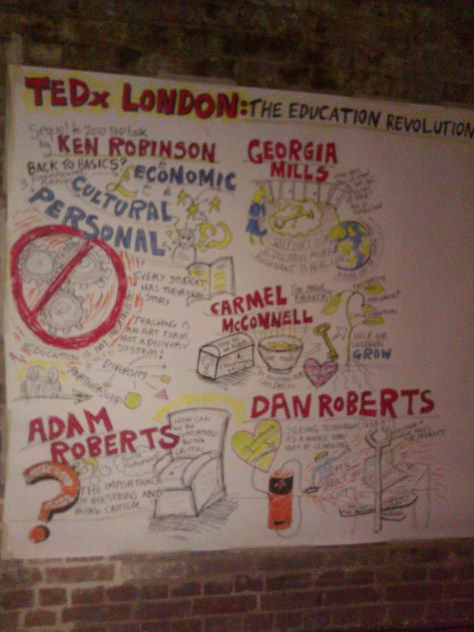
I was fortunate to attend TEDx London this weekend. This event was born from issues raised in Sir Ken Robinson’s 2010 TED talk and was designed to raise the question ‘ How can we bring on the Education Revolution?’

What can all those involved ACTUALLY  DO to ensure that the old and irrelevant in education is thrown out and  that we can build a new model of constant reinvention to ensure that  education provides what industry requires and more importantly what   young people need to flourish in today’s world.

I returned from TEDx London, my head buzzing with ideas, questions and things to explore.  Many of the underlying concepts were not new but were reiterated by passionate individuals and illustrated by exciting examples from the world of education. These were some of my highlights:-

The talks were split into 3 sections

  1. What’s Wrong / What’s Happening
  2. What’s Right
  3. What’s Next.

The first session began with a live feed from Sir Ken Robinson.  He discussed his views on the purpose of education

Economic – Education underpins the modern economy and for a modern economy there is a need for creativity and innovation.

 Cultural – Helping to understand each others cultures and relieve the problems of cultural mistrust.

Personal – Education is about individuals, it cannot be mechanistic and should encourage students to become engaged.  For this reason education should be personalised.

Sir Ken Robinson’s vision for change includes

  • Education that is personalised
  • Improvements in the motivation of both students and teachers
  • Education that is customised to the needs of the particular community or individual school
  • Education is about diversity and standardisation offends diversity.
  • Education is about partnership with great institutions and the community.

A number of these points were a common thread throughout the talks.  The importance of recognising children as individuals and encouraging, rather than stifling their talents and interests, came time and again. The need to motivate children and encourage them to think for themselves and the many possibilities that technology offers  also kept reappearing.

I consider myself fortunate to work in Early Education.  Active learning, teaching that stems from children’s interests and strengths and listening to the child’s voice are fairly widespread.  Learning is fun in the early years and it would be unusual to find a pre-school child who grumbled that school was boring. I hope that all education can take lessons from early education at its best.

Adam Roberts an 18 year old human rights campaigner talked about  critical thinking and how his mother’s encouragement to ask questions set him up for life. As young children we instinctively ask questions, but as we grow older children are often discouraged from questioning. This point was made even more strongly in Ewan McIntosh’s talk. Ewan explained the need for children to be problem finders rather than problem solvers.  He showed a group of 7 and 8 year olds who were asked to put on their own TEDx event.  The children were inspired to come up with their own questions, prompted by ‘have you ever wondered?’ The children came up with wonderful philosophical questions and the excitement and animation shown by the children was truly infectious

Another common thread was the potential for  embracing social media and technology in the classroom.  By doing this we are bringing the real world into the classroom rather than viewing education and school as separate to other aspects of life. Dan Roberts  believes strongly in education through technology and demonstrated some of the things his students at Saltash.net Community School are doing.


The What’s Right sessions showed a number of inspirational projects including:

History pin – building a history of real people and places using photographs and video footage.

A workshop from Seeper with a school for children on the autistic spectrum, showing how technology can motivate and engage children Dr Matt Whitby  showing how awe-inspiring science can be, through his off the wall science experiments.


Tim Exile – a musician who has invented a machine to create spontaneous electronic music using a variety of sounds.


The Final session involved speakers who are thinking in a new way and their pleas for like-minded individuals to join them in this journey.

Dougald Hine was inspirational.  He talked about change  with determination and self belief, a firm believer in making things  happen.

Emily Cummings the 24 year old inventor has been named Barclays woman of the year in 2009 and one of the top ten outstanding young people in the world in 2010.  She explained how her passion for designing began when her grandfather taught her to make things in his workshop. Teachers recognised her talent and entered her for competitions, harnessing her enthusiasm and giving her new goals.

Sir Ken Robinson closed the day with a plea to make alternatives a part of the mainstream.  A new vision for education including personalised learning, group activity, the closeness of the community and using and sharing talents.  Many of the case studies from young people at the conference showed that talents were often discovered and utilised outside of school.The community then has an important role to play in educating children The closing lines resonated with me

New technologies will make change possible.

Technology alone doesn’t do much, it’s what we do with it that matters.

There were some wonderful examples of what we do with technology and creative thinking.  I came away with lots of ideas and things that I wanted to share but also a feeling of uncertainty about what I can do to make a difference.  I want to share inspirational ideas and inspire others to try new ways of teaching.  Why?  I believe that we need to be able to use the tools that children are used to at home and that will form a large part of their future rather than sweeping them under the carpet .  Technology will not replace traditional play but will enhance it if we use it creatively. It gives opportunities for awe and wonder, for raising questions, self discovery and creative expression. My endeavour is to show this in practice and inspire others to do the same.

 

There’s a Spider on the Floor – Fun with Rhyme


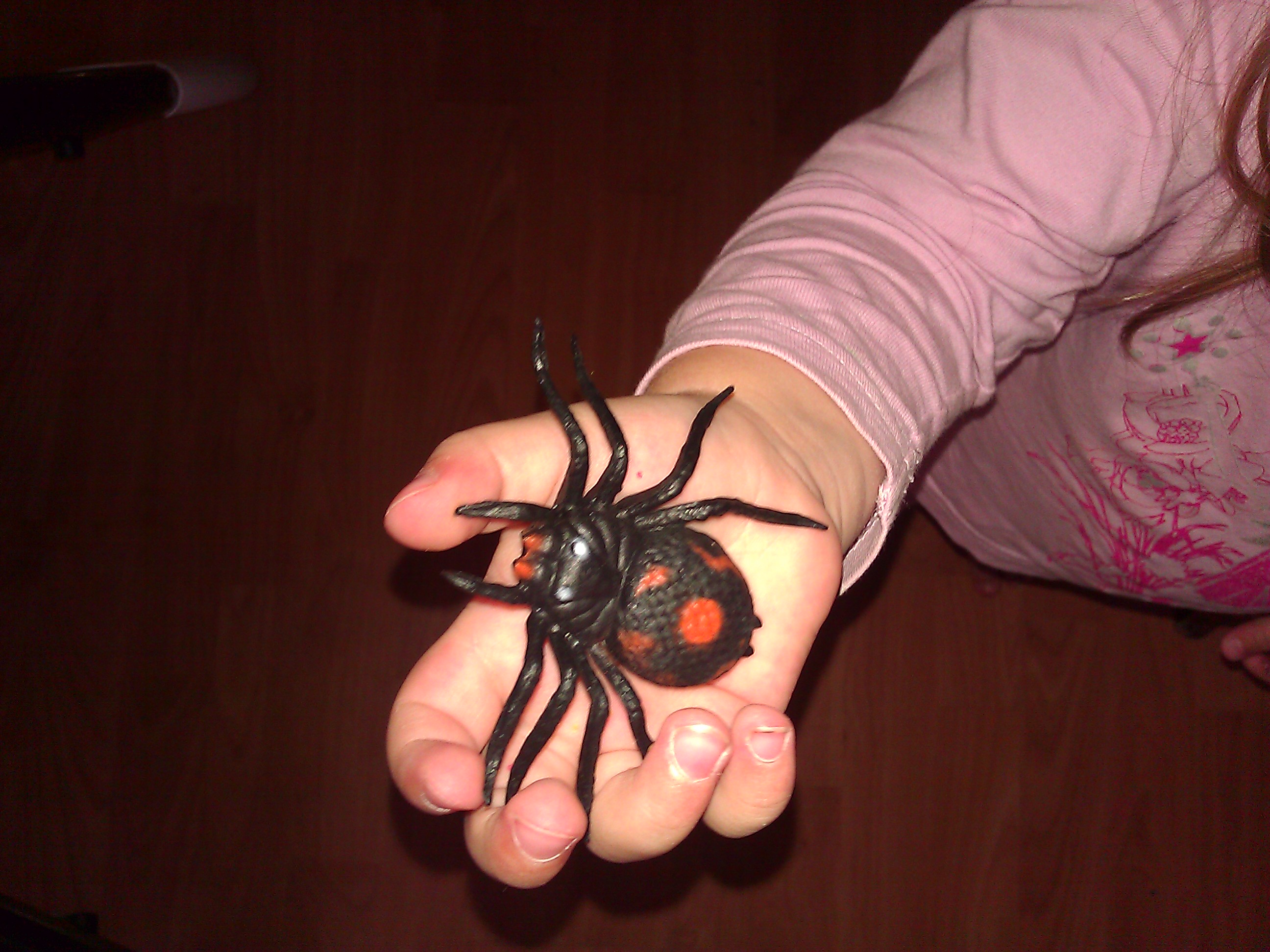
My 2 year old is just beginning to get the hang of rhyme and we often have fun at the dinner table making up rhymes for words. This morning at breakfast the girls found a plastic spider and I remembered a song that I used to sing with the children at nursery.

There’s a spider on the floor, on the floor
There’s a spider on the floor and it wasn’t there before
There’s a spider on the floor on the floor.

The children then choose where the spider should go next.  My 7 year old chose her head and rhymed it with bed.  This was a bit advanced for my 2 year old but she enjoyed choosing parts of the body – it was a great fun activity,  that they could both join in with at their own level and engaged them for about 10 minutes.  They liked it when I made up funny verses e.g. There’s a spider on my knee please don’t fall in my cup of tea.

Fun like this reminds me of the reasons I like to sit with the kids at mealtimes.

‘Can I sing on the microphone?’ Recording children’s voices.

Since investing in a Samson C01U Studio Condenser USB microphone, this has been a regular request from my 2 year old.  It was originally intended as a means of recording music and voice for rehearsal purposes, for listing on audioboo or creating cd resources.  However, once my 2 year old had tried it out , she was addicted.  She sings into the microphone and then sits down to listen to it back.  This got me thinking about how it would be an extremelly useful resource for schools and nurseries for both music and literacy.  Older children could be encouraged to record and edit their performances (we use audacity for this) and would be especially useful in the teaching of dynamics.

I recently attended  a talk about Vivian Paley’s ideas for creating story circles.  In these young children tell their stories to a teacher  and then the group come together to act them out with the author taking the main part in the story.  There was some discussion as to how time consuming it was to record the stories in written form .  If the stories were recorded into a computer and converted to mp3 format this would enable the stories to be recorded quickly and easily and if my 2 year old is typical , I would also imagine that most children would be eager to have a turn.  It would also help to build reluctant writers storytelling skills without the anxiety of having to write it down.  Since children’s ability to tell a story verbally is a pre-requisite to story writing then this would be a wonderful tool for children in their first years of school.
http://audioboo.fm/rightfromthestart