Following my recent post about traditional playground games, by chance I came across this wonderful collection from the British Library. For a play enthusiast like me, it equates to giving my kids free rein with the pick n’ mix.
The collection includes over 100 video and audio clips of children’s play, articles and video about the history of play and how it translates to modern times and teaching resources for KS1 and 2 (elementary age).
The Playtimes website is part of a wider research project entitled Children’s Games and Songs in the New Media Age. The project sought to preserve play traditions and investigate how these types of play continue to be used in the modern age. The project digitised the Opie collection of games and songs created in the late 1960’s through to the early 1980’s, capturing the games and songs of children across the UK. The majority of the recordings were made by Iona Opie as she travelled the country recording in playgrounds and schools, estates and parks. These visits were often unplanned and Iona described how she would simply wind down her car window and ‘follow the sound of children playing’. The project also carried out a two-year study of children’s playground culture today.
Many of the videos are narrated by Michael Rosen and others are animations created by schoolchildren.
I’m fascinated by traditional games and their rhythmic quality so I have ordered Opie’s books of rhymes and games and some of her research findings to learn more. What a treasure trove!
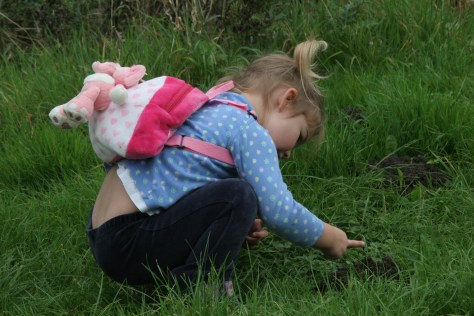
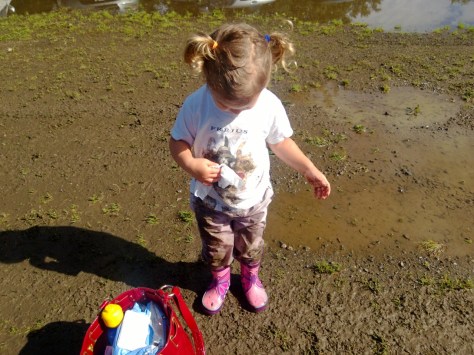
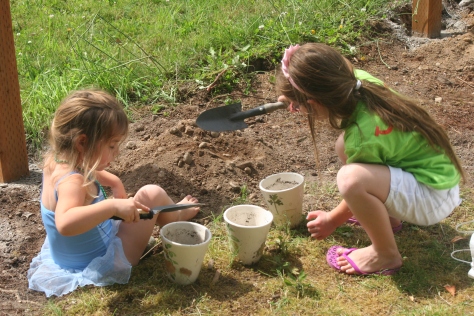
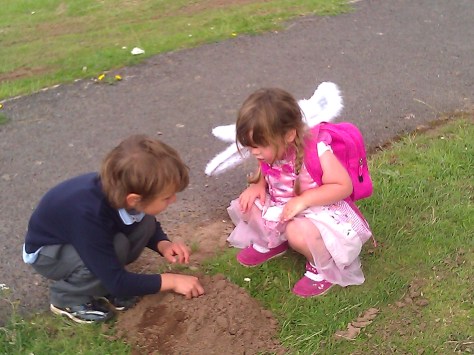
I’ve never been able to avoid playing in dirt with my kids, nor have I ever wanted to. From the youngest age the girls would pick up small stones from the ground or carry sticks. I would walk the dogs at the local park and my daughter would gravitate towards a dirt patch and spend the whole time absorbed with the dusty dry mud. At other times, she would stop at every mole hill in the meadow, exploring it with her fingers.
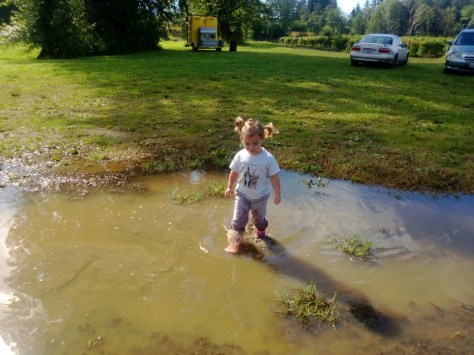
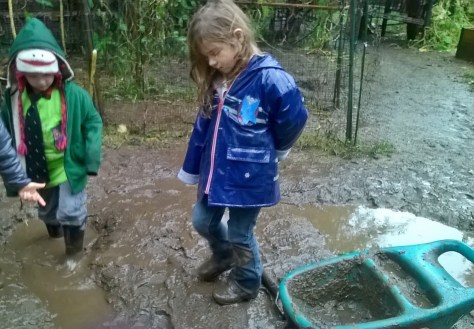
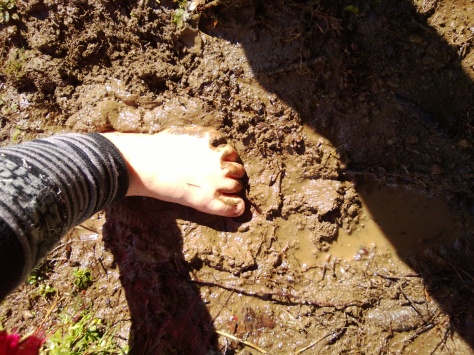
As for muddy puddles – regardless of footwear they are just too tempting to resist.
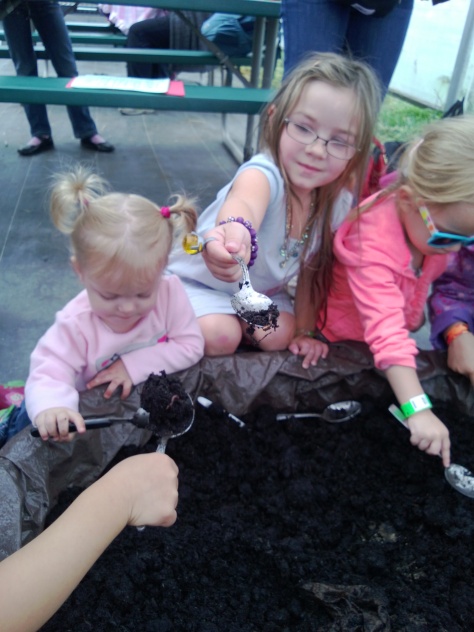
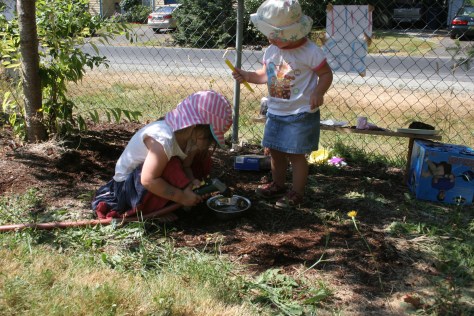
I was very lucky to find a preschool for my youngest that embraces mud play.
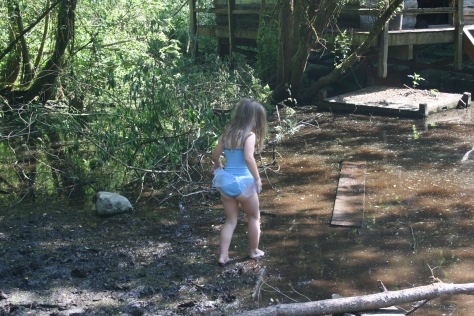
The swamp
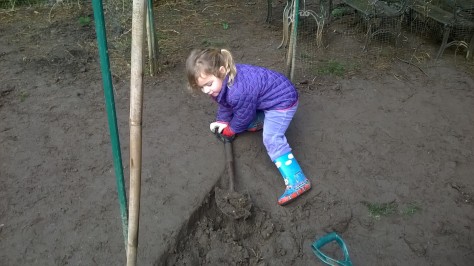
The mud patch – building rivers and streams
If you can’t enjoy getting dirty when you are a child then when can you?
I want it to have hair like mine.digging for worms
Mud play isn’t just fun, it is also great for children’s health and development. Check out my article in Parentmap to find out more.
Four years ago, all of our worldly goods were packed onto a container to make the journey to our new home in the US. We wouldn’t see them again for 10 weeks.
The children packed a small case each with colouring pencils, paper, a few books and a cuddly toy. They were without any other toys for the whole of the summer.
This was an amazing opportunity to be creative with things around the house. We decorated pistachio nut shells, made pictures with coffee filters, built a mud kitchen and hosted our own Children’s Olympics. In some ways I wished it could be like this all of the time and once the toys arrived I was selective about what I unpacked.
The most popular activity however, was learning playground games from my childhood. I explained how I didn’t have equipment or toys in my school playground, when I was a child. We played our own games, which we would also play in the street at home. I am very conscious that if we don’t pass games down to our children they may be lost forever and I’m glad that our lack of toys gave me an opportunity to resurrect them.
There has been concern for some time that children no longer play outside. The good old Seattle or British weather doesn’t help. Couple this with the constant lure of TV and electronic media and it can be hard to get kids outdoors. Teaching them a new game was a great way to get my children outdoors and they often ask me to teach them more. I really must make a point of doing that now that they are a little older.
One of my play sessions for pre-schoolers involved teaching them simple games, like What’s the time Mr Wolf?, Please Mr Crocodile and the Bean Game. I was surprised at how many were new to local families. After seeing how much my children enjoyed traditional games I was intrigued to see if any other parents remembered games from their childhood, most didn’t.
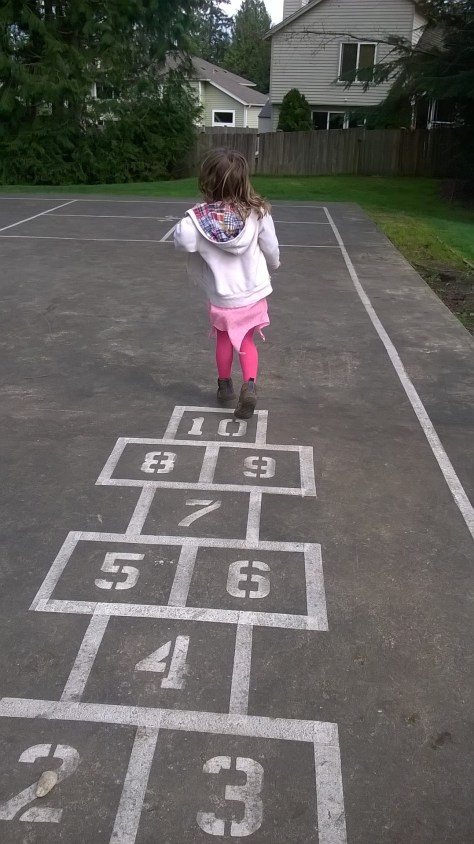
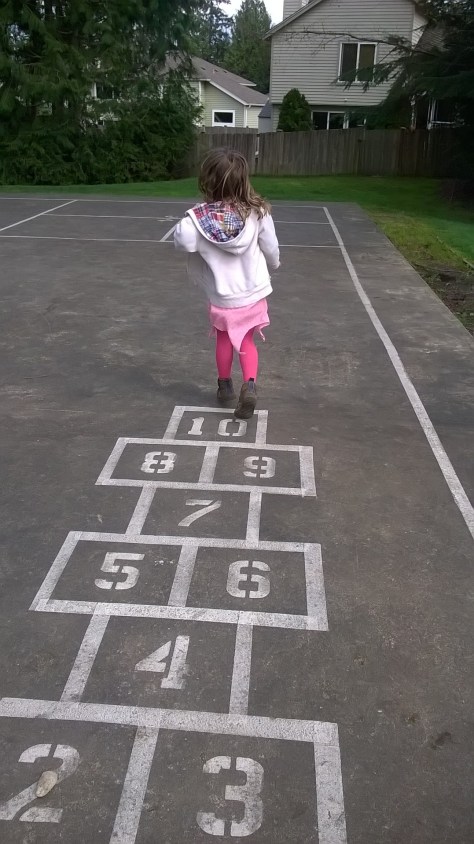
We played some of the more popular games; hopscotch on the driveway, skipping rhymes, What’s the time Mr Wolf but also some less well known games.
Polo
Polo
This was my kids’ favourite.
One child is it and stands at one end of the garden (as kids we used to play it in the road and run to the other side of the street).
They call out a category to the other players on the other side of the garden such as animals or colours.
Each player quietly chooses something from that category and a nominated player calls them out – let’s say dog, pig and cow.
The player who is it chooses one, e.g. ’dog’ and the player who is‘ dog ‘races them across to the other side and back.
The first player back to their place shouts ‘polo’ and is it the next time.
Red Letter
One child is it and the other children stand at the opposite side of the playground.
The person who is it chooses a red letter and tells the players what it is.
She then calls out a letter – the players take one step for each time that letter occurs in their name.
The first player to get to the caller is it the next time.
If the caller calls the red letter, she chases all the players back to the start, if one is caught then they are it.
Ice-cream
The person who is it stands with their back to the other players.
The other players stand on the opposite side of the garden and edge closer to the person who is it.
The person who is it turns around at intervals.
The players freeze when she turns around. If they are caught moving they go back to the start.
If anyone reaches the other side, they touch the person who is it, on the back and shout ice-cream, she then chases the players and if anyone is caught they are it.
Please Mr Crocodile
One player is the crocodile. The other players stand on the opposite side and recite
Please Mr Crocodile May we cross the water, to see the queen’s daughter, who fell in the water, 100 years ago. Which colour must we wear?
The crocodile chooses a colour and any children wearing that colour have to run to the other side without being caught by the crocodile.
If they are caught, they become the crocodile.
I’m sure that there are many other playground games that I have forgotten over time. Many of them will be unique to British childhood so perhaps I should write them in a book to preserve a piece of British heritage for my children.
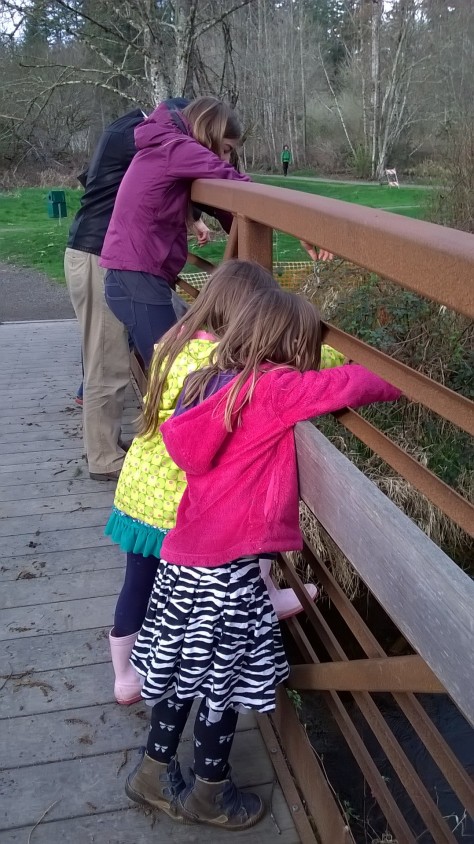
Pooh Sticks
If we can’t remember the rules to our childhood games then they are in danger of being lost forever. I’d love you to share any games you can remember and if there are any lunch supervisors out there perhaps you could make it a mission to bring traditional games back to the playground.
I have a list of games I’m going to teach to my kids this spring particularly mob, and elastics (we got the elastic from Ikea recently) now that they are old enough to play.
Children always look forward to snow days but when it is cold but there isn’t any snow or only a smattering it isn’t always as enticing.
My children love playing with ice – so we often leave water in their water table or allow rain water to collect in containers. They are always keen to go outside on icy day to investigate how solid the ice is and I often find strange deposits of ice in my freezer.
On New Years Eve, it snowed. In the morning there was a smattering of snow left on the ground and the girls headed out to make tiny snow men. They took carrots from the fridge and borrowed our dogs Santa hat.
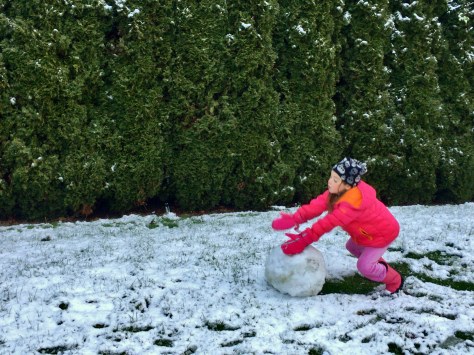
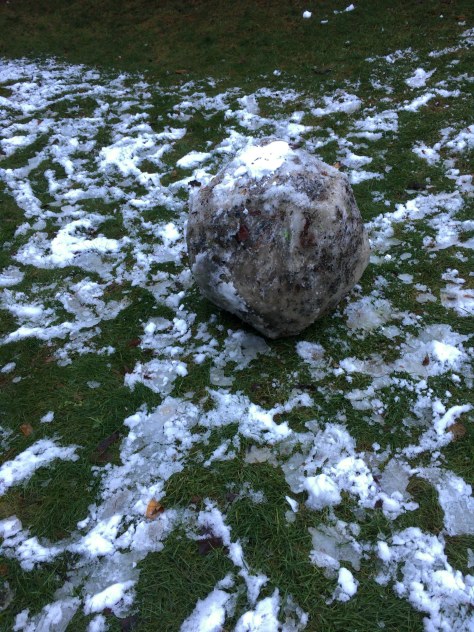
In the haze of a tired New Years Day afternoon, my youngest asked if we could go for a walk. We headed along the trail. She started to make a snowball, it was quite big and heavy .
We continued along the trail and found a stick. The snowball was the perfect place to store it.
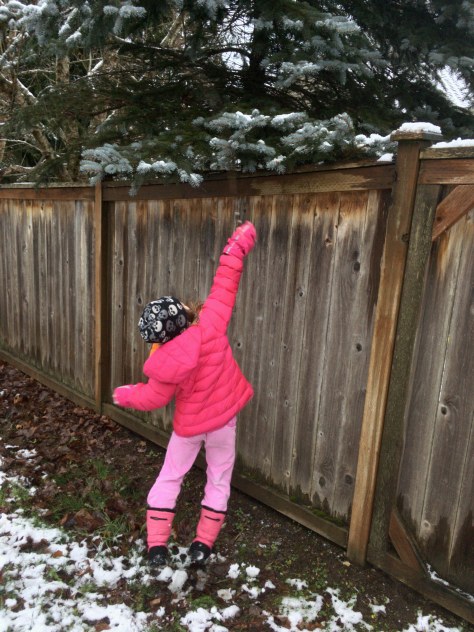
The stick was perfect for knocking snow from the branches of trees that were just out of reach.
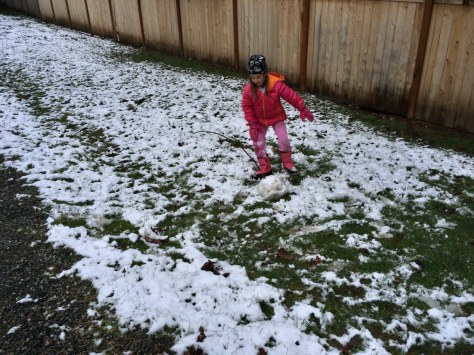
We started to roll the snowball.
“Maybe we could roll it back to the house and use it to make a snowman” my daughter suggested.
It seemed a good idea at the time but rolling an ice impacted snowball uphill and sometimes through patches without snow was the best new year’s exercise I’ve had in a long time.
We had a base for a very dirty snowman.
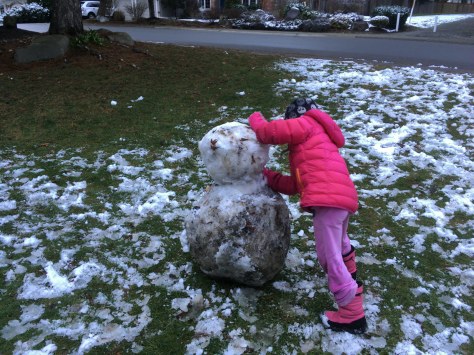
We added a middle.
and a head.
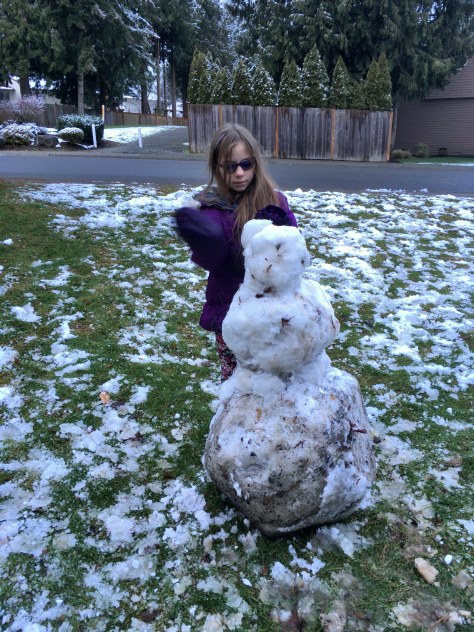
The finished result.
Proof that you don’t need a lot of snow to have fun.
It has stayed cold all week, so the snow hasn’t melted and even the little snowmen are still there. Last winter we visited the storm pond when it was icy. the children tried to break the ice with sticks but it wasn’t thick enough to stand on.
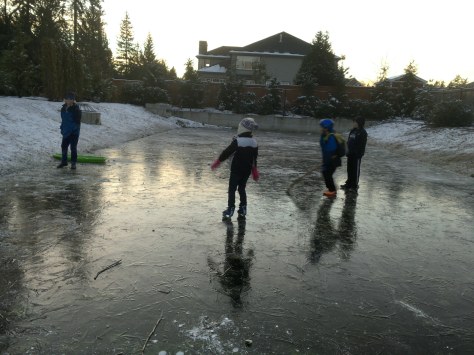
This week for the first time it has been frozen enough to stand on and even get the sledges out. Every day after school, the girls would meet their friends at the pond. Convinced that it was solid, I allowed my daughter to use her ice-skates on the pond. This was a first for all of us and very exciting.
My youngest found a flat round piece of ice that looked like a puck – if the weather stays cold it would be fun to find sticks and play ice hockey or grab a broom and a big piece of ice for curling. Much better than when we tried a Winter Olympics without any snow!
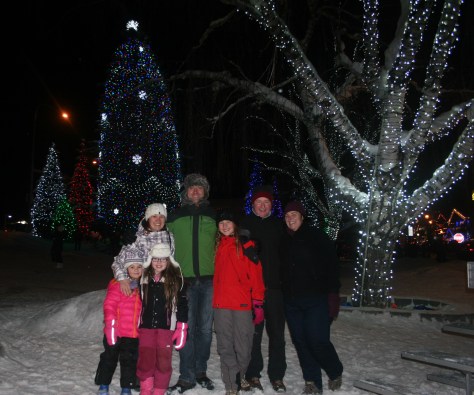
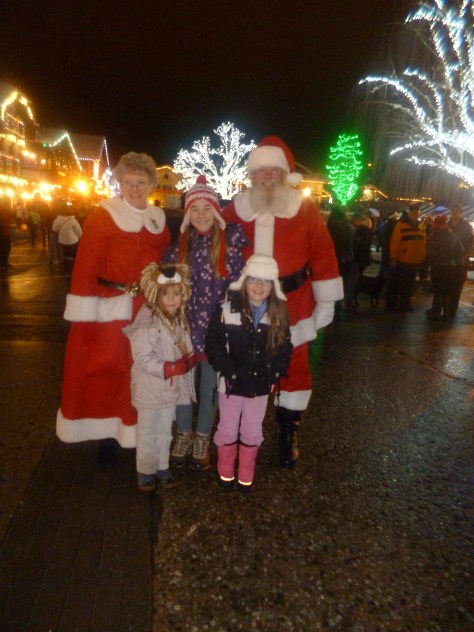
Last year was our first trip to Leavenworth during the Winter. We have visited a number of times in the summer and had heard great things about the Christmas lights, so decided to take a trip. The Christmas lighting festival takes place during the first three weeks of December. There are plenty of activities at the festival and the girls loved seeing Santa and Mrs Christmas.
It gets very busy, so parking can be difficult. If you prefer to go when it is quieter,the lights remain lit until February. We took another trip with guests after Christmas, which personally I preferred as it wasn’t so crowded.
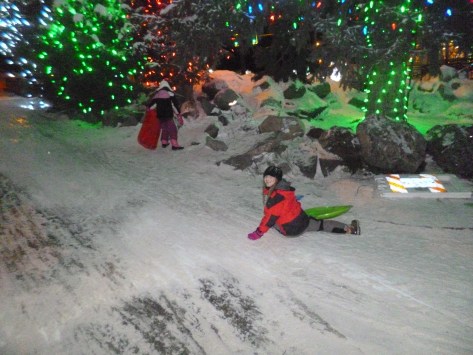
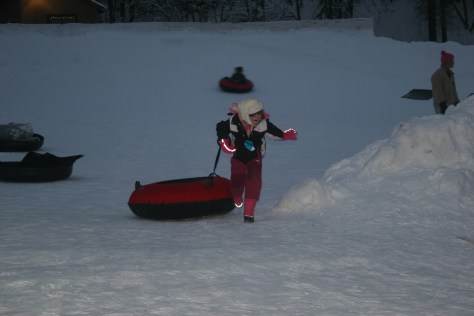
Leavenworth is the perfect place to find snow. Take your sledges with you and go down the hill in the town centre. It is pretty bumpy so your sledge may not survive evidenced by the pile of broken plastic sledges at the bottom of the hill at the end of the evening. Surprisingly, the sledges we brought over from the UK survived, but the ones we bought here cracked.
On our first visit we weren’t quite prepared for how cold it would be. We took our dog , who shivered the whole time and since we arrived in the evening for the lights, we really needed an extra layer of clothing. On our next visit we came fully prepared with our ski gear and left the dog at home.
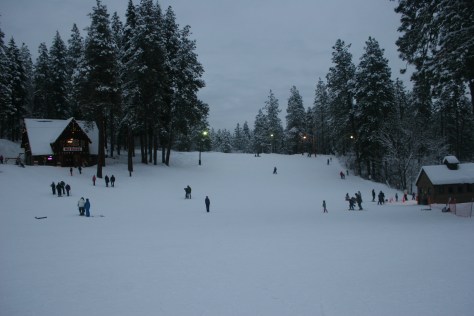
Ski hill was the perfect place for my eldest to try out her snow board for the first time. Our guest skied on the larger slope and the younger ones tried out tubing.
The view was spectacular too. When we had all had too much cold, we had hot drinks at the lodge on the hill and warmed ourselves by the fire.
I think if I were to go again, I would book early for an overnight stay. A day trip is fine in the Summer but I think a warm fire, hot drink and comfortable bed nearby would top off the day perfectly.
We consider ourselves very lucky to live in an area where there are lots of great parks. Last week saw the grand opening of Big Rock Park, so we took a trip to see what it was like.
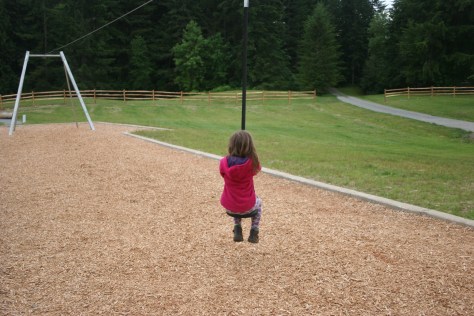
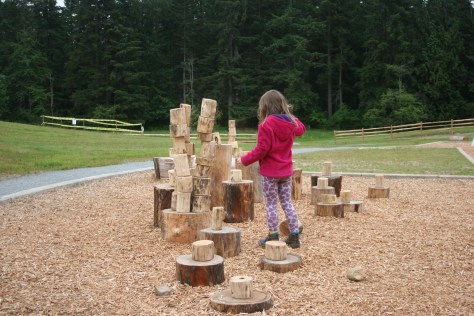
I liked that it didn’t have the same old playground equipment. The slide was built into a hill, with a natural climb up to it and the zip wire was low enough for young children to climb on independently. There were also a number of climbing posts made from tree stumps and plentiful building blocks crafted from branches.
They have really tried hard to maintain this as a nature park. The fences are all crafted from rough cut wood and they are still cultivating the meadow around the slide complete with little peep holes. In collaboration with STEM High School, Big Rock Park will design an environmental education programme and promote renewable technology.
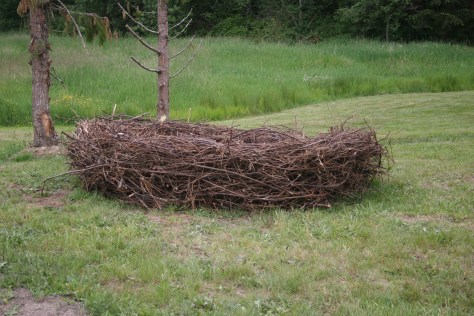
Beyond the playground you can head down to the nature trails. On the way admire the giant nest built by local families last year.
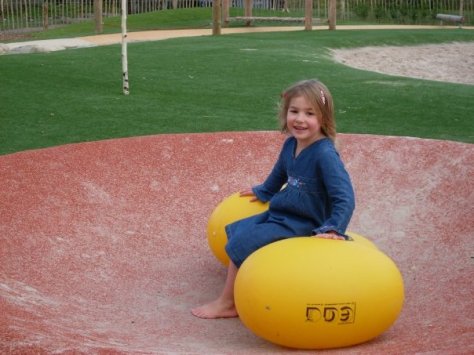
At Slimbridge Wildfowl and Wetlands centre, in England, the playground (wellyboot land) had giant bouncy eggs. This nest is crying out for some of those.
As you head into the trails you have a number of paths available, all well signposted. The trails aren’t very long, so perfect for little legs to explore.
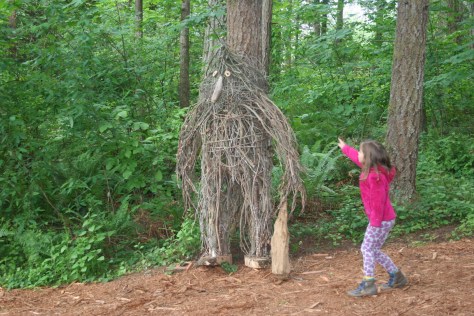
Leading towards the trail is another little guest.
Where would Big Rock Park be without a big rock?
This was easily the main attraction. The trails circle around the rock and lead back to this wonderful natural climbing area.
We loved the new park and will be heading back soon with the older children, who were sad that they missed it.
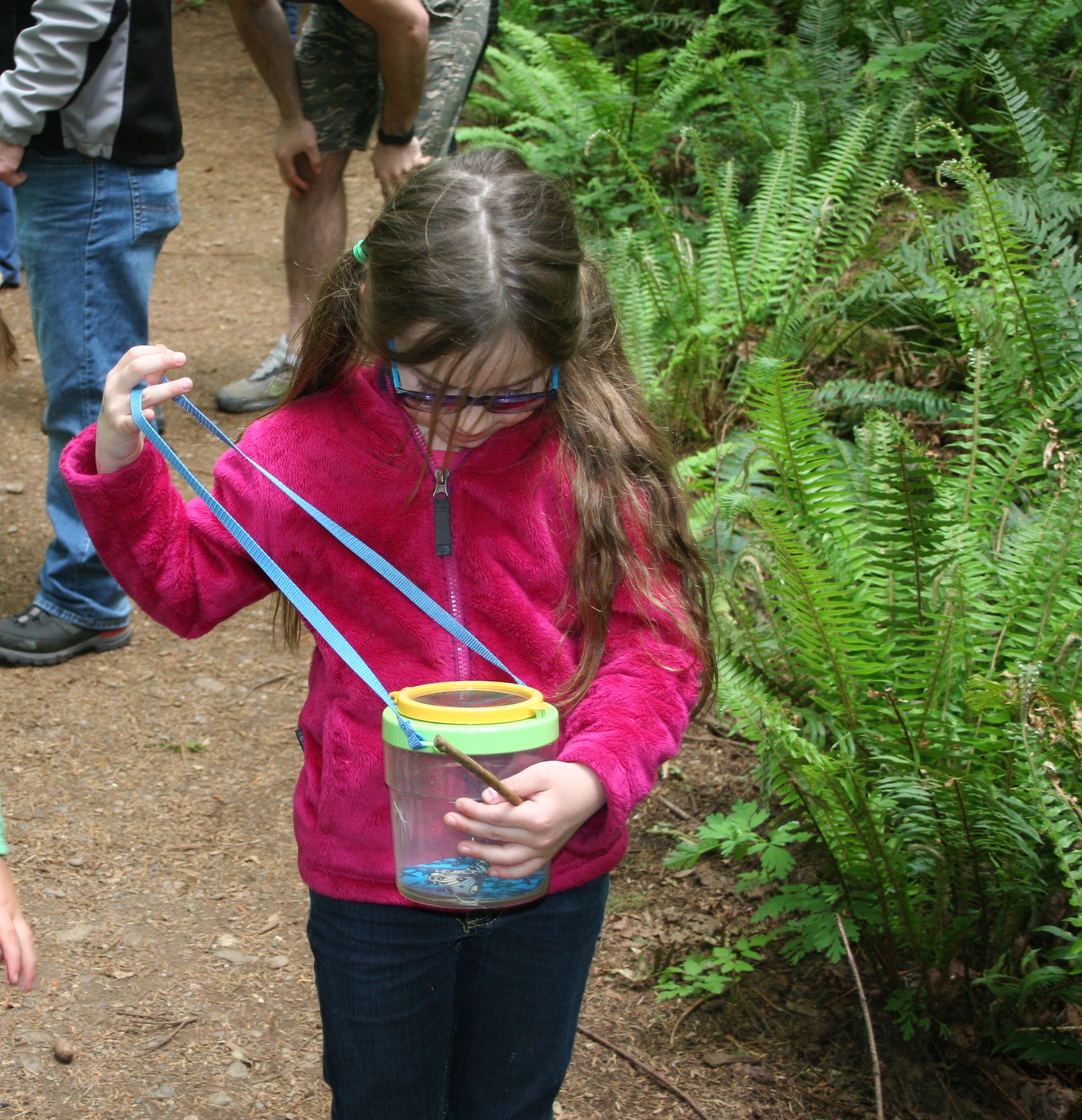
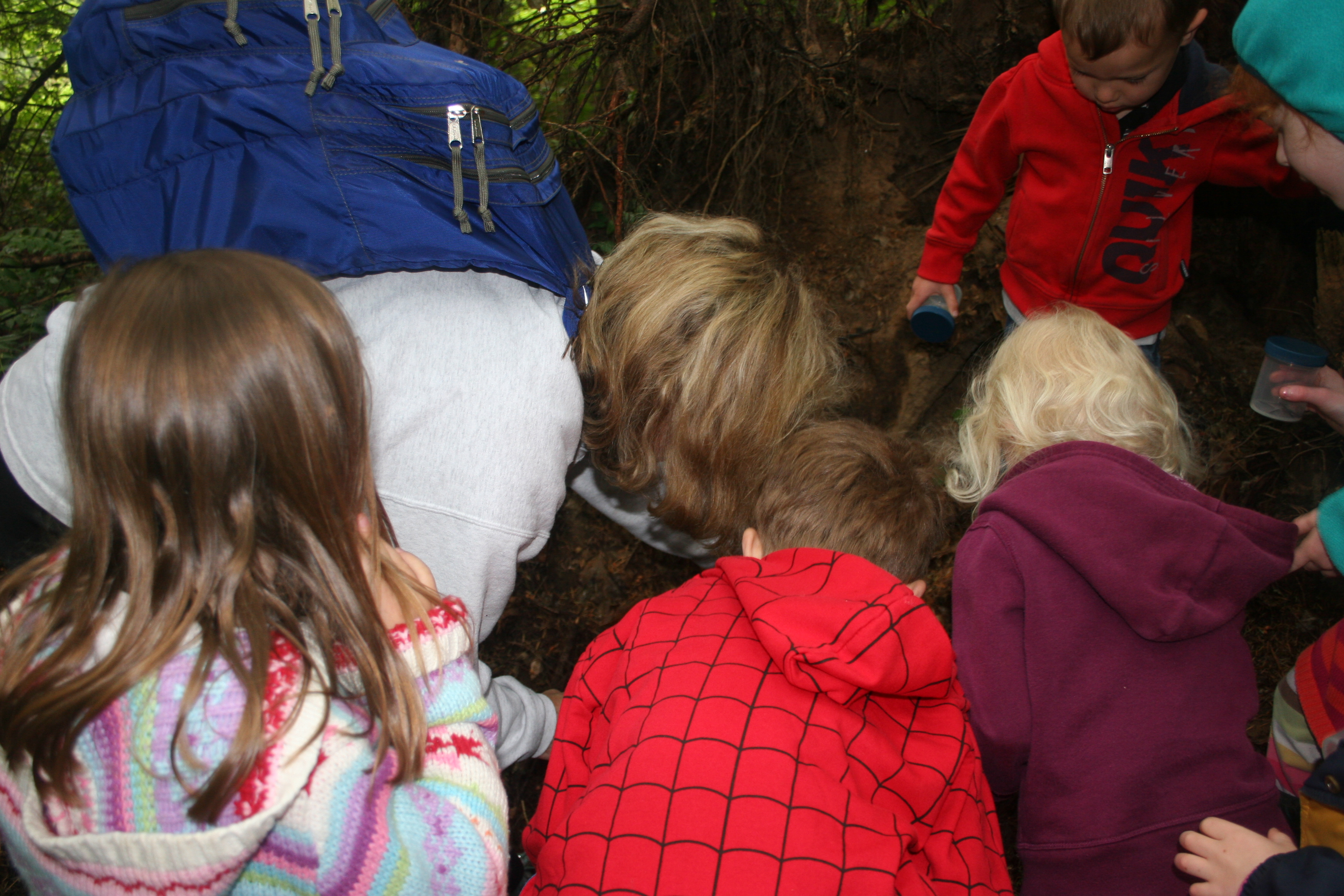
Some children hate bugs, they think they are disgusting or scary. That’s why I love our annual preschool bug hunt in the woods. The children look for bugs, find out about them, collect them in bug jars and bring them back to observe in a terrarium for a few weeks.
In our front garden we have a wildflower border. As we pass it each day we look out for bees, ladybirds and butterflies. When we found aphids on the lupins, we hoped they would attract ladybirds.
“Why can’t we spray them?” my daughter asked. She had been learning about aphids at school.
“If we spray them”, I explained, it will disrupt the ecosystem, “the ladybirds won’t come and ladybirds are good food for birds. If we kill off all the bugs we will have fewer birds and small mammals in the garden.”
They don’t like every bug – they are a little afraid of spiders, think mosquitoes are a nuisance and my youngest is a little unsure about worms but they don’t see that as a reason to kill them. We know the worms in our compost bin turn our scraps into compost for the garden , spiders can be left alone if they live outside and they are good because they eat flies and even mosquitoes provide food for bats and birds. This is a useful resource for explaining to children why bugs are good.
There are two kinds of bug we don’t collect on the bug hunt.
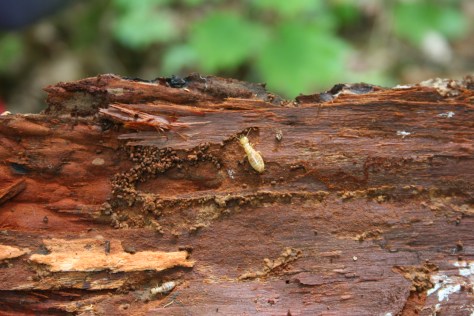
Termites because they will eat our preschool. The children know that termites are important for breaking down old wood from fallen trees but they need to stay in the woods.
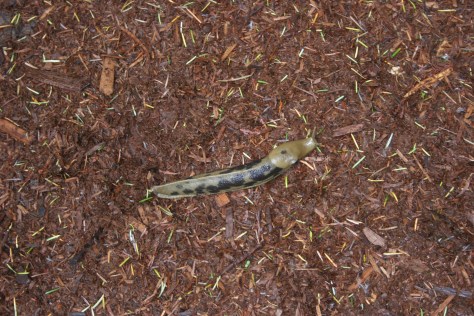
2. Slugs because they will eat all the produce we have planted. There is plenty of food for them in the woods.
There were other bugs to collect.
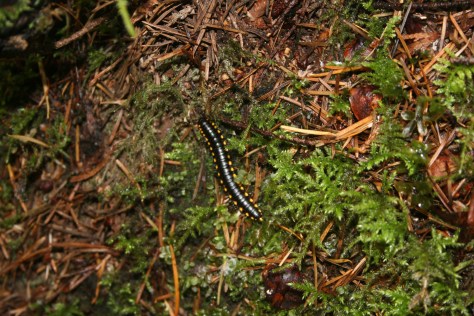
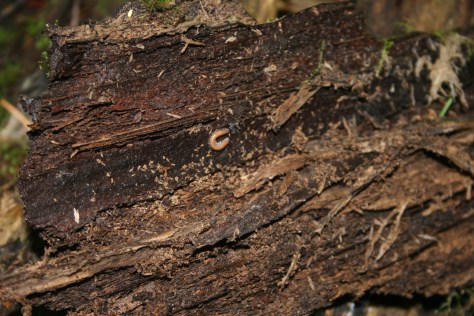
Lots of worms and millipedes.
Spiders
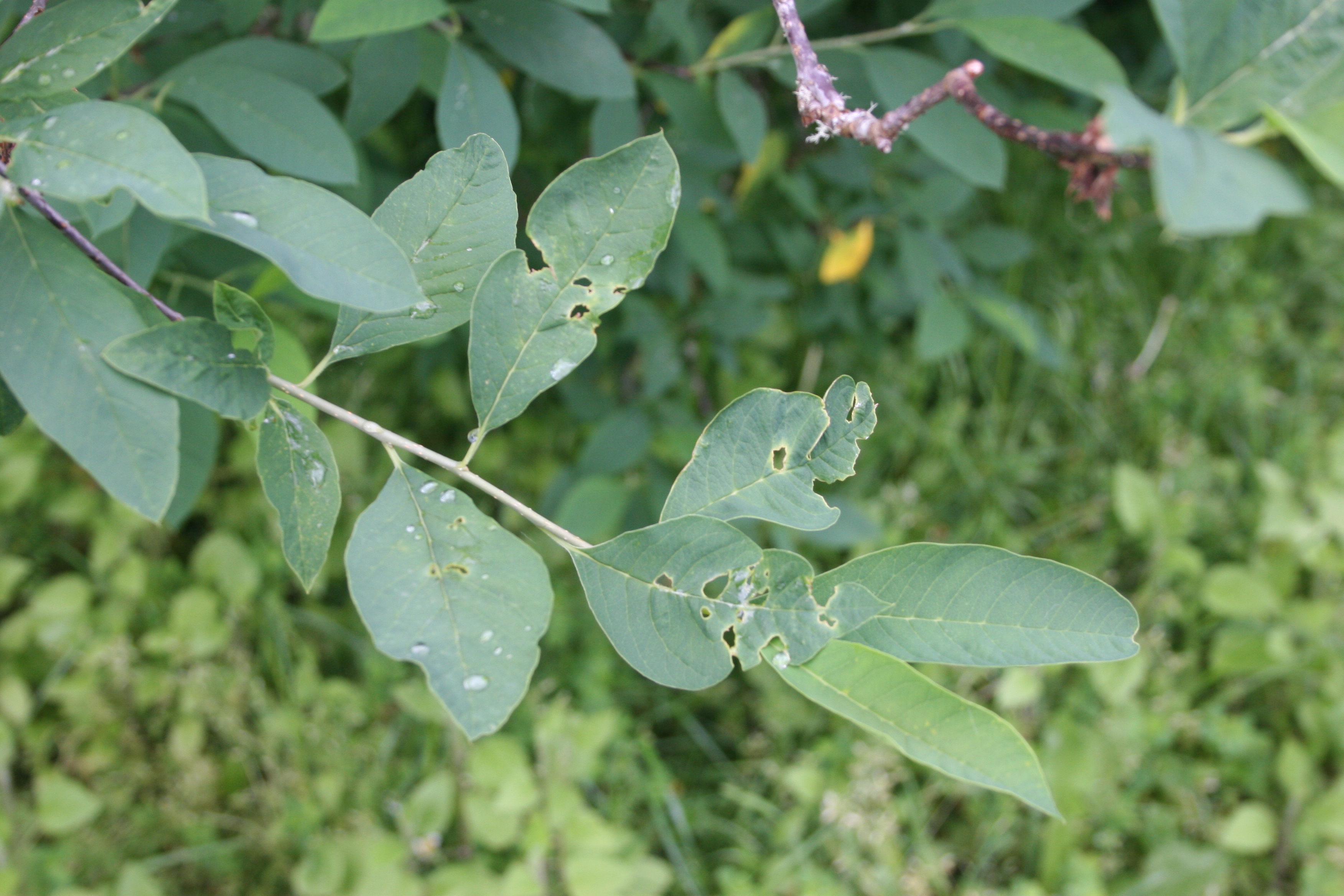
and evidence of caterpillars munching leaves.
We looked up
and down.
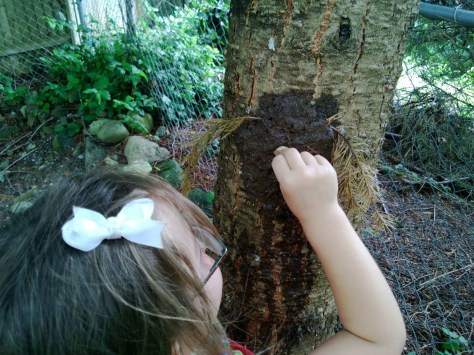
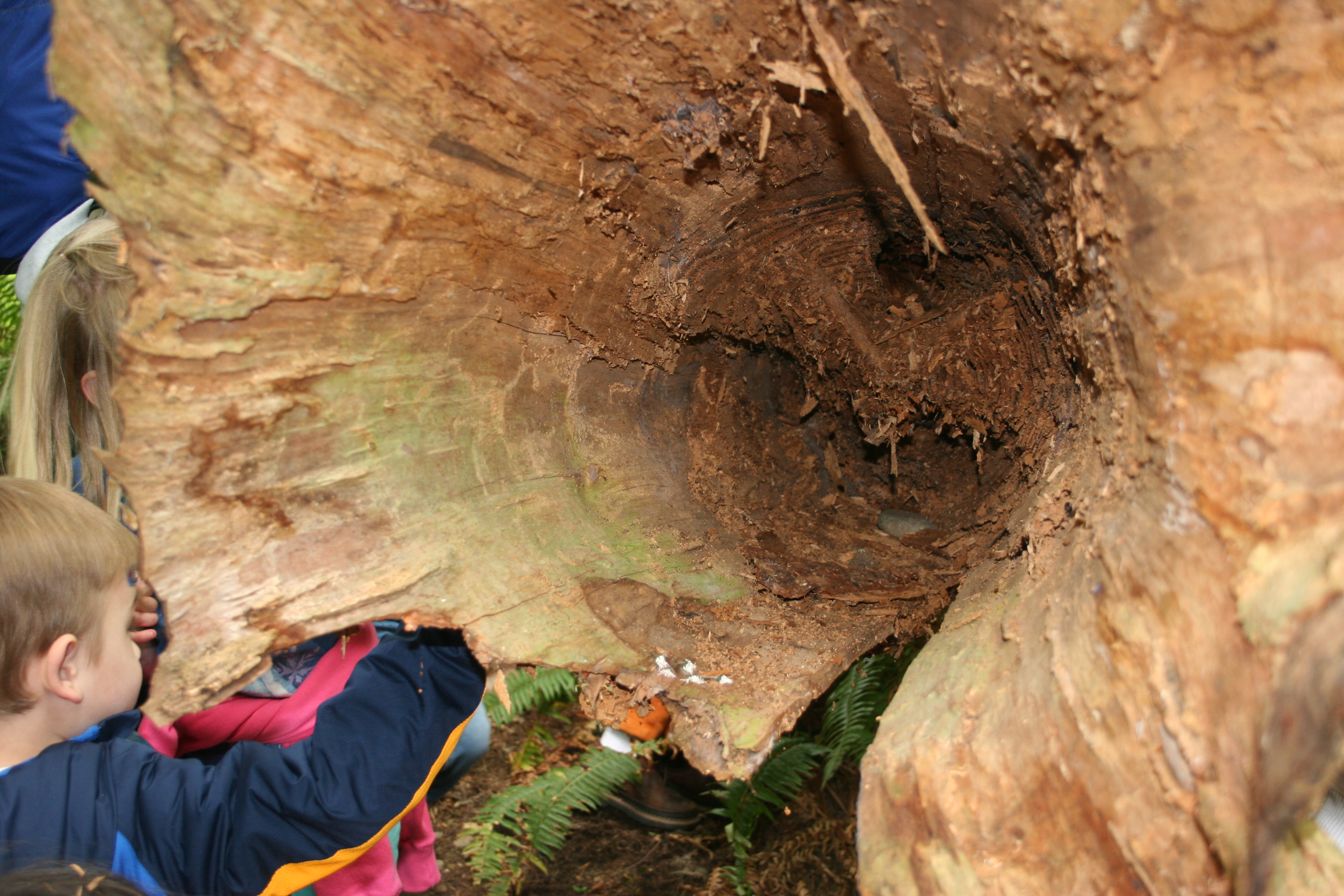
We saw evidence of how the bugs break down an old tree log so that it can go back into the soil.
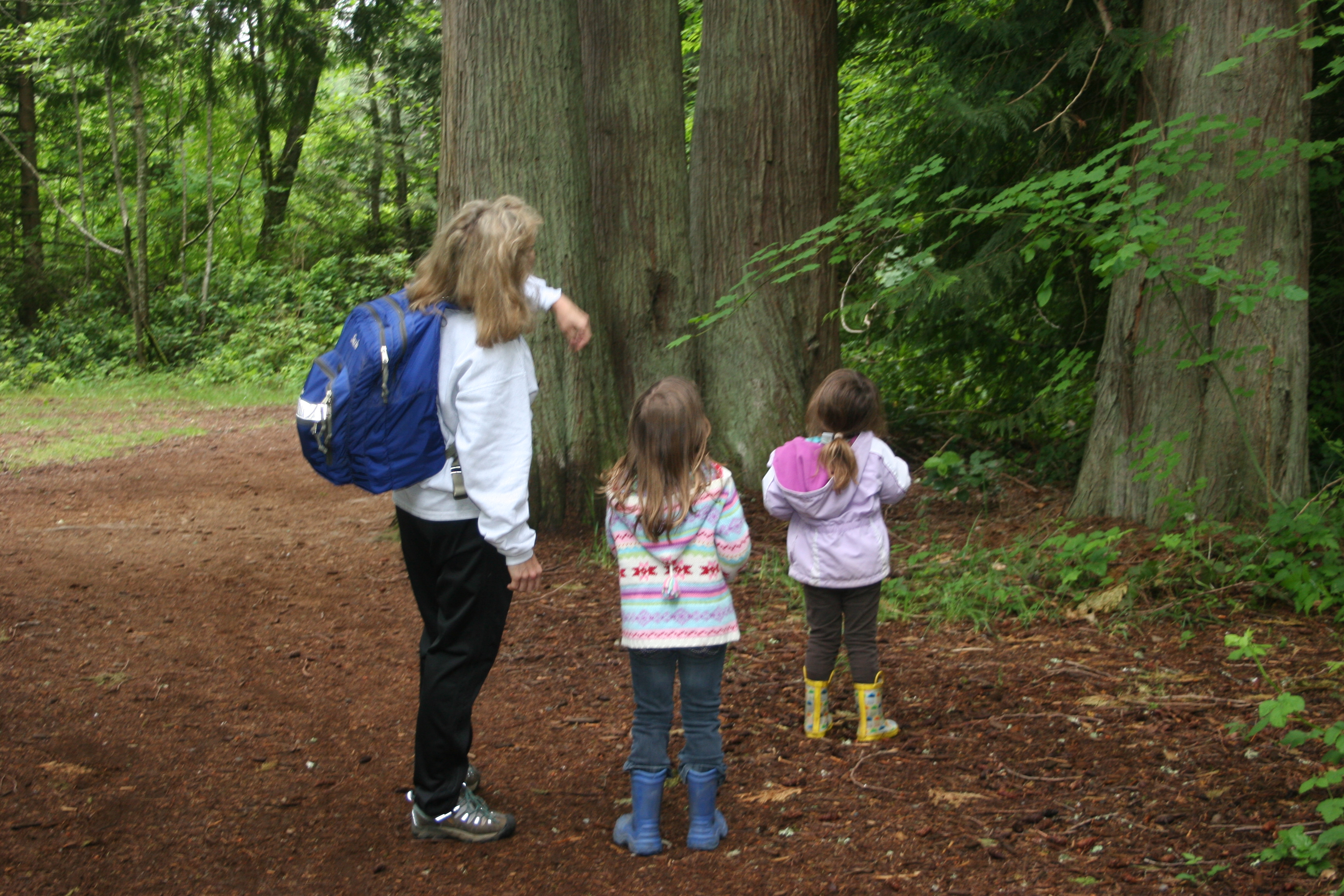
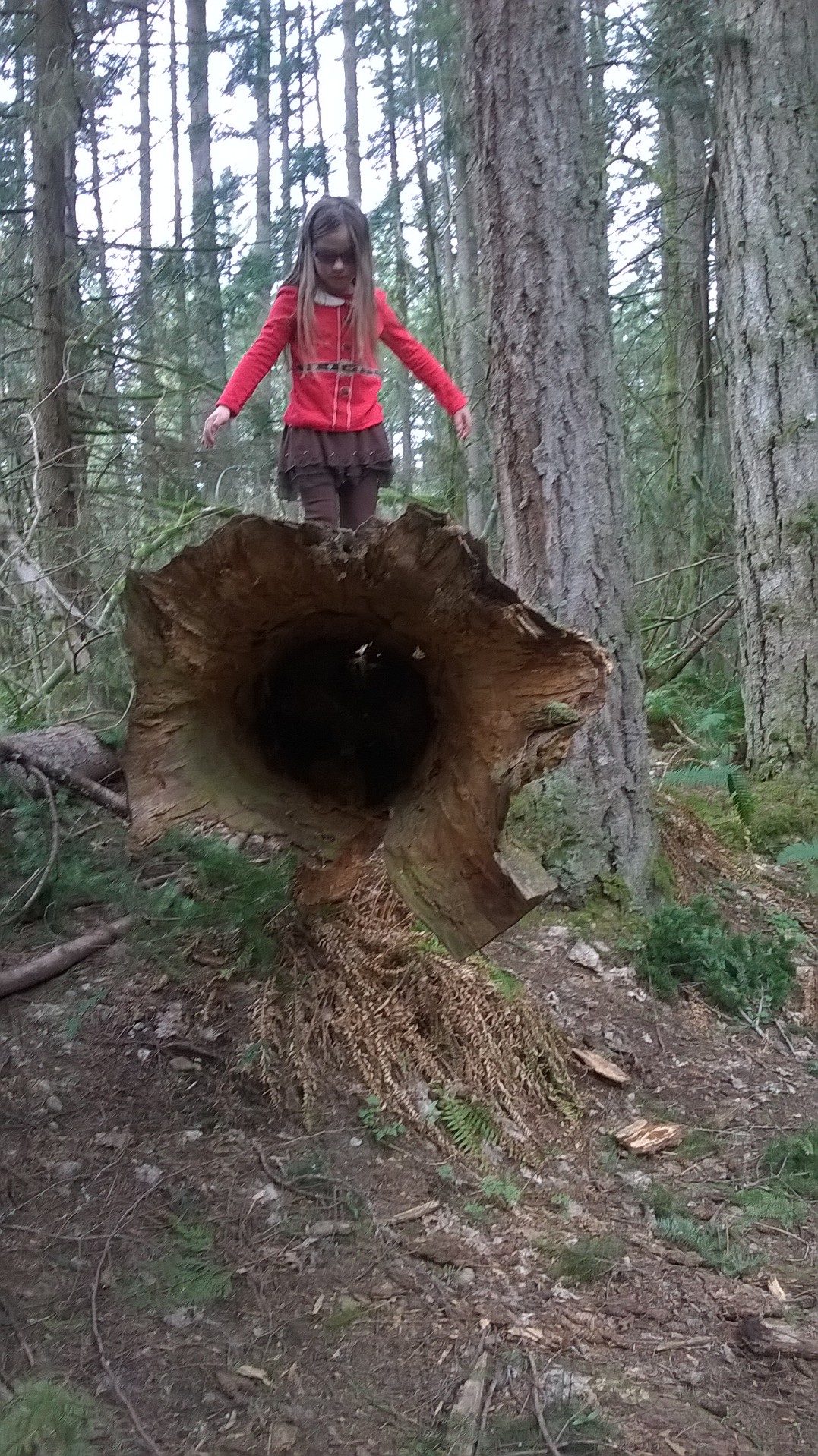
It gets smaller every year, we used to be able to fit inside.
Sometimes it is useful to add a focus to a walk and those tiny bugs can easily be forgotten, so next time you walk with your kids, turn over some logs and stones and see what you can find.
On our walk to school every day, my daughter loves to stop and look at leaves and flowers, to take a short cut through the woods or to save worms stranded on the path. Often there isn’t enough time to stop and share her observations and wonders. It is important therefore, that I make time to walk with her when we aren’t constrained by time.
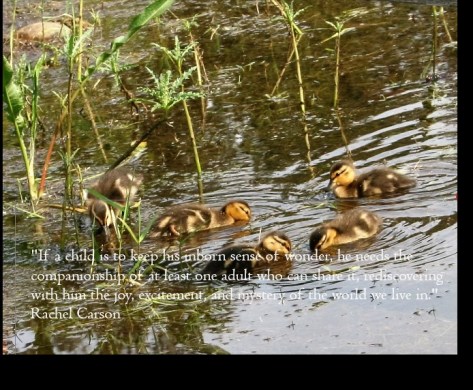
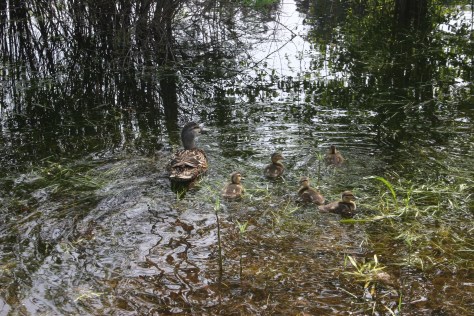
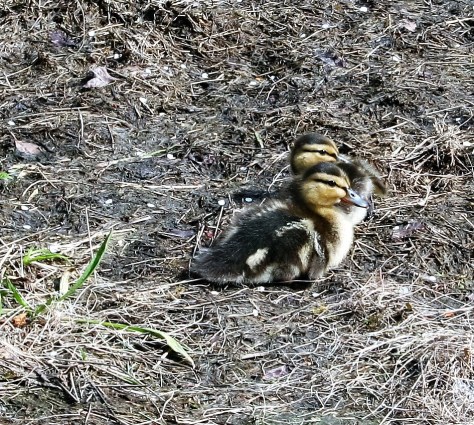
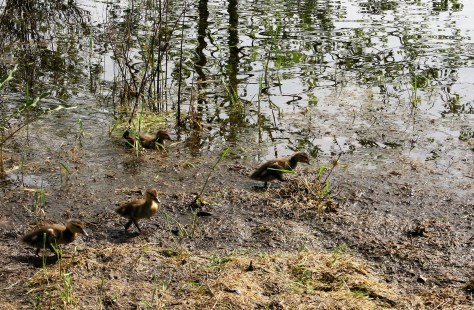
Last week, when I was out running, we spotted ducklings on the local pond. I decided to take a walk and see what other babies we could find.
Our first observation was a deep, vibrating sound, a little like a honking goose. The sound followed us but we couldn’t see anything. We thought perhaps it was a type of frog or maybe a bug.
We sat on the bank and watched the ducks come in and out of the water.
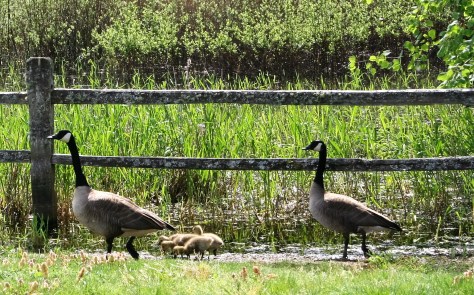
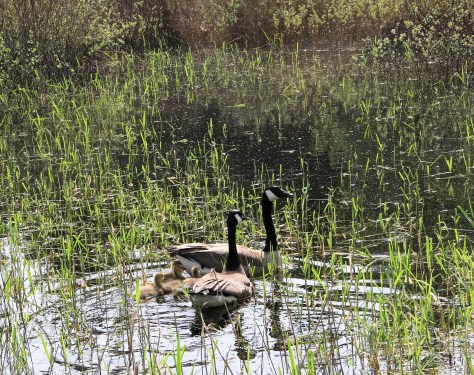
As we carried on around the pond, we came across a family of geese.
We watched them until they swam away. Passing a smaller pond,we decided to rest there a while, watching the birds and dragonflies. We noticed ladybirds on the lupins. Looking closer, we could see the leaves and stems were covered in aphids. On the centre of one leaf was a pair of ladybirds, who proceeded to fight, just like in the ‘Bad Tempered Ladybird’ by Eric Carle.
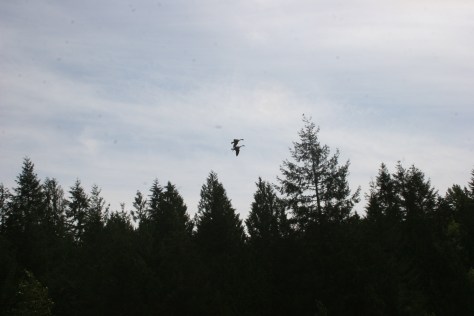
As we sat watching the ladybirds, the geese came swooping across the sky and landed in the pond with a splash.
The spring baby theme has continued. We found a salamander with its eggs in a friends back garden, a newt in the drain and a tiny frog in our worm composter.
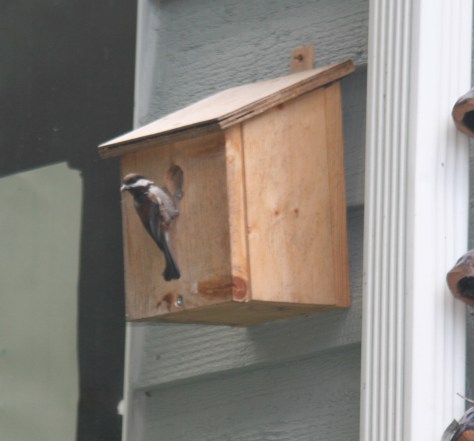
The birds are building a nest in our bird box and we expect to hear the babies soon.
We noticed that the frog spawn has gone from the storm water pond and if you look closely you can see tiny tadpoles swimming.
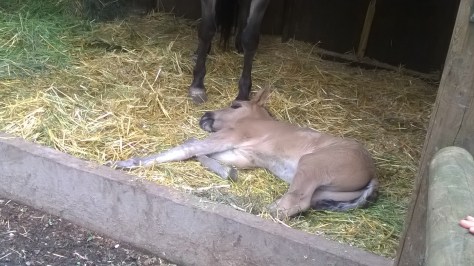
To top it all off, the horse at preschool finally gave birth to a foal.
However simple, the wildlife we see around us every day, is a constant source of wonder. I hope my children will always see the world this way.
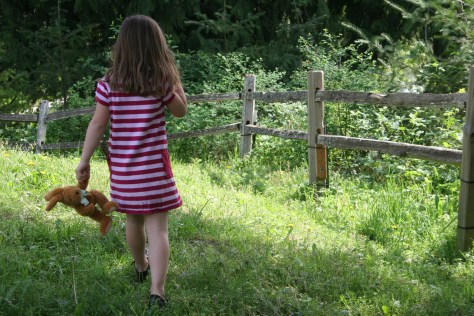
This photograph depicts what all childhood should be; full of the magic and excitement of the unexplored. It reminds me of the magical tales of Enid Blyton that inspired me to pretend to run away to the woods, when I was a child. My friends and I would sometimes pack a picnic or a bag of sweets and sit deep in the trees, listening to the streams and waiting for magic to happen.
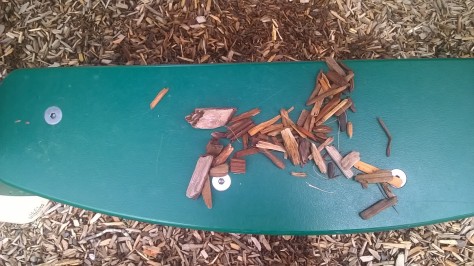
For those of you who aren’t familiar with the term loose parts, check out my post on the theory of loose parts. In simple terms, loose parts are moveable objects that can be used to create, explore and discover.
Educators often collect loose parts for their environments. Collections include buttons, feathers, beads, coins, shells and seeds. Loose parts are added to clay and dough, left in baskets around the room, used for weighing and measuring, to create art, on light and mirror tables and added to block play. I think though, that sometimes educators over-complicate loose parts. We get so excited about the different things we can provide for the children and the beautiful ways we can present them, that it is easy to forget the true essence of the theory of loose parts.
I was reminded as I played with my daughter at the park, that loose parts are everywhere. If we as educators don’t provide loose parts, the children will find them. A brick will become a piece of food, a calculator is a telephone, a sheet will become a cloak or torn paper will be money. Playing with loose parts is the way I played as a child, playing shops with empty boxes or filling empty bottles with leaves, petals, dirt and water. For the child, loose parts are everywhere, they probably don’t call them loose parts but they will find them.
For me the theory of loose parts is an attitude to how children play. It is an acceptance that children may use what is in their environment and make their own choices about what to do with it. Materials do not have to be displayed or stored beautifully, they simply need to be there. The following video illustrates children’s natural ability to find and use loose parts creatively.
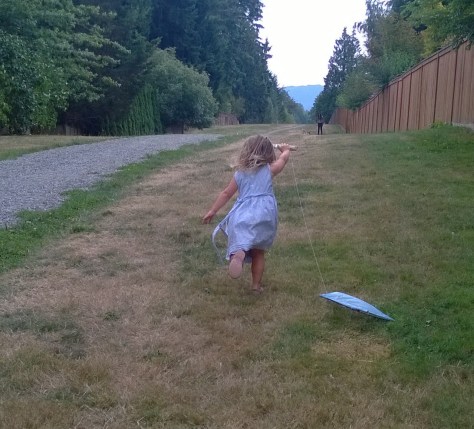
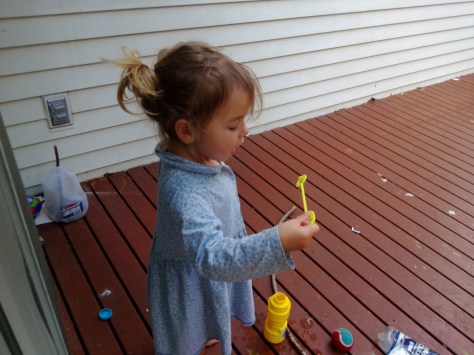
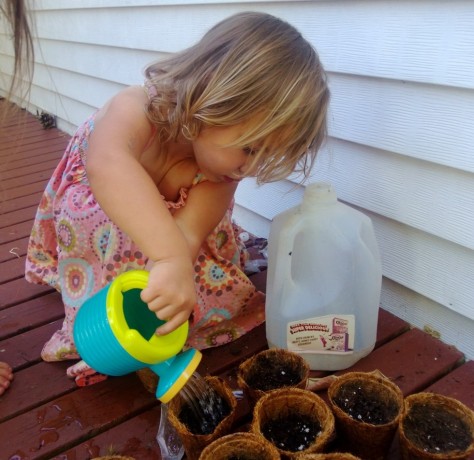
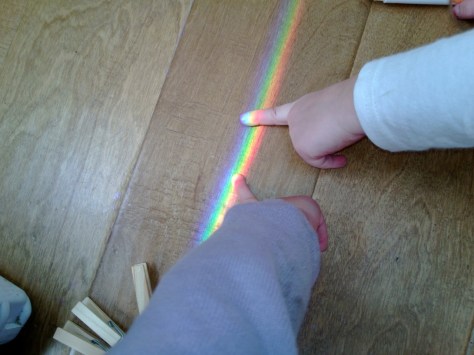
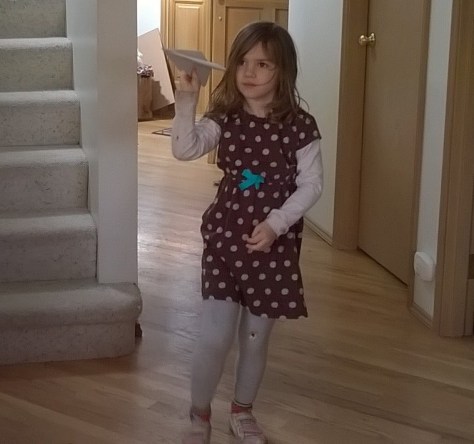
I believe that sometimes we try too hard to arrange things for our kids to do and it is important to let them be. There are however, some things that I feel we should introduce our children to. The simple pleasures that we had as kids, are sometimes forgotten and lost. If we are going to teach our children anything, lets preserve simple pleasures like these.
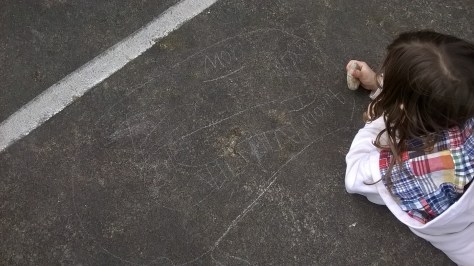
Pooh SticksLearning to play hopscotchChalking with a stoneFlying a kiteBlowing a dandelion clock
Blowing bubbles
Planting seeds
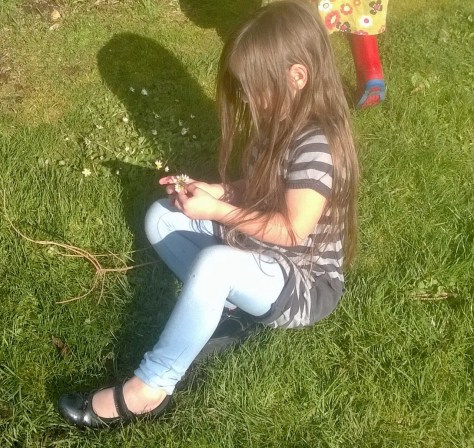
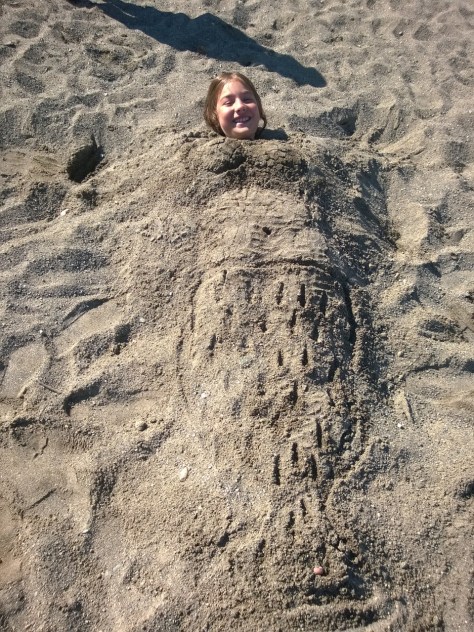
Making a rainbowMaking a daisy chainBurying yourself in sand.

 Four years ago, all of our worldly goods were packed onto a container to make the journey to our new home in the US. We wouldn’t see them again for 10 weeks.

 Children always look forward to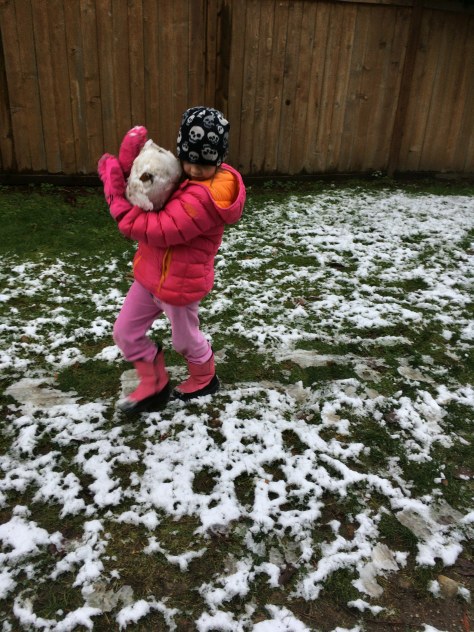










 For those of you who aren’t familiar with the term loose parts, check out my post on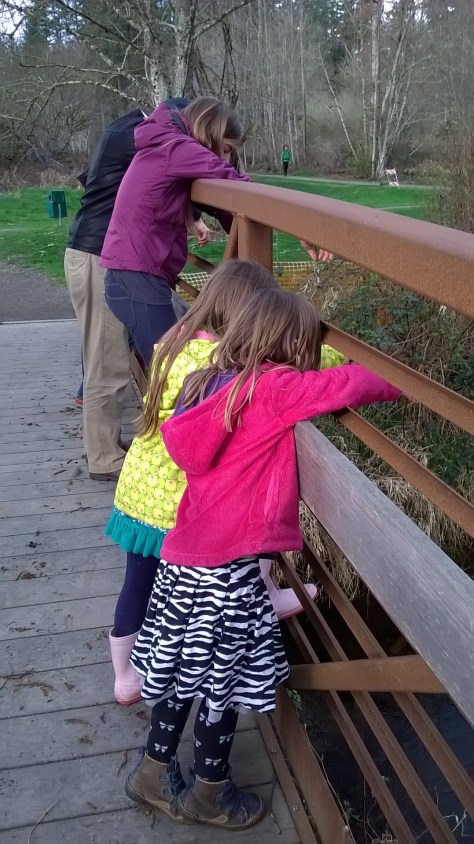

 Right from the Start