Category Archives: outdoor play

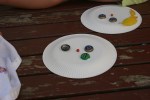
Outdoor Play: Nature Faces

I’ve got an idea Mummy. How about we get the plates we use for barbecues, collect lots of things from around the garden like leaves and sticks and stuff and make people.

Great idea. You could use things from the loose parts station too.

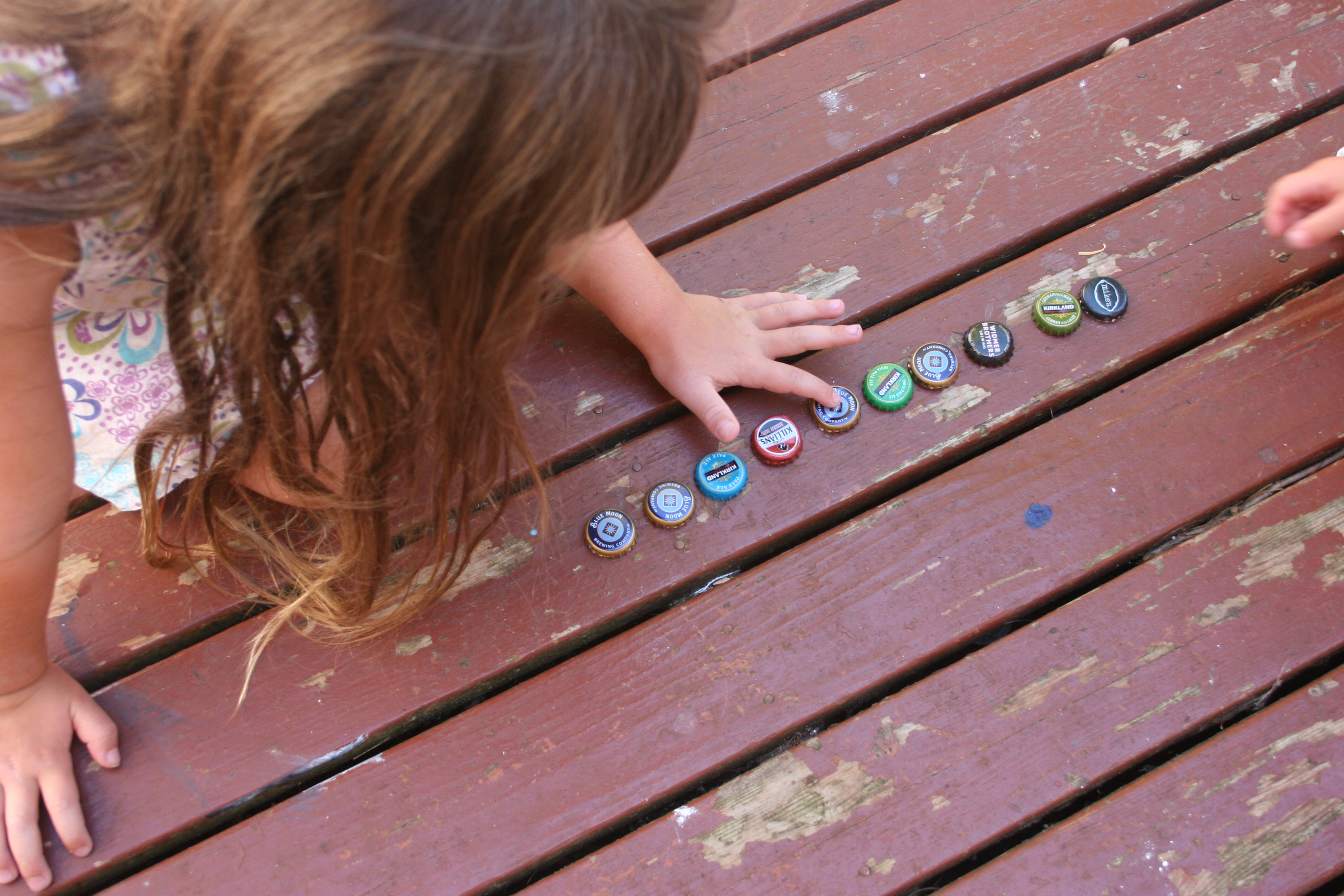
I know, we could use bottle tops for eyes. There are 4 of us so we need 8.

We need 8.  We have 10 let's throw 2 of them away. Now that's right.
We need 8. We have 10 let’s throw 2 of them away. Now that’s right.

Oh no! We are not allowed to pick leaves from the trees and it isn’t autumn. How will we get leaves?

Look there are some nice little yellow leaves on the floor. Where did they come from?

This tree up here.

cherry tree

That looks like a cherry tree, there are red fruit on it but they are very small.

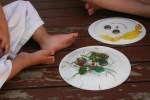
I’ll pick one and see if there is a stone inside. Yes there is, they are cherries. We could use them for a nose.

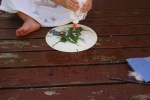
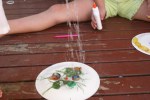
My 2 year-old started making a face but soon became more interested in exploring what the glue did. She then brought her watering can and watered her face.

Just as with the clay my 2-year-old has very different interests and plays at a different level to her sisters but that never prohibits her joining in.

This slideshow requires JavaScript.

Why Clay is an Essential Material for Pre-Schools

clayWhen I taught at nursery school, clay was readily available to the children on a daily basis. I’ve seen very few pre-schools since that use clay daily.  Most settings use dough, but why not clay?

It may be that it is too expensive, dough can be made very cheaply but air drying clay is an expensive resource. If clay is stored and looked after properly however, and used to enhance the children’s play rather than simply to make models to take home this needn’t be the case.

How to store and look after air drying clay

It is essential to keep your clay damp.  Store  it in a bucket or  lidded container and place a damp flat rock in the bottom.  The clay should then be moulded into cubes smoothing out any cracks. Make a thumb sized hole in each cube and fill the hole with water.  Occasionally spray the clay with water.  The clay will keep for a considerable amount of time like this. Should you feel the clay drying out cover the clay with water and leave for 48 hours.

It was a rare exception when children asked for their creations to be dried, painted and taken home. Mostly they would build the blocks of clay on top of each other, stick things in it, roll it out, and bash it with hammers and were happy to put it back in the clay bin at the end of the session.  Occasionally we would have a focused activity on techniques like pattern making, how to join 2 pieces of clay together or moulding around wire. A group of 4-year-olds worked on a long-term project about self portraits . They looked closely at their faces in the mirror and drew a number of self portraits with adult guidance to enhance the detail. These were transferred to clay models. The accuracy with which they translated their drawing into the representation in clay was astonishing.

The Benefits of Playing with Clay

  • Clay inspires creative thinking
  • Clay is far stronger and more malleable than dough which makes it far better for modelling.
  • Children (and adults) find working with clay engrossing
  • Clay can offer children emotional contentment, they can knead and manipulate the clay to ease anxieties.
  • Children with lots of energy or displaying aggression can dispense some of this on a large block of clay. You can hit a piece of clay with force without it disintegrating to nothing.
  • Children are able to problem solve by making mistakes and working out how to fix them.

The Developmental Stages of Working with Clay

0-2 Years 

For these children large blocks of clay are best, the bigger the better. Lay a piece of plastic sheeting on the floor and allow the children to experience the clay with their whole bodies, they can sit on it, make impressions in the clay and pull pieces off. It might be better served as an outdoor activity with this age-group but it depends on your space. Allow the children to explore the clay with their hands, build towers with clay blocks or offer tools if they are reluctant to touch it.

2-3 Years

Experiment with the different things that clay can do. Let them build, flatten, roll, pile and stick objects in the clay.  A finished product is not necessary at this age, allow them to integrate loose parts from the environment. Investigate what happens when you spray the clay with water.

3-4 Years

Some children will be ready to make simple models so you could begin to demonstrate how to join 2 pieces of clay together. Many children will prefer to use clay in their imaginative play, making cakes or lots of tiny peas. Include small world objects with the clay perhaps rolling out a flat piece for the play people to walk on or build a rocky swamp for the dinosaurs. Continue to introduce natural materials.

4-5 Years

Children will now begin to build things for their small world play, chairs for the house or shelters for the animals.  Once the children are confident you could set them projects like build a bridge for the Billy Goats Gruff or a bed for the 3 Bears. Clay can now be used to support mark-making teach children to draw and write on clay with sticks, twigs or blunt pencils.

5+ years

The children will be keen at this age to make a finished product. Show the children examples of clay sculptures as inspiration.  Encourage them to translate both imaginative and observational drawings into clay models. Support group work, building one large co-operative model.

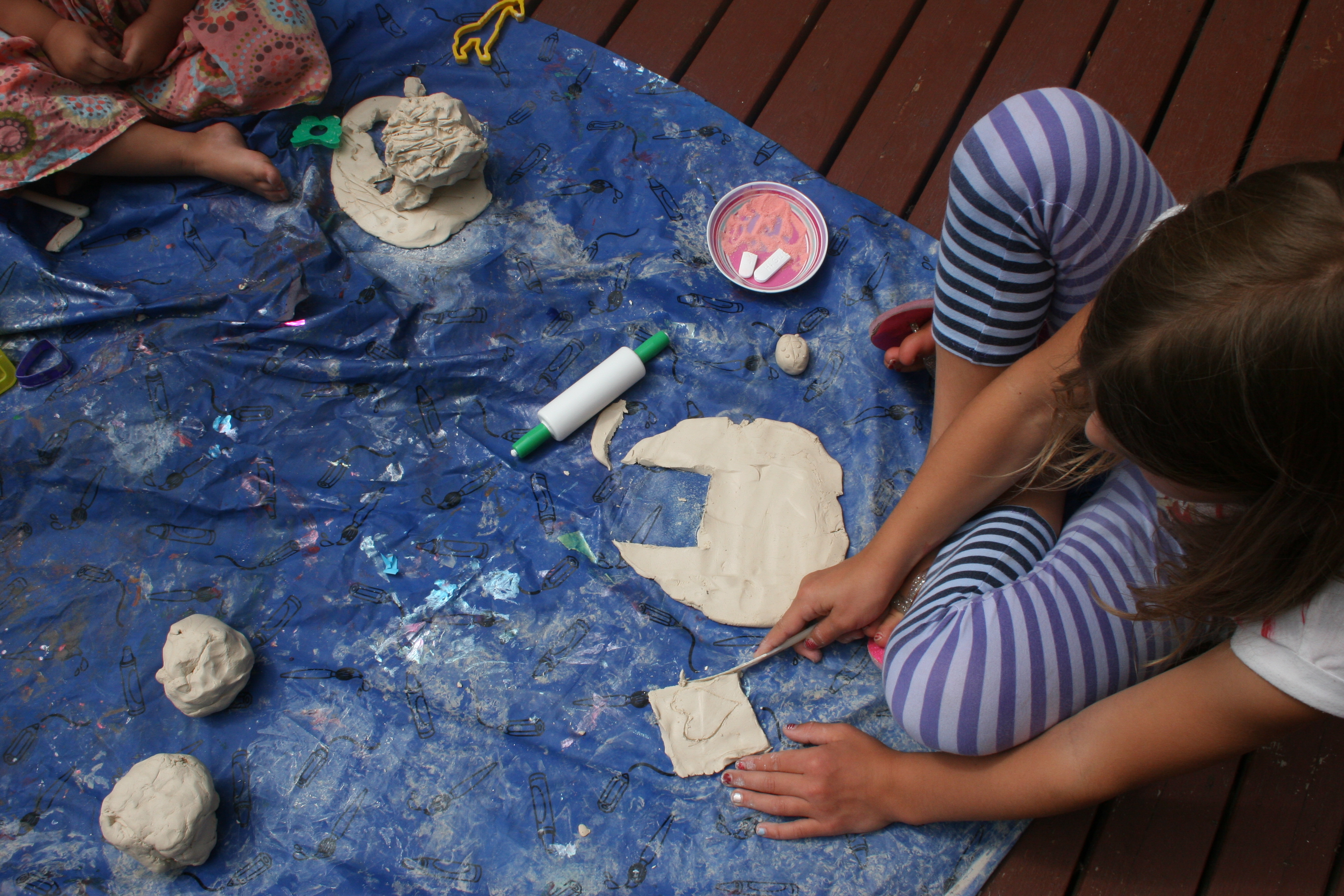
You will see in the gallery below how my children of different ages play with the clay. My 9-year-old goes straight into making a model, while her 4-year-old sister starts by making a pizza, practicing rolling and cutting. She soon copies her sister and starts to make a bowl. Both girls encounter problems with their models and work out how to fix them. My 2-year-old is happy to squish the clay, making marks with knives and then moves the pieces around the garden, collecting loose parts and piling blocks together.

This slideshow requires JavaScript.

Tots & Bubble Friday at Dr Maze’s Farm

Dr Maze's FarmIn a bid to meet new people the girls and I sometimes join groups of other mums and their kids through meet up groups.  Our latest venture was to Dr Maze’s Farm.

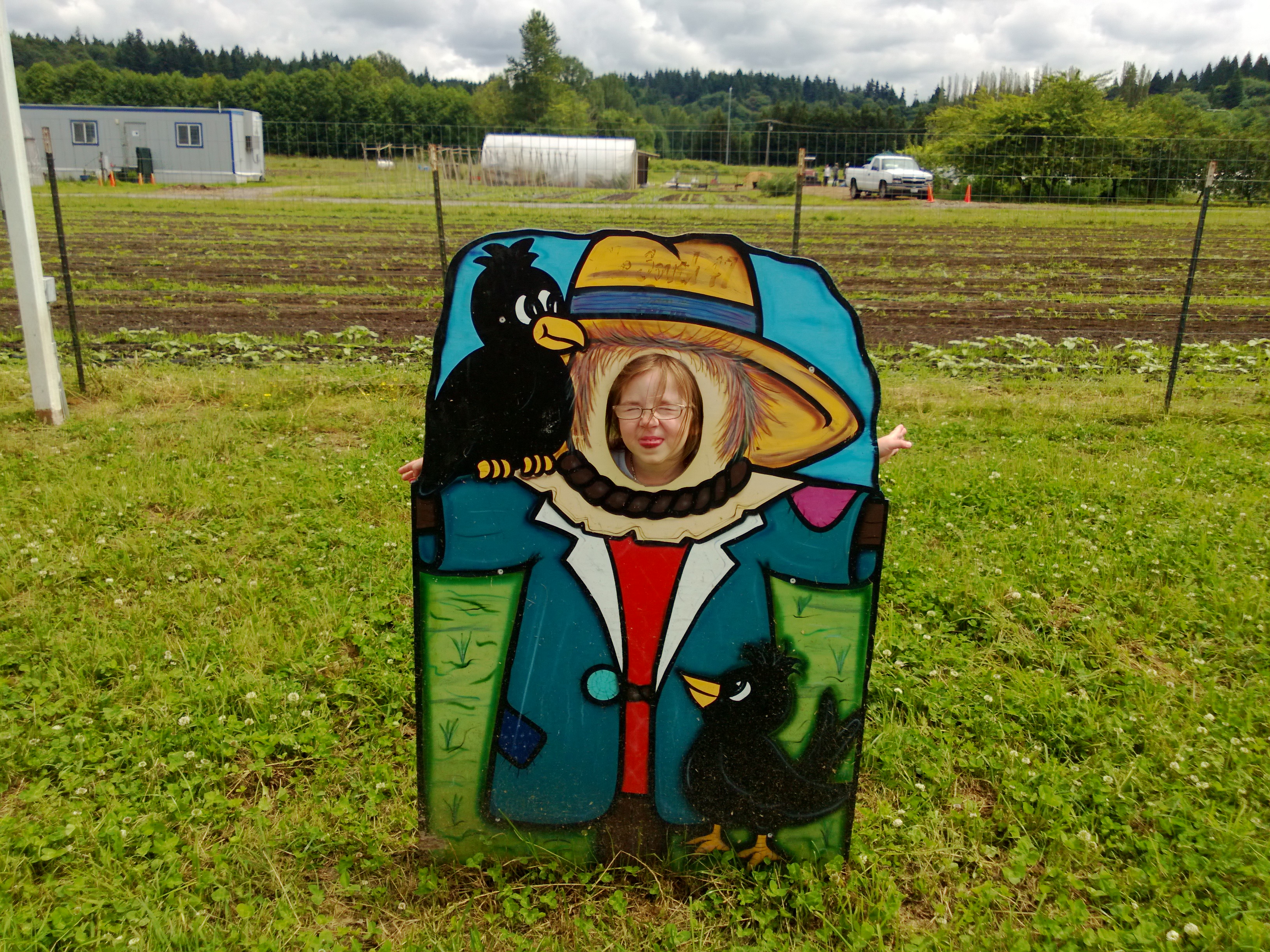
Dr Maze’s Farm is a family run working farm that grows seasonal crops. What I loved about it was that it was a no frills day of outdoor fun.  It was lovely to visit a farm that didn’t have rides, softplay or large playgrounds, no café or extras to pay for; a place that encouraged exploration and being at one with nature.

Dr Maze’s farm is open during the Summer months on a Friday and Saturday from 10am till 2pm. Opening hours are extended during their special events such as Lavender Festival in July and Pumpkin Patch during October.

On a Friday morning Tots Friday is included in the admission price ($6 increasing to $9 from 12th July) and runs from 10.30 to 11.30. Tots Friday is aimed at the under 5’s but my 9-year-old was welcomed and enjoyed herself too. Each week they have a different theme with activities set up under cover. The theme when we attended was goats, which included goats for the children to pet. There was also a large mud pit for the children to dig and find worms, various sensory bins containing grain and a cut and stick caterpillar activity.

This slideshow requires JavaScript.

Towards the end of the session they took the children out to pick crops from the field. They picked kale, sugar snap peas and chard and were encouraged to fill a bag to take home with them. This was a great opportunity for the children to see how crops grow, how to harvest them and experience some new plants.

Once we had filled our bags the girls enjoyed petting and feeding the animals before going on a tractor ride around the farm.

We explored the grounds further. There was plenty for them to do from giant Jenga, mazes, a chicken show, a giant spider web and various things to ride on.  My personal favourite was the music garden. They had perfectly utilised household objects to make a great little sound garden that would be an inspiration to any pre-school or someone like me who now wants to build one in the garden.

This slideshow requires JavaScript.
Next came the girls favourite part of the day ‘Bubble Friday’.  A  station was arranged with all kinds of bubble wands and trays of bubble mixture.  The girls started with familiar ones and then learned how to use more elaborate methods to make giant bubbles. They had an  amazing time experimenting with the different types, supported by 2 very friendly ladies. They were so proud of their huge bubbles.

This slideshow requires JavaScript.
When it was time to go, they didn’t want to leave but I promised we would go back. We are going to sample the Lavender Festival tomorrow armed with a picnic and with extended opening hours I’m sure we will have a very busy day.

It feels like you are visiting the farmer’s family, who give the impression that they are people who love children, being outdoors and sharing their farm with the public. They even gave us a freshly laid egg to take home with us.

There is a small shop in the entrance selling plants, lavender products, honey and drinks but I would recommend taking a picnic or at least snacks if you intend to stay until closing time.

This is a personal recommendation, no payment of any kind was received for writing this post.

Mud Faces for International Mud Day

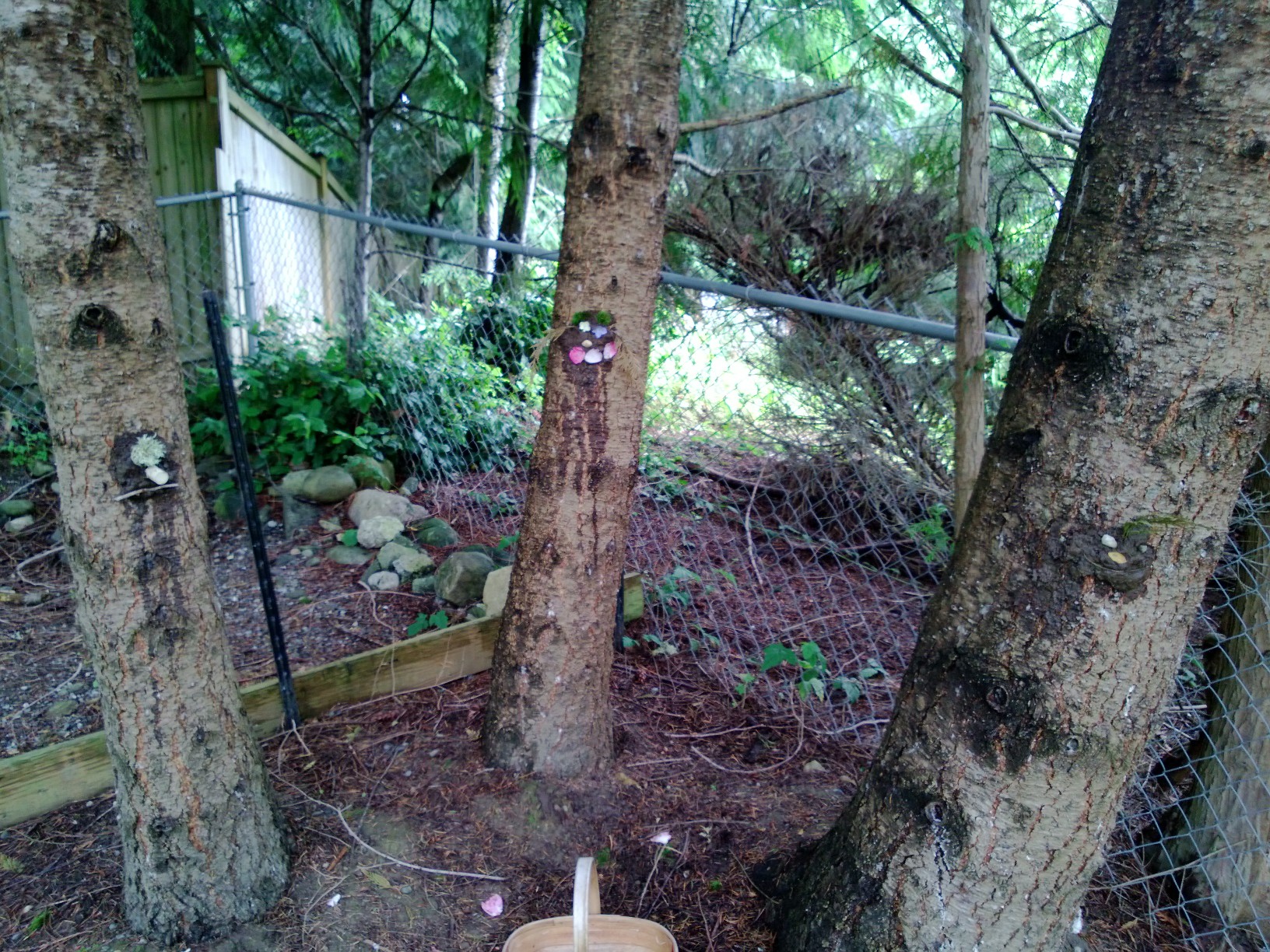
mud faces on trees for international mud dayOur first week of the school holidays has been rainy. Perfect for our preparation for International Mud day on Saturday.  We have been planting bulbs and sunflowers and finding bugs and worms under the ground.

Today we gave our trees mud faces. This is one of the many fabulous outdoor ideas that can be found in the Woodland Trusts  Woodland Adventure Booklets , free to download from their website.  We used materials from our loose parts station and from around the garden.

This slideshow requires JavaScript.
Other ideas for International Mud Day

Make a mud kitchen (Including why playing in the mud is good for you).

Make muddy footprints

Top Mud Ideas from the Woodland Trust

International Mud day on  Pinterest if you’d like to share any of your mud day activities on my Pinterest board contact me and I’ll send an invite.

What Exactly is a Field Day?

Field dayToday was Field Day at my daughter’s school. In the usual fashion, we had a letter that said we could come along or volunteer if we wanted but no explanation as to exactly what a Field Day is.

I asked a friend in the playground.

So what exactly is a Field Day? Is it the same as a Sports Day?

No not really, they set up lots of activities around the school grounds and the children can join in with what they want to. Some are sports but others are fun games and things.

Slightly better informed I decided to give it a go.

So What is a Field Day?

A number of physical activities are set up around the school grounds with an adult manning each one.

The children have a checklist that they hang around their neck. They move around the various activities and when they complete them (successfully of not) they have the activity crossed off their checklist. Once they have completed 10 they can get a popsicle (ice lolly). If you complete all the activities your name is added to ‘the ball of fame’.

What Sort of Activities?

Their favourite activity was playing catch with water bombs.

The girls had fun and it was nice to have something that the little ones could be involved in so they weren’t left standing around watching. Somehow though, I felt it lacked the atmosphere of a traditional sports day with races and cheering crowds. Where were the prizes for the child who completed the obstacle course in the shortest time, or a little prize if you knocked all the cans down? It somehow felt a little flat without any competitive edge.  It was a cross between a Summer Fete, a P.E lesson and a traditional sports day – I’m not really sure I understand the point of it but the girls enjoyed it. It’s probably just a little structured to be my idea of fun.

Outdoor Play: When They Would Rather Play with Sticks and Stones (The Theory of Loose Parts)

child playing in the dirt
I hid my stick, can you find it?

I laughed to myself as I watched my 2-year-old playing in the borders, hiding a stick in the bushes and drawing in the dirt.  A few feet away was a very expensive sensory playground with musical instruments, water features and a little bear cave. It was very impressive, but the lure of a stick was just too great. Given the choice I’m sure regardless of the expensive equipment we provide, most children are happy with a stick, a pile of stones, or a tub of water.

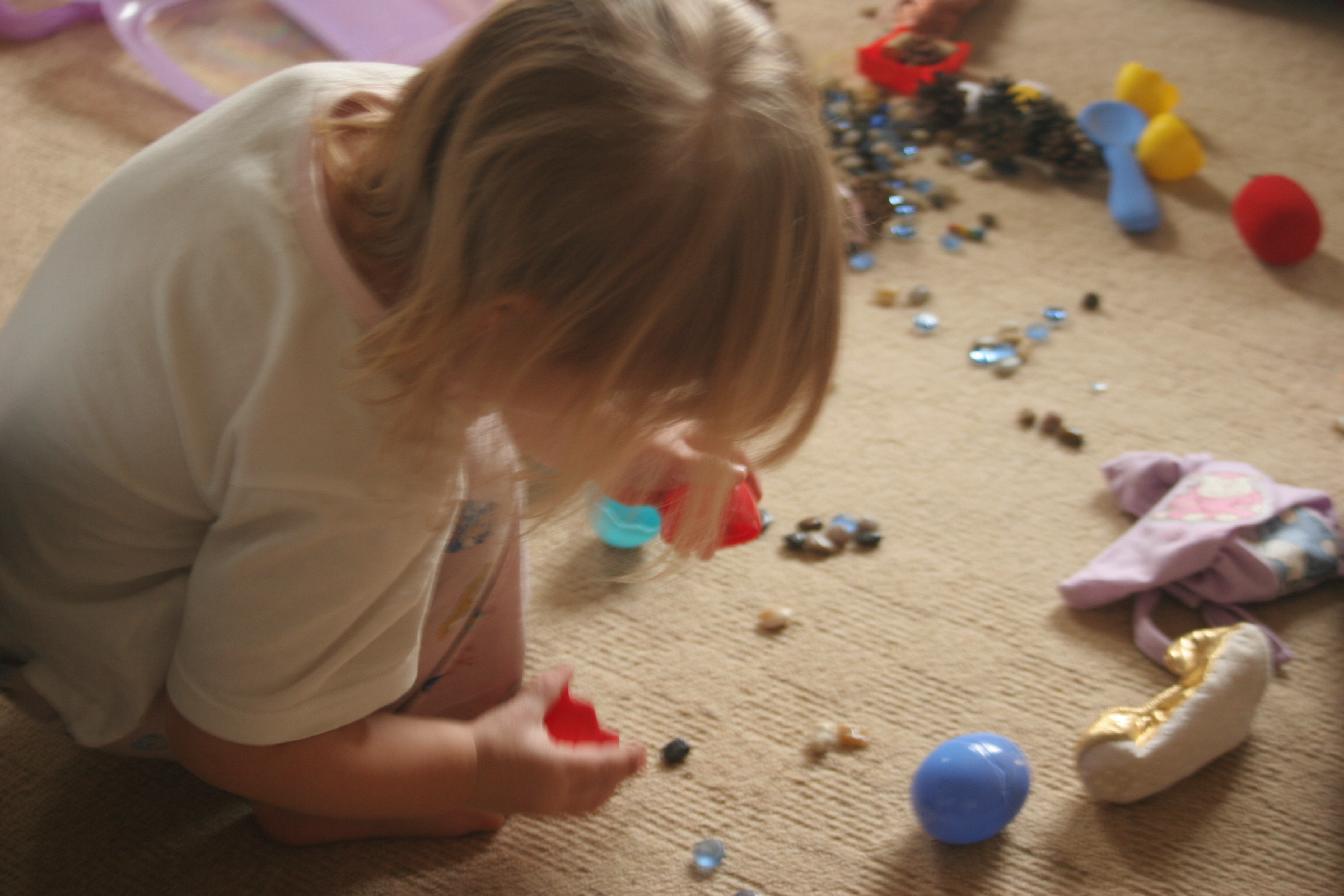
My eldest was obsessed with tiny stones when she was small. Everywhere we went she would stop to pick them up or take them home in her pockets. If we were in the garden she would make collections of little stones and spend hours moving them from one place to another. She was very young at the time but I never stopped her for fear that she may swallow them. I simply made sure I was sat nearby so that I could see what she was doing.

playing with loose parts
filling eggs with stones and glass beads.

My 2-year -old loves sticks. We have 2 rules:

  • No sticks in the house
  • Do not point sticks at people’s eyes.

Sometimes they are magic wands, Sometimes fishing rods or sometimes simply something to carry around. Every stick is greeted with equal excitement.

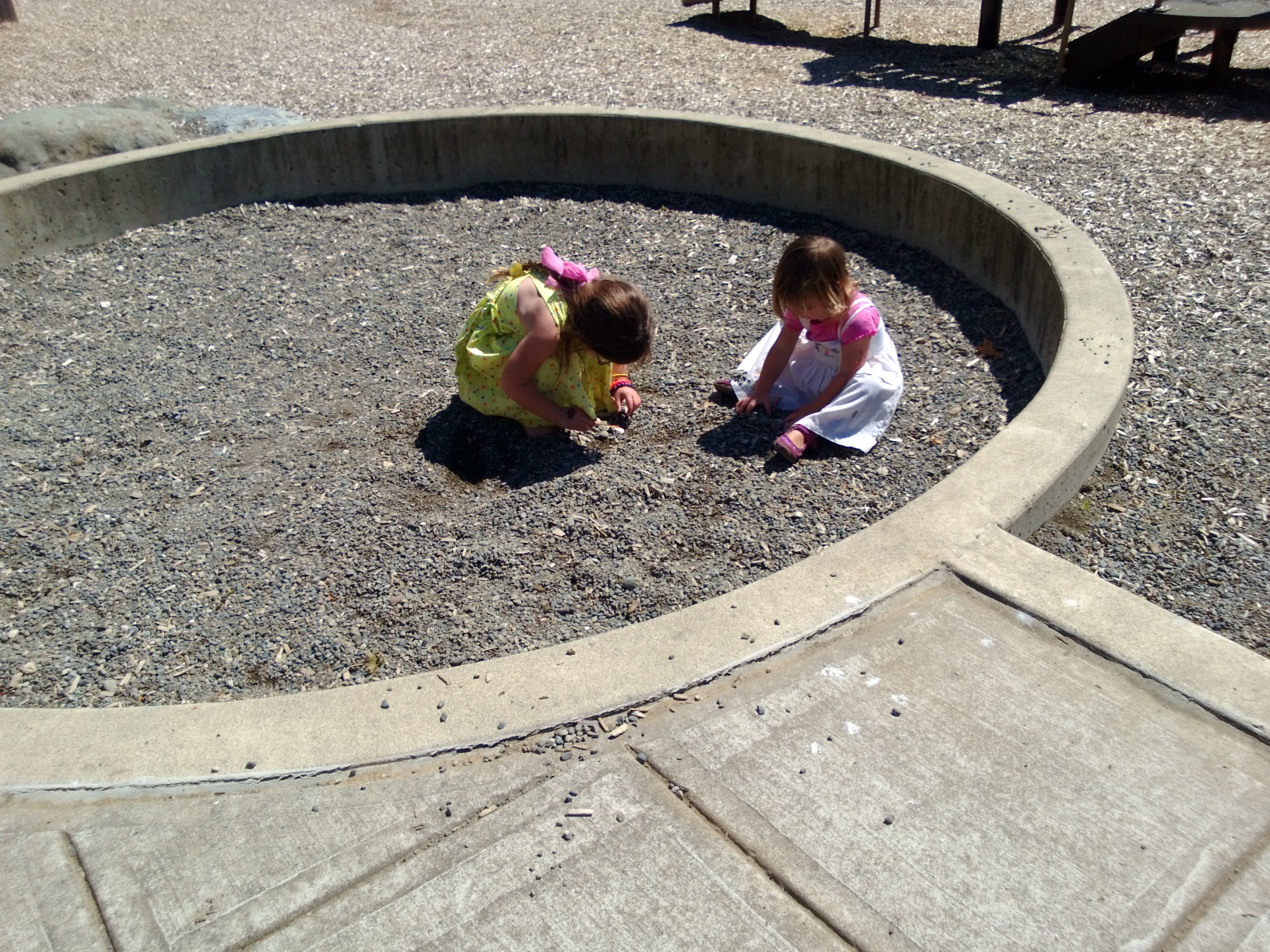
playing in the dirtAll 3 children play for hours in the sand pit. When I first moved to the US I didn’t think the girls would like the grey, gravelly play sand they have here. I was wrong, they love it as much, if not more than the fine golden sand we had in the UK. Even at the park they chose to play in the dirty gravel rather than on the equipment.

The Theory of Loose Parts

In 1972 the architect Simon Nicholson devised the Theory of Loose Parts. It grew from the notion that all children love to interact with variables. Variables can be anything from materials and shapes to media such as gases and fluids and are used to discover, invent and have fun. The theory of loose parts is as follows

‘In any environment, both the degree of inventiveness and creativity, and the possibility of discovery are directly proportional to the number and kind of variables in it.      (Nicholson 1972)

Put simply, the playground with static play equipment will not offer a child the opportunity to discover and create their own scenarios as freely as one that is less predictable or restrictive and offers moveable objects that can interact with the child’s play. A swing is a swing but the gravel can be a home for a bug, fairy dust, a cake, something to draw in, a track for a car and other endless possibilities.

We have the perfect garden for playing with loose parts, with an abundance of trees, pine cones, stones, dirt etc. I decided to organise these a little to see if it would change the way the children played with them.

Storage for Loose Parts

garden equipmentWe had an old clothes horse in the garden that was waiting for a purpose. I bought a few hanging baskets and hung them on the clothes horse along with a few other baskets I  had found. I also clipped a variety of containers to the clothes horse using  an underwear dryer (we also use this for drying paintings).

Using the clothes horse means that it is fully portable making  it easy to move out of the rain or to the sandpit, paddling pool or lawn .

The Slide show illustrates some of the things we collected .

This slideshow requires JavaScript.
Other ideas for loose parts that can be stored outdoors

  • sticks, twigs
  • glass beads, marbles, buttons, bells, beads
  • feathers
  • lolly sticks
  • pegs
  • acorns, conkers and seeds,
  • string
  • large things like pallets, tyres, flowerpots, fabric, boxes, pots and pans, tubes, guttering, bamboo canes, bricks, planks, logs, driftwood.

I love to see the children using their environment to stimulate imaginative and creative play. Here are some of my favourites.

Learning for Life

Country Kids from Coombe Mill Family Farm Holidays Cornwall

Outdoor Play: Bubble and Straw Painting.

bubble paintingMy kids love messy activities but sometimes it’s just a little too much to handle indoors.

We decided to do some outdoor painting.

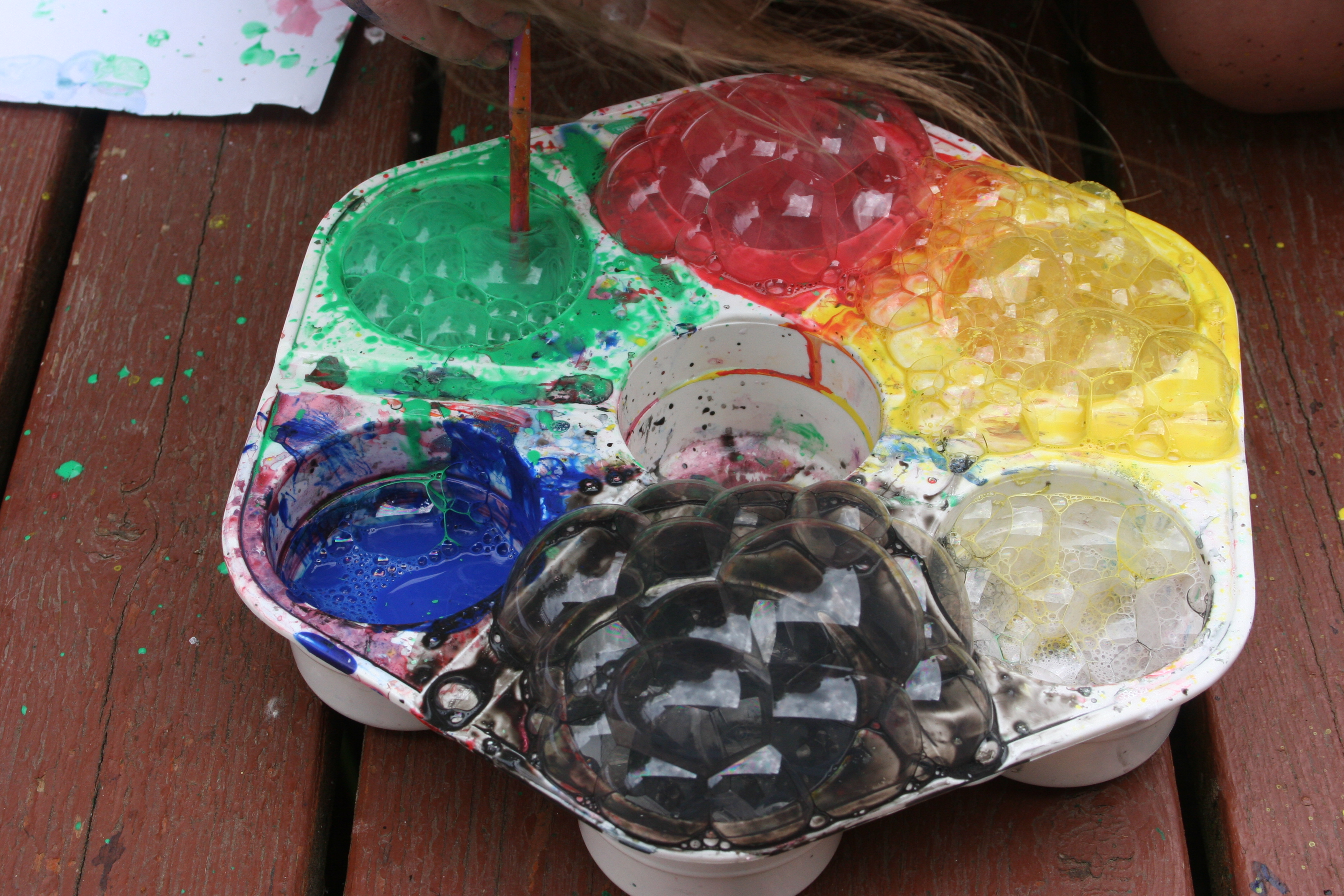
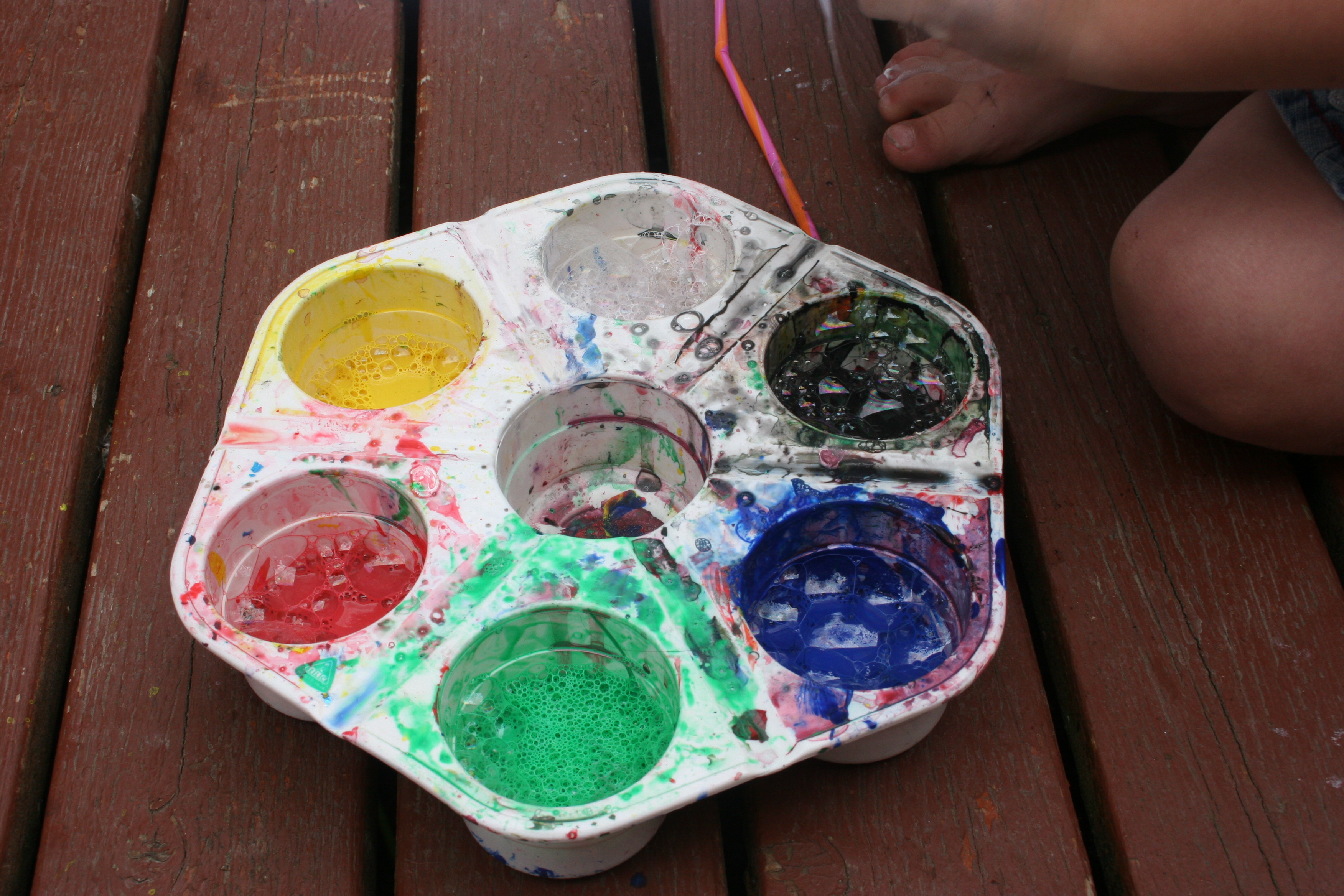
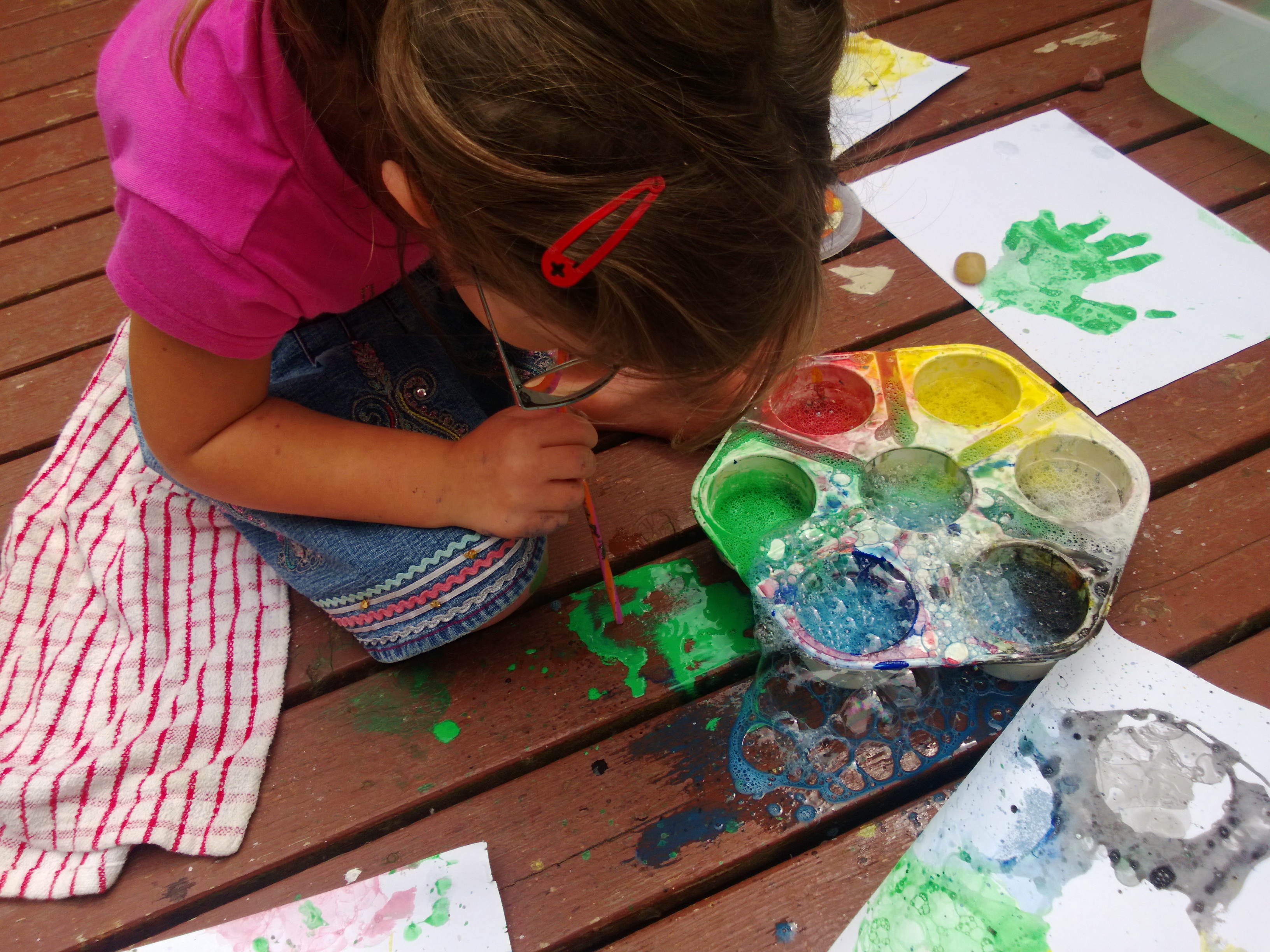
A small amount of paint, a squirt of washing up liquid and a few drops of water were mixed in our pallet.

I showed my 4-year-old  how to blow bubbles with a straw. We talked about the difference between blowing and sucking.

What will happen if you suck the straw?

I’ll drink the paint. Yuck!

It’s like the wind, the wind blows but it doesn’t suck.

blowing paint
We tried to make the bubbles come over the top. We found that we needed to blow gently. They still didn’t quite bubble enough so we carefully added more water and tried again.

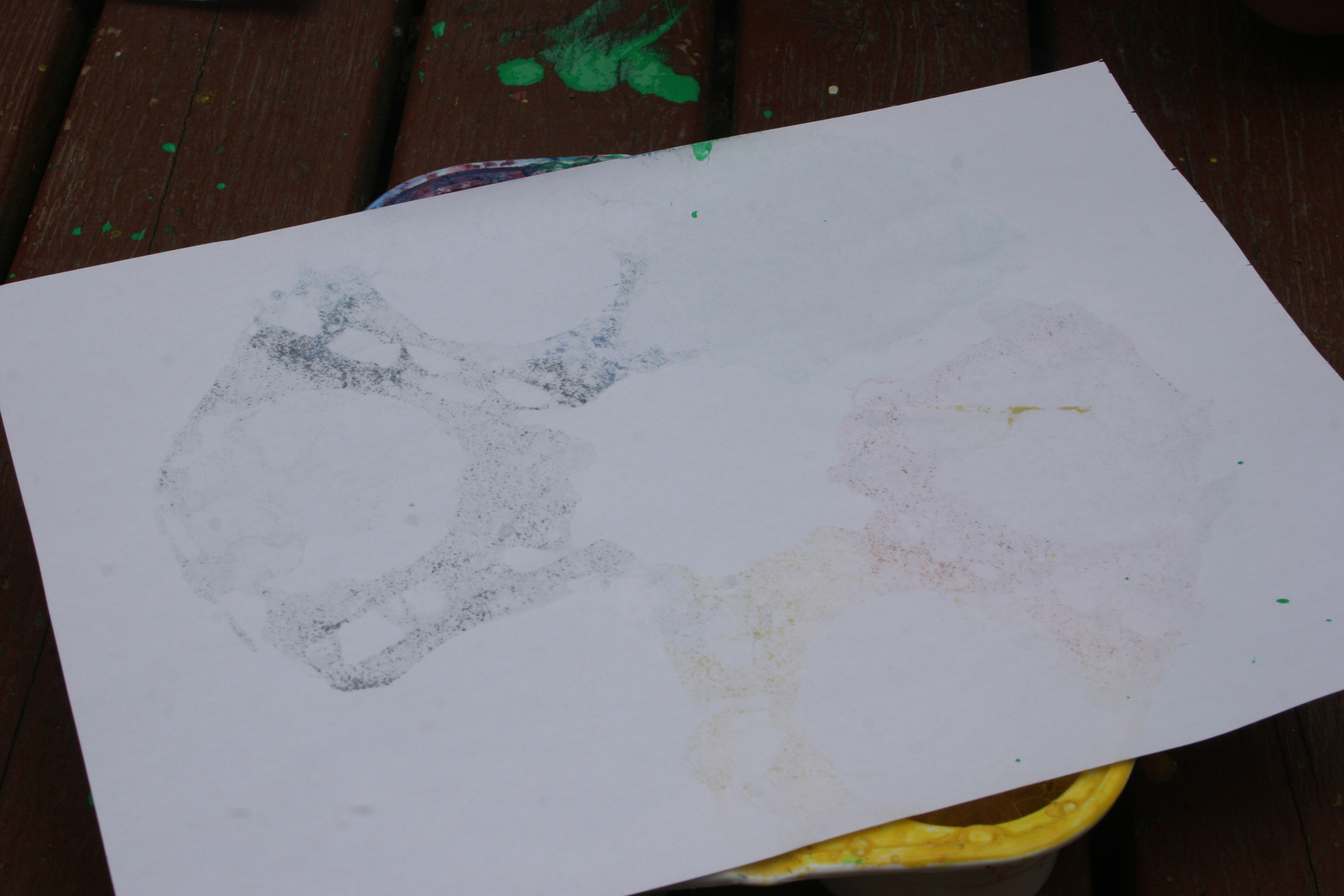
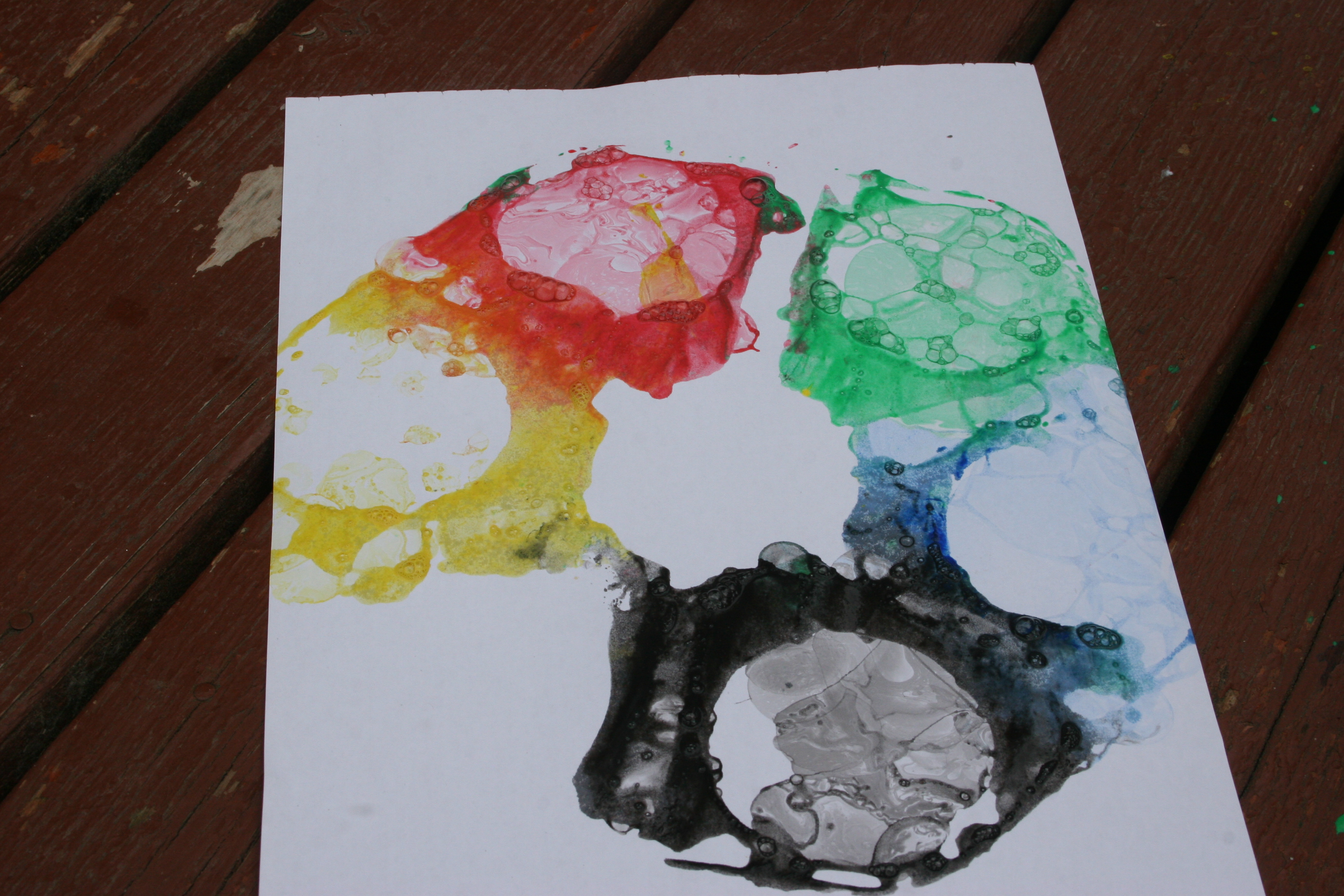
We placed the paper on top to make bubble patterns.

placing the paper on a bubble printbubble print

Next she made a bubbly hand print.

Time to get clean.
Time to get clean.

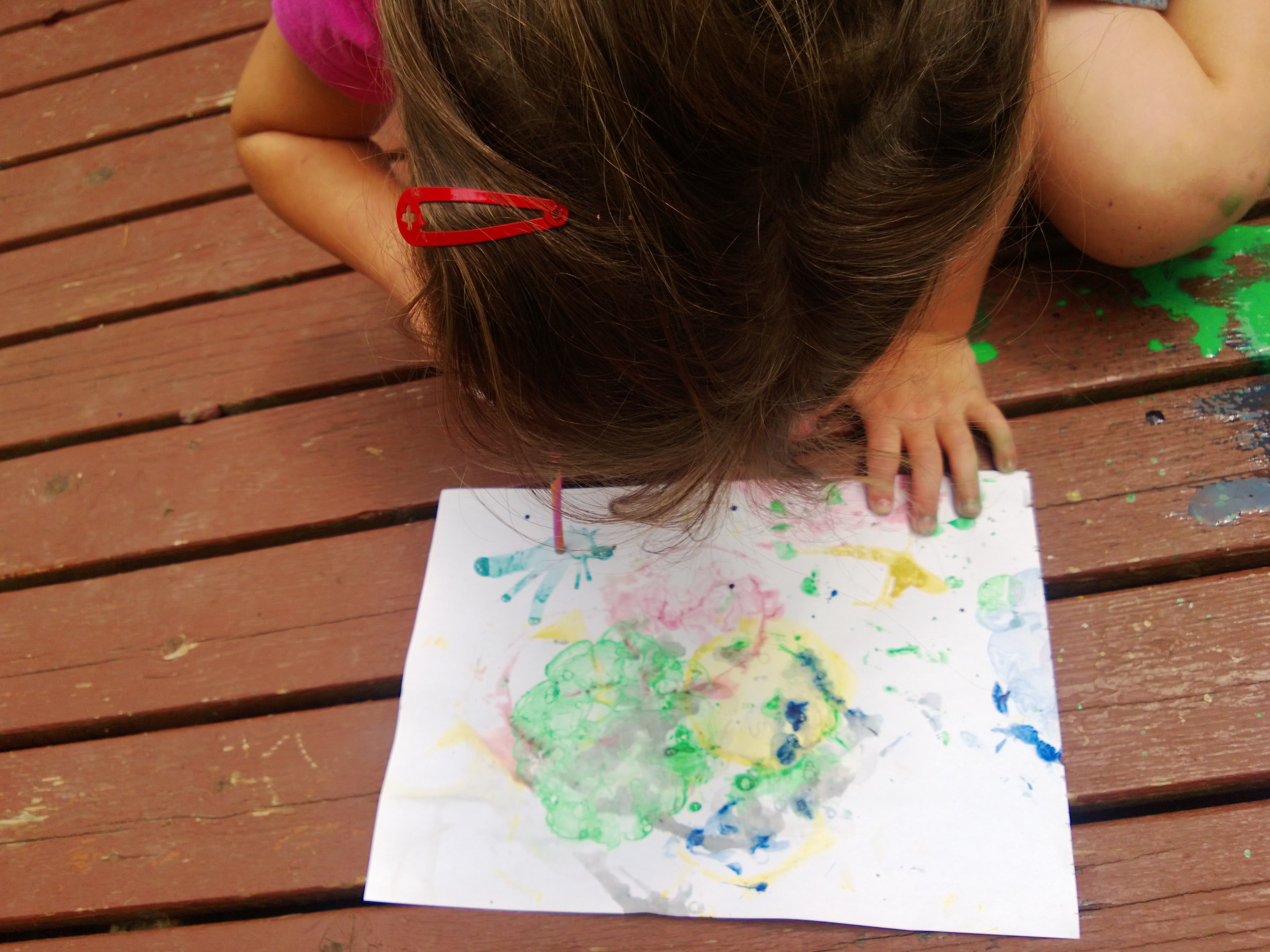
When the paint overflowed onto the deck she discovered that you could do something else with the straw.


The paint moves and makes patterns when you blow it with a straw.


Blowing the paint on the paper with the straw made a whole new type of painting.

blowing paint with a straw

Outdoor Play: Catching Butterflies

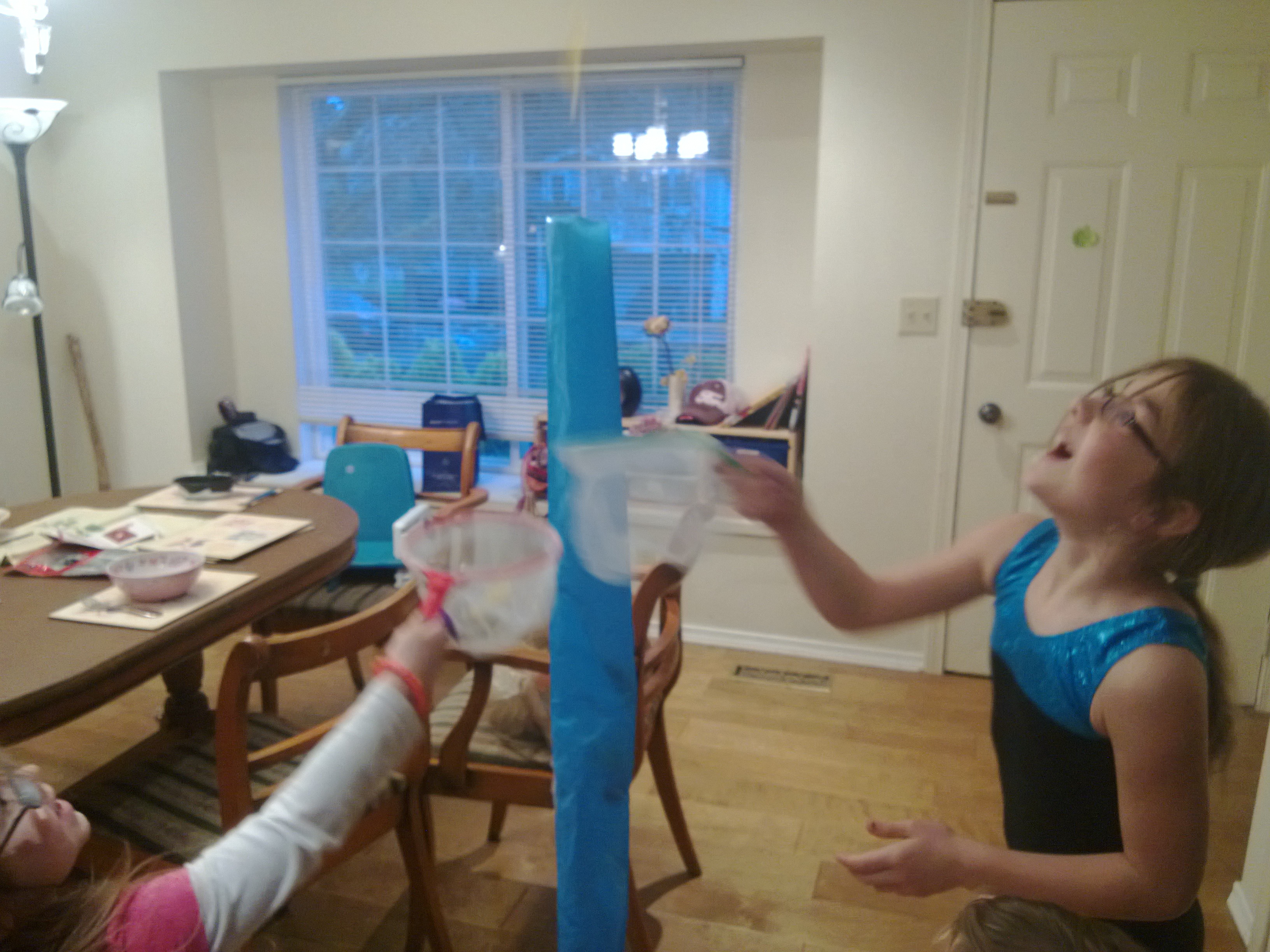
ElefunThis morning we were playing a game of Elefun, the game where fabric butterflies are blown from an elephant’s trunk for the children to catch in nets.

 I know, let’s go and catch butterflies outside.

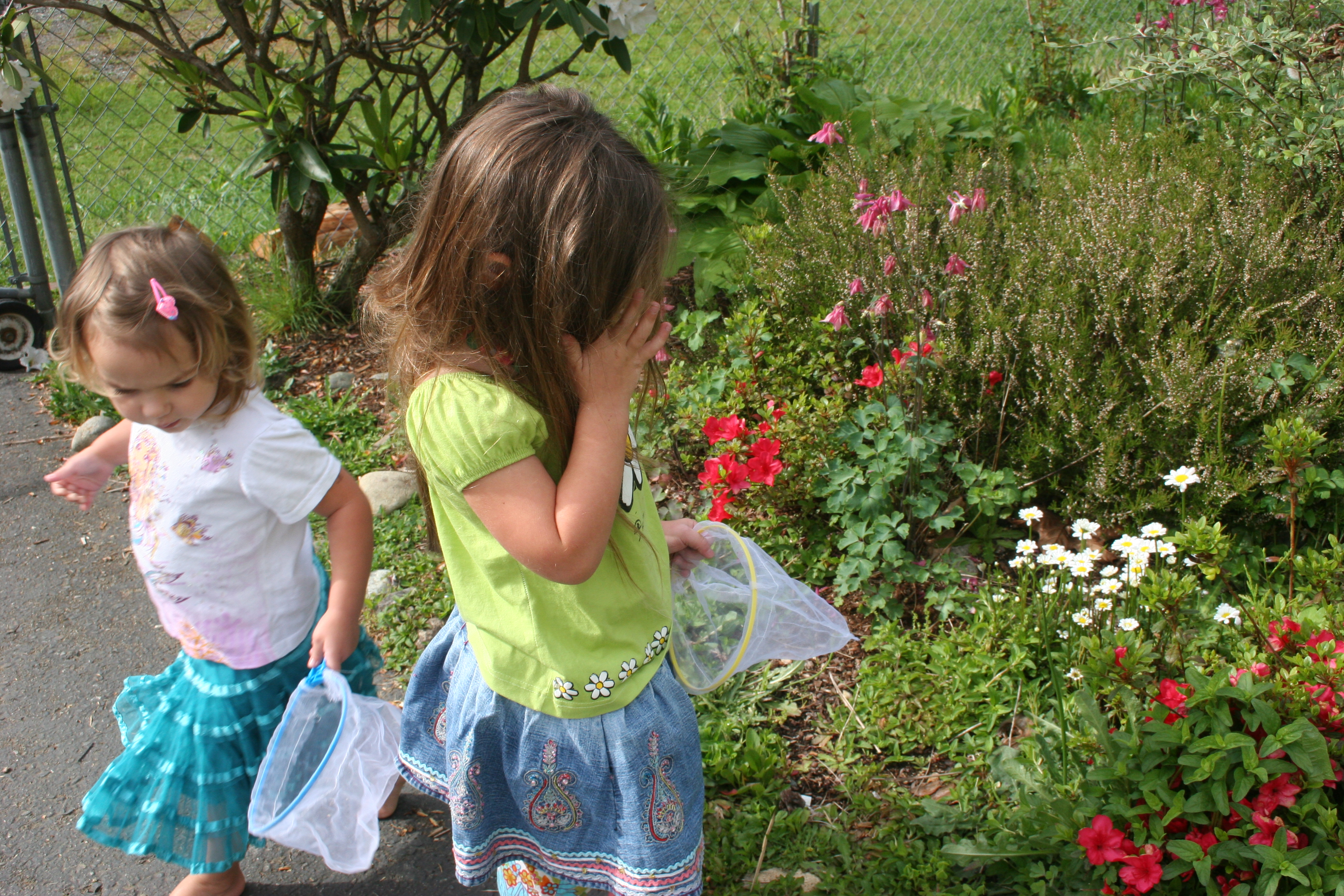
My 4-year -old quickly ran outside to look around the garden for butterflies. I explained that we needed to be quiet and still if we were to find any butterflies.  Butterflies are attracted to red, yellow, pink and purple so we looked for flowers in these colours and waited.

I might find a butterfly, they like red and yellow so they might land in my net.

 
If we are very quiet we might catch a butterfly.

The hunt for butterflies was not very successful so they started to look for other creatures instead.

They found a woodlouse (or roly-poly as the kids here call them) and lots of bees but no butterflies.

I know let’s make some butterflies out of paper.

I cut out some paper butterflies. The girls wanted to decorate them with stickers but I could only find white ones.

I know let’s draw patterns on the white ones.  Now you hide them and we can find them and catch them in our nets.


Outdoor Play: Making Potions


This slideshow requires JavaScript.
My eldest daughter has been an avid potion maker all her life.  We are always finding concoctions in her bathroom and when she was young she would leave them on the windowsill of her bedroom or on the side of the bath and if you knocked them off whilst having a relaxing bath the cold would give you the shock of your life.  She is now a huge Harry Potter fan, having read all of the series 4 times and her potions are taking on new meaning. Her younger sister is following in her footsteps. Now that the weather is nicer I set up a little potion station for them in the garden – they love it.

It is a great  sensory play activity and science experiment, they got their hands in, testing and smelling the potions and used all kinds of things from the garden. Best of all I love how the imaginary play scenarios evolved.  I suggested to my 9-year-old that she might like to make a book of potion recipes.

‘Yes’ she exclaimed excitedly, ‘ But we’ll need about 70 pages, the McClary recipe book’


This slideshow requires JavaScript.
Country Kids from Coombe Mill Family Farm Holidays Cornwall

8 Things a Child Can Learn From Playing Golf.

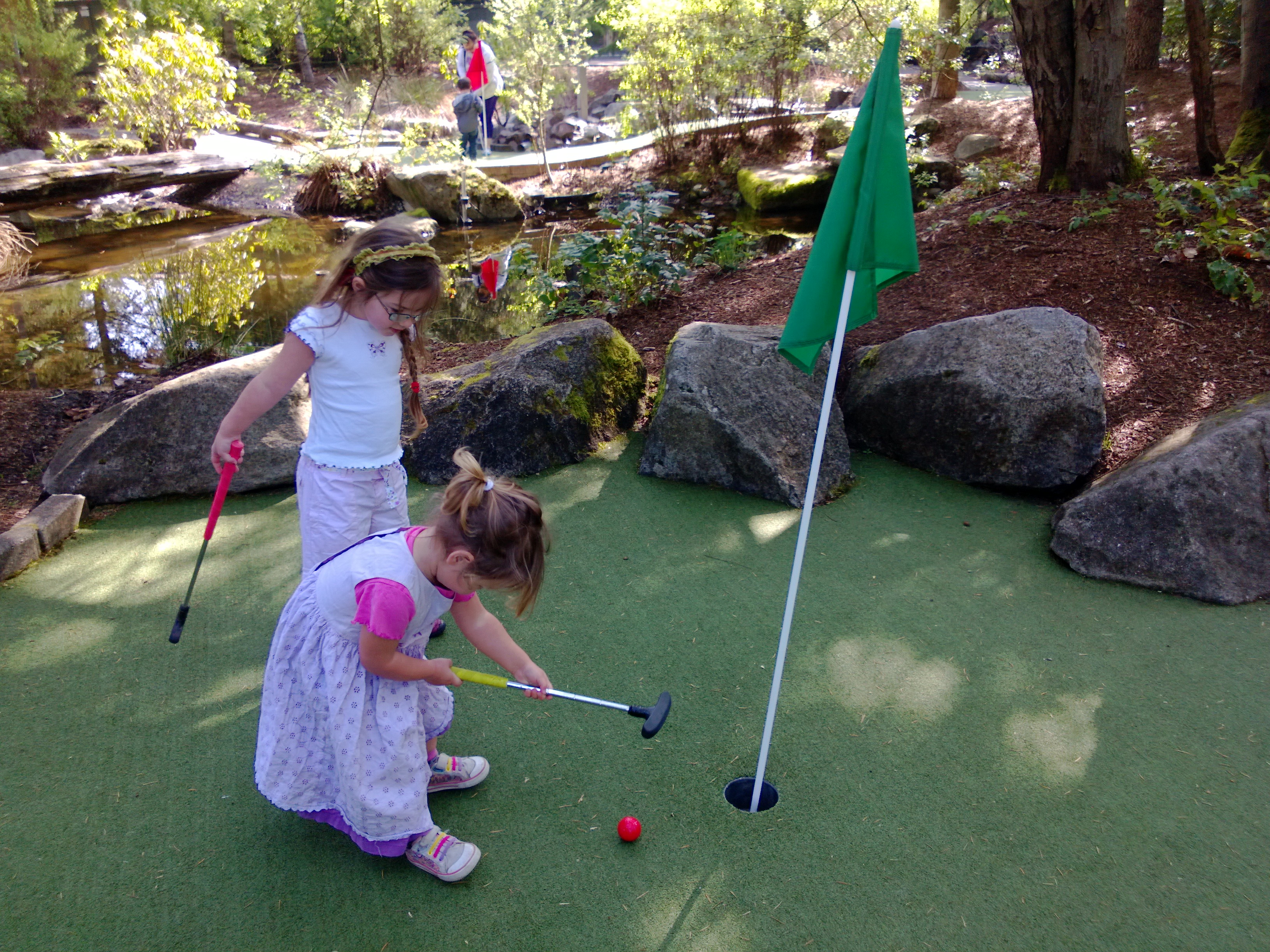
willows run put put courseToday I met with a group of mums and their toddlers to play golf at the pitch and put, Willows Road Golf Course. All of the children were new to golf and most of the children were below the age of 2.  My girls had a brilliant time – my 4-year-old even asked if she could come back tomorrow.

Before 11am under 12’s can play the 18 hole pitch and put for $5. The beautiful setting meant that my 2-year-old, who lost interest after a few holes had plenty to keep her occupied.

There were lots of opportunities for learning too:

  • Number recognition as we moved around the holes
  • Recognising colours – who has the red ball? What colour flag do we have this time?
  • Reading signs – Please rake your footprints, keep on the path.
  • Gross motor skills – how do you hold the club? You need to hit it hard to get it up hill.  What is the best way to get it in the hole?
  • Counting – how many shots did you take that time?
  • Writing – filling out a score card.
  • Vocabulary – What is the stick called again? I’m in the bunker.
  • Turn- taking and awareness of others.

We’ll definitely be doing it again, a great way to spend a sunny morning.