Today was Field Day at my daughter’s school. In the usual fashion, we had a letter that said we could come along or volunteer if we wanted but no explanation as to exactly what a Field Day is.
I asked a friend in the playground.
So what exactly is a Field Day? Is it the same as a Sports Day?
No not really, they set up lots of activities around the school grounds and the children can join in with what they want to. Some are sports but others are fun games and things.
Slightly better informed I decided to give it a go.
So What is a Field Day?
A number of physical activities are set up around the school grounds with an adult manning each one.
The children have a checklist that they hang around their neck. They move around the various activities and when they complete them (successfully of not) they have the activity crossed off their checklist. Once they have completed 10 they can get a popsicle (ice lolly). If you complete all the activities your name is added to ‘the ball of fame’.
What Sort of Activities?
Playing Catch with a frog
Ground hockey
Hoopla
Pig toss (Try to throw the pig into the tub)
Throw the ball at the trampoline and see if you can bounce it into the tub.
Space hopper race
Their favourite activity was playing catch with water bombs.
The girls had fun and it was nice to have something that the little ones could be involved in so they weren’t left standing around watching. Somehow though, I felt it lacked the atmosphere of a traditional sports day with races and cheering crowds. Where were the prizes for the child who completed the obstacle course in the shortest time, or a little prize if you knocked all the cans down? It somehow felt a little flat without any competitive edge. It was a cross between a Summer Fete, a P.E lesson and a traditional sports day – I’m not really sure I understand the point of it but the girls enjoyed it. It’s probably just a little structured to be my idea of fun.
On the way home from school we were talking about quills. My Harry Potter obsessed 9-year- old had made a quill by putting a biro refill into a feather.
My four-year old asked
Do we have any ink?
No but we can use paint.
We painted with feathers when I was little didn’t we?
We can do that tomorrow if you like. We could use the Peacock feathers we collected at Remlinger Farm.
This slideshow requires JavaScript.
I set the paints up with a few feathers.
painting with the feathery part made some nice patterns
My 2-year-old suddenly declared
I wrote the word ‘buh’
Buh for bat.
She has been playing a Sesame Street alphabet game on the iPad and is beginning to talk about letters and letter sounds.
Her 4-year old sister asked
How do you spell bat?
How do you think you spell it? What does it begin with?
Buh
That’s right and what other sounds are in bat?
Bat…. t
Yes, so what is the middle letter?
Bat…b…a…t….. a. B..a..t spells bat.
After a little bit of impromptu literacy I had a brain wave. The girls are really interested in pirates at the moment and I thought we might be able to do some writing with feathers, make a pirate map or maybe we could make a wizard’s spell.
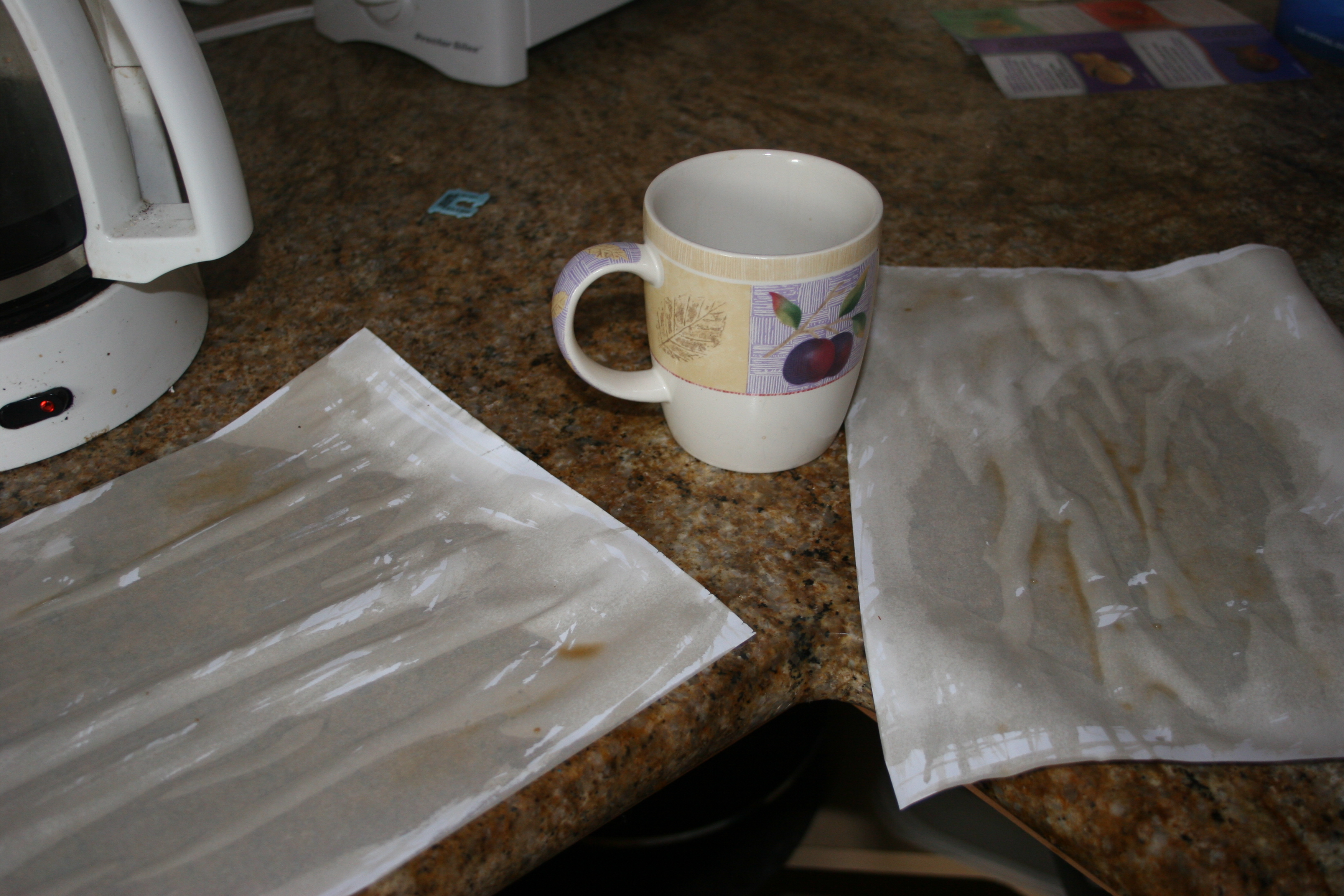
I stained paper with coffee
When it was dry I singed the edges to make it look like an old scroll.
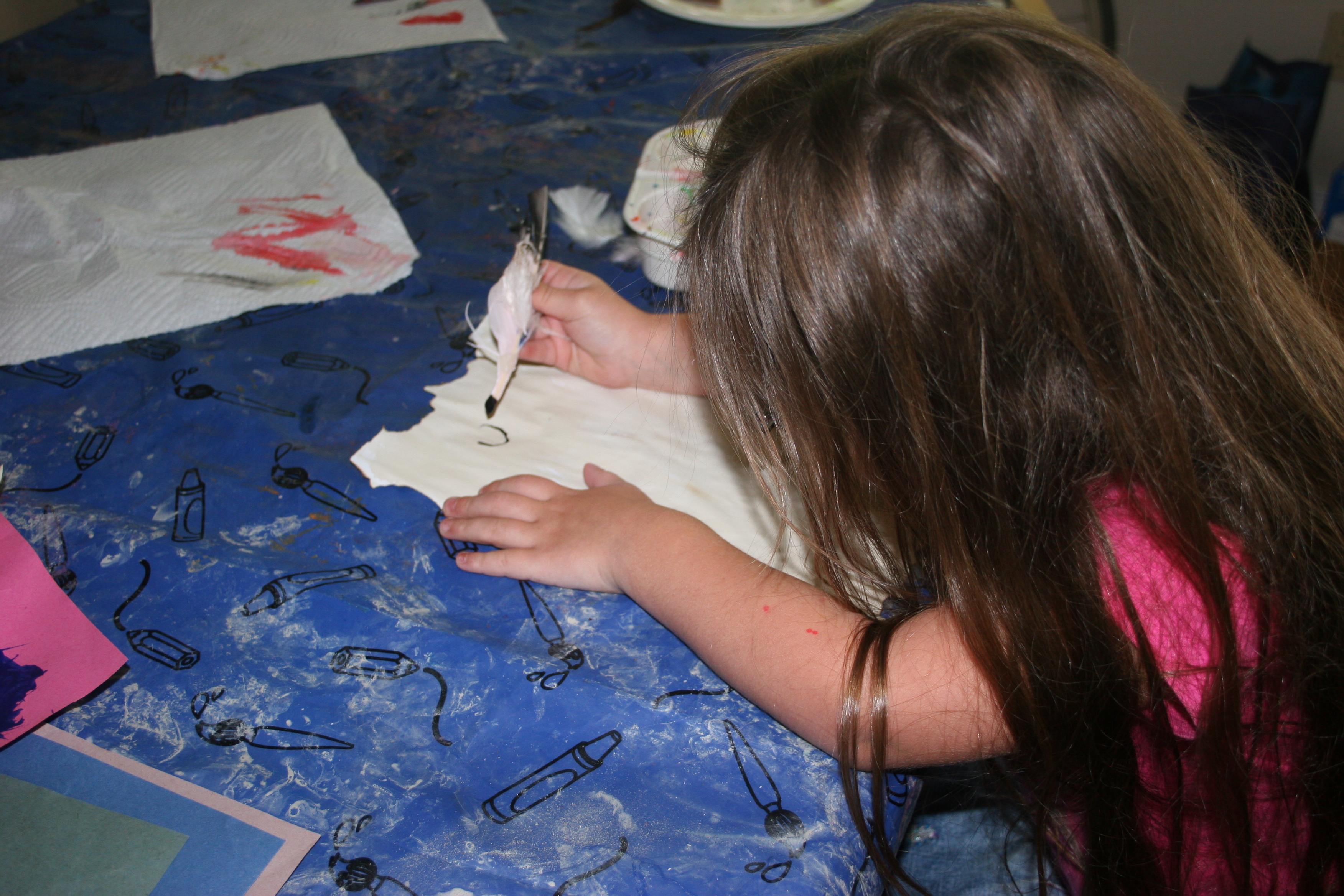
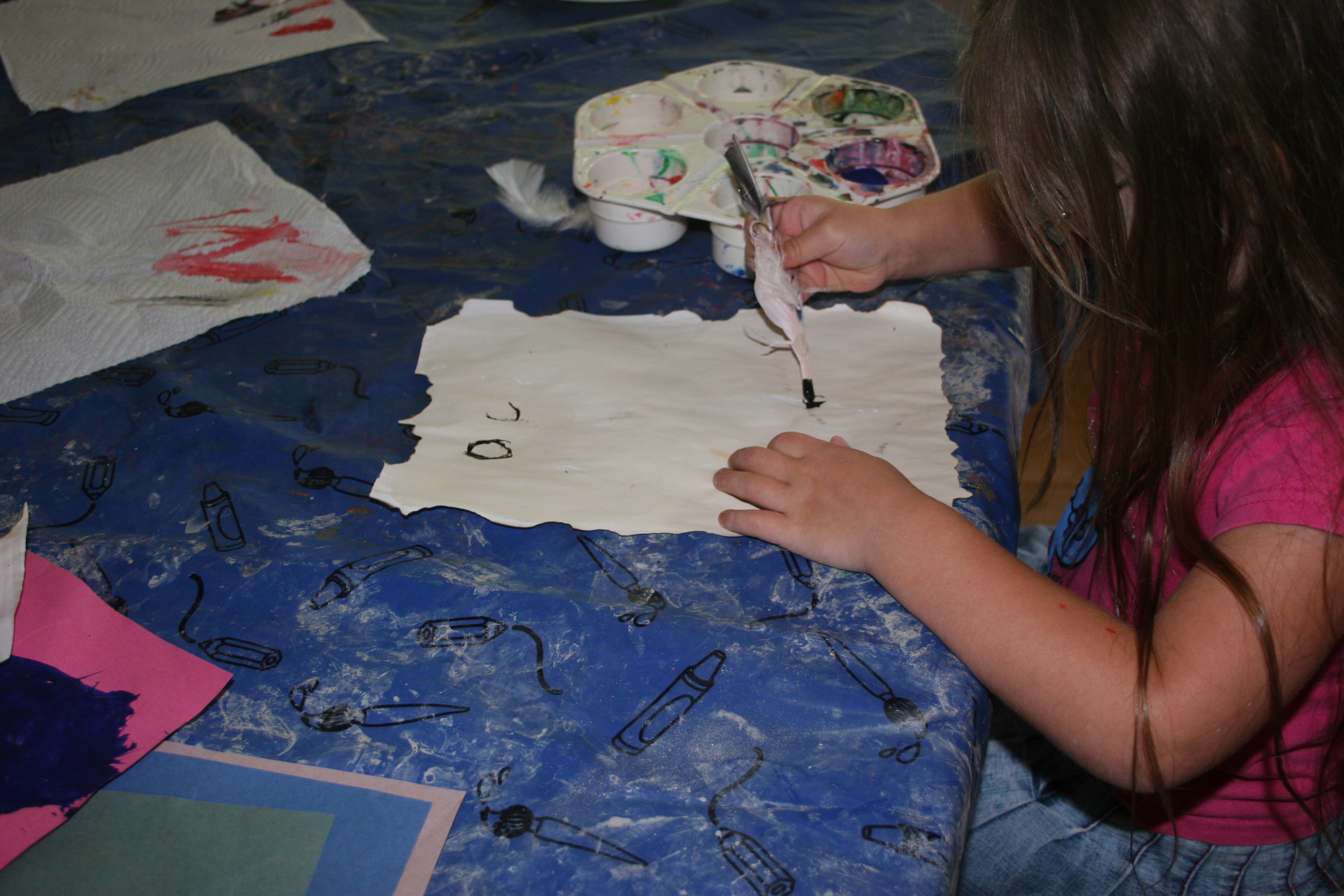
I asked the girls what they would like to do. They decided on a Wizard’s spell.
It will be funny because we don’t even know how to read and write……………. Maybe Wizards write differently to people.
I think this would be a great way to encourage boys in their mark making.
Set up a desk in a role play pirate ship with ink and quills
Make a spell book for children to add their own spells
Add a few feathers and a small pot of paint to your mark making area
Make treasure maps and encourage the children to mark the treasure with an X.
Literacy for under 5’s shouldn’t be about sitting at a table learning letters, tracing over letters or using flashcards. It can be brought into any aspect of play and when children are ready and interested in letters and sounds they will talk about it, ask questions and experiment. Make it fun, make it relevant and they will learn.
I laughed to myself as I watched my 2-year-old playing in the borders, hiding a stick in the bushes and drawing in the dirt. A few feet away was a very expensive sensory playground with musical instruments, water features and a little bear cave. It was very impressive, but the lure of a stick was just too great. Given the choice I’m sure regardless of the expensive equipment we provide, most children are happy with a stick, a pile of stones, or a tub of water.
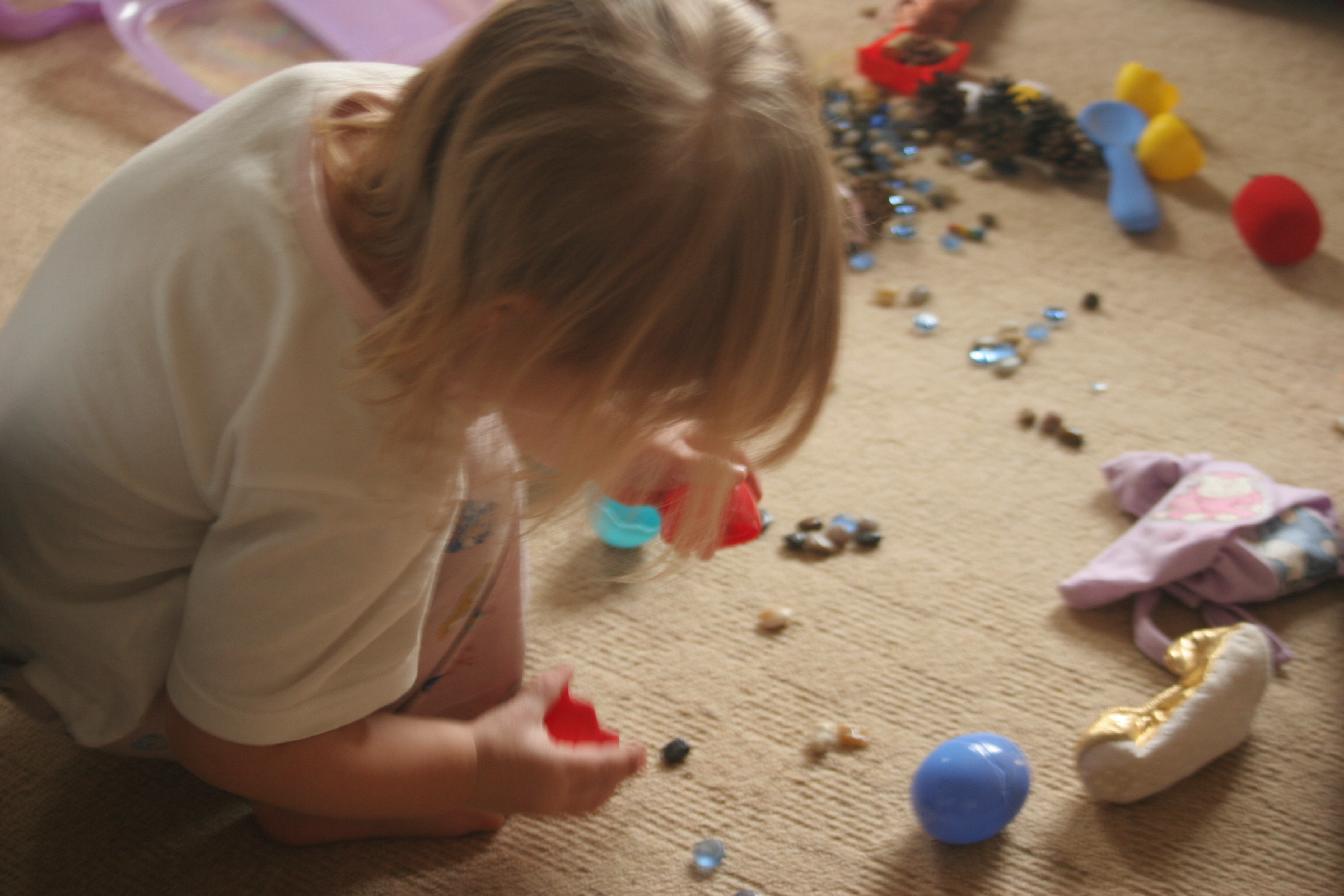
My eldest was obsessed with tiny stones when she was small. Everywhere we went she would stop to pick them up or take them home in her pockets. If we were in the garden she would make collections of little stones and spend hours moving them from one place to another. She was very young at the time but I never stopped her for fear that she may swallow them. I simply made sure I was sat nearby so that I could see what she was doing.
filling eggs with stones and glass beads.
My 2-year -old loves sticks. We have 2 rules:
No sticks in the house
Do not point sticks at people’s eyes.
Sometimes they are magic wands, Sometimes fishing rods or sometimes simply something to carry around. Every stick is greeted with equal excitement.
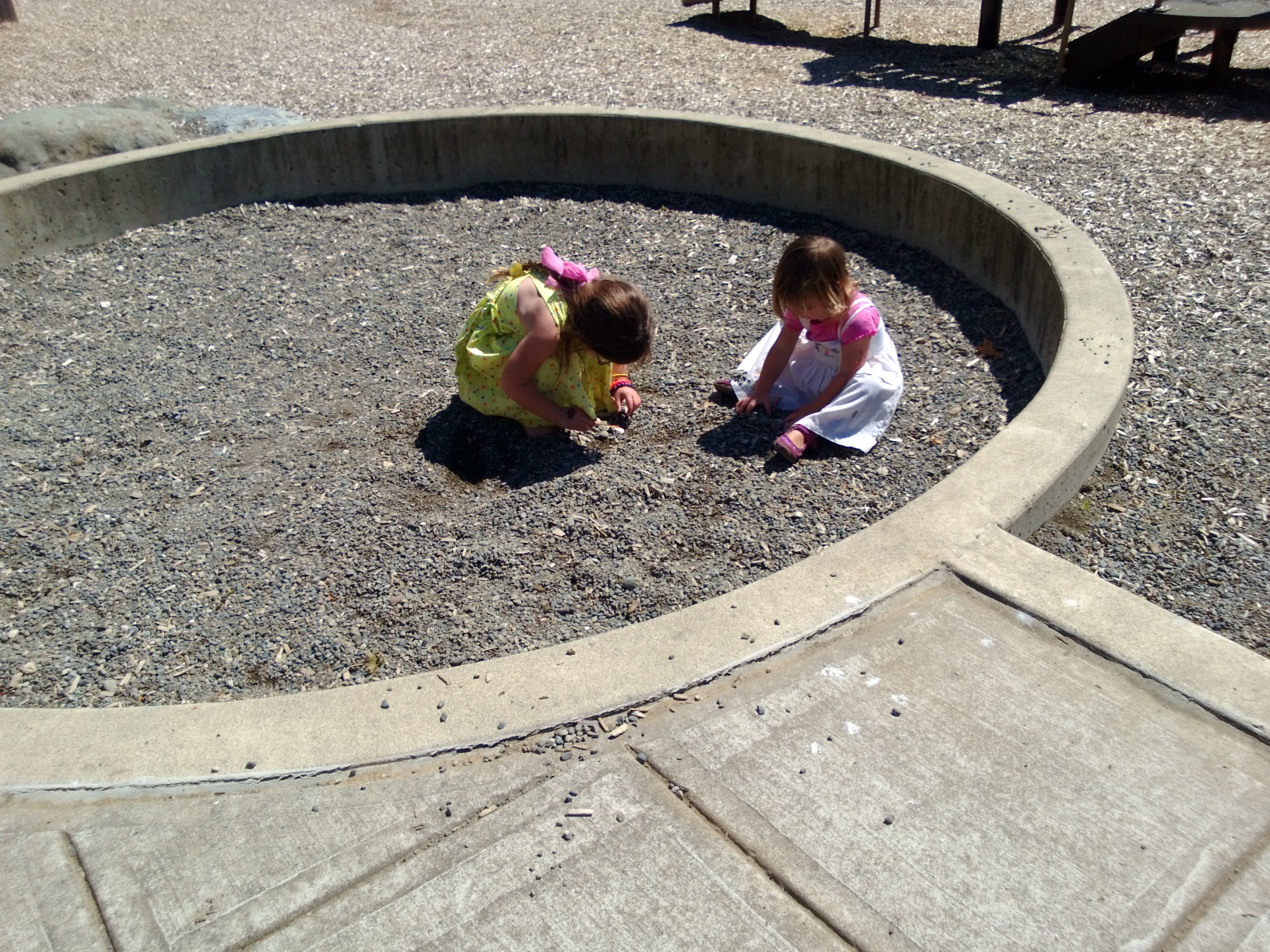
All 3 children play for hours in the sand pit. When I first moved to the US I didn’t think the girls would like the grey, gravelly play sand they have here. I was wrong, they love it as much, if not more than the fine golden sand we had in the UK. Even at the park they chose to play in the dirty gravel rather than on the equipment.
The Theory of Loose Parts
In 1972 the architect Simon Nicholson devised the Theory of Loose Parts. It grew from the notion that all children love to interact with variables. Variables can be anything from materials and shapes to media such as gases and fluids and are used to discover, invent and have fun. The theory of loose parts is as follows
‘In any environment, both the degree of inventiveness and creativity, and the possibility of discovery are directly proportional to the number and kind of variables in it. (Nicholson 1972)
Put simply, the playground with static play equipment will not offer a child the opportunity to discover and create their own scenarios as freely as one that is less predictable or restrictive and offers moveable objects that can interact with the child’s play. A swing is a swing but the gravel can be a home for a bug, fairy dust, a cake, something to draw in, a track for a car and other endless possibilities.
We have the perfect garden for playing with loose parts, with an abundance of trees, pine cones, stones, dirt etc. I decided to organise these a little to see if it would change the way the children played with them.
Storage for Loose Parts
We had an old clothes horse in the garden that was waiting for a purpose. I bought a few hanging baskets and hung them on the clothes horse along with a few other baskets I had found. I also clipped a variety of containers to the clothes horse using an underwear dryer (we also use this for drying paintings).
Using the clothes horse means that it is fully portable making it easy to move out of the rain or to the sandpit, paddling pool or lawn .
The Slide show illustrates some of the things we collected .
This slideshow requires JavaScript.
Other ideas for loose parts that can be stored outdoors
sticks, twigs
glass beads, marbles, buttons, bells, beads
feathers
lolly sticks
pegs
acorns, conkers and seeds,
string
large things like pallets, tyres, flowerpots, fabric, boxes, pots and pans, tubes, guttering, bamboo canes, bricks, planks, logs, driftwood.
I love to see the children using their environment to stimulate imaginative and creative play. Here are some of my favourites.
We could build a boat
Carrying a rock to build a boat on the beach (the family were sailing). Moving heavy objects around was a key part of the play.
Come on row faster!
What happens when I bang the stick with a pebble?
The youngest became absorbed in pebbles and sticks, abandoning the project for a while.
Let’s ride on a horse together
Using loose parts with a large piece of clay
I’m putting them on the top
The finished product
1 year old transporting pistachio nut shells
moving from one container to another
Making a bed with magazines
Let’s put the stones in here and make a magic potion
My kids love messy activities but sometimes it’s just a little too much to handle indoors.
We decided to do some outdoor painting.
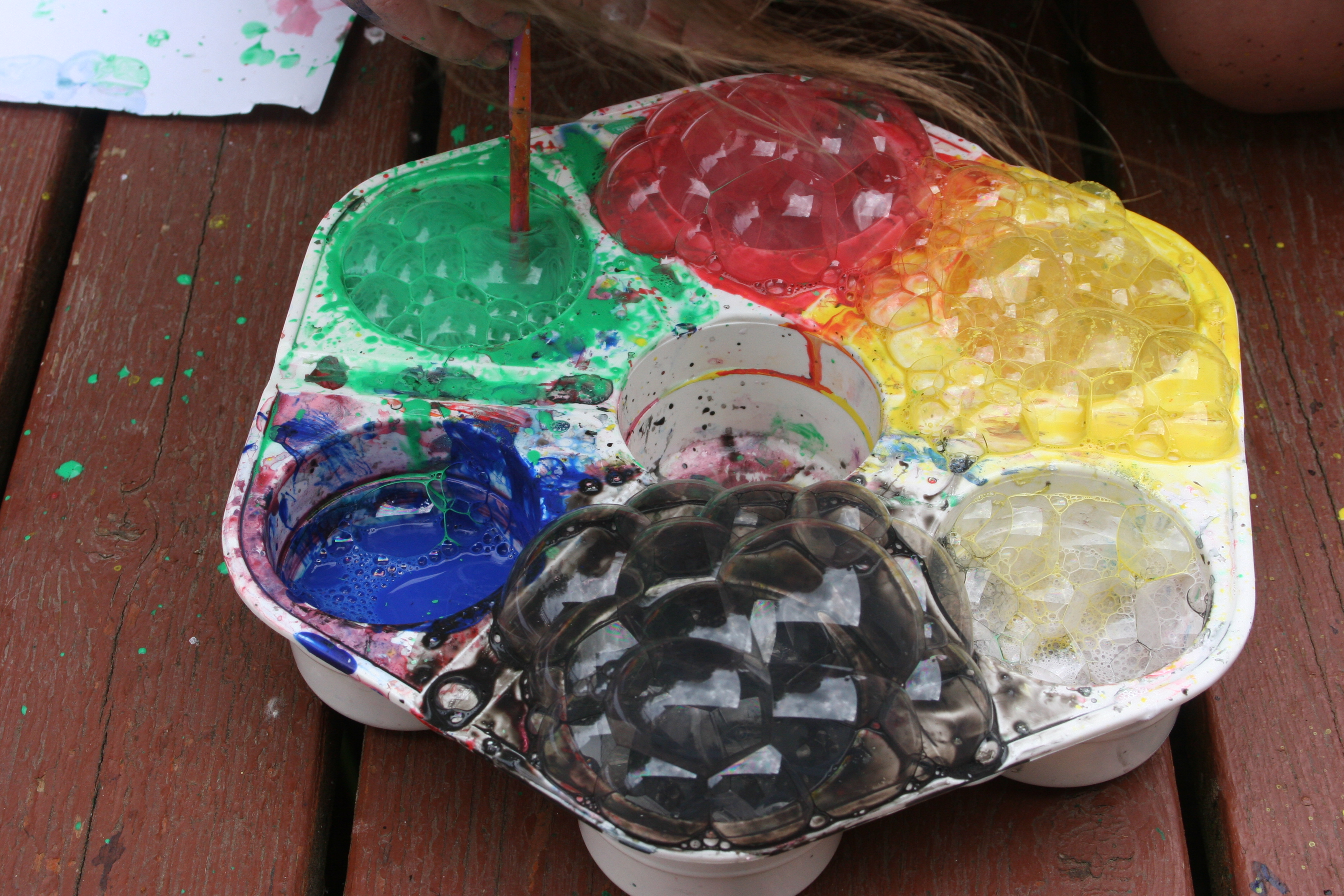
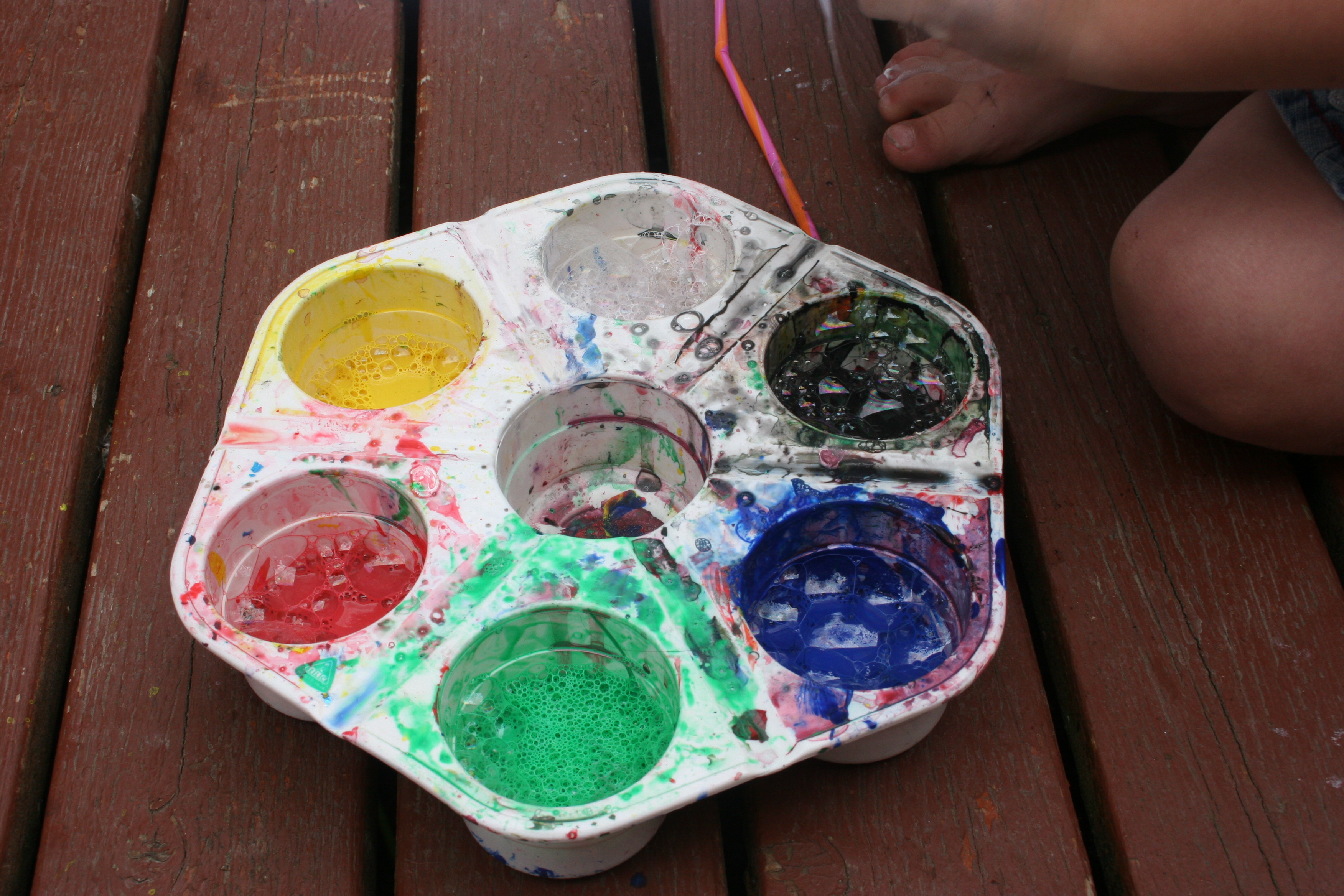
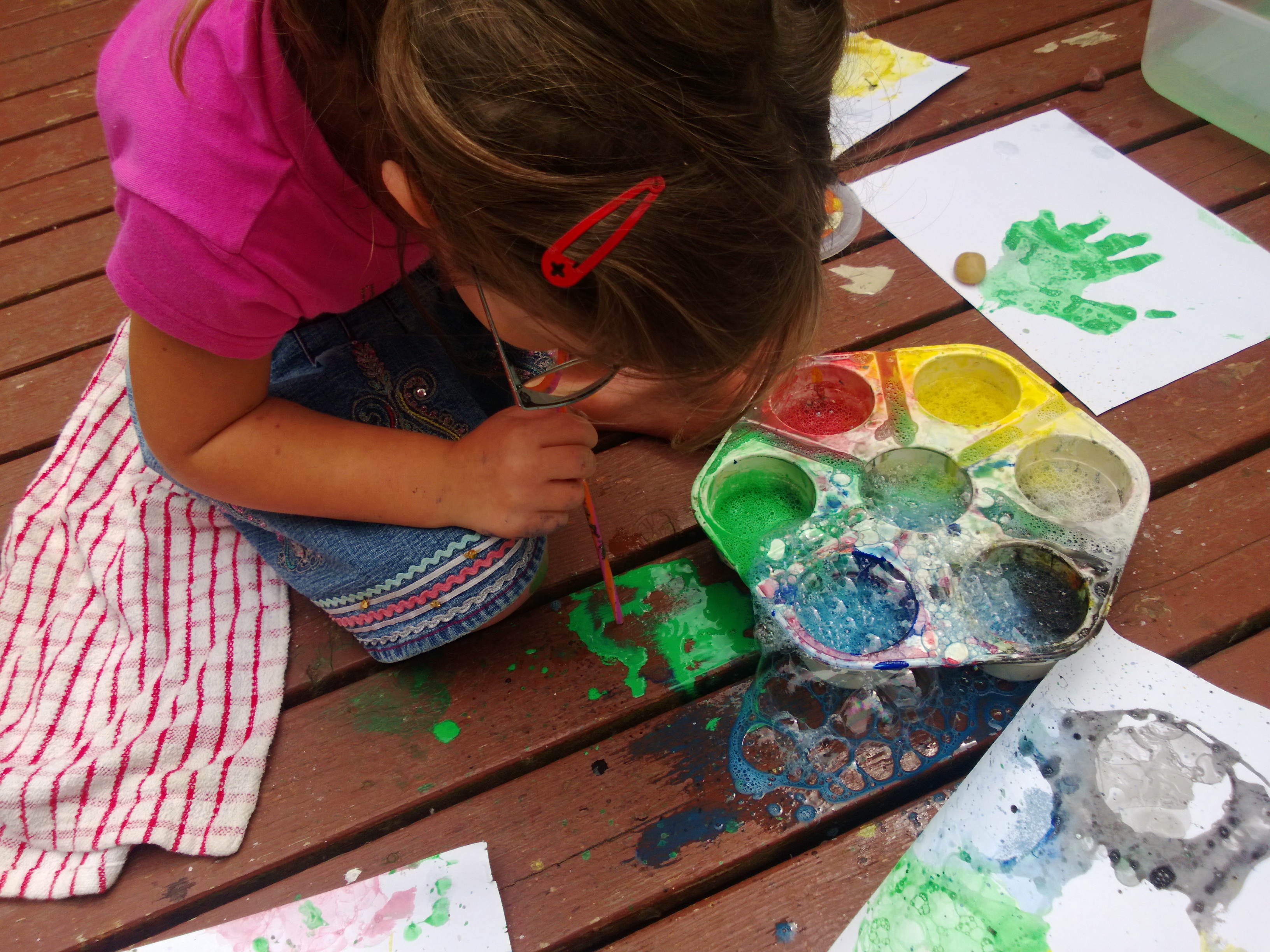
A small amount of paint, a squirt of washing up liquid and a few drops of water were mixed in our pallet.
I showed my 4-year-old how to blow bubbles with a straw. We talked about the difference between blowing and sucking.
What will happen if you suck the straw?
I’ll drink the paint. Yuck!
It’s like the wind, the wind blows but it doesn’t suck.
We tried to make the bubbles come over the top. We found that we needed to blow gently. They still didn’t quite bubble enough so we carefully added more water and tried again.
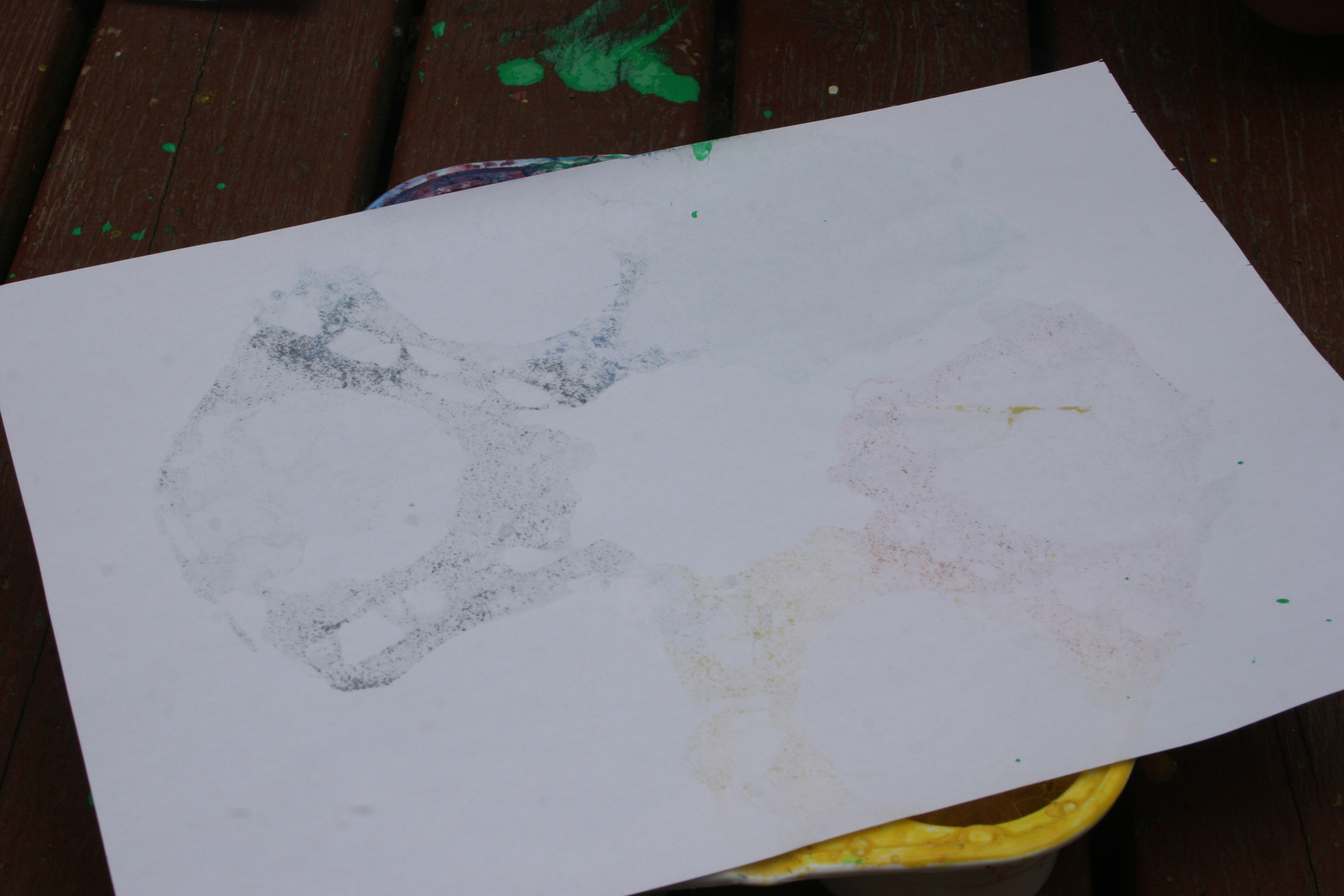
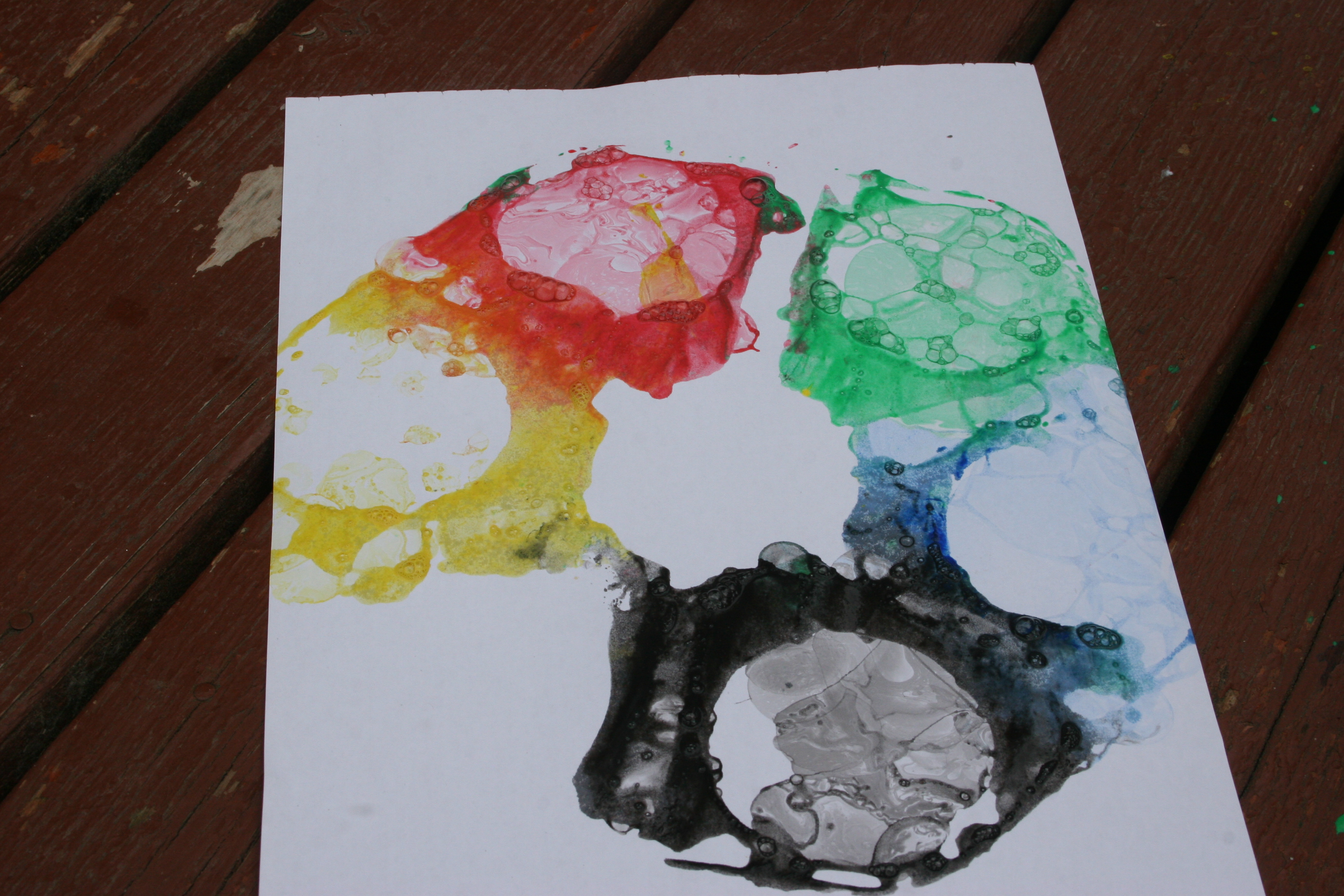
We placed the paper on top to make bubble patterns.
Next she made a bubbly hand print.
Time to get clean.
When the paint overflowed onto the deck she discovered that you could do something else with the straw.
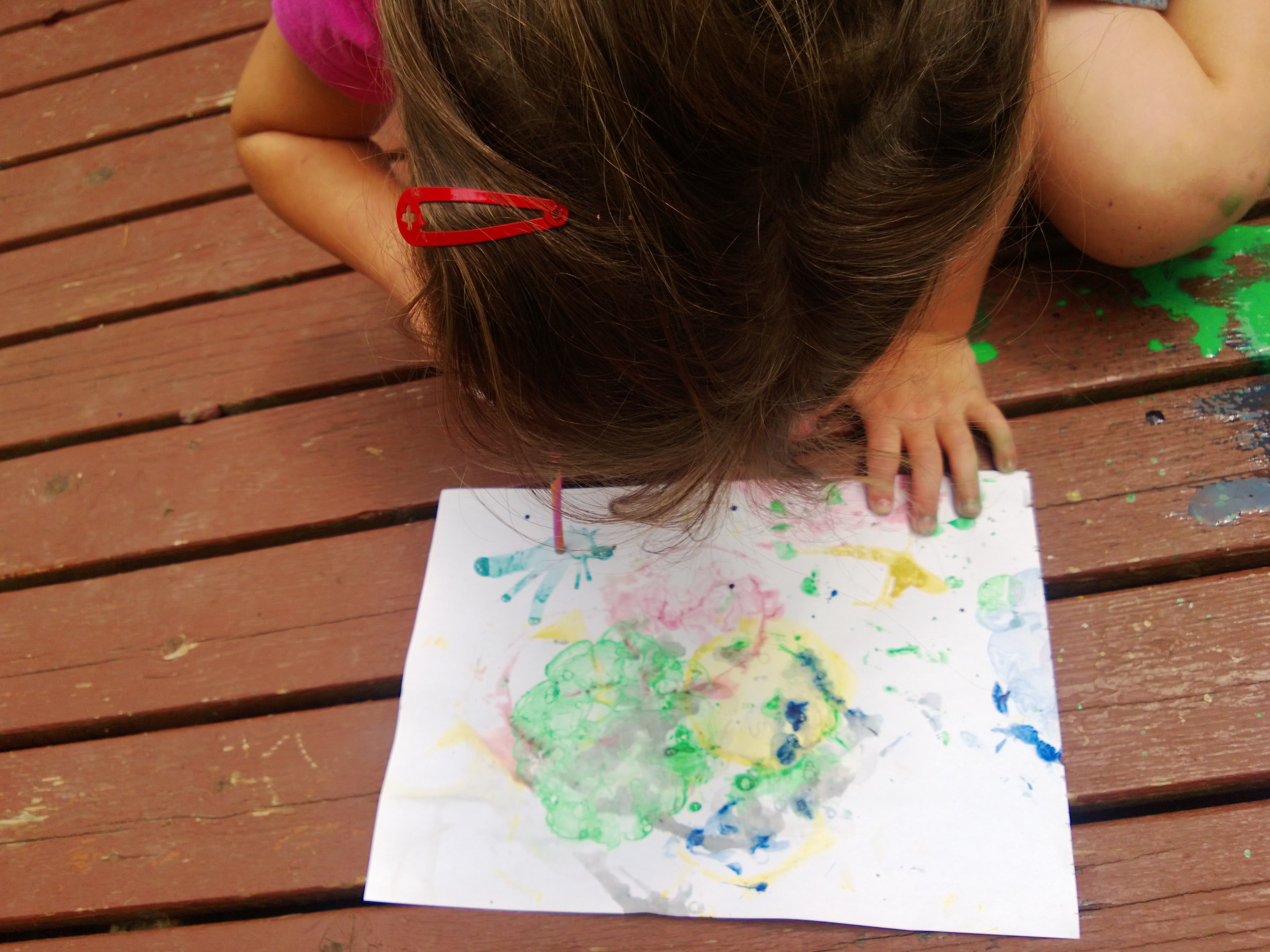
The paint moves and makes patterns when you blow it with a straw.
Blowing the paint on the paper with the straw made a whole new type of painting.
I write a lot about the pre-requisite skills to learning to read. Talking with children, playing with language, reading to your child and developing listening skills are all important but for some children even with these things they will fail to thrive educationally.
Why? Because of poor nutrition.
Malnutrition is an underlying cause of 2.3 million children’s deaths a year, and for millions more children contributes to failures in cognitive and educational development. As a result, the life chances of millions of children around the world are devastated. The long-term consequences of child malnutrition for health and resilience to disease are well established. But new evidence commissioned by Save the Children, for the first time identifies the impact of malnutrition on educational outcomes across a range of countries.
The Story of Ngouth a 12-Year Old from South Sudan
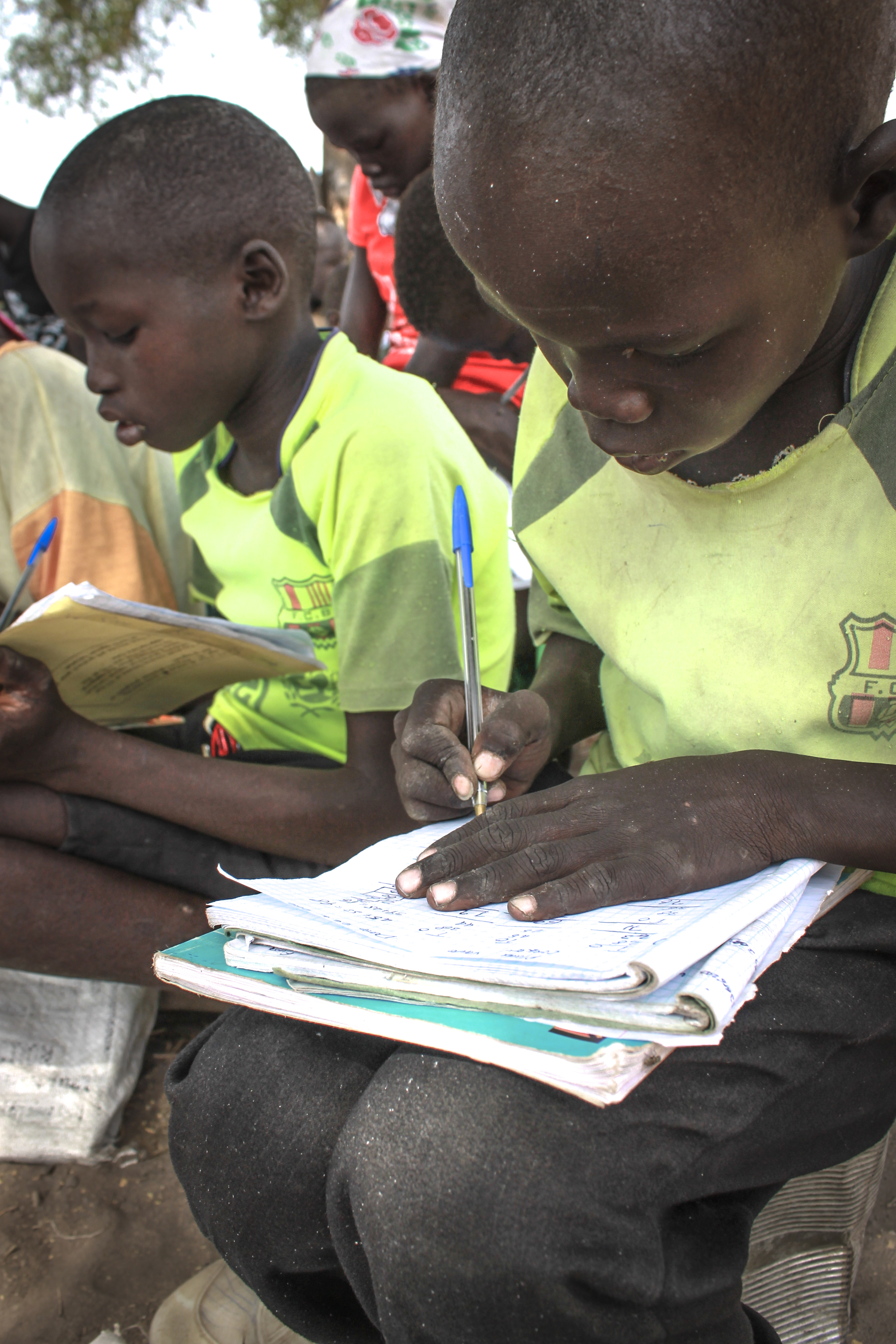
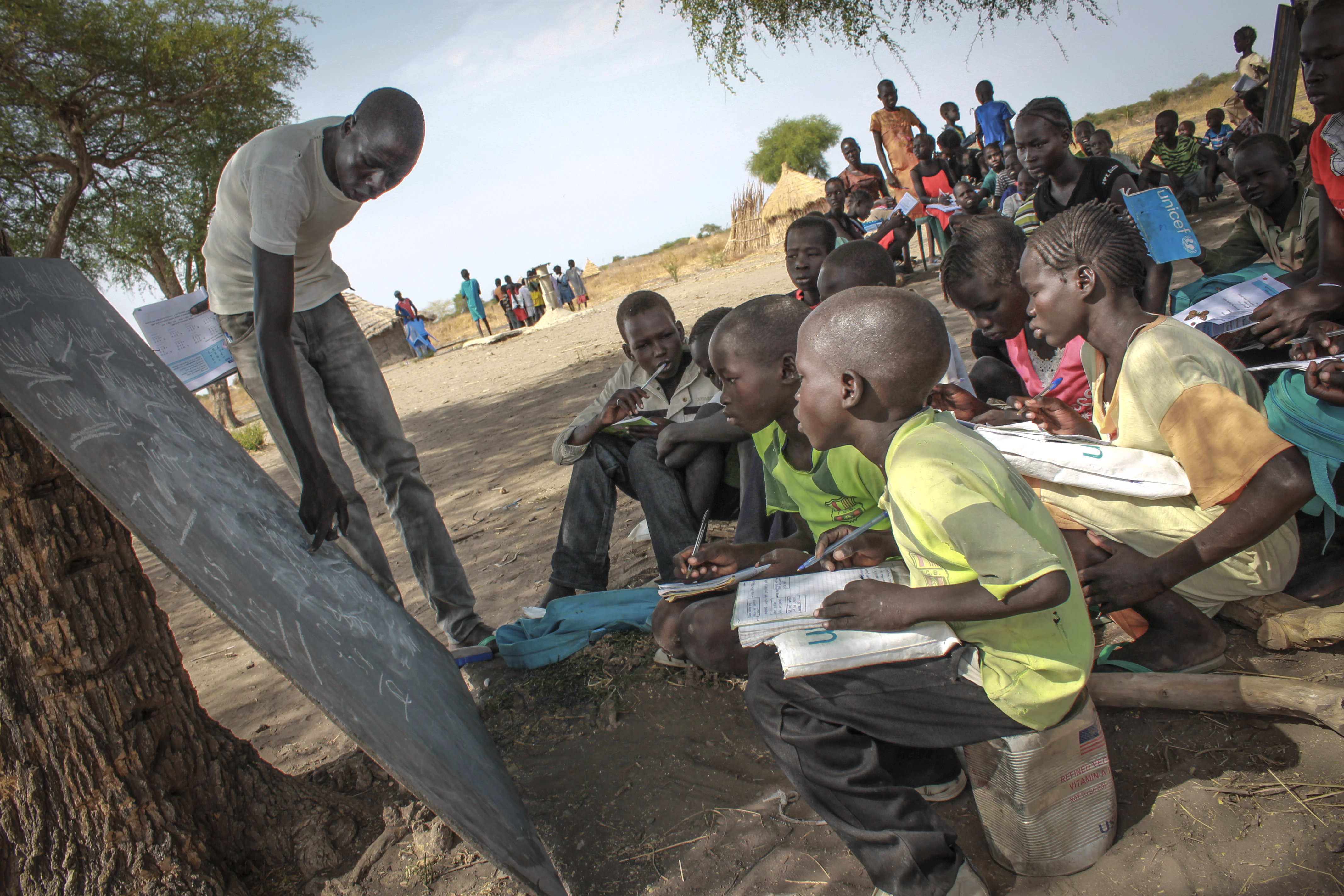
Although he is 12 years old, Nguoth looks about eight. Like many students in his class, for two years he had to drop out of school because there wasn’t enough food at home. He still misses school at least two days a week to go into the bush to find wild fruits. On the other days, he comes to school hungry. In 2010, the UN declared Akobo, the region where Nguoth lives, the ‘the hungriest place on earth’. Drought, floods and inter-communal conflict have left a third of children malnourished.
I was five years old when I started school. Sometimes I had to stop coming because I was hungry. For two years I dropped out because I had to go to the river to fish and to the bush to collect wild fruits for my family. I think the situation is getting worse and more children are stopping coming to school to help their family.
Hunger is very bad in this area. We have no gardens to grow food because the floods destroyed them. The people are angry with each other and there’s no peace [referring to inter-communal conflict and cattle raids affecting the area]. People are very sick, malaria is very high and lots of children are absent from school. It’s hard for children to be happy and take part in class because they’re hungry.
My favourite subject is science and when I finish school I’d like to be a doctor.
Nguoth is currently studying at one of 20 schools supported by Save the Children through a DFID funded project in Akobo East. Save the Children is providing these schools with text books, desks and other school supplies, training teachers and has set up and is supporting Parent Teacher Associations and Student Advocacy Teams that encourage more children to enrol in school.
To enable Ngouth and thousands of children like him to achieve their dreams they need adequate food.
Food for Thought forms part of the IF campaign where 170 charities have joined together to call for the G8 to take action on World Hunger. A number of high-profile children’s authors have also agreed to support the Food for Thought report with an open letter to G8 leaders – these include Julia Donaldson, Eric Carle and Philip Pullman.
Julia Donaldson, the Children’s Laureate and author of the bestselling book The Gruffalo, said:
“The devastating impact of malnutrition shouldn’t be underestimated. It stunts a child’s development, sapping the strength of their minds as well of their body, depriving them of the chance to be able to read or write a simple sentence”
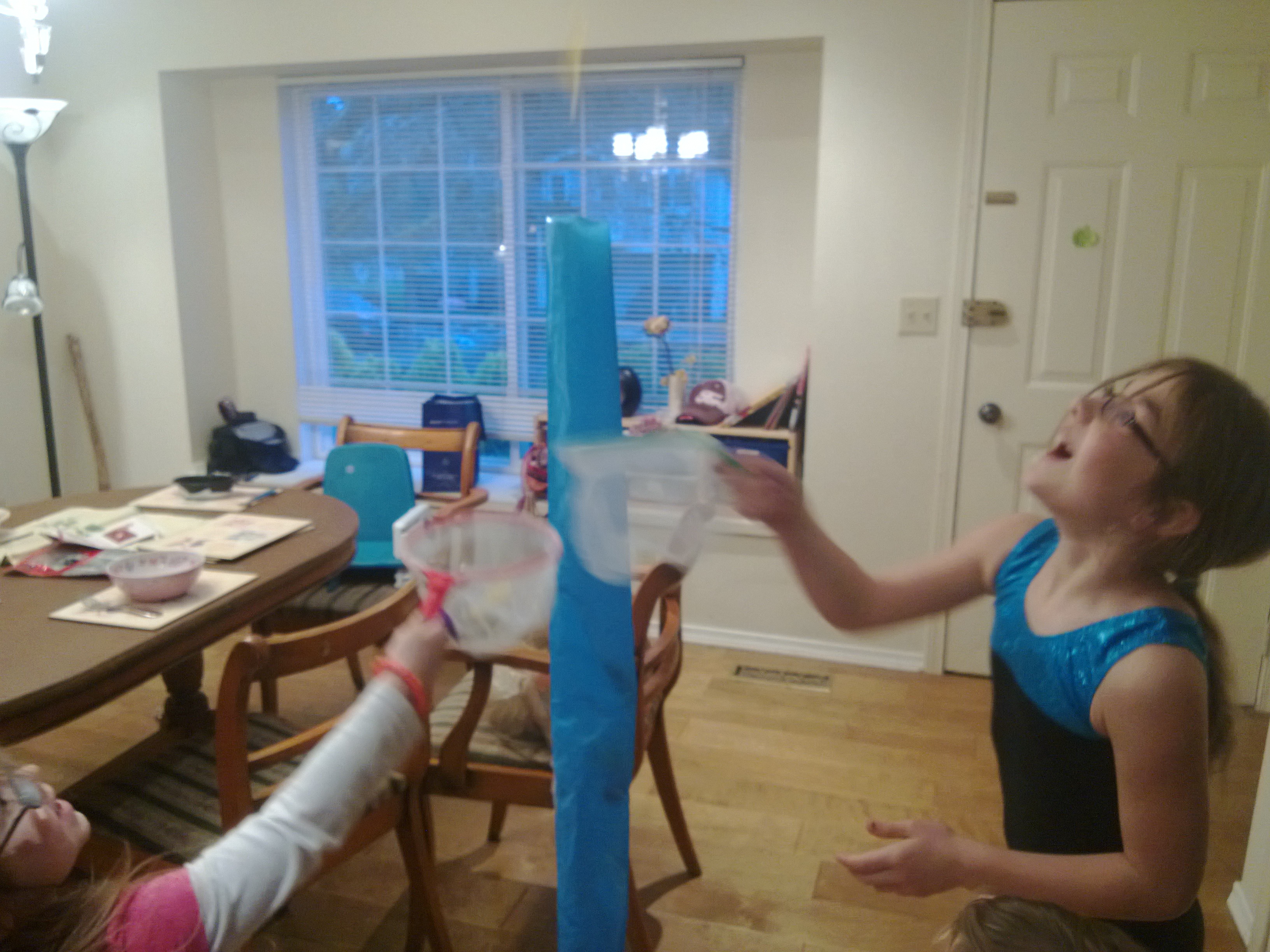
This morning we were playing a game of Elefun, the game where fabric butterflies are blown from an elephant’s trunk for the children to catch in nets.
I know, let’s go and catch butterflies outside.
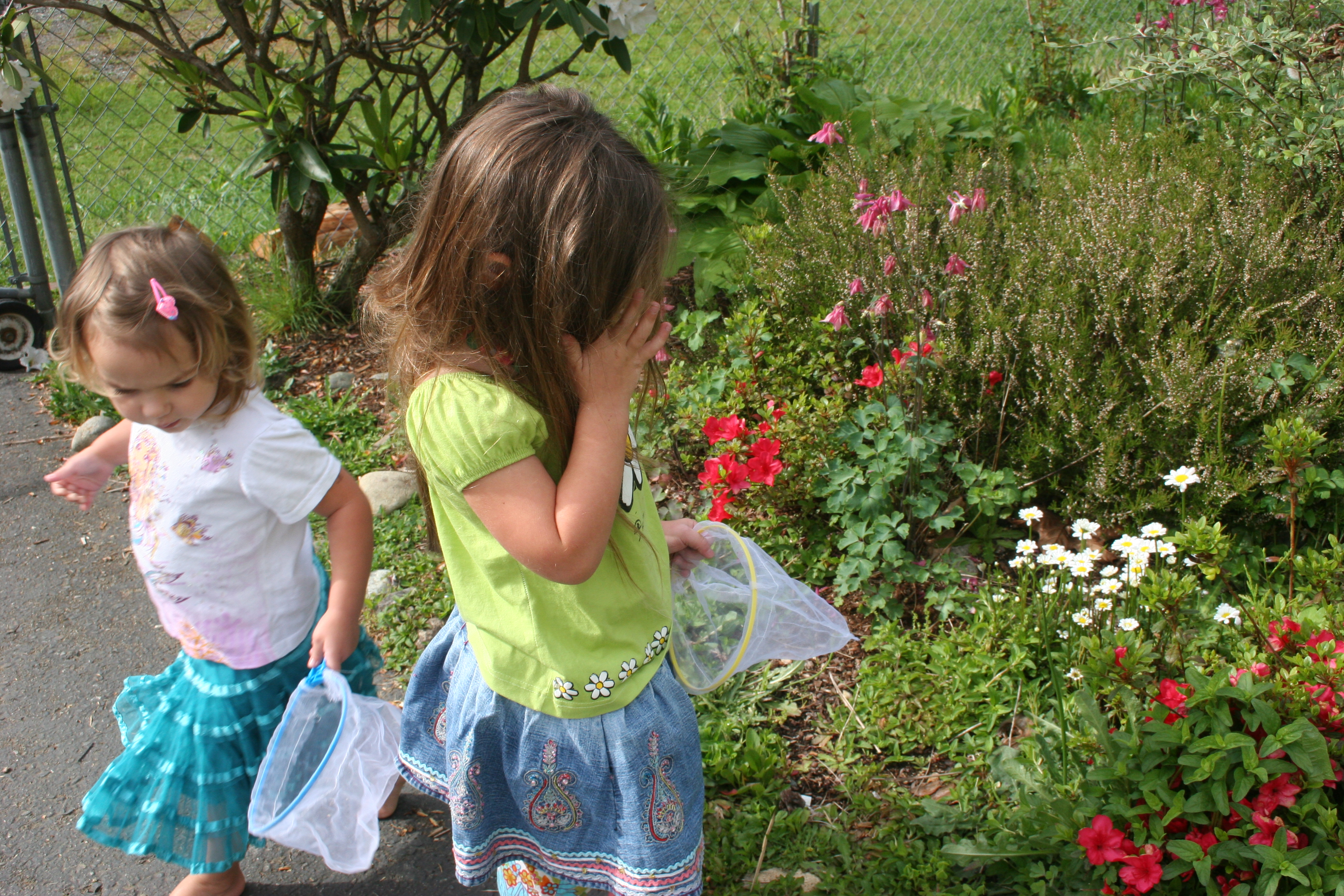
My 4-year -old quickly ran outside to look around the garden for butterflies. I explained that we needed to be quiet and still if we were to find any butterflies. Butterflies are attracted to red, yellow, pink and purple so we looked for flowers in these colours and waited.
I might find a butterfly, they like red and yellow so they might land in my net.
If we are very quiet we might catch a butterfly.
The hunt for butterflies was not very successful so they started to look for other creatures instead.
I’m trying to catch butterflies. what else can I find to put in my net?
No butterflies in here.
These leaves are really soft. We’re not allowed to pick them but we are allowed to stroke them.
No butterflies but lots of bees
They found a woodlouse (or roly-poly as the kids here call them) and lots of bees but no butterflies.
I know let’s make some butterflies out of paper.
I cut out some paper butterflies. The girls wanted to decorate them with stickers but I could only find white ones.
I know let’s draw patterns on the white ones. Now you hide them and we can find them and catch them in our nets.
We didn’t have any coloured stickers so the girls decorated white ones
The finished butterfly, without instruction my daughter decorated it with Symmetrical wings. ‘Butterflies never have 2 wings that are different’.
I hid them in the bushes. Found one! Now I have 1,2,3.4 butterflies, only 4 left to find.
My eldest daughter has been an avid potion maker all her life. We are always finding concoctions in her bathroom and when she was young she would leave them on the windowsill of her bedroom or on the side of the bath and if you knocked them off whilst having a relaxing bath the cold would give you the shock of your life. She is now a huge Harry Potter fan, having read all of the series 4 times and her potions are taking on new meaning. Her younger sister is following in her footsteps. Now that the weather is nicer I set up a little potion station for them in the garden – they love it.
It is a great sensory play activity and science experiment, they got their hands in, testing and smelling the potions and used all kinds of things from the garden. Best of all I love how the imaginary play scenarios evolved. I suggested to my 9-year-old that she might like to make a book of potion recipes.
‘Yes’ she exclaimed excitedly, ‘ But we’ll need about 70 pages, the McClary recipe book’
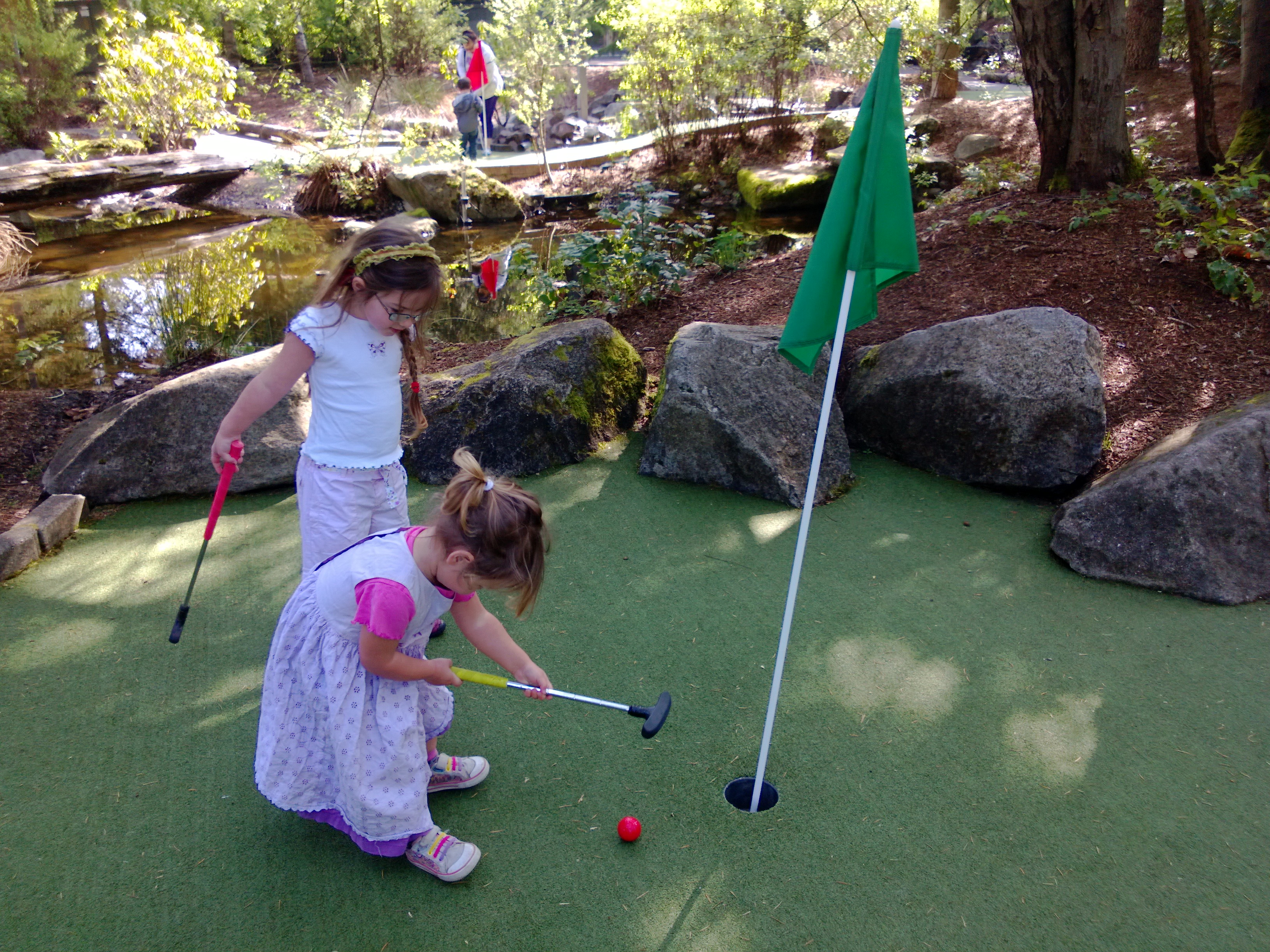
Today I met with a group of mums and their toddlers to play golf at the pitch and put, Willows Road Golf Course. All of the children were new to golf and most of the children were below the age of 2. My girls had a brilliant time – my 4-year-old even asked if she could come back tomorrow.
Before 11am under 12’s can play the 18 hole pitch and put for $5. The beautiful setting meant that my 2-year-old, who lost interest after a few holes had plenty to keep her occupied.
There were lots of opportunities for learning too:
Number recognition as we moved around the holes
Recognising colours – who has the red ball? What colour flag do we have this time?
Reading signs – Please rake your footprints, keep on the path.
Gross motor skills – how do you hold the club? You need to hit it hard to get it up hill. What is the best way to get it in the hole?
Counting – how many shots did you take that time?
Writing – filling out a score card.
Vocabulary – What is the stick called again? I’m in the bunker.
Turn- taking and awareness of others.
We’ll definitely be doing it again, a great way to spend a sunny morning.
Hmm, how should I play this shot?
I’m getting the hang of this now.
I’m going to take 3 hits this time.
Go on, you can do it.
You need to hit it really hard to get it up the hill.
the sand in the bunker was lots of fun, especially when they raked away their footprints.
When you’ve had enough of golf, climbing and jumping is fun.
The course is built around waterfalls, lakes and bridges – beautiful.
To celebrate the 40th birthday of one of the world’s most famous picture books, I have 10 Hungry Caterpillar inspired activities.
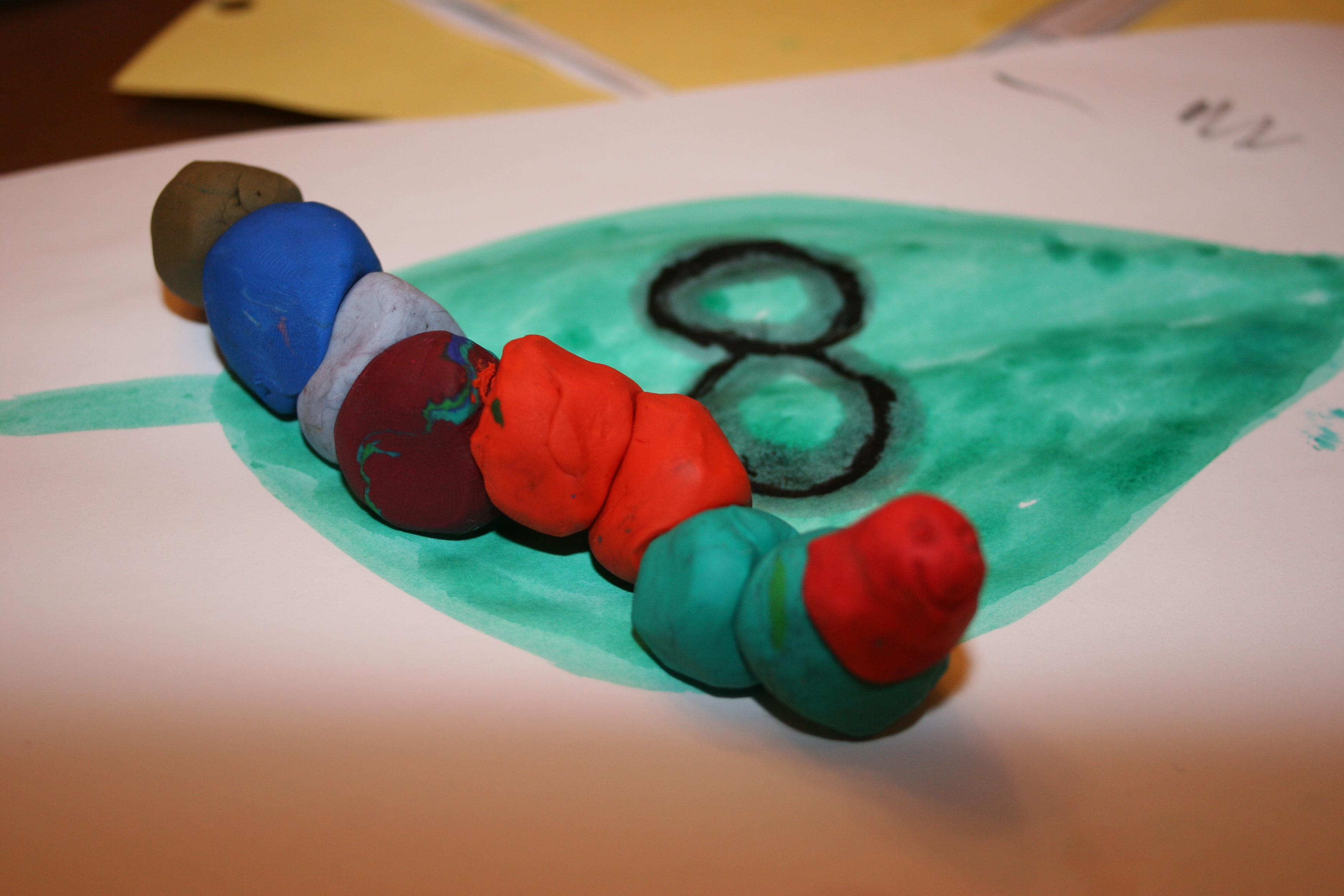
Maths: Build caterpillars from dough or clay. Count the number of segments that make up the caterpillar. Play a matching game – place the correct caterpillar on the leaf with the matching colour or number of segments.
2. Imaginary Play: My eldest followed an enveloping schema for years. She would hoard things in little bags and containers and if you ever left anything around that she could climb into, you would find her inside. On one occasion I left a fabric storage bin in her room. She promptly climbed inside declaring that she was in her cocoon and soon emerged as a beautiful butterfly. Provide material, boxes, play tunnels, blankets, wings and deely boppers.
3. Song and Rhyme: Sing the caterpillar on a leaf song or sit behind your child and pretend to crawl a caterpillar up their back. Teach them to ask ‘Whose that climbing up the garden wall?’ and you reply in a caterpillar like voice ‘It’s me’ said the caterpillar ‘I’m learning how to crawl’.
4.Paint symmetrical butterfly pictures: I’m sure we all remember these from school days. Paint on one side, fold the paper over to create a symmetrical print on the other. This can also work well by painting a piece of string, placing it between the folded paper and then pulling it out whilst the paper is still folded.
5. Movement: Read the Hungry Caterpillar and give the children movements to follow during the story. Egg – curl up in a ball, caterpillar – crawl along the floor moving to eat different types of food, big fat caterpillar – stretch out wide, cocoon – spin slowly then hang their head between their legs, staying very still, butterfly – flap their wings and fly.
6. Discovery – it is a little cold yet but once the weather is warmer, grow your own butterflies. We have done this very successfully using kits from Insectlore. It is fascinating to watch how quickly the tiny caterpillars grow and then instinctively hang upside down. You soon get to recognise when the butterflies are ready to emerge and can feed them indoors for a day or 2 before releasing them into the garden. The species that they use tend to stay within your local area for a few days after being released so you can spot them in the garden.
Find out about the butterflies and caterpillars that can be found in your locality, and print pictures of more exotic species.
7. Food: Make a fruit salad using the fruits eaten by the Hungry Caterpillar or taste some of the more unusual foods he ate. We are a big juicing family so we are going to make Hungry Caterpillar juice using:
1 apple
2 pears
3 plums
4 strawberries
5 oranges
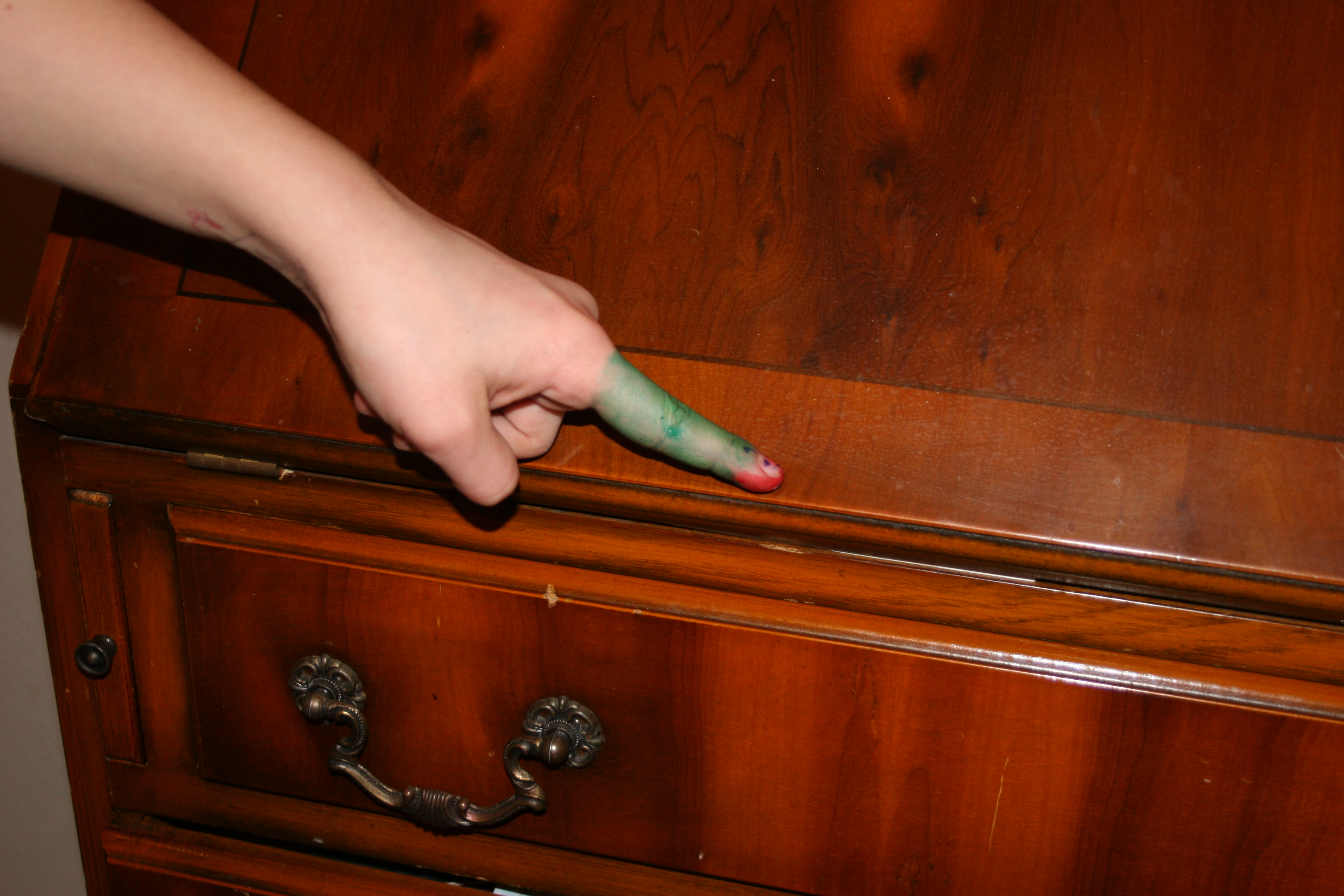
8.Maths: Turn your finger into a crawling caterpillar and measure things in caterpillar steps.
9. Outdoors – Grow a butterfly garden. I saw some amazing butterflies in our garden last year that are fairly commonplace in this area. I’m definitely going to learn about how I can attract them this year.
10. Visit a Butterfly Farm. I can highly recommend the butterfly house at Bristol Zoo and Felinwynt Rainforest Centre in West Wales. In Seattle there is the Butterfly House at the Pacific Science Centre . Feel free to add any recommendations in the comments.

 Today was Field Day at my daughter’s school. In the usual fashion, we had a letter that said we could come along or volunteer if we wanted but no explanation as to exactly what a Field Day is.
















 Right from the Start