Category Archives: early education & play

Musical Games to Help Young Children Learn about Notes and Beats .

Last month I hosted a competition to win a copy of Justin Fletcher’s cd.  To enter the competition I asked people to ask questions about musical activities with young children.  The winner was Maya Russell who asked this question on my Facebook page.

Is there a musical game I can play with my 3 year old to help them learn about notes, beats etc?

The ability to keep a steady beat has been recognised as the single most influential factor in later academic success.  There are a number of activities you could employ to build these skills.  In fact I ran a successful project with Springboard Opportunity Group  on this topic, proving that even children with severe disabilities can benefit from and enjoy Steady Beat activities.

At the simplest level this can involve singing simple nursery rhymes and chants including, the grand old duke of york, 5 little monkeys jumping on the bed and 5 little peas in a pea pod pressed. Most traditional nursery rhymes have a strong beat and if you say them whilst tapping the rhythm on your knees the children soon follow suit.  Ros Bayley  has some wonderful resources for Steady Beat activities including Beat Baby

Beat Baby is a gorgeous fluffy creature available in a variety of colours.  The magnet in his tail allows him to curl up and he only uncurls when the children make a steady beat and chant an introductory rhyme.  There are a number of Beat Baby books with rhymes but it can also be used with well known rhymes or some you make up of your own.  Ros Bayley also has a number of rap books with accompanying cd’s.  A great idea is to have a dressing up box with baseball caps, trainers, gold chains, puffer jackets etc. and encourage children to be rappers.

3 is probably a little young to learn notes and their values but there are a number of things you could do in preparation.  Create  flash cards of notes to play snap and pairs games with, introducing the names crochet, minim, semibreve and quaver.

A good way to introduce rhythm is to use animal names for clapping out rhythms.  A steady 4/4 beat would be cat – er – pill – ar, 2/4 would be ti- ger , 3/4 el – e – phant.  Once children have been introduced to the animal names you can try clapping a rhythm and asking the children to tell you which animal you are clapping or hold up an animal and ask the children to clap the correct rhythm.

Paint Play – Colour Mixing

Included in our Baker Ross  parcel  was a box of acrylic paints. I use acrylics for my painting and find that one of the key components to painting is mixing the right colours.  I therefore thought it might be a good opportunity for the girls to experiment with colour mixing.

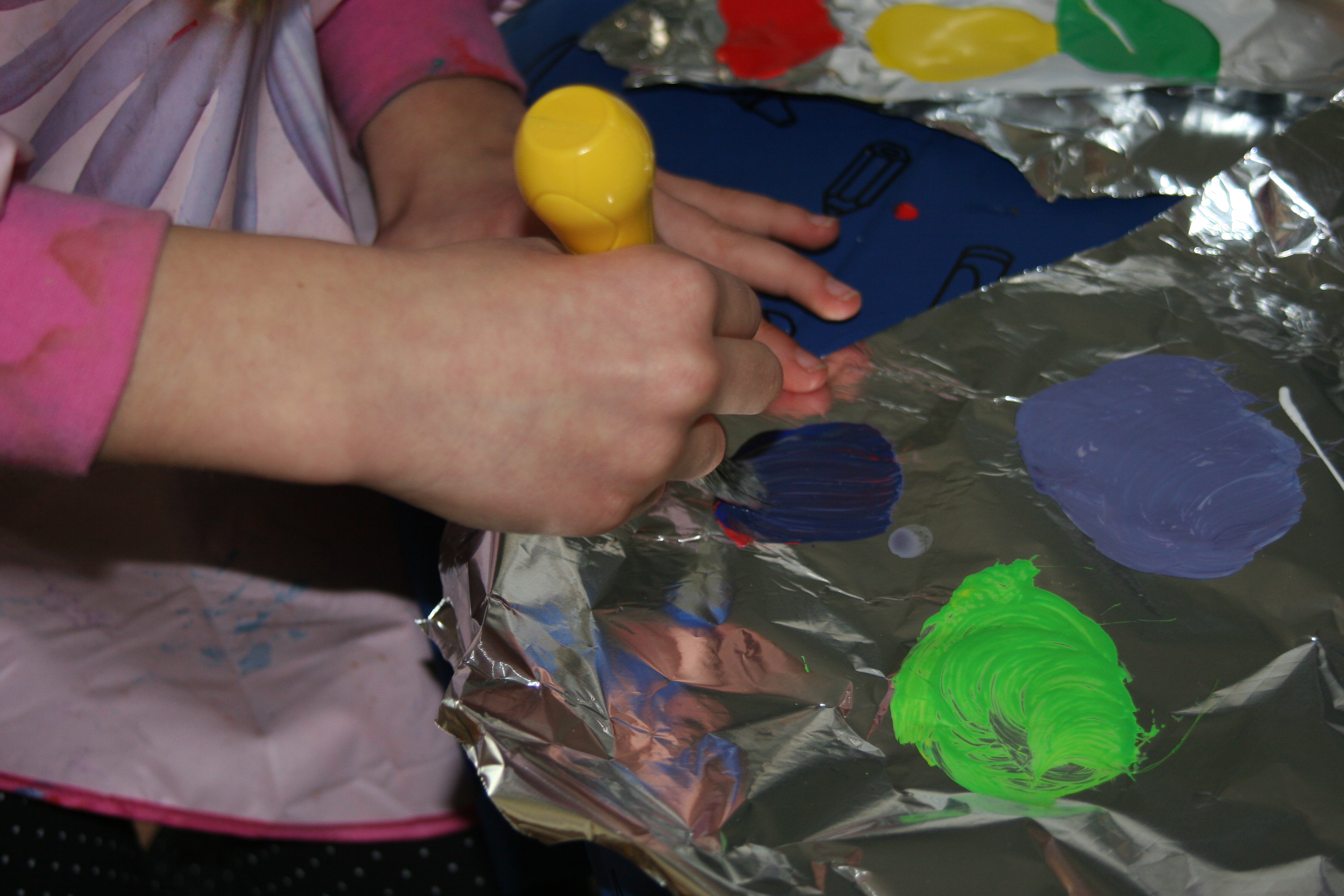
paintI provided them each with 2 pieces of tin foil, one had a blob of each of the acrylic colours on and the other was for mixing.   I avoided giving instructions about what to paint or even that they had to paint at all.  Often young children enjoy the process of mixing and don’t really want  to paint with the colours.  My 3 year old used up most of the colours mixing them into various shades.  I explained that acrylics dry quickly so once the colours are mixed they need to be used quickly for painting

colour mixMy 7 year old on the other hand carefully mixed a variety of colours, trying out the different combinations.  I gave them a pot of water each to clean their brush and kitchen roll to mop up any excess water.

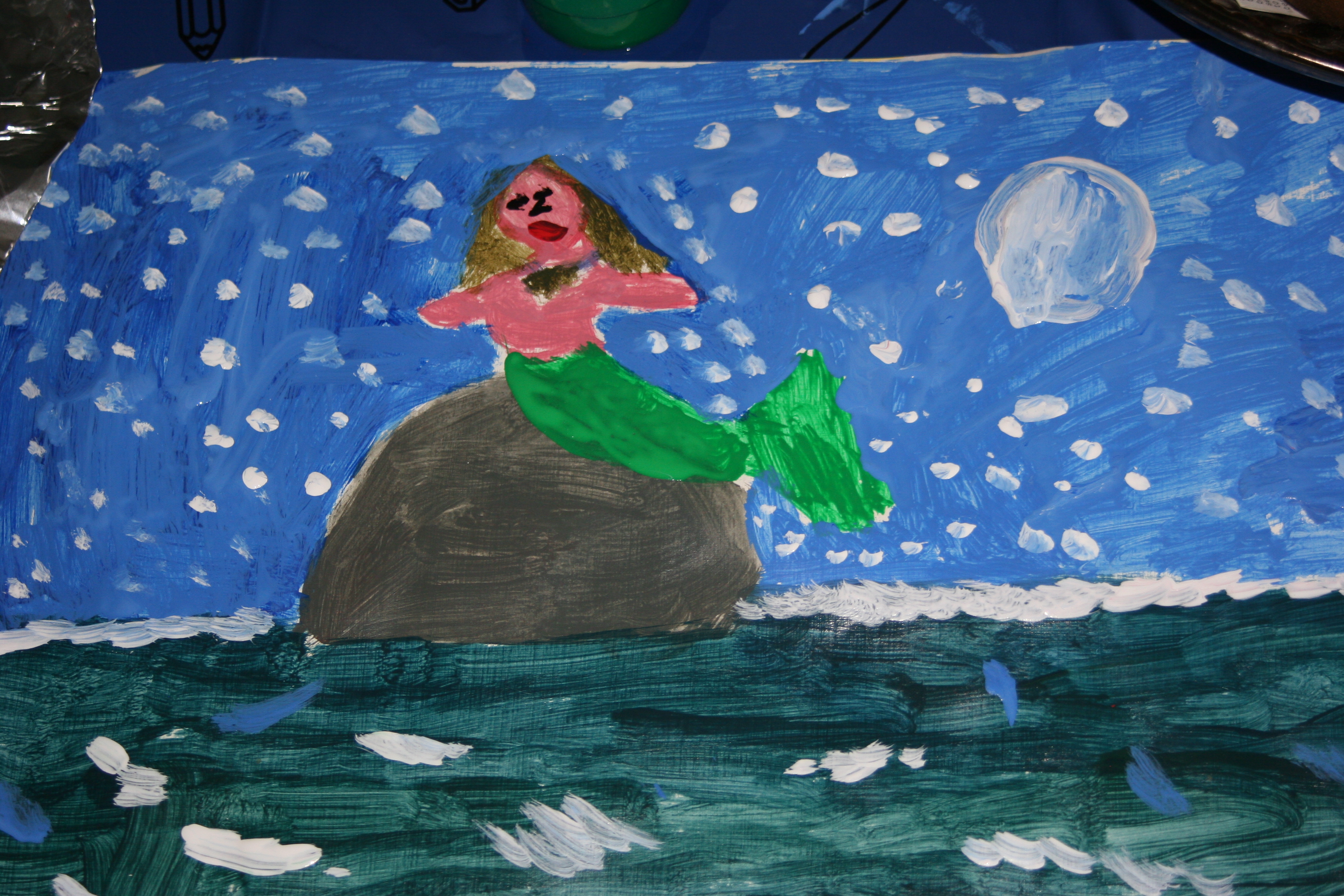
She proceeded to paint a picture.  Half way through she ran out of one of the colours that she had mixed and was unsure what to do next.  I explained that the new colour wouldn’t need to be exactly the same   as the good thing about acrylics is that you can layer one colour on top of the other.  She mixed another colour and came up with a pretty good match.


Finished Results

mermaidpainting

Mess Free Painting

Today we received a very welcome parcel from Baker Ross.  Right From the Start has joined their blogger network, they send us lots of goodies and we come up with our own creative projects for using them.  The theme of our first parcel is painting.

Lanyan Quoit
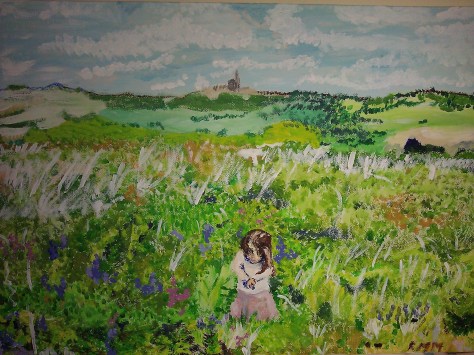
My most recent painting

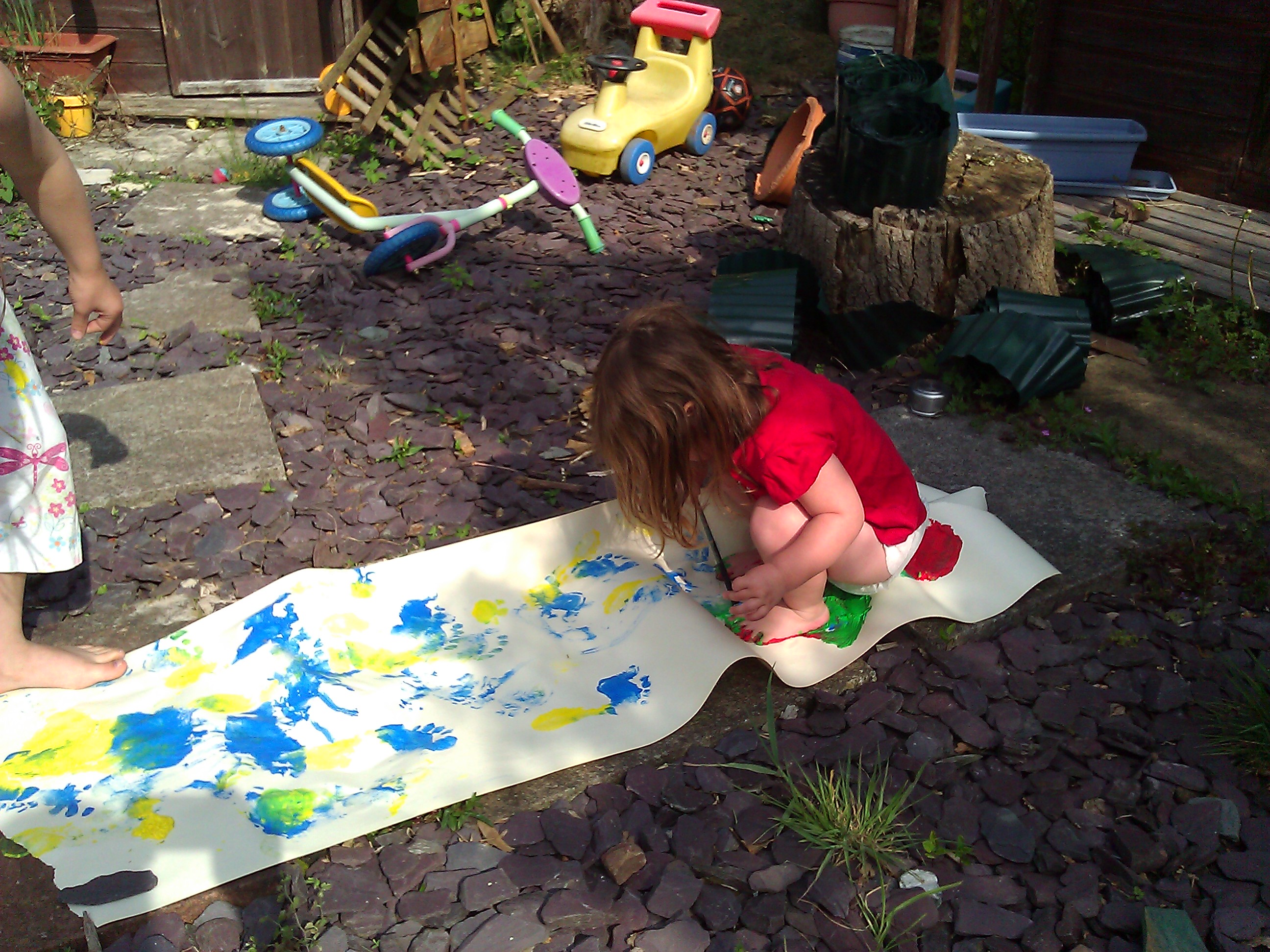
We love painting. I paint when I find the time and find it very therapeutic.  The girls also love to paint, in thesummer we paint outside .The girls enjoy painting on canvases and I display them in our hallway.

large scale painting

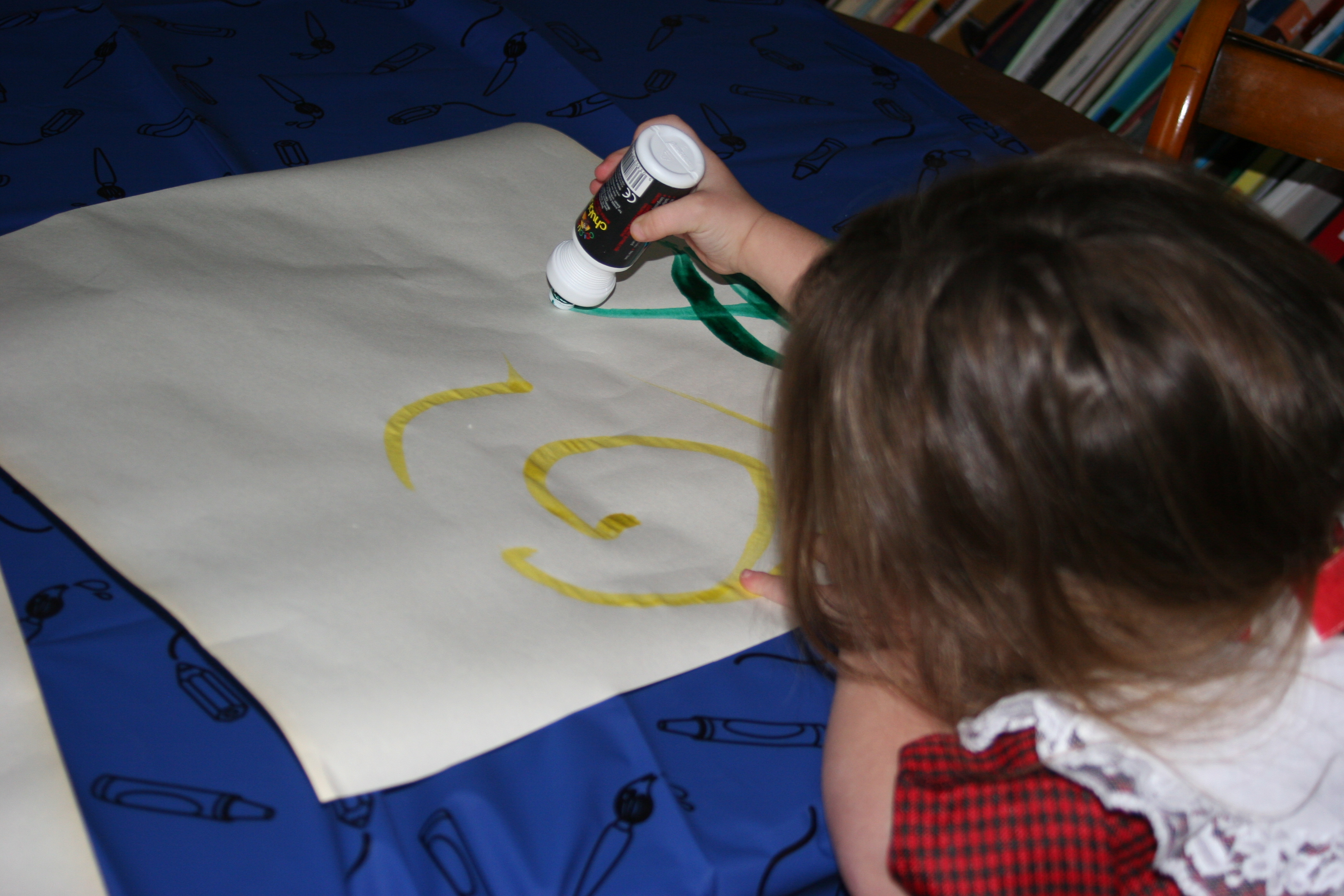
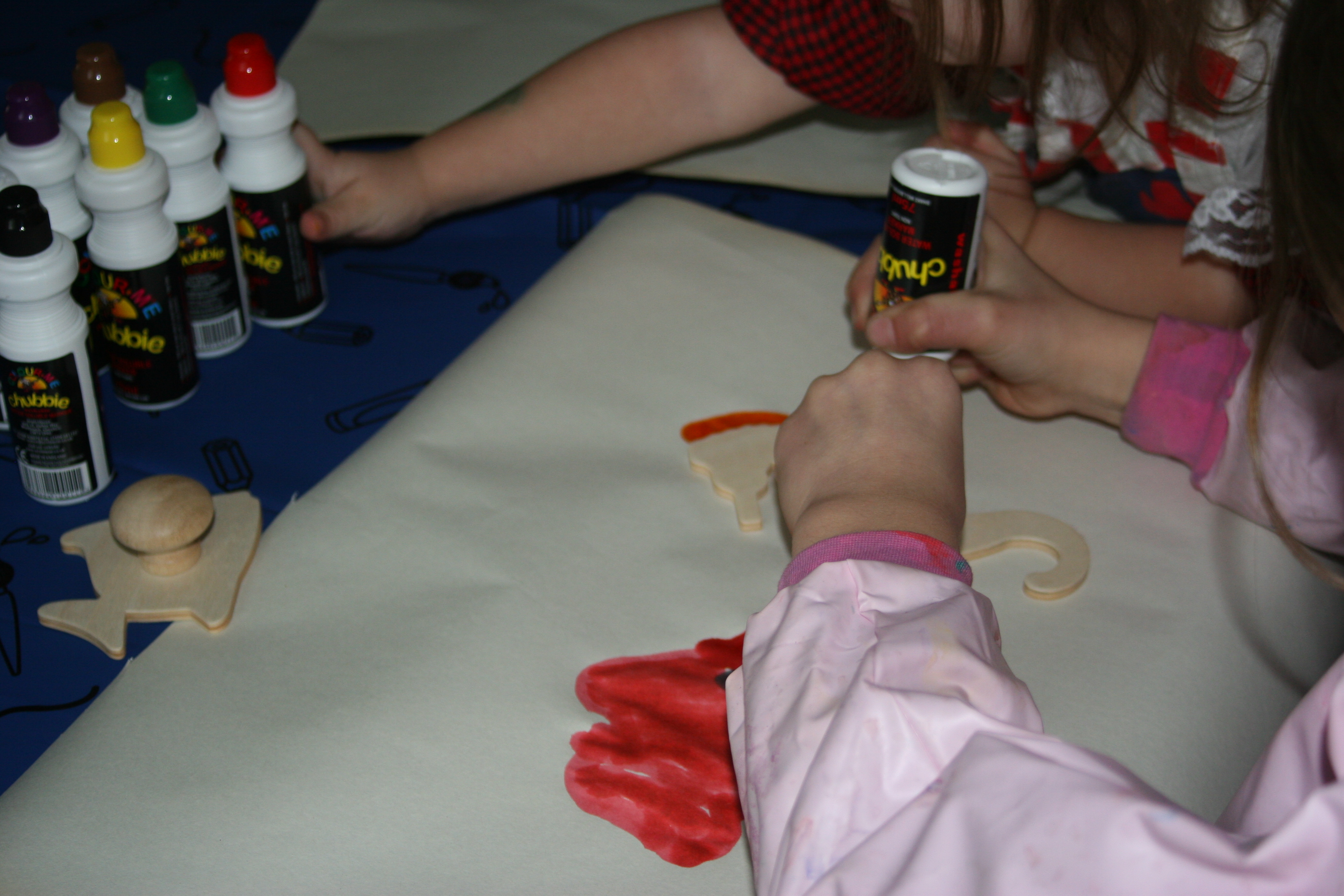
Today we went for the mess free option by trying out Colour Me Chubby Water Soluble Markers.

These are perfect for small hands, dry really quickly and don’t make a mess.  Even better they are washable, do not stain clothes and don’t dry out if you leave the lid off (although I didn’t tell the children this). The markers are great for an early mark making tool on large pieces of paper, they are sturdy and the paint comes out easily.

painting spiral

canvas painting by 3 year old
My most recent painting

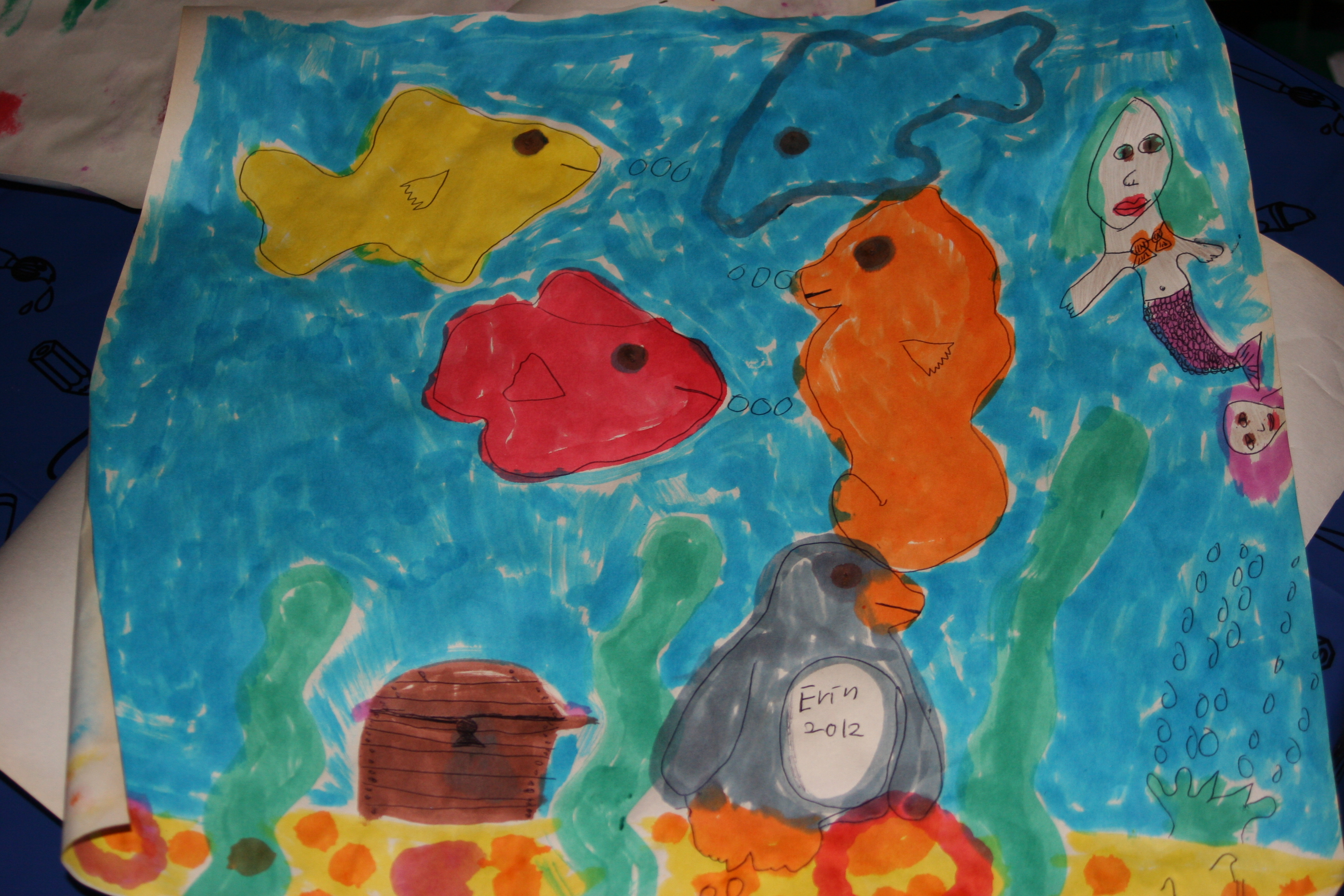
My 7 Year old decided to try them with the wooden sea stencils.  These are great for little hands as they have large, chunky handles, meaning that they are easy to hold in place with one hand whilst drawing around them with the other.

stencil

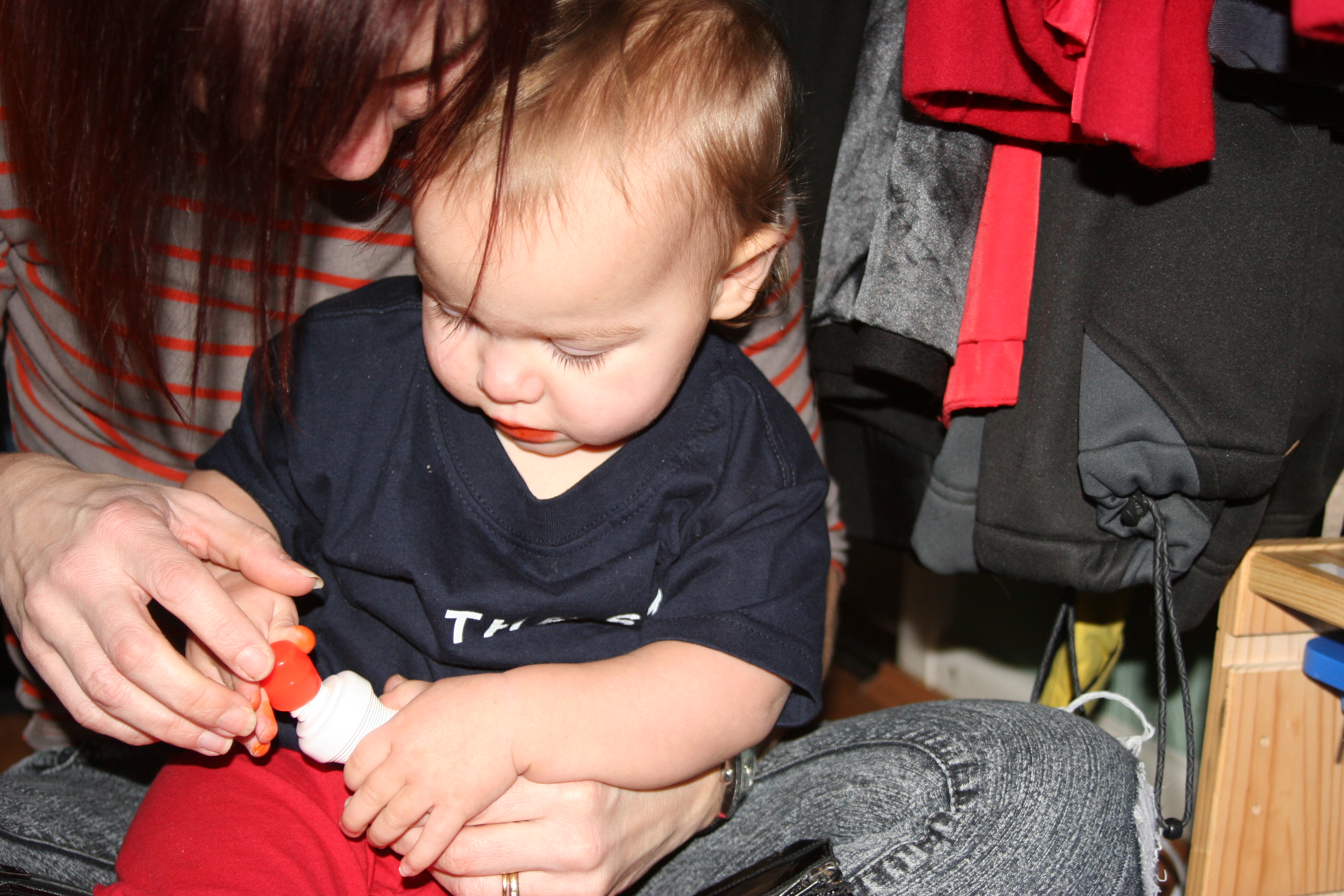
This non-messy option was good for the baby too.  We did our painting on the floor so that she could move more freely.  She loved playing with the lids, taking them on and off and enjoyed painting on the paper although it was sometimes difficult to get them upright enough to make a mark.  She decided as all babies do that it would be a good idea to see what the paints tasted like.  However, as they are fully washable and non-toxic I didn’t need to worry – a quick wipe removed the orange lipstick.putting on lid

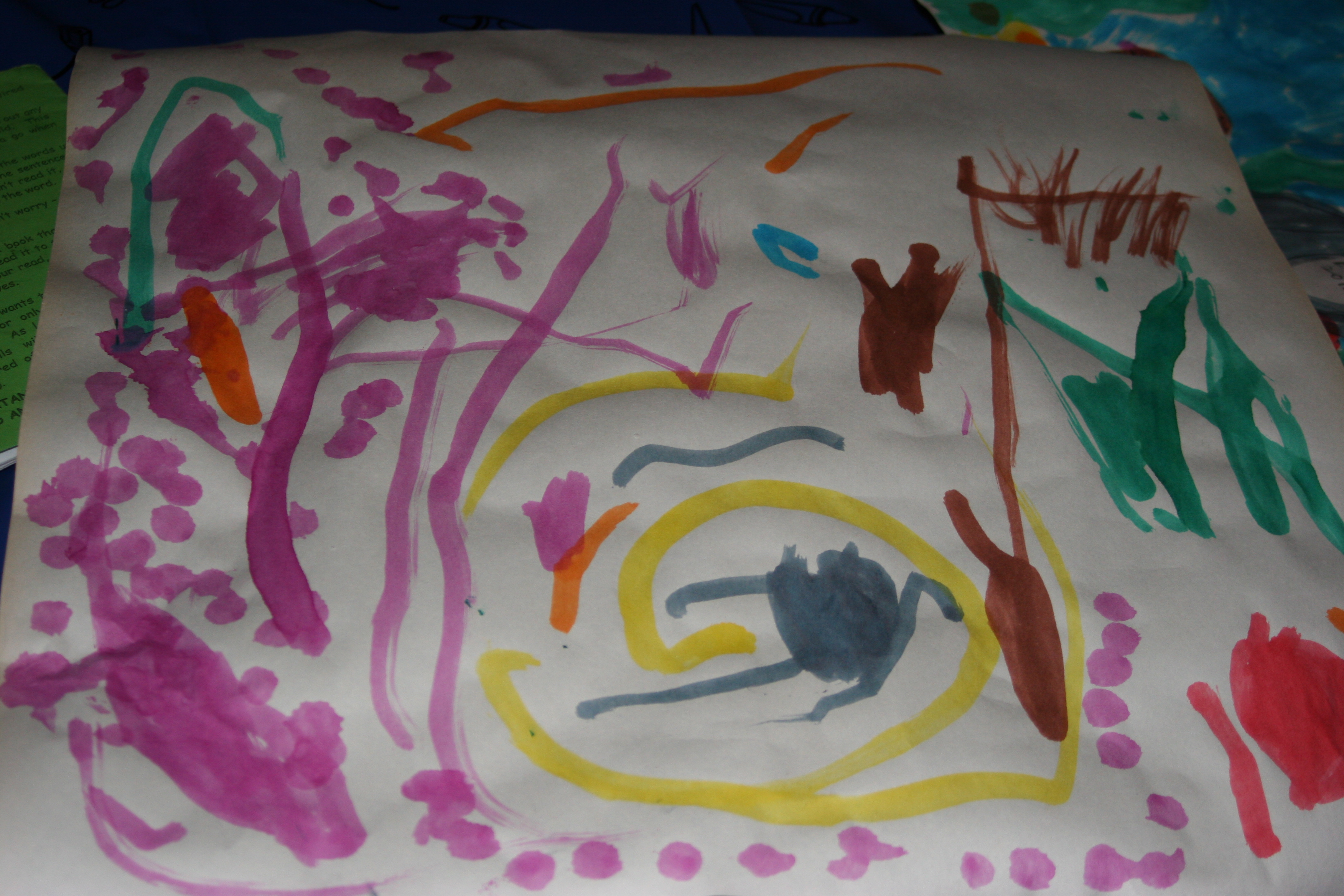
I was really impressed with the results and when we have limited time and I can’t face the mess involved with painting this is a great alternative.


The Final Results

painting 3 yr old

painting

How to Make Welsh Cakes for St. David’s Day

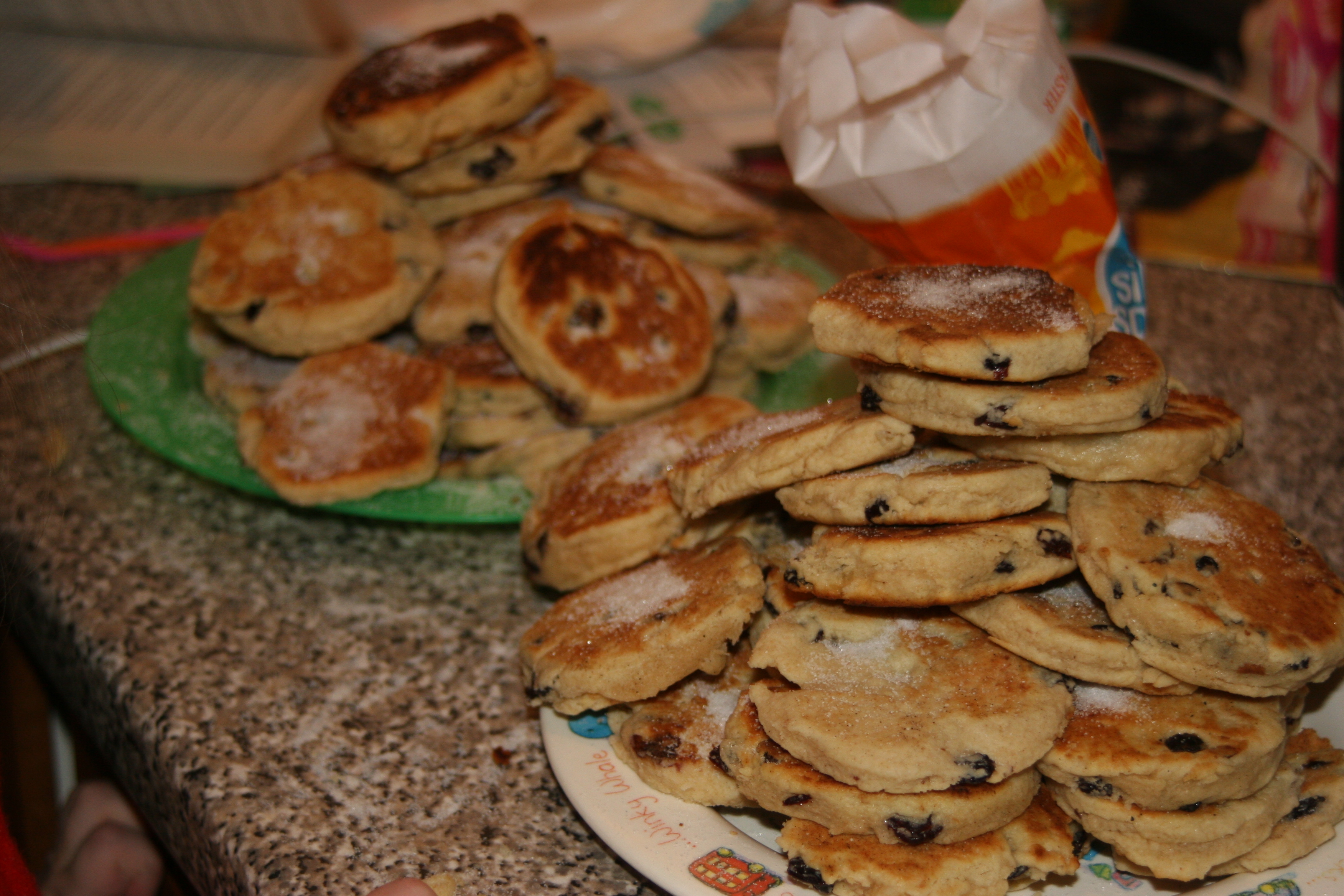
welsh cakesIt has become a tradition in my house that we make Welsh Cakes for St David’s Day.  As a child in Wales St David’s Day was a big event.  We would go to school dressed in traditional costume. The morning would involve a special assembly during which we sang Welsh songs and presented prizes for the Welsh themed art and craft activities we had been involved in. We even had a half day to mark the occasion.

Living in England, St David’s Day is a low key affair but I always wear my daffodil and make Welsh Cakes.

Ingredients (makes approx 24)

175g( 3/4 cup) butter and lard mixed

450g (2 cups) self-raising flour

175g (3/4 cup) caster sugar

1 tsp baking powder

1 tsp mixed spice

75g (1/3 cup) currants

2 eggs

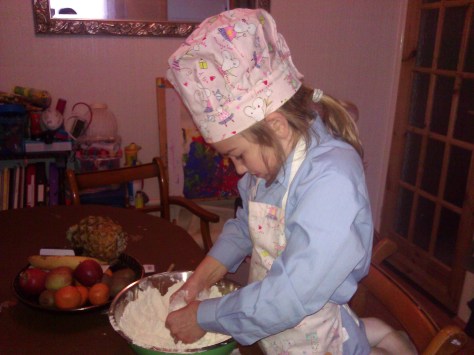
rub fat into flour
Step 1. Rub fat into flour (or tickle it)
baking
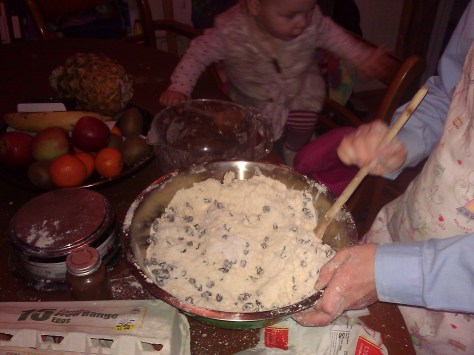
Step 2. Add the other dry ingredients.
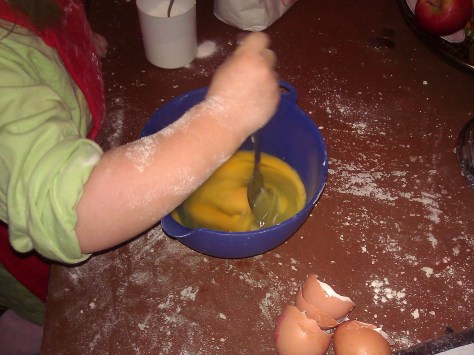
beat eggs
Step 3. Beat eggs and add to mixture
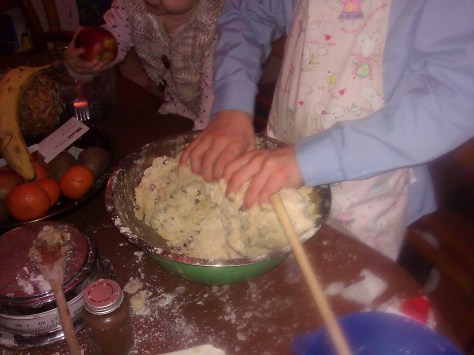
knead
Step 4. Knead into a dough

(Spot the baby cunningly stealing an apple).

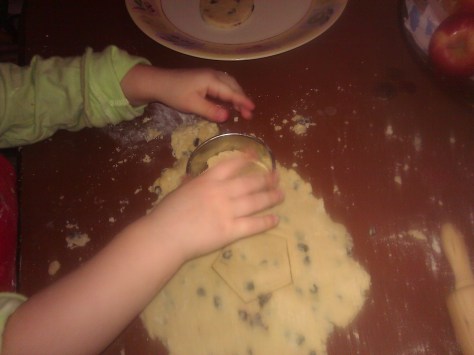
welsh cakes
Step 5. Cut out shapes
welsh cakes
Step 6. Cook on a griddle

Welsh cakes are traditionally cooked on a bakestone, a cast iron or steel griddle that would have been placed on the fire. If you don’t have one a heavy frying pan would suffice. Place it on the hob on a very low heat.

welsh cakes
Step 7. Sprinkle with sugar.
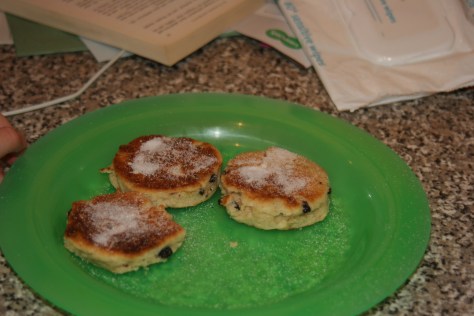
welsh cakes
Step 8. Eat

CBeebies -Tree Fu Tom (raising awareness of dyspraxia)

We have been  previewing a new CBeebies programme this week and we are very excited.  Not only because the wonderful David Tennant is voicing one of the main characters but also because it is well researched  and encourages children to actively participate in the story.

Former Doctor Who stars David Tennant and Sophie Aldred voice the lead characters Tom (Aldred) and Twigs (Tennant) in the new multi-platform fantasy action adventure series, Tree Fu Tom coming to CBeebies in March. Twigs is a wonderful character, beautifully animated, incredibly cute and full of vibrant energy.twigs


Aimed at four to six year olds, Tree Fu Tom is set in an enchanted world where movement creates magic. Tom appears to be a normal eight-year-old boy but putting on his magic belt and performing a special sequence of magic action-movements (known as Tree Fu) transforms him into a tiny but mighty magical super-hero.
All of the Tree Fu magic moves that children are encouraged to copy are developed from therapeutic techniques that are used to help children with movement disorders like dyspraxia, but are designed to assist and enhance the development of all participating children at a crucial time in their growth.

Magic is an essential part of Tree Fu Tom and children are encouraged to participate in the movement-based Tree Fu spells to affect the outcome of each episode. Dyspraxia Foundation movement specialists Sally Payne and Dr Lynda Foulder-Hughes worked closely with the series choreographer Nick Kellington to develop unique spell movement sequences that reflect the narrative of each story-line and which have a “cool” martial-arts type feel (which is particularly engaging for boys). However the programme is equally appealing to girls with its beautiful animation, captivating any girl who is interested in fairies and elves.

My girls loved it (it even drew my 7 year old away from CBBC for a moment).  I asked my 3 year old what she liked about it

 I likeded the bit where he did magic – he crouchded down and jumpded like frogs and it went magic.

Participation in the magic spells was clearly a hit with her.  The nature of the programme also lends itself perfectly to becoming a Kinect game, imagine how magical it would be to copy Tree Fu Tom’s movements, creating your own spells and going on a personal, fantastical journey.

Tree Fu Tom has his own online section which includes 6 action packed games  developed in consultation with a Senior Educational Psychologist.  There will also be further support in the CBeebies Grown Ups Section.

Tree Fu Tom and Dyspraxia
Dyspraxia and coordination difficulties are common, life-long conditions that affect up to 10 per cent of school-aged children (two per cent severely). It is an impairment of the organisation of movement and is the result of an immaturity in the development of the nervous system. This means that nerve signals are not transmitted effectively from the brain to muscles, affecting a person’s ability to perform movements in a smooth, coordinated way.
Understanding of the underlying causes of dyspraxia (also known as Developmental Coordination Disorder) is limited but children who are born early, who have a low birth weight or who have a family history of dyspraxia are more likely to have the condition.
Sally adds: “Awareness of dyspraxia remains low in comparison to other common developmental disorders. Tree Fu Tom offers a unique opportunity to raise the profile of this much missed and misunderstood condition.”
Children with dyspraxia have difficulty developing the movement skills that come naturally to their peers. They often have poor balance and postural stability; find it difficult to move their arms and legs in a coordinated manner; and struggle to use both sides of their body together. Without these foundation skills it is hard for them to carry out everyday activities such as walking up stairs without tripping, bending down to pull on socks, making marks with a crayon and using a knife and fork.
Their difficulties with movement skills can often lead to children with dyspraxia falling behind at school (despite, often, having above average IQs) and having additional social challenges at school – this is especially apparent for boys whose early social interactions tend to involve physical skill-based activities such as sports.

Having worked with children with Dyspraxia in the past, I see this as a wonderful opportunity to raise awareness and support children with the condition.

Tree Fu Tom starts on Monday 5th March on CBeebies .

A Song for Hungry Caterpillar Fans

Over at Science Sparks they have been having fun based on the theme of The Hungry Caterpillar.

We visited Bristol Zoo this week and the butterfly house prompted lots of questions from my 3 year old.

But how do the caterpillars turn into butterflies?

We were able to see caterpillars, cocoons and butterflies and touch the empty cases.   I promised her that when the spring comes we can rear our own butterflies using a kit we have from Insectlore.  We have done this successfully in the past before releasing the butterflies into our garden.

We have a song about the lifecycle of a butterfly that we like to sing – it’s great fun for butterfly obsessed kids.

Love to Learn on CBeebies

I don’t generally recommend young children learn by watching television but I am human and like the rest of us appreciate a bit of respite from time to time.  Now that my 3 year old no longer naps during the day, after a busy  morning at playgroup an hour watching television helps her to relax.  I don’t agree with young children watching commercial channels so always put my trust in CBeebies.

The quality of the early learning programming is generally of a high standard and well researched, we particularly like Something Special and Driver Dan’s Storytrain (especially as we are on the lookout for the episodes featuring her big sister).

At the end of February CBeebies are launching a new cluster of programming entitled  Love to Learn. This will bring together a number of programmes, which are designed to give the younger members of the CBeebies audience an introduction to literacy and numeracy. Programmes will include the new shows, Numtums and The Lingo Show, alongside new episodes of established favourites Alphablocks and Abadas. These programmes will be scheduled together allowing children to have fun while they learn their letters and get to know their numbers.
The Numtums  are cuddly Numbats (rare marsupial, native to Western Australia) each with a number on their tummy. Combining a troop of animated Numtums, children, sing-along songs and a distinctive, mixed-media style, the programme introduces the basics of number recognition and then gently moves on to counting objects and identifying amounts in a variety of fun scenarios. The series is reminiscent of the animated snippets that were a key feature of my favourite children’s programme, Sesame Street. I’m sure these will keep the children engaged and make learning fun.
I’m really looking forward to The Lingo Show .  This began life a year ago as an online brand to introduce children to a variety of languages.  It is a long time since I visited the CBeebies website, so I wasn’t aware it existed but I was very excited to see that the languages featured include Welsh. Growing up in Wales I have a very basic knowledge  of the Welsh language, but my children were captivated.  My 7 year old even wrote down a list of words to remember ( we looked at the food section). The variety of languages featured include Polish, Somali and Punjabi and this could be a really useful resource for nursery workers to learn basic vocabulary when teaching children with an additional language. The TV series will continue to introduce children to words in different languages – specifically French, Spanish and Mandarin .
The episodes see host bug Lingo send Mandarin bug Wei, Spanish bug Queso and French bug Jargonaise off into the real world to choose everyday objects and props to include in their grand finale – The Big Bug Show. Each episode focuses on one language, introducing children to six key words, plus examples of everyday vocabulary like ‘hello’, ‘thank you’ and ‘well done’. There are opportunities for children to develop both speaking and listening skills as they are encouraged to repeat words with the bugs, voiced by native speakers of the target language.  I’m  definitely    going to make time to  watch  this with the kids.
The new episodes of Alphablocks are in a slighter longer  format than in the past and will continue to use best-practice phonics teaching to help young children develop engagement and confidence with reading and making words.  For those unfamiliar with the series  Alphablocks are 26 living letters who fall out of the sky and discover that if they hold hands and make a word, it comes to life.

Abadas  aims  to help children to learn new vocabulary that corresponds to objects they come across in their everyday lives.
The new episodes feature the familiar fun faces of Hari the hippo, Ela the fox and Seren the bat (all with Welsh accents) who come to life when a pop-up book is opened. Once the book is opened, the Abadas’ world comes alive and it’s playtime for the three adventurers. Through these adventures the Abadas encourage the young audience to re-tell a story and be able to ask questions and tell others what they have learned.
The season of programming will also include repeats of the popular numbers series Numberjacks.

I hope that by scheduling these programmes together, children will become naturally inquisitive  about letters and numbers. The 5 minute programmes are perfect for young children’s attention spans and this short concentrated burst of literacy and numeracy programmes could serve as a great introduction to other hands on activities. Pre-school children do not need to learn to read, write and count but the programmes could introduce the concepts without any pressure. Take the lead from your child, if they are showing an interest you can develop it further.  The Grown Ups section of the CBeebies website has excellent articles about how to support your child’s early learning including phonics , numeracy, story telling and mark making and includes many additional activities. Over the next few weeks I will also be sharing literacy and numeracy ideas here. If there are any particular areas you would like inspiration for add a comment and I will follow it up.

The Love to Learn programmes will be on air from 27th February every weekday on CBeebies. The scheduling is 09:00 Numtums

09:05 Numberjacks

09:20 Alphablocks

09:25 Abadas .

The Lingo Show will air sometime during March.

The timings are perfectly placed just after the school run , before we go out and explore  numeracy and literacy in everyday situations.

Monsters and Imaginary Friends – Back with a Vengeance.

imaginary friends

A while ago I wrote about my middle daughter’s pre-occupation with monsters in Monsters and Imaginary Friends.

The monsters haven’t gone away.  In fact we have more monsters now, her sister has her own monsters that sometimes come out at night to steal her things.  There are monsters that come if we can’t leave the big light on in her bedroom.  Sometimes there are nice monsters who help people , they are called names like fluffy and softy.

The imaginary friends have also developed to become a permanent fixture in our house.  It began with Emily.  Emily would regularly come for a sleepover and often it is Emily’s birthday. Emily’s story has become more elaborate, she now has a brother called Jack who often visits too and today we were introduced to a host of pets (3 dogs and 5 cats).  In the car a few days ago I was told that Emily’s mum and dad were dead and so she lives with her nanny and grandad.

I love the way that the stories are evolving, it shows how her imagination is developing and that she is beginning to understand the conventions of storytelling. Interestingly she sometimes tells me that Emily is just pretend.

A new study into imaginary friends at the University of Durham cited that children with imaginary friends are usually aware that others can’t see them and it is  the child’s behaviour  that makes other people  aware of their existence.   The imaginary friend  helps children to know that their knowledge is privileged.

The researchers presented children aged 4 -8 years with cards on which they wrote their own name, mum or dad and their teachers name. They then had 3 boxes, a large one labelled knows a lot, medium sized box labelled knows a little and a small box labelled doesn’t know anything.  The children were given questions such as

When you are ill how much does your mum know about you being ill?

When you are ill how much do you know about being ill?

The children with imaginary friends were most likely to describe themselves as having the most knowledge.  Having an imaginary friend gives children opportunities for self-examination.  The children with imaginary friends saw themselves as an authority on interior aspects of self such as dreaming and on those which adults could judge (illness, hunger and having fun). It could be that imaginary friends help children to understand that their internal world is private. (Davis,Paige, Elizabeth 2011).

If this is the case then how much more is going on in her little head that she decides not to share? A wonderful reason to get 3 year olds to start telling and recording stories.

How to Encourage your Child to Wear an Eye Patch

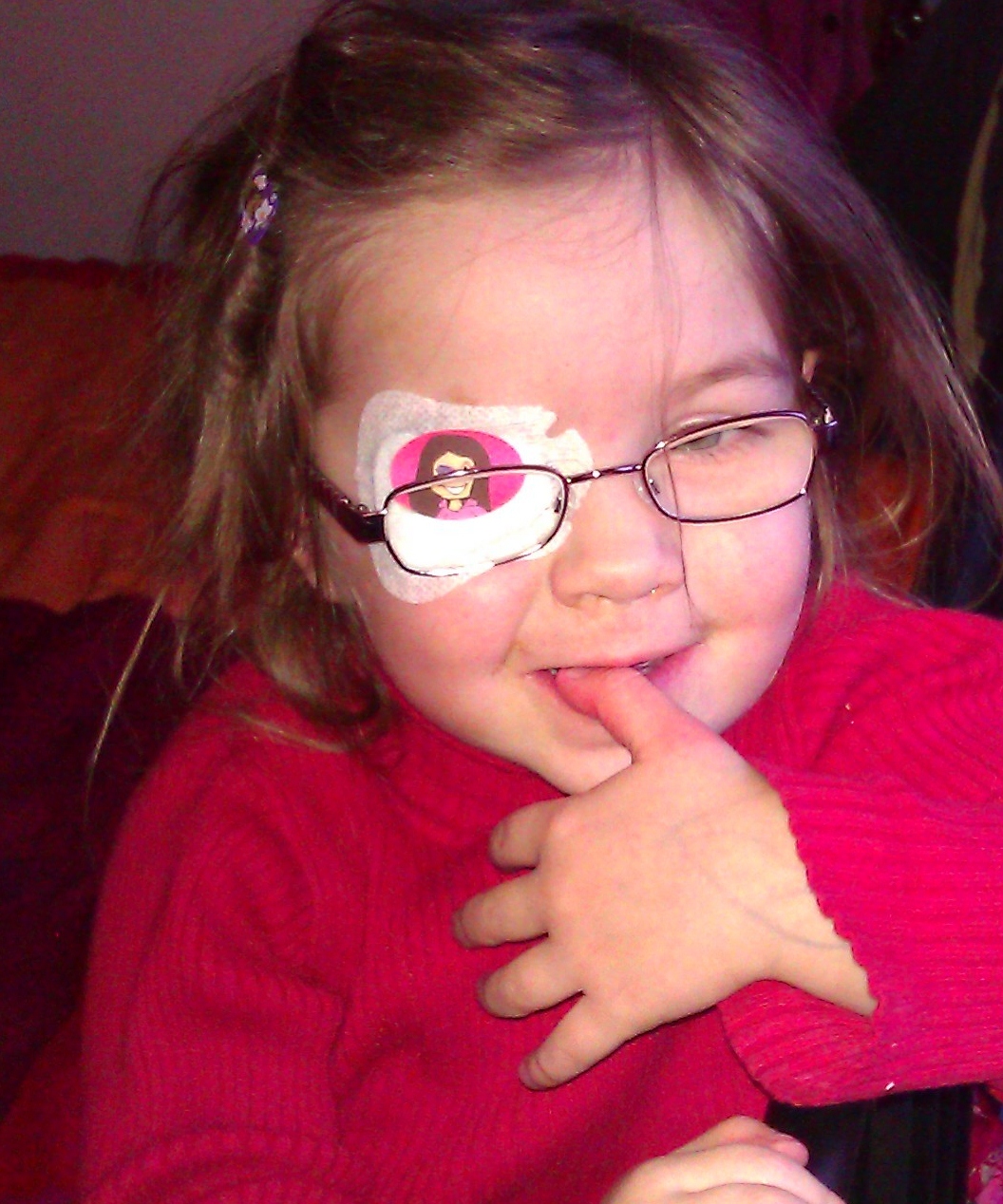
child with eye patchMy 3 year old has been wearing glasses for a couple of months.  She is long sighted and has a turn.  We were told some time ago that she may have to wear an eye patch and at our latest hospital appointment this was confirmed.

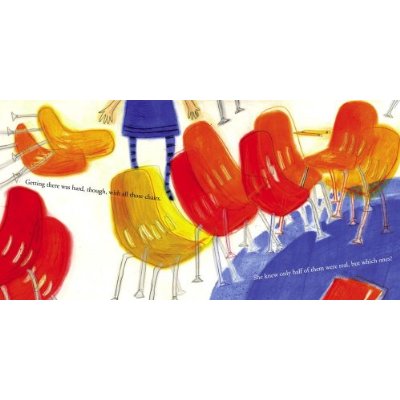
Since we were aware that she may have to wear a patch, we have been preparing her by reading the book The Pirate of Kindergarten (Richard Jackson Books (Atheneum Hardcover))

In the book the main character Ginny wears a cool, black Pirate eye patch.  My daughter has taken this book to pre-school and the childminder and liked the idea of being  a Pirate.  When the ophthalmologist put a patch on her eye it wasn’t like this at all, it was white, adhesive backed and she has to wear it under her glasses.

She has to wear it for 2 hours a day but was very scared when I  first tried to encourage her to wear it.

But I don’t like it.  I won’t be able to see properly if I wear an eye patch.

On the first day we managed 15 minutes with a lot of encouragement.  First port of call bribery,

If you wear it for a whole week I will buy you a special treat.

This helped us through the first hurdle of getting it on.

Secondly, reassurance; we sat together watching her favourite programme and had cuddles whilst I told her how brave she was.  After 15 minutes we removed it.

I have a friend whose daughter wears an eye patch, I asked her advice.  She said that she always reinforced the idea that by wearing the eye patch the other eye would get really strong.

I tried this and lo and behold it worked.  On day 2 she managed to wear it for an hour. When she removed it she said

My eye is really strong now.

Other tips 

  • Use a timer or set the duration of an activity or television programme as the point at which the patch is removed.
  • Do something that the child really enjoys when wearing the eye patch.  We have watched favourite programmes whilst having a cuddle, read stories and made a farm from cardboard boxes.  I ask ‘what would you like to do when you have your eye patch on?’
  • Decorate the patch.  The ophthalmologist gave us a book that featured children wearing patterned patches. Our patches are not patterned but they include stickers to decorate them .  Some of these are white for the children to colour in. I suggested my daughter decorate the patch with felt pens when she was colouring the sticker. Next time we are shopping I am going to let her choose stickers for the patch, some sparkly gemstones might go down well.
  • Keep reinforcing how brave they are, we all give her lots of attention when she is wearing it which she loves and constantly remind her that she is making the other eye really strong.
  • Let them choose when they want to wear it.

By day 3 she kept it on for 3 hours and wore it to her friend’s house.  On day 4 she woke up and said

Shall I put my eye patch on?

Do you want to?

Yes

She decorated her patch put it on before the school run and kept it on all morning which included a visit to softplay.  She isn’t worried about other children’s reactions (possibly helped by the book) and hasn’t had a negative reaction yet. I think if we customise it to the limit other children might even be jealous.

Books about Children Wearing Glasses – The Pirate of Kindergarten

My 3 year old wears glasses. She has been getting on really well with them and feels quite special and unique.  She wears them because she has a turn and is long sighted.  The ophthalmologist thinks that her glasses will correct the turn, but there is a chance that she will have to have an eye patch.

When we were told she would have to wear glasses, I searched for picture books about children wearing glasses.  I bought the Charlie and Lola book ‘I Really Absolutely Must Have Glasses’.  This didn’t really fit the bill because although it is about going for an eye test and really wanting glasses, Lola doesn’t actually need glasses.

I gave up looking for a while until by  a stroke of fate I came across The Pirate of Kindergarten in a list of top 10 books for Special Educational Needs.  This hit the nail right on the head .  The story is about a little girl who is clumsy and sees in double vision unless she closes one eye.  After attending an eye test they tell her that most children don’t see in this way and  give her glasses and a cool eye patch .  She becomes the Pirate of Kindergarten.

My 3 year old is incredibly clumsy and often falls over and crashes into things.  I asked her if she ever saw 2 of things like the girl and she replied ‘sometimes’.  I don’t know whether she sees in this way, but the book gave me a valuable insight into what the world might be like through her eyes.

This is a lovely book for  a child who wears glasses and for a nursery, pre-school or childminder who is looking to increase their inclusive books. The illustrations are beautiful, the subject matter is handled sensitively and is told in a simple and sympathetic manner that young children can understand.

This post is a personal recommendation, no payment or product was received for writing this review.