It is a rare treat to see all my 3 girls playing together with the same toy. When my 3 year old chose to play with Stickle Bricks, my 1 year old and 7 year old joined in, each getting very different things from it and adapting it to their own interests and developmental stage. For me this is the mark of a good toy.
My 7 year old launched into making a full-scale model of a roller coaster. She got a little frustrated when it fell apart a few times but with persistence completed it.
My one year old was happy with just 2 Stickle Bricks, handing it to me to push together and then concentrating hard on pulling it apart. A repetitive game that kept her occupied for a good 10 minutes.
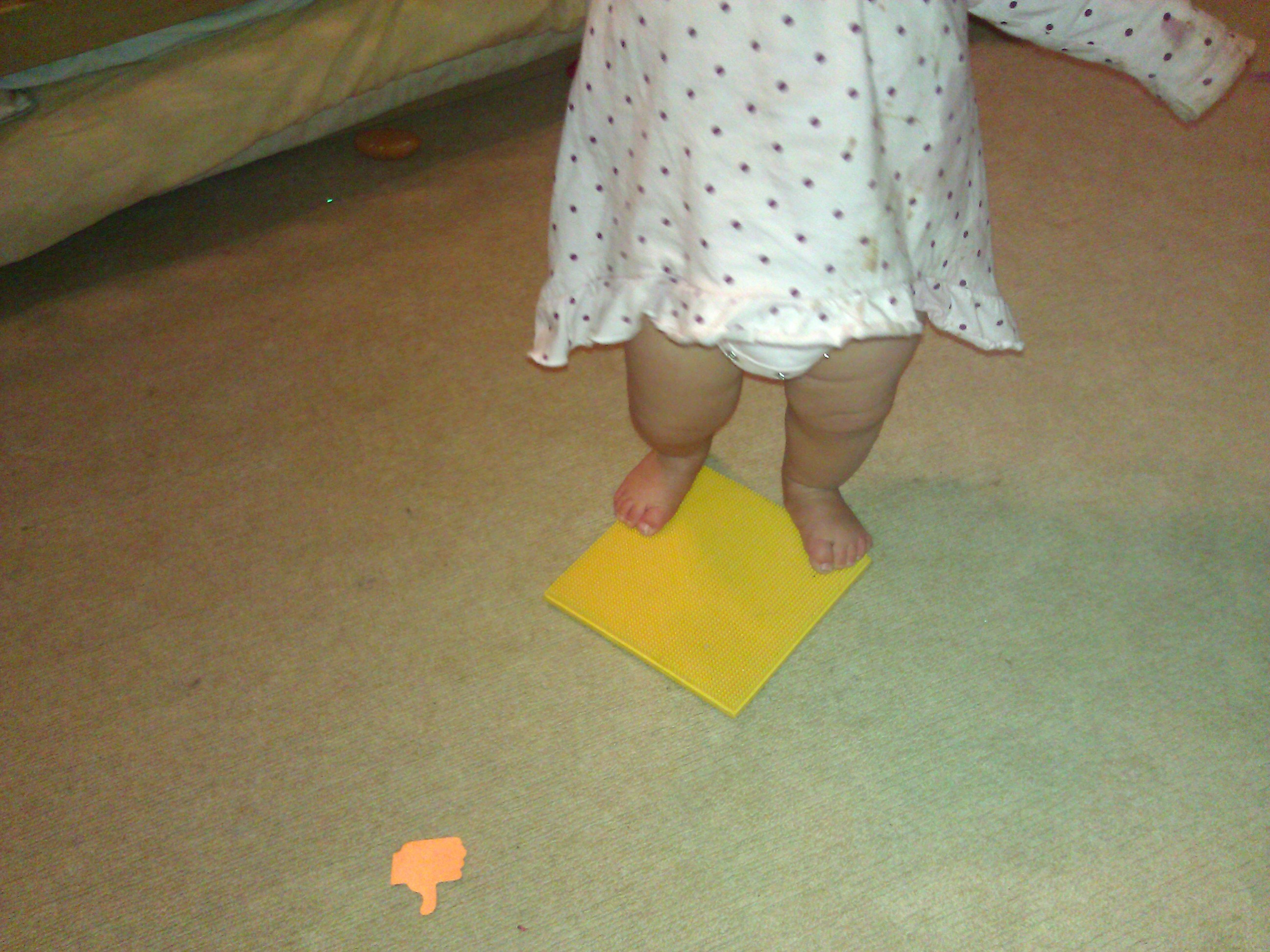
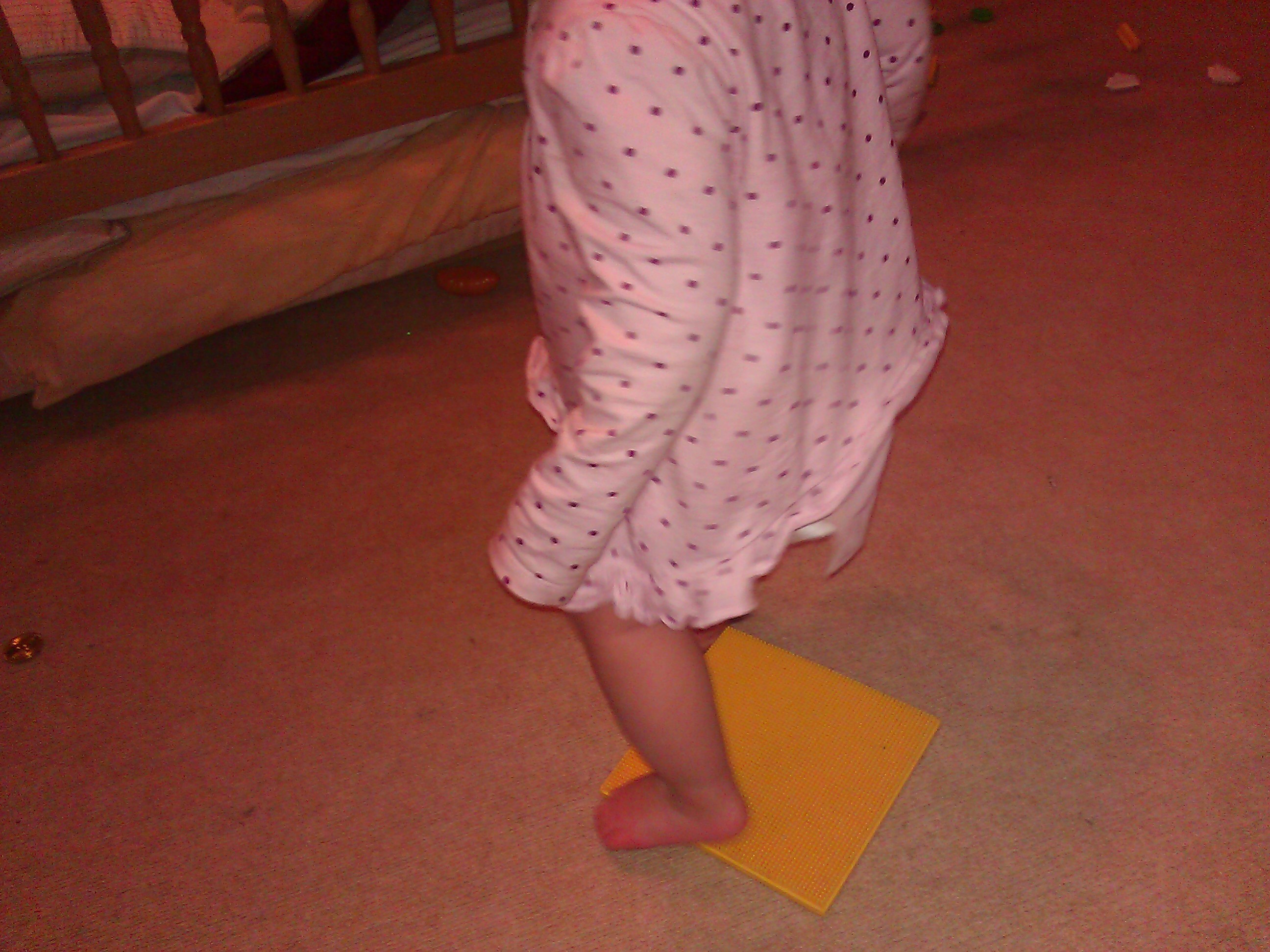
Later she found the board and enjoyed discovering the texture with her bare feet, stepping on and off and laughing.
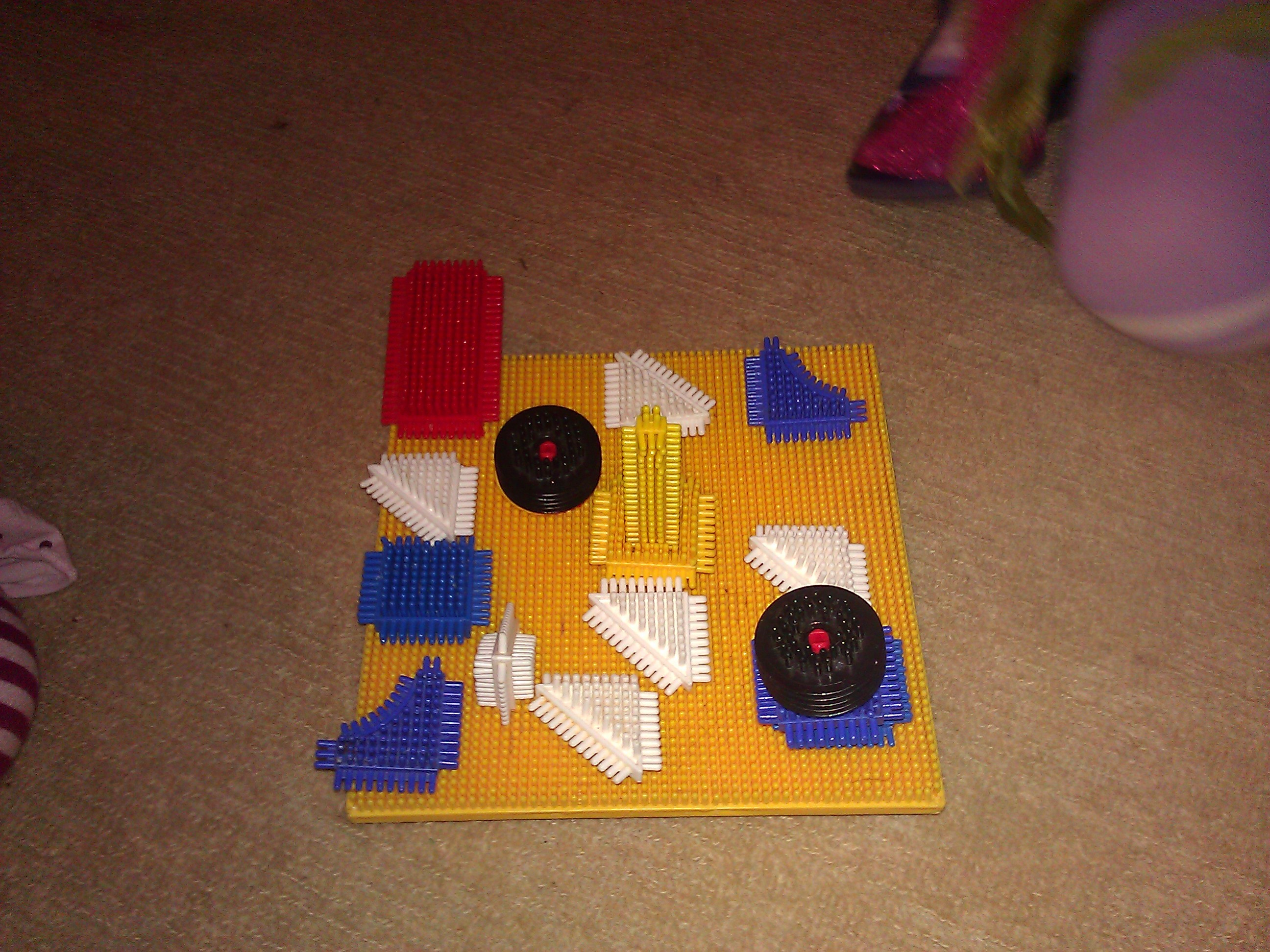
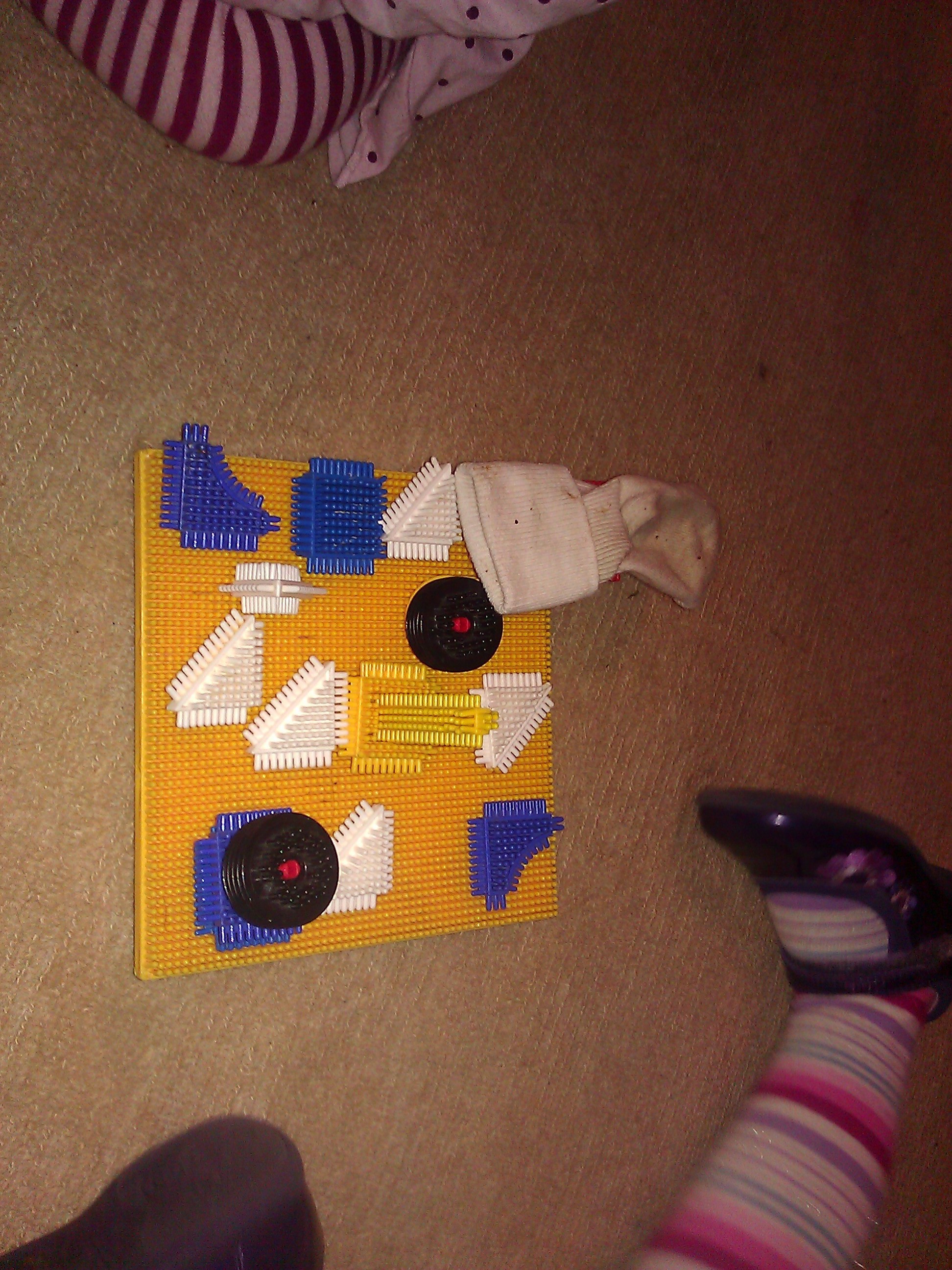
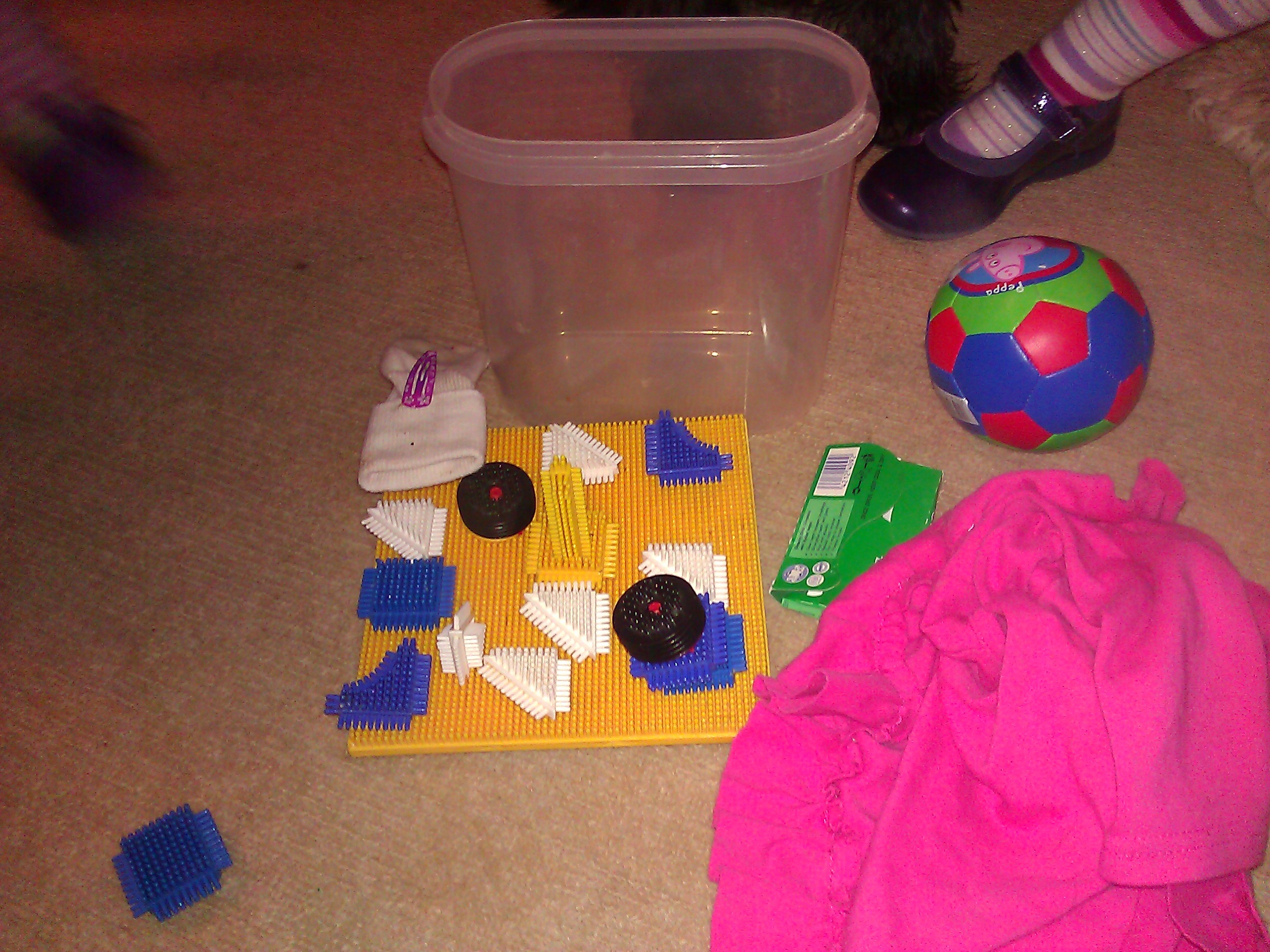
My 3 year old created a piece of modern art adding things to it as she went along.
Adding a sock to make a bridge for the Billy Goats Gruff.
No Pepper isn’t the Troll. I’m not having a Troll and there aren’t any goats.
pepper and stickle bricks
No it isn’t finished yet.
As she gathered random objects from around the room Now it’s finished.
It isn’t often that we find a toy that the girls can play with without worrying that the baby will ruin their play or put something small in her mouth. It was an added bonus that the baby enjoyed playing with the Stickle Bricks in her own way. We have had the Stickle Bricks since my 7 year old was a toddler and they still get lots of use. It’s just a shame we don’t have a greater quantity now that we have 3 girls playing with them.
As an Early Years teacher I have always capitalised on opportunities for literacy in everyday life. Making children aware and involving them in these things is often key to children viewing reading and writing as fun. Traditionally these would have been things like writing shopping lists, reading road and shop signs, mark making in diaries and calendars or following recipes.
However literacy in the real world is changing. Children these days are just as likely to see you read or write on your phone or laptop as they are to see you write a list or note.
This really hit home with me when I watched my 3 year old playing on my iPad a few weeks ago. She asked if she could download an app called Dad book, designed for dads to record stories for their children.
But mummy it’s not doing anything
she said once it was downloaded.
No, someone has to tell the story and record it.
I replied.
I asked her 7 year old sister to record the story for her, they sat together as my 7 year old narrated the story. When she was finished my 3 year old listened and then repeated the words as she had seen done with another app Pat the Cat .
What a great opportunity for playing with literacy for both children. This made me think about all the other literacy activities my children tap into on the iPad.
My 3 year old is learning about the alphabet and phonic sounds using the wonderful Elmo loves ABC’s app. This has loads of different levels of games all based around learning letter names and sounds and includes lots of memorable Sesame Street clips.
Another favourite is Me Books a children’s picture book reader for classic Ladybird books. Both my children enjoy following the stories and adding in their own sound effects. This is simple for the children to do and another great way of getting different aged siblings to share reading.
The Ladybird Touch and Say books are also a great way for my 2 year old to learn to read simple words and even my one year old loves the Baby Touch app.
My 7 year old loves creating her own stories and animations using Toontastic or Puppetpals and these are also simple for pre-schoolers to use with adult guidance.
We have even discovered new songs and rhymes through English Songs and Chants. My 3 year old loves this one and can be heard walking around the house reciting the chants and singing the songs. The chants are excellent for teaching rhythm and steady beat, a concept I usually teach using Ros Bayley’s Beat Baby. I wonder whether Ros has considered creating a Beat Baby app?
There are a number of things that I really appreciate about the way my children use technology to play and learn about literacy.
The children freely choose the literacy apps and never feel like they are learning literacy skills. Everything they choose to play is fun and interactive.
The apps are an added dimension to their experience of literacy. They still love books and choose to read traditional books more often than e-books, still love to write, tell and listen to stories.
Current touch screen technology is still a little small to offer good mark making experiences for the youngest children but the drawing apps are good fun for when they get a bit older and are able to work on a smaller scale. I look forward to a time when I can roll out a big screen onto the floor and let the youngest children explore markmaking on a large scale.
I also think Kinect holds great possibilities for literacy. My children talk to their dad via video Kinect when he is not at home. There would be great potential for speaking and listening activities if they connected with other children from around the world and shared experiences about their life and culture.
My girls are avid readers, I’m not afraid that new technology will distract them from traditional literacy, but that it adds a richness to their lives and new possibilities for exciting literacy experiences.
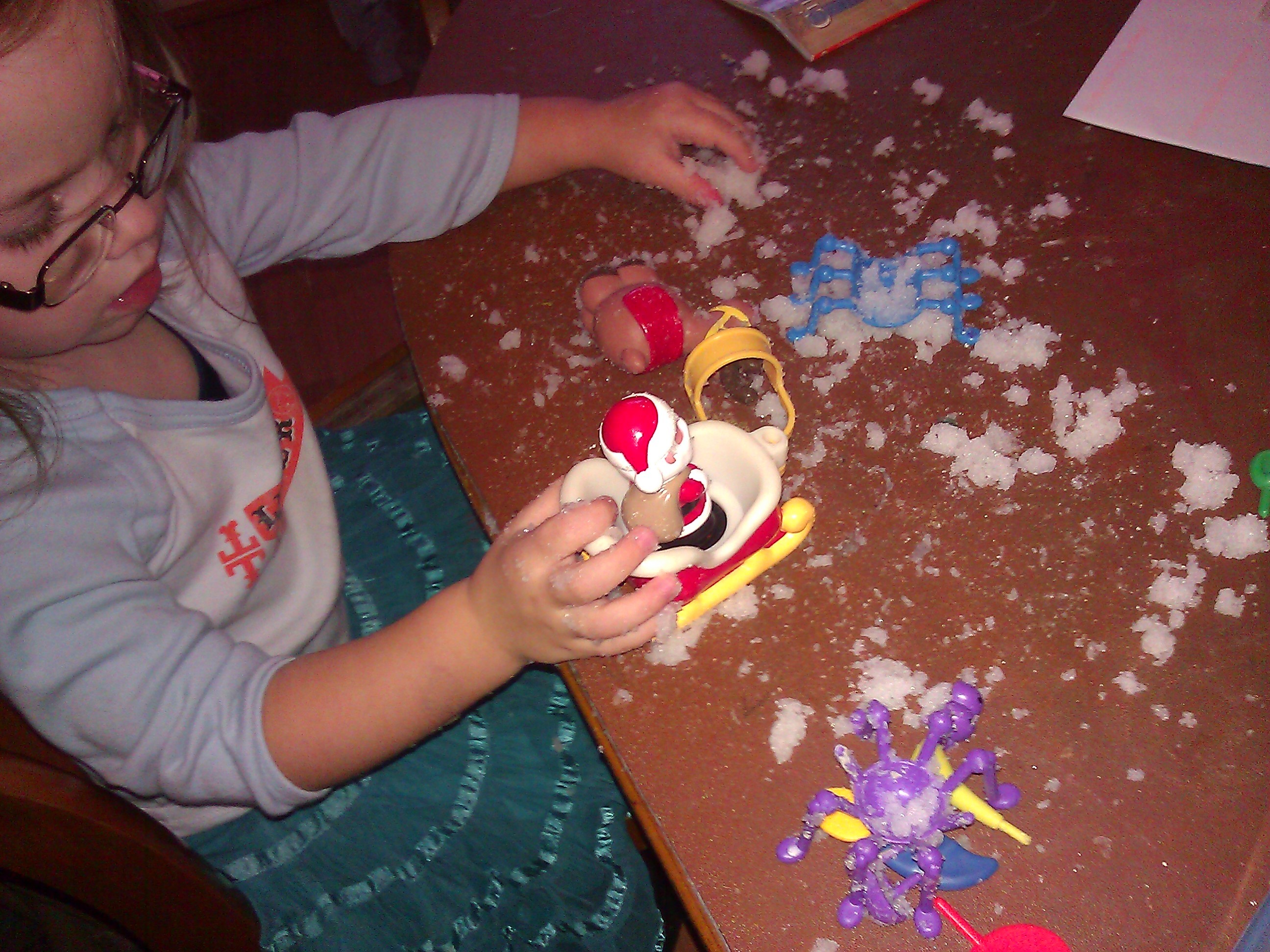
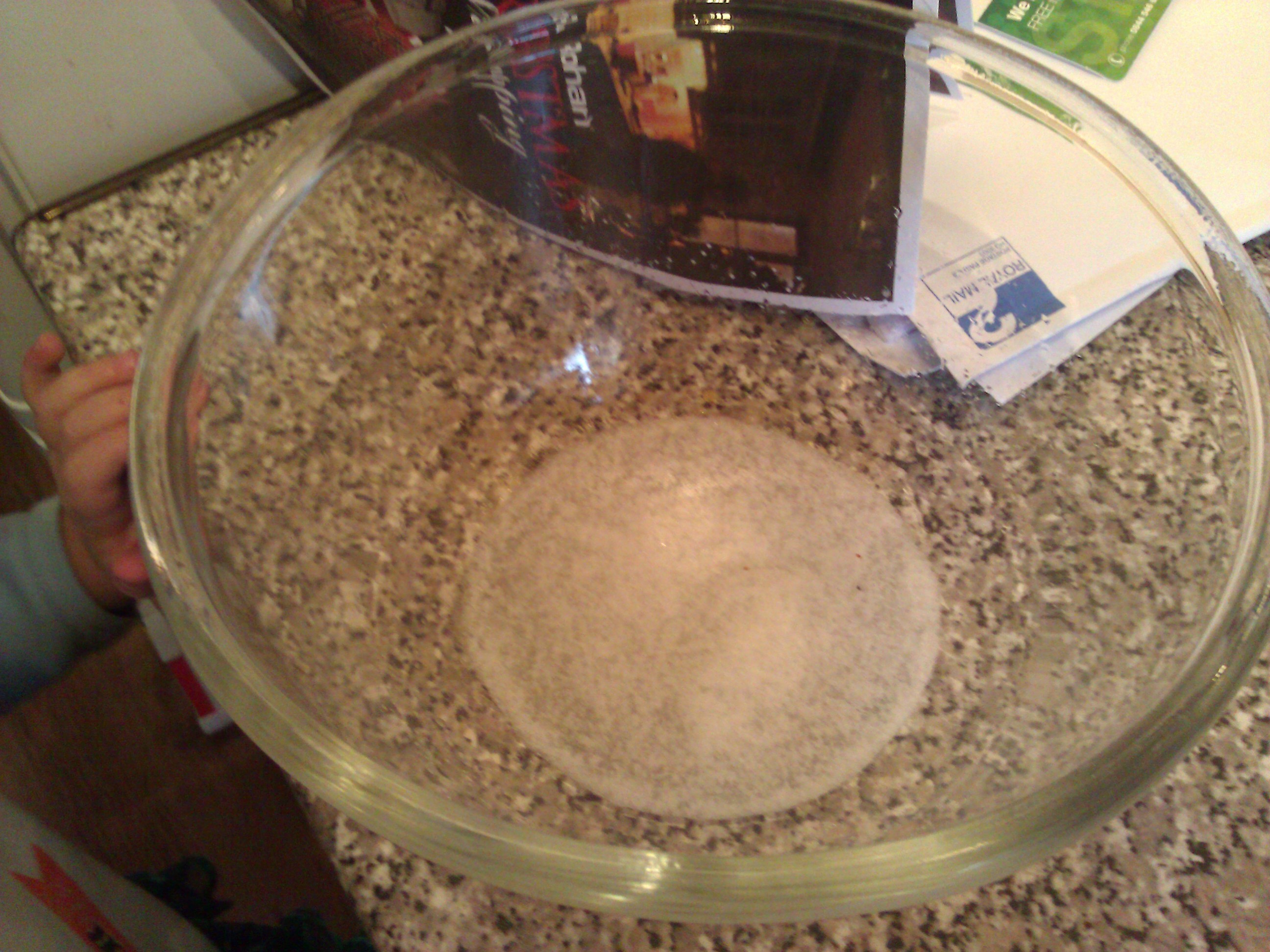
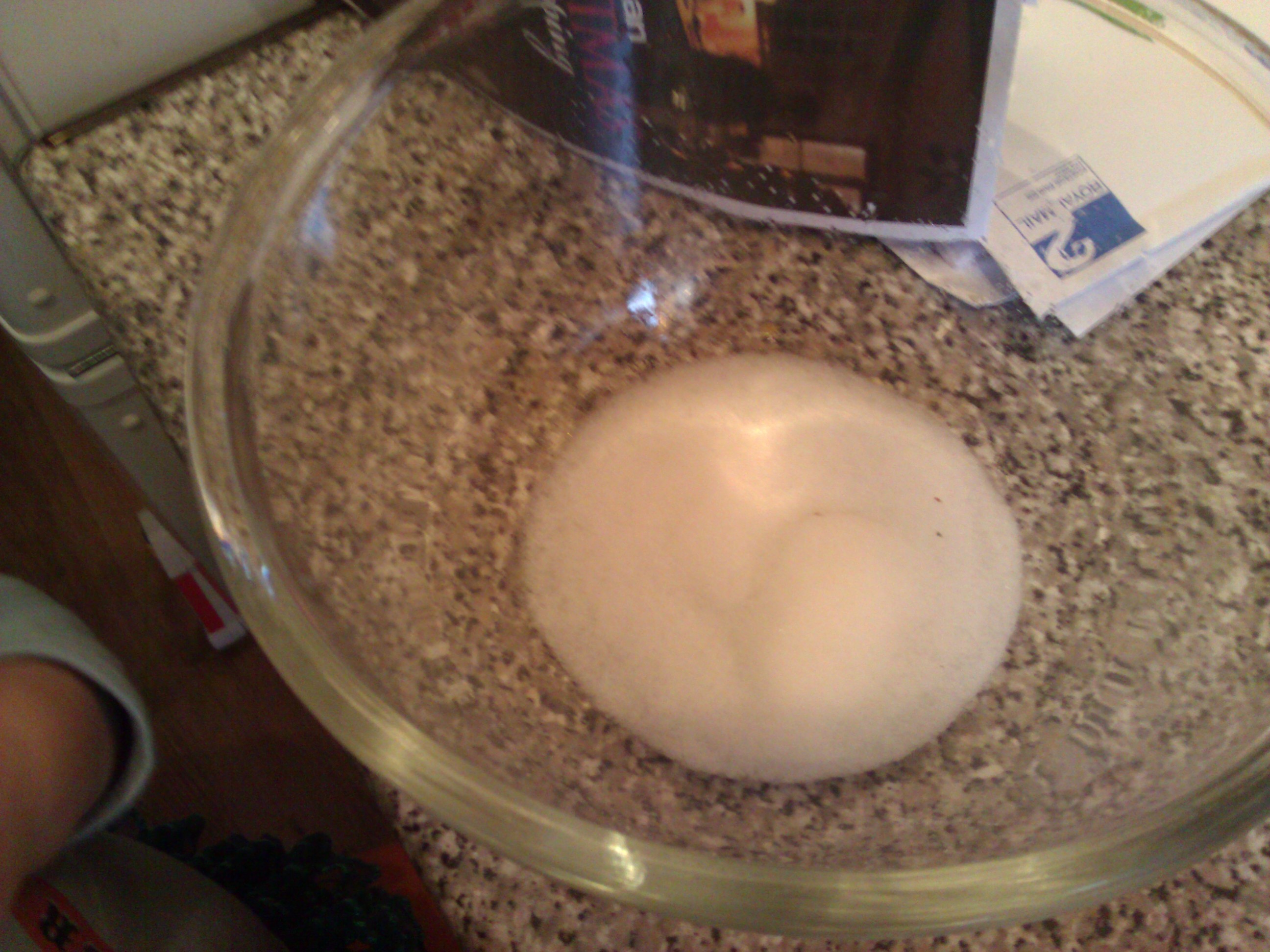
A few weeks ago, I picked up a tube of Magic Snow. I have never seen this before but I thought it might be a nice Christmas play idea. It comes as a powder in a test tube shaped container and when you add water to it, it expands to 100 times its original size to look like snow.
It feels really soft and just a little bit cold
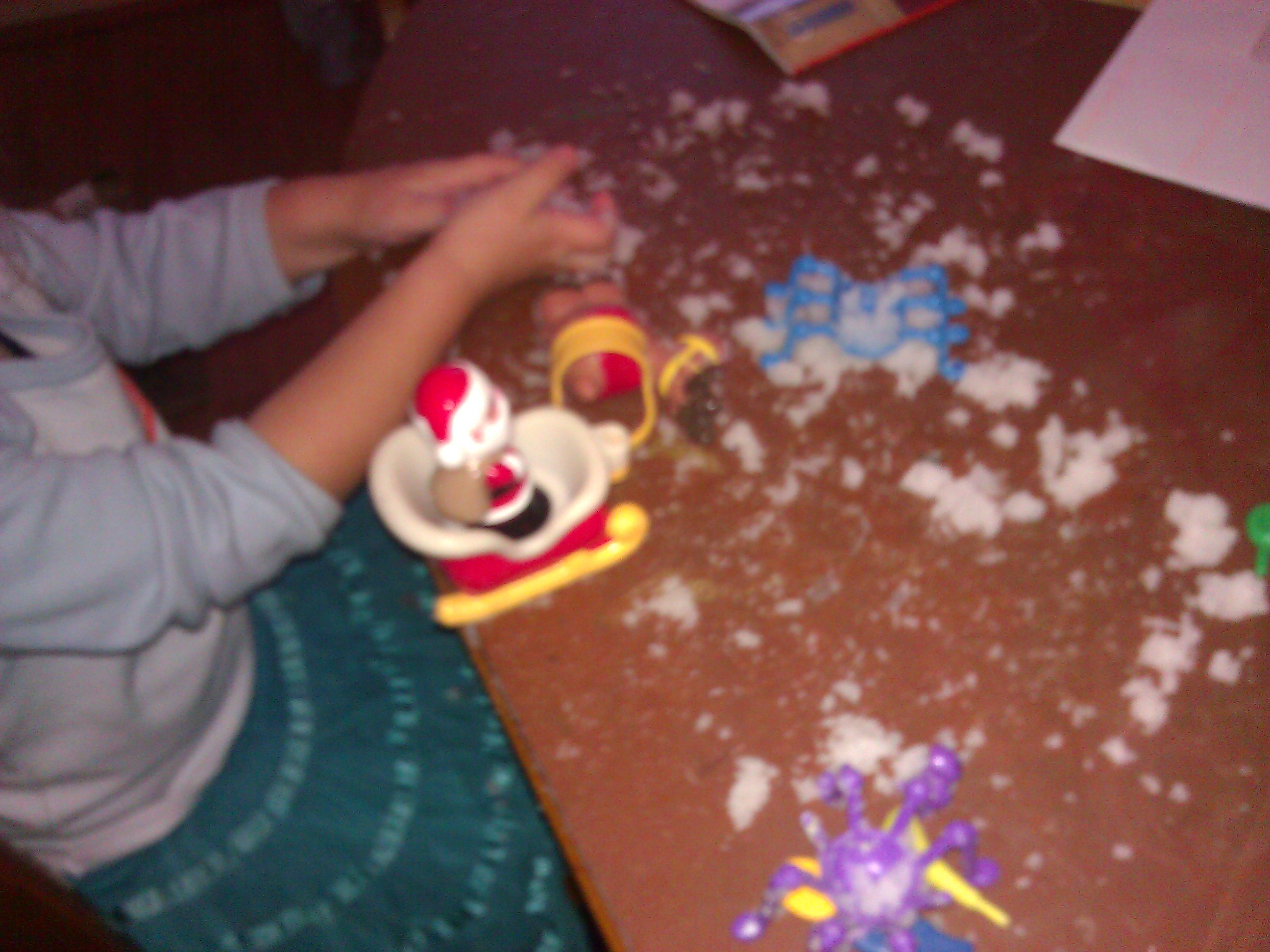
You get all the fun of playing with ice and snow but it doesn’t melt or feel too cold on little fingers.
We tried to mould a snowman and make models with the snow.
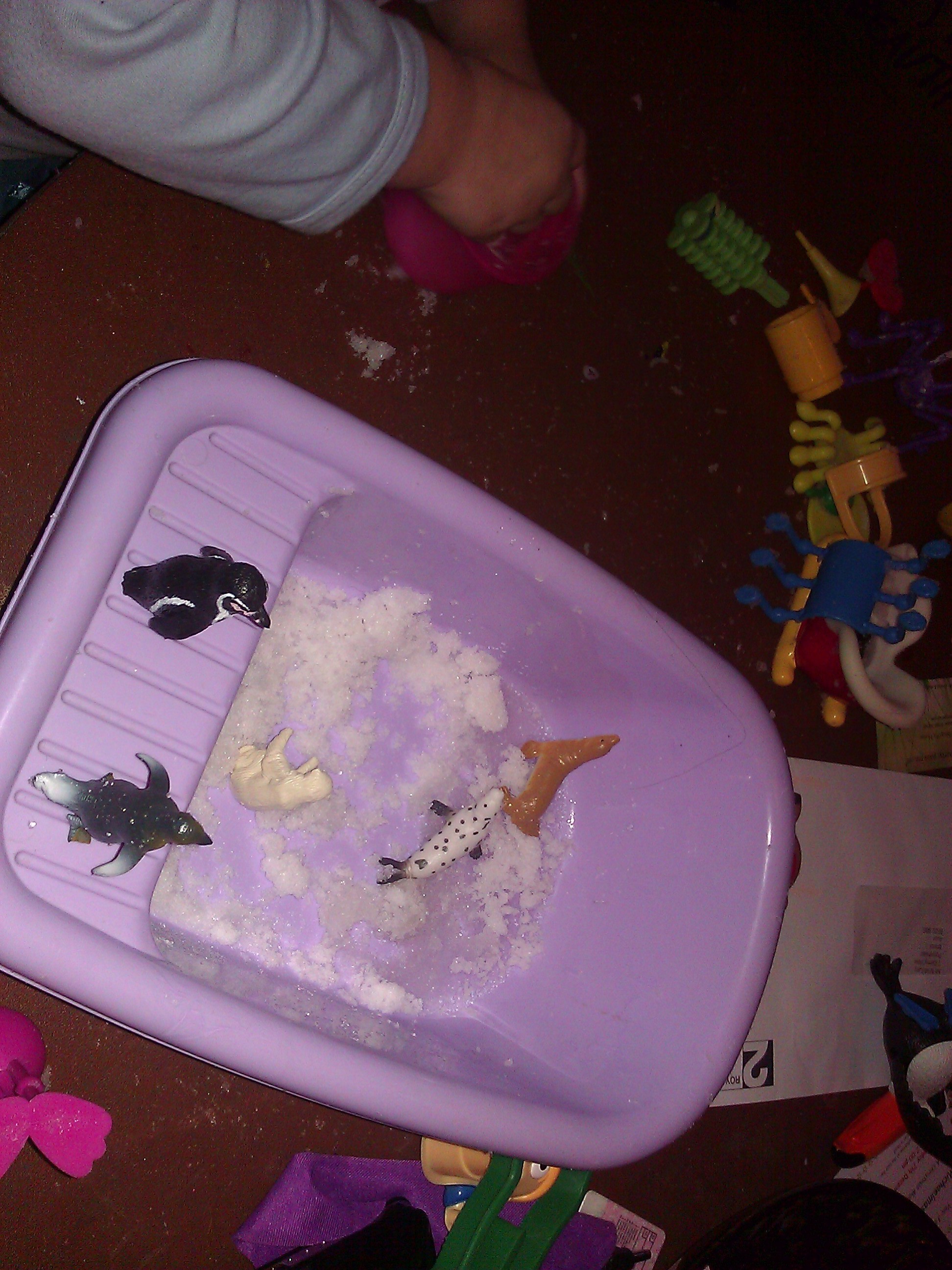
The snow was a big hit but was gradually creeping onto the floor and getting a bit slippery, so I suggested we put the snow in a tray.
We found some snow animals and the penguins slid around on the ice.
We went out and left the snow in the tray for a few hours, it showed no signs of drying up during this time so I am hoping that we will get a few days play from this batch. Magic snow is a big hit with my 3 year old who loves messy, tactile things and I’m sure it is an activity she will return to regularly in the lead up to Christmas.
My competition to win 6 Picture Books has prompted some wonderful comments about reading with young children. Lots of the comments suggested that parents were always keen to find new books to share with their children. I have already written a post sharing my top books for under 5’s so I thought this time I would ask my children.
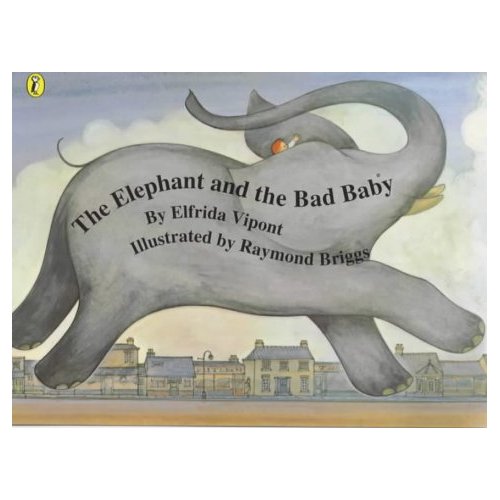
The Elephant and the Bad Baby by Elfrida Vipont and Raymond Briggs.
This was my 7 Year olds favourite book when she was 2. We read it again and again and the repetitive text almost drove my husband bonkers. When my middle child was 2 she latched onto it also and it became a firm favourite. The first part of the book is repetitive and it is easy for the children to learn it by heart and join in with the story, especially the ‘rumpeta,rumpeta rumpeta as they go down the road. The message behind the story is the importance of saying please and it does this in a charming and humourous manner. Both my children have loved the page with the baker’s shop, looking at the cakes and deciding which one they like best. I’m sure it is a book you will find your young children ‘reading’ by themselves before long even if they are unable to read.
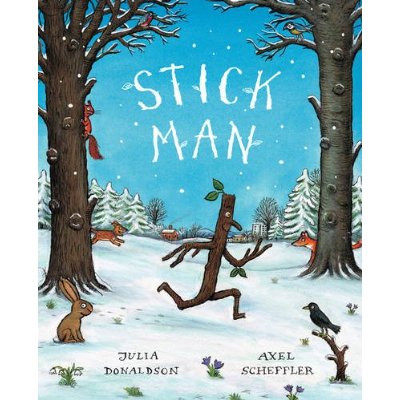
Stick Man by Julia Donaldson and Axel Scheffler
This was my 3 year olds choice. Her dad read it to her recently and said ‘What a lovely book, why haven’t I read this one before?’ (his other favourite is The Snail and the Whale by the same authors).
Written by the authors of the Gruffalo , this rhyming book is about a Stickman who gets himself into situations because he keeps getting mistaken for a stick. He is desperate to get back to his family and is losing hope when he meets Father Christmas who lends a helping hand.
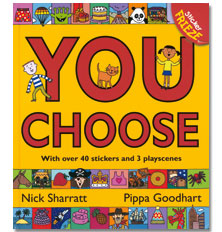
You Choose by Pippa Goodhart and Nick Sharratt
This was one of the books from my 7 year olds Bookstart Treasure Chest. This soon became the one book we read every evening until I became so sick of it and I would plead with her to choose something else. She is still very fond of it and it is one of the few picture books she refuses to pass down to her younger sister.
Each page asks a question such as if you could have any house what sort of house would you choose? Then you choose the one you like best from the illustrations. Nick Sharratt’s illustrations are lovely and it is a great book to stimulate discussion but in our house it was a little over read!
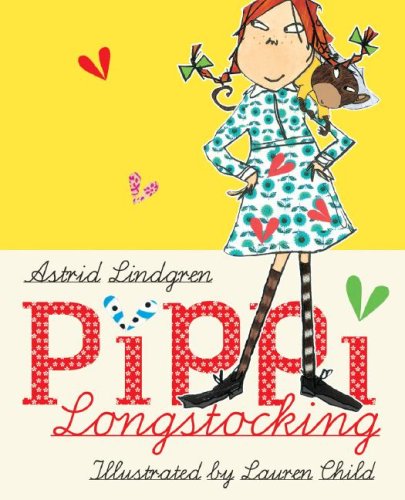
Pippi Longstocking by Astrid Lindgren
This is not strictly for under 5’s, my 7 year old chose it and I’ve allowed it in the list because we first read it together when she was 4. Pippi Longstocking is a very witty and insightful book and you will get a lot out of it as an adult too (in a similar way to Winnie the Pooh). There are a few books that stand the test of time and this is one of them. My daughter’s copy has been so well read it is falling apart but when I offered to replace it with a new copy she declined my offer.
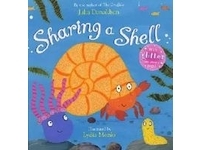
Sharing a Shell by Julia Donaldson and Axel Scheffler
There is a Charlie and Lola story about a library book that Lola is fixated with and takes home every time she visits. This was the book that my 7 year old borrowed from the library time and again until finally the library sold it off because it had become too shabby. We bought it for 30p.
It is a beautiful rhyming story about sharing and friendship and helping others. We lost our copy a few years back after I used it at work . My 3 year old found a copy at our doctors surgery, we read it together and I explained that it had been her sister’s favourite. She loved it too. When my 7 year old suggested this one she beamed and said’Oh I love that one’ running to her bookcase to get it. I explained that we didn’t have it anymore. Writing this has prompted me to buy a replacement copy and I will enjoy reading it to my 2 younger daughters.
Colin and Jacqui Hawkins’ books with thier comical pictures and witty text are a great way to teach early readers about onset and rhyme.
Onset and rhyme is the ability to put together an initial letter sound with its rhyme to make a simple word.
The rhyme ‘og’ could be added to the onset ‘l’ to make log or ‘d’ to make dog and so on.
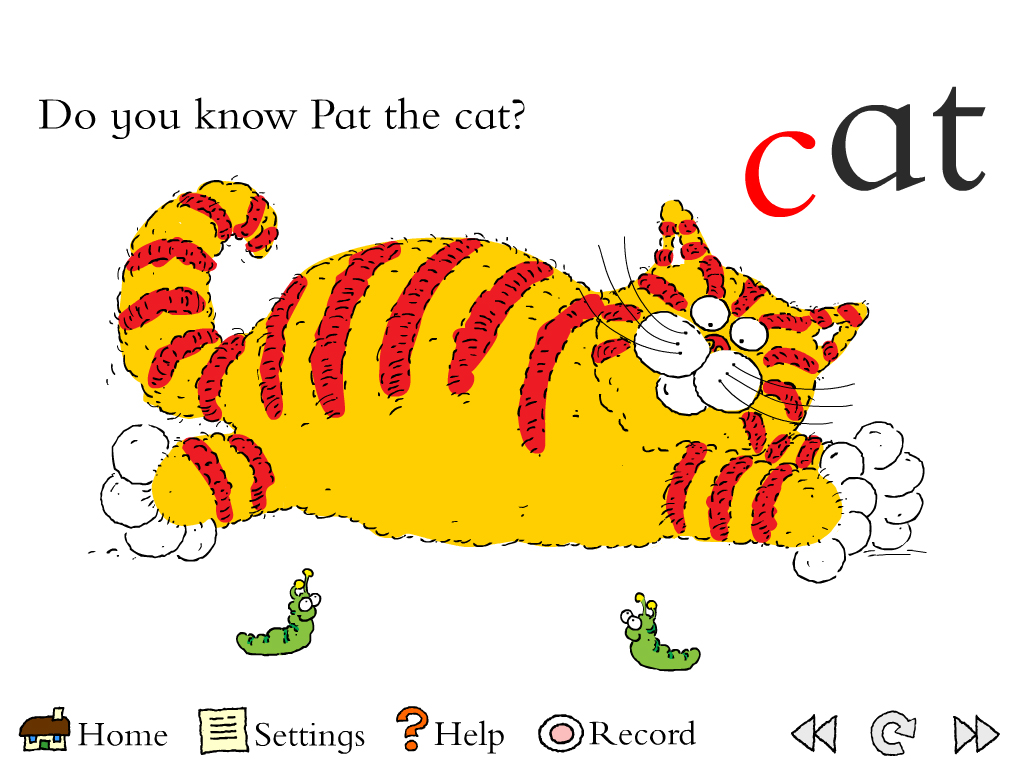
The iPad app created by Brightside takes this to a new level. This interactive, fun way of learning essential phonic skills could be a great way of engaging reluctant readers. The simple rhyming text is great for introducing rhyme to young children and the little caterpillars that crawl across the screen as each page is turned, making daft comments, keep children engaged.
The story is narrated with charming voices and the text changes colour as it is read so that children can follow the text. The characters then add comments and actions bringing the story to life. We loved the part where Nat the Rat eats his way out of Pat’s hat.
This isn’t just another version of an e-book as there is the added feature of recording the story in your own voice. The character reads the text then the child taps a record button and repeats the text following the highlighted words. The character then reads the key rhyming word ‘C’ (the sound) – at – Cat and the child again repeats and records. They are then prompted to play the recordings back and the story is read in the child’s voice. My 3 year old found some of the text a little difficult to remember but she loved recording the onset-rhyme and felt like she was ‘really reading’.
The importance of phonic skills in learning to read is well documented and this is a great, fun way to learn these skills.
Today I received my daughter’s Pre-School’s mobile phone policy. I think it is fairly standard since the child abuse case at Little Ted’s Nursery in Plymouth.
The policy states that anyone working/helping at the pre-school must keep their mobile phones in a locker. Also that parents must not use a mobile phone on the premises and have to leave the pre-school room if they wish to answer the phone.
I clearly understand why such policies have become commonplace and agree that we need to protect children from harm. However, there is a big part of me that feels that the world is going mad. Of course I wouldn’t want lots of photographs of my child on a personal phone, but what is the likelihood that a nursery worker would take inappropriate photos? In my experience taking photographs of children is an important part of sharing with parents what their children are doing and in documenting their learning.
My eldest daughter went to a different childminder for a day when she was 2. When I arrived to collect her the childminder presented me with a sheet of photographs of all the things she had done that day. This was so reassuring for me as she had been in an unfamiliar place. How much better would that have been had she been able to send me pictures throughout the day?
I agree that there need to be clear guidelines about how photographs of children are used but wouldn’t it be better to have one pre-school/nursery phone that can be used in this way under the supervision of senior staff?
It could be argued that on modern mobile phones it is very easy to post photographs on the internet, something most parents wouldn’t be comfortable with. However isn’t this also true if we go to any public place with our children? There will always be other parents taking photographs of their children and our own children may incidentally appear within them. Those photographs could very easily appear on the internet, so will mobile phone photography be banned in public places in the future?
I am not saying that we shouldn’t be making childcare provision as safe as possible for children. We do however need to look at the whole picture. As mobile technology evolves there may be a whole manner of benefits and experiences that children and their childcare settings will miss out on if they are banned completely. Safety is a huge consideration but is the only option banning it completely?
I’d be interested to know what others think from both a childcare and parental perspective.
When I worked in a nursery we displayed a Hallowe’en Pumpkin in our entrance hall. It was placed on a table covered with a table-cloth. Under the table-cloth we put a tape recording of the pumpkin’s voice that we would play when it was lit. The children would be mesmerised.
I taught a wonderfully imaginative little boy who particularly loved the pumpkin. He went on to school and told his teacher all about the talking pumpkin, his belief that it really talked was genuine. Rather than stimulating his natural imagination she told him, ‘ Of course it doesn’t talk , it was just the teachers making the voice’. I was so sad when I heard this story, talk about shattering a child’s illusions .
Firstly how would you know that a 3 year old is struggling to see properly? The simple answer is I didn’t.
A while ago I noticed that my daughter could go cross-eyed. I’ve never been able to do this so just thought that she had discovered a new skill. However this became more and more frequent and it became clear that it wasn’t intentional. I decided to take her for an eye test.
How do you test a 3 year olds eyes? Firstly the optician projected pictures onto the wall. The pictures were butterflies, rabbits, planes and fish. The optician asked her what she could see. The only one that she mentioned with any conviction was the butterfly but I couldn’t be sure whether she couldn’t see what they were or was simply being shy. For checking how well she could see close up, the optician had cards with hidden pictures on and she asked my daughter what she could see. She gave her glasses with inter-changeable lenses and shone a light into her eyes. It was quite a long and thorough process and it turns out that she is long-sighted and that wearing glasses should correct the turn in her eye.
We had fun trying on lots of different glasses and eventually chose a Little Miss Sunshine pair. We picked up the glasses last week and so far I have been surprised at how well she has adjusted. She is happy to wear them and rarely takes them off. I have given her a special place on her dressing table to keep the case and when she takes them off she is always careful to put them back in the right place. We have talked about the importance of not touching the glass as it makes them dirty and she won’t be able to see properly. She enjoys using the cloth to help me clean them.
We have made a big fuss about how lovely she looks in them and I think her big sister is a little envious as she keeps asking if she can have her eyes tested. It’s certainly a far cry from the stigma of wearing glasses when I was a child.
We read the Charlie and Lola book about getting glasses, although I was a little disappointed to find that Lola doesn’t end up having glasses in the book. I’m still on the lookout for others. If anyone has any suggestions for good children’s books about wearing glasses please add a comment. Or perhaps I should write one….
In the above video from Tanya Byron’s keynote speech at the 2011 FOSI conference, she explains her response to the government when faced with this question. She speaks with such passion and conviction and I found myself nodding with excitement all the way through.
I think there are 2 key points to this argument. Firstly that education needs to be made more relevant to children’s everyday experience. Children live in a multimedia world and are excited by it. Bringing this multimedia world into their education will make learning more exciting and when learning is exciting we achieve better results.
My 7 year old often says school is boring and she hates writing. She is one of the brightest children in her class, if she finds it boring imagine how the least able children feel. Which brings me to the second point. Education in this country is about whether or not you are academic, if you are academic you are clever , otherwise you are not and pushed down a seemingly less important vocational route. This notion of what ‘clever’ is forms from the very beginning of school and unfortunately it is often boys who are not academic and would prefer to do something more active. Unsurprisingly the gap between boys and girls widens.
When children lack motivation they misbehave and eventually give up on school altogether ( as happened with my younger brother). Technology has so much promise as a way of engaging children and raising standards. It is relevant to their lives and gives them skills for their future. My own daughter’s teacher recognised that children of this generation will be unlikely to use pen and paper as a main source of writing in the future. Yet there is still fear about doing something different and worries that they have insufficient equipment .
This is why we need inspirational leaders, with ideas, energy and enthusiasm to show teachers what can be done. If enough influential people share this message, perhaps one day we will be heard.
Those of us working with young children are familiar with the term Foundations of Learning. What does that really mean? For me, it means everything that gives us the capacity to learn, think, create, behave, communicate and build relationships. The things that you learn in the first 5 years remain with you for life, whether they are physical skills, values and beliefs or ideas and knowledge. This is why for me,early education is the most important and exciting phase.
With this in mind, I would like to share an excerpt from Robert Fulghum’s book All I Ever Really Need to Know I Learned in Kindergarten . This was first introduced to me during my Master’s Degree. When I look at my own children and the way they develop and learn every day, I am reminded of this piece.
Most of what I really need to know about how to live, and what to do, and how to be, I learned in kindergarten. Wisdom was not at the top of the graduate school mountain, but there in the sandbox at nursery school.
These are the things I learned: share everything. Play fair. Don’t hit people. Put things back where you found them. Clean up your own mess.Don’t take things that aren’t yours. Say your sorry when you hurt somebody. Wash your hands before you eat. Flush. Warm cookies and cold milk are good for you. Live a balanced life. Learn some and think some and draw and paint and sing and dance and play and work every day some.
Take a nap every afternoon. When you go into the world, watch for traffic, hold hands and stick together. Be aware of wonder. Remember the little seed in the plastic cup. The roots go down and the plant goes up and nobody really knows why, but we are all like that.
Goldfish and hamsters and white mice and even the little seed in the plastic cup – they all die. So do we.
And then remember the book about Dick and Jane and the first word you learned, the biggest word of all: LOOK. Everything you need to know is in there somewhere. The Golden Rule and love and basic sanitation. Ecology and politics and sane living.
Think of what a better world it would be if we all – the whole world – had cookies and milk about 3 o’clock every afternoon and then lay down with our blankets for a nap. Or if we had a basic policy in our nation and other nations always to put things back where we found them, and cleaned up our own messes. And it is still true, no matter how old you are, when you go out into the world, it is best to hold hands and stick together.
So next time someone discredits you as ‘only playing’ or says ‘she’s just a mum’ or she only teaches little ones, stand firm in the knowledge that ours is the most important job in the world.


 My one year old was happy with just 2 Stickle Bricks, handing it to me to push together and then concentrating hard on pulling it apart. A repetitive game that kept her occupied for a good 10 minutes.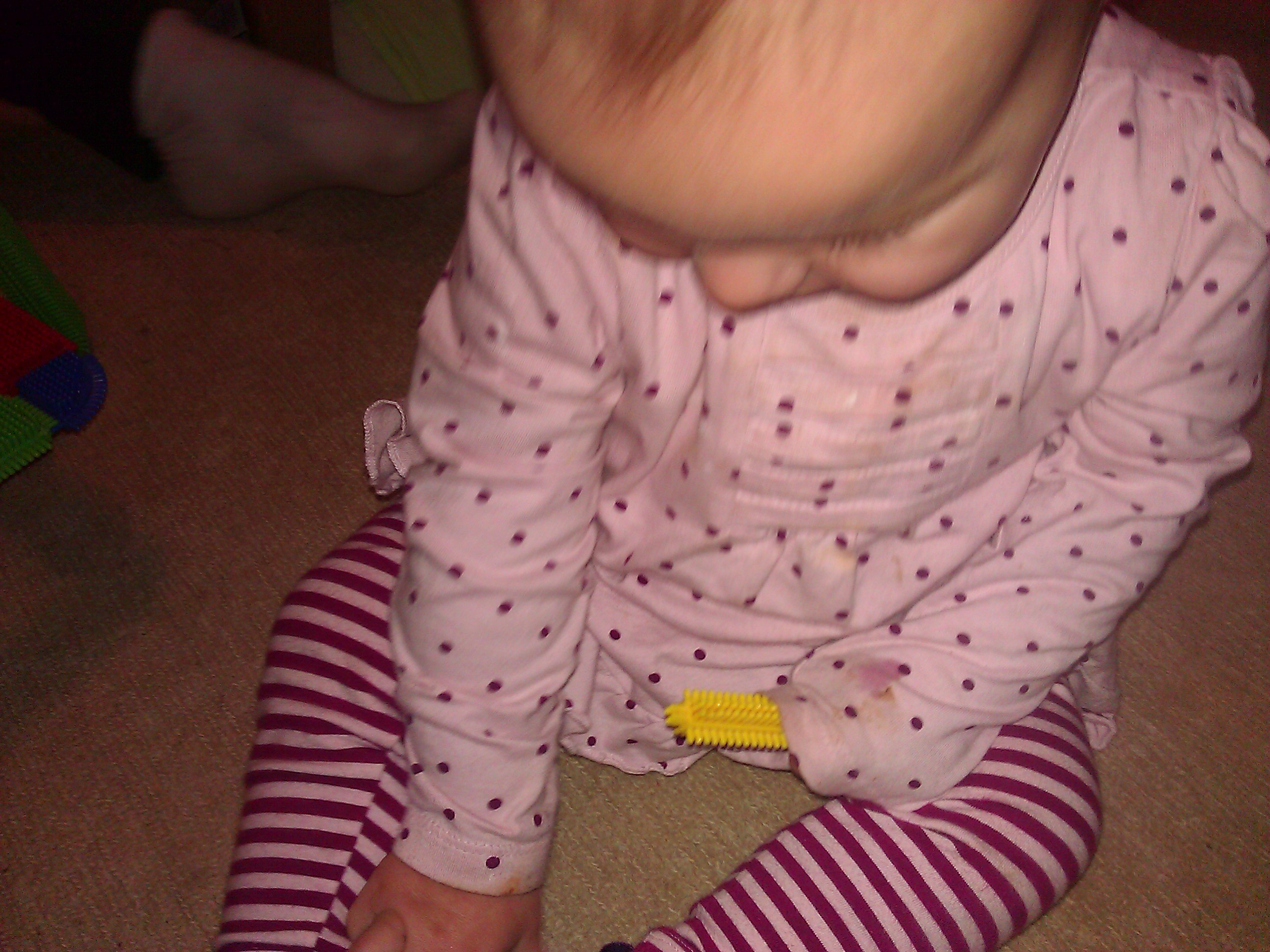
 Adding a sock to make a bridge for the Billy Goats Gruff.
No Pepper isn’t the Troll. I’m not having a Troll and there aren’t any goats.
Now it’s finished.



 Right from the Start