Category Archives: early education & play

Fisher-Price Red Rover Game – A Review

My middle daughter is 3 next week and she has just become interested in games.  We have found some that occupy her and her friend but I am always on the lookout for more.

Today Red Rover arrived at our door.  This is a new Pre-school game by Fisher-Price that teaches colours, shapes, numbers and letters in a fun way.

My first pleasant surprise was to find that gone are the hours of removing fiddly packaging.  The security tabs have been redesigned so that they are quick and easy to remove.

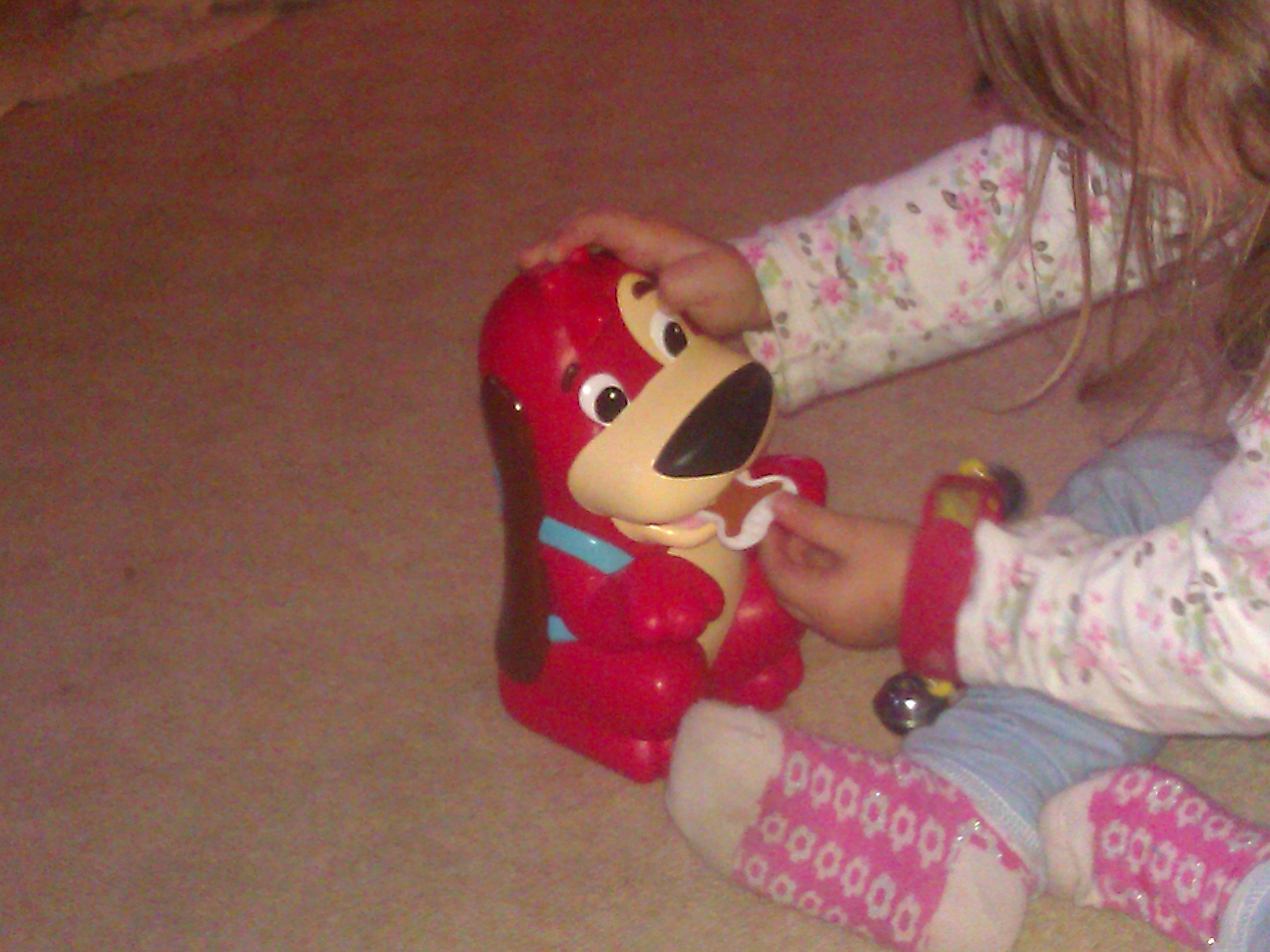
Red Rover the dog is sturdy and compact and wears a backpack to store all the bones that form part of the game.  This will make it easy to store and to put away without losing all the pieces.

The game begins by placing all the bones face down around the floor. Each bone has a colour and a shape, number or letter on it. You then press Red Rover’s nose to choose easy level (colour only), or hard which includes all the attributes.  Press Red Rover’s nose and he calls out a colour to find.  The children run around the room turning over the bones until they find the correct one.  Once they have found it they put it into Red Rover’s mouth and he tells them if they are correct.  If it is the wrong colour he says ‘Yeuchh’ which we thought was very cute. If they find the right one they get to keep that bone and the game continues.  If the correct bone is not found within a specific time the children are directed to return to Red Rover and he chooses another. The object of the game is to collect the most bones.

My kids loved it.  I had to encourage my 7 year old to let her younger sister find a few  bones when she got a little competitive, but they had fun together. I think I might give them a bag each next time as it was easy to forget the bones you had collected when engrossed in the fun of the game.  I love that it is an active game and it kept my lively pre-schooler engrossed. I envisage a few tears as the children compete to be the first to find a bone, but they’re all valuable lessons.

There were a couple of down sides.  As with many electronic toys the accent is American and American phrases such as two times rather than twice are used.  I would have preferred Red Rover to have had a British accent but it didn’t distract from the fun of the game.  The other point is that the letters on the bones were upper case.  I always teach lower case letters first and often wonder why toy manufacturers tend to use capitals.  Is it to familiarise children with the initial letter of their names?

My daughter is having a small 3rd birthday party next week and I will add this game to the list of party games.  A great fun way to encourage children to learn shapes, colours, numbers and letters.

TEDx London 2011 The Education Revolution

WP_000716

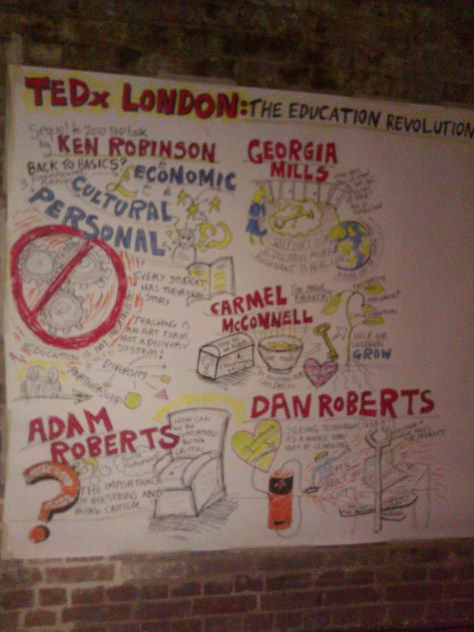
I was fortunate to attend TEDx London this weekend. This event was born from issues raised in Sir Ken Robinson’s 2010 TED talk and was designed to raise the question ‘ How can we bring on the Education Revolution?’

What can all those involved ACTUALLY  DO to ensure that the old and irrelevant in education is thrown out and  that we can build a new model of constant reinvention to ensure that  education provides what industry requires and more importantly what   young people need to flourish in today’s world.

I returned from TEDx London, my head buzzing with ideas, questions and things to explore.  Many of the underlying concepts were not new but were reiterated by passionate individuals and illustrated by exciting examples from the world of education. These were some of my highlights:-

The talks were split into 3 sections

  1. What’s Wrong / What’s Happening
  2. What’s Right
  3. What’s Next.

The first session began with a live feed from Sir Ken Robinson.  He discussed his views on the purpose of education

Economic – Education underpins the modern economy and for a modern economy there is a need for creativity and innovation.

 Cultural – Helping to understand each others cultures and relieve the problems of cultural mistrust.

Personal – Education is about individuals, it cannot be mechanistic and should encourage students to become engaged.  For this reason education should be personalised.

Sir Ken Robinson’s vision for change includes

  • Education that is personalised
  • Improvements in the motivation of both students and teachers
  • Education that is customised to the needs of the particular community or individual school
  • Education is about diversity and standardisation offends diversity.
  • Education is about partnership with great institutions and the community.

A number of these points were a common thread throughout the talks.  The importance of recognising children as individuals and encouraging, rather than stifling their talents and interests, came time and again. The need to motivate children and encourage them to think for themselves and the many possibilities that technology offers  also kept reappearing.

I consider myself fortunate to work in Early Education.  Active learning, teaching that stems from children’s interests and strengths and listening to the child’s voice are fairly widespread.  Learning is fun in the early years and it would be unusual to find a pre-school child who grumbled that school was boring. I hope that all education can take lessons from early education at its best.

Adam Roberts an 18 year old human rights campaigner talked about  critical thinking and how his mother’s encouragement to ask questions set him up for life. As young children we instinctively ask questions, but as we grow older children are often discouraged from questioning. This point was made even more strongly in Ewan McIntosh’s talk. Ewan explained the need for children to be problem finders rather than problem solvers.  He showed a group of 7 and 8 year olds who were asked to put on their own TEDx event.  The children were inspired to come up with their own questions, prompted by ‘have you ever wondered?’ The children came up with wonderful philosophical questions and the excitement and animation shown by the children was truly infectious

Another common thread was the potential for  embracing social media and technology in the classroom.  By doing this we are bringing the real world into the classroom rather than viewing education and school as separate to other aspects of life. Dan Roberts  believes strongly in education through technology and demonstrated some of the things his students at Saltash.net Community School are doing.


The What’s Right sessions showed a number of inspirational projects including:

History pin – building a history of real people and places using photographs and video footage.

A workshop from Seeper with a school for children on the autistic spectrum, showing how technology can motivate and engage children Dr Matt Whitby  showing how awe-inspiring science can be, through his off the wall science experiments.


Tim Exile – a musician who has invented a machine to create spontaneous electronic music using a variety of sounds.


The Final session involved speakers who are thinking in a new way and their pleas for like-minded individuals to join them in this journey.

Dougald Hine was inspirational.  He talked about change  with determination and self belief, a firm believer in making things  happen.

Emily Cummings the 24 year old inventor has been named Barclays woman of the year in 2009 and one of the top ten outstanding young people in the world in 2010.  She explained how her passion for designing began when her grandfather taught her to make things in his workshop. Teachers recognised her talent and entered her for competitions, harnessing her enthusiasm and giving her new goals.

Sir Ken Robinson closed the day with a plea to make alternatives a part of the mainstream.  A new vision for education including personalised learning, group activity, the closeness of the community and using and sharing talents.  Many of the case studies from young people at the conference showed that talents were often discovered and utilised outside of school.The community then has an important role to play in educating children The closing lines resonated with me

New technologies will make change possible.

Technology alone doesn’t do much, it’s what we do with it that matters.

There were some wonderful examples of what we do with technology and creative thinking.  I came away with lots of ideas and things that I wanted to share but also a feeling of uncertainty about what I can do to make a difference.  I want to share inspirational ideas and inspire others to try new ways of teaching.  Why?  I believe that we need to be able to use the tools that children are used to at home and that will form a large part of their future rather than sweeping them under the carpet .  Technology will not replace traditional play but will enhance it if we use it creatively. It gives opportunities for awe and wonder, for raising questions, self discovery and creative expression. My endeavour is to show this in practice and inspire others to do the same.

 

Review of ‘Your Baby Can Read’

Some time ago I was asked to review ‘Your Baby Can Read’, a system for teaching babies from 3 months old to read. The system aims to introduce the written word at the same time as a baby is developing a verbal vocabulary. As today is International Literacy Day I felt I should bite the bullet and go for it.

So why the procrastination?  My initial thoughts were that such a system goes against my beliefs.  I have seen many parents who focus far too early on reading and writing and become both stressed and competitive about it. A baby has so much to learn in the first years is it really necessary that we add reading to the list?  I also feel that a lot of the time a focus on learning to read and write means that many of the underpinning skills necessary to achieve this are overlooked.  However, I felt that it was important that such products are reviewed by someone with an early education background.  I was interested in seeing the products to help make an informed view.

The materials in the programme include 5 DVD’s, 5 lift the flap books, 5 sets of sliding word cards, music cd, 82 double-sided word cards, a sliding windows board book, word game cards, a parent’s guide and early learning workshop DVD.

To be honest, I liked the materials more than I thought I would.  My biggest reservation about the whole programme is that reading is taught through DVD’s.  There is a firm emphasis on how interactive the DVD’s are but there is no requirement to sit with your baby as you watch them.  I watched the DVD’s with my 10 month old and 2 year old, the 2 year old was mildly interested and the 10 month old paid no attention at all.  Personally I don’t see that there is anything that the children can learn from the DVD’s that they couldn’t learn from sharing the books with an adult. I may be wrong, but I feel that this is an easy way for parents to avoid feeling guilty for not  spending time with their children. The DVD’s themselves are watchable and encourage the children to interact.  It is unfortunate in my opinion that they are American, I think some of the pronunciation of words may be difficult for  young British children when listening to American accents and some words like colour use the American spelling.  I feel to transfer the programme to a UK market it would be beneficial if the DVD’s were remade with British accents and spelling.

I really like the lift the flap books.  These have the word printed on the flap and when the flap is  lifted  there is a photograph to illustrate it and a number of interactive questions and instructions eg. How many dogs are there? Point to your elbow and What is your favourite thing to eat?  My 2 year old particularly liked these and enjoyed focusing on the words, pointing to them and ‘reading’ them with me.  I can imagine that with her interest in books and the written word, having read them a number of times she will begin to read the words in the books.  The same words are used in the sliding word and picture cards and word cards (flashcards).  The word game cards have 2 of each word so that you can play matching pairs games with the words. I can imagine my 2 year old enjoying this, although I haven’t tried it yet.

The programme suggests that you begin by reading the parents’ guide and watching the early learning workshop DVD. The parents’ guide explains how to use the books with your child and gives practical ideas for sharing other literacy related activities   with your child. I thought the DVD was excellent, with a lot of sound advice about early language acquisition and literacy.  My worry is that it is very long and I wonder how many parents would actually sit through it before embarking on the programme.

Dr Robert Titzer the creator of the programme begins by explaining how the programme originated.  He explains that he created the DVD’s to occupy his baby daughter in those times when she was ‘doing nothing’ while he was making dinner or reading the paper.  I found this a strange choice of phrase – I  don’t think I have ever seen a baby ‘doing nothing’.  He also talks about early brain development and the rapidity of brain development in the first few years of life.  This is a perfect reason for interacting with babies, but I’m not sure it is a justification for the need to read at this age.

Having said that there are a number of very positive points about babies and learning that Dr Titzer makes.

  • Parents should be active as the child’s first educator
  • Spend lots of time interacting with your baby
  • Children have receptive language (the ability to understand the meaning of words) before they can speak.
  • Talk to your baby, talking about what they are interested in.
  • Babies learn through movement
  • Play games with babies in the mirror and follow their lead building on the things they instinctively do.
  • Don’t let  children watch too much television, it is far better to read with them.
  • The concept of number needs to be taught in practical situations
  • Children are ready to write when they can master the physical skills – there is no particular age at which this will happen and it should not be introduced too soon.

The children in the case studies shown on the DVD have clearly learned to read both individual words and whole books.  They enjoy reading, are happy and engaged.  I have no doubt that the programme works but I question the appropriateness of teaching young babies to read.

The main argument for teaching babies to read is that the earlier a child learns to read, the more educational advantages they will have later. There is  a wealth of research that shows that the size of a child’s vocabulary at the age of 3 is the biggest predictor of how easily they will learn to read . The programme encourages the development of vocabulary through the introduction of 164 key words. It gives opportunities to introduce other words related to the children’s interests, by providing blank cards and a wipe clean marker pen.   However, surely it would be as beneficial to focus on spoken language and oral/aural skills (such as rhyme, identifying sounds, alliteration) in the first 3 years, accompanied with fostering a love of books, story, song and rhyme?

Dr Titzer explains that the earlier a child learns to read then the more likely they are to love it.  From personal experience with my own children I disagree with this.  My 2 year old has been obsessed with books since she was around 6 months old but cannot read yet.  At almost 3 she is beginning to show an interest in words and is keen to read some for herself.   My 7 year old went to school without being able to read but with a huge vocabulary, an interest in books, the  ability to recognise rhyme and alliteration, a love of singing and poetry, the ability to keep a steady beat and some knowledge of the alphabet.  Within weeks of being in school she learned to read, she is now a well above average reader, an avid bookworm and reads aloud with more expression than most adults (including myself). Based on my 2 year old’s extensive vocabulary, love of books and ability to recognise rhyme I expect her to go the same way. From this experience I question the necessity of programmes such as ‘Your Baby Can Read’.

I think if you have a pre-school child who has built a good vocabulary, oral and aural skills, loves books and is showing an interest in the written word then this could be a useful tool in the journey to learning to read. Personally I don’t like the idea of teaching reading using DVD’s because reading is as much about sharing a special time and ideas with your child as it is about the act of decoding words. I will use the rest of the materials with my 2 year old daughter if she shows an interest but I wouldn’t choose to use them with my baby. For those who would like their baby to read I have no doubt that the system works and that if the system is followed according to the comprehensive guidance the babies and toddlers will get great pleasure from it.  From the perspective of an early educator, I would let babies be babies and use it when the children are a little older.


Starting School – A Change in the Relationship

20110823-233234.jpg

I was asked if I would write a post about starting school. This isn’t a recent event in our household, my eldest started school 3 years ago. Many of my friends are struggling with the thought of their children going to school, fearing how much they will miss them. I don’t remember feeling any great sense of loss but this was probably due to the impending birth of my 2nd child. My eldest starting school meant that I would be able to spend quality time with the baby and get rest when I needed it. One thing that has struck me however when recalling those times is the way in which our relationship changed once she started school.

When you have a baby and toddler you feel that you know everything about them, you are always with them when they do things and understand all their little signals better than anyone else. You as a parent are also the biggest influence on your child’s life. You decide what they are exposed to, what they do, where they go and how they are disciplined and brought up. I felt very close to my daughter in her pre-school years. I wasn’t a stay at home mum but even on my working days I spent time talking to her about what she had done and planning what we would do together.

I think this has been the biggest change since starting school. I am no longer the only influence on her life and many of the things that happen on a daily basis I never know about. When I ask about her day I get ‘fine’ as a blanket response. Yes, she still talks about some things, but I do feel that there is a lot that I miss out on. Helping out at school sometimes helps, you get to know the other children and the routine and teachers. This has been difficult however since having her younger sisters. Being at school takes up a lot of time, couple that with clubs and playing with friends and sometimes you feel like you barely see them. I try really hard to build in quality time, bedtime stories, talking at mealtimes or sharing a game or piece of music, but it still feels inadequate compared to the early days.

I have had a positive experience with school. My daughter has enjoyed school, been sufficiently challenged, enjoyed new experiences and made good friends. She is growing into a wonderful young lady and becoming independent. On occasions we have time together doing things that the younger ones wouldn’t appreciate or be able to do. I look forward to more of these as she grows older.

Once our children start school we are no longer the be all and end all, but we are still a major influence on their lives. They still love and need us, they still look up to us and want us to share in their achievements and interests. We no longer get to spend so much time doing things with them but that enables us to do more for ourselves and appreciate the times when we can do things together. Starting school is a new chapter, bringing new challenges but it is also a time when child and parent alike can gain a bit of independence and build new interests .

If You Go Down to the Woods Today – 10 Woodland Activities for Children

We had a lovely time today at Glenny Woods organised by our local Children’s Centre. Glenny Woods is a wonderful woodland centre owned by the Scouts Movement.  They have an indoor room with a veranda for when it is wet, an area for lighting fires with bench seating, adventure playground equipment and facilities for making dens.

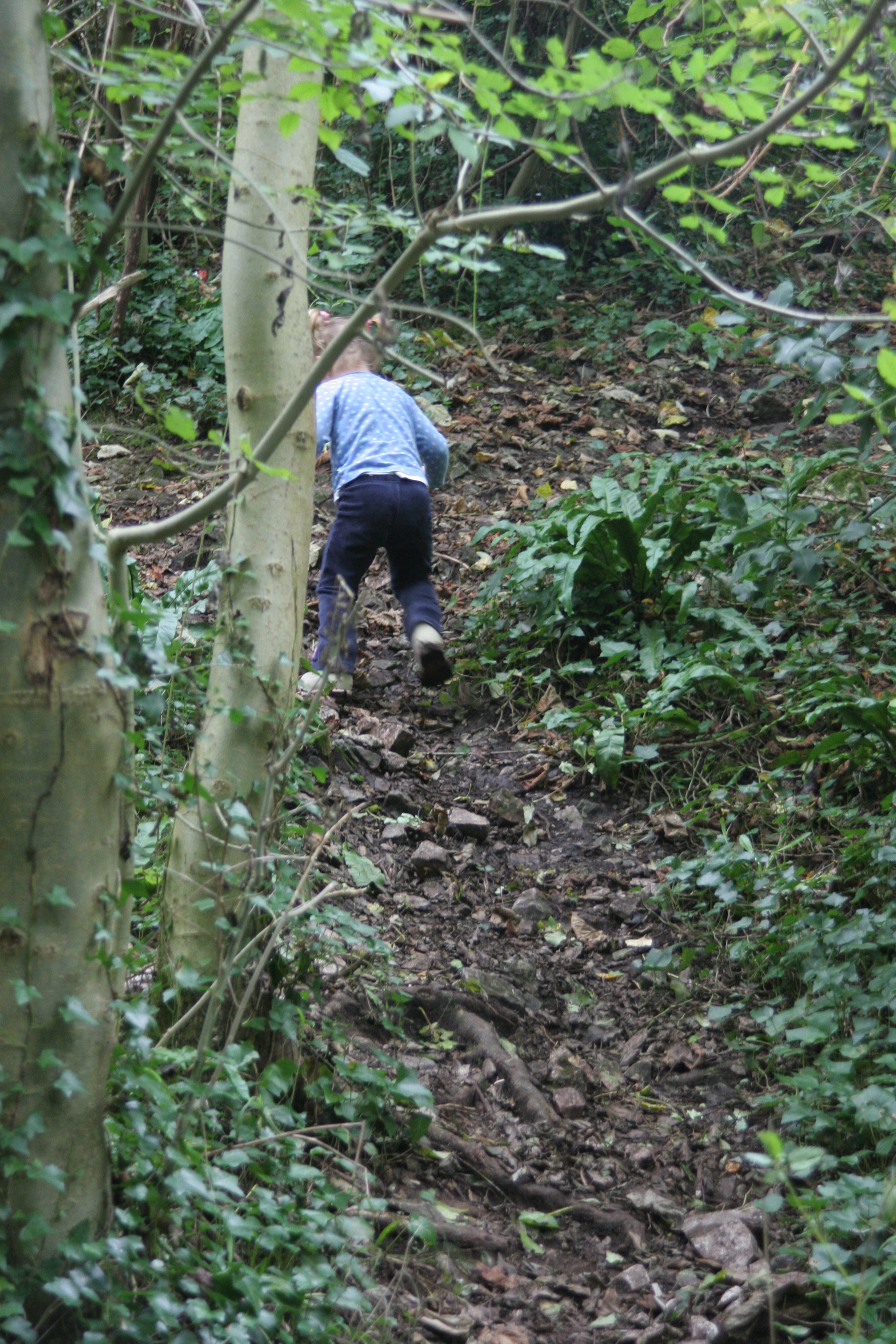
However, even if your nearest wood doesn’t have these added facilities there are lots of simple fun things that you can do with children.  Try not to rush children on to looking at the next thing.  They may want to spend half an hour looking at a clump of moss or sliding down a muddy bank.  If you really want your children to appreciate and explore nature then allow lots of time and move at their pace (however frustrating this might be).

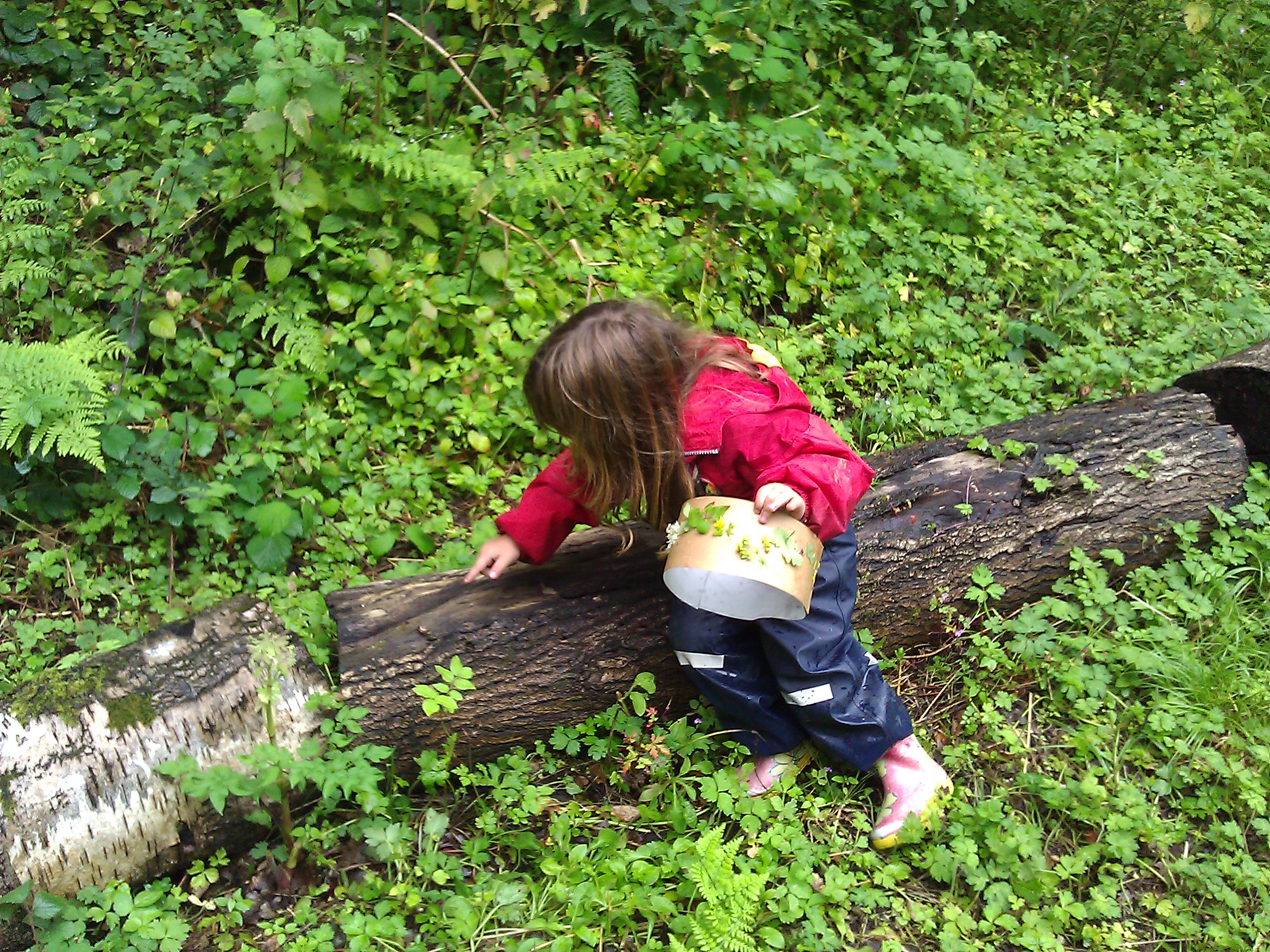
1. Give children a piece of cardboard with double sided sticky tape on and get them to make a hat collecting natural things.  This could be free choice or maybe have a colour theme.  You could ask children to create a pattern eg. large and small things or find specific items to make their hat.

WP_000553

2. Put double sided sticky tape around the top of your child’s wellies and ask them to collect items of interest and stick them to their wellies.

3. Take magnifiers or bug jars and look for creatures. Take photographs so that you can identify them when you get home.

Look Mummy I found a snail

WP_000552

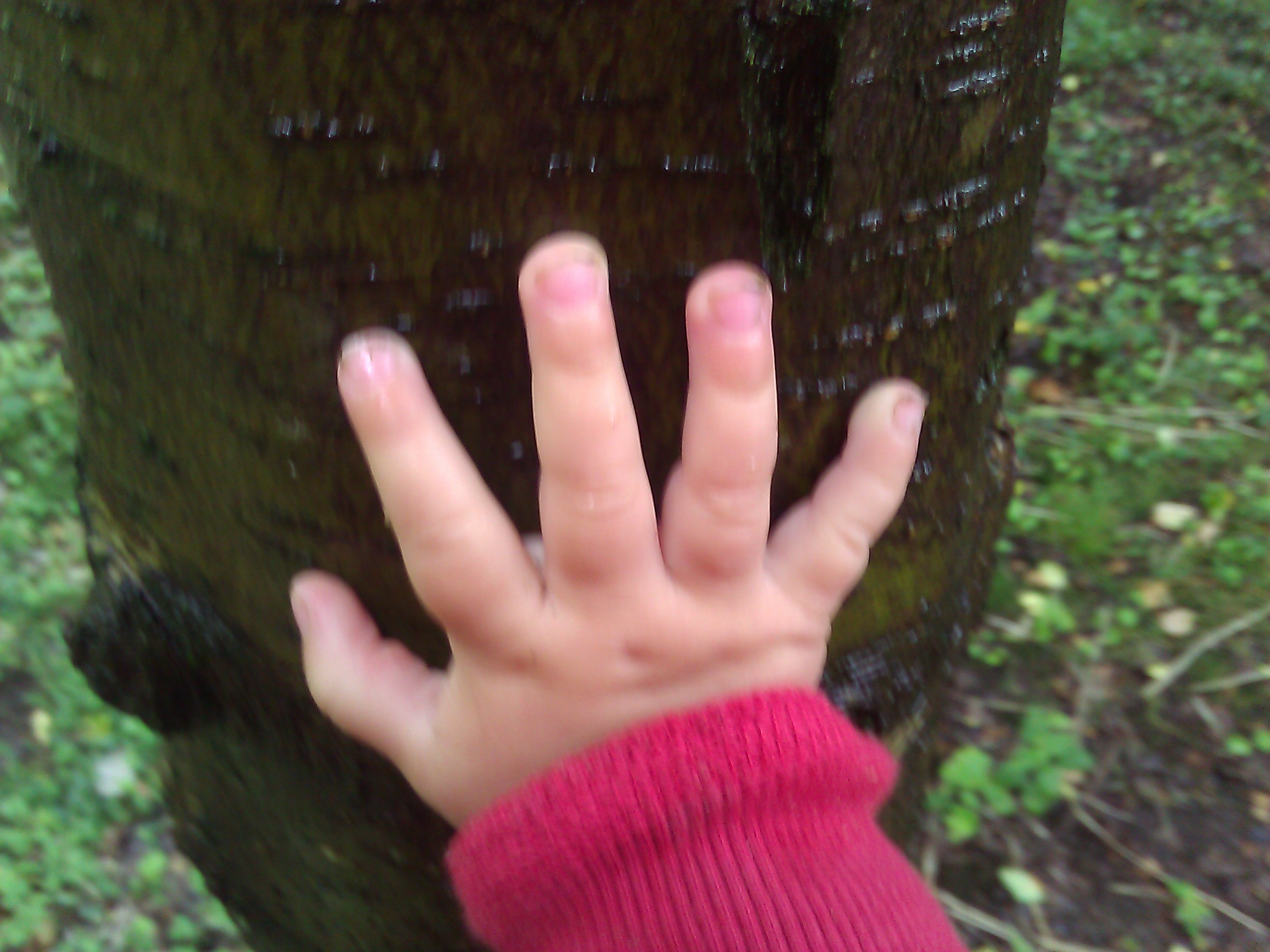
4. Young children will enjoy exploring the textures of things, moss, long grass, tree trunks, mud.  Give children a textural treasure hunt – find things that are soft, smooth, hard, spiky, slimy, cold, warm, rough etc. Make a feely box containing some of the textured things or use a blindfold and ask children to describe what they are touching.

hands on a tree.

5. Give children a piece of string and ask them to find and attach the following items: something natural, something manmade, something colourful, something heavy  and something with an interesting shape.  Hang a line of string between 2 trees and hang the completed pieces from it to make a natural work of art.

6. Build a fire, toast marshmallows on whittled sticks or bake potatoes in the bottom of the fire.

WP_000562

7. Go on a treasure hunt

WP_000568

8. Play in the mud.  Take tools and  to see what you might find or stamp and feel the texture of wet gooey mud. Find a stick and draw or write in the wet mud, or take large sheets of paper and use mud to paint with – use fingers or sticks to apply the mud.

3F16D16F

9. Collect natural materials to make a picture or sculpture .  Make a frame from sticks or stones and ask the children to make a picture inside it using what they have collected. For the youngest children let them arrange leaves into a nest or sticks or stones into a pattern.

Oct 07 045

10. Build a den.  Use sticks and build a den in the style of Eeyore’s house.

You might also want to check out some of these ideas


Finding the alphabet in nature

Fairy houses in the woods

A natural playground

Children Connecting with nature

Mud faces


Monsters and Imaginary Friends

My 2 year old has recently become pre-occupied with monsters, sometimes she is a monster, sometimes there is a monster in the room but she mentions them at least once a day.  I was fairly sure that this was a developmental stage connected with how young children make sense of the world .

She has also started talking about a bat that lives in her bedroom.  There is a small cubby hole in her bedroom where the stairs cut in for our loft conversion – the bat lives in here.   When I questioned her about it further she said that there were 3 bats a baby (with her baby sister’s name) a daddy (with her daddy’s name) and a mummy called Rachel.  There are also 3 ogres that live in the cubby hole with them – they scare away monsters.

This story made me think about the connection between the whole monster obsession and imaginary friends.  When my eldest daughter was around 3 she had an imaginary friend ‘Piglet’ from Winnie the Pooh.  Wherever we went Piglet came with us and usually my daughter would pretend she was Roo and I was Kanga.

By a strange turn of events as I was thinking about these things and trying to find some information about the development of imaginary friends and foes in young children, Penny at Alexander Residence wrote a post about imaginary creatures.

Imaginary companions usually start appearing between the ages of two and a half to three, around the same time as children start to engage in complex fantasy play. This also signals the beginning of abstract thought.  Children are starting to replace physical objects for mental images, for example they can derive comfort from the thought of a teddy bear in addition to the physical object.  Their fears also begin to change from concrete things like dogs or vacuum cleaners to abstract concepts such as monsters. You could help children to have the power to conquer their fears by capitalising on this imagination and asking them to suggest what the monster might be afraid of and making a concrete object to represent it.

In my quest for information about imaginary friends and foes I found an interesting book about children’s imaginations, ‘ The House of Make Believe ‘ by Dorothy G Singer and Jerome L Singer. The book suggests that the key components to fostering creative children are

  • A key person who inspires play and accepts invention with respect and delight
  • a place for play
  • open-ended and unstructured time
  • simple objects to inspire the adventure

The book also discusses their research into imaginary friends.  They found that parents reported that children with imaginary friends were largely happier and more verbal than those children who did not have imaginary friends and that the children were not shy.  Imaginary friends are more prevalent amongst only or first born  children and they can help children to solve dilemmas.  Often they take the form of real characters from television or film in particular super heroes.

Charles Schaefer found that teachers of adolescents reported that their most creative pupils had imaginary friends as young children.  Imaginative children were more likely to have parents who valued imagination, curiosity, adventurousness and creativity.

So if your child has an entourage of imaginary companions don’t despair that they are disturbed or worried about something .  Develop the stories with them and enjoy it for the short period it lasts – I loved this imaginative phase with my first and I’m looking forward to the wonderful tales that my slightly bonkers 2 year old will unravel.

Free or Low Cost Summer Activities for Children

I was recently asked by Netmums to suggest some of my favourite free or low-cost ideas for keeping children entertained in the summer holidays.  Below are a small selection.

Things for Keeping  Active

  •   We particularly like woodland walks where the kids like to disappear into the woods to explore and find things, play hide and seek , build dens or run away from monsters. Blaise castle woods are a big favourite because we can hide in the caves or follow the trail to the castle. My eldest called our local woods  the hundred acre wood and spent hours role playing various Winnie the Pooh scenarios. The Woodland Trust have some great free downloadable resources with ideas for playing in the woods, Summer  activities and free things to do with kids.

Oct 07 034

 Creative Fun
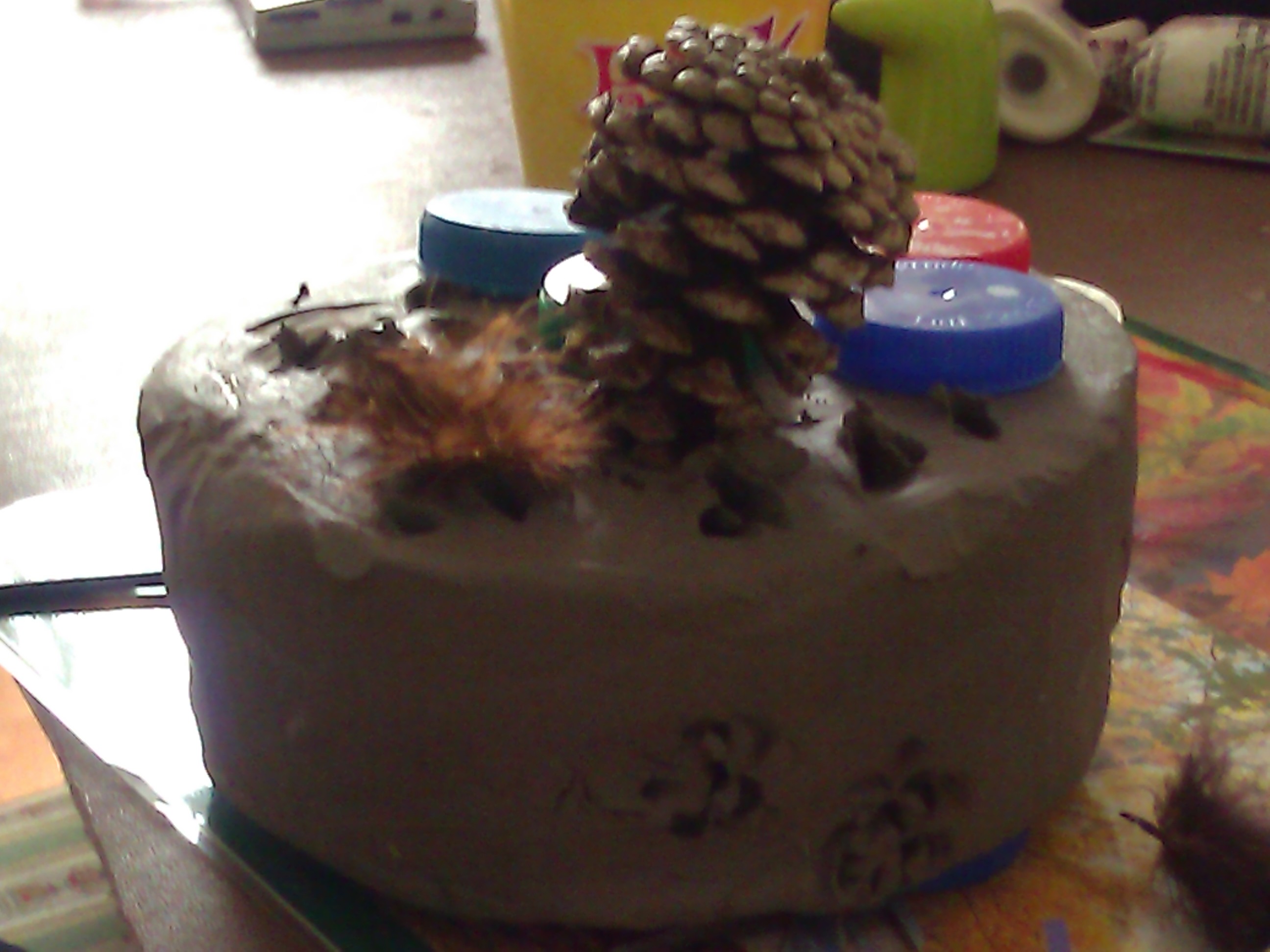
  • Give children a large piece of clay, for the younger children the bigger the better. Make it wet and squidgy and enjoy feeling the texture. Give them things to put in it, we use cocktail sticks, bottle tops, seeds, feathers, pebbles and shells. Older children can be taught to model clay around wire or make a flat tile with a picture on it.

WP_000318

  • The best summer activity I had as a child was with an empty large cardboard box, we slid on it and built things with it and spent the whole 6 weeks playing with nothing else.
  • The best creative play comes from being outdoors with natural materials,  in the woods, park, beach or even in the street. If your kids aren’t old enough or you’re not happy about them playing outside without adult supervision, take a group of children to an open space and sit at a distance from them so that they can develop their own play but you can still see them. My kids love digging, building dens, pretending to fish, making pretend dinner and many other scenarios.

warwick castle & sailing 099

  • Our local town has a flower show and the children love to enter the competitions, it gives them a sense of achievement and pride.
  • Give your kids pieces of material, old sheets, netting or even bin bags and get them to make clothes and have a fashion show – this was my favourite summer holiday game.
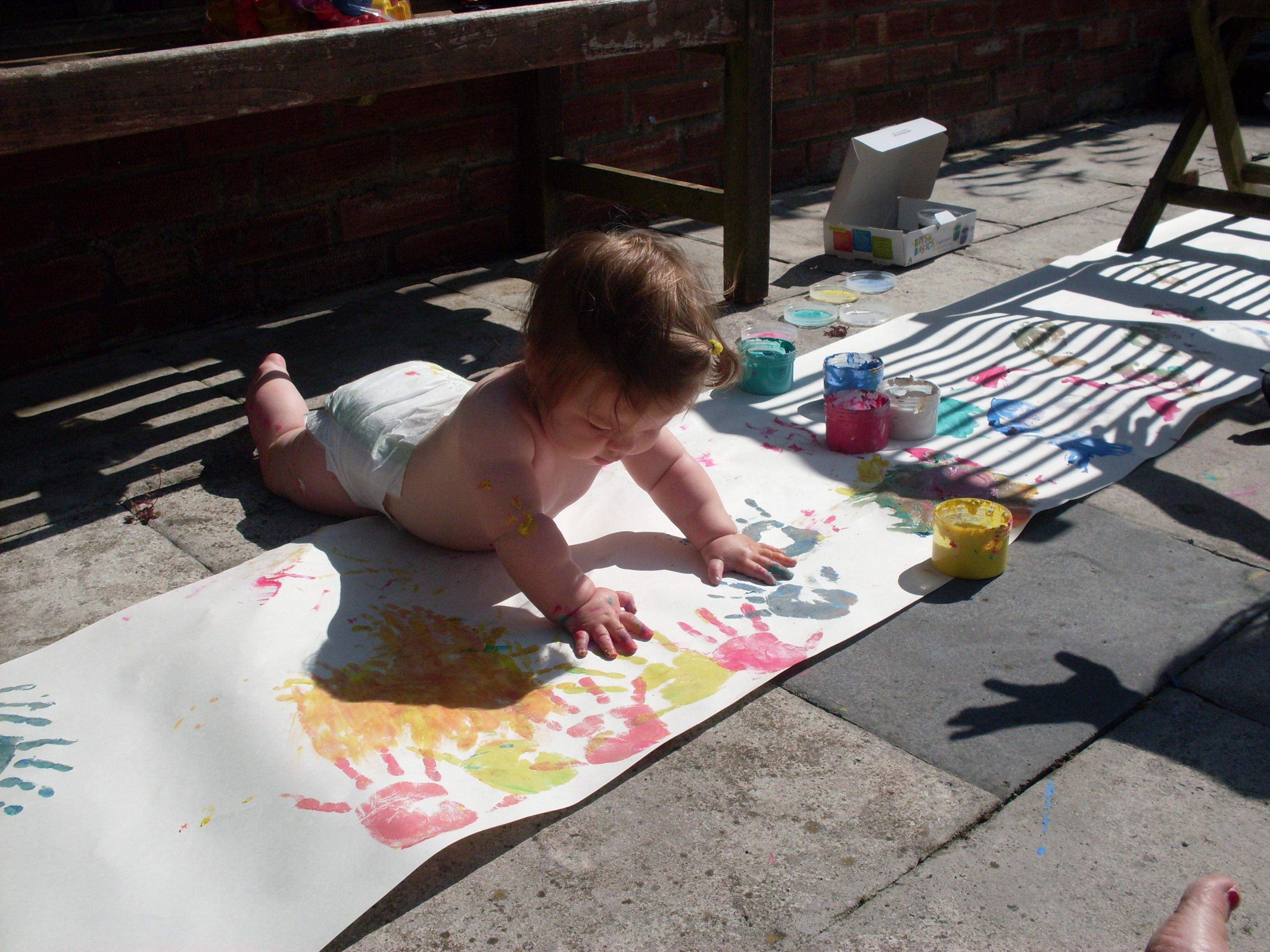
  • When its sunny it great to get a big roll of paper, spread it across the garden and let the kids paint , they can use hands, feet or whole bodies – great for babies too.

belly

Inspiring children
  • Children’s Festivals often give a number of inspirational ideas many are free or low cost.
  • We have been to some brilliant museum exhibitions and as museum entry is usually free it is a great day out. Our local museum has lots of activities for children of all ages to accompany the exhibits.
  • Go blackberry picking , picking your own fruit always leaves us inspired to come back and cook lots of yummy treats. In the US we pick huckleberries at the local park – they make delicious muffins.
 Keep them Laughing
  • Local councils often provide fun/play days in local parks, ours involve entertainment, games, activities and crafts – the children have lots of laughs.
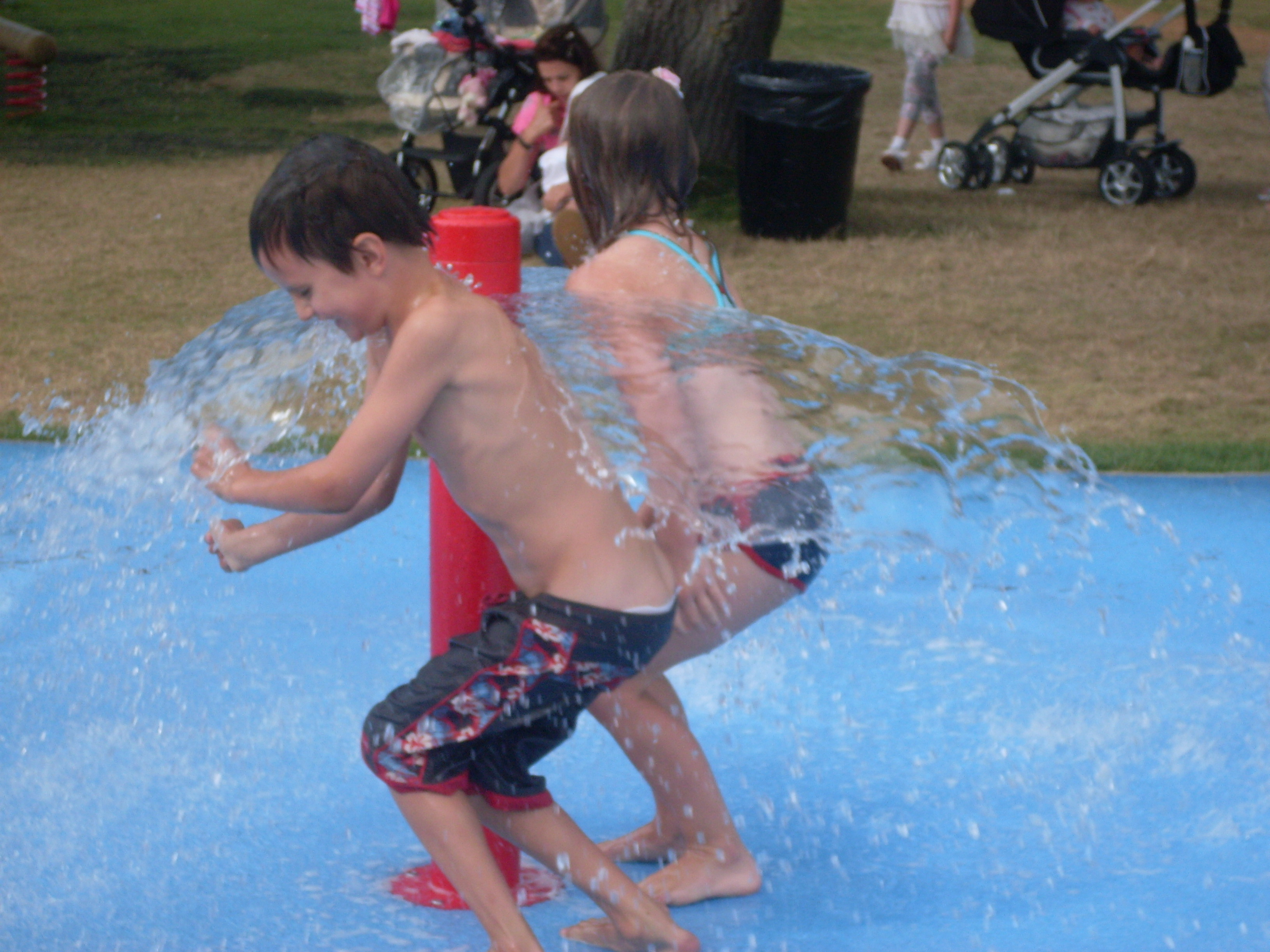
  • Get Wet – be it in a  water park, paddling pool, swimming, with a hose pipe, playing with water bombs or splashing in puddles in the rain – have a water fight and you can’t help but laugh. Weston Super Mare has a fantastic water park opposite the sea front and splash parks are really common in the US. Check out these Seattle Splash Parks.

022
I think sometimes we plan too much for kids, give them some freedom to make their own play, give them the chance to be with their friends and they will come up with some great ideas of their own.

Lauren Child

sdc10336

I was going to write a very different post but have decided that on reading an email with a link to the new Lauren Child website, that it needed to be shared.

I am a huge fan of Lauren Child, I think she is a creative genius.  All of her books give me a warm fuzzy feeling, from the witty text to the colourful illustrations – and the children love them too. If I have as much talent in my little toe as she has, I will be happy.

sdc10323

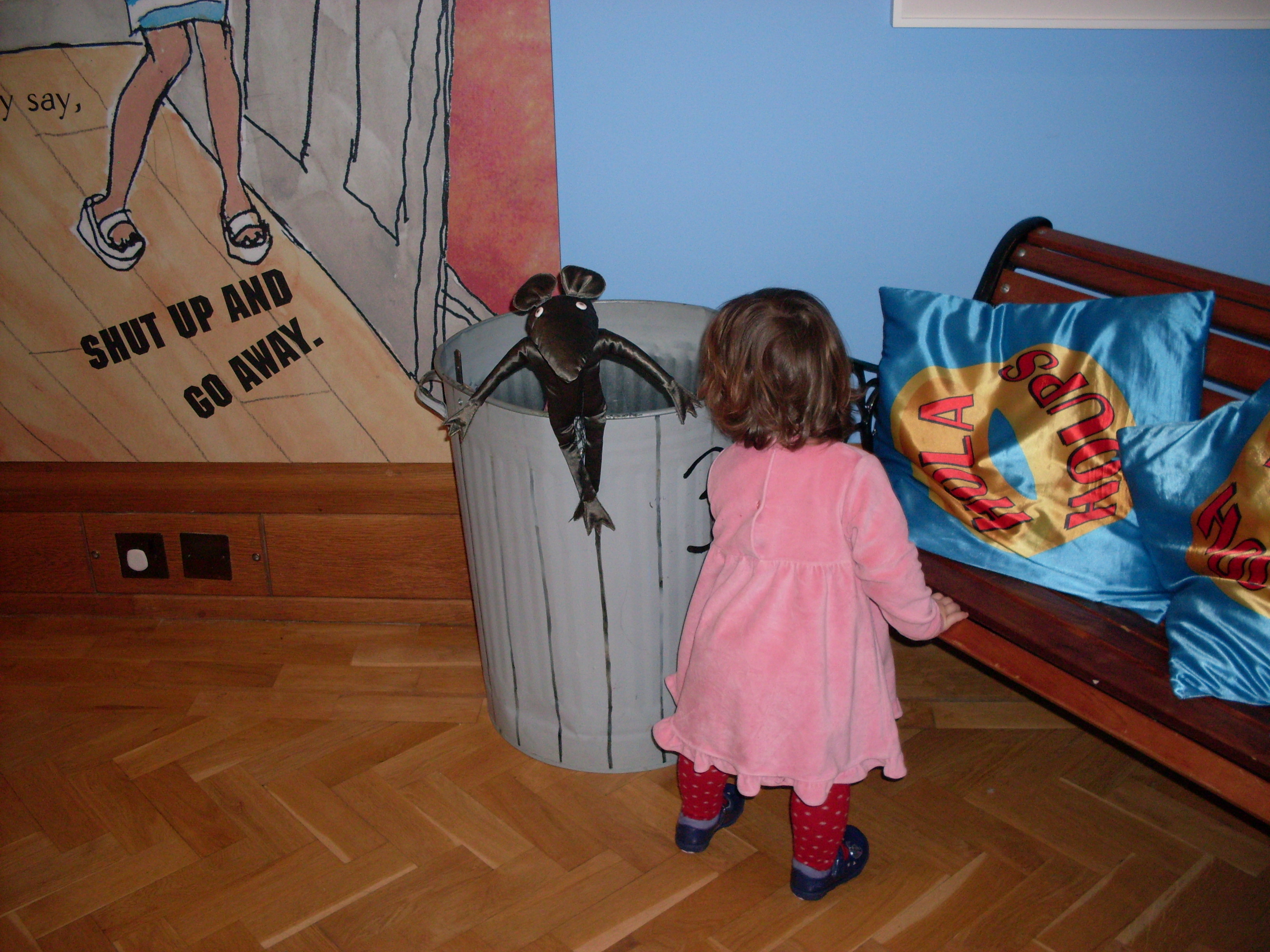
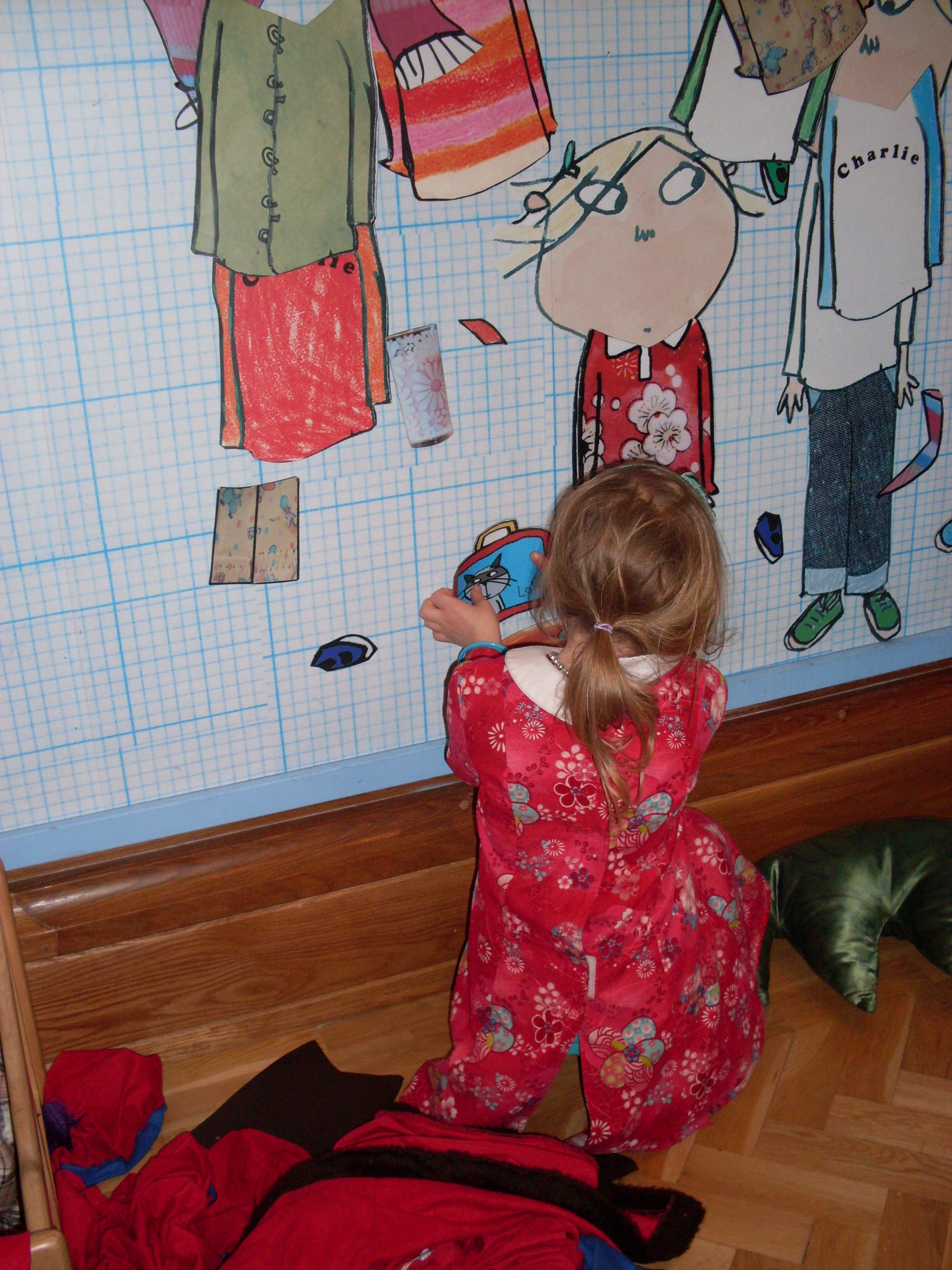
A while ago I took 3 children to the Lauren Child exhibition at Cardiff Museum.  I was awestruck.  The children had an amazing time playing in Charlie and Lola’s kitchen  and dressing up in their clothes.  They read books and played with puppets, even the one year old had a great time.

sdc10314

For those of you who are aspiring writers Lauren Child’s website offers useful advice on writing for children and the Frequently Asked Questions  give  some great insights into her writing.

My eldest loves the Clarice Bean series, reading the books over and over. She loved them so much she wrote to Lauren and was very excited to receive a reply. One more reason to love her.

If you haven’t read any of her books, please do, I promise you won’t be disappointed

My Grown Up Weekend part 3 – Festival of Education Bob Geldof

Besides the fabulous weather and the chance to chill out in the sunshine in beautiful surroundings, the highlight of the festival was Bob Geldof’s Speech.

He was relaxed, engaging, funny and above all passionate. He used a rich intelligent vocabulary, peppered with a few swear words and held the audience in the palm of his hand.  The speech began with recollections of his own experience of education which he described as ‘ a horror’. The 2 saving graces were radio and poetry.  Radio helped him to see other possibilities – the possibility of change.

He talked of a key message that he had learned from Africa

Only the educated are free.

Inequality is a signature feature of today’s society and in an asymmetric world instability is inherent.  42 million children went to school for the first time as a result of the G8 cancelling national debt, these children have an entrepreneurial spirit far greater than children in our own culture. Similarly in China 400 million  people have been pulled out of poverty enabling them to become world market leaders. In the UK education has become a given right and therefore children derive little inspiration from it – perhaps then it is time for a shift in the purpose of education.

Bob Geldof talked of the role of education in this country.  He described values as shaping our future.  Britain is the most tolerant of all countries and we will only keep to that through education.  The cliché is that children are our future, but how do they become our future? The UK is full of creativity, it has fostered many creative geniuses from musicians to poets and the creative arts was the 6th greatest industry in this country for many years.  Of course creativity is not only about the arts but also about creating new technologies and inventions and recognising genius early on.  He encourages the importance of spreading these values throughout the world ‘or black darkness faces us’.

Boldness has genius, power and magic in it

The talk ended with a story of a time in the Congo when he rested from the heat and was fanning himself under a tree.  A Bicycle came by and rang a bell and a multitude of people came from their huts clutching laptops and plugged in to download email.  The world’s ideas will change as a consequence of such people.

all progress depends on the unreasonable man – George Bernard Shaw.

In my opinion the most important skills we can teach children is to ask questions, think for themselves and believe that they can make a difference.  Bob Geldof was so passionate and articulate about what he believes in, that you can clearly see why he has been able to make a difference and will continue to do so.

If you ever get a chance to see/hear him speak don’t hesitate his talk was truly enthralling.

My Grown Up Weekend part 2 – Festival of Education : Technology and Education

As regular readers will be aware I am very interested in the use of new technology in early years classrooms.  I was pleased to see therefore that the Festival of Education at Wellington College Crowthorne had a number of sessions relating to education and technology.  As usual at these events most of the content was aimed at working with older children but I found a number of ideas/materials that could be adapted for use with younger children.

Jan Webb  from Microsoft gave an interesting talk outlining many of the free resources available to teachers and the ways in which she had used them in the classroom.  Many of the resources were used to link up with schools in other countries to add another dimension to project based learning.  This could be used really successfully in an early years classroom, using video chat to talk about and demonstrate concepts such as snow to young children who may not have seen it before.

Jan explained that the Partners in Learning Network provides free downloadable software for use in the classroom.  I got up and showed off my singing talents to demonstrate Songsmith – for creating music (ok it was only Happy Birthday).

Shireland  Collegiate academy demonstrated  their learning gateway .  Though this is a secondary school and would be used very differently in an early years setting, I saw merits in the way that staff could share planning and assessments, as a means of getting parents involved in their children’s learning and making learning visible to them.

There was an interesting discussion at the end of the day about what we could teach the Facebook generation.  There were some interesting points regarding worries about the ever growing use of technology and social media.  On the positive side was the idea that worries about technology are similar  to worries about the novel in the eighteenth century and that whatever children are interested in will become the dubious thing.  I think that is an interesting view and that we should be using children’s interests to stimulate meaningful learning , rather than threatening to ban things. Another point made was that in this generation the most important skill we can teach children is to take charge of their own destiny. Some felt that this generation were in danger of losing social skills and that technology should be limited to allow children to spend time reading.  A straw poll was taken as to the preference between physical books and reading them electronically.  Personally for me I would much rather have a kindle with hundreds of books in one place than have to find or carry real books.  I suppose there is still some sentimentality about having books on a shelf, but is that because they are precious or because we want to show others what we have read?

I have many links and inspirational practice to look up as a follow up to the festival, these will appear on the blog in due course.