Category Archives: Life in the US

Mount Ranier National Park and The Santa Express

I love the Winter holidays here.  There are long bank holidays on festivals we either don’t celebrate or have a quiet time at home because there are no family visits to pack in.  This gives us a lot of time to explore the area. The weather isn’t warm but there is so much to see and do here that looks beautiful in any weather.

For Thanksgiving weekend we took the family on a trip to Mount Ranier National Park and for a ride on Mount Ranier Scenic Railway ‘s Santa Express.

We entered the park at Longmire rather than the larger entrance at Paradise.  At Longmire there is a restaurant, a small gift shop and a museum (this wasn’t open).

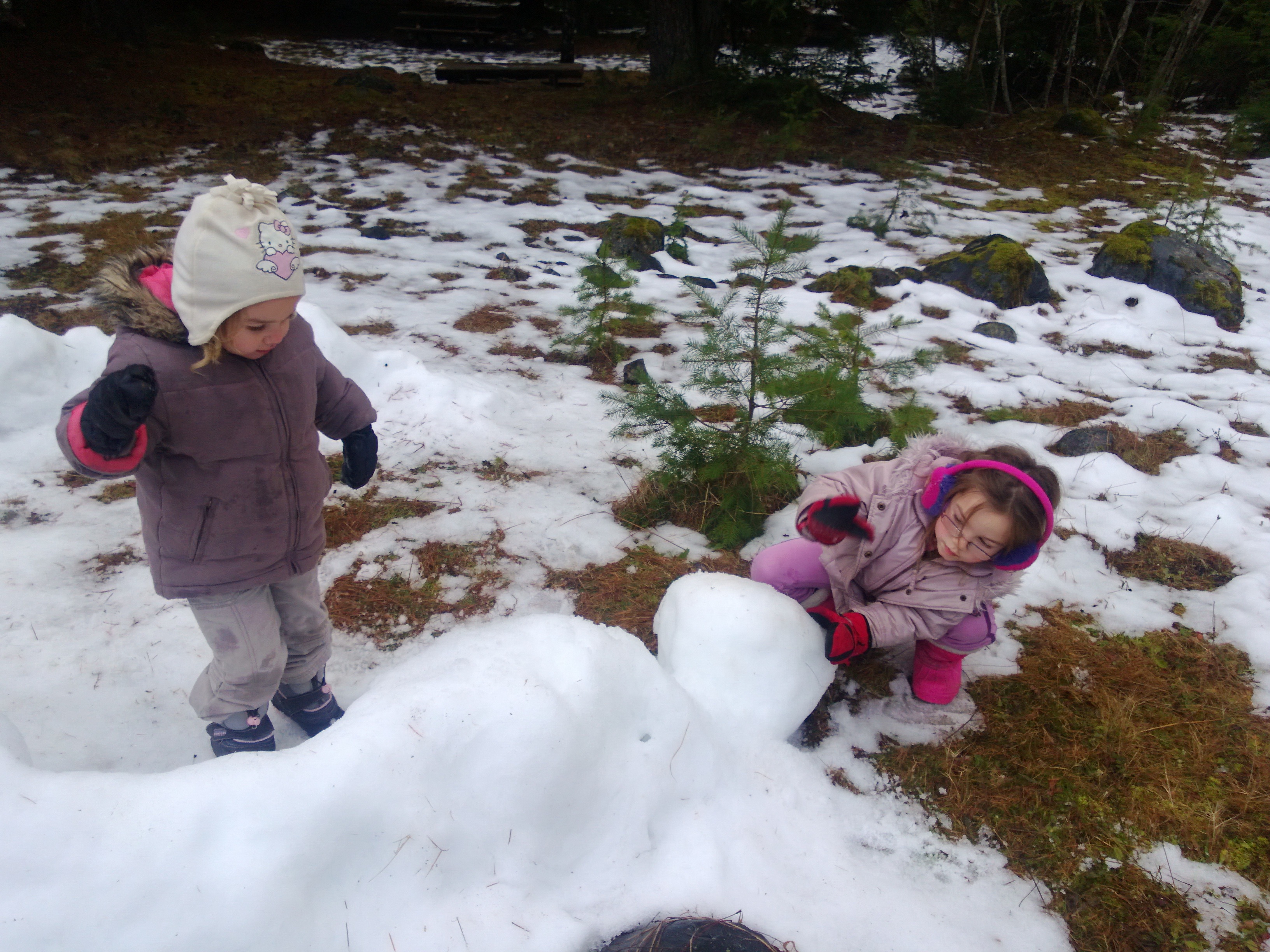
The girls were very excited to find snow, every few feet my youngest would stoop down to pick it up.

Snow at mount ranier National Park

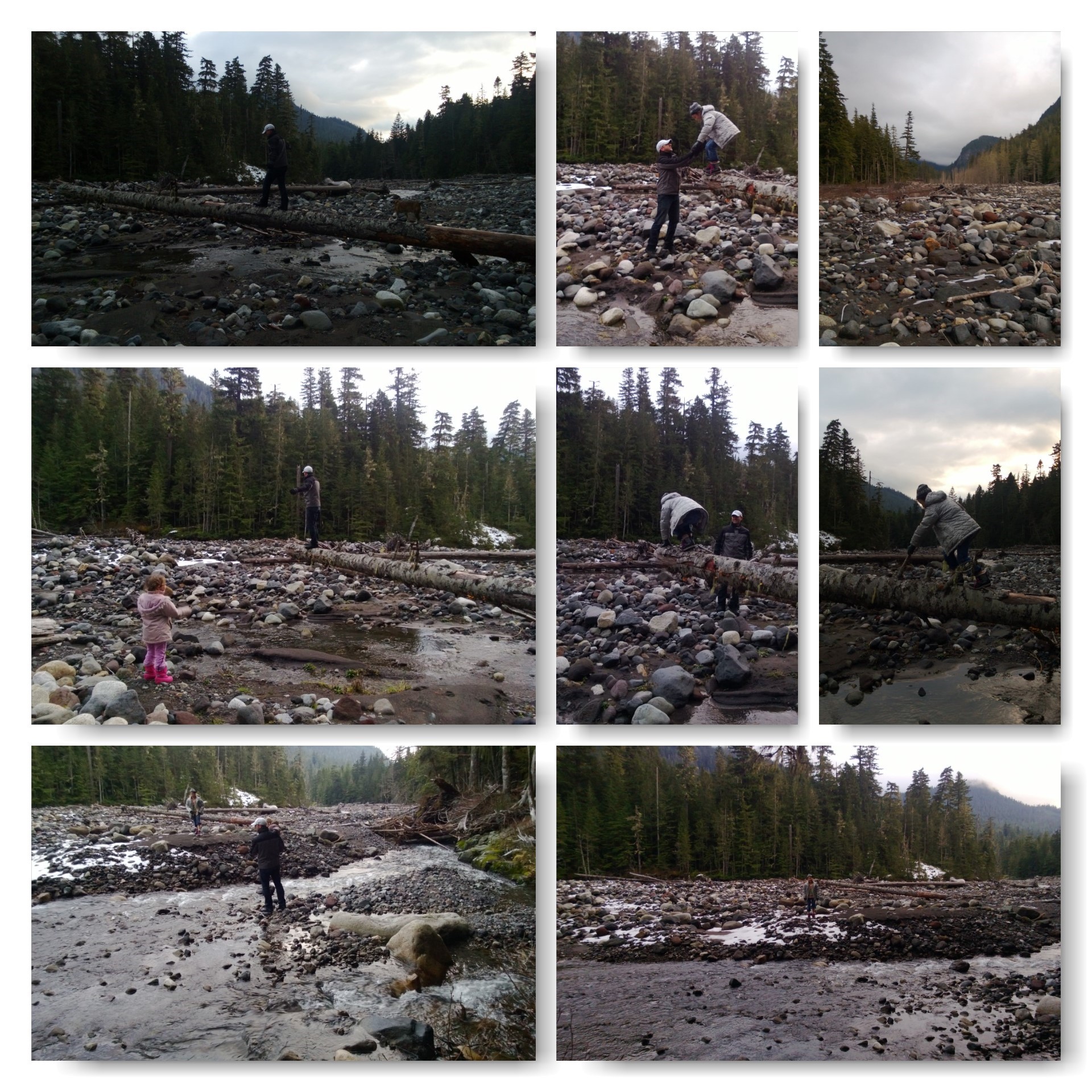
We then went for a short walk along the trail. My adventurous family hate to stick to the path, so soon we came across a river and we slid down the bank to see if we could get across.

My husband carried the little ones across but it wasn’t long before they were wading through the water themselves, just about managing to keep their clothes dry, even if their feet got a little wet. What a beautiful place it was, the wide expanse is so different from anything you get in the UK.  My husband (followed by the dog) soon practised his balancing act on a tree stump closely followed by my eldest.

mount ranier

The twilight was drawing in so we made our way back across to the path.  We walked back to the car holding hands as we felt it getting darker around us.  The girls were a little scared and a little excited to walk while it was getting dark but were reassured by the road nearby with its comforting lights.

The boots and socks were dried out overnight and we headed to Elbe for our train ride.  We gathered a few provisions in the local store.  I loved the sign explaining the demographics of Elbe  ‘population – not many’.

We soon saw the train arriving.

IMG_1354Mount Ranier Scenic Railway

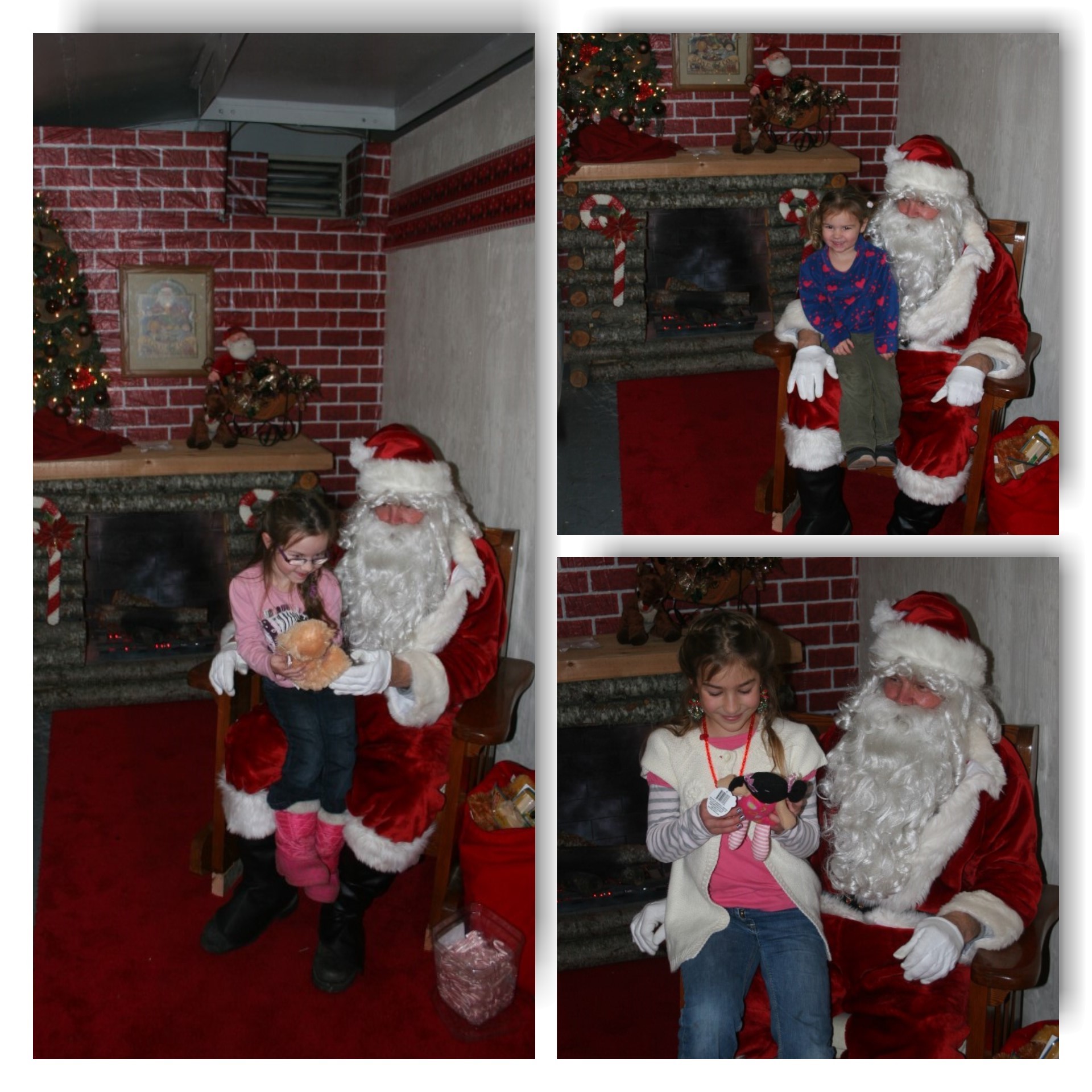
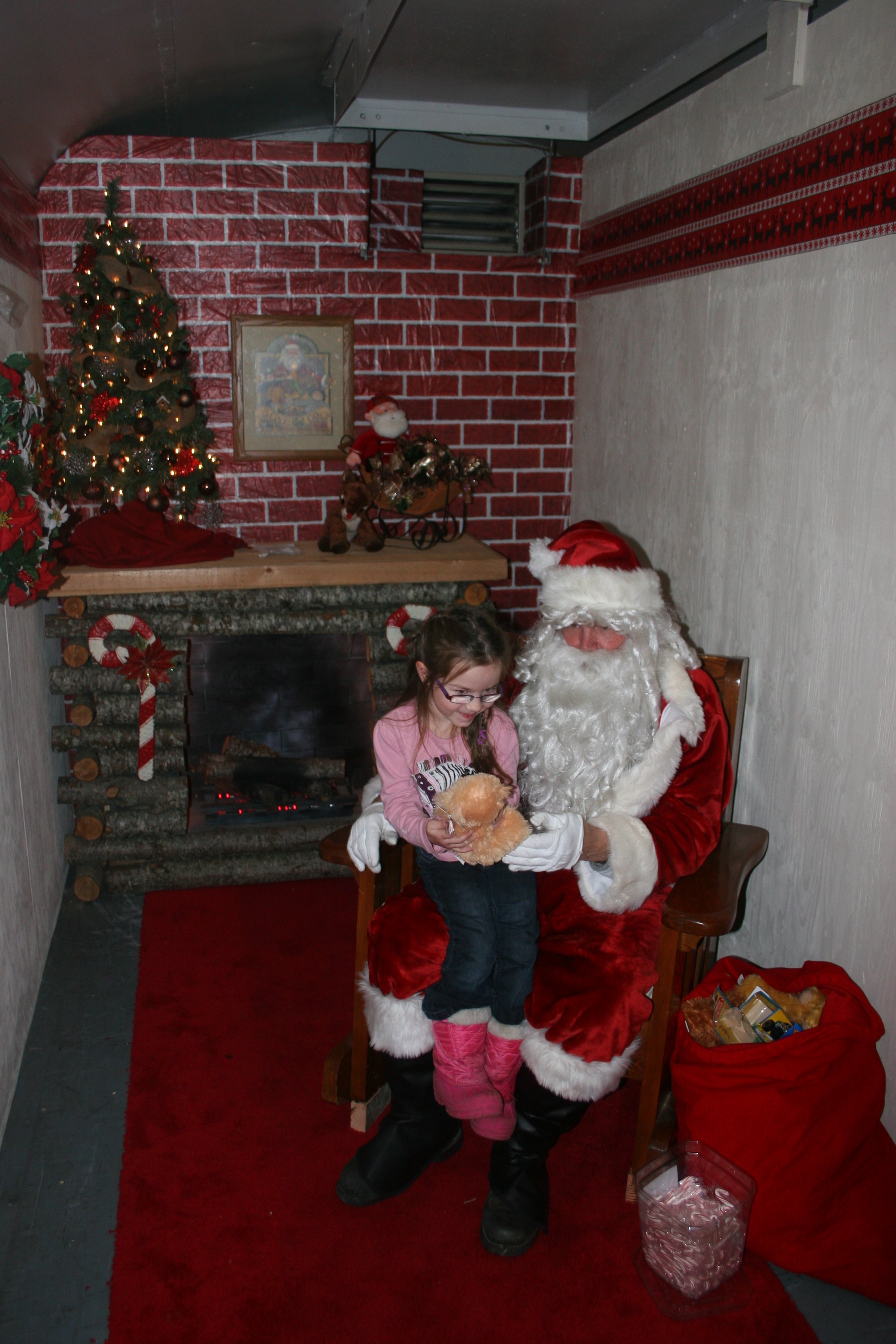
Once the train departed the guard informed us that we could see Santa, we made our way through the many carriages trying hard not to fall and passing the many Christmas trees. Santa was in his grotto and the girls each had a nice gift and a candy cane.

santa collage

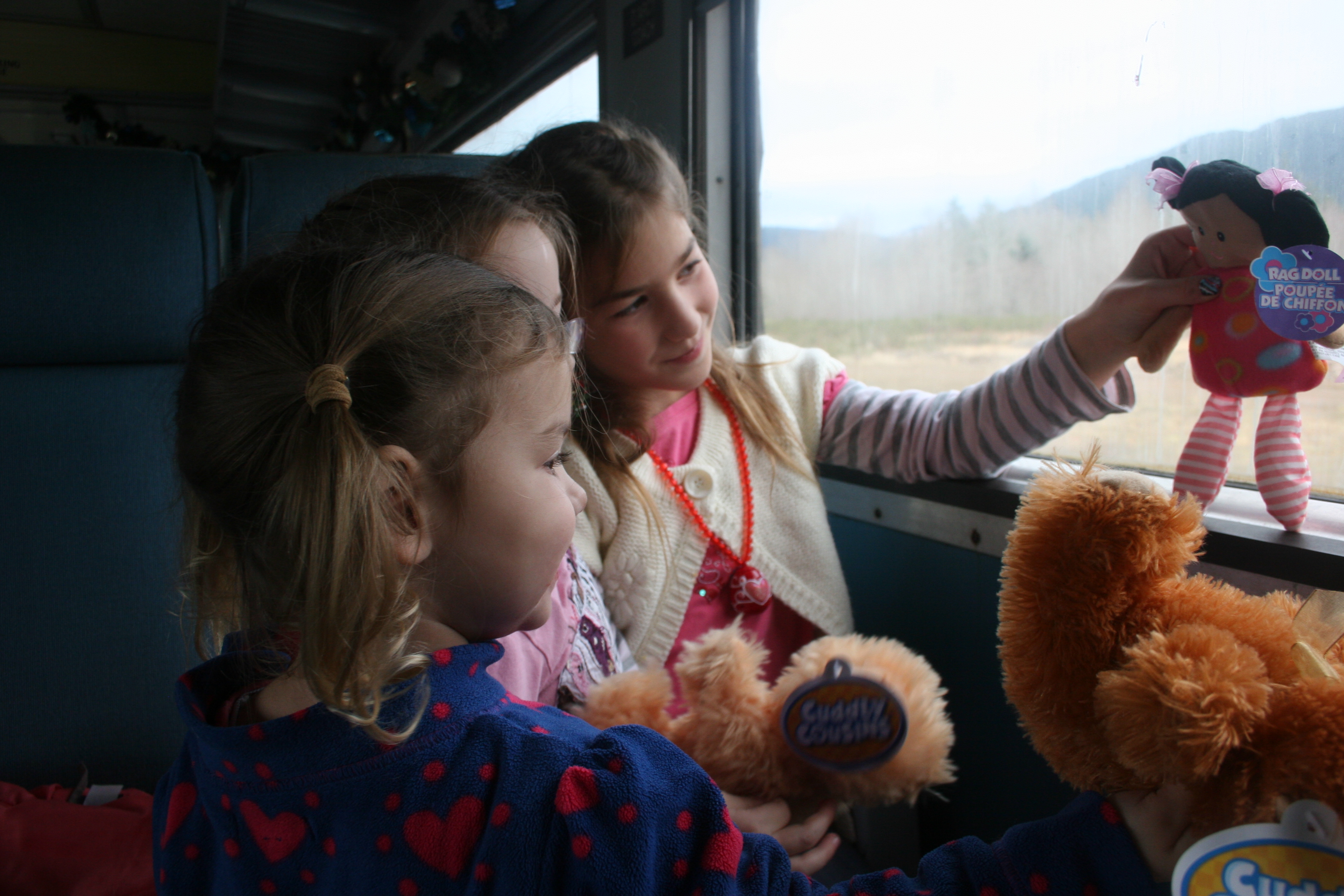
By the time we arrived back from Santa we had almost reached the mid-point of the journey. I have to admit I was a little disappointed by the views. I expected stunning mountain views but instead we saw forest, farms and rivers. The girls watched out for wildlife whilst playing with their new toys.
mount ranier scenic railway

The train ride lasted around 2 hours which seemed to pass very quickly. A lovely start to our Christmas festivities. I’m looking forward to seeing more of Mount Ranier when the weather is warmer.

Country Kids from Coombe Mill Family Farm Holidays Cornwall

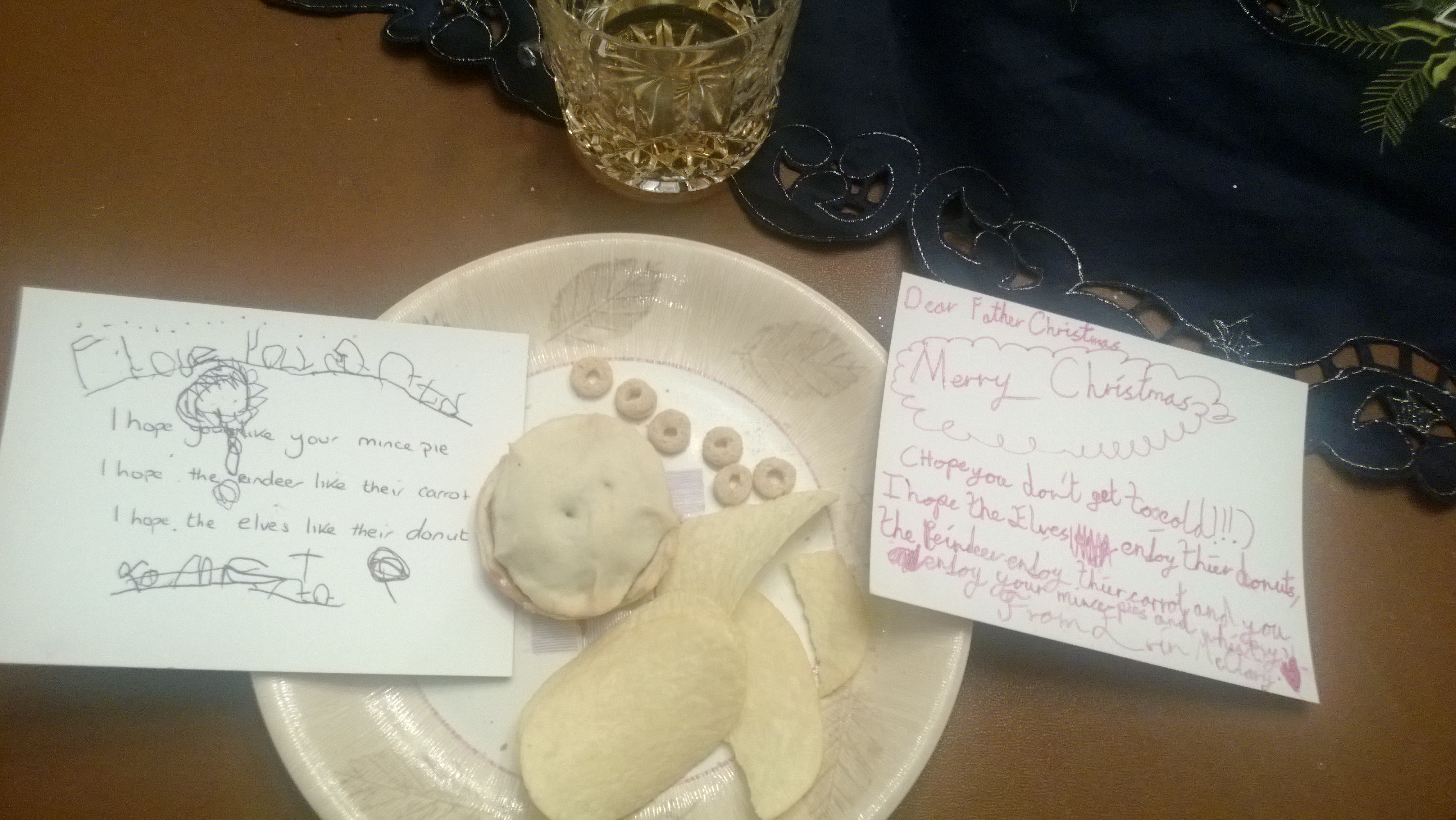
Dear Santa – A Letter from a British Expat

IMG_1344Dear Santa

I don’t usually ask for much, there isn’t a lot that I need or want so my list is very small.

I’ve just used my last drop of blackcurrant squash.  While you are delivering presents to my lovely friends in the UK, do you think you could pop in to Tesco and grab me some to drop in my stocking?

Oh and while you’re at it a bottle (or 2) of Zubrovka vodka, a nice box of Waitrose mince pies, some After Eight mints and I think I’m nearly out of instant custard powder.

I’m sure somewhere in your sack you have a spare one of those giant tubes of fruit pastilles too.

Let me know what you would like me to leave for you in return.

Yours hopefully

Rachel mince pie

Thanksgiving – A Festival to Say Thank You for Turkeys?

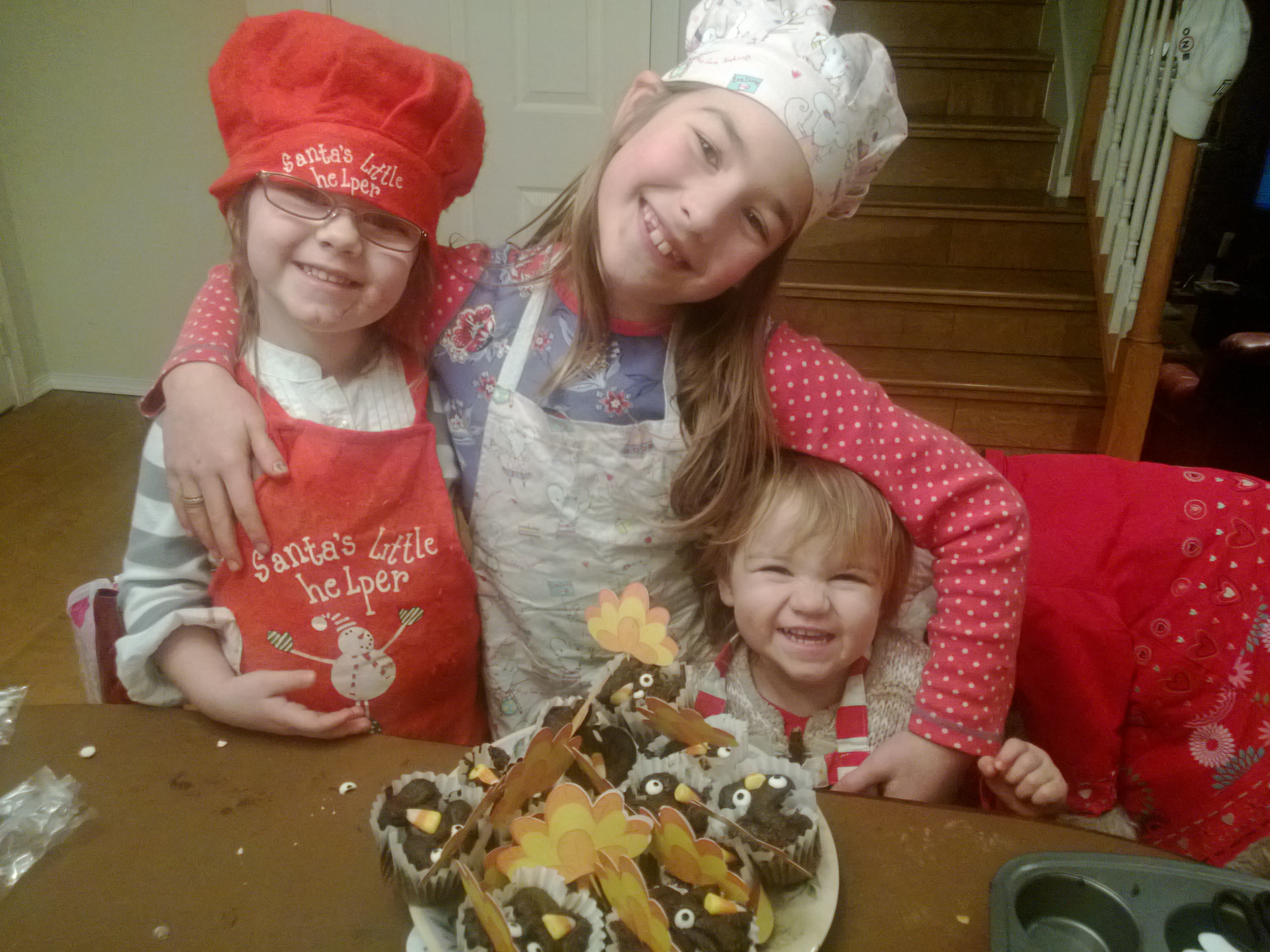
turkey cakesAs an outsider ‘Thanksgiving’ is a bit of a mystery.  My basic understanding is that is a time to say thank you, get together with family and eat a big turkey meal and is associated with harvest festival.

However, as a young child you might be forgiven for believing that it is a celebration of turkeys.  Whilst browsing Pinterest a few weeks ago, I was overwhelmed by the amount of turkey crafts. There were a few posts about ‘trees of thanks’ but every other Thanksgiving activity included turkeys. I asked my 9-year-old

You’ve learned about Thanksgiving at school. What do turkeys have to do with Thanksgiving?

I have no idea.

Did they eat turkey at the first Thanksgiving?

I think so.

I know that turkey is eaten at Thanksgiving but then we eat turkey at Christmas and we would think it a little weird if everyone started making turkey crafts for Christmas.

I did a bit if searching on the internet.  The origins of Thanksgiving come from the arrival of the pilgrim fathers to America from Plymouth, England.  The journey across the ocean on the Mayflower was dangerous and many lives were lost.  Coinciding with the European Harvest Festival the pilgrims decided to hold a feast to thank God for their safe arrival and invited the native Americans to join them.  It is suggested that 4 turkeys (a native American bird) were killed for the feast (though it is likely they ate many other local fowl, game and seafood too).  The turkey came to be known as a symbol of affluence (even in Victorian times only the very richest Europeans could afford to eat turkey at Christmas) . I assume therefore, that the turkey at thanksgiving symbolises a way expressing thanks for prosperity.

I was interested to find out if my-5-year old knew what Thanksgiving was.

I know what it is. It’s when we give lots of stuff.

She remembers her friend across the road bringing her pretzels last year.

Why do we give stuff?

To say Thank You

I wondered if she knew anything about the first Thanksgiving.  I told them about the first settlers here from Europe.

How do you think they got here?

On a boat.

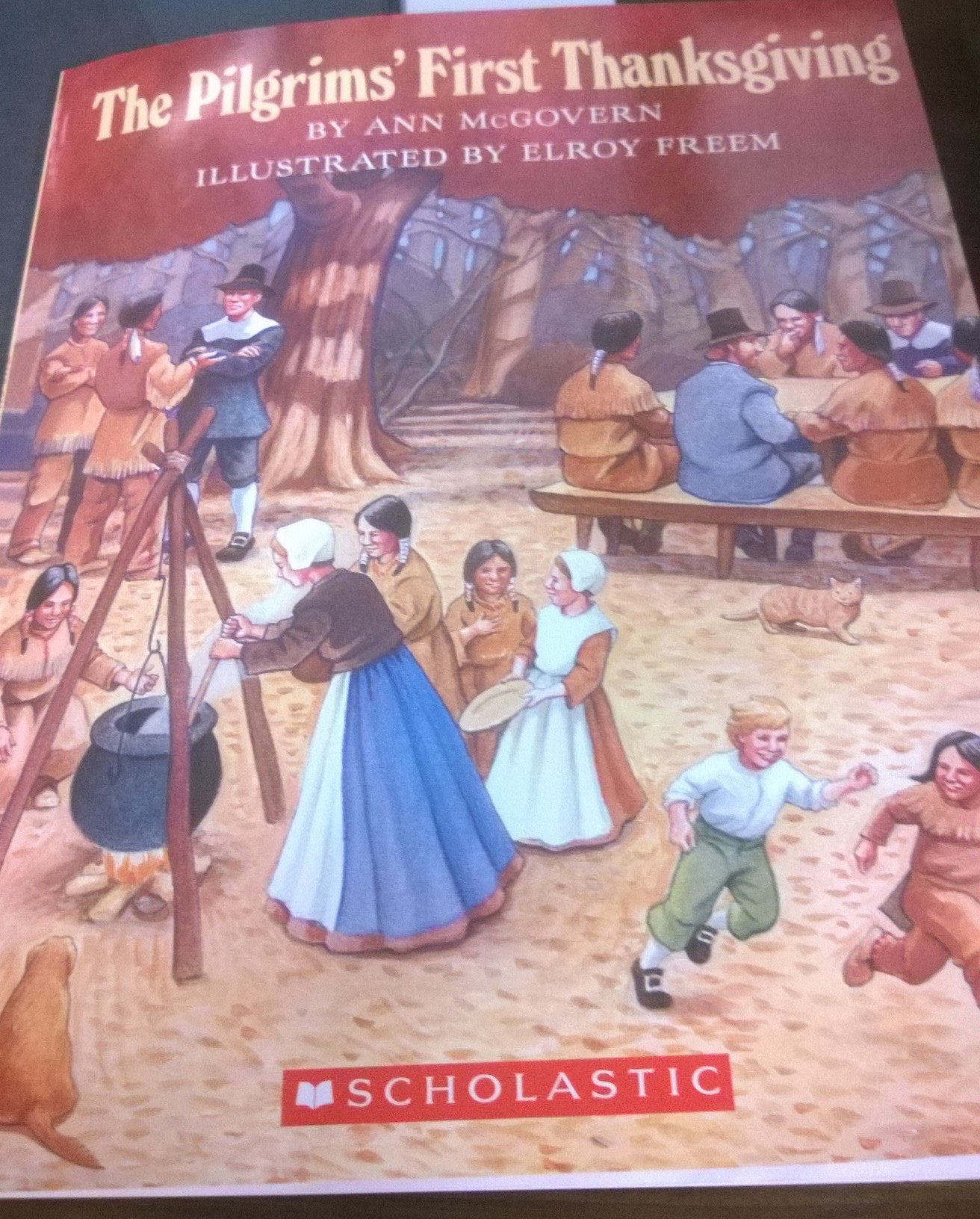
I think it would make a lot of sense to help their understanding of Thanksgiving if they could understand how difficult it is to travel on a boat without an engine for thousands of miles across the ocean.  I  looked for a book from the Library to help explain. None of them seemed quite right until we found this one, a simple description of the pilgrims journey from the point of view of the children.

The Pilgrims first tahnksgiving

I decided to take the idea to a free build play session where we began by reading the book.

The children were very interested in the fact that the pilgrims could only eat certain foods on the boat like hard biscuits.

But I like hard biscuits” said one child.

“Yes but not if you ate them all the time.”

How did they manage the journey without getting scurvy?” asked another.

“A good question, many of them didn’t”

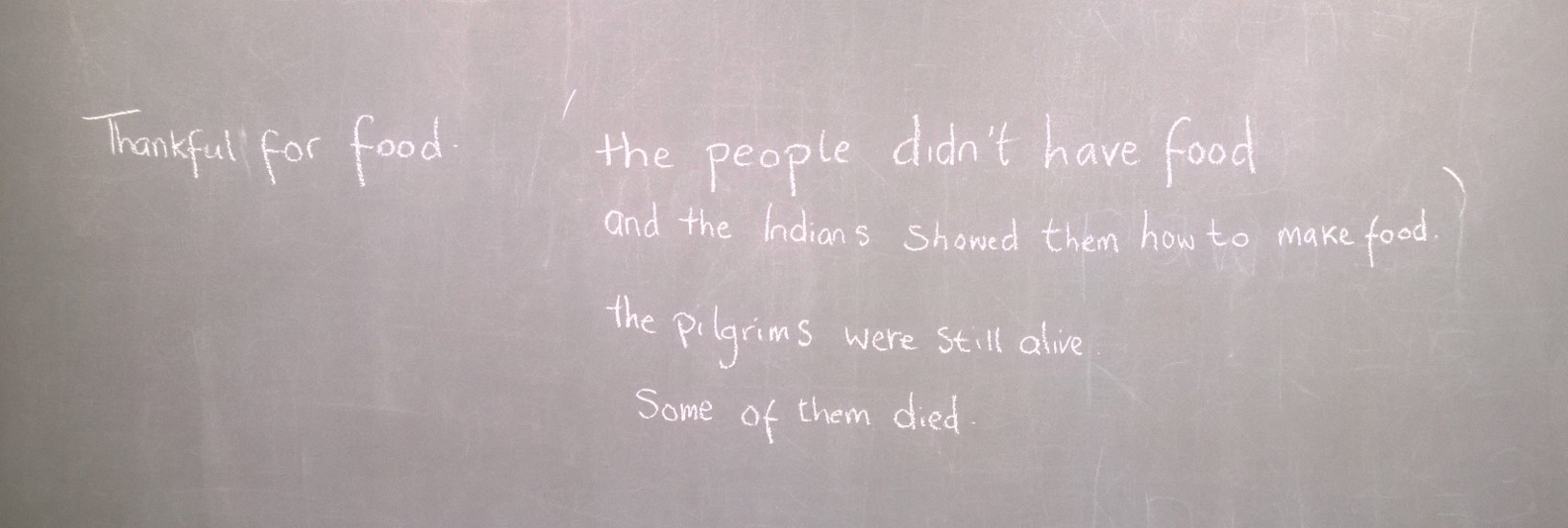
We brainstormed some of the reasons the pilgrims celebrated the first Thanksgiving

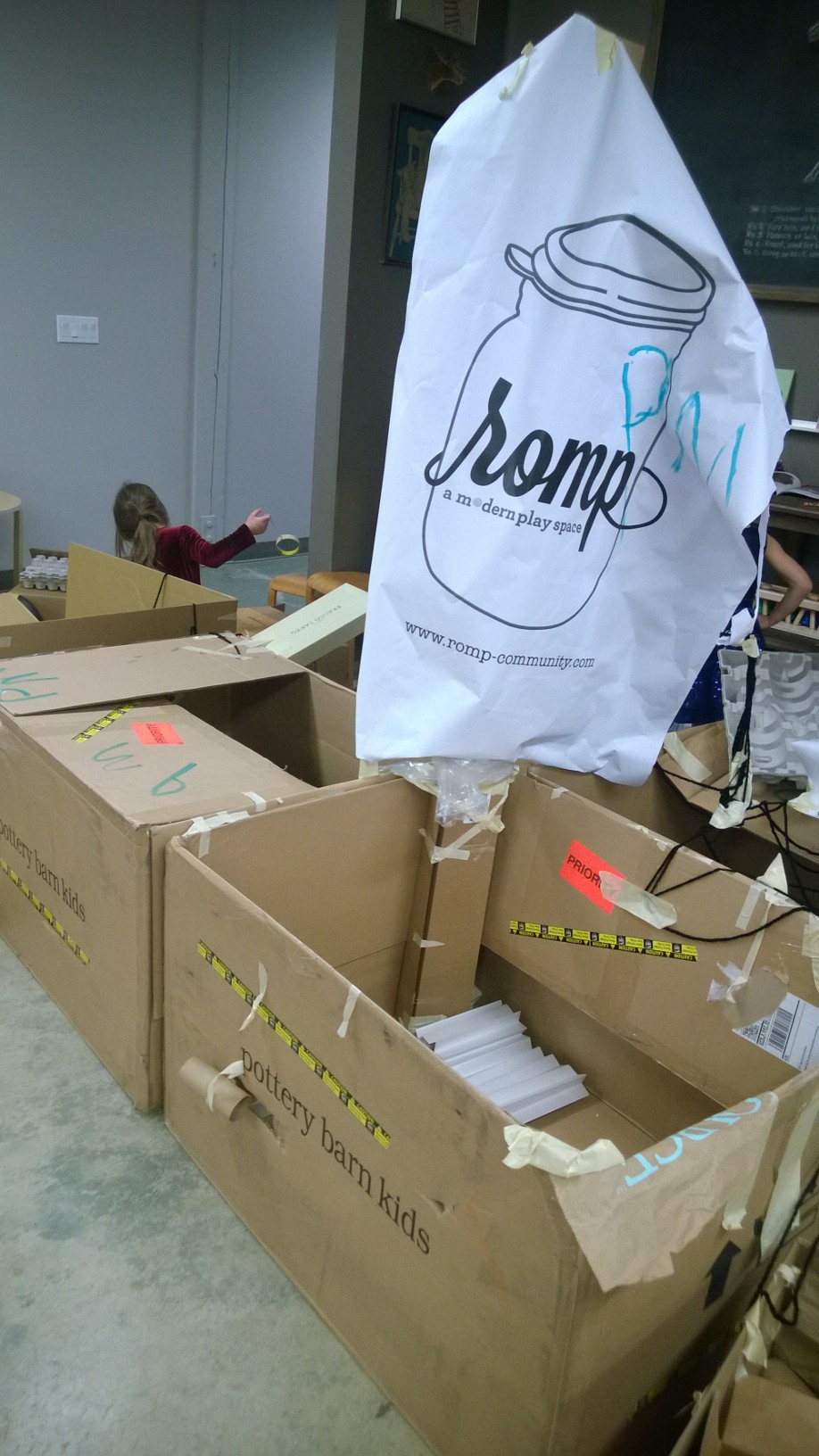
why did the pilgrims celebrate thanksgiving.A parent had donated large cardboard boxes for us to make a replica of the Mayflower. Fourteen children worked collaboratively to build the boat.  They added a mast and sail, lifeboats, steering, roof, a plank and loaded the boat up with food from the play kitchen.

model of the mayflower

It has been left up for the children to continue to play with and develop their own stories.

I think that makes more sense than making a turkey out of a pine cone.

Home Preschooling – Doing it My Way

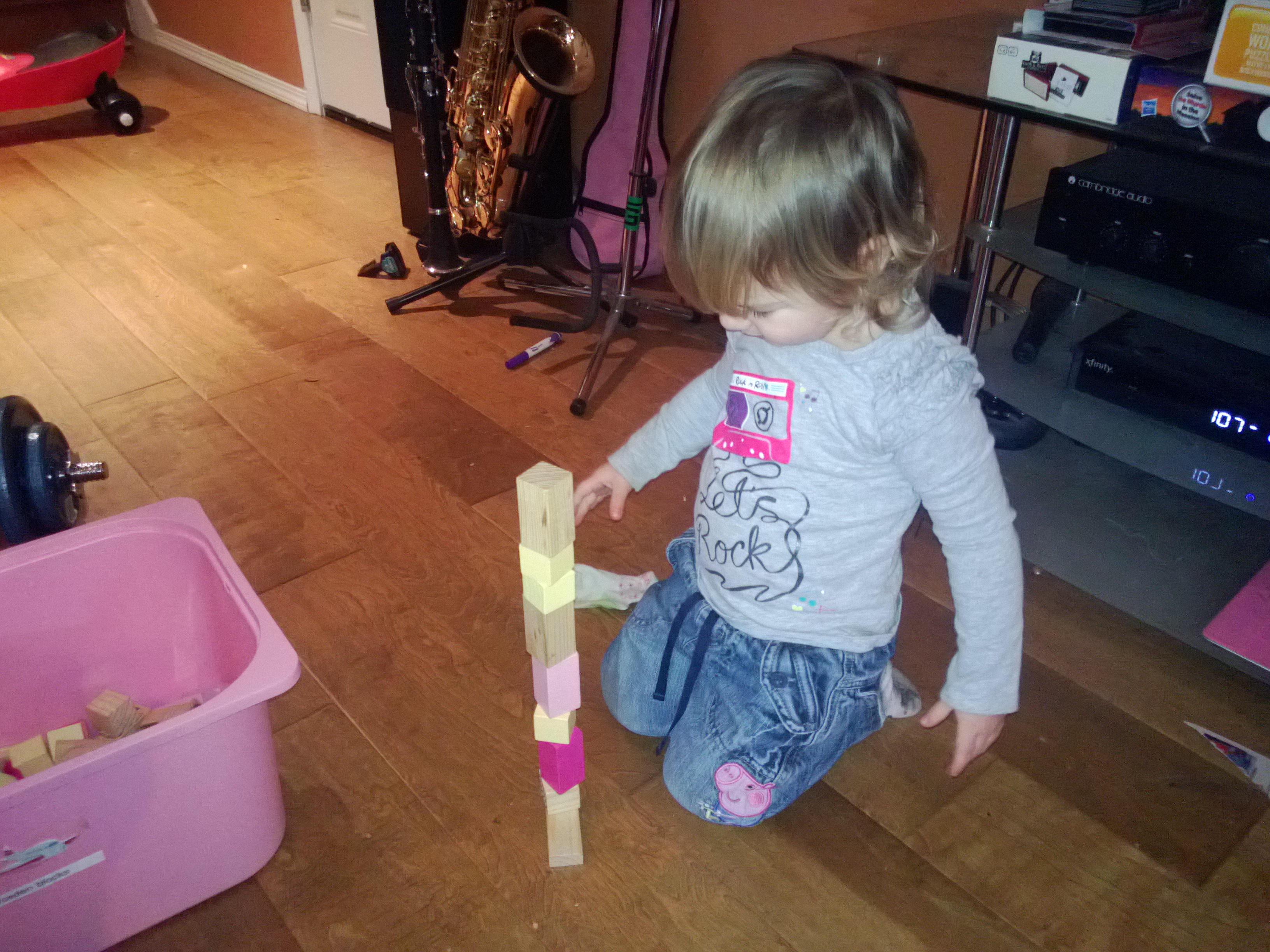
blocksThis year I am home preschooling my 2 youngest, not something I ever thought I would find myself doing but my reasons for making this choice can be found in a previous post Why I am Home Preschooling my Children.

I get a mixed reaction from people, some give me a glazed expression as if to say really? Can’t you just send them to preschool like the rest of us?  Others wonder why on earth I would want to. Some look at me as if I am some kind of Supermum and others as if I am denying my kids a normal social life.  Some however, just want to know how it all works and what exactly I do with them – this post is for you.

It really isn’t rocket science, I don’t follow a rigid schedule and  home schooling allows us loads of flexibility. My 5-year-old said today

I’m glad we are doing your preschool because it means we can go to the zoo whenever we want.

It isn’t entirely without structure though – I plan for the learning environment and have a timetable .  I suppose it is a little like having a plan for how you spend time with your children. It isn’t an academic preschool, we play and explore together, sometimes they play alone and we share interests, questions and ideas.

What about interaction with other children?

One day a week we have no preschool the girls go to ballet class, meet with friends and help me with normal everyday things like grocery shopping.

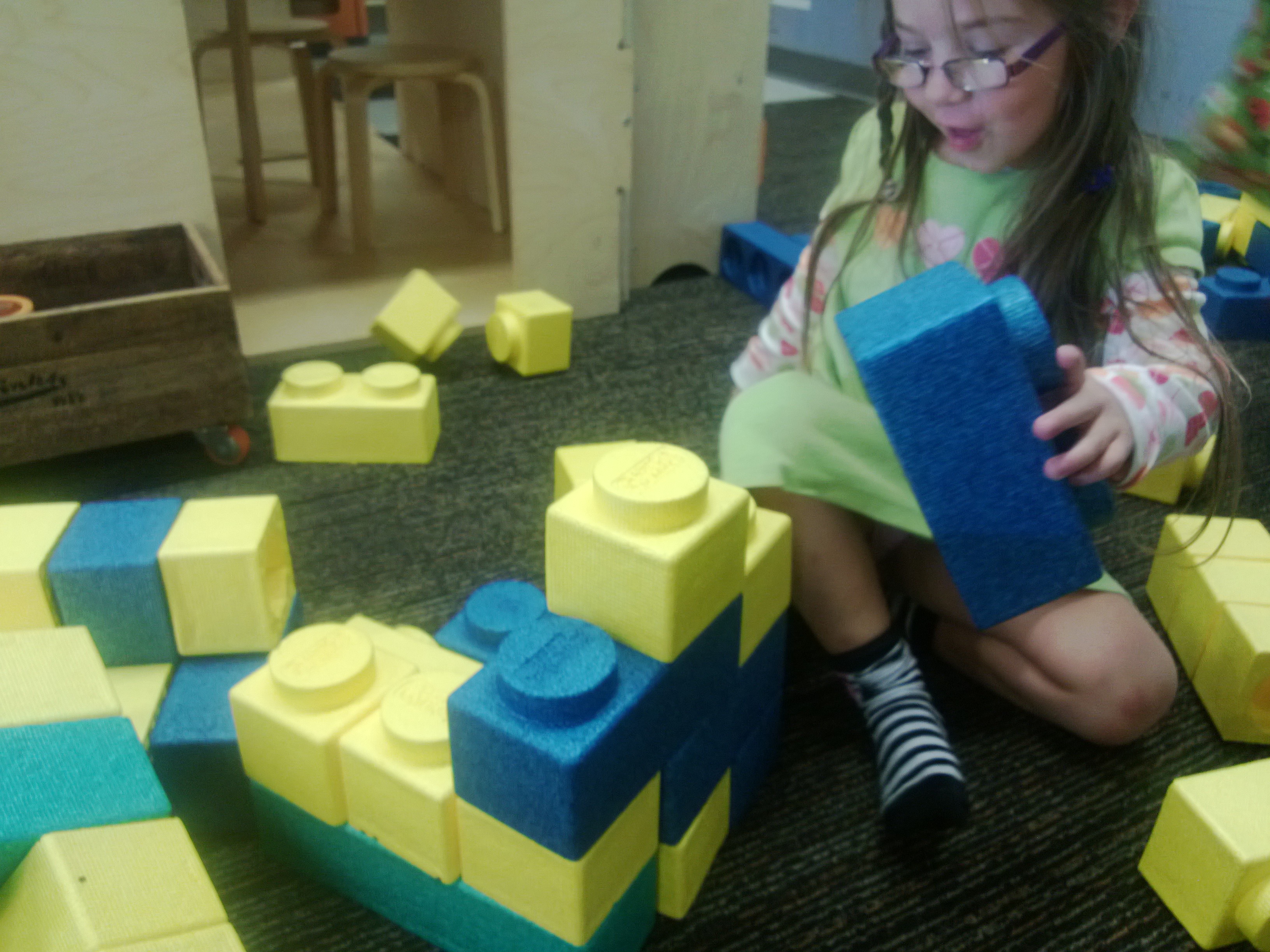
large blocks
Building a mountain with the large blocks.

Two days a week we attend a local membership based playspace, it’s a little like a toddler group in the UK except that it is a purpose-built space and is open all day. Some  of the music and language games we play at home don’t work very well with only 2 children  so I run music and movement, craft, sensory play or storytelling sessions here which gives us an opportunity to do activities in a larger group.  The rest of the time I allow them to free play but take their learning diaries to record what they may be interested in or achieving  in a different context.  The girls get chance to play with other children and use different materials than those we have at home.

The other 2 days are home based but sometimes we will use one of them to go out on a trip.

Timetabling

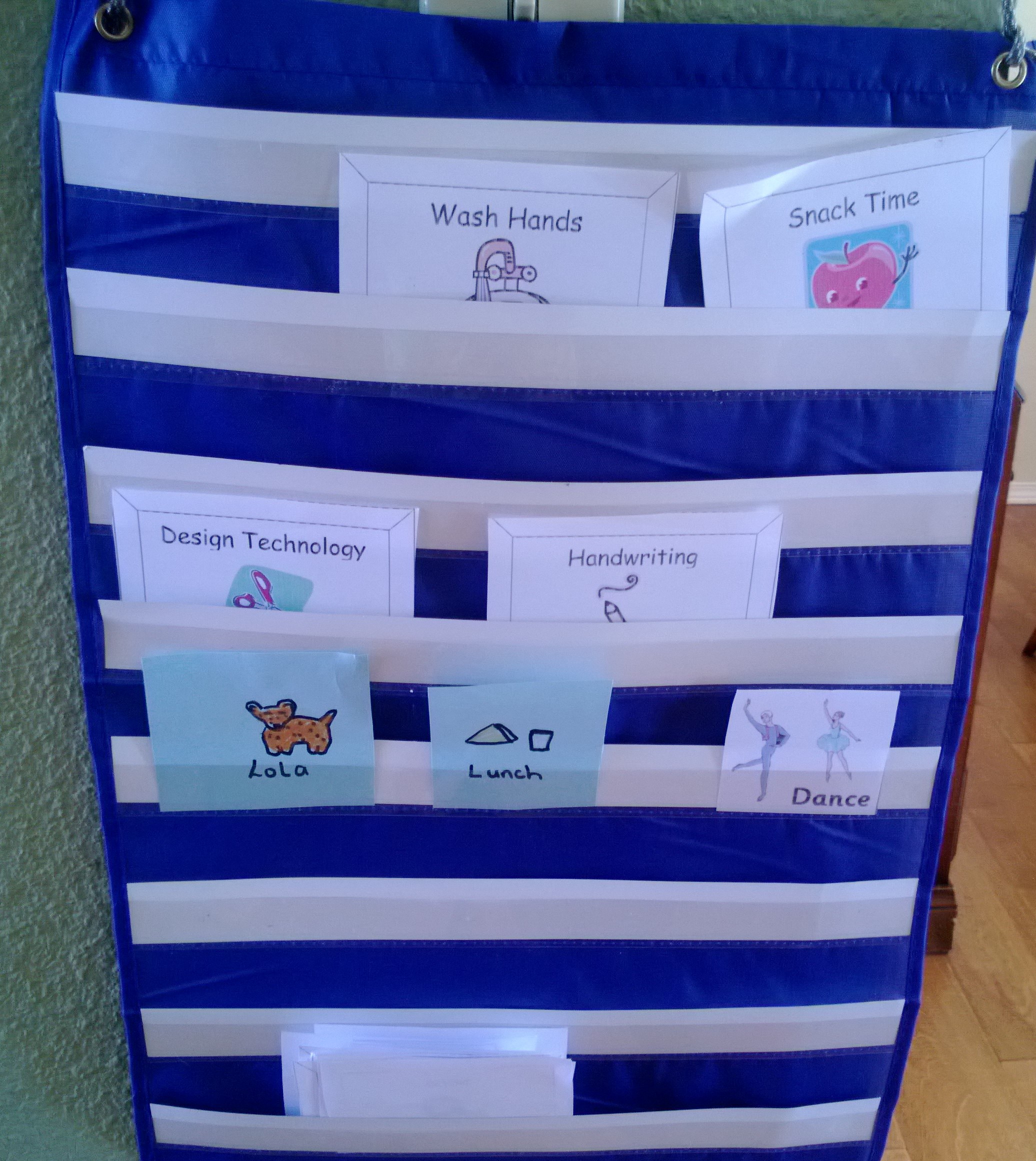
visual timetable)One of the things I have disliked about many preschools is the rigidity of their schedules.  There seemed to be little time for the children to become absorbed in a project or flexibility about what they might do each day.  I did however feel it was important to have some schedule in place.  I created a visual timetable using printed symbols.  Certain symbols are always present – Snack, lunch, free play and others I add in based on what we might do that day.  The symbols can be moved around and often if we don’t have time for an activity I move it to the bottom of the timetable to be saved for next time.  Sometimes I let the children plan the timetable  although they don’t exactly have a realistic understanding of time so we usually end up with far too many activities to get through in one day. It is also a really good way of regulating screen time, this usually goes into the timetable for after lunch followed by outdoor choosing time and if they ask for it earlier in the day I point them to the timetable. I’m surprised at how well the timetable works , the girls really respond to it and look forward to knowing what they are doing next.

How we Plan

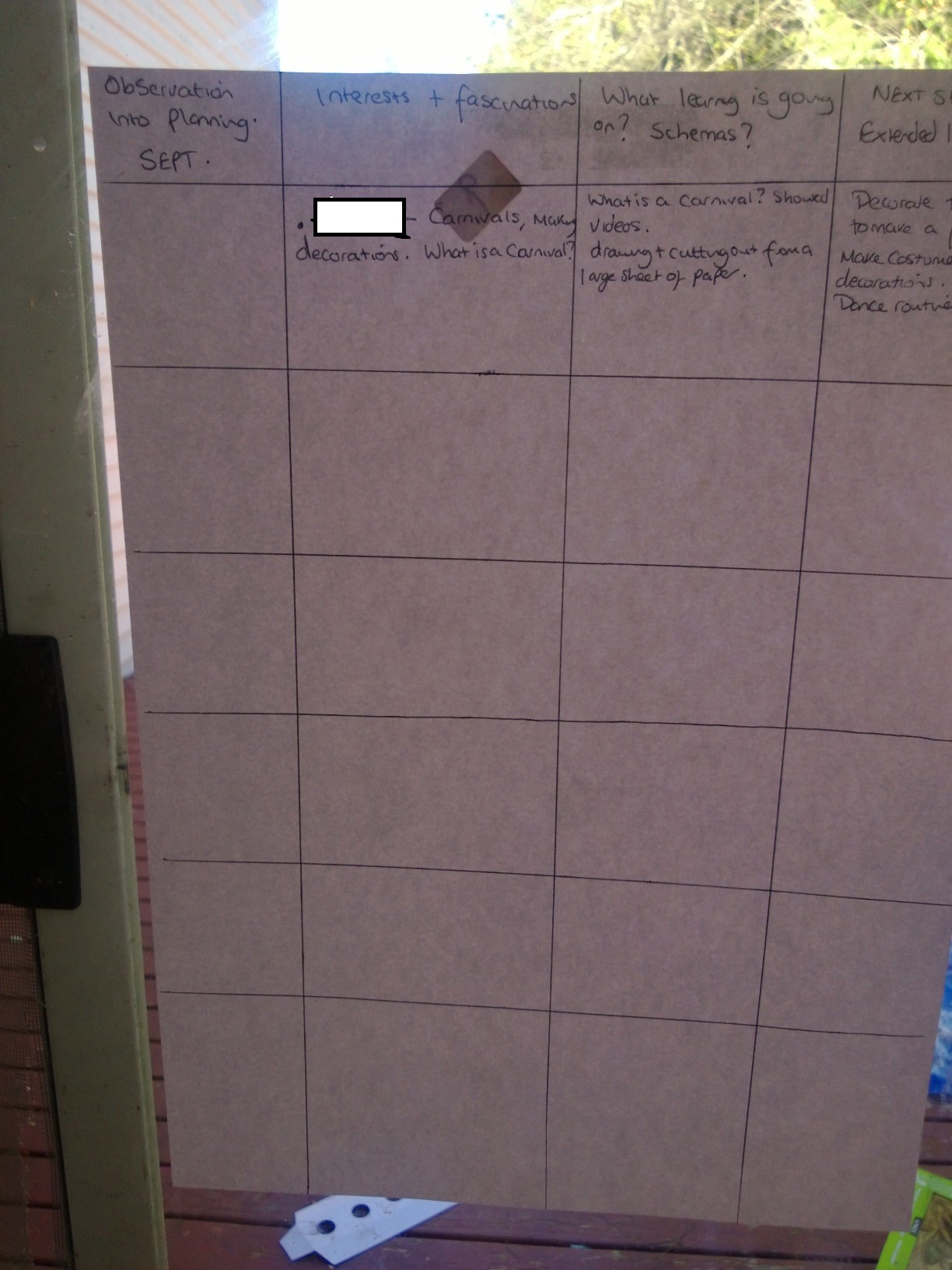
observation into planning

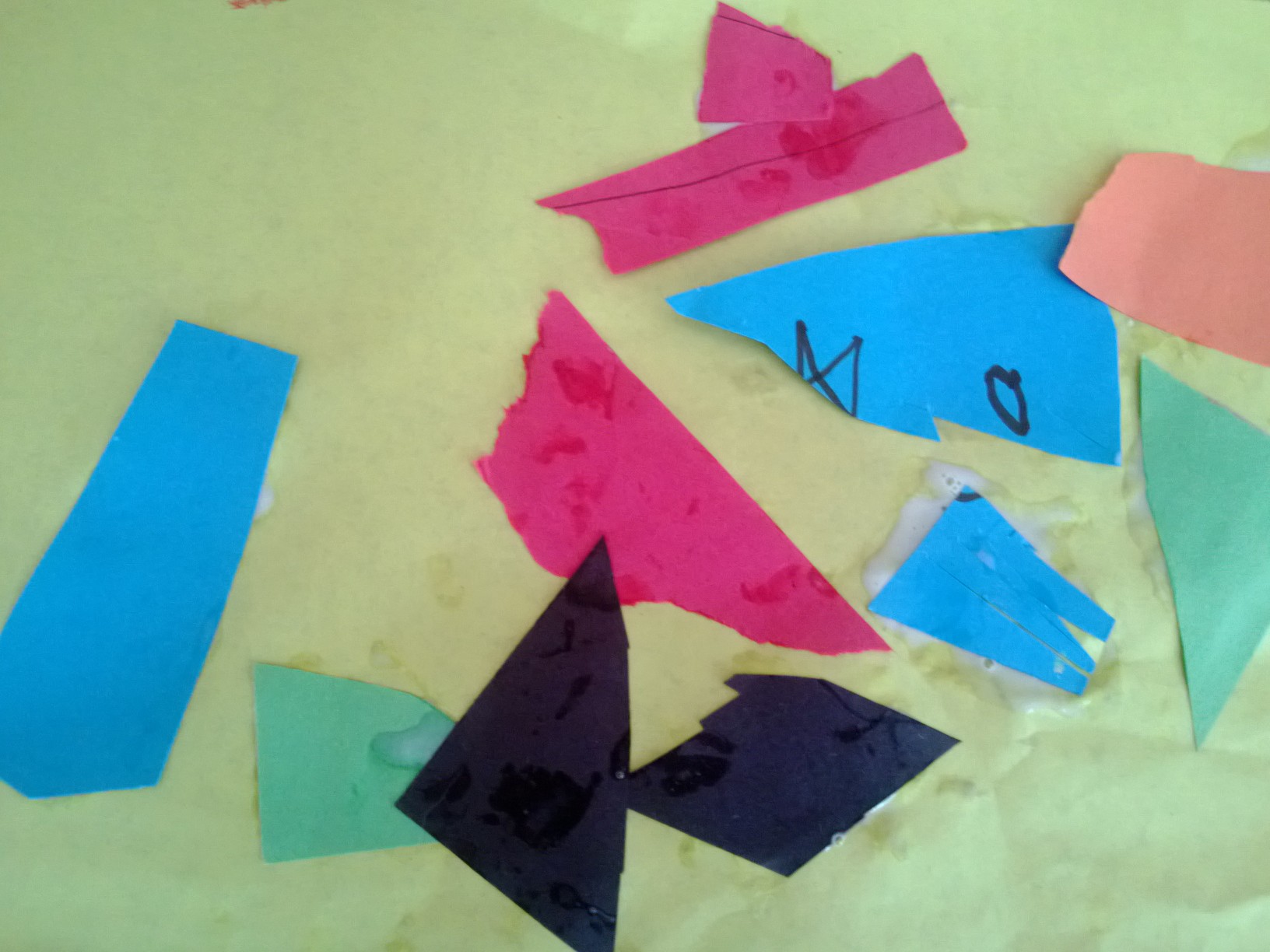
I plan, building on the children’s interests to provide next steps in their learning.  If I observe the children following consistent patterns of play, enjoying particular materials or asking questions, I record them and consider what I might plan next to enable the children to use this skill or interest in a different way or to extend their learning further.  For example, my  youngest daughter has just learned to cut with scissors and loves to  snip paper into tiny pieces.  She also loves gluing so I suggested they use the pieces to make a collage. As an extension to this we are going to look at pictures of mosaics for further inspiration and play with wooden pattern tiles. Only having 2 children to observe means that their learning experiences can be truly individualised in a way that might not be possible in a bigger setting.

collage

Planning for the Learning Environment

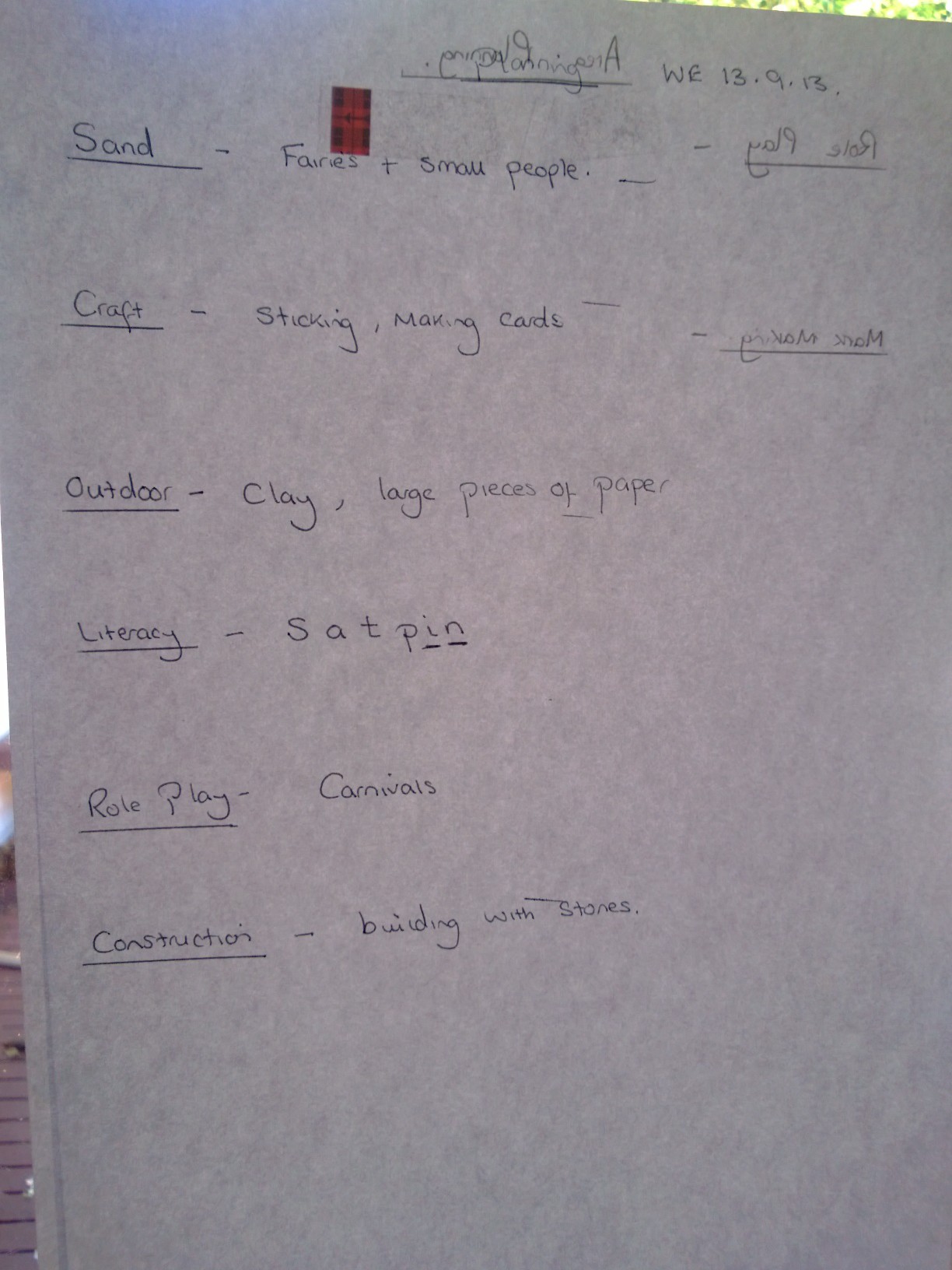
environment planning

In addition to this I also have a plan for the environment.  How often this changes is fairly flexible. Using  information from the observation into planning, I might decide to include particular materials with the sand or water, put a particular craft activity out, lay out particular toys, set up a new role play area or display materials in a certain way. For example the girls were playing cafes at the play centre so at home the next day I gave them  notebooks to take orders and a chef’s hat.  I laid the table and I was the customer. This also allowed them to build on some of their other current interests like emergent writing and playing picnics. Sometimes we may just try something new and see if they like it and how they play with it – they are usually good at making suggestions as to what we might do next.

The Learning Environment

There are certain materials I like to always have available to the children

  • sand (outside)
  • water (outside)
  • craft materials
  • paper and pencils
  • books
  • loose parts
  • construction
  • small world toys
  • role play and dressing up

In an ideal world clay and paint also but this is a little messy even for me especially in the winter when we don’t use outside as much.

All these materials however are difficult to manage. I have recently reorganised our playroom but I still feel that there are too many things on view.


It isn’t as easy to have the environment you would like when it is your own home but I’m constantly re-evaluating how we display things and adding new ideas to the outside area.

This slideshow requires JavaScript.

#Get Outdoors: Children Connecting with Nature

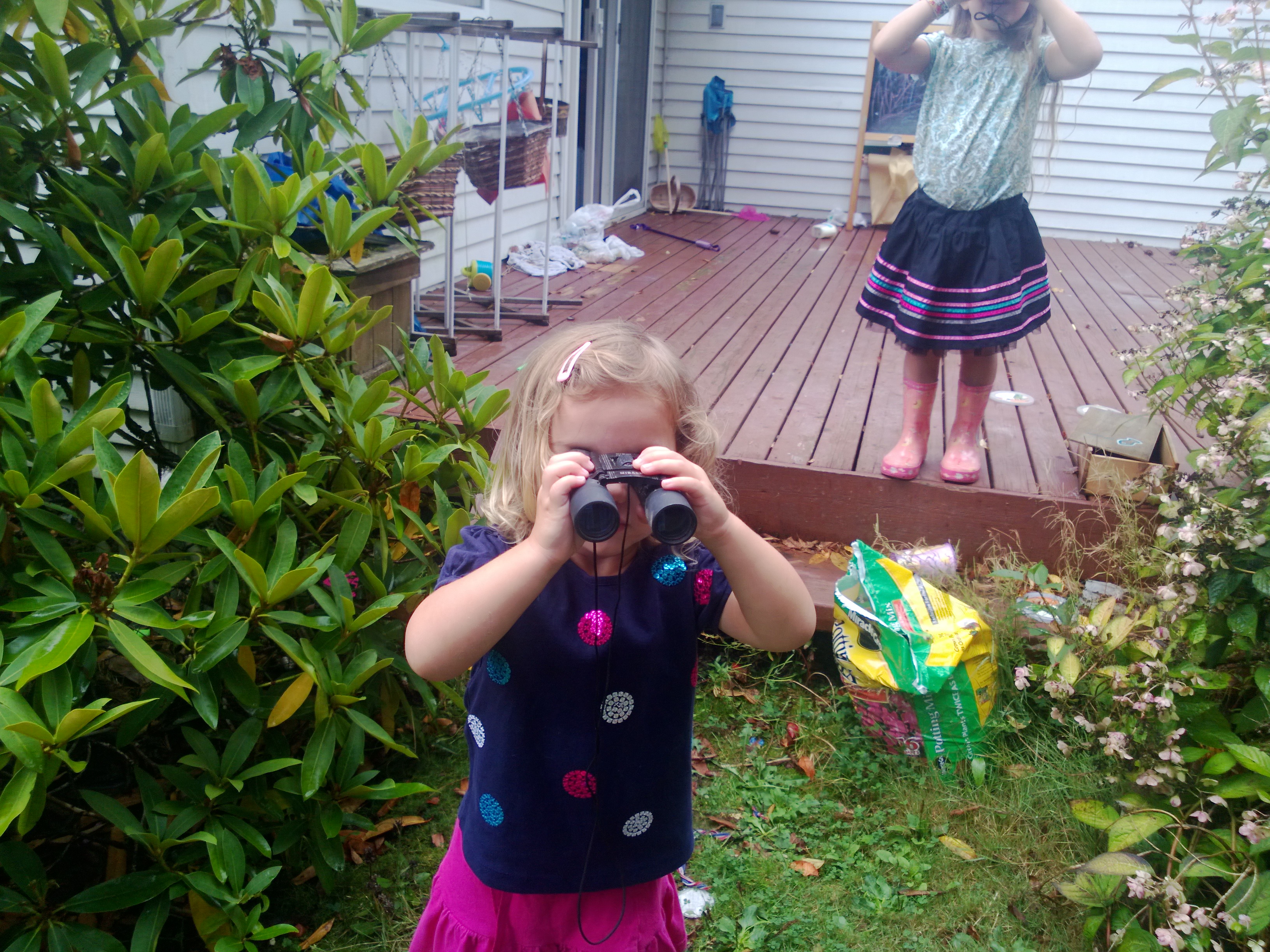
binocularsAutumn is a time for woodland walks, collecting interesting things along the way and looking out for animal homes and habitats.  As a child we had nature tables at school and we were encouraged to bring in conkers, sticky buds, acorns and leaves.  I used to love to walk in the woods and collect things.  We’d put nuts and conkers in their cases in the airing cupboard until they opened.  I used to lie in the grass scouring the leaves for 4- leafed clover. I found one when I was about 6 years old. I looked after it all weekend and on Monday carried it to school as the prize exhibit for the nature table. The temptation to fiddle with it however, was so great that on the way one of the leaves fell off. I turned up with an ordinary clover and a loose leaf and so no-one believed me.

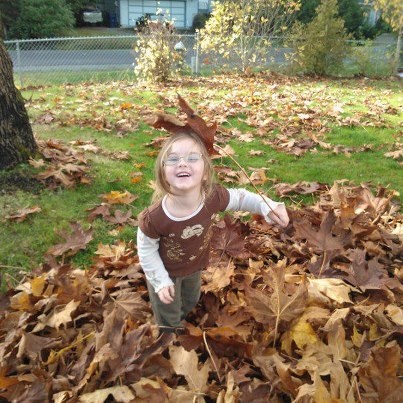
autumn leaves

We’ve been foraging for Autumn things this week.  In the garden we have an abundance of Fir Cones, Maple Seeds and coloured leaves but we wanted to find other things like acorns and conkers.  I asked a friend where we might find conkers.

Conkers? What are they?  was her reply.

I found a single, solitary conker that had managed to make its way with us from England.

Oh, it’s a bit like a chestnut.

Yes, a rounder chestnut and the casing is different, with larger more spaced out spines and they are poisonous.
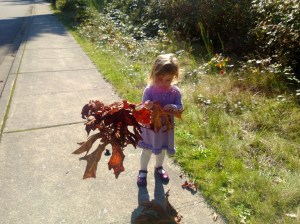
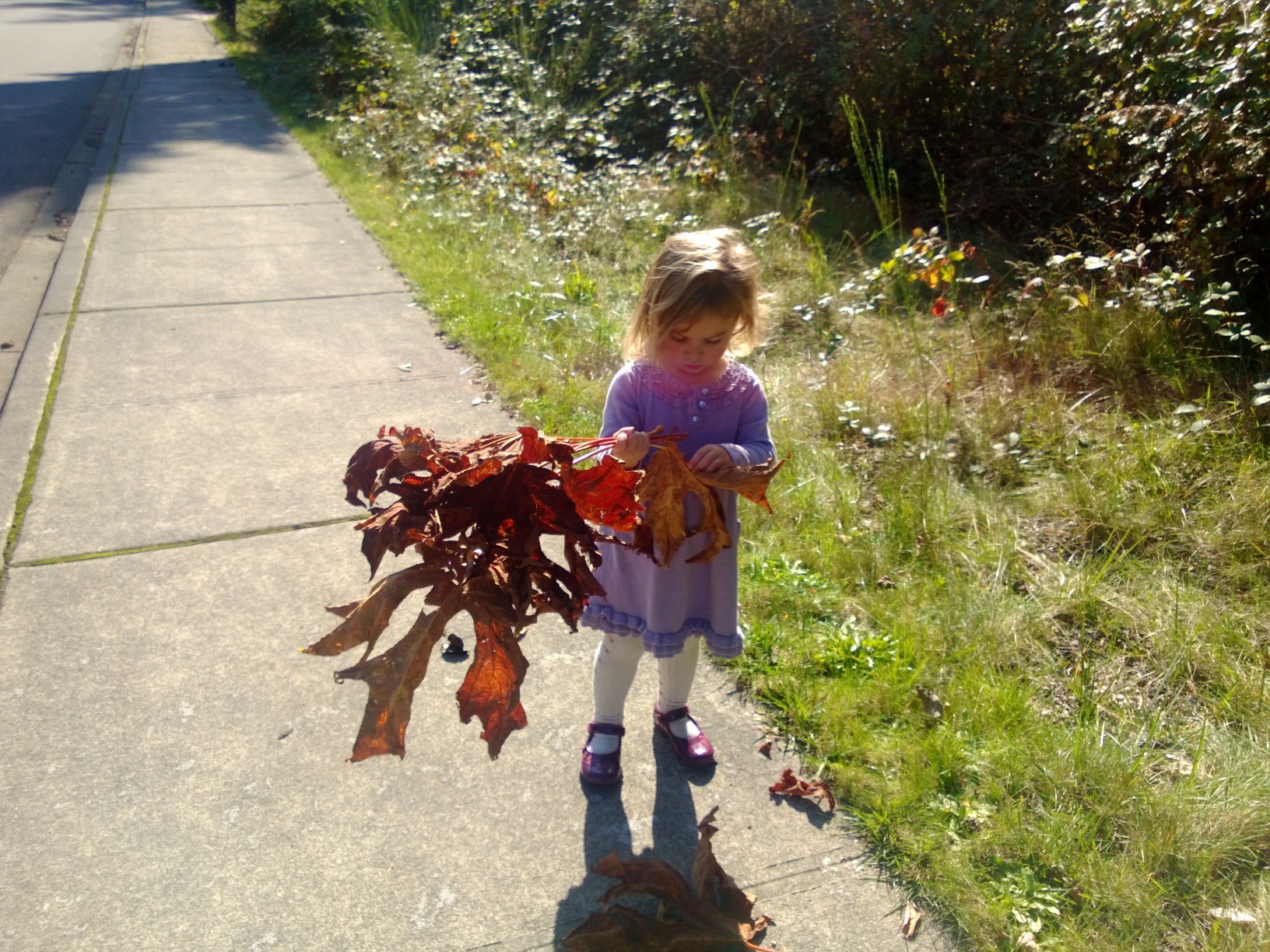
maple leaves

Outside the girls ballet class we found a variety of different pine and fir cones from tiny ones in clusters to great big narrow ones.  We walked in the woods to see what else we might find.  We found….. more pine cones, …. more maple seeds,… more maple leaves but nothing different.  I suppose we often take the things we have in our environment for granted – I love the towering Evergreens we have here, mixed in with the colours of the Maples but I do miss conkers and acorns.
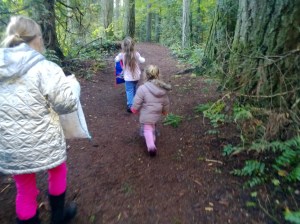
woodland walk

Wild animals on the other hand are extremely varied.  We watched huge salmon jumping in the river, saw enormous yellow butterflies and watched a small snake basking in the sun.  Our favourite visitors are hummingbirds.  The first time I saw one I thought it was a dragonfly but when it rested on a flower I was so excited to discover it was a hummingbird.  I had no idea hummingbirds were native here. I read up about attracting them to the garden and bought a hummingbird feeder that we fill with 4 parts water to 1 part sugar.  We now have regular visitors outside our window.

This slideshow requires JavaScript.

Of course there are also the more scary types of wildlife. The ‘ballet moms’ were talking about finding bobcats, cougars and coyotes in their garden and black bears on woodland walks, especially near the rivers now that the salmon are spawning.

RSPB Get Outdoors

As  I was musing about our appreciation of the natural world and the things we miss from home, a new report from the RSPB was brought to my attention. Connecting with Nature presents the findings of a three-year RSPB research project measuring just how connected to nature the UK’s children really are. Connection to nature is measured in 4 areas:

  • Enjoyment of Nature
  • Empathy for Creatures
  • Sense of Oneness
  • Sense of Responsibility.

You can take the questionnaire to see how connected your children are. If you are outside of the UK, the report also gives you the criteria used for the questionnaire so that you can investigate how connected children are in your area.

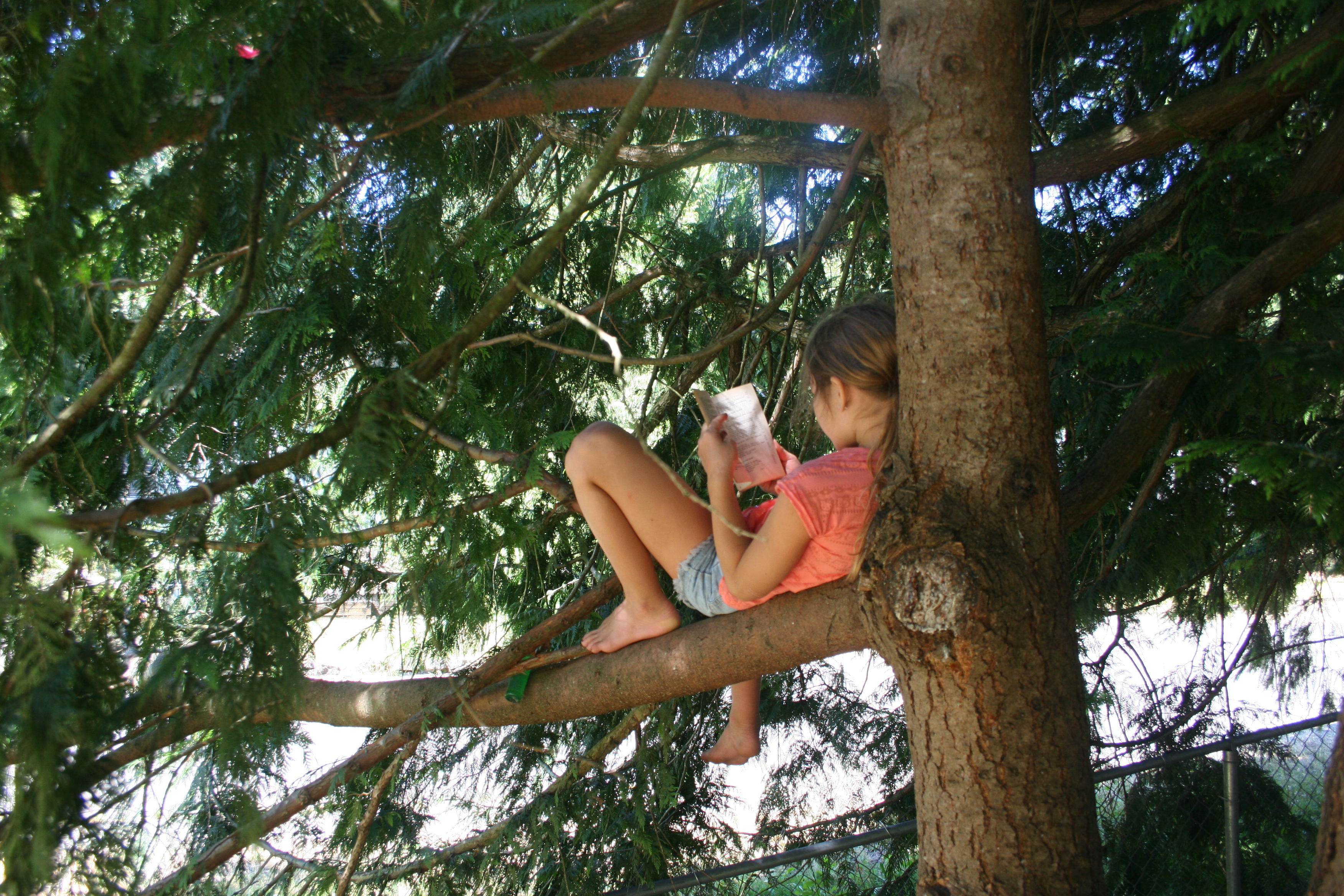
I think the sense of oneness is an interesting one.  How young was I when I first felt a sense of oneness with nature? I know my youngest daughter will always choose to go outside collecting sticks, pouring rainwater and arranging stones – is this an early sign of oneness with nature?  My eldest daughter emphatically announced that she felt peaceful when she was in a natural environment.  In a household with 2 noisy pre-schoolers her favourite haven is reading a book in a tree in the garden.
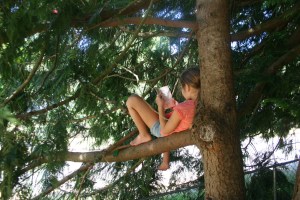
reading in the tree

I know for me, I feel at peace by the sea or in a woodland, both places I spent a lot of time in as a child. I can’t wait to visit the National Parks here in the US, to see the amazing diversity of the natural world here.

Connecting with nature has many benefits from physical activity, mental health and a sense of well being, education, social interaction, empathy and the impact on the sustainability of the natural environment.  The study found that  only 21% of children aged 8-12 in the UK have a connection with nature at a level that is realistic to their age.

“ There are statistically significant differences between children’s connection to nature at a national level across the UK, as well as between boys and girls, and British urban and rural homes.”

Surprisingly girls are more likely than boys to connect with nature and urban children more likely than rural children.  Further studies will be undertaken to determine why this might be. Looking at the questionnaire I think it may be that the questions are angled at more feminine pursuits, feeling peaceful in nature, collecting shells, listening for sounds and taking care of animals are not exactly cool for young boys.
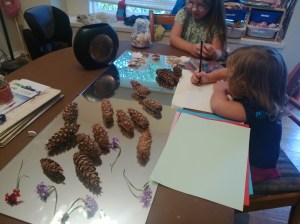
investigating natural materials

The research will add to the growing evidence base about children and nature. This includes a study by Natural England which suggested that factors contributing to connection are in decline. It reported that only 10% of children in the UK played regularly in natural places in 2009, compared to 40% in the 1970s.

Getting children out in the natural world when they are young won’t guarantee a continued interest once the world of school, clubs, homework and computer games takes over but it will certainly put them on the right track.

The environmental identity developed by children between the ages of 3 and 7 is  an emotional affinity towards a specific aspect of nature which had been strengthened by providing positive experiences with nature on a regular basis.   (Karls and Ittner 2003).

Some researchers also believe that there is an optimal moment usually between the age of 6 and 12 which form a person’s attitude to nature;  perhaps the 4 leafed clover was mine.

Other Posts You May Like to Read

20 Outdoor Things to do Before you are 5

Woodland Activities

Tots & Bubble Friday at Dr Maze’s Farm

Dr Maze's FarmIn a bid to meet new people the girls and I sometimes join groups of other mums and their kids through meet up groups.  Our latest venture was to Dr Maze’s Farm.

Dr Maze’s Farm is a family run working farm that grows seasonal crops. What I loved about it was that it was a no frills day of outdoor fun.  It was lovely to visit a farm that didn’t have rides, softplay or large playgrounds, no café or extras to pay for; a place that encouraged exploration and being at one with nature.

Dr Maze’s farm is open during the Summer months on a Friday and Saturday from 10am till 2pm. Opening hours are extended during their special events such as Lavender Festival in July and Pumpkin Patch during October.

On a Friday morning Tots Friday is included in the admission price ($6 increasing to $9 from 12th July) and runs from 10.30 to 11.30. Tots Friday is aimed at the under 5’s but my 9-year-old was welcomed and enjoyed herself too. Each week they have a different theme with activities set up under cover. The theme when we attended was goats, which included goats for the children to pet. There was also a large mud pit for the children to dig and find worms, various sensory bins containing grain and a cut and stick caterpillar activity.
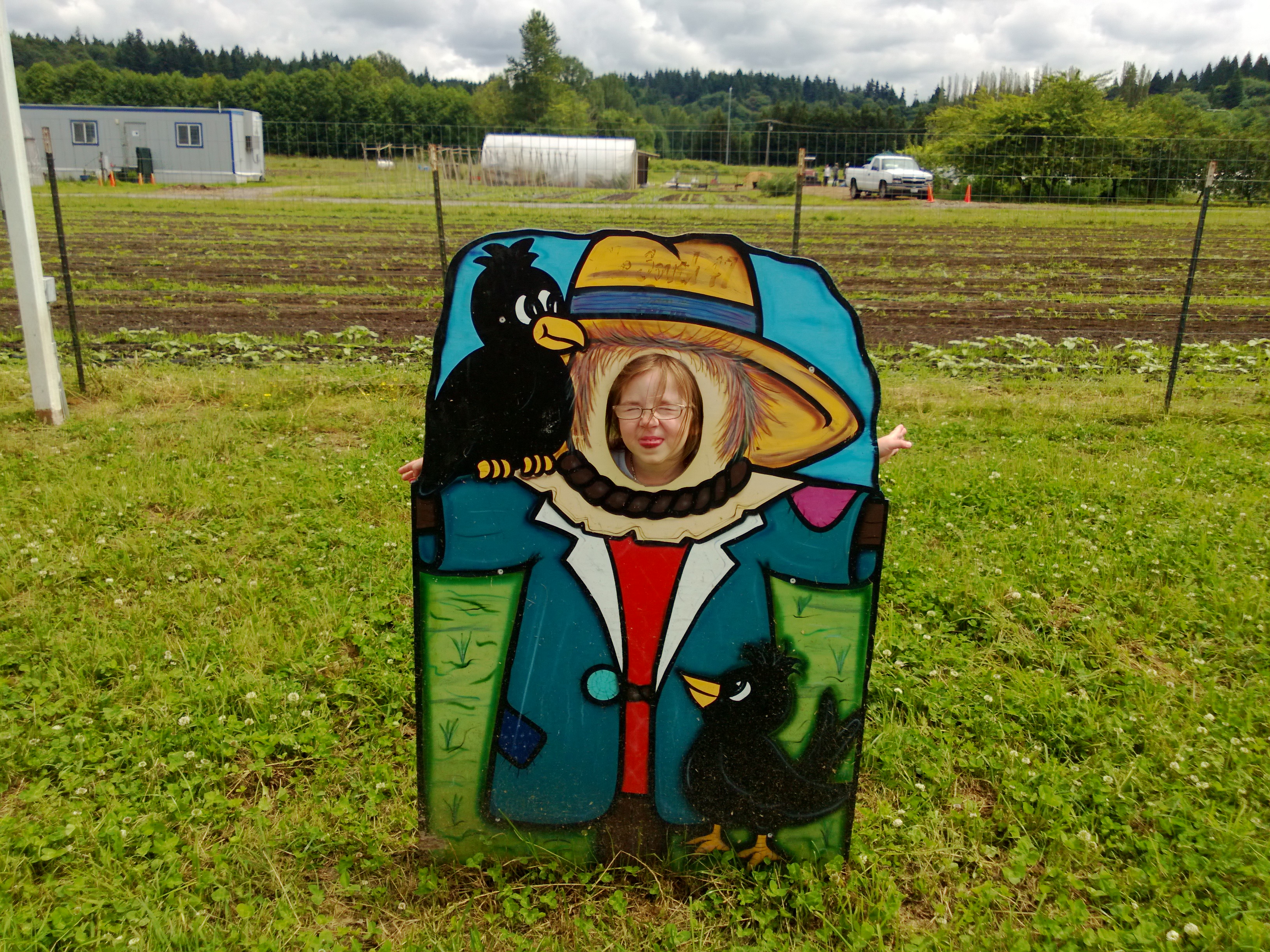
This slideshow requires JavaScript.

Towards the end of the session they took the children out to pick crops from the field. They picked kale, sugar snap peas and chard and were encouraged to fill a bag to take home with them. This was a great opportunity for the children to see how crops grow, how to harvest them and experience some new plants.

Once we had filled our bags the girls enjoyed petting and feeding the animals before going on a tractor ride around the farm.

We explored the grounds further. There was plenty for them to do from giant Jenga, mazes, a chicken show, a giant spider web and various things to ride on.  My personal favourite was the music garden. They had perfectly utilised household objects to make a great little sound garden that would be an inspiration to any pre-school or someone like me who now wants to build one in the garden.

This slideshow requires JavaScript.

Next came the girls favourite part of the day ‘Bubble Friday’.  A  station was arranged with all kinds of bubble wands and trays of bubble mixture.  The girls started with familiar ones and then learned how to use more elaborate methods to make giant bubbles. They had an  amazing time experimenting with the different types, supported by 2 very friendly ladies. They were so proud of their huge bubbles.

This slideshow requires JavaScript.

When it was time to go, they didn’t want to leave but I promised we would go back. We are going to sample the Lavender Festival tomorrow armed with a picnic and with extended opening hours I’m sure we will have a very busy day.

It feels like you are visiting the farmer’s family, who give the impression that they are people who love children, being outdoors and sharing their farm with the public. They even gave us a freshly laid egg to take home with us.

There is a small shop in the entrance selling plants, lavender products, honey and drinks but I would recommend taking a picnic or at least snacks if you intend to stay until closing time.

This is a personal recommendation, no payment of any kind was received for writing this post.

Huckleberries and How to Make Huckleberry Muffins

picking wild huckleberriesThis time last year we were playing in the local park. A group of children were picking small red berries from the bushes and eating them. I was a little alarmed, I’d always told the kids not to eat red berries  because they were ‘bird berries’, that would make children sick.

The children’s grandmother told us that they were huckleberries .  I’d heard of Huckleberry Finn and Huckleberry Hound but had no idea a huckleberry was a fruit.  ‘They are quite sharp’ she told us ‘but they are really good in muffins’. We tasted them, they are a little like a sharp blackberry, perhaps not to everyone’s taste but I liked them in small quantities.

We headed back a few days later to collect huckleberries to make muffins.

As you can see from the picture the berries are quite small so it takes quite a long time to pick any substantial quantity. The berries have a strong flavour however, so you don’t need many to make muffins.

We followed this recipe and they were absolutely delicious. If you can’t get huckleberries then you can substitute blueberries, I would use a little less sugar if using blueberries.

The muffins were such a success that as soon as we spotted the bushes beginning to ripen this year, we collected as many as we could. Huckleberries can be frozen but you need to be quite dedicated to collect large quantities.

We took them home to bake into muffins. A delicious seasonal treat.

What Exactly is a Field Day?

Field dayToday was Field Day at my daughter’s school. In the usual fashion, we had a letter that said we could come along or volunteer if we wanted but no explanation as to exactly what a Field Day is.

I asked a friend in the playground.

So what exactly is a Field Day? Is it the same as a Sports Day?

No not really, they set up lots of activities around the school grounds and the children can join in with what they want to. Some are sports but others are fun games and things.

Slightly better informed I decided to give it a go.

So What is a Field Day?

A number of physical activities are set up around the school grounds with an adult manning each one.

The children have a checklist that they hang around their neck. They move around the various activities and when they complete them (successfully of not) they have the activity crossed off their checklist. Once they have completed 10 they can get a popsicle (ice lolly). If you complete all the activities your name is added to ‘the ball of fame’.

What Sort of Activities?

Their favourite activity was playing catch with water bombs.

The girls had fun and it was nice to have something that the little ones could be involved in so they weren’t left standing around watching. Somehow though, I felt it lacked the atmosphere of a traditional sports day with races and cheering crowds. Where were the prizes for the child who completed the obstacle course in the shortest time, or a little prize if you knocked all the cans down? It somehow felt a little flat without any competitive edge.  It was a cross between a Summer Fete, a P.E lesson and a traditional sports day – I’m not really sure I understand the point of it but the girls enjoyed it. It’s probably just a little structured to be my idea of fun.

8 Things a Child Can Learn From Playing Golf.

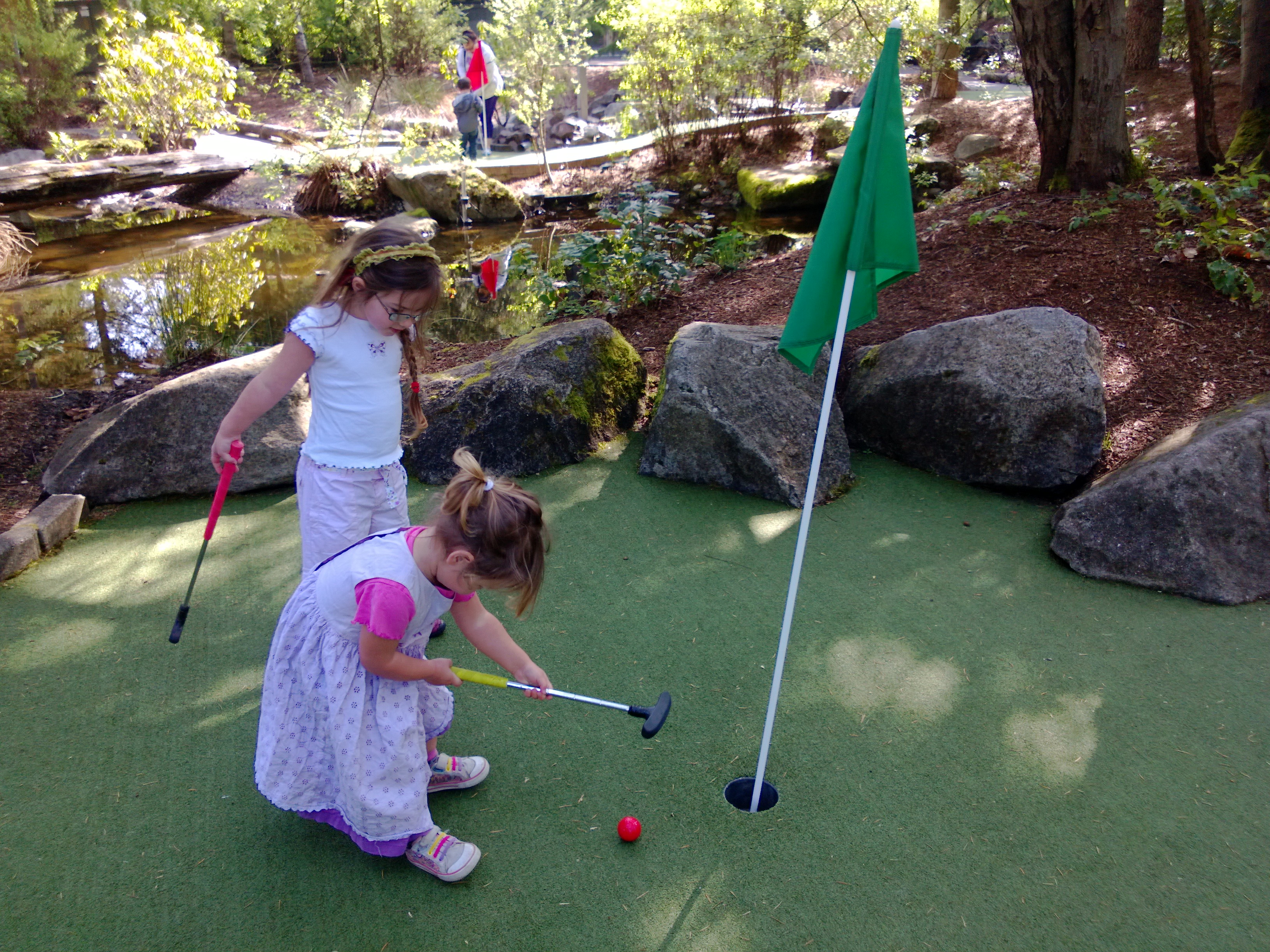
willows run put put courseToday I met with a group of mums and their toddlers to play golf at the pitch and put, Willows Road Golf Course. All of the children were new to golf and most of the children were below the age of 2.  My girls had a brilliant time – my 4-year-old even asked if she could come back tomorrow.

Before 11am under 12’s can play the 18 hole pitch and put for $5. The beautiful setting meant that my 2-year-old, who lost interest after a few holes had plenty to keep her occupied.

There were lots of opportunities for learning too:
  • Number recognition as we moved around the holes
  • Recognising colours – who has the red ball? What colour flag do we have this time?
  • Reading signs – Please rake your footprints, keep on the path.
  • Gross motor skills – how do you hold the club? You need to hit it hard to get it up hill.  What is the best way to get it in the hole?
  • Counting – how many shots did you take that time?
  • Writing – filling out a score card.
  • Vocabulary – What is the stick called again? I’m in the bunker.
  • Turn- taking and awareness of others.

We’ll definitely be doing it again, a great way to spend a sunny morning.

Easter in the US: Easter Bunnies, Egg Hunts and No Hot Cross Buns

When does the Easter Bunny come, is it tonight or tomorrow?

Easter Bunny? *slightly panicking. I have no idea I’m not sure how  it works here, we didn’t have the Easter Bunny in England.

Yes we did.

Okay, so I bought them all an Easter Egg, but I don’t remember saying it came from the Easter Bunny….. now what? They don’t have large Easter eggs here like we do at home, the odd chocolate rabbit or two, other than that everything is small to fill up little plastic eggs. I’ve just filled all our plastic eggs with Cadbury Mini Eggs and miniature Cream Eggs for our Easter Egg hunt tomorrow. She saw me do it so I can’t say the Easter Bunny brought those. I have a pack of Cream Eggs, that will have to do. Perhaps the American Easter Bunny is a meany…… or maybe he left some in England for when we go visiting…….. or maybe he left them outside and the bears ate them….(okay that one’s a little cruel).

hot cross bunsAs with every other festival Easter is different. The first shock is that we don’t have a bank holiday or any time off school (we have another week of school before Spring Break). Good Friday is a something or nothing day, you can’t even find hot cross buns (my neighbour tells me she has never had one and is not really sure what they are). This year I had to make my own, a long job but worth it.

Easter Egg hunts are really popular. The kids hunt for little plastic eggs with goodies inside but are told in advance how many they are allowed to collect so it isn’t as excessive as Hallowe’en. Decorating real eggs is also popular. My neighbour had painted eggs and decorated them with stickers and the children were going to hunt for real eggs. We went on a local Easter Egg hunt this morning and one at pre-school yesterday. In school Easter wasn’t celebrated at all, not even by giving out eggs. They are very careful to be equal to all cultures here.

The best thing about Easter weekend is that we have sunshine. I don’t think I’ve ever had my shorts on during March in the UK (although I think it’s unusual here too). Spring is in the air.

Hopefully the sunshine and the egg hunt tomorrow will compensate for the skinflint American Easter Bunny.