Category Archives: Life in the US

Two Mother’s Days: One for Remembrance and One for Me

vase of daffodilsI never really enjoy Mother’s Day, for me it is a day of sadness mixed with guilt. If I don’t have a good time I’m not recognising the love of my own children and denying them a day of spoiling me and making me happy.

I lost my mother before I had children so Mother’s Day has always been  bittersweet. This year for the first time I had the opportunity to change that. Mother’s Day in the US is not until May, so on Sunday (Mother’s  Day in the UK) I was able to remember Mum without feeling guilty that I wasn’t getting into the spirit of the day for my own kids.

I wasn’t able to visit Mum’s grave with flowers but it was fine to be sad and reflective.

In fact my children now appreciate that Mother’s Day is tough. My husband and the girls brought me breakfast in bed, with a vase of daffodils from the garden. They went out shopping and came back with proper Cornish pasties for lunch and my favourite sweets in a Welsh mug. It was really lovely to feel that they had bought them to say, we know it’s a tough day but we love you and want to make it better. I could even spend the day cleaning the house because it made me feel better.

I’m so glad that I no longer need to wrestle with my conscience on Mother’s Day and when US Mother’s Day comes, I’ll make sure it is a special, happy family day.

Happy St. David’s Day: My Recording of Llwyn Onn

As my final St. David’s Day post I thought I’d share my recording of the Welsh folk song Llwyn Onn. I have wanted to record acapella harmony singing for some time so, with a little patience, a book of folk songs and some free audio-recording software called Audacity, I managed to get my first attempt of singing with myself uploaded.

Some of the pictures are holiday snaps but most are lovely pictures of Wales I found on Flickr from The Ancient Brit.

Even more fitting is that this St. David’s Day is the funeral of a good friend of my dad’s who passed away recently, so you’ll note the little tribute at the end in memory of Derek Baker – rest in peace.

Why Do We Wear Daffodils and Leeks on St. David’s Day?

Welsh ladyHave you ever wondered why we wear leeks and daffodils on St. David’s Day?

The story goes that the Welsh were in a battle with the Saxons. As the Saxons and the Welsh wore similar clothes, it was difficult to establish who they should be fighting.  A monk (St. David) suggested the Welsh to wear a leek in their helmet to identify them. The Welsh went on to win the battle and the leek was adopted as the Welsh emblem..

Another  legend suggests that Welsh archers fought and won a battle against the French in a field of leeks. The Welsh soldiers took to wearing leeks in their caps on St.David’s Day to remember their bravery.

The wearing of a daffodil is a more recent tradition popularised by David Lloyd George. Some suggestions are that the daffodil closely resembles a leek flower and since they are more common than leek flowers, the daffodil is worn instead . Another suggestion is simply that it is a popular flower that grows around the time of St.David’s Day and offers a less smelly alternative to wearing a leek.

American Valentine’s Day Traditions: Things Every Expat Mum Should Know (or Ignore).

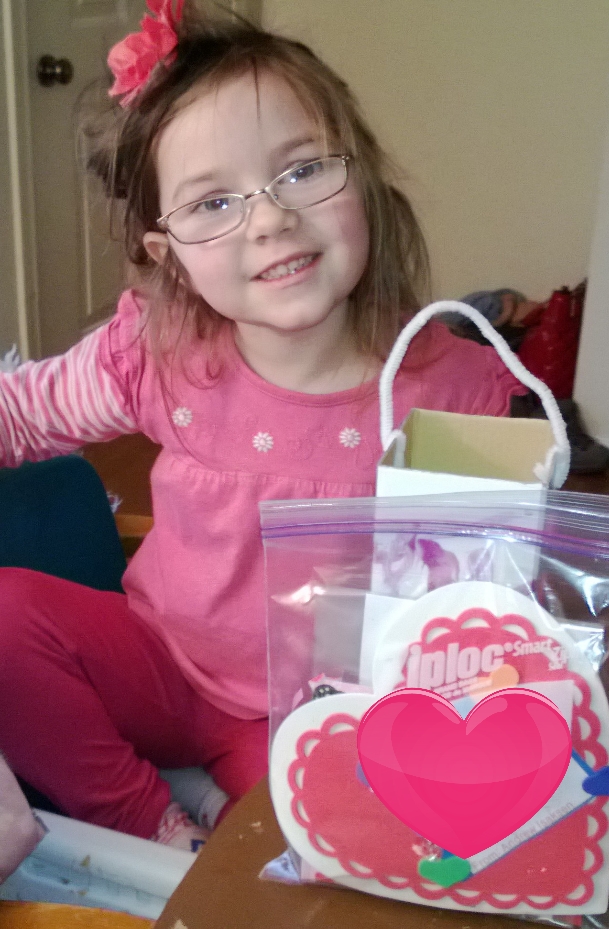
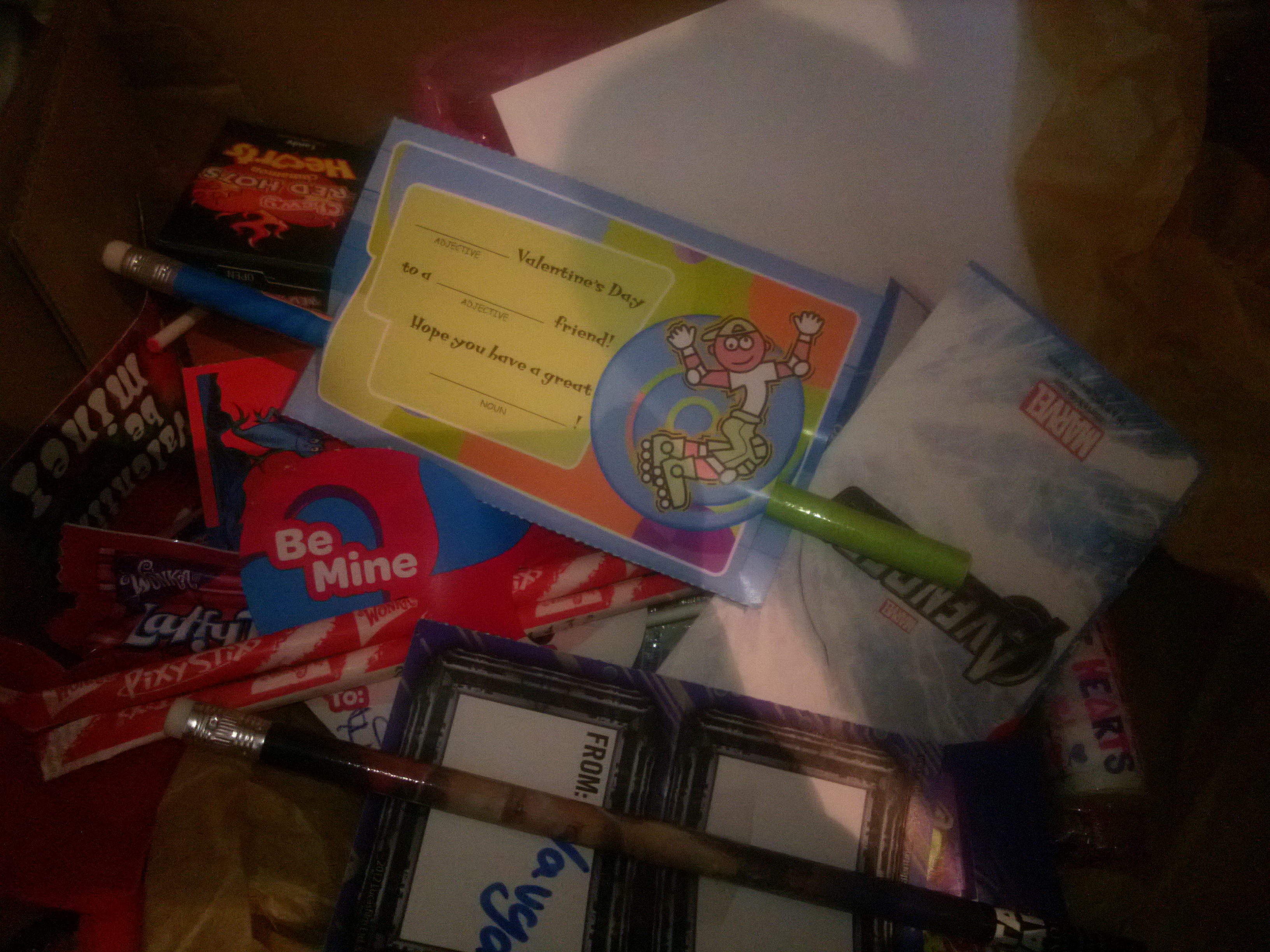
valentine's day traditionsA letter came home from school last week asking us to decorate a shoe box and make a hole large enough to fit a greeting card. My daughter dutifully created her box ready for the school Valentine’s party. I expected the box to come home with a few cards from her closest friends, until  her younger sister came home from pre-school with a bag laden with goodies. Her bag contained lots of little cards with sweets attached from both her teachers and all of the children at pre-school. Had I missed something somewhere? Was there a letter asking us to bring in Valentine’s treats? I think there was an assumption that we would know what to do – now I feel like the mean, lazy parent.

My eldest went off to school today armed with her box. She returned laden with gifts.

American Valentine Traditions

That explains why we were given a letter with the names of all the children in the class. I assumed it was so we would know how to spell a name if we wanted to send a Valentine to a special friend.

If you want to avoid being the odd one out you need to :

  • Send a card to every child in the class
  • Attach a sweet or small gift to the card
  • Sign your child’s name.

Hold on a moment

Isn’t Valentine’s Day meant to be about showing appreciation for those you love or sending a message to someone you admire? Isn’t it about giving not receiving?

My children came home excited about what they had received. There was no sentiment attached to any of the cards, nobody said ‘I’m giving you this because I think you are a great friend.’ It strikes me as another example of greed and an expectation that we load the children with lots of stuff because no child can be left out. I think my 4-year-old got the sentiment right when she decided it would be nice to send a Valentine to the friends she misses from home to tell them she is thinking about them.

I’m sure next year the girls will want to send Valentine’s to the whole class to fit in with their friends. I’d like to think that they will at least find one nice thing to say about each person they give them to. Isn’t it bad enough that adults are driven to spend 4 times the usual price for flowers just in case their partner is offended? Let children believe it is about love and friendship at least for a little while.

Moving Abroad with Children – What Do My Children Think of Their New Home in America?

It is difficult to know what my children really think of their new life in America. They seem happy and my 8-year-old says she enjoys school. I know she misses her friends but I sometimes wonder whether she really fits in with her loud American classmates who chatter endlessly about One Direction.

We have recently allowed her to have her first laptop so now for the first time she can check email on a regular basis. In some weird late at night moment, I decided to email her some questions about life in America to share here and asked her to think of some questions for me that she could post on her blog. I’m still waiting for those but here are her thoughts.

  1. What do you like best about living in America?

The best thing is the fact that I have my own bathroom. (Yes she does spend a lot of time in it, a taste of things to come I fear).

2. Are there any things that annoy you here in America?

Adverts ie. bla bla bla very fatty pizza 🙂

3. If you could bring one thing from England to America what would it be?

My friends  (ditto).

4. What do you miss most from England?

I miss my old school.

5. If you were to go back to England, what would you miss from America?

I would miss laughing when people try to do a British accent

6. Are American children different from English children and if so how?

Children are different mainly because of the words they use i.e. perenthusees.

7. What advice would you give to someone moving here?

Be prepared for the adverts.

What I found interesting about her responses was her focus on the immediate, day-to-day aspects of life. I expected  places we had visited or new activities to feature in her answers.

I tried asking my 4-year-old the same questions. We had to spend additional time talking through the questions and she was keen to see what her sister had said before answering but she gave some interesting responses.

As expected the things she misses most are friends and her old playgroup. When asked whether children were different here she thought for a while before saying

They don’t know how to share. All the children in my old playgroup shared their things but none of the children here do.

She found it very difficult to say what she liked about America because she couldn’t think of anything she  likes to do here that she can’t also do in England – she likes learning to do cartwheels with her imaginary friend, playing nail salons with her big sister, making up shows and playing Mastermind.

Not a Parent’s Evening but a Goal Setting Conference.

school childrenThis week is school conference week. The kids finish at lunchtime and during the afternoons the teachers meet with parents and students to set goals for the coming term. School reports (report cards) are sent home every term and tomorrow we will meet with my daughter’s teacher to talk about what we need to work on. Each conference is 25 minutes – a far cry from the 10 minute annual slot we had in the UK.

Here are my thoughts on the first school conference:

I’ve just attended my 8 year olds first parents’ evening at school.  It is called a goal setting conference which I expected to be some flowery name for ‘Let’s talk about your child and  agree what they need to work on’. I was pleasantly surprised to find it actually was a goal setting conference focusing on the whole child at home and at school.

The children had already completed a survey deciding what they felt they should work on in both academic and social areas. They highlighted their strengths and chose 3 or 4 things as areas of improvement. Some things were highlighted from work that had been done in class and observations that had been made.  The teacher discussed each of the goals with my daughter agreeing with her how they might be achieved before looking to me for support from home.  My daughter had highlighted that she didn’t always respond to instructions straight away in class. Her teacher commented

You know what I’ve noticed? I think you are one of those people who take a little time to get going.  Maybe then we should turn this one on its head . Think about how you can help yourself to start your work quicker so that you do not feel that you are rushing to finish and late getting on to the next thing.

How great is that; a teacher who actually notices what your child does and how your child learns and wants to help them to find ways to improve.

My daughter and her teacher had talked about the need to be more organised. On a couple of occasions my daughter has forgotten her folder and her teacher discussed ways of avoiding this. Recognising my daughter as an avid reader she immediately asked

Do you read in the mornings before school?

Yes sometimes when I am eating my breakfast.

So why not do everything you need to do first and then have reading as a reward? 

How can we help you not to forget things?

I suggested a check list that she runs through each morning.

And how about we put that on your kindle so you know you won’t miss it?

There was a strong focus on taking responsibility for her own actions and not expecting mum to do everything for her. Mum has enough to do (I may be quoting this a lot over the next few weeks).

What a great parent’s evening and an amazing teacher. I feel like she knows my daughter better in a few weeks than some of her previous teachers did in a year. The focus on the whole child rather than academic achievement was like a breath of fresh air.

Maybe I could borrow her to organise the whole family.

Homeschooling and Expatriation

Thank you to the  The Expat Hub for providing today’s guest post. The Expat Hub is a website with lots of useful tips for those who are considering a move overseas or those like us who have already made the move.

Homeschooling isn’t something I have considered for my own children, we are fortunate to have good schools in the area and my children are happy. Homeschooling isn’t for everyone but the article below outlines the pros and cons of homeschooling both generally and from an expat perspective.

 

homeschoolingHomeschooling is a subject which always seems to inspire debate.
It might not be for everyone but with the number of children being home schooled on the rise it’s clearly a viable option for some families.
But is it a good choice for families who have emigrated?

Before we talk about homeschooling in specific relation to expatriate children here are some of the most commonly argued pros and cons of homeschooling.

Pros

• Testing has shown that homeschooled children are good self-directed learners, do as well in exams as their public/private school counterparts and are well received at colleges and universities.
• Although the national curriculum has to be covered (and the children must prove their competence in specific subjects through testing) generally speaking there is far more educational freedom at home then in the classroom. What can be taught, how it can be taught, and where is much less prescriptive.
• Bullying is a sad aspect of mainstream education, something which can have a negative, and in some cases incredibly serious, impact on a child. In a homeschooling environment bullying isn’t an issue. Consequently a child may be less likely to suffer from low self esteem or condition their behaviour to ‘fit in’. Homeschooling can also be a fantastic way of gradually building up the confidence of a child who has been a victim of bullying in a traditional school.
• By not having to stick to traditional school hours homeschooled children and their parents can work out a schedule which benefits everyone. Children can also stay in bed a little longer, allowing for better rested (and more intellectually receptive) students.
• Homeschooling can also help build stronger ties between family members. Parents of rebellious children have often noted how destructive behaviours lessened or disappeared following a period of homeschooling. Spending more time with their children allows parents to know them better, giving them the opportunity to witness important life changes they could otherwise miss.
• One of the things many parents have commented on is how, without schoolroom distractions, children are able to accomplish more work in a shorter space of time. This often means that the concept of homework going on well into the evening, a major stress of many parents, is no longer an issue.
• During difficult times like illness, bereavement or moving children in traditional education are prone to experience disruption and can find it difficult to focus. The natural flexibility of homeschooling means that it is much easier to work around a family issue.
• Going to a traditional school can also be a costly business. There are school uniforms to buy, PE kits, packed/school lunches, lunch boxes, pencil cases, bus fare/petrol costs and school trips. Some or all of these expenses can be eliminated with homeschooling.

Cons
• Whilst homeschooling is more flexible than having to stick with a school timetable it does take up a lot of time for parents. As well as the actual teaching involved there’s marking, lesson planning/activity organising and lunch making, and a dozen other things besides!
• Some people consider homeschooling to be ‘weird’ and those who do it are in the minority. Parents, and children, must be prepared to experience criticism and negative comments.
• Homeschooling is a full time job, one which requires a serious investment of time and effort. For those parents who have to work alongside to supplement their incomes life can be very busy and tiring.
• Further to the point above, homeschooling can severely limit your household income, particularly for single parents. Even couples can find it a struggle to make ends meet if one of them has to give up work in order to make homeschooling a possibility.
• Although spending more time together as a family is something which sounds like a pro in theory, the reality can be difficult and littered with ups and downs. Parents have to be prepared for the occasional tantrum or argument, and children have to understand the way they’re expected to behave during ‘school’ hours.
• If you have just one or two children to teach the group and team activities you can enjoy together are going to be severely limited. Many homeschooling families find it necessary to enrol their children in extracurricular activities, particularly sporting ones, so they don’t miss out.
• In some instances children who are homeschooled find it difficult to interact with others outside of the home environment. Whilst the loss of social interaction is the main point raised by homeschooling detractors, parents who want to home school can arrange activities, take their children to public events and encourage them to make friends within their local community. Social isolation can be a problem, but it’s one that’s relatively easy to work around.


So those are the pros and cons of homeschooling, but what different things do you have to consider if your family is emigrating?

Pros
Firstly, although children tend to adapt to new environments more easily than adults, how well they are able to acclimatise varies hugely according to their age, confidence levels and previous experiences, and can even be affected by whether or not they have siblings.
Generally, the older a child is the more fervent an attachment they will have developed to the home they’ve left behind and the more resistant they’ll be to all the changes in their lives. Homeschooling can be a good option in this case, and it can also help you overcome the initial language barrier older children often face when entering the schooling system abroad.

Choosing between a pricy international school and a cheaper (but often more culturally challenging) local school can be a real headache for parents. Deciding to home school can alleviate some of the stress!

If your move abroad is temporary sending a child to a mainstream school can be a real upheaval when you have to leave. Home schooling is a great way of making sure your child doesn’t miss out on their education without the issues of them having to adapt to a new school only to leave soon after. If you talk to the teachers at your child’s school before you move you may even be able to pick up their curriculum exactly where they left off, making the transition smoother.

The Big Con
If you’ve emigrated for good it’s important to get the family integrated into their new environment as quickly as possible. Homeschooling might be a sensible and attractive option but as a family you run the risk of spending too much time together and not enough time getting to know your new home and meeting new people. When it comes to homeschooling abroad social isolation is as big a problem for parents as children. If it is something you want to pursue ensure that you and your children are involved in separate activities which will encourage you to make your own connections. Building a life for yourself beyond the family home can be the most challenging thing about emigrating and making your family a self sufficient unit really won’t make things easier in the long run!

No payment was received for this guest post.

A Day in the Snow at Hyak Sno Park

hyak sno park

When I was a kid we waited all year for snow, sometimes we were lucky but often we would have a year of disappointment. When the snow came we would head to the local park with our sledges spending hours speeding downhill until we could bear the cold no longer. How amazing it is for our kids to be able to travel to snow within 40 minutes of home.  We headed for Hyak Sno Park for a great family day in the snow. They wore snow boots, salopettes and warm jackets so they avoided  the freezing feet in wellies and soggy trousers that I remember as a kid.

Getting ready to go down the small slope designed for under 5's
Getting ready to go down the small slope designed for under 5’s
Sometimes with dad...
Sometimes with dad…
.....sometimes on their own.
…..sometimes on their own.
Then we all went down the big slope.
The little ones loved it , even when they jumped the ramp at the end and almost ended up in the fence. A face full of snow didn't put them off.
The little ones loved it , even when they jumped the ramp at the end and almost ended up in the fence. A face full of snow didn’t put them off.
There they go
There they go
At the bottom they could wade through snowdrifts.

Then we climbed back to the top
to stop for a rest
to stop for a rest
 A snack to fuel more fun. NB. There is nowhere to get food or drink at the snow park so a flask of hot soup and some snacks is a good idea.
A snack to fuel more fun. NB. There isn’t anywhere to get food or drink at the snow park so a flask of hot soup and some snacks are a good idea.
Before heading home we build a little snowman.  Goodbye - see you again soon.
Before heading home we build a little snowman. Goodbye – see you again soon.

Hyak Sno Park can be found in Easton off exit 54 of I90.

Open 8 am to 4:30pm
The parking lot has 150 spaces.  Parking permits are
required, Daily Sno-Park Permit and Daily or Annual
Discover Pass or a Seasonal Sno Park Permit plus Special Groomed Trails Permit
sticker without Discover Pass. These can be purchased at the park.

Our First American Christmas

xmasHaving experienced our first American Christmas, many people have asked about the differences.  Without our family and friends Christmas was always going to be different. In some ways Christmas was more relaxing without rushing off to visit relatives and in others  a little of the Christmas spirit was lost.  The good thing is that with Skype and Video Kinect we were able to talk to family and friends at various points through the day and the grandparents were able to watch the kids open their presents.

The Christmas tradition here is different in many ways, some take a little getting used to whilst others are a breath of fresh air.

Holidays

It took me a while to get used to the American reference to Holidays rather than Christmas. At first it seemed too politically correct. Being invited to a Holiday party and school letters referencing Holiday gifts was very odd. The lack of emphasis on any one festival is nice but still feels a little strange; for me it will always be Christmas.

I took the children to see the switching on of the Christmas lights at the City Hall.  This turned out to be simply turning on the Christmas tree lights, accompanied by a school choir singing songs about snow and jollity but not the traditional Christmas carols I expected.   It appeared at first that the word Christmas was a taboo but over time I began to hear Christmas references more frequently.  I read an article by a Jewish lady talking about how tiresome it was as a child to  be asked what Santa was bringing and have to explain her faith time and again. I’m beginning to see the merits of the term ‘Holidays’ but I’m not a full convert yet.

Decorations

Christmas decorations and lights started to go up in the neighbourhood as soon as Thanksgiving was over. Outside decoration seems to be as important as indoor, yet somehow it’s all a bit more tasteful than the UK . No house looks like it’s been adorned with the contents of Poundland. Lights are put around the roof or to light a pathway, beautifully lit ornaments are placed on lawns and every door displays a Christmas wreath.  Perhaps it’s just that the houses and plot sizes are bigger that avoid them looking like they’ve been spewed on by the tinsel fairy. I’m slowly trying to blend in, I turned my old garland that I made when we were first married into a wreath and hung it on the front door and I’ve put a snowflake light in the window. Next year I think I need to research in advance how to power all the outdoor lights and decorations so we can sparkle with the best of them.

Food

Once Thanksgiving was over I expected the supermarkets to be full of Christmas food. We found Christmas cookies, candy canes and egg nog but where were the beloved mince pies? It appears that Christmas cookies are an American tradition. Not gingerbread cookies or spicy lebkuchen that we would associate with Christmas but ordinary sugary cookies in Christmas shapes. Traditionally they were hung on the Christmas tree and left out for Santa.

My kids love mince pies, we would eat them every day from when they appeared on the shelves until we had exhausted our stack of reduced ones from the January sale. When the cashier at Waitrose told us that their bakery stock individual ones year round, the girls jumped for joy and we would sometimes pop in for a treat. So how would we cope this year?
After searching around and almost going as far as making mincemeat from scratch, I  was relieved to find a jar of Robinsons mincemeat. The girls and I made a batch of mince pies. My pastry was a disaster, even the dog worried he may break his teeth. So I resigned myself to a Christmas without mince pies. That is until I discovered the delights of Cost Plus World Market, where we found mince pies (all be it at $7 a box) along with Christmas crackers, Christmas pudding, Cadburys biscuits, pickled onions and other treats like Marmite and Birds custard. We were all set for a traditional Christmas.

Snow

hyak sno parkOne of the best things about living here in the Winter is that a 40 minute drive takes you to snow. You have all the fun and beauty of snow without any of the inconvenience. We had a wonderful time at Hyak Snow Park tobogganing and building snowmen  and the view was just like a scene from a Christmas Card. Perfect for my 4-year-old who believes that there is always snow at Christmas.

Gifts and Cards

Rather than sending Christmas cards, the neighbours left little treats like cookies and chocolate brownies on our doorstep. What a great idea, this is definitely something we should adopt in the UK. We baked a batch of mince pies (they were substantially better than the first batch) and the girls and I delivered them to the neighbours on Christmas Eve.

In all our first Christmas in America was pretty special  and hopefully in future years we will have family or friends to share it with us.

Preserving British Culture #1 Adjectives

”>
I was reading an article from The Guardian entitled ’My 2 Alien Life Forms’ ,in which the author Emma Beddington, discusses her experience of raising children in Brussels and her realisation that they have little understanding of British language and culture.  One would assume that raising children in an English-speaking country would not be too different from home. Your kids will more than likely grow up with a different accent and some new words for things but on the whole it’s not that different is it?

Having only been here a short time I realise it is. There are many things about living in America that give my children amazing experiences but there are some things that I  hear them do or say that set my teeth on edge.

This is the first of a number of posts outlining some of the ‘British’ things I would like to preserve.

Adjectives

Mum, R is talking American again!

This usually means my 3-year-old has said the word ‘Super’.  This seems to be the most over-used word in American English. Meals are ‘super-sized’, kids get ‘super-tired’, cars are ‘super-fast’ and people get ‘super-excited’ about everything.  When I hear the local children describe things, the word ‘super’ appears time and again, as if it’s the only adjective they know.

My 3-year-old has begun to correct herself when she uses it. We talked about it at the dinner table this week.

My friends say that they swing super high on the swing

I know, but we could say something more interesting like really, high or extremely high.

Or very high, … or up to the clouds.

That’s a good one, we could use similes – do you know what a simile is? * addressing my 8-year-old.

Yes it’s when you compare something to something else, like I swung as high as the sky.

Yes that’s it so what else could we say? …..

This became a fun game and seems to have worked to help them think about what they say.

There seem to be certain words that have become such a regular part of American English that they are perfectly normal.  To an outsider like me it simply looks like a lazy use of adjectives.

Yesterday I stood in a queue at a festival whilst my kids made a toy. A mum, who had clearly had enough, came to collect her child. The child wanted to decorate her toy but her mum said,

let’s decorate it at home, there aren’t many  pens here.

Her daughter showed her the toy she had made

That’s awesome

she said her tone of voice clearly portraying how unimpressed she was.

To American kids everything is awesome or super. Everything they do is greeted with ’good job’, I’m certain these words can have little effect.  I love the way the American’s encourage their kids with constant praise, I just wish they’d use a little imagination in their use of adjectives sometimes.

It has taken moving away for me to realise how rich the British vocabulary is. If you ever hear me use the word super, feel free to throw rotten vegetables at my head.