It is difficult to know what my children really think of their new life in America. They seem happy and my 8-year-old says she enjoys school. I know she misses her friends but I sometimes wonder whether she really fits in with her loud American classmates who chatter endlessly about One Direction.
We have recently allowed her to have her first laptop so now for the first time she can check email on a regular basis. In some weird late at night moment, I decided to email her some questions about life in America to share here and asked her to think of some questions for me that she could post on her blog. I’m still waiting for those but here are her thoughts.
What do you like best about living in America?
The best thing is the fact that I have my own bathroom. (Yes she does spend a lot of time in it, a taste of things to come I fear).
2. Are there any things that annoy you here in America?
Adverts ie. bla bla bla very fatty pizza 🙂
3. If you could bring one thing from England to America what would it be?
My friends (ditto).
4. What do you miss most from England?
I miss my old school.
5. If you were to go back to England, what would you miss from America?
I would miss laughing when people try to do a British accent
6. Are American children different from English children and if so how?
Children are different mainly because of the words they use i.e. perenthusees.
7. What advice would you give to someone moving here?
Be prepared for the adverts.
What I found interesting about her responses was her focus on the immediate, day-to-day aspects of life. I expected places we had visited or new activities to feature in her answers.
I tried asking my 4-year-old the same questions. We had to spend additional time talking through the questions and she was keen to see what her sister had said before answering but she gave some interesting responses.
As expected the things she misses most are friends and her old playgroup. When asked whether children were different here she thought for a while before saying
They don’t know how to share. All the children in my old playgroup shared their things but none of the children here do.
She found it very difficult to say what she liked about America because she couldn’t think of anything she likes to do here that she can’t also do in England – she likes learning to do cartwheels with her imaginary friend, playing nail salons with her big sister, making up shows and playing Mastermind.
Thank you to the The Expat Hub for providing today’s guest post. The Expat Hub is a website with lots of useful tips for those who are considering a move overseas or those like us who have already made the move.
Homeschooling isn’t something I have considered for my own children, we are fortunate to have good schools in the area and my children are happy. Homeschooling isn’t for everyone but the article below outlines the pros and cons of homeschooling both generally and from an expat perspective.
Homeschooling is a subject which always seems to inspire debate.
It might not be for everyone but with the number of children being home schooled on the rise it’s clearly a viable option for some families.
But is it a good choice for families who have emigrated?
Before we talk about homeschooling in specific relation to expatriate children here are some of the most commonly argued pros and cons of homeschooling.
Pros
• Testing has shown that homeschooled children are good self-directed learners, do as well in exams as their public/private school counterparts and are well received at colleges and universities.
• Although the national curriculum has to be covered (and the children must prove their competence in specific subjects through testing) generally speaking there is far more educational freedom at home then in the classroom. What can be taught, how it can be taught, and where is much less prescriptive.
• Bullying is a sad aspect of mainstream education, something which can have a negative, and in some cases incredibly serious, impact on a child. In a homeschooling environment bullying isn’t an issue. Consequently a child may be less likely to suffer from low self esteem or condition their behaviour to ‘fit in’. Homeschooling can also be a fantastic way of gradually building up the confidence of a child who has been a victim of bullying in a traditional school.
• By not having to stick to traditional school hours homeschooled children and their parents can work out a schedule which benefits everyone. Children can also stay in bed a little longer, allowing for better rested (and more intellectually receptive) students.
• Homeschooling can also help build stronger ties between family members. Parents of rebellious children have often noted how destructive behaviours lessened or disappeared following a period of homeschooling. Spending more time with their children allows parents to know them better, giving them the opportunity to witness important life changes they could otherwise miss.
• One of the things many parents have commented on is how, without schoolroom distractions, children are able to accomplish more work in a shorter space of time. This often means that the concept of homework going on well into the evening, a major stress of many parents, is no longer an issue.
• During difficult times like illness, bereavement or moving children in traditional education are prone to experience disruption and can find it difficult to focus. The natural flexibility of homeschooling means that it is much easier to work around a family issue.
• Going to a traditional school can also be a costly business. There are school uniforms to buy, PE kits, packed/school lunches, lunch boxes, pencil cases, bus fare/petrol costs and school trips. Some or all of these expenses can be eliminated with homeschooling.
Cons
• Whilst homeschooling is more flexible than having to stick with a school timetable it does take up a lot of time for parents. As well as the actual teaching involved there’s marking, lesson planning/activity organising and lunch making, and a dozen other things besides!
• Some people consider homeschooling to be ‘weird’ and those who do it are in the minority. Parents, and children, must be prepared to experience criticism and negative comments.
• Homeschooling is a full time job, one which requires a serious investment of time and effort. For those parents who have to work alongside to supplement their incomes life can be very busy and tiring.
• Further to the point above, homeschooling can severely limit your household income, particularly for single parents. Even couples can find it a struggle to make ends meet if one of them has to give up work in order to make homeschooling a possibility.
• Although spending more time together as a family is something which sounds like a pro in theory, the reality can be difficult and littered with ups and downs. Parents have to be prepared for the occasional tantrum or argument, and children have to understand the way they’re expected to behave during ‘school’ hours.
• If you have just one or two children to teach the group and team activities you can enjoy together are going to be severely limited. Many homeschooling families find it necessary to enrol their children in extracurricular activities, particularly sporting ones, so they don’t miss out.
• In some instances children who are homeschooled find it difficult to interact with others outside of the home environment. Whilst the loss of social interaction is the main point raised by homeschooling detractors, parents who want to home school can arrange activities, take their children to public events and encourage them to make friends within their local community. Social isolation can be a problem, but it’s one that’s relatively easy to work around.
So those are the pros and cons of homeschooling, but what different things do you have to consider if your family is emigrating?
Pros
Firstly, although children tend to adapt to new environments more easily than adults, how well they are able to acclimatise varies hugely according to their age, confidence levels and previous experiences, and can even be affected by whether or not they have siblings.
Generally, the older a child is the more fervent an attachment they will have developed to the home they’ve left behind and the more resistant they’ll be to all the changes in their lives. Homeschooling can be a good option in this case, and it can also help you overcome the initial language barrier older children often face when entering the schooling system abroad.
Choosing between a pricy international school and a cheaper (but often more culturally challenging) local school can be a real headache for parents. Deciding to home school can alleviate some of the stress!
If your move abroad is temporary sending a child to a mainstream school can be a real upheaval when you have to leave. Home schooling is a great way of making sure your child doesn’t miss out on their education without the issues of them having to adapt to a new school only to leave soon after. If you talk to the teachers at your child’s school before you move you may even be able to pick up their curriculum exactly where they left off, making the transition smoother.
The Big Con
If you’ve emigrated for good it’s important to get the family integrated into their new environment as quickly as possible. Homeschooling might be a sensible and attractive option but as a family you run the risk of spending too much time together and not enough time getting to know your new home and meeting new people. When it comes to homeschooling abroad social isolation is as big a problem for parents as children. If it is something you want to pursue ensure that you and your children are involved in separate activities which will encourage you to make your own connections. Building a life for yourself beyond the family home can be the most challenging thing about emigrating and making your family a self sufficient unit really won’t make things easier in the long run!
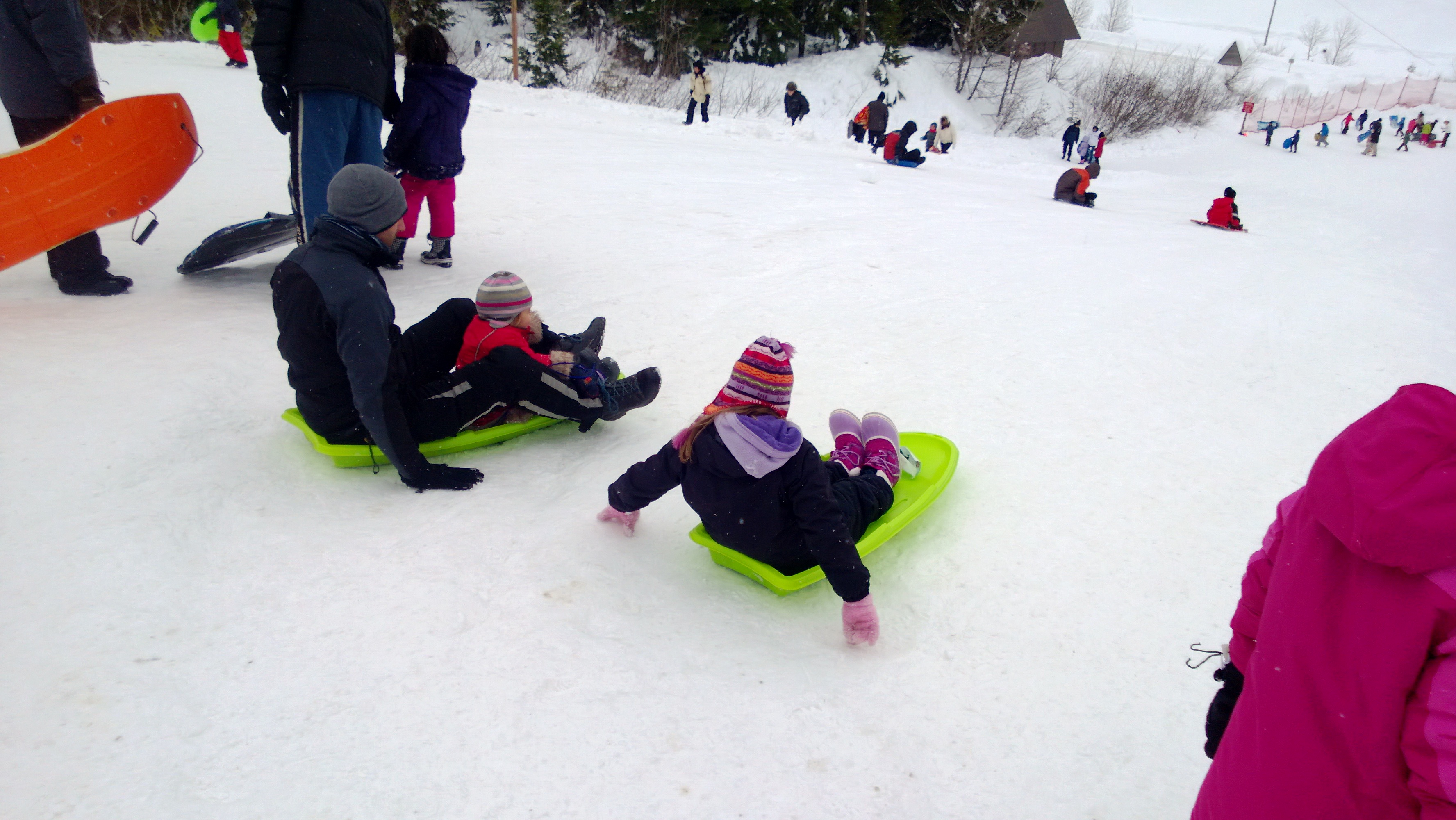
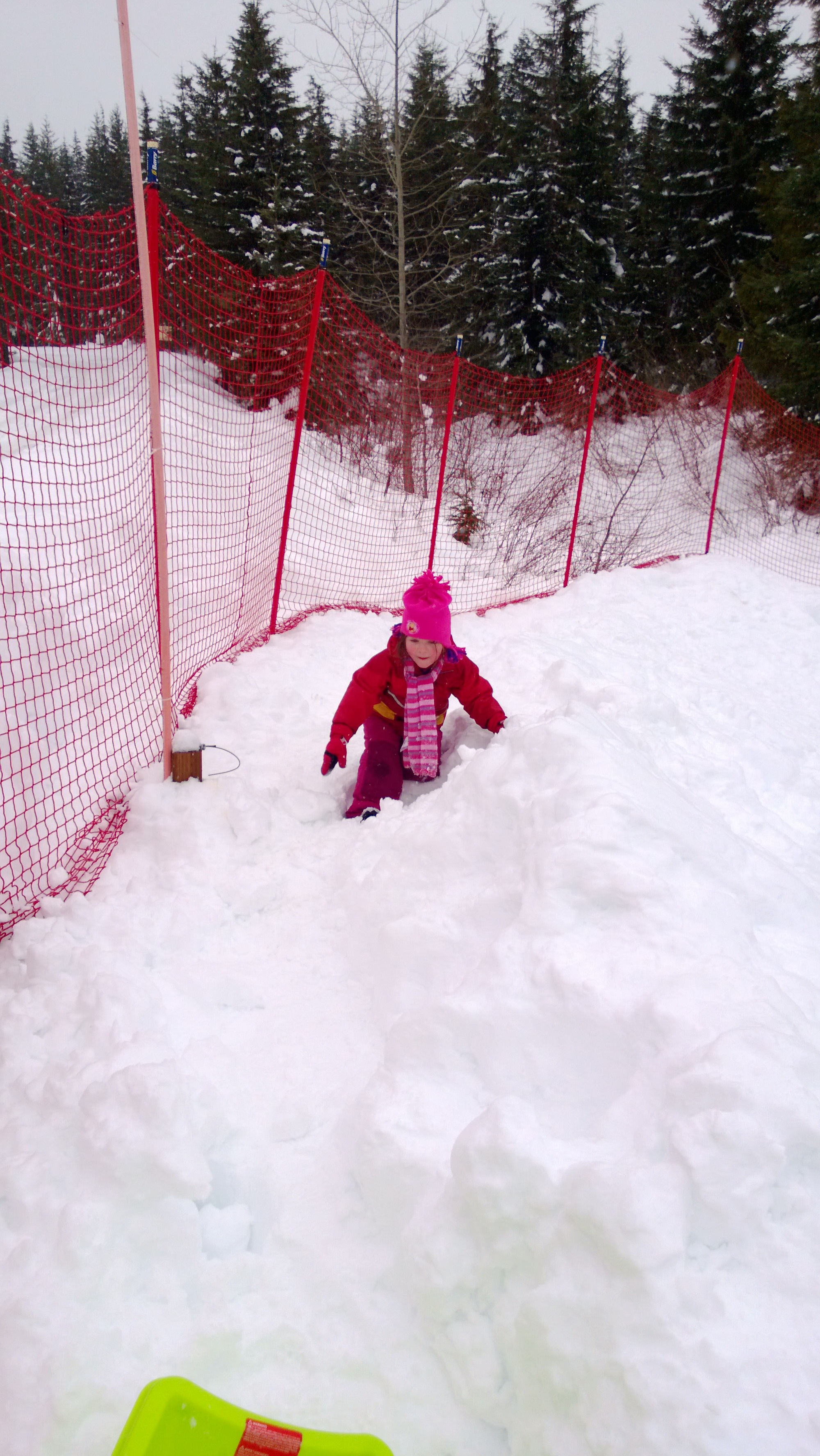
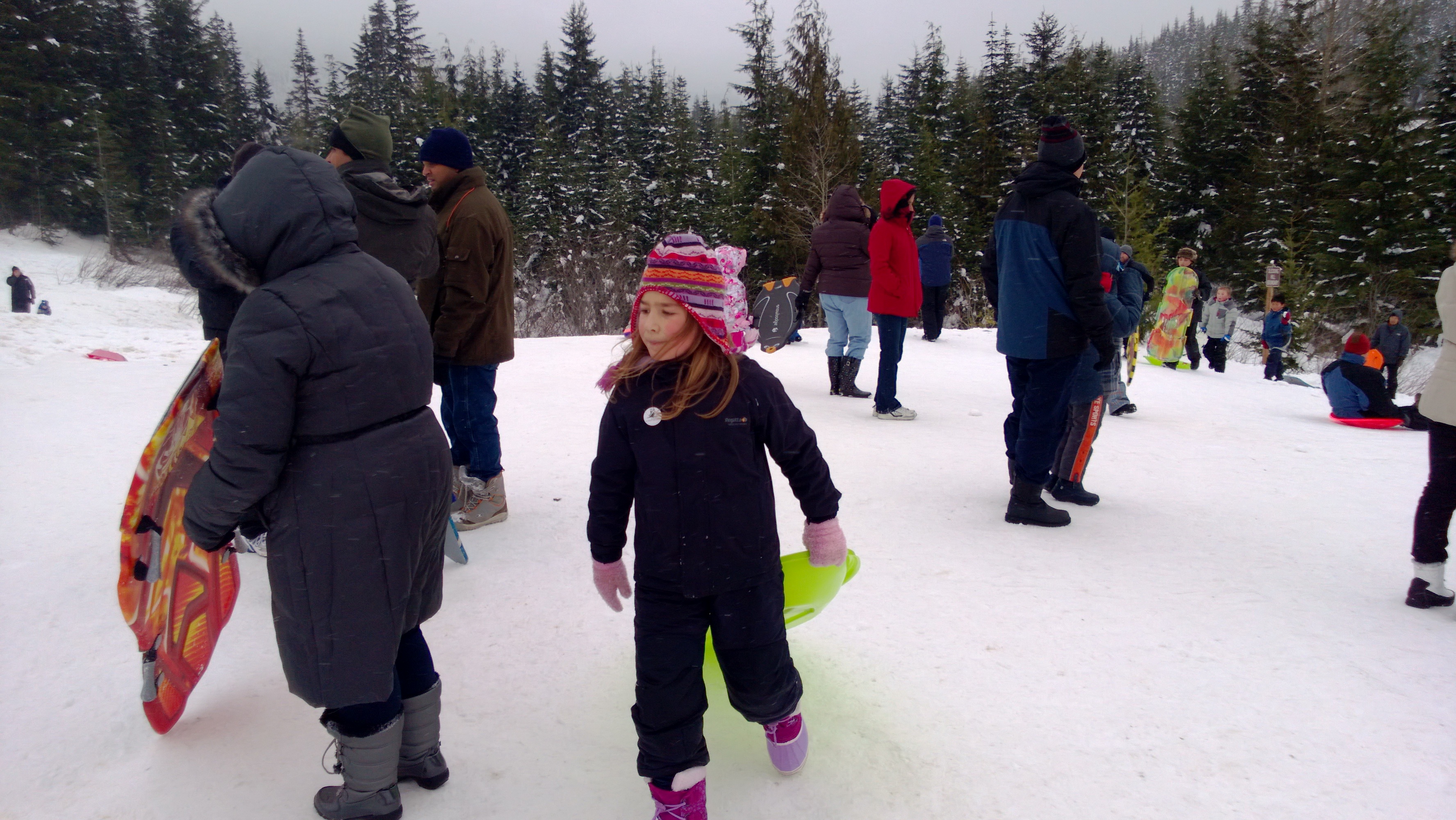
When I was a kid we waited all year for snow, sometimes we were lucky but often we would have a year of disappointment. When the snow came we would head to the local park with our sledges spending hours speeding downhill until we could bear the cold no longer. How amazing it is for our kids to be able to travel to snow within 40 minutes of home. We headed for Hyak Sno Park for a great family day in the snow. They wore snow boots, salopettes and warm jackets so they avoided the freezing feet in wellies and soggy trousers that I remember as a kid.
Getting ready to go down the small slope designed for under 5’sSometimes with dad……..sometimes on their own.Then we all went down the big slope.The little ones loved it , even when they jumped the ramp at the end and almost ended up in the fence. A face full of snow didn’t put them off.There they goAt the bottom they could wade through snowdrifts.
Then we climbed back to the topto stop for a restA snack to fuel more fun. NB. There isn’t anywhere to get food or drink at the snow park so a flask of hot soup and some snacks are a good idea.Before heading home we build a little snowman. Goodbye – see you again soon.
Hyak Sno Park can be found in Easton off exit 54 of I90.
Open 8 am to 4:30pm
The parking lot has 150 spaces. Parking permits are
required, Daily Sno-Park Permit and Daily or Annual
Discover Pass or a Seasonal Sno Park Permit plus Special Groomed Trails Permit
sticker without Discover Pass. These can be purchased at the park.
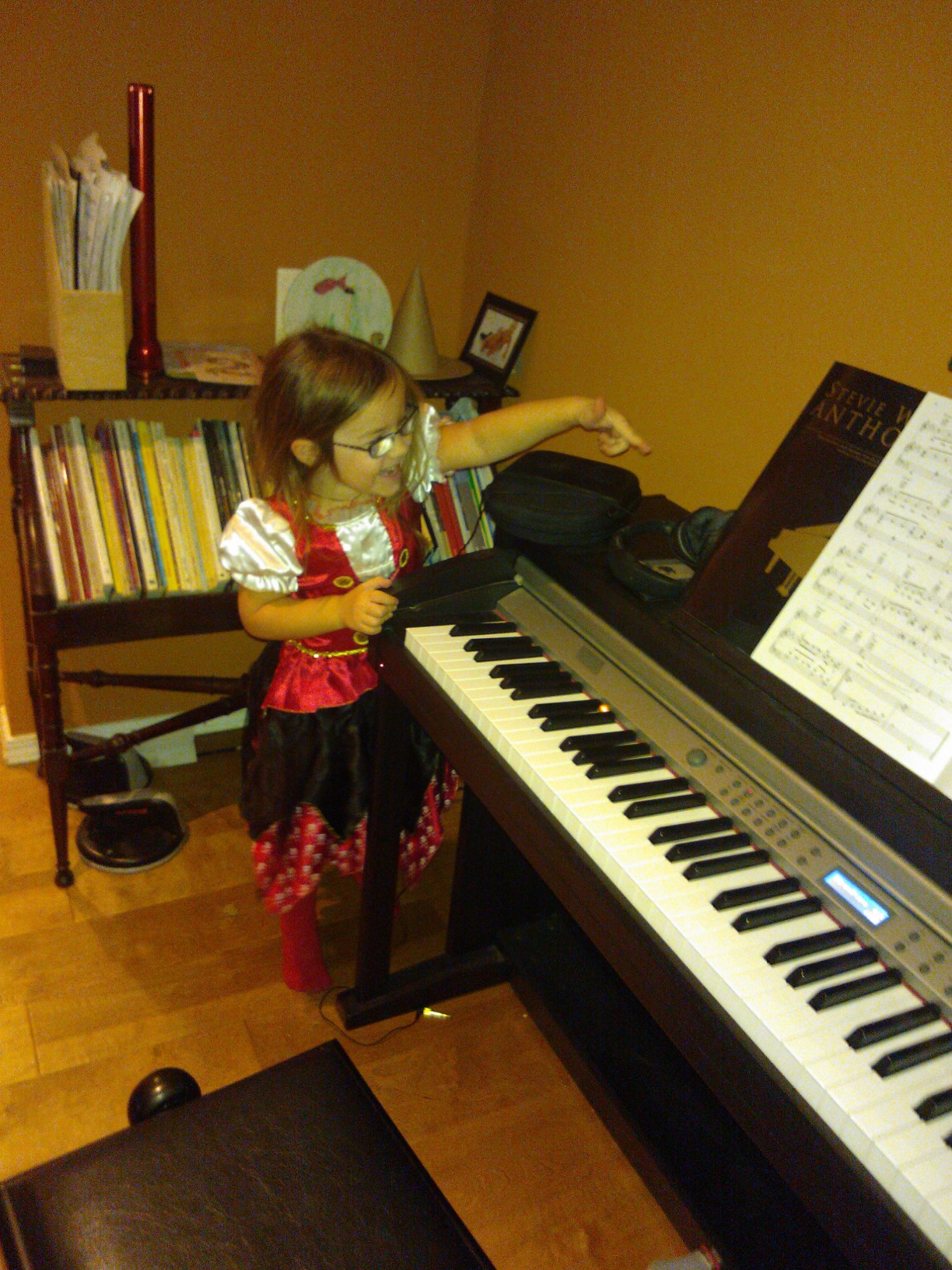
My idea of the perfect family Christmas is a little clichéd but involves mince pies, mulled wine, a roaring fire and singing around the piano. This is becoming a reality in our house. With an array of instruments including piano, guitar, clarinet and saxophone and a whole family who enjoy singing and music, we are loving making and recording music together. When I was asked if I would like to review Jingle Bells, from music-for-kids, I thought it would be a good chance to add Christmas songs to our repertoire.
The Jingle Bells book and CD features 18 well-known Christmas carols and songs. The book is nicely presented with each song displaying the notes of the melody plus chords written along the top. There is also a handy chord chart at the back of the book for both guitar and ukulele. Being a beginner, I photocopied the chord sheet to make it easier to reference while I was playing guitar. With my basic guitar skill, I found that there were a few too many chord changes to play many of the tunes with confidence but with most songs you could leave some of the chords out.
The piano music is basic (right hand melody and chords) and was great for my 8-year-old to practice sight-reading and play a simple tune . The chords could be added by a more experienced pianist to play accompaniment, I even managed to sing along to my own rudimentary playing during silent night.
The CD contains all the songs in the song book and is a nicely sung collection of Christmas carols. Younger children may find the keys too high.
My little ones enjoyed filling out the sticker pages and singing along to Jingle Bells while their sister played the recorder. I was disappointed that there weren’t more songs for the little ones like ‘Rudolph the Red Nosed Reindeer’, ‘When Santa got Stuck up the Chimney’ or ‘Away in a Manger’. They joined in with Jingle bells and We Wish you a Merry Christmas and there are a few other simple melodies that they could learn but I would have liked to have seen more simple songs that weren’t carols.
If you are looking for a simple book and CD of traditional Christmas Carols, at £7.95 this is excellent value.
No payment was a received for this review, a copy of the material was received for review purposes.
Alongside making some provision tax deductible, other proposals include
increasing the number of children a childminder can care for.
improving their qualification level in a bid to maintain quality.
It seems however, that there are a number of flaws in their thinking.
‘Ms Truss has pushed for reform to regulations imposed on child minders to
increase the number of child minding places. If more places can be provided for
parents, then the Conservatives believe prices might start to come down.’
Yet in a later paragraph:
‘Downing Street sources said Liberal Democrat and Conservative figures alike were
now convinced that looser ratios mean nurseries can take more children on which
could see staff paid more, and so greater quality staff attracted.’
I’m not sure that increased wages for early years workers and a lower cost to parents can be achieved without a significant investment of government funds.
It seems to me that the government believe that by increasing the number of children childminders can care for, they will attract more people to the profession, as they will be able to earn more. However they are also proposing changes to the qualifications needed to become a childminder in a bid to maintain quality.
In my experience of working with childminders, this is what I think will happen. A proportion of very good childminders will be scared off by the thought of having to achieve yet another qualification, losing many of our oldest and most experienced childminders. Those that stay may take on extra children but once they are better qualified and have factored in the added expense of having more children (e.g. equipment, larger car) and the additional challenges of caring for a large number of children under 5, they are likely to quite rightly increase rather than decrease their hourly rate. Some childminders will decide that their quality depends on taking fewer children, therefore not achieving the desired increase in childcare places. Some will be attracted to the industry I’m sure but how attractive really is looking after 5 children under the age of 5 on your own?
In my opinion these proposals reduce parental choice. I like many women chose to send my children, in their first years, to a childminder. I chose this for my children because I felt a home environment where my children could experience many of the things they did with mummy, would be the easiest transition. I also chose a childminder because they could play with a few other children but have the individual, loving attention they needed from one adult. My children love their childminder in the way they would an aunt or a close friend of the family. I’m worried that this would be lost once the number of children is raised significantly above the size of the average family.
My mother was a childminder when I was growing up. The children she cared for (never more than 2 at a time) became an extension to our family, they called her ‘aunty’. Childminders these days take on far more children in a bid to fulfil demand for places and to earn a decent wage, if the ratio is increased again will there be any ‘aunties’ left? Please UK government don’t take away parental choice.
Many of us provide elaborate parties for children under the age of 5 and then find that they are happy just ‘playing’. I’ve adapted my parties over the years. I found that before the age of 3 my children were happy to have one or 2 friends visit to play games and eat cake. Even when they were a little older they mostly enjoyed a few crafts, games and dancing.
According to a recent study by I CAN the communication charity, my children are not unusual. In a survey of 1500 parents they found that the top 5 party pursuits for under-5’s were:-
Dancing games like Musical Chairs, Musical Statues and Musical Bumps
Party games like Pass the Parcel and Pin the Tail on the Donkey
Playing outdoors with other children
Eating party food
Singing and rhyming games like the Hokey Cokey and Row, Row, Row Your Boat
I CAN Communication Advisor, Kate Freeman said “The top five activities all involve communicating and socialising with their friends – from pass the parcel, which boosts turn-taking and listening skills to singing and rhyming games like the Hokey Cokey. This type of activity enhances children’s understanding of the structure and meaning of language – and there is no better environment for a child to develop their confidence than with a group of friends and adults in a relaxed and fun setting like a party”. Furthermore, mealtimes and snack times are a fantastic opportunity for young children to continue to develop communication skills.
Fun games to play at parties to develop children’s communication skills include:
Singing and rhyming songs – a great way to help children learn vocabulary and have fun making music together
Playing clapping games (Pat-a-Cake) – to help children to develop their coordination, control and movement as well as learning vocabulary and social skills
Word Games (Simon Says and I Spy) – to help to develop children’s vocabulary about the world around them and to listen to instructions (These games can be adapted to easier versions for younger children)
Turn taking games (Pass the Parcel) – to help children to learn when to talk and when to listen
Games like musical statues to encourage children to listen carefully. Listening skills can be developed further by saying ‘Stop’ in a quiet voice instead of pausing the music.
Imaginative play like toys’ tea parties help children to expand their language.
When I was teaching in nurseries we often used to play ‘ring games’ like ‘Farmers in the Den’ and ‘Hokey Cokey’ if we had bad weather and it was difficult for the children to play outside. They were always a firm favourite. The children also loved playing picnics or tea parties.
I CAN is inviting nurseries, pre-schools, childminders or community groups to take part in their annual fun and educational event . This year I CAN is partnering with Entertainment One to make its pre-school character Humf the brand ambassador. The 2013 Chatterbox Challenge:Mad Chatter’s Tea Party with Humf asks groups to organise sponsored tea parties where children can join in with popular songs and rhymes to develop their communication skills in an enjoyable way. I organised an event years ago with my pre-school music group. We learned new songs and the children were awarded stickers and certificates for their achievements.
The singing and rhyming activities for the 2013 Chatterbox Challenge: Mad Chatter’s Tea Party with Humf have been developed by I CAN speech and language therapists and teachers. Lesson plans, which include Humf and his friends in the activities and illustrations, link to key aspects of the new Early Years Foundation Stage including Communication and Language, Physical Development, and Personal, Social and Emotional Development. All the activities are aimed at supporting and developing children’s speech and language skills.
Being involved with the Chatterbox Challenge: Mad Chatter’s Tea Party with Humf encourages children to think about communication, whilst helping support those who find talking and understanding difficult.
Chatterbox Challenge week is 1st – 8th March 2013 and most groups will be holding their Tea Party with Humf during this week, though groups can actually take part at any time during 2013.
To register and get involved in this year’s Chatterbox Challenge:Mad Chatter’s Tea Party with Humf, go to www.chatterboxchallenge.org.uk
As I lifted my 2-year-old out of her cot to embark on the school run and she nuzzled sleepily into my neck, I held her firmly and asked myself ‘what would I do without my kids?’
When she greets me with an enthusiastic ‘mummy’ or smiles at me and laughs at the things I do that nobody else deems funny.
When I share stories with my girls and the 2 little ones curl up, one under each arm.
When I watch my eldest growing up into a wonderful young lady with a mind of her own, a caring nature and an amazing bond with her dad.
When I’m having a rest and my 4-year-old says ‘I’ll close the door mummy so no-one disturbs you’.
When I say to my 2-year-old ‘it’s time for nap now’ and she replies ‘ok mummy’
Each time I watch them growing into bright, funny, confident, beautiful girls I am proud and thankful. At those times what would I do without them?
On the other hand
When I’m rushing to get out the door and my 2-year-old decides she must put on her shoes herself.
When orders are being barked from all directions at the breakfast table but I haven’t yet even managed my first cup of coffee.
When I’m struggling around the supermarket with my 4-year-old clinging to the side of the trolley, blocking up the aisles and my 2-year-old crying because she can’t have a chocolate bar.
When my 4-year-old wets herself for the 4th time that day .
When all hell breaks loose in the car because my 8-year-old wants to sing along to ‘Don’t Like Mondays’ but my 4-year-old wants to be the only one who is allowed to sing.
When the chaos of mess and noise is just too much…. I ask myself again, ‘What would I do without my kids?’
I’d travel and write.
I’d go running with my husband and meet him for lunch
I’d have a social life after 6pm
I’d get involved in theatre again and be able to rehearse 3 times a week.
I’d never be seen in McDonalds drinking coffee with my jumper inside out and a friend who didn’t even notice.
But…..
What would I really do without my kids?
Some days I’d struggle to get out of bed or venture out of the house and I’d cry every time I saw a family enjoying themselves.
They’ve pulled me through the toughest times, giving me purpose, hope and unconditional love.
A few years ago I ran training sessions for early educators and parents on communication, language and literacy. Many of the resources we recommended, including the excellent dvd Chatter Matters, came from the Communication charity I CAN. One of the key messages of this training was that ‘reading and writing float on a sea of talk.’
Kate Freeman, I CAN Communication Advisor and experienced paediatric speech and language therapist says:
Given the right support, many children learn to talk without too much effort. There’s a golden age for learning to talk – this is before 5½ and so skills learnt at this age bring great benefits later on. Evidence has shown the early years to be a vital time for supporting all children’s communication, as well as a time to identify any difficulties and put support in place to improve a child’s overall life chances.
I was very excited to review I CAN’s latest resource Chatting with Children. This is a really nicely presented set of 30 cards with activities for promoting speaking and understanding for children aged 3-5. The activities are simple and require no specialist resources. Some are copying or guessing games of the kind we often play in the car, some require household objects and a couple that I played with my 4-year -old and 2-year-old used our musical instruments box . These games would be great for including in my music groups.
Each card has ideas for making the activity easier if your child is struggling or more challenging if it is too simple. The activities are equally suitable for large groups or one child. They are a great resource for families and could provide a wealth of ideas for small group times at pre-school. Many of the cards remind me of games I played with the autistic children I worked with, helping them extend their vocabulary and comprehension and categorise language. These cards would have been an invaluable resource for these families.
The cards focus on a number of skills, listening, developing vocabulary, social skills and understanding what is said. The games are varied and can be played for a few minutes or half an hour or more. My 4-year-old loved the listening games, playing hide and seek with our timer and listening carefully for the soft tick to help us find it and making sounds with household objects and guessing what they might be.
Chatting with Children is also available as part of a brand new boxset being launched this month by I CAN – the Early Talkers Boxset (£19.99). The boxset contains the original Babbling Babies and Toddler Talk as well as the new Chatting with Children, and has been created especially for parents and Early Years practitioners supporting babies, toddlers and young children in learning to talk.
The three packs between them, contain activities for children from birth to school age. I was so impressedthat I am going to order the box set for my brother to play with his one year old twins.
Chatting with Children is available in paperback for £7.99 paperback and hardback for £12.99 .
All proceeds go towards I CAN’s work with the 1.2 million children in the UK who have long-term speech, language and communication difficulties. To purchase Chatting with Children or the Early Talkers Boxset comprising all three activity card sets visit http://www.ican.org.uk .
This is not a sponsored post, a copy of chatting with children was received for review purposes
Kate’s Top Tips for Chatting with Children aged 3-5 years old
• Be quiet Take time to talk to each other in a quiet room. Turn off the TV and radio, and shut the door to block out any other background noises. Children have to learn to block out background noises, so they need a quiet environment to focus on the sounds they hear.
• Be face-to-face Help young children to see your face – make sure you’re at the same level as them. Sit or crouch opposite them as they play, or sit them on your lap. Sit opposite the child so you’re face-to-face with them. Being face-to-face means that the child can see you and your facial expressions. Also, you can see them and their responses and reactions to the games you play together or the conversations you are having.
• Don’t rush – take plenty of time Young children take longer than adults to process what they hear – sometimes up to 12 seconds. They need plenty of time to respond to you.
• Be patient Young children can easily lose interest in what you’re doing – this is perfectly normal, especially for 3-year-olds. Don’t worry – just stop the game that you’re playing together and try again another time.
• Be prepared for anything Follow the child’s lead and adapt the game or conversation to fit in with what they’re doing. This can help maintain attention on particular games.
• Ditch the dummy A dummy gets in the way of attempts to talk during conversations and games. Children of 3 and over don’t need to use a dummy.
• Use the language you naturally use at home It’s important that you speak naturally to young children; this helps develop their language skills.
• Enjoy it This is a special time together, so have fun playing, chatting and learning about each other.
There has been a common thread on early education forums recently about how best to share information with parents. Parents are the child’s first educators and most good early education settings will look for ways to share learning journeys with parents. There could be barriers; some busy parents want to rush away without spending time conversing, other families are hard to reach, English is not their first language or they may feel uncomfortable about talking to teachers but it is important to understand a child’s home background and to support learning at home.
Put yourself for one moment in the shoes of a parent who drops their child to your setting at the start of the day and won’t see them again until it is almost bedtime. Imagine you are a parent who has stayed at home with your child for 5 years to suddenly find them in full-time school. Most young children will find it hard to remember what they have done during the day, leaving parents feeling completely out of touch with their child’s world. I remember when my daughter started school for the first time and feeling sad because I was no longer in control of her influences.
Many pre-schools are really good at sharing information. The key worker system means that staff know the children well and nurseries are generally happy to invite parents into the classroom and spend time talking to them. As Karin remarks
Thanks to the thorough keyworkers and pre-school staff we knew everything that went on every day.
Karin talks about the new learning journey parents experience when their children start school as she is learning to be a big school mum and asks
‘ how on earth can we find out what they are getting up to?’
As a parent there are a few simple things that can help. Start by asking very specific questions – Did you like the story you read today? What was your favourite thing that happened today? Who did you play with at playtime?
Chat to the other parents in the playground, children usually tell different stories and you may start to piece things together.
Encourage your child’s teacher to help you to find out by suggesting some of the things below. Start your discussion with it would be really helpful if …
As teachers there are things we can do to help. When parents feel valued and a part of their child’s learning and fully informed about what, why and how their children are learning, it is less likely that there will be a feeling of them and us.
Here are some of the ideas I have seen working well in practice
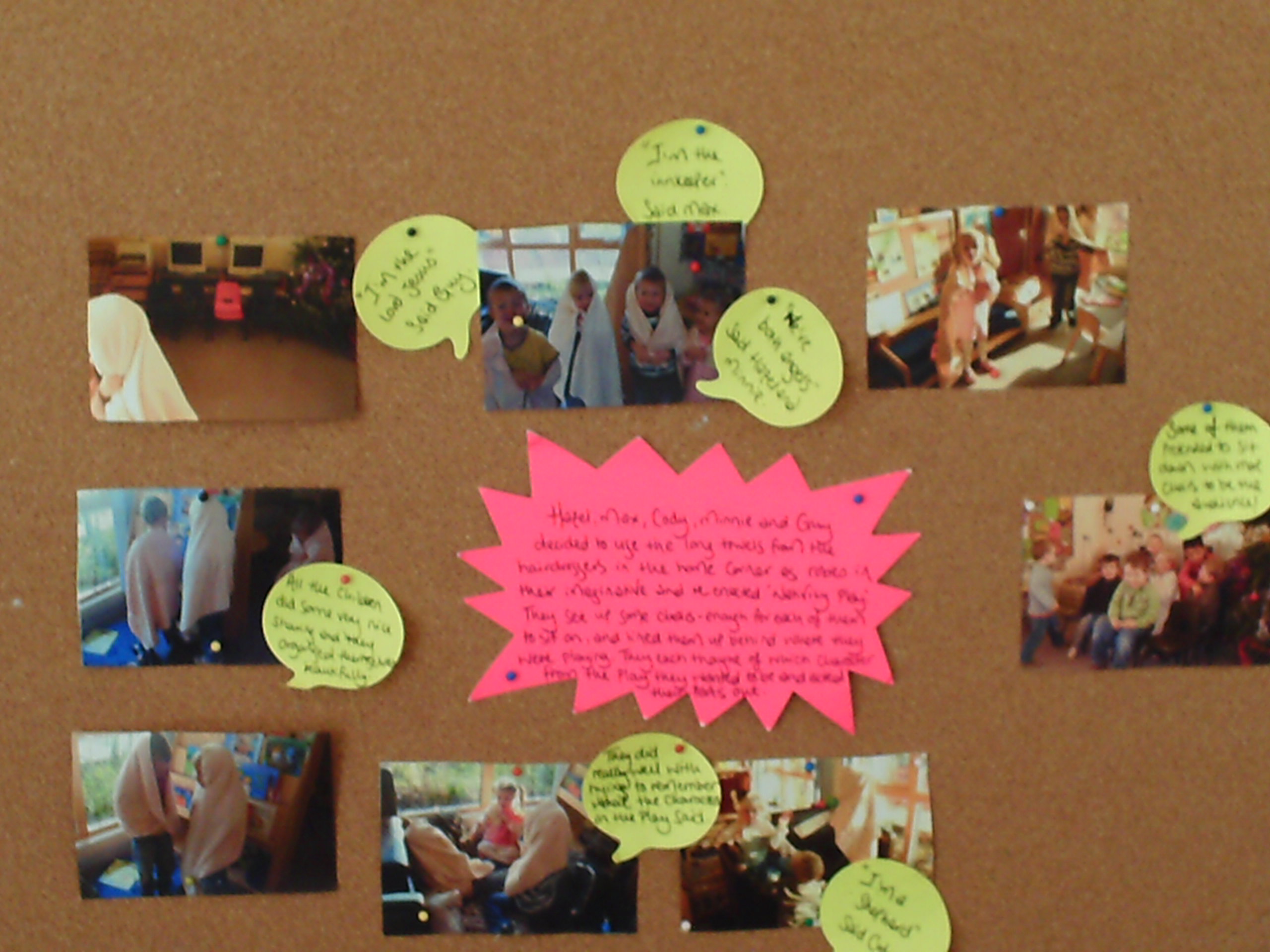
Documenting learning
The pink writing in the centre sets the scene, ‘ A group of children decided to use the large towels from the hairdressers in the home corner to re-enact the Nativity Play. They set up some chairs for each of them to sit on and lined them up where they were playing. They each thought of which character from the play they wanted to be and acted their parts out. ‘ The comments around the edge describe the learning in more detail, All the children did some nice singing and organised themselves carefully. They did really well at remembering what the characters in the play said. Some of them wanted to sit on chairs and be the audience. ‘We’re both angels’ ‘I am the Innkeeper’ ‘I am the Lord Jesus’
In my opinion this is the most effective way of showing parents what their children are doing. Documentation tells the story of what children have been doing by representing the stages of learning, using photograhs, anecdotes from the children, examples of work and teacher analysis. In this way parents can see what their child is doing, what they are learning and why they are doing it. Carlina Rinaldi president of Reggio Children in Italy says,
documentation is more than simply assessing or displaying the work of the children. “One of my definitions of documentation is that it is first of all an act of love,”
This describes perfectly the warmth that emanates from the documentation in Reggio Emilia – it is like shouting from the rooftops – look at what our children are doing. Isn’t it fascinating? Come and join in. Many good examples of documentation of children’s learning can be found in the projects of Sightlines Initiative.
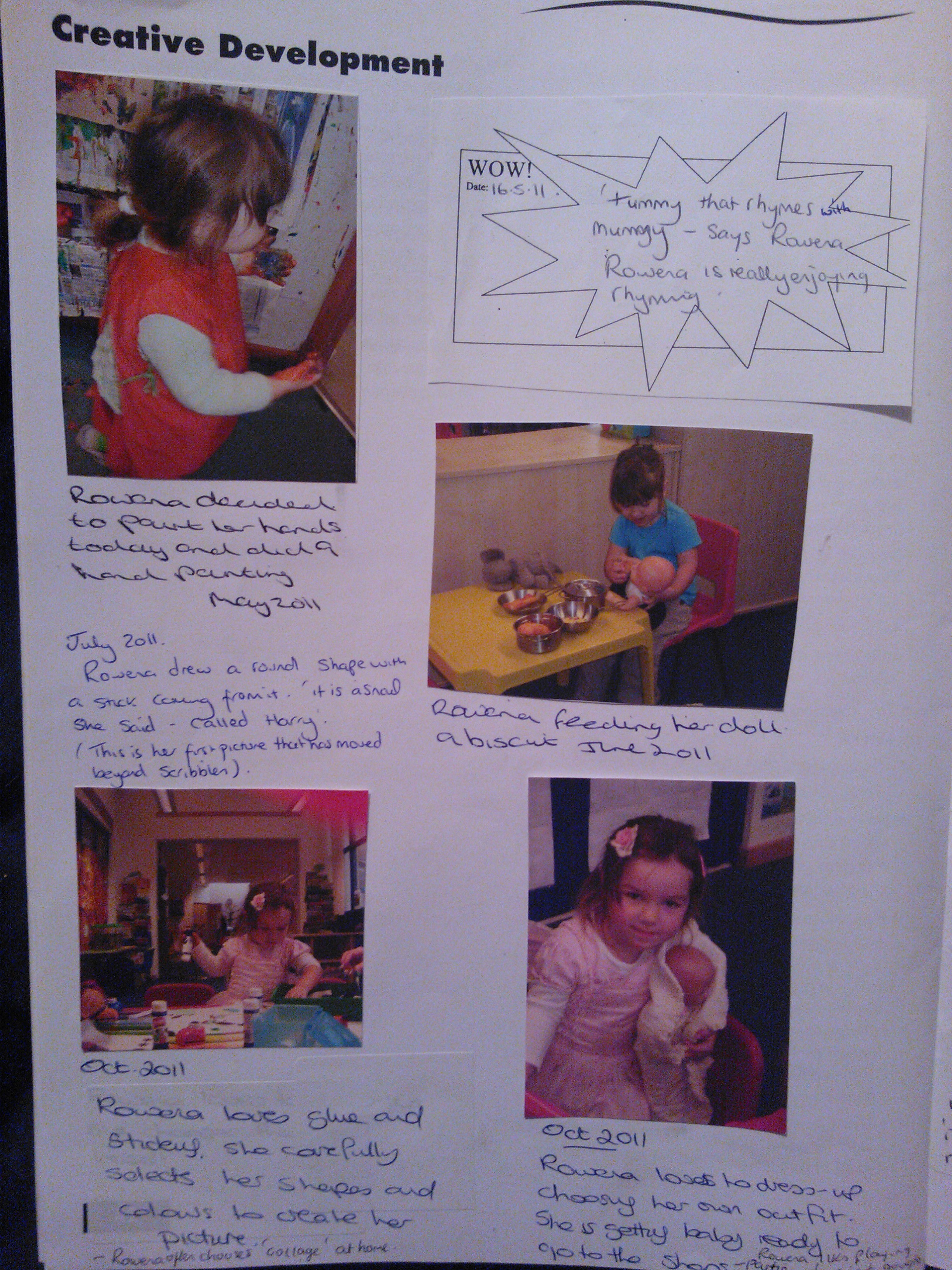
Learning Diaries
The pictures tell the story of the child’s fascinations and the teacher annotates explaining the learning that took place. The Wow moment was added by a parent about learning that had occurred at home. Parents can also comment on the learning at pre-school to show how this matches with what they do at home.
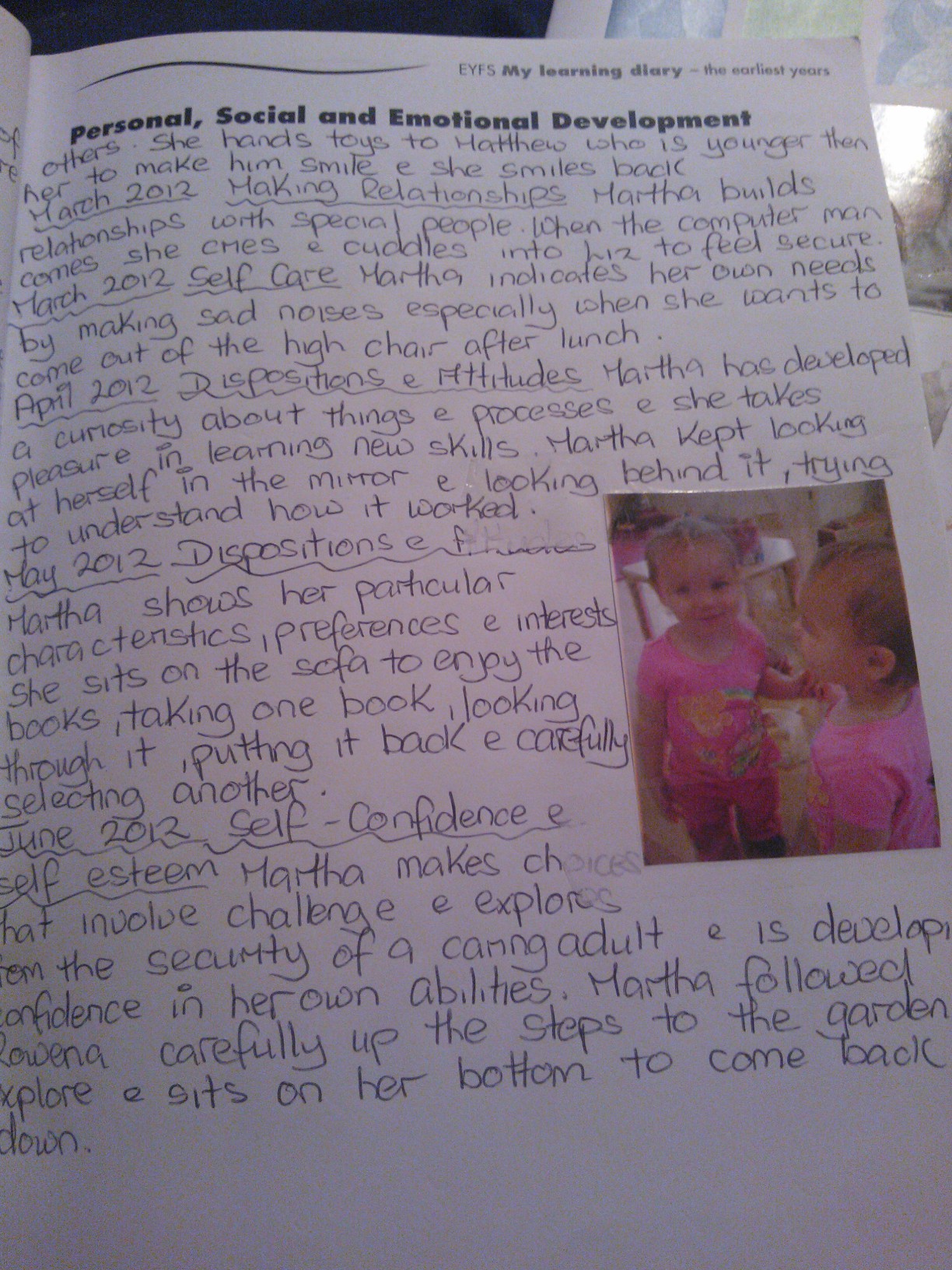
Learning diaries have been available for every Foundation Stage child (up until the end of their first year at school) in the UK since 2008. These show the learning journeys of individual children through photographs, children’s comments and teacher analysis of learning. The diaries are an excellent record of progress and should move with the children when they go to school. Parents should be made aware that they are available to be viewed at all times and encouraged to comment about learning at home.
An example of a learning diary extract for a child under 2.
Learning diaries work best when they are, as the title suggests, a record of children’s learning. My first encounter with learning diaries was when working with children with additional needs, as a way of understanding what was happening at home and how that translated into their behaviour at school. In my experience this shared aspect of the diary is sometimes missed. Emphasise that this is the child’s book and it is important that everyone involved with the child shares information to build up a complete picture of the child.
Daily Timetable
If parents are struggling to get information from their children about the day at school it can be useful to display a timetable. Some specific information is also helpful, such as today we read this story or we looked at seeds and berries.
Using Technology
Not all will agree but I think that modern technology could revolutionise the way we build partnerships with parents. Allowing parents access to your email (preferably not your personal one) is a great way of sharing experience though I would suggest creating guidelines. Perhaps suggest that the email is for sending anecdotes about events or things they have been doing at home that they may like to share or build on in class. Teachers could send photographs to parents during the day of their children’s learning or maybe create an online version of the learning diary? I once had a childminder who even in the days before smartphones sent my daughter home with a sheet of thumbnail photos depicting what she had been doing that day. This meant so much and gave me a great starting point for talking about her day.
Open door policies.
In my experience most pre-schools and schools profess to have an open-door policy but in reality it means little. Many encourage parents to help at school and this is a great way of understanding what children are doing at school. However for working parents and those with younger siblings this is not always an option.
Most nurseries and pre-schools invite parents in to the classroom to collect their child. Parents have the chance to familiarise themselves with the environment, children can show their parents what they have been doing and there is a chance to talk to the staff. It surprised me when my daughter started at a school based nursery that children were handed to parents at the door and we weren’t invited in.
It can help parents to feel a part of their child’s day if the room remains set up at the end of the day and they are able to wander around with their child talking about what they have learned. Clearly this can be difficult if younger siblings start to play with toys or children don’t want to leave, so simply leaving one or 2 things out is sufficient. Outlining rules about this being a talking/sharing time not a play time should also help along with setting a clear time for leaving. Not all children/parents will want to stay every day. Perhaps encourage a parents’ rota for helping clear away.
The benefits of the above are plentiful
Parents will not continually demand information from you about their children as they will feel better informed.
Parents will be less anxious about their children if they feel a part of their life at school/nursery.
The children will be more likely to share what they have done with their parents by proudly showing their documentation and learning diaries.
Children can encourage parents to contribute to learning diaries creating a clear picture of the child for the teacher.
Photographs are a wonderful way of sharing information with families for whom English is not their first language.
Parents will feel better equipped to support their child’s learning at home.
With thanks to North Somerset Early Years advisory team, Liz Maggs, Hilltop Pre-School and Early Birds Nursery – Long Ashton for images and learning diary extracts.
I had never heard of Quirk books before but when I was approached to review a couple of their titles, the concepts grabbed me. As the name would suggest, Quirk books publish titles that are a little different. They are most well-known for the Worst-Case Scenario series and have a large catalogue of slightly off the wall books.
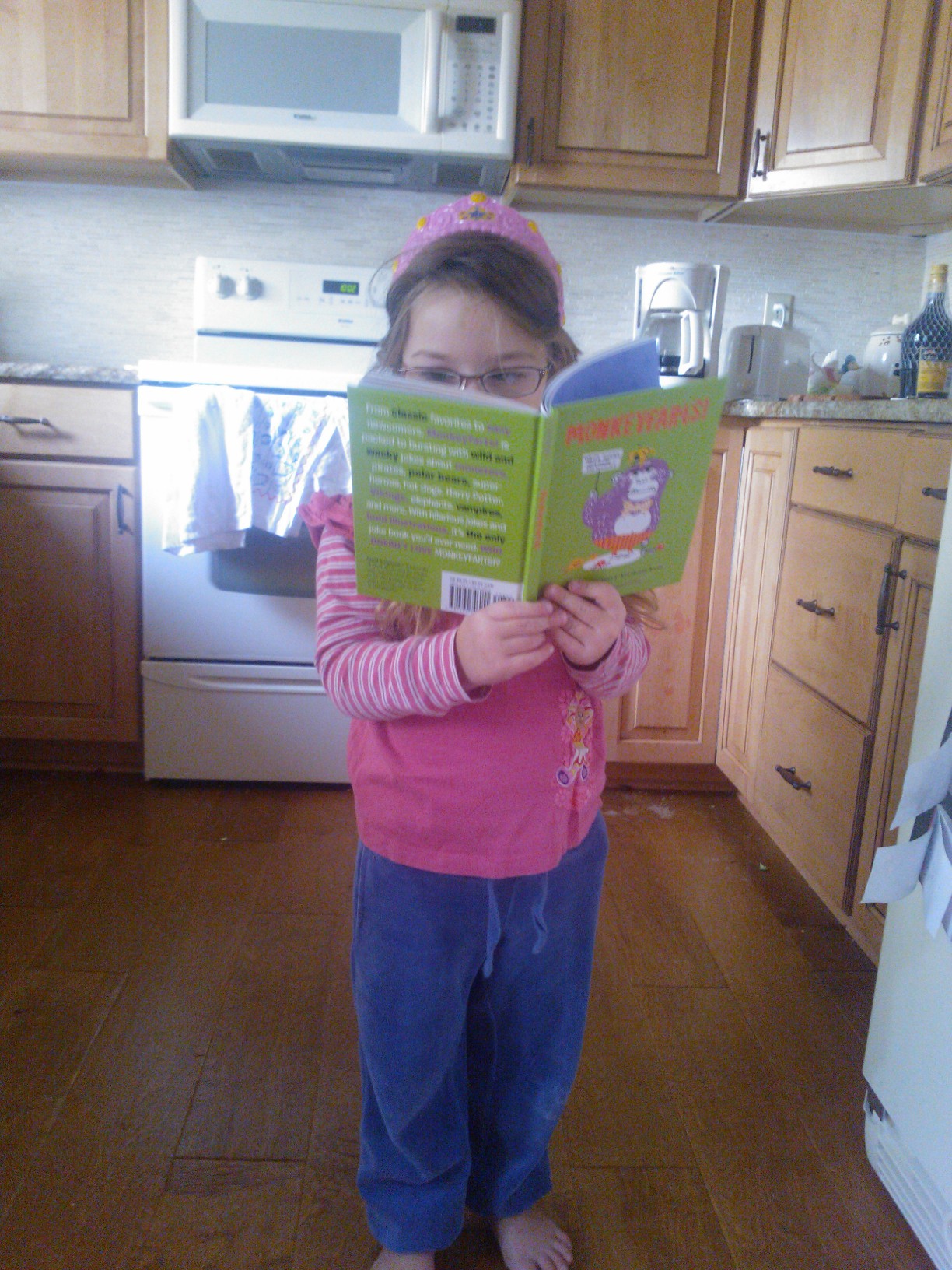
The first book I was asked to review is ‘Monkeyfarts – Wacky Jokes every kid should know’. My kids love jokes and joke books and we are always on the look out for new jokes so I knew this would be popular. The book begins with typical boyish toilet humour jokes that young boys will love and my girls did too. With a mixture of well-known one liners, longer story type jokes and old favourites that make you groan, there is something for everyone The book itself is a lovely little hardback edition, light durable and easy to hold. With a rrp. of £5.99 ($8.99 USD) it is very good value and ideal for a party present or stocking filler.
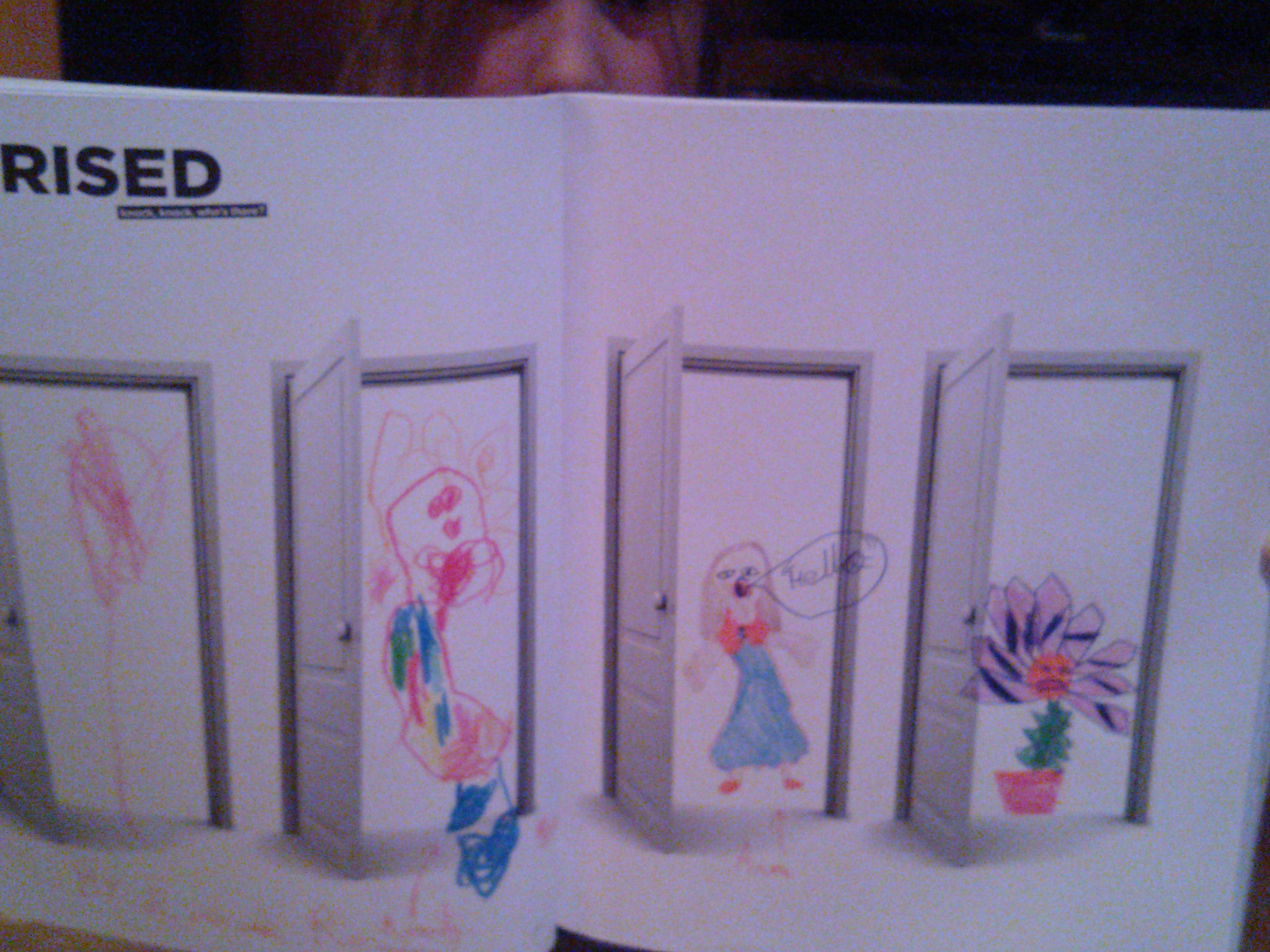
The second book would be attractive to children and adults alike. Fill in the Blank – An Inspirational Sketchbook contains a wealth of ideas to inspire creativity and design. Each page begins with the slogan ‘You are a….’ and then a design prompt. Some of my favourites include
You are a street artist – and won’t be arrested
You are at grandma’s – who’s in the family?
You are a genius – these ideas will make you rich
You are a tattoo artist – make your mark
You are an autobiographer – start telling the story of your life
You are in detention – confess your crimes
Most of the designs are for drawing but some involve writing or a combination of written and illustrated thought.
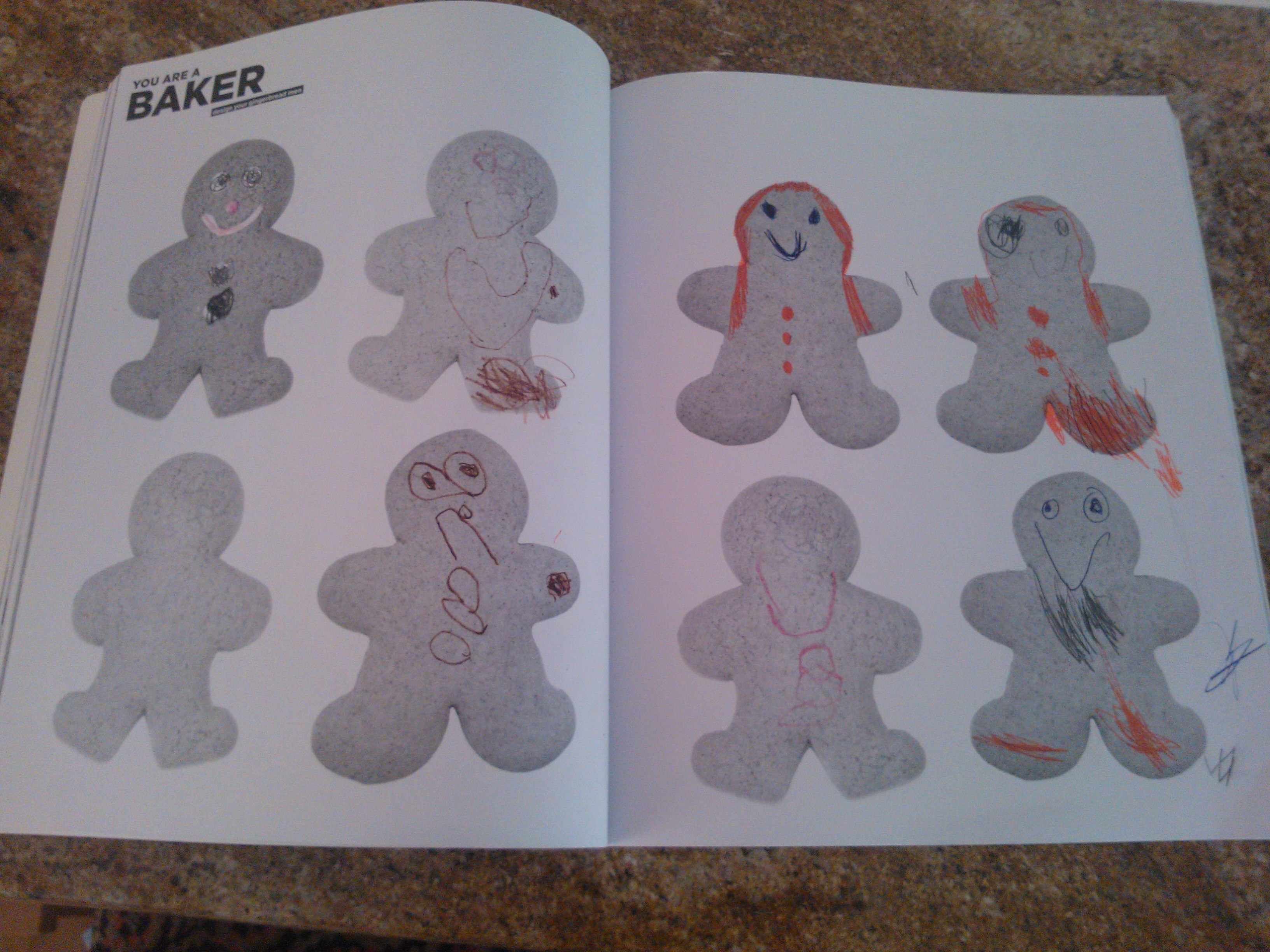
We picked out some of the simplest pages for my 4-year-old, she loved designing ice-creams and she shared the gingerbread man page with her 8-year-old sister.
My 8-year-old loves this book, it is an inspired transition from colouring books for older children. There are some lovely projects that we could work on together and it is a wonderful way to encourage children to draw for pleasure. With such a huge variety of blanks, boys and girls of all ages will find plenty to hold their interest, from designing a hat to creating a city at the end of the road.
This would also make a great coffee table book, a resource for teachers or an interesting addition to a waiting room. Additional blanks can be downloaded from the Quirk website where you can also create a profile and share designs.
Fill in the blank is currently retailing on Amazon.co.uk for £11.70
Competition
I have one copy of each book to give away to my readers in the UK
Simply leave a comment stating which book you would like and one winner for each book will be drawn at random on 3rd November
Terms and conditions
This competition is only open to entries from residents of the UK
One entry per person
one additional entry can be made by commenting on rightfromthestart’s facebook page under the link to this post
winners will be notified by email and first names published on the site.

 It is difficult to know what my children really think of their new life in America. They seem happy and my 8-year-old says she enjoys school. I know she misses her friends but I sometimes wonder whether she really fits in with her loud American classmates who chatter endlessly about One Direction.











 Right from the Start