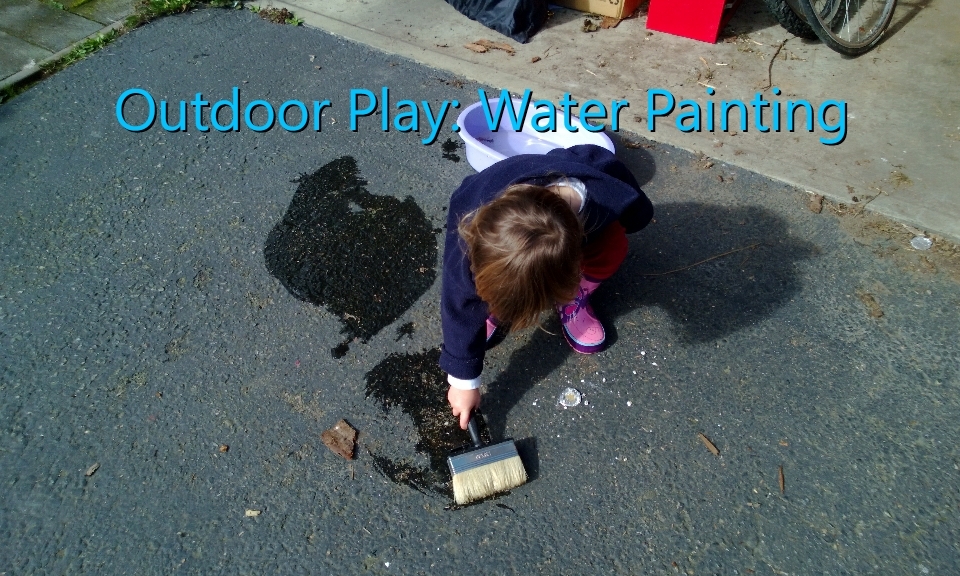
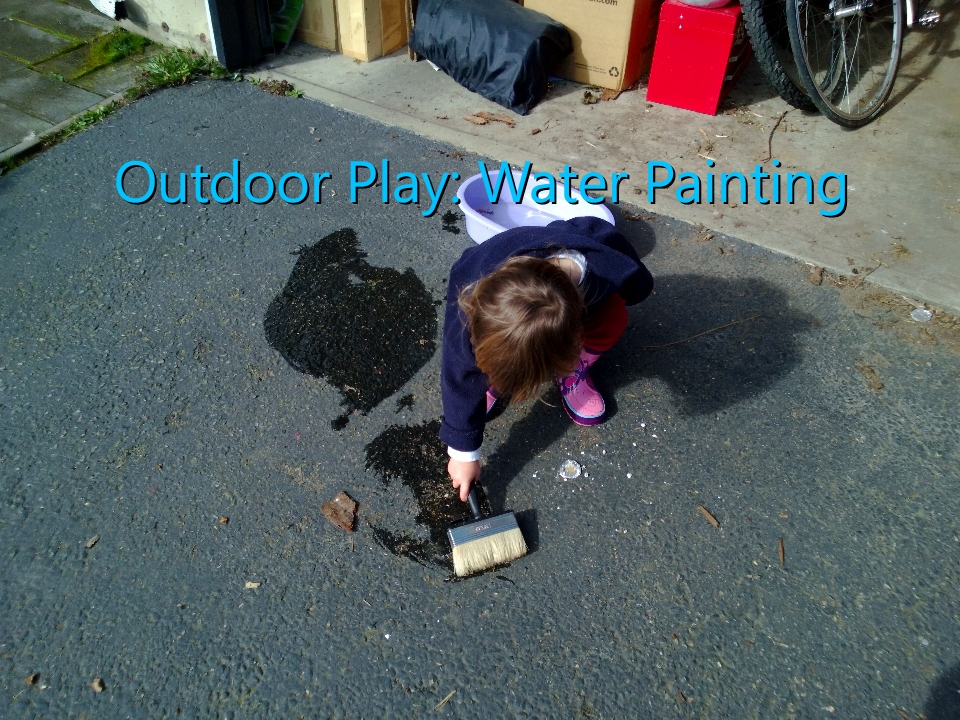
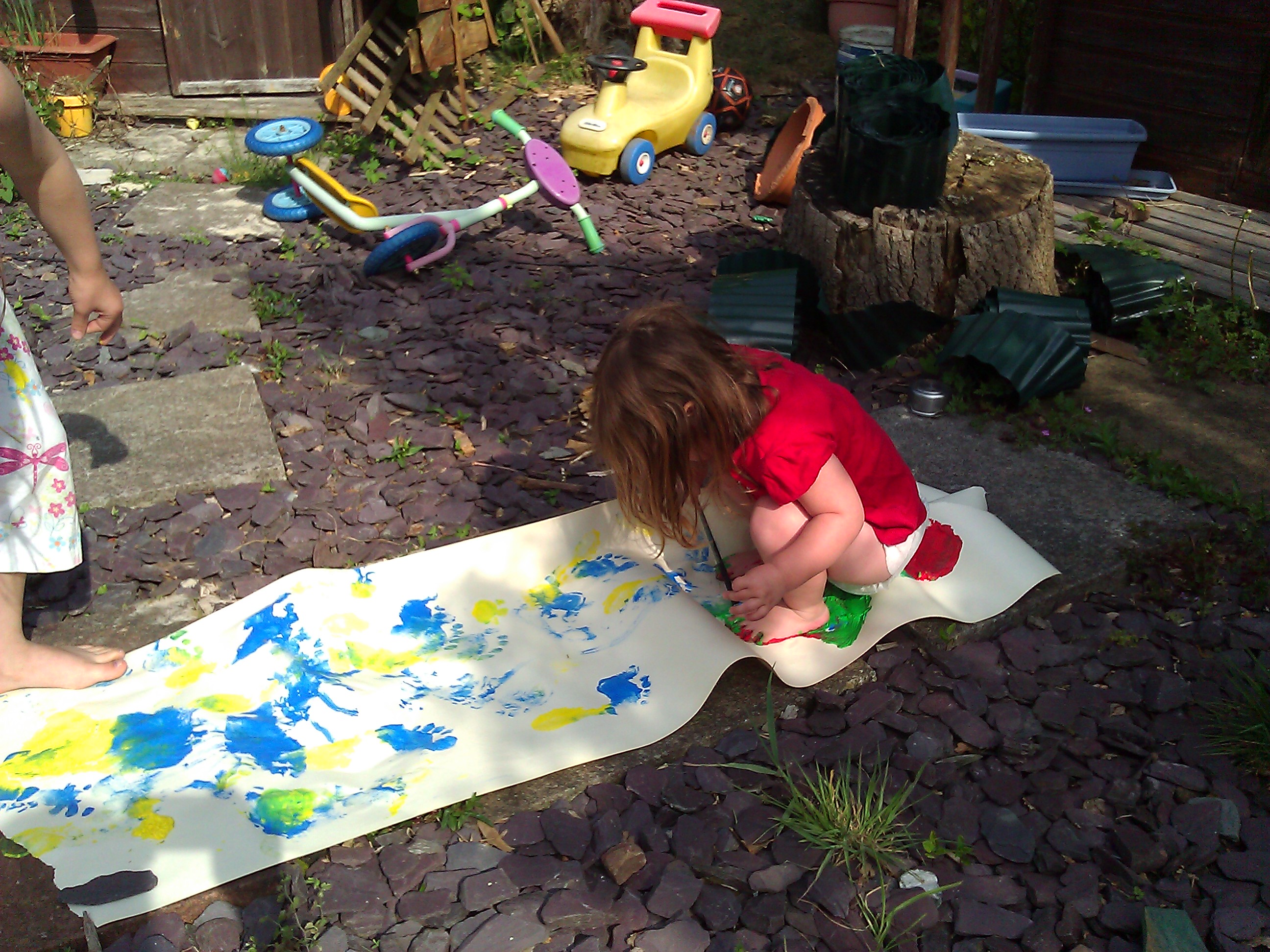
Getting my children to put things away when they are finished is often a struggle but sometimes it has its advantages. A tub and paintbrush were left on the driveway. After a few rainy days it inevitably filled with water. My 2-year-old picked up the brush, dipped it in the tub and proceeded to paint the garage.
On a sunny day she returned to the tub but couldn’t find her paintbrush. I brought a selection from the garage and as she discovered the different lines the brushes made. Painting on a dry driveway was a very different experience. I later found a paint roller – below are her remarks as she played.
My Children are big fans of Beat Baby and love to play rhyming games. Some of these activities and the way they help with early literacy development are documented in a previous post about Musical Games . Recently we were reading Ros Bayley’s Action Raps and then continued to make up some of our own.
After a few rhymes with me leading the way, my 4-year-old decided to have a try.
Having recently discovered some of the amazing hikes in the Seattle area we are really keen to encourage the children to appreciate the wonders around them. My kids love outdoor play, especially in the woods but a 4 mile steep hike can be hard work for an 8, 4 and 2-year old. To keep them going on our last hike I asked them to see how many letters of the alphabet they could spot in the surrounding area. The letters had to be found in nature and they weren’t allowed to create a letter by moving an object.
Here are some of the letters we found
X
t
V
Y
C
B
L
U
The view from the top is always worth it (and the promise of snacks).
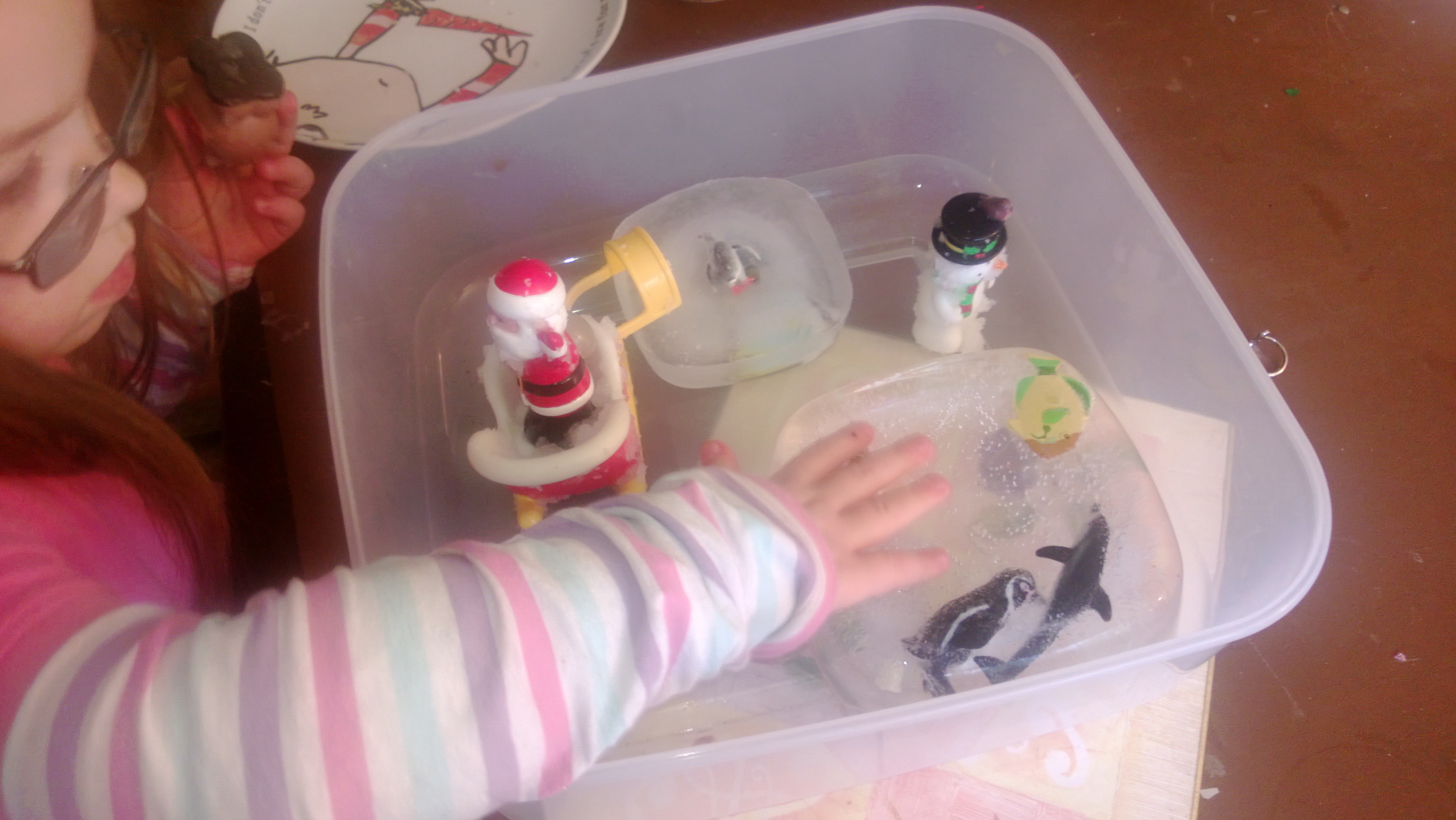
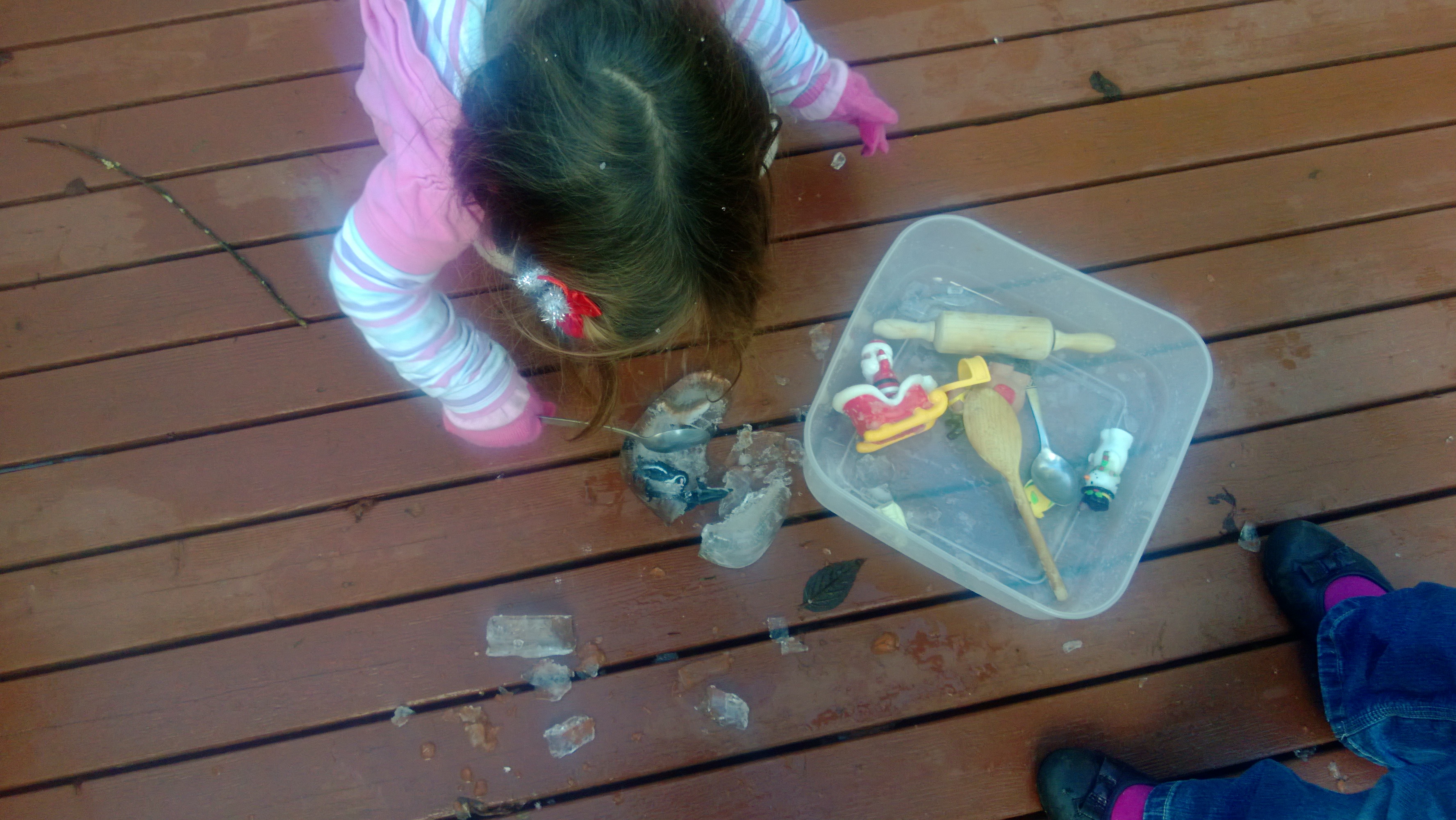
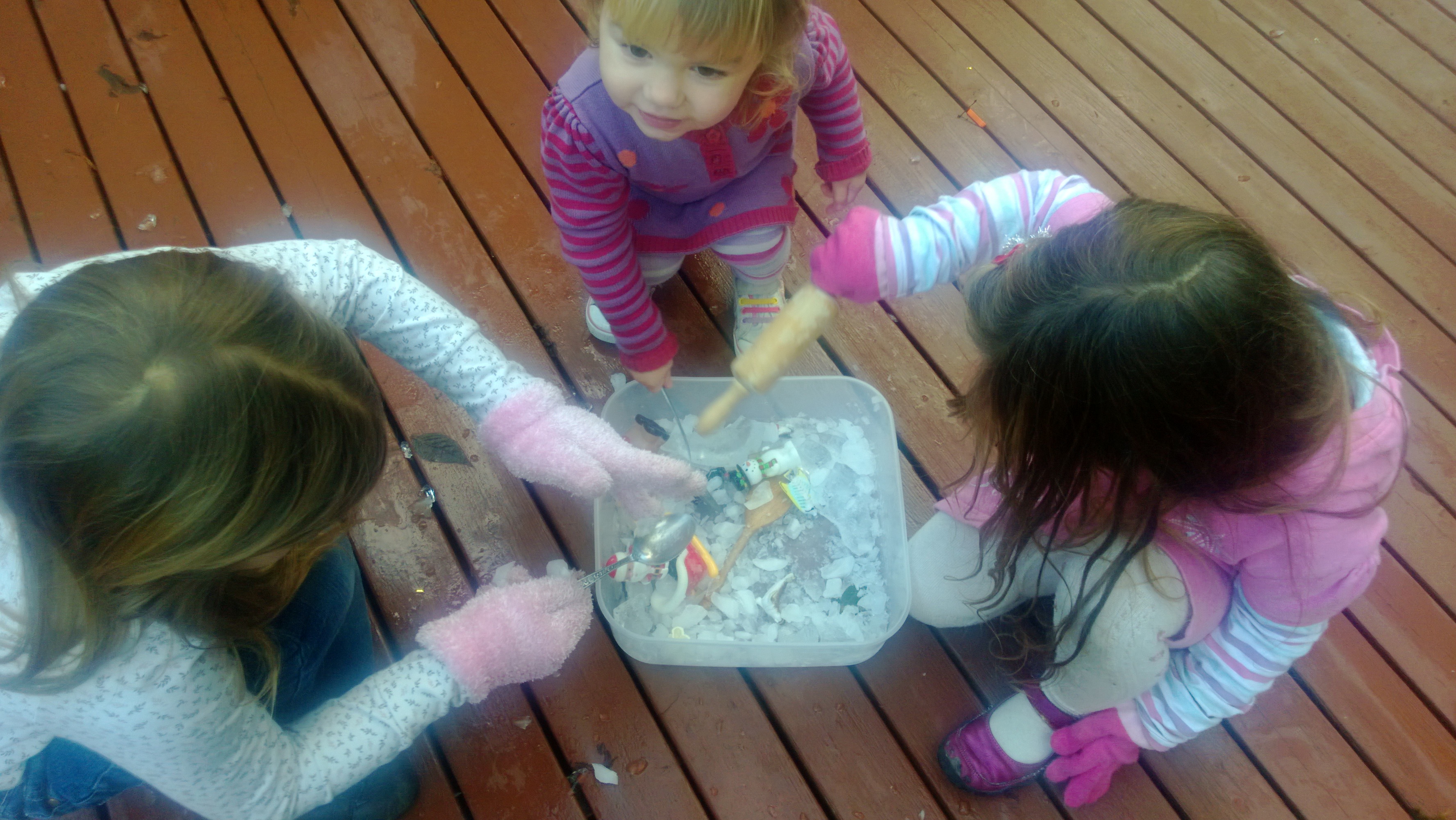
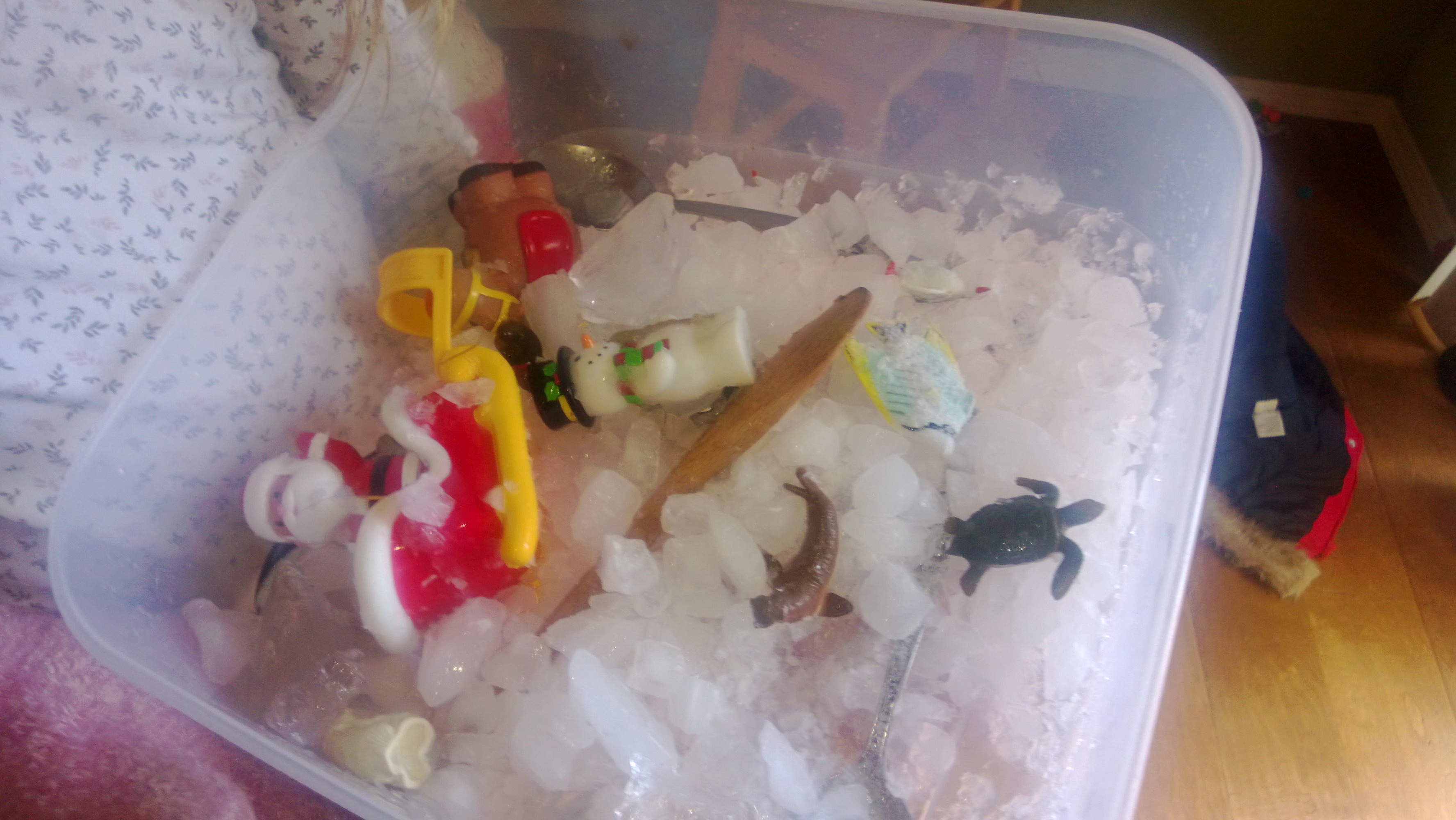
How did you get them in there? We need something to bash them out – let’s try a spoon. Look, I broke a piece. The fish is coming out. I made a hole – grab the fish. Help it’s sticking to my hand, what do I do now. Can you pull it off? Look, I broke it in half – I can see a penguin. Ice mummy! I love ice. Bash, bash , bash. We’ve found all the animals, can we have more ice? We added crushed ice from the ice machine on the fridge.
This is a great activity for water trays in pre-school settings but works even better outside, if you are in a cold climate set up a water tray outside and let nature do its work.
Other Ideas and Questions to ask Children
Add colour to the ice using food colouring or bath colours. Using a dark colour so the children have to guess what is hidden in the ice.
Put a small amount of warm water into the tray. Add the coloured ice. What happens to the water? What happens to the ice.
Sprinkle glitter into water – leave it in the freezer or outside overnight. What happens when it melts?
You are not allowed to bash the ice, how else could you get the animals out?
Can you find any more ice in the garden?
What would happen if we froze a leaf or berries? If we hang them from a tree how long will they take to melt? What happens when they are melting?
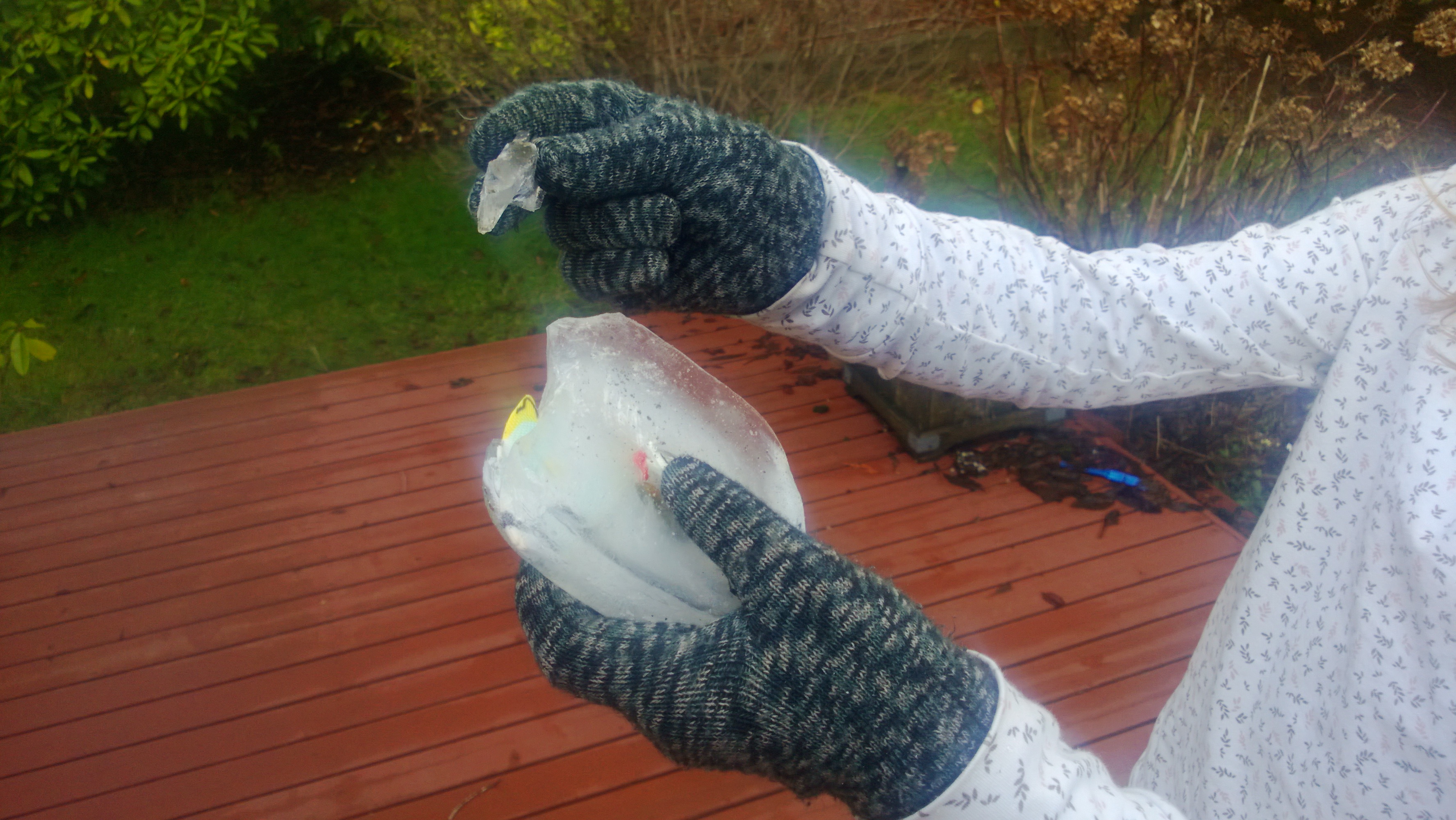
The ice sticks to your gloves, what else will it stick to? Why does it only stick to some things?
My idea of the perfect family Christmas is a little clichéd but involves mince pies, mulled wine, a roaring fire and singing around the piano. This is becoming a reality in our house. With an array of instruments including piano, guitar, clarinet and saxophone and a whole family who enjoy singing and music, we are loving making and recording music together. When I was asked if I would like to review Jingle Bells, from music-for-kids, I thought it would be a good chance to add Christmas songs to our repertoire.
The Jingle Bells book and CD features 18 well-known Christmas carols and songs. The book is nicely presented with each song displaying the notes of the melody plus chords written along the top. There is also a handy chord chart at the back of the book for both guitar and ukulele. Being a beginner, I photocopied the chord sheet to make it easier to reference while I was playing guitar. With my basic guitar skill, I found that there were a few too many chord changes to play many of the tunes with confidence but with most songs you could leave some of the chords out.
The piano music is basic (right hand melody and chords) and was great for my 8-year-old to practice sight-reading and play a simple tune . The chords could be added by a more experienced pianist to play accompaniment, I even managed to sing along to my own rudimentary playing during silent night.
The CD contains all the songs in the song book and is a nicely sung collection of Christmas carols. Younger children may find the keys too high.
My little ones enjoyed filling out the sticker pages and singing along to Jingle Bells while their sister played the recorder. I was disappointed that there weren’t more songs for the little ones like ‘Rudolph the Red Nosed Reindeer’, ‘When Santa got Stuck up the Chimney’ or ‘Away in a Manger’. They joined in with Jingle bells and We Wish you a Merry Christmas and there are a few other simple melodies that they could learn but I would have liked to have seen more simple songs that weren’t carols.
If you are looking for a simple book and CD of traditional Christmas Carols, at £7.95 this is excellent value.
No payment was a received for this review, a copy of the material was received for review purposes.
Many of us provide elaborate parties for children under the age of 5 and then find that they are happy just ‘playing’. I’ve adapted my parties over the years. I found that before the age of 3 my children were happy to have one or 2 friends visit to play games and eat cake. Even when they were a little older they mostly enjoyed a few crafts, games and dancing.
According to a recent study by I CAN the communication charity, my children are not unusual. In a survey of 1500 parents they found that the top 5 party pursuits for under-5’s were:-
Dancing games like Musical Chairs, Musical Statues and Musical Bumps
Party games like Pass the Parcel and Pin the Tail on the Donkey
Playing outdoors with other children
Eating party food
Singing and rhyming games like the Hokey Cokey and Row, Row, Row Your Boat
I CAN Communication Advisor, Kate Freeman said “The top five activities all involve communicating and socialising with their friends – from pass the parcel, which boosts turn-taking and listening skills to singing and rhyming games like the Hokey Cokey. This type of activity enhances children’s understanding of the structure and meaning of language – and there is no better environment for a child to develop their confidence than with a group of friends and adults in a relaxed and fun setting like a party”. Furthermore, mealtimes and snack times are a fantastic opportunity for young children to continue to develop communication skills.
Fun games to play at parties to develop children’s communication skills include:
Singing and rhyming songs – a great way to help children learn vocabulary and have fun making music together
Playing clapping games (Pat-a-Cake) – to help children to develop their coordination, control and movement as well as learning vocabulary and social skills
Word Games (Simon Says and I Spy) – to help to develop children’s vocabulary about the world around them and to listen to instructions (These games can be adapted to easier versions for younger children)
Turn taking games (Pass the Parcel) – to help children to learn when to talk and when to listen
Games like musical statues to encourage children to listen carefully. Listening skills can be developed further by saying ‘Stop’ in a quiet voice instead of pausing the music.
Imaginative play like toys’ tea parties help children to expand their language.
When I was teaching in nurseries we often used to play ‘ring games’ like ‘Farmers in the Den’ and ‘Hokey Cokey’ if we had bad weather and it was difficult for the children to play outside. They were always a firm favourite. The children also loved playing picnics or tea parties.
I CAN is inviting nurseries, pre-schools, childminders or community groups to take part in their annual fun and educational event . This year I CAN is partnering with Entertainment One to make its pre-school character Humf the brand ambassador. The 2013 Chatterbox Challenge:Mad Chatter’s Tea Party with Humf asks groups to organise sponsored tea parties where children can join in with popular songs and rhymes to develop their communication skills in an enjoyable way. I organised an event years ago with my pre-school music group. We learned new songs and the children were awarded stickers and certificates for their achievements.
The singing and rhyming activities for the 2013 Chatterbox Challenge: Mad Chatter’s Tea Party with Humf have been developed by I CAN speech and language therapists and teachers. Lesson plans, which include Humf and his friends in the activities and illustrations, link to key aspects of the new Early Years Foundation Stage including Communication and Language, Physical Development, and Personal, Social and Emotional Development. All the activities are aimed at supporting and developing children’s speech and language skills.
Being involved with the Chatterbox Challenge: Mad Chatter’s Tea Party with Humf encourages children to think about communication, whilst helping support those who find talking and understanding difficult.
Chatterbox Challenge week is 1st – 8th March 2013 and most groups will be holding their Tea Party with Humf during this week, though groups can actually take part at any time during 2013.
To register and get involved in this year’s Chatterbox Challenge:Mad Chatter’s Tea Party with Humf, go to www.chatterboxchallenge.org.uk
A few years ago I ran training sessions for early educators and parents on communication, language and literacy. Many of the resources we recommended, including the excellent dvd Chatter Matters, came from the Communication charity I CAN. One of the key messages of this training was that ‘reading and writing float on a sea of talk.’
Kate Freeman, I CAN Communication Advisor and experienced paediatric speech and language therapist says:
Given the right support, many children learn to talk without too much effort. There’s a golden age for learning to talk – this is before 5½ and so skills learnt at this age bring great benefits later on. Evidence has shown the early years to be a vital time for supporting all children’s communication, as well as a time to identify any difficulties and put support in place to improve a child’s overall life chances.
I was very excited to review I CAN’s latest resource Chatting with Children. This is a really nicely presented set of 30 cards with activities for promoting speaking and understanding for children aged 3-5. The activities are simple and require no specialist resources. Some are copying or guessing games of the kind we often play in the car, some require household objects and a couple that I played with my 4-year -old and 2-year-old used our musical instruments box . These games would be great for including in my music groups.
Each card has ideas for making the activity easier if your child is struggling or more challenging if it is too simple. The activities are equally suitable for large groups or one child. They are a great resource for families and could provide a wealth of ideas for small group times at pre-school. Many of the cards remind me of games I played with the autistic children I worked with, helping them extend their vocabulary and comprehension and categorise language. These cards would have been an invaluable resource for these families.
The cards focus on a number of skills, listening, developing vocabulary, social skills and understanding what is said. The games are varied and can be played for a few minutes or half an hour or more. My 4-year-old loved the listening games, playing hide and seek with our timer and listening carefully for the soft tick to help us find it and making sounds with household objects and guessing what they might be.
Chatting with Children is also available as part of a brand new boxset being launched this month by I CAN – the Early Talkers Boxset (£19.99). The boxset contains the original Babbling Babies and Toddler Talk as well as the new Chatting with Children, and has been created especially for parents and Early Years practitioners supporting babies, toddlers and young children in learning to talk.
The three packs between them, contain activities for children from birth to school age. I was so impressedthat I am going to order the box set for my brother to play with his one year old twins.
Chatting with Children is available in paperback for £7.99 paperback and hardback for £12.99 .
All proceeds go towards I CAN’s work with the 1.2 million children in the UK who have long-term speech, language and communication difficulties. To purchase Chatting with Children or the Early Talkers Boxset comprising all three activity card sets visit http://www.ican.org.uk .
This is not a sponsored post, a copy of chatting with children was received for review purposes
Kate’s Top Tips for Chatting with Children aged 3-5 years old
• Be quiet Take time to talk to each other in a quiet room. Turn off the TV and radio, and shut the door to block out any other background noises. Children have to learn to block out background noises, so they need a quiet environment to focus on the sounds they hear.
• Be face-to-face Help young children to see your face – make sure you’re at the same level as them. Sit or crouch opposite them as they play, or sit them on your lap. Sit opposite the child so you’re face-to-face with them. Being face-to-face means that the child can see you and your facial expressions. Also, you can see them and their responses and reactions to the games you play together or the conversations you are having.
• Don’t rush – take plenty of time Young children take longer than adults to process what they hear – sometimes up to 12 seconds. They need plenty of time to respond to you.
• Be patient Young children can easily lose interest in what you’re doing – this is perfectly normal, especially for 3-year-olds. Don’t worry – just stop the game that you’re playing together and try again another time.
• Be prepared for anything Follow the child’s lead and adapt the game or conversation to fit in with what they’re doing. This can help maintain attention on particular games.
• Ditch the dummy A dummy gets in the way of attempts to talk during conversations and games. Children of 3 and over don’t need to use a dummy.
• Use the language you naturally use at home It’s important that you speak naturally to young children; this helps develop their language skills.
• Enjoy it This is a special time together, so have fun playing, chatting and learning about each other.

Today we received a very welcome parcel from Baker Ross. Right From the Start has joined their blogger network, they send us lots of goodies and we come up with our own creative projects for using them. The theme of our first parcel is painting.
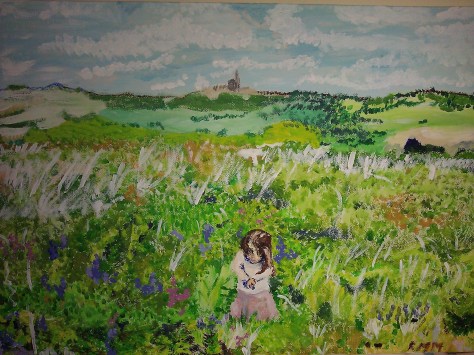
My most recent painting
We love painting. I paint when I find the time and find it very therapeutic. The girls also love to paint, in thesummer we paint outside .The girls enjoy painting on canvases and I display them in our hallway.
Today we went for the mess free option by trying out Colour Me Chubby Water Soluble Markers.
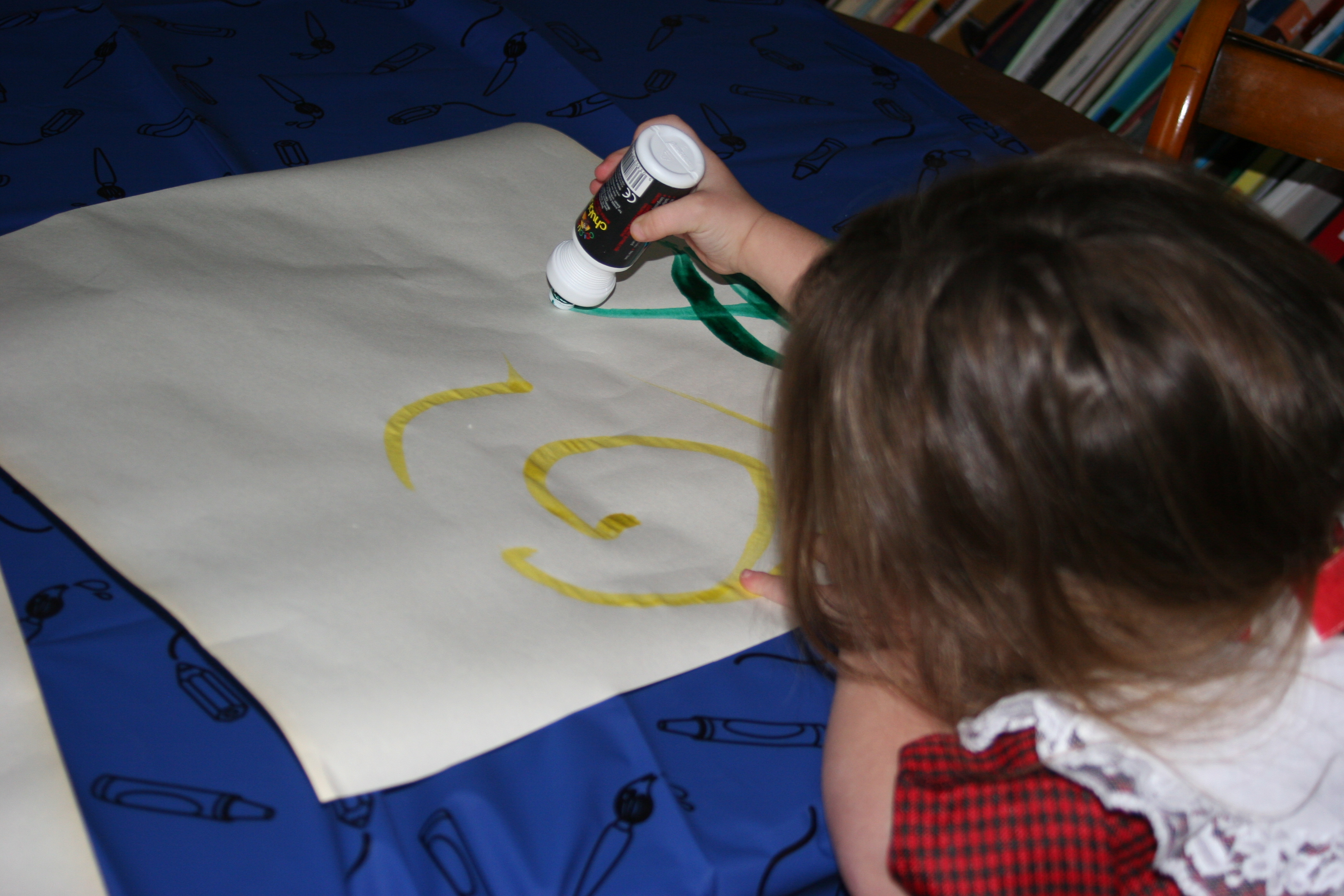
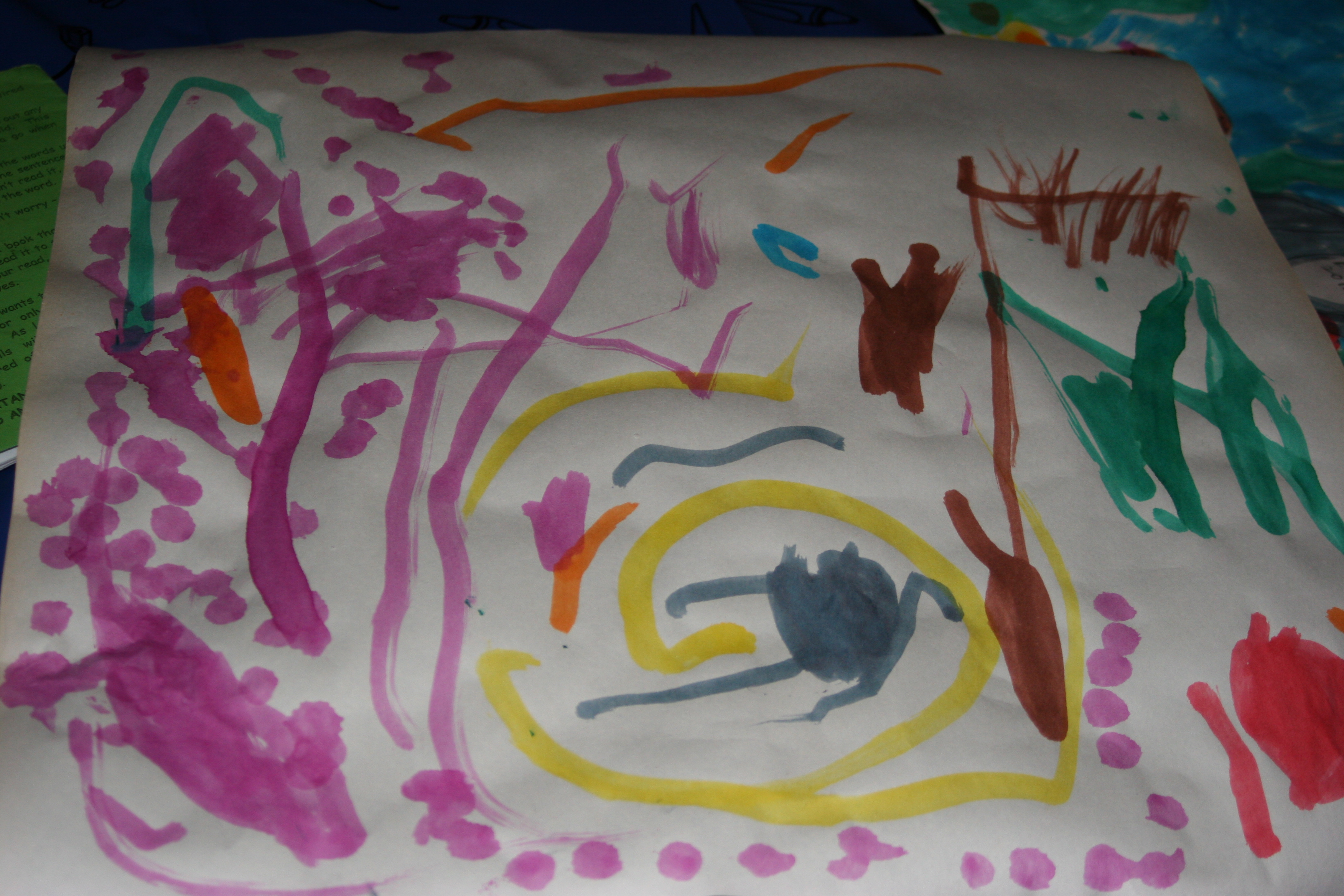
These are perfect for small hands, dry really quickly and don’t make a mess. Even better they are washable, do not stain clothes and don’t dry out if you leave the lid off (although I didn’t tell the children this). The markers are great for an early mark making tool on large pieces of paper, they are sturdy and the paint comes out easily.
My most recent painting
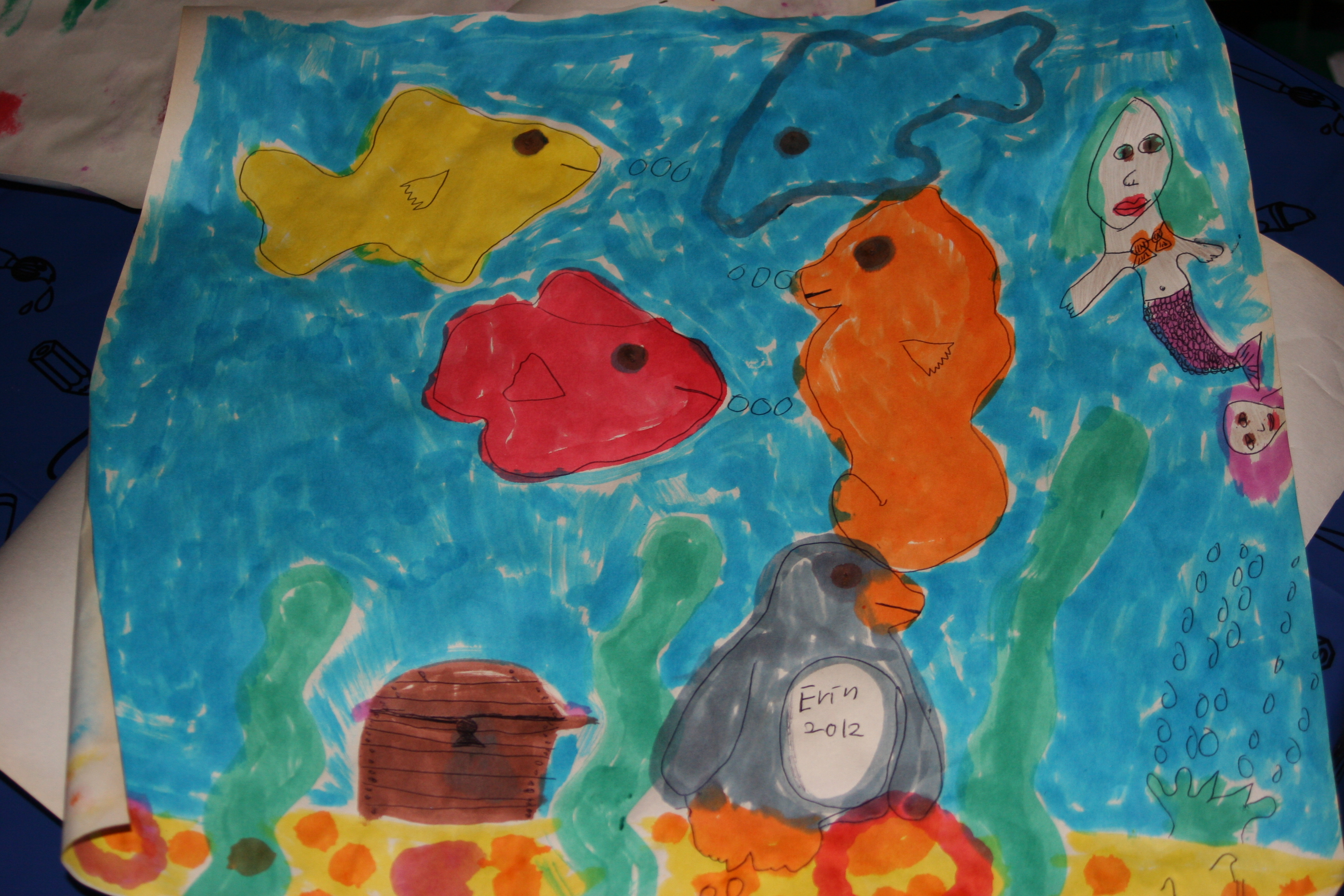
My 7 Year old decided to try them with the wooden sea stencils. These are great for little hands as they have large, chunky handles, meaning that they are easy to hold in place with one hand whilst drawing around them with the other.
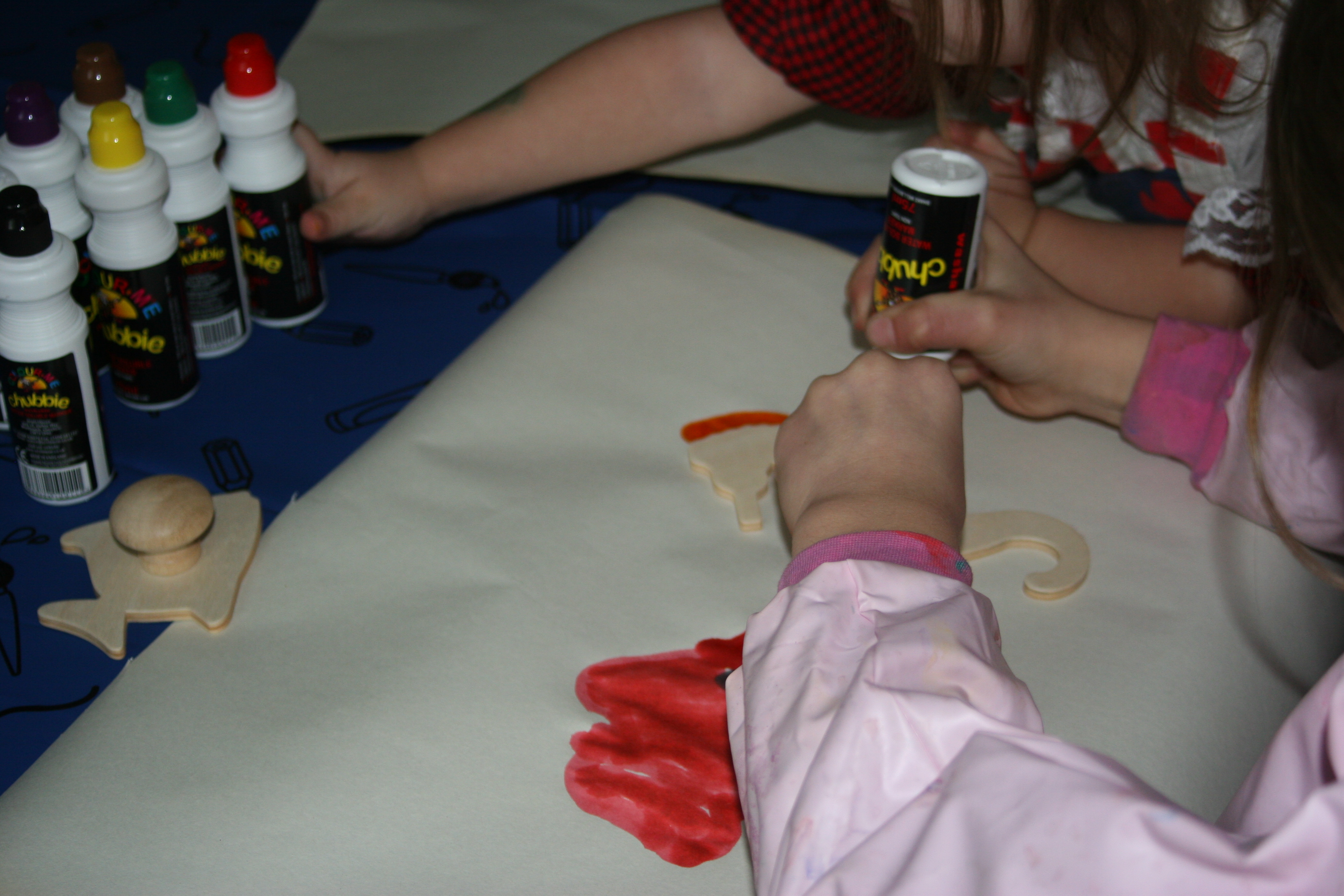
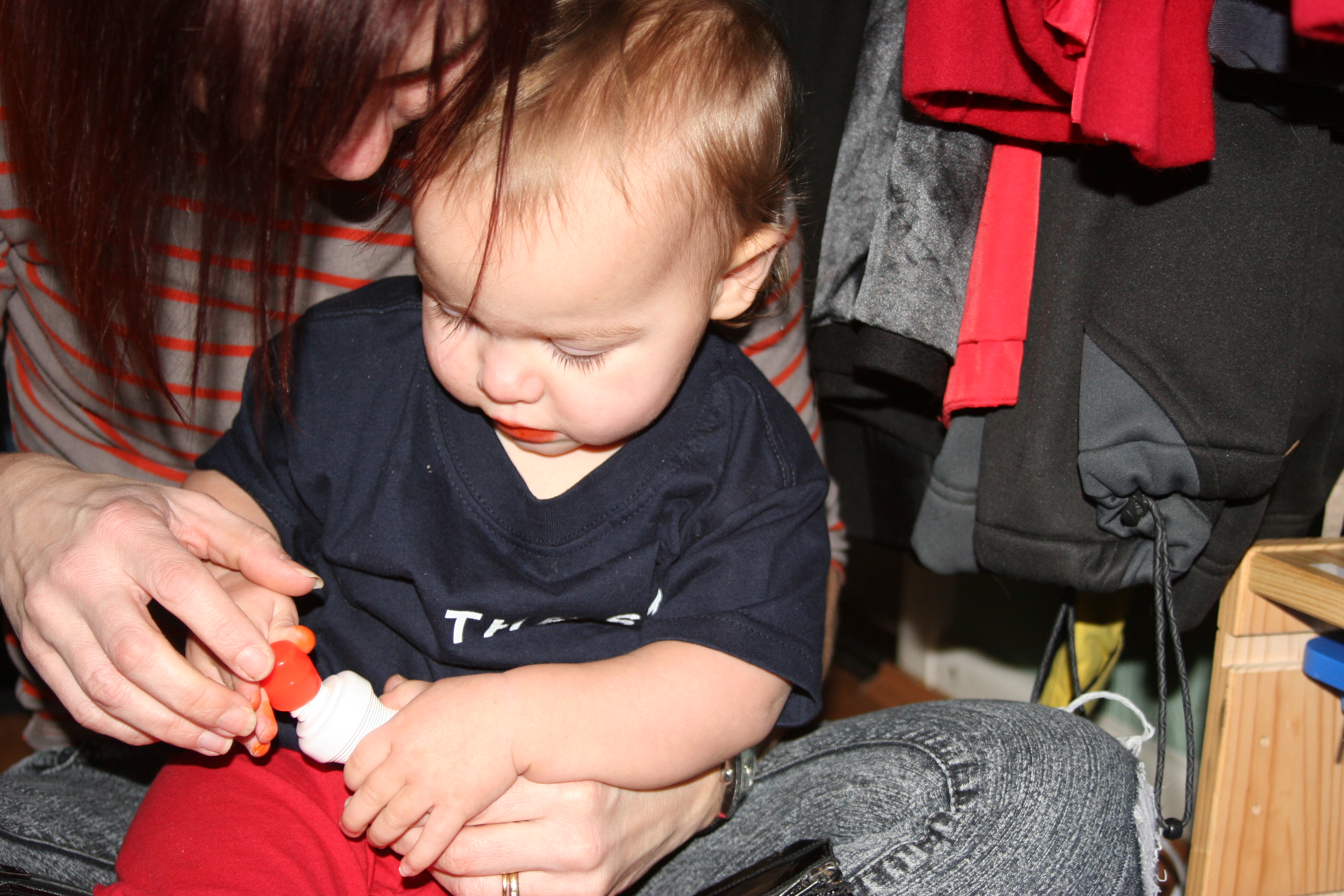
This non-messy option was good for the baby too. We did our painting on the floor so that she could move more freely. She loved playing with the lids, taking them on and off and enjoyed painting on the paper although it was sometimes difficult to get them upright enough to make a mark. She decided as all babies do that it would be a good idea to see what the paints tasted like. However, as they are fully washable and non-toxic I didn’t need to worry – a quick wipe removed the orange lipstick.
I was really impressed with the results and when we have limited time and I can’t face the mess involved with painting this is a great alternative.
It is a rare treat to see all my 3 girls playing together with the same toy. When my 3 year old chose to play with Stickle Bricks, my 1 year old and 7 year old joined in, each getting very different things from it and adapting it to their own interests and developmental stage. For me this is the mark of a good toy.
My 7 year old launched into making a full-scale model of a roller coaster. She got a little frustrated when it fell apart a few times but with persistence completed it.
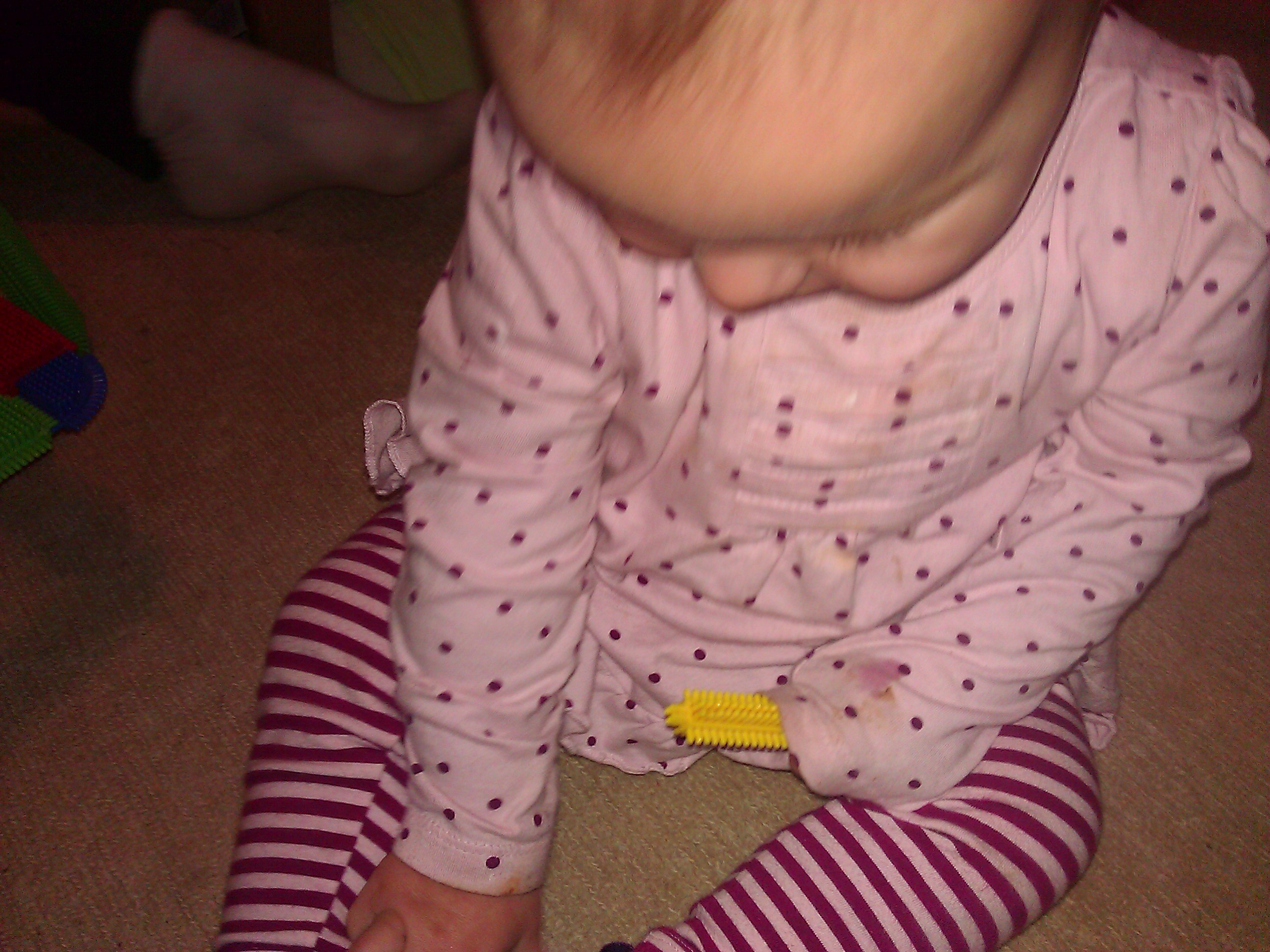
My one year old was happy with just 2 Stickle Bricks, handing it to me to push together and then concentrating hard on pulling it apart. A repetitive game that kept her occupied for a good 10 minutes.
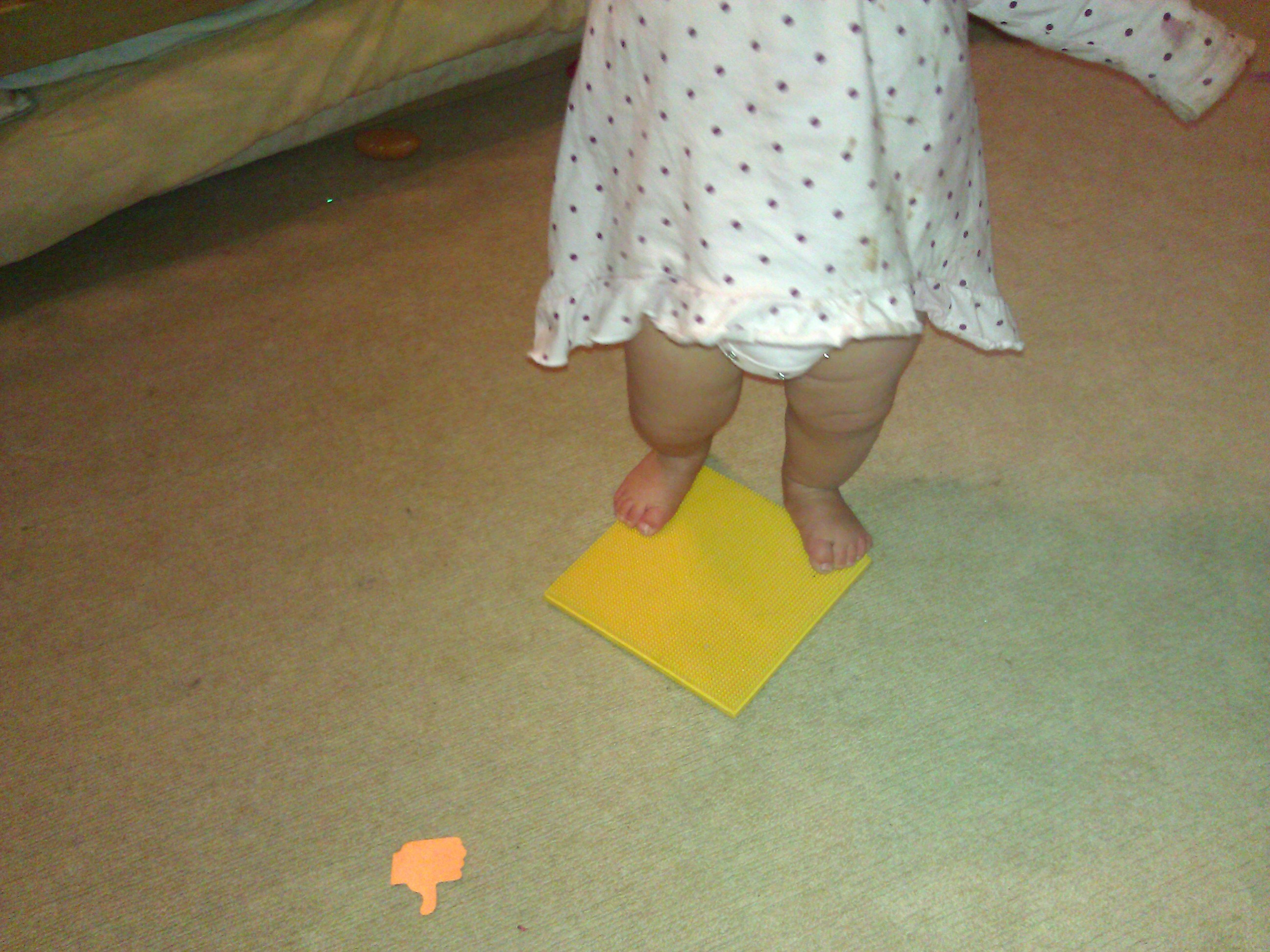
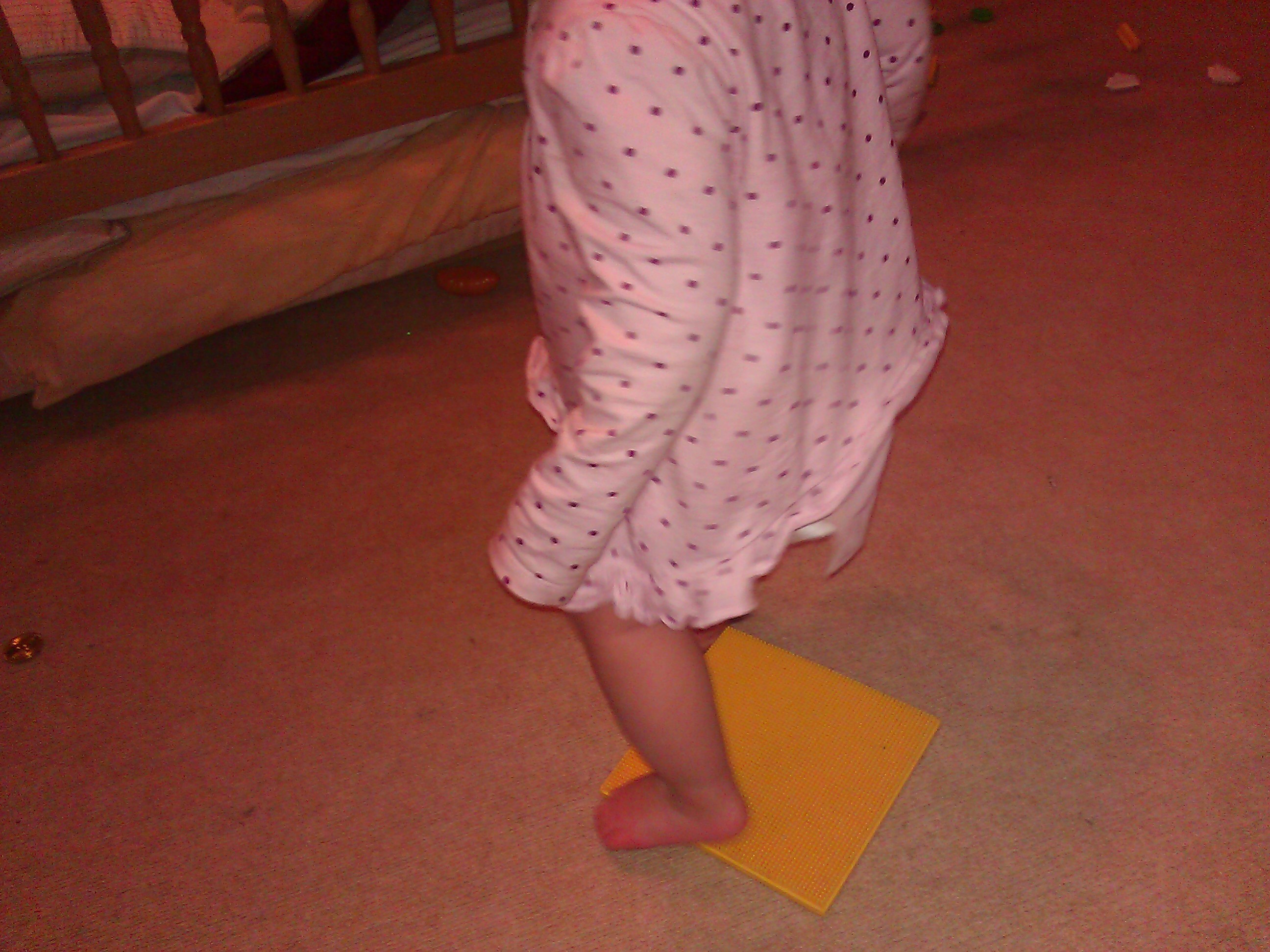
Later she found the board and enjoyed discovering the texture with her bare feet, stepping on and off and laughing.
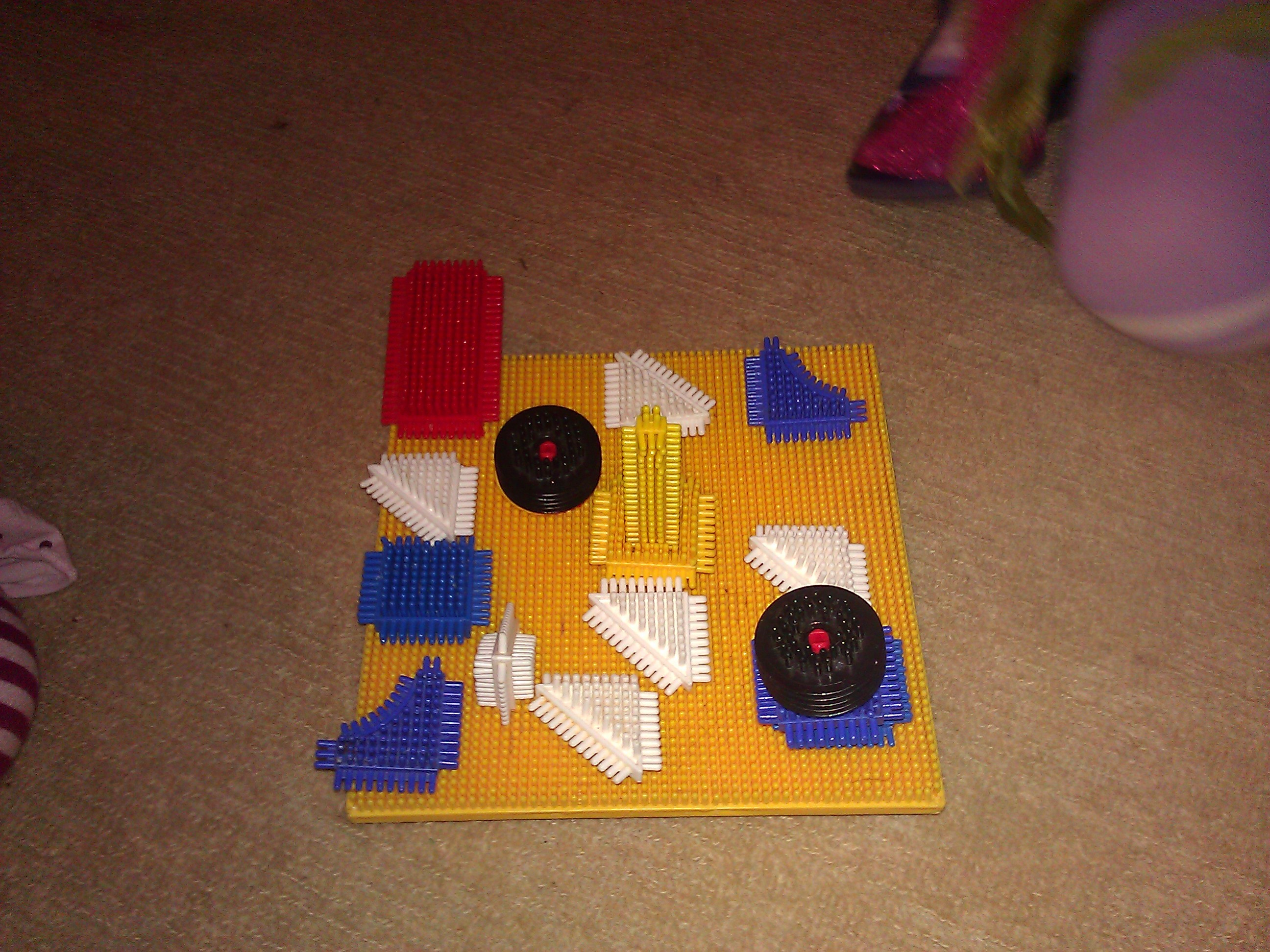
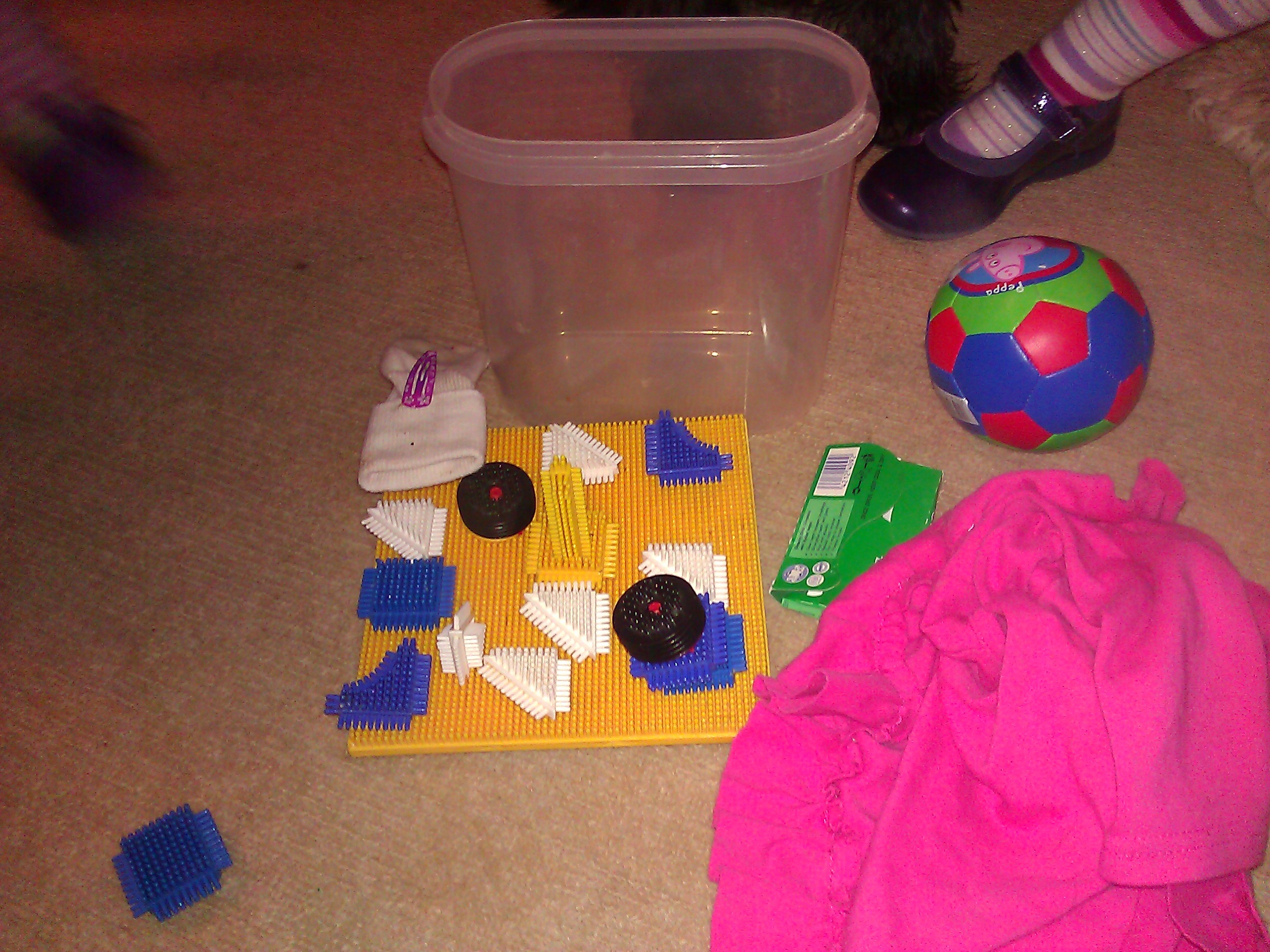
My 3 year old created a piece of modern art adding things to it as she went along.
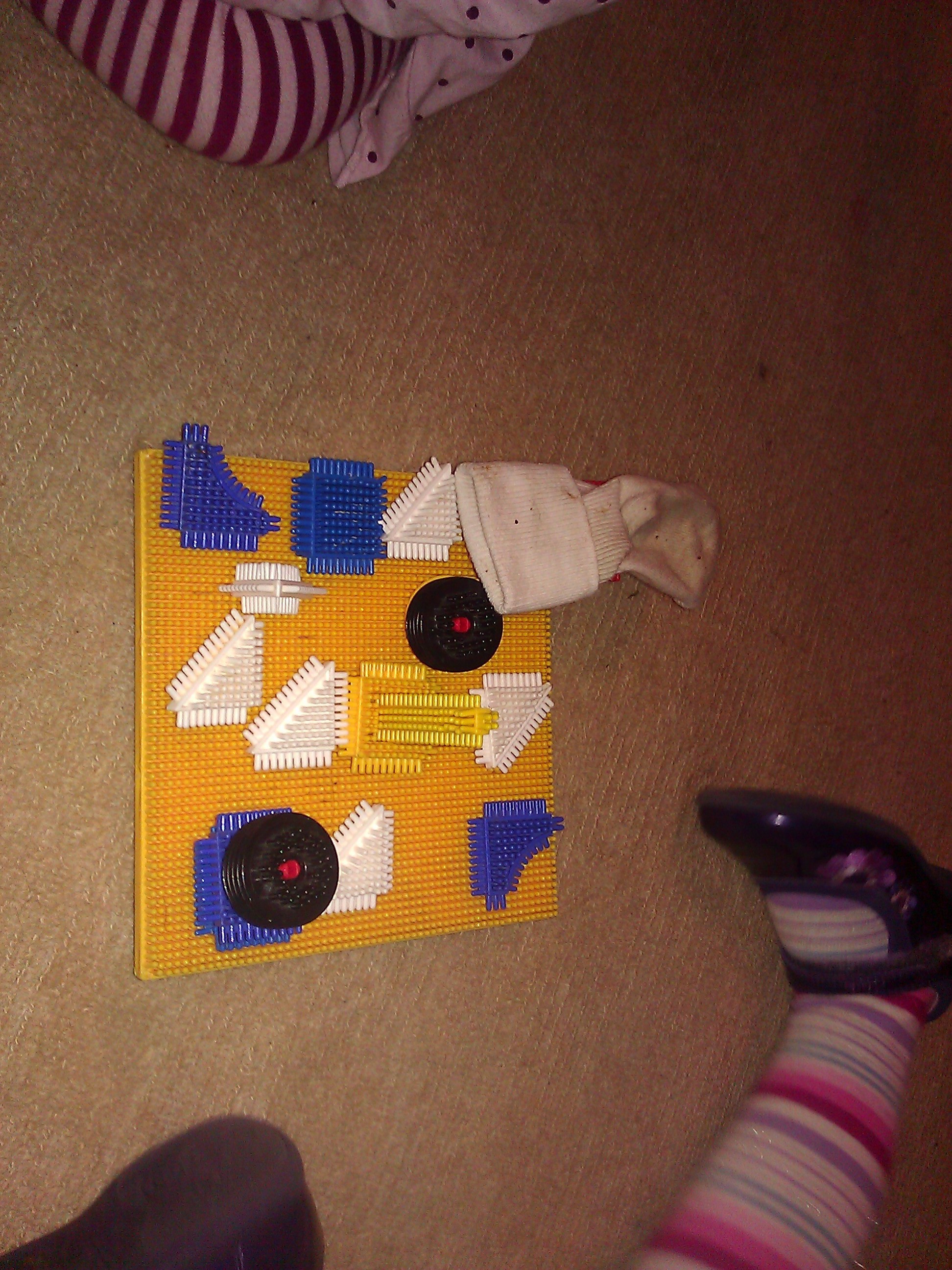
Adding a sock to make a bridge for the Billy Goats Gruff.
No Pepper isn’t the Troll. I’m not having a Troll and there aren’t any goats.
pepper and stickle bricks
No it isn’t finished yet.
As she gathered random objects from around the room Now it’s finished.
It isn’t often that we find a toy that the girls can play with without worrying that the baby will ruin their play or put something small in her mouth. It was an added bonus that the baby enjoyed playing with the Stickle Bricks in her own way. We have had the Stickle Bricks since my 7 year old was a toddler and they still get lots of use. It’s just a shame we don’t have a greater quantity now that we have 3 girls playing with them.