Category Archives: reading

Goals, Early Literacy and What is Really Important?

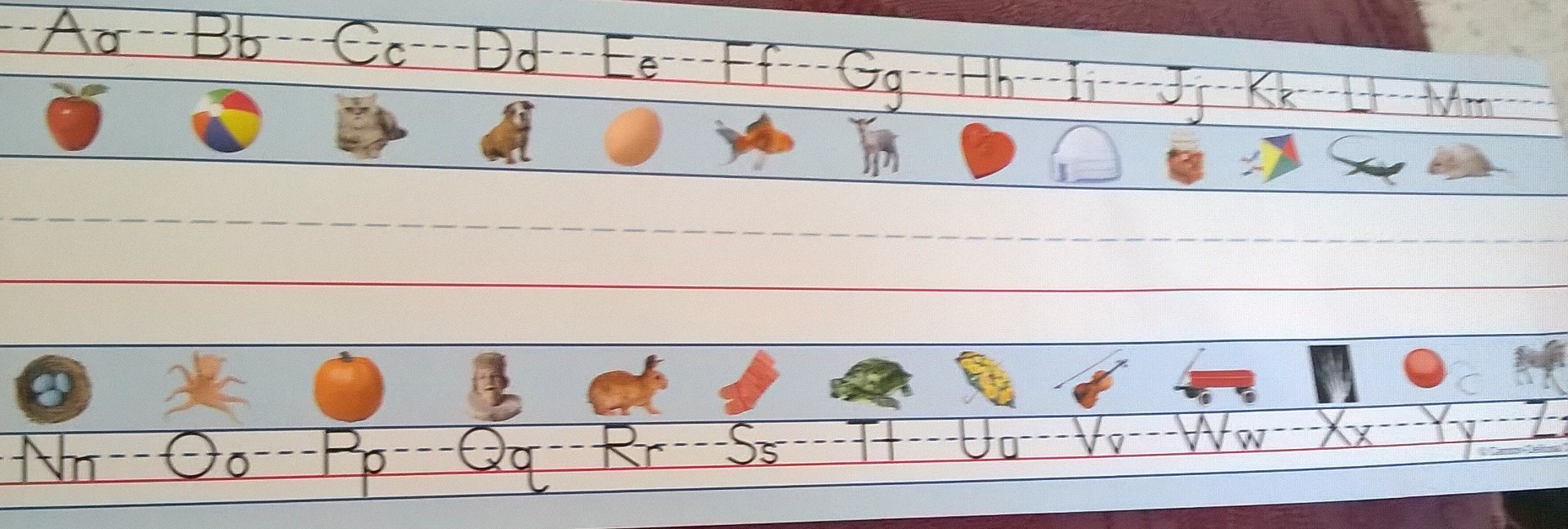
alphabetOne of the biggest parental concerns when children start school is how easily their child will learn to read.  This eagerness to give children the best start is driving academic instruction at an early age.  I recently heard of a school that had under 2’s learn flashcards, before they could move into the 2’s classroom. This anxiety about children reaching goals is often well-intentioned but it is a little like teaching a child to walk before they can stand.

Research suggests that there is a strong correlation between a child’s vocabulary and how easily they will learn to read.

Years of research has  told us that language is the foundation for literacy. Children arriving at school with lower levels of oral language proficiency, for whatever reason, are therefore at a distinct disadvantage for learning.

explain Professor Courtenay Norbury and Debbie Gooch in their article “Too much too soon? What should we be teaching 4-year-olds?” They recommend that the first year of school, is focused on developing these oral skills.

In Finland, children are only taught to read in kindergarten if they are able and interested. A far cry from the expectation that children will read in the US and UK systems. If the academic benefits aren’t convincing enough, then recent research from Stanford University suggests delaying kindergarten and prolonging play are also beneficial to a child’s mental health.

What about those children who already have the foundational skills for reading?  Would they be left behind if a play based curriculum without direct reading instruction was introduced? My belief is that most children who have developed an interest in reading and have the foundational skills, will read quickly and easily. Children who are ready to read, will have individual attention and not have to complete easy worksheets with the rest of the class,  in a school system that is released from the constraints of ensuring all children will learn to read in their first year. The teacher will be able to support those children to develop their literacy in a meaningful way.

If we want our children to be interested and skilled in literacy what are the most important factors? My article for Parentmap ‘What’s really important in early literacy?’ explores this further.

I sometimes wonder what parents aspirations are for their children.  If we constantly drive them towards academic goals and achievements, to extra credits, advanced classes and better colleges so that they can have careers that demand long working hours but good pay, what message are we giving children? That working hard, earning money and being successful are important at the expense of life experience, family life, fun and hobbies?  I wish it were easier to stop worrying about what our children will achieve and think more about what sort of people they will be.

British Children Learning to Read and Write in the US.


I knew my youngest children would learn to read and write in the US and as a result I would have to accept that they would spell differently and use American phrases and grammar.  There are some unexpected differences however that I hadn’t considered.

A few days ago my 4-year-old remarked,

“Mummy, all the other children at preschool don’t write t’s properly”

“Really! Can you show me”

It is a bit like an x, like this……

t

My youngest is 4, I taught her to write her name but it never crossed my mind that letter formation might be different here.

I asked my kindergartener

” Do you write a curly bit on the bottom of the letter t at school?”

“No we do it like a cross”

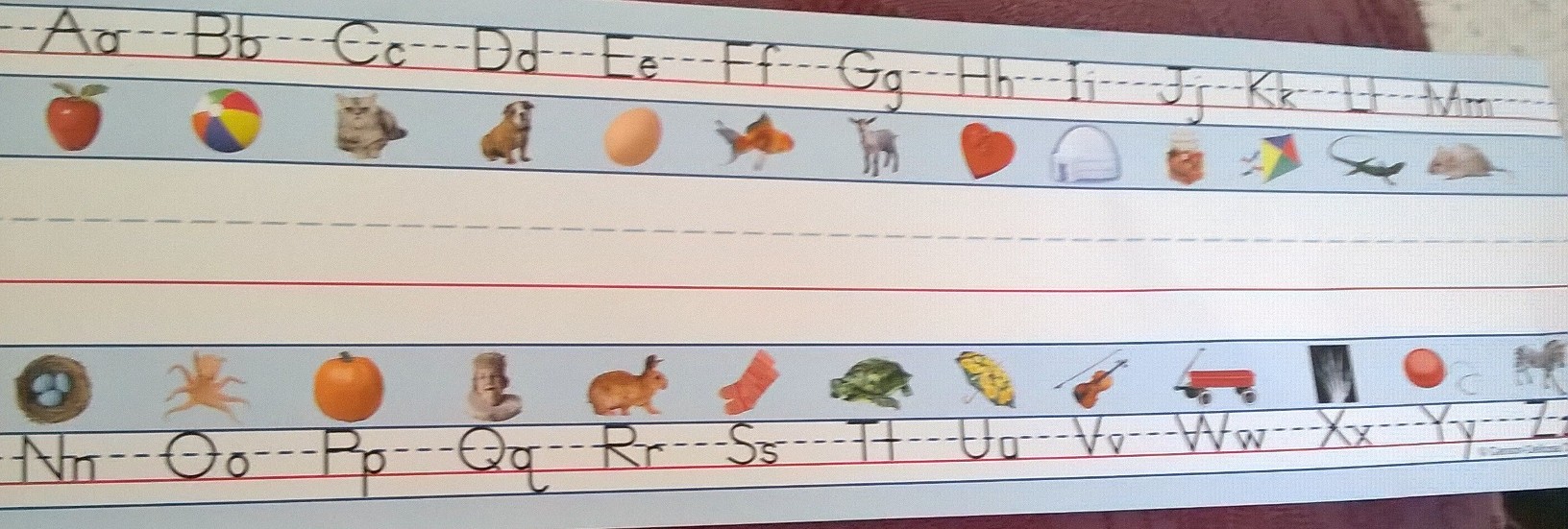
I checked with the teacher and she explained that they use the ball and stick method where  letters such as t, w and y use straight lines rather than curves as they feel it is easier for the young children to master. It is one of many differences that I hadn’t anticipated.

alphabet ball and stick

I always believed the transition would be most difficult for my eldest, who went  to school in England until she was 8, so learned to read, spell and write ‘the English way’. The first thing she noticed, was that punctuation had different names; full stops were periods and brackets became parentheses.  We were really keen that she wouldn’t lose her knowledge of British spelling, so school agreed that she could learn both.  As an avid reader and proficient speller this wasn’t really difficult.

Choosing books wasn’t simple either. Most books by British authors are rewritten for an American audience.  When we borrow books by British authors from the library or buy books here, they are American versions.  My daughter is really eager to maintain her ‘Britishness’, so we often order books from the UK. This way she can still read books with British spelling and vocabulary and is able to read literature from both cultures. Tonight we read an American translation of Pippi Longstocking. This was my daughter’s favourite book for many years, so she knew much of the text by heart.  Every time she spotted a difference, she would quote the British text. In the end we got her old battered copy down to compare. I was surprised that though the meaning remained the same, the texts were very different. The monkeys name was different and the language in the British version was more detailed and poetic (although I am sure that the original Swedish is even more rich).

“A remarkable child” said one of the sailors, wiping a tear from his eye when Pippi disappeared from view. (British translation)

” A remarkable child” said one of the sailors as Pippi disappeared in the distance (American translation)

My daughter’s desire to maintain her British identity isn’t without its pitfalls.  Once she was marked down in a piece of writing because she referred to a ladybird rather than a ladybug (which I felt was a little harsh).

I thought things would be simpler for the younger ones because they started school here but they have been faced with different challenges:

1. The alphabet ends with zee (my daughter has decided that it makes more sense the American way because the song rhymes).

2.  What sound does a short ‘o’  make? To us it is o as in fox, box and top but American pronunciation is different, instead it makes the sound a as in fax, bax or tap. Confusing but also a little amusing to the girls who still have perfect English accents. I think I was fortunate that my daughter was beginning to read when she went to school and had already learned basic phonics so this wasn’t too much of an issue.

3. School reading books have American phrases which to a Brit’s ears sound totally wrong and often make me shudder. An examples from today’s reading book is :

Let’s go find Leo.

The omission of “ly’ at the end of adverbs is common as in ‘We need to be real quick’. I suppose one positive is that the girls generally notice and remark that it sounds different.  When my daughter reads a word that we don’t use, she substitutes it for the British word “I’m just going to say mum not mom”.

4. Sometimes they complete worksheets where they have to circle pictures that begin with particular letters. This can be confusing if the British word is different from the American or if it is something traditionally American like baseball equipment.

On the whole I think the girls awareness of the differences gives them a far richer experience of the written word.  It certainly gives us a lot to talk about.


Pirate Phonics

pirate 2

What is a Pirate’s favourite shop?

Arrrgos

What is a Pirate’s favourite animal?

An aarrrdvarrrk

What does a Pirate spread on his toast?

Marrrmite or marrrmalade.

We have had hours of fun with the endless possibilities of pirate jokes around the dinner table.  My youngest daughter’s recent addition is

What is a Pirate’s favourite fruit?

An arrrringe.

Pirate jokes are a great way to practice oral phonics and rhyme.

My middle daughter is beginning to learn to read and write so I decided to use International Talk Like a Pirate day to introduce the ‘ar’ sound.

What Sound does a Pirate make?

arrrrrr

What sound does the letter ‘r’ make?

rrr like rrrabbit and rrred.

So even though it is called an ‘r’ it doesn’t make an ‘ar’ sound. We need more than just a letter ‘r’ to make a pirate sound.  We make a pirate sound with a and r together.

I gave her a magnetic ‘a’ and ‘r’ on a board along with a number of consonants. We used the magnetic letters to make as many word with ‘ar’ in them as we could exaggerating the ‘arrrrr’ sound in a pirate voice.

My daughter moved letters around to make different words and blended the sounds to read them out.

I wrote down the words for her in a list

jar

mars

bar

star

tar

car

Martha

arm

art

far

farm

Martin

She then dictated a story using the words and I underlined the ‘ar’ words for her to read .

Once upon a time there was a pirate called Martin.  He loved to eat a jar of pickles. He also loved to go to the scarecrow farm which was far away. He also like to do art. He had a pet wolf called Martha. One night there were lots of stars. He went out in the car to see his cheeky friend.  He always called his girlfriends funny names. Martin threw a bottle of tar on his friend’s arm. So he ate a Mars Bar.

As we read the story we said all the ‘ar’ words in a pirate voice.

As we were walking around the museum at the weekend she said

Mummy, I’ve thought of another pirate word ‘guitarrrr’

I wonder how many more she will come up with.

Ideas for Teaching Literacy through Play – Painting with Feathers

painting with feathersOn the way home from school we were talking about quills. My Harry Potter obsessed 9-year- old had made a quill by putting a biro refill into a feather.

My four-year old asked

Do we have any ink?

No but we can use paint.

We painted with feathers when I was little didn’t we?

We can do that tomorrow if you like. We could use the Peacock feathers we collected at Remlinger Farm.

This slideshow requires JavaScript.

I set the paints up with a few feathers.


My 2-year-old suddenly declared

I wrote the word ‘buh’

Buh for bat.

She has been playing a Sesame Street alphabet game on the iPad and is beginning to talk about letters and letter sounds.

Her 4-year old sister asked

How do you spell bat?

How do you think you spell it? What does it begin with?

Buh

That’s right and what other sounds are in bat?

Bat….    t

Yes, so what is the middle letter?

Bat…b…a…t…..    a.     B..a..t spells bat.

After a little bit of impromptu literacy I had a brain wave. The girls are really interested in pirates at the moment and I thought we might be able to do some writing with feathers, make a pirate map or maybe we could make a wizard’s spell.

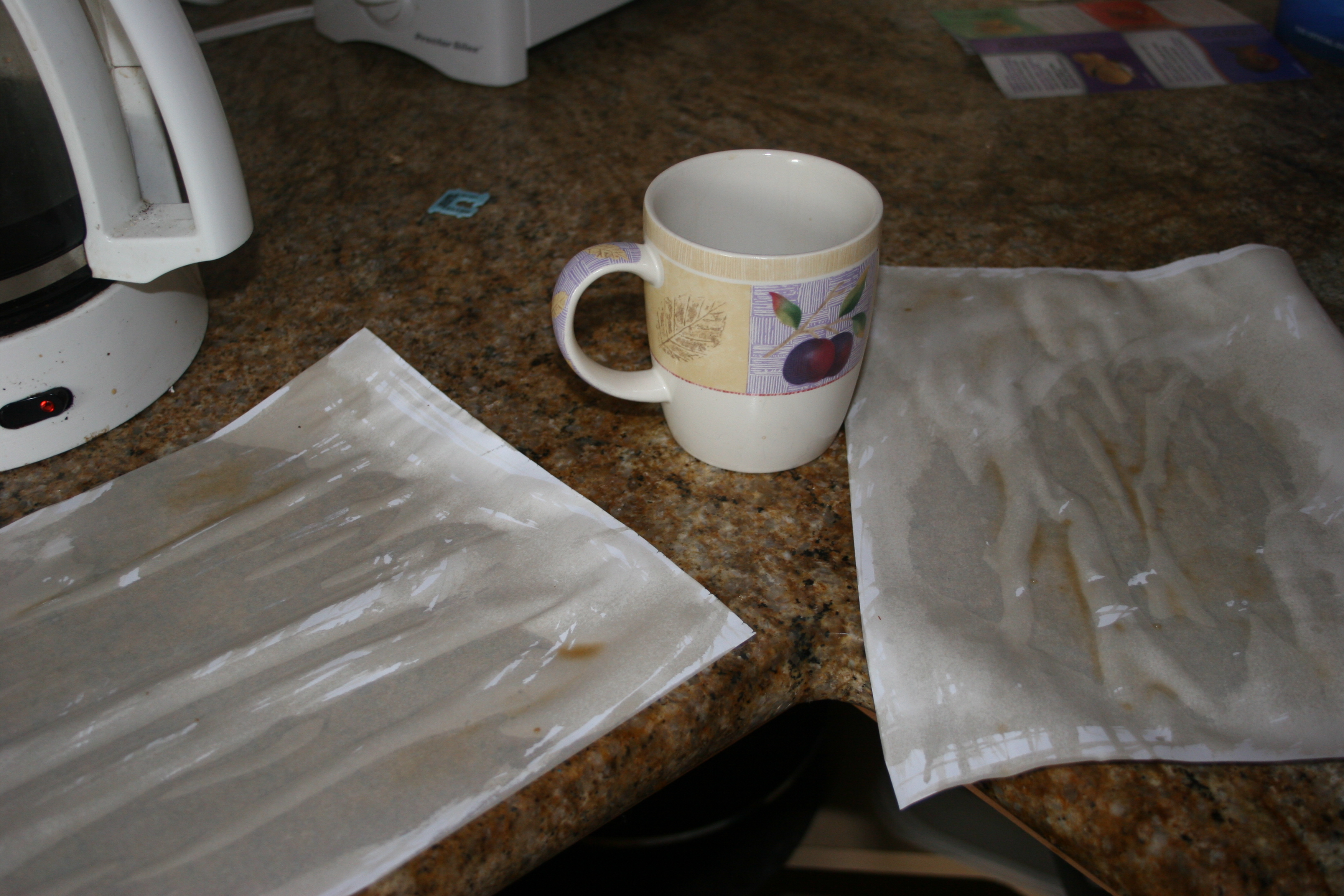
I stained paper with coffeemaking paper look old

When it was dry I singed the edges to make it look like an old scroll.


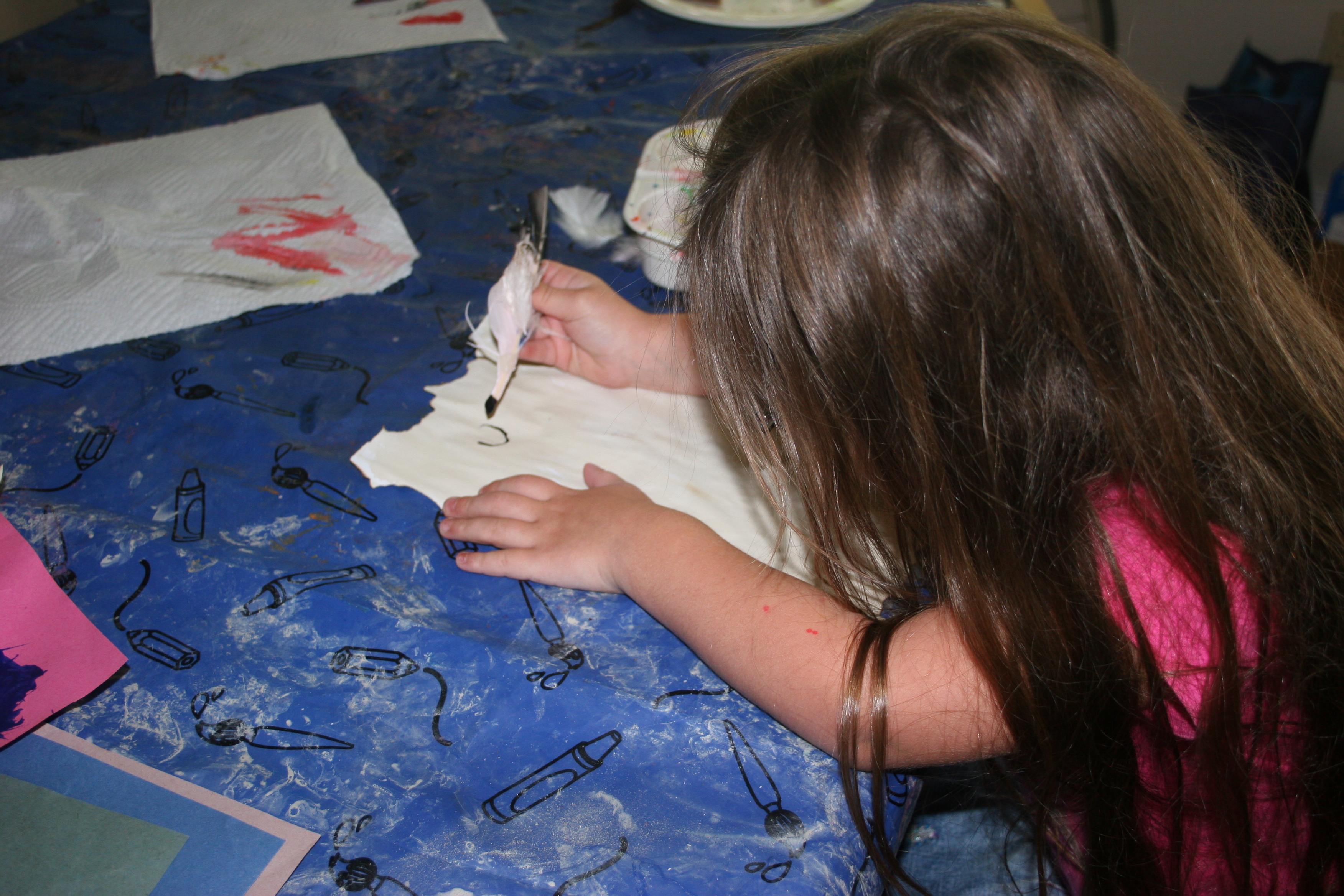
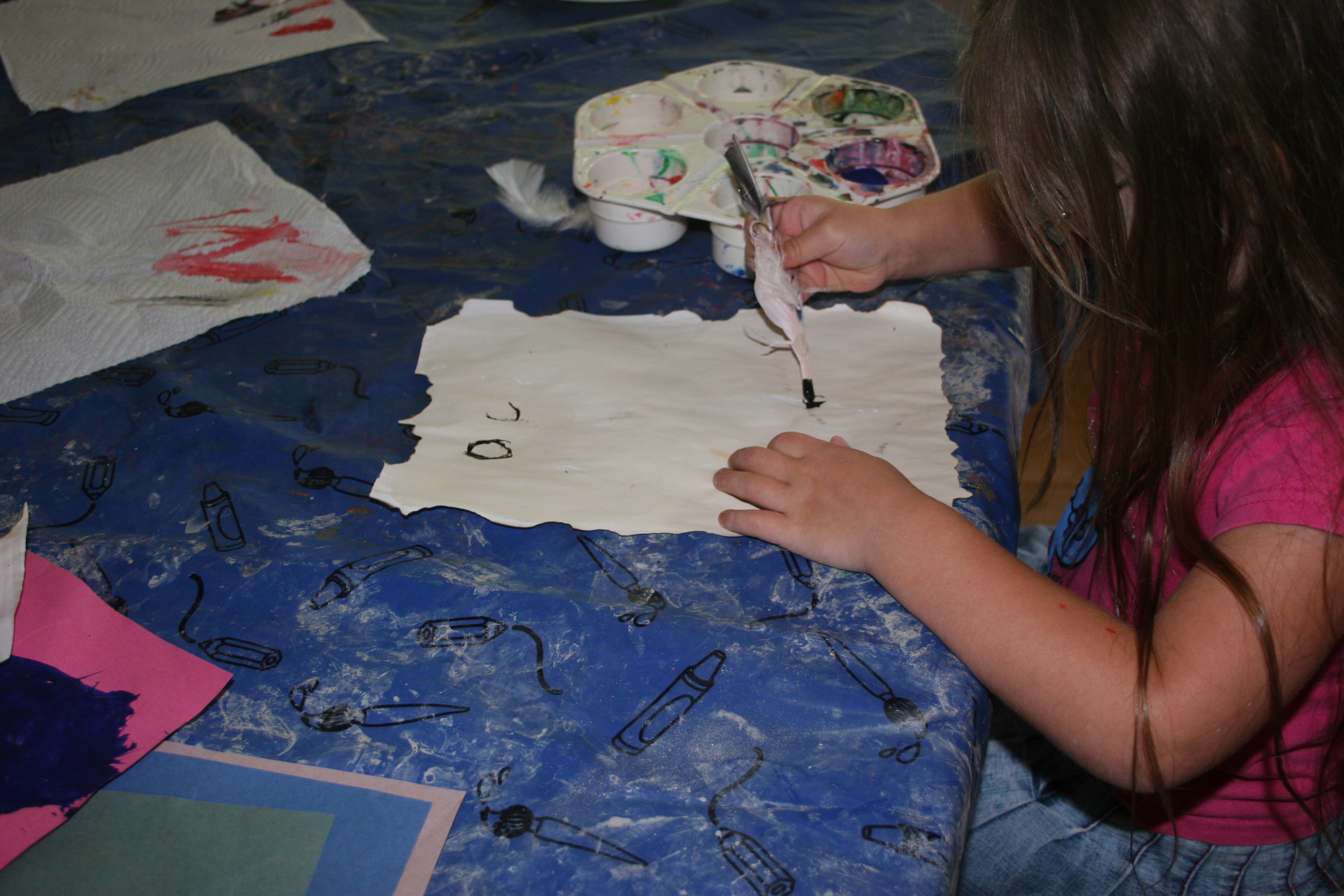
I asked the girls what they would like to do. They decided on a Wizard’s spell.

It will be funny because we don’t even know how to read and write……………. Maybe Wizards write differently to people.

quills

writing with a quill

I think this would be a great way to encourage boys in their mark making.

  • Set up a desk in a role play pirate ship with ink and quills
  • Make a spell book for children to add their own spells
  • Add a few feathers and a small pot of paint to your mark making area
  • Make treasure maps and encourage the children to mark the treasure with an X.

Literacy for under 5’s shouldn’t be about sitting at a table learning letters, tracing over letters or using flashcards. It can be brought into any aspect of play and when children are ready and interested in letters and sounds they will talk about it, ask questions and experiment. Make it fun, make it relevant and they will learn.

Juice Recipes for Kids: Inspired by ‘The Hungry Caterpillar.’

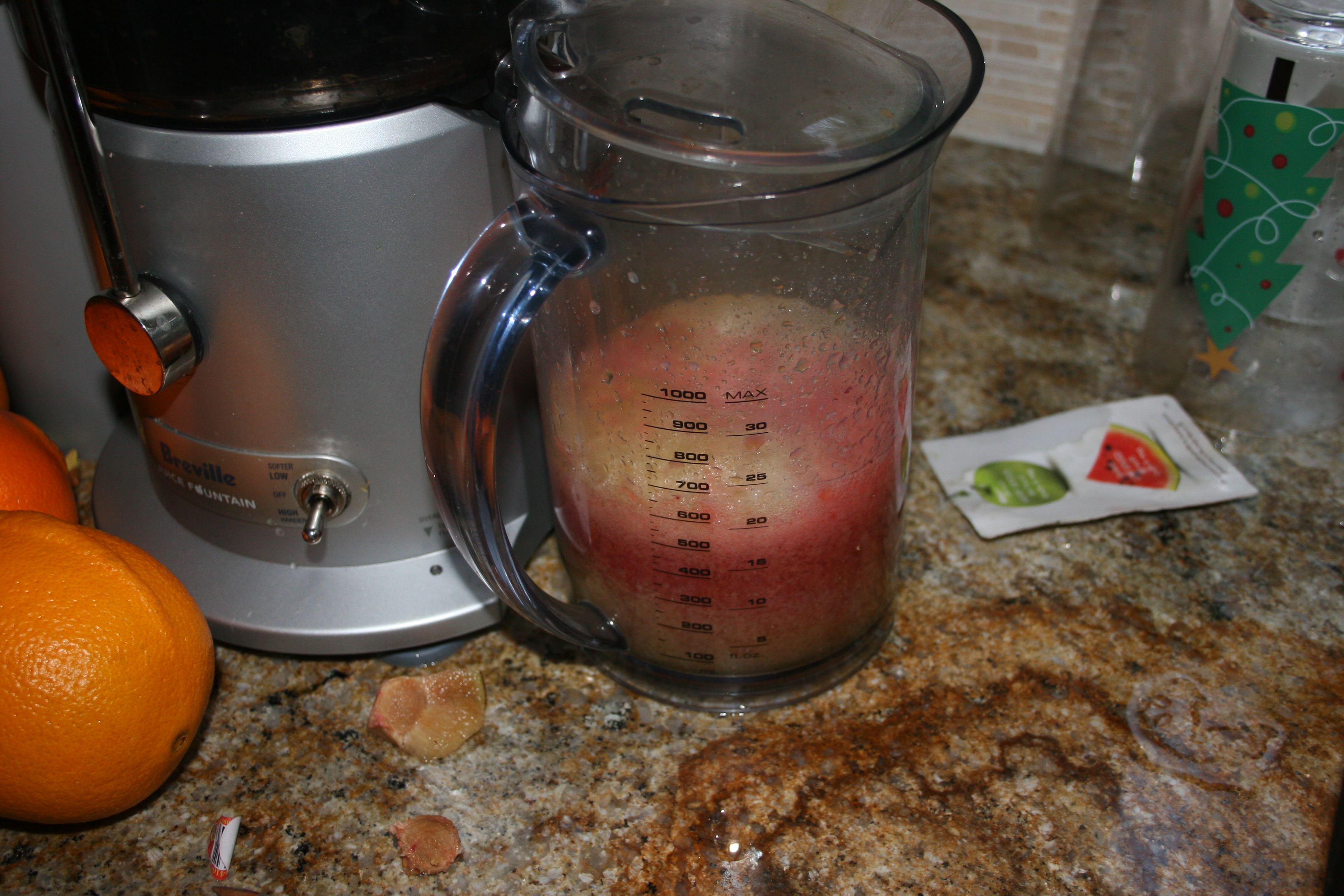
juice for kidsIn a bid to get more healthy we recently invested in a juicer.  I now start every day with a healthy mean green as featured in the film ‘Fat, Sick and Nearly Dead’. It looks pretty grim but I assure you it’s delicious.  It contains

1 cucumber

4 celery sticks 

2 apples

A small amount of ginger

A small bunch of kale

Half a lemon 

I sometimes add a carrot for good measure.

The kids are not so keen on this one but they love the fruity ones.

For Hungry Caterpillar Day we tried an experimental Hungry Caterpillar Juice. No Caterpillar’s were harmed I assure you. Head across to Really Kid Friendly to see my Guest Post on how we made it.

Try some, it’s delicious and would be great for a Hungry Caterpillar themed party.

The Changing Face of Literacy

As an Early Years teacher I have always capitalised on opportunities for literacy in everyday life. Making children aware and involving them in these things is often key to children viewing reading and writing as fun. Traditionally these would have been things like writing shopping lists, reading road and shop signs, mark making in diaries and calendars or following recipes.

However literacy in the real world is changing. Children these days are just as likely to see you read or write on your phone or laptop as they are to see you write a list or note.

This really hit home with me when I watched my 3 year old playing on my iPad a few weeks ago.  She asked if she could download an app called Dad book, designed for dads to record stories for their children.

But mummy it’s not doing anything

she said once it was downloaded.

No, someone has to tell the story and record it.

I replied.

I asked her 7 year old sister to record the story for her, they sat together as my 7 year old narrated the story.  When she was finished my 3 year old listened and then repeated the words as she had seen done with another app Pat the Cat .


What a great opportunity for playing with literacy for both children.  This made me think about all the other literacy activities my children tap into on the iPad.

My 3 year old is learning about the alphabet and phonic sounds using the wonderful Elmo loves ABC’s app.  This has loads of different levels of games all based around learning letter names and sounds and includes lots of  memorable Sesame Street clips.

Another favourite is Me Books a children’s picture book reader for classic Ladybird books.  Both my children enjoy following the stories and adding in their own sound effects. This is simple for the children to do and another great way of getting different aged siblings to share reading.

The Ladybird Touch and Say books are also a great way for my 2 year old to learn to read simple words and even my one year old loves the Baby Touch app.

My 7 year old loves creating her own stories and animations using Toontastic or Puppetpals and these are also simple for pre-schoolers to use with adult guidance.

We have even discovered new songs and rhymes through English Songs and Chants. My 3 year old loves this one and can be heard walking around the house reciting the chants and singing the songs.  The chants are excellent for teaching rhythm and steady beat, a concept I usually teach using Ros Bayley’s Beat Baby.  I wonder whether Ros has considered creating a Beat Baby app?

There are a number of things that I really appreciate about the way my children use technology to play and learn about literacy.

  • The children freely choose the literacy apps and never feel like they are learning literacy skills.  Everything they choose to play is fun and interactive.
  • The apps are an added dimension to their experience of literacy. They still love books and choose to read traditional books more often than  e-books, still love to write, tell and listen to stories.

Current touch screen technology is still a little small to offer good mark making experiences for the youngest children but the drawing apps are good fun for when they get a bit older and are able to work on a smaller scale.  I look forward to a time when I can roll out a big screen onto the floor and let the youngest children explore markmaking on a large scale.

I also think Kinect holds great possibilities for literacy. My children talk to their dad via video Kinect when he is not at home. There would be great potential for speaking and listening activities if they connected with other children from around the world and shared experiences about their life and culture.

My girls are avid readers, I’m not afraid that new technology will distract them from traditional literacy, but that it adds a richness to their lives and new possibilities for exciting literacy experiences.

Review of ‘Your Baby Can Read’

Some time ago I was asked to review ‘Your Baby Can Read’, a system for teaching babies from 3 months old to read. The system aims to introduce the written word at the same time as a baby is developing a verbal vocabulary. As today is International Literacy Day I felt I should bite the bullet and go for it.

So why the procrastination?  My initial thoughts were that such a system goes against my beliefs.  I have seen many parents who focus far too early on reading and writing and become both stressed and competitive about it. A baby has so much to learn in the first years is it really necessary that we add reading to the list?  I also feel that a lot of the time a focus on learning to read and write means that many of the underpinning skills necessary to achieve this are overlooked.  However, I felt that it was important that such products are reviewed by someone with an early education background.  I was interested in seeing the products to help make an informed view.

The materials in the programme include 5 DVD’s, 5 lift the flap books, 5 sets of sliding word cards, music cd, 82 double-sided word cards, a sliding windows board book, word game cards, a parent’s guide and early learning workshop DVD.

To be honest, I liked the materials more than I thought I would.  My biggest reservation about the whole programme is that reading is taught through DVD’s.  There is a firm emphasis on how interactive the DVD’s are but there is no requirement to sit with your baby as you watch them.  I watched the DVD’s with my 10 month old and 2 year old, the 2 year old was mildly interested and the 10 month old paid no attention at all.  Personally I don’t see that there is anything that the children can learn from the DVD’s that they couldn’t learn from sharing the books with an adult. I may be wrong, but I feel that this is an easy way for parents to avoid feeling guilty for not  spending time with their children. The DVD’s themselves are watchable and encourage the children to interact.  It is unfortunate in my opinion that they are American, I think some of the pronunciation of words may be difficult for  young British children when listening to American accents and some words like colour use the American spelling.  I feel to transfer the programme to a UK market it would be beneficial if the DVD’s were remade with British accents and spelling.

I really like the lift the flap books.  These have the word printed on the flap and when the flap is  lifted  there is a photograph to illustrate it and a number of interactive questions and instructions eg. How many dogs are there? Point to your elbow and What is your favourite thing to eat?  My 2 year old particularly liked these and enjoyed focusing on the words, pointing to them and ‘reading’ them with me.  I can imagine that with her interest in books and the written word, having read them a number of times she will begin to read the words in the books.  The same words are used in the sliding word and picture cards and word cards (flashcards).  The word game cards have 2 of each word so that you can play matching pairs games with the words. I can imagine my 2 year old enjoying this, although I haven’t tried it yet.

The programme suggests that you begin by reading the parents’ guide and watching the early learning workshop DVD. The parents’ guide explains how to use the books with your child and gives practical ideas for sharing other literacy related activities   with your child. I thought the DVD was excellent, with a lot of sound advice about early language acquisition and literacy.  My worry is that it is very long and I wonder how many parents would actually sit through it before embarking on the programme.

Dr Robert Titzer the creator of the programme begins by explaining how the programme originated.  He explains that he created the DVD’s to occupy his baby daughter in those times when she was ‘doing nothing’ while he was making dinner or reading the paper.  I found this a strange choice of phrase – I  don’t think I have ever seen a baby ‘doing nothing’.  He also talks about early brain development and the rapidity of brain development in the first few years of life.  This is a perfect reason for interacting with babies, but I’m not sure it is a justification for the need to read at this age.

Having said that there are a number of very positive points about babies and learning that Dr Titzer makes.

  • Parents should be active as the child’s first educator
  • Spend lots of time interacting with your baby
  • Children have receptive language (the ability to understand the meaning of words) before they can speak.
  • Talk to your baby, talking about what they are interested in.
  • Babies learn through movement
  • Play games with babies in the mirror and follow their lead building on the things they instinctively do.
  • Don’t let  children watch too much television, it is far better to read with them.
  • The concept of number needs to be taught in practical situations
  • Children are ready to write when they can master the physical skills – there is no particular age at which this will happen and it should not be introduced too soon.

The children in the case studies shown on the DVD have clearly learned to read both individual words and whole books.  They enjoy reading, are happy and engaged.  I have no doubt that the programme works but I question the appropriateness of teaching young babies to read.

The main argument for teaching babies to read is that the earlier a child learns to read, the more educational advantages they will have later. There is  a wealth of research that shows that the size of a child’s vocabulary at the age of 3 is the biggest predictor of how easily they will learn to read . The programme encourages the development of vocabulary through the introduction of 164 key words. It gives opportunities to introduce other words related to the children’s interests, by providing blank cards and a wipe clean marker pen.   However, surely it would be as beneficial to focus on spoken language and oral/aural skills (such as rhyme, identifying sounds, alliteration) in the first 3 years, accompanied with fostering a love of books, story, song and rhyme?

Dr Titzer explains that the earlier a child learns to read then the more likely they are to love it.  From personal experience with my own children I disagree with this.  My 2 year old has been obsessed with books since she was around 6 months old but cannot read yet.  At almost 3 she is beginning to show an interest in words and is keen to read some for herself.   My 7 year old went to school without being able to read but with a huge vocabulary, an interest in books, the  ability to recognise rhyme and alliteration, a love of singing and poetry, the ability to keep a steady beat and some knowledge of the alphabet.  Within weeks of being in school she learned to read, she is now a well above average reader, an avid bookworm and reads aloud with more expression than most adults (including myself). Based on my 2 year old’s extensive vocabulary, love of books and ability to recognise rhyme I expect her to go the same way. From this experience I question the necessity of programmes such as ‘Your Baby Can Read’.

I think if you have a pre-school child who has built a good vocabulary, oral and aural skills, loves books and is showing an interest in the written word then this could be a useful tool in the journey to learning to read. Personally I don’t like the idea of teaching reading using DVD’s because reading is as much about sharing a special time and ideas with your child as it is about the act of decoding words. I will use the rest of the materials with my 2 year old daughter if she shows an interest but I wouldn’t choose to use them with my baby. For those who would like their baby to read I have no doubt that the system works and that if the system is followed according to the comprehensive guidance the babies and toddlers will get great pleasure from it.  From the perspective of an early educator, I would let babies be babies and use it when the children are a little older.


Can Technology Engage and Improve Boys Literacy?

How many times do you hear stories about boys falling behind girls in their literacy scores?  In the last 2 years the Foundation Stage Profile Results ( assessment at the end of the child’s first year in school) show that girls are outperforming boys and that Communication, Language and Literacy has the widest gap.

My opinion  is that to a large degree it is down to the fact that boys are not motivated by literacy, because it is not taught in a way that is relevant or interesting to them.  It is important that this is addressed at an early age, rather than once they have already lost interest and are failing.

Children are growing up in an increasingly technological world.  Think back to how much has changed in the last 10 years and we can not possibly imagine what life will be like for our youngest children by the time they leave school.  There is no doubt that children’s experience of literacy in the future will be very different to the pen, paper and print concepts they learn about today.  

 Children’s experiences with technology in the home are generally incompatible with  what they see at pre-school or nursery.  In my experience, having visited many nurseries, technology is generally used in a piecemeal way.  If  I compare this to my children’s  experiences at home it is vastly different.  At home my children play on games consoles, operate the television by remote control, talk to family via video chat, watch cartoons on the laptop or mobile phone, take photos and videos using a mobile phone, record their voices onto a laptop or mp3 player, draw pictures on a drawing tablet, play games on a mobile phone, search the internet for information and much more. The richness of their home experiences are not reflected in their learning at pre-school.

Often this is based on fear, an uncertainty about introducing children to technology (especially screen based) because it will lead children to become lazy and replace more healthy, active or outdoor pursuits.  I recognise those fears; none of us want our children to grow up as screen junkies or for technology to replace important things like reading to your child.  However, I would argue that as technology is evolving, it is becoming more accessible to pre-school children and the opportunity to use it in innovative ways in a play based setting presents itself.  Technology is an ever growing part of their lives and it is important that it is utilised as a natural part of children’s play in pre-school settings.

Boys generally love anything technological and lack interest in reading and writing – this is a generalisation but on the whole it is the case.  I hear people ask all the time ‘ how can I get my son off the computer?’  So maybe instead of trying to ban the things they are interested in we should be using it to our advantage.  I was told a story just a few days ago about how a boy aged 11 who could never understand how anyone could choose reading or writing as a pastime and had joined a computer club at school.  The teachers had shown them how to create animations and story boards.  Following this he has gone away and invented characters, writing comic books and animated stories with such enthusiasm that he couldn’t get to the club quickly enough. 

If we can encourage this enthusiasm at pre-school, maybe we could avoid many of the negative feelings that boys have around literacy and inspire them to be literate in a different way.

This premise forms the basis of my proposal for Phd research ( subject to finding the necessary funding). The hypothesis is that if boys were given opportunities to learn the foundations of literacy through technology, then they would be motivated to learn and this would in turn improve their literacy outcomes.  I would  create a play based environment whereby children could explore the underpinning skills of literacy, through the medium of technology.  This would occur alongside more traditional activities to see whether the technological experiences were more engaging. Technology would be integrated into ongoing practices of teaching and learning.  Each classroom would be designed around the needs and interests of the children. Technology would be freely available and would be used both indoors and outdoors.  I would hope that it would also inform those who create technology, software and applications highlighting possible future developments.  To work together to provide suitable experiences for our youngest children that would reframe  long held notions of literacy.

World Poetry Day – Musings on Poetry and Some to Share

V__CA20

There has been a lot of discussion in recent weeks amongst mummy bloggers  as to whether or not we would be prepared to share poetry that we had written as teenagers.  The general concensus was ‘no way, it is far too personal and embarrassing’.  When I joined the discussion, I had just found my book of poetry from my teenage years and started to read it.  I agree that much of it is very naive, about love and loss of love and the desperate nature of teenage romances.  However, some of it is about other issues.  It shows the common beliefs that you hold when you are young , a sense of injustice and the hope that you will change the world some day.    I wrote lots of poetry as a teenager , helping to frame my thoughts and work through issues.  As an adult I write them less frequently, usually when I am unhappy and still find it therapeutic.

I’ve decided to be brave and share a poem that I wrote when I was 16 years old – this was written in the mid/late 80’s when there was lots of scaremongering about nuclear war – remember the dramas about what would happen if a nuclear bomb exploded? It’s unedited and uses the punctuation that I chose when writing it.

The End of the World

Screeching! Wailing! Shouting! Screaming!

People run to take cover where they cannot be saved.

Heart jumping, legs quaking, head  pounding,

I watch the sky for the beginning of my fate.

Then it comes, with no noise, people silent,

As we watch the air explode into smoke

See the world turning purple, red and yellow,

I feel sick, on my tears I could choke.


Bring my hands to my eyes and bury my head

To protect me from the great blinding light.

What’s happening? Help me! I can’t see!

Am I dead? Is this Heaven? Help me out!

Crumbling world all around me, dying people

But it’s all brought about by greedy men.

It’s the innocent , God fairing children

That are punished and have said their last Amen.


In my last few moments I remember a land

Full of green, much love and content.

See the earth slip away – not just my life

But a place, far too late to repent.

Dust fills my lungs and I crumble to the ground,

And though I am weak and my brain is concussed,

I still know how appropriate those funeral words are

of Ashes to Ashes and Dust to Dust.


I asked my 6 year old daughter to write something for me to share on my blog.  She loves poetry and often chooses a book of poetry as her bedtime story.  My husband taught her to recite ‘ Custard the Dragon’ by Ogden Nash, it was lovely to watch them doing this together and I’m sure it has helped with her expressive reading .  She used to add in her own bit when Custard cried for his nice safe cage – she would add in a deep ,whiny voice ‘Boo-hoo I want a safe cage’.  I think my 2 year old will follow in her footsteps.  She often chooses singing books at bedtime which include a mixture of song and rhyme.  Learning poetry by heart is such a valuable skill for young children.  It covers so many things that are important for becoming competent readers, awareness of rhythm and rhyme, use of alliteration, memory and the use of expression to convey meaning.  And of course it is fun.

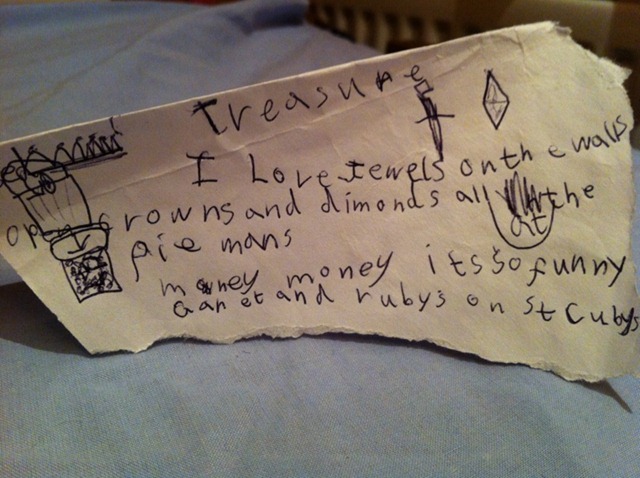
Here are my daughter’s poems

Elephant

Elephant, Elephant

Wrinkly and Grey

I’m going home in case you

Step on me on the way.

Treasures

I love jewels on the walls

Crowns and diamonds all at the piemans

Money, money it’s so funny

Garnets and rubies at St Cuby’s

My Top 5 Books for Under 5’s

To mark World book day, I thought I would list my top 5 books for under 5’s .  I have chosen the books that the children enjoy, but also that I do not get tired of reading. There were lots on the shortlist but I think these are my favourites.

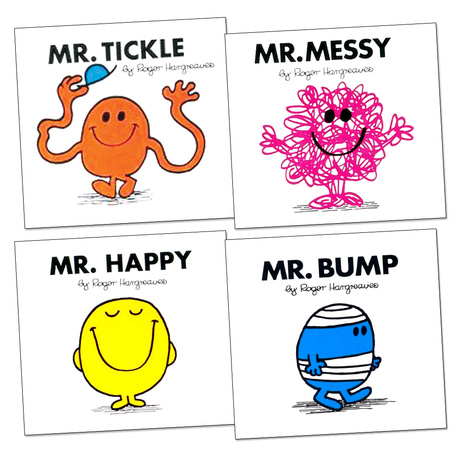
  Any of the original Mr Men books by Roger Hargreaves.  I loved these as a child and my children love them too.  The stories are witty and clever without being too long and my eldest learned some really sophisticated vocabulary from them when she was 3 .  When I was a child (much older than 5) my aunt worked in a bookshop and we would visit her and sit by the Mr Men shelf reading all the ones we didn’t have.  Timeless.

Winnie the Pooh by AA Milne – not strictly for under 5’s but my eldest had a real thing about Winnie the Pooh when she was 3, to the point that Piglet was her imaginary friend and went everywhere with us.  We used to have to listen to the audio books (with Stephen Fry and Judy Dench) in the car, but I never tired of them.  This is a book that I first read as a university student and found it endearing and hilarious.  Thankfully the children love it too.  Some of the best quotes come from Winnie the Pooh.


 Something Else by Kathryn Cave and Chris Riddell  This is a heart warming story about a creature who is teased because he is different and then strikes up a friendship with another creature.  It has beautiful illustrations and a quirky twist at the end.

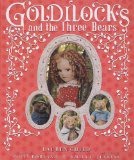
Goldilocks and the Three Bears by Lauren Child  – I love this one, a traditional story retold in an intelligent and witty way,  in the way that only Lauren Child can.  On my first reading it made me say ‘Wow!’  If you love Charlie and Lola you will love this too.


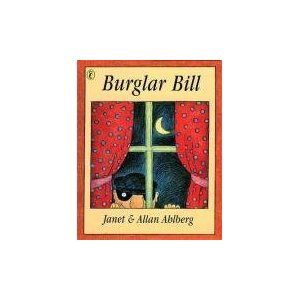
Burglar Bill by Janet and Alan Ahlberg –The comical story of a burglar who steals a box and later finds a baby inside. I really enjoy reading this one and acting out the voices of Burglar Bill and Burglar Betty.  There are lots of funny bits in it that make the children laugh out loud.