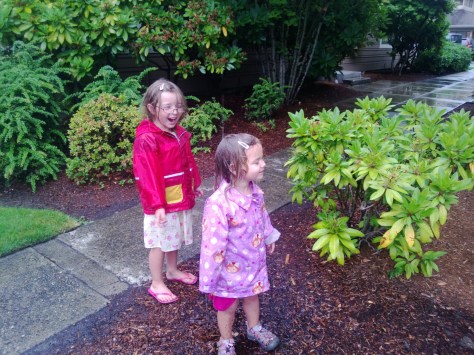
Oh no, it’s raining, that means we can’t do all our fun things like playing on the trampoline and in the sandpit!
There are fun things you can do in the rain too.
Like what?
You can splash in puddles, play with mud or catch raindrops.
Can we make potions in the rain?
Rainy days are perfect for making potions.
I know we could use the rain water because there isn’t any water in the paddling pool.
Yes and you could use mud or mush up wet petals.
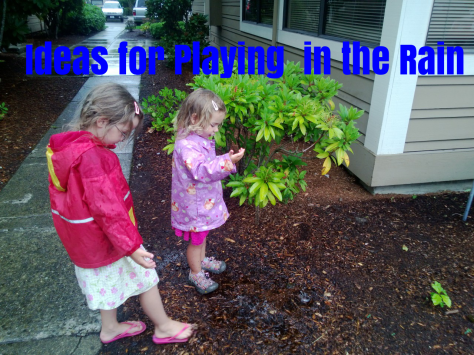
Later that day we went for an appointment and when we came out the girls found a fast drip coming from the gutter.
Why is this bit of rain faster?
Where is it coming from?
The roof
Yes, it usually means the gutter is blocked so the water doesn’t go down the drain pipe it falls off the end instead.
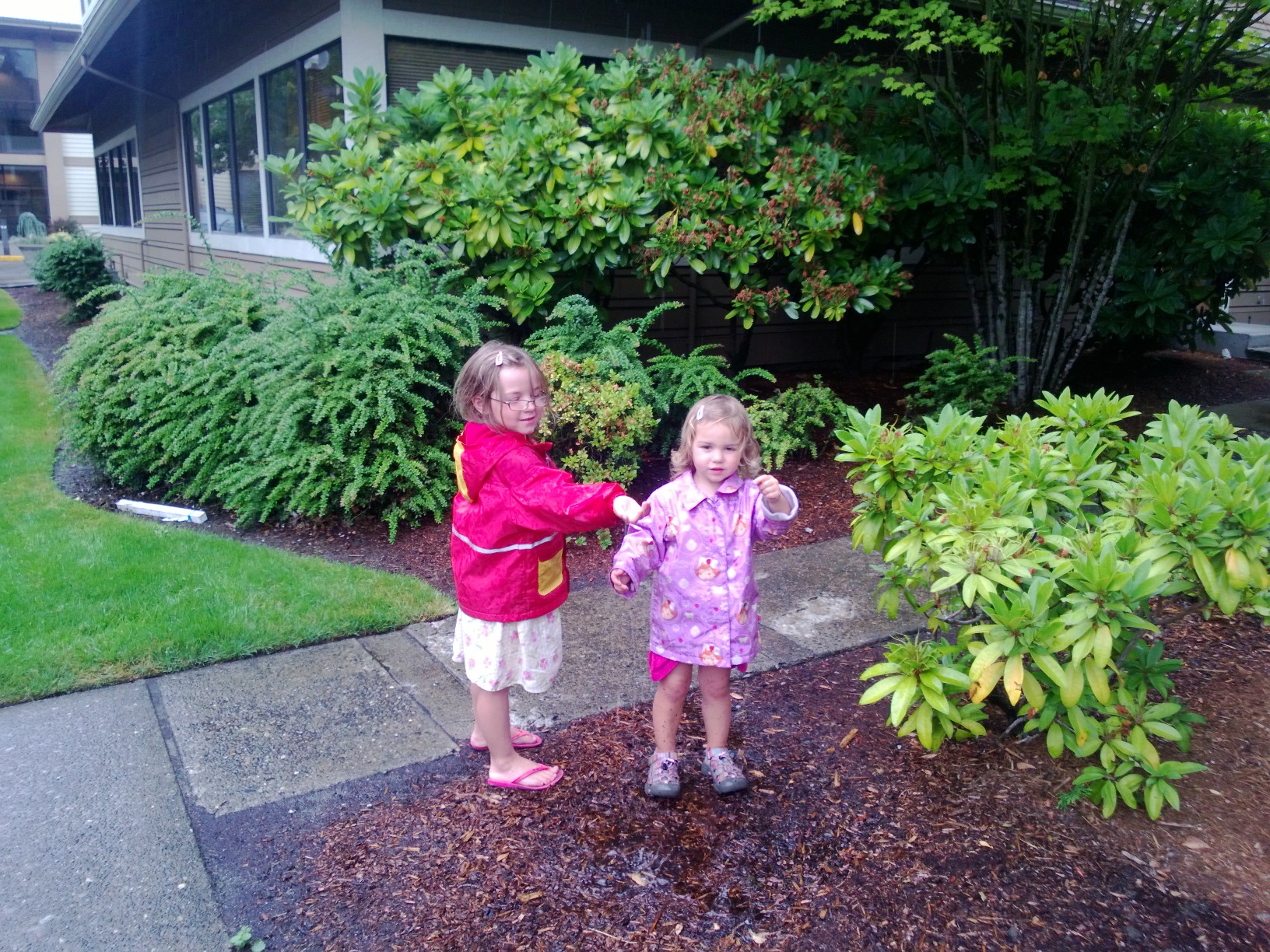
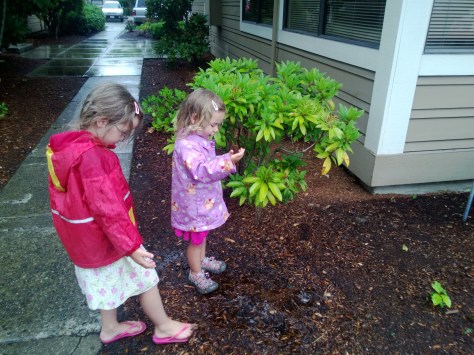
I’m trying to catch a raindrop but it keeps bouncing
Why can’t we catch it mummy?
The rain is coming down very fast. What happens when you throw a ball hard?
It bounces high
Yes and the rain is coming down very hard and fast so it bounces off your hand.
I’m trying to catch a raindrop but it keeps bouncing
Shall we go home now and get dry, you could snuggle up in a blanket.
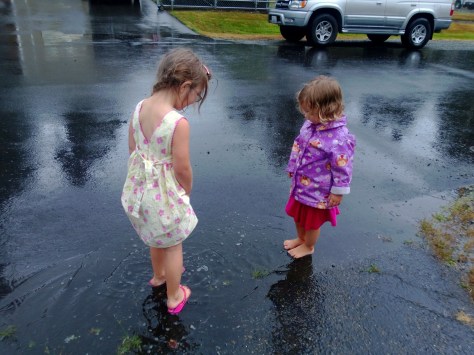
The girls removed their wet shoes. When we arrived home there was a big puddle outside our gate. I asked my 2-year-old if she would like to be carried or splash in the puddle barefooted. She wasn’t sure at first but then declared – splash!
I’m trying to catch a raindrop but it keeps bouncing
After getting dry and snuggling under blankets for a while we decided to venture out for a while. I took the dinosaurs to the sandpit and encouraged the girls to make a swamp.
This slideshow requires JavaScript.
When the rain had stopped a disappointed 4-year-old complained
Oh, the rain has stopped we can’t play in the swamp anymore
It’s alright, it will stay wet for a while.
I think I may have succeeded in persuading them that playing in the rain is fun.
Other Rainy Day Ideas
Take umbrellas outside walk under drips or as my 4-year-old suggested – we could play Mary Poppins.
Make patterns with powder paint on the wet ground or on a wet sheet of paper.
Put different containers outside, cover them with different materials eg. plastic bag, tin foil, kitchen roll, fabric, netting. Find out which are waterproof.
Collect rainwater in containers.
Make boats to float in puddles or take out rubber ducks.
Make potions, give the children dry goods like flour, sugar or salt. What happens when they get wet?
Watch the patterns the rain makes in puddles or as it runs down the window. Have a race – which raindrop will get to the bottom first?
Play a dry land race, you are only allowed on dry land and have to avoid all puddles.
Build a shelter with bricks for small world people or animals.
On the way home from school we were talking about quills. My Harry Potter obsessed 9-year- old had made a quill by putting a biro refill into a feather.
My four-year old asked
Do we have any ink?
No but we can use paint.
We painted with feathers when I was little didn’t we?
We can do that tomorrow if you like. We could use the Peacock feathers we collected at Remlinger Farm.
This slideshow requires JavaScript.
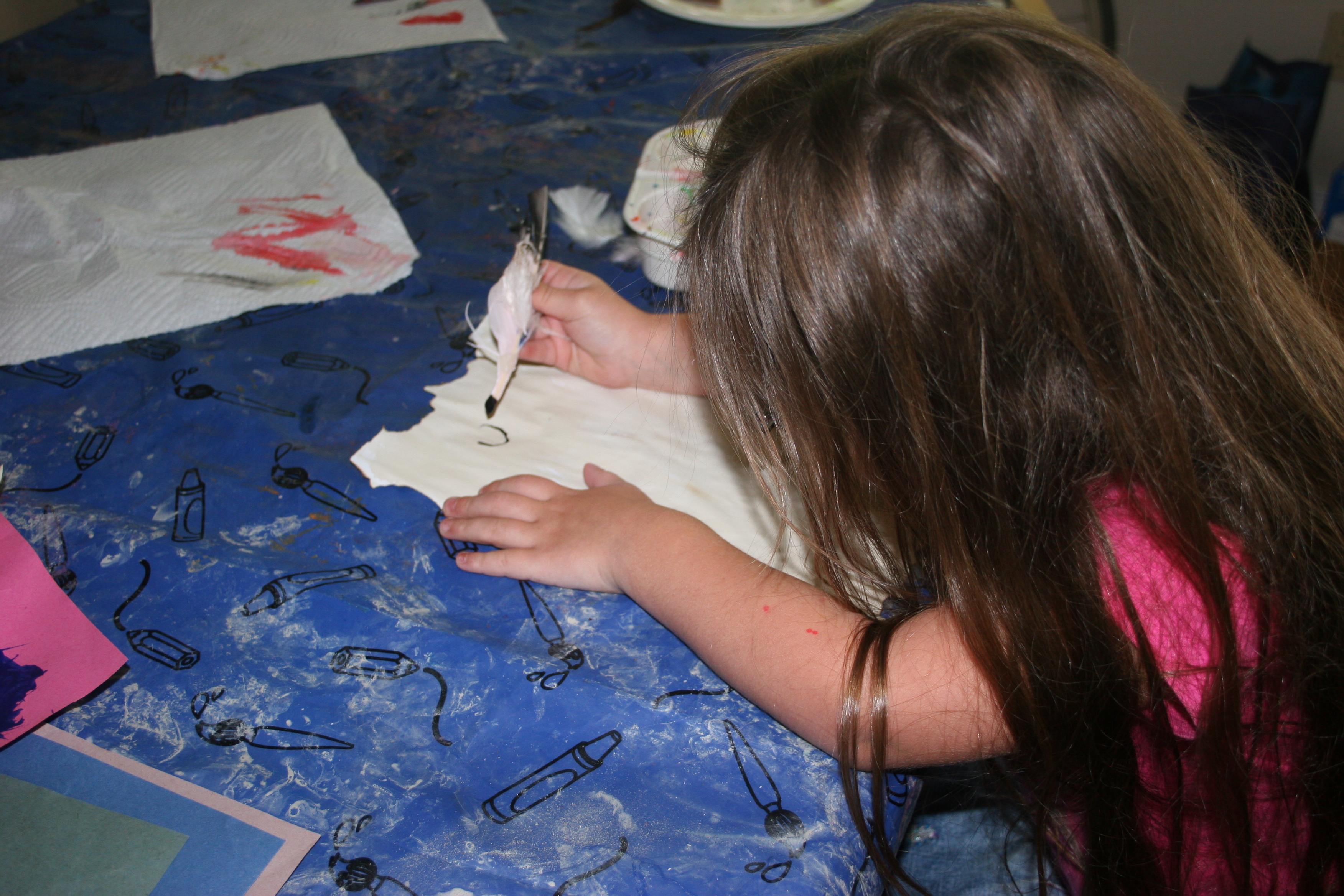
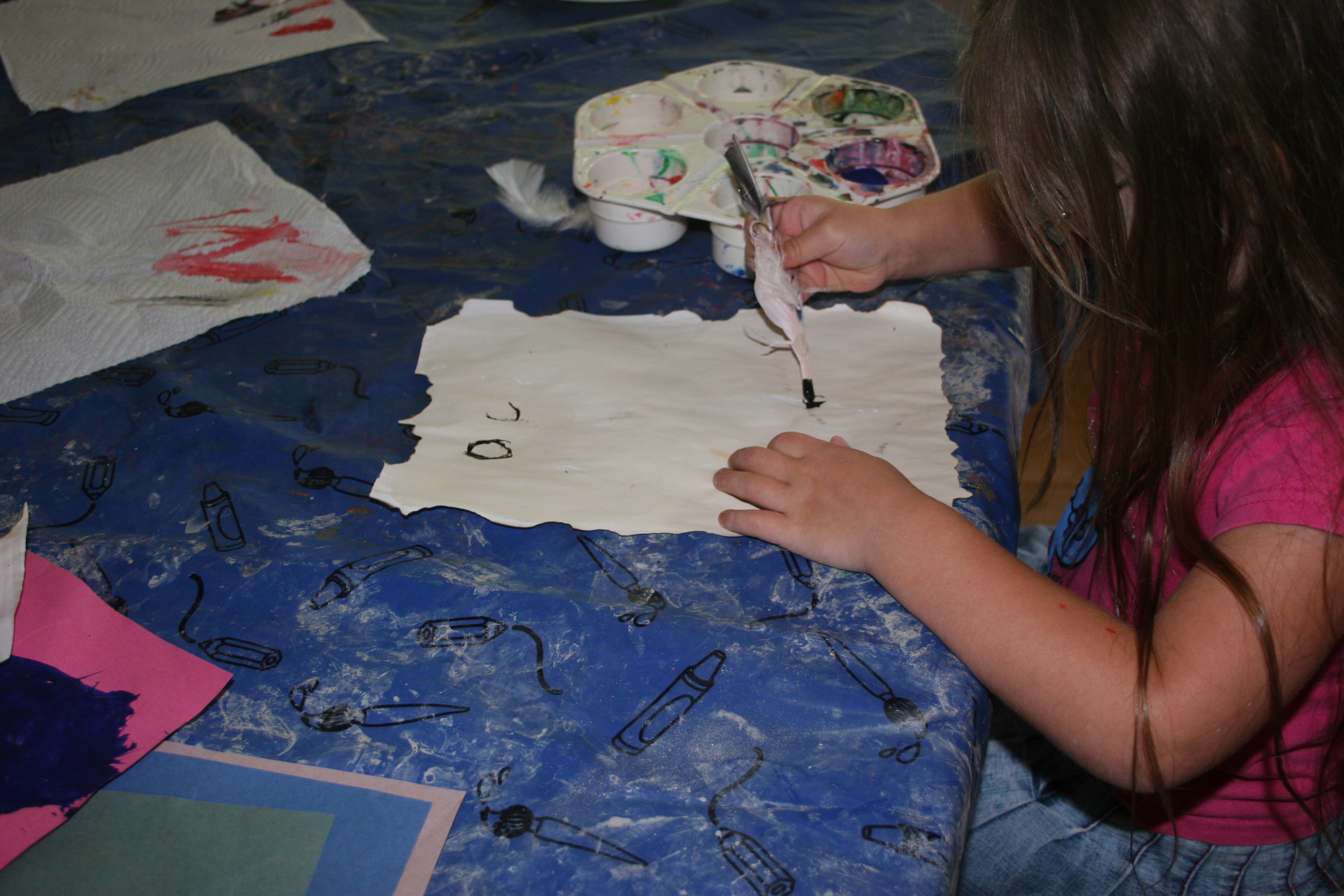
I set the paints up with a few feathers.
painting with the feathery part made some nice patterns
My 2-year-old suddenly declared
I wrote the word ‘buh’
Buh for bat.
She has been playing a Sesame Street alphabet game on the iPad and is beginning to talk about letters and letter sounds.
Her 4-year old sister asked
How do you spell bat?
How do you think you spell it? What does it begin with?
Buh
That’s right and what other sounds are in bat?
Bat…. t
Yes, so what is the middle letter?
Bat…b…a…t….. a. B..a..t spells bat.
After a little bit of impromptu literacy I had a brain wave. The girls are really interested in pirates at the moment and I thought we might be able to do some writing with feathers, make a pirate map or maybe we could make a wizard’s spell.
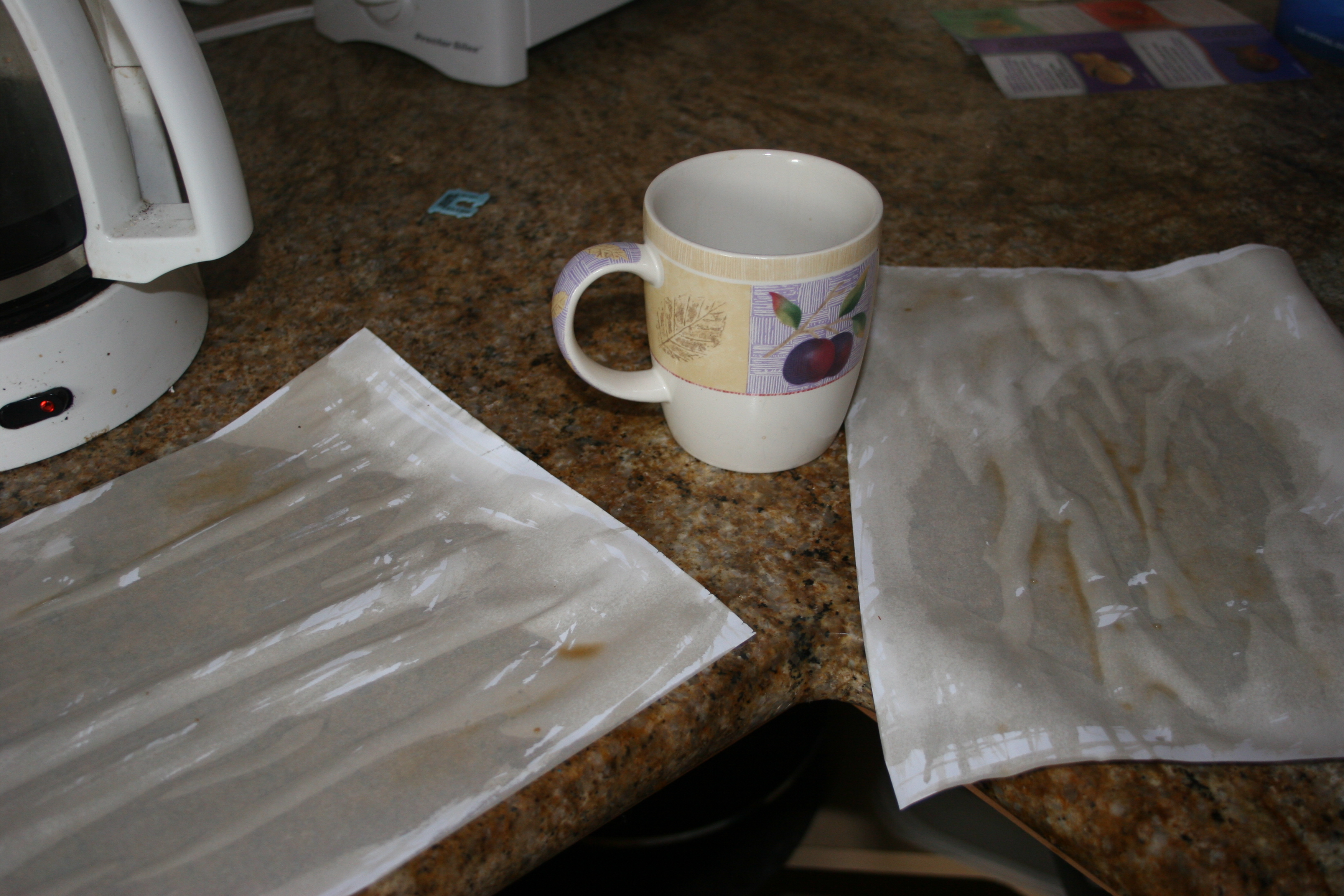
I stained paper with coffee
When it was dry I singed the edges to make it look like an old scroll.
I asked the girls what they would like to do. They decided on a Wizard’s spell.
It will be funny because we don’t even know how to read and write……………. Maybe Wizards write differently to people.
I think this would be a great way to encourage boys in their mark making.
Set up a desk in a role play pirate ship with ink and quills
Make a spell book for children to add their own spells
Add a few feathers and a small pot of paint to your mark making area
Make treasure maps and encourage the children to mark the treasure with an X.
Literacy for under 5’s shouldn’t be about sitting at a table learning letters, tracing over letters or using flashcards. It can be brought into any aspect of play and when children are ready and interested in letters and sounds they will talk about it, ask questions and experiment. Make it fun, make it relevant and they will learn.
To celebrate the 40th birthday of one of the world’s most famous picture books, I have 10 Hungry Caterpillar inspired activities.
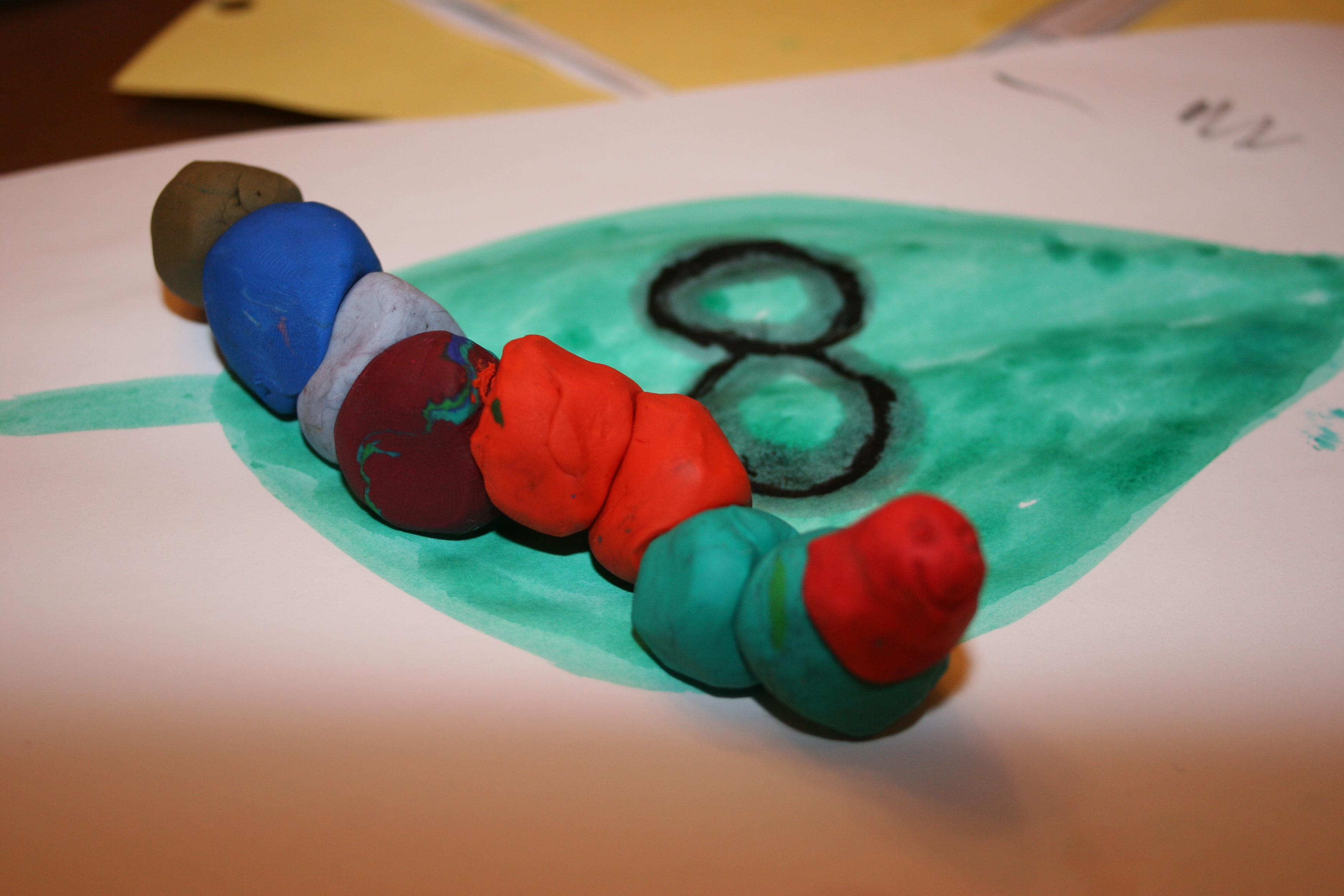
Maths: Build caterpillars from dough or clay. Count the number of segments that make up the caterpillar. Play a matching game – place the correct caterpillar on the leaf with the matching colour or number of segments.
2. Imaginary Play: My eldest followed an enveloping schema for years. She would hoard things in little bags and containers and if you ever left anything around that she could climb into, you would find her inside. On one occasion I left a fabric storage bin in her room. She promptly climbed inside declaring that she was in her cocoon and soon emerged as a beautiful butterfly. Provide material, boxes, play tunnels, blankets, wings and deely boppers.
3. Song and Rhyme: Sing the caterpillar on a leaf song or sit behind your child and pretend to crawl a caterpillar up their back. Teach them to ask ‘Whose that climbing up the garden wall?’ and you reply in a caterpillar like voice ‘It’s me’ said the caterpillar ‘I’m learning how to crawl’.
4.Paint symmetrical butterfly pictures: I’m sure we all remember these from school days. Paint on one side, fold the paper over to create a symmetrical print on the other. This can also work well by painting a piece of string, placing it between the folded paper and then pulling it out whilst the paper is still folded.
5. Movement: Read the Hungry Caterpillar and give the children movements to follow during the story. Egg – curl up in a ball, caterpillar – crawl along the floor moving to eat different types of food, big fat caterpillar – stretch out wide, cocoon – spin slowly then hang their head between their legs, staying very still, butterfly – flap their wings and fly.
6. Discovery – it is a little cold yet but once the weather is warmer, grow your own butterflies. We have done this very successfully using kits from Insectlore. It is fascinating to watch how quickly the tiny caterpillars grow and then instinctively hang upside down. You soon get to recognise when the butterflies are ready to emerge and can feed them indoors for a day or 2 before releasing them into the garden. The species that they use tend to stay within your local area for a few days after being released so you can spot them in the garden.
Find out about the butterflies and caterpillars that can be found in your locality, and print pictures of more exotic species.
7. Food: Make a fruit salad using the fruits eaten by the Hungry Caterpillar or taste some of the more unusual foods he ate. We are a big juicing family so we are going to make Hungry Caterpillar juice using:
1 apple
2 pears
3 plums
4 strawberries
5 oranges
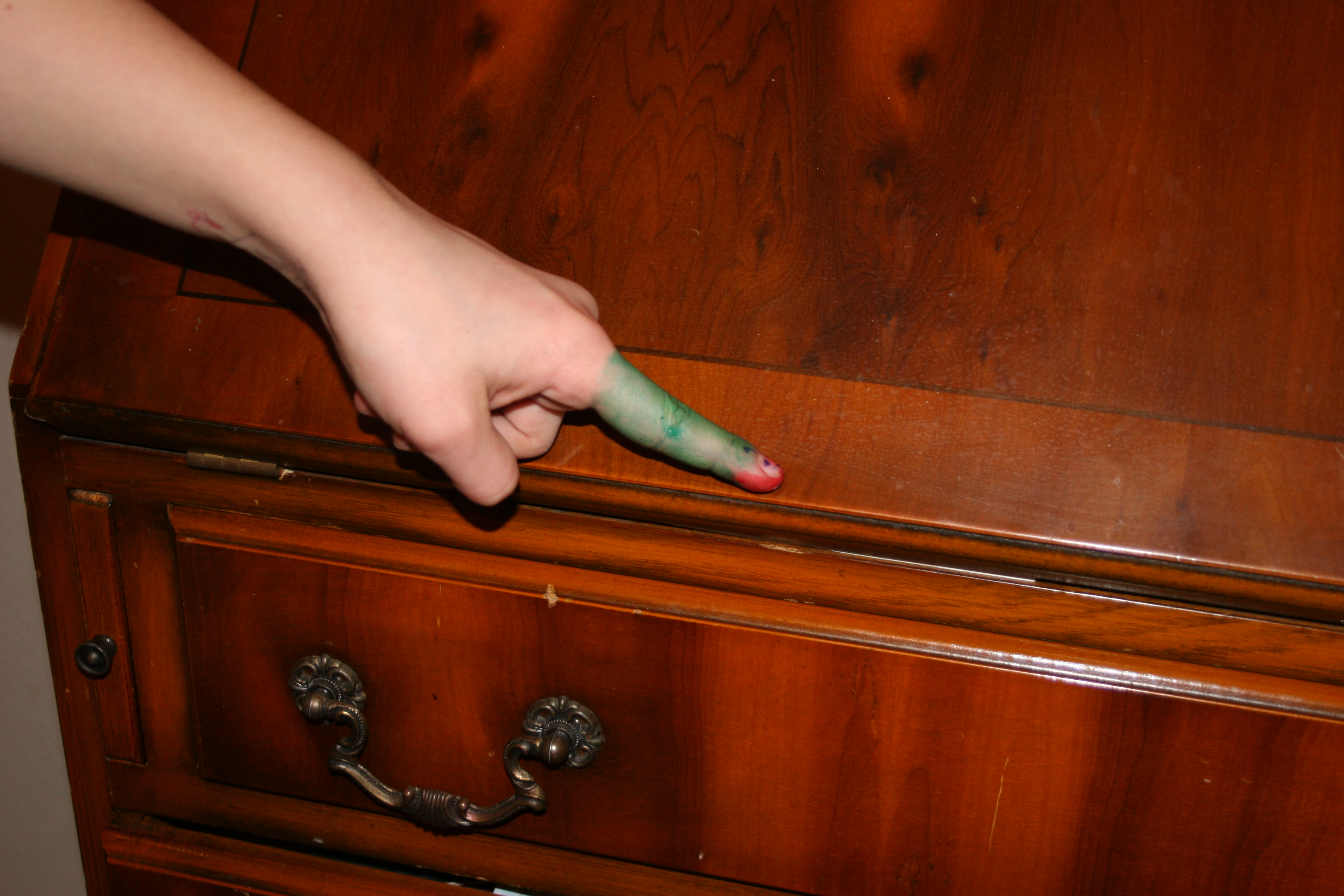
8.Maths: Turn your finger into a crawling caterpillar and measure things in caterpillar steps.
9. Outdoors – Grow a butterfly garden. I saw some amazing butterflies in our garden last year that are fairly commonplace in this area. I’m definitely going to learn about how I can attract them this year.
10. Visit a Butterfly Farm. I can highly recommend the butterfly house at Bristol Zoo and Felinwynt Rainforest Centre in West Wales. In Seattle there is the Butterfly House at the Pacific Science Centre . Feel free to add any recommendations in the comments.
My Children are big fans of Beat Baby and love to play rhyming games. Some of these activities and the way they help with early literacy development are documented in a previous post about Musical Games . Recently we were reading Ros Bayley’s Action Raps and then continued to make up some of our own.
After a few rhymes with me leading the way, my 4-year-old decided to have a try.
Thank you to the The Expat Hub for providing today’s guest post. The Expat Hub is a website with lots of useful tips for those who are considering a move overseas or those like us who have already made the move.
Homeschooling isn’t something I have considered for my own children, we are fortunate to have good schools in the area and my children are happy. Homeschooling isn’t for everyone but the article below outlines the pros and cons of homeschooling both generally and from an expat perspective.
Homeschooling is a subject which always seems to inspire debate.
It might not be for everyone but with the number of children being home schooled on the rise it’s clearly a viable option for some families.
But is it a good choice for families who have emigrated?
Before we talk about homeschooling in specific relation to expatriate children here are some of the most commonly argued pros and cons of homeschooling.
Pros
• Testing has shown that homeschooled children are good self-directed learners, do as well in exams as their public/private school counterparts and are well received at colleges and universities.
• Although the national curriculum has to be covered (and the children must prove their competence in specific subjects through testing) generally speaking there is far more educational freedom at home then in the classroom. What can be taught, how it can be taught, and where is much less prescriptive.
• Bullying is a sad aspect of mainstream education, something which can have a negative, and in some cases incredibly serious, impact on a child. In a homeschooling environment bullying isn’t an issue. Consequently a child may be less likely to suffer from low self esteem or condition their behaviour to ‘fit in’. Homeschooling can also be a fantastic way of gradually building up the confidence of a child who has been a victim of bullying in a traditional school.
• By not having to stick to traditional school hours homeschooled children and their parents can work out a schedule which benefits everyone. Children can also stay in bed a little longer, allowing for better rested (and more intellectually receptive) students.
• Homeschooling can also help build stronger ties between family members. Parents of rebellious children have often noted how destructive behaviours lessened or disappeared following a period of homeschooling. Spending more time with their children allows parents to know them better, giving them the opportunity to witness important life changes they could otherwise miss.
• One of the things many parents have commented on is how, without schoolroom distractions, children are able to accomplish more work in a shorter space of time. This often means that the concept of homework going on well into the evening, a major stress of many parents, is no longer an issue.
• During difficult times like illness, bereavement or moving children in traditional education are prone to experience disruption and can find it difficult to focus. The natural flexibility of homeschooling means that it is much easier to work around a family issue.
• Going to a traditional school can also be a costly business. There are school uniforms to buy, PE kits, packed/school lunches, lunch boxes, pencil cases, bus fare/petrol costs and school trips. Some or all of these expenses can be eliminated with homeschooling.
Cons
• Whilst homeschooling is more flexible than having to stick with a school timetable it does take up a lot of time for parents. As well as the actual teaching involved there’s marking, lesson planning/activity organising and lunch making, and a dozen other things besides!
• Some people consider homeschooling to be ‘weird’ and those who do it are in the minority. Parents, and children, must be prepared to experience criticism and negative comments.
• Homeschooling is a full time job, one which requires a serious investment of time and effort. For those parents who have to work alongside to supplement their incomes life can be very busy and tiring.
• Further to the point above, homeschooling can severely limit your household income, particularly for single parents. Even couples can find it a struggle to make ends meet if one of them has to give up work in order to make homeschooling a possibility.
• Although spending more time together as a family is something which sounds like a pro in theory, the reality can be difficult and littered with ups and downs. Parents have to be prepared for the occasional tantrum or argument, and children have to understand the way they’re expected to behave during ‘school’ hours.
• If you have just one or two children to teach the group and team activities you can enjoy together are going to be severely limited. Many homeschooling families find it necessary to enrol their children in extracurricular activities, particularly sporting ones, so they don’t miss out.
• In some instances children who are homeschooled find it difficult to interact with others outside of the home environment. Whilst the loss of social interaction is the main point raised by homeschooling detractors, parents who want to home school can arrange activities, take their children to public events and encourage them to make friends within their local community. Social isolation can be a problem, but it’s one that’s relatively easy to work around.
So those are the pros and cons of homeschooling, but what different things do you have to consider if your family is emigrating?
Pros
Firstly, although children tend to adapt to new environments more easily than adults, how well they are able to acclimatise varies hugely according to their age, confidence levels and previous experiences, and can even be affected by whether or not they have siblings.
Generally, the older a child is the more fervent an attachment they will have developed to the home they’ve left behind and the more resistant they’ll be to all the changes in their lives. Homeschooling can be a good option in this case, and it can also help you overcome the initial language barrier older children often face when entering the schooling system abroad.
Choosing between a pricy international school and a cheaper (but often more culturally challenging) local school can be a real headache for parents. Deciding to home school can alleviate some of the stress!
If your move abroad is temporary sending a child to a mainstream school can be a real upheaval when you have to leave. Home schooling is a great way of making sure your child doesn’t miss out on their education without the issues of them having to adapt to a new school only to leave soon after. If you talk to the teachers at your child’s school before you move you may even be able to pick up their curriculum exactly where they left off, making the transition smoother.
The Big Con
If you’ve emigrated for good it’s important to get the family integrated into their new environment as quickly as possible. Homeschooling might be a sensible and attractive option but as a family you run the risk of spending too much time together and not enough time getting to know your new home and meeting new people. When it comes to homeschooling abroad social isolation is as big a problem for parents as children. If it is something you want to pursue ensure that you and your children are involved in separate activities which will encourage you to make your own connections. Building a life for yourself beyond the family home can be the most challenging thing about emigrating and making your family a self sufficient unit really won’t make things easier in the long run!
There has been a common thread on early education forums recently about how best to share information with parents. Parents are the child’s first educators and most good early education settings will look for ways to share learning journeys with parents. There could be barriers; some busy parents want to rush away without spending time conversing, other families are hard to reach, English is not their first language or they may feel uncomfortable about talking to teachers but it is important to understand a child’s home background and to support learning at home.
Put yourself for one moment in the shoes of a parent who drops their child to your setting at the start of the day and won’t see them again until it is almost bedtime. Imagine you are a parent who has stayed at home with your child for 5 years to suddenly find them in full-time school. Most young children will find it hard to remember what they have done during the day, leaving parents feeling completely out of touch with their child’s world. I remember when my daughter started school for the first time and feeling sad because I was no longer in control of her influences.
Many pre-schools are really good at sharing information. The key worker system means that staff know the children well and nurseries are generally happy to invite parents into the classroom and spend time talking to them. As Karin remarks
Thanks to the thorough keyworkers and pre-school staff we knew everything that went on every day.
Karin talks about the new learning journey parents experience when their children start school as she is learning to be a big school mum and asks
‘ how on earth can we find out what they are getting up to?’
As a parent there are a few simple things that can help. Start by asking very specific questions – Did you like the story you read today? What was your favourite thing that happened today? Who did you play with at playtime?
Chat to the other parents in the playground, children usually tell different stories and you may start to piece things together.
Encourage your child’s teacher to help you to find out by suggesting some of the things below. Start your discussion with it would be really helpful if …
As teachers there are things we can do to help. When parents feel valued and a part of their child’s learning and fully informed about what, why and how their children are learning, it is less likely that there will be a feeling of them and us.
Here are some of the ideas I have seen working well in practice
Documenting learning
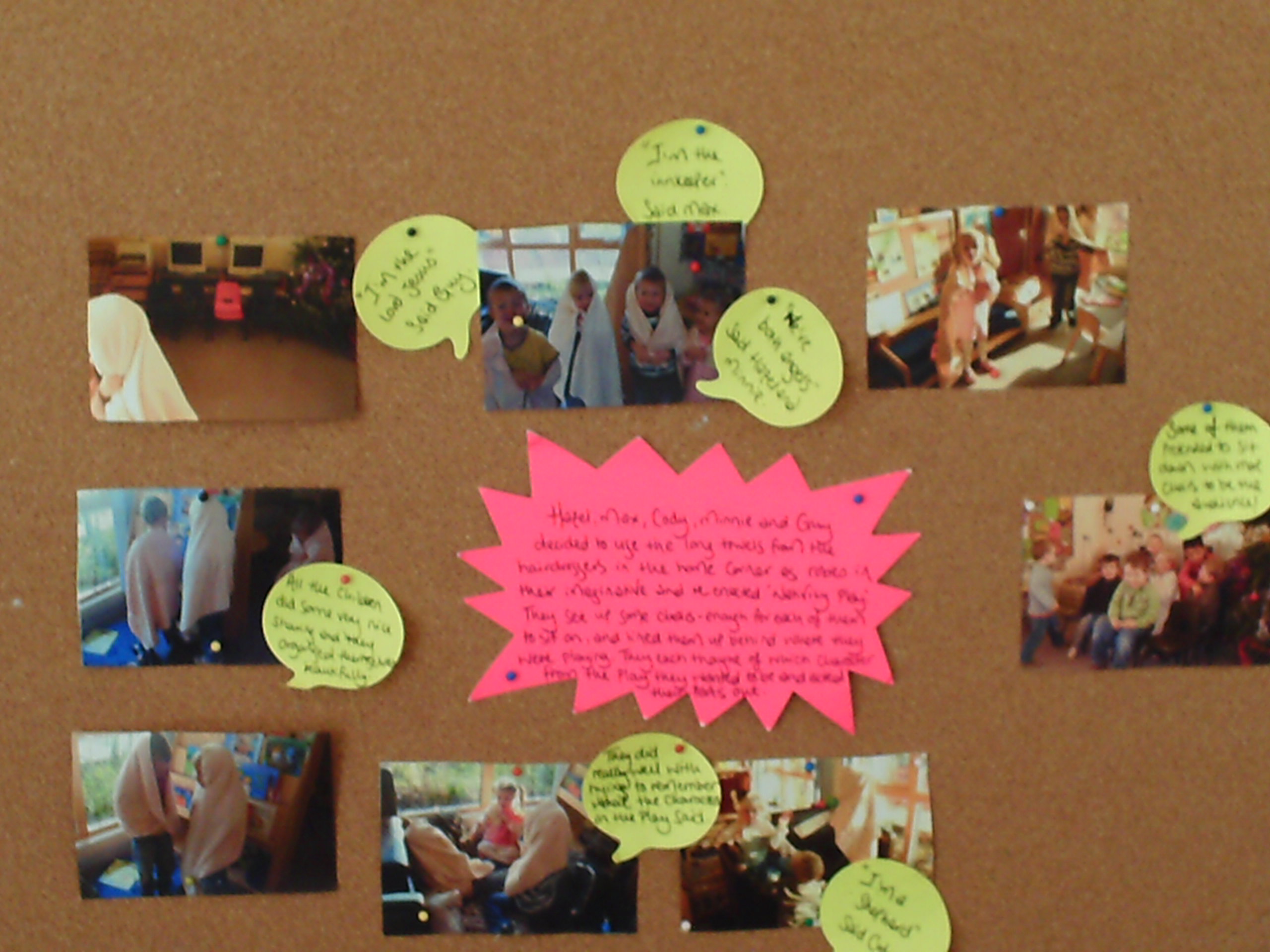
The pink writing in the centre sets the scene, ‘ A group of children decided to use the large towels from the hairdressers in the home corner to re-enact the Nativity Play. They set up some chairs for each of them to sit on and lined them up where they were playing. They each thought of which character from the play they wanted to be and acted their parts out. ‘ The comments around the edge describe the learning in more detail, All the children did some nice singing and organised themselves carefully. They did really well at remembering what the characters in the play said. Some of them wanted to sit on chairs and be the audience. ‘We’re both angels’ ‘I am the Innkeeper’ ‘I am the Lord Jesus’
In my opinion this is the most effective way of showing parents what their children are doing. Documentation tells the story of what children have been doing by representing the stages of learning, using photograhs, anecdotes from the children, examples of work and teacher analysis. In this way parents can see what their child is doing, what they are learning and why they are doing it. Carlina Rinaldi president of Reggio Children in Italy says,
documentation is more than simply assessing or displaying the work of the children. “One of my definitions of documentation is that it is first of all an act of love,”
This describes perfectly the warmth that emanates from the documentation in Reggio Emilia – it is like shouting from the rooftops – look at what our children are doing. Isn’t it fascinating? Come and join in. Many good examples of documentation of children’s learning can be found in the projects of Sightlines Initiative.
Learning Diaries
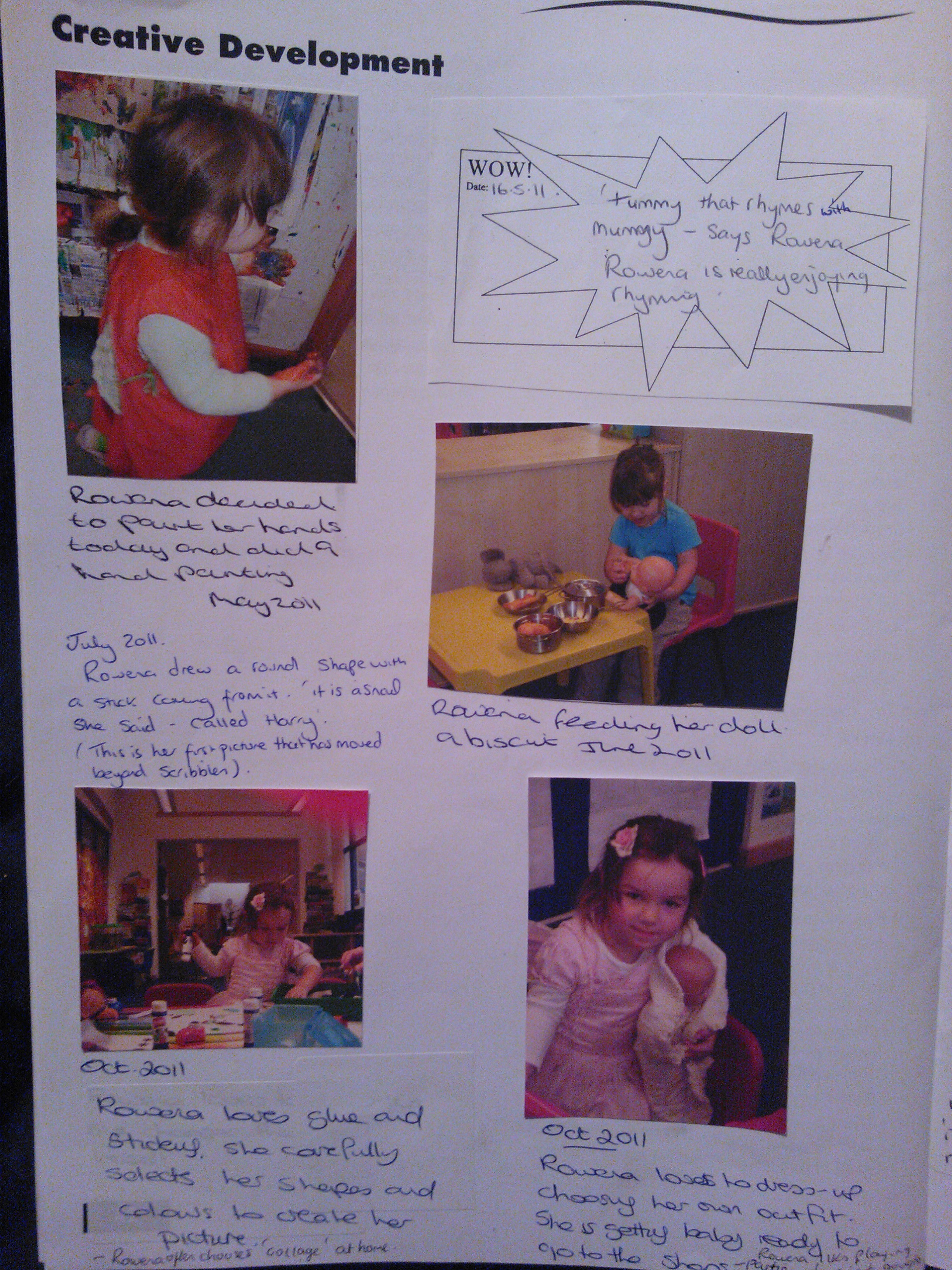
The pictures tell the story of the child’s fascinations and the teacher annotates explaining the learning that took place. The Wow moment was added by a parent about learning that had occurred at home. Parents can also comment on the learning at pre-school to show how this matches with what they do at home.
Learning diaries have been available for every Foundation Stage child (up until the end of their first year at school) in the UK since 2008. These show the learning journeys of individual children through photographs, children’s comments and teacher analysis of learning. The diaries are an excellent record of progress and should move with the children when they go to school. Parents should be made aware that they are available to be viewed at all times and encouraged to comment about learning at home.
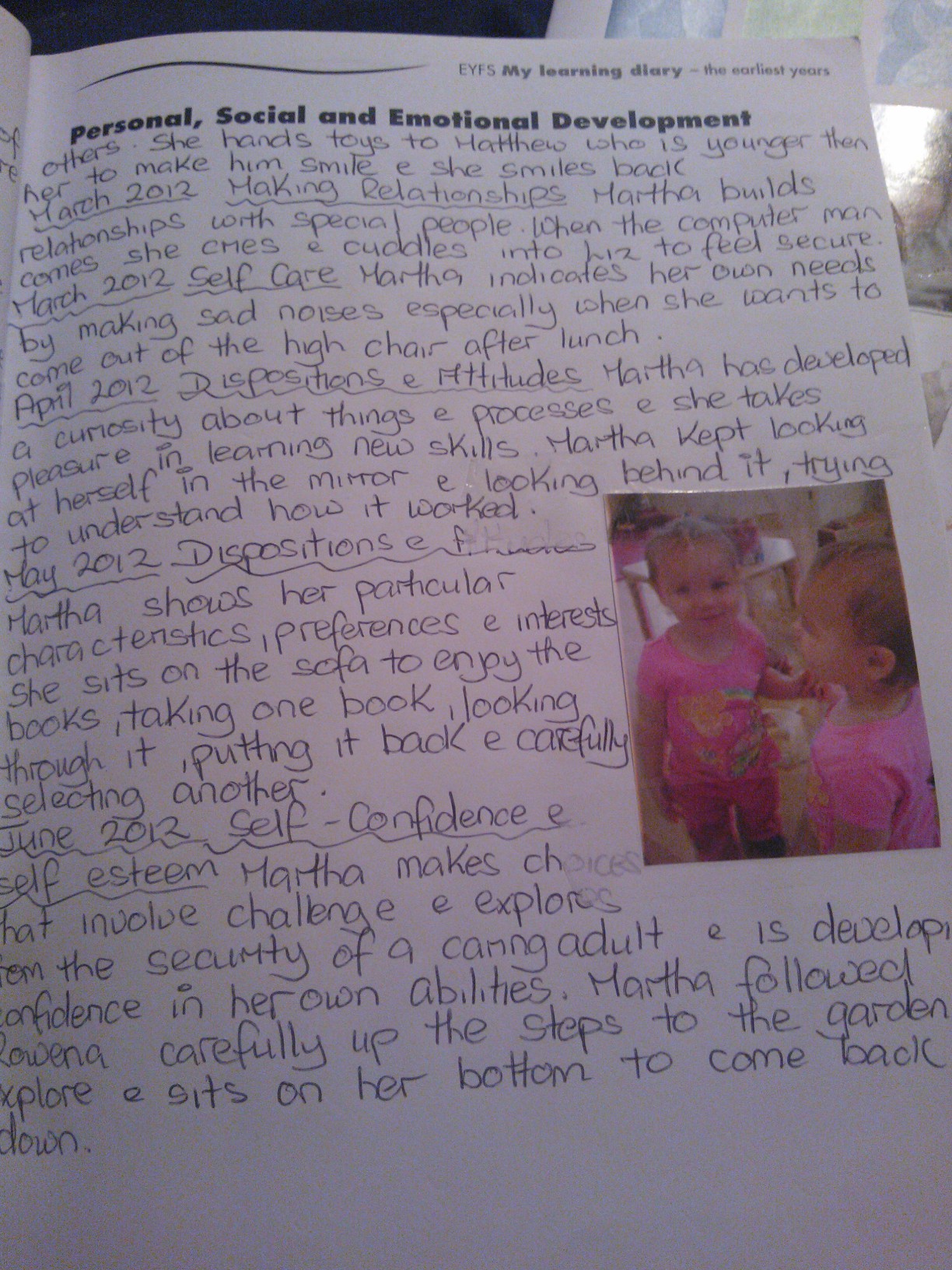
An example of a learning diary extract for a child under 2.
Learning diaries work best when they are, as the title suggests, a record of children’s learning. My first encounter with learning diaries was when working with children with additional needs, as a way of understanding what was happening at home and how that translated into their behaviour at school. In my experience this shared aspect of the diary is sometimes missed. Emphasise that this is the child’s book and it is important that everyone involved with the child shares information to build up a complete picture of the child.
Daily Timetable
If parents are struggling to get information from their children about the day at school it can be useful to display a timetable. Some specific information is also helpful, such as today we read this story or we looked at seeds and berries.
Using Technology
Not all will agree but I think that modern technology could revolutionise the way we build partnerships with parents. Allowing parents access to your email (preferably not your personal one) is a great way of sharing experience though I would suggest creating guidelines. Perhaps suggest that the email is for sending anecdotes about events or things they have been doing at home that they may like to share or build on in class. Teachers could send photographs to parents during the day of their children’s learning or maybe create an online version of the learning diary? I once had a childminder who even in the days before smartphones sent my daughter home with a sheet of thumbnail photos depicting what she had been doing that day. This meant so much and gave me a great starting point for talking about her day.
Open door policies.
In my experience most pre-schools and schools profess to have an open-door policy but in reality it means little. Many encourage parents to help at school and this is a great way of understanding what children are doing at school. However for working parents and those with younger siblings this is not always an option.
Most nurseries and pre-schools invite parents in to the classroom to collect their child. Parents have the chance to familiarise themselves with the environment, children can show their parents what they have been doing and there is a chance to talk to the staff. It surprised me when my daughter started at a school based nursery that children were handed to parents at the door and we weren’t invited in.
It can help parents to feel a part of their child’s day if the room remains set up at the end of the day and they are able to wander around with their child talking about what they have learned. Clearly this can be difficult if younger siblings start to play with toys or children don’t want to leave, so simply leaving one or 2 things out is sufficient. Outlining rules about this being a talking/sharing time not a play time should also help along with setting a clear time for leaving. Not all children/parents will want to stay every day. Perhaps encourage a parents’ rota for helping clear away.
The benefits of the above are plentiful
Parents will not continually demand information from you about their children as they will feel better informed.
Parents will be less anxious about their children if they feel a part of their life at school/nursery.
The children will be more likely to share what they have done with their parents by proudly showing their documentation and learning diaries.
Children can encourage parents to contribute to learning diaries creating a clear picture of the child for the teacher.
Photographs are a wonderful way of sharing information with families for whom English is not their first language.
Parents will feel better equipped to support their child’s learning at home.
With thanks to North Somerset Early Years advisory team, Liz Maggs, Hilltop Pre-School and Early Birds Nursery – Long Ashton for images and learning diary extracts.
In the above video from Tanya Byron’s keynote speech at the 2011 FOSI conference, she explains her response to the government when faced with this question. She speaks with such passion and conviction and I found myself nodding with excitement all the way through.
I think there are 2 key points to this argument. Firstly that education needs to be made more relevant to children’s everyday experience. Children live in a multimedia world and are excited by it. Bringing this multimedia world into their education will make learning more exciting and when learning is exciting we achieve better results.
My 7 year old often says school is boring and she hates writing. She is one of the brightest children in her class, if she finds it boring imagine how the least able children feel. Which brings me to the second point. Education in this country is about whether or not you are academic, if you are academic you are clever , otherwise you are not and pushed down a seemingly less important vocational route. This notion of what ‘clever’ is forms from the very beginning of school and unfortunately it is often boys who are not academic and would prefer to do something more active. Unsurprisingly the gap between boys and girls widens.
When children lack motivation they misbehave and eventually give up on school altogether ( as happened with my younger brother). Technology has so much promise as a way of engaging children and raising standards. It is relevant to their lives and gives them skills for their future. My own daughter’s teacher recognised that children of this generation will be unlikely to use pen and paper as a main source of writing in the future. Yet there is still fear about doing something different and worries that they have insufficient equipment .
This is why we need inspirational leaders, with ideas, energy and enthusiasm to show teachers what can be done. If enough influential people share this message, perhaps one day we will be heard.
Those of us working with young children are familiar with the term Foundations of Learning. What does that really mean? For me, it means everything that gives us the capacity to learn, think, create, behave, communicate and build relationships. The things that you learn in the first 5 years remain with you for life, whether they are physical skills, values and beliefs or ideas and knowledge. This is why for me,early education is the most important and exciting phase.
With this in mind, I would like to share an excerpt from Robert Fulghum’s book All I Ever Really Need to Know I Learned in Kindergarten . This was first introduced to me during my Master’s Degree. When I look at my own children and the way they develop and learn every day, I am reminded of this piece.
Most of what I really need to know about how to live, and what to do, and how to be, I learned in kindergarten. Wisdom was not at the top of the graduate school mountain, but there in the sandbox at nursery school.
These are the things I learned: share everything. Play fair. Don’t hit people. Put things back where you found them. Clean up your own mess.Don’t take things that aren’t yours. Say your sorry when you hurt somebody. Wash your hands before you eat. Flush. Warm cookies and cold milk are good for you. Live a balanced life. Learn some and think some and draw and paint and sing and dance and play and work every day some.
Take a nap every afternoon. When you go into the world, watch for traffic, hold hands and stick together. Be aware of wonder. Remember the little seed in the plastic cup. The roots go down and the plant goes up and nobody really knows why, but we are all like that.
Goldfish and hamsters and white mice and even the little seed in the plastic cup – they all die. So do we.
And then remember the book about Dick and Jane and the first word you learned, the biggest word of all: LOOK. Everything you need to know is in there somewhere. The Golden Rule and love and basic sanitation. Ecology and politics and sane living.
Think of what a better world it would be if we all – the whole world – had cookies and milk about 3 o’clock every afternoon and then lay down with our blankets for a nap. Or if we had a basic policy in our nation and other nations always to put things back where we found them, and cleaned up our own messes. And it is still true, no matter how old you are, when you go out into the world, it is best to hold hands and stick together.
So next time someone discredits you as ‘only playing’ or says ‘she’s just a mum’ or she only teaches little ones, stand firm in the knowledge that ours is the most important job in the world.
I was fortunate to attend TEDx London this weekend. This event was born from issues raised in Sir Ken Robinson’s 2010 TED talk and was designed to raise the question ‘ How can we bring on the Education Revolution?’
What can all those involved ACTUALLY DO to ensure that the old and irrelevant in education is thrown out and that we can build a new model of constant reinvention to ensure that education provides what industry requires and more importantly what young people need to flourish in today’s world.
I returned from TEDx London, my head buzzing with ideas, questions and things to explore. Many of the underlying concepts were not new but were reiterated by passionate individuals and illustrated by exciting examples from the world of education. These were some of my highlights:-
The talks were split into 3 sections
What’s Wrong / What’s Happening
What’s Right
What’s Next.
The first session began with a live feed from Sir Ken Robinson. He discussed his views on the purpose of education
Economic – Education underpins the modern economy and for a modern economy there is a need for creativity and innovation.
Cultural – Helping to understand each others cultures and relieve the problems of cultural mistrust.
Personal – Education is about individuals, it cannot be mechanistic and should encourage students to become engaged. For this reason education should be personalised.
Sir Ken Robinson’s vision for change includes
Education that is personalised
Improvements in the motivation of both students and teachers
Education that is customised to the needs of the particular community or individual school
Education is about diversity and standardisation offends diversity.
Education is about partnership with great institutions and the community.
A number of these points were a common thread throughout the talks. The importance of recognising children as individuals and encouraging, rather than stifling their talents and interests, came time and again. The need to motivate children and encourage them to think for themselves and the many possibilities that technology offers also kept reappearing.
I consider myself fortunate to work in Early Education. Active learning, teaching that stems from children’s interests and strengths and listening to the child’s voice are fairly widespread. Learning is fun in the early years and it would be unusual to find a pre-school child who grumbled that school was boring. I hope that all education can take lessons from early education at its best.
Adam Roberts an 18 year old human rights campaigner talked about critical thinking and how his mother’s encouragement to ask questions set him up for life. As young children we instinctively ask questions, but as we grow older children are often discouraged from questioning. This point was made even more strongly in Ewan McIntosh’s talk. Ewan explained the need for children to be problem finders rather than problem solvers. He showed a group of 7 and 8 year olds who were asked to put on their ownTEDx event. The children were inspired to come up with their own questions, prompted by ‘have you ever wondered?’ The children came up with wonderful philosophical questions and the excitement and animation shown by the children was truly infectious
Another common thread was the potential for embracing social media and technology in the classroom. By doing this we are bringing the real world into the classroom rather than viewing education and school as separate to other aspects of life. Dan Roberts believes strongly in education through technology and demonstrated some of the things his students at Saltash.net Community School are doing.
The What’s Right sessions showed a number of inspirational projects including:
History pin – building a history of real people and places using photographs and video footage.
A workshop from Seeper with a school for children on the autistic spectrum, showing how technology can motivate and engage children Dr Matt Whitby showing how awe-inspiring science can be, through his off the wall science experiments.
Tim Exile – a musician who has invented a machine to create spontaneous electronic music using a variety of sounds.
The Final session involved speakers who are thinking in a new way and their pleas for like-minded individuals to join them in this journey.
Dougald Hine was inspirational. He talked about change with determination and self belief, a firm believer in making things happen.
Emily Cummings the 24 year old inventor has been named Barclays woman of the year in 2009 and one of the top ten outstanding young people in the world in 2010. She explained how her passion for designing began when her grandfather taught her to make things in his workshop. Teachers recognised her talent and entered her for competitions, harnessing her enthusiasm and giving her new goals.
Sir Ken Robinson closed the day with a plea to make alternatives a part of the mainstream. A new vision for education including personalised learning, group activity, the closeness of the community and using and sharing talents. Many of the case studies from young people at the conference showed that talents were often discovered and utilised outside of school.The community then has an important role to play in educating children The closing lines resonated with me
New technologies will make change possible.
Technology alone doesn’t do much, it’s what we do with it that matters.
There were some wonderful examples of what we do with technology and creative thinking. I came away with lots of ideas and things that I wanted to share but also a feeling of uncertainty about what I can do to make a difference. I want to share inspirational ideas and inspire others to try new ways of teaching. Why? I believe that we need to be able to use the tools that children are used to at home and that will form a large part of their future rather than sweeping them under the carpet . Technology will not replace traditional play but will enhance it if we use it creatively. It gives opportunities for awe and wonder, for raising questions, self discovery and creative expression. My endeavour is to show this in practice and inspire others to do the same.
Some time ago I was asked to review ‘Your Baby Can Read’, a system for teaching babies from 3 months old to read. The system aims to introduce the written word at the same time as a baby is developing a verbal vocabulary. As today is International Literacy Day I felt I should bite the bullet and go for it.
So why the procrastination? My initial thoughts were that such a system goes against my beliefs. I have seen many parents who focus far too early on reading and writing and become both stressed and competitive about it. A baby has so much to learn in the first years is it really necessary that we add reading to the list? I also feel that a lot of the time a focus on learning to read and write means that many of the underpinning skills necessary to achieve this are overlooked. However, I felt that it was important that such products are reviewed by someone with an early education background. I was interested in seeing the products to help make an informed view.
The materials in the programme include 5 DVD’s, 5 lift the flap books, 5 sets of sliding word cards, music cd, 82 double-sided word cards, a sliding windows board book, word game cards, a parent’s guide and early learning workshop DVD.
To be honest, I liked the materials more than I thought I would. My biggest reservation about the whole programme is that reading is taught through DVD’s. There is a firm emphasis on how interactive the DVD’s are but there is no requirement to sit with your baby as you watch them. I watched the DVD’s with my 10 month old and 2 year old, the 2 year old was mildly interested and the 10 month old paid no attention at all. Personally I don’t see that there is anything that the children can learn from the DVD’s that they couldn’t learn from sharing the books with an adult. I may be wrong, but I feel that this is an easy way for parents to avoid feeling guilty for not spending time with their children. The DVD’s themselves are watchable and encourage the children to interact. It is unfortunate in my opinion that they are American, I think some of the pronunciation of words may be difficult for young British children when listening to American accents and some words like colour use the American spelling. I feel to transfer the programme to a UK market it would be beneficial if the DVD’s were remade with British accents and spelling.
I really like the lift the flap books. These have the word printed on the flap and when the flap is lifted there is a photograph to illustrate it and a number of interactive questions and instructions eg. How many dogs are there? Point to your elbow and What is your favourite thing to eat? My 2 year old particularly liked these and enjoyed focusing on the words, pointing to them and ‘reading’ them with me. I can imagine that with her interest in books and the written word, having read them a number of times she will begin to read the words in the books. The same words are used in the sliding word and picture cards and word cards (flashcards). The word game cards have 2 of each word so that you can play matching pairs games with the words. I can imagine my 2 year old enjoying this, although I haven’t tried it yet.
The programme suggests that you begin by reading the parents’ guide and watching the early learning workshop DVD. The parents’ guide explains how to use the books with your child and gives practical ideas for sharing other literacy related activities with your child. I thought the DVD was excellent, with a lot of sound advice about early language acquisition and literacy. My worry is that it is very long and I wonder how many parents would actually sit through it before embarking on the programme.
Dr Robert Titzer the creator of the programme begins by explaining how the programme originated. He explains that he created the DVD’s to occupy his baby daughter in those times when she was ‘doing nothing’ while he was making dinner or reading the paper. I found this a strange choice of phrase – I don’t think I have ever seen a baby ‘doing nothing’. He also talks about early brain development and the rapidity of brain development in the first few years of life. This is a perfect reason for interacting with babies, but I’m not sure it is a justification for the need to read at this age.
Having said that there are a number of very positive points about babies and learning that Dr Titzer makes.
Parents should be active as the child’s first educator
Spend lots of time interacting with your baby
Children have receptive language (the ability to understand the meaning of words) before they can speak.
Talk to your baby, talking about what they are interested in.
Babies learn through movement
Play games with babies in the mirror and follow their lead building on the things they instinctively do.
Don’t let children watch too much television, it is far better to read with them.
The concept of number needs to be taught in practical situations
Children are ready to write when they can master the physical skills – there is no particular age at which this will happen and it should not be introduced too soon.
The children in the case studies shown on the DVD have clearly learned to read both individual words and whole books. They enjoy reading, are happy and engaged. I have no doubt that the programme works but I question the appropriateness of teaching young babies to read.
The main argument for teaching babies to read is that the earlier a child learns to read, the more educational advantages they will have later. There is a wealth of research that shows that the size of a child’s vocabulary at the age of 3 is the biggest predictor of how easily they will learn to read . The programme encourages the development of vocabulary through the introduction of 164 key words. It gives opportunities to introduce other words related to the children’s interests, by providing blank cards and a wipe clean marker pen. However, surely it would be as beneficial to focus on spoken language and oral/aural skills (such as rhyme, identifying sounds, alliteration) in the first 3 years, accompanied with fostering a love of books, story, song and rhyme?
Dr Titzer explains that the earlier a child learns to read then the more likely they are to love it. From personal experience with my own children I disagree with this. My 2 year old has been obsessed with books since she was around 6 months old but cannot read yet. At almost 3 she is beginning to show an interest in words and is keen to read some for herself. My 7 year old went to school without being able to read but with a huge vocabulary, an interest in books, the ability to recognise rhyme and alliteration, a love of singing and poetry, the ability to keep a steady beat and some knowledge of the alphabet. Within weeks of being in school she learned to read, she is now a well above average reader, an avid bookworm and reads aloud with more expression than most adults (including myself). Based on my 2 year old’s extensive vocabulary, love of books and ability to recognise rhyme I expect her to go the same way. From this experience I question the necessity of programmes such as ‘Your Baby Can Read’.
I think if you have a pre-school child who has built a good vocabulary, oral and aural skills, loves books and is showing an interest in the written word then this could be a useful tool in the journey to learning to read. Personally I don’t like the idea of teaching reading using DVD’s because reading is as much about sharing a special time and ideas with your child as it is about the act of decoding words. I will use the rest of the materials with my 2 year old daughter if she shows an interest but I wouldn’t choose to use them with my baby. For those who would like their baby to read I have no doubt that the system works and that if the system is followed according to the comprehensive guidance the babies and toddlers will get great pleasure from it. From the perspective of an early educator, I would let babies be babies and use it when the children are a little older.








 Right from the Start