Category Archives: Uncategorized

Butlins – A Great British Family Holiday

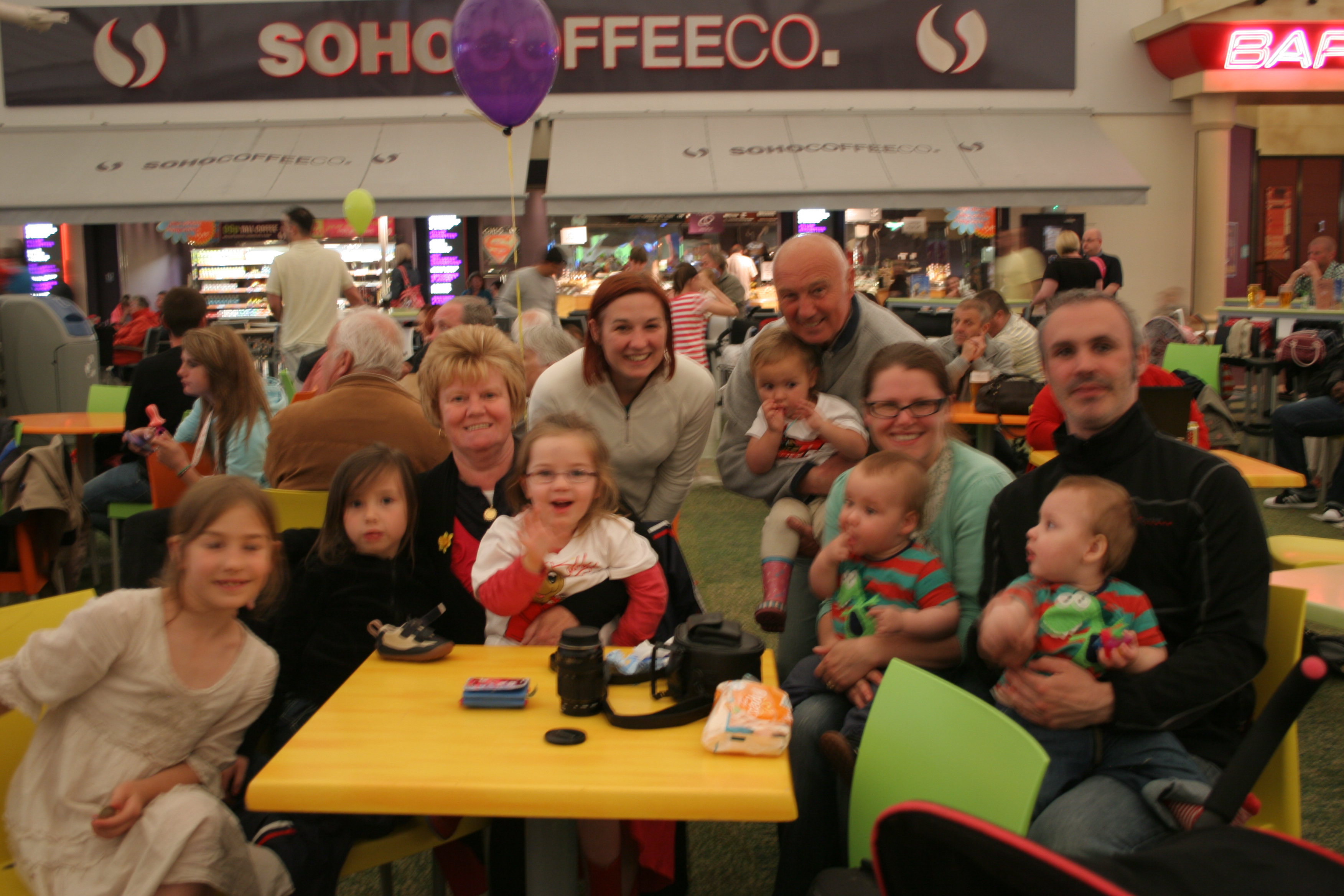
A few weeks before leaving the UK I had a very special farewell holiday with my family at Butlins Minehead Resort courtesy of Butlins Ambassador Programme. It didn’t quite begin as planned but once we arrived and the sun came out we had a great time.

Our party included myself and my 3 children (aged 8, 3 and 1), my brother, his partner and their twins (aged 1) and my dad, stepmum and one of her grandchildren (aged 7).

Our gold apartments were almost identical to the one we stayed in during our Christmas break , so I won’t repeat myself.  I would however highlight a few things if you are taking toddlers.  Firstly the doors are very heavy and sprung , my youngest children managed to avoid trapping limbs but I didn’t feel very relaxed.  My crawling nephew who is into everything managed to pull a heater off the wall, knock the television over and get into every cupboard in the kitchen, so needless to say they didn’t spend a lot of time in the apartment. That said, with the true Butlin’s spirit at heart,  you will get the most out of your break by getting out and out enjoying what it has to offer. My dad stayed in a silver apartment and was more than satisfied with the size and comfort.

The whole party were very impressed with the quality and choice of food, a difficult task to provide something to suit everyone in such a large party.

Swimming

We were so lucky to have a day of glorious sunshine that we could spend in the outdoor pool, this was suitable for all ages and they all had a great time. The indoor pool was even more fun for the older children, though I didn’t get  a chance to go on the slides this time as I had to stay in the shallow pool with the little ones.  Getting 4 under 5’s ready for a swim was a bit of a military operation but they loved every minute.

Fairground Rides
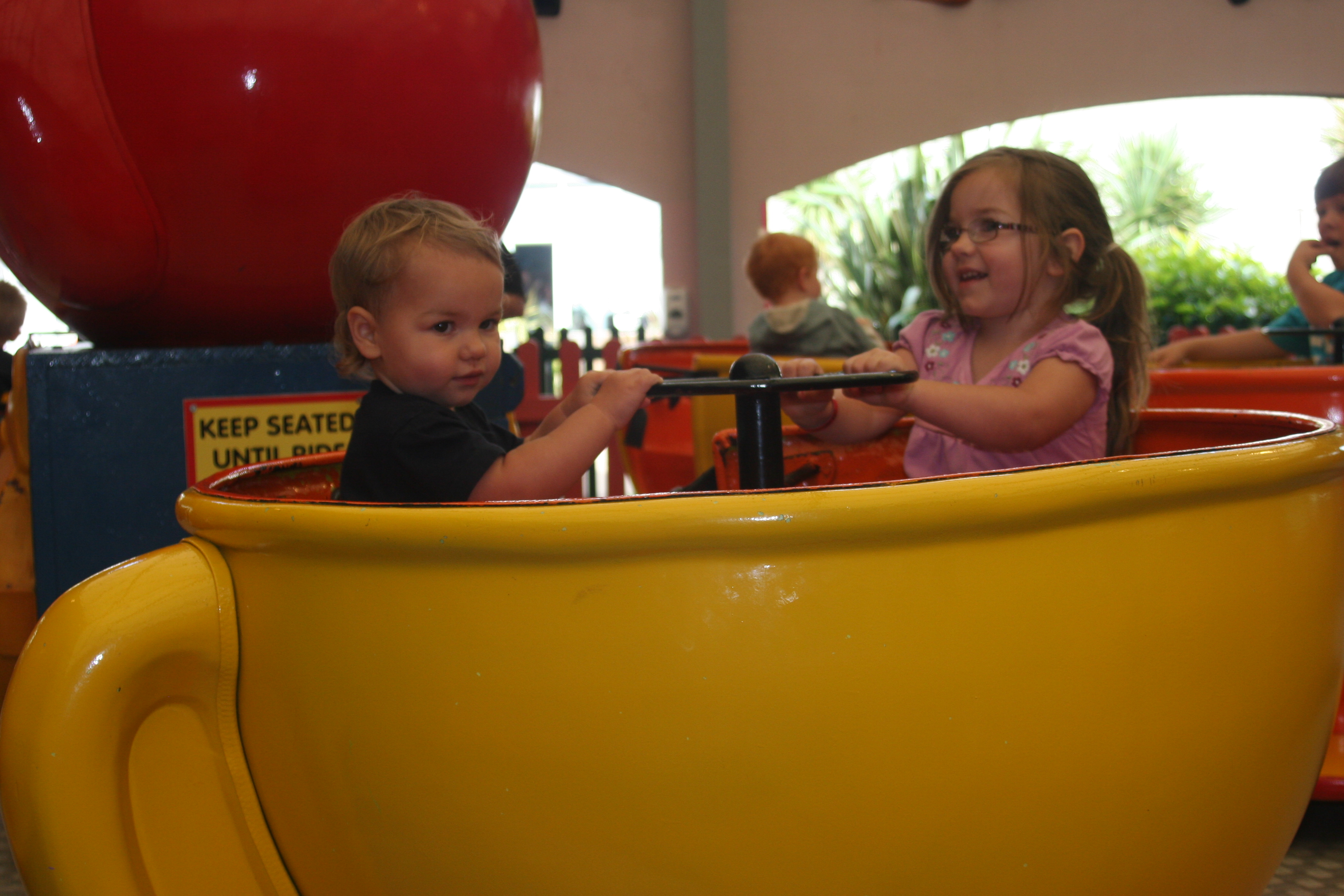
bob the builders yardThe outdoor fairground was perfect for the 2 older children and the indoor playground in Bob the Builder’s yard was enjoyed as much by the younger ones.  The twins were a little young so went for a walk instead but my 1 year old had a wonderful time . We spent a good few hours there, there were hardly any queues and as it was undercover it would have been fun in any weather.

Shows

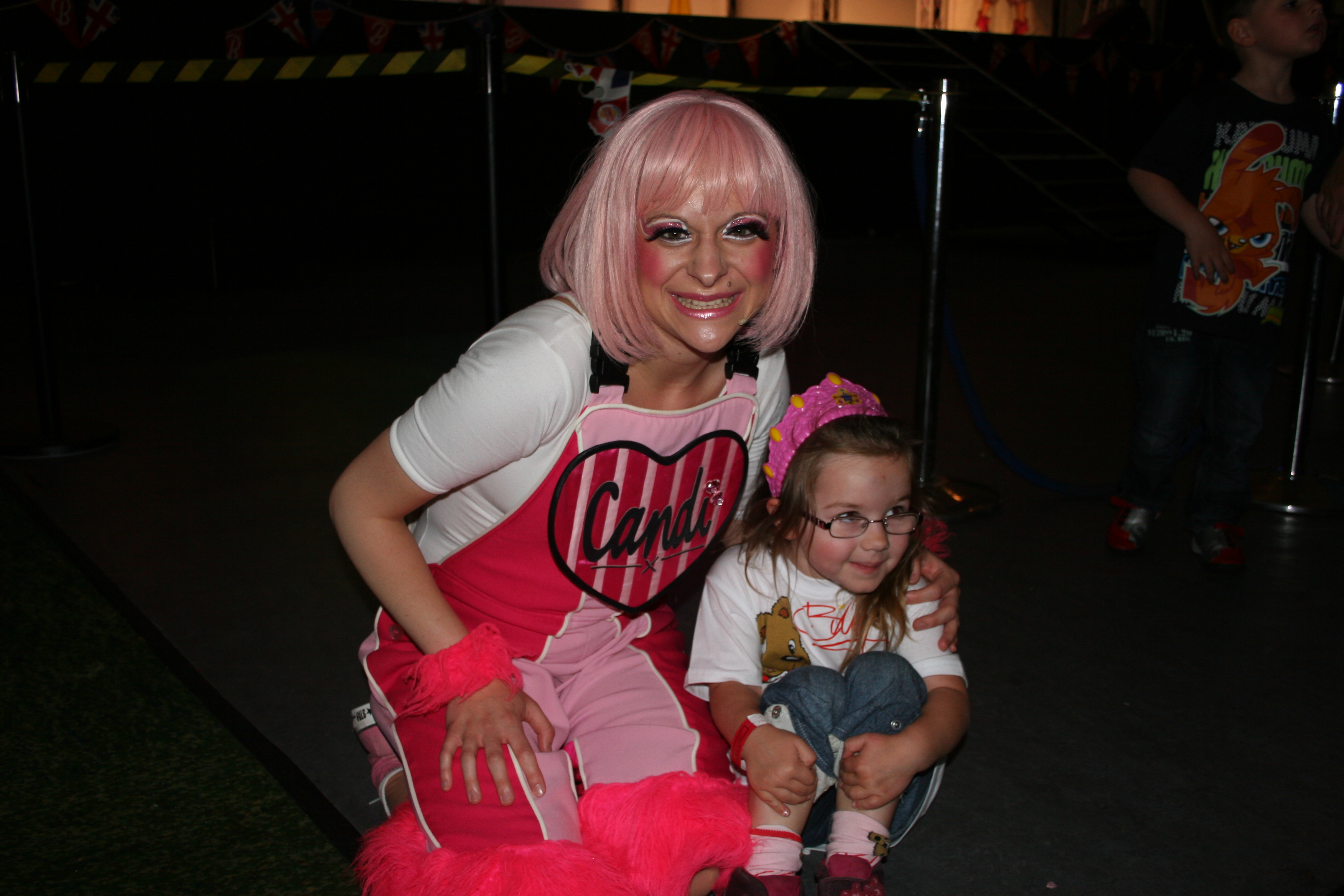
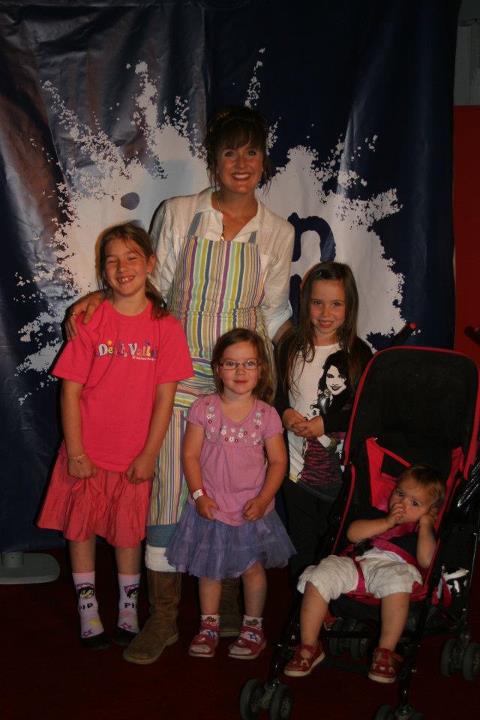
Primarily the shows that we watched were in the Skyline Pavilion . This was an easy place to head to each evening. The children were happy watching shows, running around on the amusements or playing in the softplay and we could get a drink from the bar.  My 3 year old was so excited when she met characters from the Skyline Gang. My youngest 2 avoided getting lost by wearing a wristband with my phone number on it provided by the red coats,  a great idea for peace of mind in a busy venue. Our favourite show was ‘I Can Cook’.  Katie was brilliant with the children and really energetic and engaging.  There was lots of audience participation (arrive early for a good seat if your children would like to get up on stage) and we all got to taste the produce at the end.  My 3 year old was excited to meet Katie and wanted to ask her if she could come to our house to cook with her.
Activities

In some ways it is difficult in a mixed aged party to get too involved in activities.  Many would have been suitable for the under 5’s or for the older ones but not all together.  The idea of this holiday was a final farewell before we head off to the states so we didn’t really want to split up.

There were quite a lot of paid activities, we chose a few , the children had donkey rides, my eldest climbed the climbing wall and the older girls went to the cinema with their nanny.  We felt the cinema was a little expensive, costing around the £20 mark for 3 children and an adult. The cinema was almost empty and may have been busier if it had cost a few pounds each.

Billy Bear

butlinsThe highlight of the holiday for the littlest ones was meeting Billy Bear everyday at mealtimes. My one year old now calls all teddy bears Billy Bear.

With 4 children under 5 it wasn’t always the most relaxing holiday in the world, but the perfect way to involve all the family and say goodbye to the UK.

Thank you so much to everyone who made our year as a Butlin’s ambassador a wonderful experience and all the best to the current group of ambassadors.  Perhaps we could bring Butlins to the US?  Somehow I don’t think the Americans would get it.

This review is based on a term time 4 night break during June in a gold apartment with premium dining.
The Phonics Debate – Alive and Kicking on Mumsnet

phonicsI have been reading with interest the continuing phonics debate on Mumsnet this week in response to  Guest Posts from Michael Rosen and Nick Gibb.

This year the UK government introduced phonics screening tests at the end of Year 1 and there is a firm commitment to the teaching of synthetic phonics as the primary method of teaching reading.

For me there are 2 key questions in this discussion:-

1. How important is phonics instruction for producing fluent readers?

2. Is it appropriate to test young children’s phonic knowledge?

1. The Importance of Phonics

Clearly, phonic knowledge is important.  I learned to read using the phonetically regular Meg the Hen books and was always an advanced reader.

Phase 1 of Letters and Sounds (a resource for pre-school children published by DFES in 2008) gives an excellent grounding for later phonic skills. The materials introduce phonics through listening and playing with sounds before any focus is put on the written letters.  My own children could recognise rhyme and alliteration at the age of 3 through playing games, and joining in with songs and rhymes.  In my opinion it is this groundwork in early life that is  sometimes missing in failing readers therefore phonic instruction in later phases becomes meaningless and sterile rather than fun. Building the underpinning skills through play is therefore an important factor.

There are numerous studies that cite the size of a child’s vocabulary in the pre-school years as an accurate indication of how easily they will learn to read.  Further studies suggest the importance of children understanding story structures and the language involved in re-telling stories.  Children develop vocabulary through talking and listening but to an even greater extent through reading.  When a child is unable to read or in the early stages of reading, the importance of adults reading to them cannot be underestimated. Not only does it encourage an interest in books but it also enriches vocabulary considerably. As evidence to this point my 8 year old who is an advanced reader has a rich vocabulary and writes with mature language and expression. She enjoyed advanced books such as Winnie the Pooh and Pippi Longstocking in her pre-school years.  She now reads Harry Potter, Little Women and the Narnia books and regularly inquires as to the meaning of words developing her vocabulary even further.  As a writer myself I am very aware of the impact reading has on the quality of my writing.

There is little doubt that there is a percentage of children who are failing to learn to read, having a detrimental effect on future academic success.  I would be interested in analysing the statistics to see what proportion of these are boys.  Most girls enjoy reading, mark making, role play and other early literacy related play.  Many boys do not.  In my opinion more needs to be done to channel boys natural interests in physical play and technology into literacy activities.  This does not have to exclude phonics as one of my colleagues demonstrated when she encouraged her pre-school boys to explore rhyme and rhythm by dressing them up as rappers, using electronic beats and encouraging them to make up their own raps.

To some extent therefore it is not what is taught that is the issue but the way that it is taught.  If phonic instruction is to be the key method of reading instruction then it must be engaging or children will switch off from day 1.

2. Phonic Testing

I understand the reasons for introducing this test and would by no means undermine the fact that we need to highlight failing readers early to give them the extra support they need.  However, I do feel that most teachers know the children who are struggling to read without the test. Certainly as a parent who has helped with reading in class this was easy to spot and it was also clear which children were struggling to decode using phonics. I think that putting children under pressure at a young age and giving parents another thing to worry about or be competitive about is wrong. I don’t have children who have been through these tests and from feedback from other parents I think that schools are handling them sensitively, ensuring that children are unaware that they are being tested, however I still feel that they are wrong.

Some children will be exposed to all of the experiences mentioned above but will still struggle to learn to read.  Perhaps the tests will help to identify and address these children’s needs at an early stage but I am wary that catching children when they are failing is not the best starting point to addressing the problem.

A further point that was raised in the discussion is that all children do not learn in the same way and that the ability to decode words does not automatically produce fluent readers.  I used to work with children on the autistic spectrum.  One of these children had a fascination with letters and sounds, he could read phonetically regular words before he started school but his understanding was at the level of a 1 year old.  When we read books together they were of the ‘Where’s Spot?’ type and anything more complex was beyond his understanding.  I realise that this is an extreme case but I believe that it is a cautionary tale to those who may think a good phonics test result means that their child is reading fluently.

I will be watching with interest as my children move through the US education system (especially as they will start school a year later than in the UK) to see how literacy teaching differs and whether there are similar worries about levels of attainment.

Goodbye UK – Parties and Holidays

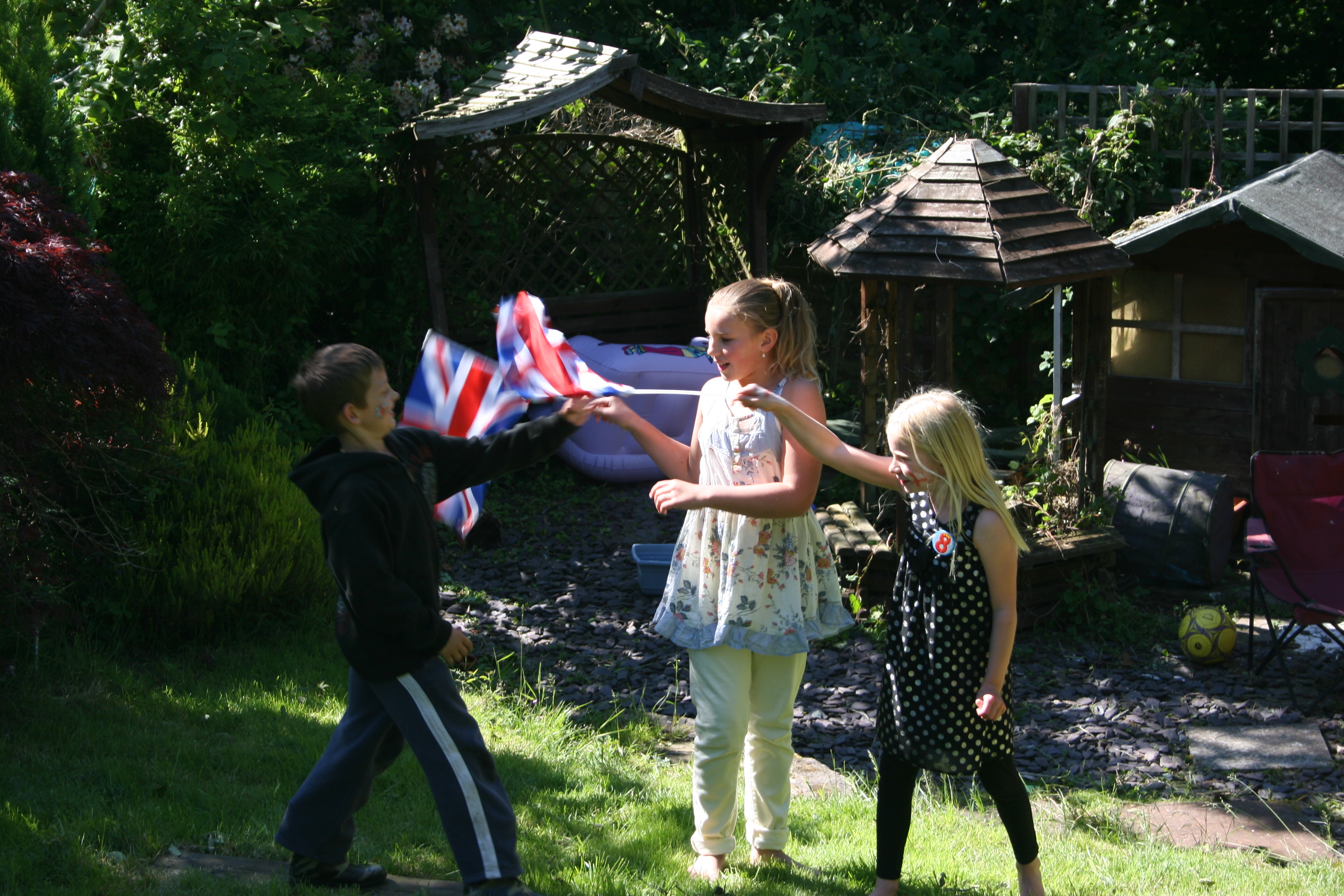
union flagI had a great response to my request for ideas for my British themed goodbye party yesterday.  Thanks to everyone who shared ideas, the party was a resounding success and stress free.  Using some of the ideas from the last post and some of her own, my 8 year old took control of the children’s party. She set up a stall painting faces and nails which kept a crowd of girls occupied for many hours.  A friend even spotted he’d had his name painted on his leg and in a haze of cocktails hadn’t noticed!

british face paintWe set up colouring sheets of Union flags and blank bunting inside (due to the wind) and my daughter decided to make this a competition.

Next, the races – sack races were really popular and prizes given out for the winners.sack race I hear egg and spoon races were abandoned because it became too difficult to control.

We had meant to set up biscuit decorating but I forgot and spotted the biscuits in the kitchen at the end of the night.  We’ll have to save that for another day.

The beautiful and unexpected weather made it the perfect British Garden Party, with good friends and neighbours and a few lethal cocktails.  We even had an appearance from my husband from the other side of the world thanks to Video Kinect.

To continue the British theme we are heading off for a great British holiday at Butlins this week.  Thanks to the Butlins parent ambassador programme we are heading to Bognor Regis for a 5 day break with my brother and his family.  My dad and step-mum are joining us for a true family farewell.  I believe the forecast is rain, so we will be sent off in true British fashion.

Feeling Appreciated in the Blogging World

I have been reading a post on Mari’s World entitled How Important is a Blogging Award?  Mari questions whether it is ok to feel a tad disappointed when you don’t reach the final of these awards and whether it is a reflection of your writing skill.  I took a slightly different take on it this year.  I would love to be shortlisted and achieve recognition for what I do but that isn’t my first consideration.

When last years  blogging awards came around I was fairly new to this game but this year there are a few blogs that I really think deserve recognition for their wonderful writing.  I have a particular favourite, Mammy Woo . She makes me laugh and she makes me cry and every post she has ever written makes me say ‘wow, what an amazing piece of writing’.  I hope one day she writes a novel because I know it will be read in a single sitting and leave me with a feeling of awe and inspiration. I nominated her because I think the world needs to know about this amazing writer.

I feel that Mammywoo is the best of its kind and as such deserves recognition.  She didn’t ask me to vote or nominate, I did it out of admiration for her art. I hope that one day someone will feel passionate enough about my writing to nominate me.  Not because they know me or like me as a friend but that a stranger will be inspired to say that I stand out.  This may never happen but for me that is the best form of recognition.

Last night I had a night out with work colleagues of my husband’s that I hadn’t met before.  I was really touched when some of them came up to me saying that they read my blog and love it.  Comments such as ‘You really must get your wife to read Rachel’s blog’, ‘My wife really relates to the things you write about’ and ‘it reads really well and feels conversational and honest’ meant a great deal.  Blogging is sometimes a lonely pursuit and it is great to feel that people are reading and enjoying the things I write. Genuine appreciation is always a pleasant surprise and encourages me to keep sharing my thoughts and insecurities.

Thank you to all those who have said wonderful things about my writing.  Do awards really matter that much?  Not really, but if you like something spread the word.


Musical Games to Help Young Children Learn about Notes and Beats .

Last month I hosted a competition to win a copy of Justin Fletcher’s cd.  To enter the competition I asked people to ask questions about musical activities with young children.  The winner was Maya Russell who asked this question on my Facebook page.

Is there a musical game I can play with my 3 year old to help them learn about notes, beats etc?

The ability to keep a steady beat has been recognised as the single most influential factor in later academic success.  There are a number of activities you could employ to build these skills.  In fact I ran a successful project with Springboard Opportunity Group  on this topic, proving that even children with severe disabilities can benefit from and enjoy Steady Beat activities.

At the simplest level this can involve singing simple nursery rhymes and chants including, the grand old duke of york, 5 little monkeys jumping on the bed and 5 little peas in a pea pod pressed. Most traditional nursery rhymes have a strong beat and if you say them whilst tapping the rhythm on your knees the children soon follow suit.  Ros Bayley  has some wonderful resources for Steady Beat activities including Beat Baby

Beat Baby is a gorgeous fluffy creature available in a variety of colours.  The magnet in his tail allows him to curl up and he only uncurls when the children make a steady beat and chant an introductory rhyme.  There are a number of Beat Baby books with rhymes but it can also be used with well known rhymes or some you make up of your own.  Ros Bayley also has a number of rap books with accompanying cd’s.  A great idea is to have a dressing up box with baseball caps, trainers, gold chains, puffer jackets etc. and encourage children to be rappers.

3 is probably a little young to learn notes and their values but there are a number of things you could do in preparation.  Create  flash cards of notes to play snap and pairs games with, introducing the names crochet, minim, semibreve and quaver.

A good way to introduce rhythm is to use animal names for clapping out rhythms.  A steady 4/4 beat would be cat – er – pill – ar, 2/4 would be ti- ger , 3/4 el – e – phant.  Once children have been introduced to the animal names you can try clapping a rhythm and asking the children to tell you which animal you are clapping or hold up an animal and ask the children to clap the correct rhythm.

Paint Play – Colour Mixing

Included in our Baker Ross  parcel  was a box of acrylic paints. I use acrylics for my painting and find that one of the key components to painting is mixing the right colours.  I therefore thought it might be a good opportunity for the girls to experiment with colour mixing.

paintI provided them each with 2 pieces of tin foil, one had a blob of each of the acrylic colours on and the other was for mixing.   I avoided giving instructions about what to paint or even that they had to paint at all.  Often young children enjoy the process of mixing and don’t really want  to paint with the colours.  My 3 year old used up most of the colours mixing them into various shades.  I explained that acrylics dry quickly so once the colours are mixed they need to be used quickly for painting

colour mixMy 7 year old on the other hand carefully mixed a variety of colours, trying out the different combinations.  I gave them a pot of water each to clean their brush and kitchen roll to mop up any excess water.

She proceeded to paint a picture.  Half way through she ran out of one of the colours that she had mixed and was unsure what to do next.  I explained that the new colour wouldn’t need to be exactly the same   as the good thing about acrylics is that you can layer one colour on top of the other.  She mixed another colour and came up with a pretty good match.


Finished Results

mermaidpainting

Love to Learn on CBeebies

I don’t generally recommend young children learn by watching television but I am human and like the rest of us appreciate a bit of respite from time to time.  Now that my 3 year old no longer naps during the day, after a busy  morning at playgroup an hour watching television helps her to relax.  I don’t agree with young children watching commercial channels so always put my trust in CBeebies.

The quality of the early learning programming is generally of a high standard and well researched, we particularly like Something Special and Driver Dan’s Storytrain (especially as we are on the lookout for the episodes featuring her big sister).

At the end of February CBeebies are launching a new cluster of programming entitled  Love to Learn. This will bring together a number of programmes, which are designed to give the younger members of the CBeebies audience an introduction to literacy and numeracy. Programmes will include the new shows, Numtums and The Lingo Show, alongside new episodes of established favourites Alphablocks and Abadas. These programmes will be scheduled together allowing children to have fun while they learn their letters and get to know their numbers.
The Numtums  are cuddly Numbats (rare marsupial, native to Western Australia) each with a number on their tummy. Combining a troop of animated Numtums, children, sing-along songs and a distinctive, mixed-media style, the programme introduces the basics of number recognition and then gently moves on to counting objects and identifying amounts in a variety of fun scenarios. The series is reminiscent of the animated snippets that were a key feature of my favourite children’s programme, Sesame Street. I’m sure these will keep the children engaged and make learning fun.
I’m really looking forward to The Lingo Show .  This began life a year ago as an online brand to introduce children to a variety of languages.  It is a long time since I visited the CBeebies website, so I wasn’t aware it existed but I was very excited to see that the languages featured include Welsh. Growing up in Wales I have a very basic knowledge  of the Welsh language, but my children were captivated.  My 7 year old even wrote down a list of words to remember ( we looked at the food section). The variety of languages featured include Polish, Somali and Punjabi and this could be a really useful resource for nursery workers to learn basic vocabulary when teaching children with an additional language. The TV series will continue to introduce children to words in different languages – specifically French, Spanish and Mandarin .
The episodes see host bug Lingo send Mandarin bug Wei, Spanish bug Queso and French bug Jargonaise off into the real world to choose everyday objects and props to include in their grand finale – The Big Bug Show. Each episode focuses on one language, introducing children to six key words, plus examples of everyday vocabulary like ‘hello’, ‘thank you’ and ‘well done’. There are opportunities for children to develop both speaking and listening skills as they are encouraged to repeat words with the bugs, voiced by native speakers of the target language.  I’m  definitely    going to make time to  watch  this with the kids.

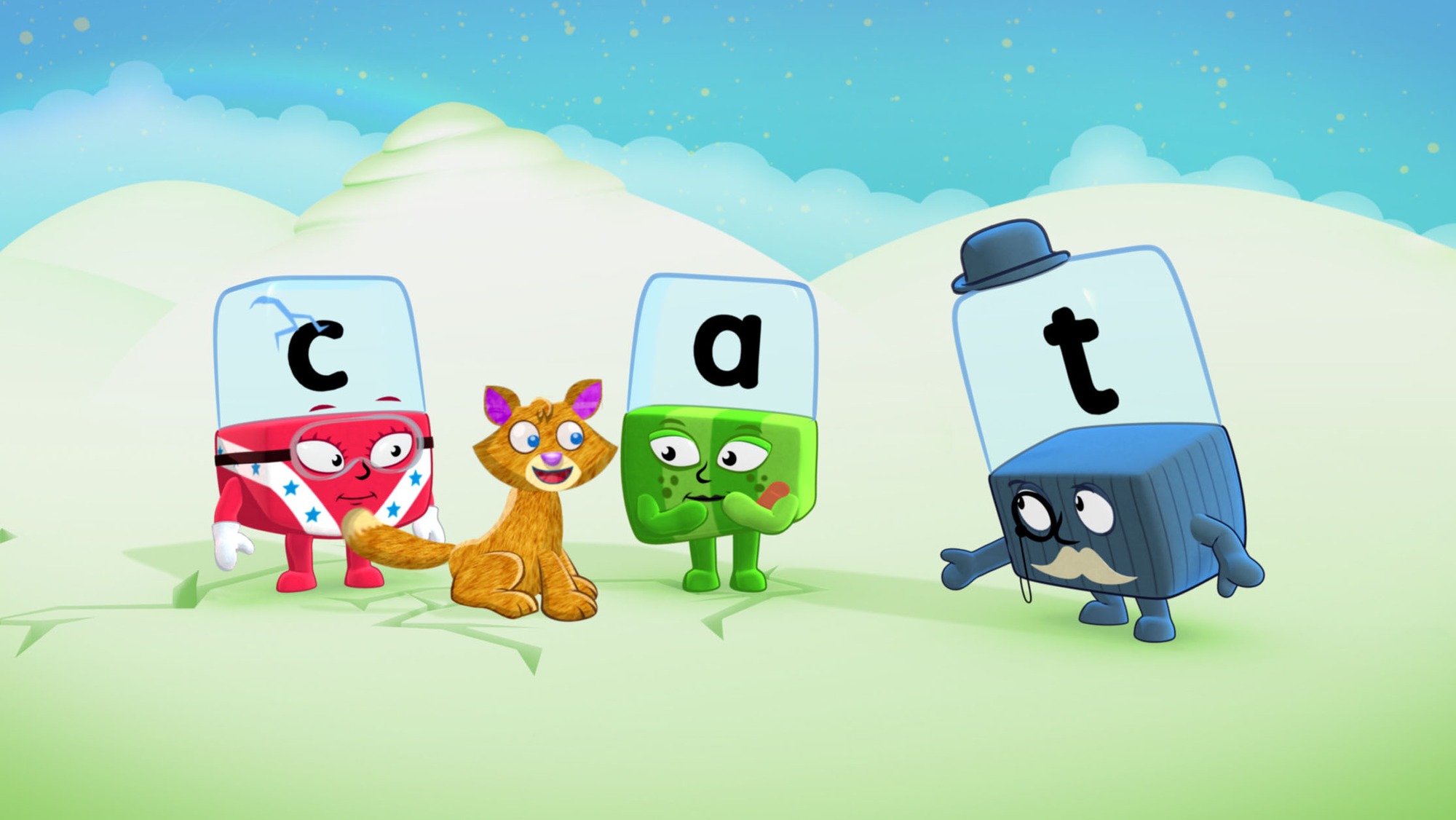
The new episodes of Alphablocks are in a slighter longer  format than in the past and will continue to use best-practice phonics teaching to help young children develop engagement and confidence with reading and making words.  For those unfamiliar with the series  Alphablocks are 26 living letters who fall out of the sky and discover that if they hold hands and make a word, it comes to life.

Abadas  aims  to help children to learn new vocabulary that corresponds to objects they come across in their everyday lives.
The new episodes feature the familiar fun faces of Hari the hippo, Ela the fox and Seren the bat (all with Welsh accents) who come to life when a pop-up book is opened. Once the book is opened, the Abadas’ world comes alive and it’s playtime for the three adventurers. Through these adventures the Abadas encourage the young audience to re-tell a story and be able to ask questions and tell others what they have learned.
The season of programming will also include repeats of the popular numbers series Numberjacks.

I hope that by scheduling these programmes together, children will become naturally inquisitive  about letters and numbers. The 5 minute programmes are perfect for young children’s attention spans and this short concentrated burst of literacy and numeracy programmes could serve as a great introduction to other hands on activities. Pre-school children do not need to learn to read, write and count but the programmes could introduce the concepts without any pressure. Take the lead from your child, if they are showing an interest you can develop it further.  The Grown Ups section of the CBeebies website has excellent articles about how to support your child’s early learning including phonics , numeracy, story telling and mark making and includes many additional activities. Over the next few weeks I will also be sharing literacy and numeracy ideas here. If there are any particular areas you would like inspiration for add a comment and I will follow it up.

The Love to Learn programmes will be on air from 27th February every weekday on CBeebies. The scheduling is 09:00 Numtums

09:05 Numberjacks

09:20 Alphablocks

09:25 Abadas .

The Lingo Show will air sometime during March.

The timings are perfectly placed just after the school run , before we go out and explore  numeracy and literacy in everyday situations.

Raising Awareness of Heart Disease

February is Heart Month over at  Little Green Blog.  The idea is that a number of guest bloggers post articles about maintaining a healthy heart.  There have been a variety of topics  and today is my turn. I am sharing my mum’s story, hoping to show that the warning signs of heart disease aren’t always obvious.

The Unlikely Candidate, Losing Your Mum to
Heart Disease.

Monsters and Imaginary Friends – Back with a Vengeance.

imaginary friends

A while ago I wrote about my middle daughter’s pre-occupation with monsters in Monsters and Imaginary Friends.

The monsters haven’t gone away.  In fact we have more monsters now, her sister has her own monsters that sometimes come out at night to steal her things.  There are monsters that come if we can’t leave the big light on in her bedroom.  Sometimes there are nice monsters who help people , they are called names like fluffy and softy.

The imaginary friends have also developed to become a permanent fixture in our house.  It began with Emily.  Emily would regularly come for a sleepover and often it is Emily’s birthday. Emily’s story has become more elaborate, she now has a brother called Jack who often visits too and today we were introduced to a host of pets (3 dogs and 5 cats).  In the car a few days ago I was told that Emily’s mum and dad were dead and so she lives with her nanny and grandad.

I love the way that the stories are evolving, it shows how her imagination is developing and that she is beginning to understand the conventions of storytelling. Interestingly she sometimes tells me that Emily is just pretend.

A new study into imaginary friends at the University of Durham cited that children with imaginary friends are usually aware that others can’t see them and it is  the child’s behaviour  that makes other people  aware of their existence.   The imaginary friend  helps children to know that their knowledge is privileged.

The researchers presented children aged 4 -8 years with cards on which they wrote their own name, mum or dad and their teachers name. They then had 3 boxes, a large one labelled knows a lot, medium sized box labelled knows a little and a small box labelled doesn’t know anything.  The children were given questions such as

When you are ill how much does your mum know about you being ill?

When you are ill how much do you know about being ill?

The children with imaginary friends were most likely to describe themselves as having the most knowledge.  Having an imaginary friend gives children opportunities for self-examination.  The children with imaginary friends saw themselves as an authority on interior aspects of self such as dreaming and on those which adults could judge (illness, hunger and having fun). It could be that imaginary friends help children to understand that their internal world is private. (Davis,Paige, Elizabeth 2011).

If this is the case then how much more is going on in her little head that she decides not to share? A wonderful reason to get 3 year olds to start telling and recording stories.

Dads Don’t Do Housework

I have a new post for the Huffington Post Dads Don’t Do Housework.

This is a quote from my 7 year old daughter – I’d like to change her perception of what men and women do so I’d love some comments about dads that do housework.

Comments welcome here or on the Huffington Post site.