Young children have an immense curiosity about the natural world – the challenge is to stop them from losing it! Nurture that precious sense of wonder …….. A little empathy and enthusiasm is all you need to encourage children to appreciate wild places.
( Nature’s Playground)
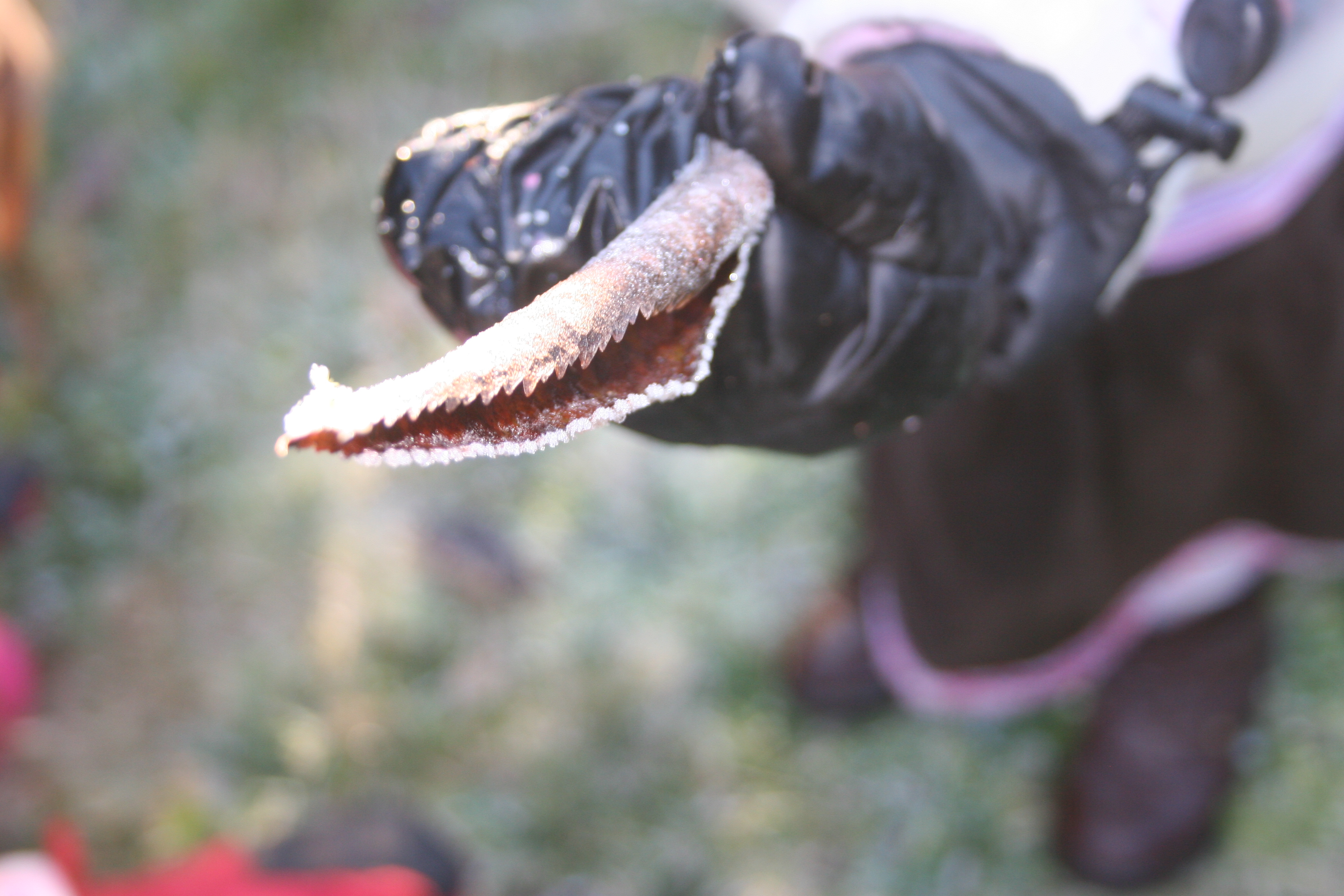
There is even frost on the leaf
Natural environments offer opportunities for adventure, which build confidence and instill bravery.
Take time to stop and explore. Rushing children along to the next thing, denies children the opportunity to make their own discoveries.
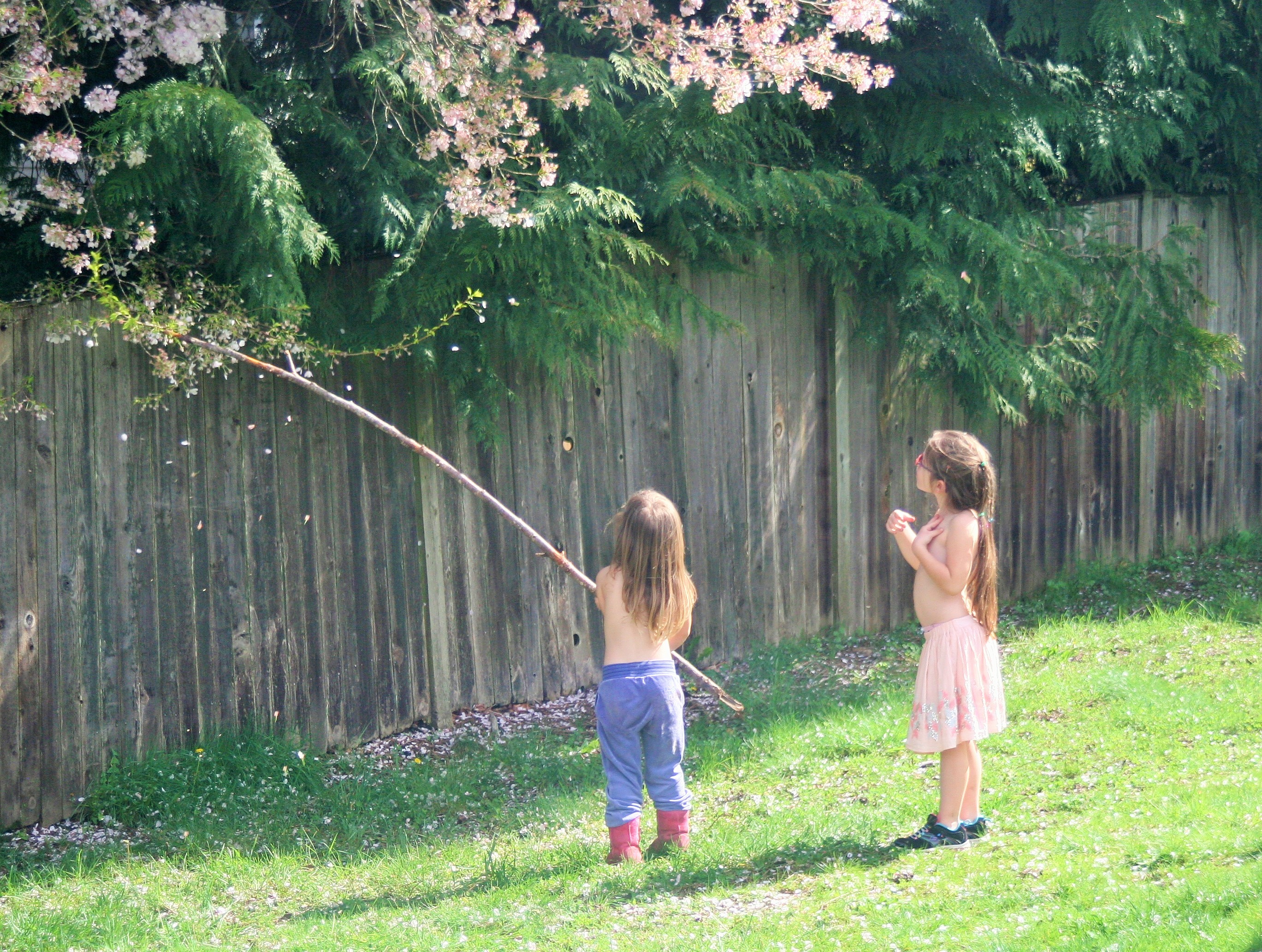
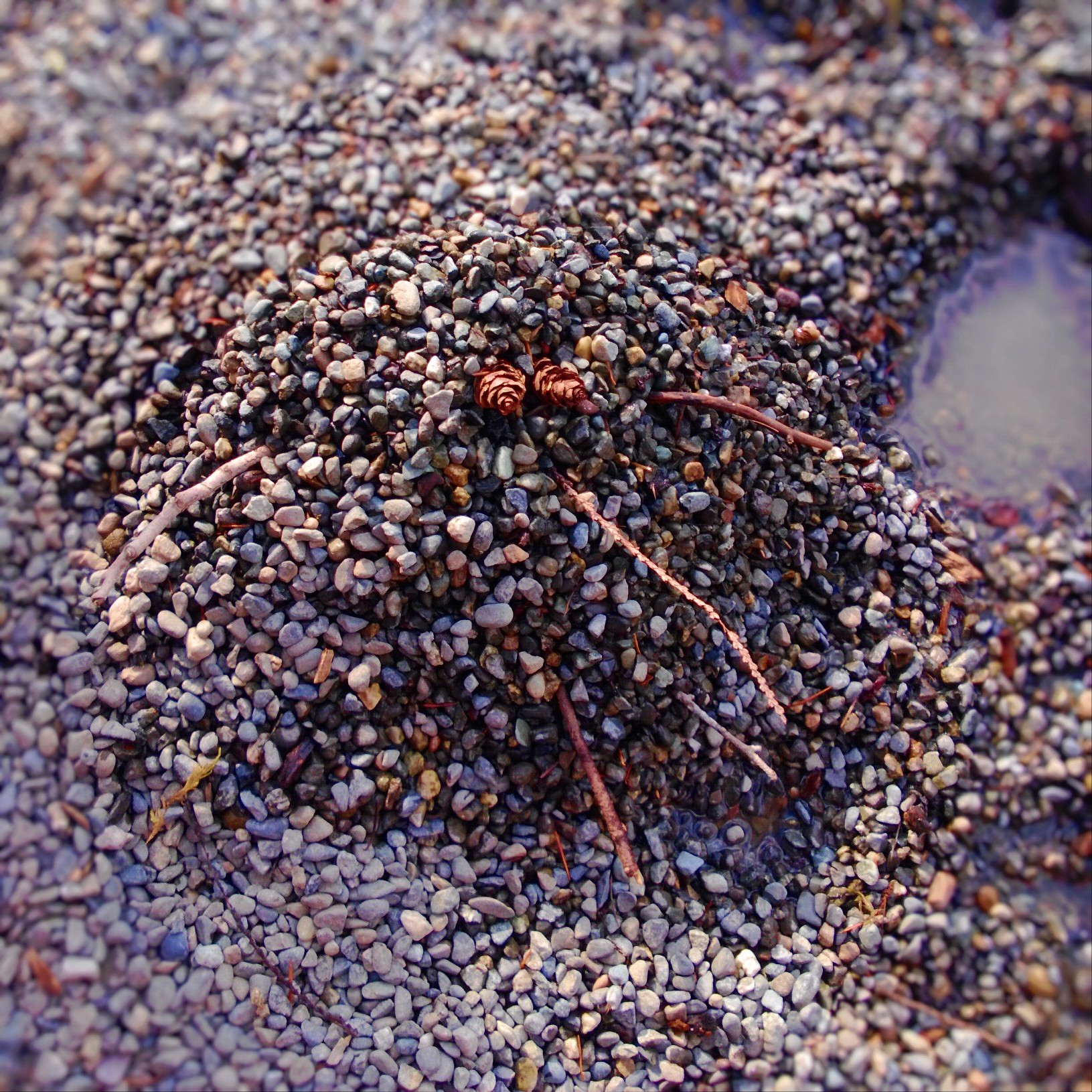
Using natural materials creatively helps us to appreciate them in new ways.
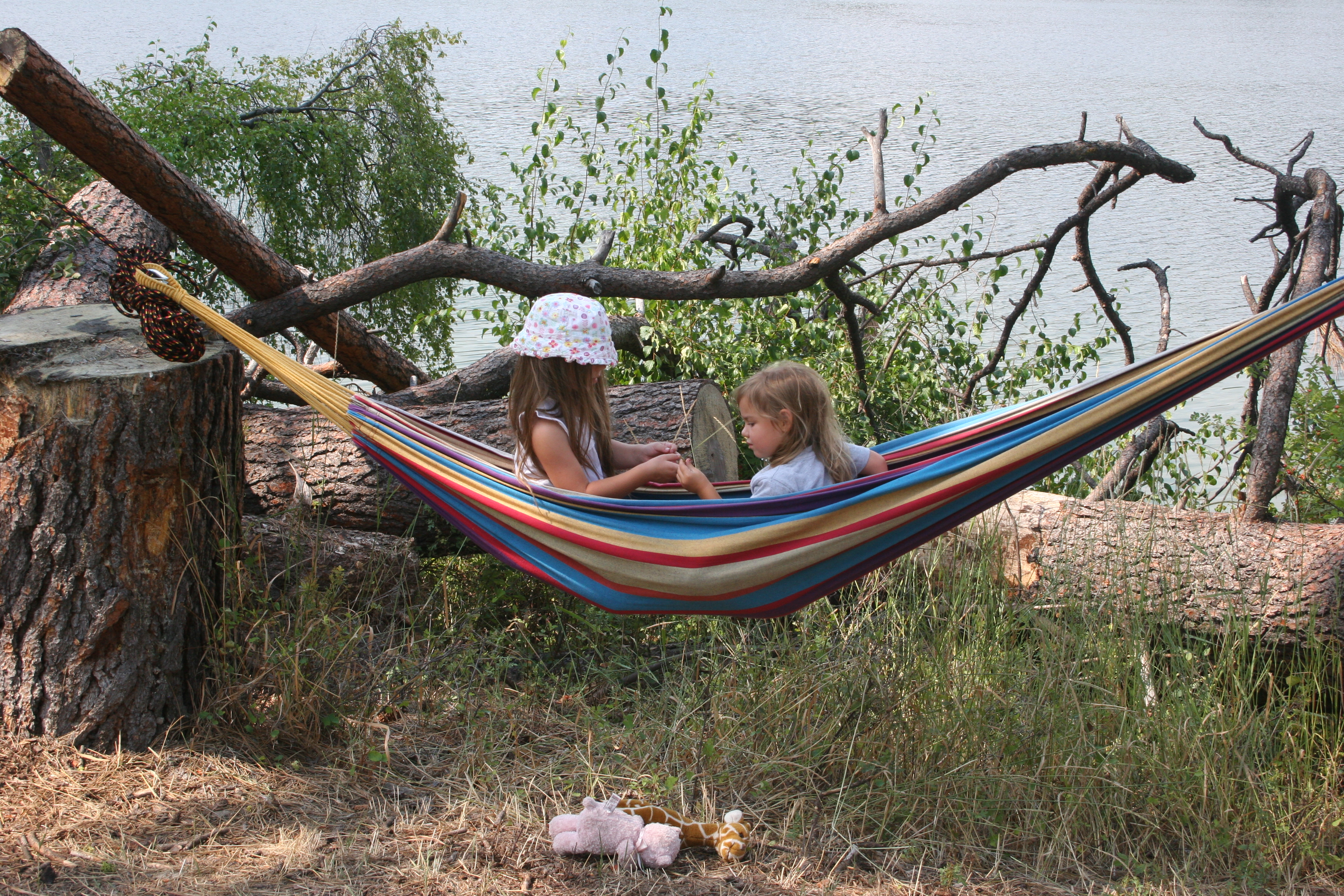
Wild places provide opportunities for quiet reflection.
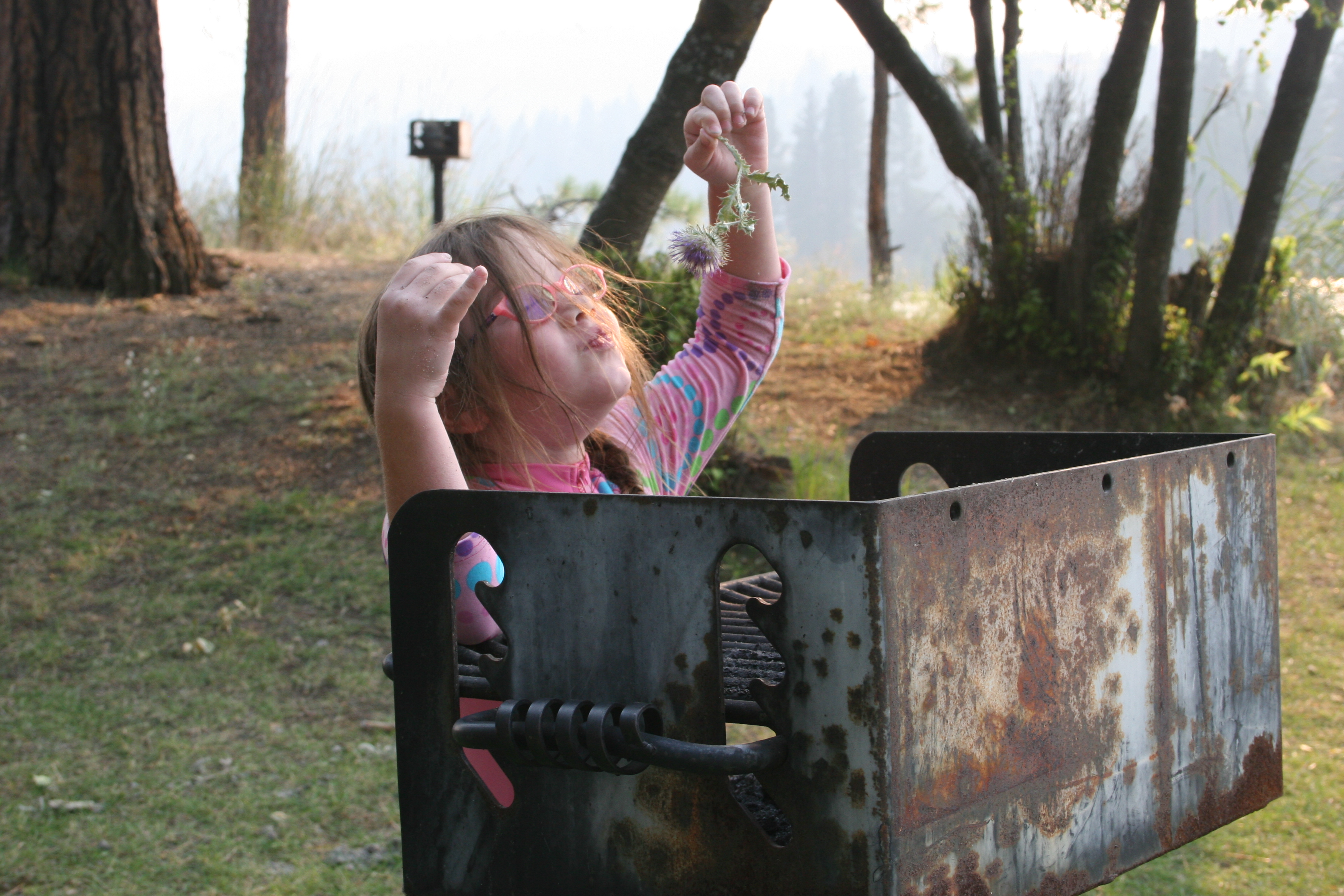
musing over a blade of grass
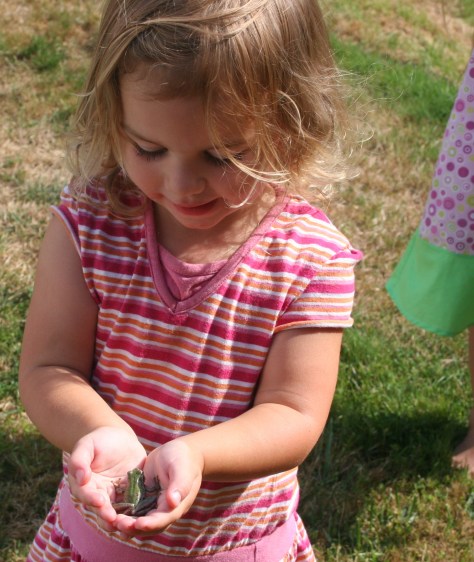
Finding creatures in their natural environment encourages respect and reduces fear.
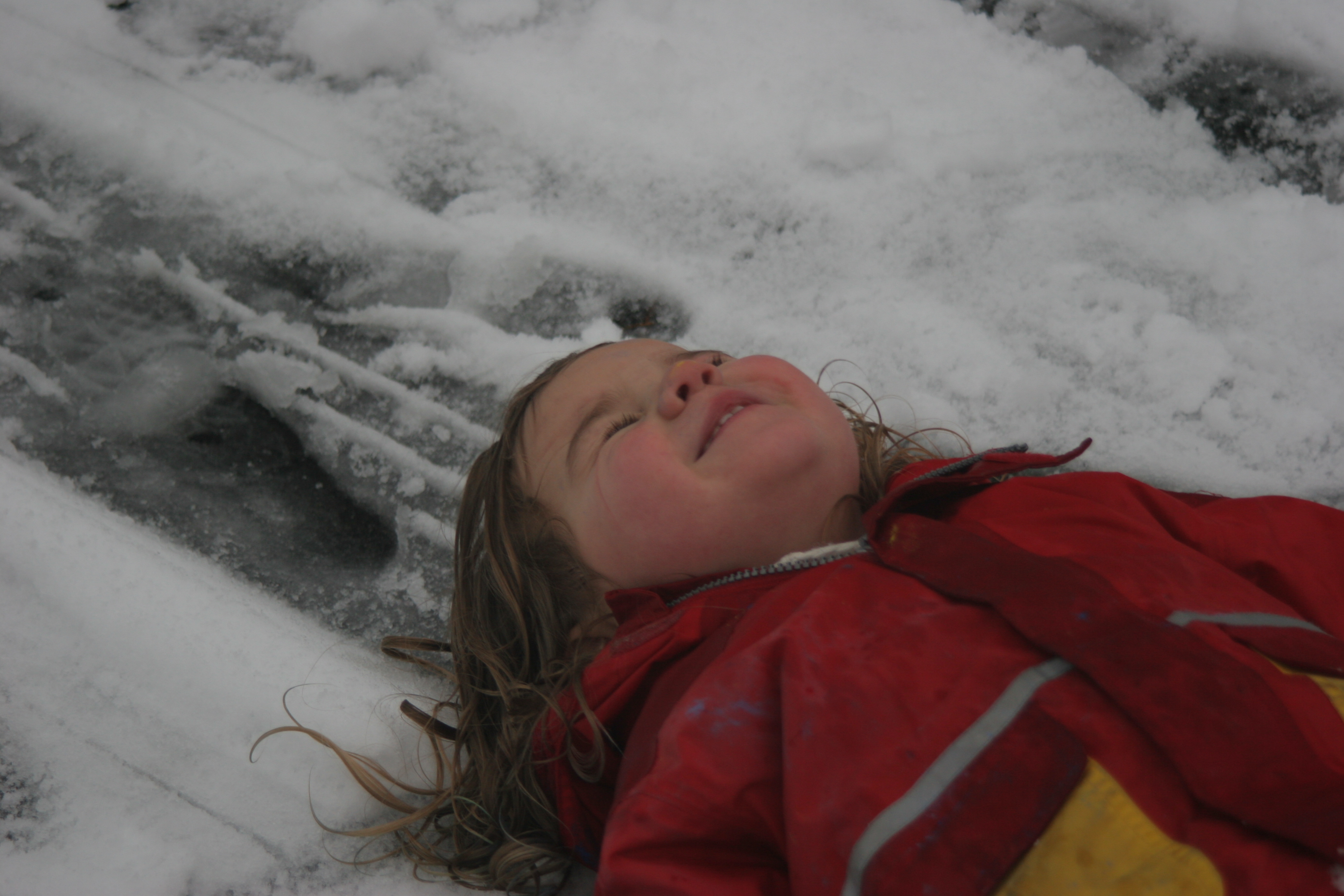
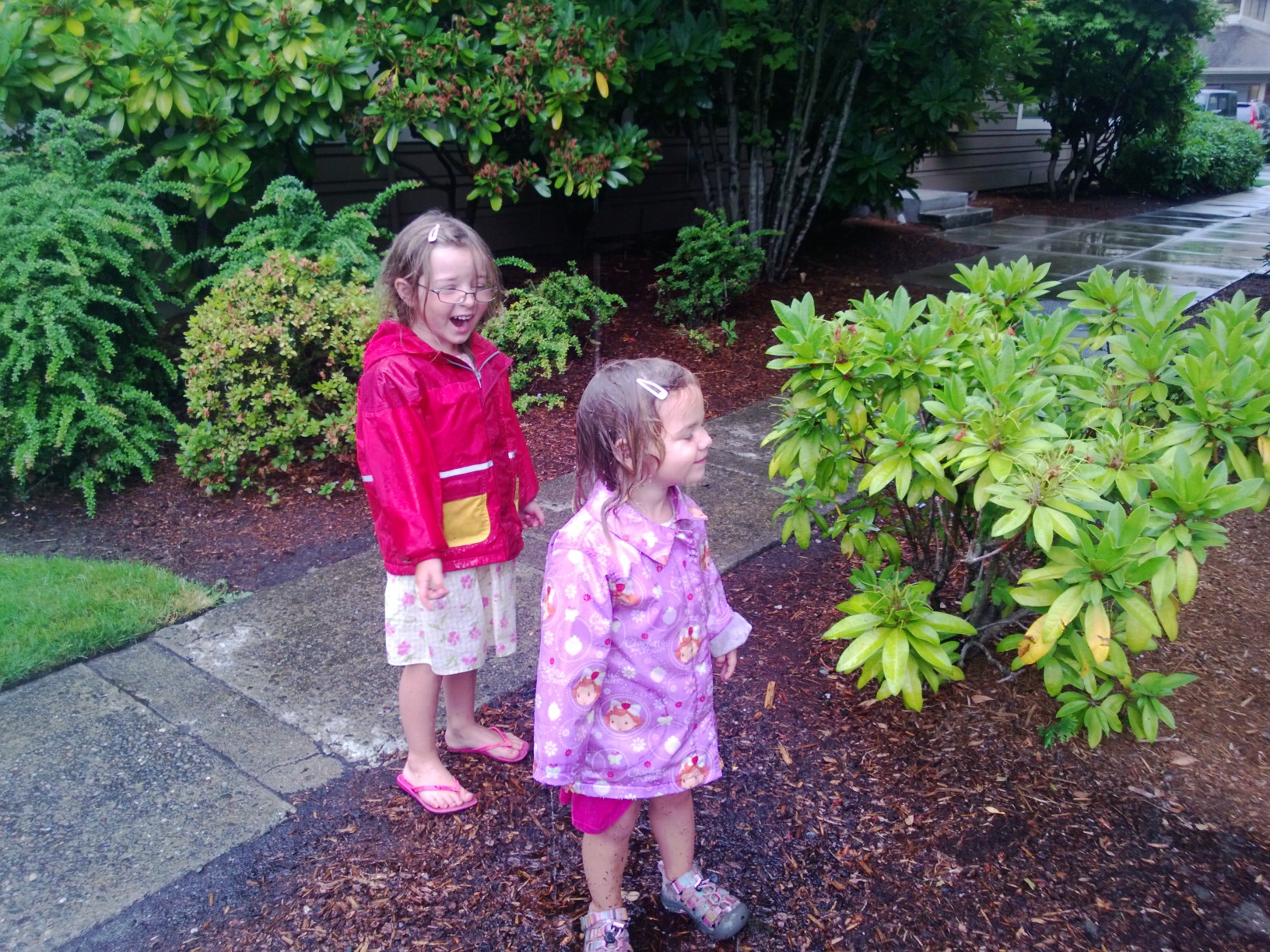
Explore all types of weather. Rain, snow, wind and sunshine offer many different experiences.
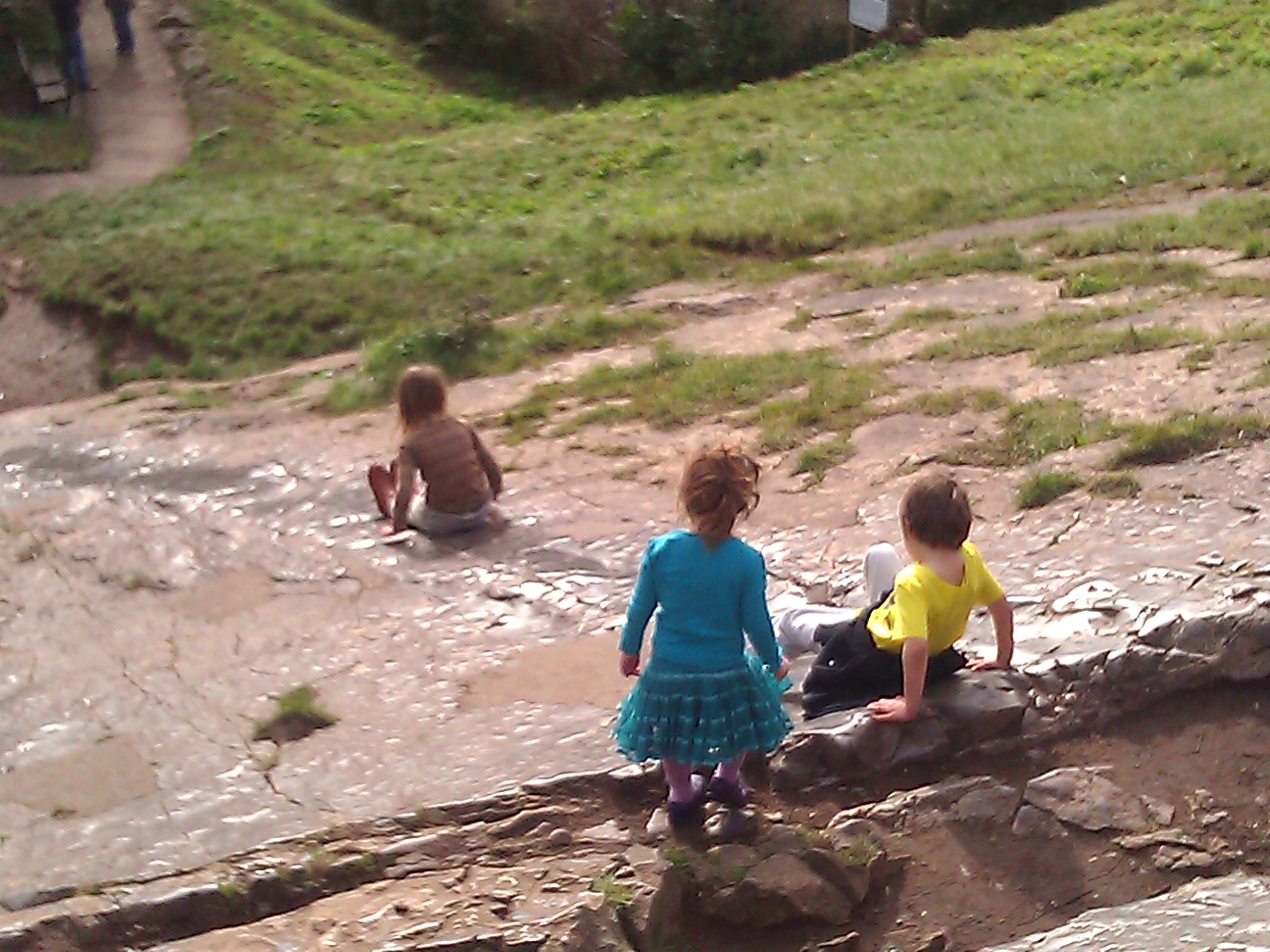
I just want to lie in it
Allow children time to be immersed in their experiences and they will adapt natural materials, weaving them into their own imaginative worlds.
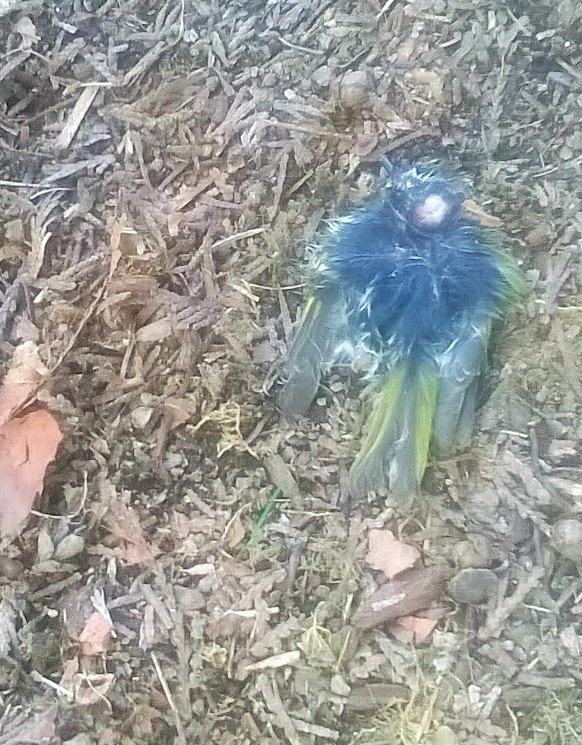
Sometimes nature is cruel but when children come across these things in the wild, it promotes discussion and allows them to navigate difficult concepts in a meaningful way.
We found a dead bird in the garden. How did it get there? What should we do with it? We buried it under a tree.
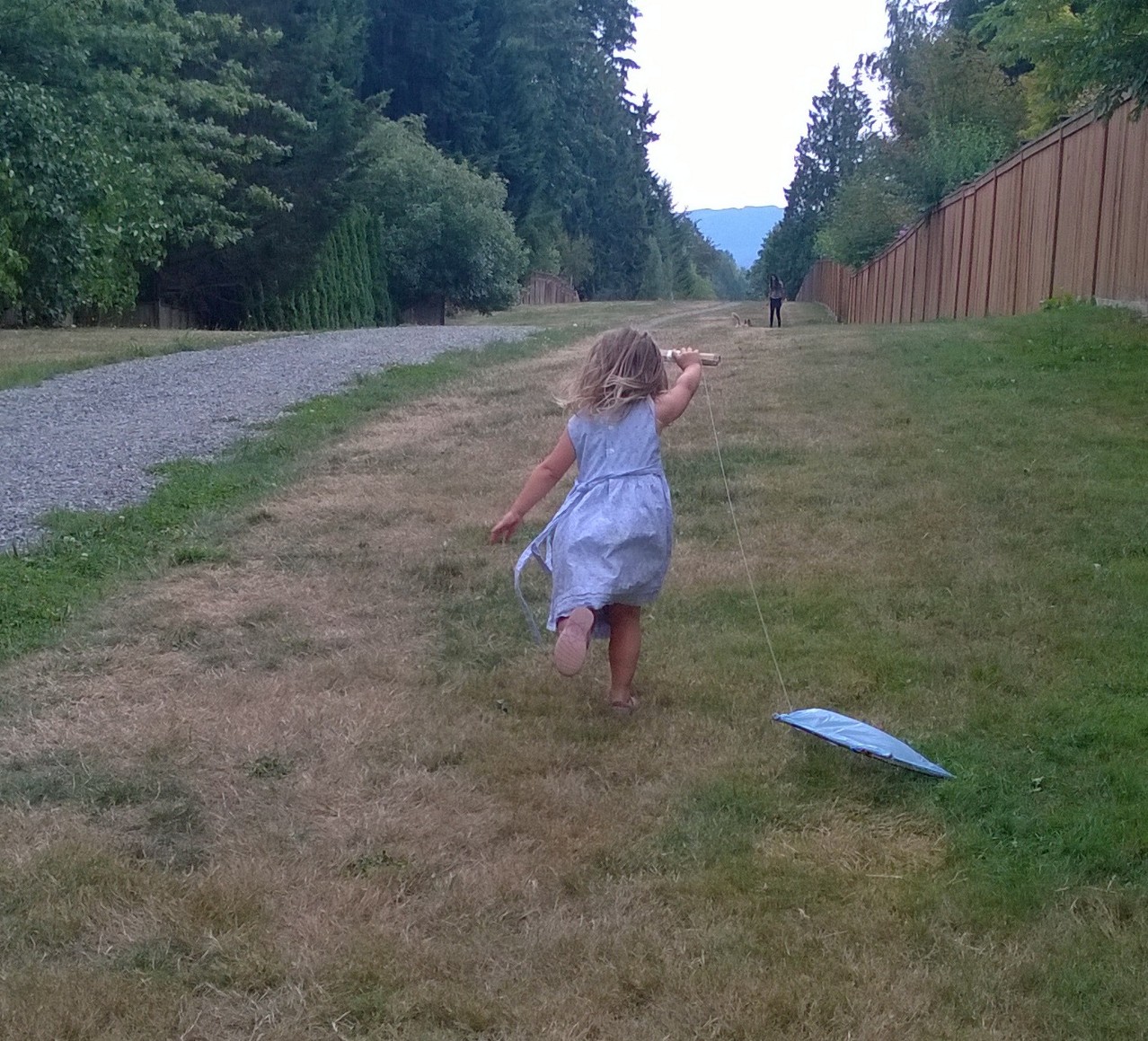
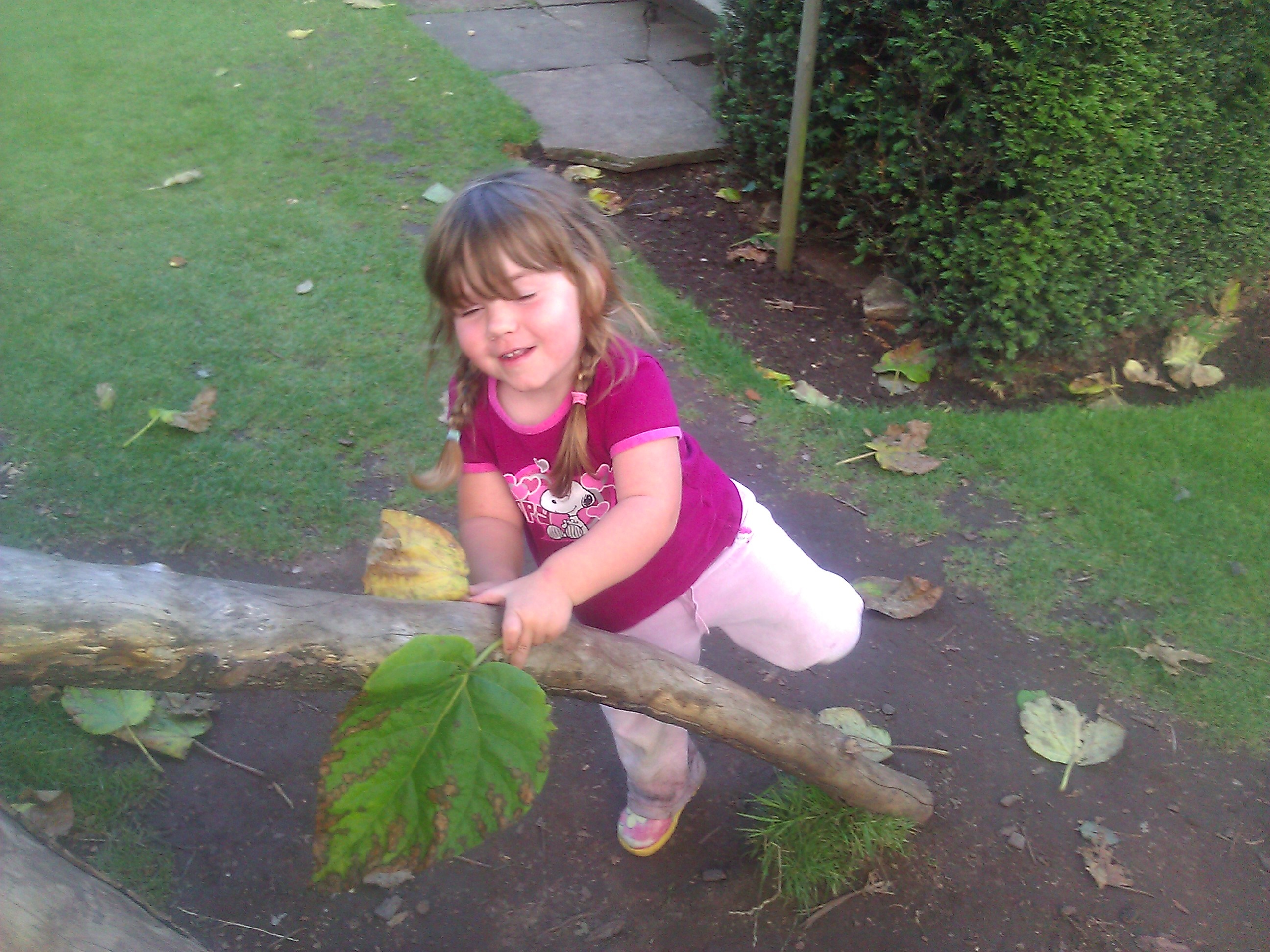
Being in a natural environment offers children opportunities to develop physical skills, through climbing , negotiating space, moving on different surfaces, reaching, touching and many more.
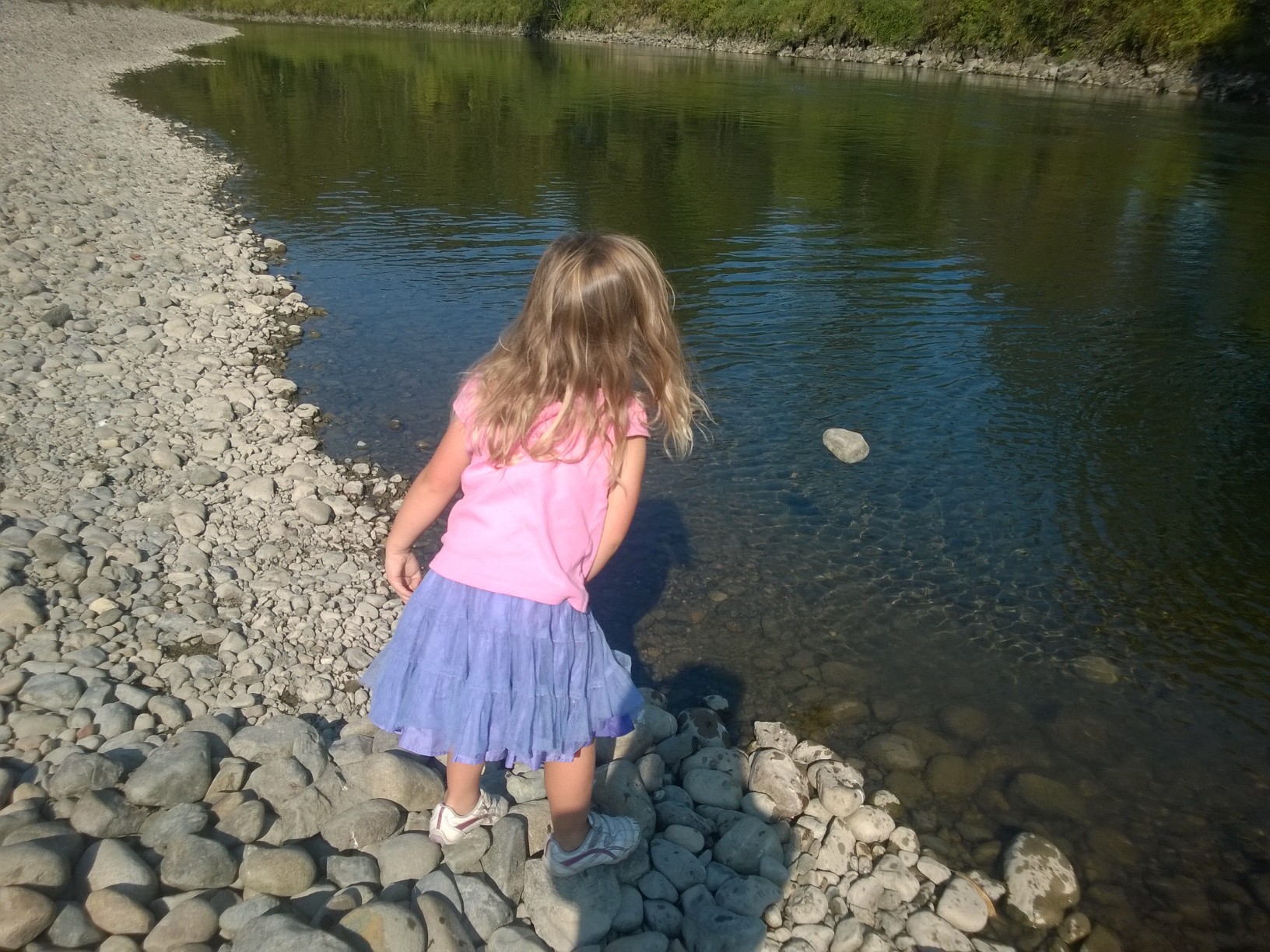
It makes a big splash. Plop!
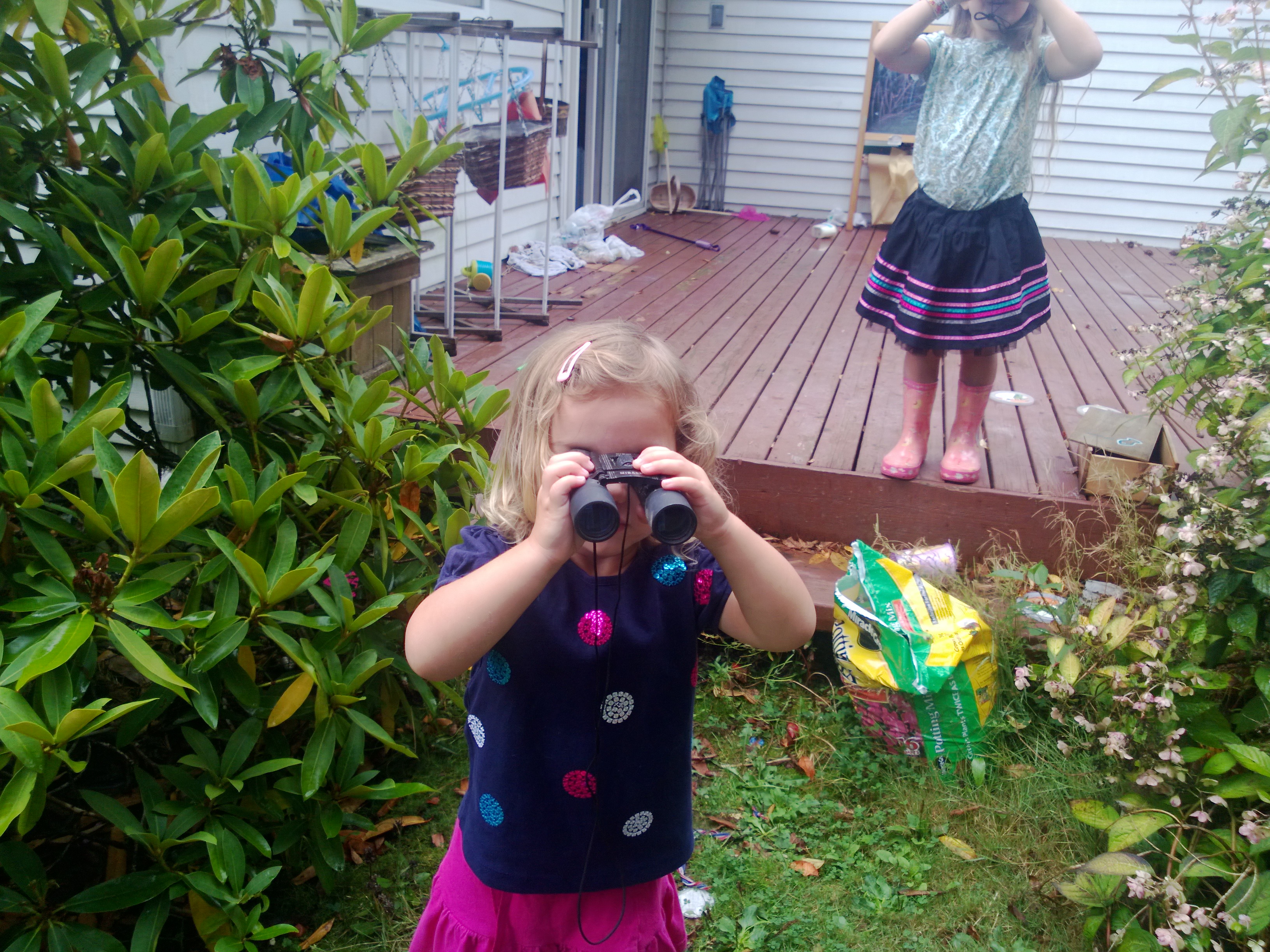
Explore with all of your senses.
I’m going to have a shower. I’m getting very wet, now the rain is staying on me.
If I need a little encouragement to go outside I only need to look at the joy, concentration and contemplation on my children’s faces.
‘ Let’s just go camping for our Summer holiday this year’
Hold on a moment, did those words really come from my mouth? Until my mid twenties I recoiled in horror at the thought of camping. After I left girl guide camp half way through the week because I hated it so much, I convinced myself that camping wasn’t for me. In truth, I didn’t hate it at all. A rumour that newcomers would be pushed in the cesspit if they didn’t pass initiation had worried me so much that I begged to go home. My views changed after a few great camping trips as an adult but I’d never have considered a camping trip for my main holiday.
A yearning to explore the beauty of the Pacific Northwest, good weather and the children’s eagerness to go camping, convinced me it was a good idea. An eight hour car journey with a canoe on top of the car, three young children, a dog and a heatwave; perhaps I had lost my mind?
Amazingly, the car journey was fine. The first couple of hours were spent playing ‘would you rather….’ and guessing the names of characters from books or screen. The rest of the journey we listened to cd’s of musicals and admired the view.
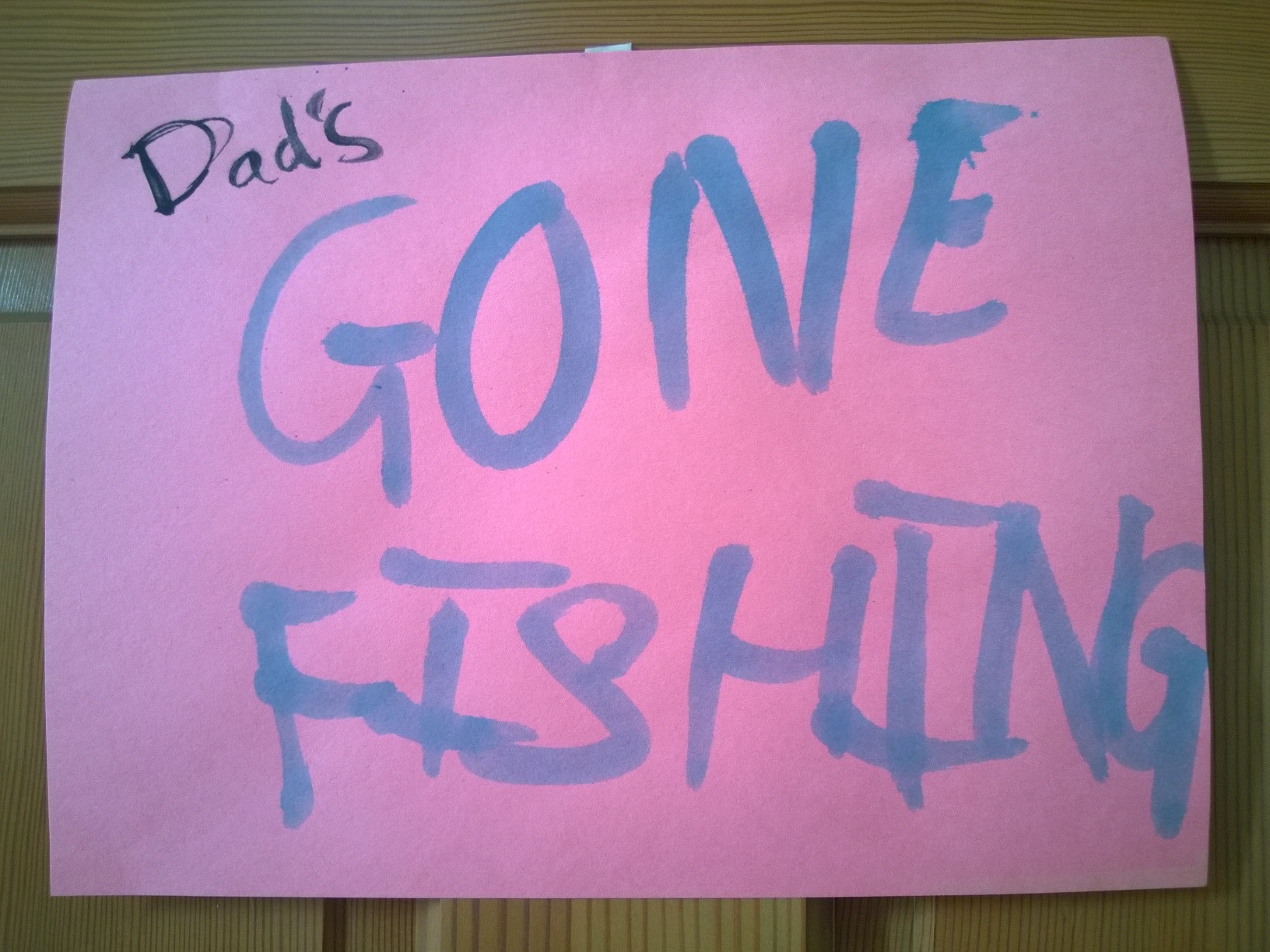
Our destination Curlew Lake State Park, chosen for its beauty, a place for the children to swim and for my husband and the girls to go fishing. “Fishing!” I hear my 20- year-old self, with an irrational fear of fish exclaim, ” are you intent on sending me on the holiday from hell?” Strangely none of those sentiments cross my mind as we set up the tent in a quiet corner of the campsite on the shore of the Lake.
Without a shop or a playground in sight, would the children be happy? For now the excitement of sleeping in a sleeping bag, cooking outside and trying to catch their first fish fuelled their enthusiasm.
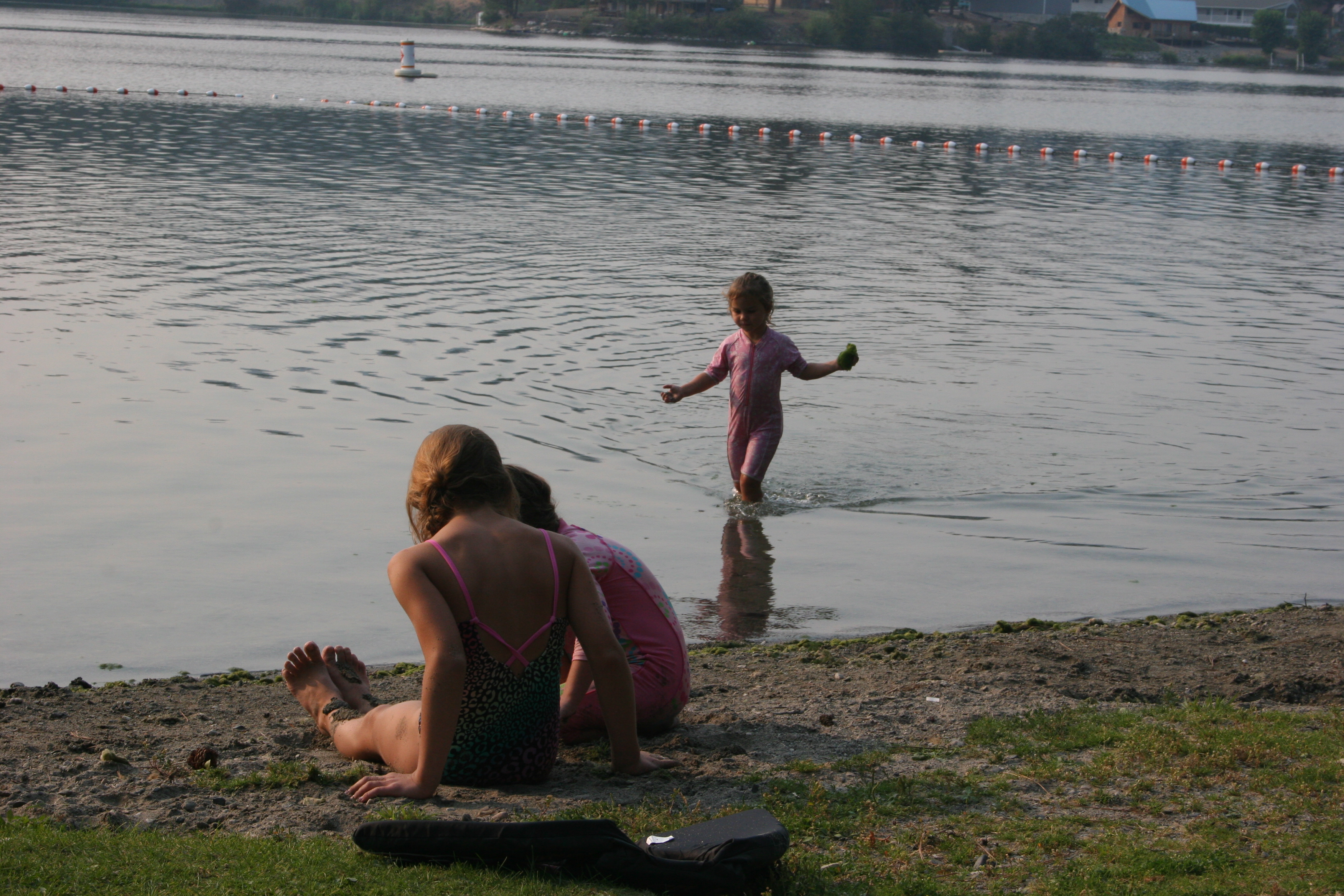
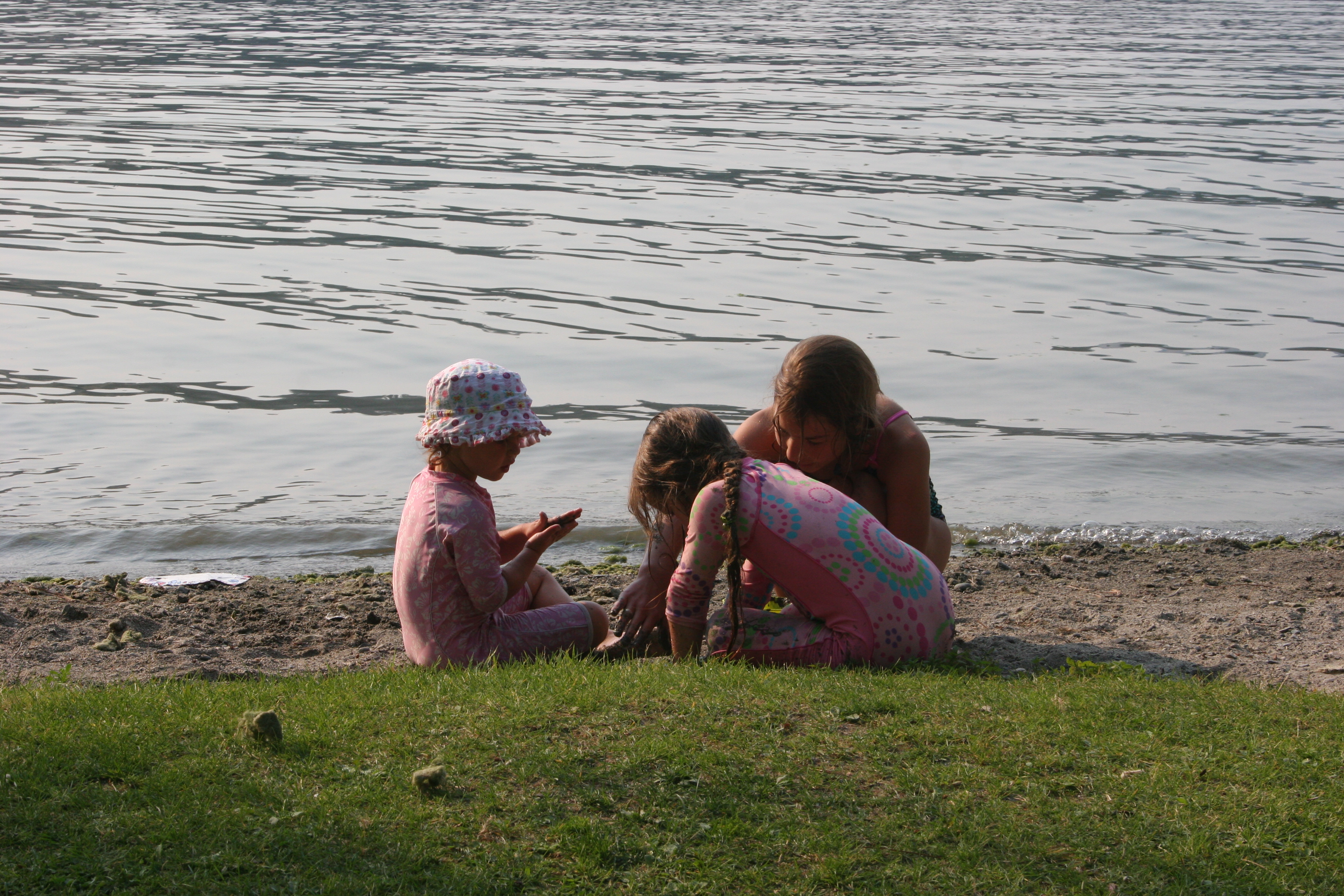
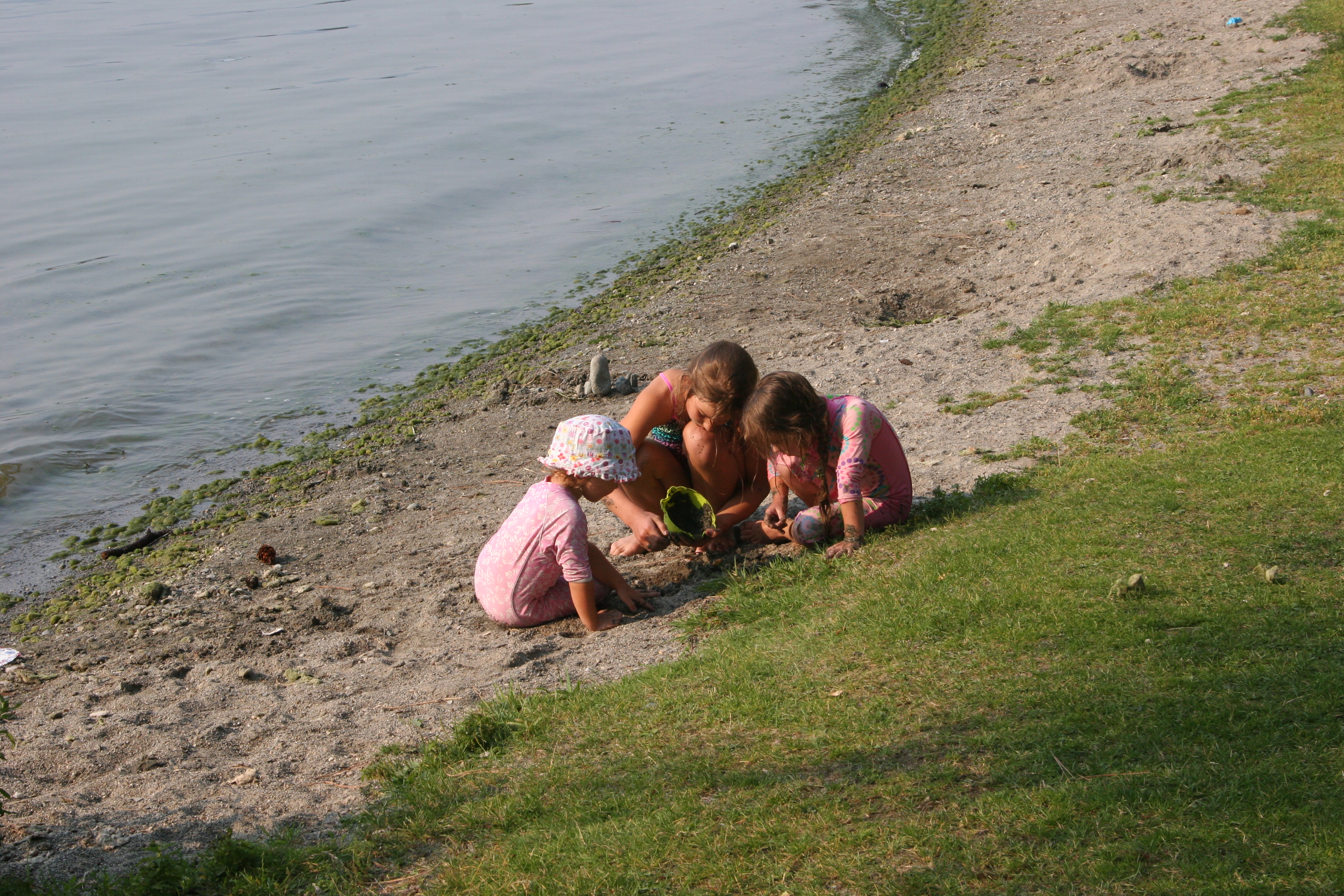
They were eager to go to the beach to swim. I was amazed that we were the only people on the beach. The ground wasn’t soft like the lake at home but filled with slippery algae. It didn’t put them off. They used the algae and stones to create patterns on the ground and then set up their own foot spa, spreading the algae over their feet and washing it off.
The Foot SpaI sat and watched from a distance, joining in when they asked me to. At that moment I knew why this holiday was no longer my biggest nightmare. The children were immersed in the moment, playing, discovering and sharing. In the distance, my husband was on the lake in the canoe and I was here in a rare moment of quiet. This wasn’t one of those family holidays where we rushed to cram in every little experience. I’m sure that these unhurried moments are the ones they will remember most.
There was a child went forth everyday,
And the first object he look’d upon, that object he became.
And that object became part of him for the day or a certain part of the day, Or for many years or stretching cycles of years.
WaltWhitman
They found magic in the simple things.
Look I think Eeyore has been here
Maybe it’s his barbecue?
Really! Do you think so?
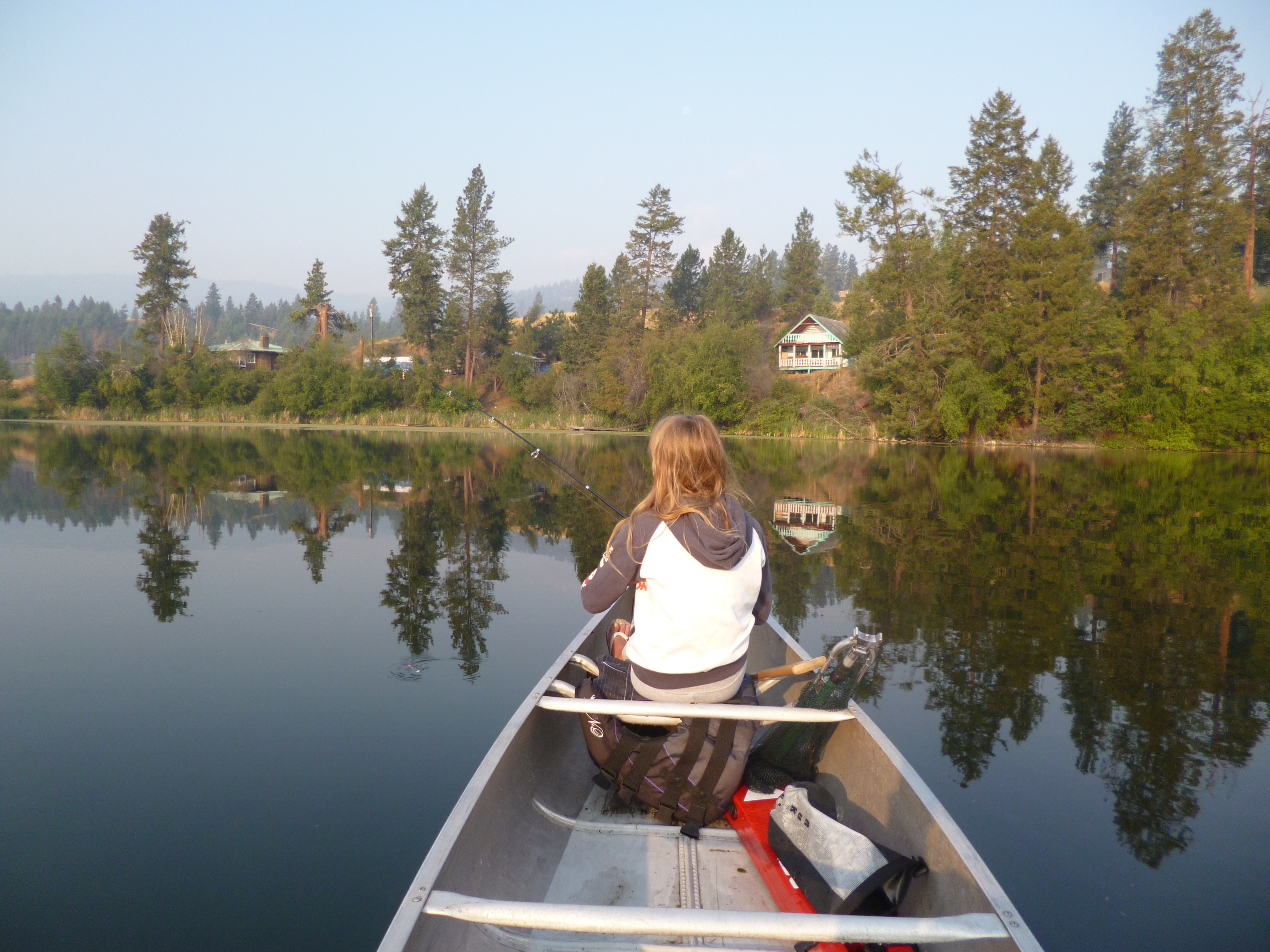
musing over a blade of grass building sculpturesMy eldest had big girl time with dad, paddling the canoe at sunrise. Nights weren’t the most restful we had ever had, with five people and a dog in the same tent but there are few things more peaceful than the middle of a lake in the early morning.
It didn’t take us long to understand the rhythms of nature; the time of day that the deer would wander down the hill to visit, geese would fly across the lake, fish would start to bite or that darkness would fall.
Sometimes though, nature takes you by surprise. One night, as we were snuggled in the porch of the tent telling stories, the poles holding the porch open, fell down. As if from nowhere, the winds whipped up and tugged at the tent. Before we knew it dad and big sister had us zipped up inside while they battled against the wind and dust to secure the tent. I tried to drown out the rangers talk of trees blowing down, by telling the story of ‘My Favourite Things’ from the ‘Sound of Music’ and singing. Enraptured, the little ones soon forgot about the storm. They implored me to tell the story of ‘The Sound of Music’- the whole story, all 3 hours of it complete with every song. Thankfully the storm was short, the tent and trees survived and unlike my 11-year old self, I didn’t get the urge to run home.
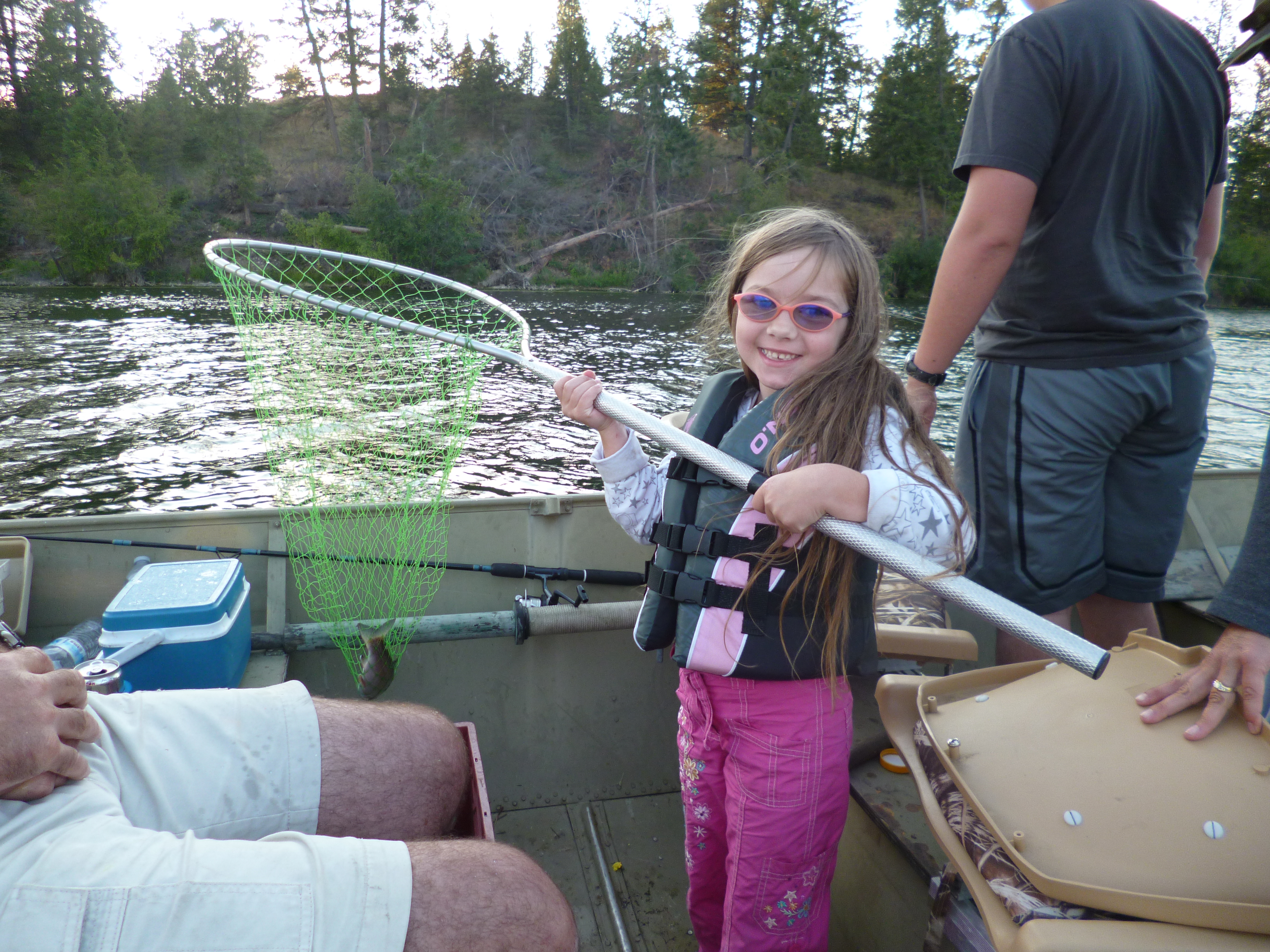
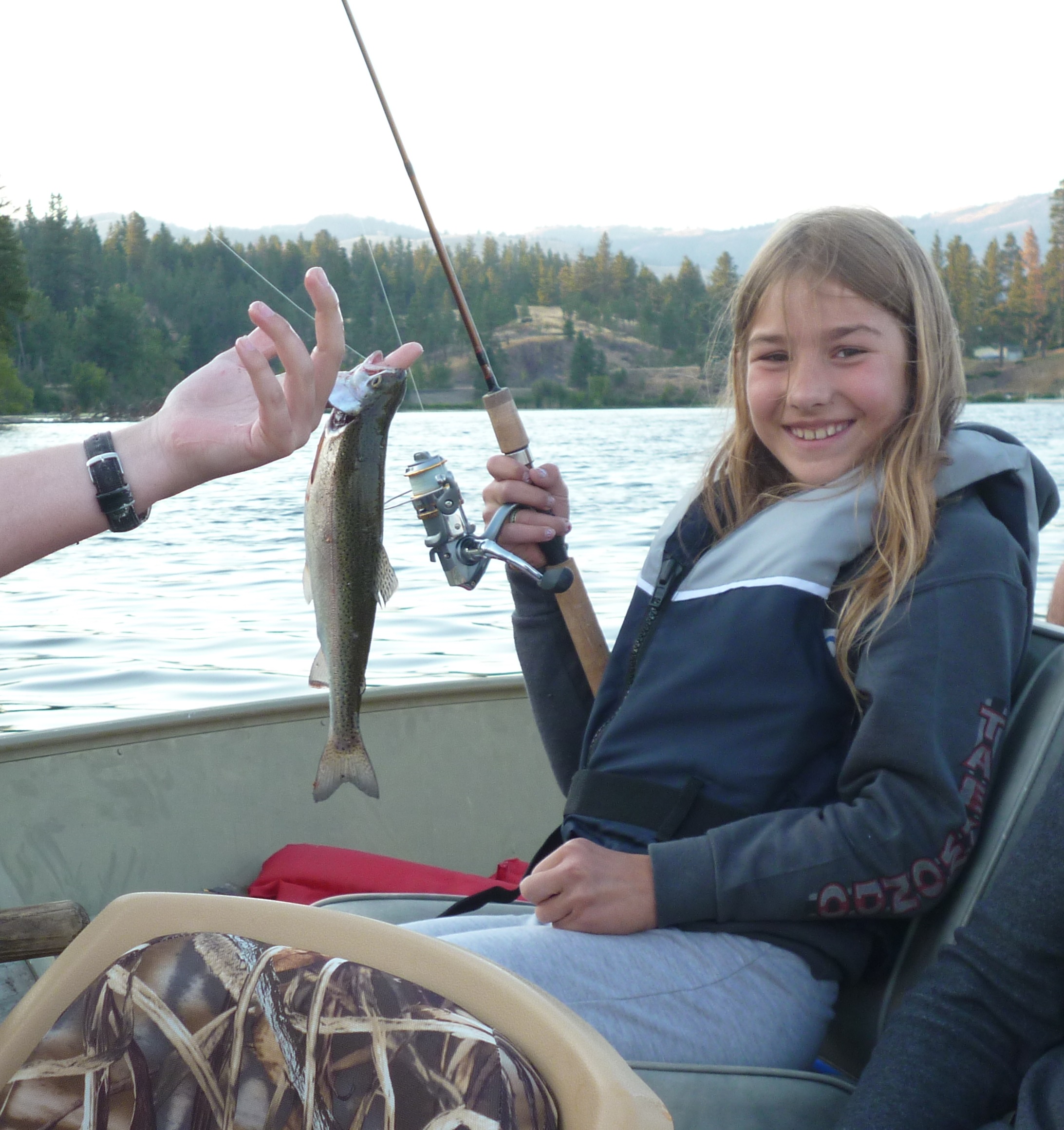
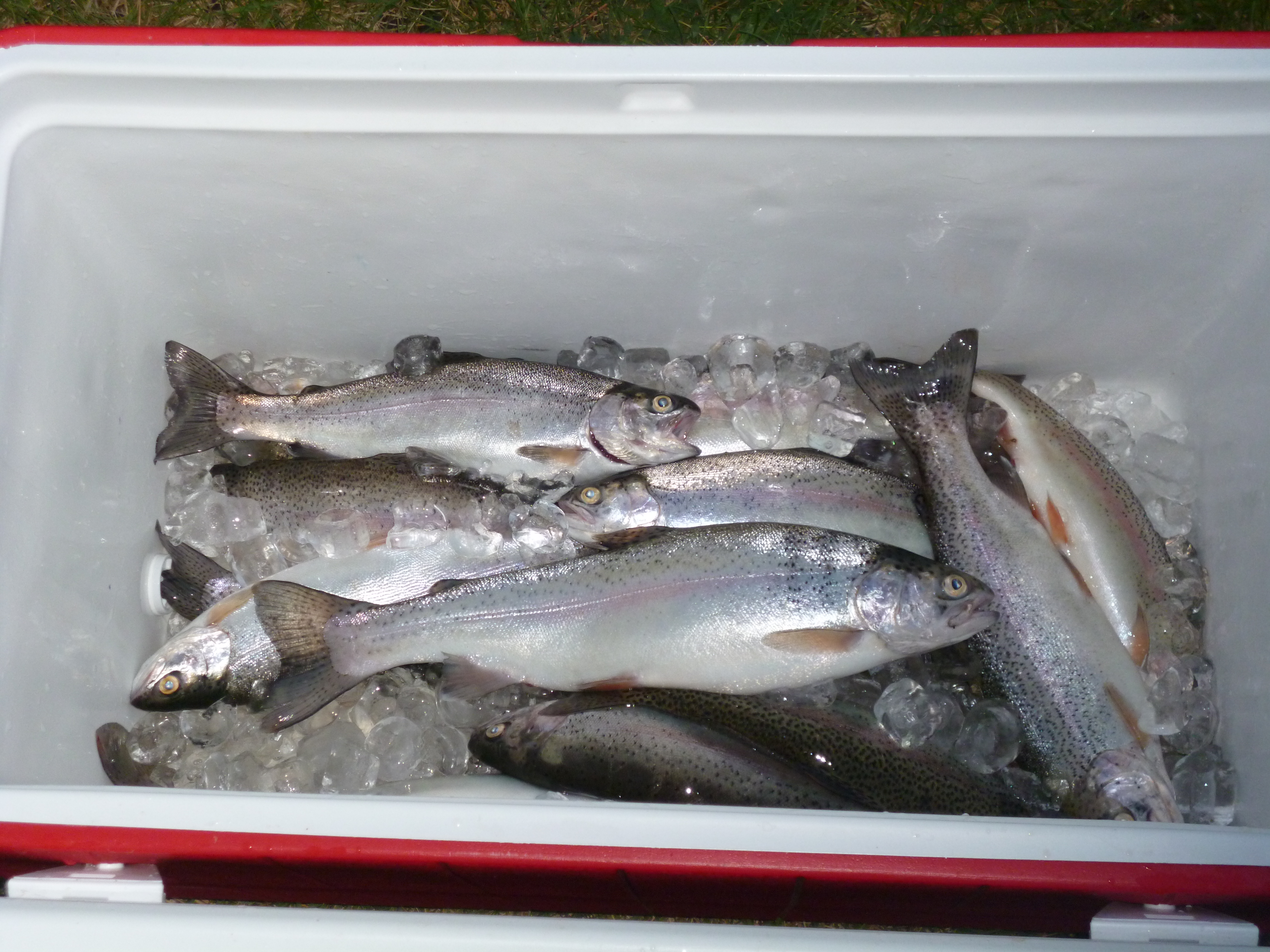
One of the reasons for choosing Curlew Lake was the fishing, so in the early evenings we took the canoe out to explore the lake and try to catch fish. The girls had only ever caught small fish and were eager to catch one they could eat. Our family trips in the canoe lacked the quiet and patience needed to catch anything of note. However, on the last day their wish came true. Our neighbouring campers, who visit every year to fish, offered to take us out in their boat and help the girls to catch trout. The fish came one after the other.
Here we go My first fishThen the fish got bigger
They were so proud of their catch.
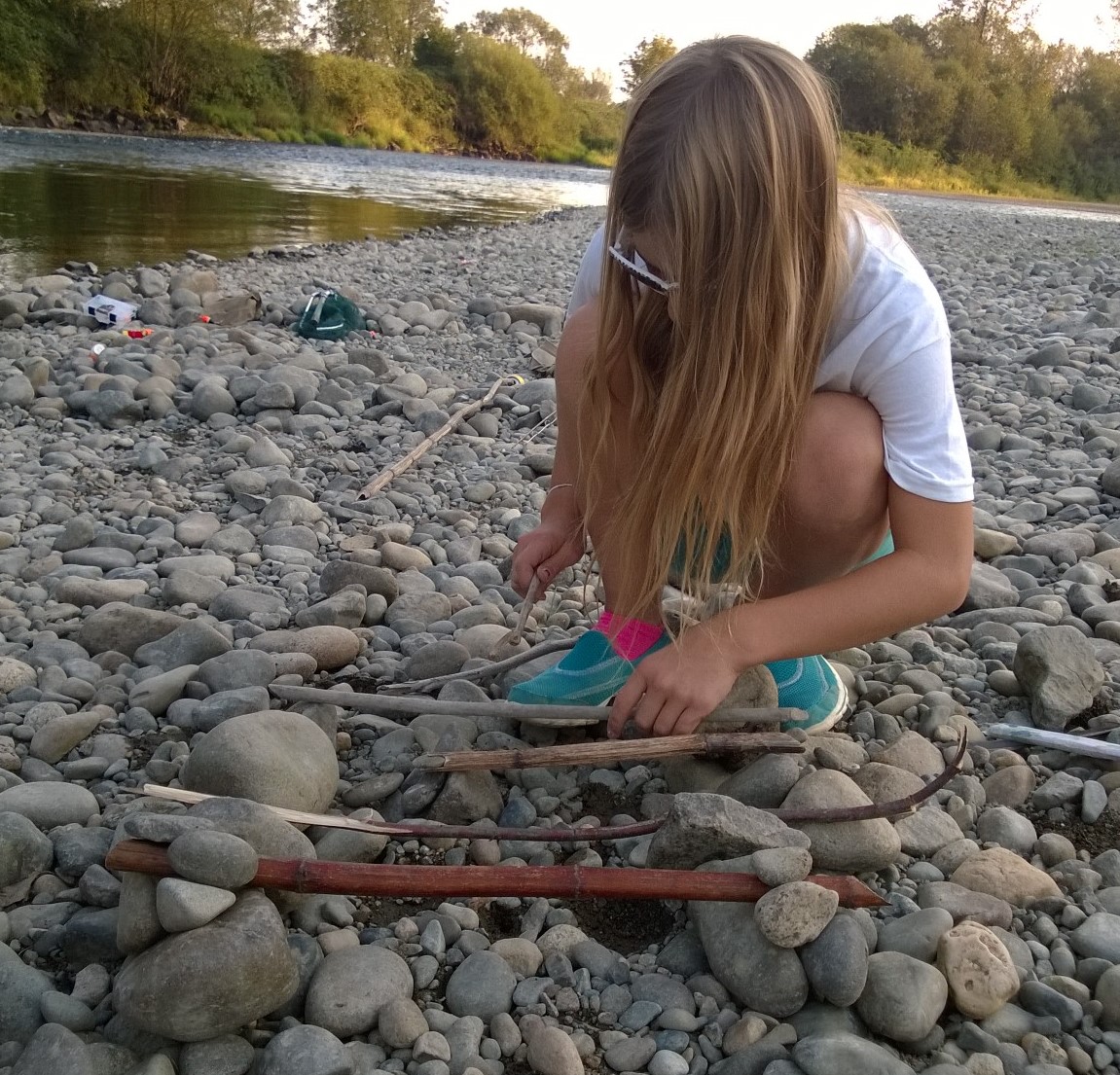
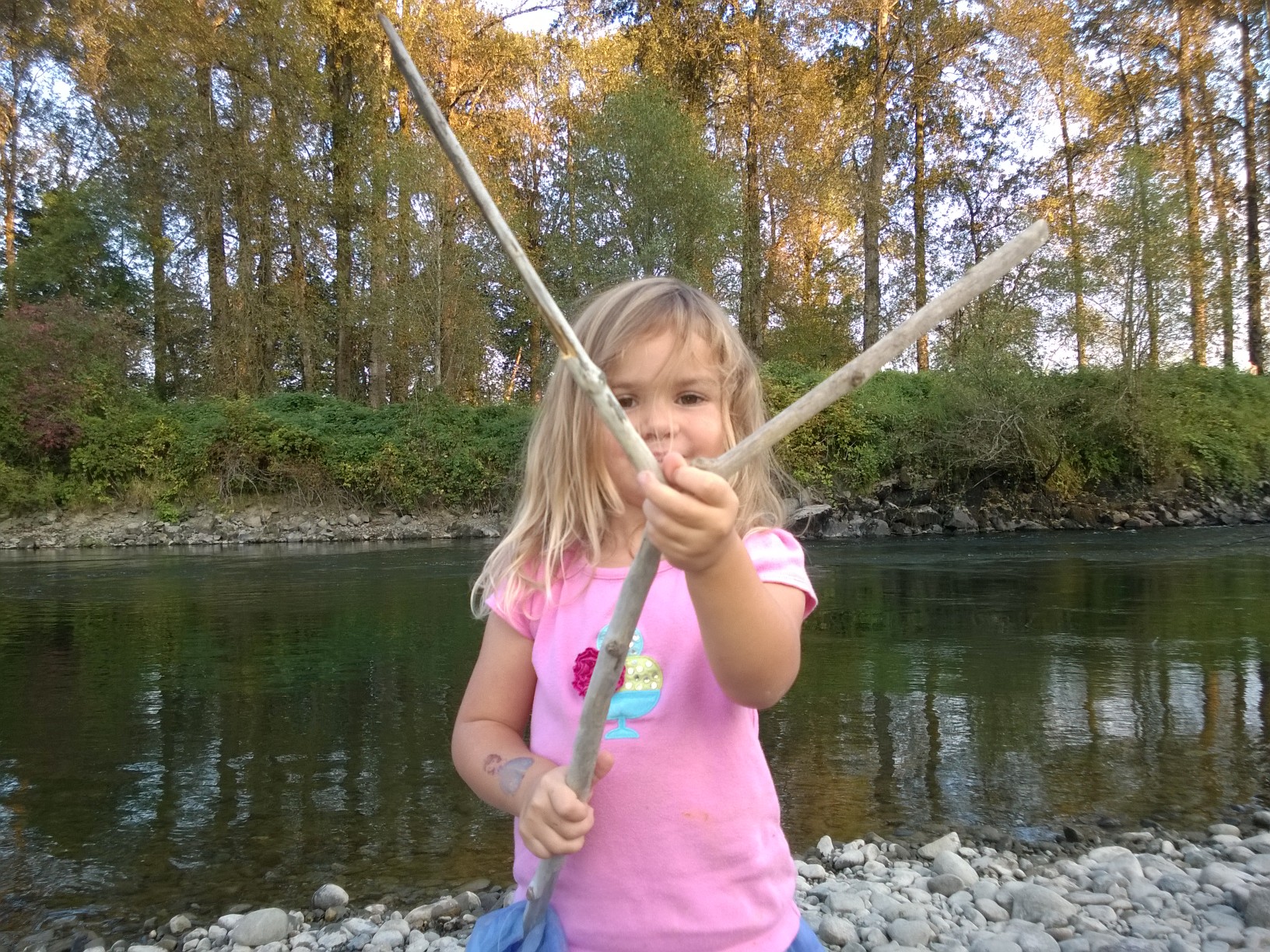
After the holiday, fishing has become a regular pastime. When dad goes out on his own, the girls greet him eagerly to see if he has caught anything we can eat. Other times, we all go to the lake together and mix up fishing with swimming and playing. On a recent trip, we explored the river bank , a place we probably would never have visited if it weren’t for fishing . Watching the girls excitement at their discoveries and creating with sticks and stones was magical. We returned home with a pile of sticks and ideas for making things with them. Moments like this are important for all of us. Resting our minds through daydreaming and play increases productivity and creativity says Daniel Levitin author of ‘The Organized Mind’. Without time for spontaneity, children lack the mental space to come up with new ideas and ways of doing things.
It makes a big splash. Plop! Drawing with sticks on rocks building a xylophone Let’s see how many ‘Y’ sticks we can find. Look what it can do.As I looked out across the river at the jumping fish, the blue skies and the green trees, I could picture an old couple; man fishing, wife painting the landscape or writing in a notebook. I suppose fishing isn’t so bad after all. I’m happy to spend many more years waiting for the fish.
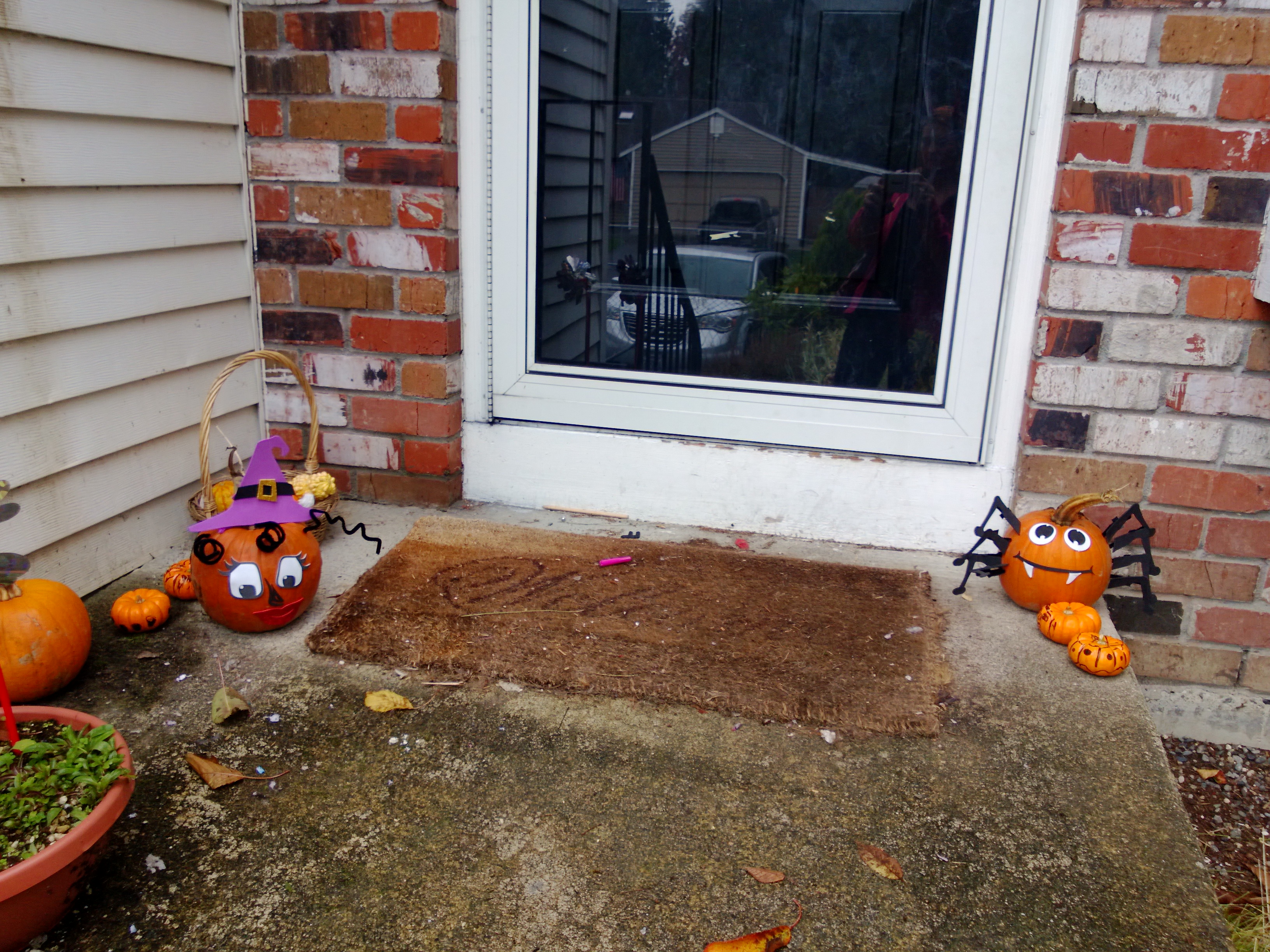
We were a little disorganised this year and didn’t get our pumpkins until Hallowe’en. It seemed such a shame to throw them away almost as soon as we had made them. To avoid this the pumpkins were incorporated into our play, building on the children’s interest in pattern making and investigating some of the questions and discoveries they made when we visited the pumpkin patch.
One of the things I love about living here is that we don’t have to go to the supermarket to buy our pumpkins because there are pumpkin patches everywhere. I love that the children can find out how pumpkins grow by wading their way through the leaves and mud to find the perfect pumpkin.
This slideshow requires JavaScript.
Pumpkin Play
Exploring Inside a Pumpkin and Learning about Seeds
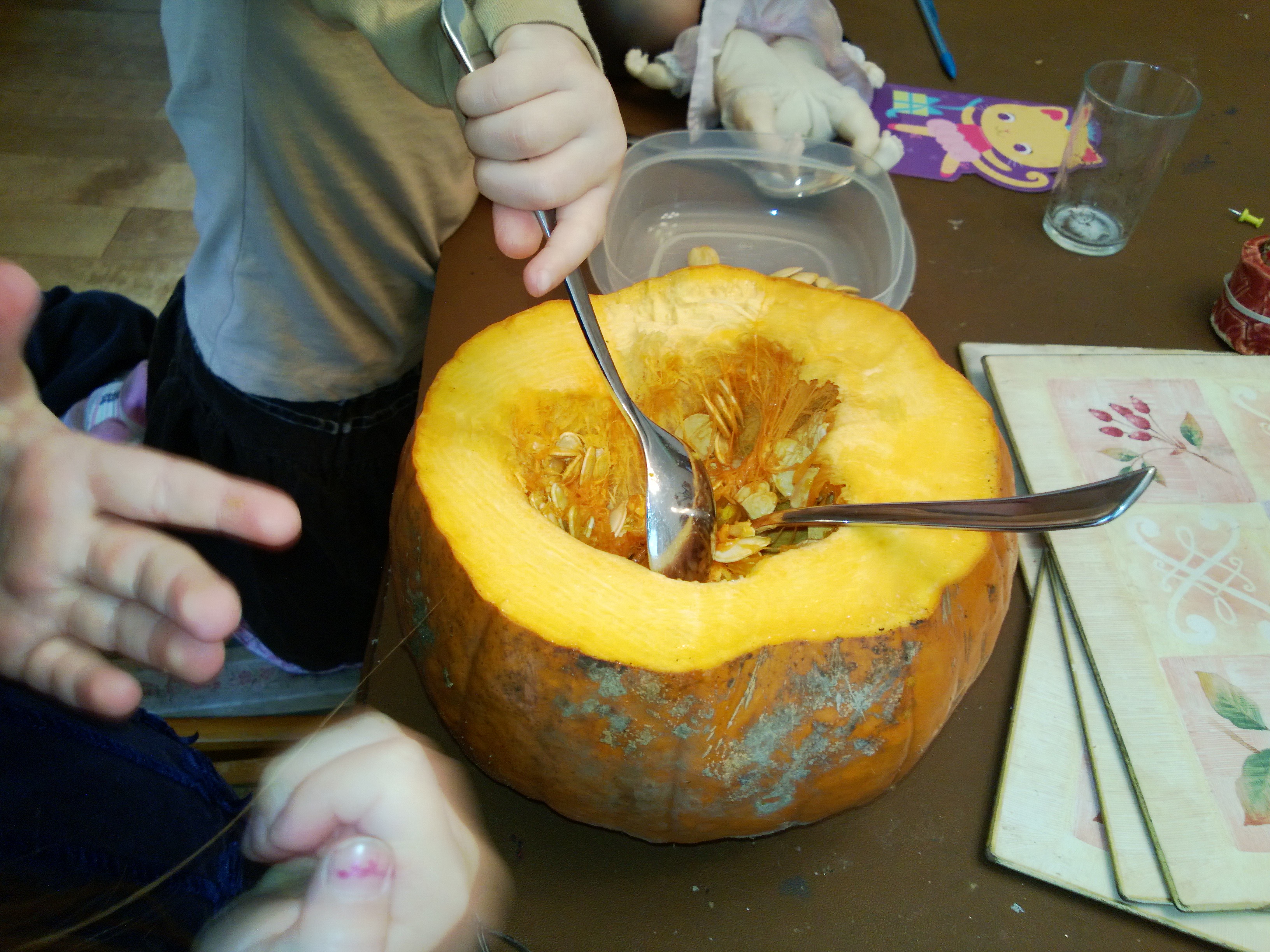
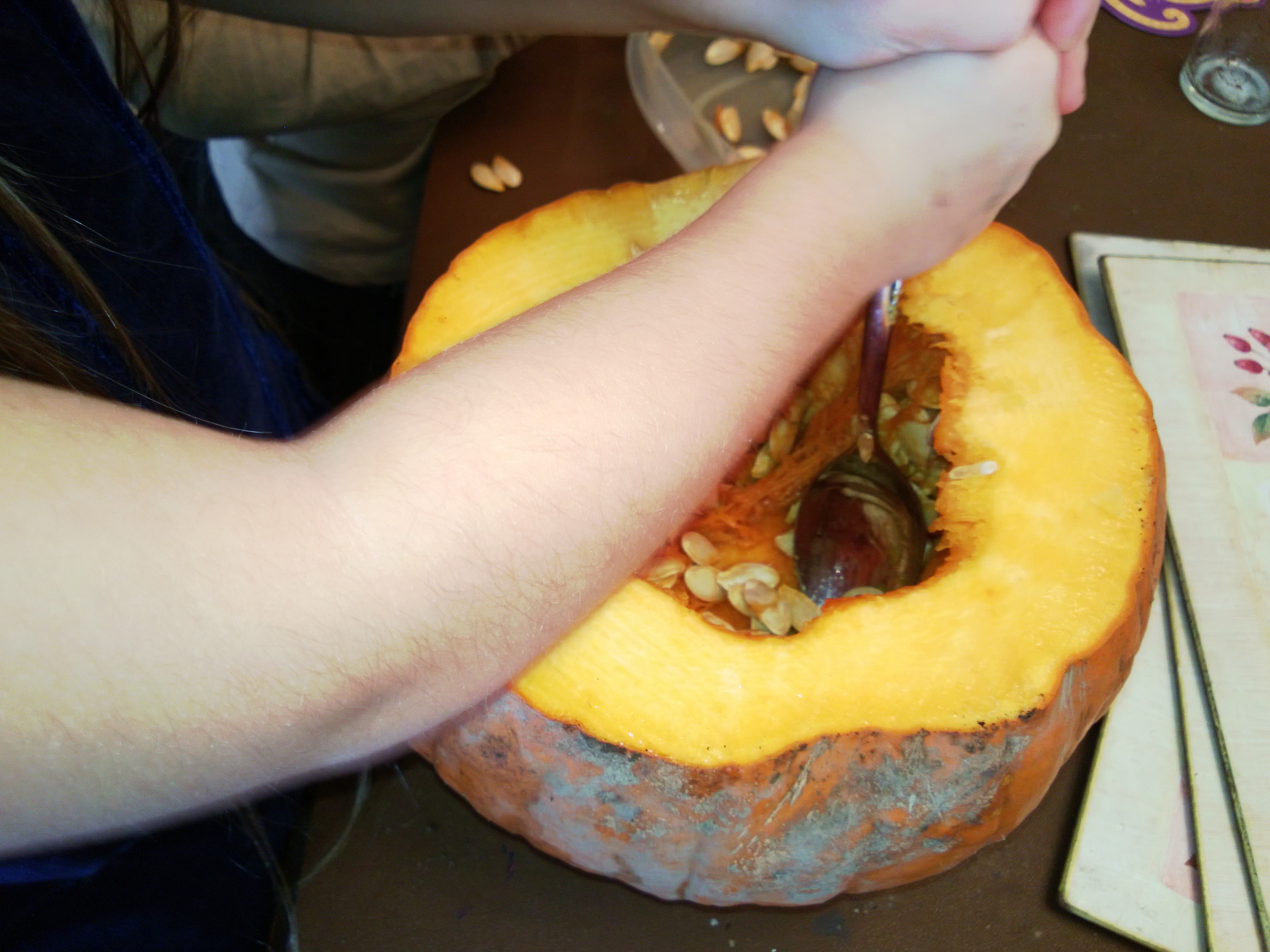
I removed the top of one of the pumpkins and gave the girls spoons to explore what was inside.
Look at all the seeds, they look like lemons but with no other sideIt’s a slother pumpkin. It feels really cold. There are lots of stringy bits, they look like messy hair.
We talked about saving the seeds for the Spring, so that we could try to plant pumpkins in the garden next year. This lead to a discussion about how the seeds were spread.
How do the seeds get out of the pumpkin if they are in the pumpkin patch?
The pumpkin gets mouldy and then the seeds can come out.
Do you know how the seeds are spread?
No
What happens to a dandelion seed?
Where are the dandelions seeds?
The seeds are on the dandelion clock.
Oh so they get blown around.
Yes. Does this happen to the pumpkin?
No
We talked about how the animals spread the seeds – the girls thought it was a bit disgusting to talk about poo so we left it at that but later read ‘The Tiny Seed’ by Eric Carle to remind ourselves how other seeds are spread.
2. Scientific Experiments
How Does the Pumpkin get Soft?
I think we eat this bit because it’s all juicy but it is hard. How do we make it soft?
Hmm, can you think of any ideas?
I know we could make it wet and then dry it.
We could sprinkle it with soft sugar.
We could cover it with a bag.
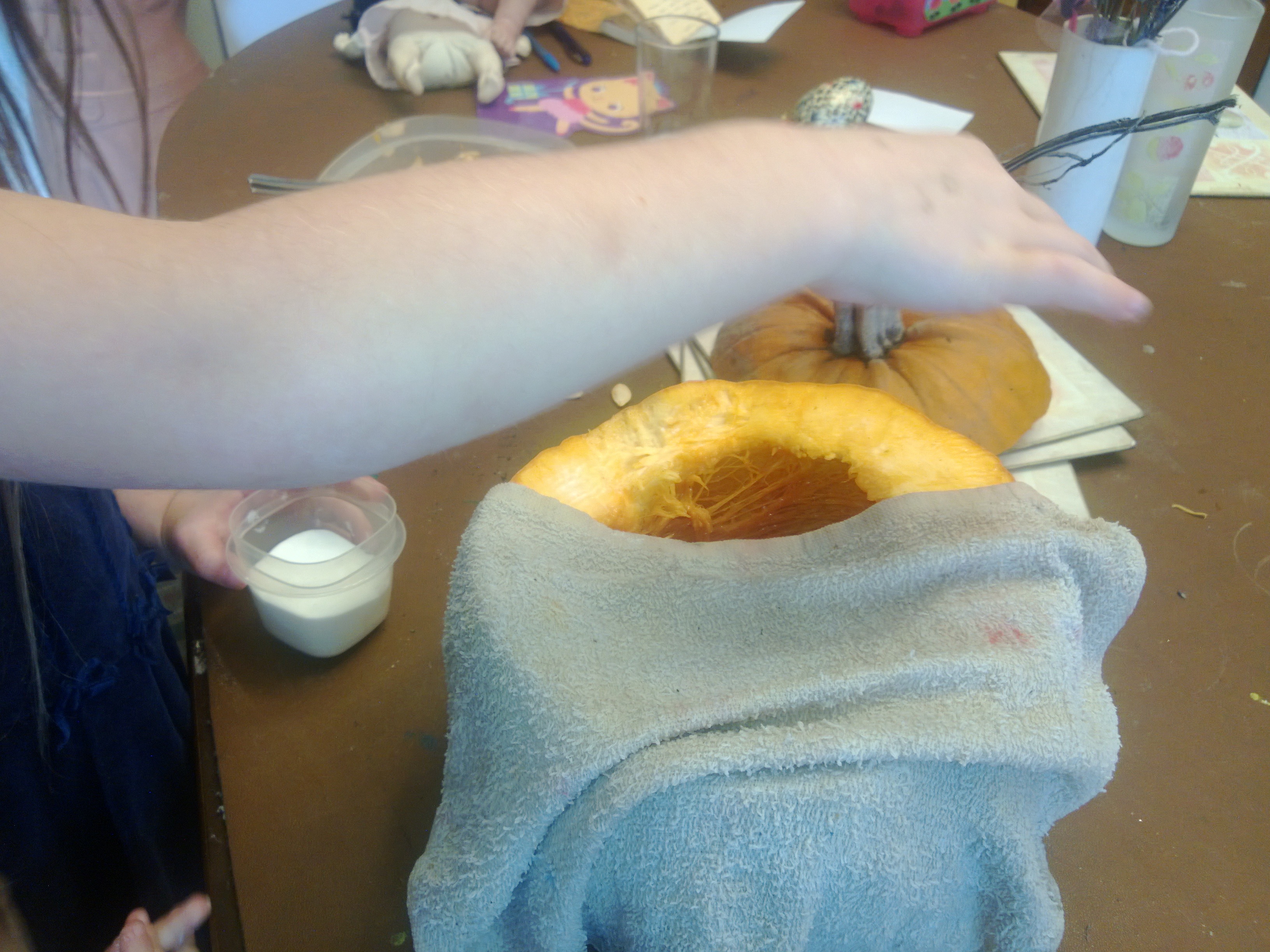
We covered one half of the pumpkin with a warm flannel to see what would happen.
We sprinkled the other half with caster sugar.
After 30 minutes we checked to see what had happened.
It didn’t work, it just got wet on my side.
What about the sugary side?
It feels softer, the sugar is softer but the pumpkin is hard.
I asked the girls if they could remember how I made spaghetti squash soft (when I tried to cut it, it was so hard I cut my finger instead). They couldn’t remember. I said that they had been along the right lines when they decided to warm it.
How could we warm it?
Put it in the microwave
or?
The oven.
Yes that’s how I made the squash soft.
3. Paint a Pumpkin
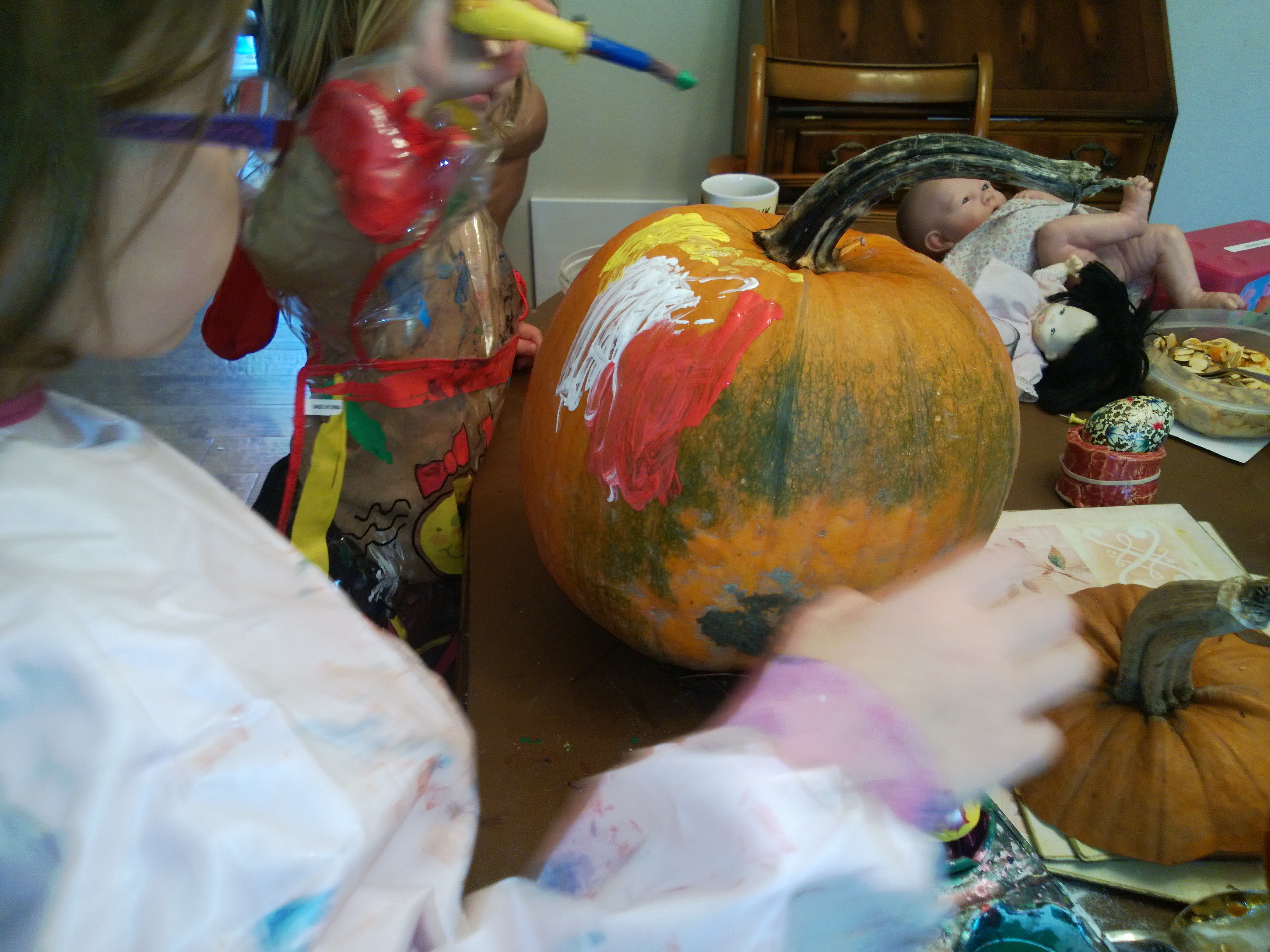
We painted our largest pumpkin with acrylic paint. The acrylic paint remains shiny .
4. Make a Squirrel Feeder
With the painted pumpkin we made a squirrel feeder by removing a section at the front and sprinkling it with birdseed. We often have squirrels in the garden but this gave us a good opportunity to watch them close up.
Filling the feeder with seed
Here comes the squirrel
squirrel feeding
5. Fairy Toadstools
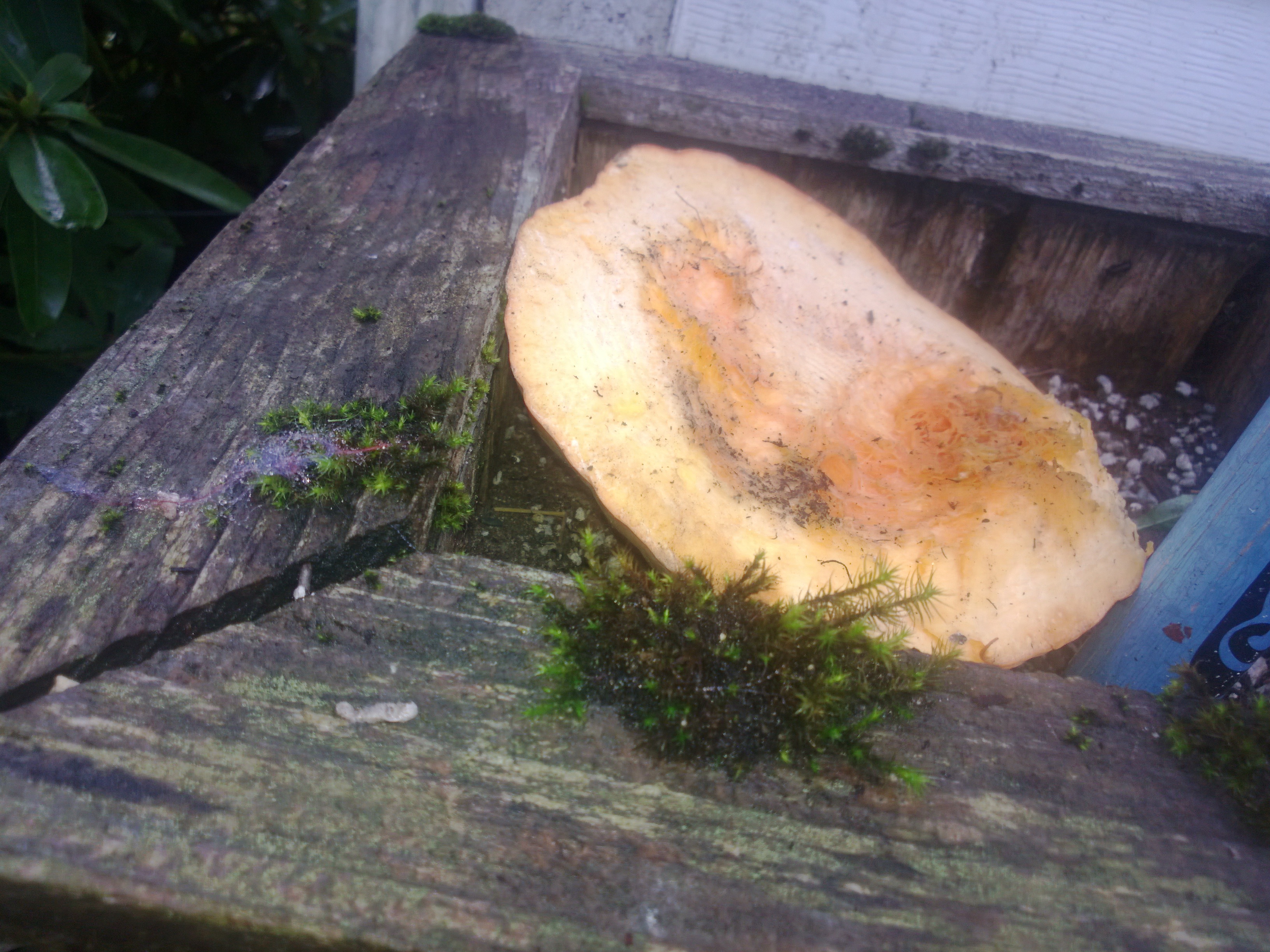
Our garden is full of toadstools in this damp Autumnal weather and we have been exploring them to see if we could find any fairies.
Turning the top of the pumpkin upside down made a perfect fairy toadstool for our flower-pot. We are also going to watch and document what happens as the pumpkin starts to decay. It might make a nice art or photography project for the girls.
6. Pumpkin Poetry
I helped the girls to make up a poem about a pumpkin using some of the descriptions I had recorded them saying.
Pumpkins by my 5-year old
Pumpkins are very orange
Inside they have seeds
The seeds look like lemons
And feel slimy and cold.
Around the seeds it is orange and stringy
It looks like crazy hair.
The bottom is lumpy and chunky
I call it the core.
7. Pumpkin Juice.
I sliced and peeled the pumpkin we had been exploring and we used it to make pumpkin juice.
Ingredients (quantities according to taste)
Pumpkin
Apple
Carrot
Ginger
Sprinkle with cinnamon.
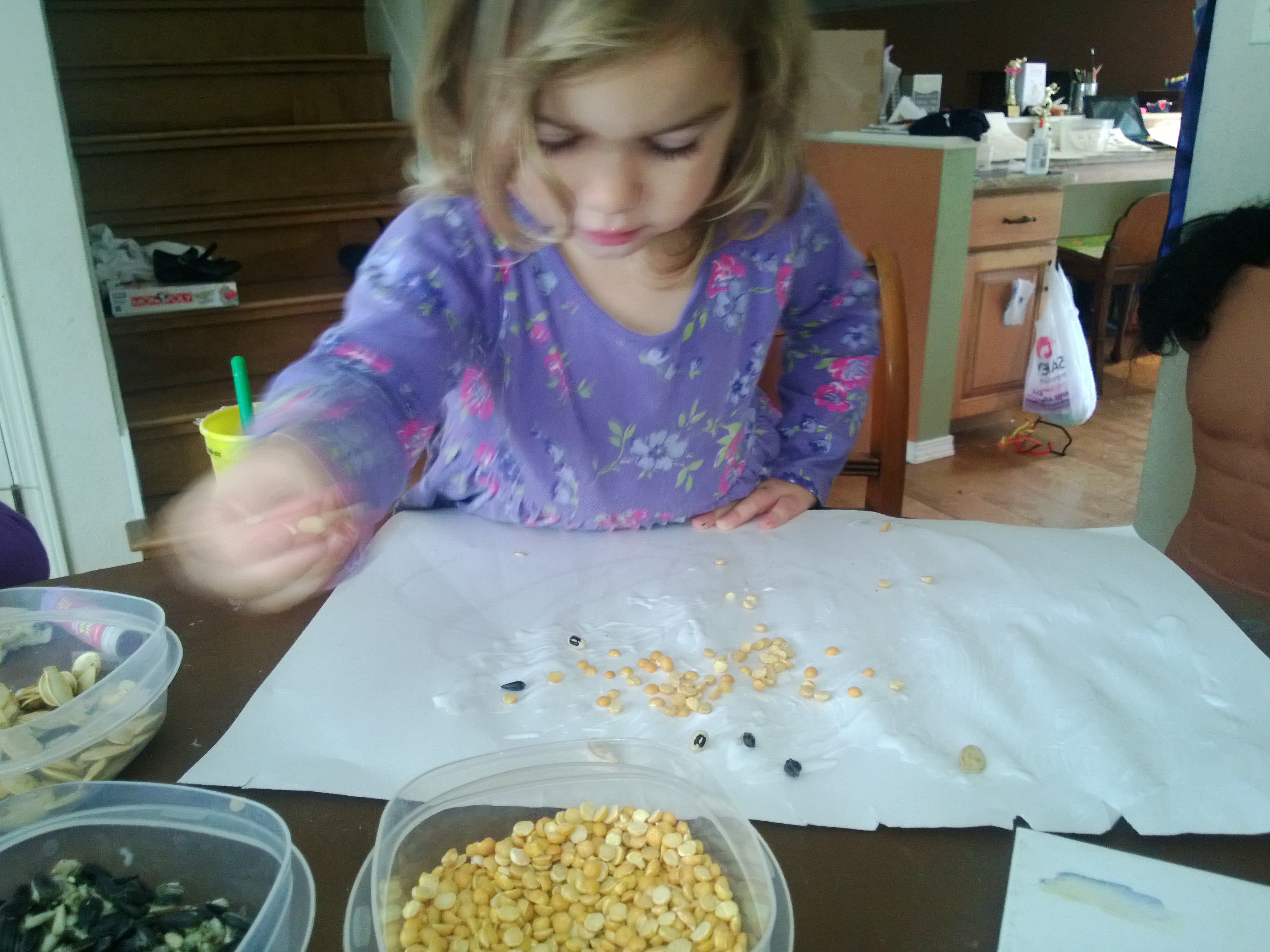
8. Seed Collage
One of our current topics is pattern. We used the pumpkin seeds alongside other seeds and pulses to make collages.
9. Roasted Pumpkin Seeds
As a healthy snack we tried roasted pumpkin seeds. Sprinkle with oil, salt and pepper and roast in the oven for 25 minutes.
10. Mr Potato Head
We still have one small sweet pumpkin left to make into a pumpkin curry.
Further ideas
Use the seeds for measuring in a balance scale
Use the seeds in a play or mud kitchen
Put a hollow pumpkin in the water tray
Make pumpkin cookies
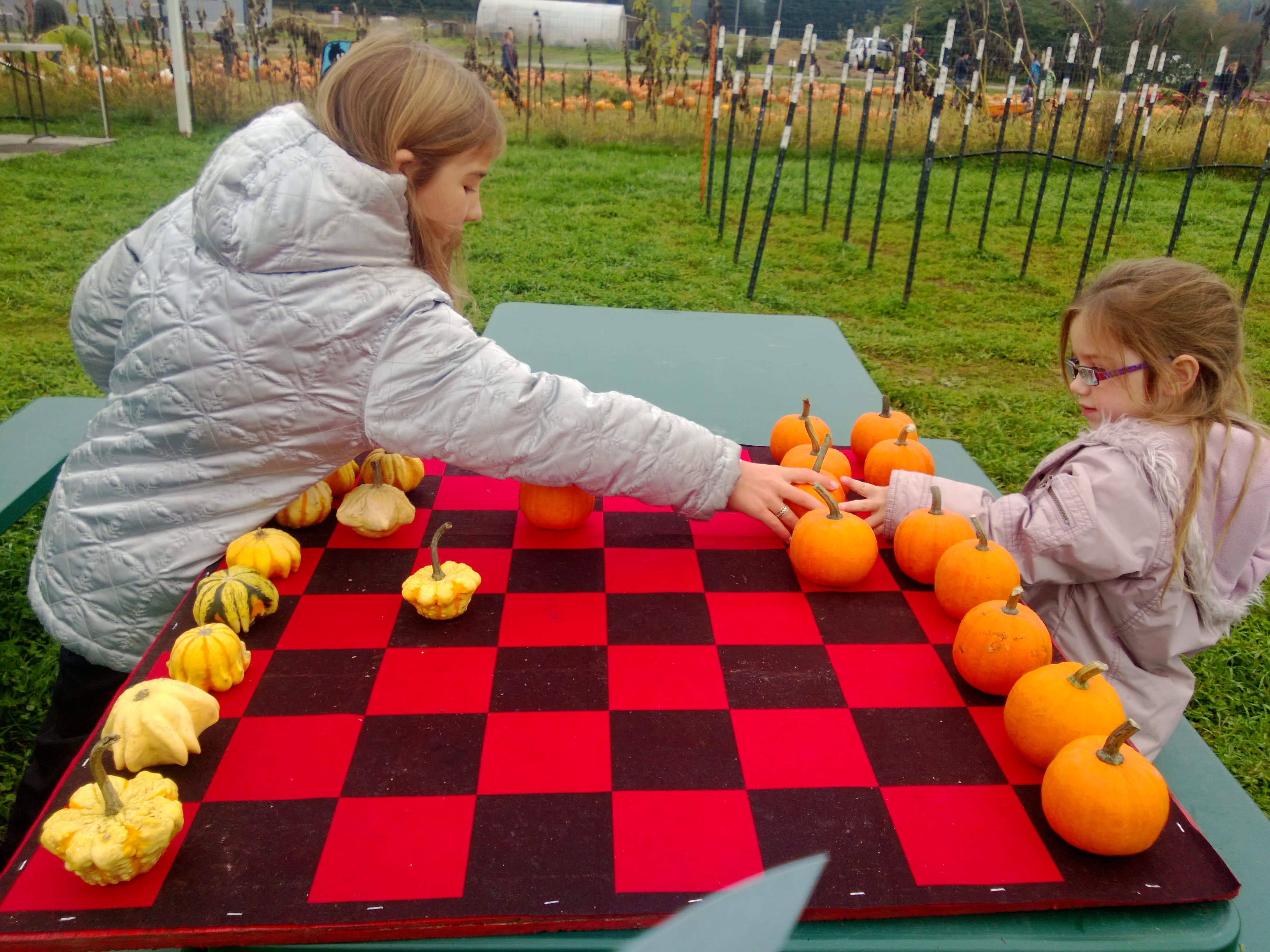
Make pumpkin drafts or checkers
Roll pumpkins down a hill and see which one reaches the bottom first.
Give children trays of seeds with scoops and containers.
Use the seeds with clay or pumpkin scented playdough.
Autumn is a time for woodland walks, collecting interesting things along the way and looking out for animal homes and habitats. As a child we had nature tables at school and we were encouraged to bring in conkers, sticky buds, acorns and leaves. I used to love to walk in the woods and collect things. We’d put nuts and conkers in their cases in the airing cupboard until they opened. I used to lie in the grass scouring the leaves for 4- leafed clover. I found one when I was about 6 years old. I looked after it all weekend and on Monday carried it to school as the prize exhibit for the nature table. The temptation to fiddle with it however, was so great that on the way one of the leaves fell off. I turned up with an ordinary clover and a loose leaf and so no-one believed me.
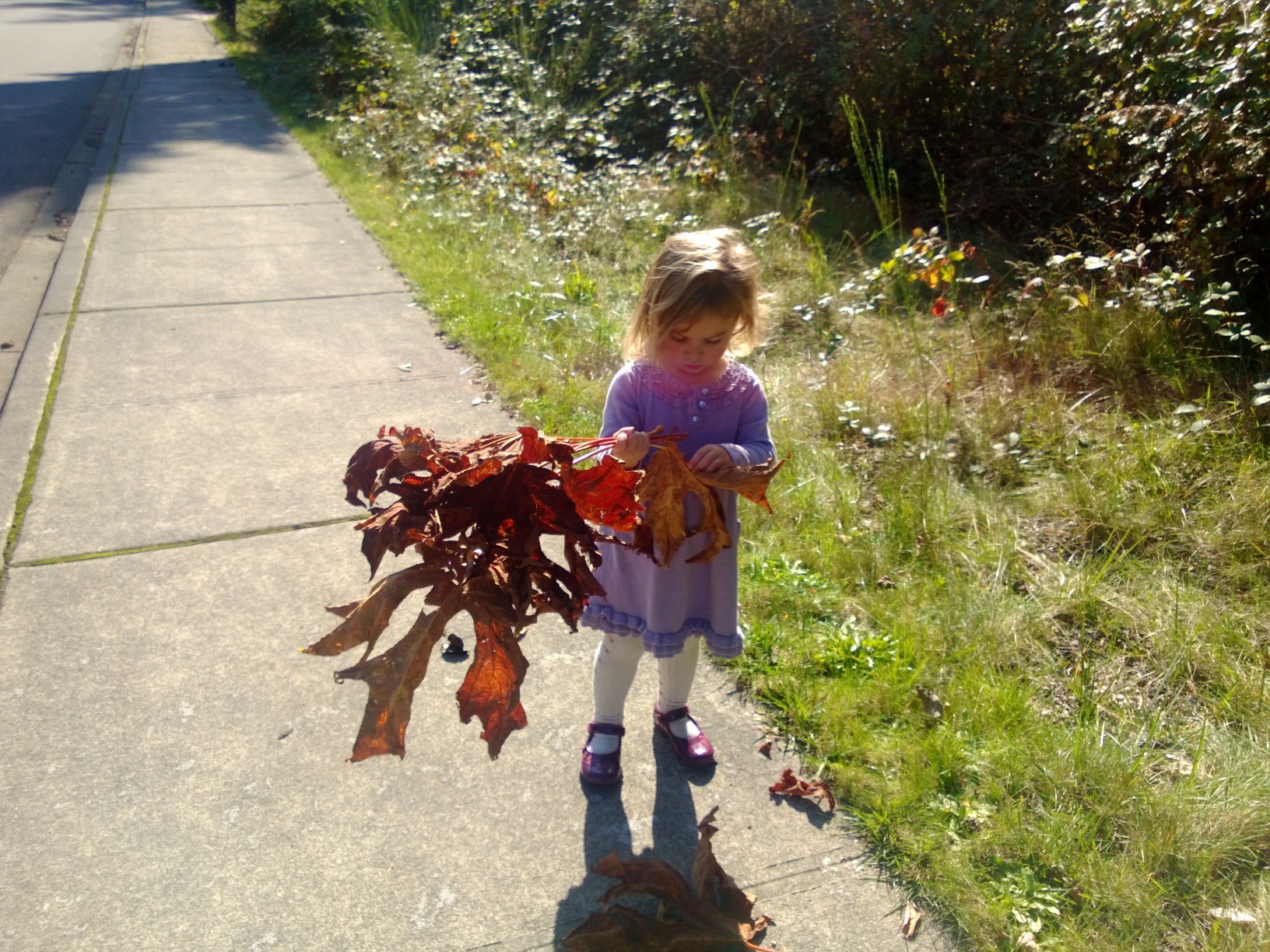
We’ve been foraging for Autumn things this week. In the garden we have an abundance of Fir Cones, Maple Seeds and coloured leaves but we wanted to find other things like acorns and conkers. I asked a friend where we might find conkers.
Conkers? What are they? was her reply.
I found a single, solitary conker that had managed to make its way with us from England.
Oh, it’s a bit like a chestnut.
Yes, a rounder chestnut and the casing is different, with larger more spaced out spines and they are poisonous.
Outside the girls ballet class we found a variety of different pine and fir cones from tiny ones in clusters to great big narrow ones. We walked in the woods to see what else we might find. We found….. more pine cones, …. more maple seeds,… more maple leaves but nothing different. I suppose we often take the things we have in our environment for granted – I love the towering Evergreens we have here, mixed in with the colours of the Maples but I do miss conkers and acorns.
Wild animals on the other hand are extremely varied. We watched huge salmon jumping in the river, saw enormous yellow butterflies and watched a small snake basking in the sun. Our favourite visitors are hummingbirds. The first time I saw one I thought it was a dragonfly but when it rested on a flower I was so excited to discover it was a hummingbird. I had no idea hummingbirds were native here. I read up about attracting them to the garden and bought a hummingbird feeder that we fill with 4 parts water to 1 part sugar. We now have regular visitors outside our window.
This slideshow requires JavaScript.
Of course there are also the more scary types of wildlife. The ‘ballet moms’ were talking about finding bobcats, cougars and coyotes in their garden and black bears on woodland walks, especially near the rivers now that the salmon are spawning.
RSPB Get Outdoors
As I was musing about our appreciation of the natural world and the things we miss from home, a new report from the RSPB was brought to my attention. Connecting with Nature presents the findings of a three-year RSPB research project measuring just how connected to nature the UK’s children really are. Connection to nature is measured in 4 areas:
Enjoyment of Nature
Empathy for Creatures
Sense of Oneness
Sense of Responsibility.
You can take the questionnaire to see how connected your children are. If you are outside of the UK, the report also gives you the criteria used for the questionnaire so that you can investigate how connected children are in your area.
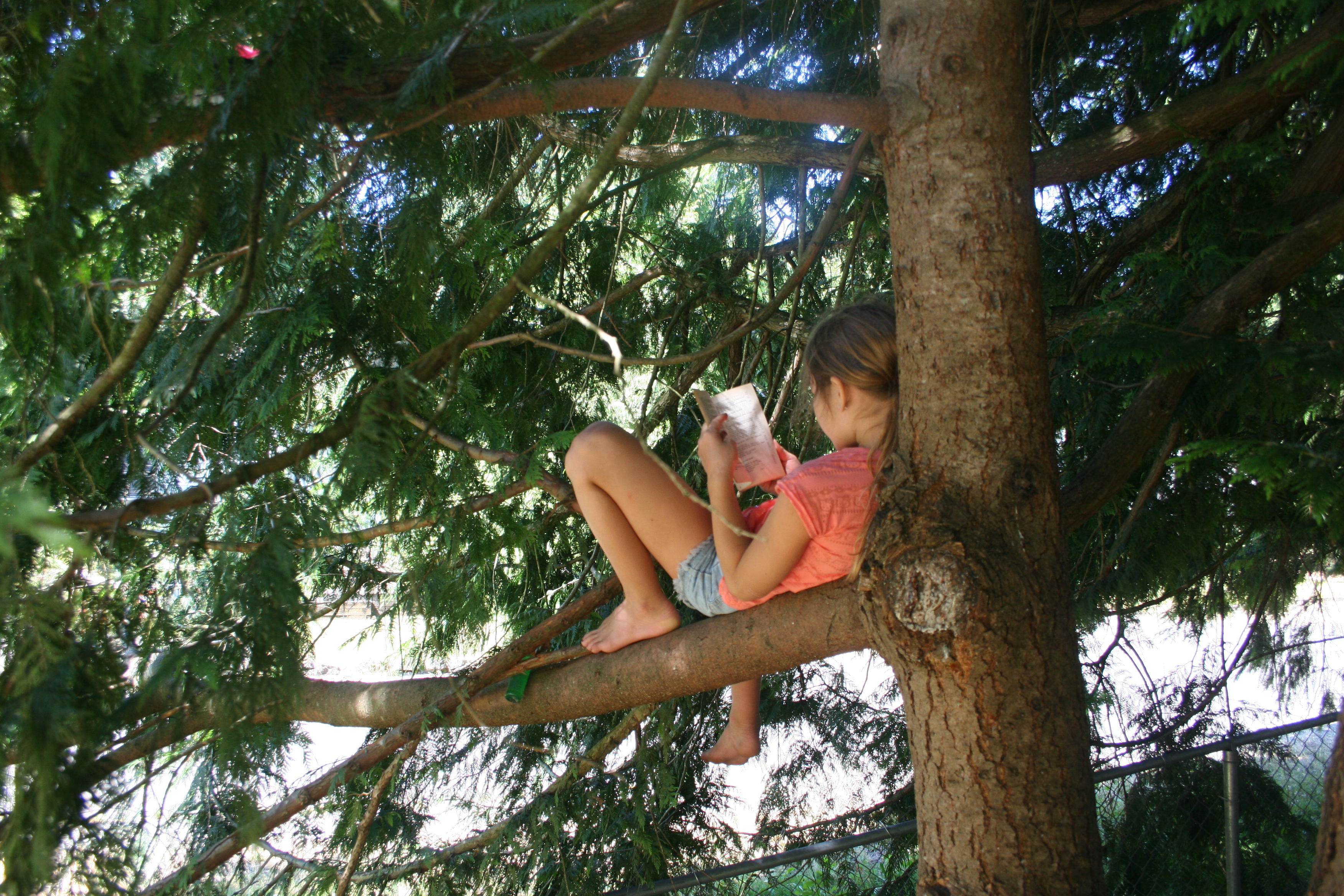
I think the sense of oneness is an interesting one. How young was I when I first felt a sense of oneness with nature? I know my youngest daughter will always choose to go outside collecting sticks, pouring rainwater and arranging stones – is this an early sign of oneness with nature? My eldest daughter emphatically announced that she felt peaceful when she was in a natural environment. In a household with 2 noisy pre-schoolers her favourite haven is reading a book in a tree in the garden.
I know for me, I feel at peace by the sea or in a woodland, both places I spent a lot of time in as a child. I can’t wait to visit the National Parks here in the US, to see the amazing diversity of the natural world here.
Connecting with nature has many benefits from physical activity, mental health and a sense of well being, education, social interaction, empathy and the impact on the sustainability of the natural environment. The study found that only 21% of children aged 8-12 in the UK have a connection with nature at a level that is realistic to their age.
“ There are statistically significant differences between children’s connection to nature at a national level across the UK, as well as between boys and girls, and British urban and rural homes.”
Surprisingly girls are more likely than boys to connect with nature and urban children more likely than rural children. Further studies will be undertaken to determine why this might be. Looking at the questionnaire I think it may be that the questions are angled at more feminine pursuits, feeling peaceful in nature, collecting shells, listening for sounds and taking care of animals are not exactly cool for young boys.
The research will add to the growing evidence base about children and nature. This includes a study by Natural England which suggested that factors contributing to connection are in decline. It reported that only 10% of children in the UK played regularly in natural places in 2009, compared to 40% in the 1970s.
Getting children out in the natural world when they are young won’t guarantee a continued interest once the world of school, clubs, homework and computer games takes over but it will certainly put them on the right track.
The environmental identity developed by children between the ages of 3 and 7 is an emotional affinity towards a specific aspect of nature which had been strengthened by providing positive experiences with nature on a regular basis. (Karls and Ittner 2003).
Some researchers also believe that there is an optimal moment usually between the age of 6 and 12 which form a person’s attitude to nature; perhaps the 4 leafed clover was mine.
To celebrate the 40th birthday of one of the world’s most famous picture books, I have 10 Hungry Caterpillar inspired activities.
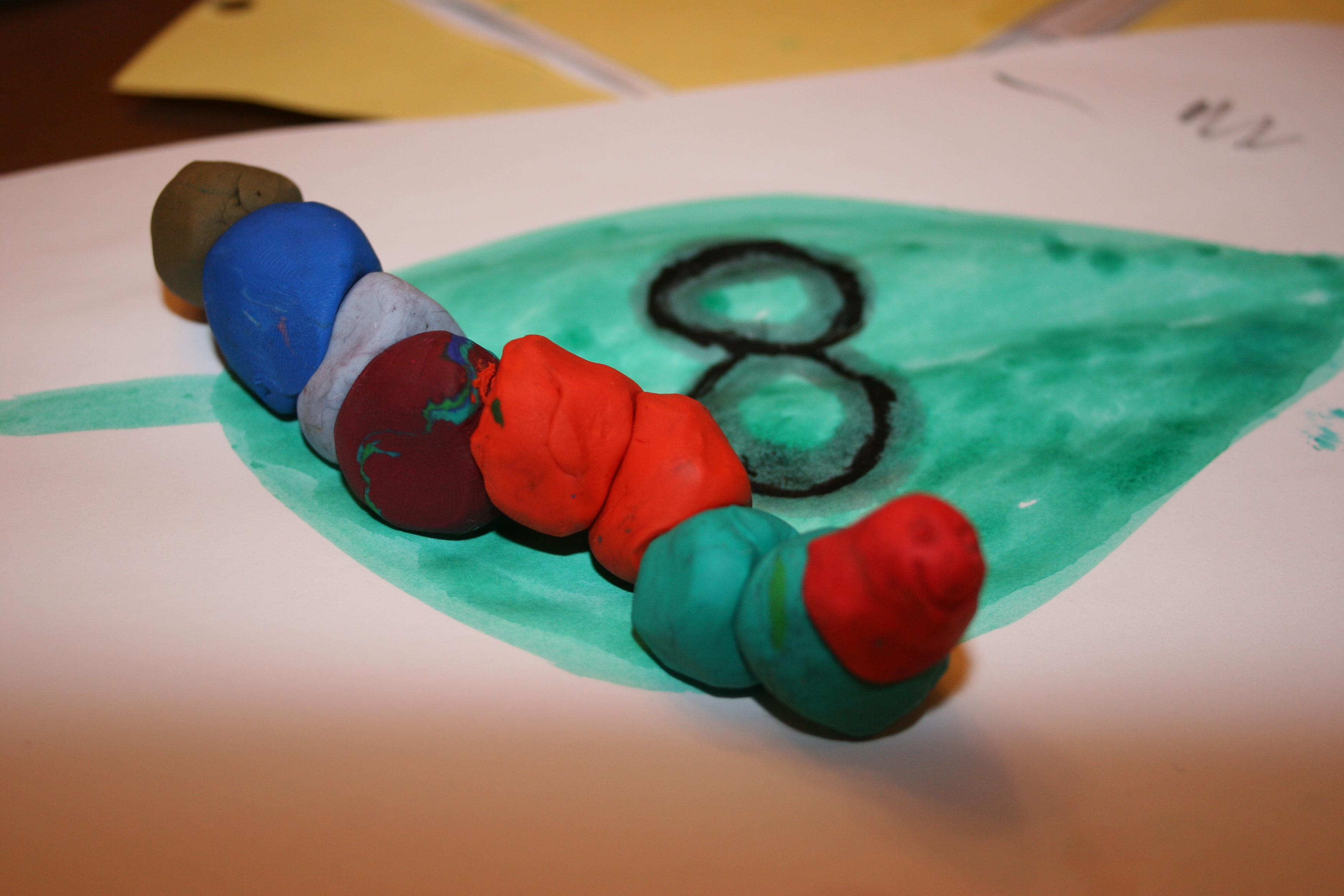
Maths: Build caterpillars from dough or clay. Count the number of segments that make up the caterpillar. Play a matching game – place the correct caterpillar on the leaf with the matching colour or number of segments.
2. Imaginary Play: My eldest followed an enveloping schema for years. She would hoard things in little bags and containers and if you ever left anything around that she could climb into, you would find her inside. On one occasion I left a fabric storage bin in her room. She promptly climbed inside declaring that she was in her cocoon and soon emerged as a beautiful butterfly. Provide material, boxes, play tunnels, blankets, wings and deely boppers.
3. Song and Rhyme: Sing the caterpillar on a leaf song or sit behind your child and pretend to crawl a caterpillar up their back. Teach them to ask ‘Whose that climbing up the garden wall?’ and you reply in a caterpillar like voice ‘It’s me’ said the caterpillar ‘I’m learning how to crawl’.
4.Paint symmetrical butterfly pictures: I’m sure we all remember these from school days. Paint on one side, fold the paper over to create a symmetrical print on the other. This can also work well by painting a piece of string, placing it between the folded paper and then pulling it out whilst the paper is still folded.
5. Movement: Read the Hungry Caterpillar and give the children movements to follow during the story. Egg – curl up in a ball, caterpillar – crawl along the floor moving to eat different types of food, big fat caterpillar – stretch out wide, cocoon – spin slowly then hang their head between their legs, staying very still, butterfly – flap their wings and fly.
6. Discovery – it is a little cold yet but once the weather is warmer, grow your own butterflies. We have done this very successfully using kits from Insectlore. It is fascinating to watch how quickly the tiny caterpillars grow and then instinctively hang upside down. You soon get to recognise when the butterflies are ready to emerge and can feed them indoors for a day or 2 before releasing them into the garden. The species that they use tend to stay within your local area for a few days after being released so you can spot them in the garden.
Find out about the butterflies and caterpillars that can be found in your locality, and print pictures of more exotic species.
7. Food: Make a fruit salad using the fruits eaten by the Hungry Caterpillar or taste some of the more unusual foods he ate. We are a big juicing family so we are going to make Hungry Caterpillar juice using:
1 apple
2 pears
3 plums
4 strawberries
5 oranges
8.Maths: Turn your finger into a crawling caterpillar and measure things in caterpillar steps.
9. Outdoors – Grow a butterfly garden. I saw some amazing butterflies in our garden last year that are fairly commonplace in this area. I’m definitely going to learn about how I can attract them this year.
10. Visit a Butterfly Farm. I can highly recommend the butterfly house at Bristol Zoo and Felinwynt Rainforest Centre in West Wales. In Seattle there is the Butterfly House at the Pacific Science Centre . Feel free to add any recommendations in the comments.
We had a lovely time today at Glenny Woods organised by our local Children’s Centre. Glenny Woods is a wonderful woodland centre owned by the Scouts Movement. They have an indoor room with a veranda for when it is wet, an area for lighting fires with bench seating, adventure playground equipment and facilities for making dens.
However, even if your nearest wood doesn’t have these added facilities there are lots of simple fun things that you can do with children. Try not to rush children on to looking at the next thing. They may want to spend half an hour looking at a clump of moss or sliding down a muddy bank. If you really want your children to appreciate and explore nature then allow lots of time and move at their pace (however frustrating this might be).
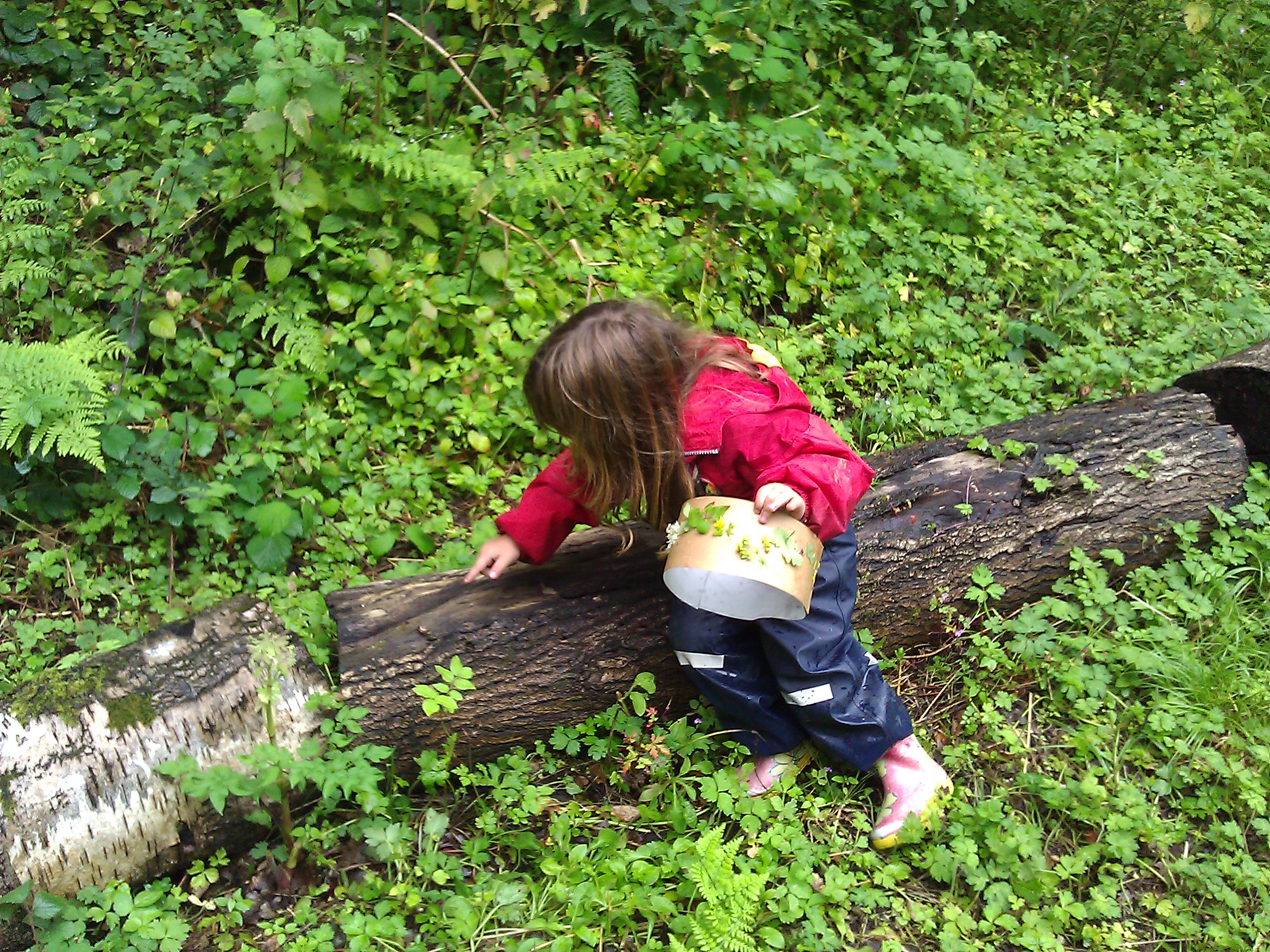
1. Give children a piece of cardboard with double sided sticky tape on and get them to make a hat collecting natural things. This could be free choice or maybe have a colour theme. You could ask children to create a pattern eg. large and small things or find specific items to make their hat.
2. Put double sided sticky tape around the top of your child’s wellies and ask them to collect items of interest and stick them to their wellies.
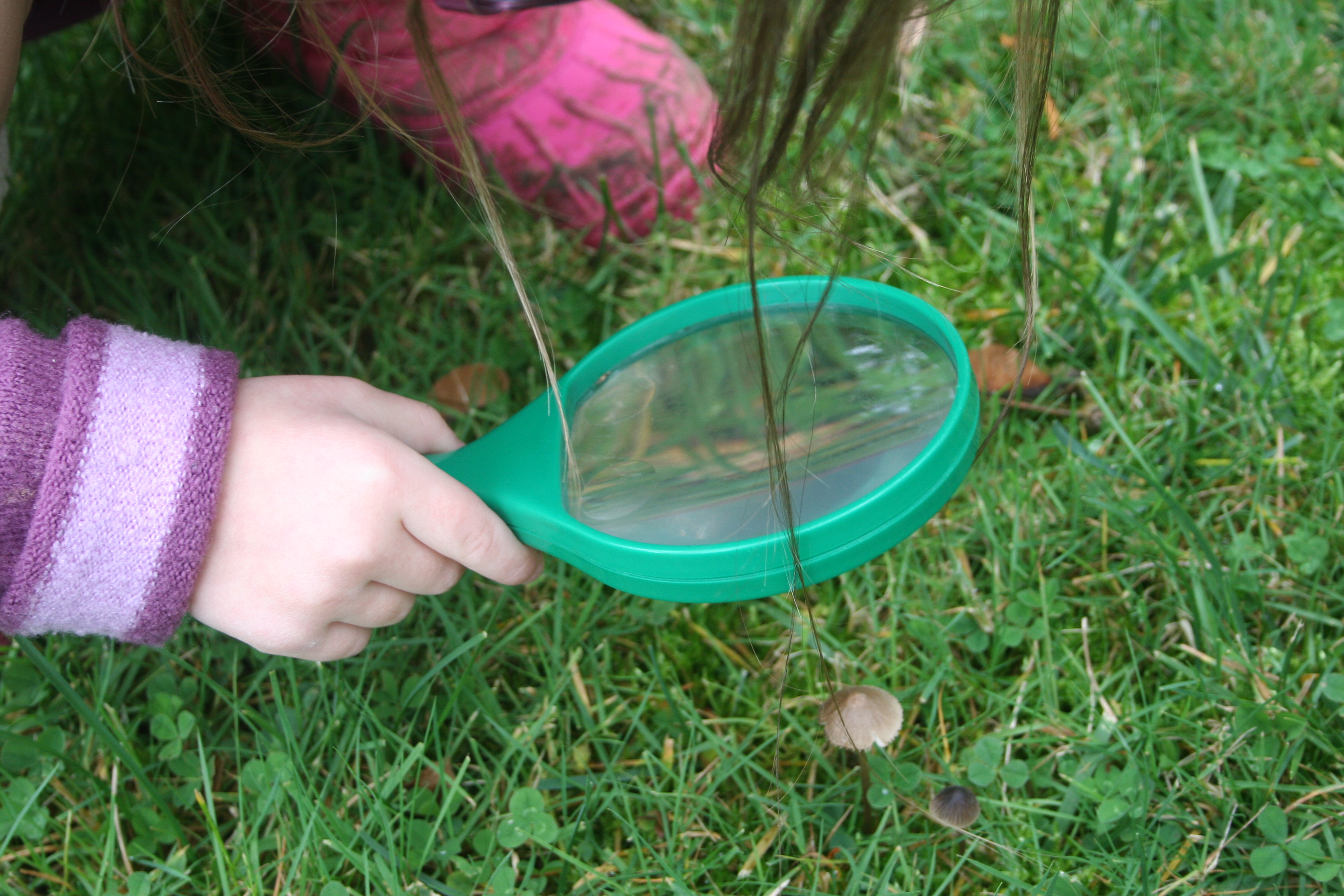
3. Take magnifiers or bug jars and look for creatures. Take photographs so that you can identify them when you get home.
Look Mummy I found a snail
4. Young children will enjoy exploring the textures of things, moss, long grass, tree trunks, mud. Give children a textural treasure hunt – find things that are soft, smooth, hard, spiky, slimy, cold, warm, rough etc. Make a feely box containing some of the textured things or use a blindfold and ask children to describe what they are touching.
5. Give children a piece of string and ask them to find and attach the following items: something natural, something manmade, something colourful, something heavy and something with an interesting shape. Hang a line of string between 2 trees and hang the completed pieces from it to make a natural work of art.
6. Build a fire, toast marshmallows on whittled sticks or bake potatoes in the bottom of the fire.
7. Go on a treasure hunt
8. Play in the mud. Take tools and to see what you might find or stamp and feel the texture of wet gooey mud. Find a stick and draw or write in the wet mud, or take large sheets of paper and use mud to paint with – use fingers or sticks to apply the mud.
9. Collect natural materials to make a picture or sculpture . Make a frame from sticks or stones and ask the children to make a picture inside it using what they have collected. For the youngest children let them arrange leaves into a nest or sticks or stones into a pattern.
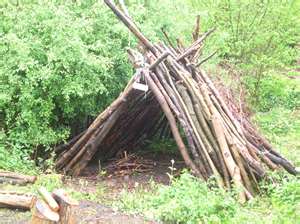
10. Build a den. Use sticks and build a den in the style of Eeyore’s house.
You might also want to check out some of these ideas
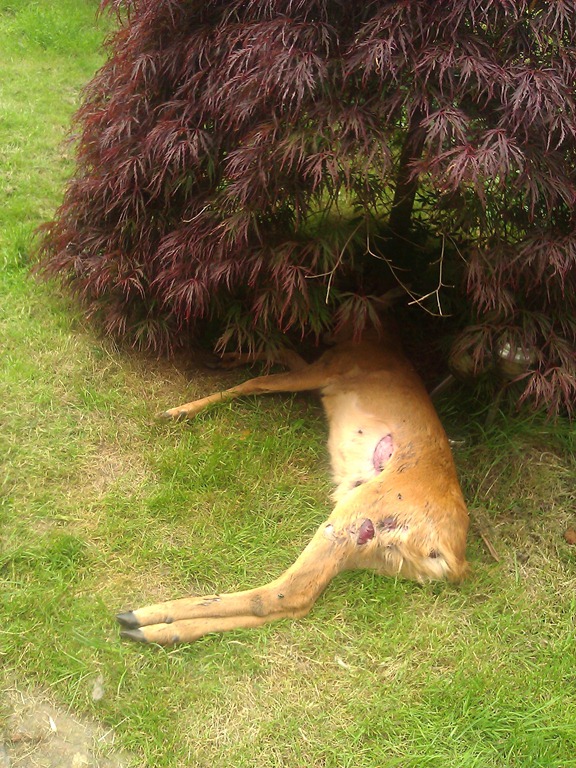
It’s not every day that you wake up to the sight of a dead deer in your garden! I was first alerted to the fact when my dogs hadn’t come to whine at the door after being let out. My 7-year-old went to find them and see if they had gone into the woods at the bottom of our garden. She returned and said that there was something lying down behind the dog, I asked how big and she said she didn’t know. I was expecting to find a frog or maybe a bird but was confronted by the above.
I wasn’t sure whether to let my 2-year-old see it, she really wanted to see the ‘reindeer’ but I thought she might be frightened. However, I’m always keen to avoid sheltering my children so we went to the bottom of the garden so that I could gauge her response.
She was in fact absolutely fascinated by it. It isn’t often that you will get the chance to see a deer that close so we could look at it and talk about it. I pointed out its hoofs and she said
maybe it will get proper feet – does it have to go like this? (standing on tiptoe).
From the outset I talked about how it was dead. I think children are very matter of fact about such things and their questions should be answered honestly but in a sensitive manner. She saw that it had hurt its legs and was very concerned,
Maybe we could put it in the shower or in the bath and make its leg better?
I explained that we couldn’t put it in the bath and that we didn’t need to make it better because the deer didn’t hurt anymore, he couldn’t feel it because he was dead
Does it have arms?
No it has 4 legs like the dogs. Most animals don’t have arms.
But we have arms.
Yes.
Perhaps when we talked about the deer not feeling hurt, she was thinking of feeling as touch.
Not that it’s likely that many of you will encounter a dead deer in your garden, but would you know what to do if you did? Probably not, well neither did I and it took about 2 hours to find the answer. First port of call the vets – I thought they might be able to point me in the right direction. They gave me the number of the RSPCA and the local council. According to the council a wild animal can only be collected from the roadside or public place, if it is on private property then the disposal is your own responsibility. If I couldn’t find anyone to collect it then it became an environmental health issue and they would come and collect it. The RSPCA suggested I contact DEFRA . They said that they would normally advise people to dispose of animals in normal refuse, but that a deer probably wouldn’t fit! Their advice was to call the council again. The senior staff at the council finally authorised collection free of charge.
The men arrived and my 2-year-old delighted in showing them the way, saying ‘we think it is dead’. I think they had visions of an animal that as soon as they moved it would start kicking out – I reassured them that it was dead. The small antlers were caught around the tree and the deer was too big to fit in the bag they had brought so they carried it up the garden.
Oh look it’s awake now
my daughter said when she saw its eyes wide open. She wanted to see them put it in the van and know where it was going. I told her that they would probably bury it. They put it in a yellow bag and onto the truck.
Are the mummy and daddy reindeer dead?
I don’t think so, they might be looking for it – poor deer
It’s alright reindeer you’ll get better soon.
We waved goodbye to the deer and the men. So that was her first experience of death – we will see what other questions it raises in the coming days. For now she has gone to bed with her cuddly reindeer kissing it’s legs and telling it she will give it a plaster to make it better.

 Explore all types of weather. Rain, snow, wind and sunshine offer many different experiences.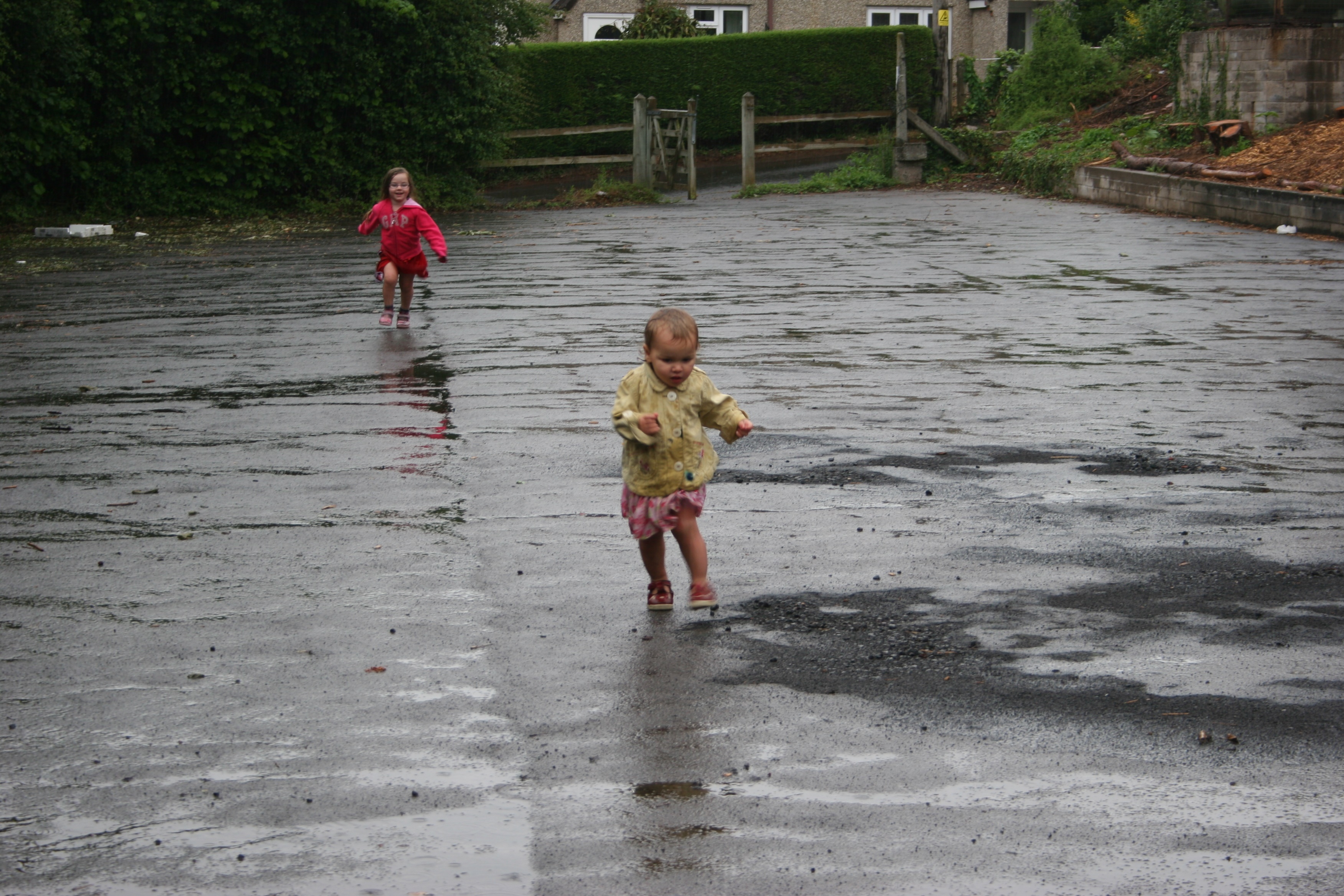





















 Right from the Start