My eldest daughter has been an avid potion maker all her life. We are always finding concoctions in her bathroom and when she was young she would leave them on the windowsill of her bedroom or on the side of the bath and if you knocked them off whilst having a relaxing bath the cold would give you the shock of your life. She is now a huge Harry Potter fan, having read all of the series 4 times and her potions are taking on new meaning. Her younger sister is following in her footsteps. Now that the weather is nicer I set up a little potion station for them in the garden – they love it.
It is a great sensory play activity and science experiment, they got their hands in, testing and smelling the potions and used all kinds of things from the garden. Best of all I love how the imaginary play scenarios evolved. I suggested to my 9-year-old that she might like to make a book of potion recipes.
‘Yes’ she exclaimed excitedly, ‘ But we’ll need about 70 pages, the McClary recipe book’
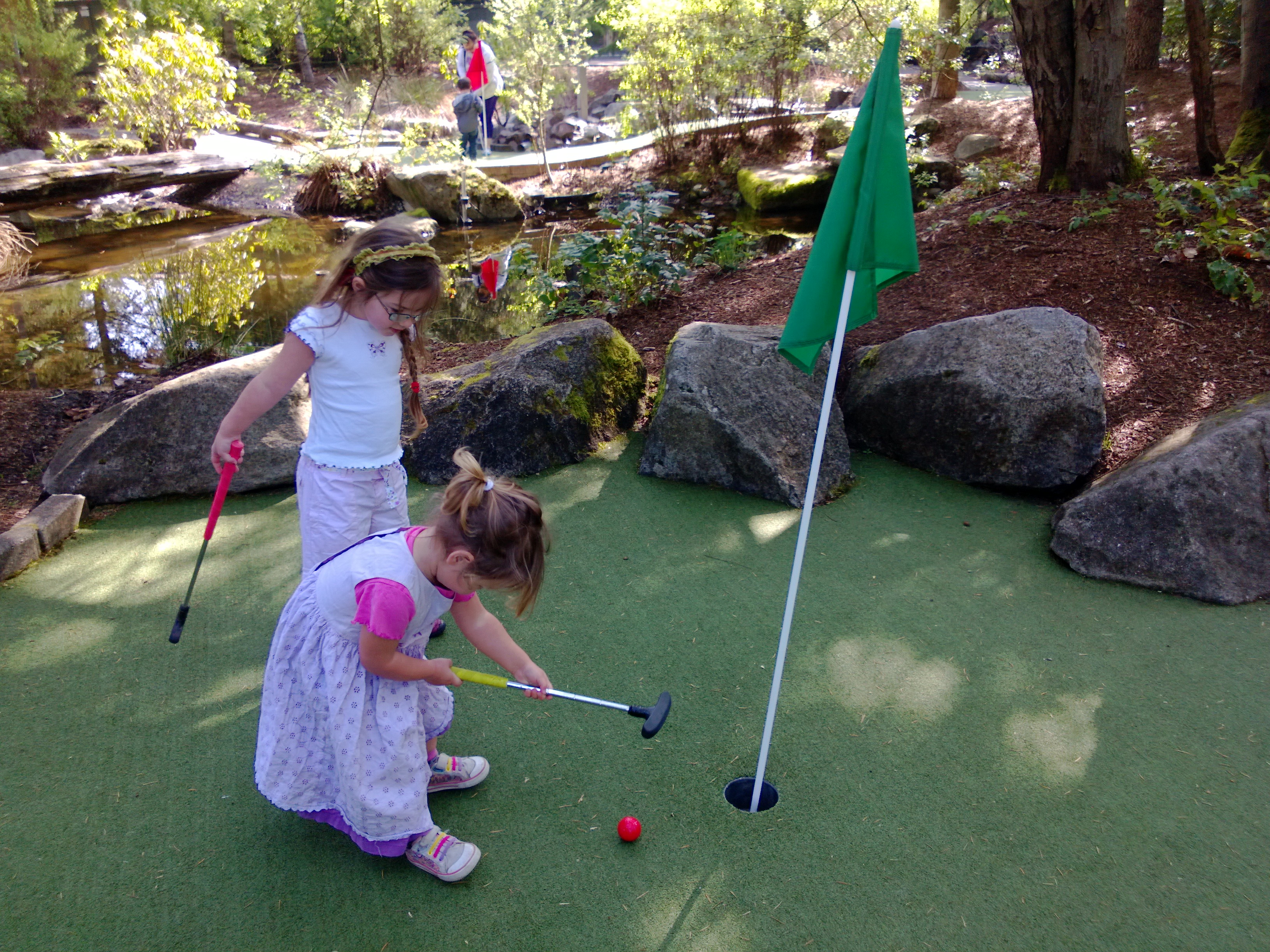
Today I met with a group of mums and their toddlers to play golf at the pitch and put, Willows Road Golf Course. All of the children were new to golf and most of the children were below the age of 2. My girls had a brilliant time – my 4-year-old even asked if she could come back tomorrow.
Before 11am under 12’s can play the 18 hole pitch and put for $5. The beautiful setting meant that my 2-year-old, who lost interest after a few holes had plenty to keep her occupied.
There were lots of opportunities for learning too:
Number recognition as we moved around the holes
Recognising colours – who has the red ball? What colour flag do we have this time?
Reading signs – Please rake your footprints, keep on the path.
Gross motor skills – how do you hold the club? You need to hit it hard to get it up hill. What is the best way to get it in the hole?
Counting – how many shots did you take that time?
Writing – filling out a score card.
Vocabulary – What is the stick called again? I’m in the bunker.
Turn- taking and awareness of others.
We’ll definitely be doing it again, a great way to spend a sunny morning.
Hmm, how should I play this shot?
I’m getting the hang of this now.
I’m going to take 3 hits this time.
Go on, you can do it.
You need to hit it really hard to get it up the hill.
the sand in the bunker was lots of fun, especially when they raked away their footprints.
When you’ve had enough of golf, climbing and jumping is fun.
The course is built around waterfalls, lakes and bridges – beautiful.
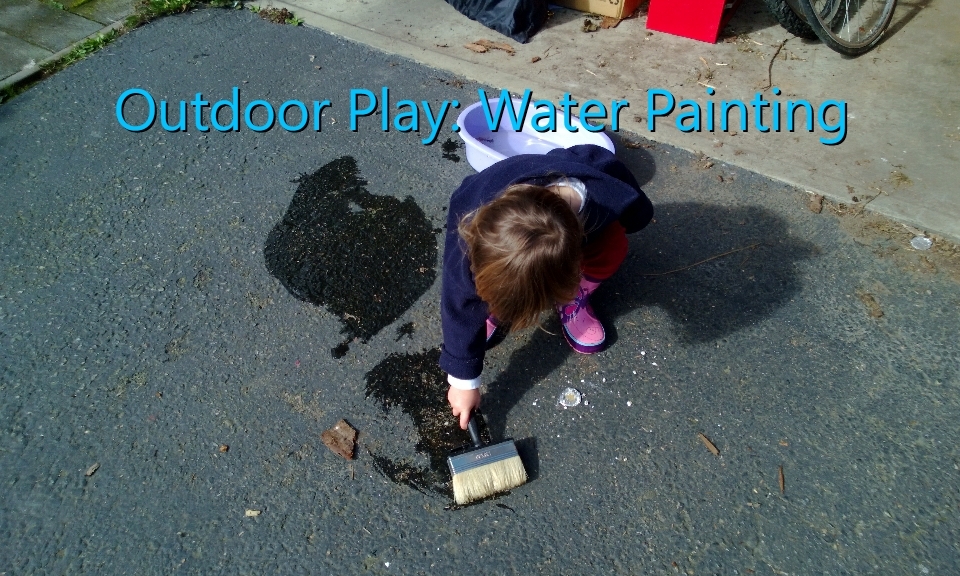
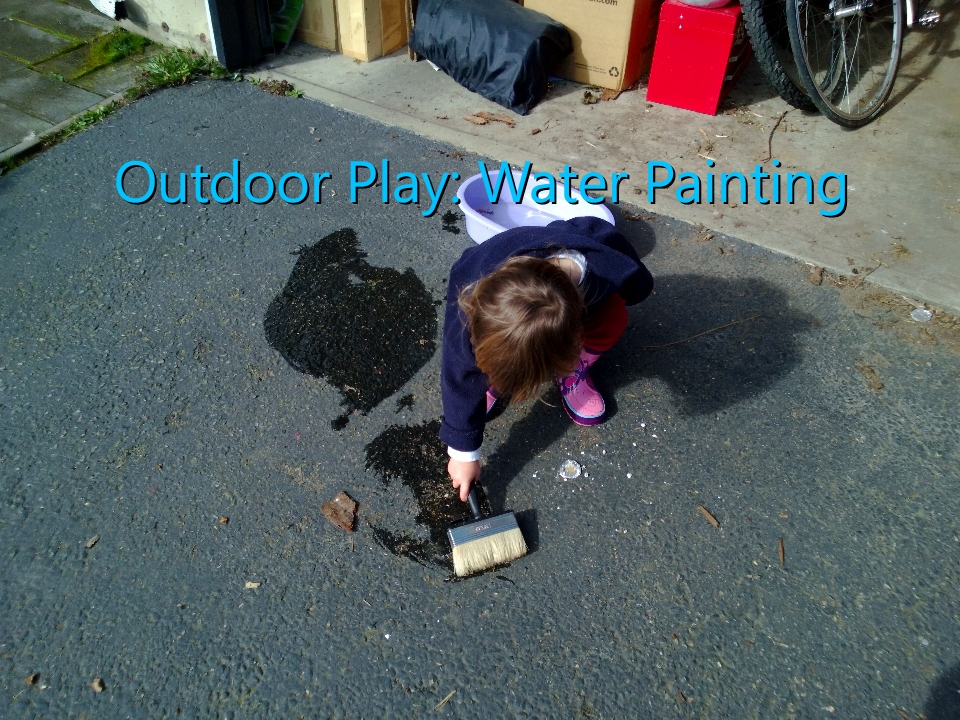
Getting my children to put things away when they are finished is often a struggle but sometimes it has its advantages. A tub and paintbrush were left on the driveway. After a few rainy days it inevitably filled with water. My 2-year-old picked up the brush, dipped it in the tub and proceeded to paint the garage.
On a sunny day she returned to the tub but couldn’t find her paintbrush. I brought a selection from the garage and as she discovered the different lines the brushes made. Painting on a dry driveway was a very different experience. I later found a paint roller – below are her remarks as she played.
Having recently discovered some of the amazing hikes in the Seattle area we are really keen to encourage the children to appreciate the wonders around them. My kids love outdoor play, especially in the woods but a 4 mile steep hike can be hard work for an 8, 4 and 2-year old. To keep them going on our last hike I asked them to see how many letters of the alphabet they could spot in the surrounding area. The letters had to be found in nature and they weren’t allowed to create a letter by moving an object.
Here are some of the letters we found
X
t
V
Y
C
B
L
U
The view from the top is always worth it (and the promise of snacks).
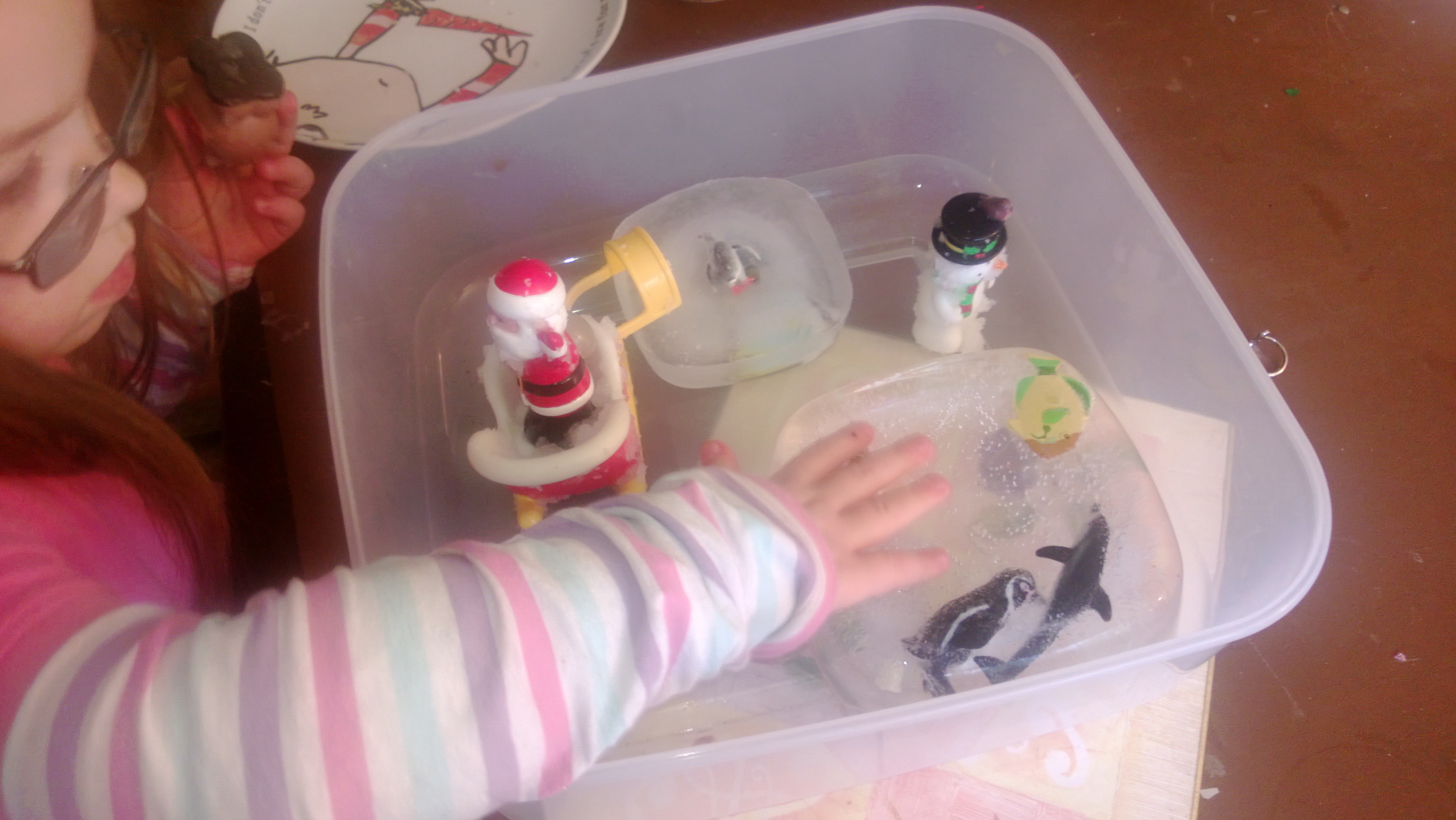
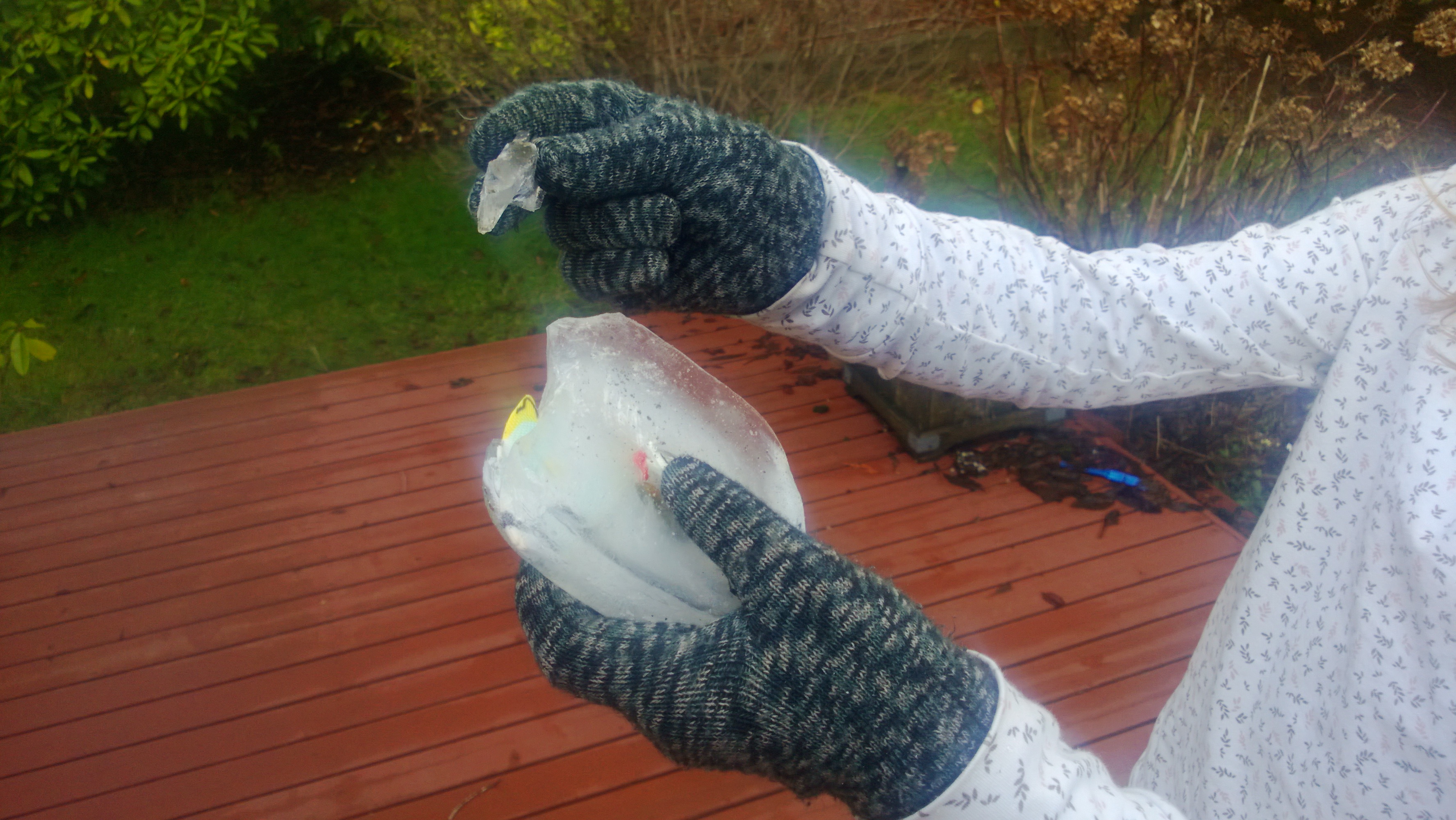
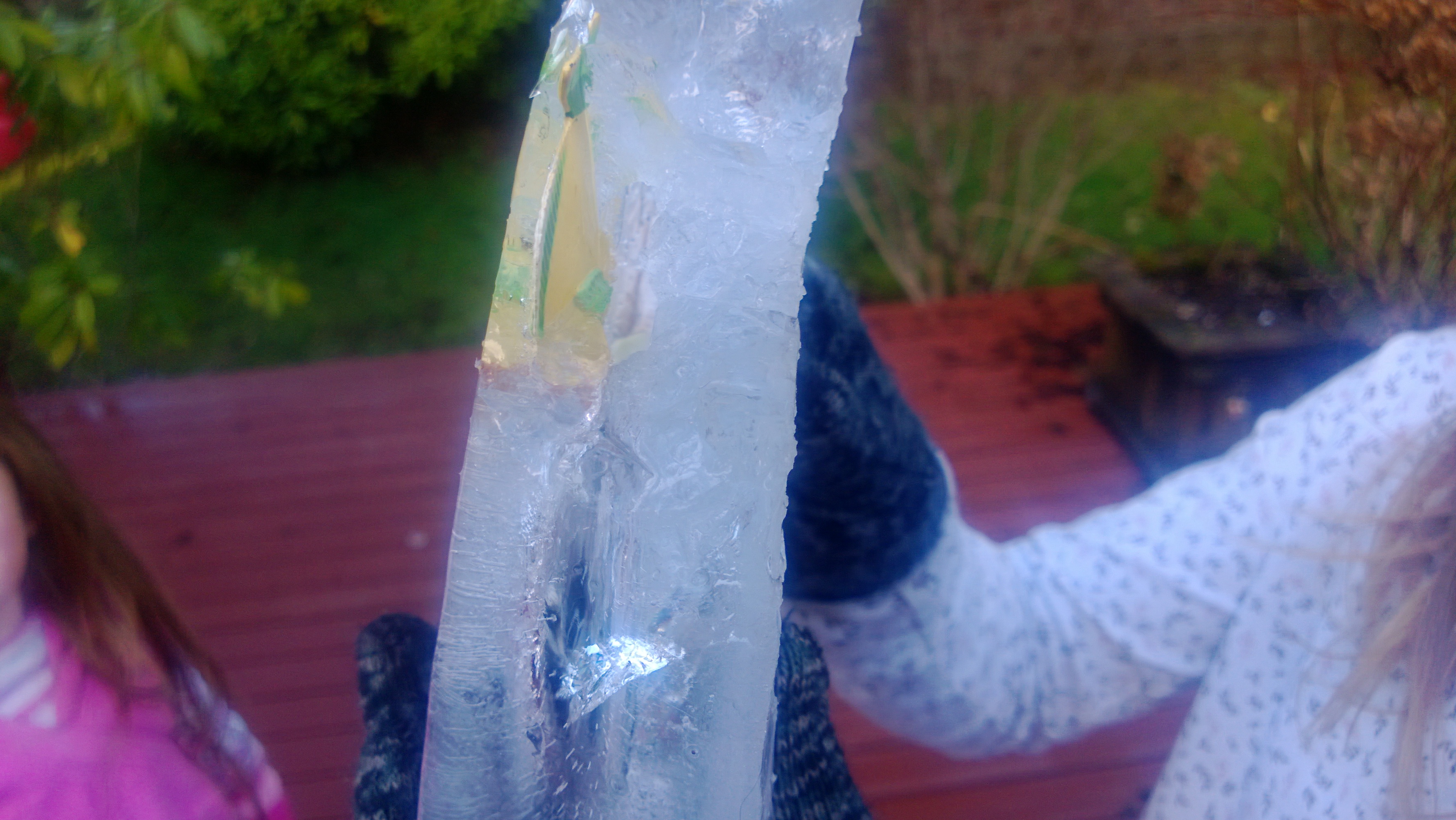
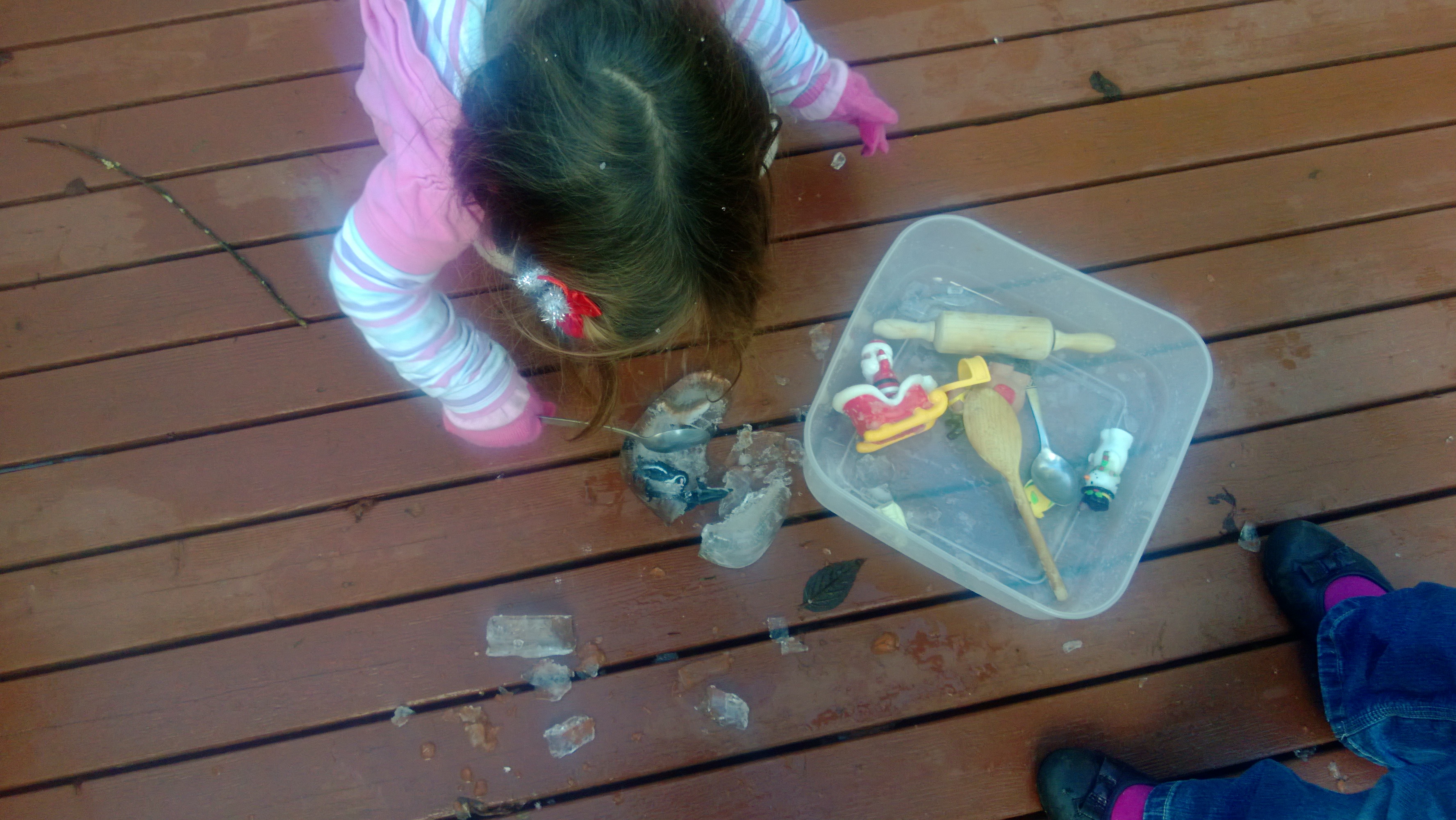
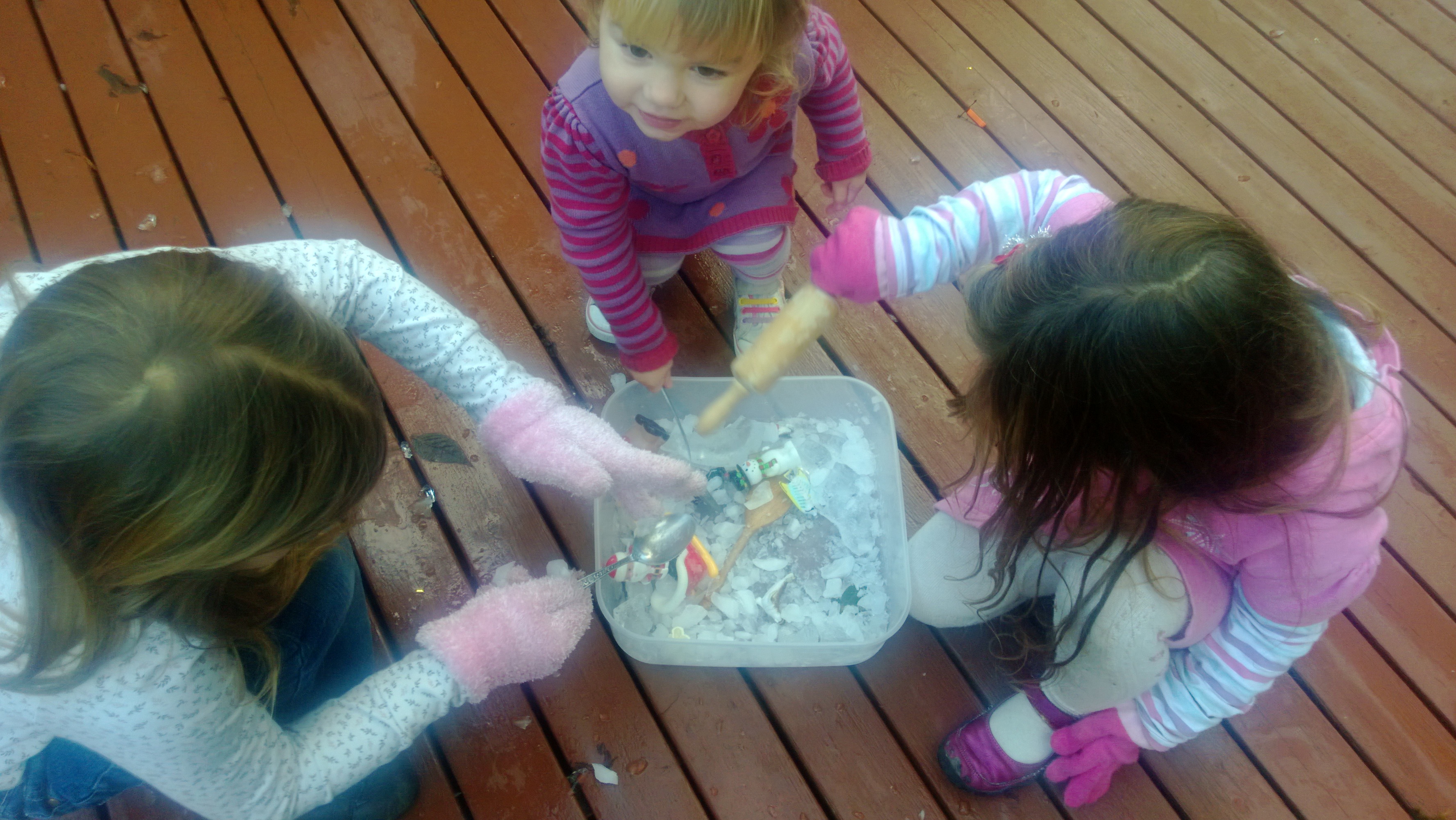
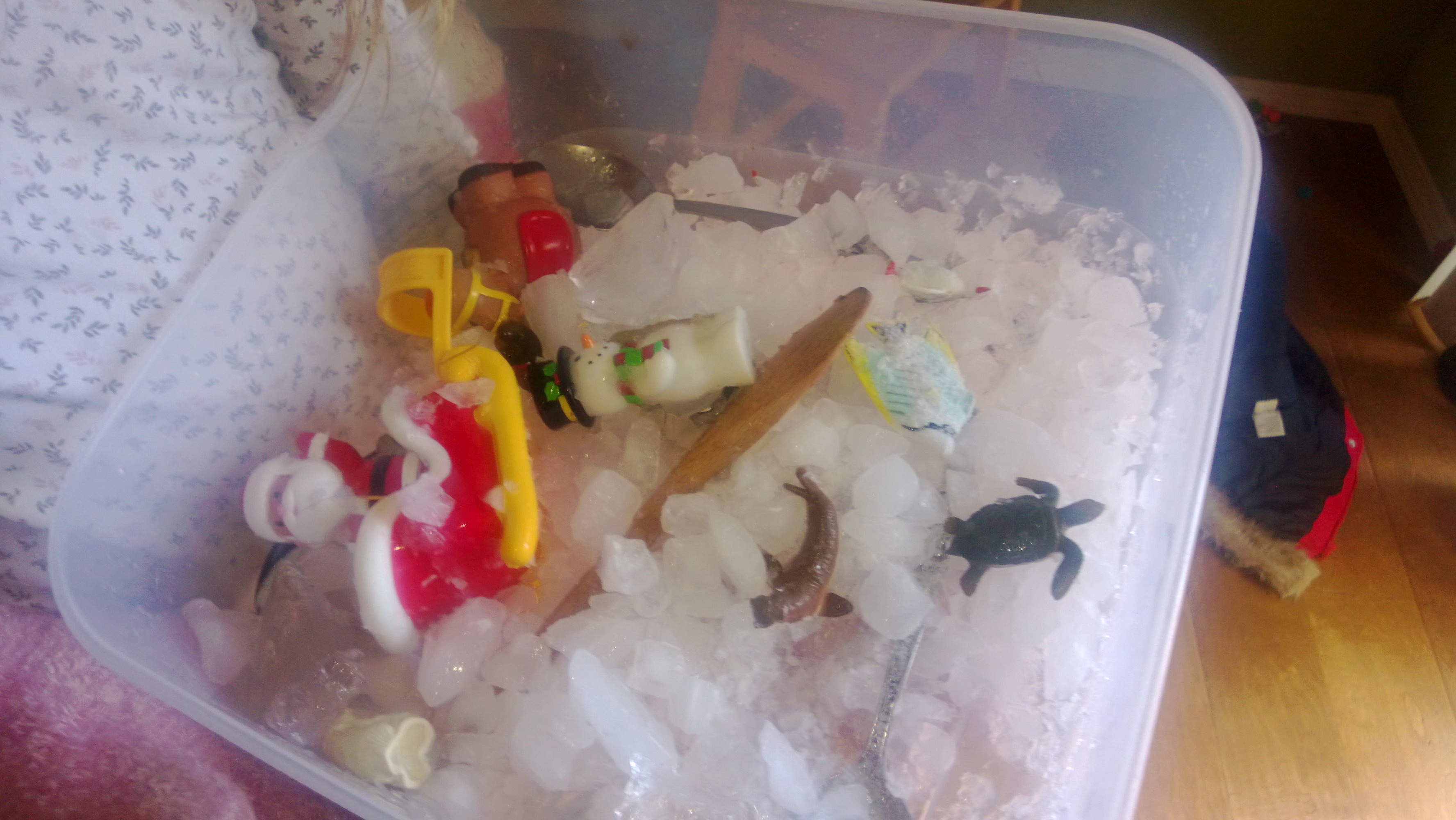
How did you get them in there? We need something to bash them out – let’s try a spoon. Look, I broke a piece. The fish is coming out. I made a hole – grab the fish. Help it’s sticking to my hand, what do I do now. Can you pull it off? Look, I broke it in half – I can see a penguin. Ice mummy! I love ice. Bash, bash , bash. We’ve found all the animals, can we have more ice? We added crushed ice from the ice machine on the fridge.
This is a great activity for water trays in pre-school settings but works even better outside, if you are in a cold climate set up a water tray outside and let nature do its work.
Other Ideas and Questions to ask Children
Add colour to the ice using food colouring or bath colours. Using a dark colour so the children have to guess what is hidden in the ice.
Put a small amount of warm water into the tray. Add the coloured ice. What happens to the water? What happens to the ice.
Sprinkle glitter into water – leave it in the freezer or outside overnight. What happens when it melts?
You are not allowed to bash the ice, how else could you get the animals out?
Can you find any more ice in the garden?
What would happen if we froze a leaf or berries? If we hang them from a tree how long will they take to melt? What happens when they are melting?
The ice sticks to your gloves, what else will it stick to? Why does it only stick to some things?
With limited toys and great weather,we have been playing with natural materials and everyday objects. The children and I created a mud kitchen in the garden.
What is a Mud Kitchen?
A mud kitchen is an outdoor play kitchen for children to explore the properties of mud. In a similar way to my own mud pie and mud drink making as a child, ( I remember filling up small dirt holes with water and tasting the mixture with a stick) the children mixed the mud in a kitchen made of recycled materials. You could use a ready-made play kitchen but it isn’t necessary.
How to Build a Mud Kitchen
We made ours using various items we found around the house. We made a shelf using bricks and a piece of wood, an oven from a cardboard box and collected containers from our recycling. An old cupboard, table or sink would work equally well and I’m sure that when our stuff arrives from the UK we will find things to add.
Collect old kitchen utensils, pans and bowls from charity shops, friends or car boot sales. We put a sign on our fence next to the mud kitchen requesting items – no-one has donated yet but the children check for new additions every day. It is a good idea to place the mud kitchen near a fence or tree where the utensils can be hung – this way the kitchen will be nicely self-contained and easy to tidy.
The Benefits of Playing in the Mud
Children learn in a variety of ways; many children (particularly boys) prefer to play outdoors. In most pre-schools I have visited in the UK indoor classrooms exist alongside outdoor classrooms. Children who may not choose imaginative play indoors may be attracted to the mud kitchen. The mud kitchen is rich in learning experiences including learning the rules of good hygiene, exploring the properties of mud, manipulating mud and tools with their fingers, measuring, imaginative play building on the children’s own experiences, finding out about bugs, problem solving and co-operation and sharing. Involve the children in the creation of the mud kitchen, they will come up with many ideas that adults may not have considered.
Health Benefits
To add weight to my argument I read an excellent post this week about the health benefits of playing in mud. The Children of the 90’s project at the University of Bristol recently reported a number of benefits for children who spend time outdoors. One study suggests that children who spend more time outdoors are less likely to develop short- sightedness and they also found that good levels of Vitamin D was linked to better health including mental health. Another study from Bristol University in 2007 suggests that friendly bacteria contained in soil, activates neurons responsible for producing the brain chemical serotonin. A lack of serotonin is thought to cause depression; playing with mud is therefore likely to improve children’s mental health.
Our Mud Kitchen
We built our mud kitchen during August. In the UK this is often the wettest month of the year but here in Washington State we have had a perfectly dry month. This was probably not the best time to build a mud kitchen but as the seasons change the play will develop.
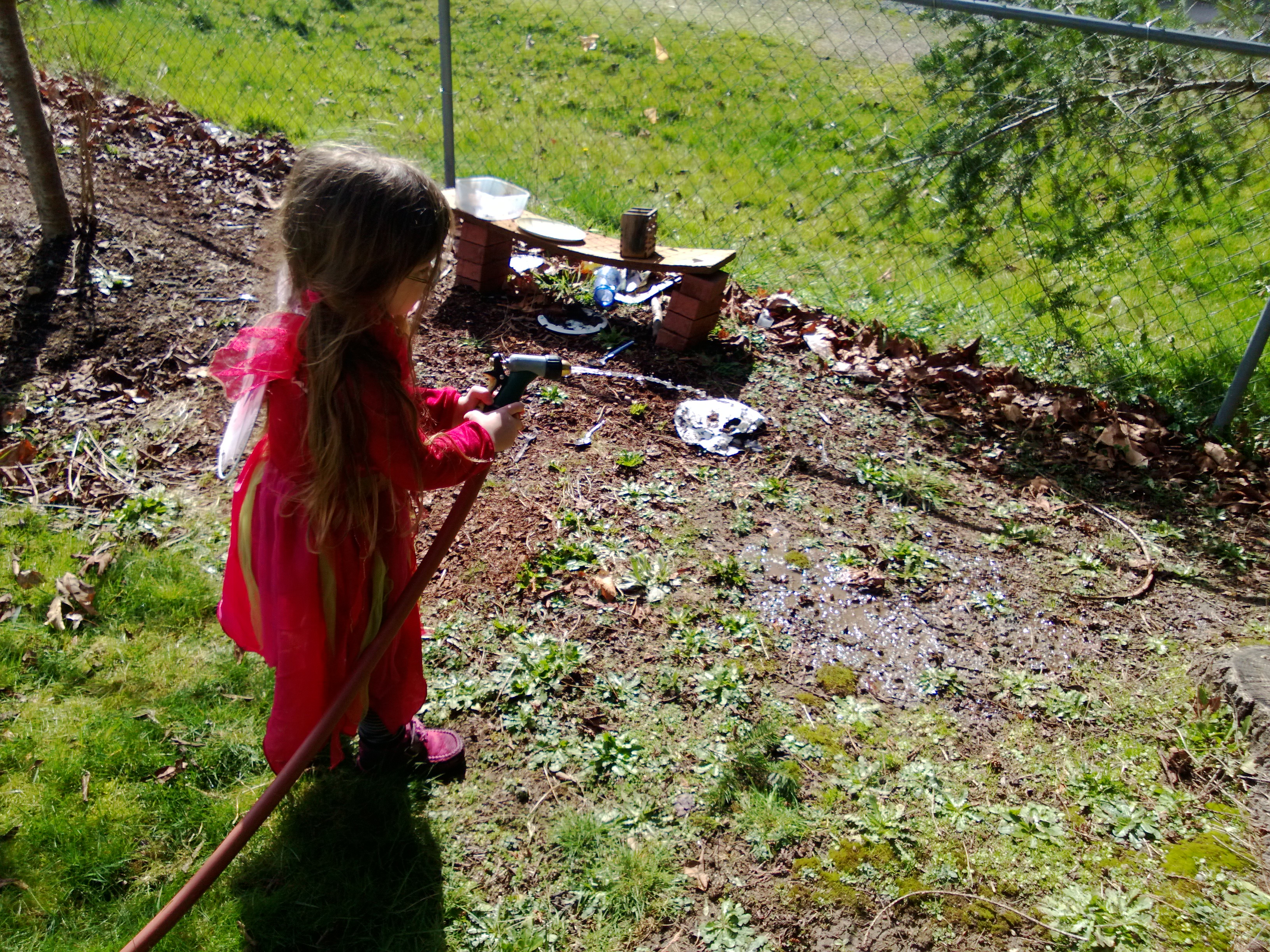
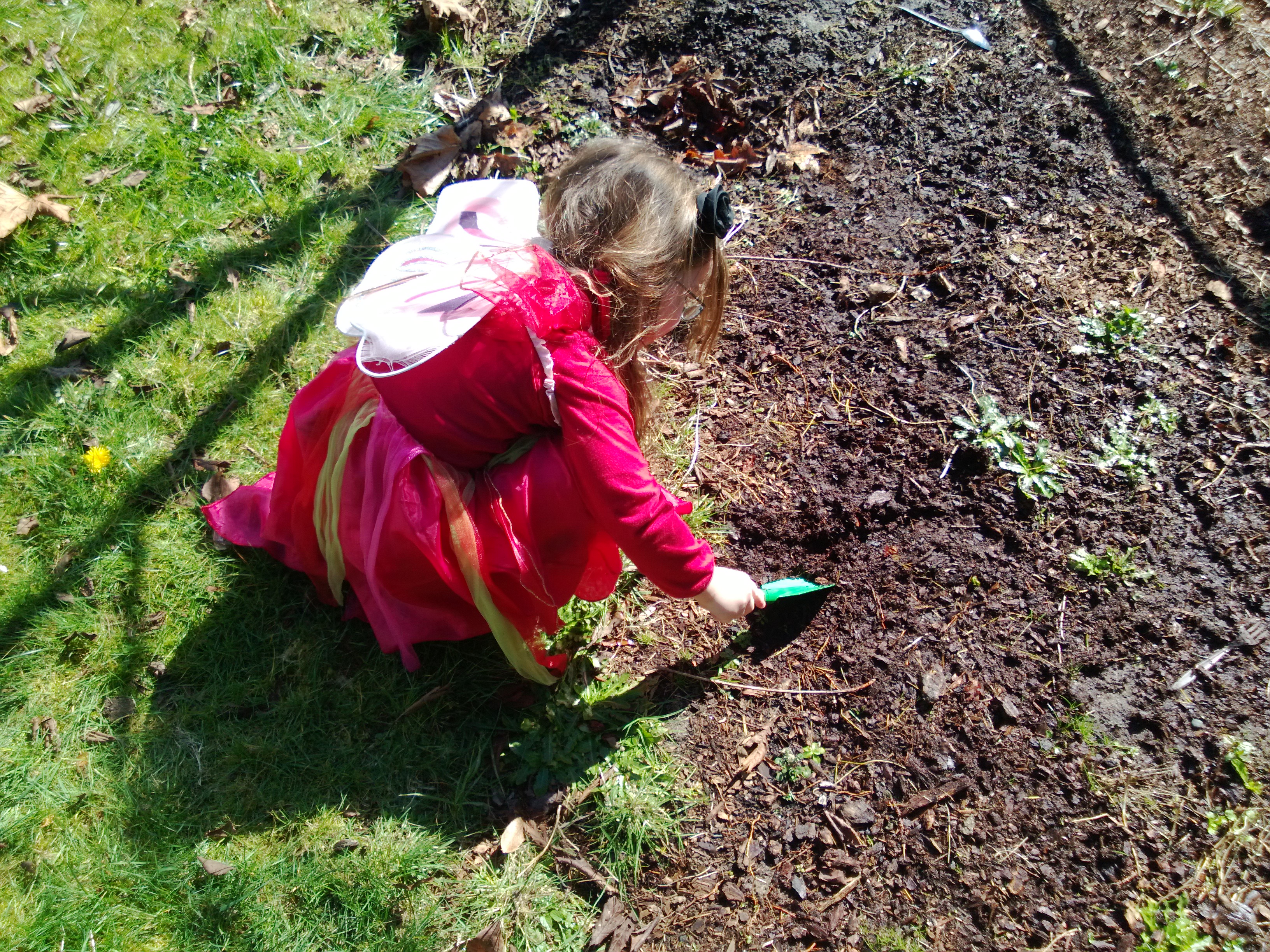
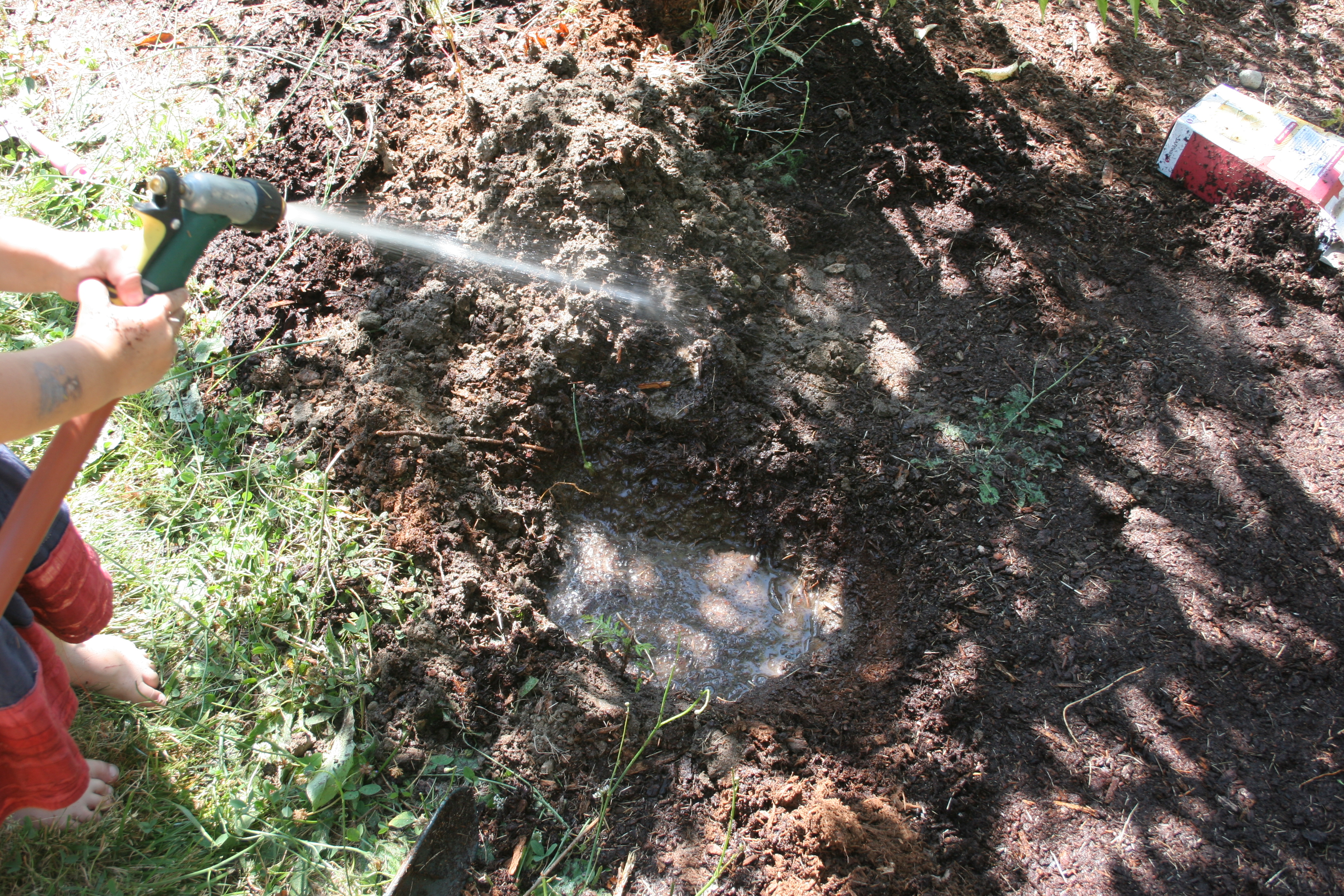
We built the kitchen in a patch of garden where there was plenty of soil but soon discovered that the top layer consisted of wood chippings from the surrounding Pine trees. This was great for sprinkling and pouring but moulding cakes and pies had limited success. I suggested we dig a hole to reach the true soil under the surface, we used the hose to wet it. Filling the hole with water attracted a flying insect that we hadn’t encountered before, the girls were apprehensive but interested in watching the creature.
We are making coffee powder
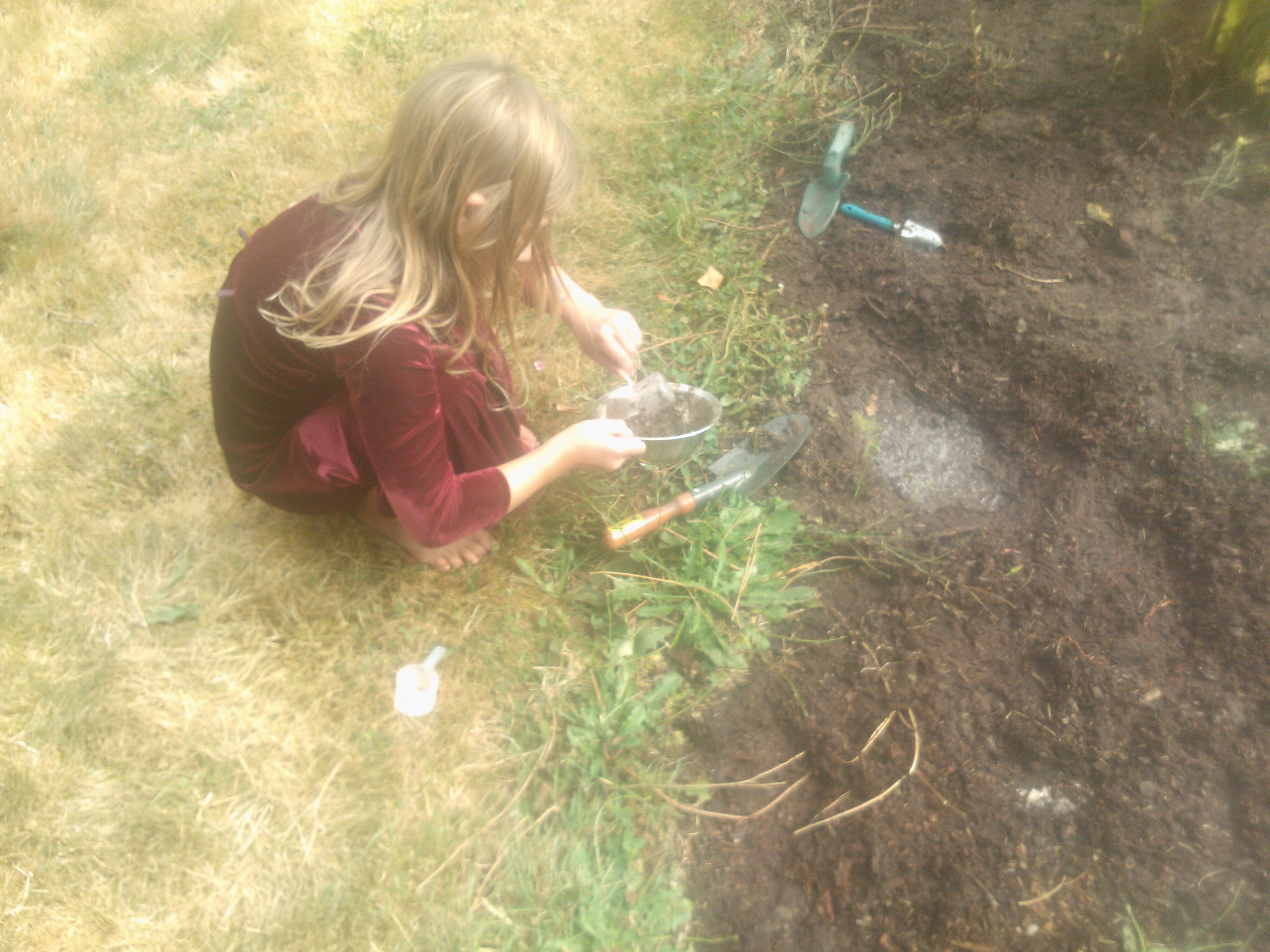
My 8-year-old who loves the idea of creating experiments or being an inventor, mixed the mud to make coffee.
I suggested she put it into the empty coffee container but she explained that it started wet and took at least a day to drain off before it could be transferred to the coffee container.
‘It takes at least a day to drain off’
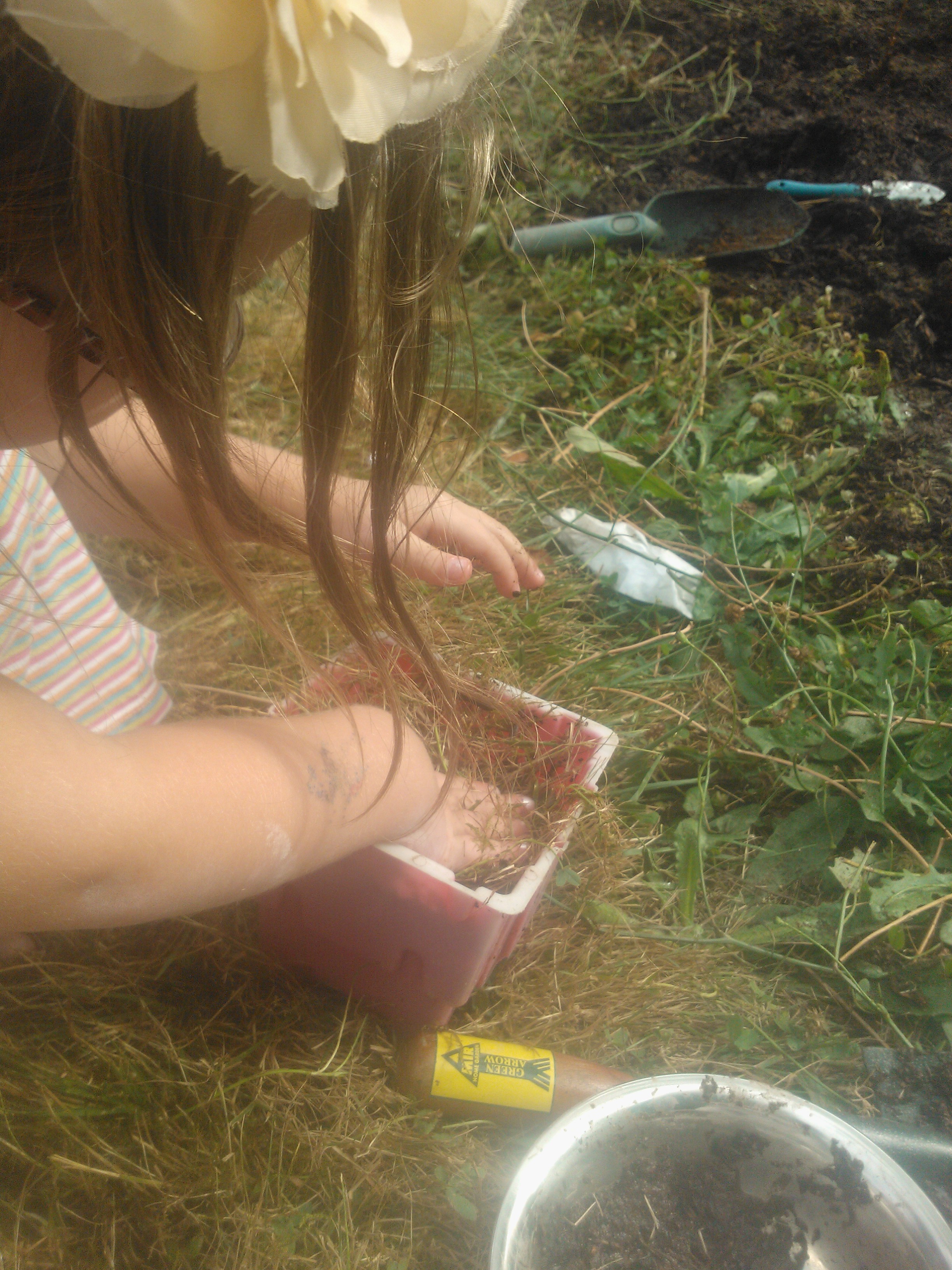
My 3-year-old preferred to make a cake. She sprinkled grass on the top.
I’m looking forward to the change in the weather and seeing how the play develops as the mud changes.
We had a lovely time today at Glenny Woods organised by our local Children’s Centre. Glenny Woods is a wonderful woodland centre owned by the Scouts Movement. They have an indoor room with a veranda for when it is wet, an area for lighting fires with bench seating, adventure playground equipment and facilities for making dens.
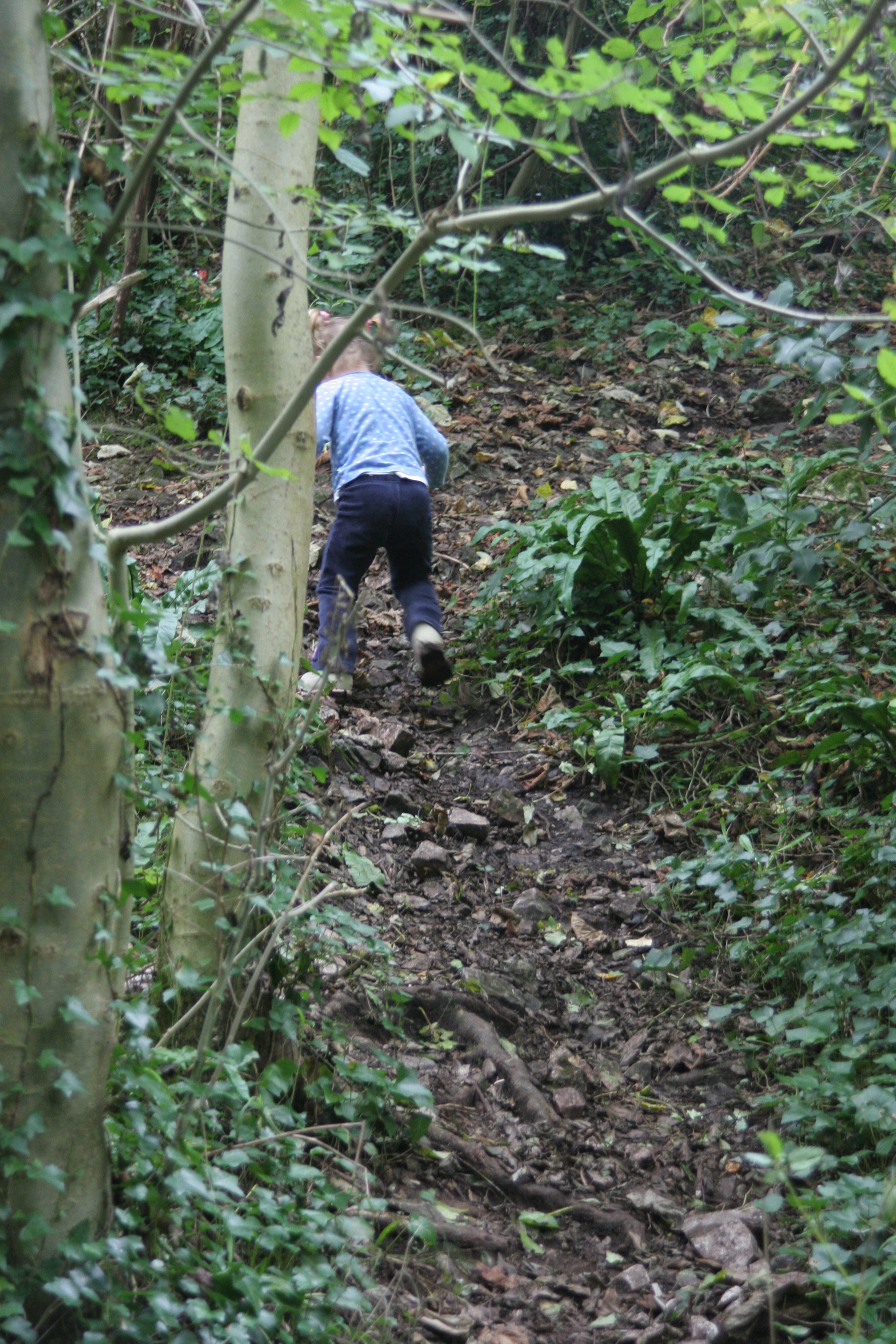
However, even if your nearest wood doesn’t have these added facilities there are lots of simple fun things that you can do with children. Try not to rush children on to looking at the next thing. They may want to spend half an hour looking at a clump of moss or sliding down a muddy bank. If you really want your children to appreciate and explore nature then allow lots of time and move at their pace (however frustrating this might be).
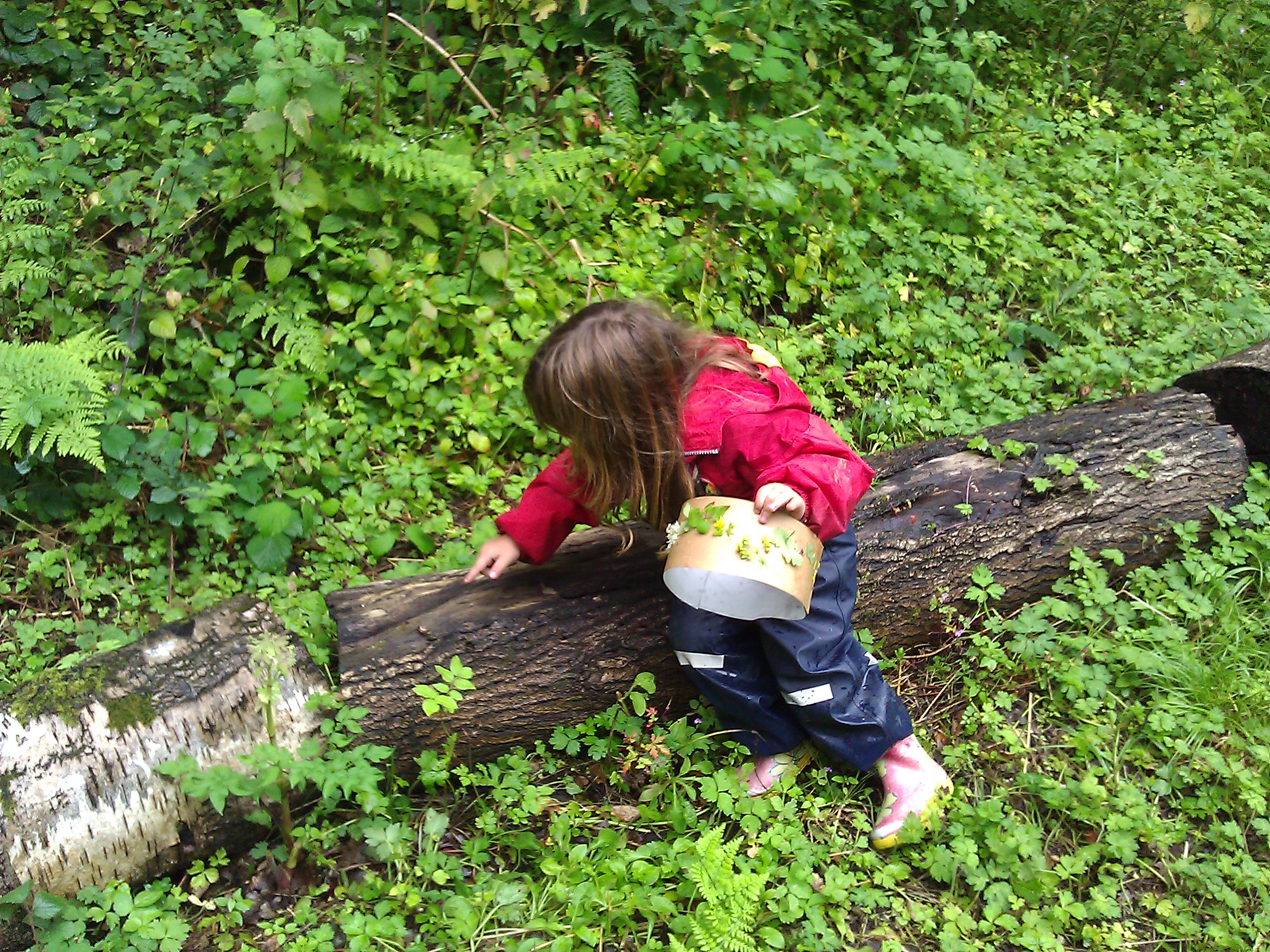
1. Give children a piece of cardboard with double sided sticky tape on and get them to make a hat collecting natural things. This could be free choice or maybe have a colour theme. You could ask children to create a pattern eg. large and small things or find specific items to make their hat.
2. Put double sided sticky tape around the top of your child’s wellies and ask them to collect items of interest and stick them to their wellies.
3. Take magnifiers or bug jars and look for creatures. Take photographs so that you can identify them when you get home.
Look Mummy I found a snail
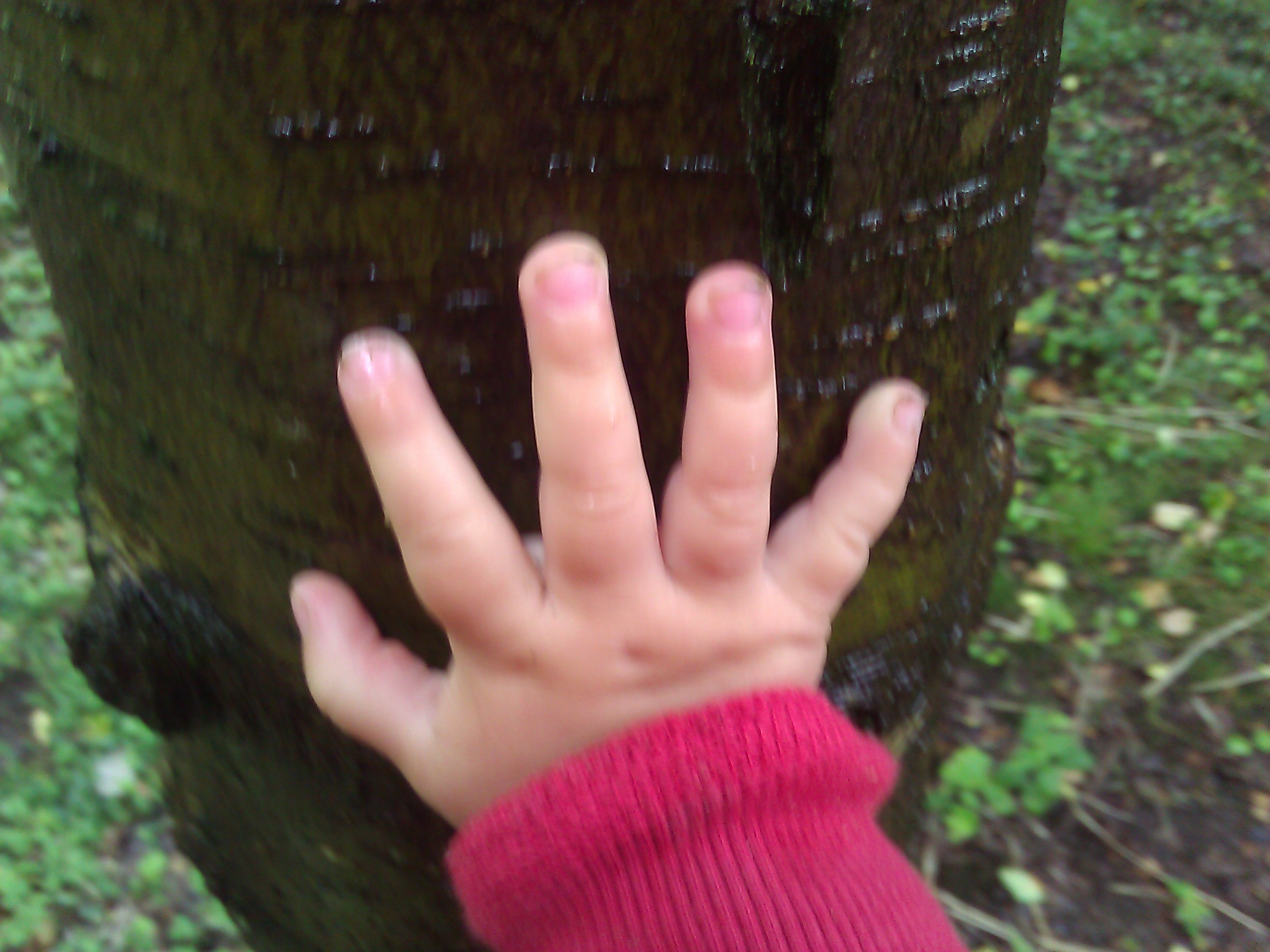
4. Young children will enjoy exploring the textures of things, moss, long grass, tree trunks, mud. Give children a textural treasure hunt – find things that are soft, smooth, hard, spiky, slimy, cold, warm, rough etc. Make a feely box containing some of the textured things or use a blindfold and ask children to describe what they are touching.
5. Give children a piece of string and ask them to find and attach the following items: something natural, something manmade, something colourful, something heavy and something with an interesting shape. Hang a line of string between 2 trees and hang the completed pieces from it to make a natural work of art.
6. Build a fire, toast marshmallows on whittled sticks or bake potatoes in the bottom of the fire.
7. Go on a treasure hunt
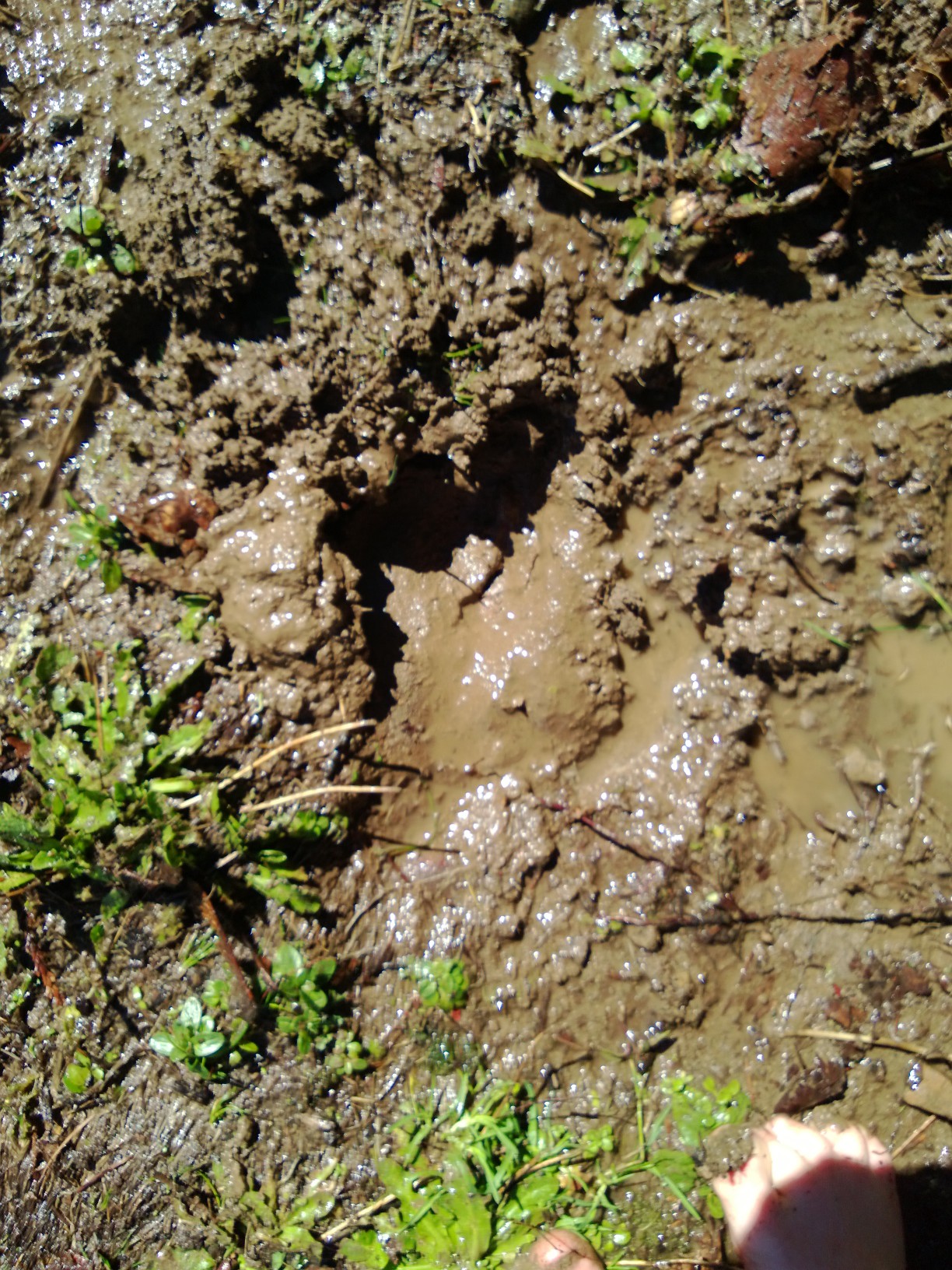
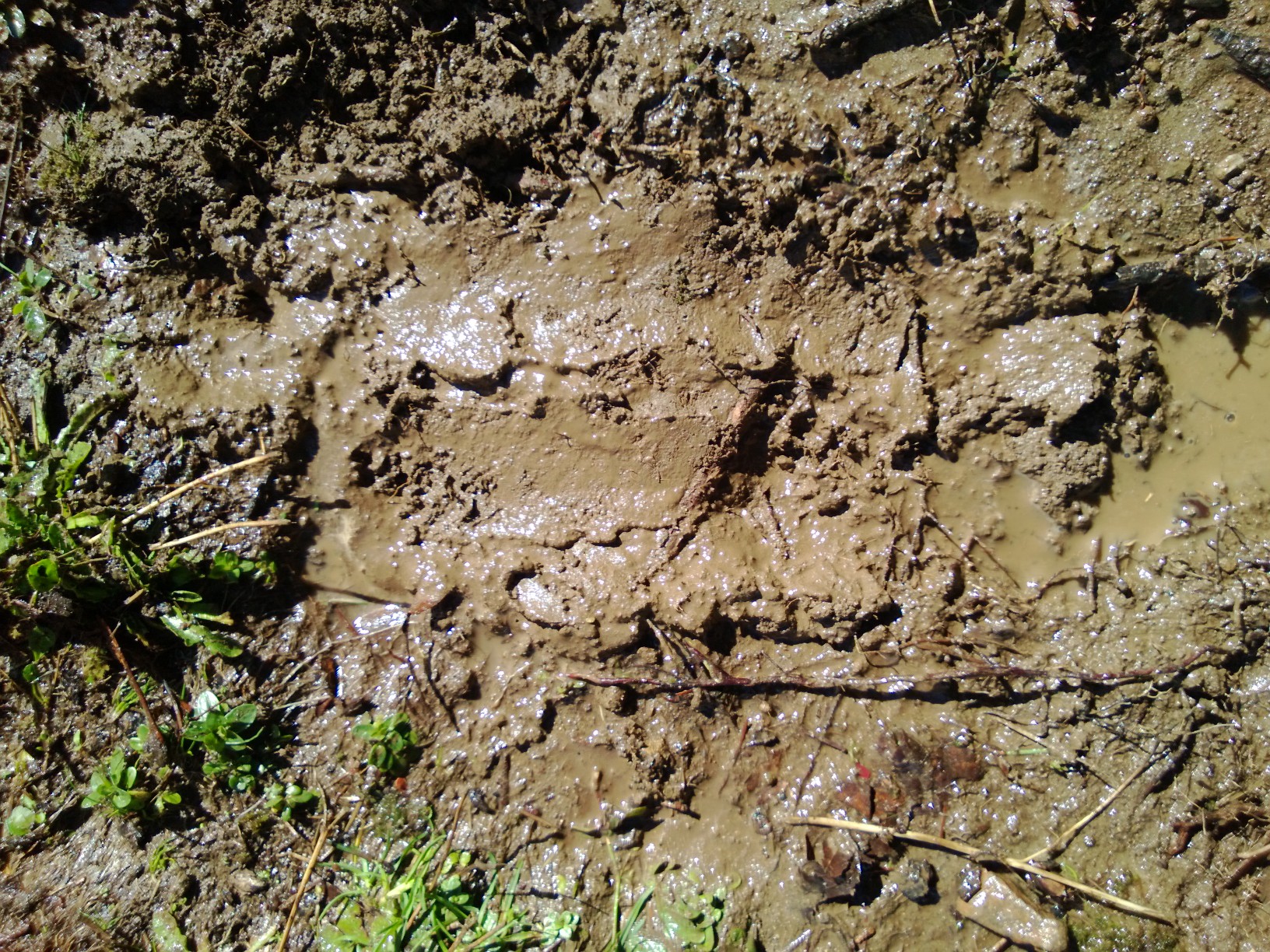
8. Play in the mud. Take tools and to see what you might find or stamp and feel the texture of wet gooey mud. Find a stick and draw or write in the wet mud, or take large sheets of paper and use mud to paint with – use fingers or sticks to apply the mud.
9. Collect natural materials to make a picture or sculpture . Make a frame from sticks or stones and ask the children to make a picture inside it using what they have collected. For the youngest children let them arrange leaves into a nest or sticks or stones into a pattern.
10. Build a den. Use sticks and build a den in the style of Eeyore’s house.
You might also want to check out some of these ideas
I was recently asked by Netmums to suggest some of my favourite free or low-cost ideas for keeping children entertained in the summer holidays. Below are a small selection.
Things for Keeping Active
We particularly like woodland walks where the kids like to disappear into the woods to explore and find things, play hide and seek , build dens or run away from monsters. Blaise castle woods are a big favourite because we can hide in the caves or follow the trail to the castle. My eldest called our local woods the hundred acre wood and spent hours role playing various Winnie the Pooh scenarios. The Woodland Trust have some great free downloadable resources with ideas for playing in the woods, Summer activities and free things to do with kids.
My kids favourite active pursuit is jumping on the trampoline.
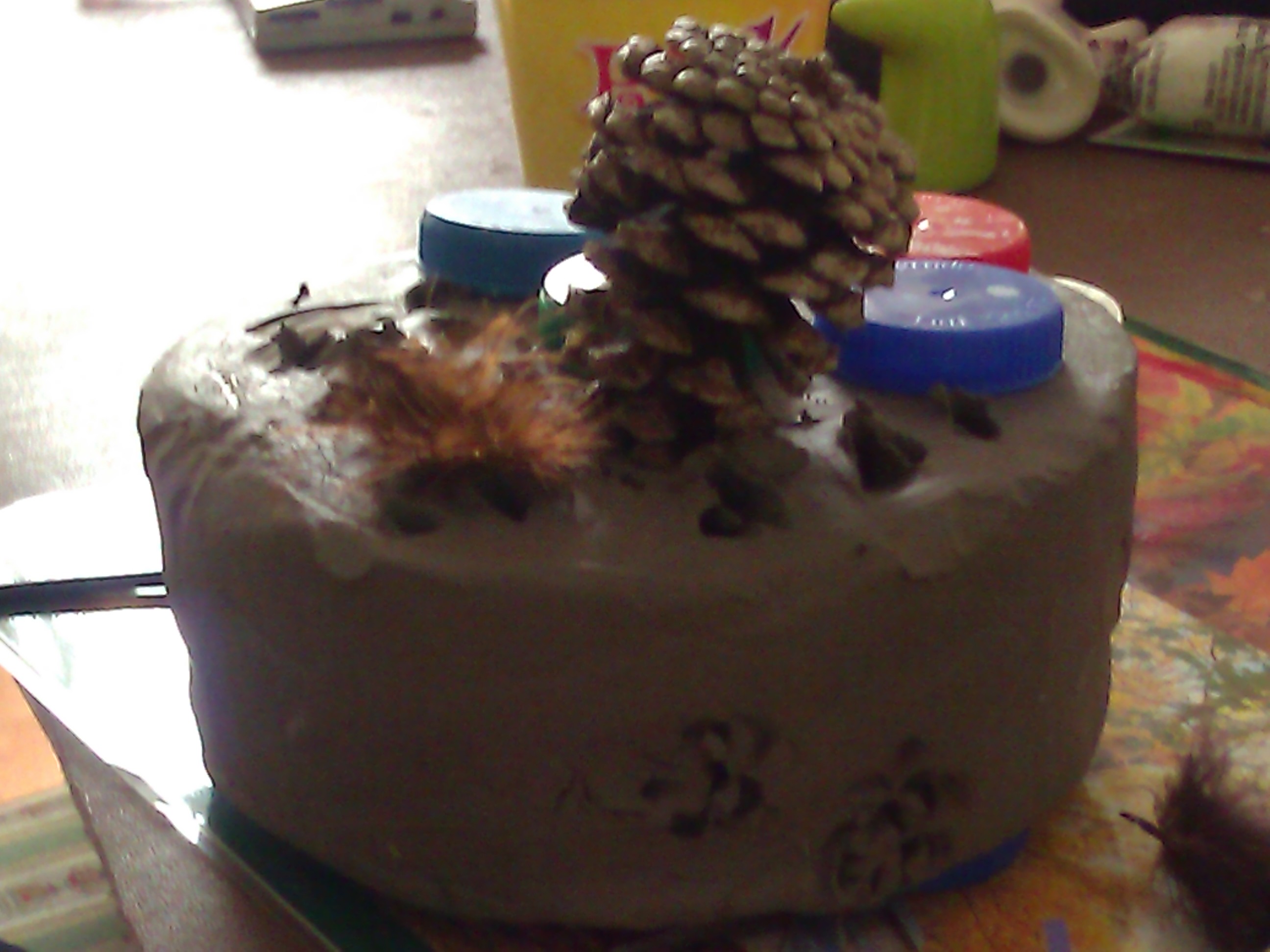
Give children a large piece of clay, for the younger children the bigger the better. Make it wet and squidgy and enjoy feeling the texture. Give them things to put in it, we use cocktail sticks, bottle tops, seeds, feathers, pebbles and shells. Older children can be taught to model clay around wire or make a flat tile with a picture on it.
The best summer activity I had as a child was with an empty large cardboard box, we slid on it and built things with it and spent the whole 6 weeks playing with nothing else.
The best creative play comes from being outdoors with natural materials, in the woods, park, beach or even in the street. If your kids aren’t old enough or you’re not happy about them playing outside without adult supervision, take a group of children to an open space and sit at a distance from them so that they can develop their own play but you can still see them. My kids love digging, building dens, pretending to fish, making pretend dinner and many other scenarios.
Our local town has a flower show and the children love to enter the competitions, it gives them a sense of achievement and pride.
Give your kids pieces of material, old sheets, netting or even bin bags and get them to make clothes and have a fashion show – this was my favourite summer holiday game.
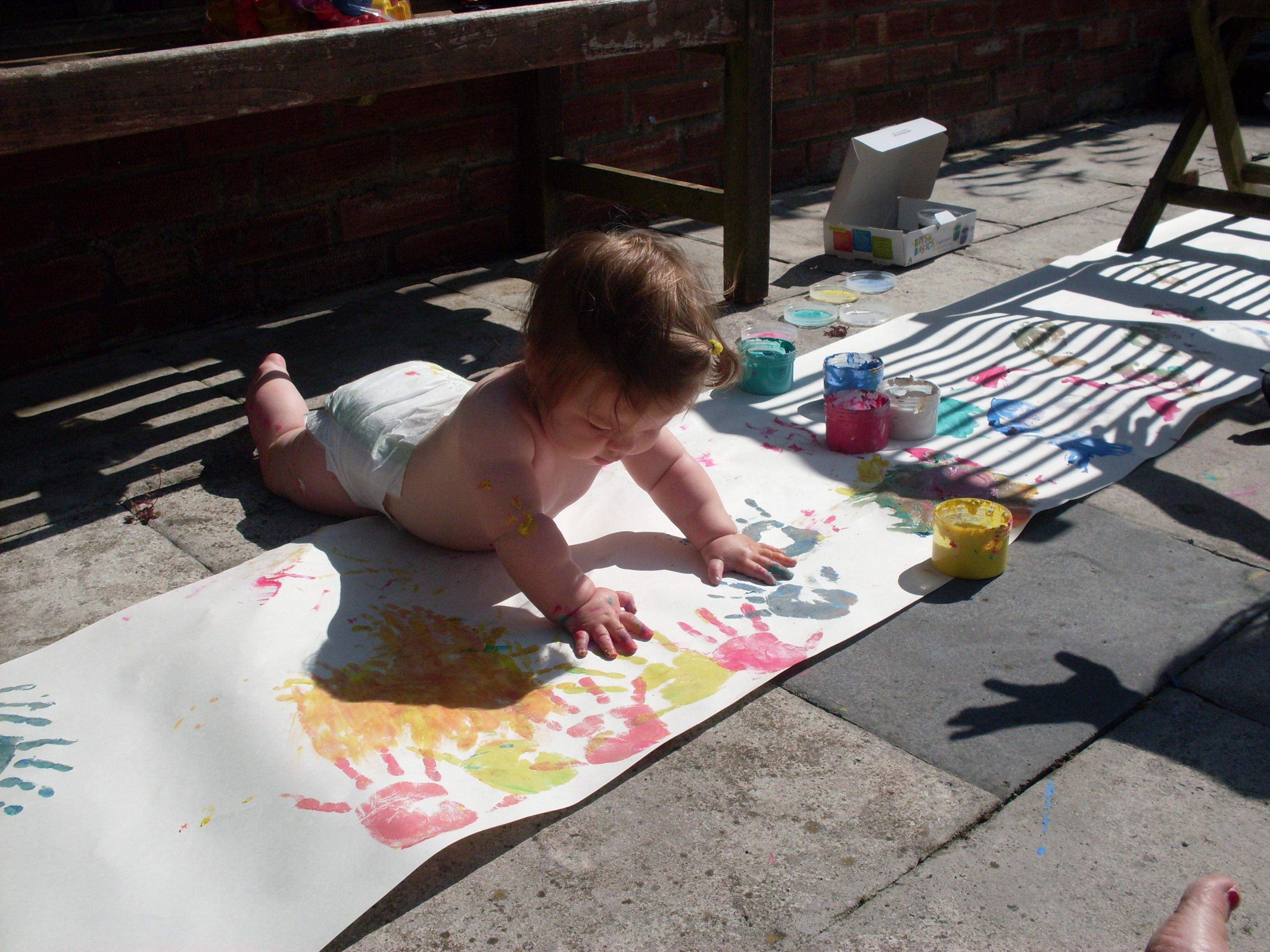
When its sunny it great to get a big roll of paper, spread it across the garden and let the kids paint , they can use hands, feet or whole bodies – great for babies too.
Children’s Festivals often give a number of inspirational ideas many are free or low cost.
We have been to some brilliant museum exhibitions and as museum entry is usually free it is a great day out. Our local museum has lots of activities for children of all ages to accompany the exhibits.
Go blackberry picking , picking your own fruit always leaves us inspired to come back and cook lots of yummy treats. In the US we pick huckleberries at the local park – they make delicious muffins.
Keep them Laughing
Local councils often provide fun/play days in local parks, ours involve entertainment, games, activities and crafts – the children have lots of laughs.
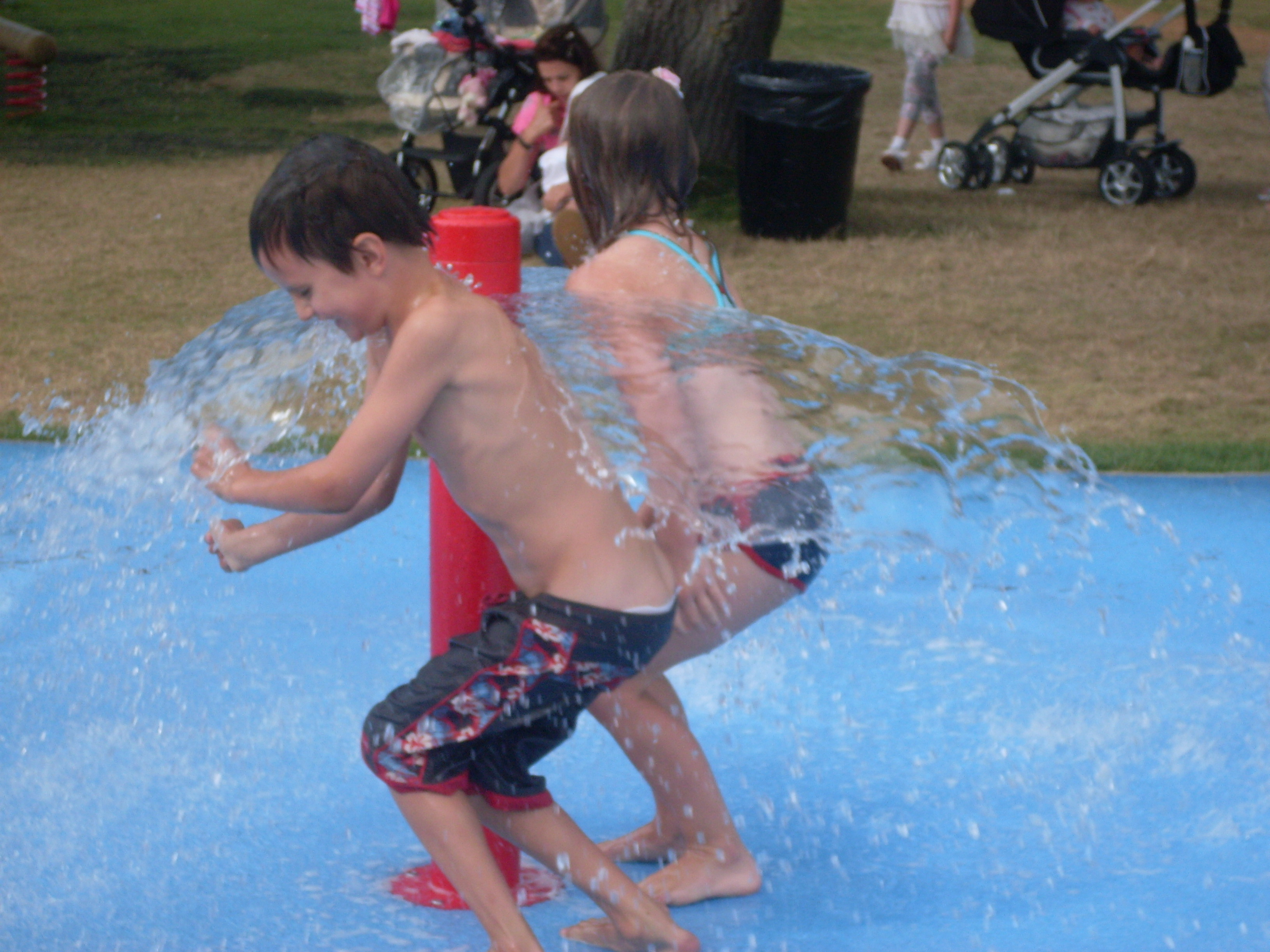
Get Wet – be it in a water park, paddling pool, swimming, with a hose pipe, playing with water bombs or splashing in puddles in the rain – have a water fight and you can’t help but laugh. Weston Super Mare has a fantastic water park opposite the sea front and splash parks are really common in the US. Check out these Seattle Splash Parks.
I think sometimes we plan too much for kids, give them some freedom to make their own play, give them the chance to be with their friends and they will come up with some great ideas of their own.
I’m so pleased that my eldest (almost 7) has finally started to play in the street with her friends. It is well known that if you ask adults about the most memorable and enjoyable times from their childhood they will almost always involve being out of doors, with friends and with no adults around. I can’t remember a time when I didn’t play out in the street, I certainly have clear memories of being 3 years old and doing so. When we moved from the city to a cul-de-sac before we had children, I hoped that we would find somewhere that our children could play in relative safety from traffic.
This has come at an opportune moment as I have just finished reading ‘Beware Dangerism’ by Gever Tulley, which discusses the irrational fears that we have about our children’s safety and how this makes them less able to deal with risks and challenges. Gever runs a school called Tinkering School which encourages children to build and take things apart using real tools. This reminded me of photographs that a colleague of mine shared on her return from visiting forest schools in Denmark. I saw pictures of under 5’s using sharp knives with great skill to whittle sticks. She talked of how one of the schools had been on the coast and the children were sent off without adult supervision onto the beach, with the only rule that they were to go no further than the edge of the water. They were called back hours later by a bell. This approach reminds me of the hours that I used to spend in the woods near our house as a child. We used to often pretend we had run away – the idea of being independent was always a thrill I’m sure that I am often looked upon as a bad mother. On holiday last summer another parent looked horrified as my 18 month old stood waiting to go down a big slide. I watched as her child looked worried about going down the smaller one and an adult stayed carefully by her side. I looked at the other parent and said ‘She’ll be fine , she does it all the time with her sister’ as she launched herself down the slide smiling and laughing. I often see parents holding their children on reins as they attempt to climb in playgrounds, as if they are afraid to let them try anything on their own. I once had an argument with a lady in a charity shop because I was letting my daughter touch china pots whilst I was next to her supervising. The lady very crossly asked her to stop and I asked her how my child was expected to learn to be careful with things if she wasn’t allowed to touch them under adult supervision. I want my children to try things with confidence and not to grow up cautious and timid, I never underestimate what they can do as long as they have clear safety rules.
Lenore Skenazy has a great blog that talks about kids and risk taking many daft restrictions on children


















 Right from the Start