Tag Archives: play

Child Initiated Play – Playing with Shaving Foam

‘Dad can I play with your shaving foam?’

Yes of course

*mum goes to fetch a tray.

Can we have some toys in it?

Yes of course, go and see what you can find.

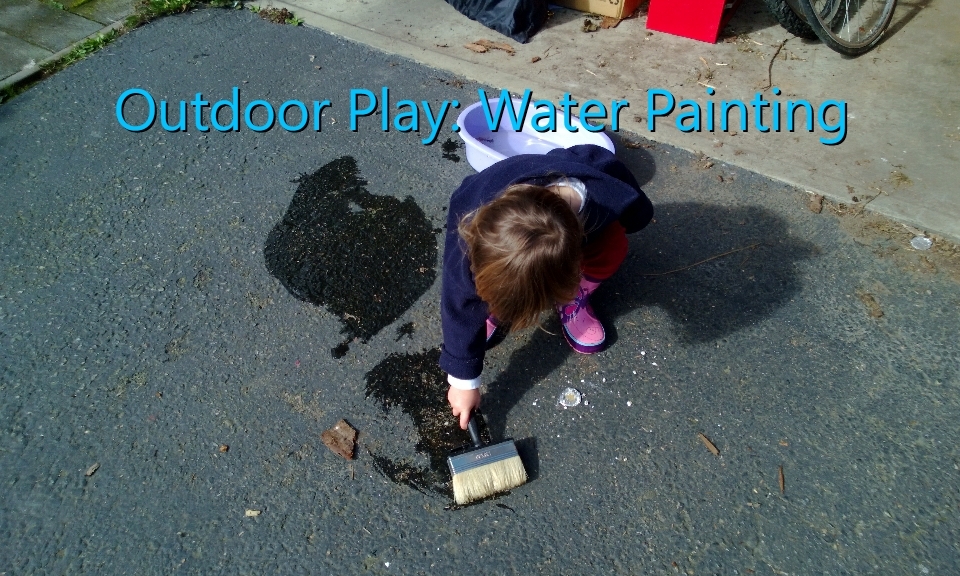
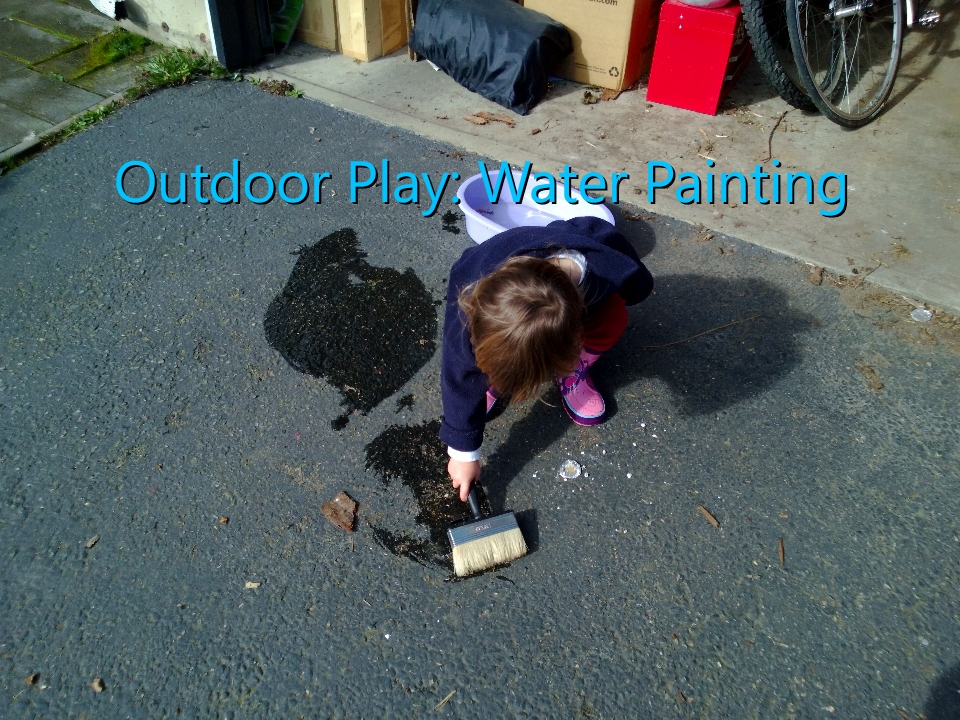
Outdoor Play:Water Painting

mark making toddlersGetting my children to put things away when they are finished is often a struggle but sometimes it has its advantages. A tub and paintbrush were left on the driveway. After a few rainy days it inevitably filled with water. My 2-year-old picked up the brush, dipped it in the tub and proceeded to paint the garage.

On a sunny day she returned to the tub but couldn’t find her paintbrush. I brought a selection from the garage and as she discovered the different lines the brushes made. Painting on a dry driveway was a very different experience. I later found a paint roller – below are her remarks as she played.

This slideshow requires JavaScript.

Steady Beat Action Rhymes

My Children are big fans of Beat Baby and love to play rhyming games. Some of these activities and the way they help with early literacy development are documented in a previous post about Musical Games . Recently we were reading Ros Bayley’s Action Raps and then continued to make up some of our own.

After a few rhymes with me leading the way, my 4-year-old decided to have a try.

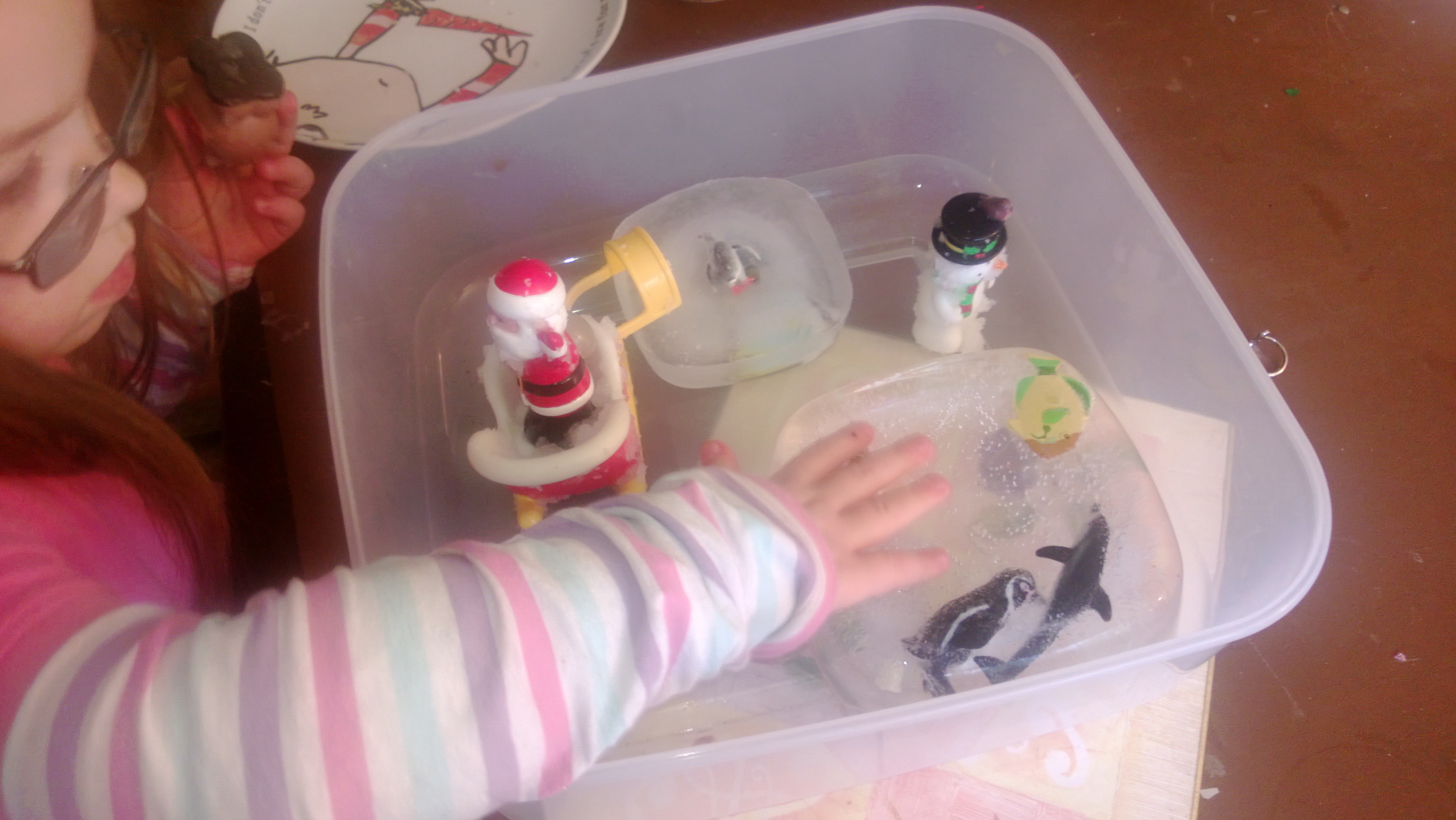
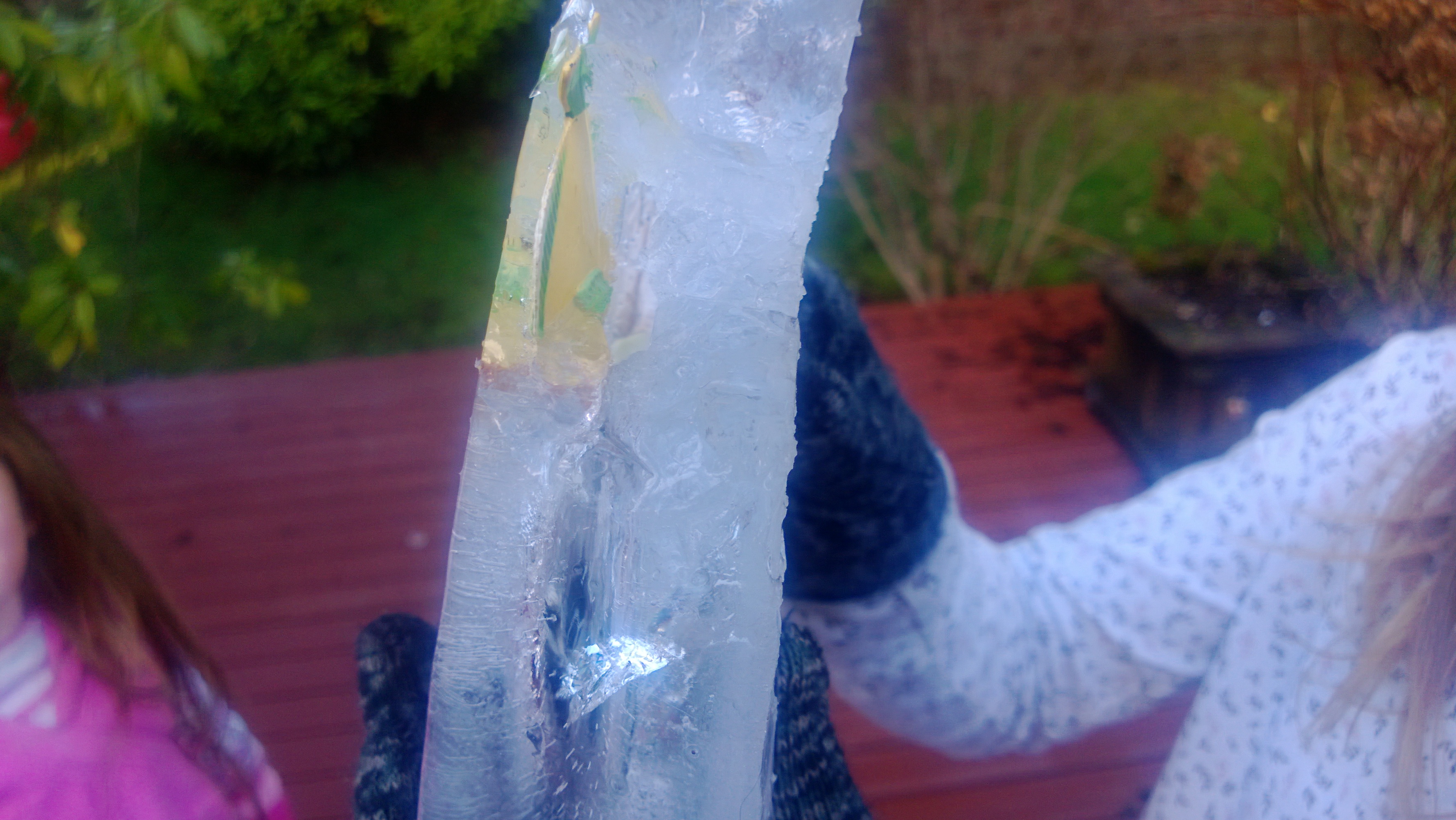
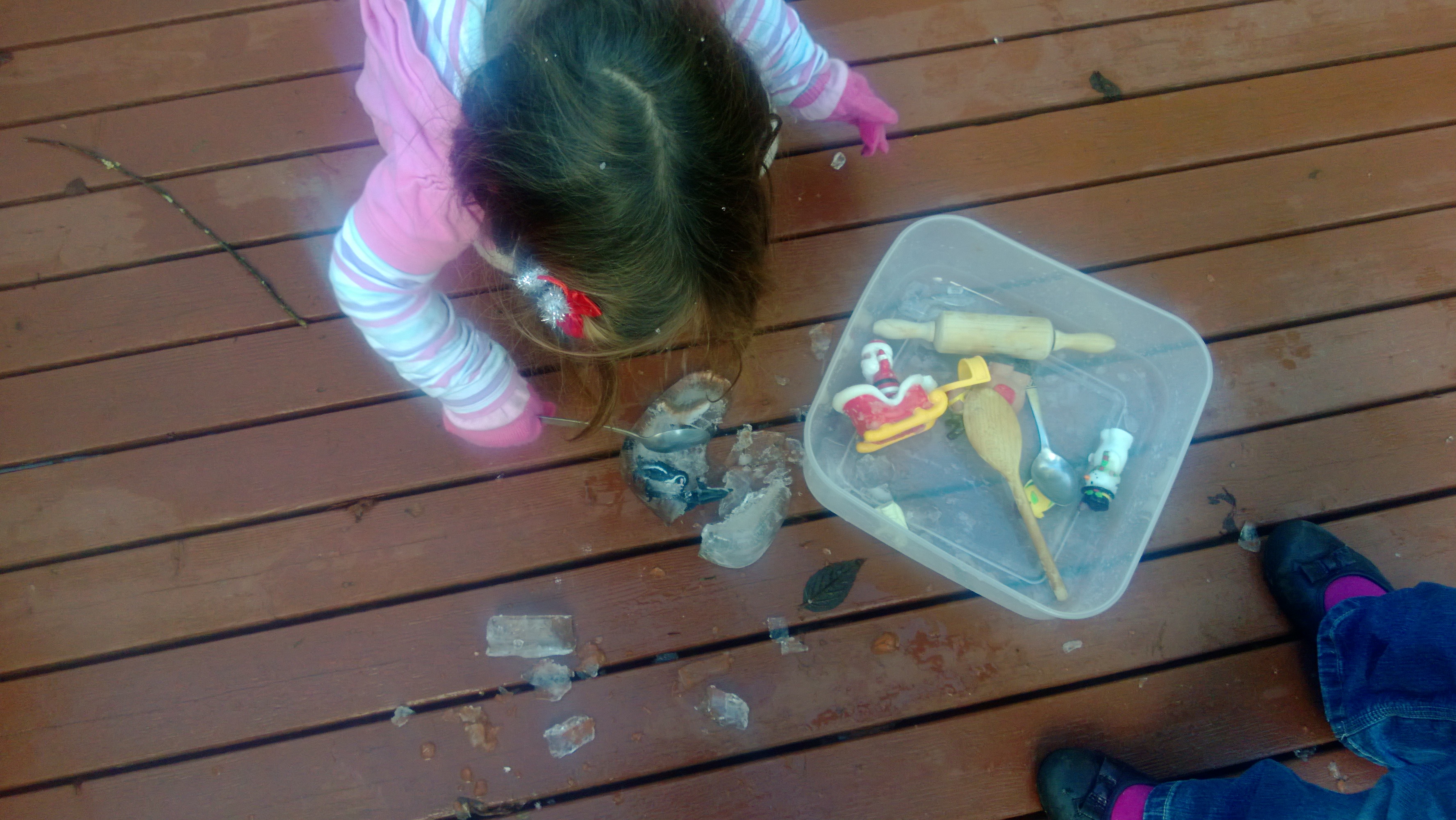
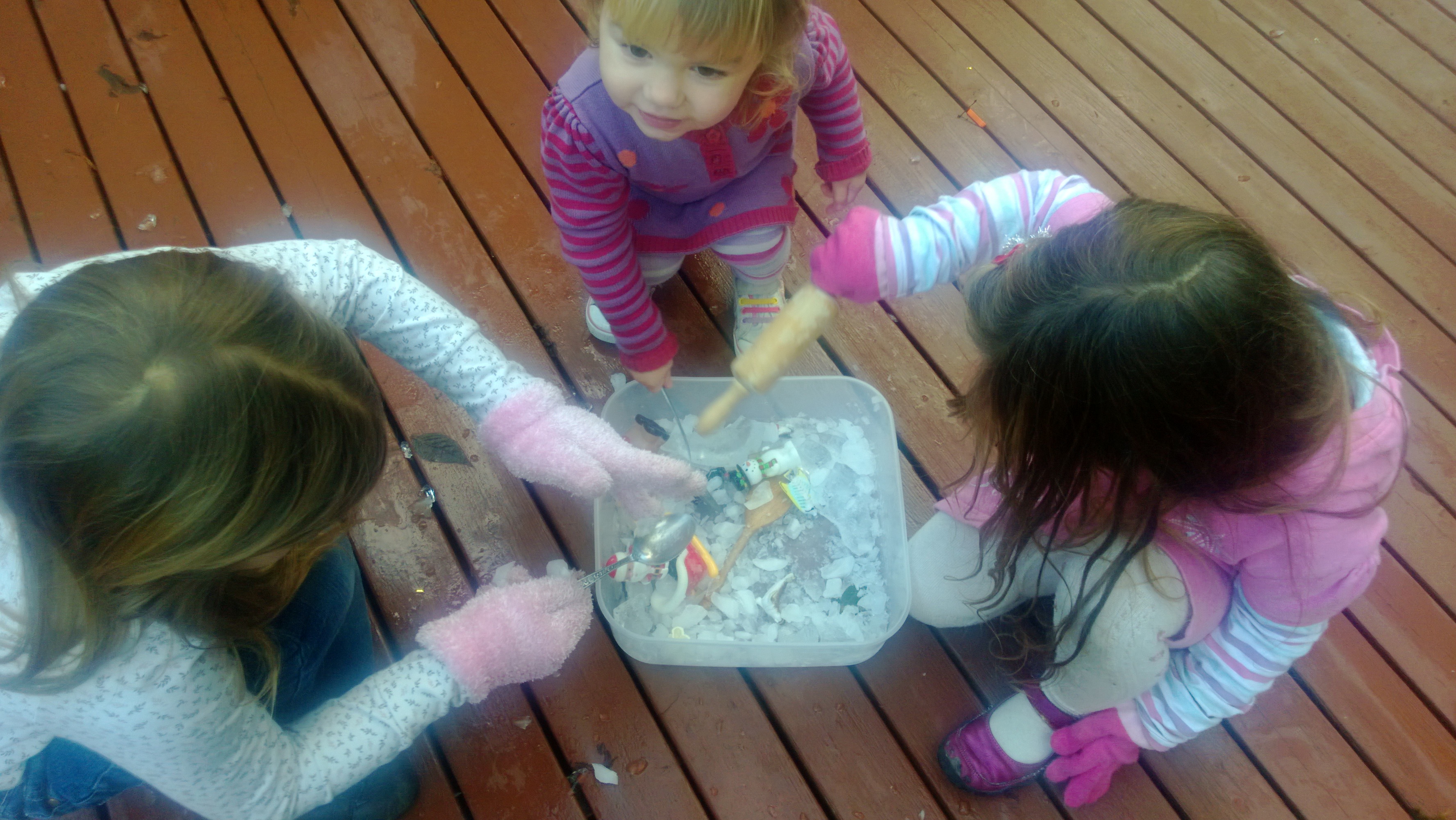
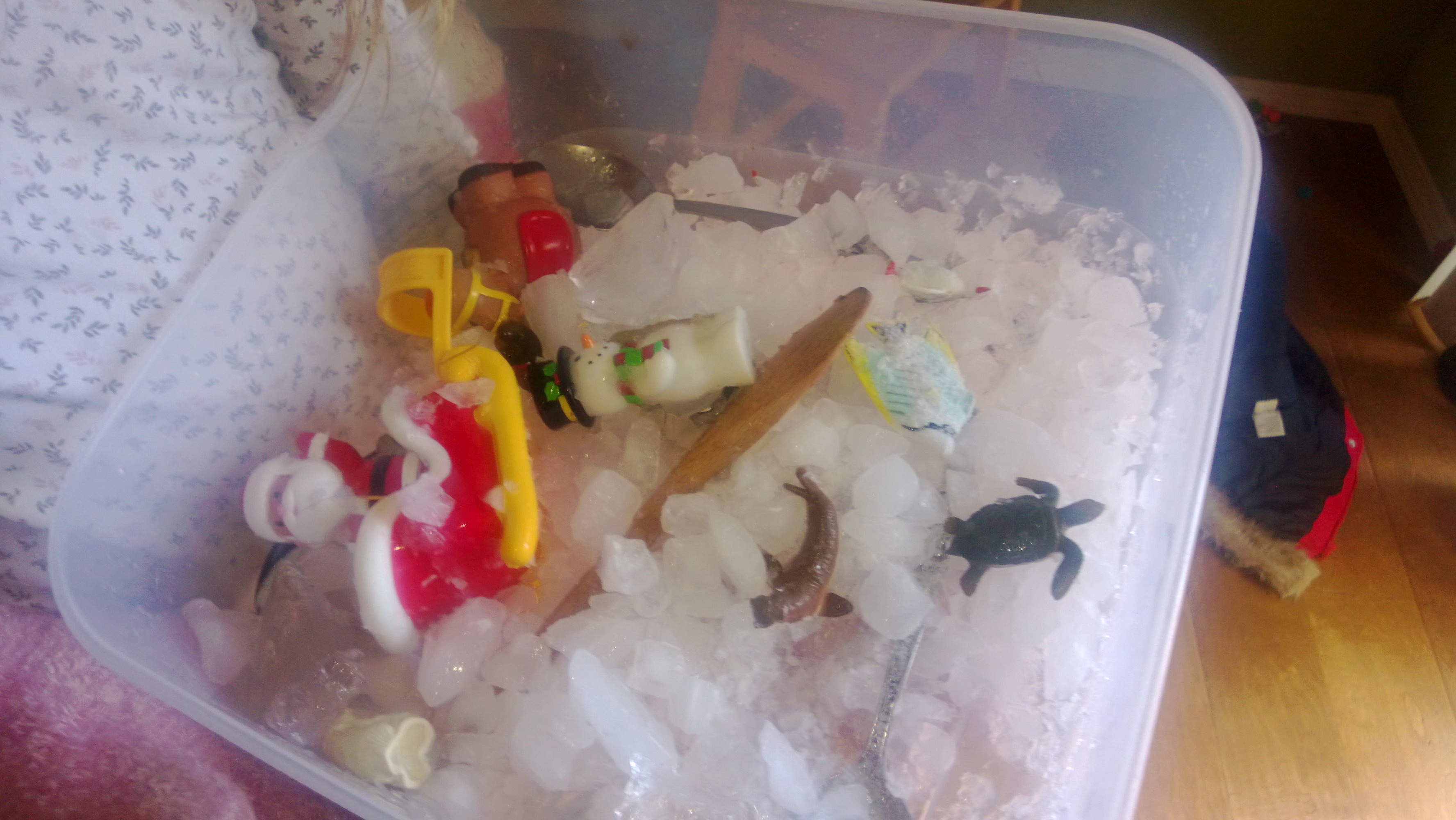
Play Activities with Ice

How did you get them in there?

We need something to bash them out - let's try a spoon.
We need something to bash them out – let’s try a spoon.

Look, I broke a piece. The fish is coming out.

I made a hole - grab the fish.
I made a hole – grab the fish.

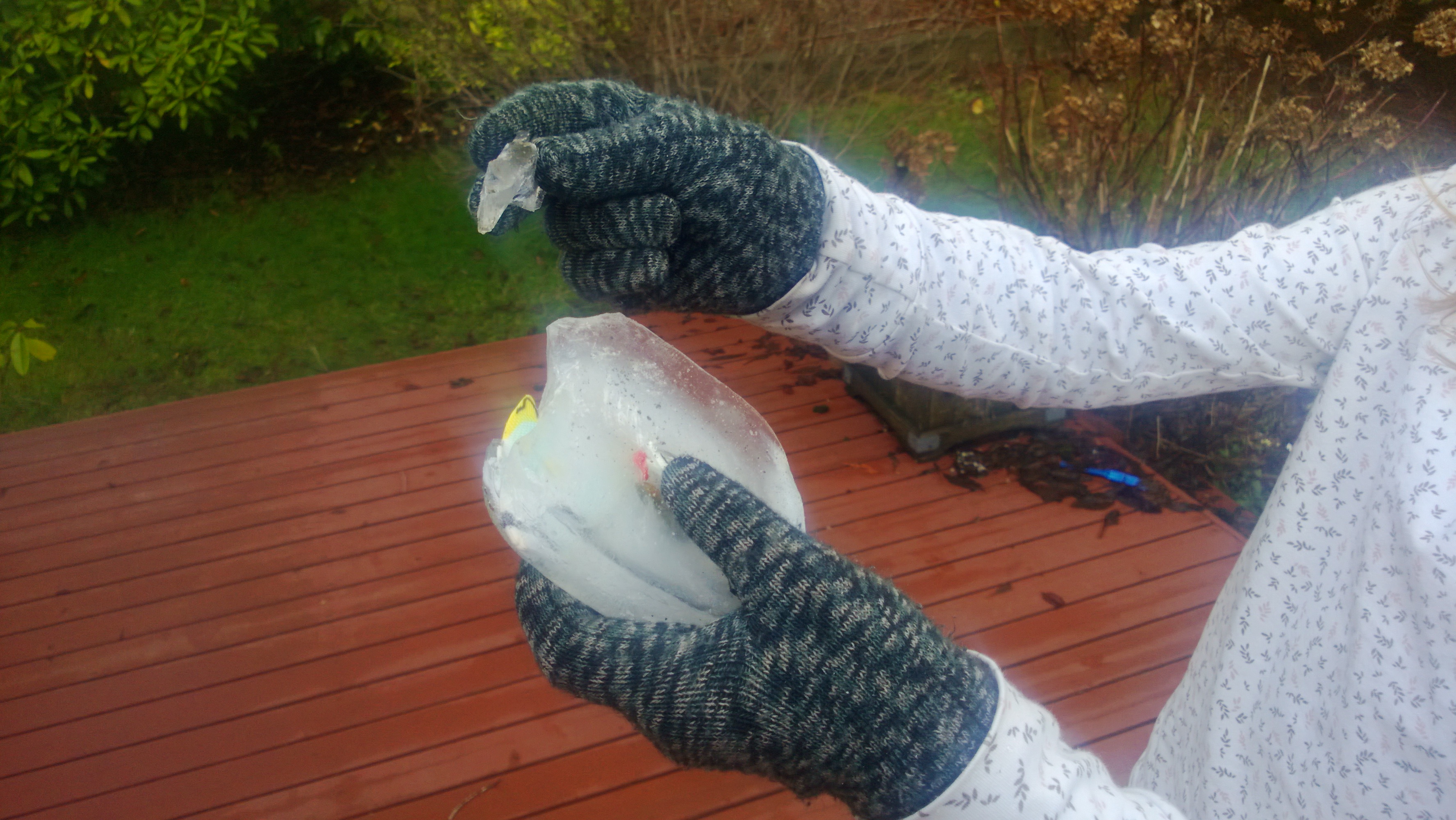
Help it's sticking to my hand, what do I do now. Can you pull it off?
Help it’s sticking to my hand, what do I do now. Can you pull it off?

Look, I broke it in half - I can see a penguin.
Look, I broke it in half – I can see a penguin.

Ice mummy! I love ice. Bash, bash , bash.

We've found all the animals, can we have more ice? We added crushed ice from the ice machine on the fridge.
We’ve found all the animals, can we have more ice? We added crushed ice from the ice machine on the fridge.

This is a great activity for water trays in pre-school settings but works even better outside, if you are in a cold climate set up a water tray outside and let nature do its work.

Other Ideas and Questions to ask Children

  • Add colour to the ice using food colouring or bath colours. Using a dark colour so the children have to guess what is hidden in the ice.
  • Put a small amount of warm water into the tray. Add the coloured ice. What happens to the water? What happens to the ice.
  • Sprinkle glitter into water – leave it in the freezer or outside overnight. What happens when it melts?
  • You are not allowed to bash the ice, how else could you get the animals out?
  • Can you find any more ice in the garden?
  • What would happen if we froze a leaf or berries?  If we hang them from a tree how long will they take to melt? What happens when they are melting?
  • The ice sticks to your gloves, what else will it stick to? Why does it only stick to some things?

Activities to Build Children’s Language Development from Ages 3-5.

A few years ago I ran training sessions for early educators and parents on communication, language and literacy. Many of the resources we recommended, including the excellent dvd Chatter Matters, came from the Communication charity I CAN. One of the key messages of this training was that ‘reading and writing float on a sea of talk.’

Kate Freeman, I CAN Communication Advisor and experienced paediatric speech and language therapist says:

Given the right support, many children learn to talk without too much effort. There’s a golden age for learning to talk – this is before 5½ and so skills learnt at this age bring great benefits later on. Evidence has shown the early years to be a vital time for supporting all children’s communication, as well as a time to identify any difficulties and put support in place to improve a child’s overall life chances.

I was very excited to review I CAN’s latest resource Chatting with Children.  This is a really nicely presented set of 30 cards with activities for promoting speaking and understanding for children aged 3-5. The activities are simple and require no specialist resources. Some are copying or guessing games of the kind we often play in the car, some require household objects and a couple that I played with my 4-year -old and 2-year-old  used our musical instruments box . These games would be great for including in my music groups.

Each card has ideas for making the activity easier if your child is struggling or more challenging if it is too simple. The activities are equally suitable for large groups or one child. They are a great resource for families and could provide a wealth of ideas for small group times at pre-school. Many of the cards remind me of games I played with the autistic children I worked with, helping them extend their vocabulary and comprehension and categorise language. These cards would have been an invaluable resource for these families.

The cards focus on a number of skills, listening, developing vocabulary, social skills and understanding what is said. The games are varied  and can be played for a few minutes or half an hour or more.listening games My 4-year-old loved the listening games, playing hide and seek with our timer and listening carefully for the soft tick to help us find it and making sounds with household objects and guessing what they might be.
Chatting with Children is also available as part of a brand new boxset being launched this month by I CAN – the Early Talkers Boxset (£19.99). The boxset contains the original Babbling Babies and Toddler Talk as well as the new Chatting with Children, and has been created especially for parents and Early Years practitioners supporting babies, toddlers and young children in learning to talk.

The three packs between them, contain activities for children from birth to school age. I  was so impressed that I am going to order the box set for my brother to play with his one year old twins.

Chatting with Children is available in paperback for £7.99 paperback and hardback for £12.99 .

All proceeds go towards I CAN’s work with the 1.2 million children in the UK who have long-term speech, language and communication difficulties. To purchase Chatting with Children or the Early Talkers Boxset comprising all three activity card sets visit http://www.ican.org.uk .


This is not a sponsored post, a copy of chatting with children was received for review purposes

Kate’s Top Tips for Chatting with Children aged 3-5 years old

Be quiet Take time to talk to each other in a quiet room. Turn off the TV and radio, and shut the door to block out any other background noises. Children have to learn to block out background noises, so they need a quiet environment to focus on the sounds they hear.

Be face-to-face Help young children to see your face – make sure you’re at the same level as them. Sit or crouch opposite them as they play, or sit them on your lap. Sit opposite the child so you’re face-to-face with them. Being face-to-face means that the child can see you and your facial expressions. Also, you can see them and their responses and reactions to the games you play together or the conversations you are having.

Don’t rush – take plenty of time Young children take longer than adults to process what they hear – sometimes up to 12 seconds. They need plenty of time to respond to you.

Be patient Young children can easily lose interest in what you’re doing – this is perfectly normal, especially for 3-year-olds. Don’t worry – just stop the game that you’re playing together and try again another time.

Be prepared for anything Follow the child’s lead and adapt the game or conversation to fit in with what they’re doing. This can help maintain attention on particular games.

Ditch the dummy A dummy gets in the way of attempts to talk during conversations and games. Children of 3 and over don’t need to use a dummy.

Use the language you naturally use at home It’s important that you speak naturally to young children; this helps develop their language skills.

Enjoy it This is a special time together, so have fun playing, chatting and learning about each other.

 

Build a Mud Kitchen – Why Playing with Mud is Good For Children

mud kitchensWith limited toys and great weather,we have been playing  with natural materials and everyday objects. The children and I created a mud kitchen in the garden.

What is a Mud Kitchen?

A mud kitchen is an outdoor play kitchen for children to explore the properties of mud.  In a similar way to my own mud pie and mud drink making as a child, ( I remember filling up small dirt holes with water and tasting the mixture with a stick) the children mixed the mud in a kitchen made of recycled materials.  You could use a ready-made play kitchen but it isn’t necessary.

How to Build a Mud Kitchen

We made ours using various items we found around the house.  We made a shelf using bricks and a piece of wood, an oven from a cardboard box and collected containers from our recycling.  An old cupboard, table or sink would work equally well and I’m sure that when our stuff arrives from the UK we will find things to add.

Collect old kitchen utensils, pans and bowls from charity shops, friends or car boot sales. We put a sign on our fence next to the mud kitchen requesting items – no-one has donated yet but the children check for new additions every day. It is a good idea to place the mud kitchen near a fence or tree where the utensils can be hung – this way the kitchen will be nicely self-contained and easy to tidy.

The Benefits of Playing in the Mud

Children learn in a variety of ways; many children (particularly boys) prefer to play outdoors.  In most pre-schools I have visited in the UK indoor classrooms exist alongside outdoor classrooms.  Children who may not choose imaginative play  indoors may be attracted to the mud kitchen.  The mud kitchen is rich in learning experiences including learning the rules of good hygiene, exploring  the properties of mud, manipulating mud and tools with their fingers, measuring, imaginative play building on the children’s own experiences, finding out about bugs, problem solving and co-operation and sharing. Involve the children in the creation of the mud kitchen, they will come up with many ideas that adults may not have considered.

Health Benefits

To add weight to my argument I read an excellent post this week about the health benefits of playing in mud. The Children of the 90’s project at the University of Bristol recently reported a number of benefits for children who spend time outdoors. One study suggests that children who spend more time outdoors are less likely to develop short- sightedness and they also found that good levels of Vitamin D was linked to better health including mental health.  Another study from Bristol University in 2007 suggests that friendly bacteria contained in soil, activates neurons responsible for producing the brain chemical serotonin.  A lack of serotonin is thought to cause depression; playing with mud is therefore likely to improve children’s mental health.

Our Mud Kitchen

playing in the mudWe built our mud kitchen during August.  In the UK this is often the wettest month of the year but here in Washington State we have had a perfectly dry month.  This was probably not the best time to build a mud kitchen but as the seasons change the play will develop.

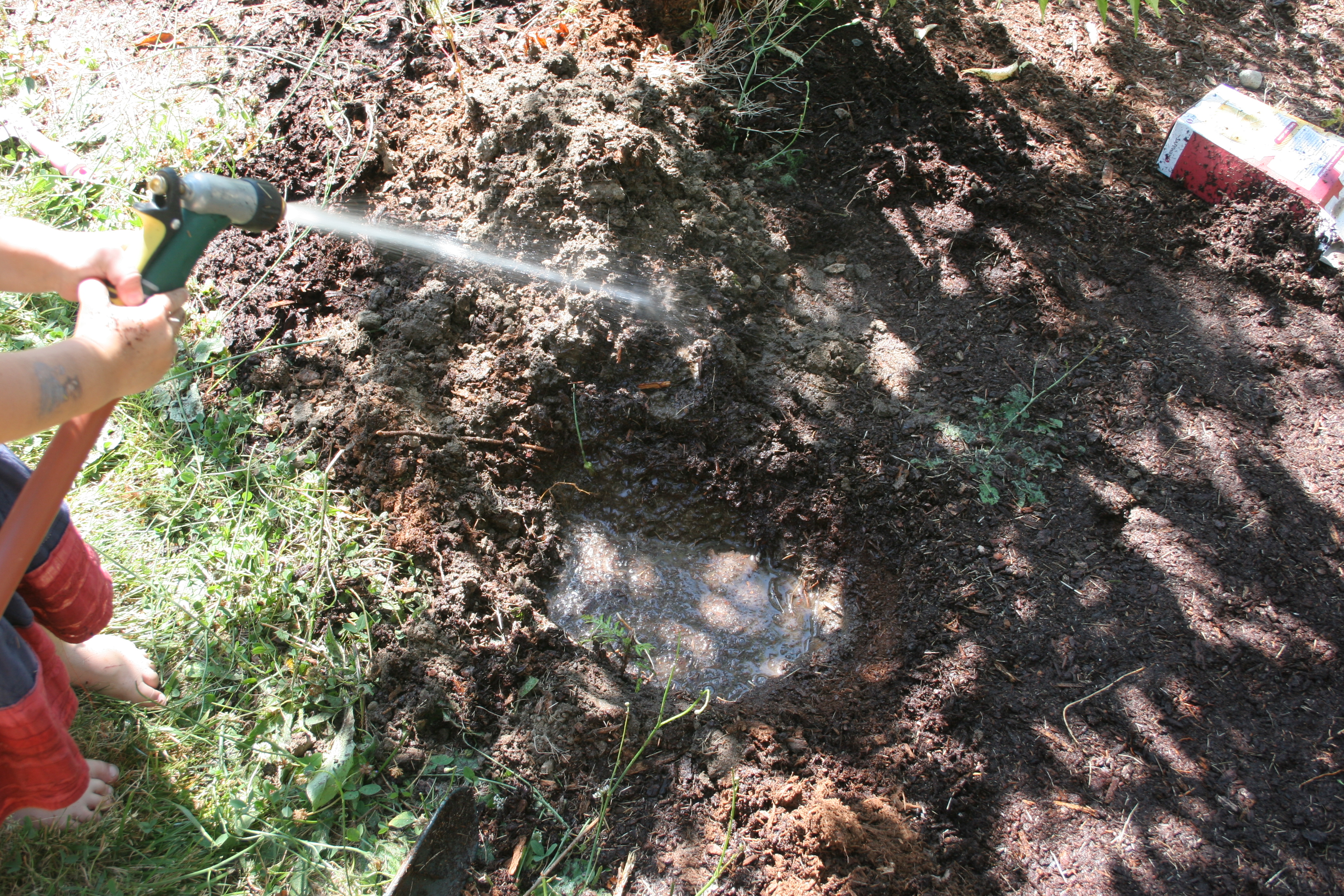
We built the kitchen in a patch of garden where there was plenty of soil but soon discovered that the top layer consisted of wood chippings from the surrounding Pine trees.  This was great for sprinkling and pouring but moulding cakes and pies had limited success. child hosing mudI suggested we dig a hole to reach the true soil under the surface, we  used the hose to  wet it.  Filling the hole with water attracted a flying insect that we hadn’t encountered before, the girls were apprehensive but interested in watching the creature.

We are making coffee powder

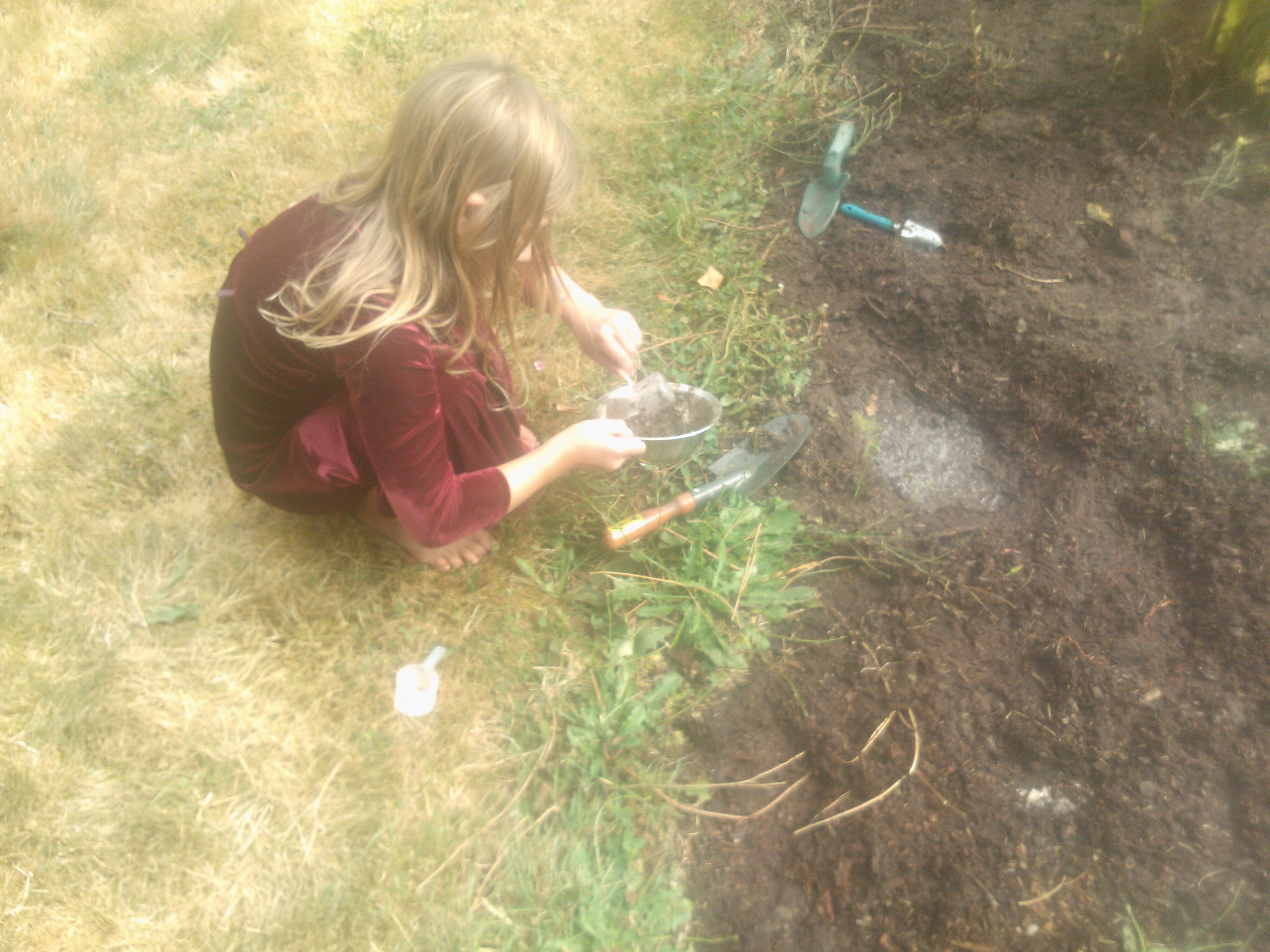
My 8-year-old who loves the idea of creating experiments or being an inventor, mixed the mud to make coffee.

I suggested she put it into the empty coffee container but she explained that it started wet and took at least a day to drain off before it could be transferred to the coffee container.

mud pies
‘It takes at least a day to drain off’

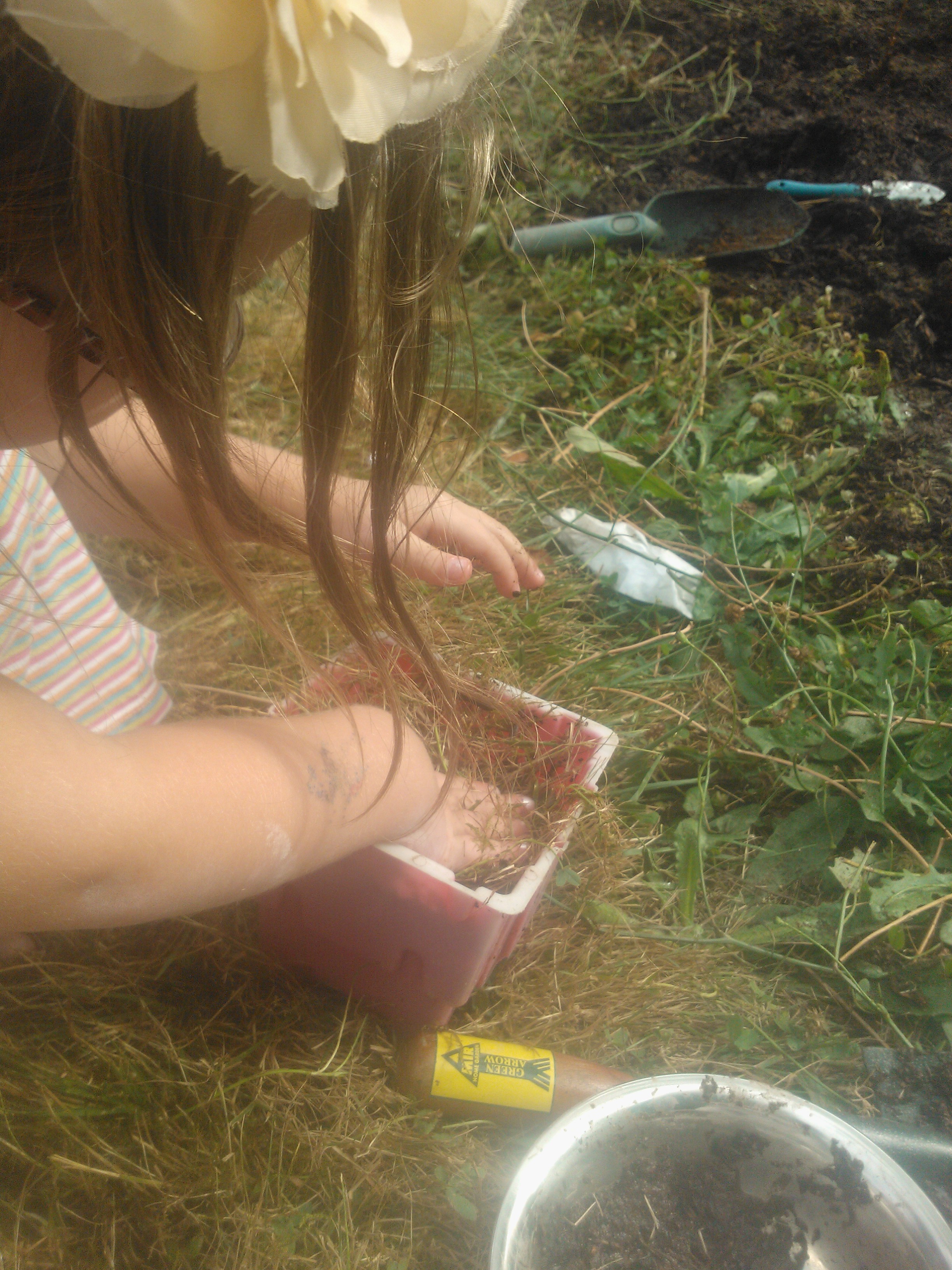
My 3-year-old preferred to make a cake. She sprinkled grass on the top.

I’m looking forward to the change in the weather and seeing how the play develops as the mud changes.

outdoor play
‘I’m decorating my cake. It’s chocolate.’


Do Children Need Toys?

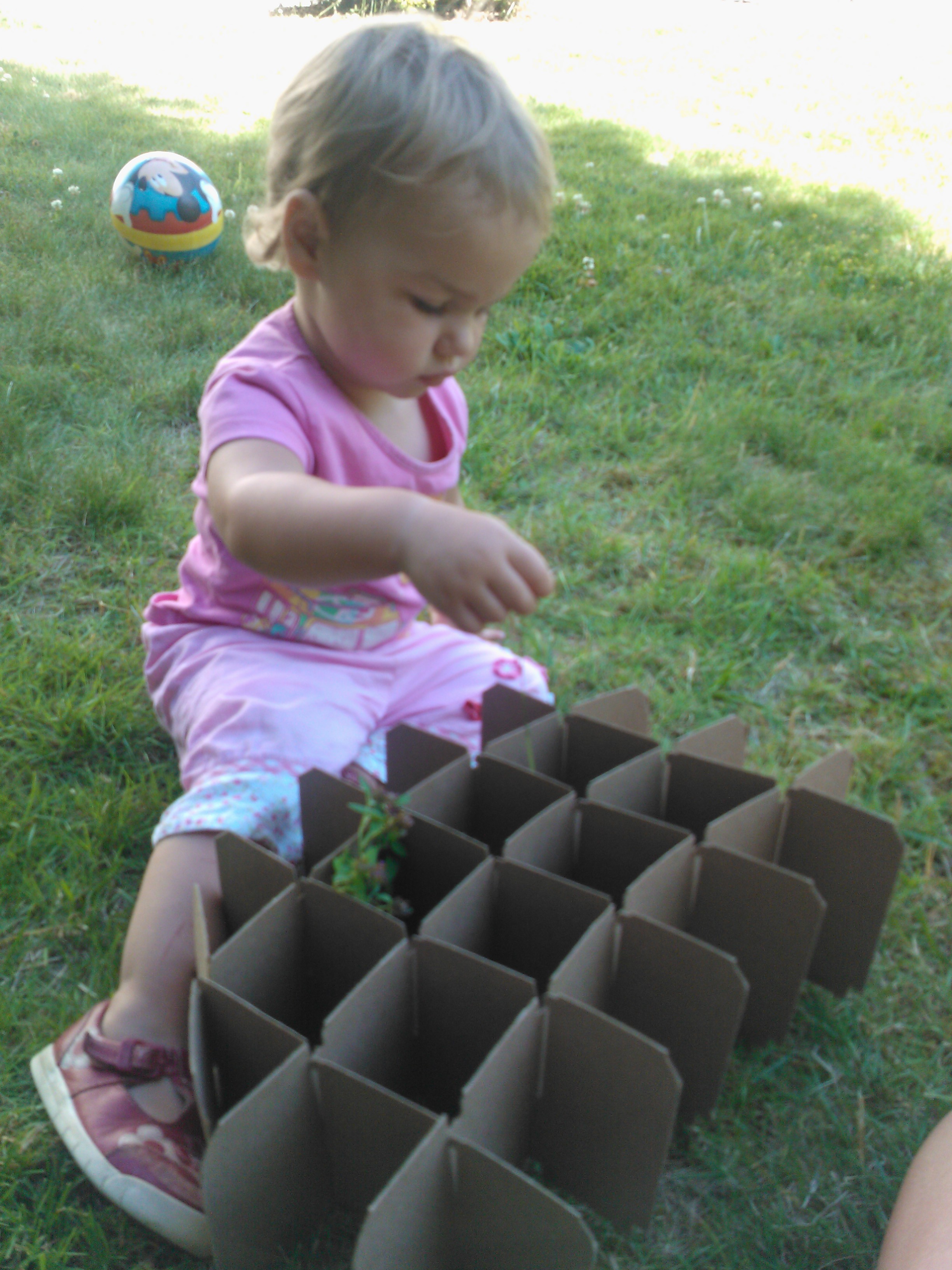
box sortingWe have been in the US for 6 weeks but our furniture and the majority of the childrens’ toys will not arrive for another month.  During this period we have become experts at finding things to play with from around the house.  We brought a small selection of basic toys – colouring pencils, scissors, a glue stick, paper, a ball and a few books, other than that we have made our own fun.  The other children in the street think it is strange to come to a house with no toys but if I am honest I don’t think there is a great deal that the children have missed.

I have been meaning to write a post about some of the household objects that we have played with for some time, but an article that I read yesterday made me look at it from a different perspective.  Sadaf Shallwani’s article Questioning Play and Child-Centred Approaches discusses her experience of teaching children in Pakistan.  Here, childrens’ learning was not built around pretend play but came from real experiences. Children would not learn to cook in a pretend kitchen but would be taught to use real kitchen utensils in a safe manner.

She also questions Western notions of child-centred education.  Early educators try to see the world through a child’s eyes and provide child-sized furniture and objects.  The value of using real objects is recognised in many highly-acclaimed pre-schools.  The schools of Reggio Emilia use many real-life scenarios as the basis for their projects and a colleague who visited the schools was surprised to find the children climbing onto adult-sized chairs and tables. A key philosophy of the Reggio Schools is the belief that children are capable.  With this in mind the teachers help the children to use real tools and objects. Similarly in the Danish Forest Schools that another colleague visited, young children were taught to use real tools and knives to whittle sticks and were free to roam in the woodlands and on the beach and trusted to return at the sound of a whistle.

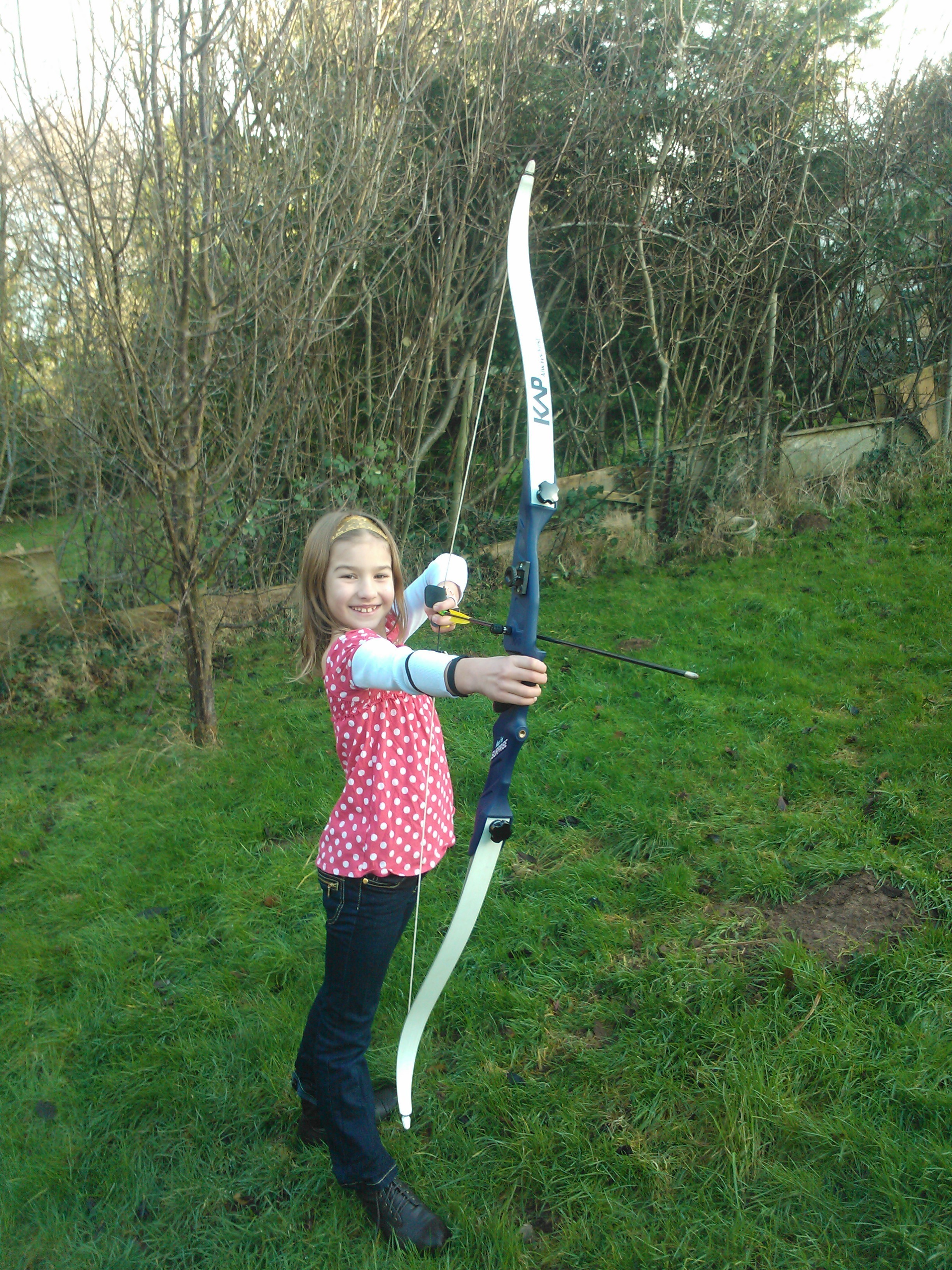
child with archery bowI remember as a child using real objects from my kitchen to play shops and tea parties.  Toy versions of everything are so readily available these days that it is easy to be drawn into the need to buy more and more. It is also easy to fall into the trap of believing that children need adapted versions of things for their own safety. If we trust them with real things, spending time explaining the risks and demonstrating how to use them properly, children are more safety-conscious than those who do not understand the danger of the real objects.

Not having toys has been a very useful exercise.  We have used things from around the house and recycled boxes and paper to create an Olympics and a mud kitchen, we have borrowed books from the library and we have played ball games and skipping.

Here are a few other objects we have utilised:-

Pistachio Nut Shells

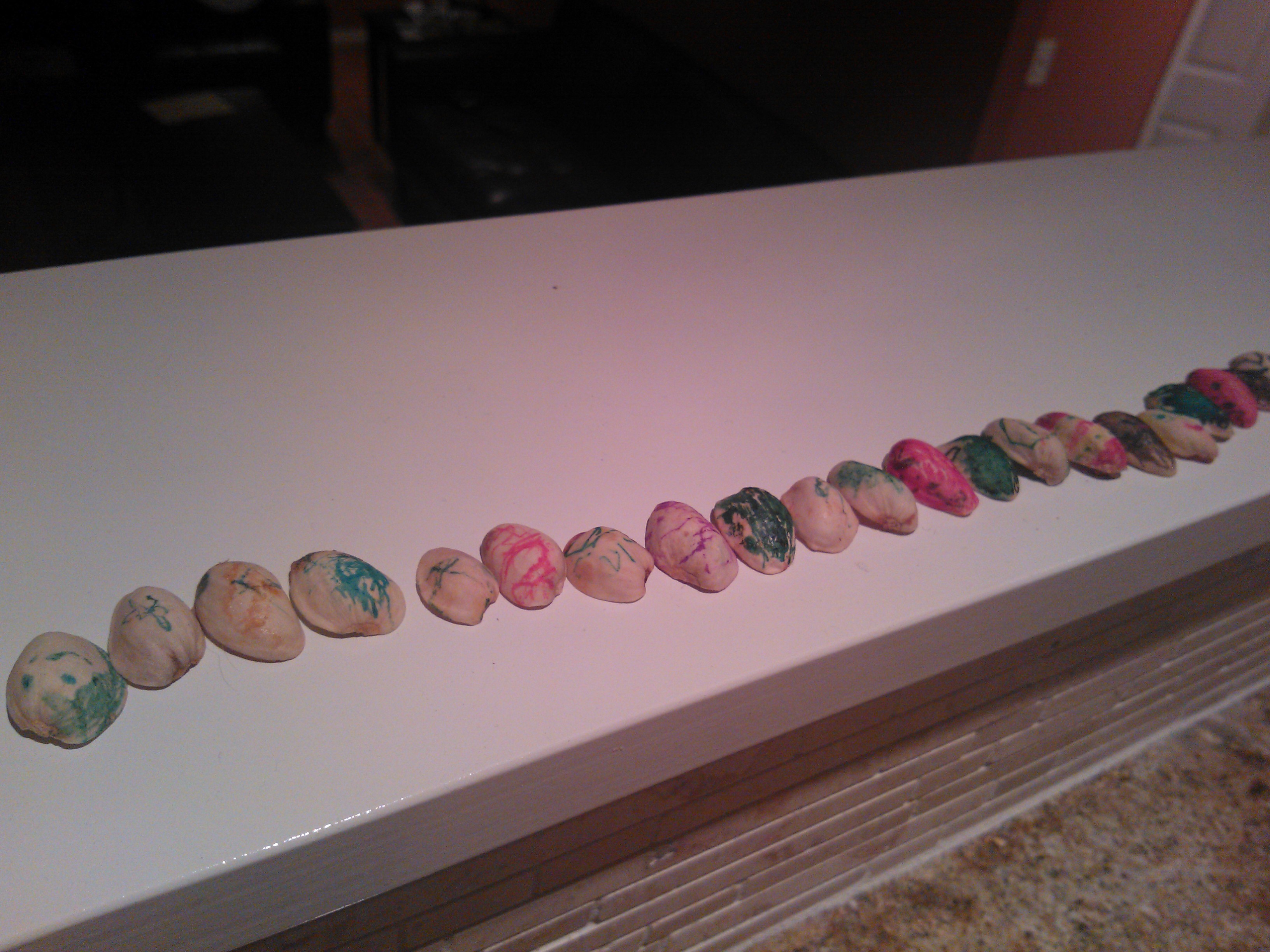
decorating shellsWe saved the shells from our pistachio nuts and the girls had great fun decorating them.  We coloured them so that we could make flowers and patterns and decorated some to look like ladybirds and other bugs.  My 3-year-old chose some pebbles from the garden to decorate as they weren’t quite so fiddly for her small hands.

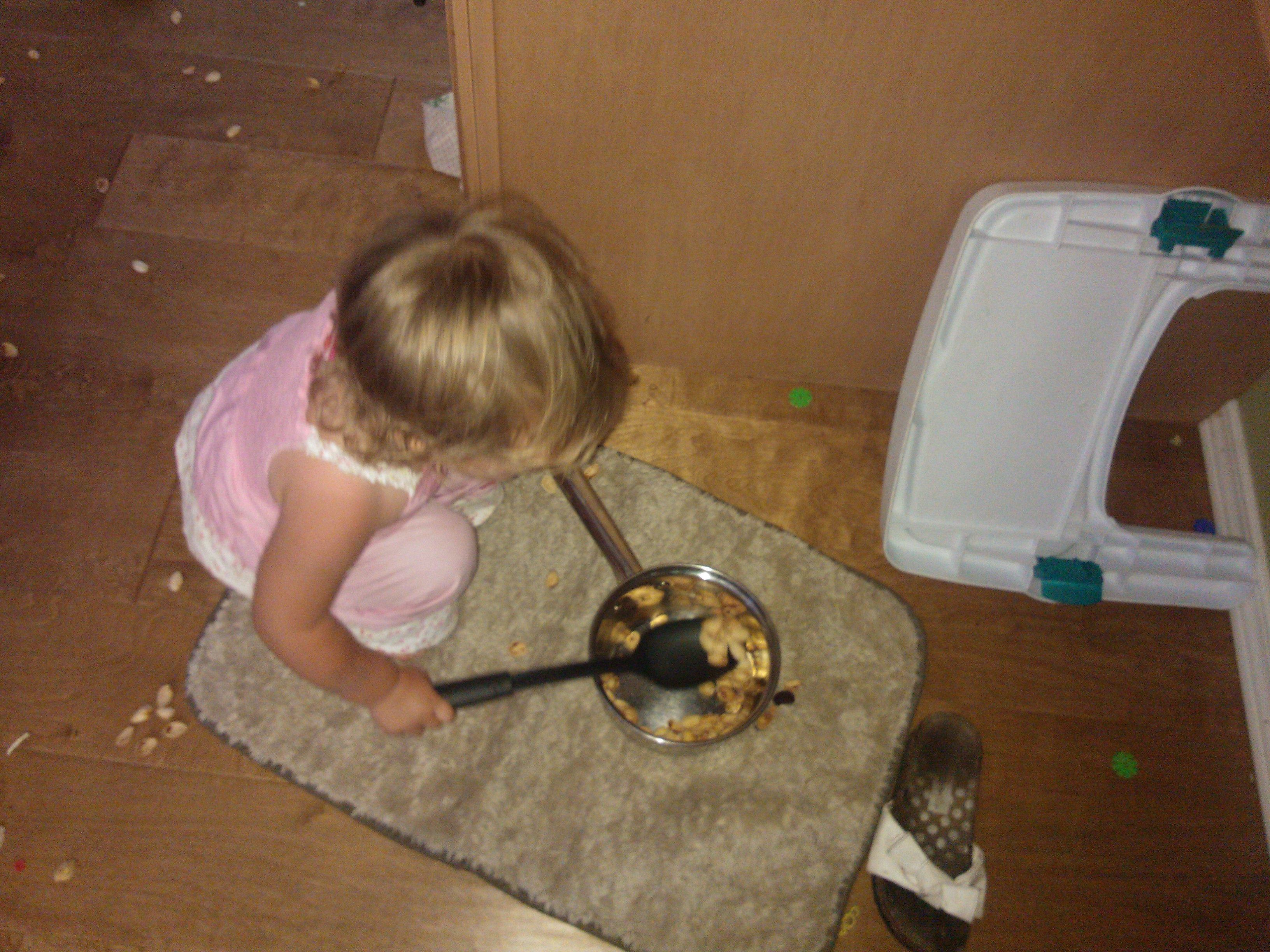
cooking with pistachio shellsOn another occasion I gave my 1-year-old the tub of shells along with a pan, spoon and a number of containers.  She enjoyed scooping them and transporting the shells from one container to another. She also liked the sound they made as they fell onto the floor.  As she walked they stuck to her feet so I showed her how to pick them up with her toes which she thought was very funny.
Coffee Filters

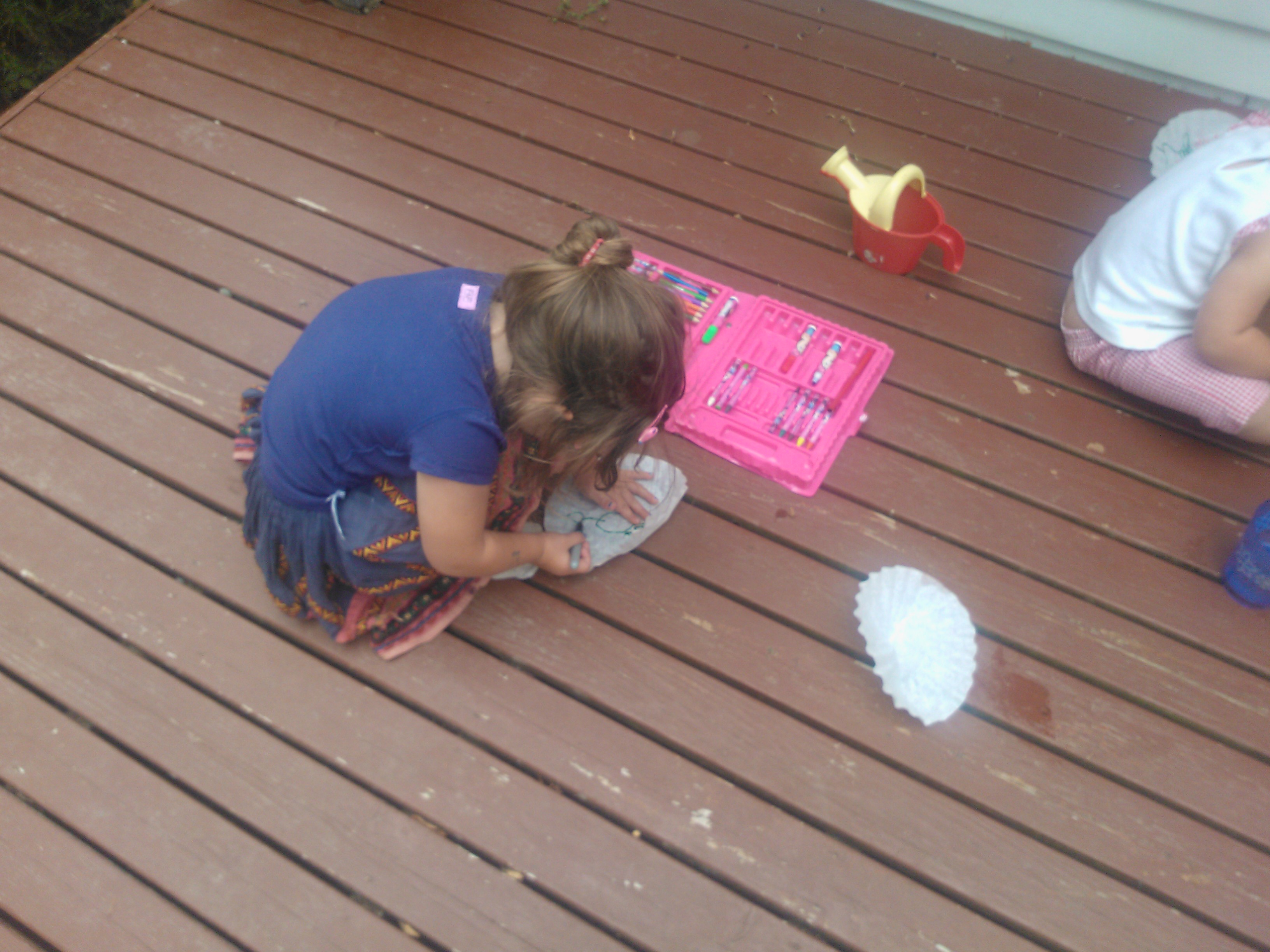
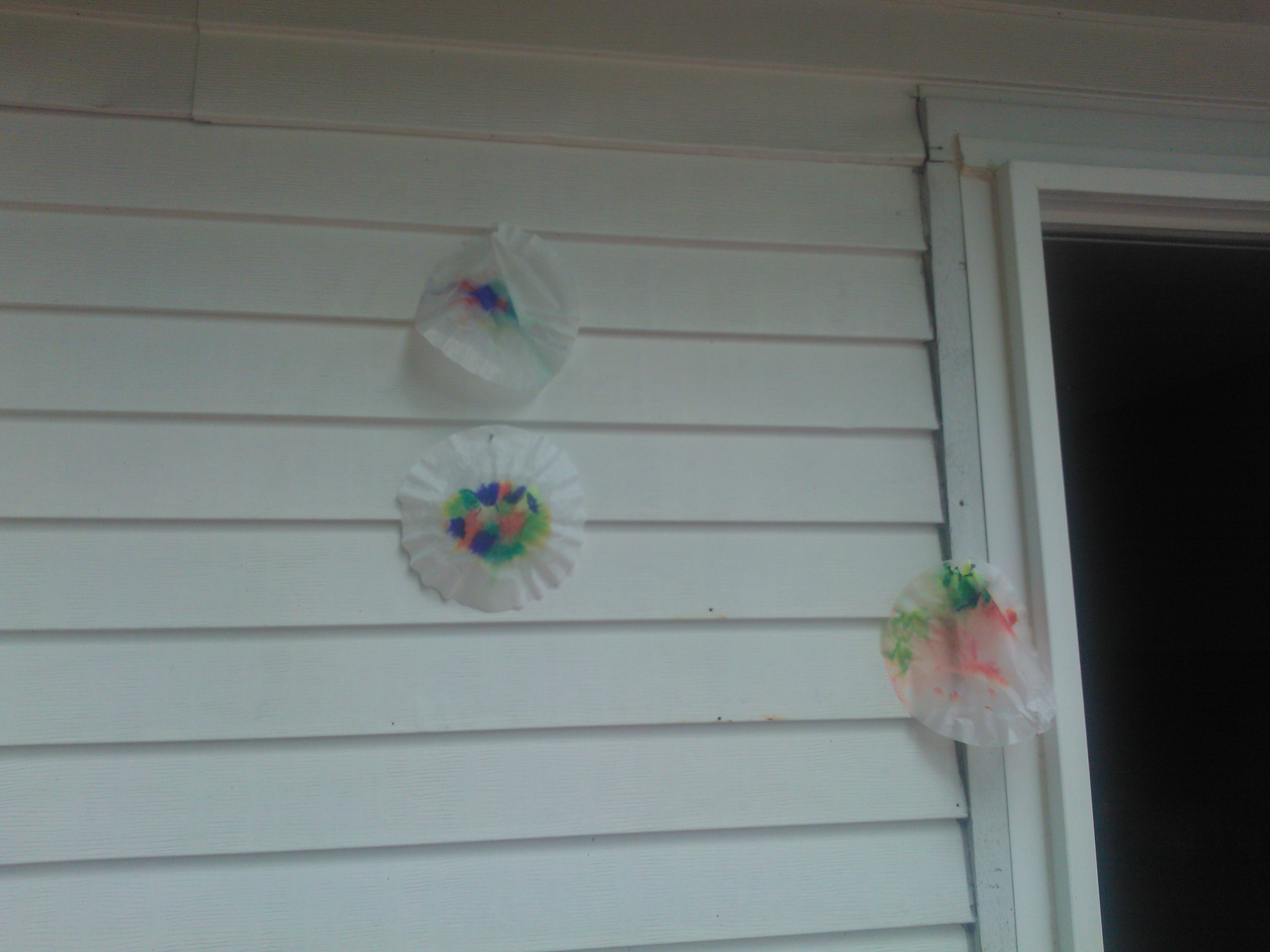
coffee filter picturesI remember doing this activity in science lessons at school.  I gave the girls felt tip pens and coffee filters and asked them to draw patterns on them.

filter coffee pictures

When they had finished they were given a small pot of water and I showed them how to drip it on to the paper creating rainbow colours.

Paper

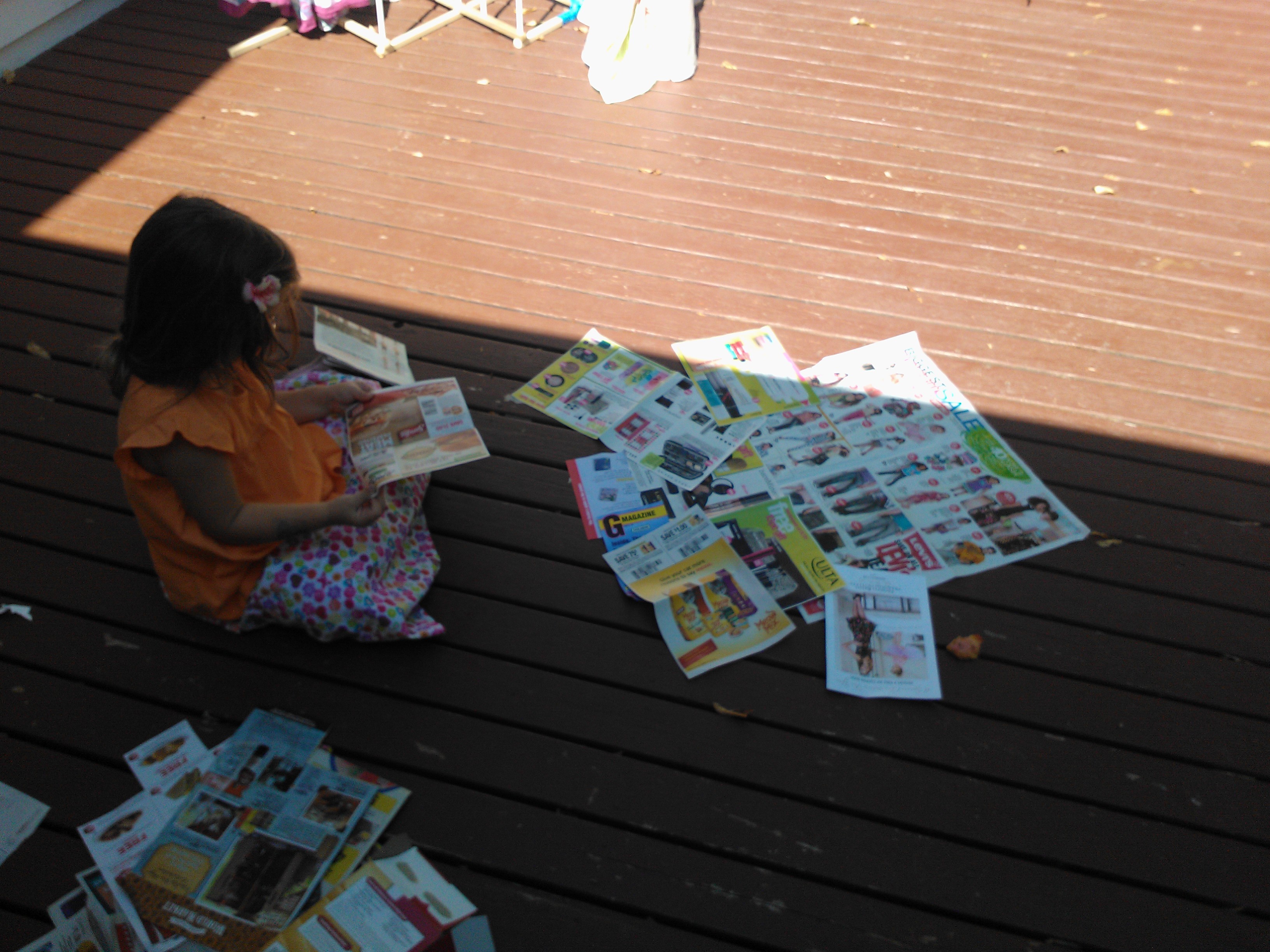
We kept newspapers and magazines with a view to making papier-mache.  The girls would like to enter a local parade on Saturday and I suggested they might be able to make papier-mache masks.

My 3-year-old had other ideas.  She decided to spread the paper across the floor. ‘I’m making a bed’ she said. making a paper bed

She had also made other things for her house by sticking boxes together

I’ve often felt that my house has been taken over by toys that the children hardly ever play with, so I’m not particularly looking forward to them all arriving.  I hope that  being creative with household objects will help us all to think about what we could use instead of buying yet another toy and maybe I can keep most of the toys in their boxes when they arrive.

Pin It

Ideas for Staging a Children’s Olympics

staging an Olympic medal ceremonyFollowing the Olympics from the US has been a little strange.  We’ve caught some of it live, some the following morning when we wake up and some just by following headlines, Facebook messages or Twitter feeds.  The children have been watching it with me and were particularly keen to catch Imogen Cairns from their Gymnastics Academy at home.

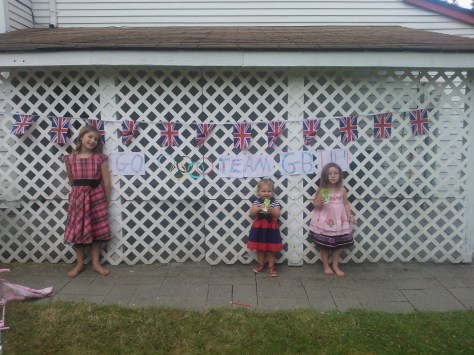
Being such a distance away we thought it was really important to make an effort to support our home team.  We hung our Union Jack Bunting in the garden and the girls made Olympic rings, copying the colours carefully and a sign supporting our team. We then talked about staging our own neighbourhood Olympics, Team GB competing against Team USA.

Team GB sign Olympics

My 8 year old made a list of all the events we could include.  I  ordered a pack of blank medals that the girls could colour and decorate and the girls spent a morning completing them.

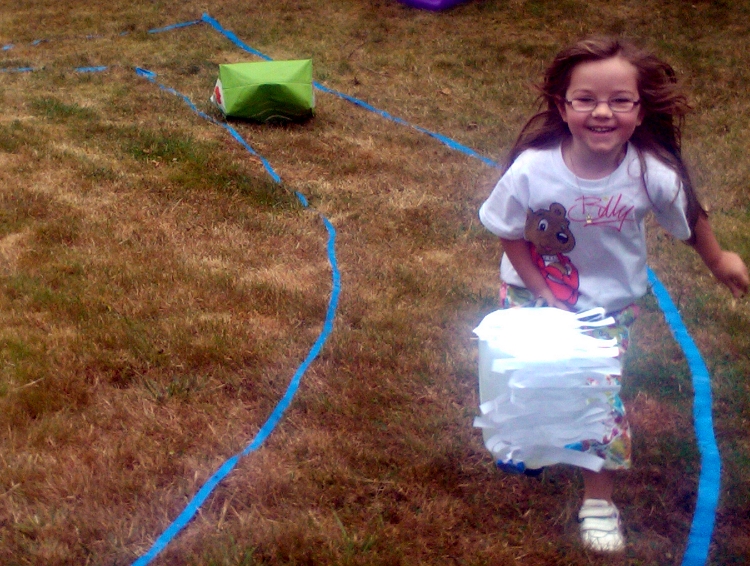
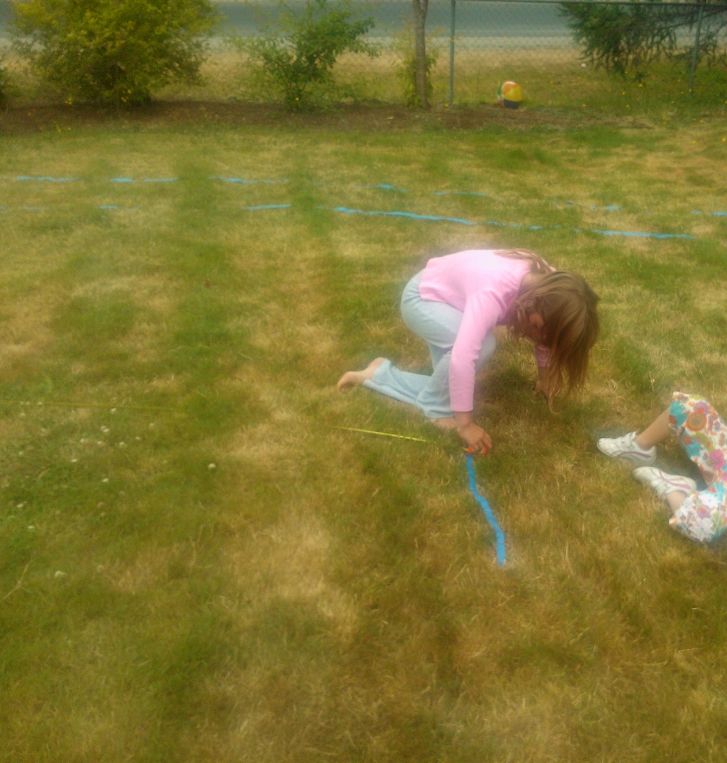
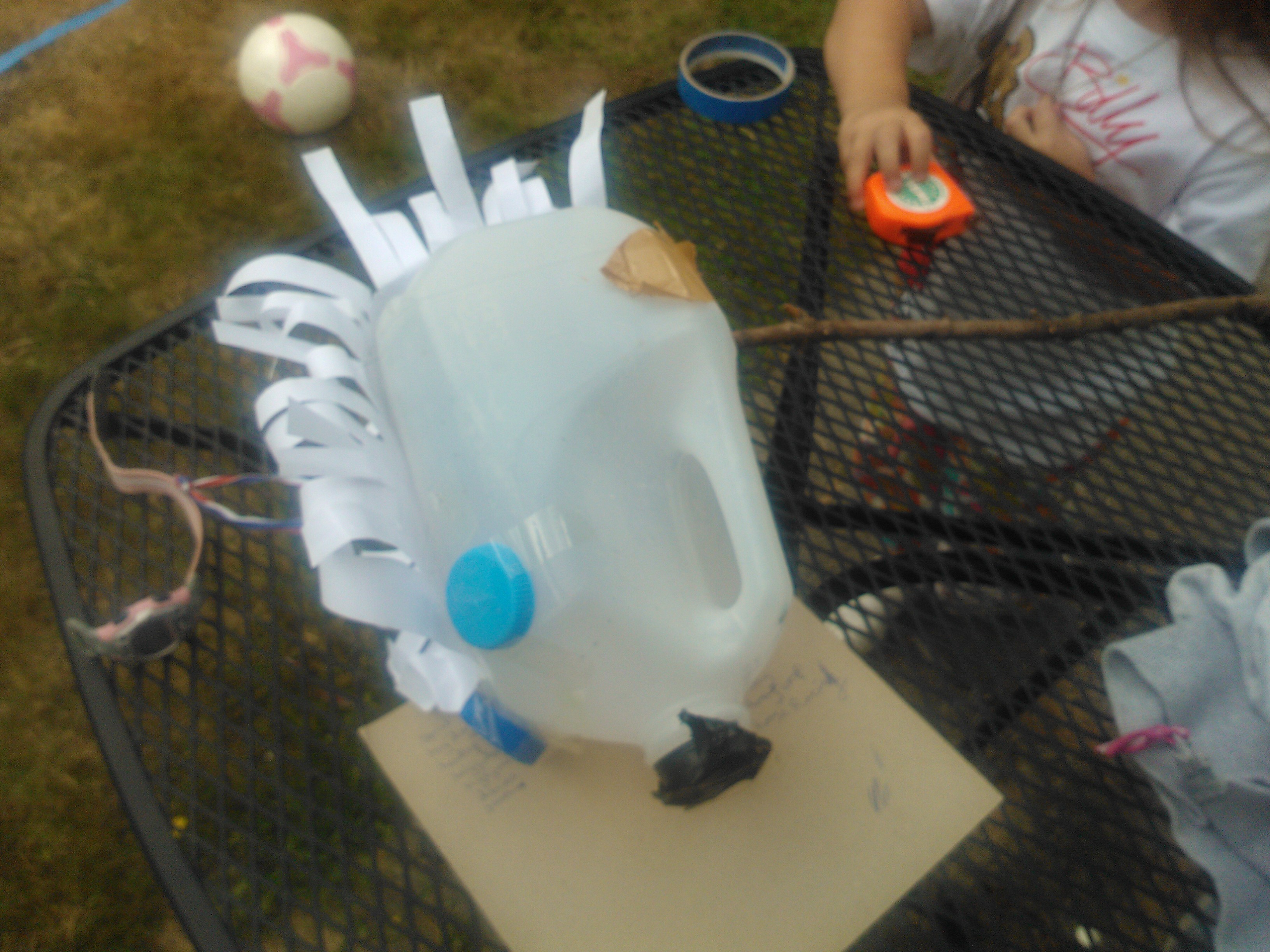
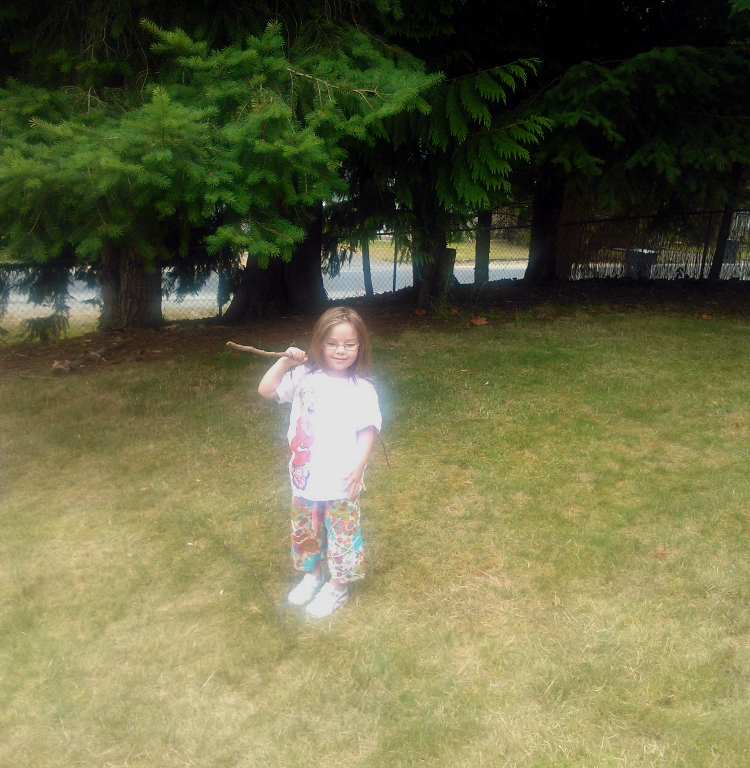
milk carton hobby horseWe made a hobby horse for the equestrian events using a stick from the garden and an empty milk carton. We then set to work marking out a track using masking tape.  A number of low level obstacles were found to act as fences for the show jumping and double up as hurdles.  We also found a straight stick to use as a javelin, a frisbee for discuss and a tape measure and stop watch for accurate results.

Event 1 – Show Jumping

children's olympicsJumping boxes with a hobby horse was quite difficult, my one year old preferred to drag the horse by her side but my 3 year old had a great time.  It didn’t matter to her that she didn’t win gold, she was very excited to stand on the podium (her bathroom stool) and receive her silver medal.  We sang the National Anthem and this has been a really good way for them to learn the words (perhaps I’ll leave the Welsh one until they are a little older).

Event 2 – Hurdles

This was my one year olds favourite event she stepped her way over all the obstacles and loved waiting for the Ready, Steady, Go.

Event 3 – Long Jump.

childrens OlympicsWe marked a place on the lawn where the children would begin their run up and another where they would begin their jump.  I explained that if their foot went over the line then the jump wouldn’t count and they managed to remain accurate every time.  The girls helped me to measure the jumps. My 8 year old fell over every time she jumped so there was a little bit of dispute over where we should measure her landing.

I thought you were meant to fall over, they did on the Olympics

I explained that the Olympic jumpers fall over because they jump such a long way and land in sand. I showed the girls on the tape measure how far an Olympic long jumper would travel and they were amazed.

Event 4 – Javelin

olympic playThe girls found it quite difficult to throw the javelin from their shoulder but managed a few good throws.  I showed them the technique I had been taught at school and my 3 year old who is still deciding whether she is left or right handed needed to work out which was her stronger arm.

Event 5 – Discus

To add a bit of variety I showed them how to spin around and then throw the frisbee.  It took quite a lot of practice as it kept landing at their feet or travelling in the wrong direction, which my 3 year old found hilarious.  Eventually both girls managed good throws, longer than the tape measure, so my 8 year old had to employ her adding skills.  My 3 year old was very proud to win Gold beating her sister by 1 inch.

Events 6 and 7 – Sprint and Long Distance Run.

To make it fair we gave my 3 year old a head start and during the long distance run my 8 year old ran an extra lap.  After winning comfortably she asked if she could race me – I finally won my own Gold Medal.

Our Track and Field Day is over.  Other events the girls want to stage over the next few days are football, tennis, volleyball, basketball, table tennis, gymnastics, boxing, and cycling. We completed our rowing and swimming at the weekend at the lake but the younger ones might enjoy making a cardboard box boat to row. We’ve had great fun and hopefully some of the neighbours will be able to join us tomorrow to get some real competition going.
  • Thanks to Vicki for the show jumping idea.


Fun with Magic Snow

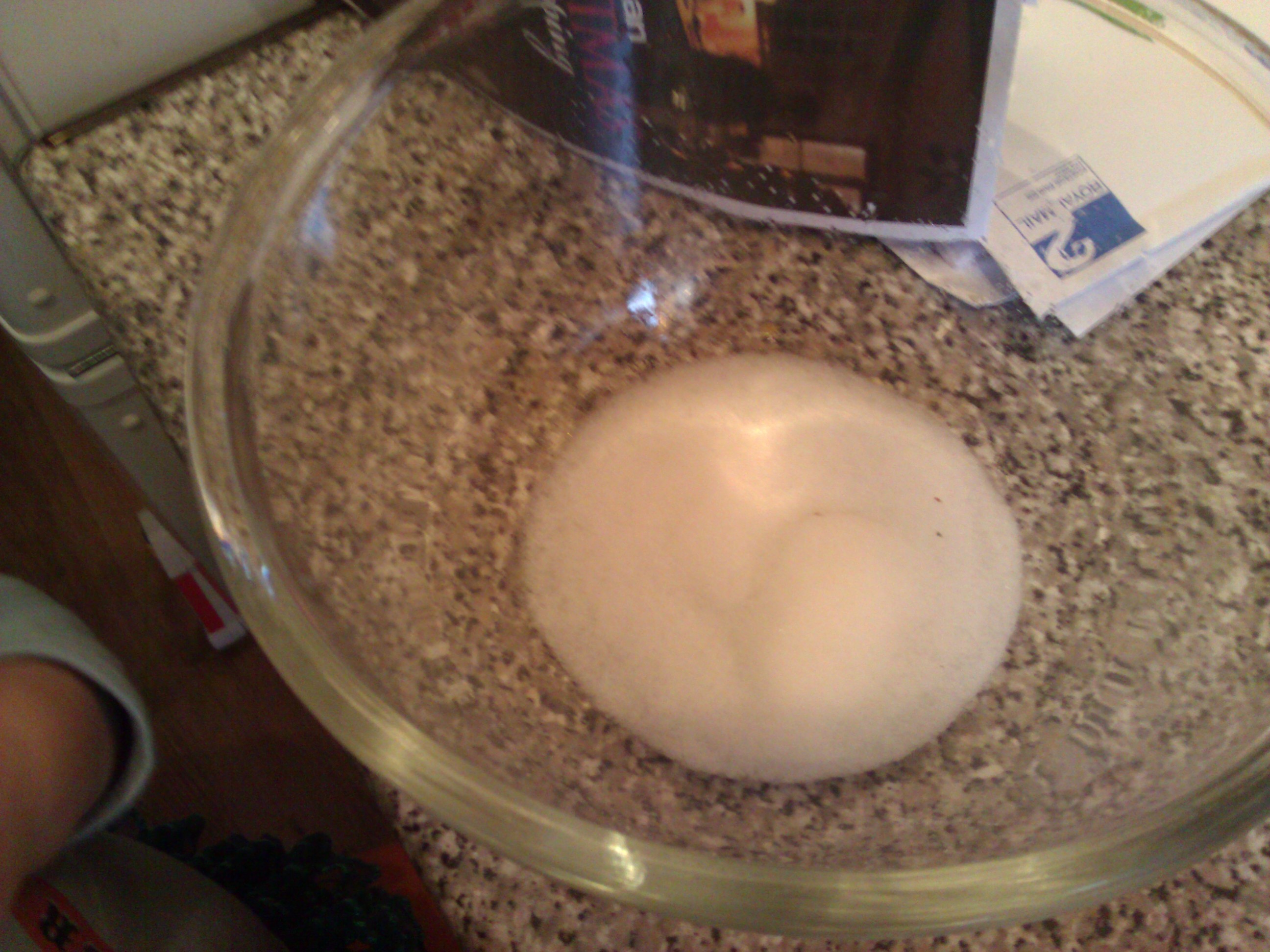
A few weeks ago, I picked up a tube of Magic Snow.  I have never seen this before but I thought it might be a nice Christmas play idea. It comes as a powder in a  test tube shaped container and when you add water to it, it expands to 100 times its original size to look like snow.

It feels really soft and just a little bit cold

You get all the fun of playing with ice and snow but it doesn’t melt or feel too cold on little fingers.

We tried to mould a snowman and make models with the snow.

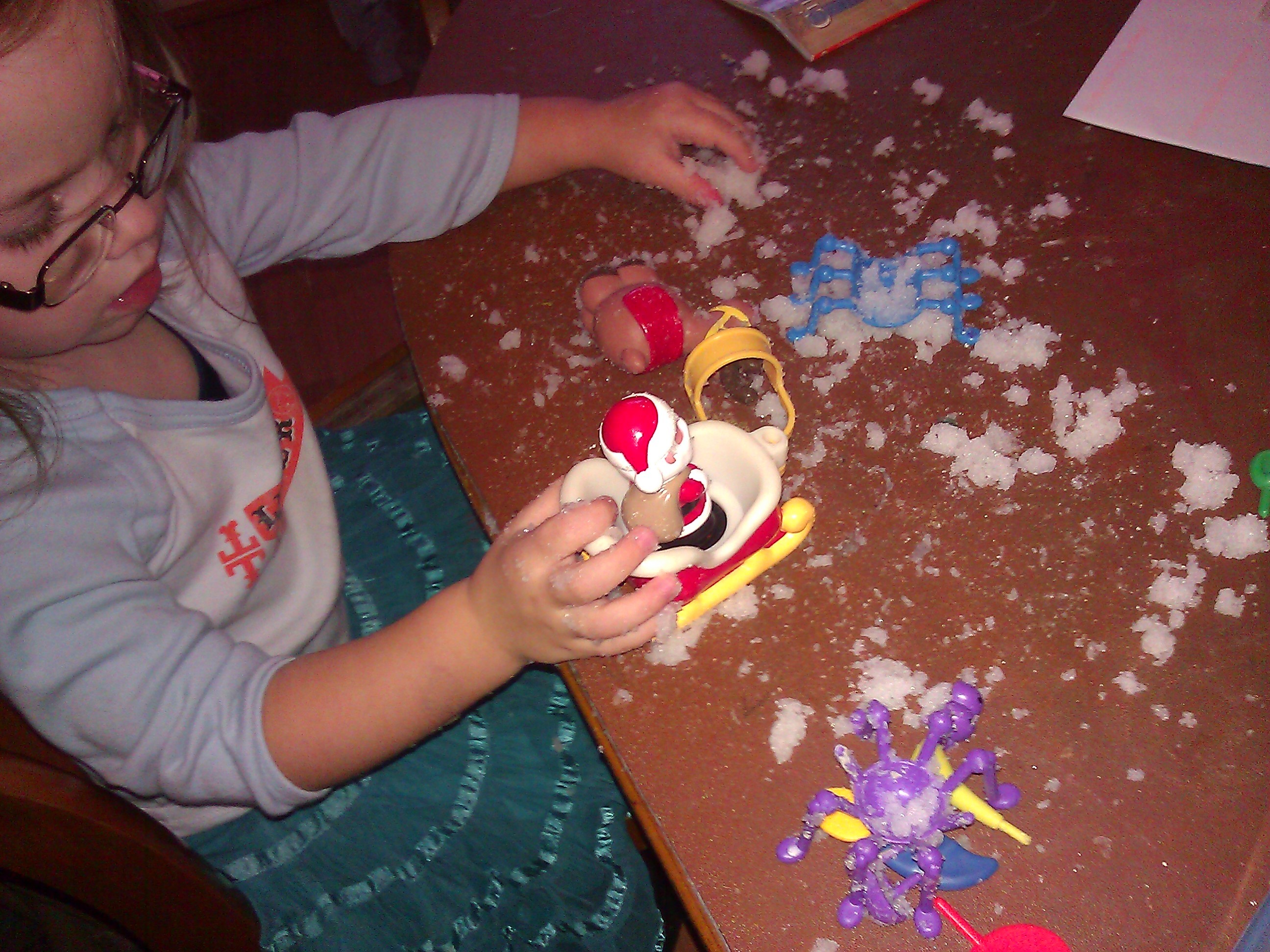
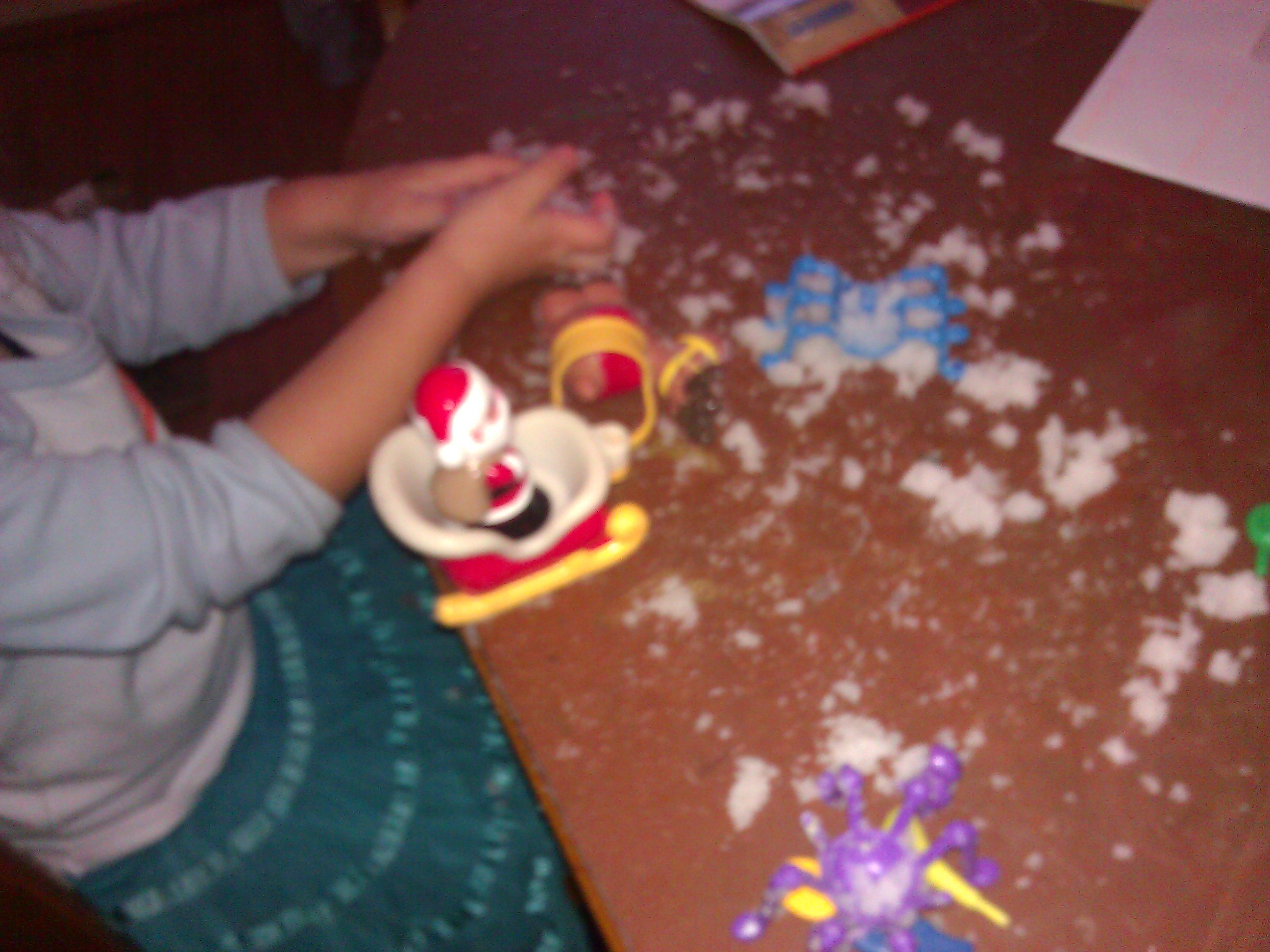
Then we added the Happyland Christmas set

I’m putting snow in Father Christmas’ sleigh

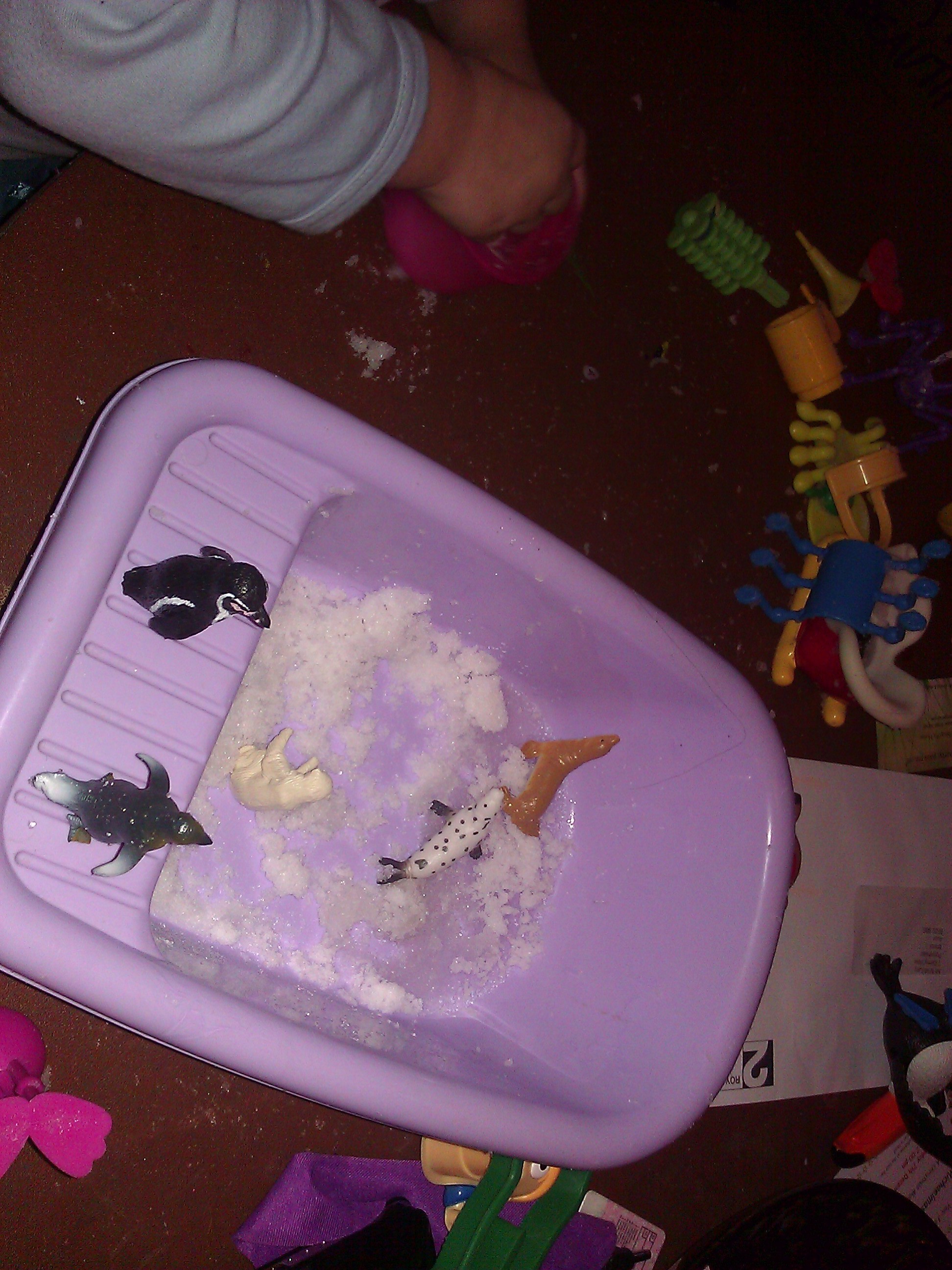
The snow was a big hit but was gradually creeping onto the floor and getting a bit slippery, so I suggested we put the snow in a tray.

We found some snow animals and the penguins slid around on the ice.

 We went out and left the snow in the tray for a few hours, it showed no signs of drying up during this time so I am hoping that we will get a few days play from this batch.  Magic snow is a big hit with my 3 year old who loves messy, tactile things and I’m sure it is an activity she will return to regularly in the lead up to Christmas.

If You Go Down to the Woods Today – 10 Woodland Activities for Children

We had a lovely time today at Glenny Woods organised by our local Children’s Centre. Glenny Woods is a wonderful woodland centre owned by the Scouts Movement.  They have an indoor room with a veranda for when it is wet, an area for lighting fires with bench seating, adventure playground equipment and facilities for making dens.

However, even if your nearest wood doesn’t have these added facilities there are lots of simple fun things that you can do with children.  Try not to rush children on to looking at the next thing.  They may want to spend half an hour looking at a clump of moss or sliding down a muddy bank.  If you really want your children to appreciate and explore nature then allow lots of time and move at their pace (however frustrating this might be).

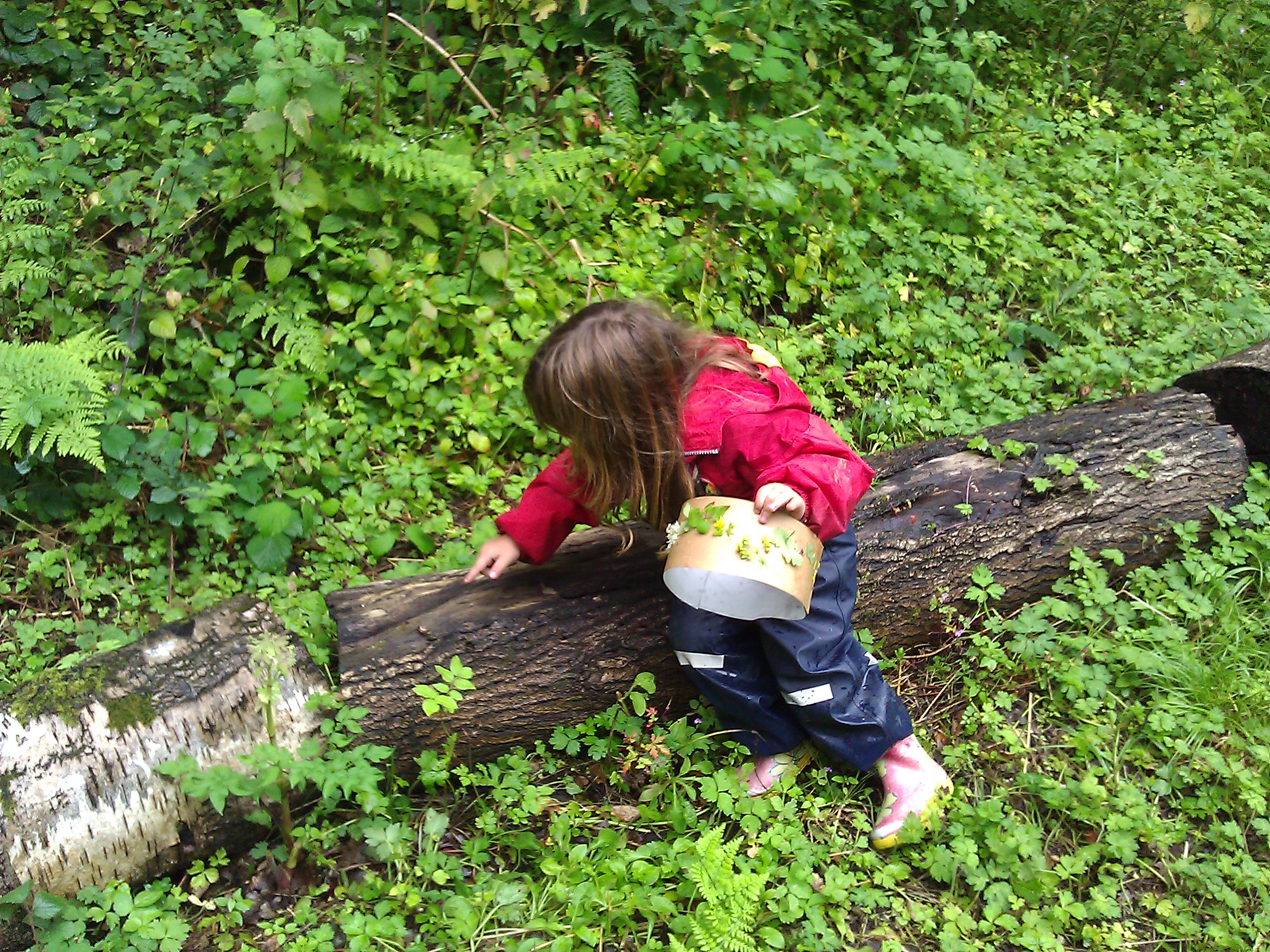
1. Give children a piece of cardboard with double sided sticky tape on and get them to make a hat collecting natural things.  This could be free choice or maybe have a colour theme.  You could ask children to create a pattern eg. large and small things or find specific items to make their hat.

WP_000553

2. Put double sided sticky tape around the top of your child’s wellies and ask them to collect items of interest and stick them to their wellies.

3. Take magnifiers or bug jars and look for creatures. Take photographs so that you can identify them when you get home.

Look Mummy I found a snail

WP_000552

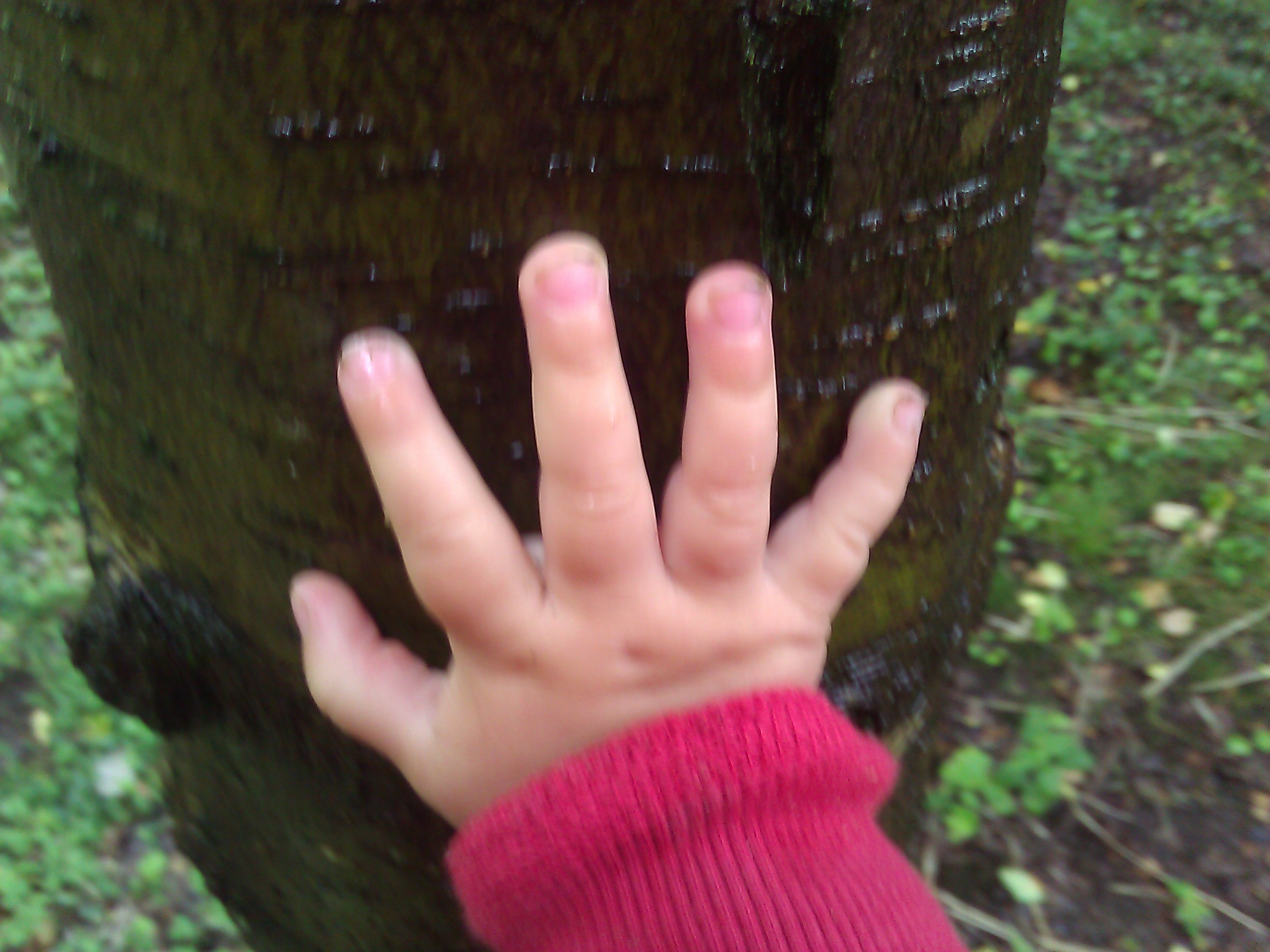
4. Young children will enjoy exploring the textures of things, moss, long grass, tree trunks, mud.  Give children a textural treasure hunt – find things that are soft, smooth, hard, spiky, slimy, cold, warm, rough etc. Make a feely box containing some of the textured things or use a blindfold and ask children to describe what they are touching.

hands on a tree.

5. Give children a piece of string and ask them to find and attach the following items: something natural, something manmade, something colourful, something heavy  and something with an interesting shape.  Hang a line of string between 2 trees and hang the completed pieces from it to make a natural work of art.

6. Build a fire, toast marshmallows on whittled sticks or bake potatoes in the bottom of the fire.

WP_000562

7. Go on a treasure hunt

WP_000568

8. Play in the mud.  Take tools and  to see what you might find or stamp and feel the texture of wet gooey mud. Find a stick and draw or write in the wet mud, or take large sheets of paper and use mud to paint with – use fingers or sticks to apply the mud.

3F16D16F

9. Collect natural materials to make a picture or sculpture .  Make a frame from sticks or stones and ask the children to make a picture inside it using what they have collected. For the youngest children let them arrange leaves into a nest or sticks or stones into a pattern.

Oct 07 045

10. Build a den.  Use sticks and build a den in the style of Eeyore’s house.

You might also want to check out some of these ideas


Finding the alphabet in nature

Fairy houses in the woods

A natural playground

Children Connecting with nature

Mud faces