The Elephant and the Bad Baby: Why DoToddlers Like Repetitive Books?


All 3 of my girls had the same favourite book at the age of 2. I didn’t encourage it, but somehow ‘The Elephant and the Bad Baby’ by Elfrida Vipoint hit the spot for all of them.
The story is highly repetitive, so much so that it drove my husband insane every time he read it. It is also quite long.
So why would it be so popular?

The repetitive text is most likely what they love the most.

Repetition is important for young children as it helps them to remember and learn. Knowing what comes next is comforting in a generally unpredictable world. Small children love repetition, it means that they can join in and demonstrate how much they know. As they hear the story language time and again, they come to anticipate words and phrases and will insert the vocabulary if the reader pauses at key points, as seen in the video clip.  They will even correct you if you get it wrong (as I did).   Children, as they become older, memorise repetitive books and can be seen to be ‘reading’  them to themselves, before they can actually read the text.  This is a very important starting point for learning to read.

Other repetitive books:

We’re Going on a Bear Hunt – Michael Rosen

The Very Busy Spider – Eric Carle

Peepo – Allan Ahlberg

Hairy Maclary – Lynley Dodd

Farmer Duck – Martin Waddell

A Squash and a Squeeze – Julia Donaldson

The Little Red Hen

Dear Zoo – Rod Campbell

Bark George – Jules Feiffer

9 Spider Web Activites for Children

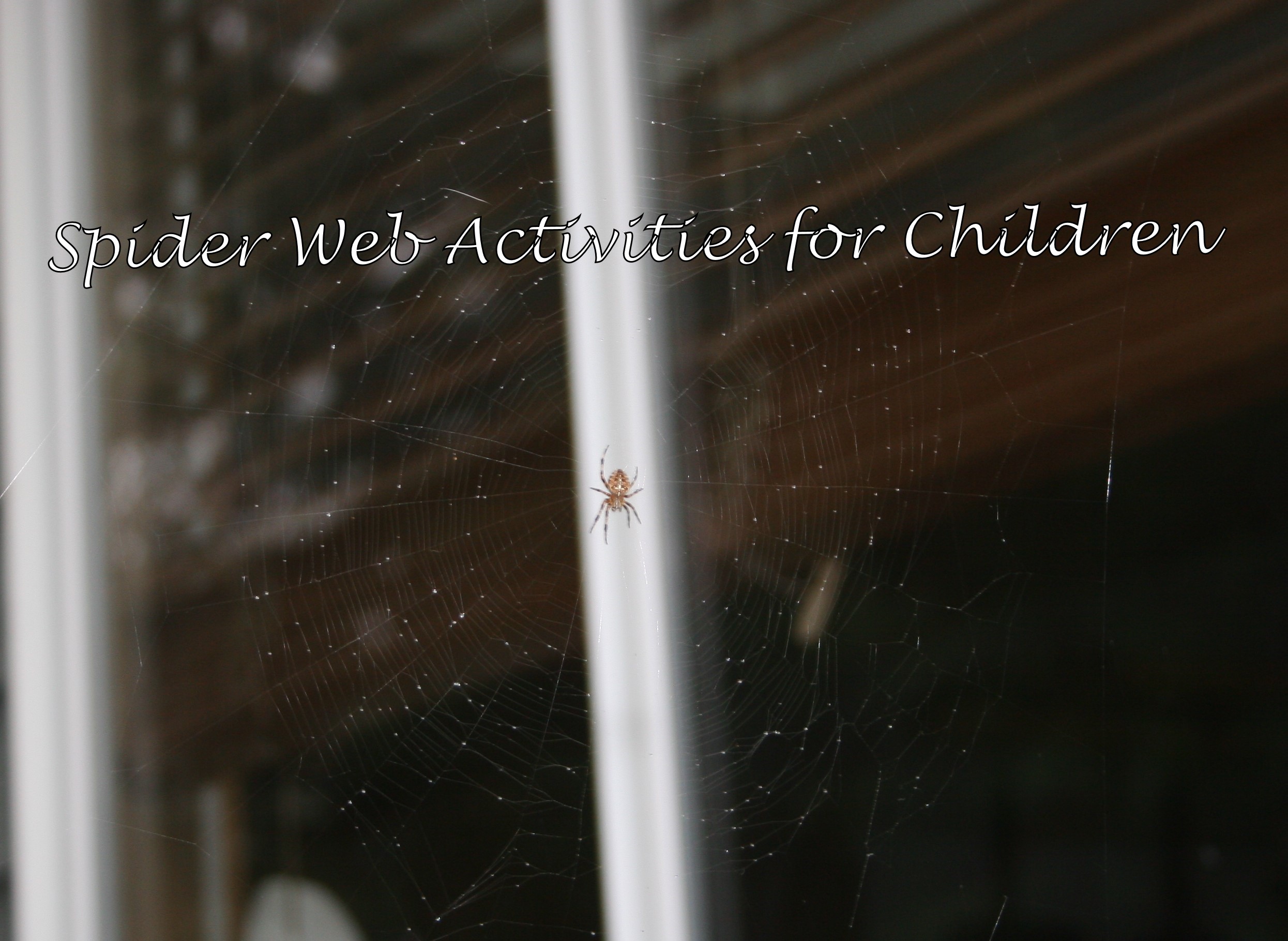
spider web activities

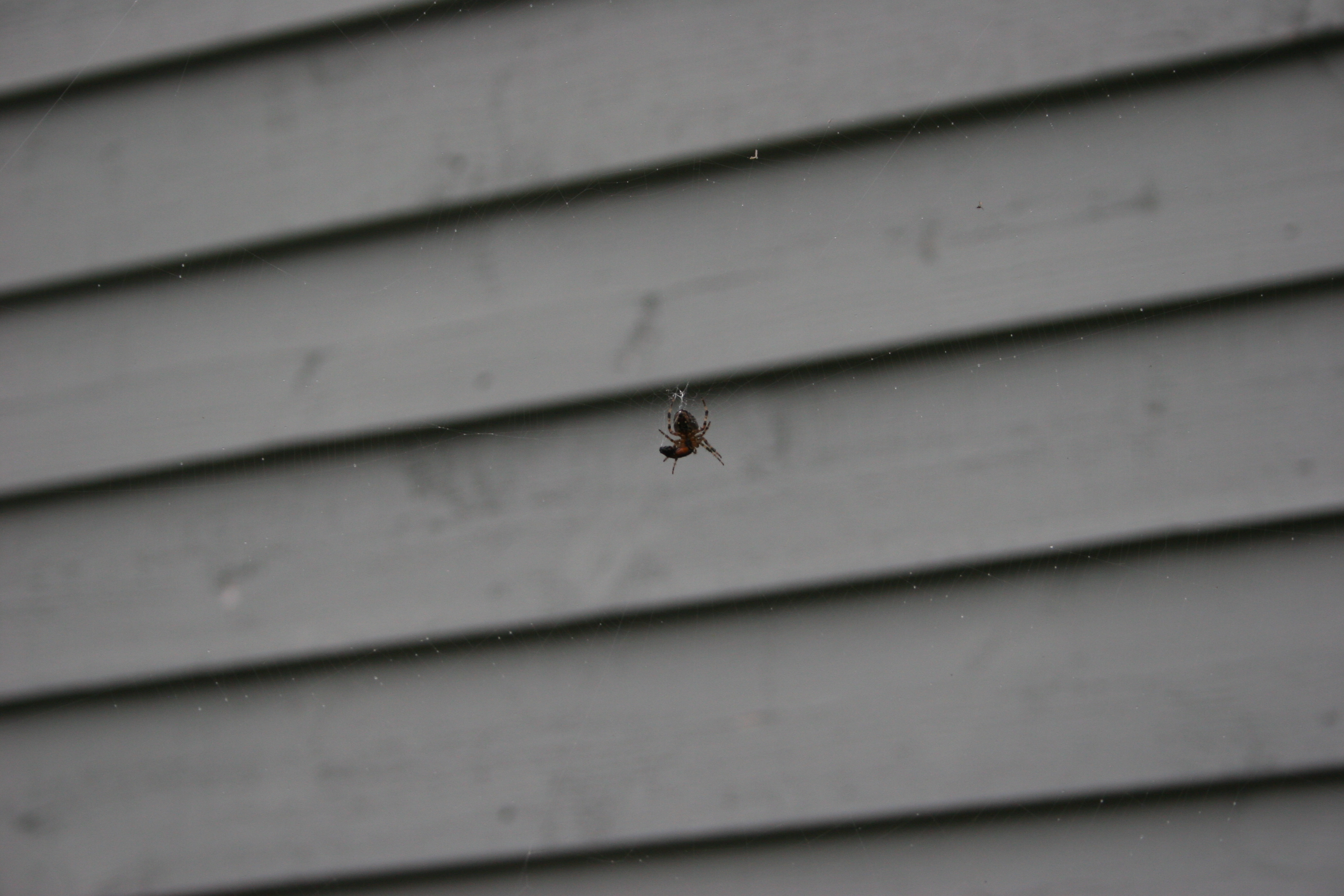
This time of the year there are spider webs everywhere. We stopped to watch a spider devouring a fly on our walk home from school and one has built a web right outside our window, so we watch his antics everyday. If your children are interested in spiders or you are looking for spider activities for Hallowe’en, here are a few we have tried.

  • Tie sticks together into a star shape and weave a web  with wool or string around them, wrapping around each stick as you go.

spider web

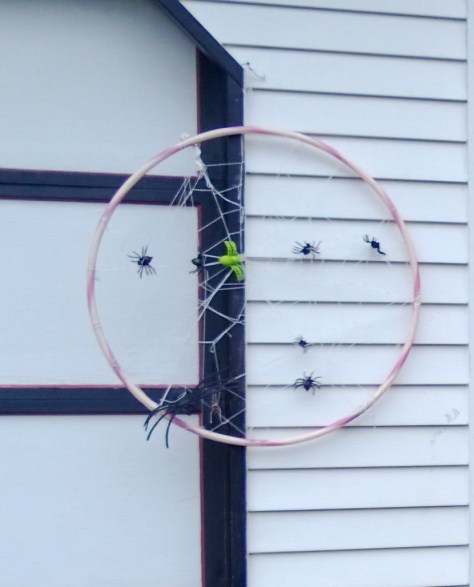
  • Weave a spider web inside a hula hoop for a large-scale decoration.

spider web on a hula hoop

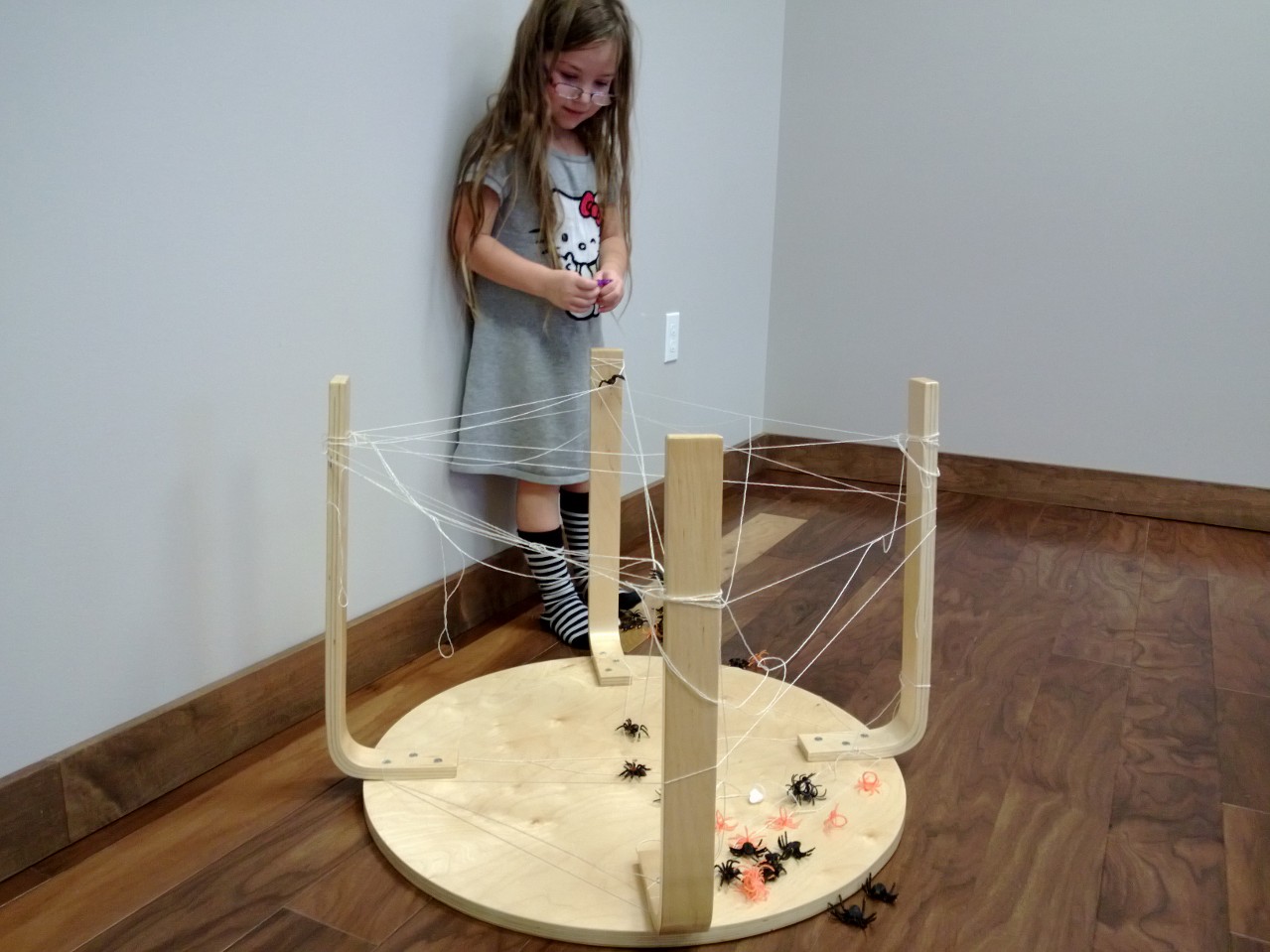
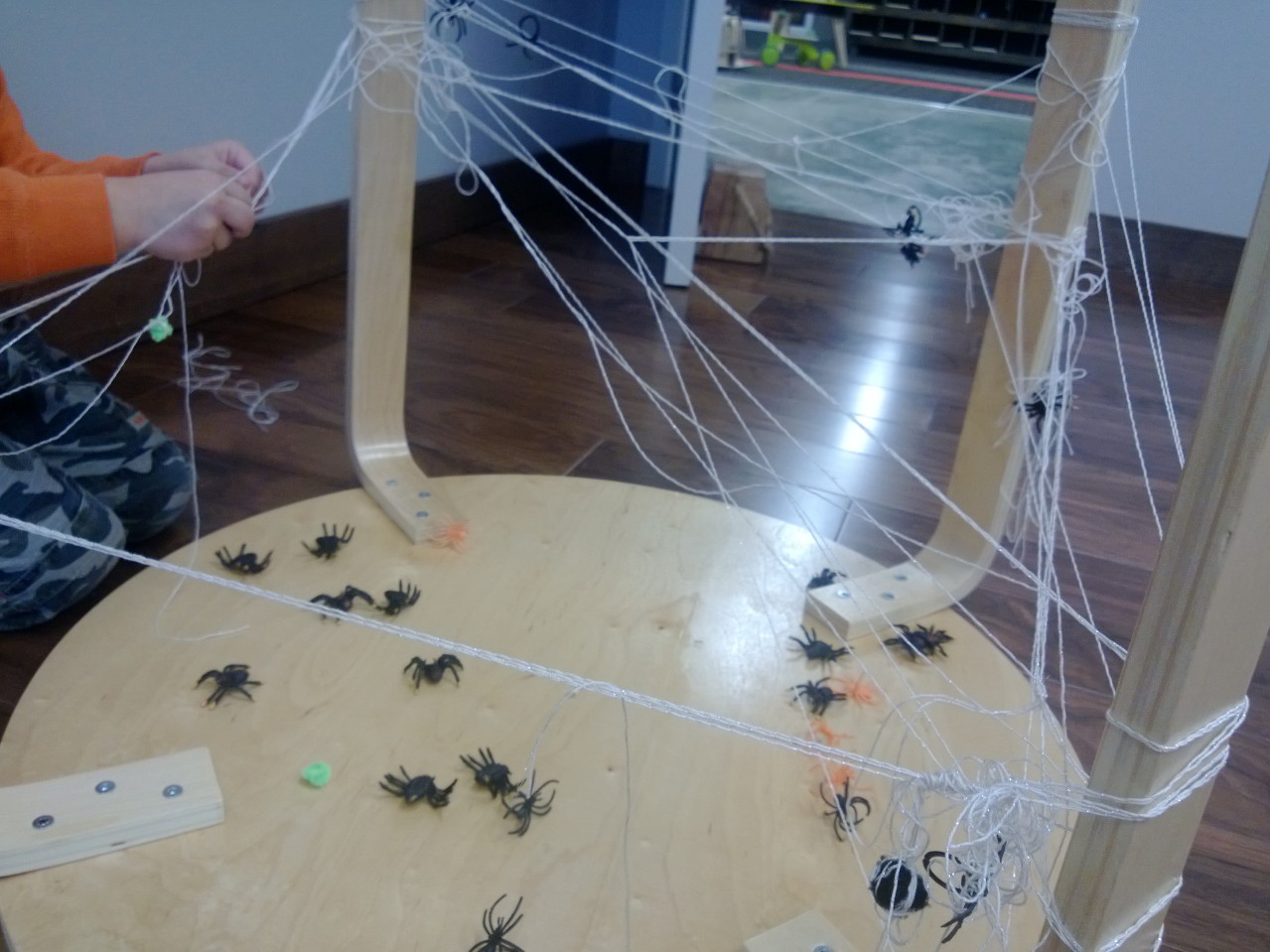
  • Turn a round table upside down and give the children a ball of string or yarn to make a web around the table legs.
table spider web
spider web on table
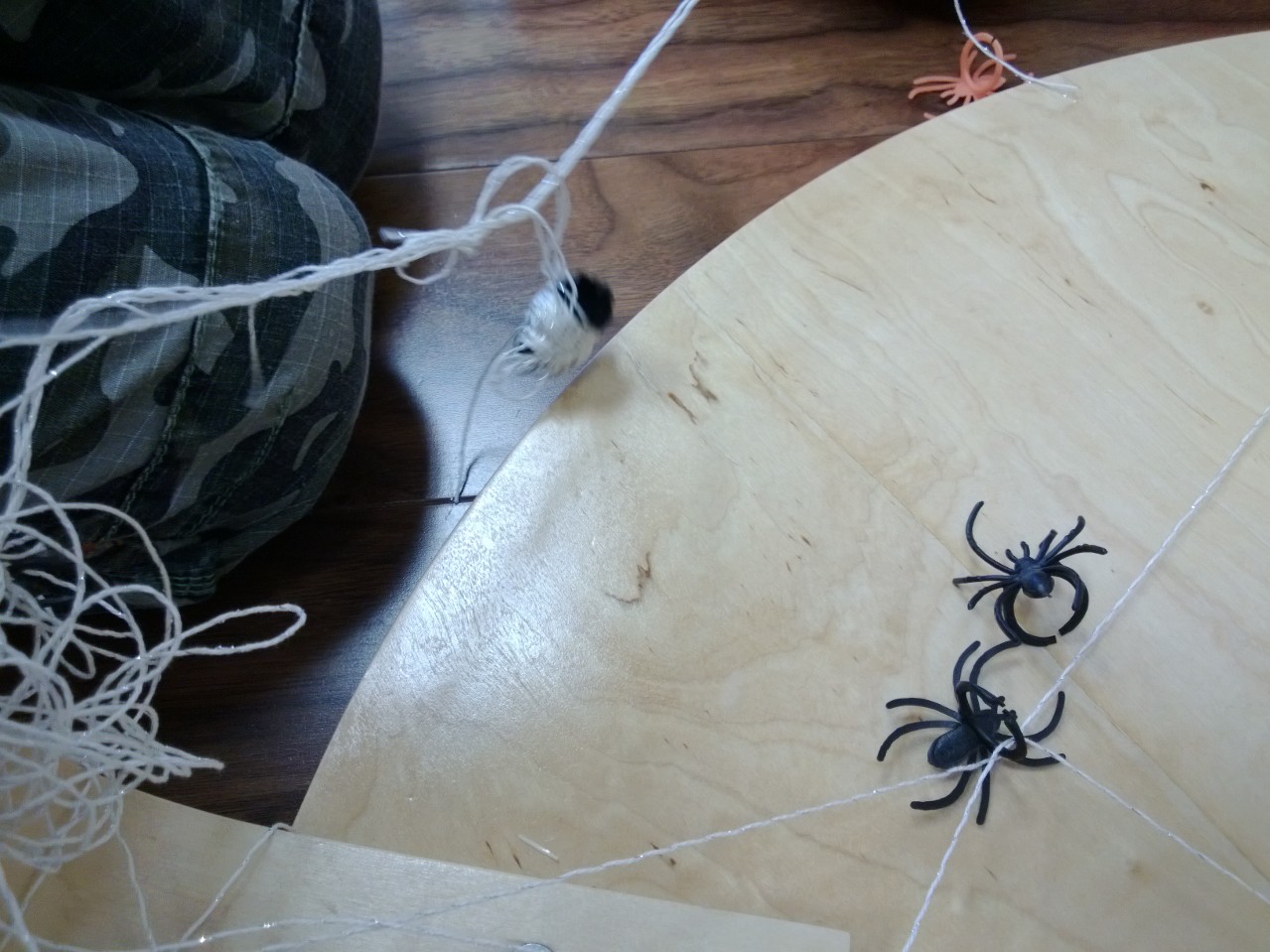
This child had watched the spider wrap up it's prey, so hung these around the web.
This child had watched the spider wrap up it’s prey, so hung these around the web.
  • Make a Velcro web and bugs from old socks or pairs of tights.   Throw the bugs at the web and see how many  get stuck.
velcro spider web
Spider web game At-Bristol
  • Sing the elephant and the spider web song
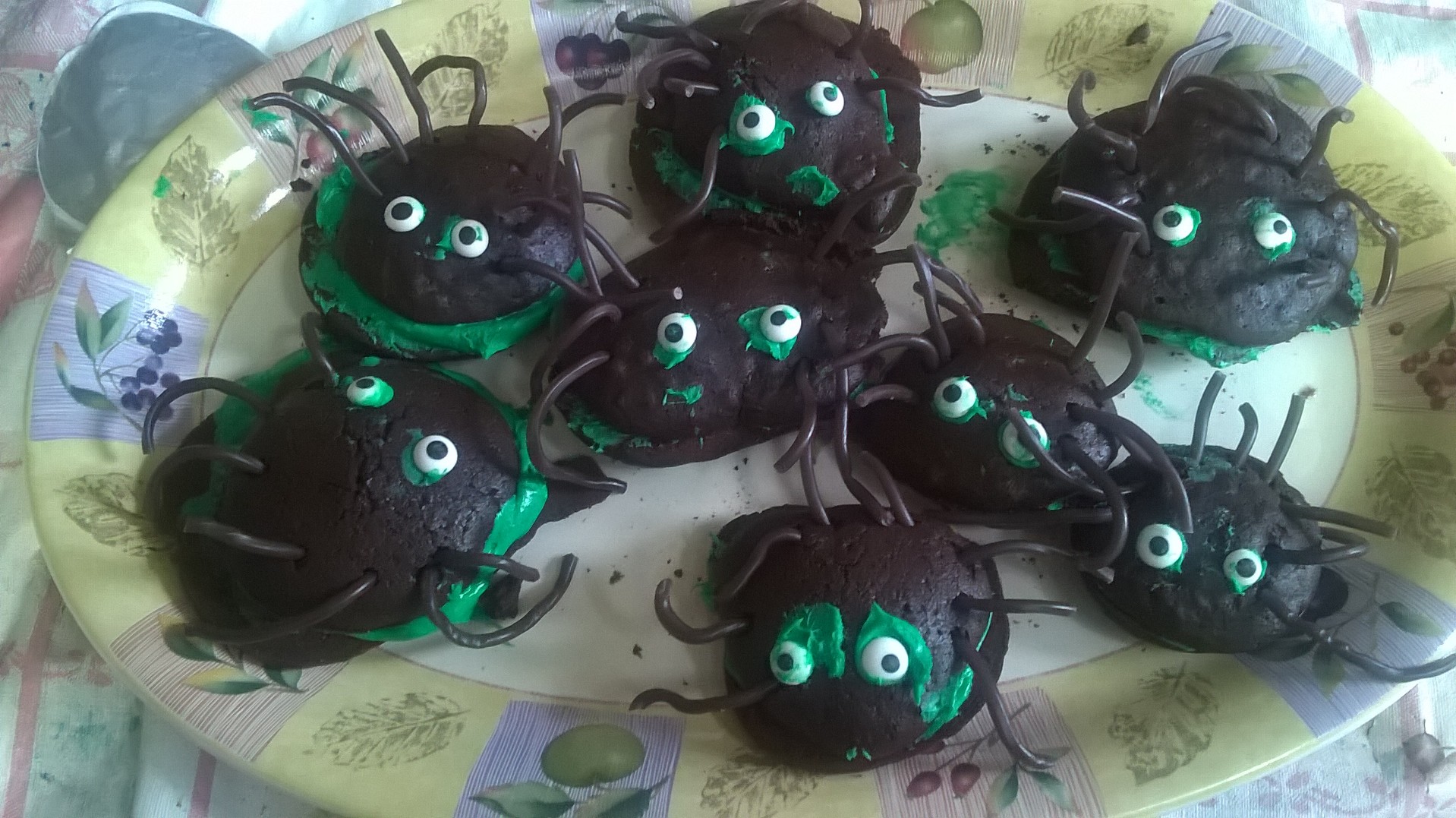
  • Pipe an icing spider web onto a plate and make spider cakes to fit inside.

spider cakes

  • Find a spider web to climb inside
dr mazes farm
Giant spider web at Dr Maze’s farm
  • Read books about spiders

  • Observe real spider webs
spider eats fly

The End of an Era – Goodbye Under 5’s

As an early education consultant, today is a momentous day. Tomorrow is my youngest daughter’s 5th birthday and so, after 11 and a half years, this is the last day I will have children under 5.

A few years ago I looked forward to the day when my children would be growing up but today I am a little sad for all the things I will miss.

  1. Their chubby little faces and hands
striped hat

2. Watching them play

3. Cute drawings

child's drawing

4. Messy faces

Finished!
Finished!

5. Thumb suckers

thumb

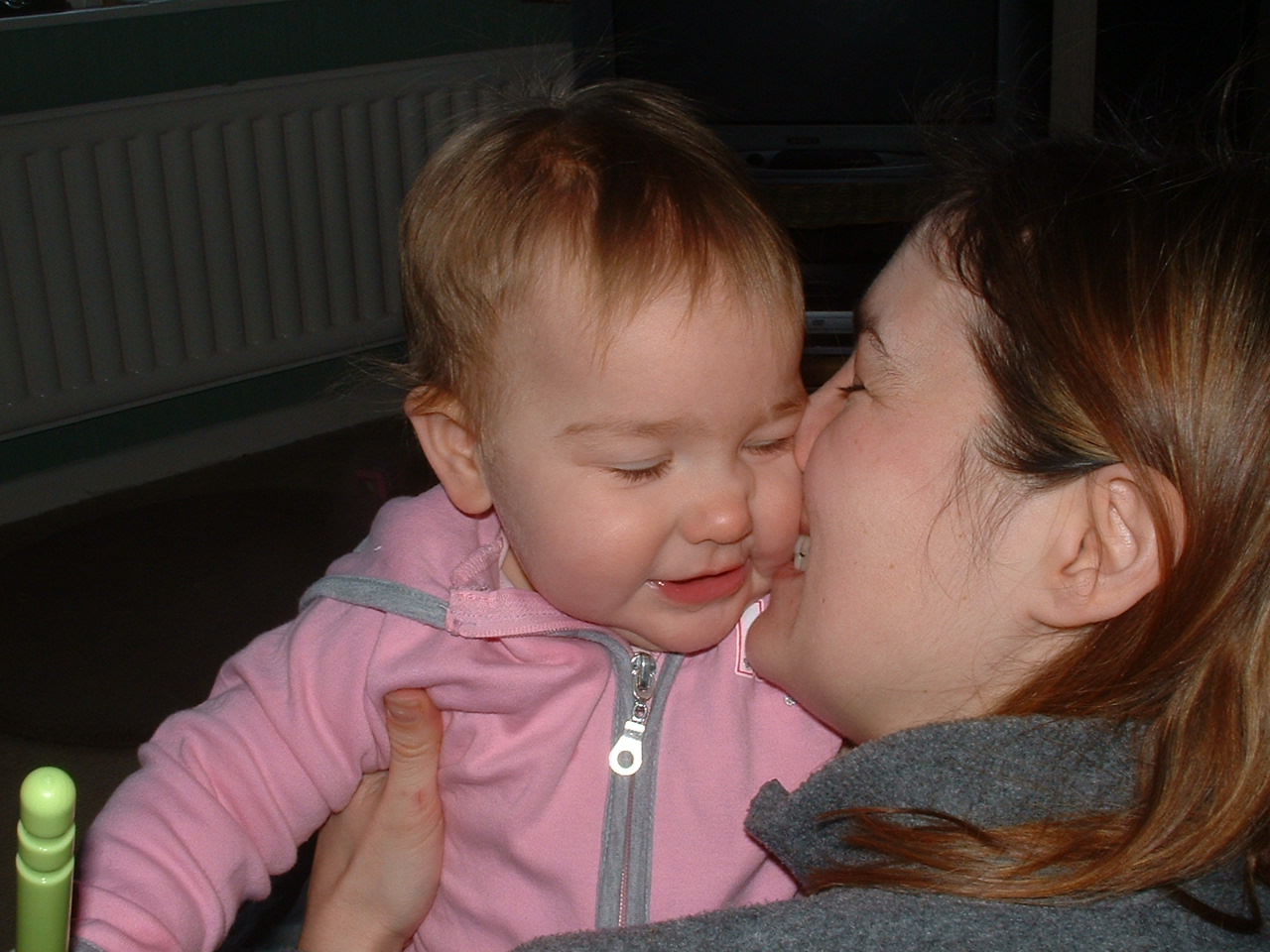
6. Kisses, cuddles and holding hands

mother kissing baby

7. Having a constant companion

pap

8. Learning to sing

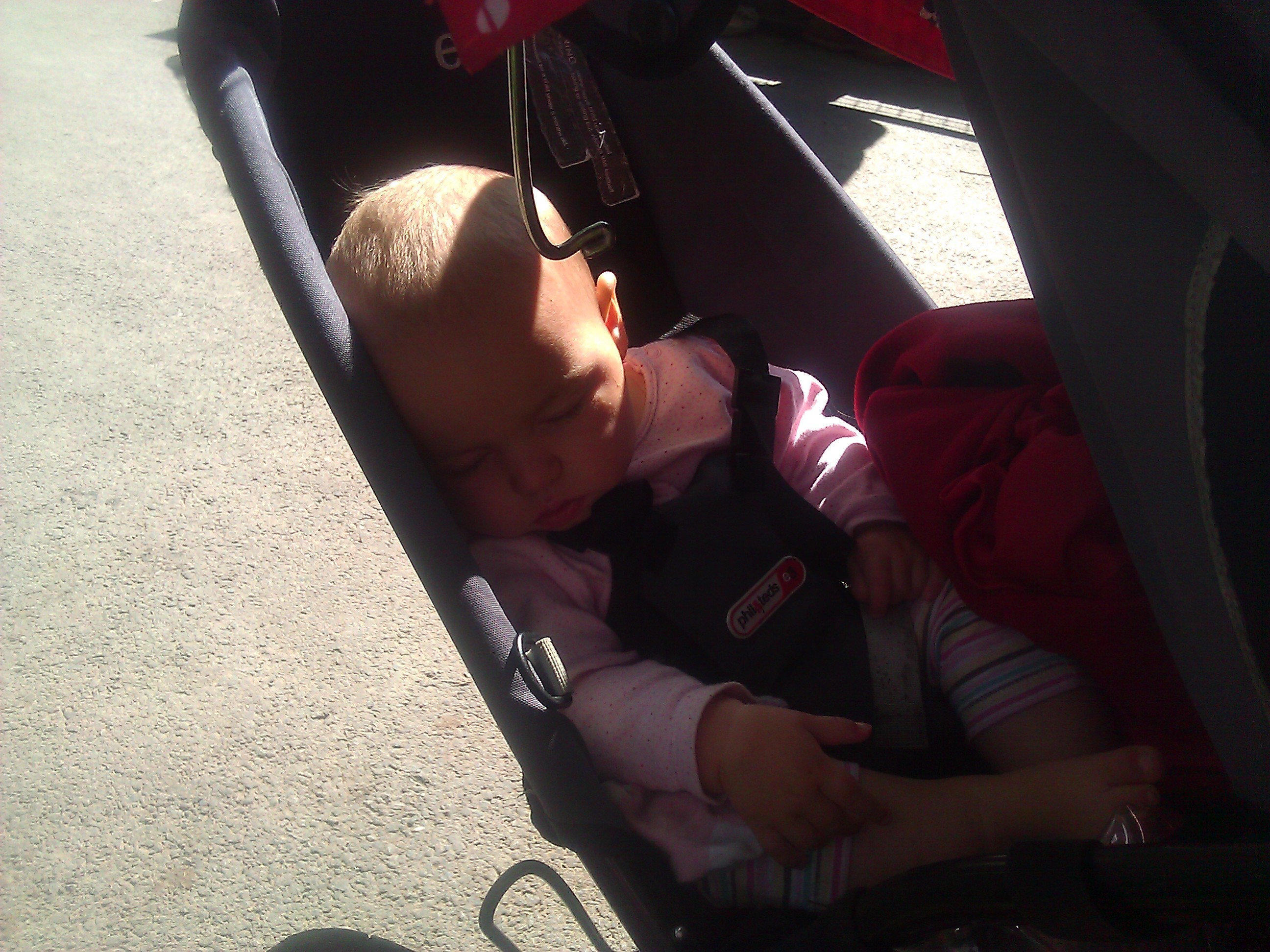
9. Sleeping babies

Had enough now mum
Had enough now mum

10. Everything about this

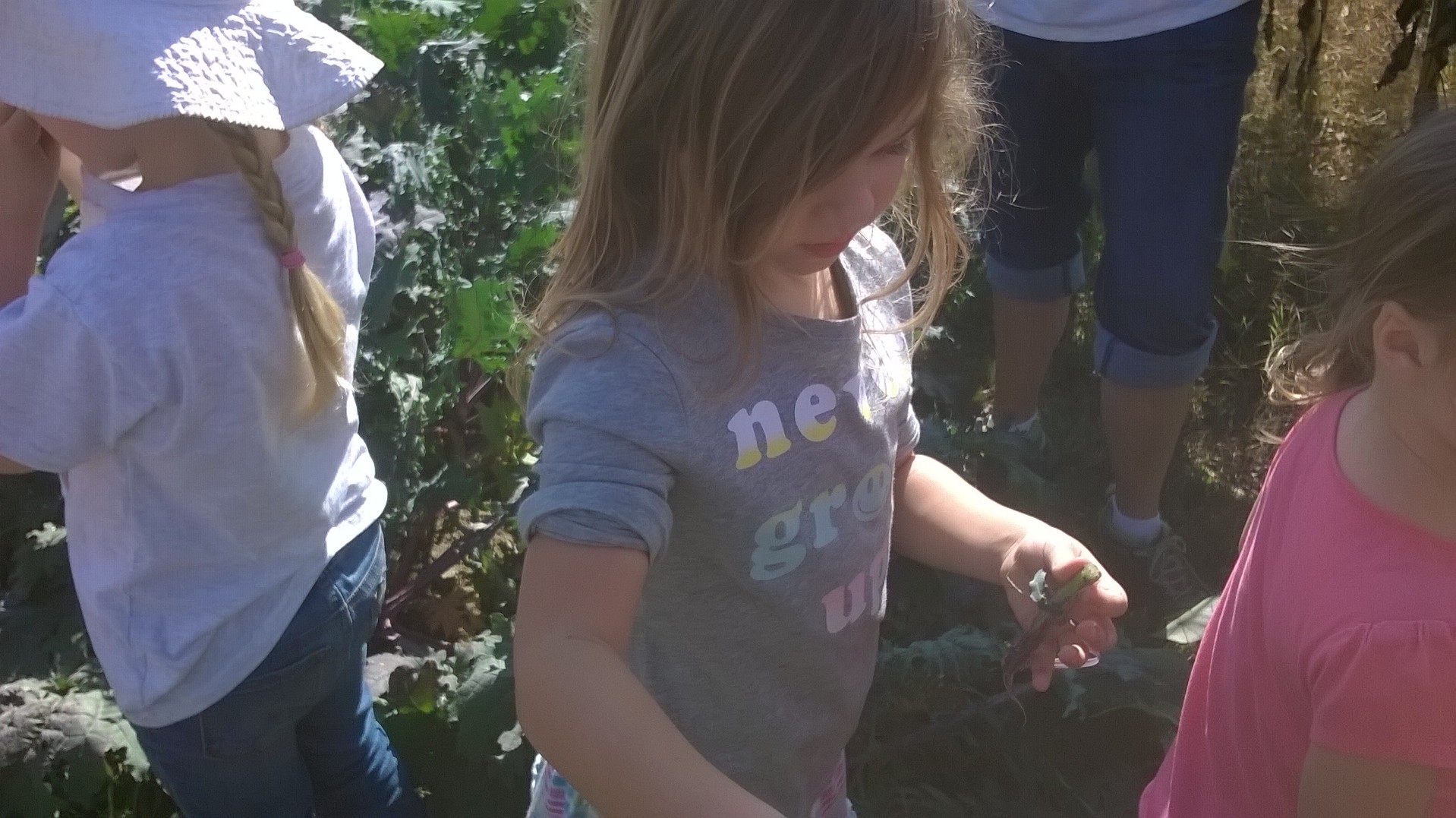
Luckily, I have almost a year before she goes to school, so lots of time left as a pre-schooler. Happy Birthday little one and as your t shirt says ‘Never Grow Up’
never grow up

Goals, Early Literacy and What is Really Important?

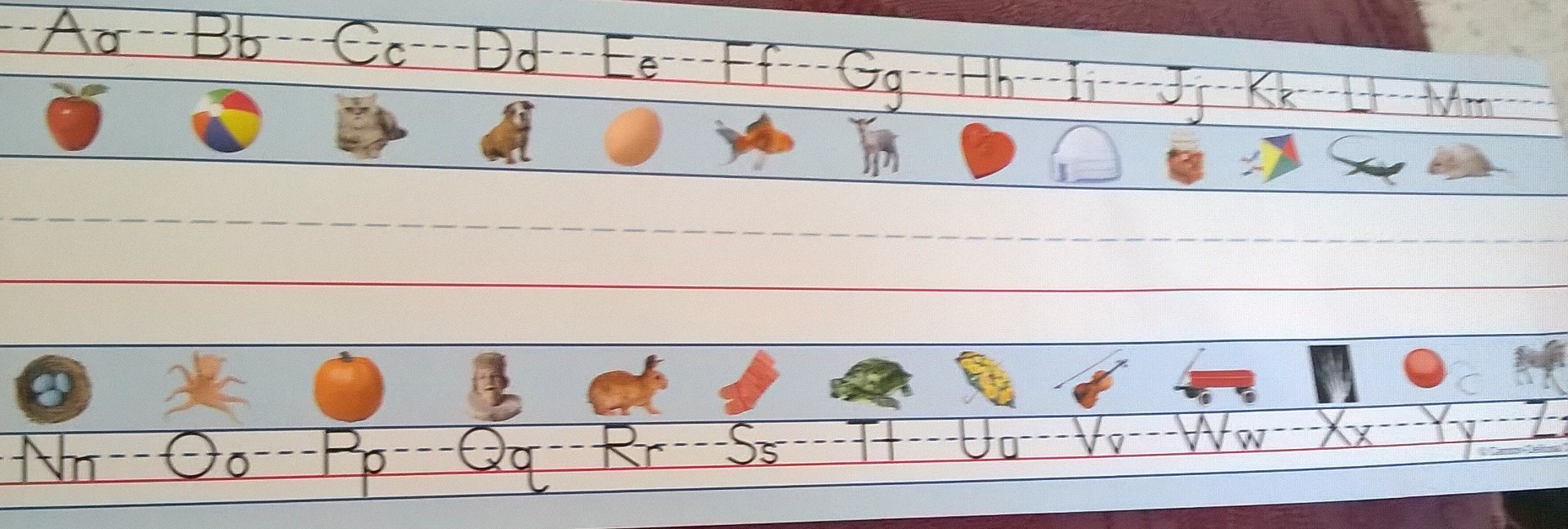
alphabetOne of the biggest parental concerns when children start school is how easily their child will learn to read.  This eagerness to give children the best start is driving academic instruction at an early age.  I recently heard of a school that had under 2’s learn flashcards, before they could move into the 2’s classroom. This anxiety about children reaching goals is often well-intentioned but it is a little like teaching a child to walk before they can stand.

Research suggests that there is a strong correlation between a child’s vocabulary and how easily they will learn to read.

Years of research has  told us that language is the foundation for literacy. Children arriving at school with lower levels of oral language proficiency, for whatever reason, are therefore at a distinct disadvantage for learning.

explain Professor Courtenay Norbury and Debbie Gooch in their article “Too much too soon? What should we be teaching 4-year-olds?” They recommend that the first year of school, is focused on developing these oral skills.

In Finland, children are only taught to read in kindergarten if they are able and interested. A far cry from the expectation that children will read in the US and UK systems. If the academic benefits aren’t convincing enough, then recent research from Stanford University suggests delaying kindergarten and prolonging play are also beneficial to a child’s mental health.

What about those children who already have the foundational skills for reading?  Would they be left behind if a play based curriculum without direct reading instruction was introduced? My belief is that most children who have developed an interest in reading and have the foundational skills, will read quickly and easily. Children who are ready to read, will have individual attention and not have to complete easy worksheets with the rest of the class,  in a school system that is released from the constraints of ensuring all children will learn to read in their first year. The teacher will be able to support those children to develop their literacy in a meaningful way.

If we want our children to be interested and skilled in literacy what are the most important factors? My article for Parentmap ‘What’s really important in early literacy?’ explores this further.

I sometimes wonder what parents aspirations are for their children.  If we constantly drive them towards academic goals and achievements, to extra credits, advanced classes and better colleges so that they can have careers that demand long working hours but good pay, what message are we giving children? That working hard, earning money and being successful are important at the expense of life experience, family life, fun and hobbies?  I wish it were easier to stop worrying about what our children will achieve and think more about what sort of people they will be.

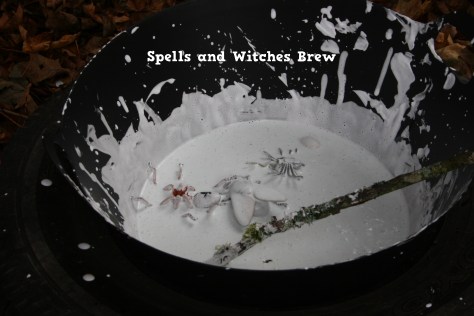
Hallowe’en Activities: Spells and Witches Brew

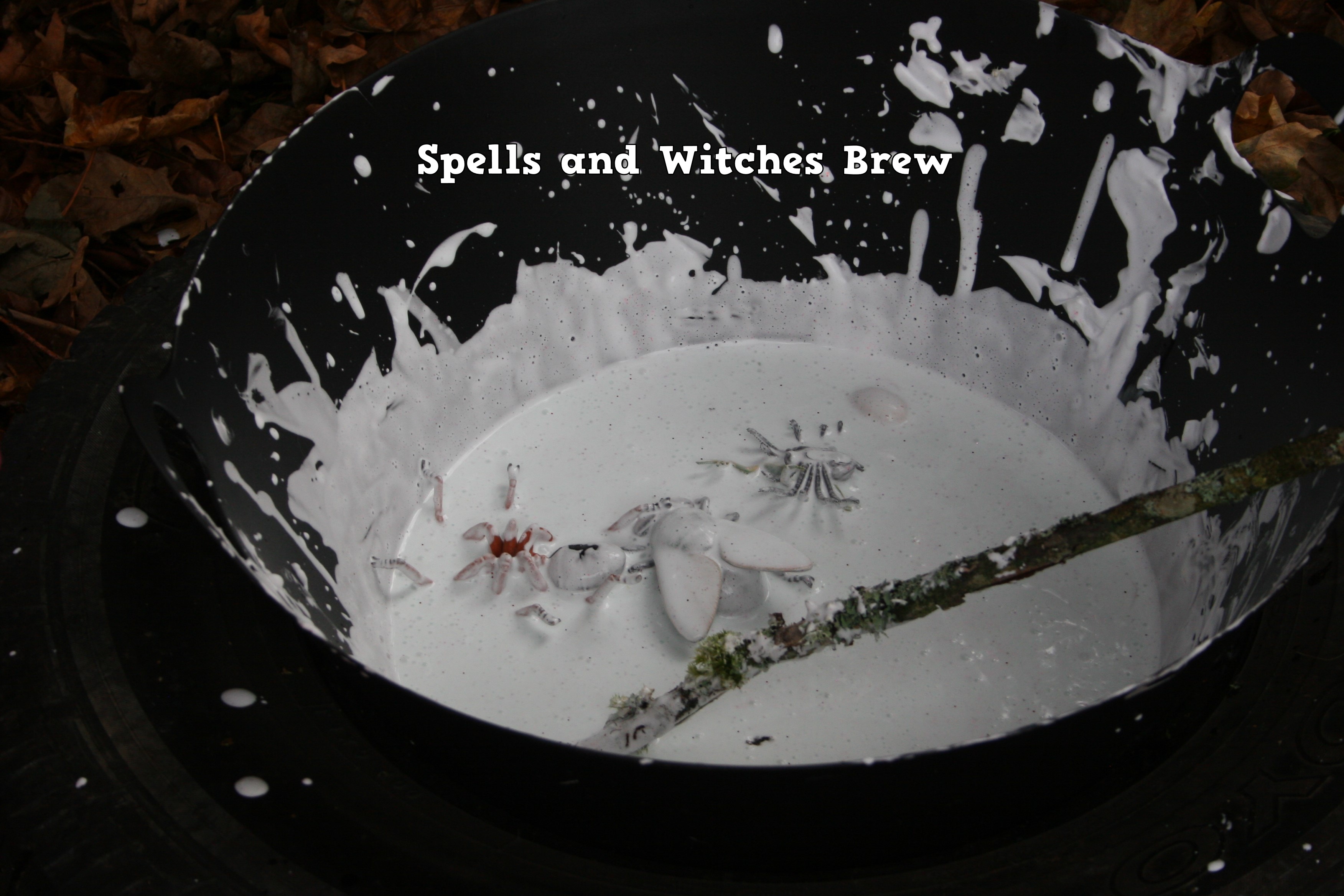
spells and witches brew

One of my favourite Hallowe’en activities as a teacher was creating spells and dancing around the cauldron. The children were transfixed by the iron cauldron that emerged from the kitchen and wondered if it might belong to a real witch. Dressed in witches hats and cloaks, we would imagine fantastical ingredients and create spells that would transform us into dragons, frogs or birds, that would make us fly, shrink or become invisible. It was a fun way to explore rhyme, share ideas and use our imaginations. We left ‘spell books’ in the mark making area and the home corner became a witches cave complete with potion bottles, spell books and jars of bugs, bats and frogs.

My girls love to make potions, so when I told them about it, they loved the idea but wanted to make a real witches brew.
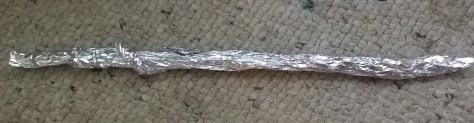
tin foil wand


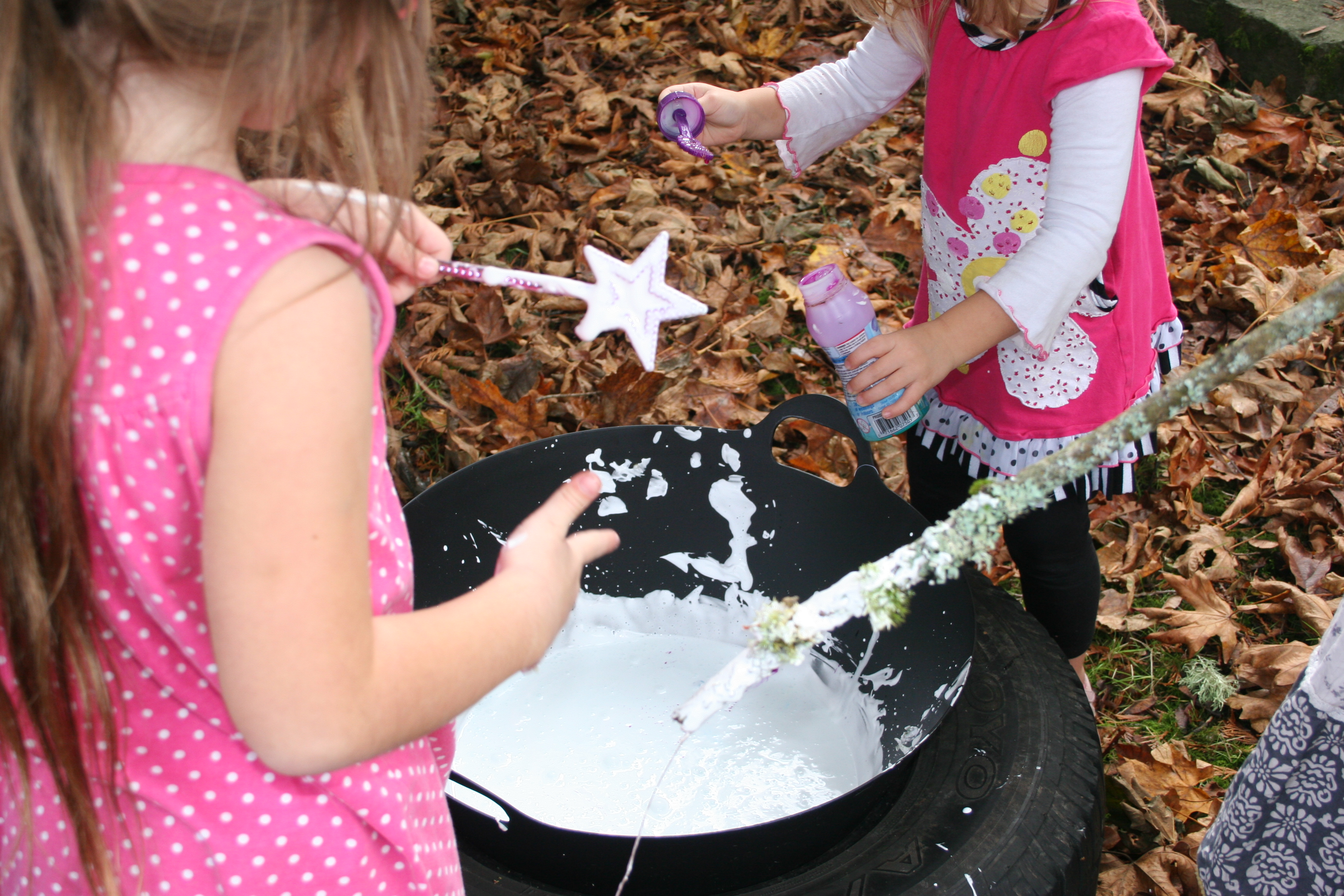
To start, we made wands from tin foil and chose witches hats and capes. Tin foil wands are simple to make if you have limited time; wrap tin foil around a pencil or simply roll and scrunch the foil into your desired shape.   If you are more ambitious, make wands from sticks by stripping off the bark, adding ribbons or painting them in special colours. I also like these Harry Potter wands from Red Ted Art

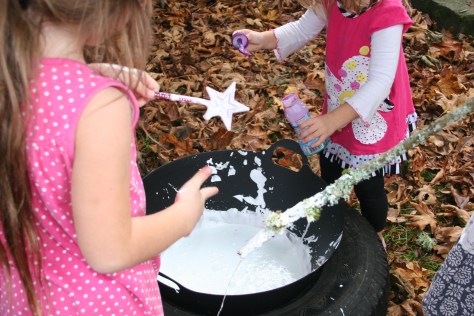
With wands in hand, they chose ingredients to go into the brew.  They didn’t think witches and wizards used shaving foam or cornflour to make a spell, so they chose gruesome alternatives.  Flour became giant’s dandruff, hair gel was ogre snot and fuzzy balls became warts.
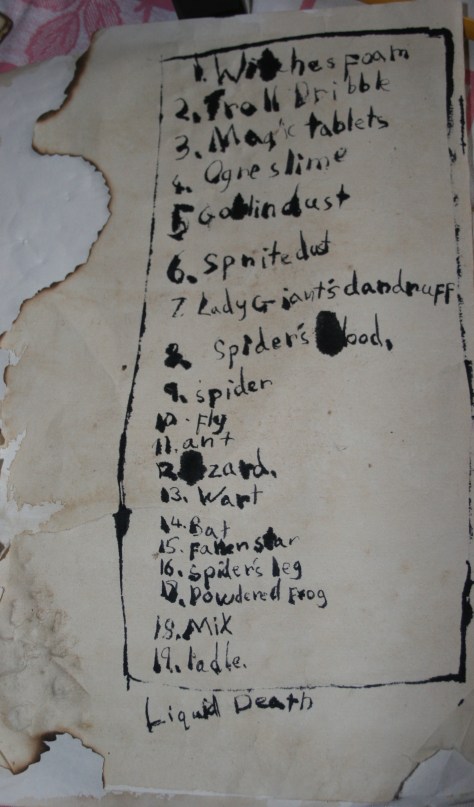
spell

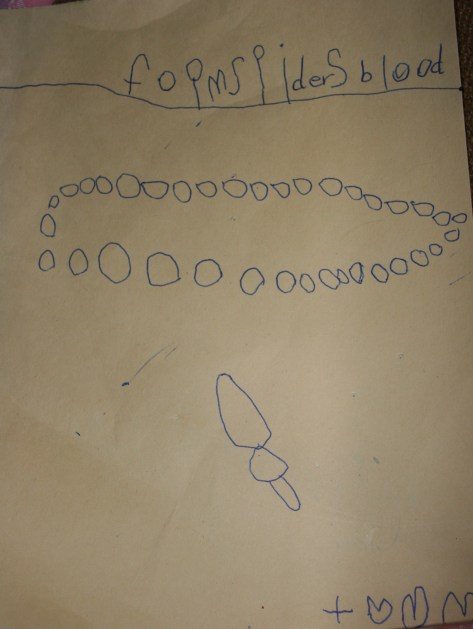
The girls wrote down their ingredients so they could remember the order in which to add them .
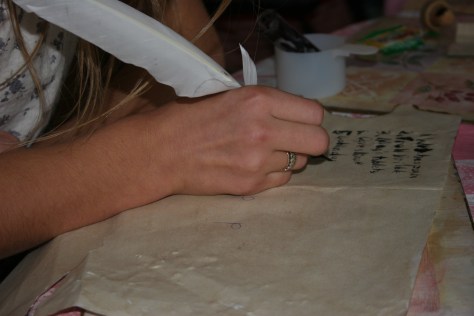
quill writing

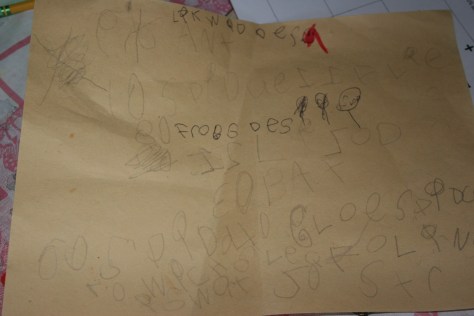
It didn’t matter that my youngest is only just beginning to write, she found her own way.
potion recipe

spell ingredients

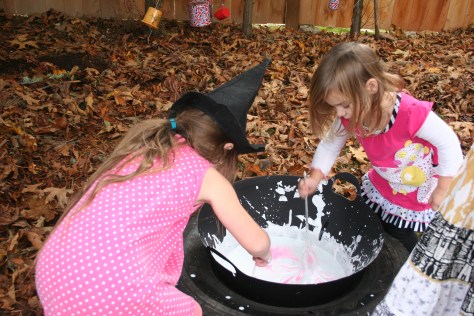
Armed with spells, wands and witches hats, they made their way outside to the cauldron at our potion station. One by one, they tossed the ingredients into the cauldron, stirring it and modifying the quantities until they were satisfied. Then it was time for the spell.

Wibbly wobbly wibbly wog

See the little jumpy frog

Wibbly wobbly wibbly wagon

Turn the frog into a dragon

We looked for the dragon but decided it was hiding amongst the clouds.
witches brew

The dance around the cauldron resumed with another spell.

Wibbly wobbly wibbly wog

See the little jumpy frog

Wibbly wobbly wibbly wat

Turn my mum into a bat


Thanks girls, I’m not sure  I want to hang upside down from a tree.
 

witches brew
The potion remained in the cauldron for sometime and became the central point of their witch and wizarding school.

Suggested ingredients for a witches brew

  • Jello/jelly powder (makes it smell great)
  • mud
  • hair gel
  • shaving foam
  • flour
  • glitter
  • coffee grounds
  • leaves and petals
  • plastic bugs
  • coloured water
  • baking powder-

Further Ideas

  • Give the children collection bags and a card with ingredients for a spell, in picture and written format.  Ask the children to find the objects they need and place them in the bag.
  • Give the children a group of objects and ask them one at a time to add a specific number into the brew.
  • Chant around the caldron and make spells that require the children to make specific movements e.g make us slither like a snake, make us jump or stretch up tall.