Last Hallowe’en, my daughter decided she wanted to dress as a burglar. She chose the idea because “burglars are bad but not really scary like monsters or devils.” At school they are not allowed to dress in gruesome costumes but my kids believe that Hallowe’en costumes should be scary, to capture the true essence of the holiday.
One of our favourite books is Burglar Bill by Janet and Allan Ahlberg. We laugh at the antics of Bill and the baby, every time we read it. When another burglar book came their way, the girls were very eager to read it.
Izzy the very bad burglar tells the story of Izzy, a young burglar, who comes from a family of excellent burglars. Every time Izzy steals something, she gets a bad feeling in her stomach. Izzy tries to tell her parents but they tell her she must be a good burglar. Izzy tries different ways to make the feeling go away but it always returns, until eventually she finds a solution that might just work.
My 7-year-old shared her thoughts about the title,
I thought it was going to be about a burglar who is really bad, you know, like she does bad things but really the title means that she isn’t very good at being a burglar.
The underlying message of the book is to do what is right and not bow to peer pressure.This resonates perfectly with the 3-6 age group, who have a clear sense of right and wrong. It would be a perfect book for teachers to introduce a moral discussion. Teachers could talk about good and bad by introducing the following questions. Are burglars bad? Was Izzy bad?What does it mean to be bad? What made Izzy different to the other burglars? Do you ever get a feeling like Izzy did when you do something unkind?
Izzy the Very Bad Burglar is written and illustrated by Amy Proud is available in hardcover from May 3rd in the US and May 19th in the UK.
Disclaimer: We received a complimentary copy of this book.
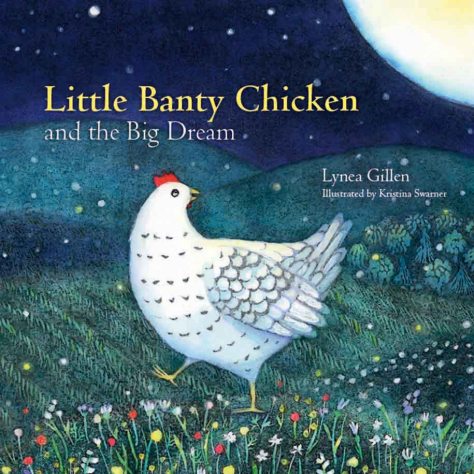
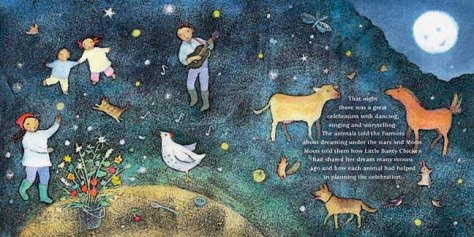
Little Banty Chicken is a tale about the importance of dreams and how sharing them helps them come true. Written in the style of a traditional fairy tale, it tells the story of a chicken who, on the moon’s advice, tells his dream to his friends. Each friend encourages him to move towards his dream and contributes to its realisation at the end the story.
Little Banty Chicken and the Big Dream is written by Linea Gillen, a teacher and counsellor for over 30 years and delicately illustrated by Kristina Swanson.
The story is both engaging and inspiring but I found the talking points and activities at the end really captured my children’s imaginations. The key question is “What is your dream?” a question that young children may need to think about for some time.
My-7-year-old knew immediately what her dream was but in a very deflated manner said,
” I don’t think anyone will be able to help me make my dream come true.”
“Why not?” I asked.
“Well, I want to stop all the animals from becoming extinct and I don’t think anyone can make that happen”.
This particular dream began after we read an article about the danger of large carnivores becoming extinct in the next 25 years. She often asks how we will be able to stop people killing animals. This is a big dream indeed and doesn’t have a simple solution.
We talked about how this is the kind of dream that can’t be achieved on your own. Asking other people to help could be a way forward.
“But who could I ask? I don’t think anyone will know.”
“Well perhaps not now, but as you get older you will be able to find people who know how to help and work together.”
“You mean like a scientist?”
“Exactly, or groups of people who work together to help it to stop”.
Real, face-to-face communication is necessary for developing essential life skills such as empathy, conflict resolution, problem solving, and more. And when problems arise – when life hurts us – we need real world communities for support. Many adults see asking for help as a weakness and find it hard to delegate. These skills are an important part of children’s social and emotional learning. ‘Little Banty Chicken and the Big Dream’ is a perfect way to introduce these concepts to young children.
Disclaimer: I received a complimentary copy of the book for review purposes.
For this months art lesson with First Graders, I wanted a project that came from their own imaginations and displayed their creative expression.
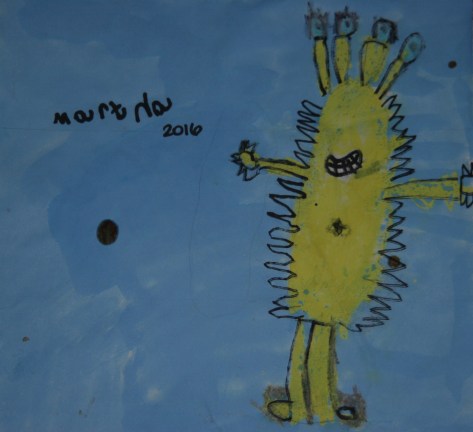
Knowing that my own children had invented wonderful monsters with charcoal, I decided to make colourful ones with oil pastel.
Some children struggle with inventing a character from their imagination, so I started the lesson with a book to provide inspiration and illustration of shape, texture and size.
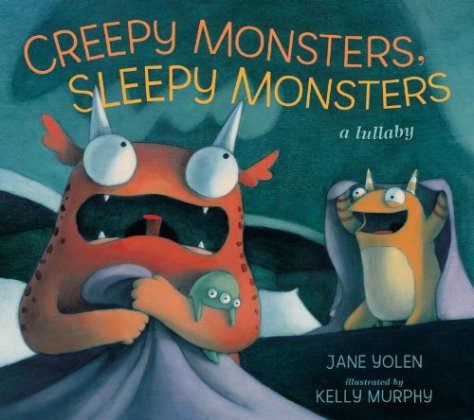
I chose the book Sleepy Monsters, Creepy Monsters because the text is simple and does not distract from the visual images and the illustrations depict a variety of monsters.
We talked through the pictures, noting features such as eyes on sticks, number of legs, spikes and shapes and discussing the function of these features.
Once the story had finished I instructed them to think for a few minutes about what they would like their monster to be.
Did it have a particular function?
Where did it live?
What would it eat?
Was it a kind or scary monster?
The children then drew their outline shapes on the paper. Once I had checked the size of the monster, the children were given oil pastels to add detail and colour it in. I asked them not to leave any white spaces, except for the background so that they would be as vibrant as possible.
When the children were satisfied with their drawings, they were show how to use a Q tip/ cotton bud dipped in baby oil to blend the oil pastels to a smooth finish, without any white spaces.
Finally they outlined their drawings with a black sharpie to add definition.
The background was applied with a watercolour wash.
I asked my daughter about her monster.
The 2 eyes on the right can turn all the way back, so they can see behind them.
It has spikes to protect itself from people. Monsters are scared of people, that’s why they attack us.
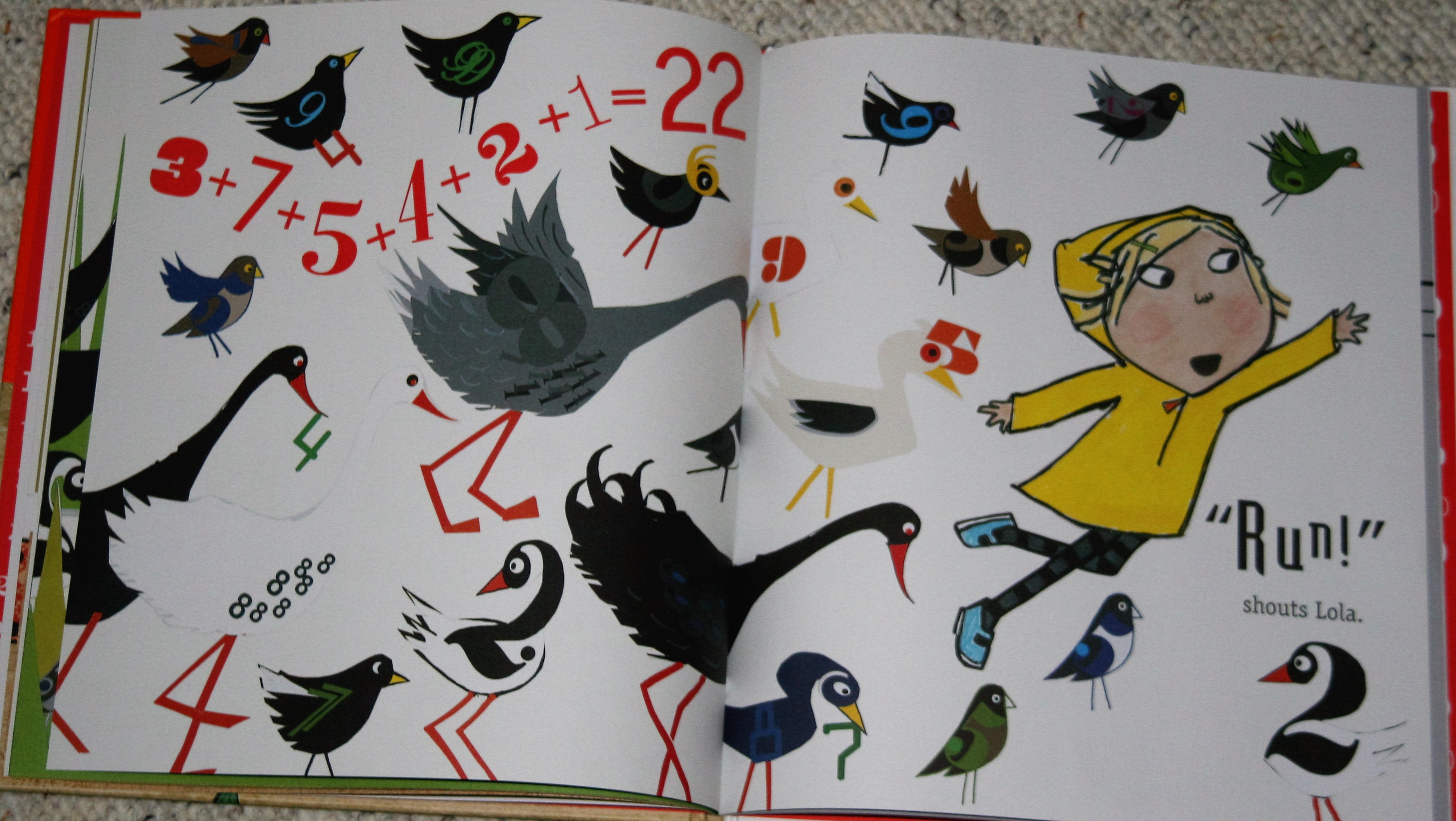
Don’t turn the page yet! Let me start with the biggest number; so 7 plus 3 is 10, plus 2, plus 1 is 13, plus 4 is 17, plus 5 is……. 22. Now turn the page -Yes! I was right, 22.
This wasn’t a maths homework exercise but a bedtime story for my 5 and 7-year-old.
Regular readers will know that I am a huge Lauren Child fan. Her version of Goldilocks and the 3 Bears features in my top 5 books for the Under 5’s, my eldest daughter read and re-read the Clarice Bean series and our visit to Lauren Child’s exhibition was like a step into Wonderland.
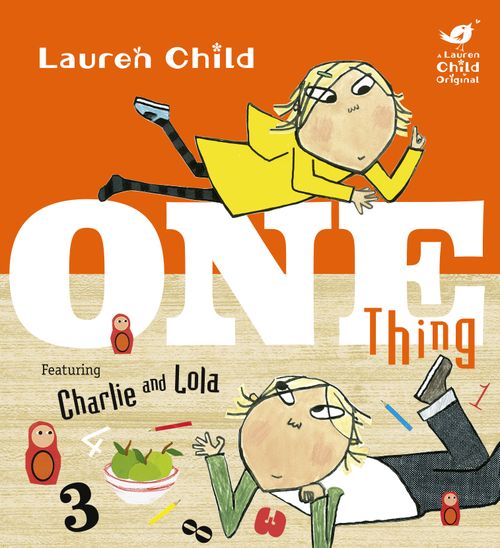
As I was browsing books for the younger ones for Christmas, I discovered a brand new Charlie and Lola book called ‘One Thing’. With great excitement, I quickly contacted friends from the UK who were coming to visit and asked them to bring a copy. I didn’t know what it was about but as the Charlie and Lola books are amongst our favourites, I was looking forward to finding out.
As an additional surprise, a new Ruby Redfort book popped into my recommended items. It may seem a little sad, but I react in the same way to a new Lauren Child book as I would to news of a concert from my favourite artist. My eldest daughter loves Ruby Redfort and I usually pre-order them but somehow I had missed this one. Her face was a picture when she unwrapped it on Christmas day. She says this is her 2nd favourite in the series, beaten marginally by the first book. On finishing the book, she immediately wrote a letter to Lauren Child, explaining how much she enjoyed it, asking her questions and telling her about her own life. Through Lauren Child’s writing, children sense a genuine interest in what they think, feel and do which I believe, compelled my daughter to correspond.
One Thing is Lauren Child’s 5th Charlie and Lola book. Most Charlie and Lola books are adapted from the television scripts. The television series is based on Lauren Child’s characters and she collaborates closely with the script writers but there are only 5 Charlie and Lola books written by Lauren Child:-
We love the television series but the Charlie and Lola books from the series don’t have the same sparkle for me, so I am always brimming with excitement when a new one from Lauren Child is released.
‘One Thing’ did not disappoint my giant expectations. In usual Lauren Child fashion, ‘One Thing’ captures perfectly the workings of a young child’s mind. The story begins when ‘mum’ promises Charlie and Lola ‘one thing’ when they go shopping. The book takes you on a number journey, tapping into the minds of children like my own, who count everything and work out number problems in their head.
Lola talks about numbers and Charlie gets frustrated, adding up the time it takes Lola to get anywhere. All of the number references are displayed as sums, puzzles or hidden numbers in the illustrations. It is a wonderful introduction to maths for young children but ‘One Thing’ is more than an educational number book. The book recognises the natural way that children see numbers everywhere and is full of discoveries for an inquisitive mind.
One Thing is a delight for adults to read. I particularly identified with Lola’s constant distractions and Charlie and mum’s negotiations with her,
“What are you doing?” I say.
Lola says “I am just trying to count the dots on my dress but I am not sure what comes after twelve.”
I say “Missing going to the shops comes after twelve.”
It is a perfect example of a picture book where text and illustrations are dependent on one another, each enriching the other. I asked the girls what they liked about the book,
“I like finding all the numbers” said my 5-year-old “and I like Charlie and Lola”.
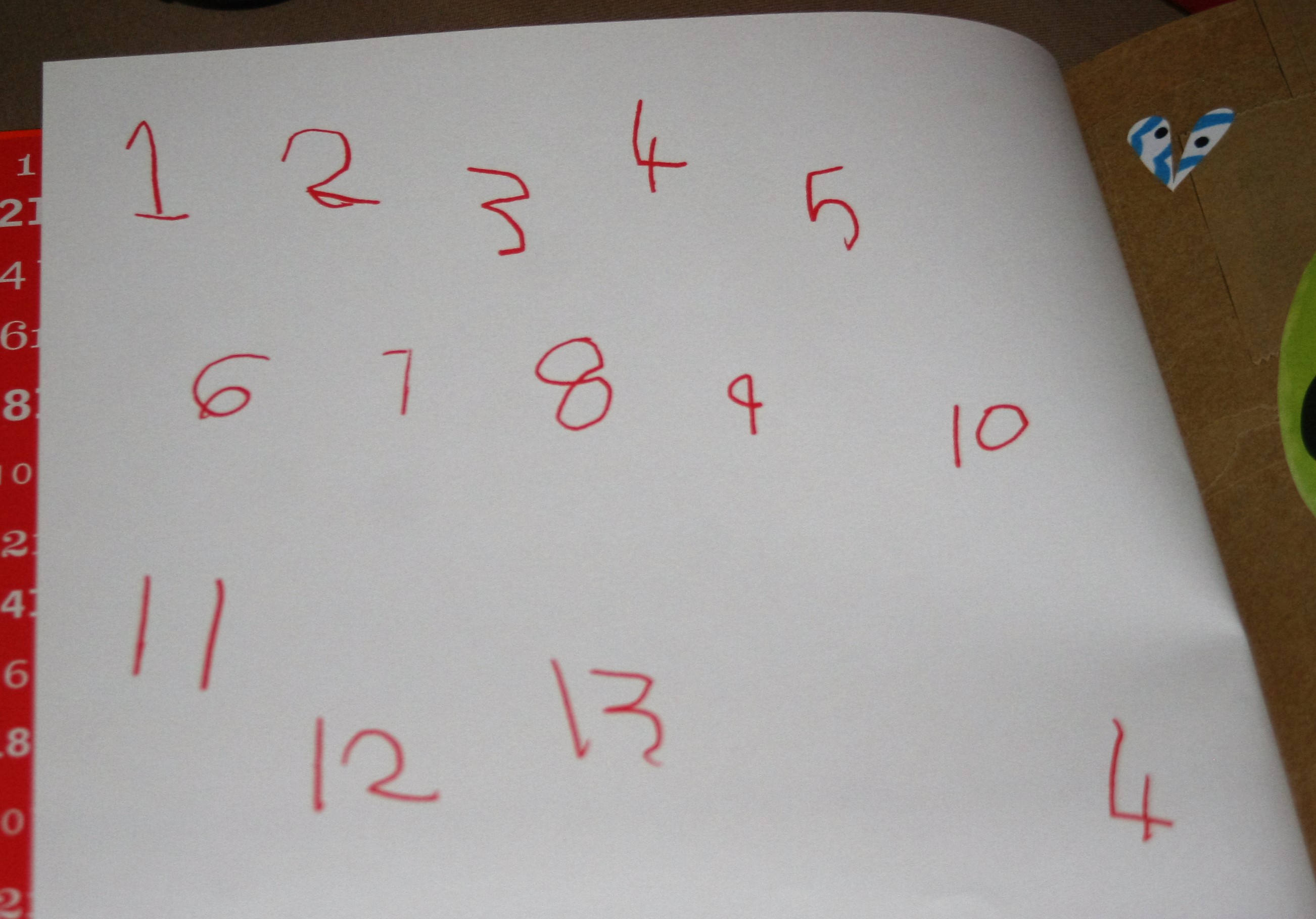
Each time we read it we find something new, from the title page with handwritten numbers,
Why did someone write on it?… Oh, I think it’s meant to be like that. I think it is meant to be Lola’s writing.
…to discovering the number of minutes it takes Charlie to get ready hidden in the pictures,
“Oh look the toothpaste is a number 3”.
This was their favourite page.
They returned to it multiple times, trying to find the numbers hidden on the birds. We couldn’t find a number 3, perhaps you will have better luck.
Thank you Lauren Child for another book to treasure.
One Thing is available in hardback in the UK and for pre-order in the US.
Disclaimer: This is a personal recommendation. I completely, absolutely did not get paid or get free stuff for writing this post.
Toy shop shelves are laden with toys claiming to be educational. For toddlers and babies, this usually means something noisy, requiring batteries. I have always held that there is little educational value in such toys. In my experience children play with them for a short period of time before moving on to something else.
Alison Gopnik discusses the manner in which children experiment with toys in her book the Philosophical Baby. A toy that worked by moving levers was presented to a group of 4-year-olds. The adults demonstrated to the first group, how it worked, while the second group were left to work it out for themselves. The second group spent significantly more time playing with the toy than the first, who quickly abandoned it once they understood its function.
Another recent study led by Professor Anna Sosa of Northern Arizona University focused on children between the ages of 10 and 16 months old. She gave families three different kinds of toys to play with; books, traditional toys like stacking blocks and electronic toys. The toys that stimulated most conversation were books, closely followed by blocks. The families playing with the electronic toy shared very little conversation, allowing the toy to do the talking for them.
If you are considering which toys to buy for a young child, these points may help.
The most important resource we can give to babies and toddlers is ourselves. Spend time playing tickling games, singing to them, playing rhyming games, blowing bubbles or rolling a ball.
Other suitable toys for babies and early toddlers include small musical instruments for exploring sound ( saucepans, spoons and homemade shakers work equally well), a treasure basket or board and cloth books.
Think about toys that they will play with for a long time. The best toy investments for our family include magnatiles, wooden blocks, paper and pencil, a magnetic drawing board and play food.
Toys do not need to be expensive. Children can have hours of fun with a balloon, pot of bubbles, home-made play dough or a cardboard box.
The infographic below has many more developmentally appropriate ideas for play.
Art is not part of the curriculum in our school district, instead all elementary art lessons are taught by parent volunteers. Once a month I volunteer to teach in my daughter’s class. A monthly art lesson seems a little piecemeal and I often wish that there was time to delve deeper into projects. With this in mind, I often teach lessons that inspire children to discover a new medium or learn about an unfamiliar type of art. Picture books can be a good starting point. Below are some of my favourites .
The Noisy Paint Box
My children are fascinated by abstract art. I recently introduced them to the works of Kandinsky after they created abstract art on our mirror table. This book tells the story of Kandinsky’s life as an artist and explains how he expressed his feelings and senses through painting. As a boy he felt he could hear the paint box hissing and at a classical music concert saw colours and shapes before his eyes, that expressed the music.
My 3 year olds latest canvas
After reading the book,encourage children to paint what they feel as they listen to a piece of classical music. Discuss their feelings and document some of their comments with the painting. Try playing different genres of music to see how their reactions change and explore together how this was reflected in their painting. A large scale collaborative painting to music could develop this theme further. Explore the differences in expression and how they all fit together to make a complete painting.
2. Korgi
The captivating black and white illustrations in this textless graphic novel inspired this project about monsters. The drawings here were in charcoal but pencil drawing or pen and ink would work equally well.
3. The Mr Men
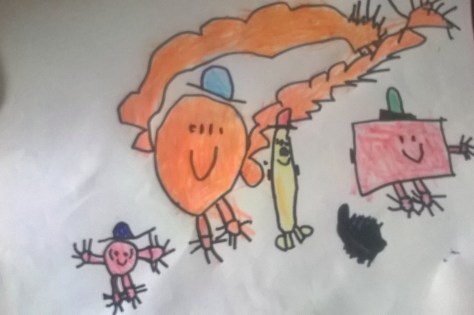
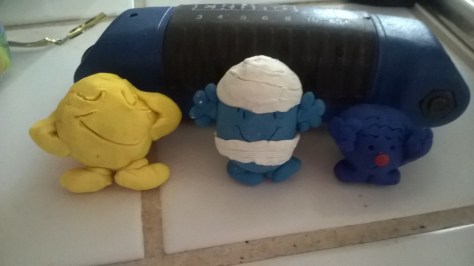
Strangely, the Mr Men have been one of the girls favourite things to draw and model for some time. The book’s back cover displaying all the Mr Men make it easy for them to choose a Mr Man to copy.
They used polymer clay to make 3D representations. Their simple forms make them perfect for introducing young children to polymer clay or modelling smaller characters. It also helps them to see how their drawings can be translated into a 3 dimensional model.
They even created their own Mr Man – Mr Tae Kwondo.
4. How are you Peeling?
We loaned this book from the library and it was a firm favourite. On each page fruit and vegetables are photographed to represent an expression or emotion. It has inspired us to search the supermarket for interesting vegetables and would be even more fun if you grow your own. It would make a wonderful photography project.
5. Leaf Man
Leaf Man is a good introduction to collage and art using natural materials. The story of leaf man is illustrated using photocopies of leaves on a colourful torn paper background. We used this for an art lesson in my daughter’s Kindergarten class and here are some of the finished projects.
Further Suggestions
The Tiny Seed – paint flicking
The Hungry Caterpillar – collage (Eric Carle describes how he creates his pictures in this slideshow.)
Camille and the Sunflowers – a story about Van Goch
All 3 of my girls had the same favourite book at the age of 2. I didn’t encourage it, but somehow ‘The Elephant and the Bad Baby’ by Elfrida Vipoint hit the spot for all of them.
The story is highly repetitive, so much so that it drove my husband insane every time he read it. It is also quite long.
So why would it be so popular?
The repetitive text is most likely what they love the most.
Repetition is important for young children as it helps them to remember and learn. Knowing what comes next is comforting in a generally unpredictable world. Small children love repetition, it means that they can join in and demonstrate how much they know. As they hear the story language time and again, they come to anticipate words and phrases and will insert the vocabulary if the reader pauses at key points, as seen in the video clip. They will even correct you if you get it wrong (as I did). Children, as they become older, memorise repetitive books and can be seen to be ‘reading’ them to themselves, before they can actually read the text. This is a very important starting point for learning to read.
I knew my youngest children would learn to read and write in the US and as a result I would have to accept that they would spell differently and use American phrases and grammar. There are some unexpected differences however that I hadn’t considered.
A few days ago my 4-year-old remarked,
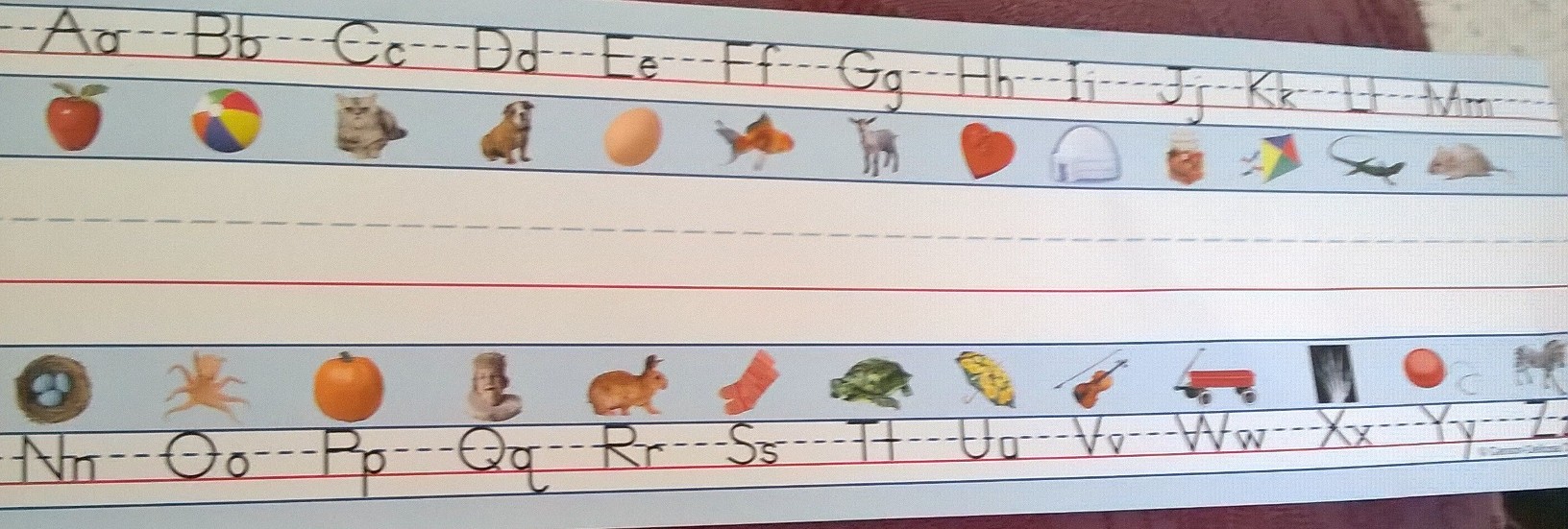
“Mummy, all the other children at preschool don’t write t’s properly”
“Really! Can you show me”
It is a bit like an x, like this……
My youngest is 4, I taught her to write her name but it never crossed my mind that letter formation might be different here.
I asked my kindergartener
” Do you write a curly bit on the bottom of the letter t at school?”
“No we do it like a cross”
I checked with the teacher and she explained that they use the ball and stick method where letters such as t, w and y use straight lines rather than curves as they feel it is easier for the young children to master. It is one of many differences that I hadn’t anticipated.
I always believed the transition would be most difficult for my eldest, who went to school in England until she was 8, so learned to read, spell and write ‘the English way’. The first thing she noticed, was that punctuation had different names; full stops were periods and brackets became parentheses. We were really keen that she wouldn’t lose her knowledge of British spelling, so school agreed that she could learn both. As an avid reader and proficient speller this wasn’t really difficult.
Choosing books wasn’t simple either. Most books by British authors are rewritten for an American audience. When we borrow books by British authors from the library or buy books here, they are American versions. My daughter is really eager to maintain her ‘Britishness’, so we often order books from the UK. This way she can still read books with British spelling and vocabulary and is able to read literature from both cultures. Tonight we read an American translation of Pippi Longstocking. This was my daughter’s favourite book for many years, so she knew much of the text by heart. Every time she spotted a difference, she would quote the British text. In the end we got her old battered copy down to compare. I was surprised that though the meaning remained the same, the texts were very different. The monkeys name was different and the language in the British version was more detailed and poetic (although I am sure that the original Swedish is even more rich).
“A remarkable child” said one of the sailors, wiping a tear from his eye when Pippi disappeared from view. (British translation)
” A remarkable child” said one of the sailors as Pippi disappeared in the distance (American translation)
My daughter’s desire to maintain her British identity isn’t without its pitfalls. Once she was marked down in a piece of writing because she referred to a ladybird rather than a ladybug (which I felt was a little harsh).
I thought things would be simpler for the younger ones because they started school here but they have been faced with different challenges:
1. The alphabet ends with zee (my daughter has decided that it makes more sense the American way because the song rhymes).
2. What sound does a short ‘o’ make? To us it is o as in fox, box and top but American pronunciation is different, instead it makes the sound a as in fax, bax or tap. Confusing but also a little amusing to the girls who still have perfect English accents. I think I was fortunate that my daughter was beginning to read when she went to school and had already learned basic phonics so this wasn’t too much of an issue.
3. School reading books have American phrases which to a Brit’s ears sound totally wrong and often make me shudder. An examples from today’s reading book is :
Let’s go find Leo.
The omission of “ly’ at the end of adverbs is common as in ‘We need to be real quick’. I suppose one positive is that the girls generally notice and remark that it sounds different. When my daughter reads a word that we don’t use, she substitutes it for the British word “I’m just going to say mum not mom”.
4. Sometimes they complete worksheets where they have to circle pictures that begin with particular letters. This can be confusing if the British word is different from the American or if it is something traditionally American like baseball equipment.
On the whole I think the girls awareness of the differences gives them a far richer experience of the written word. It certainly gives us a lot to talk about.
I had an interesting conversation with a grandmother at one of my recent classes. In the class we decorated pebbles. The children were aged 2-4 and she had joined with a 2- year-old who was fascinated by stones. He drew on the pebbles and then she helped him to add eyes.
When she took her grandson home, her daughter looked at the stones and remarked that it was not his own work. She felt that during her own childhood, her mother had never been satisfied with her art projects. She would always offers suggestions for improvement, rather than accepting it the way that she wanted it and felt strongly that she would encourage her son to express things in his own way.
At the next art session, the grandmother was clearly reflecting on this with interest. She stood completely back from the child as he was scribbling and snipping, without any interference and discussed her daughter’s comment with me.
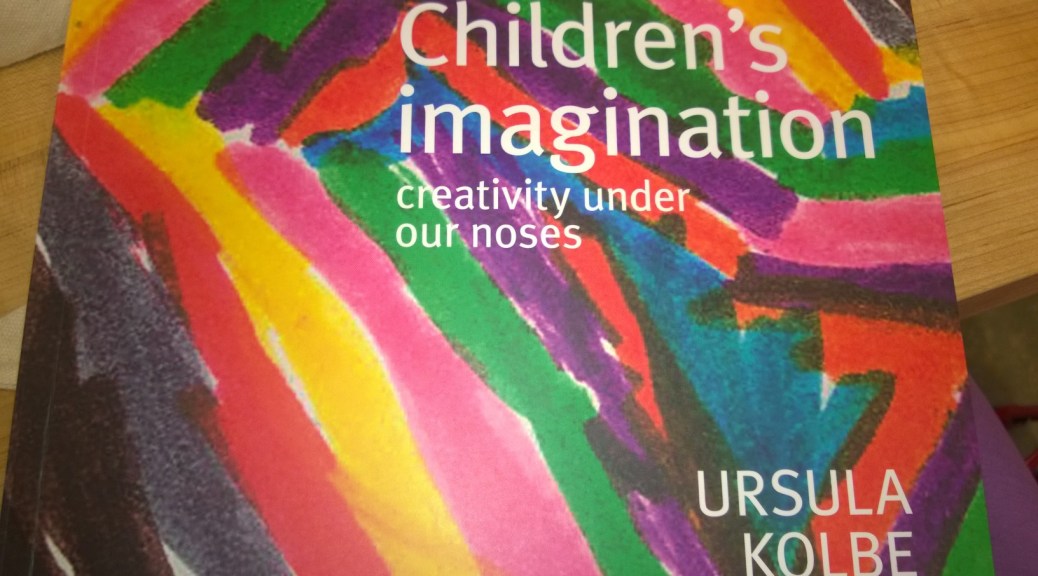
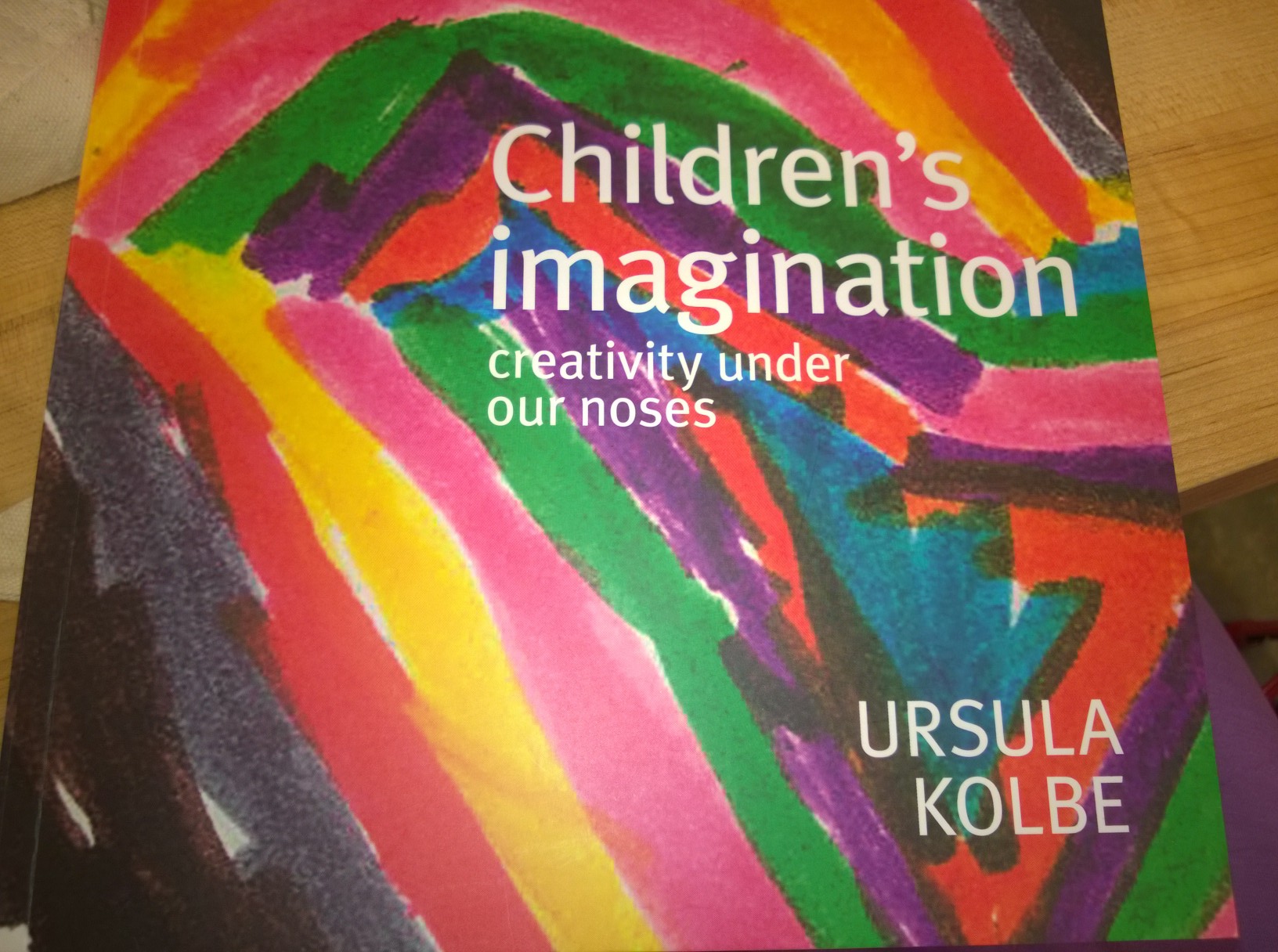
I found her reaction interesting; she clearly wasn’t comfortable with the distance but wanted to respect her daughter’s wishes. We discussed the balance between taking over and being on hand to help or extend learning. I explained my response to children when they are learning to draw, discussed in ‘I Don’t Know How to Draw Ducks’ Feet’ – How to Support Young Childrens’ Drawing,” Sometimes it is hard not to take over when a child says they can’t do something but a little support can encourage a child to trust in their own ability. Thankfully, I had recently finished reading Ursula Kolbe’s latest book Children’s Imagination: Creativity Under Our Noses
The role of parents in nurturing creative children is the main theme of the book. It encourages parents to see that creative play can arise from the simplest things and that letting go will foster children’s imagination.
If we want to nourish children’s creativity what exactly is the adult’s role?
“All too often we adults feel the need to label, to continually teach, wheras close attention and companiable silence are often more valuable. Valuable because then anything can happen” Kolbe says.
The role of the adult is to:
Provide Resources
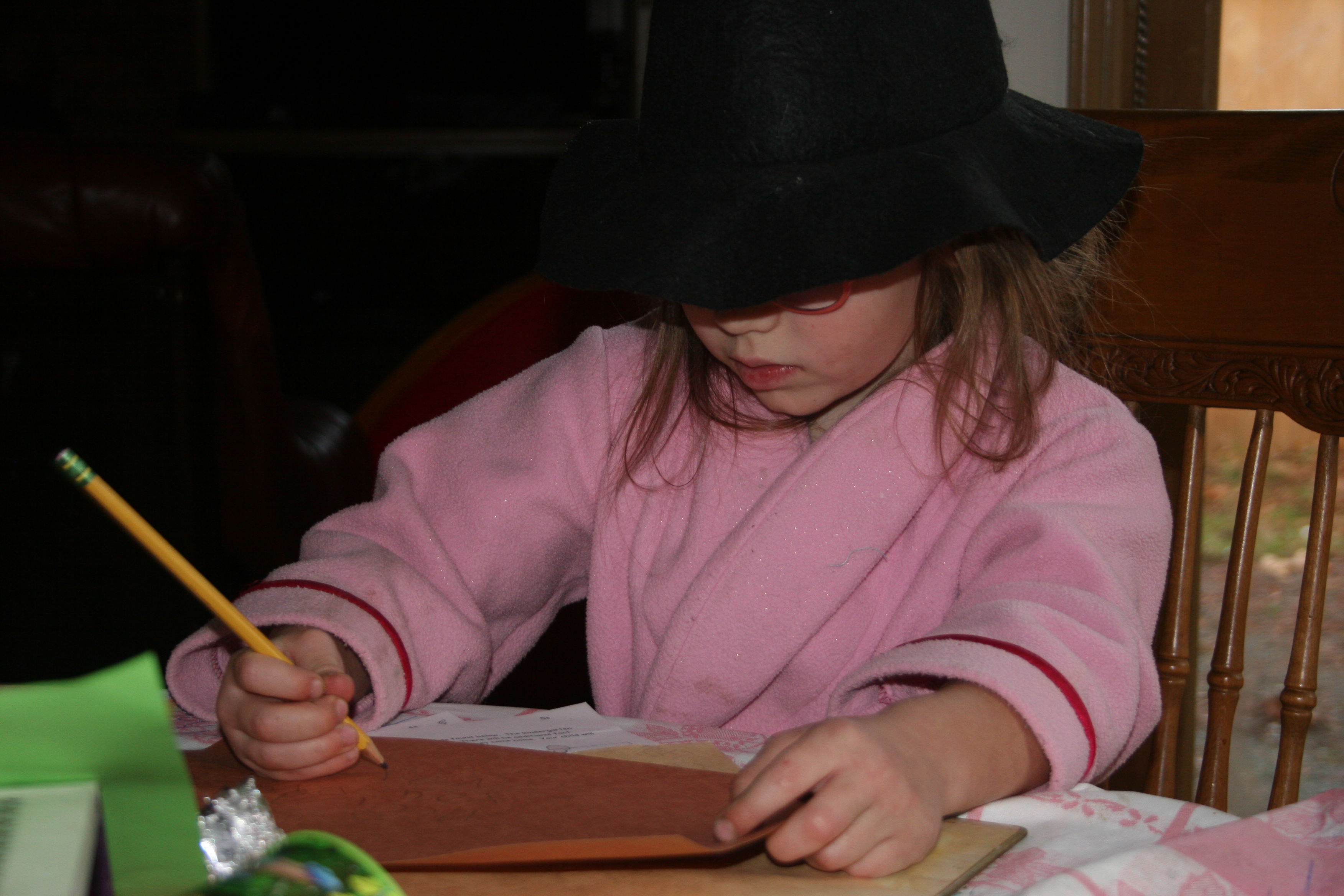
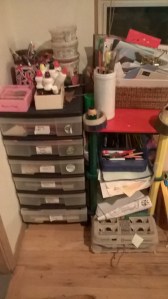
The adult’s role is to provide interesting materials. A constant stream of new materials, however, leaves little room for development of expression. If, on the other hand, a variety of materials are easily accessible, children can choose those that interest them.
The greatest possibilities occur, as children ask “what can I do with this?” Perhaps,this is why children love the outdoors, where loose parts are plentiful. At home, I keep paper, pencils, scissors, watercolour paint, brushes tape and glue next to our kitchen table. Most mornings the girls will go to the shelves, take a piece of paper and scissors and create something. My kitchen table is rarely clear but I love to listen to their stories as they draw their latest picture or make a sign for imaginative play.
Observe and Listen
One of the simplest pleasures is to sit and observe a child or group of children at play. The little pearls of wisdom that children offer could otherwise be missed. Observing encourages teachers and parents to question why things happen or how play can be extended . Loris Malaguzzi describes it as
“Catching the ball that children throw us.”
It is easy for parents and teachers to find a wealth of activities for their children to do but most of the time it isn’t necessary. If we follow the children’s lead we can become their supporter, encourager and co-explorer explains Kolbe.
“A steady diet of adult-chosen, one-off activities denies children opportunities to find the extraordinary in the ordinary for themselves”
Time and Space
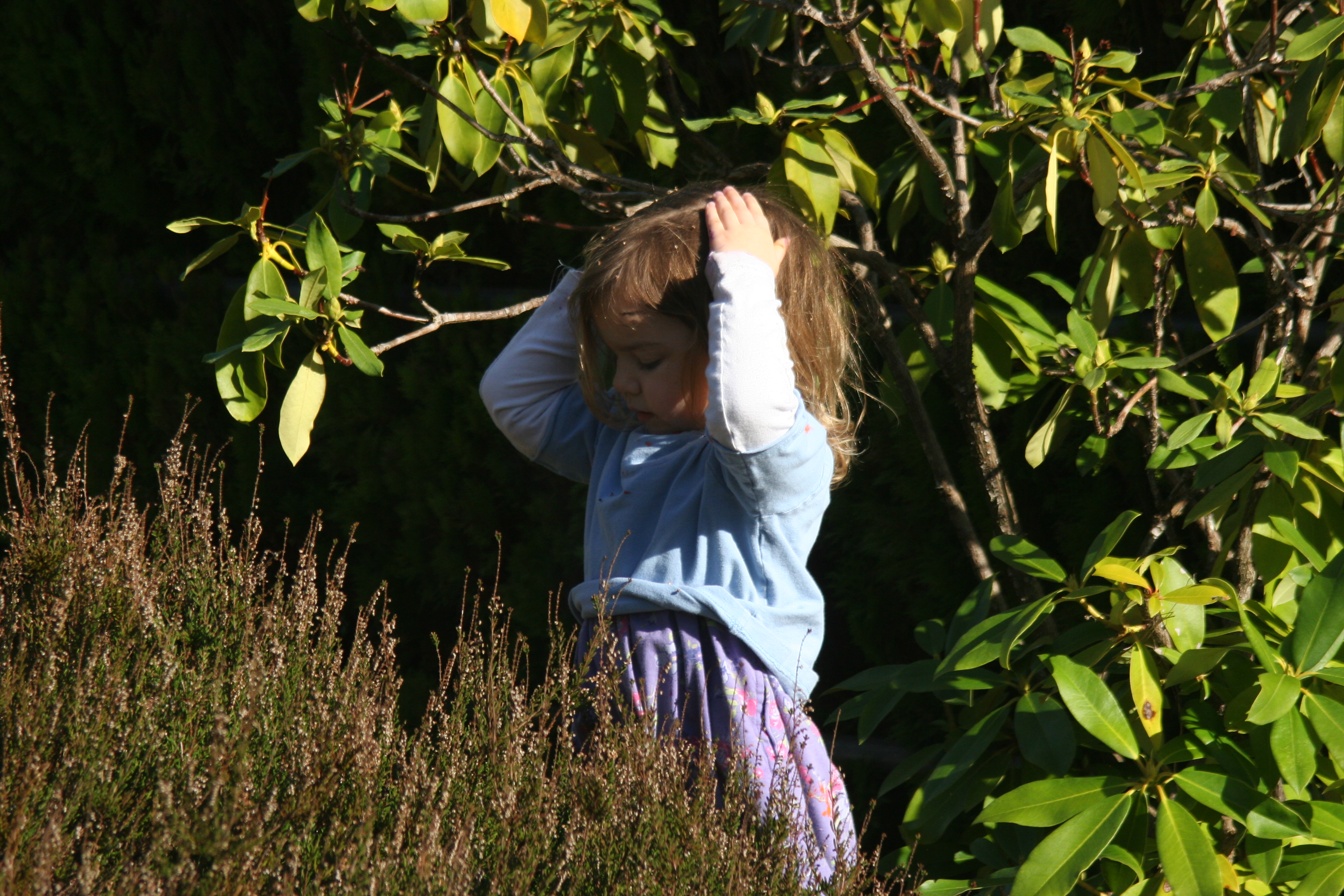
The most important things we can give children are time and space. Our role, is to provide inviting materials and allow children unhurried time to explore them, revisiting as many times as they would like. Unhurried time is almost impossible at school, where a strict timetable needs to be followed. I think it is vital therefore, to provide this at home. My children were upset recently at a local playcentre, because their things were tidied away before they had finished playing. Leaving things out for a while shows that their creations are valued and allows them to modify and expand their ideas. Ask children if they have finished before tidying or encourage them to clear their own materials, so that you can be certain they are finished.
Show Interest Without Intrusion
If we sit near children as they draw, build, paint and play imaginatively, they will begin to tell us the story behind it. We will learn far more about their inner thoughts and motivations than we would by questioning children about what things are and offering endless suggestions. Let them lead play and show interest in what they do. My children don’t mind when I observe their play, taking photographs and writing notes. They ask me what I am writing or if they can see the photographs. It shows them that I am interested in what they do and value it enough to record their thoughts. I explain that I am telling the story of their play, so that we can remember and share with other people far away. Sometimes I stay indoors and watch from a window or listen from afar. It is important that they have times without any adult nearby, to develop their own ideas and find their own solutions to challenges.
Kolbe’s book is a wonderful insight into the things that ignite children’s imaginations and how parent’s can nourish and support this. The examples in the book are simple but inspiring and don’t require expensive resources or time consuming planning. The close of each chapter includes a written conversation between Kolbe and Susan Whelan, a parent. They talk through their observations of the anecdotes in the book. I particularly liked this aspect, as it gives it a personal element and shows the importance of reflecting with others to obtain a deeper understanding.
I read this book at a time when my youngest daughter is eager to share her stories through drawing and painting, imaginative and sensory play. It reminded me that these moments are precious and to take time to listen and record them.
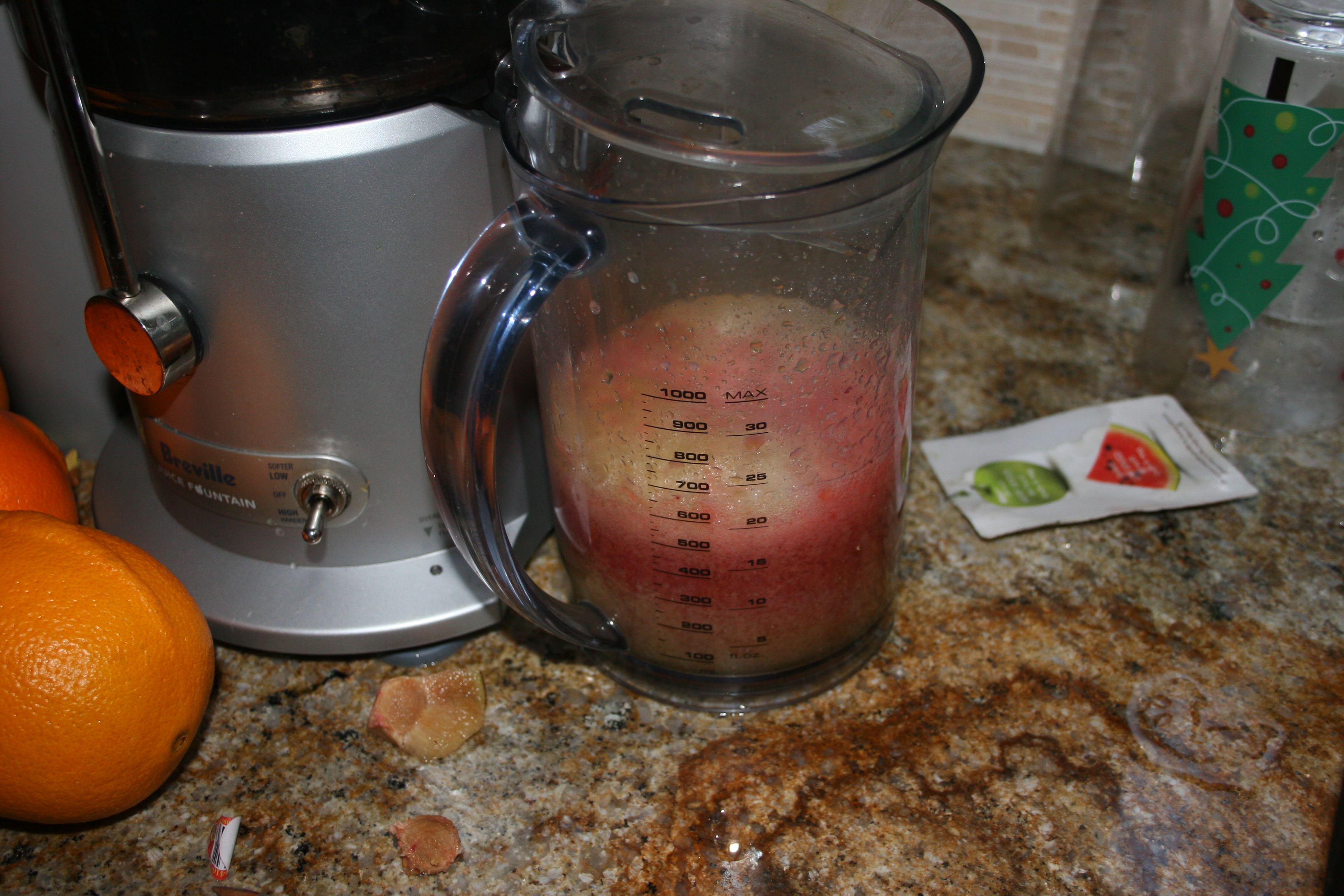
In a bid to get more healthy we recently invested in a juicer. I now start every day with a healthy mean green as featured in the film ‘Fat, Sick and Nearly Dead’. It looks pretty grim but I assure you it’s delicious. It contains
1 cucumber
4 celery sticks
2 apples
A small amount of ginger
A small bunch of kale
Half a lemon
I sometimes add a carrot for good measure.
The kids are not so keen on this one but they love the fruity ones.
For Hungry Caterpillar Day we tried an experimental Hungry Caterpillar Juice. No Caterpillar’s were harmed I assure you. Head across to Really Kid Friendly to see my Guest Post on how we made it.
Try some, it’s delicious and would be great for a Hungry Caterpillar themed party.










 The adult’s role is to provide interesting materials. A constant stream of new materials, however, leaves little room for development of expression. If, on the other hand, a variety of materials are easily accessible, children can choose those that interest them.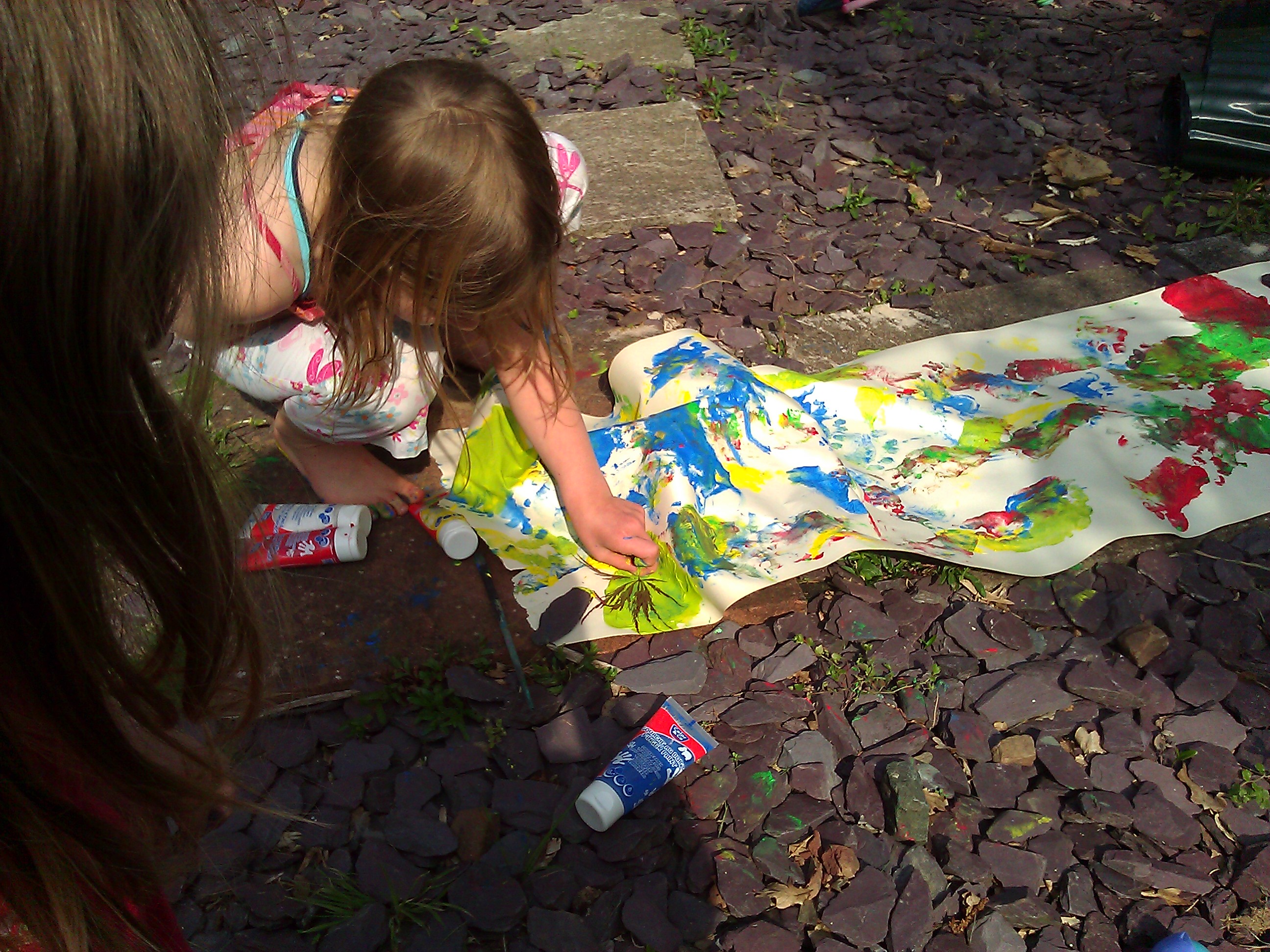
 Right from the Start