A few weeks ago I went for a walk to the park with my daughter. She likes to climb to the top of the climbing frame and play pirates. The game involves roaming the edges of the park for interesting treasures and on this day, she discovered big rocks. She proceeded to pick them up and roll them down the bank, watching them crash at the bottom. The only other child at the park was a little younger than my daughter and after observing her for a while, she found her own rock. She used all of her efforts to lift the rock and proudly show it to her mum. At which point, she was greeted with a look of horror and her mum quickly took the rock away and ushered her to ‘more suitable’ pursuits.
This kind of reaction is very familiar. When my children were toddlers, other parents would often ask me if my children were okay when they climbed a ladder and slid down the longest slide, as I observed from a distance. I have never been a parent to shadow my child’s every move and rarely feel the need to step in.
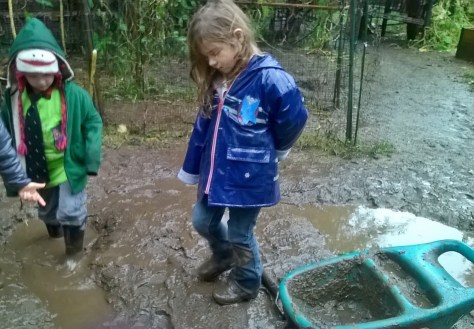
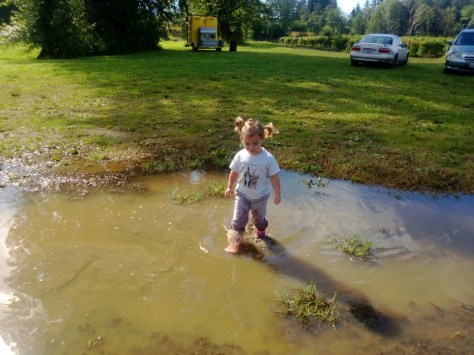
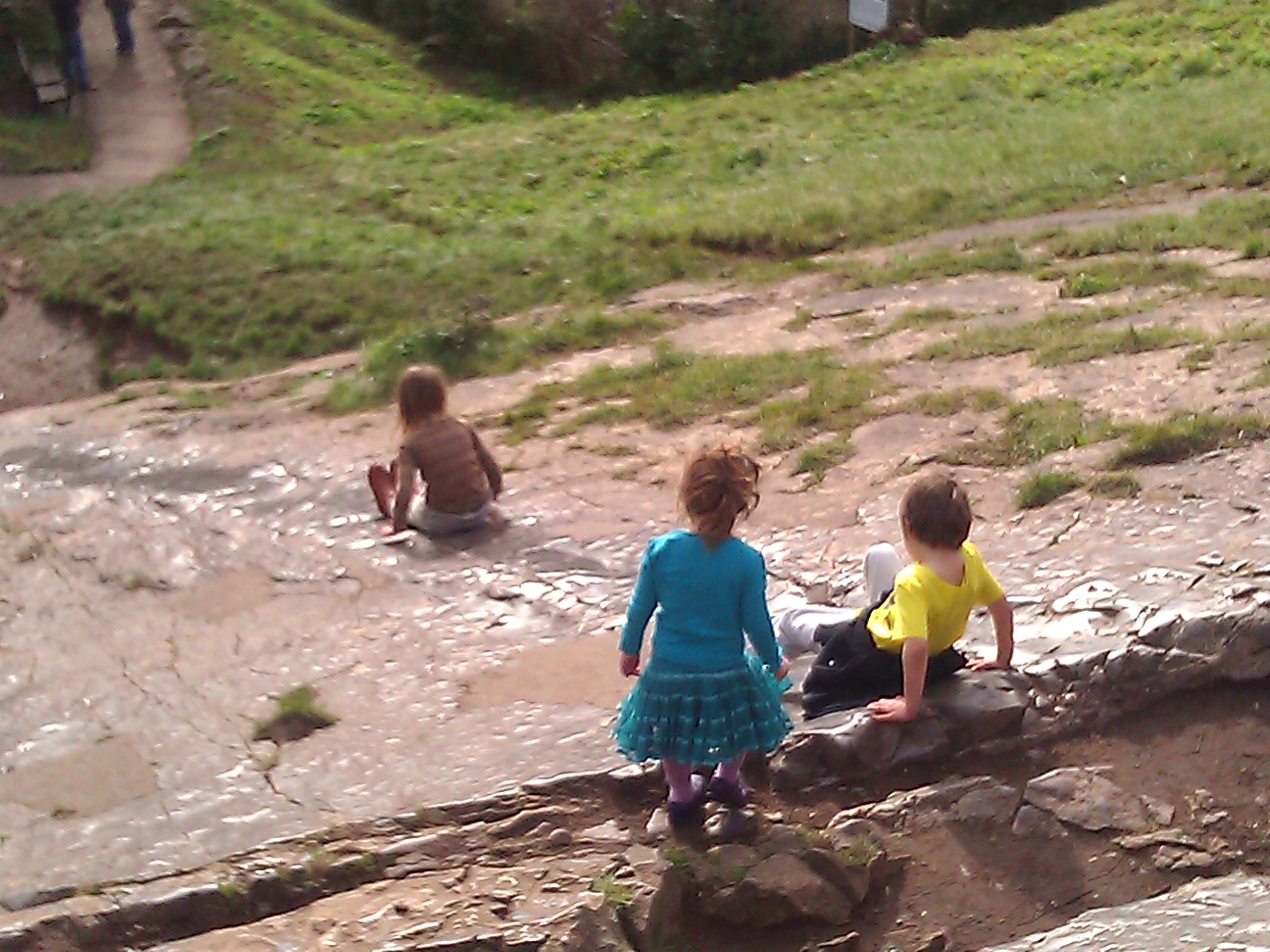
It is always refreshing to find a parent who shares my attitude. On a recent trip to the park with a friend, I was so happy to find someone who not only didn’t bat an eyelid when my eldest started paddling barefooted in the cold wet mud but actively encouraged the others to join in. When the children threw rocks on the ground to see if they would break , she gave them advice on how to do it safely, rather than stopping them because it was too dangerous.
You are my kind of mum friend because you let all these experiences happen.
It’s fun to stand on the roundabout, when we fell, we worked out how we needed to balance to stay on.
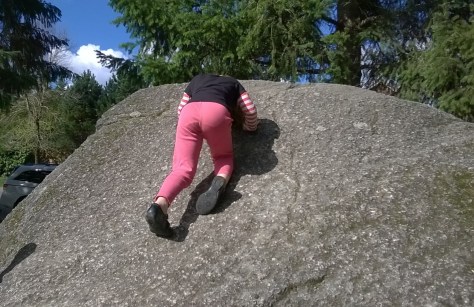
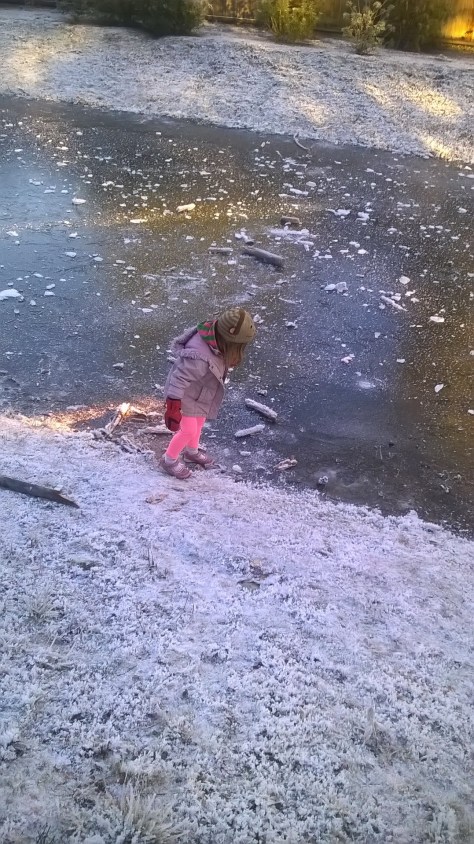
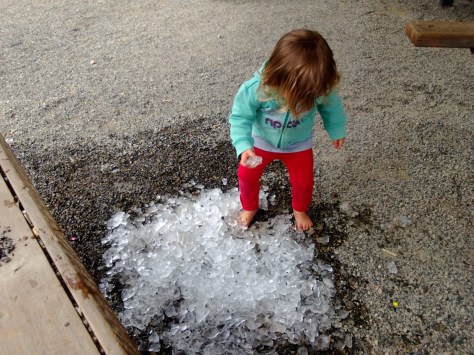
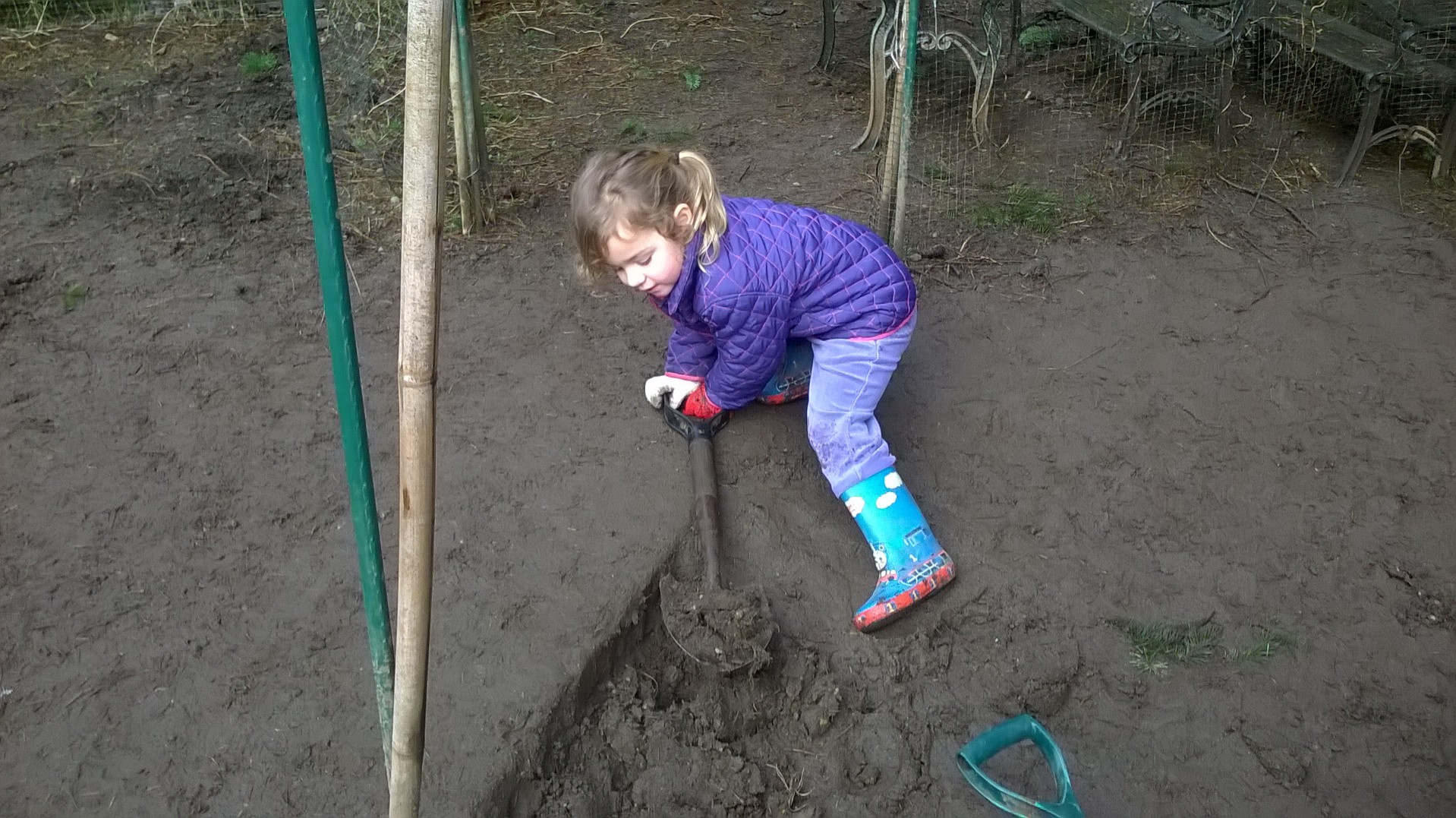
When you are 5 you can climb a big rock without any help.I can test the ice if I stand on the edge and throw sticks to see if it will break.
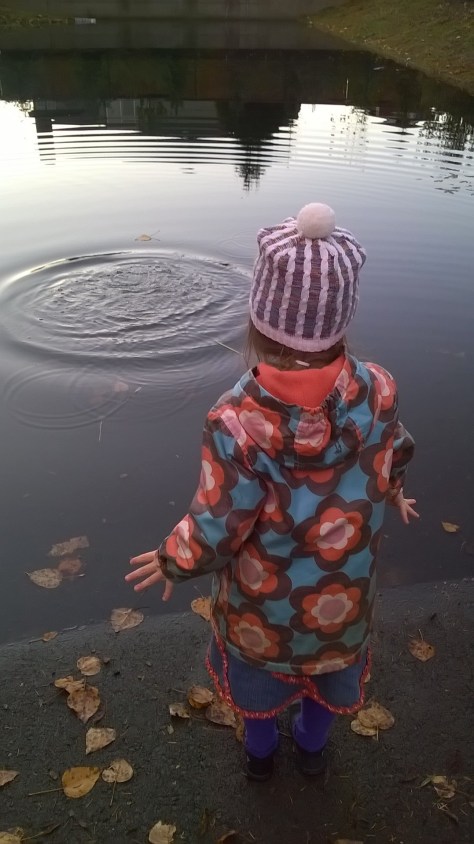
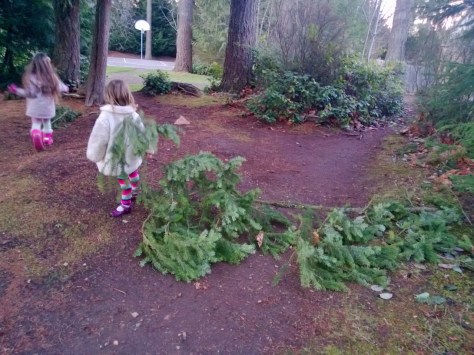
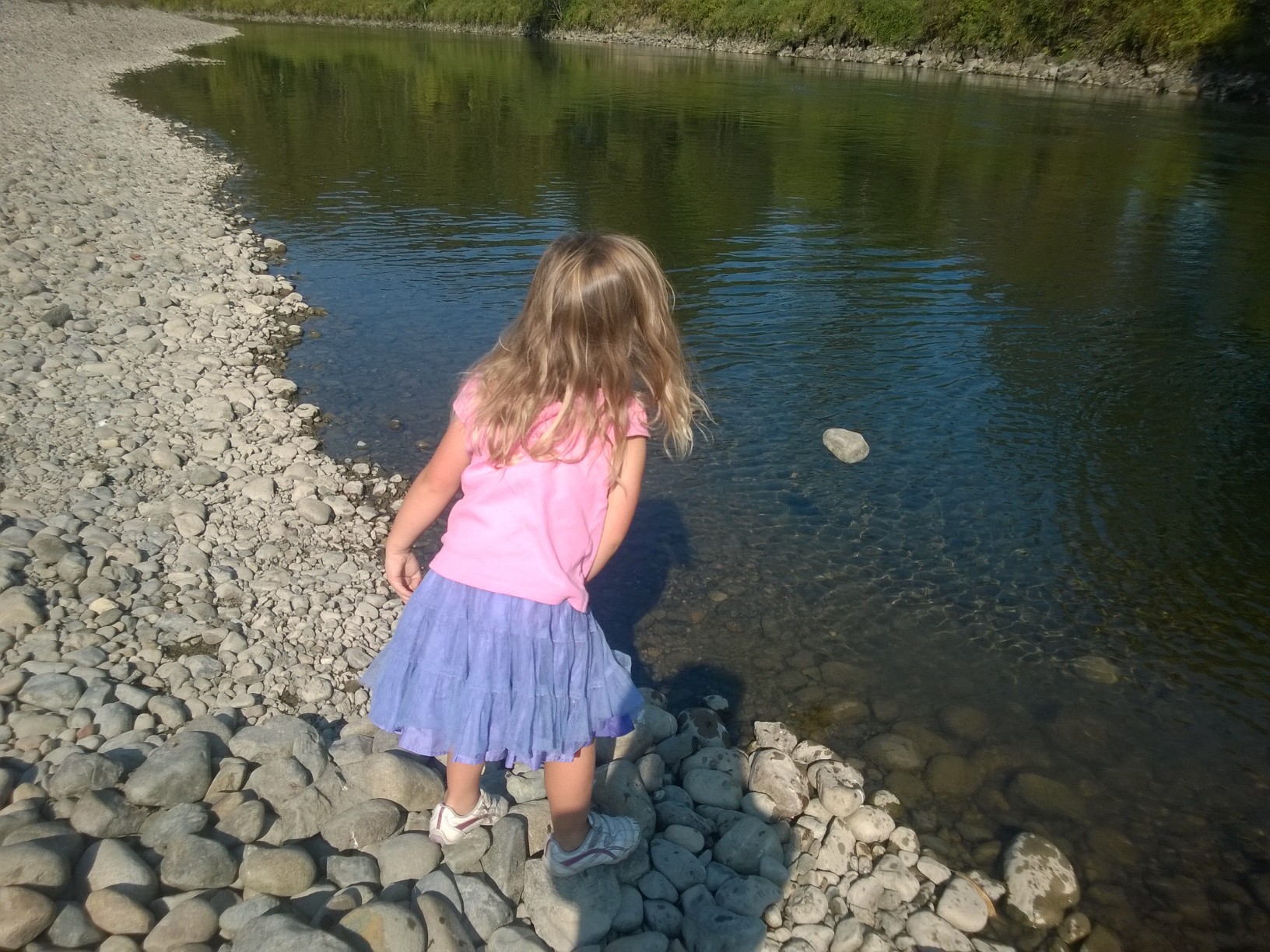
I explore the size of the ripples as I throw stones into the pond. If I get too close I might get wet and the water is cold!Mud is good – the squishier the better!We don’t need a swimming costume to get wet.Who can find the biggest branch?
Don’t tell me it’s cold, I need to feel it!Puddles are the best!
It’s okay to play – even when you’re almost 12.If I ride on my coat, I go faster.It’s okay to remove your shoes and coat when it isn’t quite Spring.
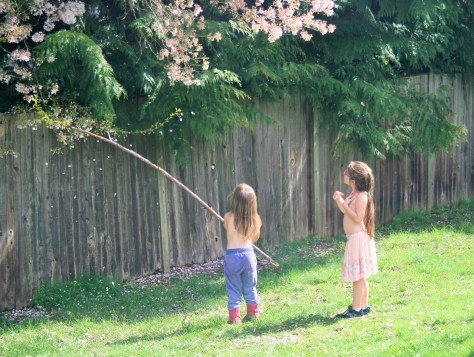
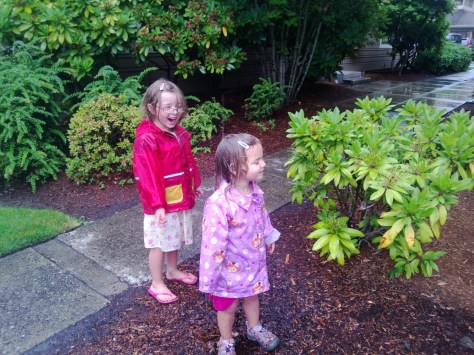
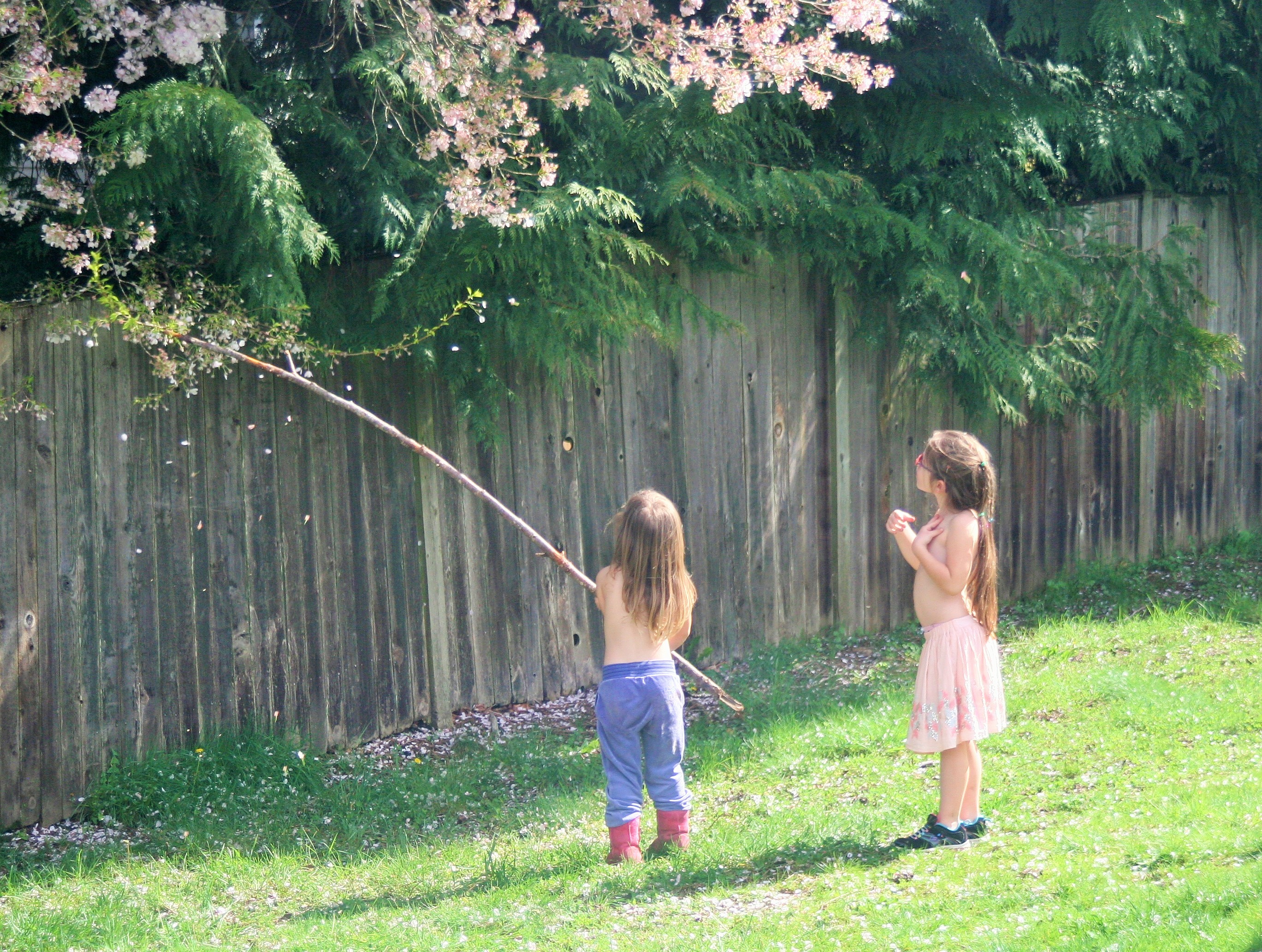
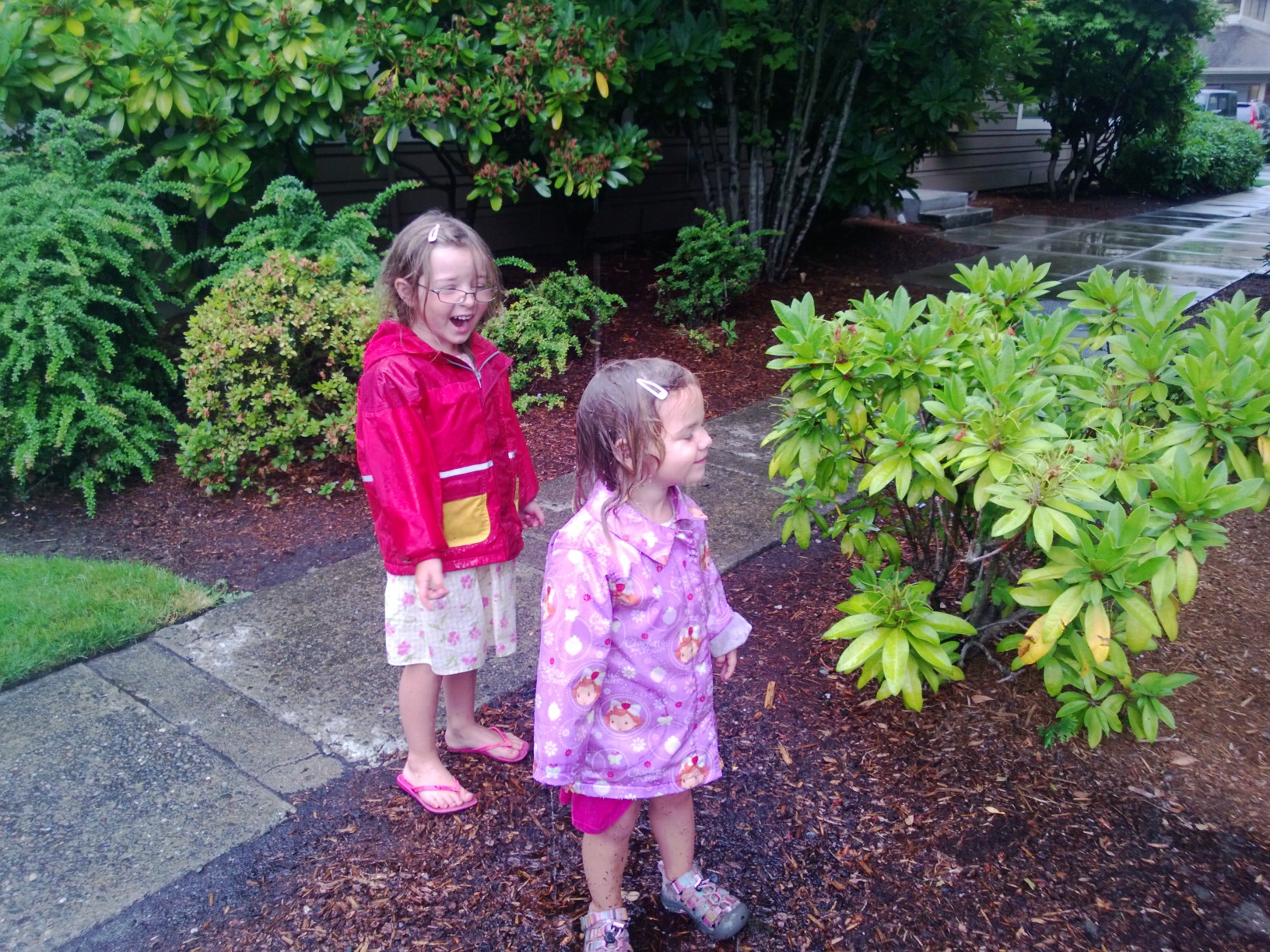
Take off your shirt and play with a stick.I’m going to have a shower. I’m getting very wet, now the rain is staying on me.
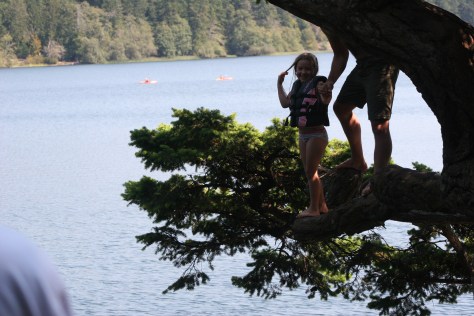
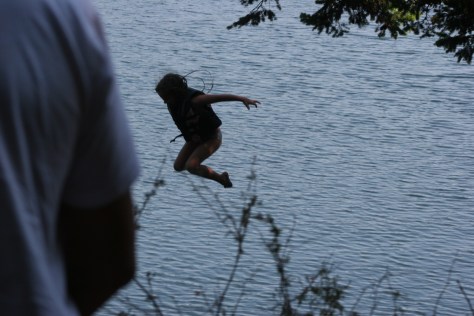
And when you let these things happen, with a little bit of support they will have the courage to jump.
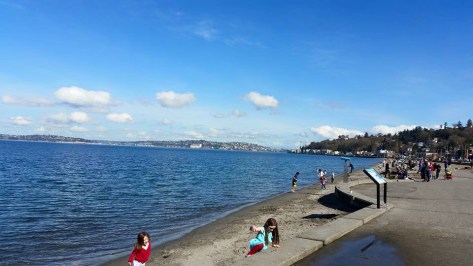
You might only consider visiting Alki Beach in Summer when the children want to swim and soak up the sun, but there are many things to do when visiting out of season. Alki beach is more than just a beach, it also has great historical significance. Alki Beach is the site of the landing of the first white settlers in Seattle on a cold, stormy day in November of 1851. Chief Seattle and his tribe greeted them and helped them build their cabin to stave off the cold, wet winter.
You may be lucky and end up with a surprisingly warm, Spring day as we did. Some attractions, like speciality bikes, aren’t available until Easter and the ferry to Seattle only runs on weekdays but in some ways this gives children more chance to stop and take in the simple things. Here are some of the things my children enjoyed.
Build a sandcastle
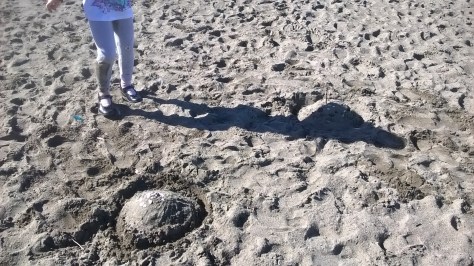
The first thing my kids want to do when they see sand is build a sandcastle. They found shells and feathers to decorate it and we had to judge whose was the best.
2. Climb on Driftwood
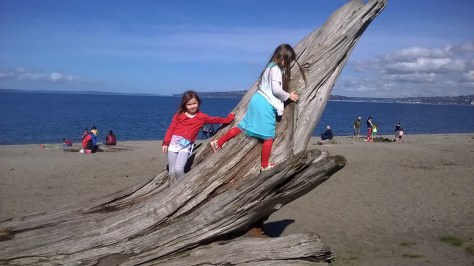
Alki Beach has an abundance of driftwood and uprooted trees for little climbers.
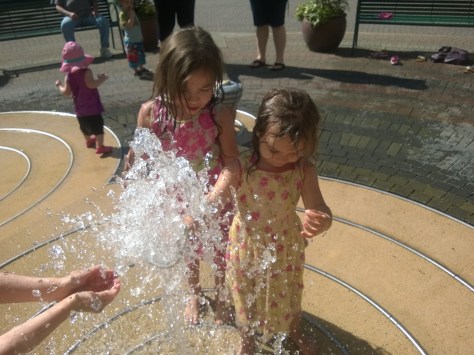
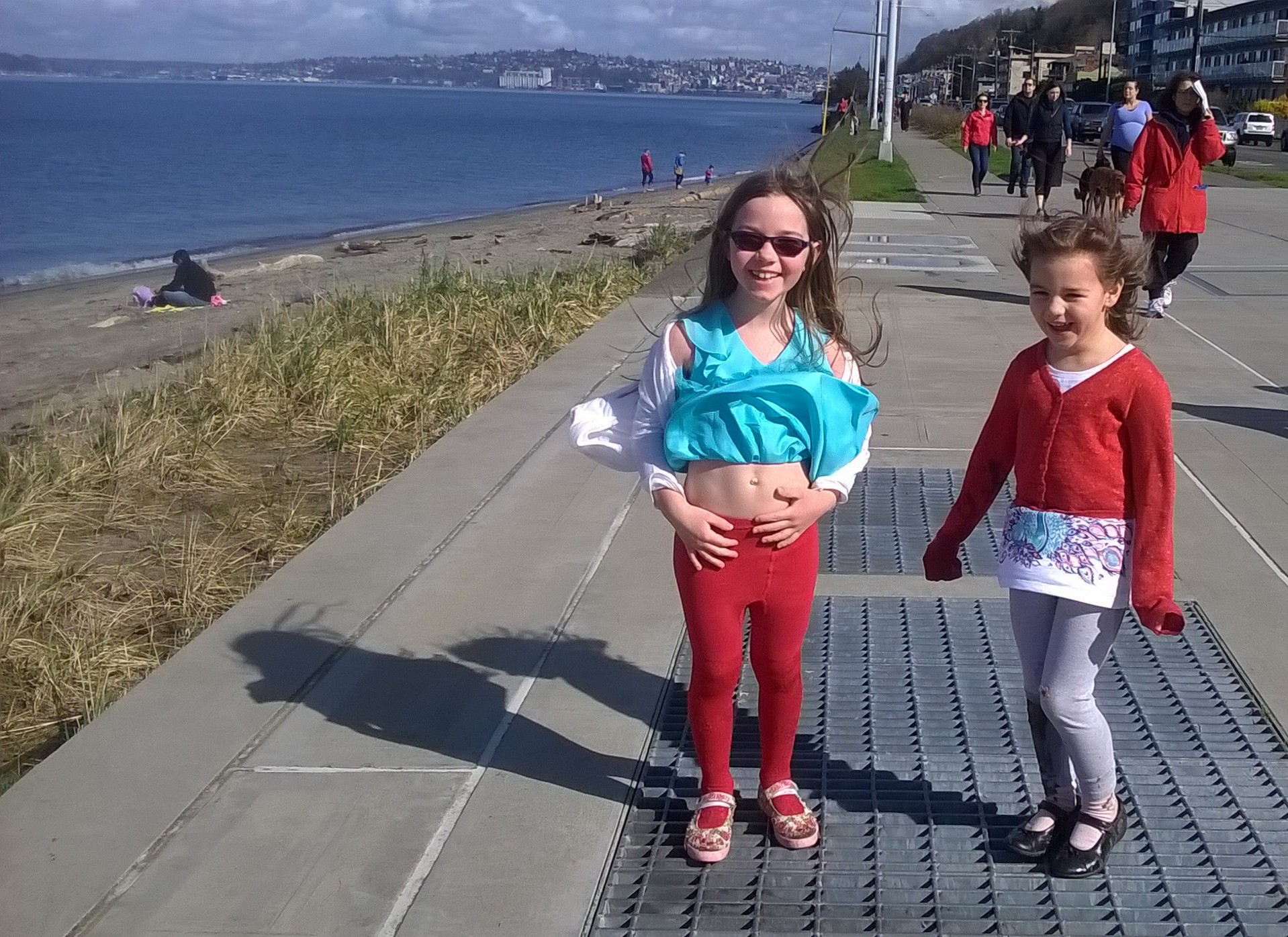
3. Let the Air Vents Blow your Clothes and Hair
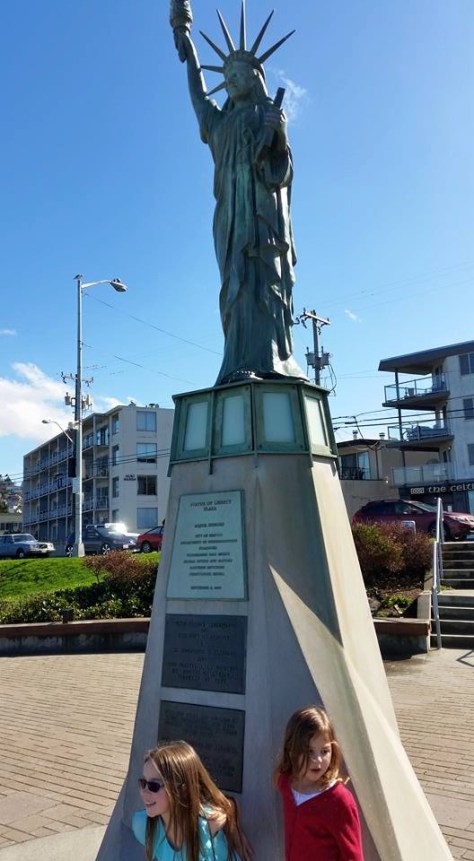
4. Visit the Miniature Statue of Liberty
The Statue of Liberty, a small replica of the original “Liberty Enlightening the World” in New York City, was a gift from Reginald H. Parsons and the Seattle Council of the Boy Scouts of America in 1952. The statue has become such a symbol of liberty and courage that it became a place to mourn, to reflect, and to leave mementos after the terrorist attacks of September 11, 2001.
5. Follow the Avenue of Stars
if you continue along the path past the lighthouse you will reach a stretch of path where all the constellations are marked along the path. Great for an evening stroll as in the spring as you won’t have to wait too long for the stars to come out.
6. Search for Signs of Marine Life
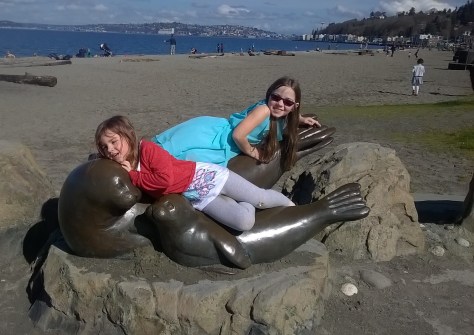
All along the trail are signs outlining the wildlife you may find. Seal pups are common between June and September but even in March you may see evidence of seals, sea otters or whales in the water. The girls were excited to see seagulls and enjoyed pretending to be seals.
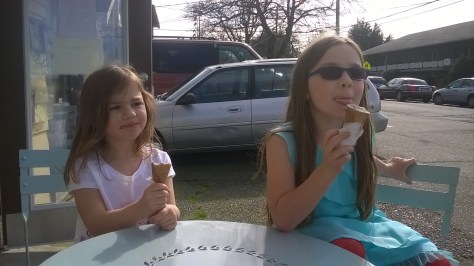
7. Stop for Ice Cream
Not just any ice cream, Italian fair trade, organic gelato from Gelarto
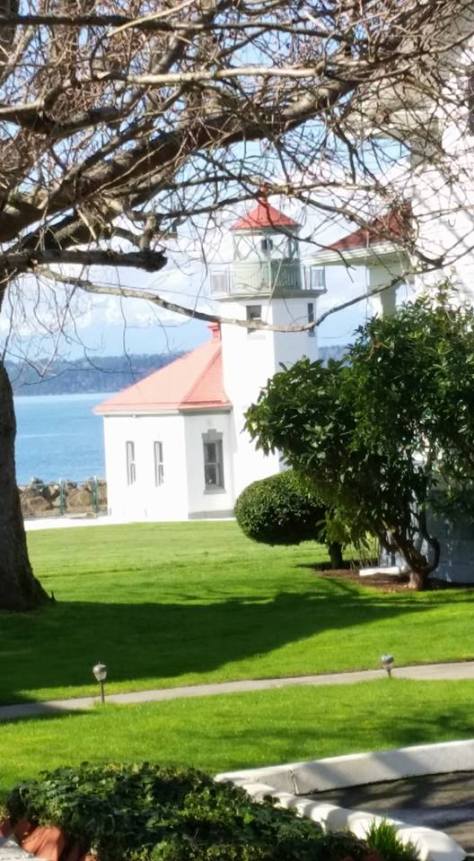
8. Find the Little Lighthouse
Lighthouse tours are available during the Summer at weekends.
We’ll definitely head back soon with our bikes, scooters and roller blades for a safe and beautiful place to practice.
One of my favourite Hallowe’en activities as a teacher was creating spells and dancing around the cauldron. The children were transfixed by the iron cauldron that emerged from the kitchen and wondered if it might belong to a real witch. Dressed in witches hats and cloaks, we would imagine fantastical ingredients and create spells that would transform us into dragons, frogs or birds, that would make us fly, shrink or become invisible. It was a fun way to explore rhyme, share ideas and use our imaginations. We left ‘spell books’ in the mark making area and the home corner became a witches cave complete with potion bottles, spell books and jars of bugs, bats and frogs.
My girls love to make potions, so when I told them about it, they loved the idea but wanted to make a real witches brew.
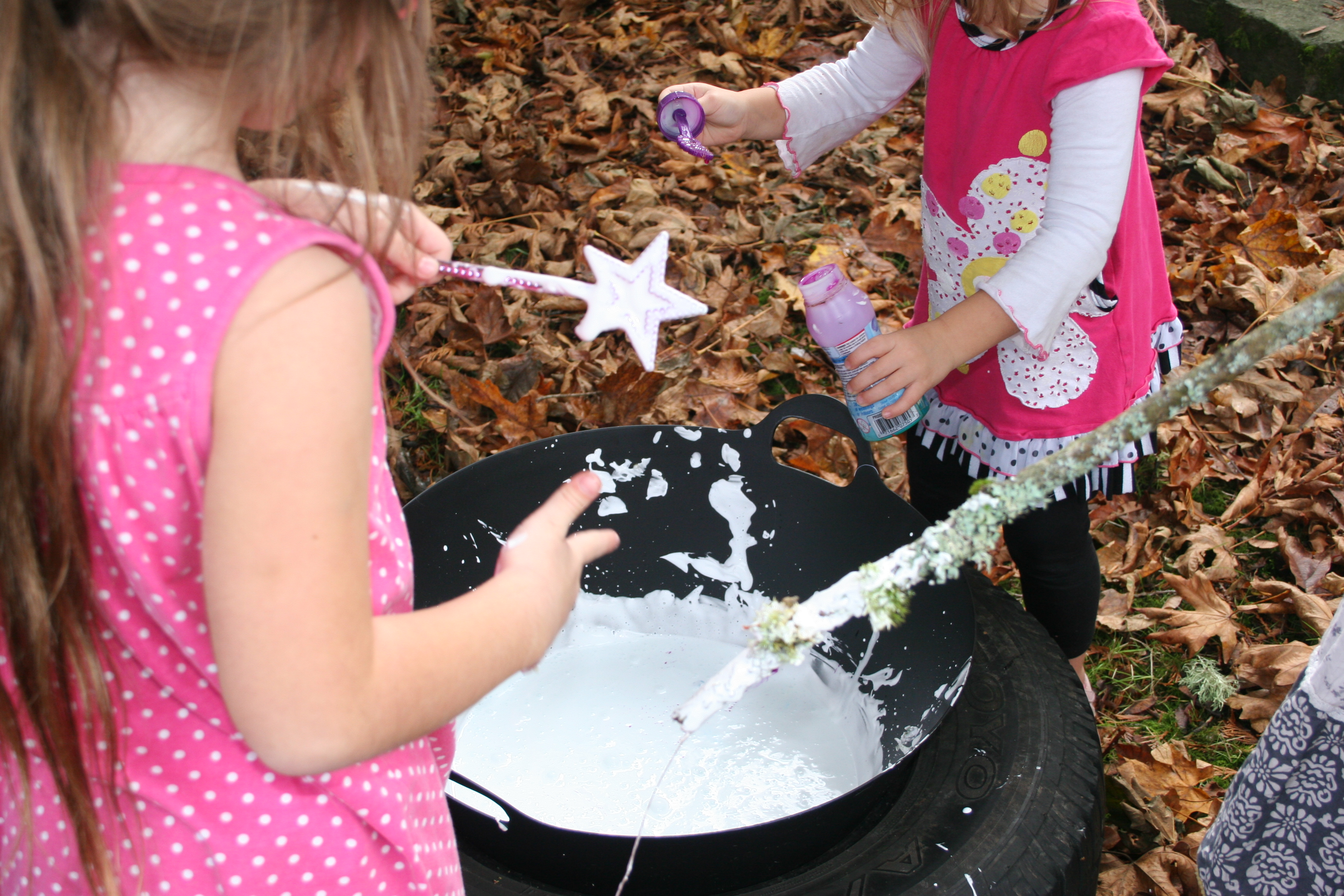
To start, we made wands from tin foil and chose witches hats and capes. Tin foil wands are simple to make if you have limited time; wrap tin foil around a pencil or simply roll and scrunch the foil into your desired shape. If you are more ambitious, make wands from sticks by stripping off the bark, adding ribbons or painting them in special colours. I also like these Harry Potter wands from Red Ted Art
With wands in hand, they chose ingredients to go into the brew. They didn’t think witches and wizards used shaving foam or cornflour to make a spell, so they chose gruesome alternatives. Flour became giant’s dandruff, hair gel was ogre snot and fuzzy balls became warts.
The girls wrote down their ingredients so they could remember the order in which to add them .
It didn’t matter that my youngest is only just beginning to write, she found her own way.
Armed with spells, wands and witches hats, they made their way outside to the cauldron at our potion station. One by one, they tossed the ingredients into the cauldron, stirring it and modifying the quantities until they were satisfied. Then it was time for the spell.
Wibbly wobbly wibbly wog
See the little jumpy frog
Wibbly wobbly wibbly wagon
Turn the frog into a dragon
We looked for the dragon but decided it was hiding amongst the clouds.
The dance around the cauldron resumed with another spell.
Wibbly wobbly wibbly wog
See the little jumpy frog
Wibbly wobbly wibbly wat
Turn my mum into a bat
Thanks girls, I’m not sure I want to hang upside down from a tree.
The potion remained in the cauldron for sometime and became the central point of their witch and wizarding school.
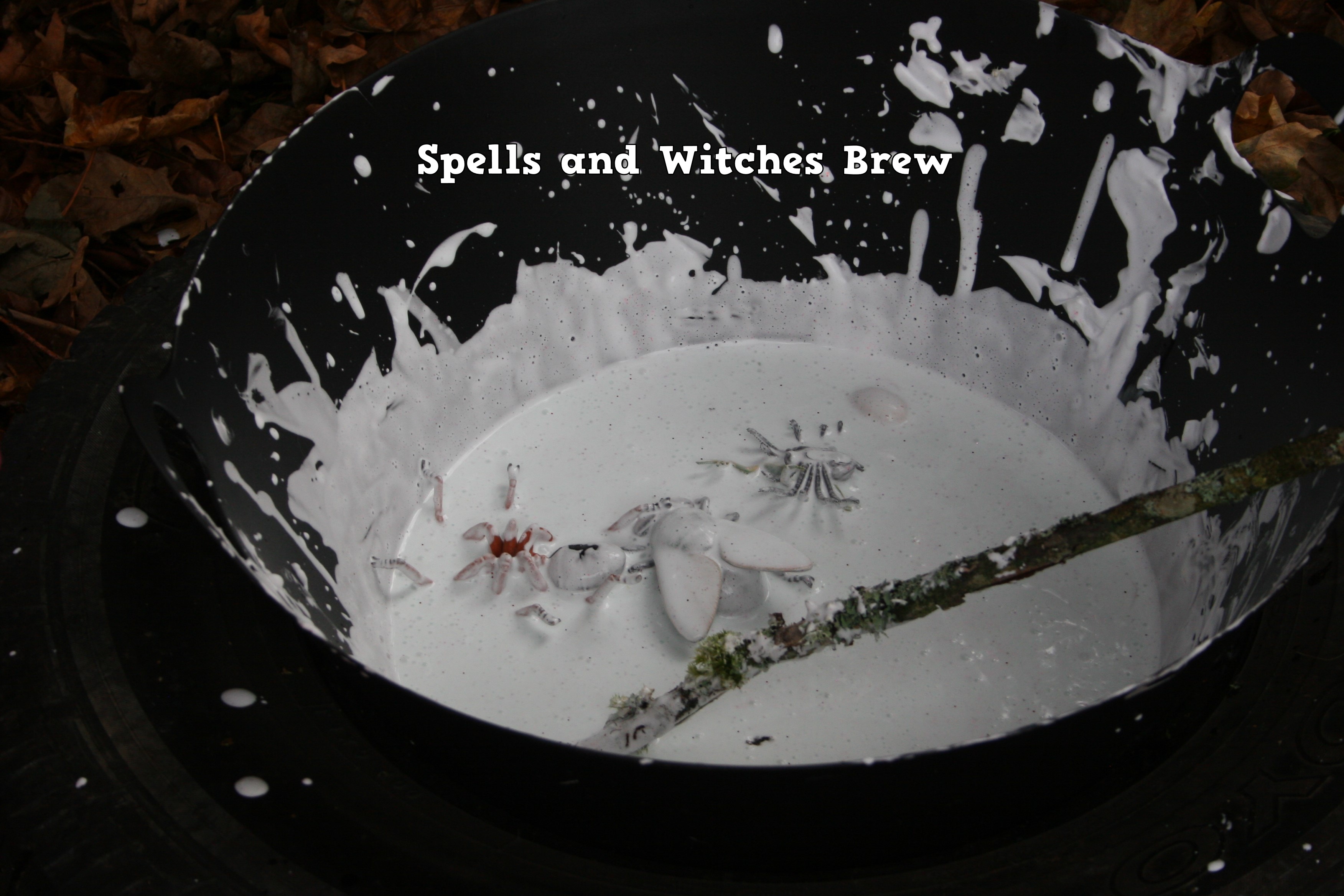
Suggested ingredients for a witches brew
Jello/jelly powder (makes it smell great)
mud
hair gel
shaving foam
flour
glitter
coffee grounds
leaves and petals
plastic bugs
coloured water
baking powder-
Further Ideas
Give the children collection bags and a card with ingredients for a spell, in picture and written format. Ask the children to find the objects they need and place them in the bag.
Give the children a group of objects and ask them one at a time to add a specific number into the brew.
Chant around the caldron and make spells that require the children to make specific movements e.g make us slither like a snake, make us jump or stretch up tall.
This time of the year my garden is covered in a blanket of leaves. The girls enjoy helping to rake them up but it is a never-ending task. When leaves are plentiful there are many activities that you could take advantage of. Here are a few of our favourites.
Leaf Man
Leaf Man by Lois Ehlert is illustrated with photocopies of leaves that have been arranged to make pictures. We studied the way Ehlert uses coloured paper to create a layered background and leaves and natural materials for the main body of the picture.
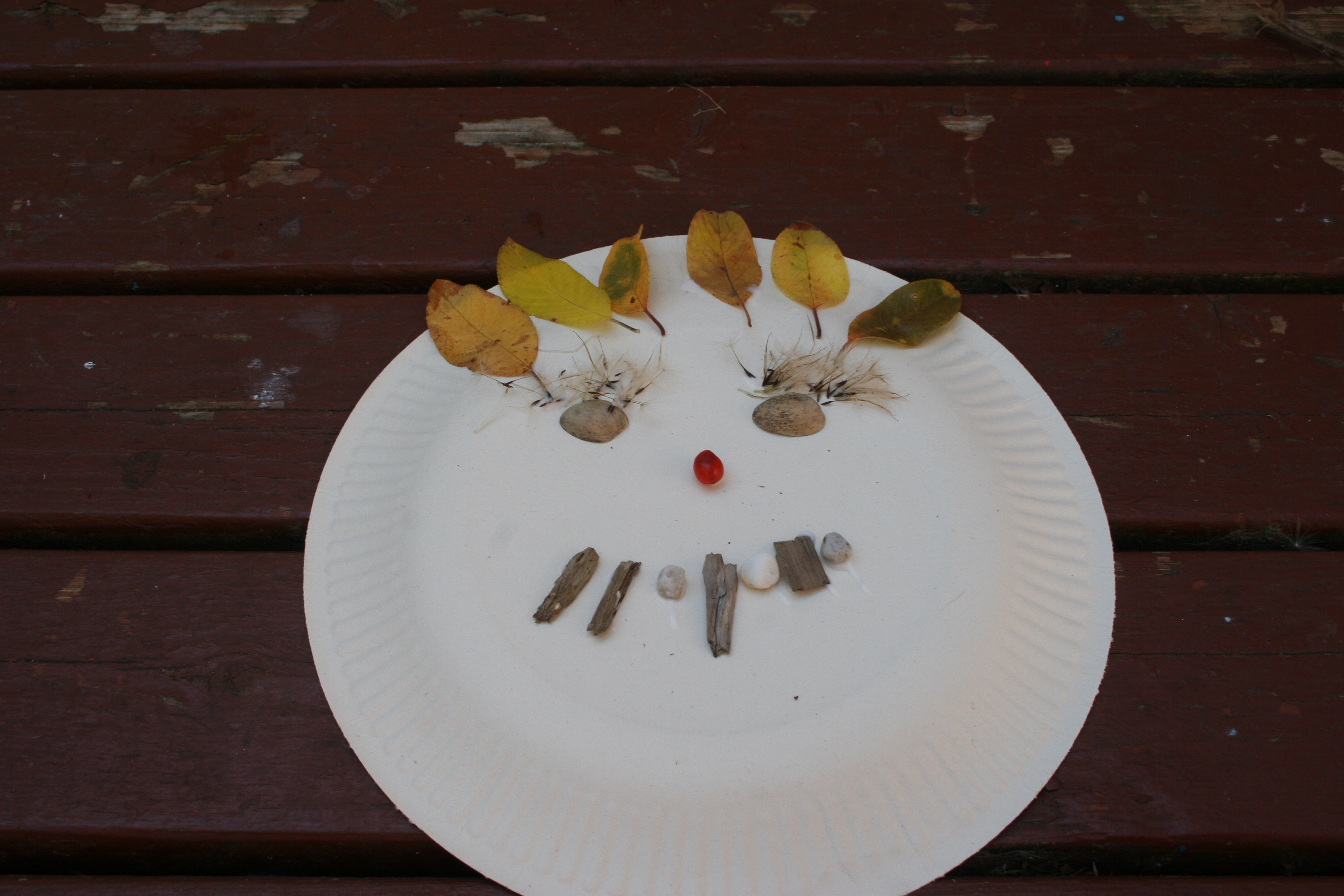
We created our own pictures, starting with the background and adding leaves. The leaves work better if they are pressed beforehand using a flower press or a heavy book. Preserve them by laminating before the leaves dry out.
Painting
Young children enjoy printing with leaves or painting on larger leaves. You could also try painting with different types of leaves or dipping the stalks into paint to make marks. Dried leaves crumbled into paint could also make an interesting texture.
Leaves are perfect for investigating colour mixing. Give each child a leaf and ask them to try to mix the matching colour. Younger children could paint the colour onto their leaf, print it on paper or paint around the outline, older children may like to try an observational painting of their leaf. Small square canvases or watercolour paper would make them extra special.
Leaf Rubbing
Sometimes young children find this difficult so experiment with different colours and materials, like crayon, pencil, chalk, pastels or charcoal to decide which makes the most effective rubbing.
Leaf Mosaics, Patterns and Sculptures
Use leaves to create mosaic patterns and pictures. These could be individual or large group projects.
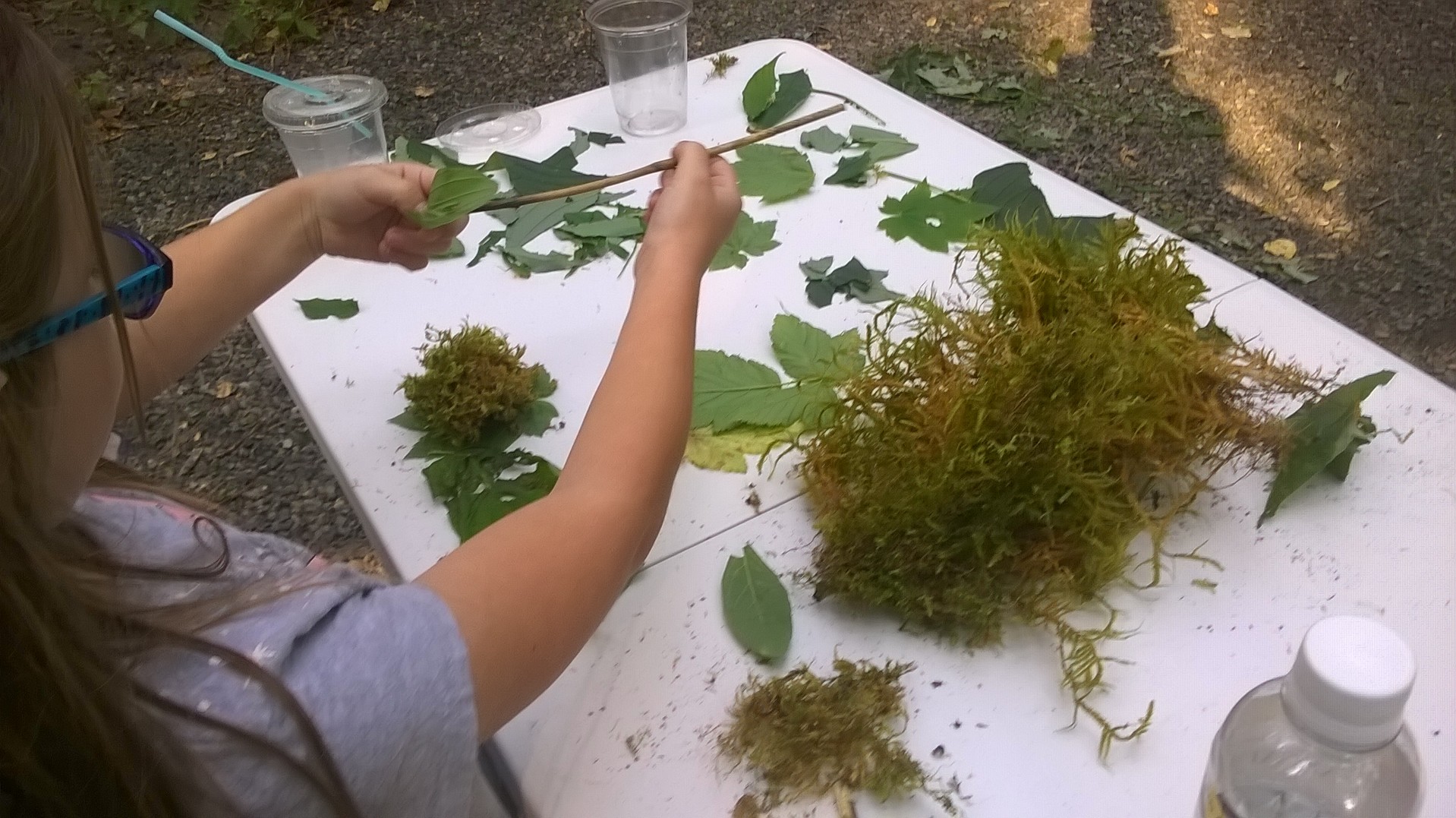
The girls collected leaves on a camping trip and used them to thread onto sticks to create clothes for their stick people.
Clay
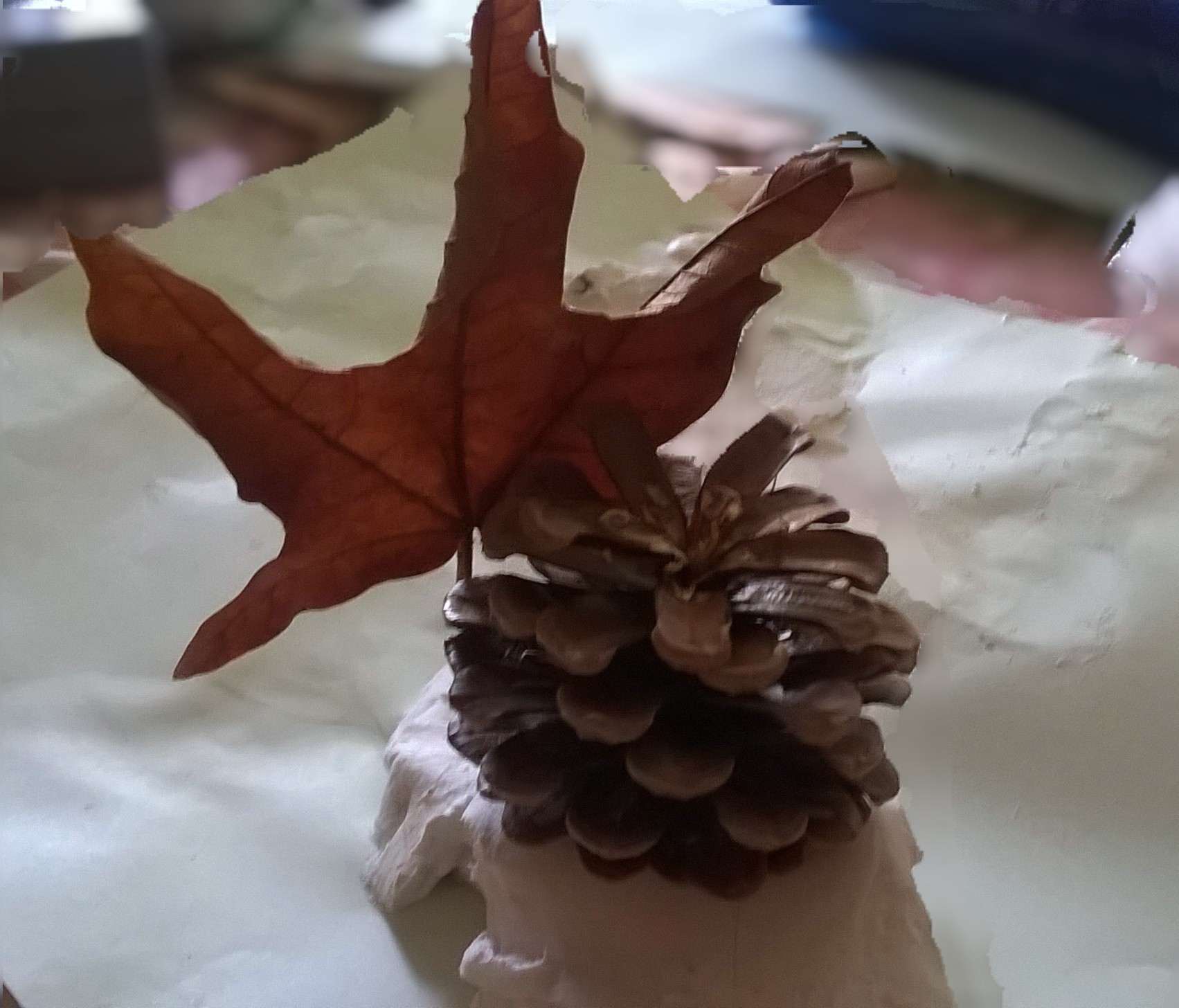
Leaves make interesting imprints in clay or they can be used as a template to cut around. Clay leaves make great bowls, tiles or mobiles.
Sensory Play and Loose Parts
Collect leaves and put them in a sensory bin – investigate what happens to them over time. Add interesting objects hidden amongst the leaves or toy woodland animals and bugs for small world play.
If you have leaves outside how do the children use them as loose parts?
My children built a bonfire……
Buried their feet….
and added them to a potion.
Use them as a Filler
Last Halloween we made spiders to hang on the bushes outside. The bodies were made from black bags stuffed full with leaves. You could also use leaves to stuff scarecrows or guys for bonfire night.
Laminate them
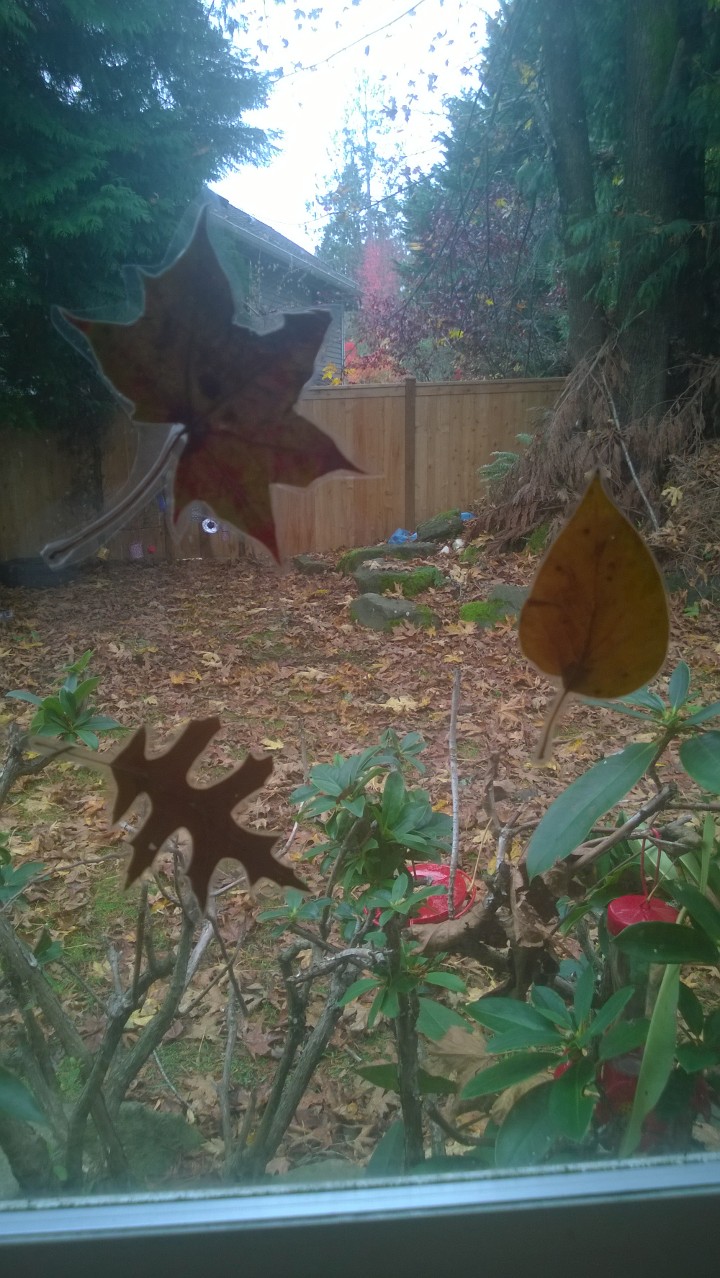
Over a period of time we collected interesting leaves and laminated them. They looked great on the window and I challenged the girls to find out which trees they belonged to. I think they would also make an eye-catching mobile. This year we are using the laminated leaves to see if they can find matching leaves in the neighbourhood. Laminated leaves could be used for all kind of things. We have used them as gift tags, to play matching pairs and they look great on the light table.
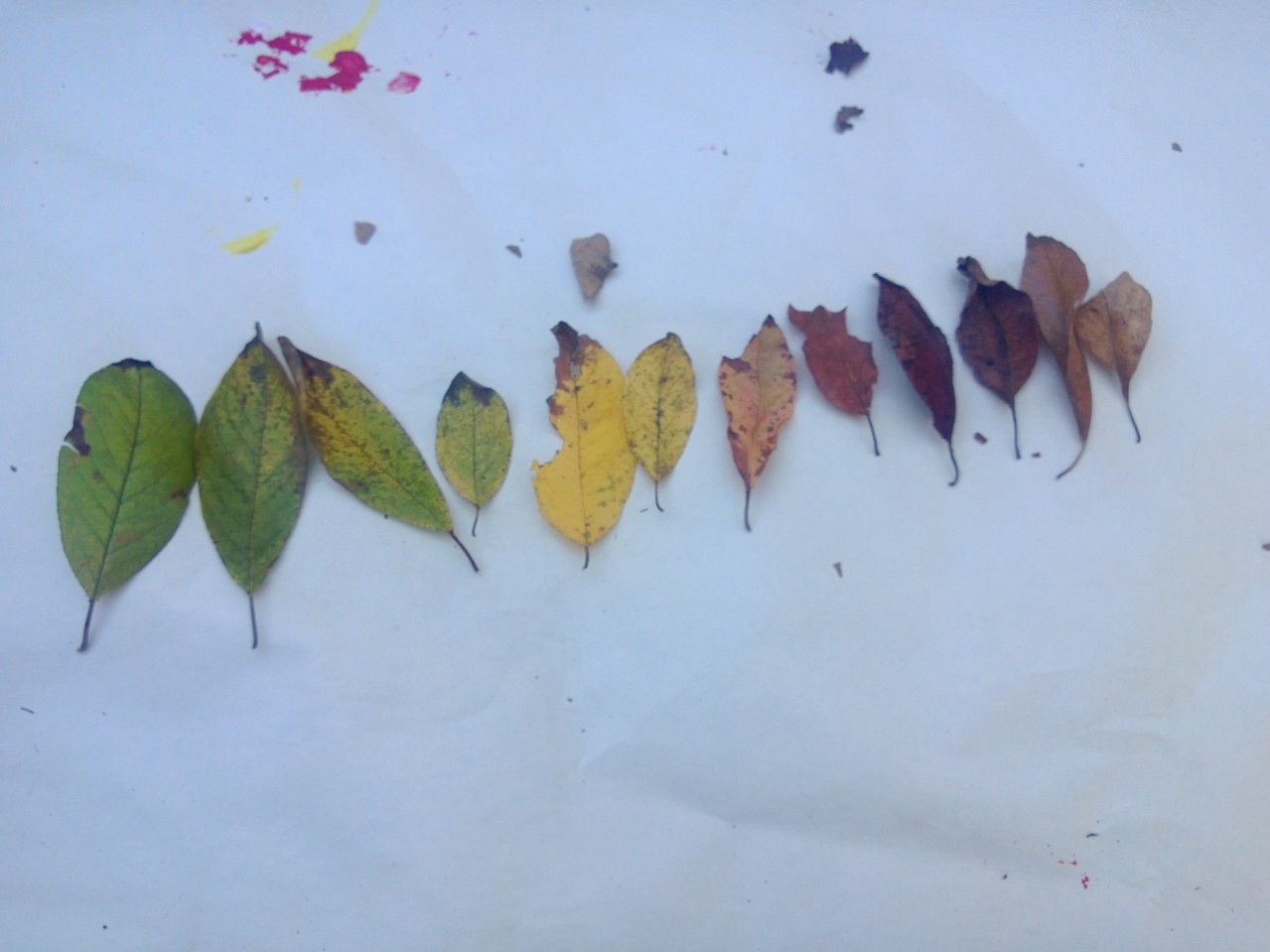
Leaf Rainbows
If you collect leaves gradually from the same tree or bush as they change colour you can make a leaf rainbow.
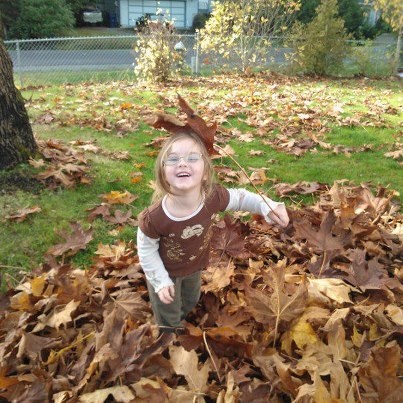
Before you decide to rake all the leaves away, take a look at this face, I think it says it all.
When I ask the girls where they would like to go, a popular response is the zoo. In the UK we were members of Bristol Zoo and visited there regularly. Having membership made our visits more relaxed, we didn’t have to run around trying to see every animal and if the children wanted to play in the playground all day that was fine too.
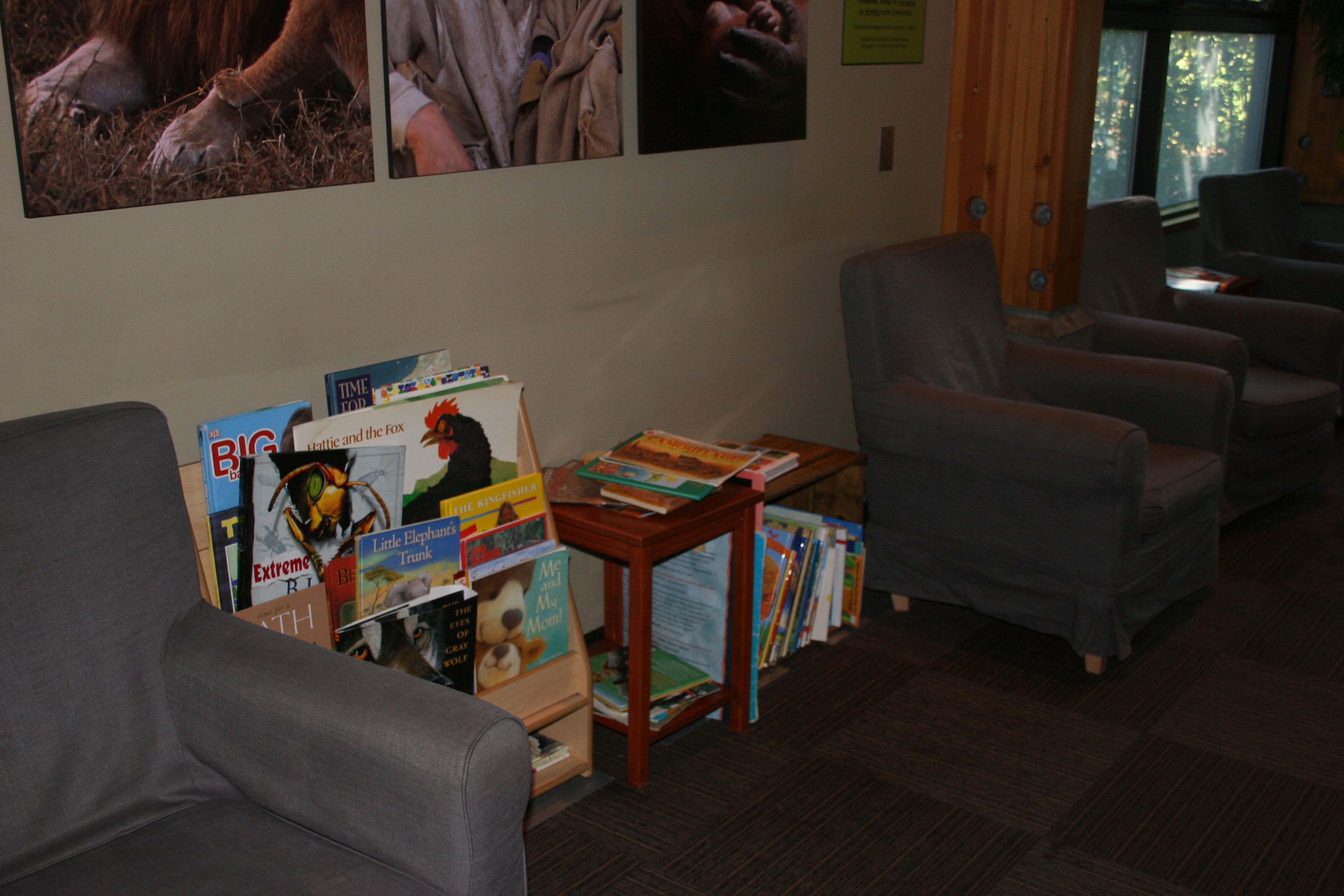
Woodland Park Zoo is more spacious than the zoo back home so we are able to see larger animals. Recently, we were invited to Woodland Park to see some of the activities available in the Zoomazium – a nature inspired play space for the under 8’s. To be honest we have always avoided Zoomazium during previous visits, expecting it to be a large, noisy soft play. I was pleasantly surprised however, to see a mix of play spaces and activities. There is a designated space for toddlers, fully enclosed and safe, with a library area to the side. The children can also explore the cricket exhibit.
toddler play spacelibrary areacricket exhibit
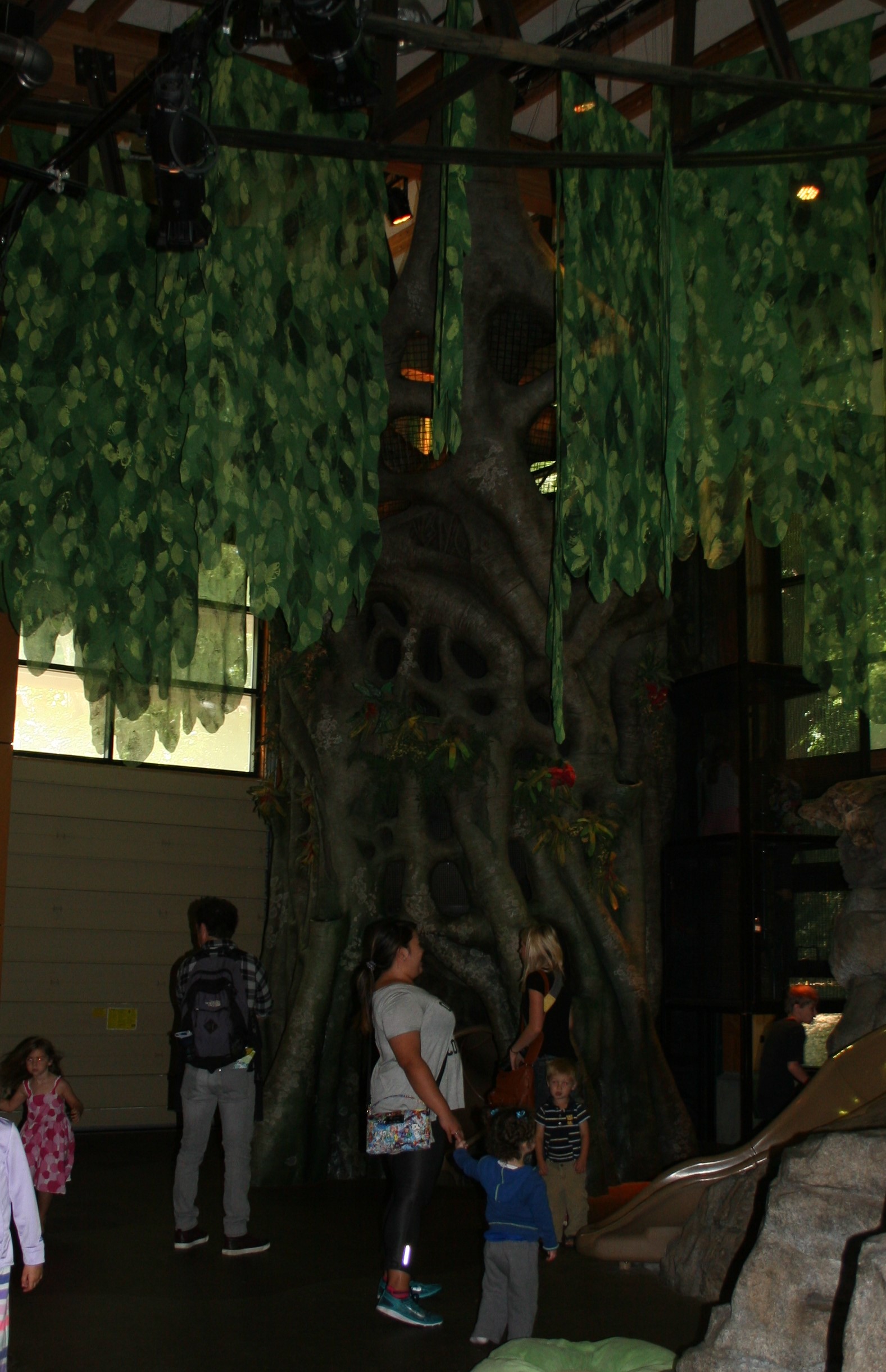
The play area for older children has rope bridges, places to climb and lots of little caves that are perfect for hide and seek. There are also tables with toys for building, a stage area and a sensory area to explore.
Zoomazium is the perfect place to explore if you want to escape the heat (or cold) for a while but it is also a good starting point for your visit to the zoo. Creature Feature occurs every morning at 10.30 and encourages children to get close to some of the smaller animals at the zoo and learn about them from zoo staff. Our visitor was an armadillo.
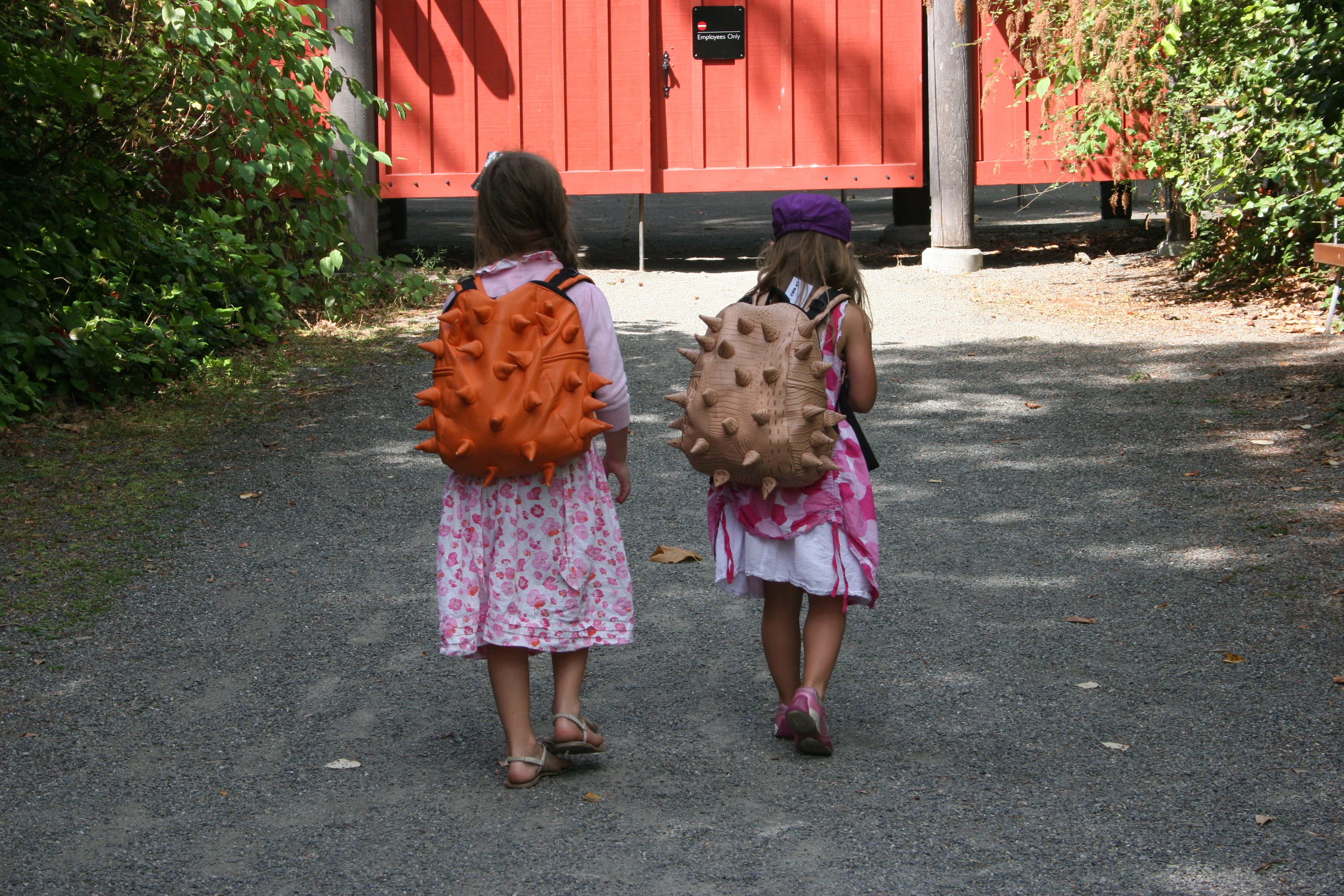
My favourite Zoomazium offering was activity backpacks that the little ones can take with them around the zoo. Each one has a different theme and they are packed with activities, toys, books, magnifiers and things to look out for during your visit. After a lot of deliberation,the girls chose one each; the back yard and big cats.
I love the design of the backpacks, they look so cool and we had lots of comments as we wandered around. The backyard backpack had a number of activities to complete in the backyard of the Zoomazium or when exploring the rest of the zoo.
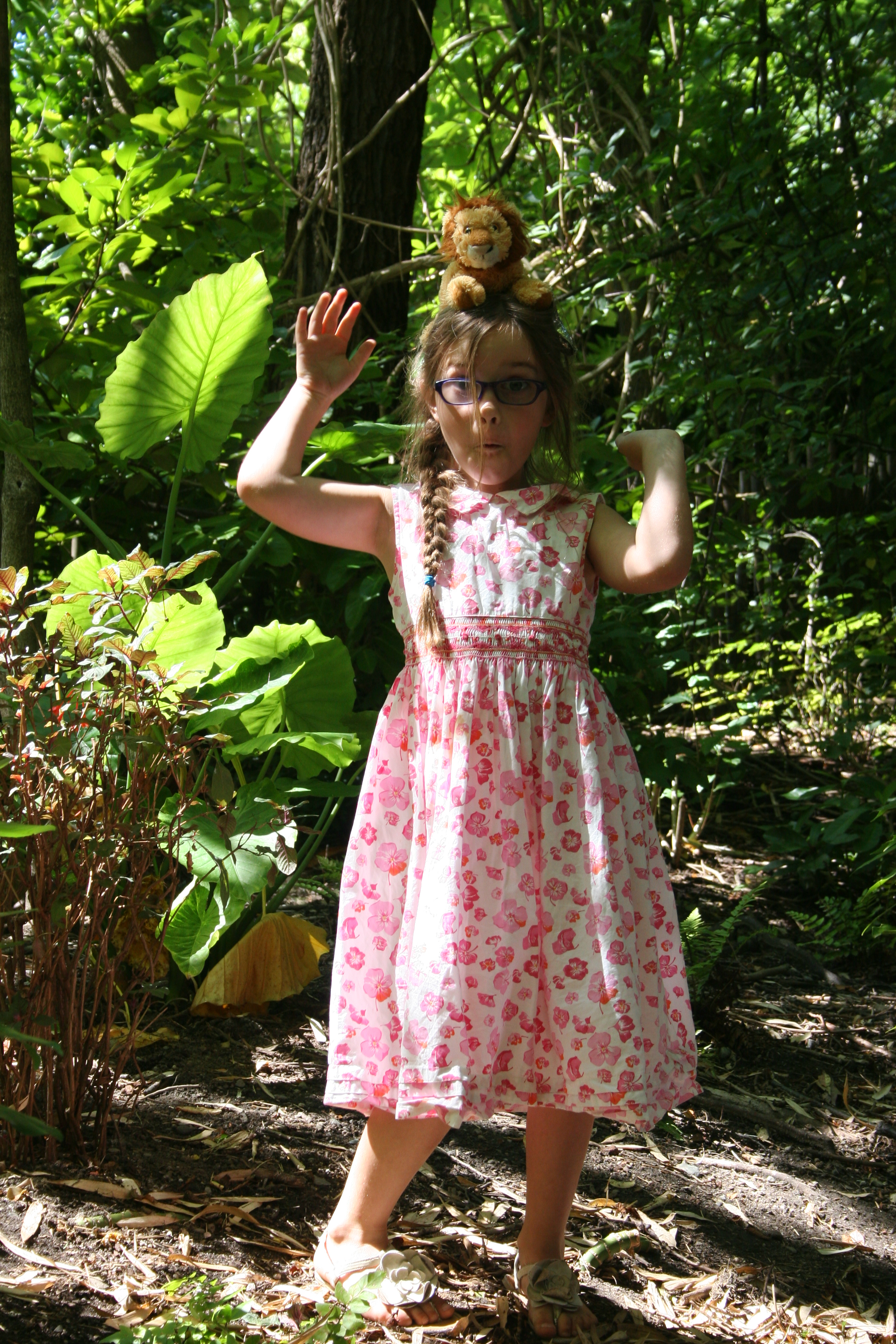
Can you find these things?“This feels smooth”
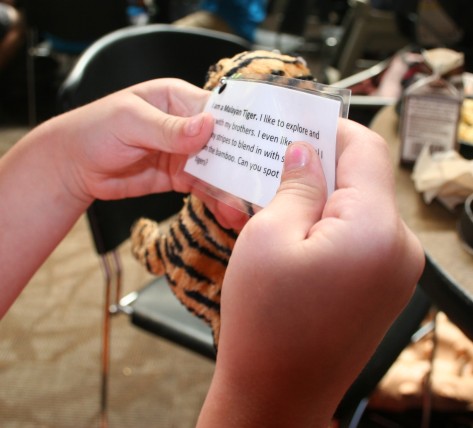
The big cats backpack was a good starting point for exploring the new Banyan Wilds exhibit.
I found a tiger.
Having the backpacks, encouraged us to take it slowly as the girls wanted to stop and take in the contents of their packs.
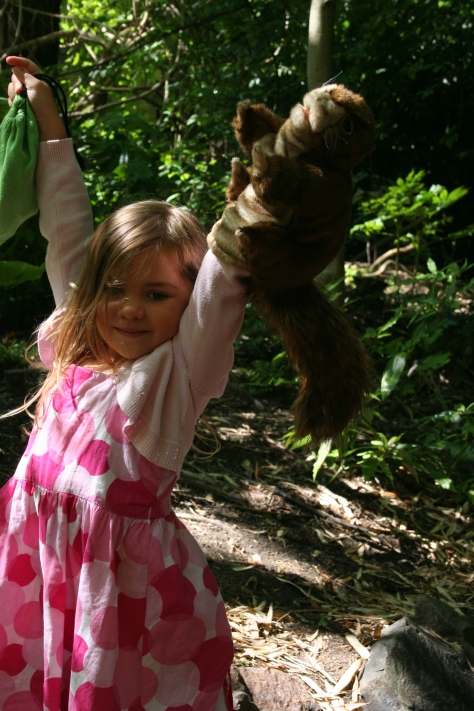
The squirrel puppet from the Backyard pack was a definite favourite and was a constant companion.
Completed activities can be traded for Nature points at Zoomazium’s Nature Exchange. The points can be exchanged for interesting, rocks, fossils and natural materials on display. Nature loving children can also create projects at home to earn additional points. Older children are not left out, there are activity sheets to suit all ages. My eldest chose a worksheet relating to the otter exhibit.
Our favourite part of the day was having the opportunity to feed animals. Bird seed on sticks can be purchased for $1 and the birds fly down to feed from your hand.
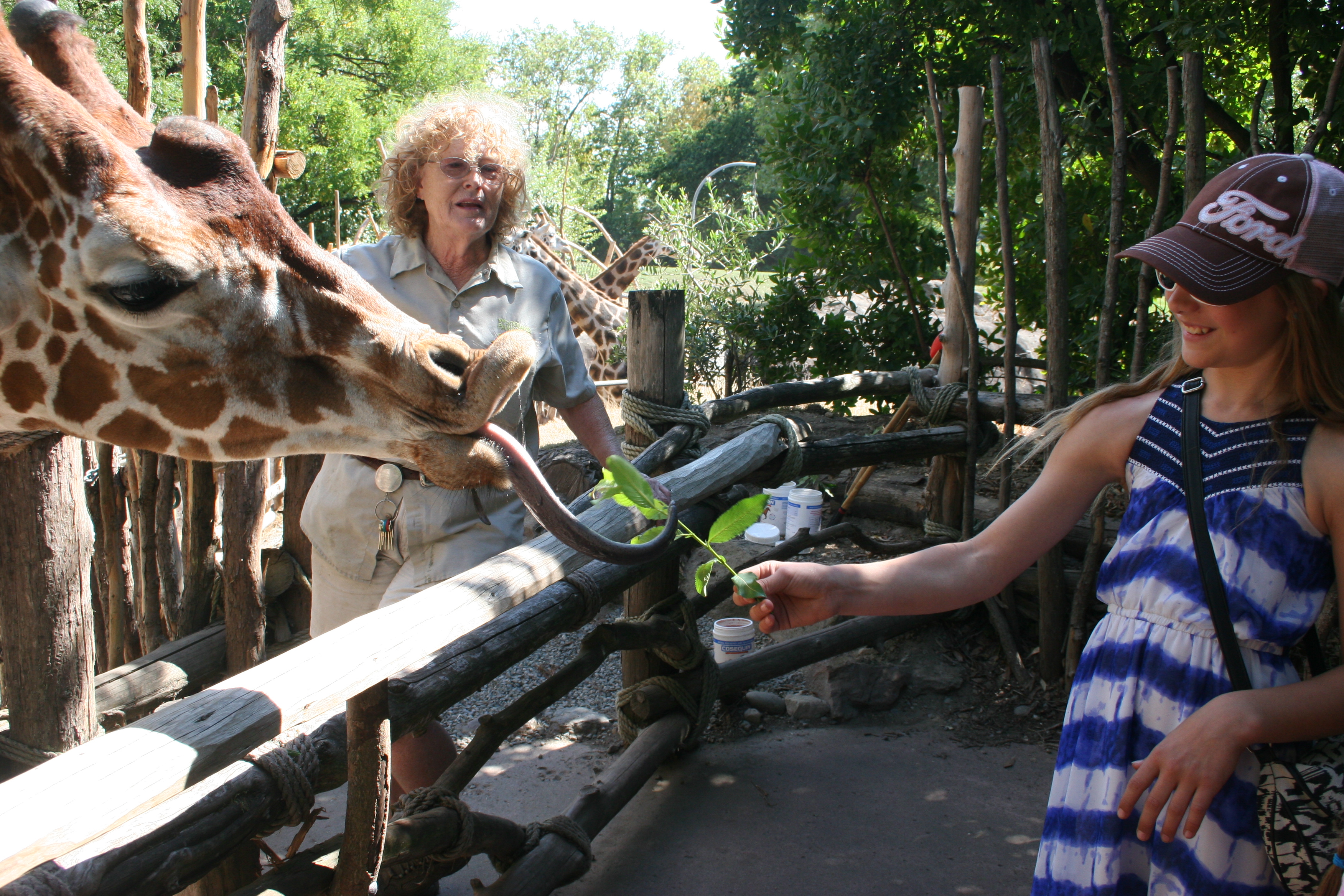
The best experience of all though was getting close to the giraffes and hand feeding them. The keeper was great at encouraging the children to ask questions and it was a truly memorable experience for all that I will definitely do again. Giraffe feeding is $5 per person and under 5’s go free with a paying adult.
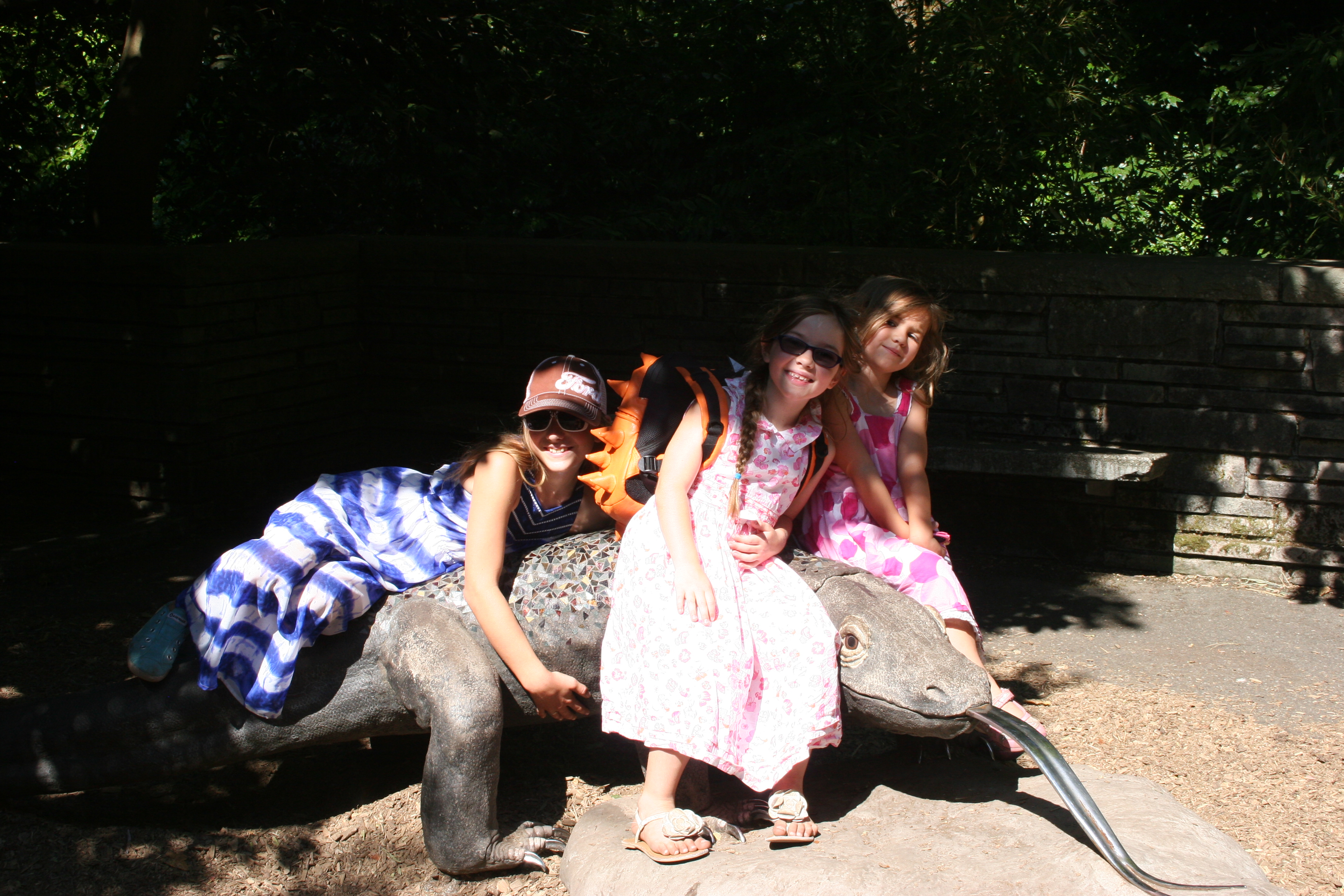
A day at the zoo was perfect for my nature explorers.
Membership Offer
Zoo membership is perfect for families with young children. There are a number of membership options to suit different needs and admission is free for children under 3.
Right from the Start readers can benefit from a special offer.
Quote MOM15 at checkout to receive a 10% discount plus entry into a draw to win 2 giraffe feeding tickets and 2 tickets for a carousel ride.
Disclaimer: Complimentary tickets for 4 people were received. All opinions are my own and we were under no obligation to write about our visit.
A place where I can kick my shoes off and sink my toes in the mud.
Regular readers will remember that when I moved to the US, I struggled to find a preschool that I was entirely happy with. I became so disillusioned that I decided to home preschool for a year. I’d lost faith of ever finding a preschool that valued play, independence and individuality above academics and rigid schedules until a friend told me of a preschool situated on a farm. The preschool shared my belief that children learn best by doing things that have relevance in their lives through exploring, discovering and creating.
The school is so popular that it was a whole year before I had a chance to visit and see the school for myself. Children were busy pulling apart sunflower heads on the covered deck area whist others moved freely between the different activities indoors and outdoors. The teacher’s enthusiasm and passion for both the children and the setting was evident immediately and a bubble of excitement rose up within me. Our name was put on the waiting list for Sept 2015 but before Christmas a place became available in the co-op class so finally my youngest daughter had the chance to attend. This was perfect as I also had the chance to be involved in this wonderful experience as a parent helper.
There was little doubt in my mind that this was the perfect preschool for my outdoor loving daughter. My expectations were high. I have been fortunate to teach at a highly acclaimed nursery in the UK and to visit the best preschools in my local authority as an advisory teacher. My experience of this school has surpassed all my expectations, I couldn’t have hoped for a more perfect preschool for my daughter and I am only sad that my older daughters didn’t have a chance to go there. After she started, it just seemed to get better. Regularly she would come home covered from head to toe in mud. To some parents this would be horrific but to me it meant she had the freedom to be herself and have fun.
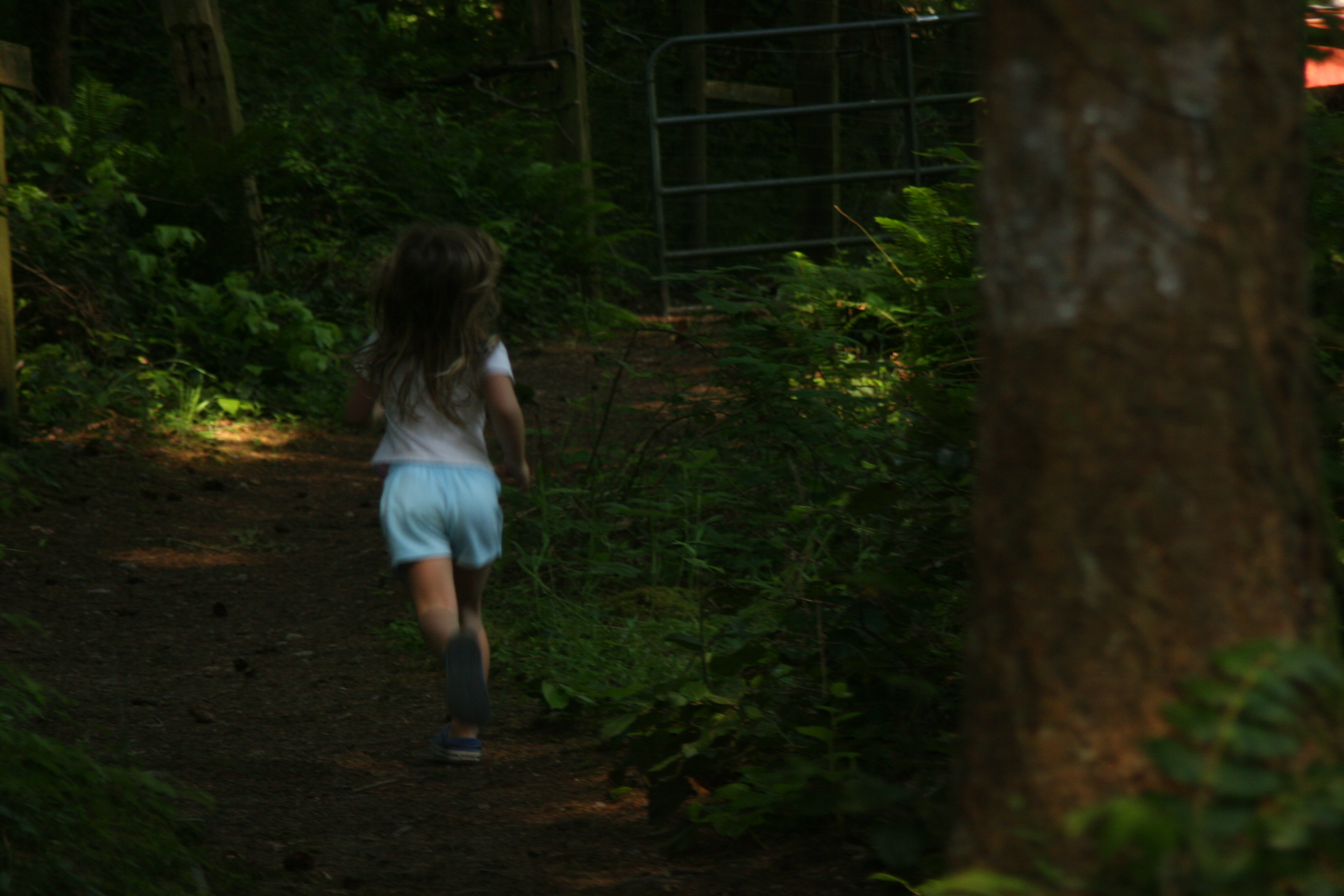
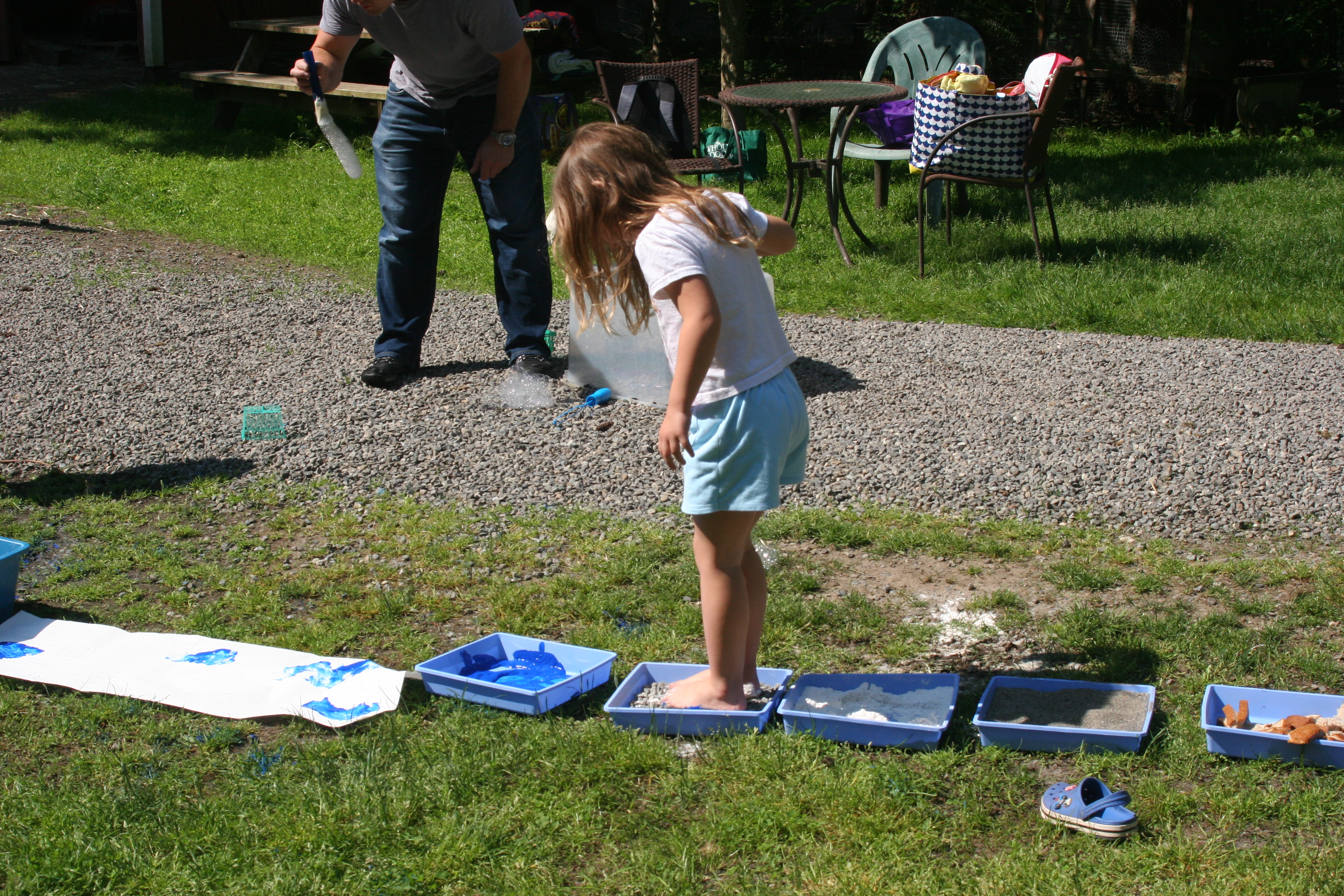
Being a part of the co-op class means that I get to help out once a month. This is the most exciting part for me as I get to join in. I love the covered deck area which enables the children to play outdoors all year. The children explore the whole farm for the 2nd part of the session, mud, water, animals, climbing and balancing. They are actively encouraged to take risks.
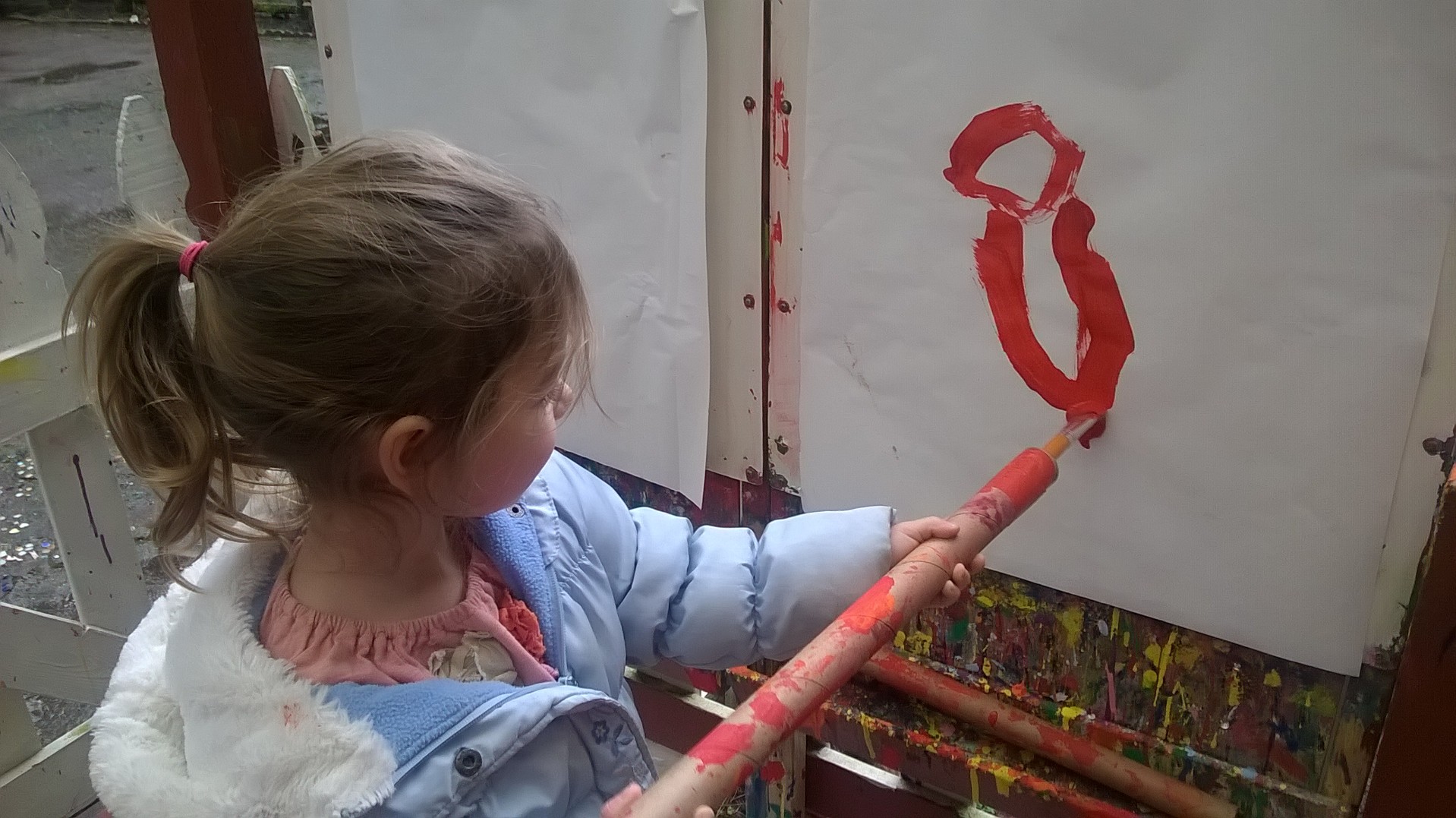
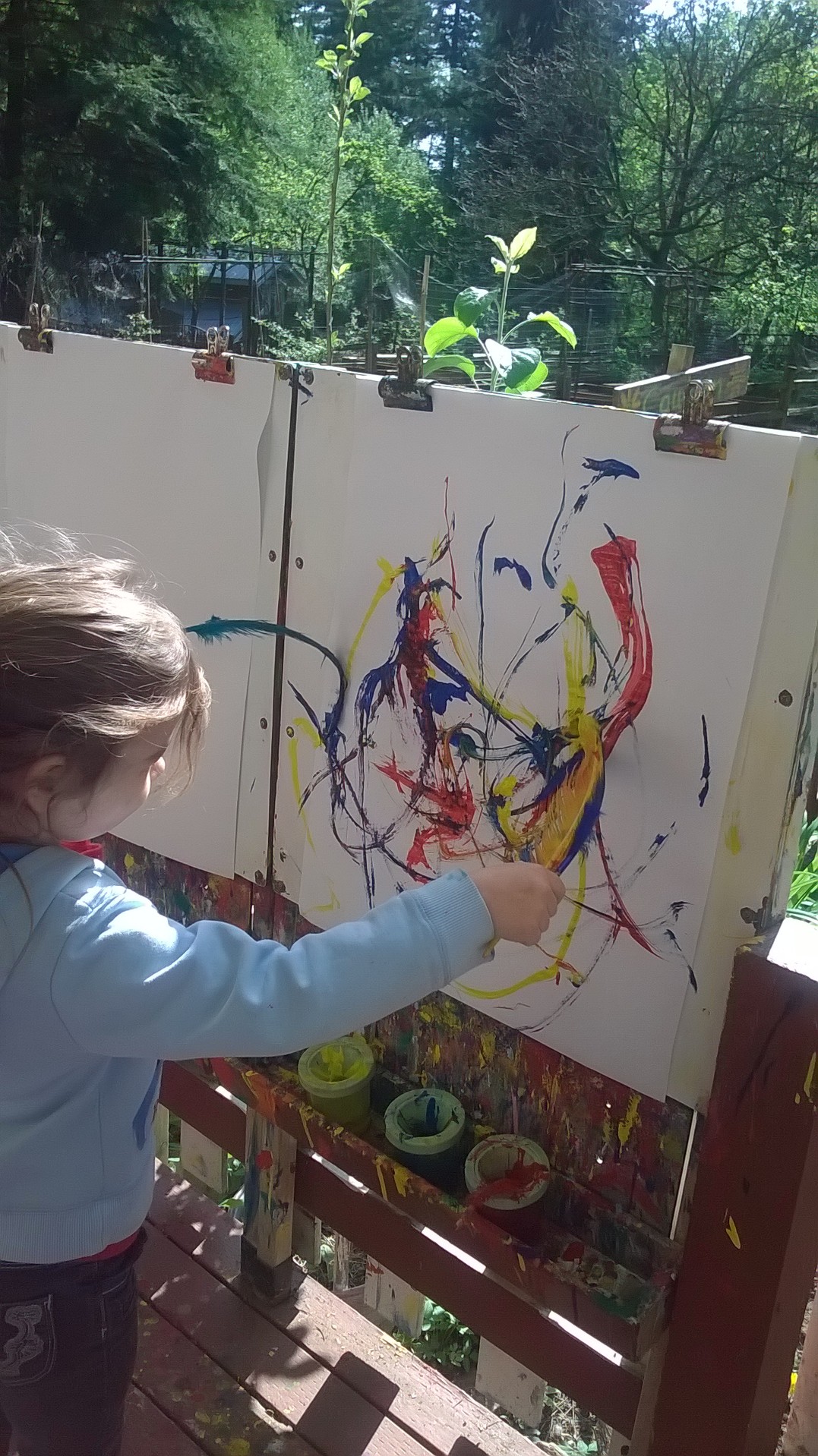
As we arrive my daughter always chooses to paint . She liked this painting activity with paintbrushes placed on extended poles.
Painting with feathers
What makes it so perfect?
1. Children are individuals
Small classes and the dedication and experience of the teacher, mean that she understands each child as an individual. My daughter who is uncomfortable speaking in a group or to unfamiliar adults is given time to think about what she wants to say, often being presented with a question at the start of a session and returning for a response later. The child who hates to get his hands dirty is offered alternative tools and all the materials are open-ended so that children can use them as they see fit.
2.Children are competent
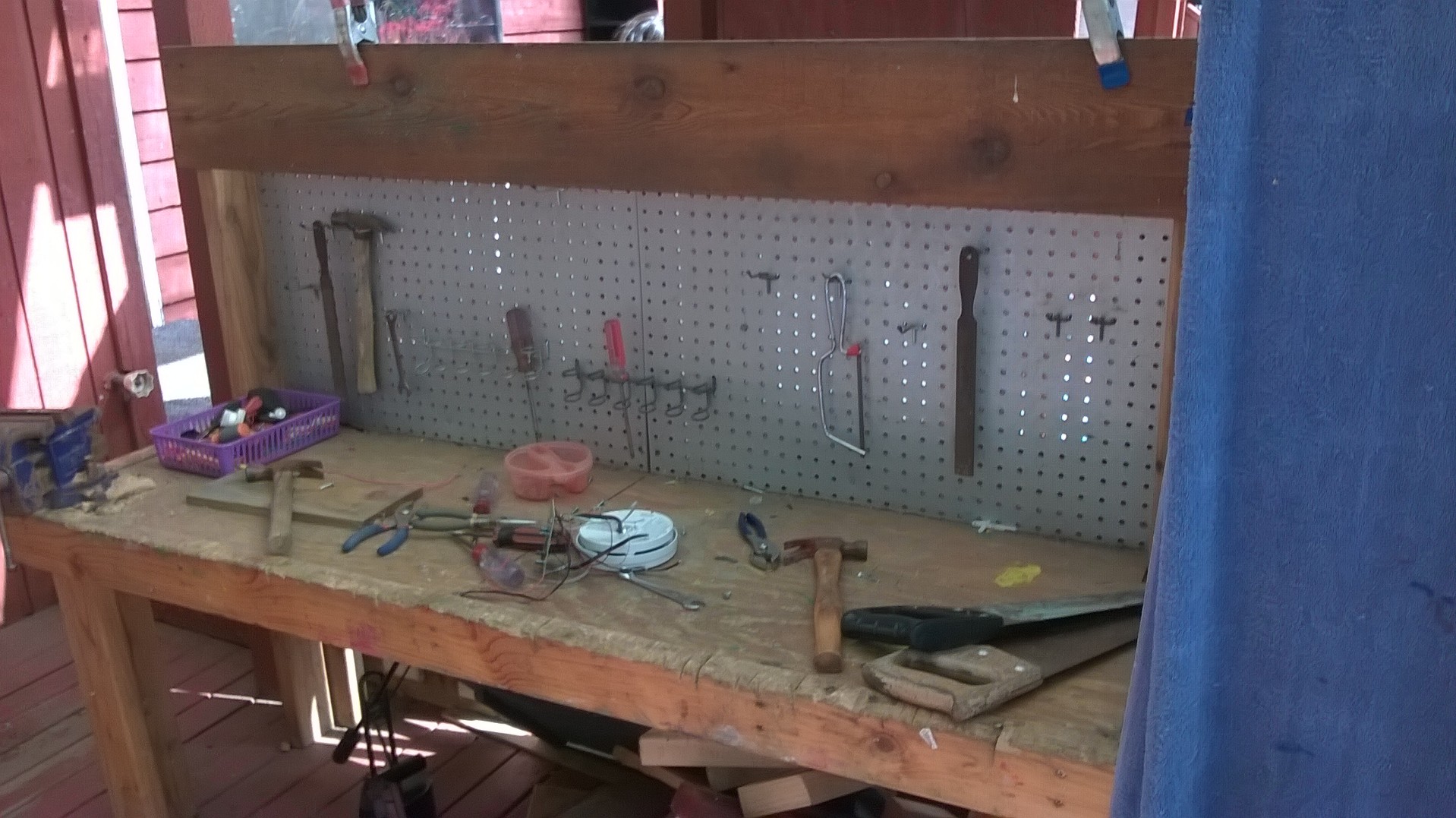
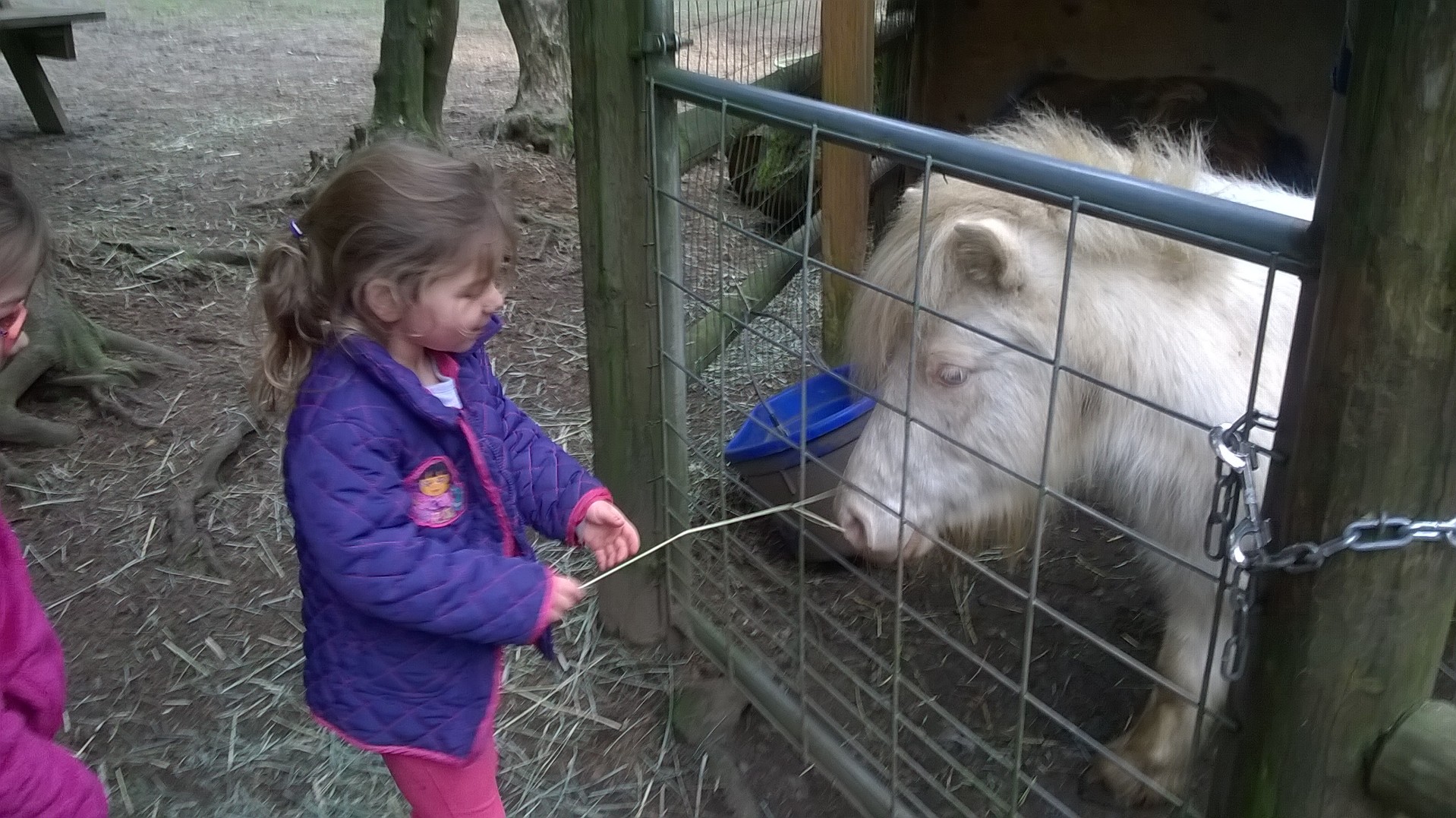
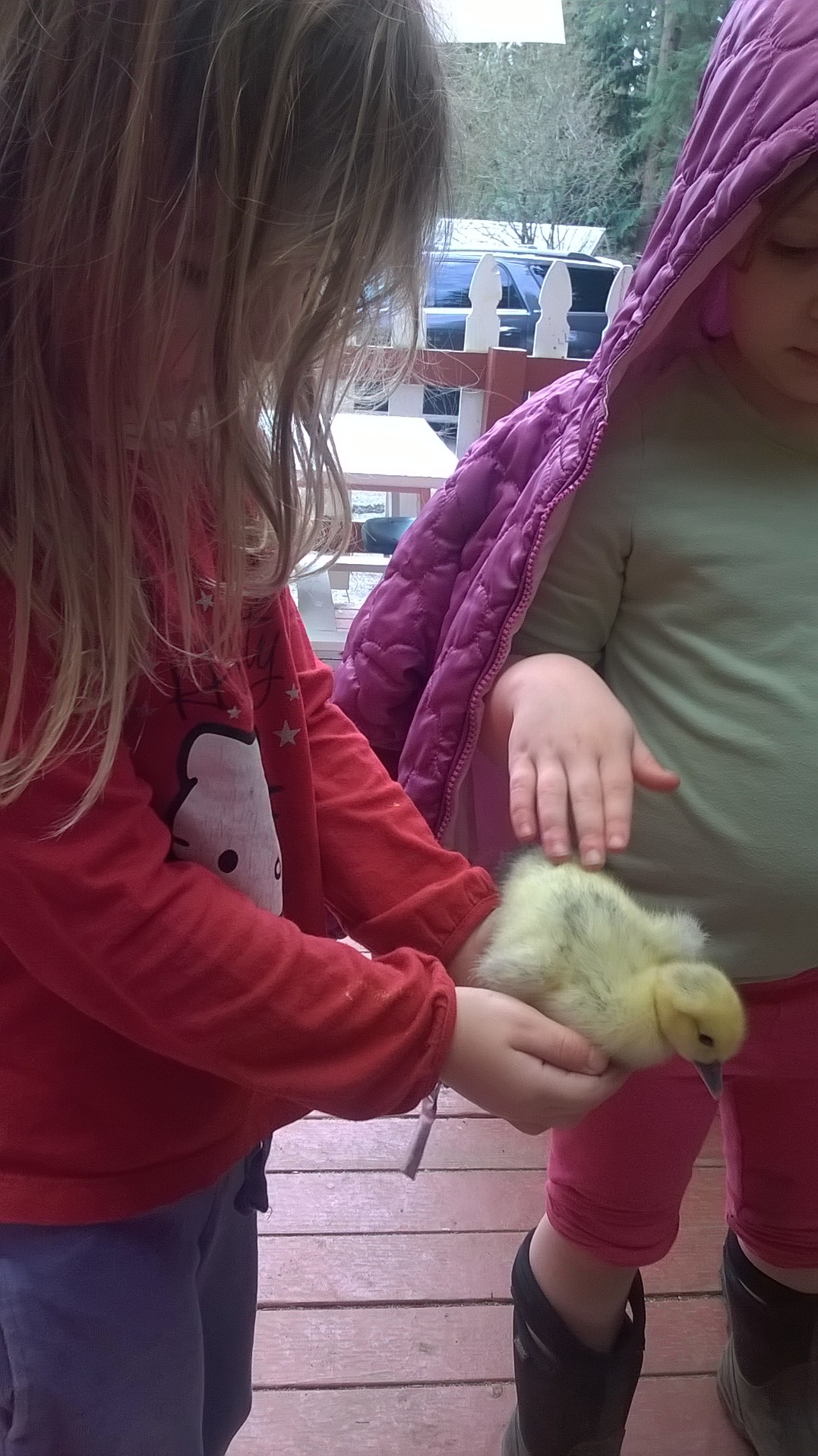
Children are always encouraged to try things for themselves, even when they ask for help they are first encouraged to try. The children are trusted to use adult tools for woodworking and tinkering, peeling vegetables and cooking. The teacher shows them how to use the tools safely and responsibly and thereon in they are trusted with them. The children cook their own green eggs and ham on the tiny stove, they dig with metal shovels, they observe candle flames and peel carrots with a peeler. Outside they are permitted to climb trees, feed the animals, hold guinea pigs and dig in the mud. The children are trusted to handle precious materials like birds eggs, chicks and nests.
This tinker table is always available. I regularly see children sawing pieces of wood placed in the clamps, hammering nails or taking apart electronics with a screwdriver. In the nursery I taught at we had a tool bench with real tools but we weren’t confident enough to leave it out all of the time. I have never seen a child have an accident or do anything dangerous with the tools.
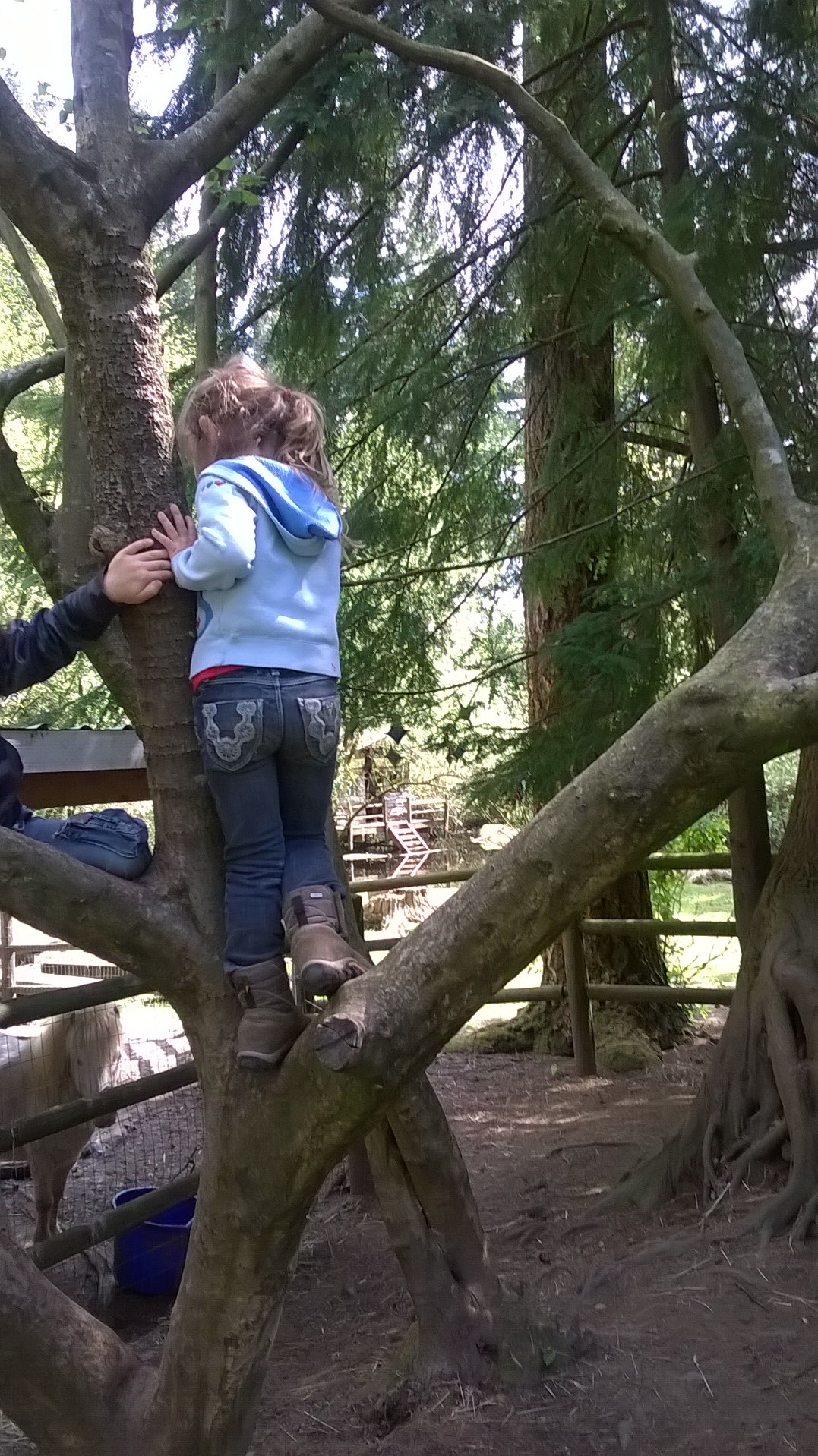
My daughter loves to climb trees – I’m not sure I could find anywhere else where this would actively be encouraged.
3. The Preschool fosters understanding and respect for nature.
Many of the activities involve the natural rhythms of the farm, collecting the produce, understanding the cycles of the plants and learning about the animals and creatures they find.
After the first few sessions, my daughter told me they had unicorns at preschool but that it was too small to have grown a horn yet. A preschool with unicorns? Could it get anymore magical?
When the duck’s eggs hatched the children were allowed to hold them.
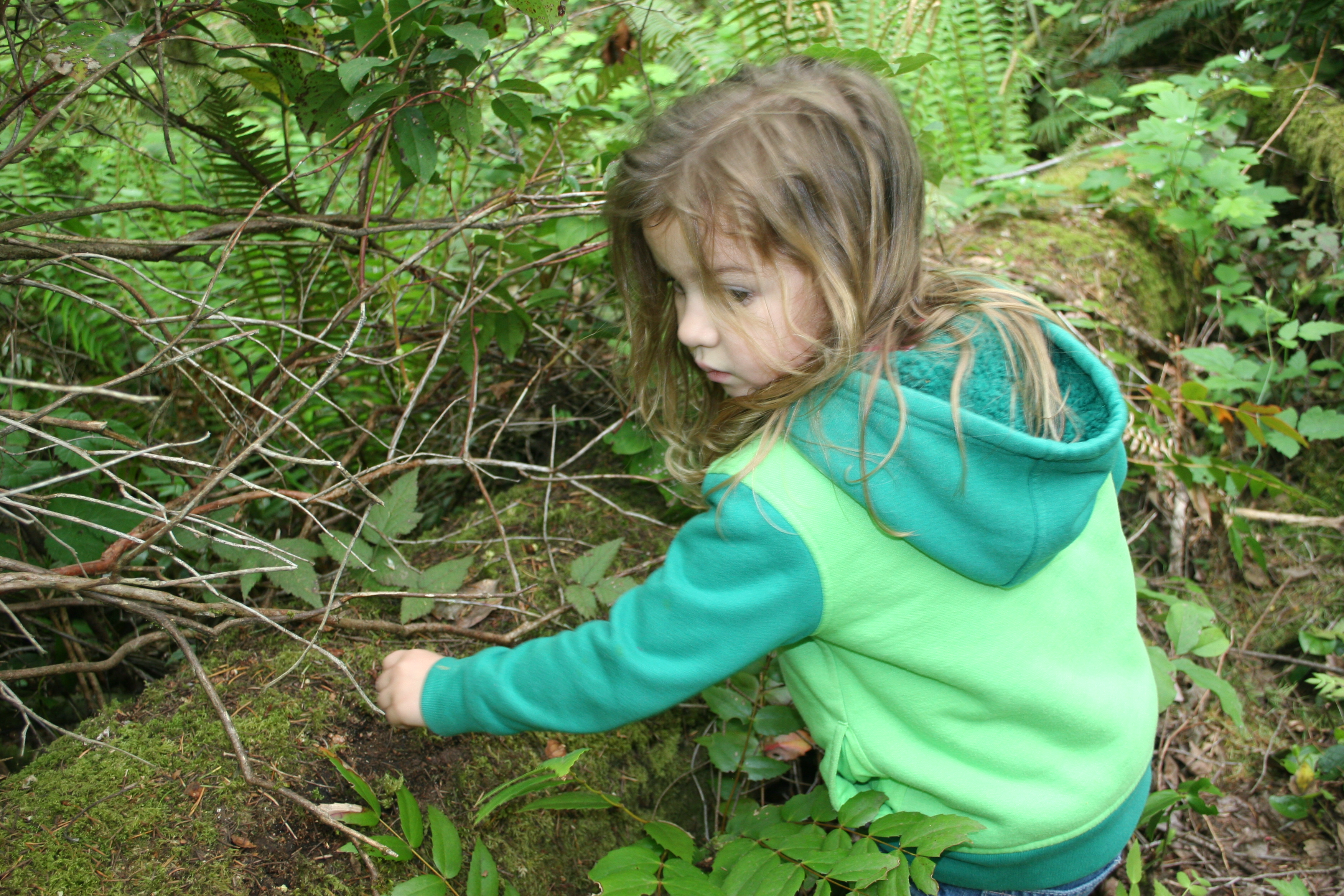
A bug hunt in the woods
4. Children’s thoughts and opinions are important
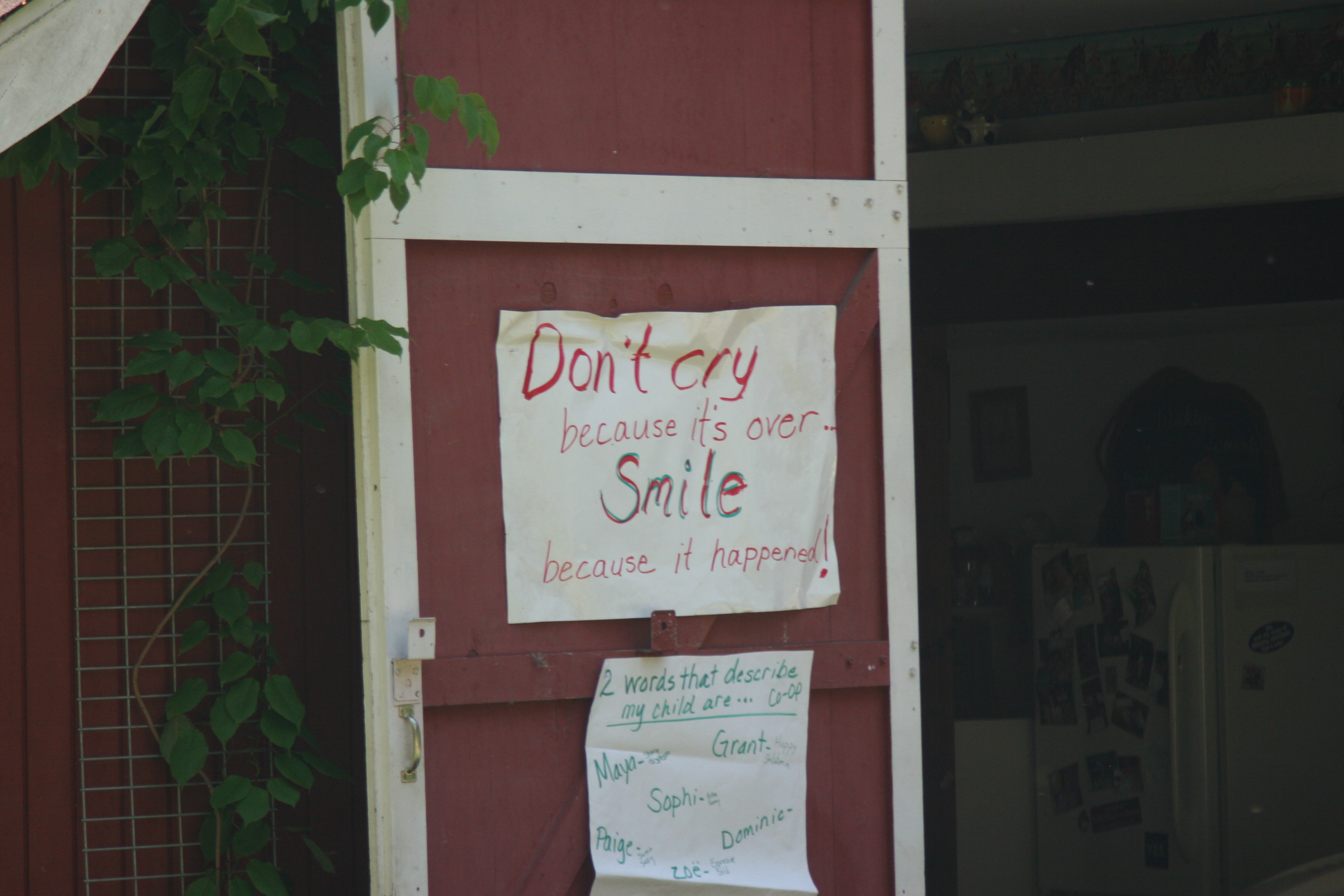
Each session the children are asked a question and the answers are recorded for parents to read on the wall outside. The children listen to each others responses and discuss them with respect. The children’s choices are respected as they are presented with a number of activities to choose from at leisure. They also have opportunities to choose the songs they will sing and are confident at asking for things. The children are offered a snack, they choose when and if they would like to eat it .
5. They have fun.
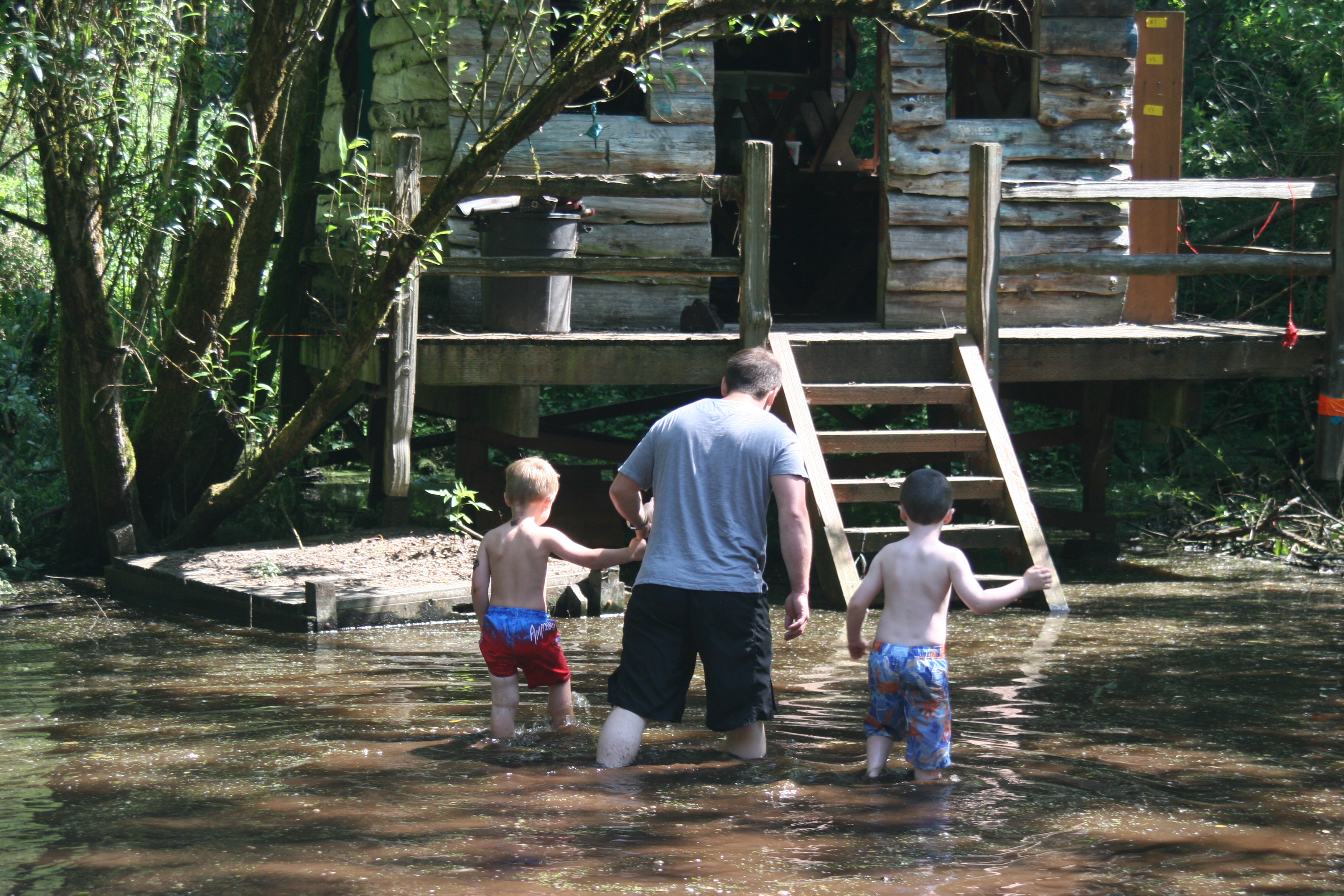
On the last day of school, parents are invited to join the children as they wade in the swamp.
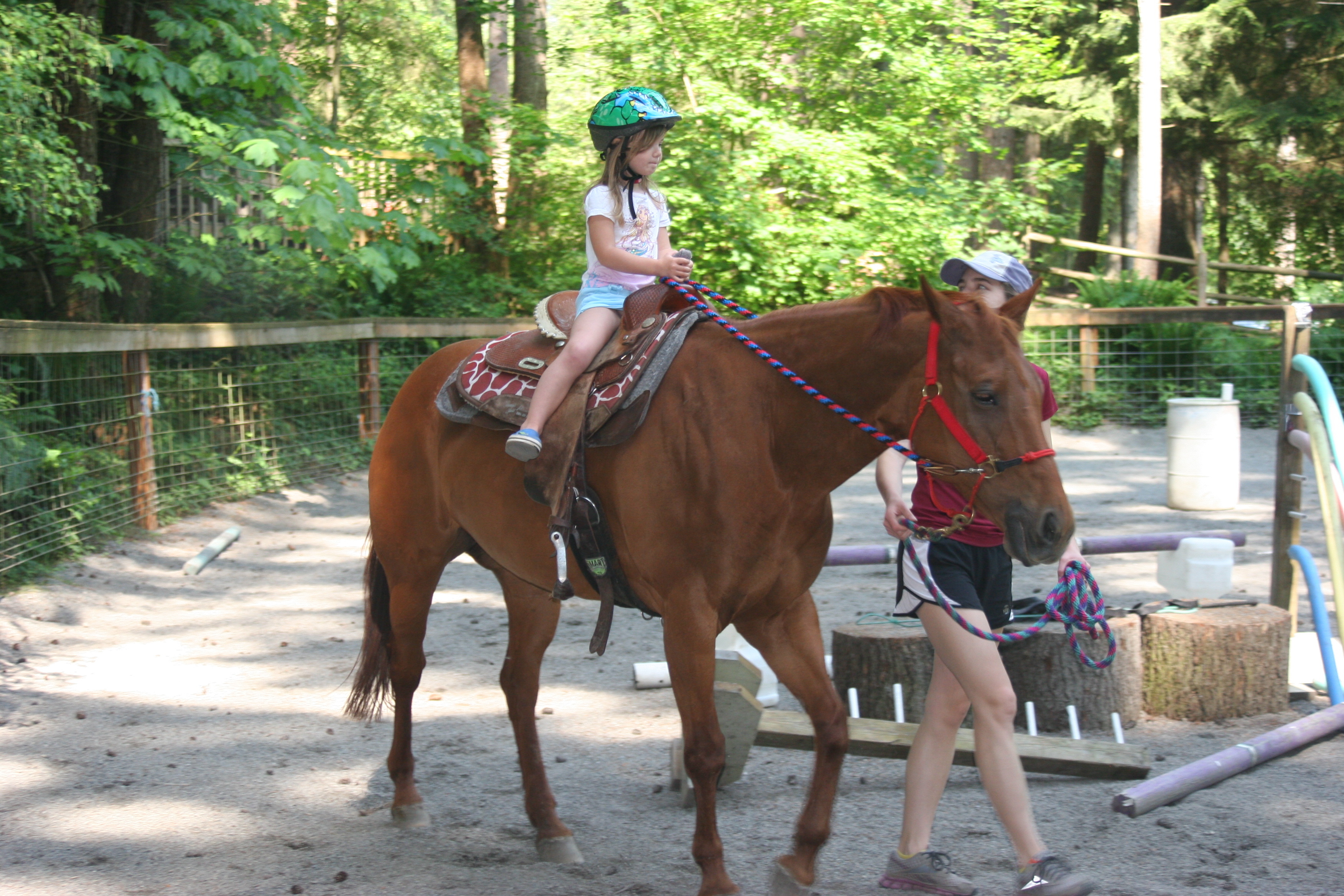
horse riding on the last day of term
.
Best of all, I feel that my daughter experiences something here that she would never have the chance to experience elsewhere. I feel so fortunate to have found this preschool and that my daughter has one more year there. When our time is over I will be so sad but I hope I can remember her teacher’s words of wisdom.
I recently hosted a party for friends and their families. I was surprised at the comments I received about my garden being an exciting place for children as I often think of it as small with too many trees and very little grass. I’ve worked hard to make it an enticing play space and most of the materials have incurred little or no cost. Here is a little tour.
Water Play
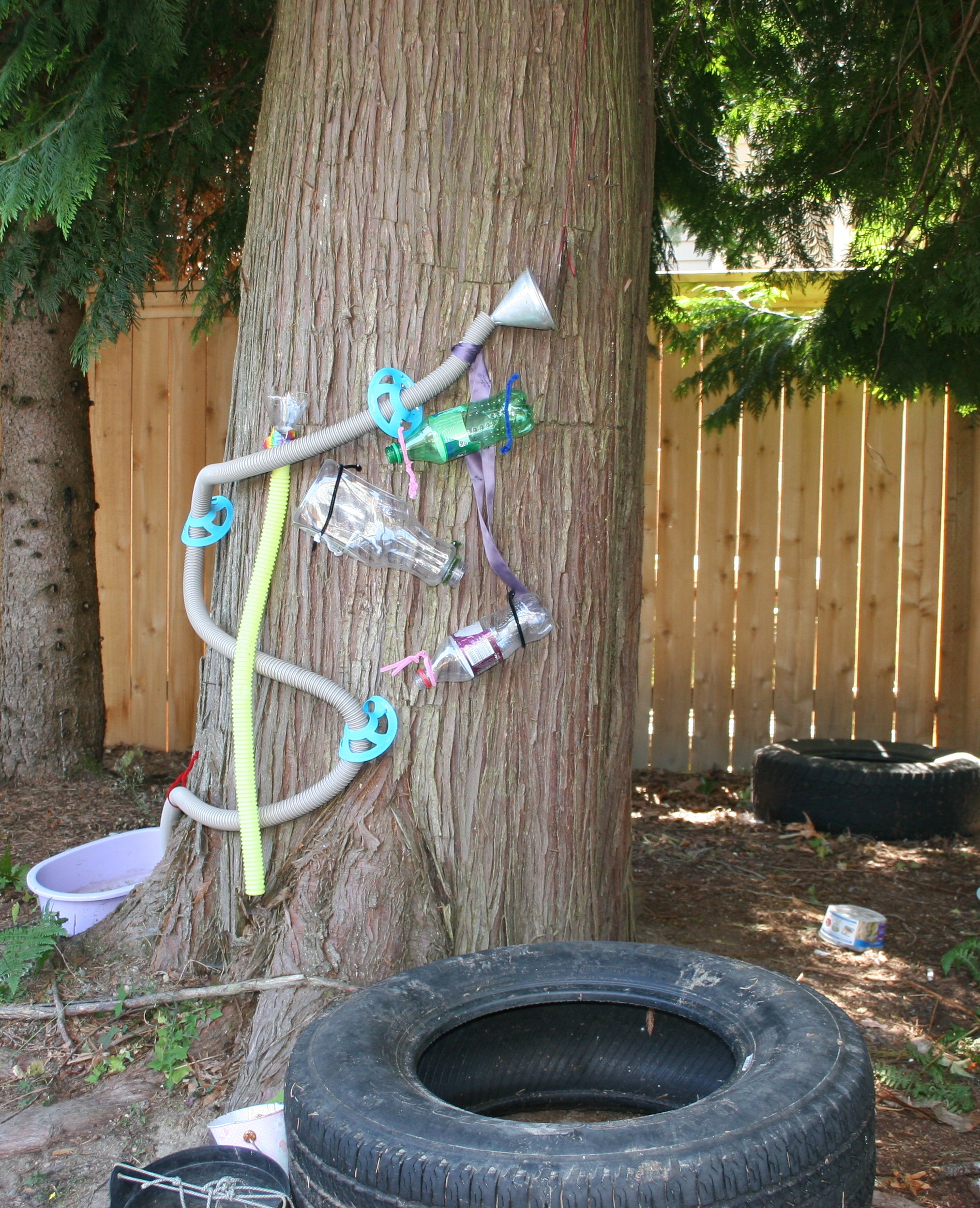
The water wall is a recent project. The pipe came from an old vacuum cleaner and the other containers are empty bottles. The containers are fastened to the tree using nails and pipe cleaners or threaded through markers for obstacle courses. The tyre at the base is to help my youngest daughter to reach.
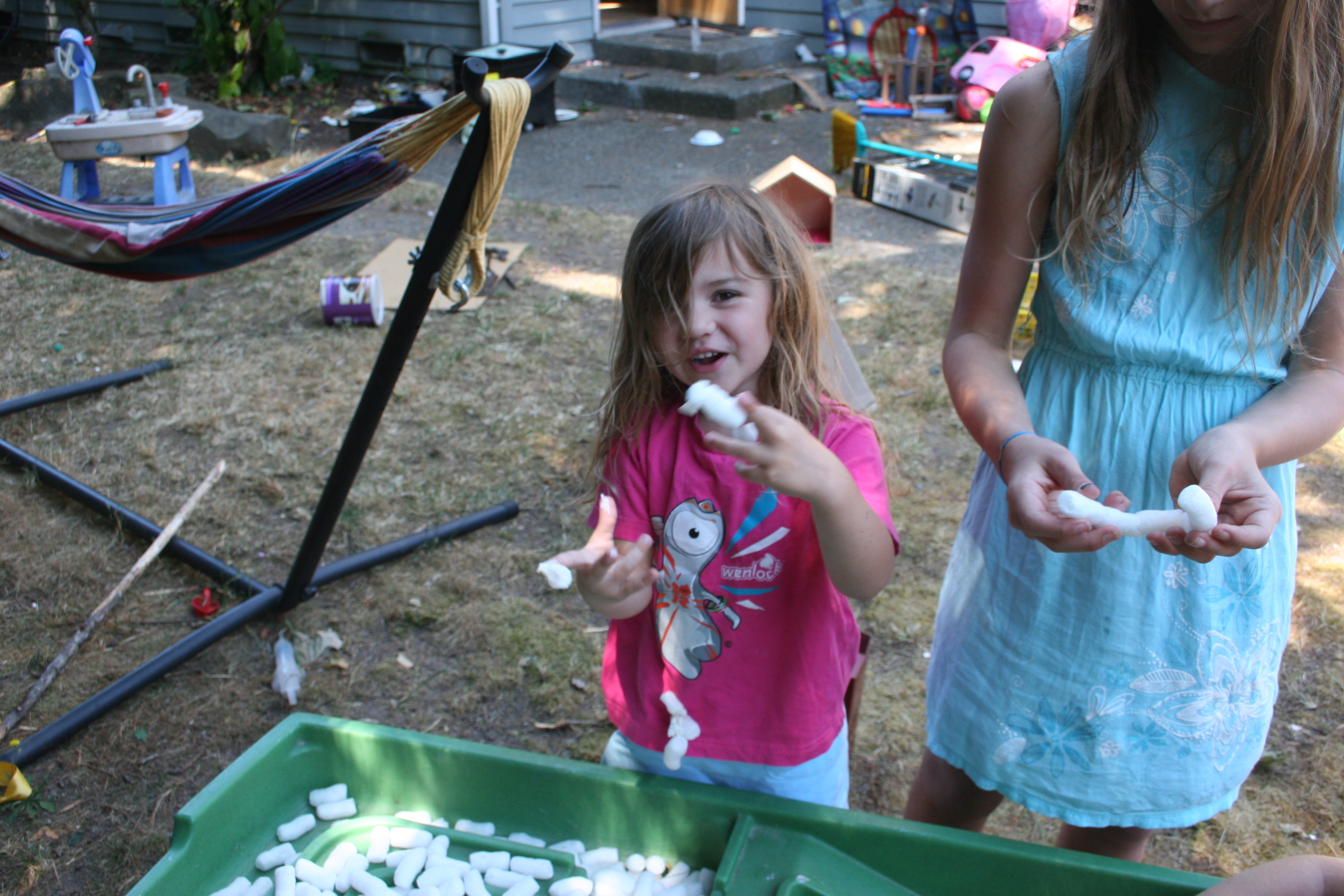
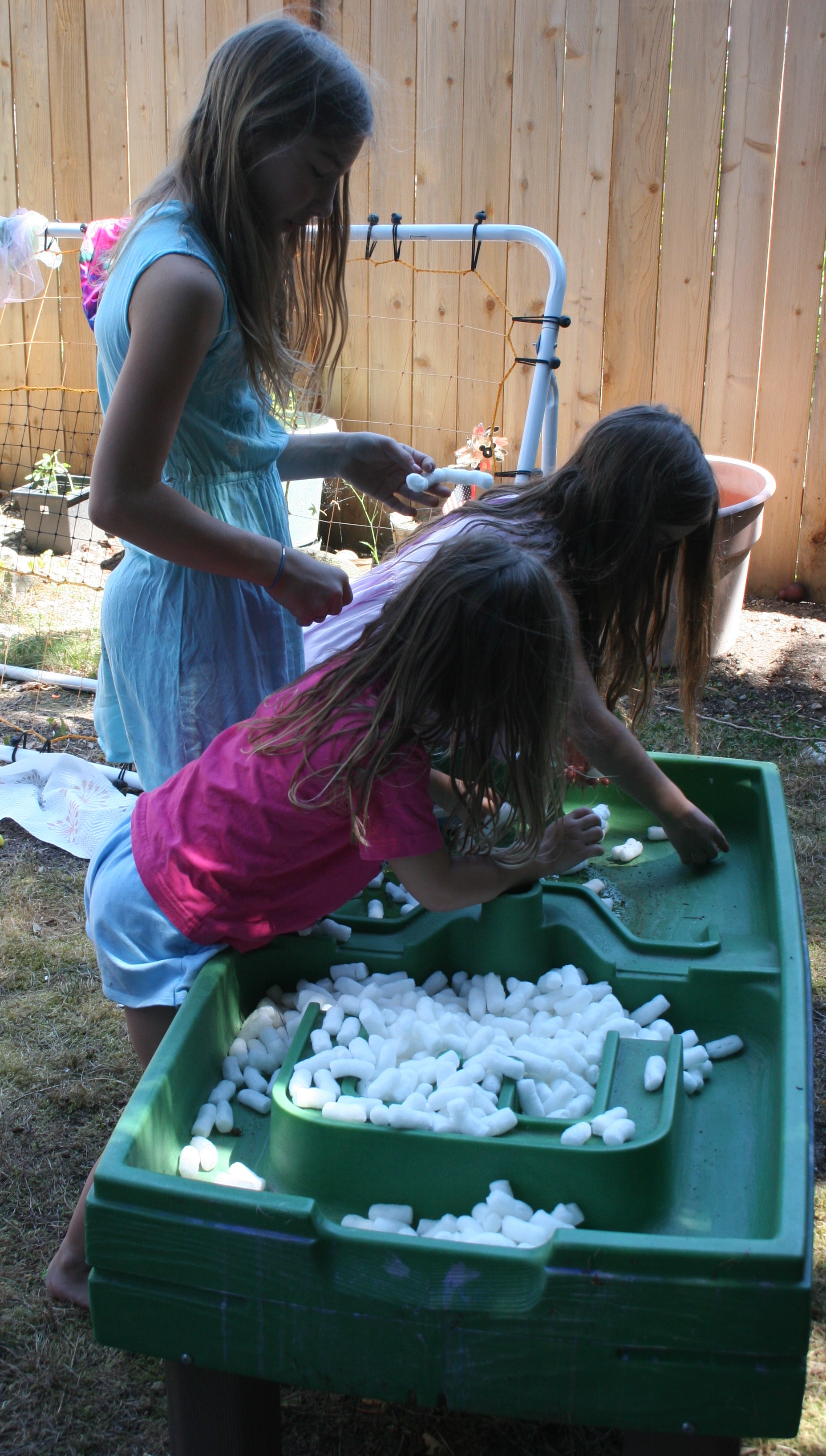
The good thing about the water table is that we can move it to different parts of the garden. It is perfect as a water source for the water wall . Other materials can also be used in the water table like the packing peanuts the children built sculptures with in the picture above.
Potions and Mud Pies
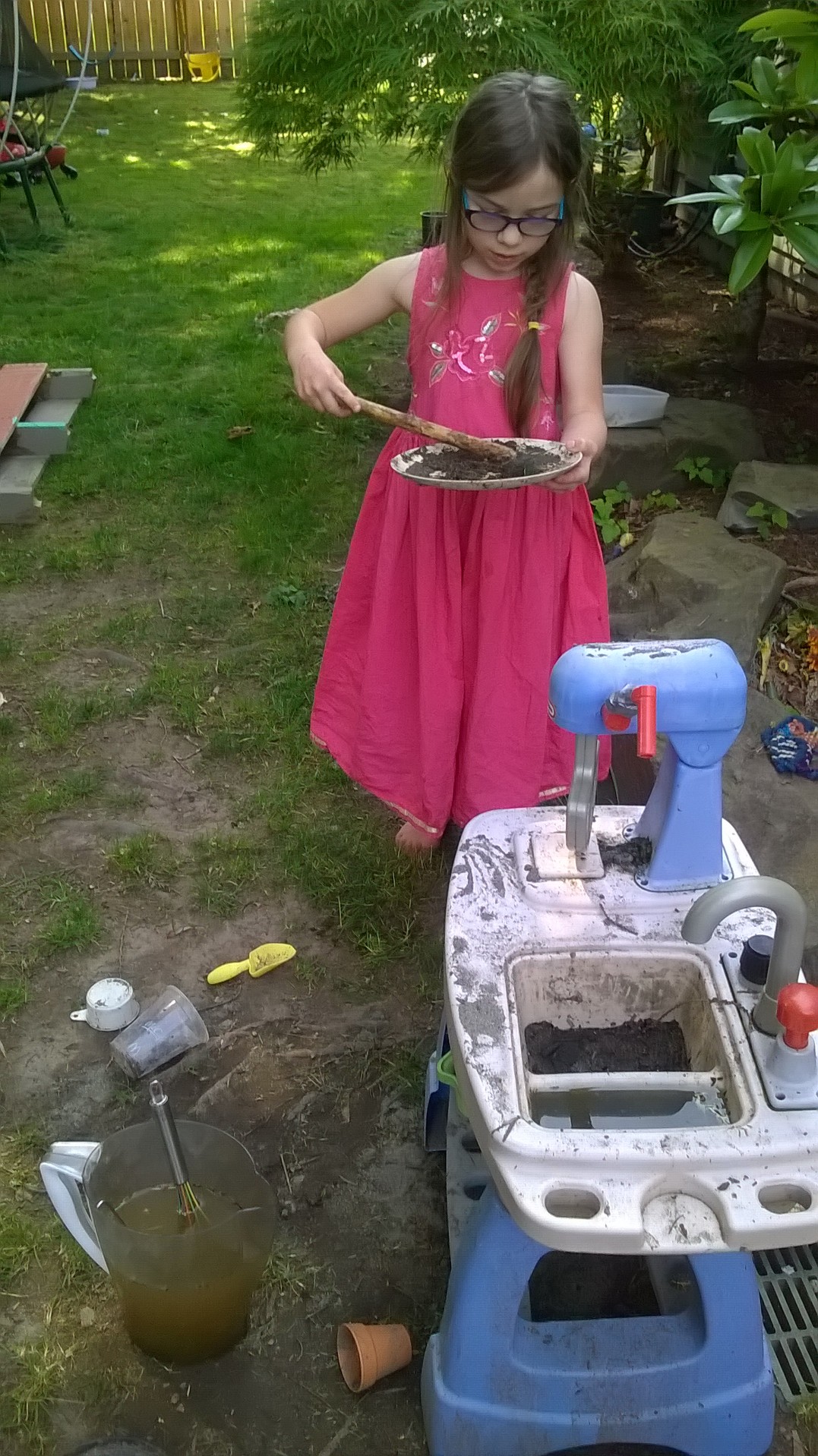
This is one of the children’s favourite activities and we have experimented with a variety of potion stations and mud kitchens. This is our current set up. The plastic tub was purchased very cheaply after Hallowe’en and fits perfectly inside a tyre. A split pallet in between is the workspace and another tyre with planks of wood laid over is where I set out materials for them to experiment with. Test tubes, containers and sticks for mixing are conveniently located in storage nearby.
I didn’t know these mud tables existed until one was offered on my local Buy Nothing Group. It would be easy to make something similar with a washing up bowl on a stand.
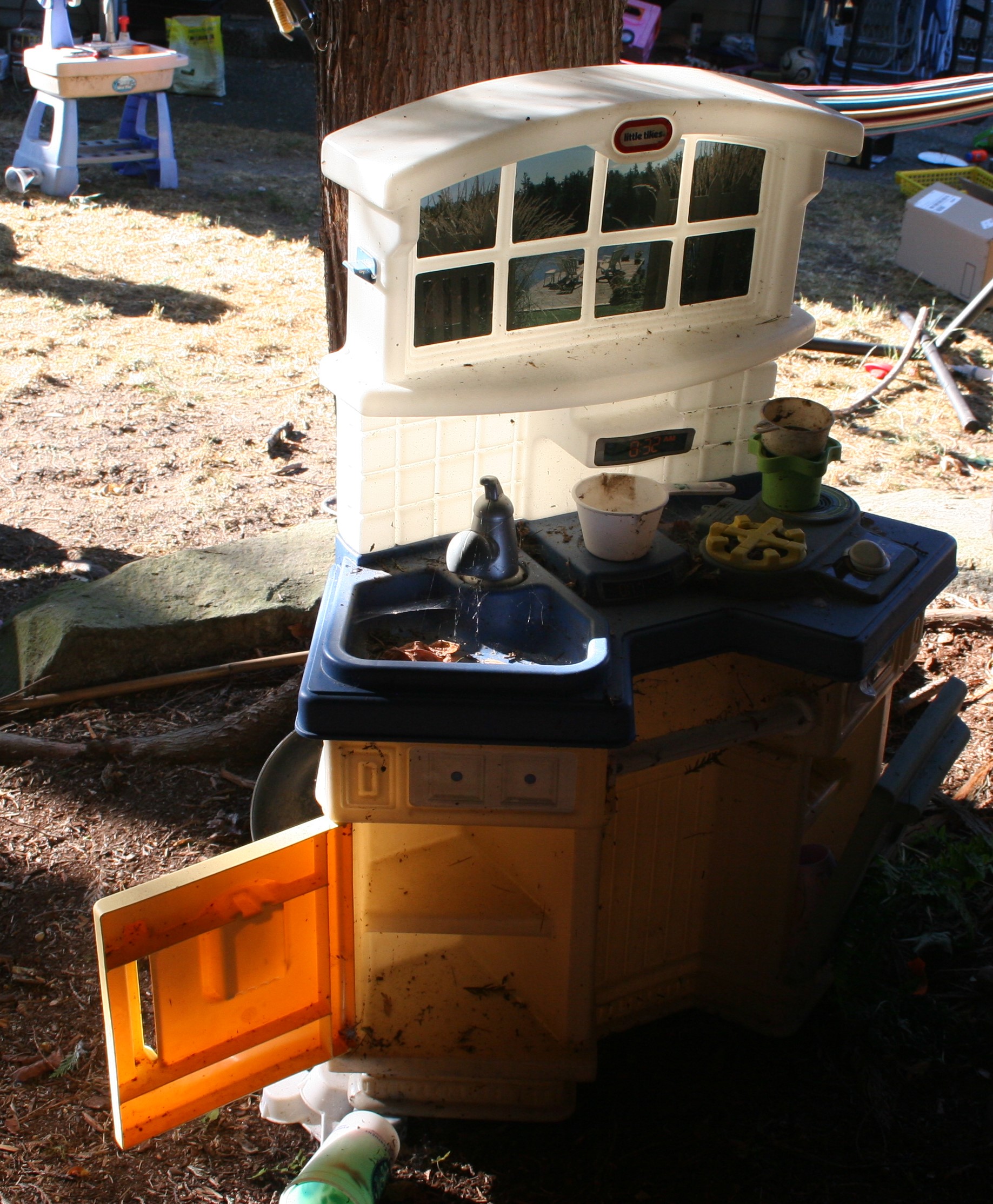
I have tried different positions for mud table and play kitchen and I am still unsure which works best. Currently they are close to each other but not in the same space so that the mud table, potion station and kitchen can be used together or separately.
Storage on the trees. The containers hold kitchen utensils for the kitchen and pans hang on hooks screwed into the tree.
Sand
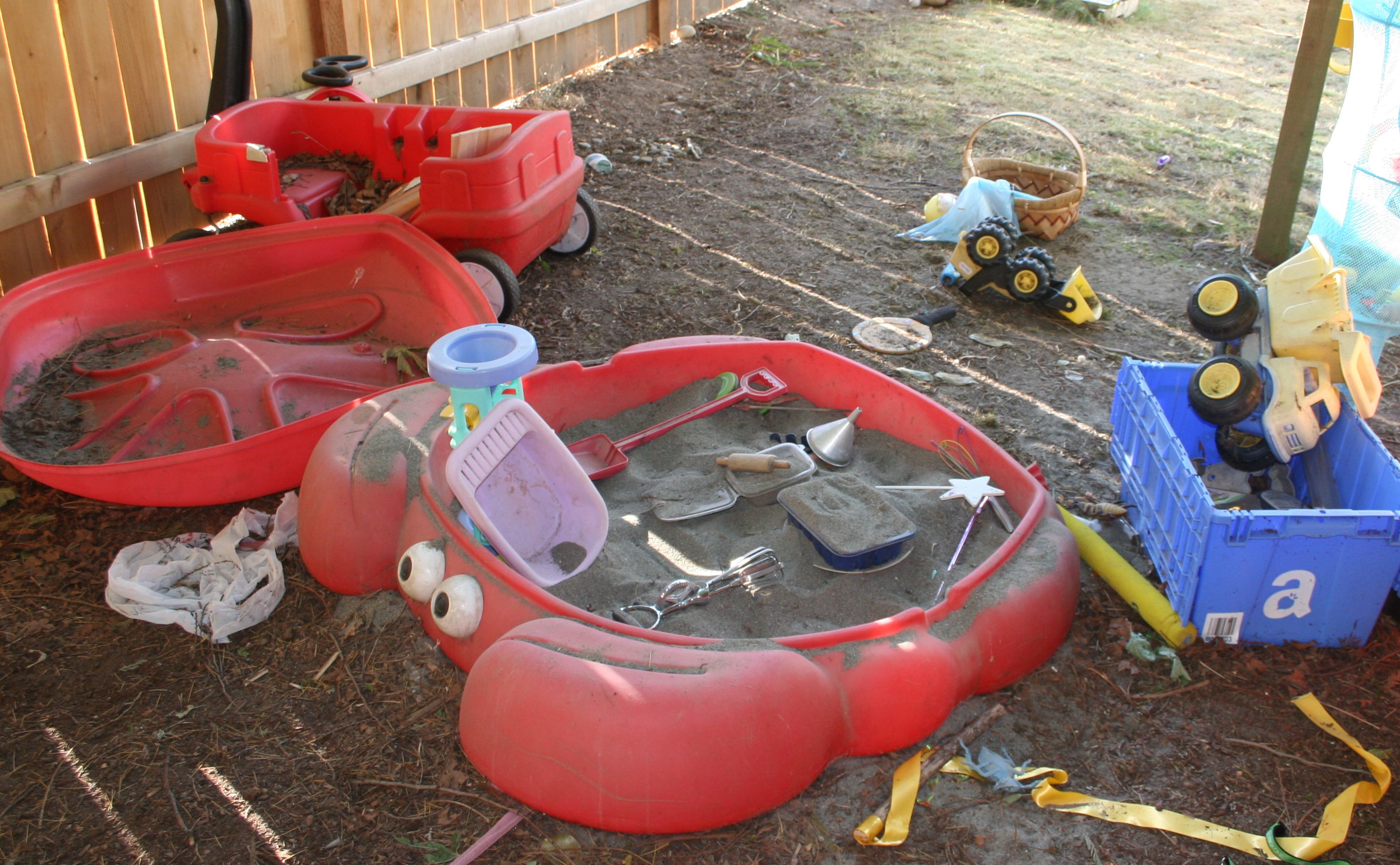
The children love this sandbox that I bought second-hand. It is really sturdy and has held out really well. The trees in our garden offer lots of shade so the girls can often be found making up imaginative games in the sandbox.
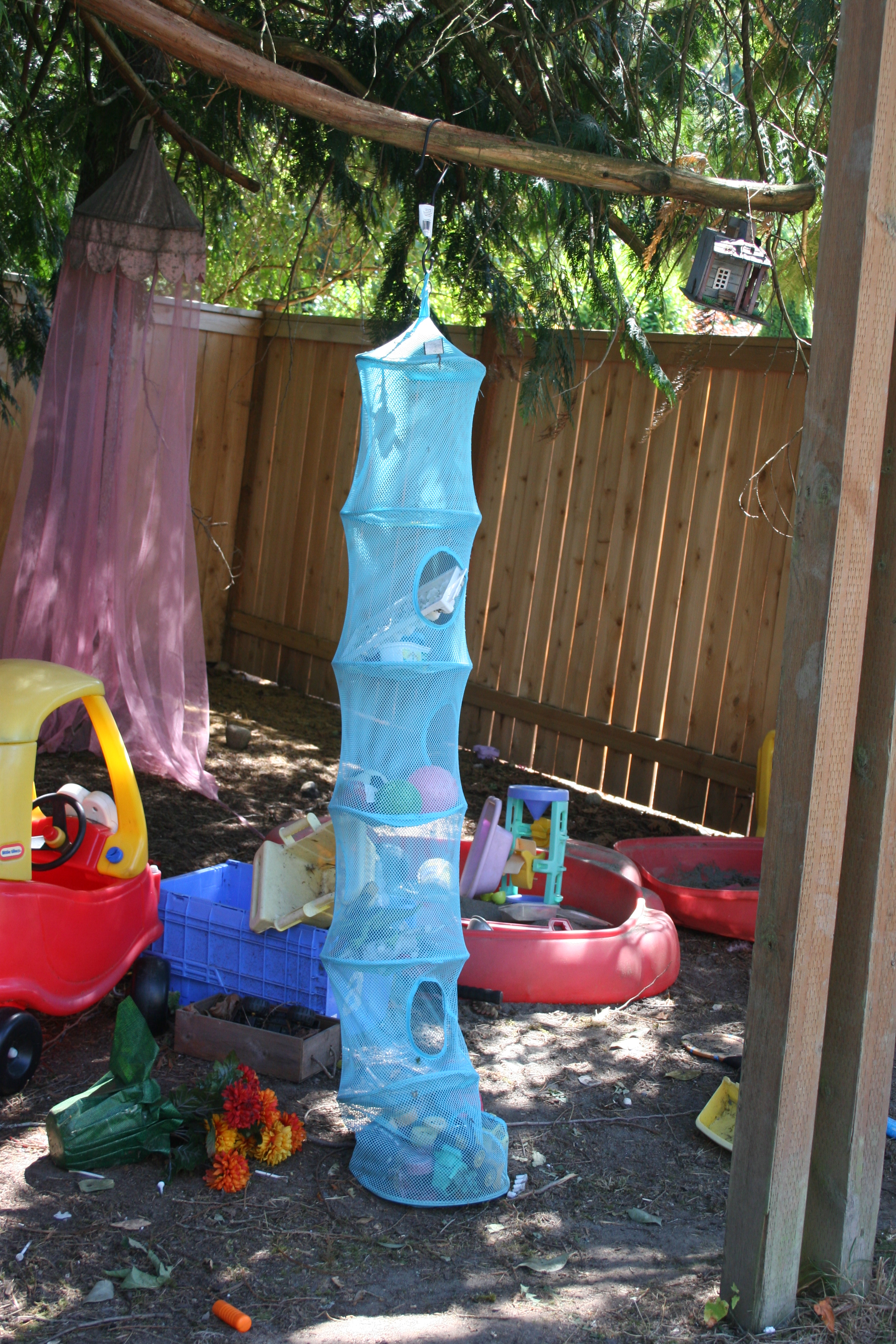
I use a storage net from Ikea to store the smaller sand toys, water toys and small balls and hang it from a tree branch.
Mark Making
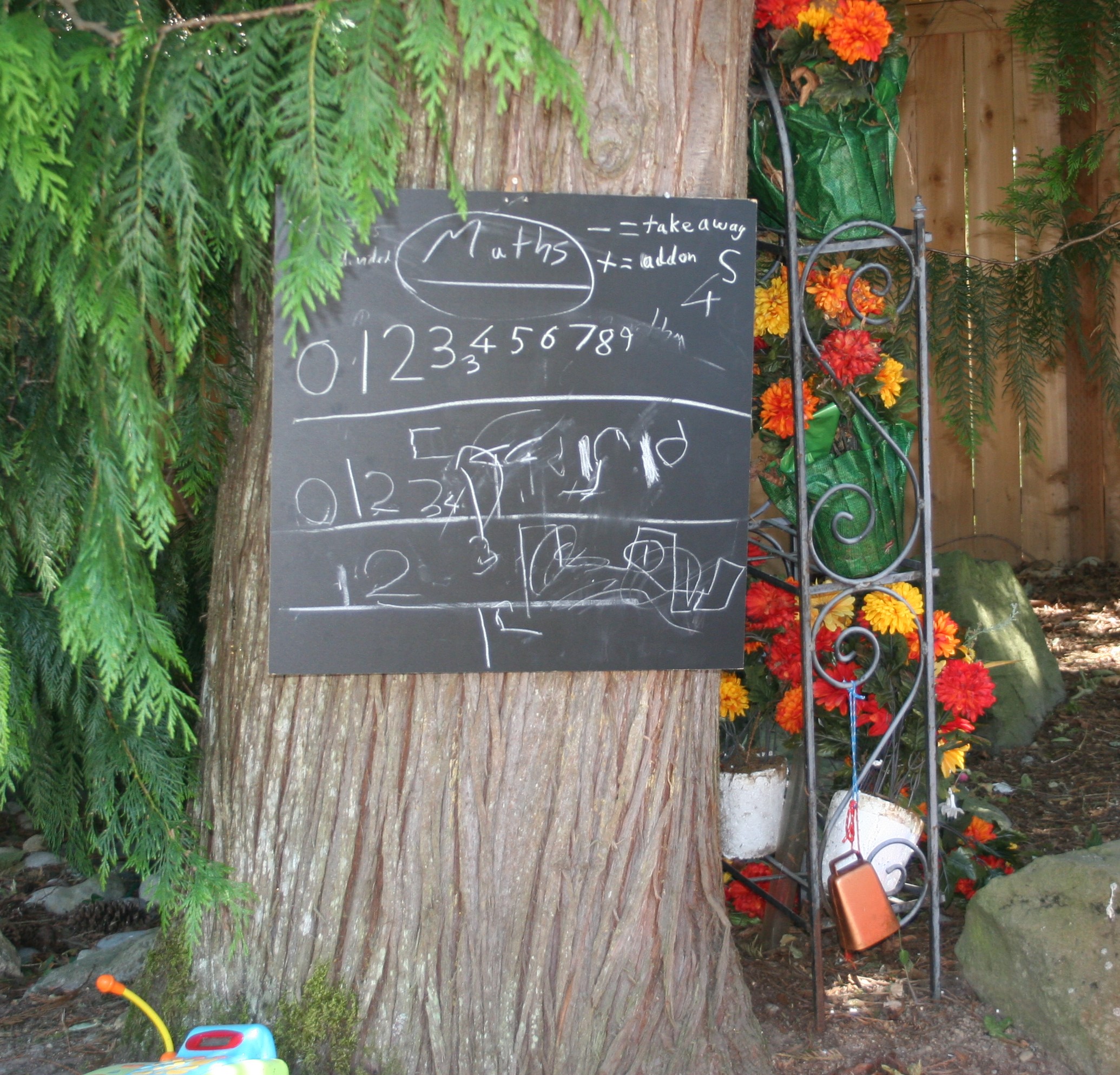
The girls are always making little paper signs to include in their play so I added a chalk board to the tree. I placed it near to their play shop so that they could use it as a sign.
My eldest daughter created this puppet theatre using a sheet and a few sticks jammed between 2 trees. I nailed the sticks into the tree to stop them falling and added a board from a broken picture frame for them to write on. This could be painted with chalkboard paint but works just as well without.
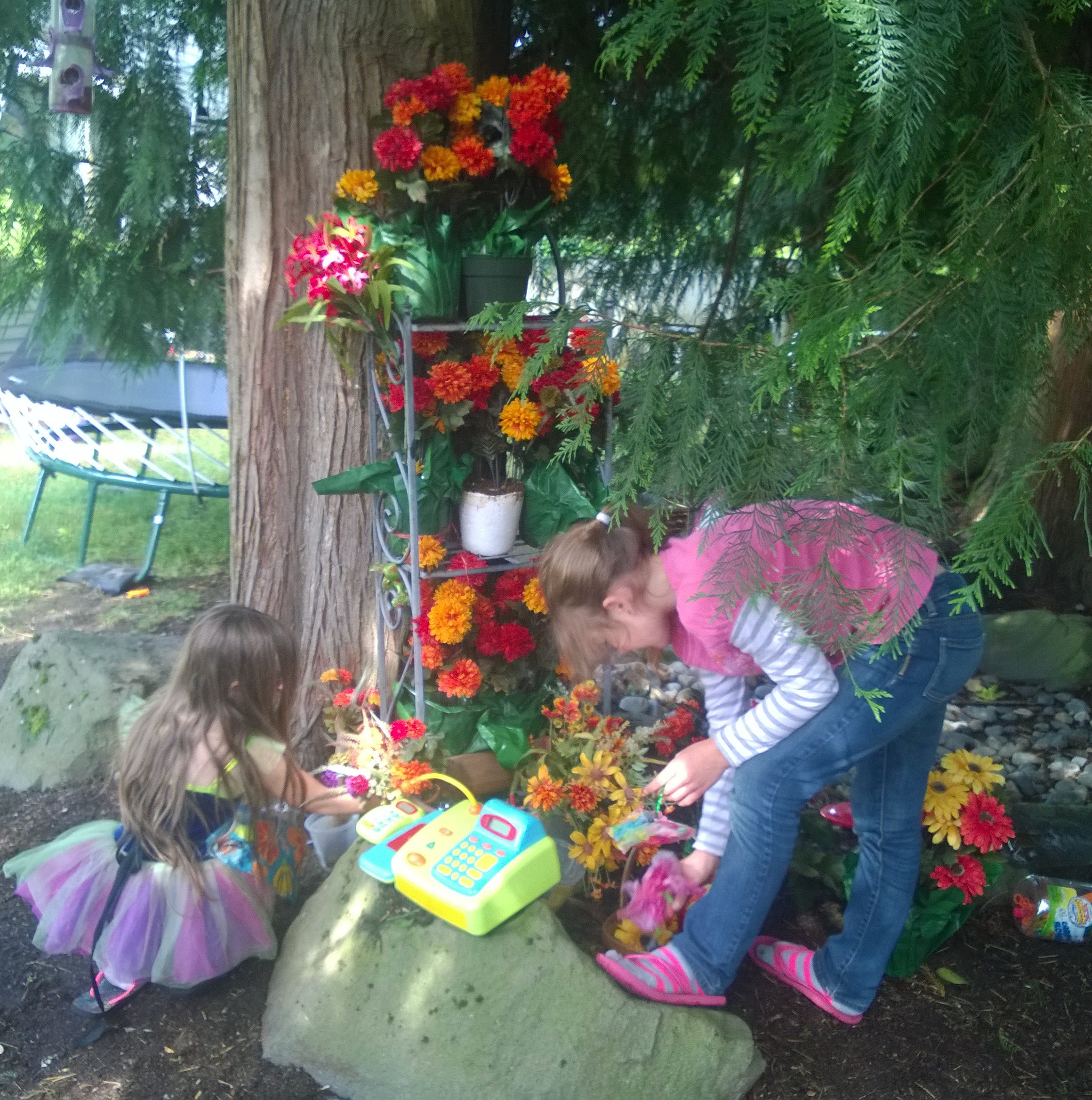
We were donated a large amount of fake flowers last Summer and we used them to create a flower shop using an old plant stand and their play till. We could also use the puppet theatre with a table behind it. The girls use cars and waggons as the delivery vehicles.
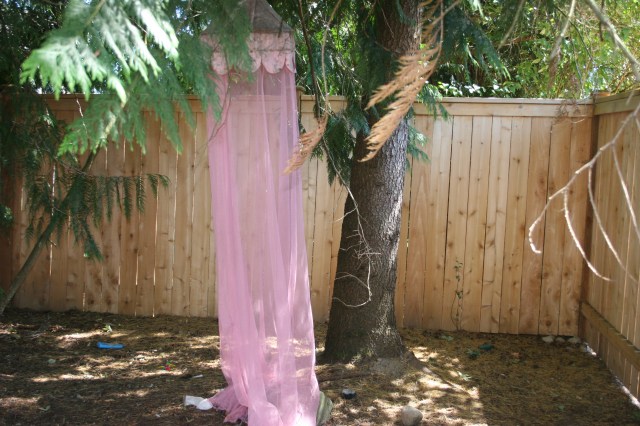
Another Ikea purchase but something similar could also be made using a hula hoop and ribbon or tulle. I hang it from a tree and put cushions and books inside.
We also use a parasol for a shady spot. The girls recently created a face painting station beneath it. The parasol came with our water table and doesn’t have a stand. I used the stand for my Christmas tree.
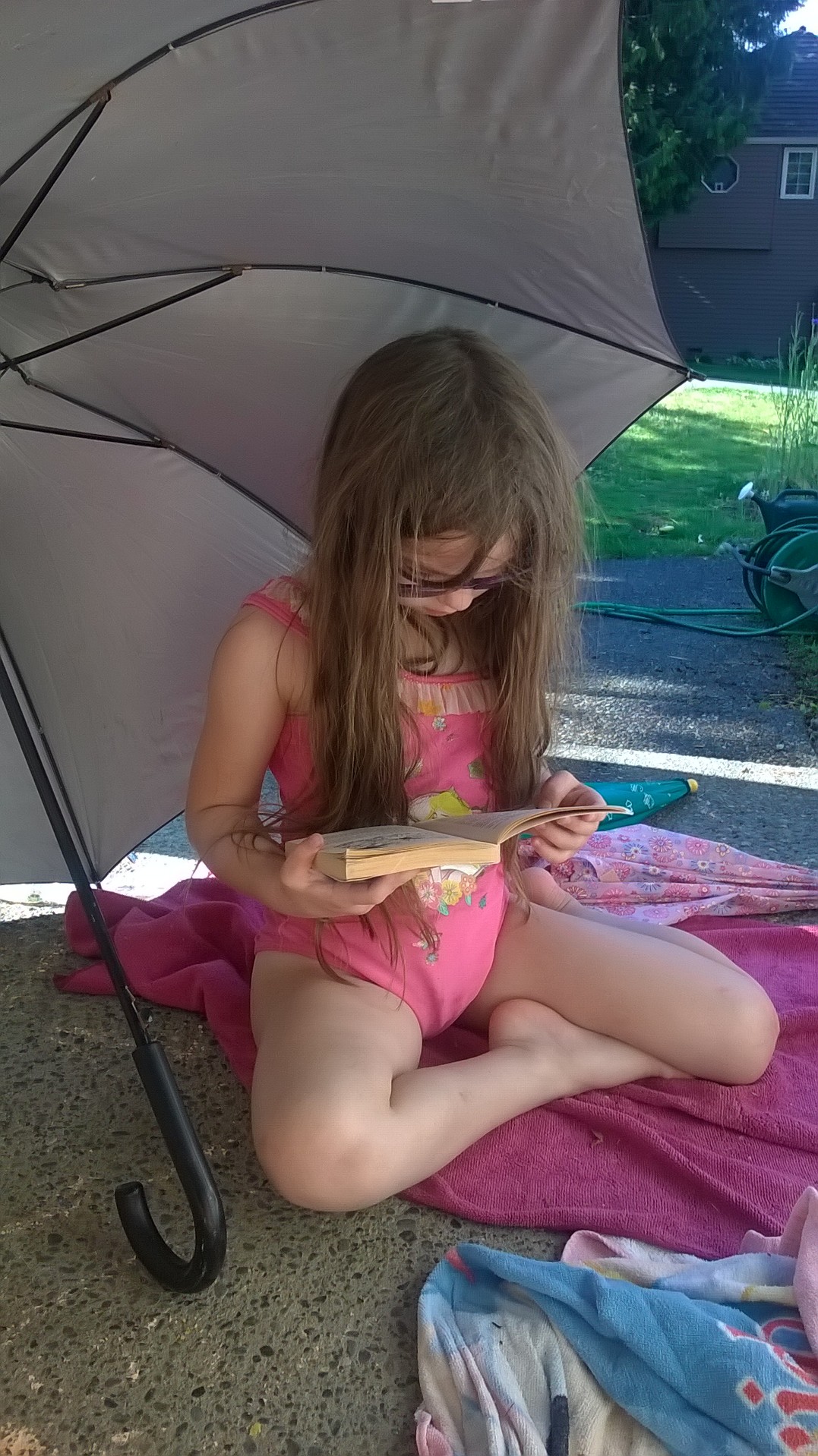
Sometimes they use my umbrella propped up on the porch for shade.
Physical Play
Of all of the things we have in the garden, the one that is used the most by all of the children, is the trampoline. We have a Springfree trampoline that I was lucky enough to win in a competition. They are not the cheapest trampolines but based on amount of use and durability, had I bought the trampoline, it would have been a worthwhile investment. The trampoline is overshadowed by trees so the girls keep a broom next to it and brush off fallen leaves and seeds before getting on. They have created a number of games to play, make up shows or practice gymnastics and often my eldest disappears to the trampoline for a bit of peace and quiet.
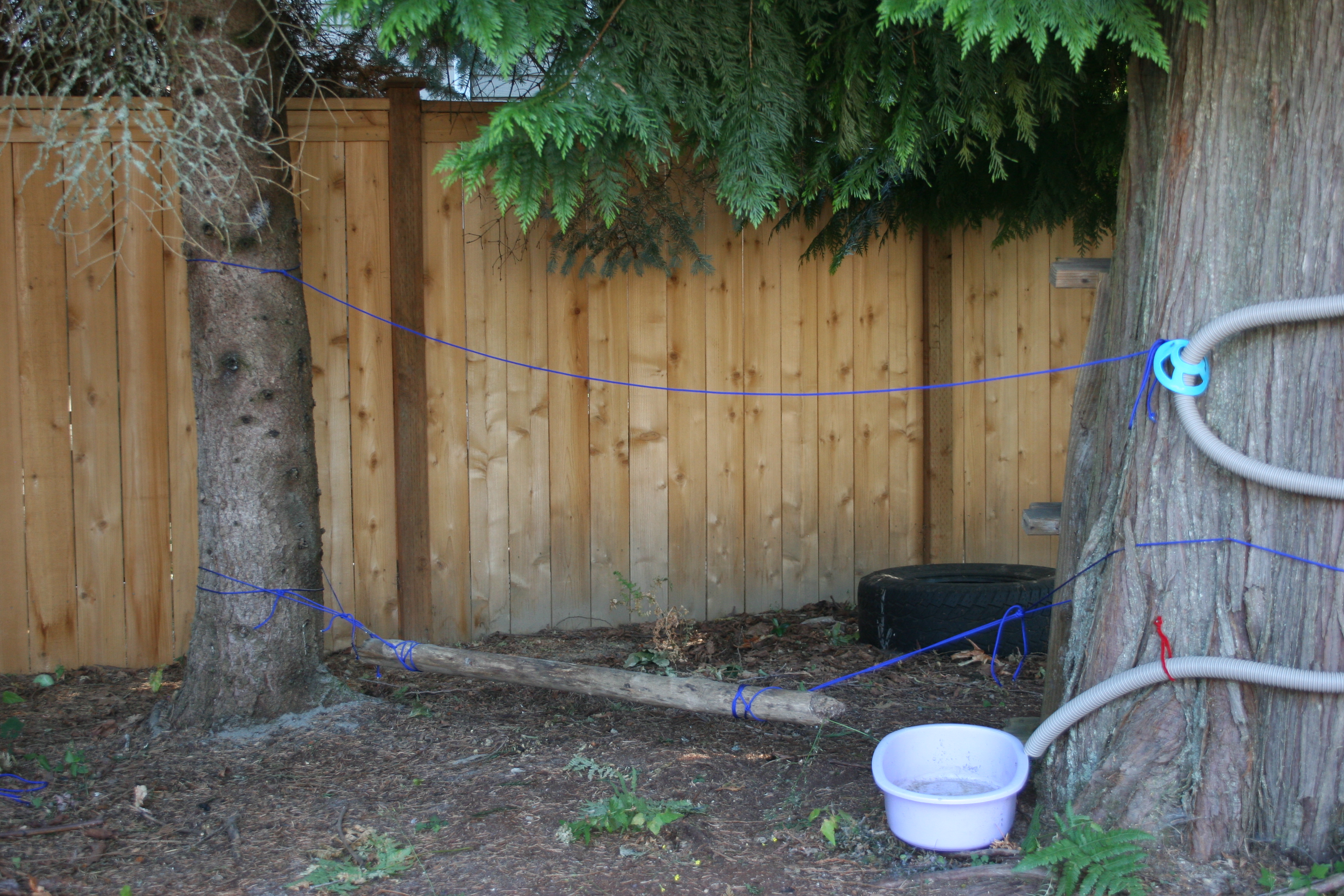
The balance beam is strung between 2 trees with paracord.
We use tyres to make obstacle courses. Getting rain water out of them is also an interesting challenge for my youngest.
I’ve made ribbon sticks before using sticks bought from a craft shop. These sticks collected from the garden work just as well. The ribbon can be glued onto the sticks or simply tied. Ribbon sticks with multiple ribbons work well too.
Sound Making
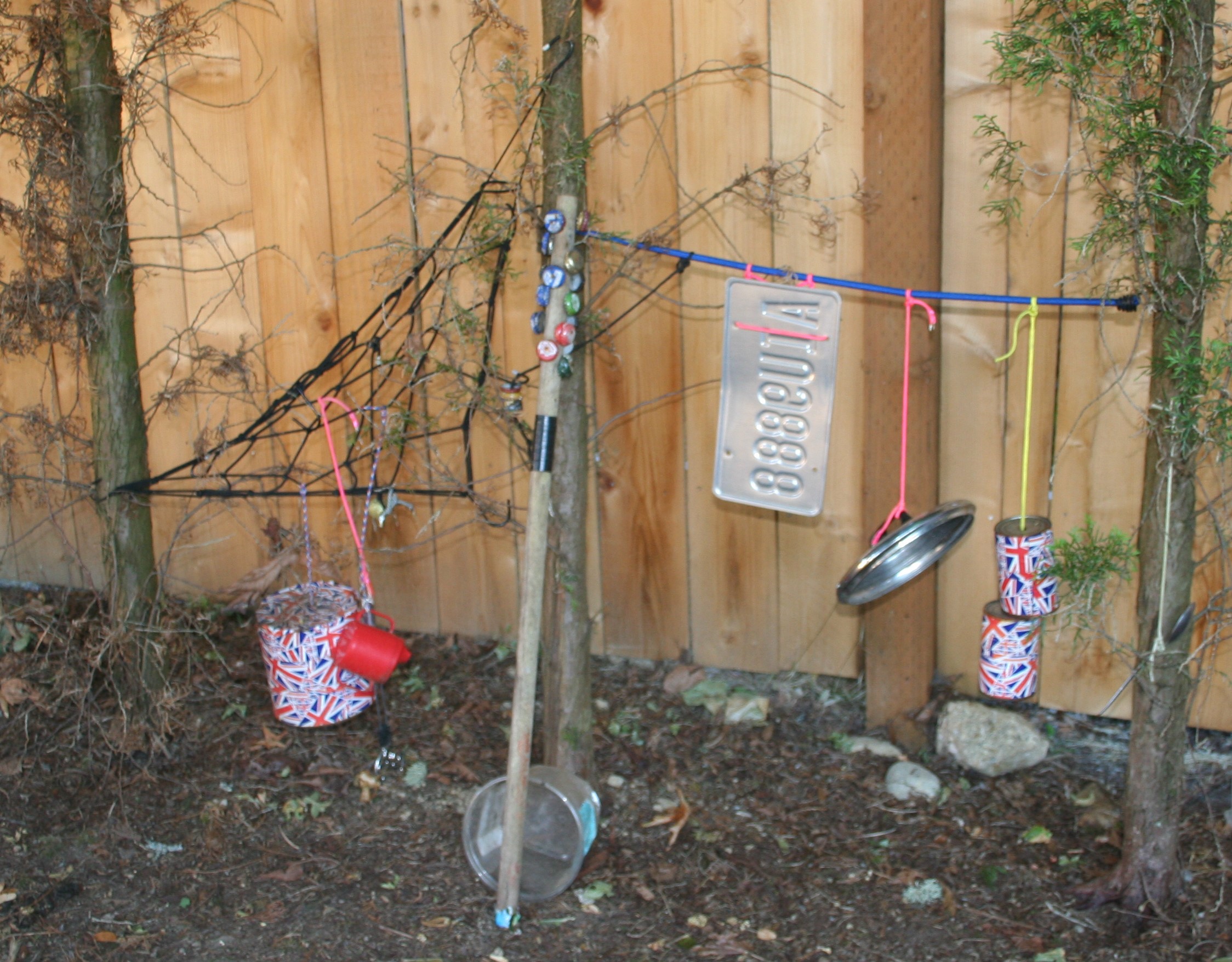
Our music garden is housed between small trees. We made a jingle stick by nailing metal bottle tops to an old broom handle.
Observing Nature
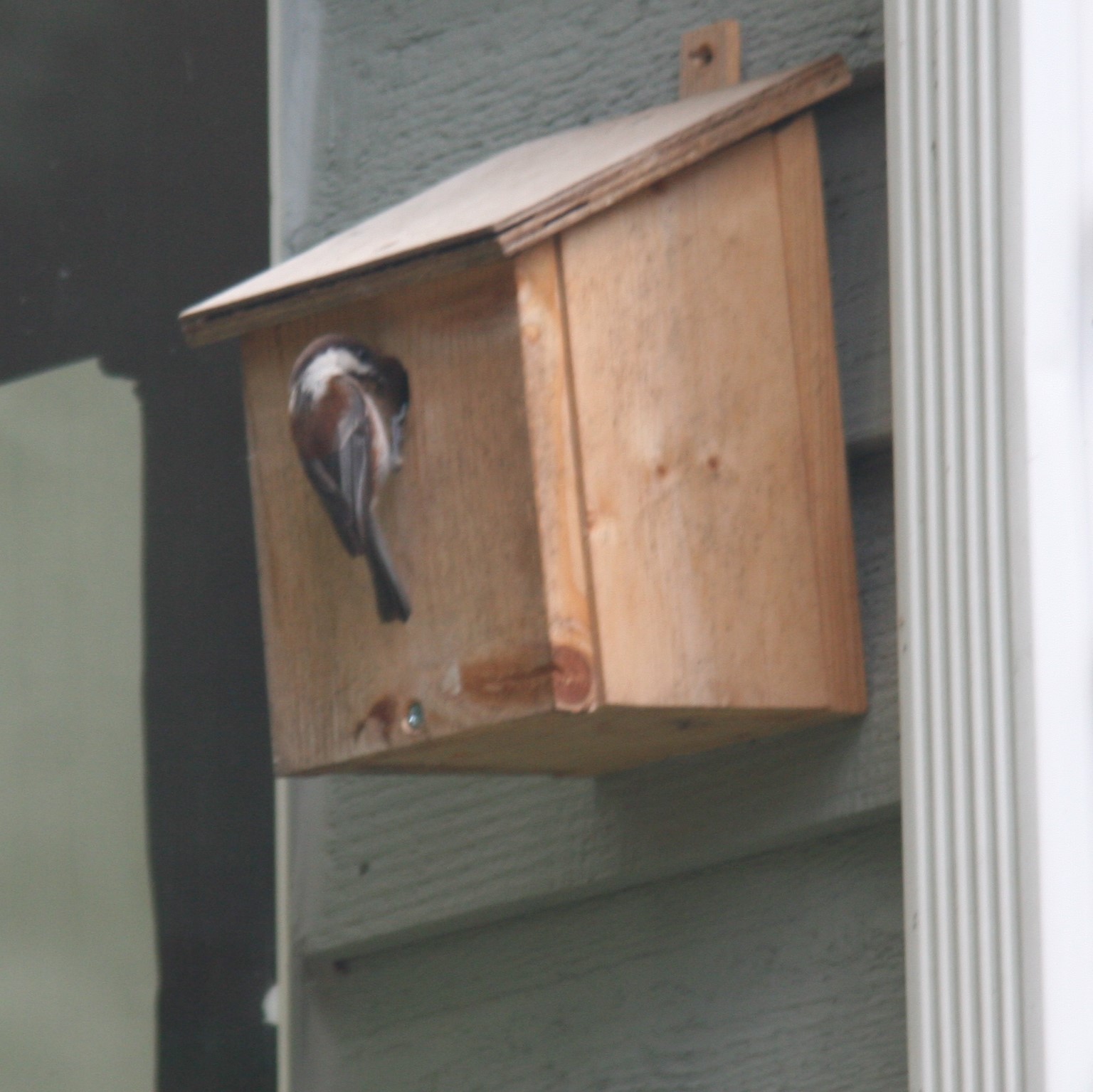
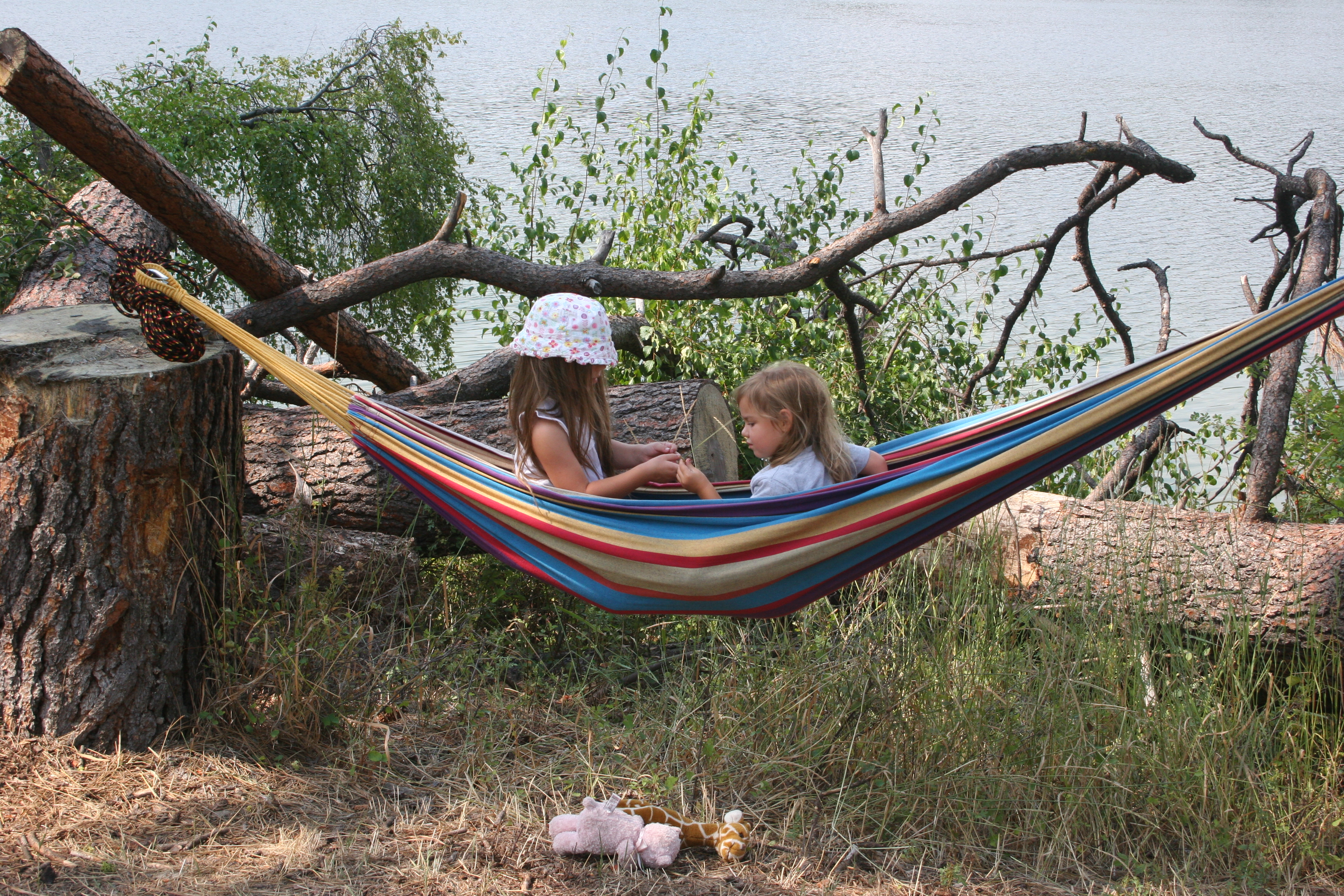
My daughter made this nesting box and this year for the first time we were rewarded with a family of nesting sparrows. You could hear the hungry little chicks as their parents flew close to them and we spent a lot of time lying in the hammock watching them going in and out of the bird house.
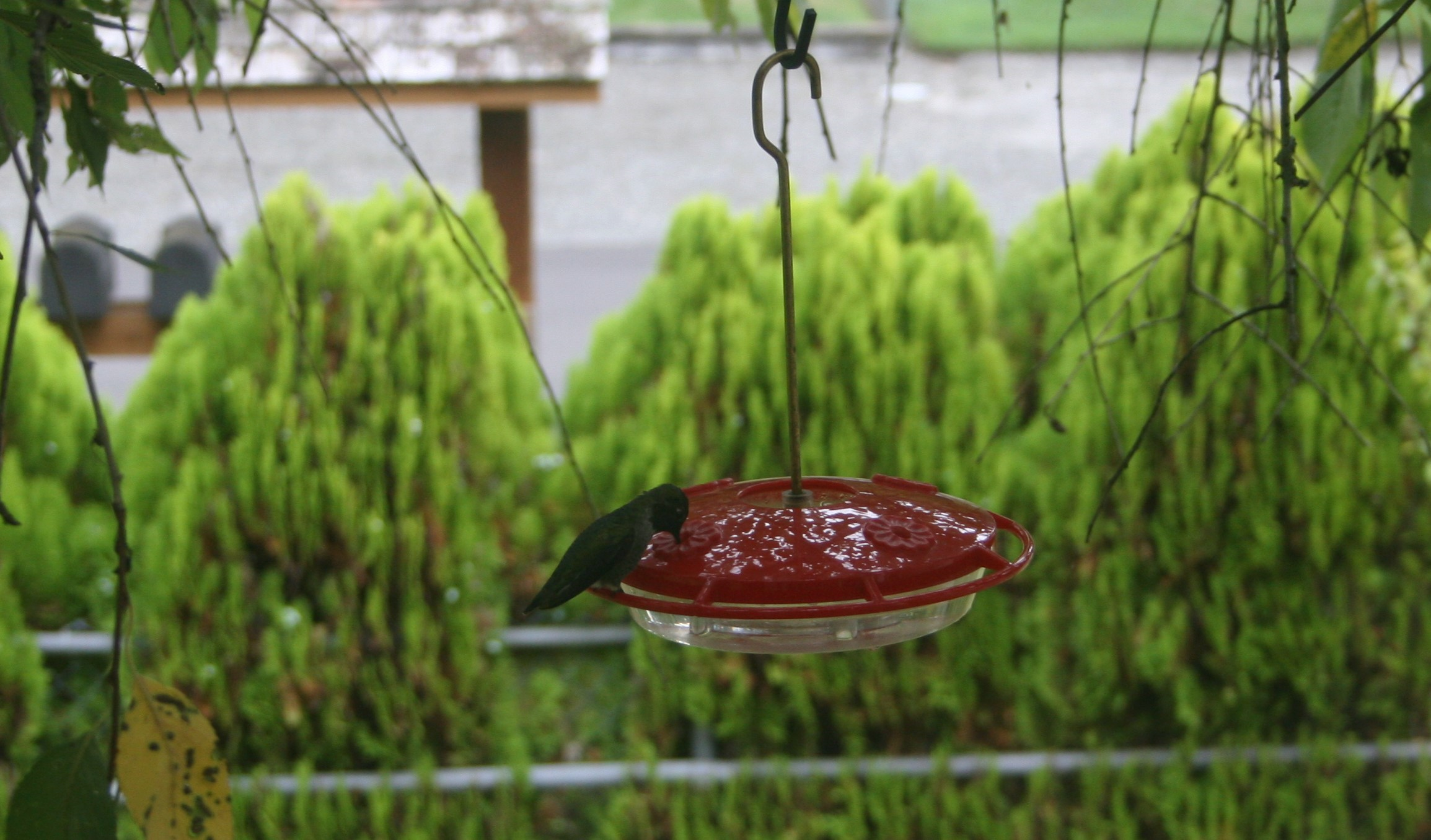
Other regular visitors are squirrels, hummingbirds and an occasional racoon.
I find play value in everything. This isn’t always an admirable quality. My house overflows with strange objects and if anyone offers random things for free, I perk up like an eager child in class. I’m certain it’s an occupational hazard and I’m not alone.
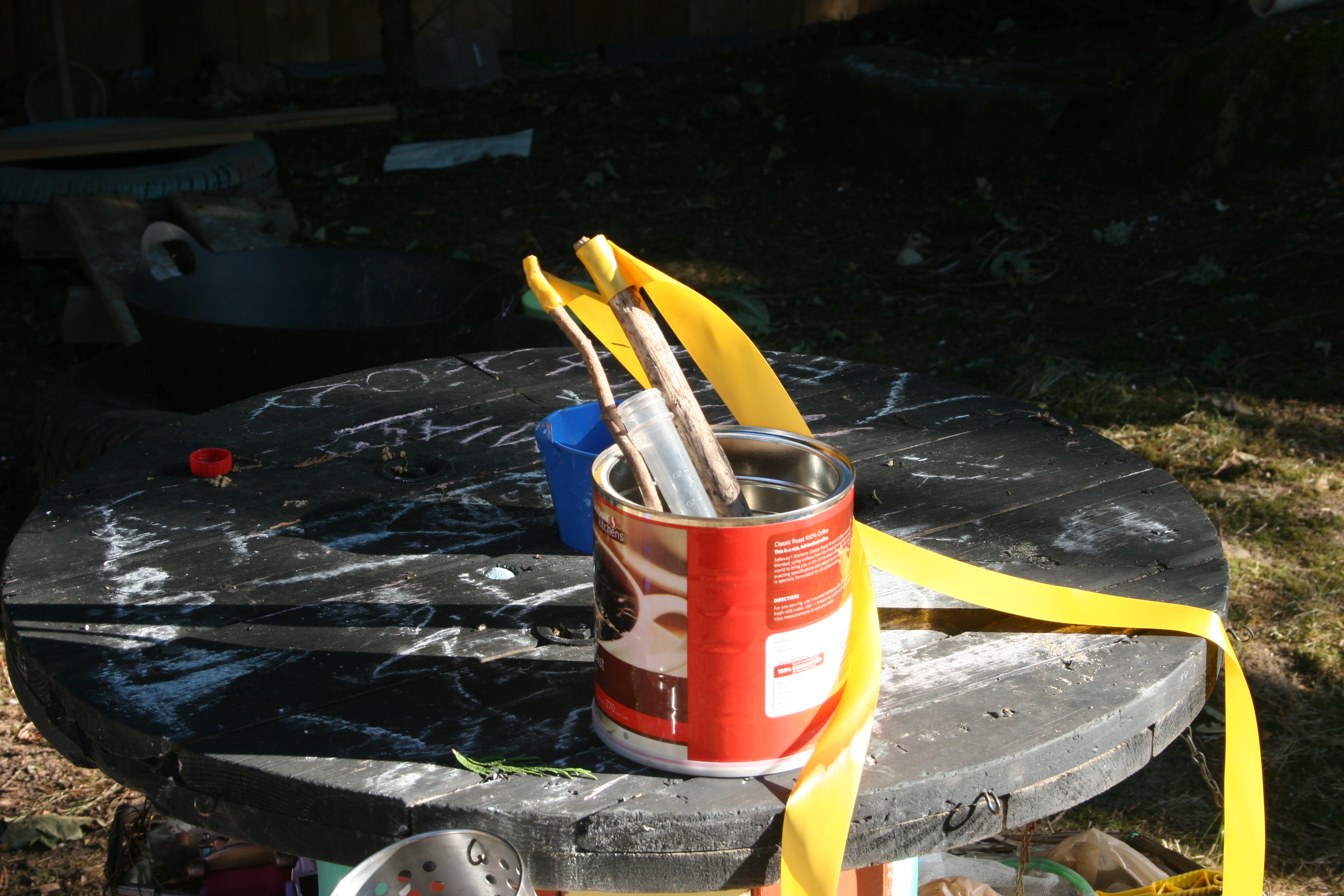
My latest acquisition was an electrical spool. Pictures can be deceptive and I hadn’t anticipated something quite as big, when I accepted it. When my husband discovered this eyesore in the garden, I sensed he didn’t share my enthusiasm for my latest scrap heap challenge.
Knowing it will be useful, doesn’t always equate to having a finished product in mind. Sometimes, I prefer to leave things as loose parts , so the children can find their own use for them but the weight of the spool prohibited them from moving it. I positioned it in front of the potion mixing station, hoping it would be integrated into potion play but the children had other plans.
I left pavement chalk near the spool and they decorated the top in bright colours. We don’t have many suitable surfaces for chalking in the back garden, so I sprayed the top of the spool with blackboard paint. I added hardware hooks around the edge for storage. Choosing what to hang from the hooks is a work in progress. We currently have a basket holding bug catchers and magnifiers and another containing small world fairies, a cloth for wiping the blackboard, a cowbell and a crystal.
The girls helped to paint the sides and my eldest painted windows and a door for the fairies.
The bottom was decorated with old cd’s that we cut up and mounted with no more nails to make a rainbow mosaic
I am eager to see how the children will use the new addition. I’ll keep you posted.
Young children have an immense curiosity about the natural world – the challenge is to stop them from losing it! Nurture that precious sense of wonder …….. A little empathy and enthusiasm is all you need to encourage children to appreciate wild places.
( Nature’s Playground)
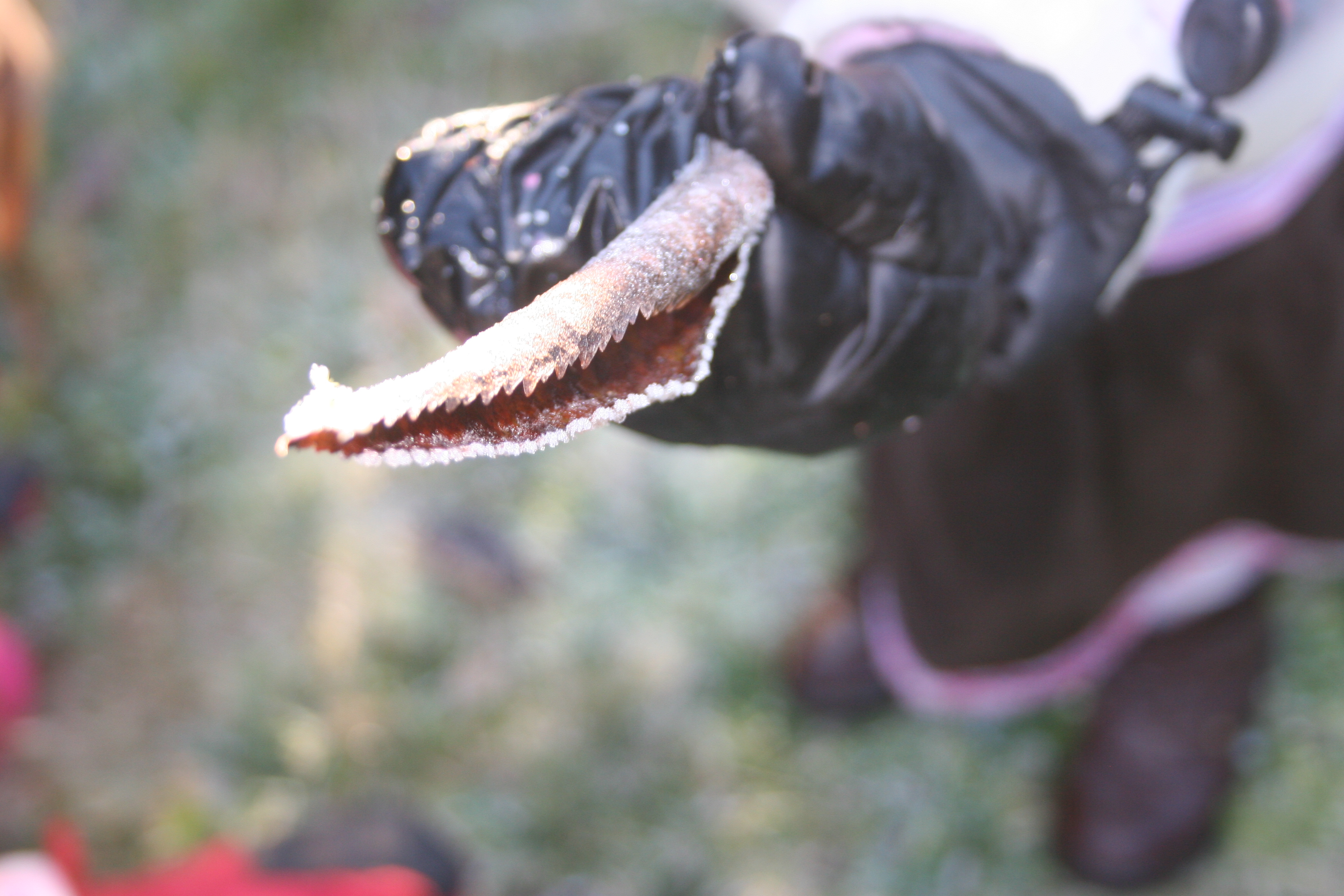
There is even frost on the leaf
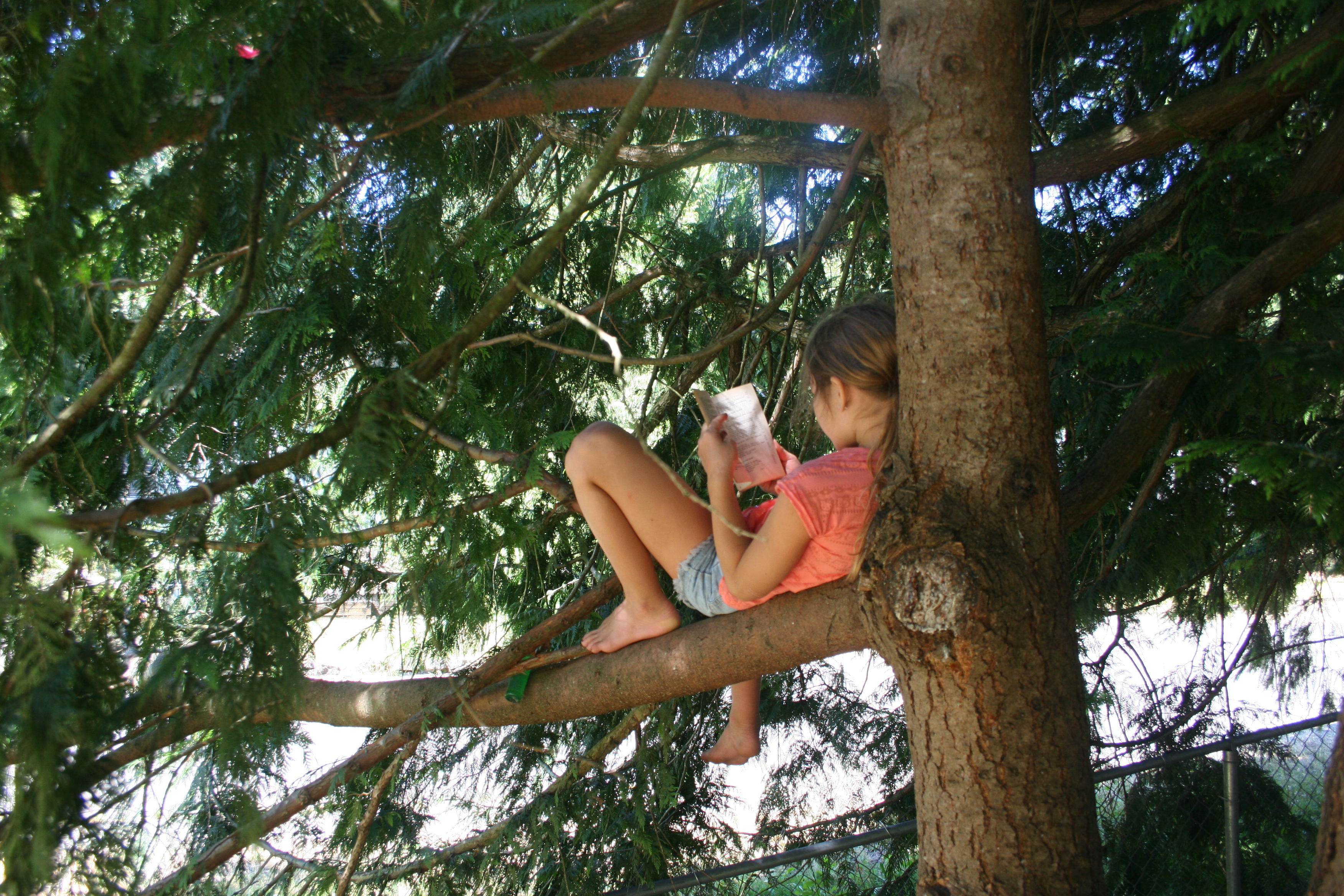
Natural environments offer opportunities for adventure, which build confidence and instill bravery.
Take time to stop and explore. Rushing children along to the next thing, denies children the opportunity to make their own discoveries.
Using natural materials creatively helps us to appreciate them in new ways.
Wild places provide opportunities for quiet reflection.
musing over a blade of grass
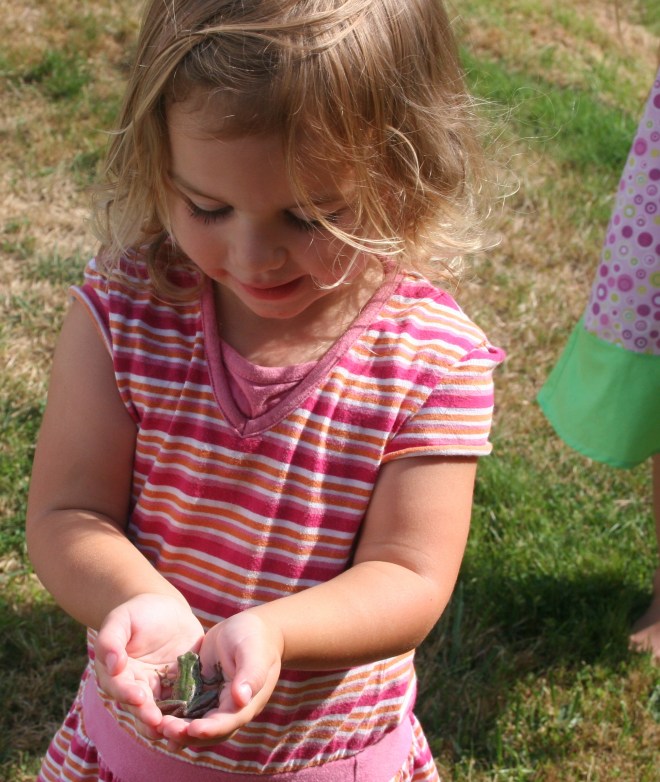
Finding creatures in their natural environment encourages respect and reduces fear.
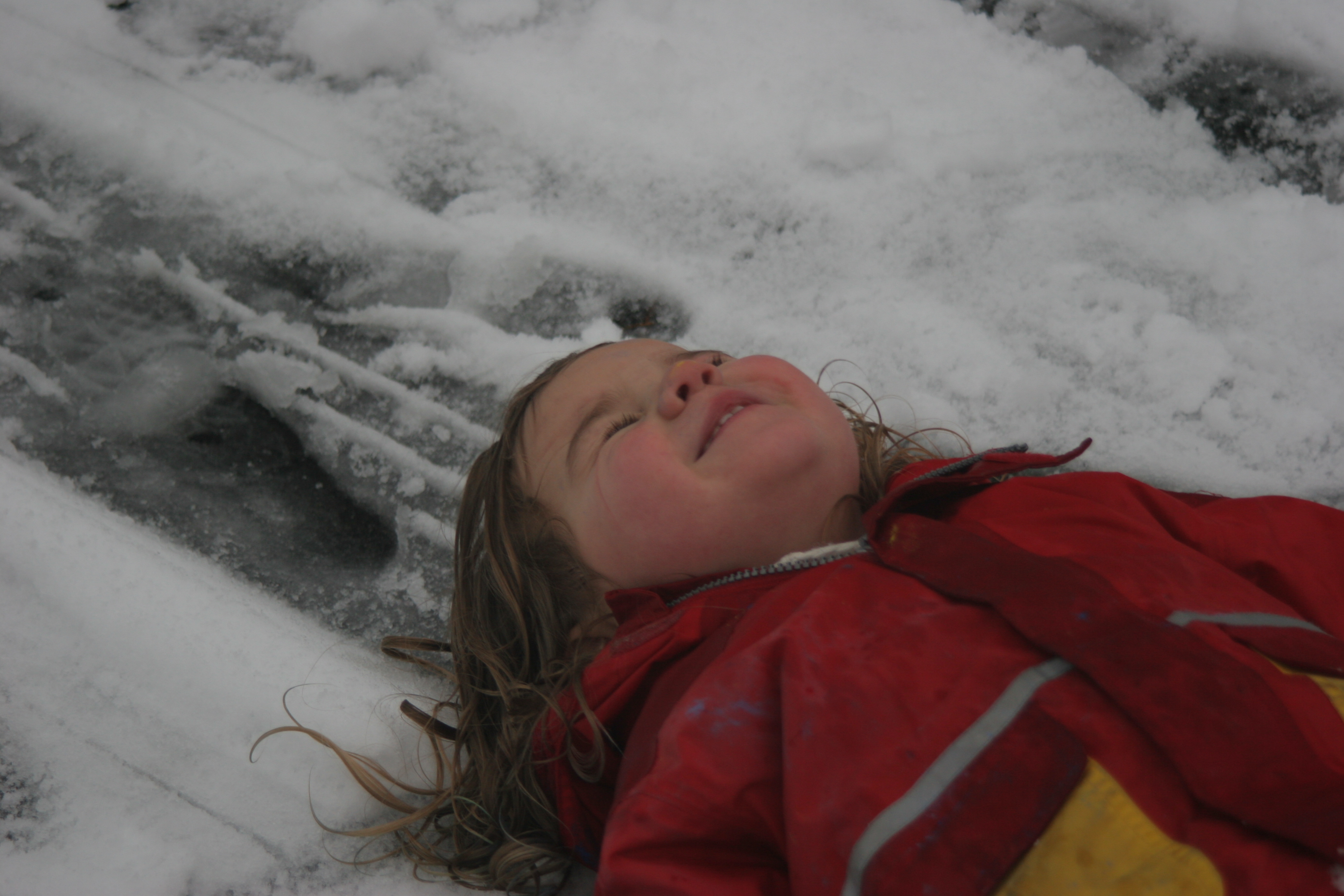
Explore all types of weather. Rain, snow, wind and sunshine offer many different experiences.
I just want to lie in it
Allow children time to be immersed in their experiences and they will adapt natural materials, weaving them into their own imaginative worlds.
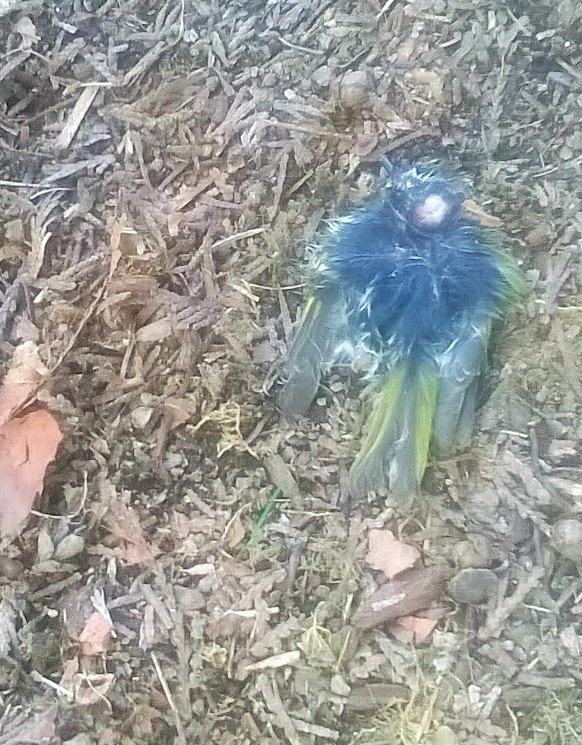
Sometimes nature is cruel but when children come across these things in the wild, it promotes discussion and allows them to navigate difficult concepts in a meaningful way.
We found a dead bird in the garden. How did it get there? What should we do with it? We buried it under a tree.
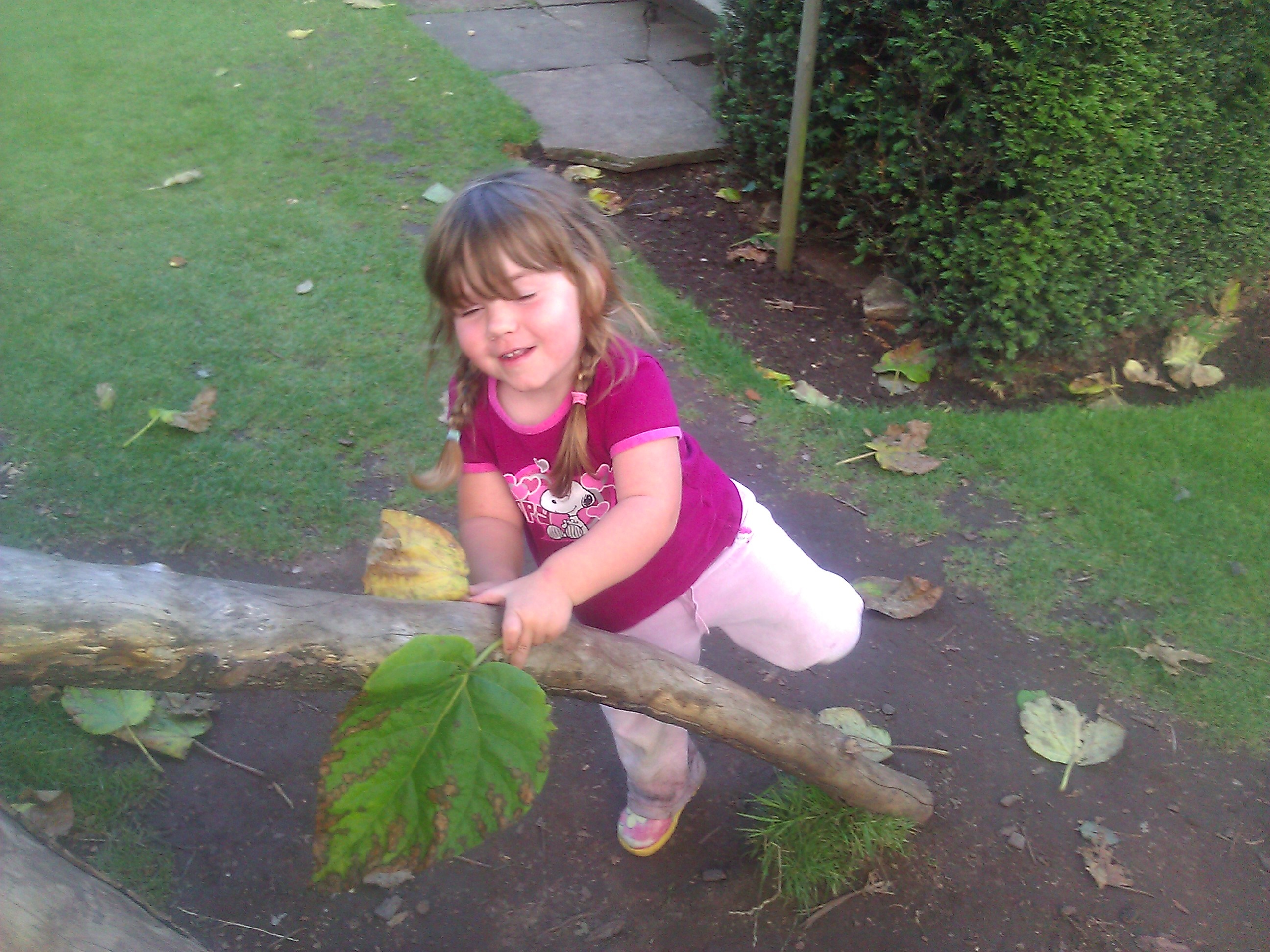
Being in a natural environment offers children opportunities to develop physical skills, through climbing , negotiating space, moving on different surfaces, reaching, touching and many more.
It makes a big splash. Plop!
Explore with all of your senses.
I’m going to have a shower. I’m getting very wet, now the rain is staying on me.
If I need a little encouragement to go outside I only need to look at the joy, concentration and contemplation on my children’s faces.
‘ Let’s just go camping for our Summer holiday this year’
Hold on a moment, did those words really come from my mouth? Until my mid twenties I recoiled in horror at the thought of camping. After I left girl guide camp half way through the week because I hated it so much, I convinced myself that camping wasn’t for me. In truth, I didn’t hate it at all. A rumour that newcomers would be pushed in the cesspit if they didn’t pass initiation had worried me so much that I begged to go home. My views changed after a few great camping trips as an adult but I’d never have considered a camping trip for my main holiday.
A yearning to explore the beauty of the Pacific Northwest, good weather and the children’s eagerness to go camping, convinced me it was a good idea. An eight hour car journey with a canoe on top of the car, three young children, a dog and a heatwave; perhaps I had lost my mind?
Amazingly, the car journey was fine. The first couple of hours were spent playing ‘would you rather….’ and guessing the names of characters from books or screen. The rest of the journey we listened to cd’s of musicals and admired the view.
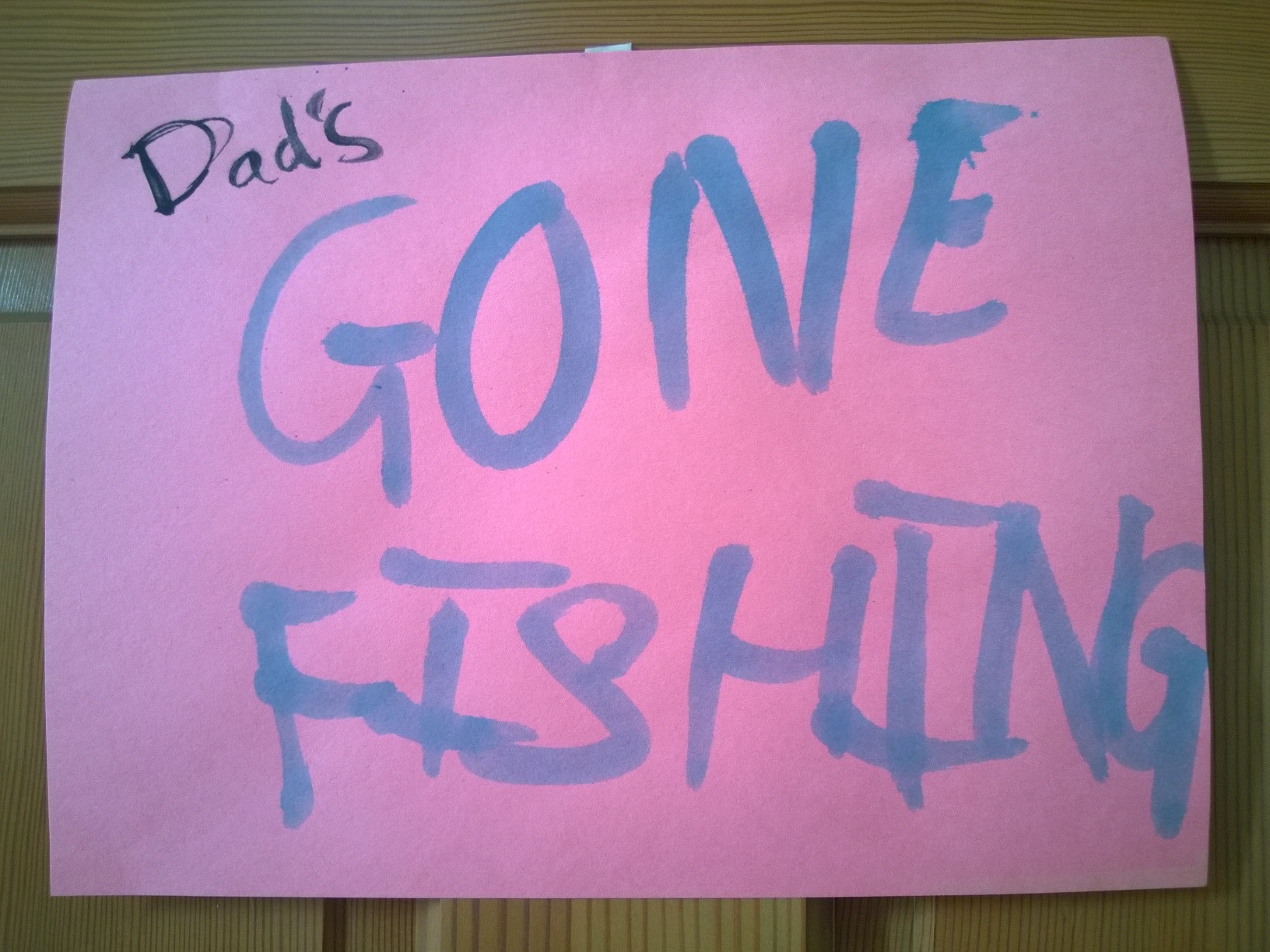
Our destination Curlew Lake State Park, chosen for its beauty, a place for the children to swim and for my husband and the girls to go fishing. “Fishing!” I hear my 20- year-old self, with an irrational fear of fish exclaim, ” are you intent on sending me on the holiday from hell?” Strangely none of those sentiments cross my mind as we set up the tent in a quiet corner of the campsite on the shore of the Lake.
Without a shop or a playground in sight, would the children be happy? For now the excitement of sleeping in a sleeping bag, cooking outside and trying to catch their first fish fuelled their enthusiasm.
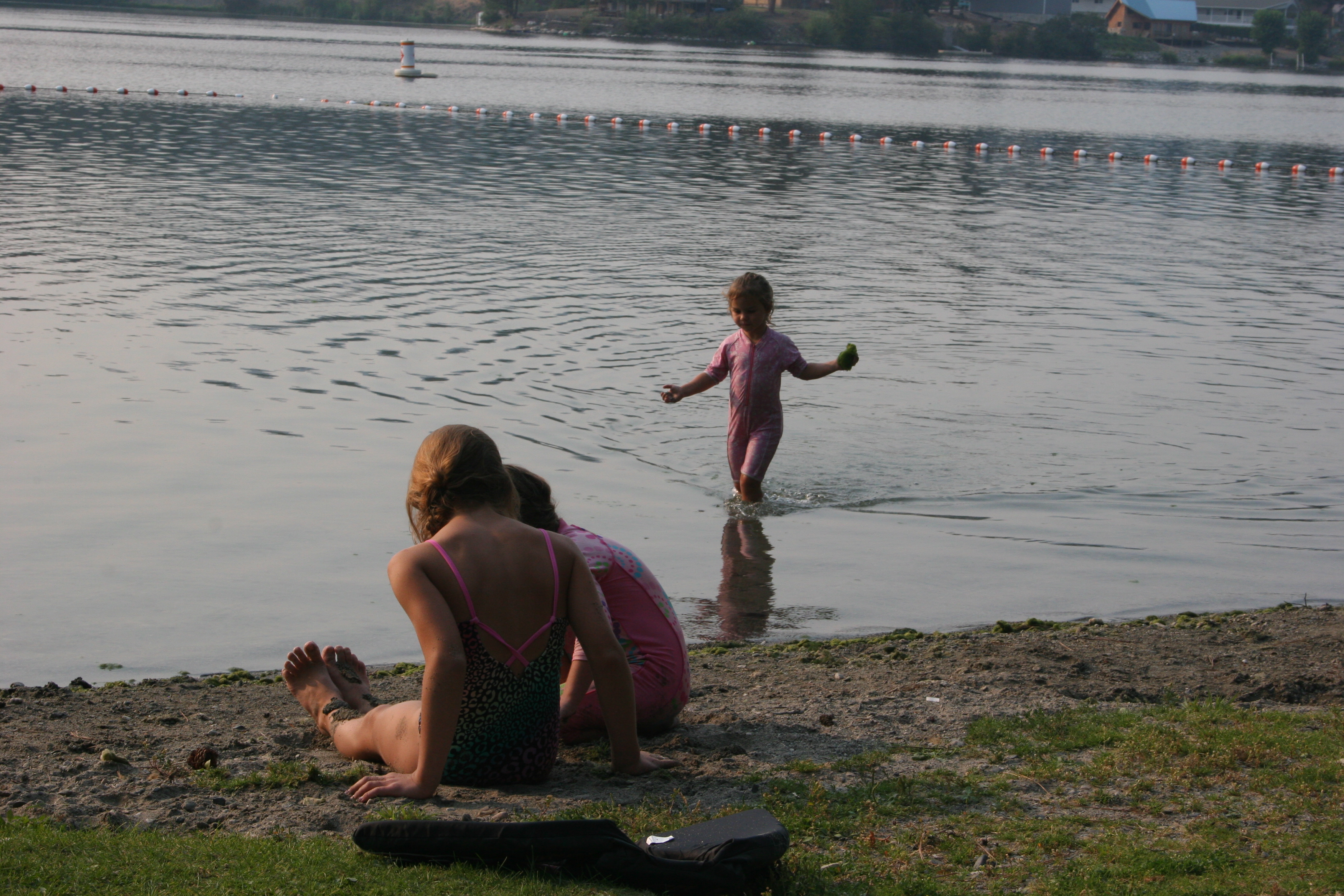
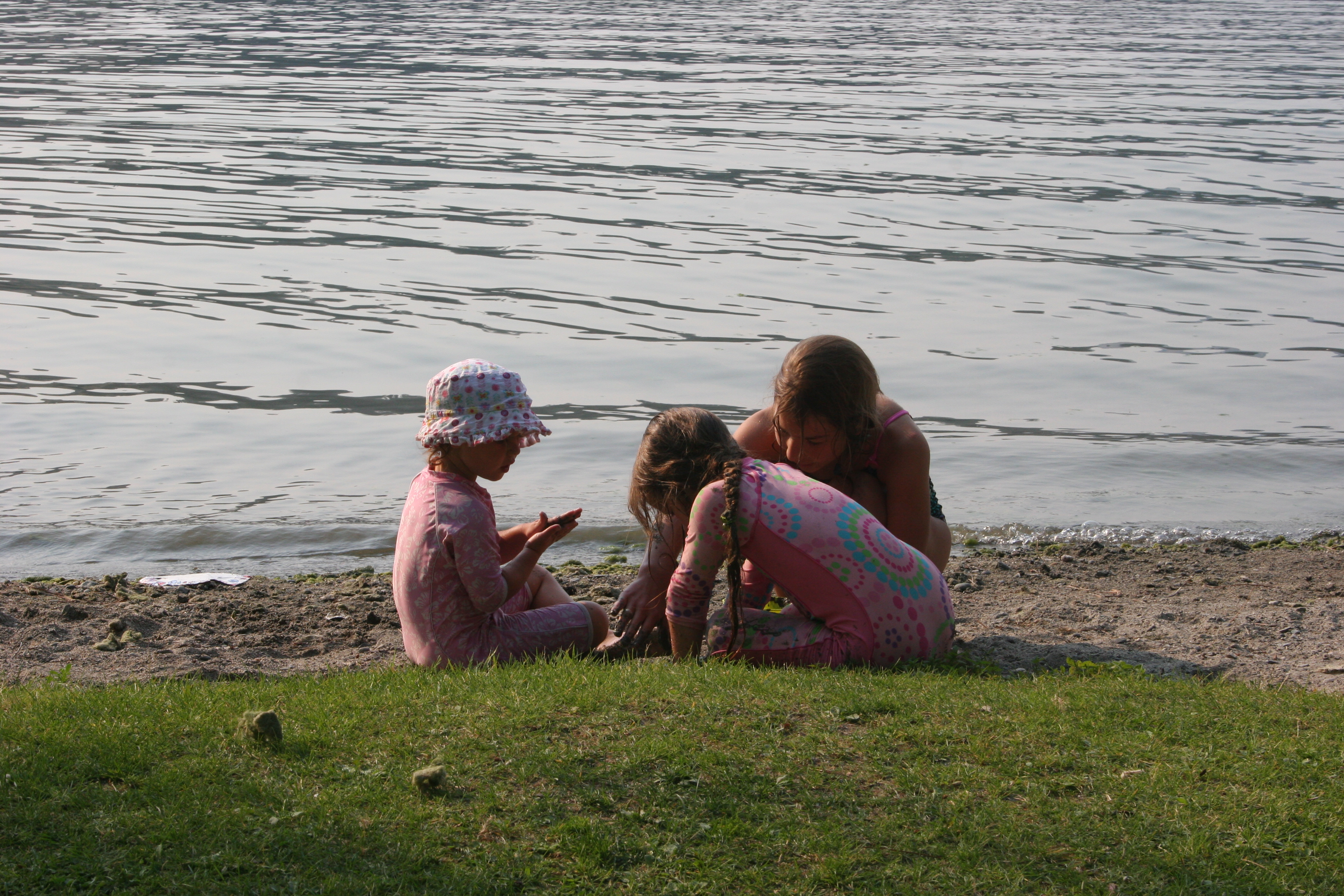
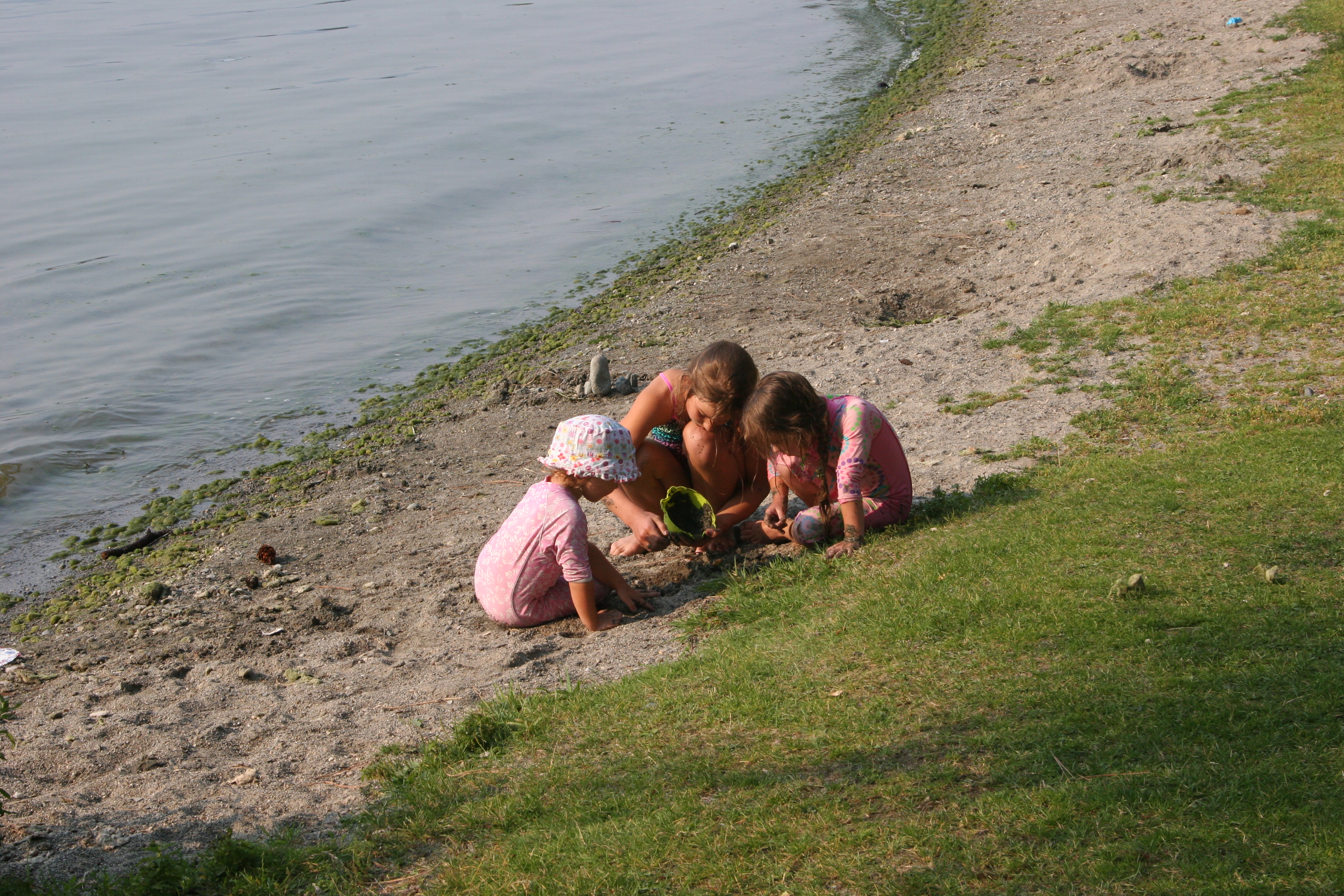
They were eager to go to the beach to swim. I was amazed that we were the only people on the beach. The ground wasn’t soft like the lake at home but filled with slippery algae. It didn’t put them off. They used the algae and stones to create patterns on the ground and then set up their own foot spa, spreading the algae over their feet and washing it off.
The Foot SpaI sat and watched from a distance, joining in when they asked me to. At that moment I knew why this holiday was no longer my biggest nightmare. The children were immersed in the moment, playing, discovering and sharing. In the distance, my husband was on the lake in the canoe and I was here in a rare moment of quiet. This wasn’t one of those family holidays where we rushed to cram in every little experience. I’m sure that these unhurried moments are the ones they will remember most.
There was a child went forth everyday,
And the first object he look’d upon, that object he became.
And that object became part of him for the day or a certain part of the day, Or for many years or stretching cycles of years.
WaltWhitman
They found magic in the simple things.
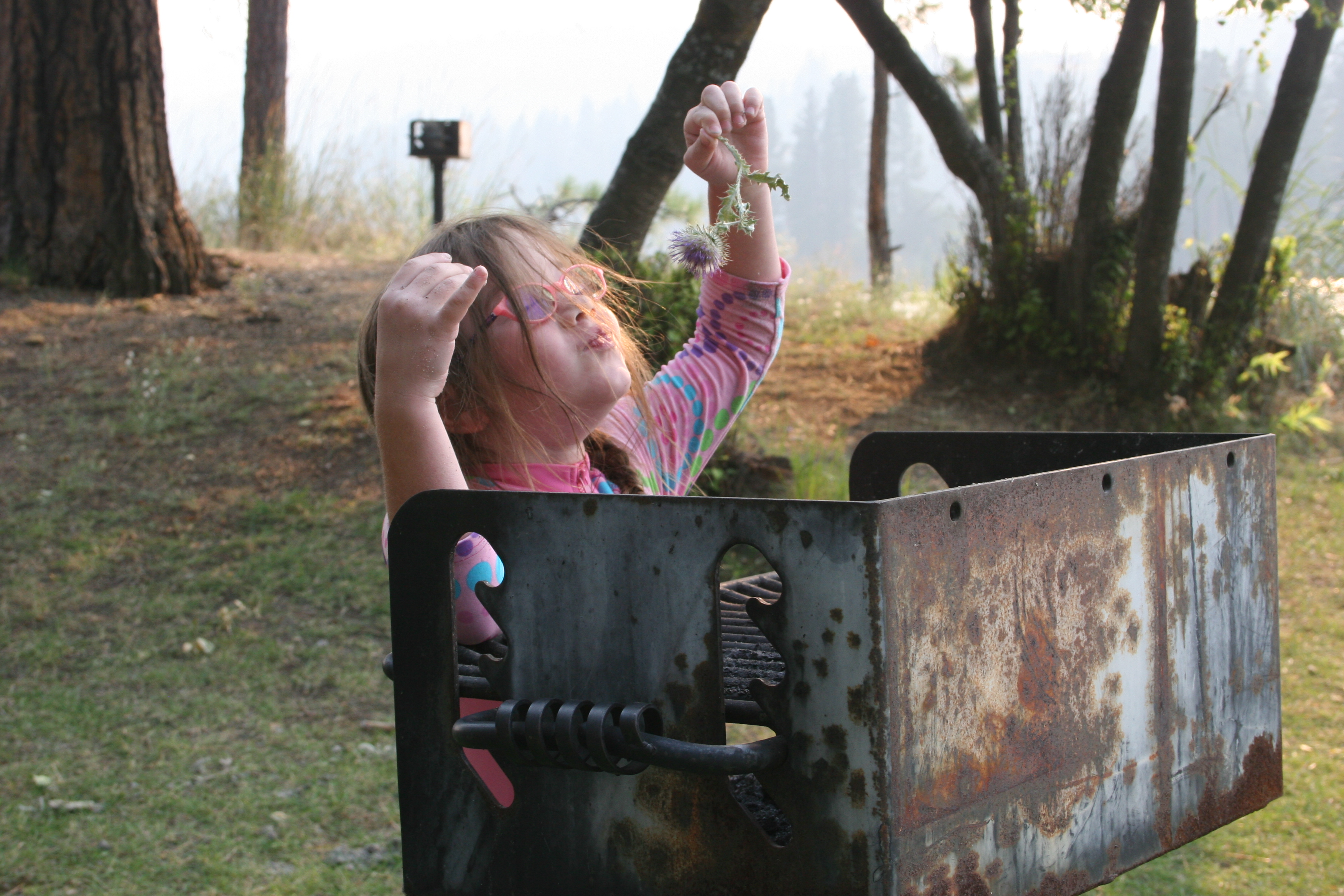
Look I think Eeyore has been here
Maybe it’s his barbecue?
Really! Do you think so?
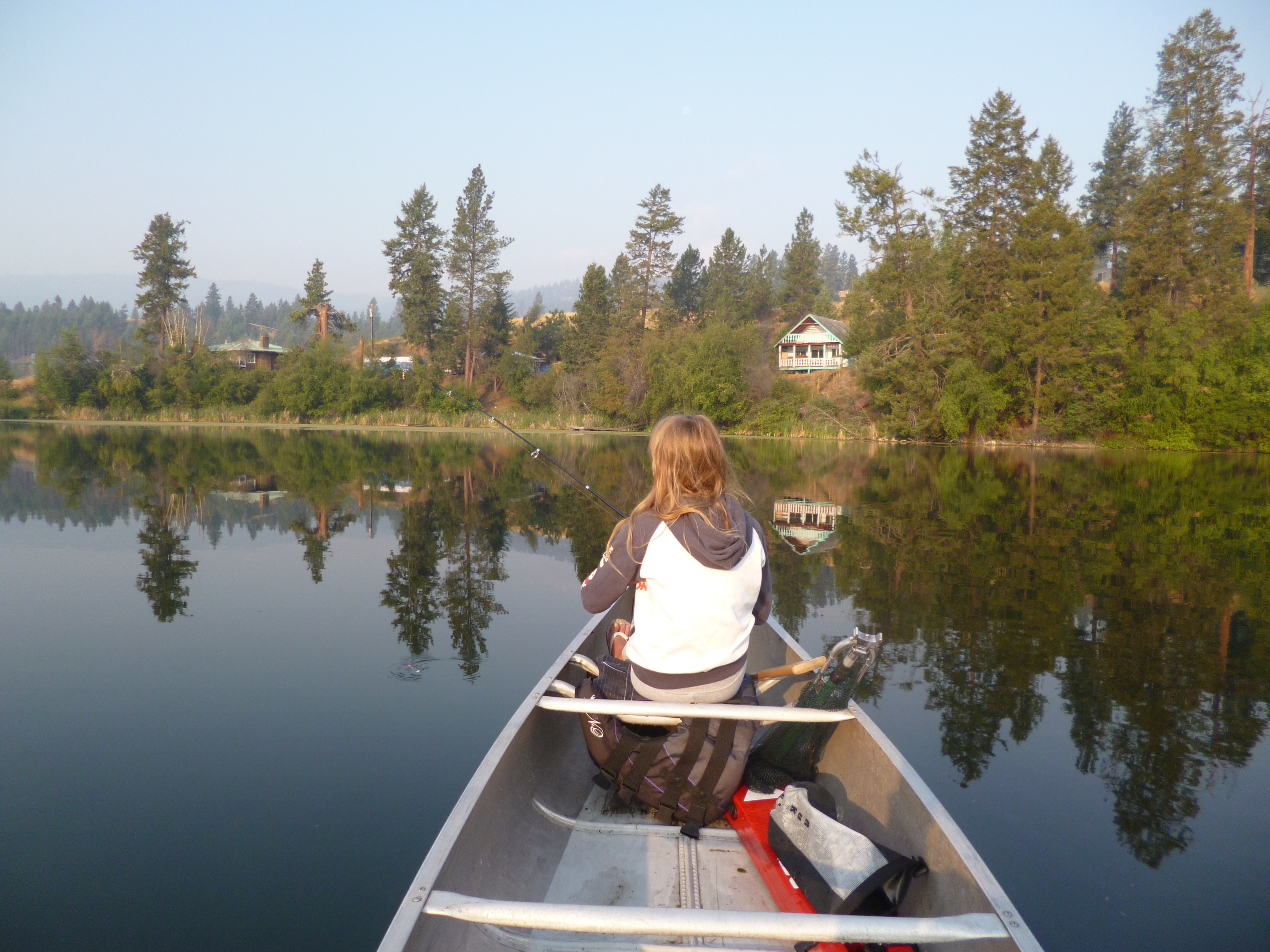
musing over a blade of grass building sculpturesMy eldest had big girl time with dad, paddling the canoe at sunrise. Nights weren’t the most restful we had ever had, with five people and a dog in the same tent but there are few things more peaceful than the middle of a lake in the early morning.
It didn’t take us long to understand the rhythms of nature; the time of day that the deer would wander down the hill to visit, geese would fly across the lake, fish would start to bite or that darkness would fall.
Sometimes though, nature takes you by surprise. One night, as we were snuggled in the porch of the tent telling stories, the poles holding the porch open, fell down. As if from nowhere, the winds whipped up and tugged at the tent. Before we knew it dad and big sister had us zipped up inside while they battled against the wind and dust to secure the tent. I tried to drown out the rangers talk of trees blowing down, by telling the story of ‘My Favourite Things’ from the ‘Sound of Music’ and singing. Enraptured, the little ones soon forgot about the storm. They implored me to tell the story of ‘The Sound of Music’- the whole story, all 3 hours of it complete with every song. Thankfully the storm was short, the tent and trees survived and unlike my 11-year old self, I didn’t get the urge to run home.
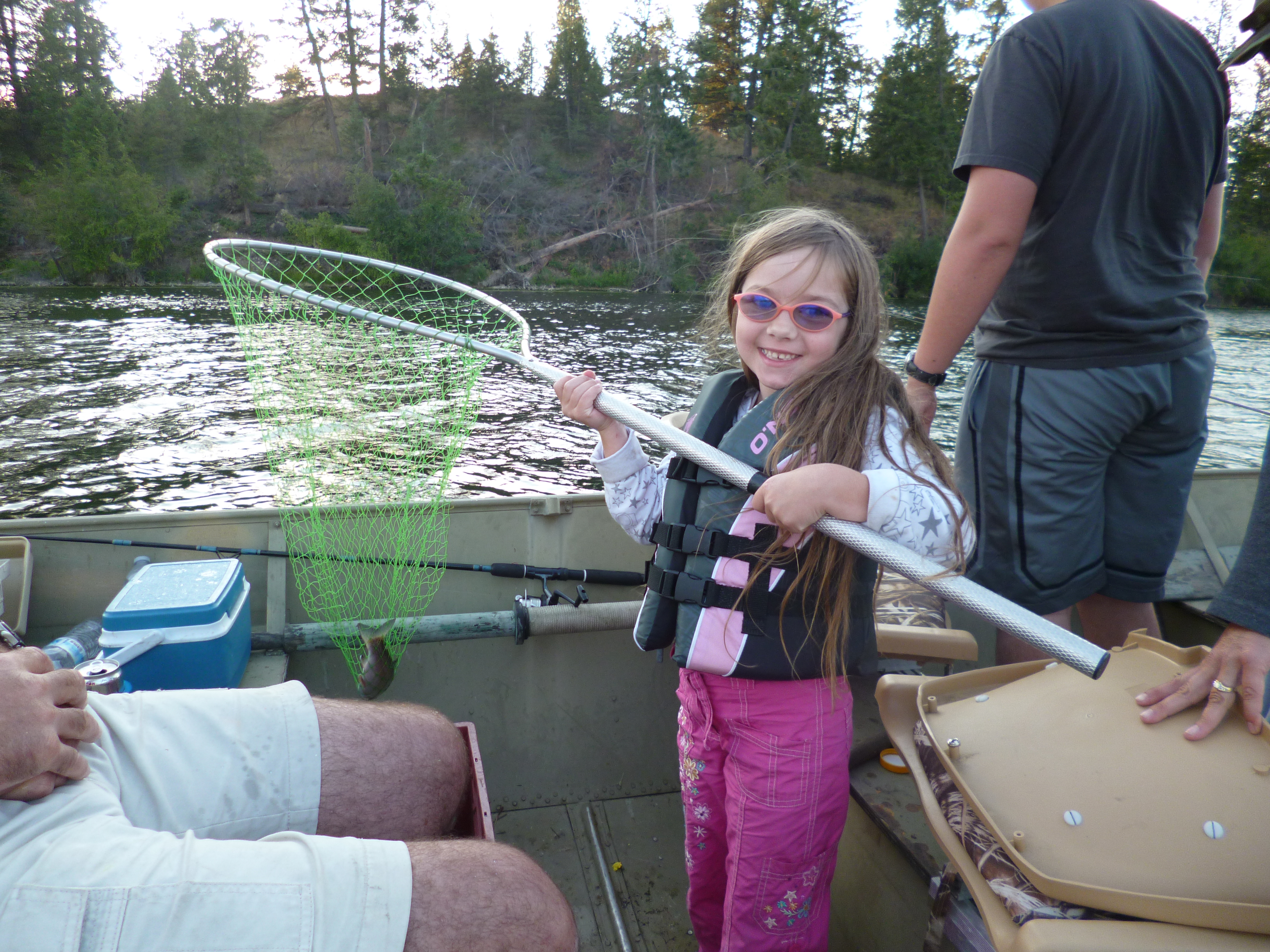
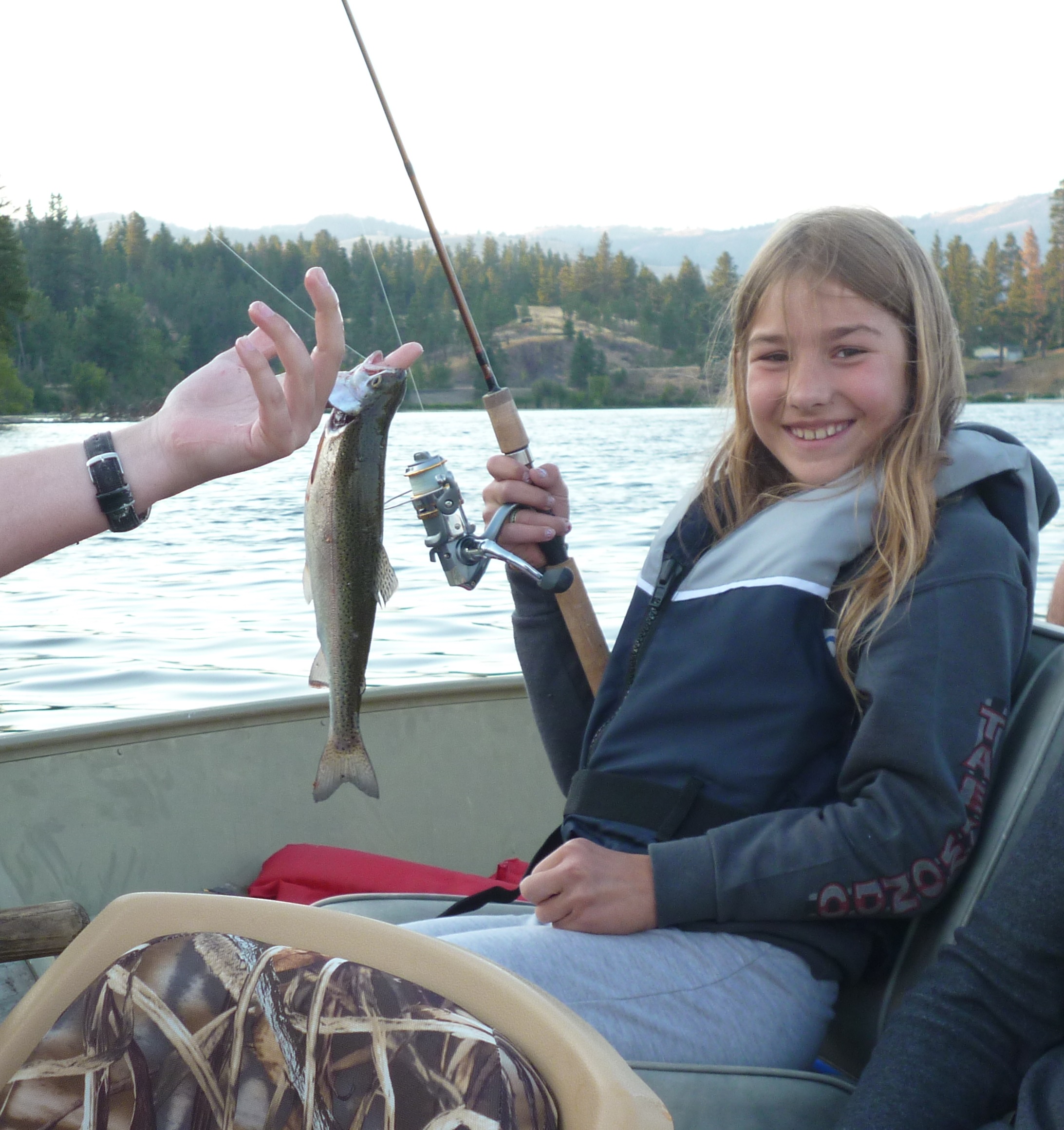
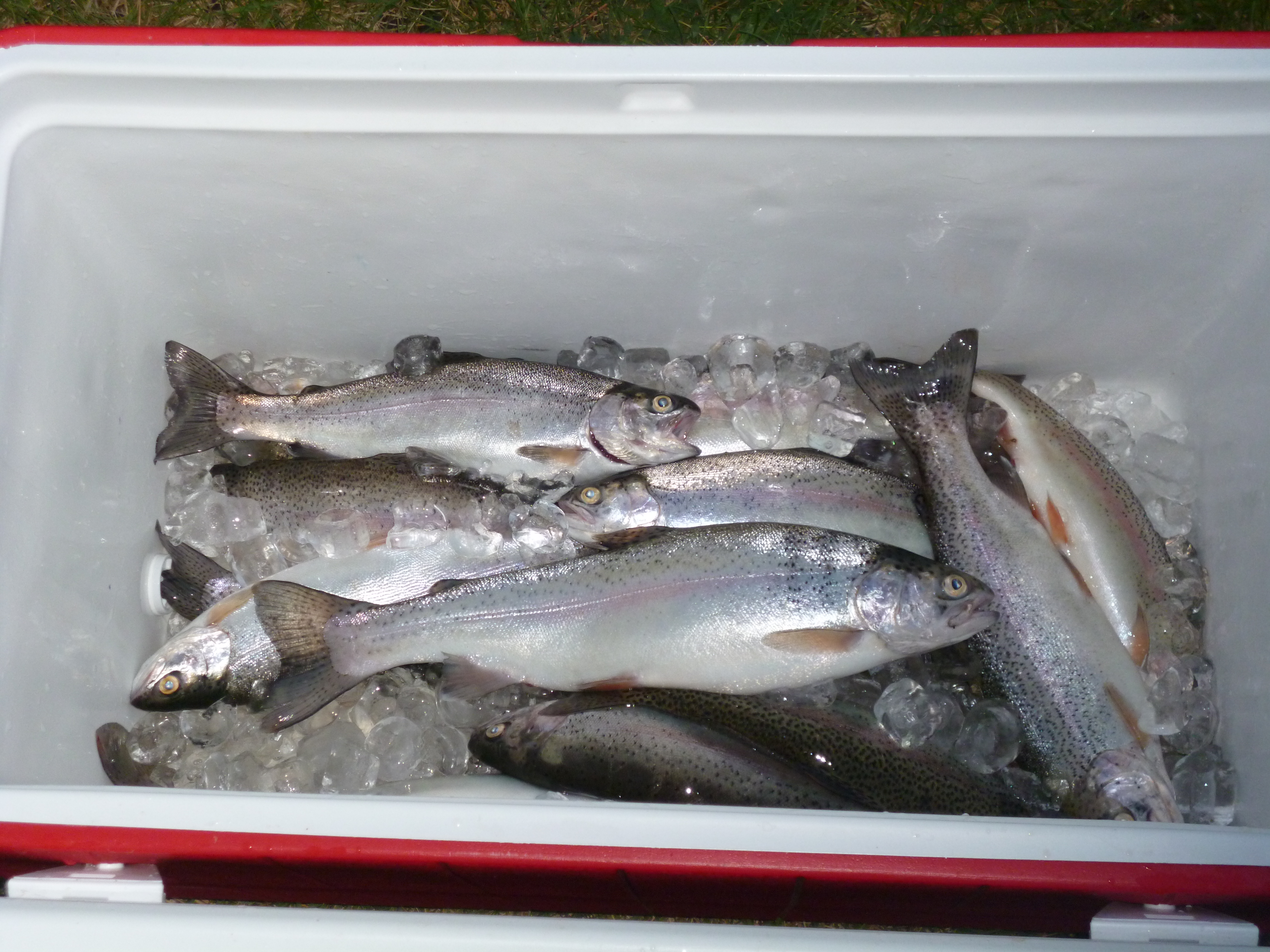
One of the reasons for choosing Curlew Lake was the fishing, so in the early evenings we took the canoe out to explore the lake and try to catch fish. The girls had only ever caught small fish and were eager to catch one they could eat. Our family trips in the canoe lacked the quiet and patience needed to catch anything of note. However, on the last day their wish came true. Our neighbouring campers, who visit every year to fish, offered to take us out in their boat and help the girls to catch trout. The fish came one after the other.
Here we go My first fishThen the fish got bigger
They were so proud of their catch.
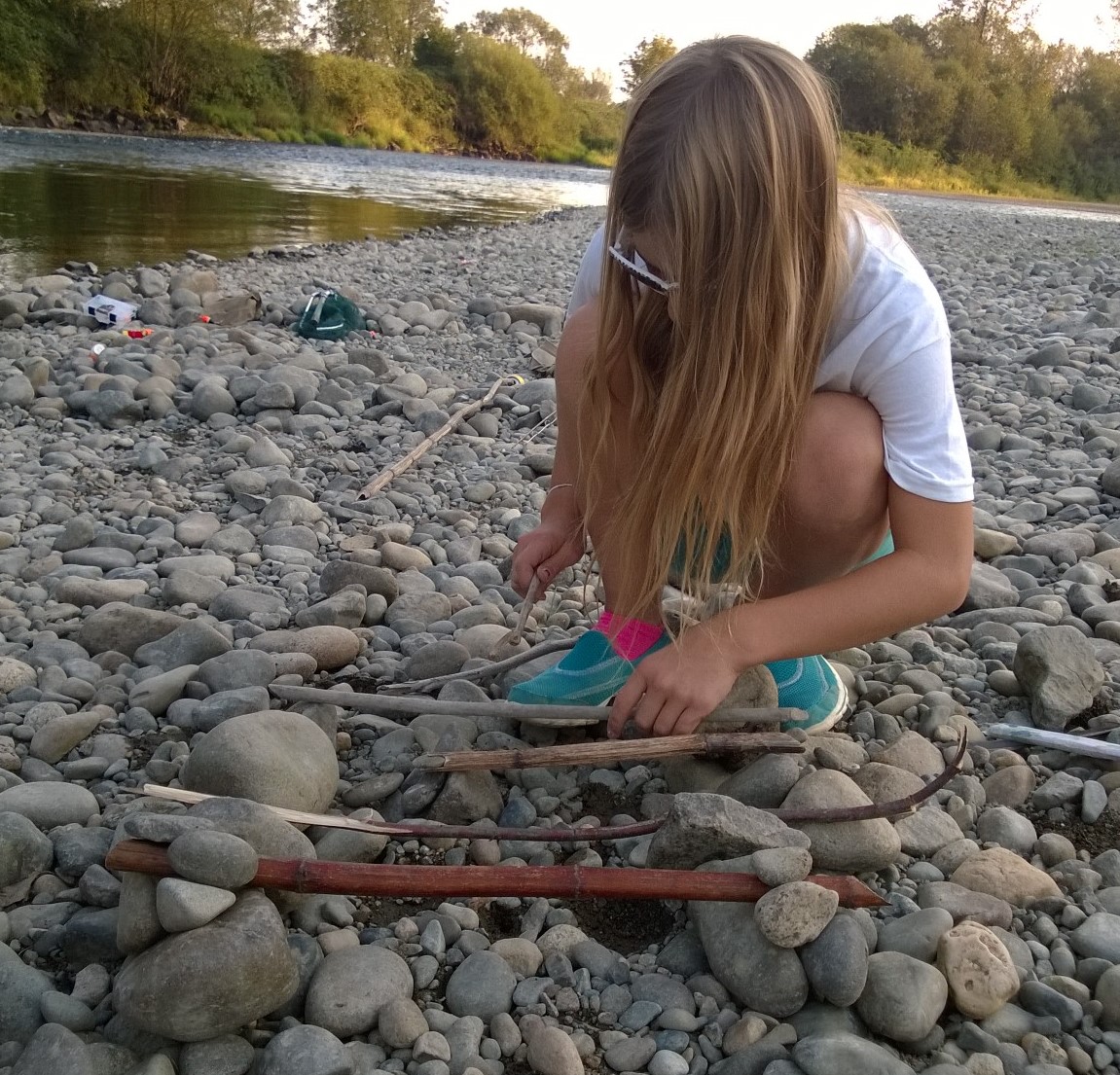
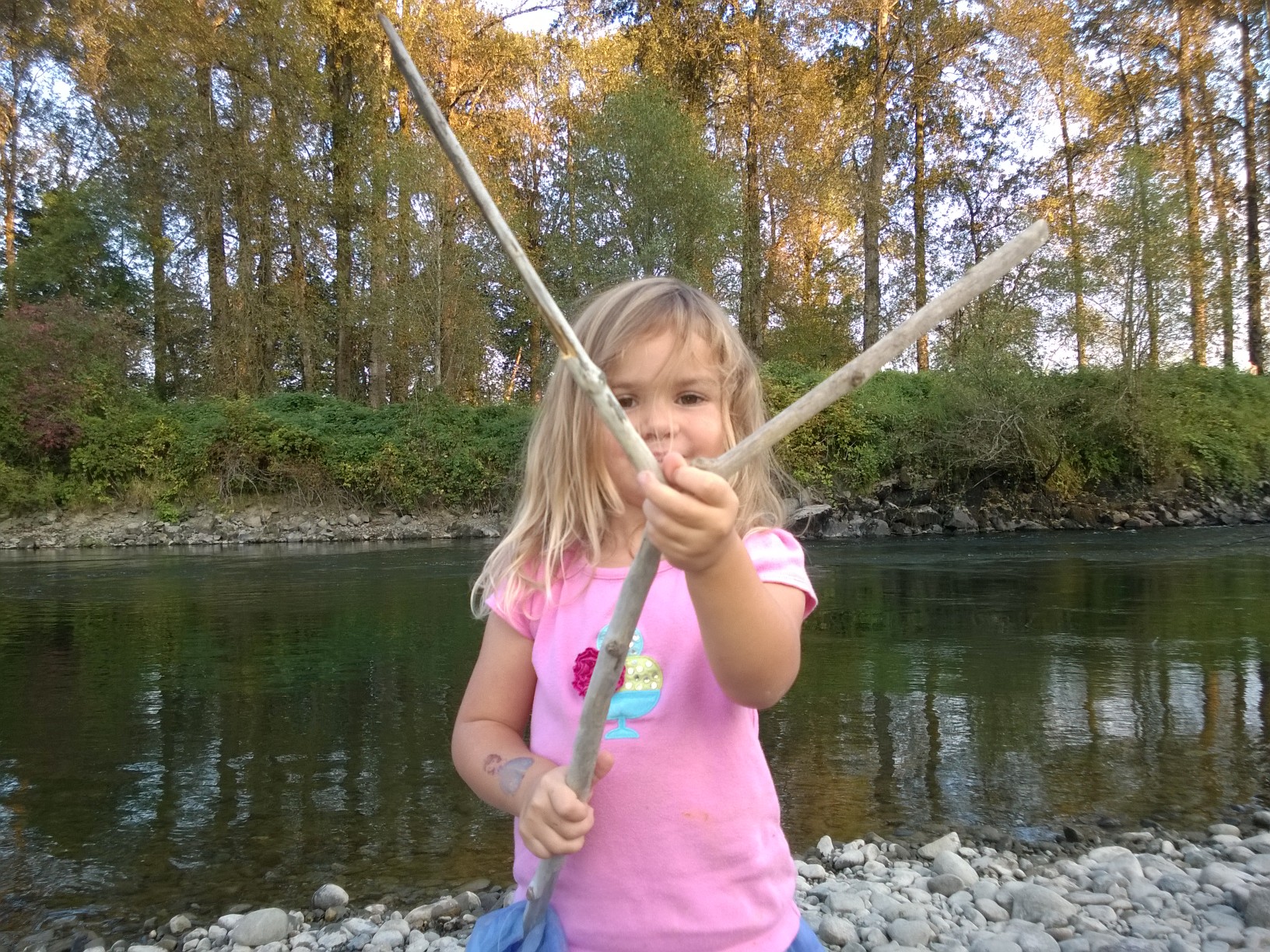
After the holiday, fishing has become a regular pastime. When dad goes out on his own, the girls greet him eagerly to see if he has caught anything we can eat. Other times, we all go to the lake together and mix up fishing with swimming and playing. On a recent trip, we explored the river bank , a place we probably would never have visited if it weren’t for fishing . Watching the girls excitement at their discoveries and creating with sticks and stones was magical. We returned home with a pile of sticks and ideas for making things with them. Moments like this are important for all of us. Resting our minds through daydreaming and play increases productivity and creativity says Daniel Levitin author of ‘The Organized Mind’. Without time for spontaneity, children lack the mental space to come up with new ideas and ways of doing things.
It makes a big splash. Plop! Drawing with sticks on rocks building a xylophone Let’s see how many ‘Y’ sticks we can find. Look what it can do.As I looked out across the river at the jumping fish, the blue skies and the green trees, I could picture an old couple; man fishing, wife painting the landscape or writing in a notebook. I suppose fishing isn’t so bad after all. I’m happy to spend many more years waiting for the fish.

![FullSizeRender [345550]](https://rightfromthestart.blog/wp-content/uploads/2016/03/fullsizerender-345550.jpg?w=474)
![FullSizeRender [345562]](https://rightfromthestart.blog/wp-content/uploads/2016/03/fullsizerender-345562.jpg?w=474)
![FullSizeRender [345556]](https://rightfromthestart.blog/wp-content/uploads/2016/03/fullsizerender-345556.jpg?w=474)
![FullSizeRender [345552]](https://rightfromthestart.blog/wp-content/uploads/2016/03/fullsizerender-345552.jpg?w=474)














 Completed activities can be traded for Nature points at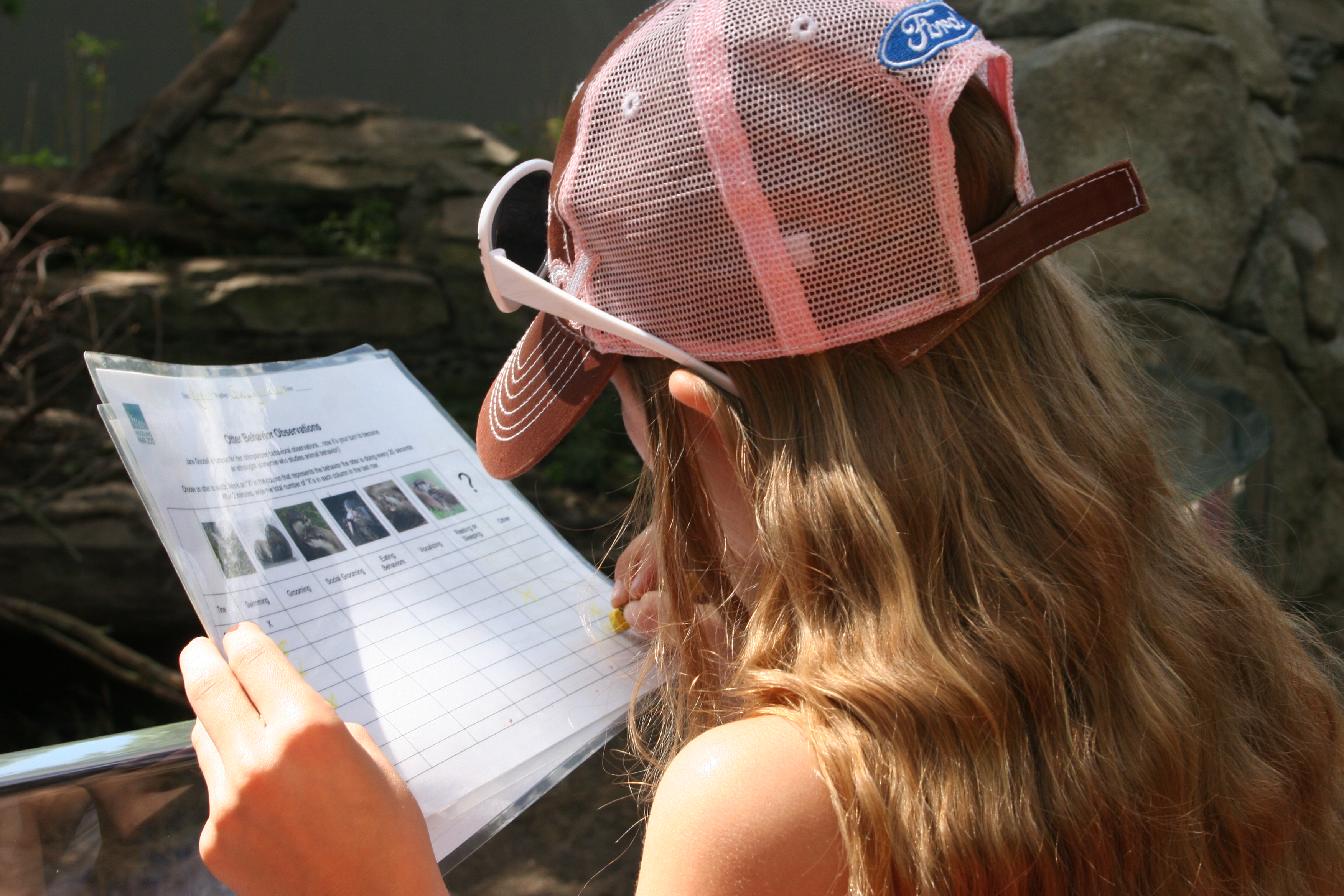







 We also use a parasol for a shady spot. The girls recently created a face painting station beneath it. The parasol came with our water table and doesn’t have a stand. I used the stand for my Christmas tree.




 Explore all types of weather. Rain, snow, wind and sunshine offer many different experiences.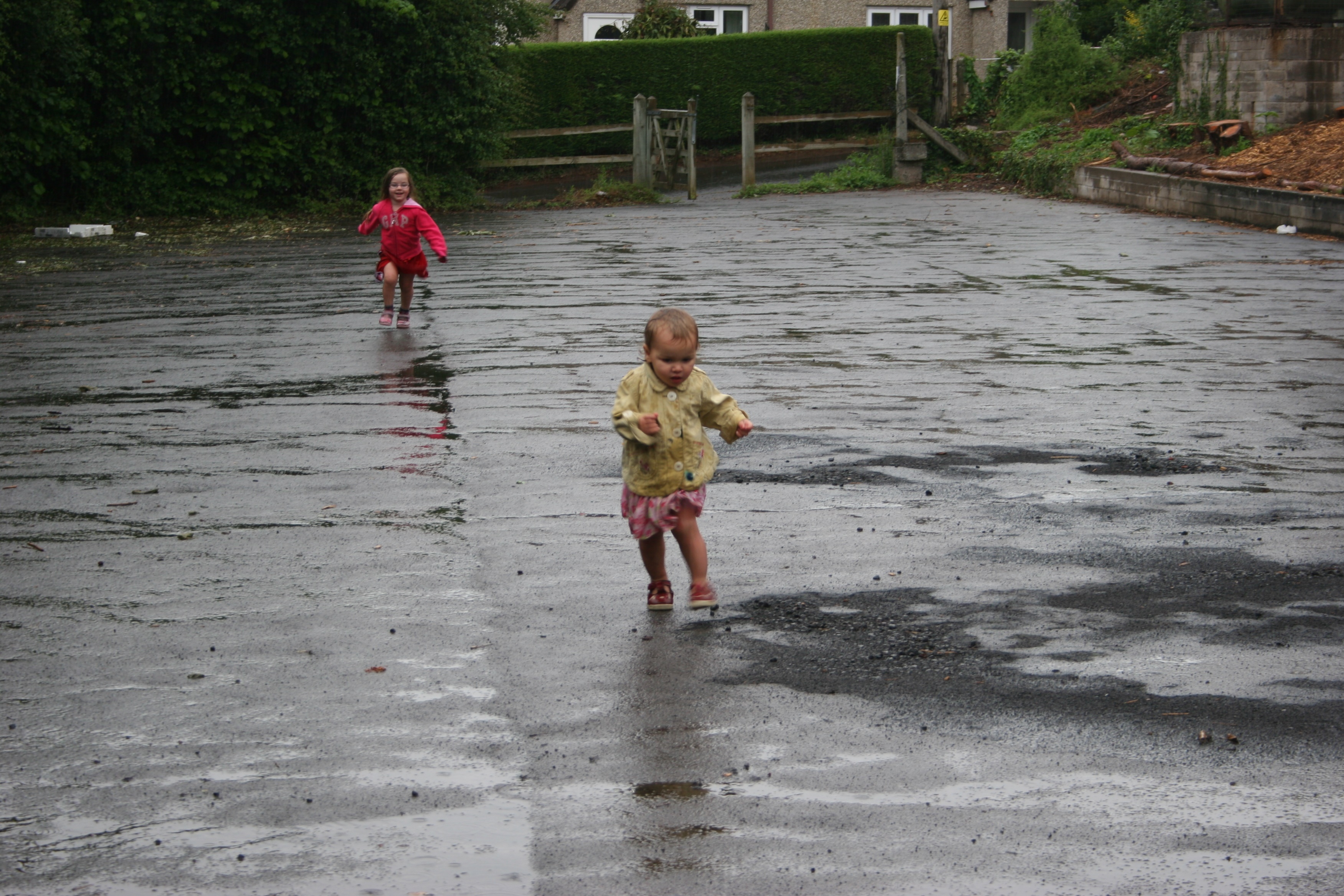







 Right from the Start