Category Archives: early education & play

Art Lessons: An Introduction to Chalk Pastels

img_0482

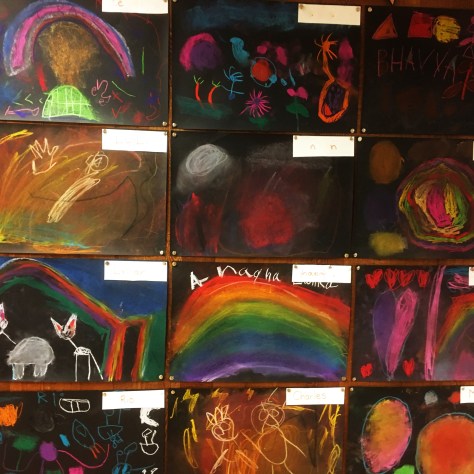
This year I am teaching art to Kindergarten and 2nd Grade.  Since I don’t know many of the children, I chose a simple project for the first lesson, so I could assess the children’s level of skill.

Kindergarten art is really about exploring materials. I like to give them a chance to investigate new materials, teach them a few skills and create a product that is as open-ended as possible. Today I introduced the children to chalk pastels, as they are easy for little fingers to use and can be used in many different ways.  Most of the children hadn’t used chalk pastels before.

To begin we talked about blending and what blending meant.

It means mixing two things together ” said one child.

I showed them how to blend different shades of the same colour, from light to dark by drawing lines using the side of the chalk pastel, one underneath the other and then blending in a circular motion with their finger. We thought that these techniques could be used for pictures of sky, water or rainbows.
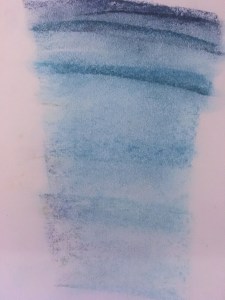
blending

I also demonstrated how to blend colours by putting one colour on top of the other and the children went off to see how many different colours they could create.

I showed them other ways they could use the pastels.  Making circular shapes and mixing two colours and using dots to make patterns. The children tested these out too.  Some children experimented with different colours in circular motion. Which colours look like the sun and which colours look more like a moon?  One child drew a car and we talked about how blending the wheels in a circle might make it look like it was moving.

Mine looks  a bit like smoke” said another child.

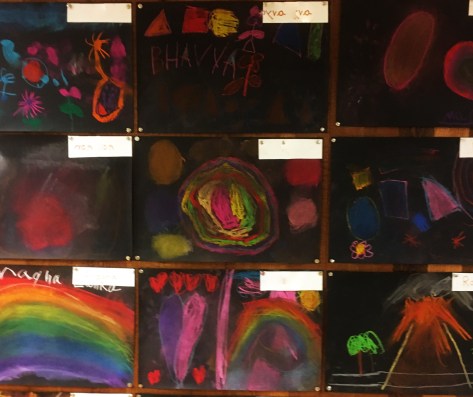
The final part of the lesson was to create a picture of their choice using some of the techniques we had tried.  I made some suggestions based on some of the things we had been talking about.  A sky with a sun or a moon, perhaps fire and smoke, a rainbow, water , trees and flowers or they could draw shapes and blend different colours inside the shapes. The instruction was to create a picture we could put on the board, not just a mass of blended colour.  For some this was difficult, but once they had a blended background we encouraged them to put shapes or drawings on top.

img_0486-2

I think they turned out really well but most importantly,they had a lot of fun and hopefully  will explore chalk pastels further at their art station during free choice.
img_0485-2

img_0484-2

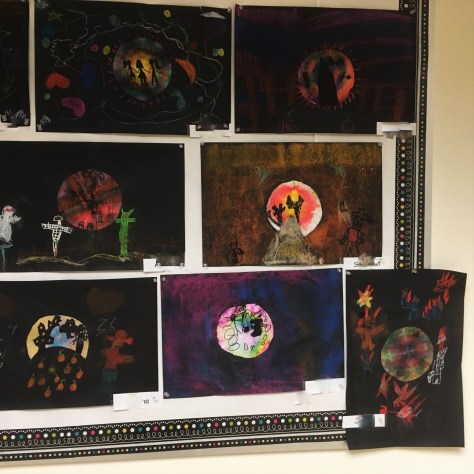
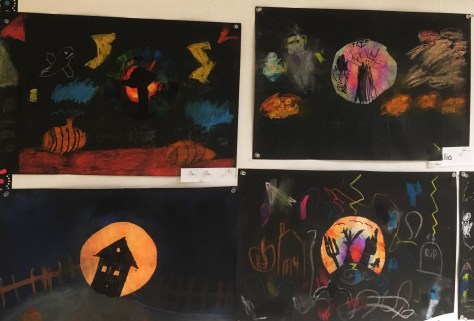
The 2nd graders who are already familiar with chalk pastels, created a project using a chalk pastel frame and a watercolour moon with silhouettes, from an idea by elementary art fun.
img_0490-4

I love how they turned out, especially the vibrant colours of the moon  and chalk pastel blending to create a spooky effect.

img_0489-5

img_0488-5


img_0487-3

I think they would look even better displayed on a window with a light behind them.


Picture Books for Children Who are Afraid of the Dark.

Fear of the dark is fairly common amongst young children. It often arises around the age of two or three when their imaginations develop and they begin pretend play.  Often, children become fearful about what might be lurking in the darkness but sometimes it is also tied up with other anxieties.

Sharing a book is the perfect way to invite a child to talk about their fears. Children’s fears are real so it helps to listen to them and work out strategies for alleviating fears together .  When my daughter was young, she developed an extreme fear of darkness, so bad that she would cower and cry if I left the curtains open as it was getting dark. It turned out that she had very poor eyesight but was too young to articulate it.  When it was dark, she could barely see anything at all.  Once her eyes were tested and she wore glasses, her fear was more manageable.  She still gets scared sometimes when she gets up in the night, but having a night-light by her bed (preferably one she can carry) helps a lot. When her fear was at its height, sharing stories helped a lot. I even wrote a book just for her, about a magic elf that she could call upon whenever she was scared.

Fears are helped when children can talk to you about them and what better way to start a conversation than reading a good book together. Below are some of my favourites; let me know in the comments if you have any other suggestions.

  1. The Moon Inside by Sandra V. Feder, illustrated by Aimee Sicuro

This new title, is the story of Ella who grows more comfortable with darkness as her mother gently encourages her to appreciate  nature’s night-time wonders. Ella’s favourite colour is yellow and she feels sad as the yellow disappears at dusk.  The illustrations move from an indoor world of yellow, black and white to an outdoor twilight of green, red, blue and oranges.  Ella looks and listens as she explores with her mother and finds many beautiful things. She finally decides that if she leaves fewer lights on inside, then she can experience the glow of the moon from her bedroom.

Talking points for children

  • What can you see at night?
  • What can you hear at night?
  • Does it feel darker inside or outside?
  • How does it feel to look out of your window at night?
  • What would happen if we didn’t have night? What would you miss?

2. The Dark by Lemony Snicket, illustrated by Jon Klassen

Lazlo is afraid of the dark but the dark usually lives in the basement. That is until one night when the dark, in its personified form, enters Lazlo’s bedroom and takes him on a journey through the house to the basement. Once there, the dark shows him  a drawer where he finds night-light bulbs and Lazlo and the dark live in harmony ever after.  This book combines sumptuous, descriptive text with pictures that show the stark contrast between the shiny blackness and the light of the flashlight.

Talking points for children

  • What does dark look like?
  • What does dark feel like?
  • What can we do to make the dark feel different?

3. Can’t you Sleep Little Bear by Martin Waddell, illustrated by Barbara Firth

This timeless classic tells the story of Big Bear and Little Bear. Little Bear can’t go to sleep because he is afraid of the darkness all around. Big Bear brings lamps of different sizes to help Little Bear, but he is still afraid.  When Little Bear still can’t sleep, Big Bear takes him outside to see the light of the moon and stars. Finally convinced that he is safe, he falls asleep in Big Bear’s arms, in front of a warm fire.  If comfort food came in book form, this would be it.

Talking points for children

  • What helps you when you can’t sleep?
  •  Why aren’t grown-ups afraid of the dark?
  • How do you feel when you look up to the sky when it is dark?

4. The Owl who was Afraid of the Dark by Jill Tomlinson, illustrated by Paul Howard

Another timeless classic, this time in early chapter book format.  Plop is a barn owl, but unlike all of his friends, Plop thinks the dark is scary.  Each chapter deals with a different aspect of darkness as Plop learns  through his many adventures, that dark is exciting, kind, fun, necessary, fascinating, wonderful and beautiful. This is a perfect read-aloud book for young children.

Talking points for children.

  • Why do you think dark is fun, fascinating, beautiful etc.?
  • Can you think of other adjectives to describe the dark?
  • Have you ever been convinced by someone else that something you thought was scary wasn’t actually that frightening at all?

5. I’m Coming to Get You by Tony Ross

I first came across this picture book as part of a children’s literature module back in my student days and it is a personal favourite. Though not strictly about a fear of the dark, it is a book about putting fears into perspective.  As a creature from outer space hurtled towards Earth, it warns Tommy , “I’m coming to get you”.  Tommy  searches for it as he goes off to bed but can’t find it. In the morning, the monster gets ready to pounce, only to find that he is smaller than a matchstick in the human world.

Talking points for children

  • If you could squish one fear with your shoe, what would it be?
  • What things are you scared of that might in reality be more frightened by you?

Disclaimer: This post contains affiliate links.

Charlie and the Chocolate Factory the Musical

charlie-and-the-choc


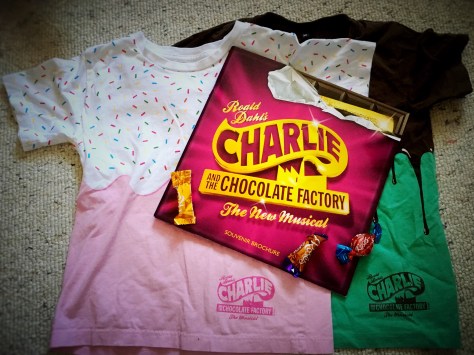
I took a blogging break this summer to concentrate on travelling with my family and now I am back, I have lots to share from my busy summer.  Today is Roald Dahl day and would have been Roald Dahl’s 100th birthday, so I thought it would be fitting to share my thoughts on the West End musical production of Charlie and the Chocolate Factory.

This was our first visit to London with the children.  We only travel home every few years, so we wanted to show them the sights and experience a West End show.  To be honest, Charlie and the Chocolate Factory wasn’t our first choice of show and we arrived with a little uncertainty.  We couldn’t have chosen anything more memorable or spectacular.  From curtain up it was visually mesmerising.  Costume and set design were out of this world and totally lived up to the company’s aim to astound the audience.

Roald Dahl’s original story was preserved throughout but was cleverly tweaked with  modern touches. The children were characterised perfectly and wonderfully portrayed by the cast.  My kids spent time discussing who they would like to play;  ballet dancing Veruca Salt, video game obsessed Mike Teavee or Violet Beauregarde the acrobatic child star. The parents were also brought to life in quirky and interesting ways.

Directed by Sam Mendes, this is the first stage adaptation in 50 years and completely surpassed my expectations.  We all came out of the theatre feeling a little emotional. We had clearly witnessed something  unique and special.

If you get a chance to see it before it closes at Theatre Royal, Drury Lane in 2017, I highly recommend it.  Don’t despair if not, a UK tour is coming soon and for US audiences, the Broadway production will open in 2017.

Disclaimer: This is a personal recommendation, no monetary compensation or complimentary tickets were received for writing this post.


Jerome Bruner and Early Education


Jerome Bruner

Photo credit Poughkeepsie Day School

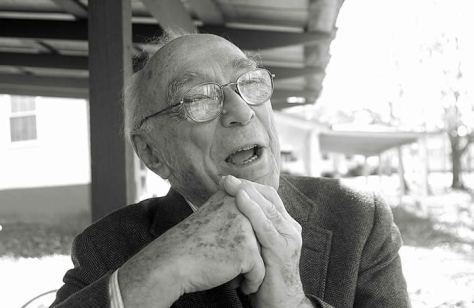
This week one of the most influential psychologists of the 20th century, Jerome Bruner, died at age 100. If you have studied psychology or education you will most likely have come across his teachings. It’s easy to forget what we have been taught once college days are over, so I have been reminding myself of his teachings and their importance to early childhood educators.

  1.  Scaffolding   

Bruner proposed the concept of scaffolding. Scaffolding is the action that an adult performs to assist the child in learning something that would otherwise be beyond them. Examples of scaffolding include modelling, making suggestions,or structuring learning into manageable parts. As the metaphor suggests, the scaffold supports the child as they build skills so that it can eventually be reduced and removed completely.
The following video illustrates a number of points about scaffolding. Notice how the amount of scaffolding from the adult is minimal or non-existent for the eldest child (aged eight). Some scaffolding is offered to the three-year old in the form of suggestion and answering questions but lots of scaffolding is required by the one-year old.  The children themselves also offer scaffolding to each other, as they watch what the others do and  try things for themselves.

2. Bruner believed that learning was an active process and that children could discover complex concepts at any age.

“Any subject can be taught effectively in some intellectually honest form to any child,” he wrote in “The Process of Education,” “providing attention is paid to the psychological development of the child.”

This concept heavily influenced the view of the capable child in the schools of Reggio Emilia.  Bruner was a regular visitor to the schools even into his 90’s.


3. His work was fundamental in raising the profile of early education and his ideas contributed  heavily to the development of Head Start.

4.  Spiral curriculum

This method focuses on revisiting learned content at set intervals and re-teaching it at a more refined and difficult level. Eventually, learned content from one subject informs more in-depth discussion of content in another subject. Learning through play allows us the luxury of visiting concepts multiple times in different contexts.

Studies are not isolated but intrinsically linked with a common thread running through them all. Bruner believed that learners should go beyond the information given and understand the process in order to generate ideas of their own.

With over 70 years of research, this list only scratches the surface.  I found this video useful for understanding his key contributions.


Big Rock Park

We consider ourselves very lucky to live in an area where there are lots of great parks. Last week saw the grand opening of Big Rock Park, so we took a trip to see what it was like.

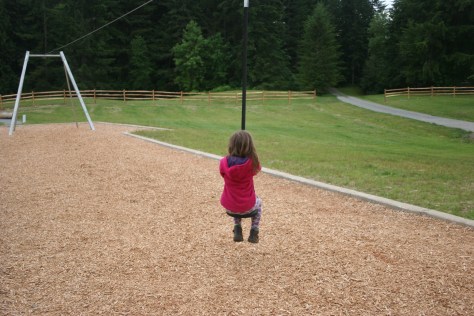
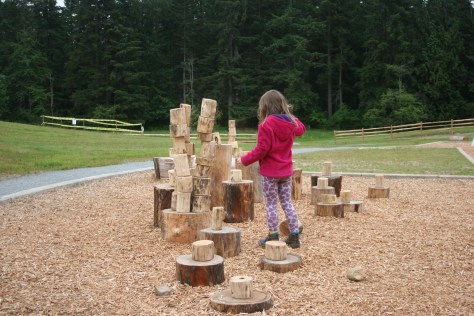
I liked that it didn’t have the same old playground equipment.  The slide was built into a hill, with a natural climb up to it and the zip wire was low enough for young children to climb on independently. There were also a number of climbing posts made from tree stumps and plentiful building blocks crafted from branches.

IMG_1521IMG_1529

They have really tried hard to maintain this as a nature park.  The fences are all crafted from rough cut wood and they are still cultivating the meadow around the slide complete with little peep holes. In collaboration with STEM High School, Big Rock Park will design an environmental education programme and promote renewable technology.

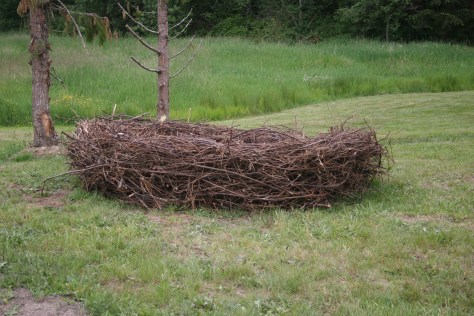
Beyond the playground you can head down to the nature trails.  On the way admire the giant nest built by local families last year.

IMG_1523

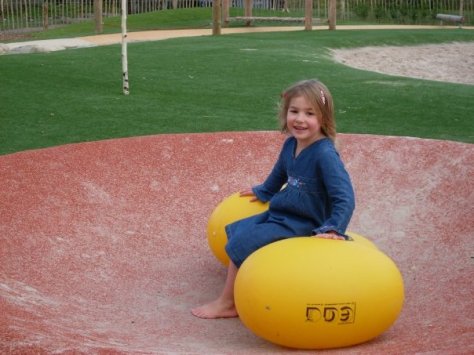
At Slimbridge Wildfowl and Wetlands centre, in England, the playground (wellyboot land)  had giant bouncy eggs. This nest is crying out for some of those.

slimbridge eggs

As you head into the trails you have a number of paths available, all well signposted.  The trails aren’t very long, so perfect for little legs to explore.

Leading towards the trail is another little guest.

IMG_1524

Where would Big Rock Park be without a big rock?

IMG_1528

This was easily the main attraction. The trails circle around the rock and lead back to this wonderful natural climbing area.

IMG_1527

We loved the new park and will be heading back soon with the older children, who were sad that they missed it.

Art Lessons: Wire Sculptures Inspired by Giacometti

Since we hadn’t yet explored any three-dimensional art,  our final art lesson this year was inspired by the sculptures of Alberto Giacometti.

Giacometti
Photo Credit Art Poskanzer
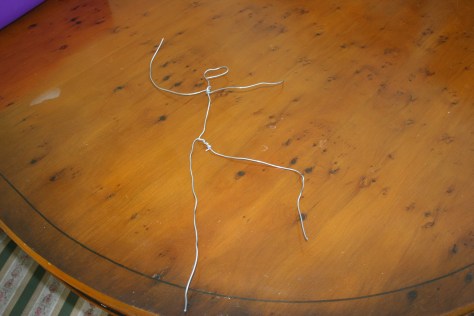
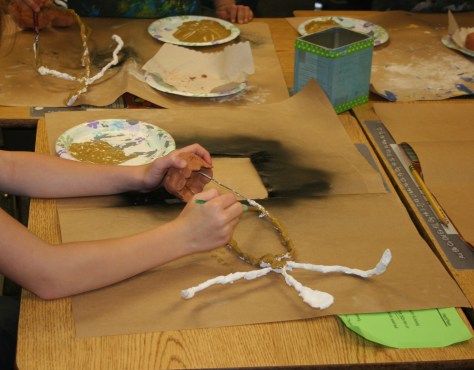
Step 1:  Make the shape of the person using wire.IMG_1502

I pre-cut three pieces of wire. The longest piece for the legs, slightly shorter for the arms and a shorter piece for the torso and head. With my own children, I would allow them to cut the wire with wire cutters but with only an hour, I wanted to make sure we had time to complete the sculptures.  The children bent the legs into shape, looped a head into the shorter piece and joined the pieces by twisting them together.

Helpful Tips

Some of the children needed help with this part and some of the joins were a bit wobbly.  With very young children you could make the wire a structure ahead of time and let the children bend it into a pose.

Our trial sculpture had a pose with arms on hips. This was difficult to keep steady and needed a lot of adult help. Older children may be fine but since this was a larger group of 7-year-olds, I suggested they make a pose that wasn’t touching another part of the body.

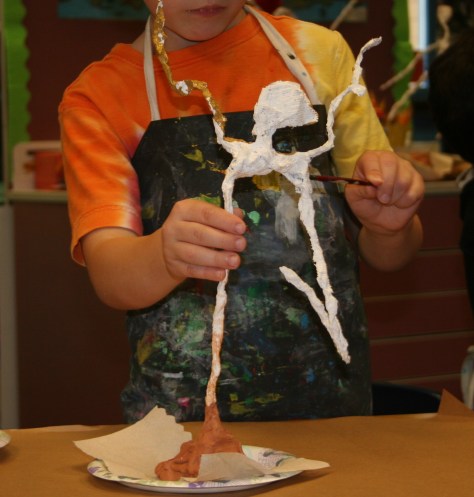
Step 2: Cover the wire with plaster bandage.

IMG_1497


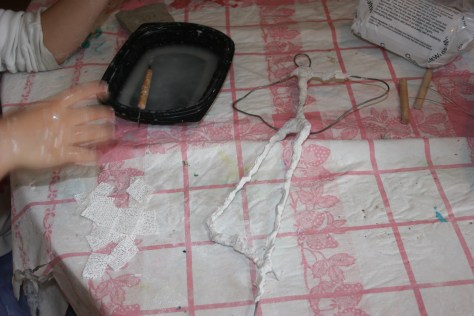
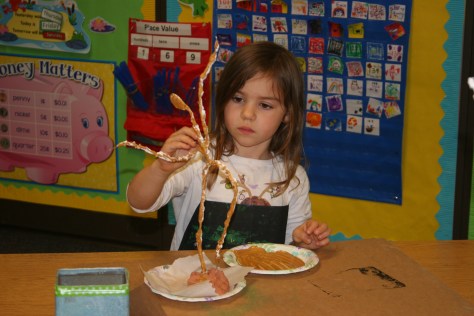
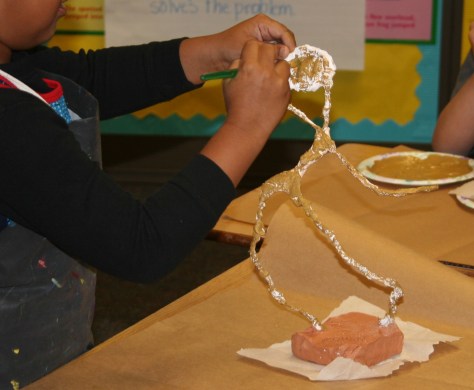
Each child had a pot of water and a pot of pre-cut pieces of plaster bandage.  Dip the plaster bandage in water for five seconds then wrap or squish around the wire, smoothing out any holes with your finger.

Helpful Tips

Some children found it easier to work with small pieces, as in the picture but some preferred slightly longer pieces that they could wrap. I would suggest giving children a mixture of sizes.

Start with the joins, if they are a bit wobbly, wait a few minutes for these to dry ( you may need a few layers ) and then the model will hold still without moving.

Keep the water pot and plaster bandage away from each other. If the plaster bandage gets wet and is not used straight away, it won’t work and will crumble away.

Leave a section of wire at the bottom of the legs uncovered for inserting in the stand.

Step 3: Make a stand.

sculpture with plaster

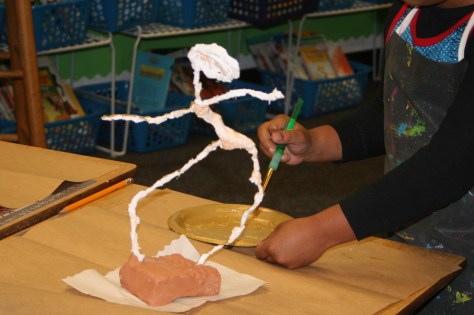
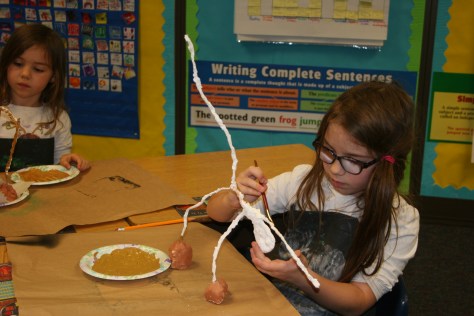
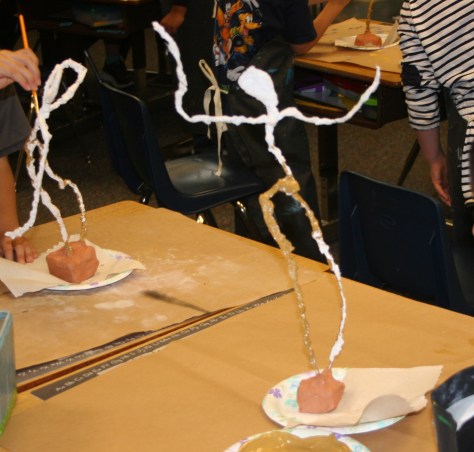
We used air-drying clay for the stand because it was heavy enough not to tip but easy to insert the wire into. The shape of the stand was dependent on  the way the model balanced.  Some models required  clay moulded around the legs, others needed a wide base and some had two stands to help it balance. Working out how to balance the model on a stand was a challenge to some.

Helpful Tips

Place the finished models on a piece of paper towel to dry to avoid the clay cracking.

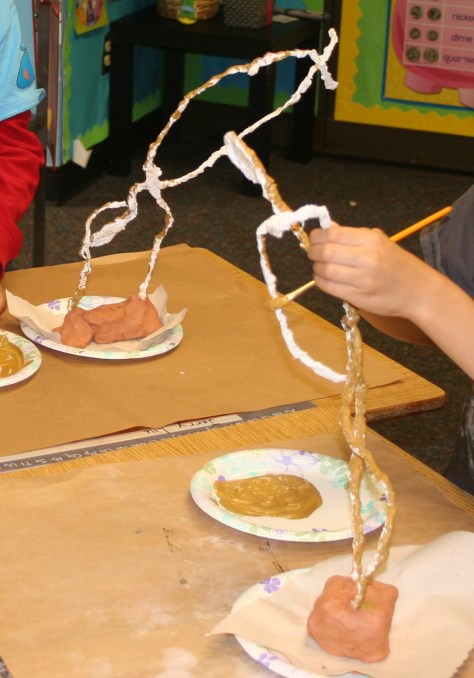
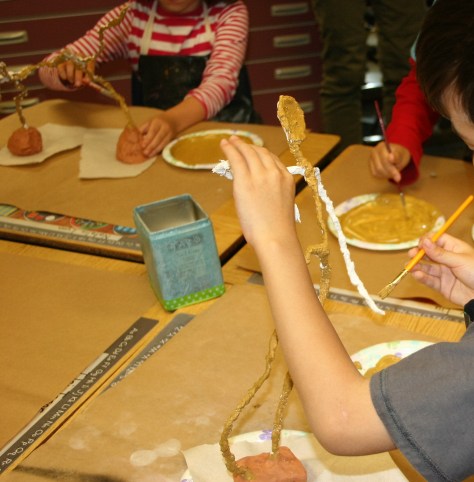
Step 4: Paint the sculptures.

painting sculptures

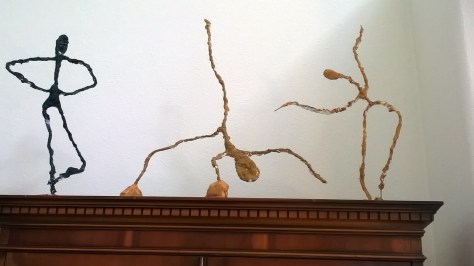
We used acrylic paint with a gold metallic sheen to replicate bronze,  Giacometti’s chosen medium.

IMG_1576

IMG_1575

more sculptures

models


finished sculpture 2sculpture gia 3sculpture gia 4sculpture giacometti

I think they look great and I’d love to try them again to see what magical creations older children would make.

WP_20160531_002


Teacher? Play Worker? Educator? What’s in a Name?

beachcombingMany years ago, straight from college and failing to find a teaching opportunity in my locality, I accepted a job  leading a play scheme. This was a new concept at the time, the first after-school and holiday club in my town. I learned a lot. I learned that play doesn’t need to have an end product in mind, I learned the importance of open-ended materials and space, I learned how to work with parents and the huge responsibility of being in charge of somebody else’s child.  Through play work I learned that I loved working with the youngest children  in a play-based environment. I no longer looked for teaching posts with 7-11 year olds but volunteered at a local nursery school to learn the trade of being an early years teacher.

As a young aspiring teacher, I was never proud of my title – play worker.  I was always sure to let people know that I was actually a qualified teacher, that I had been to university for four years and wasn’t just a child care worker. When I got my first teaching post, it wasn’t all it was cracked up to be. Stuck in a classroom of five and six-year olds with nothing to play with apart from a pack of modelling clay, I was quickly disillusioned.

My next job, in a nursery was very different. I worked with a team of teachers and nursery nurses who bounced ideas off one other, who valued play, who cared that the kids were happy and were passionate that teaching was far more than imparting knowledge.  I watched, I listened and I learned. One of my colleagues was wonderful with the children and the parents loved her but she didn’t have a single child-care qualification. I quickly learned that having a teaching qualification didn’t make me better than those less qualified ; we could all learn from one another and had our own contribution to make.

Teacher Tom’s post, I’m Not Sure That’s Teaching ,reminded me of this. Tom questions the meaning of the word teacher and whether or not those who follow the children’s interests, supporting them as they go, are teachers as most people perceive them.
Peter Moss describes Loris Malaguzzi’s role in the schools of Reggio Emilia, as an educational leader whose role was

Not to tell others what to do, not to lead a pliant following wherever he chose – it was to create and evolve an educational project in his city, but always in relation with others and in a spirit of participation and co-operation

I’m currently reading a selection of Loris Malaguzzi’s writings and speeches. The rise of the preschools in Reggio Emilia as a reaction to education built on pre-determined knowledge imparted bit by bit, seems to ring truer today than it ever has.

Labels are complicated and to this day I’m not really sure what I’d prefer to be called. A teacher? educator? play worker? early childhood professional? I’m not sure any of them are quite right. Perhaps that is why I often struggle for a title when people ask me what I do.

Most of the children I have worked with in my career have called me Rachel. Not teacher Rachel, Miss Rachel or Mrs McClary  but simply Rachel. Perhaps titles don’t matter that much after all.


We’re Going on a Bug Hunt

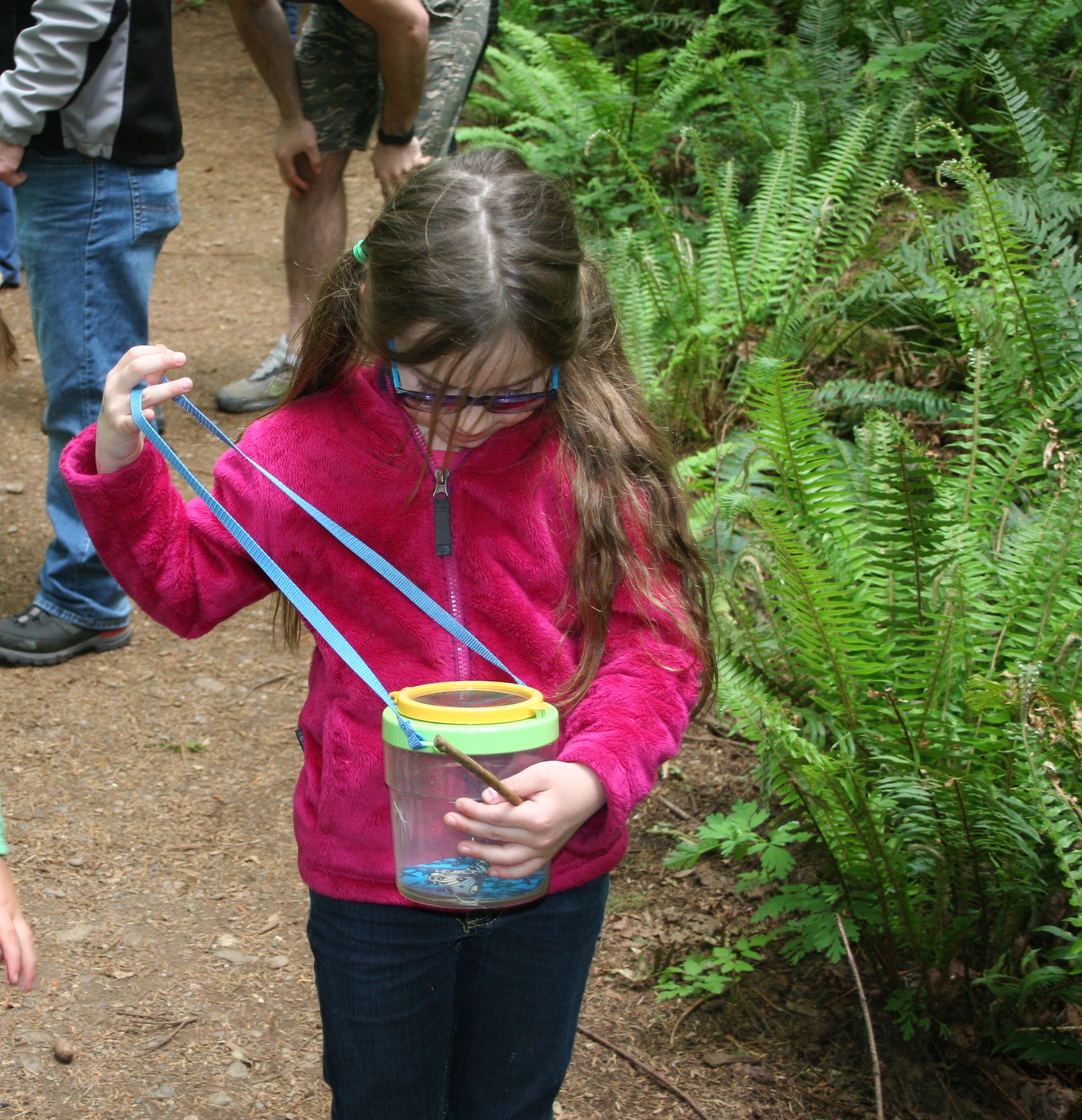
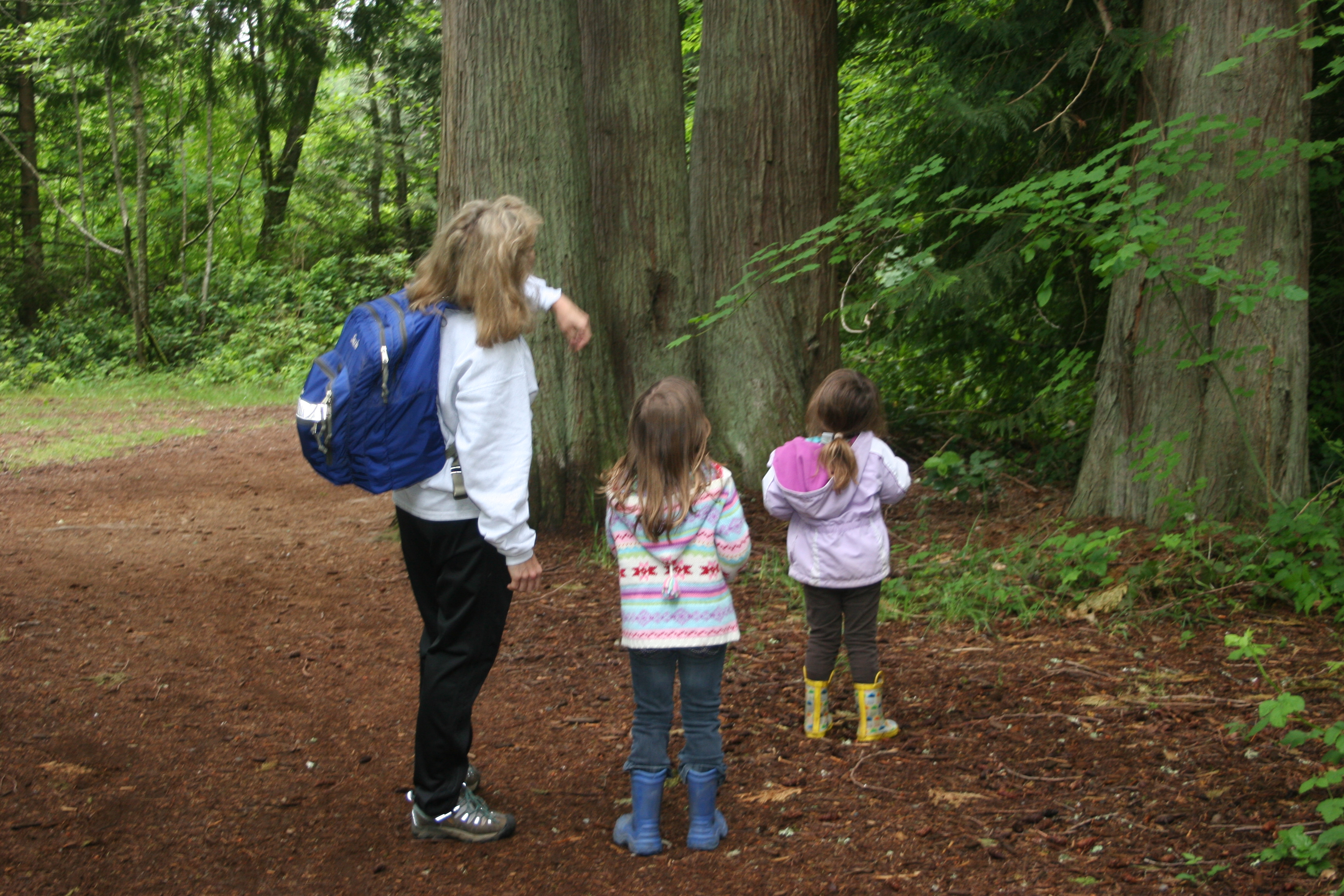
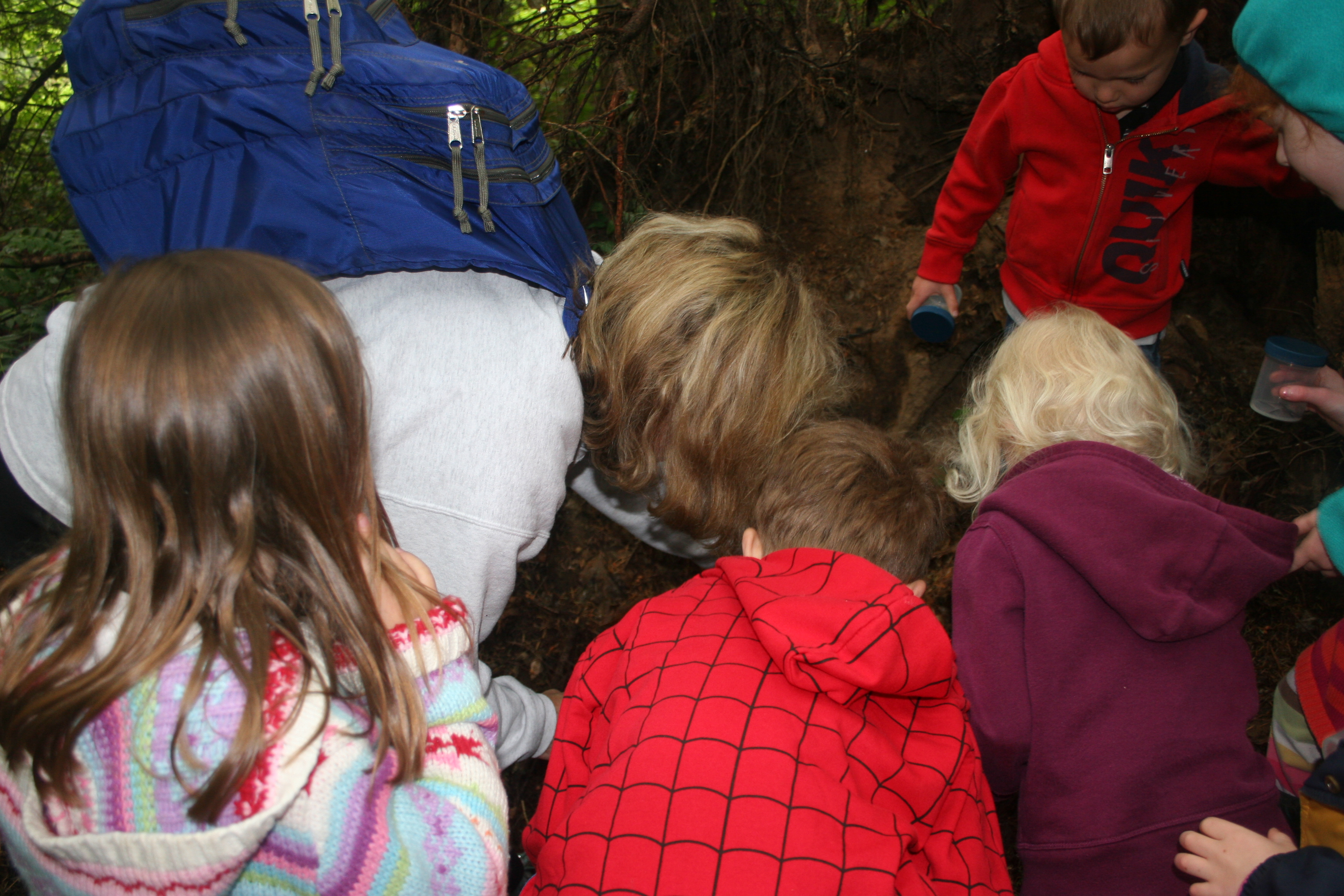
Some children hate bugs, they think they are disgusting or scary. That’s why I love our annual preschool bug hunt in the  woods. The children look for bugs, find out about them, collect them in bug jars and bring them back to observe in a terrarium for a few weeks.

bug hunt

In our front garden we have a wildflower border.  As we pass it each day we look out for bees, ladybirds and butterflies. When we found aphids on the lupins, we hoped they would attract ladybirds.

“Why can’t we spray them?” my daughter asked. She had been learning about aphids at school.

“If we spray them”, I explained, it will disrupt the ecosystem, “the ladybirds won’t come and ladybirds are good food for birds.  If we kill off all the bugs we will have fewer birds and small mammals in the garden.”

They don’t like every bug – they are a little afraid of spiders, think mosquitoes are a nuisance and my youngest is a little unsure about worms but they don’t see that as a reason to kill them. We know the worms in our compost bin turn our scraps into compost for the garden , spiders can be left alone if they live outside and they are good because they eat flies and even mosquitoes provide food for bats and birds. This is a useful resource for explaining to children why bugs are good.
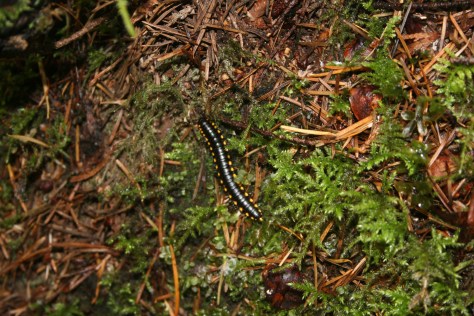
There are two kinds of bug we don’t collect on the bug hunt.

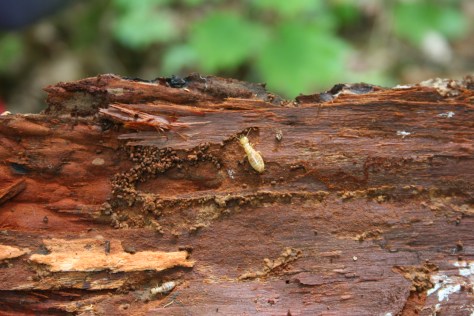
  1. Termites because they will eat our preschool.  The children know that termites are important for breaking down old wood from fallen trees but they need to stay in the woods.

IMG_0546

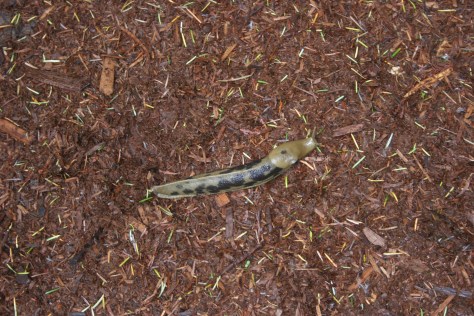
2. Slugs because they will eat all the produce we have planted.  There is plenty of food for them in the woods.

IMG_1484

There were other bugs to collect.

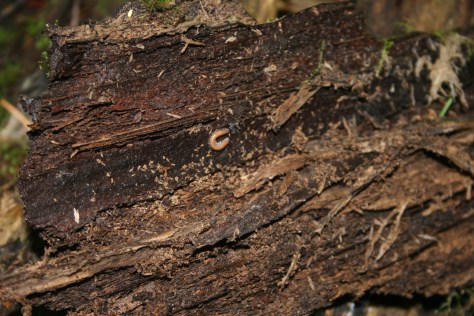
Lots of worms and millipedes.

IMG_1477


IMG_1479

Spiders

IMG_1478

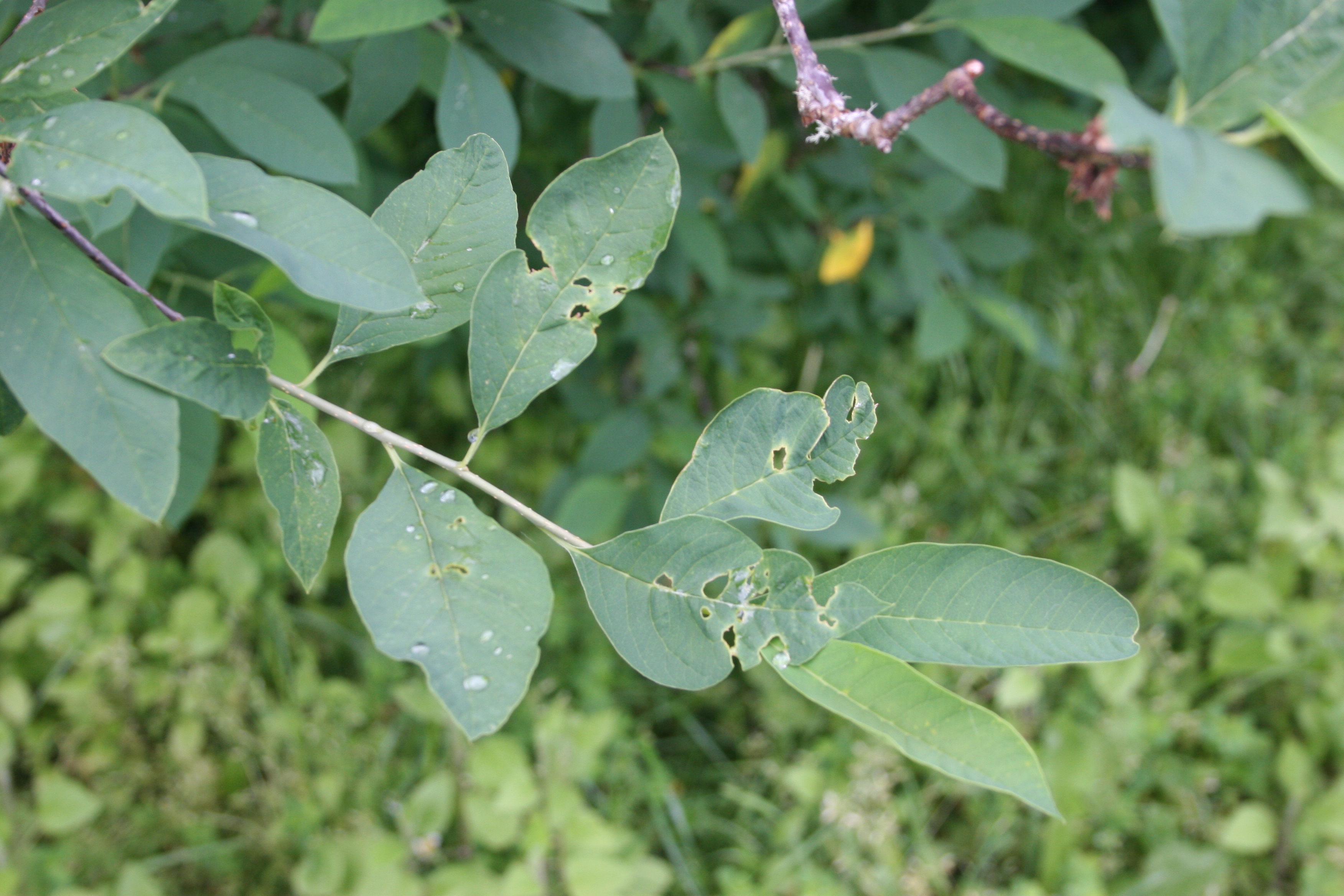
and evidence of caterpillars munching leaves.

leaves

We looked up
children and teacher look at trees

and down.
looking for bugs in a decomposing log

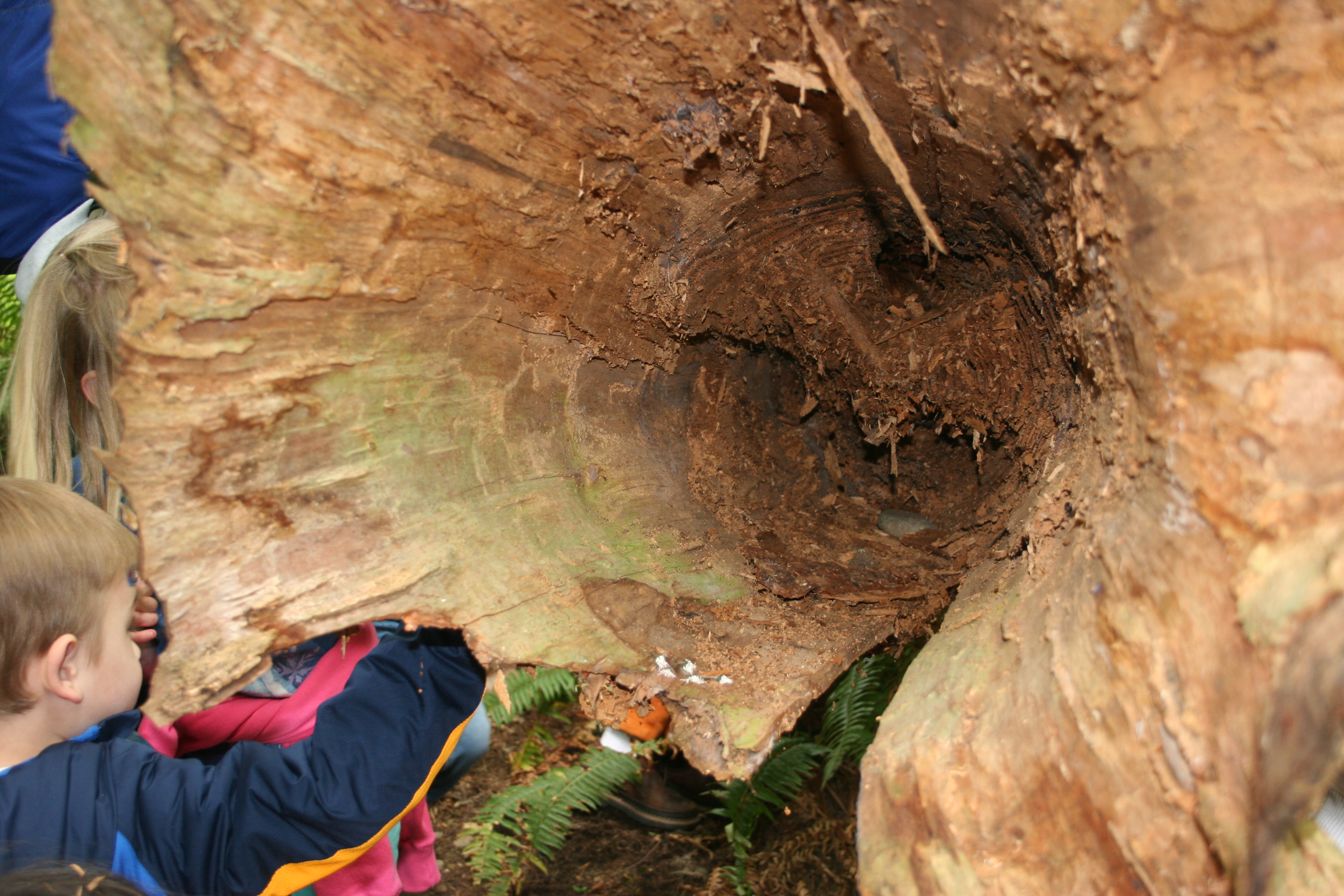
We saw evidence of how the bugs break down an old tree log so that it can go back into the soil.
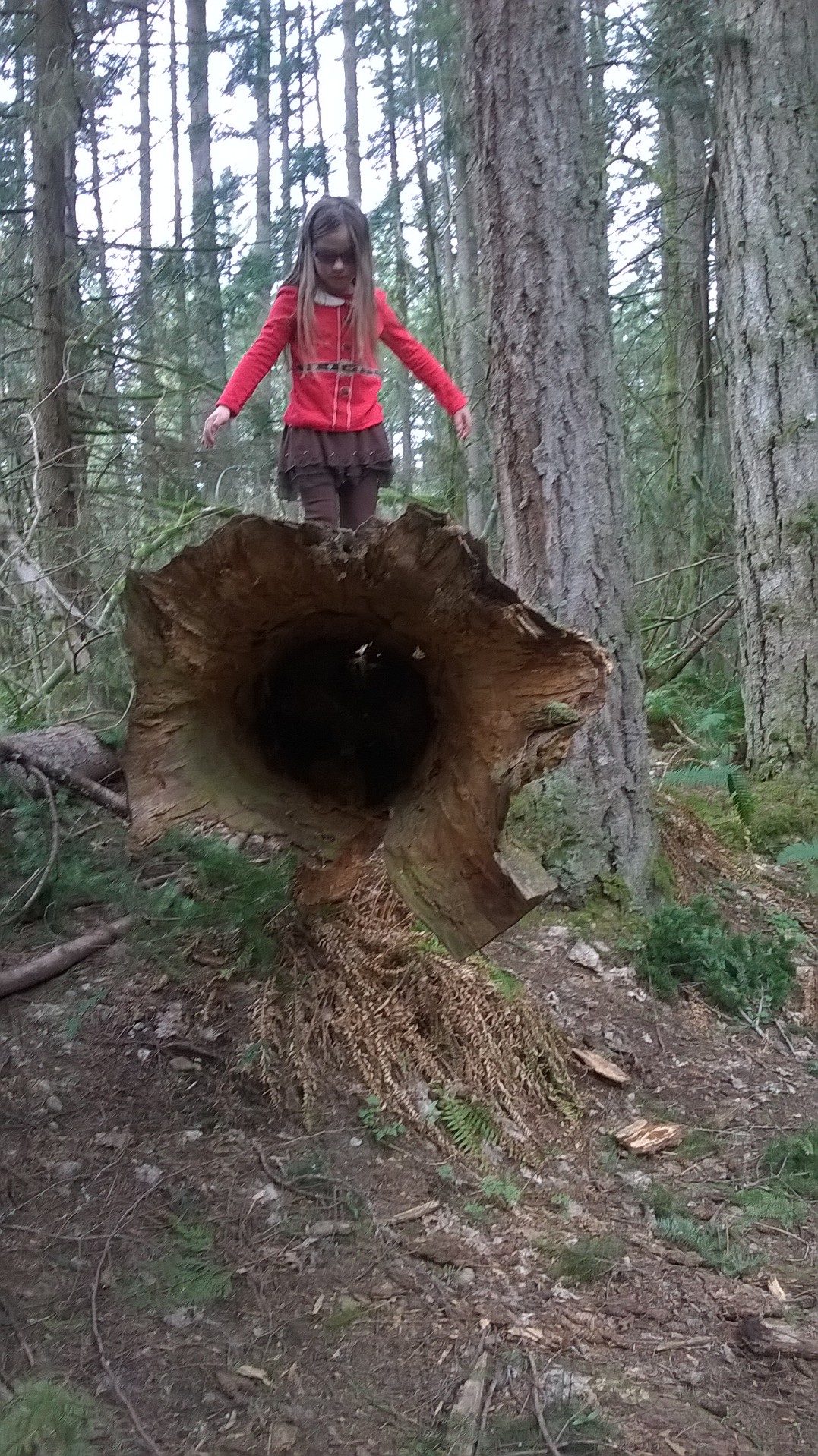
tree log hollowed out

It gets smaller every year, we used to be able to fit inside.

girl balancing on hollow log

Sometimes it is useful to add a focus to a walk and those tiny bugs can easily be forgotten, so next time you walk with your kids, turn over some logs and stones and see what you can find.

Izzy the Very Bad Burglar: book review

  Last Hallowe’en, my daughter decided she wanted to dress as a burglar. She chose the idea because “burglars are bad but not really scary like monsters or devils.” At school they are not allowed to dress in gruesome costumes but my kids believe that Hallowe’en costumes should be scary, to capture the true essence of the holiday.

One of our favourite books is Burglar Bill by Janet and Allan Ahlberg. We laugh at the antics of Bill and the baby, every time we read it.  When another burglar book came their way, the girls were very eager to read it.

Izzy the very bad burglar tells the story of Izzy, a young burglar, who comes from a family of excellent burglars. Every time Izzy steals something, she gets a bad feeling in her stomach. Izzy tries to tell her parents but they tell her she must be a good burglar.   Izzy tries different ways to make the feeling go away but it always returns, until eventually she finds a solution that might just work.

My 7-year-old shared her thoughts about the title,

I thought it was going to be about a burglar who is really bad, you know, like she does bad things but really the title means that she isn’t very good at being a burglar.

The underlying message of the book  is to do what is right and not bow to peer pressure.This resonates perfectly with the 3-6 age group, who have a clear sense of right and wrong. It would be a perfect book for teachers to introduce a moral discussion.  Teachers could  talk about good and bad by introducing the following questions. Are burglars bad? Was Izzy bad?What does it mean to be bad? What made Izzy different to the other burglars? Do you ever get a feeling like Izzy did when you do something unkind?

Izzy the Very Bad Burglar is written and illustrated by Amy Proud is available in hardcover from May 3rd in the US and May 19th in the UK.

Disclaimer: We received a complimentary copy of this book.

Spring Babies

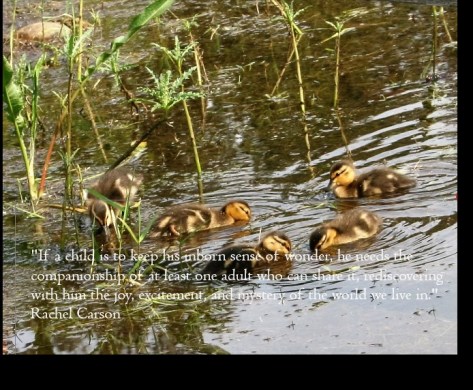
carson

On our walk to school every day, my daughter loves to stop and look at leaves and flowers, to take a short cut through the woods or to save worms stranded on the path.  Often there isn’t enough time to stop and share her observations and wonders.  It is important therefore, that I make time to walk with her when we aren’t constrained by time.

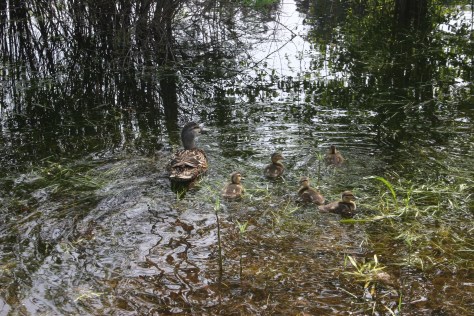
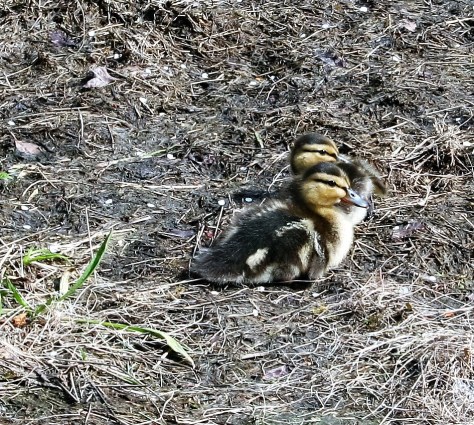
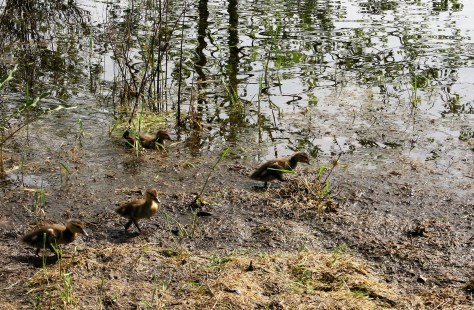
Last week, when I was out running, we spotted ducklings on the local pond.  I decided to take a walk and see what other babies we could find.

Our first  observation was a deep, vibrating sound, a little like a honking goose. The sound followed us but we couldn’t see anything. We thought perhaps it was a type of frog or maybe a bug.

We sat on the bank and watched the ducks come in and out of the water.

IMG_1395 - CopyIMG_1387 (2) - CopyIMG_1391 (2) - Copy

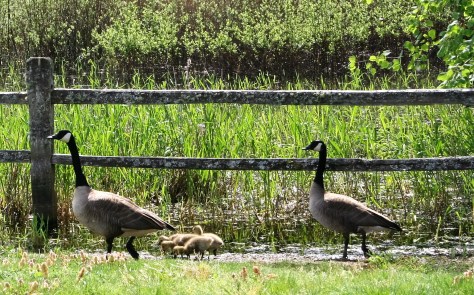
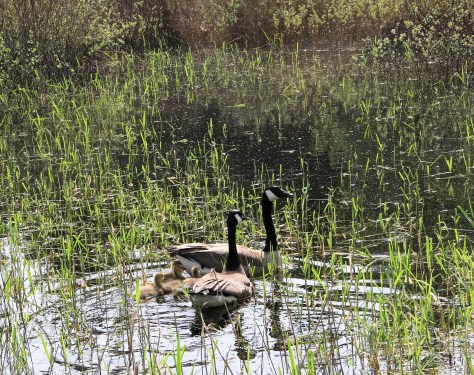
As we carried on around the pond, we came across a family of geese.

IMG_1420 (2) - CopyIMG_1422 (2) - CopyIMG_1423 (2) - CopyIMG_1424 (2)

We watched them until they swam away. Passing a smaller pond,we decided to rest there a while, watching the birds and dragonflies.  We noticed ladybirds on the lupins.  Looking closer, we could see the leaves and stems were covered in aphids.  On the centre of one leaf was a pair of ladybirds, who proceeded to fight, just like in the ‘Bad Tempered Ladybird’ by Eric Carle.

IMG_1431 (2)

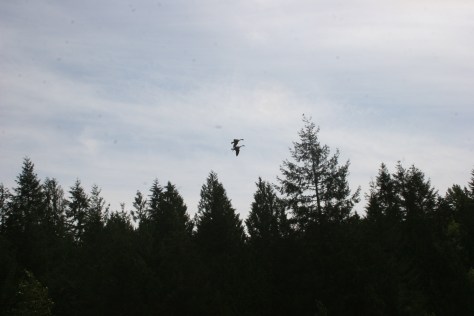
As we sat watching the ladybirds, the geese came swooping across the sky and landed in the pond with a splash.

IMG_1434

The spring baby theme has continued. We found a salamander with its eggs in a friends back garden, a newt in the drain and a tiny frog in our worm composter.

WP_20160225_002

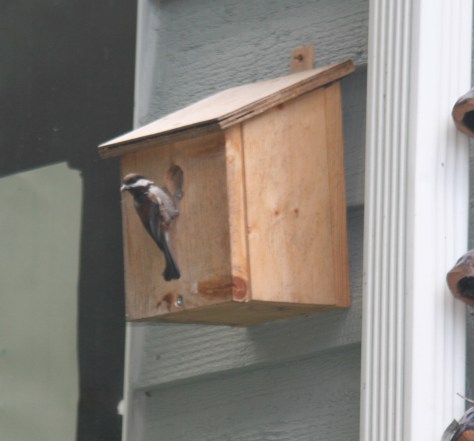
The birds are building a nest in our bird box and we expect to hear the babies soon.


IMG_0583 (2)

We noticed that the frog spawn has gone from the storm water pond and if you look closely you can see tiny tadpoles swimming.

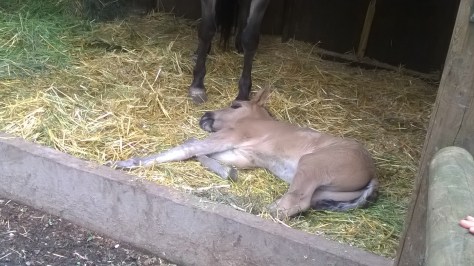
To top it all off, the horse at preschool finally gave birth to a foal.

WP_20160422_011

However simple, the wildlife we see  around us every day, is a constant source of wonder.  I hope my children will always see the world this way.

IMG_1414 - Copy

This photograph depicts what all childhood should be; full of the magic and excitement of the unexplored. It reminds me of the magical tales of Enid Blyton that inspired me to pretend to run away to the woods, when I was a child. My friends and I would sometimes pack a picnic or a bag of sweets and sit deep in the trees, listening to the streams and waiting for magic to happen.

From Nature and her overflowing soul

I had received so much that all my thoughts

Were steeped in feeling.

William Wordsworth