For those of you who aren’t familiar with the term loose parts, check out my post on the theory of loose parts. In simple terms, loose parts are moveable objects that can be used to create, explore and discover.
Educators often collect loose parts for their environments. Collections include buttons, feathers, beads, coins, shells and seeds. Loose parts are added to clay and dough, left in baskets around the room, used for weighing and measuring, to create art, on light and mirror tables and added to block play. I think though, that sometimes educators over-complicate loose parts. We get so excited about the different things we can provide for the children and the beautiful ways we can present them, that it is easy to forget the true essence of the theory of loose parts.
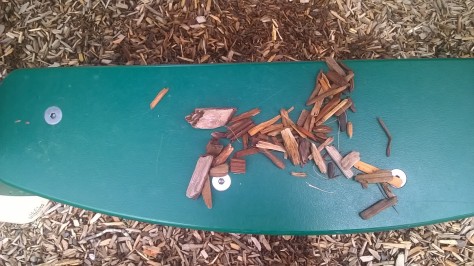
I was reminded as I played with my daughter at the park, that loose parts are everywhere. If we as educators don’t provide loose parts, the children will find them. A brick will become a piece of food, a calculator is a telephone, a sheet will become a cloak or torn paper will be money. Playing with loose parts is the way I played as a child, playing shops with empty boxes or filling empty bottles with leaves, petals, dirt and water. For the child, loose parts are everywhere, they probably don’t call them loose parts but they will find them.
For me the theory of loose parts is an attitude to how children play. It is an acceptance that children may use what is in their environment and make their own choices about what to do with it. Materials do not have to be displayed or stored beautifully, they simply need to be there. The following video illustrates children’s natural ability to find and use loose parts creatively.
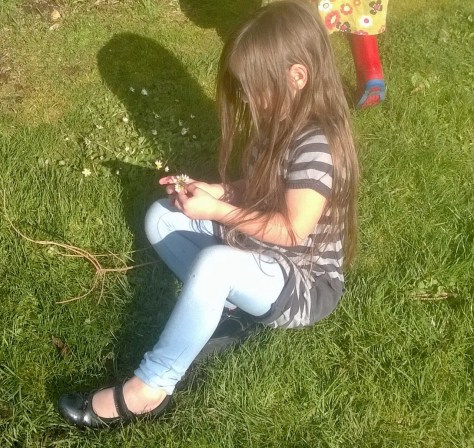
I believe that sometimes we try too hard to arrange things for our kids to do and it is important to let them be. There are however, some things that I feel we should introduce our children to. The simple pleasures that we had as kids, are sometimes forgotten and lost. If we are going to teach our children anything, lets preserve simple pleasures like these.
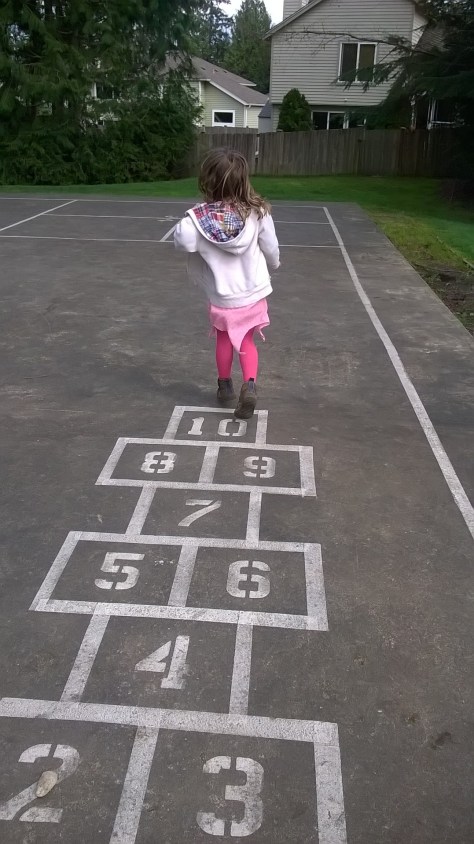
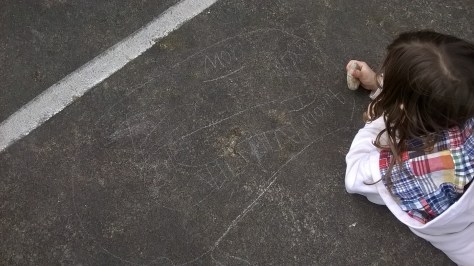
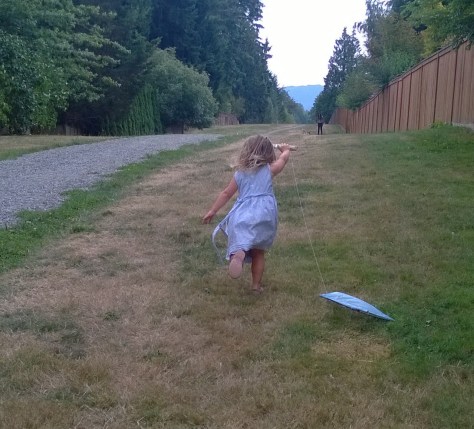
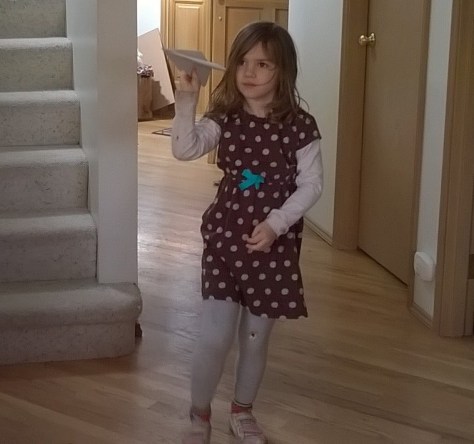
Pooh SticksLearning to play hopscotchChalking with a stoneFlying a kiteBlowing a dandelion clock
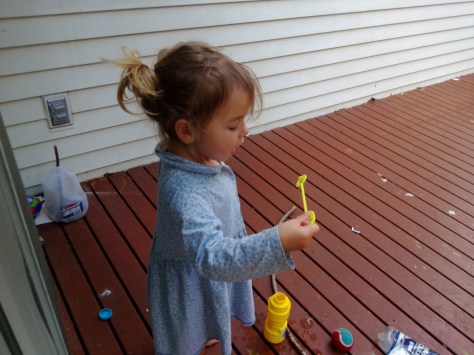
Blowing bubbles
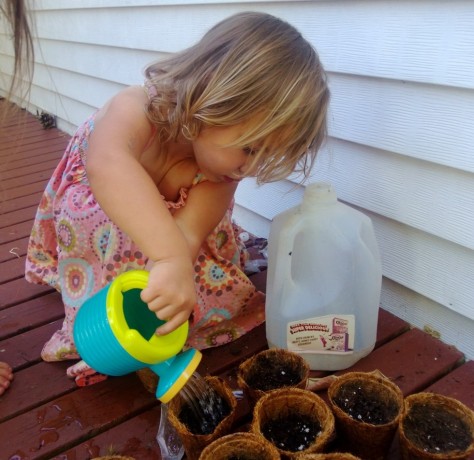
Planting seeds
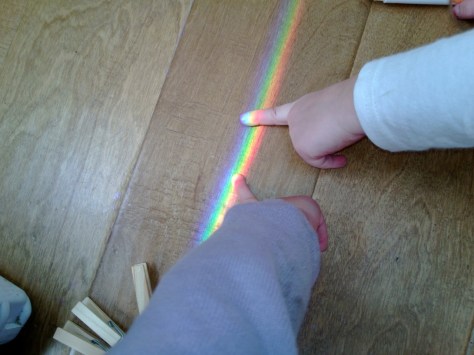
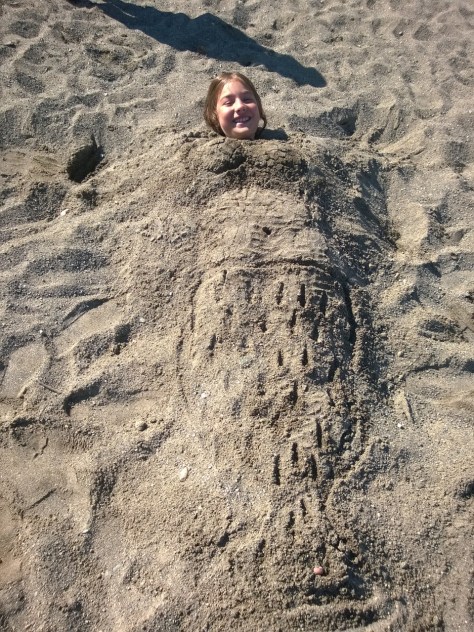
Making a rainbowMaking a daisy chainBurying yourself in sand.
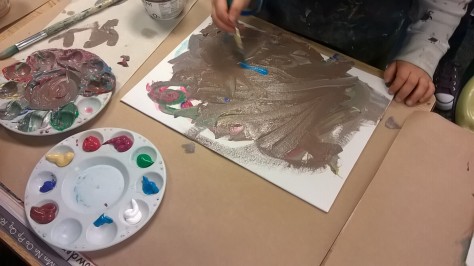
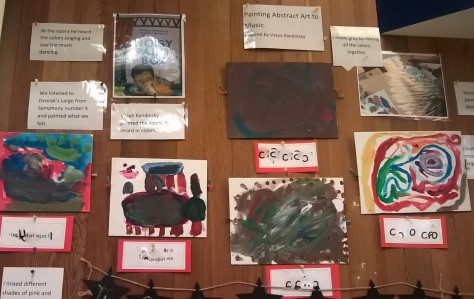
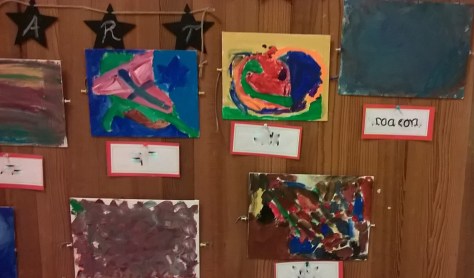
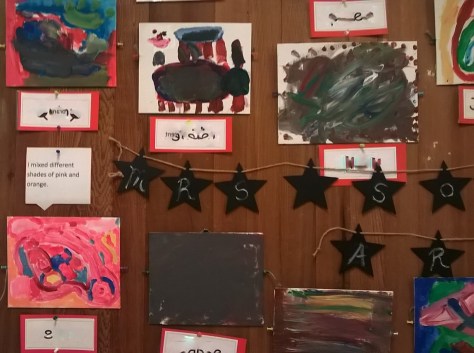
One way to ensure that you don’t end up with a wall of identical paintings is to introduce children to abstract art. We used the book The Noisy Paint Box: The Colors and Sounds of Kandinsky’s Abstract Art as a starting point. The book tells the story of Kandinsky’s ability to ‘see music’ and ‘hear paintings’.
I explained that abstract art is not about creating a particular thing but is about expressing how you feel.
Each child had a pallet of acrylic paints, 2 different sized paintbrushes, a canvas, a pot of water and paper towel to wash and dry the brushes. I showed them how to clean their brushes by washing it in the water and drying it with the paper towel.
The children began when I played the music – I chose a quiet piece to add focus, Dvorak’s Largo from Symphony no. 9.
Some children were engrossed in colour mixing, while others enjoyed layering colours one on top of the other. Some concentrated on texture and others focused on shape and colour.
The strong focus on process lead to an interesting discussion with the teacher after class. We lamented the lack of time children in Kindergarten and beyond, to experiment with paint and the impact this has on their motor development. I always feel my lessons should be in at least 2 parts, one for discovery and process and the another to create a product. I wish there was time for the children to practice skills and develop. My eldest daughter attends a school where the whole curriculum is taught through the medium of visual and performing arts – are there any creative elementary teachers out there doing the same?
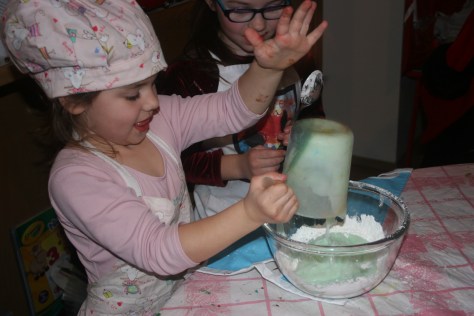
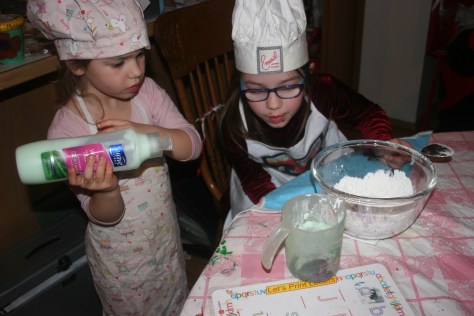
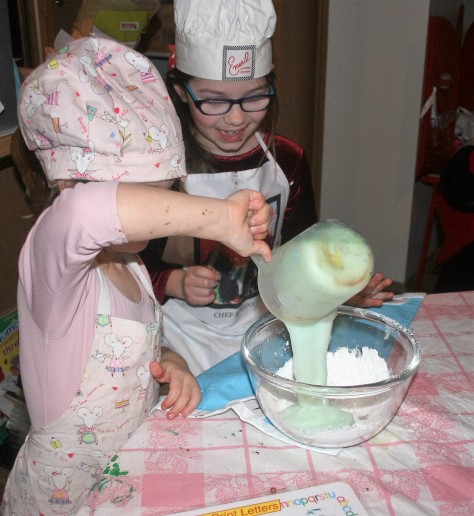
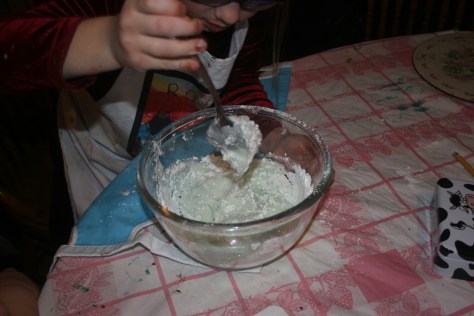
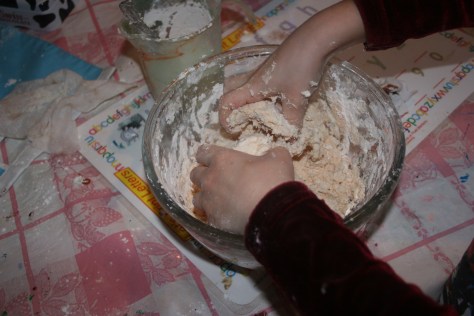
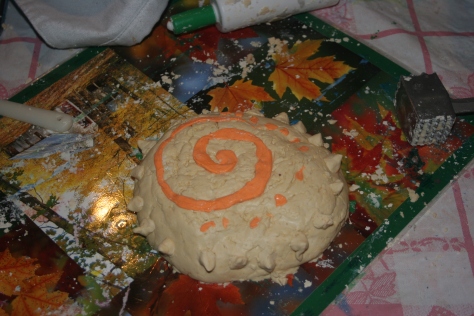
I am terrible at making play dough. For years I have experimented with all kinds of recipes, cold, cooked and microwaved but all of them turn out in a sticky mess within 24 hours. That is until a pre school teacher shared this simple formula with me. Mix 2 cups of corn starch/ corn flour with 1 cup of hair conditioner. Finally a recipe that works!
Feel your skin, it’s really nice and smooth.
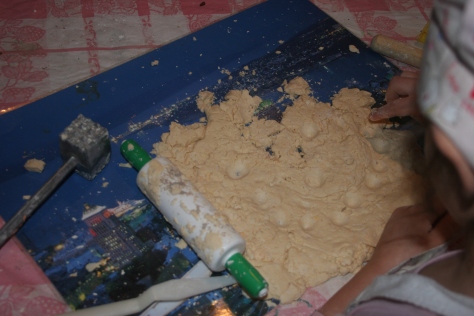
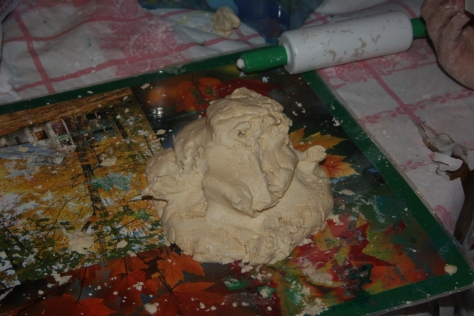
The texture is slightly less firm and more crumbly than standard play dough but it has a lovely silky texture and led to some interesting creations.
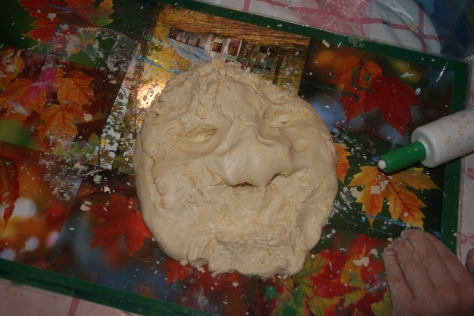
I made a face
Me tooThe first time I made a snowman, it was really good and then I noticed that it kept going down all the time. It’s like a melting snowman.
I added some silly putty to it to make this design
A few weeks ago I went for a walk to the park with my daughter. She likes to climb to the top of the climbing frame and play pirates. The game involves roaming the edges of the park for interesting treasures and on this day, she discovered big rocks. She proceeded to pick them up and roll them down the bank, watching them crash at the bottom. The only other child at the park was a little younger than my daughter and after observing her for a while, she found her own rock. She used all of her efforts to lift the rock and proudly show it to her mum. At which point, she was greeted with a look of horror and her mum quickly took the rock away and ushered her to ‘more suitable’ pursuits.
This kind of reaction is very familiar. When my children were toddlers, other parents would often ask me if my children were okay when they climbed a ladder and slid down the longest slide, as I observed from a distance. I have never been a parent to shadow my child’s every move and rarely feel the need to step in.
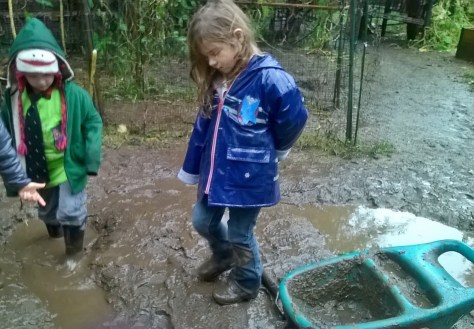
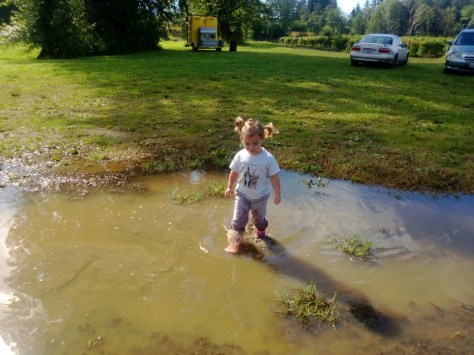
It is always refreshing to find a parent who shares my attitude. On a recent trip to the park with a friend, I was so happy to find someone who not only didn’t bat an eyelid when my eldest started paddling barefooted in the cold wet mud but actively encouraged the others to join in. When the children threw rocks on the ground to see if they would break , she gave them advice on how to do it safely, rather than stopping them because it was too dangerous.
You are my kind of mum friend because you let all these experiences happen.
It’s fun to stand on the roundabout, when we fell, we worked out how we needed to balance to stay on.
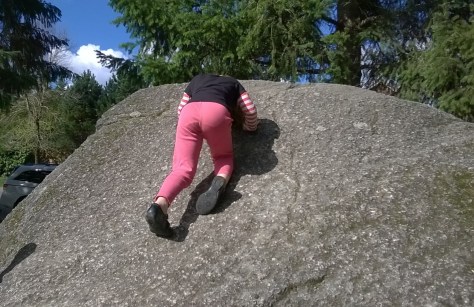
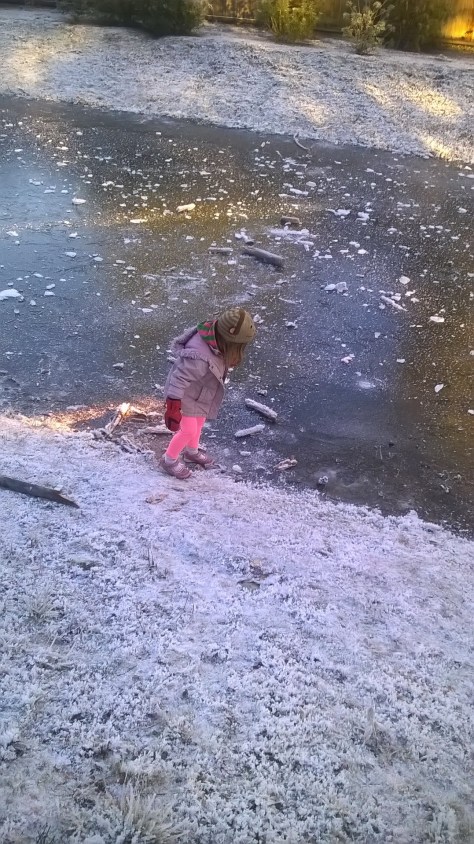
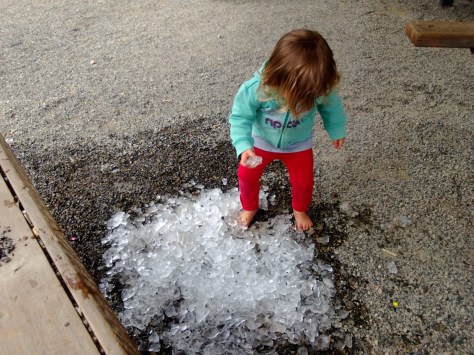
When you are 5 you can climb a big rock without any help.I can test the ice if I stand on the edge and throw sticks to see if it will break.
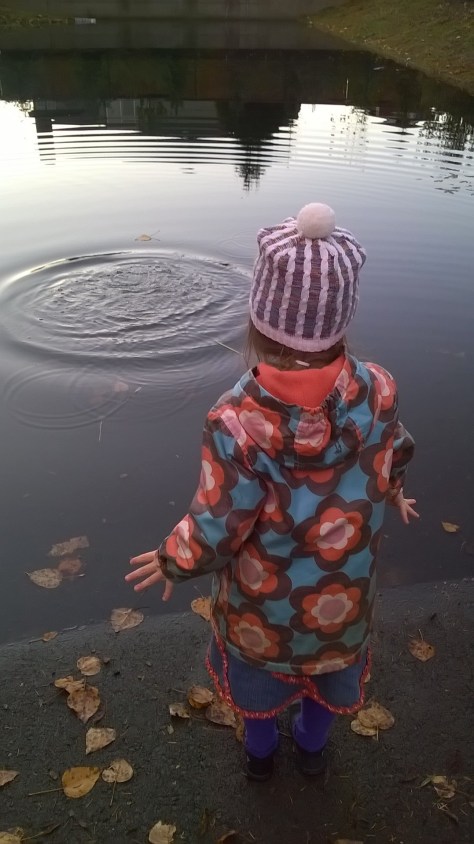
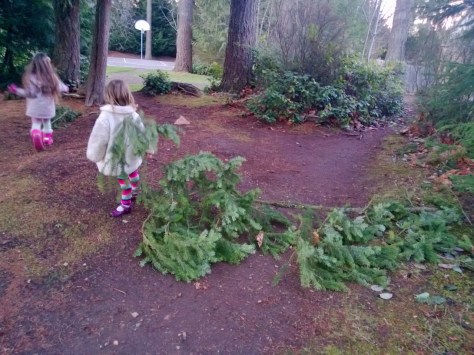
I explore the size of the ripples as I throw stones into the pond. If I get too close I might get wet and the water is cold!Mud is good – the squishier the better!We don’t need a swimming costume to get wet.Who can find the biggest branch?
Don’t tell me it’s cold, I need to feel it!Puddles are the best!
It’s okay to play – even when you’re almost 12.If I ride on my coat, I go faster.It’s okay to remove your shoes and coat when it isn’t quite Spring.
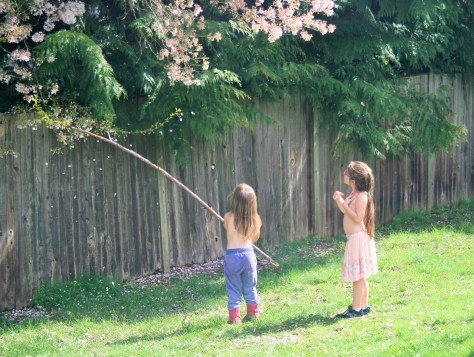
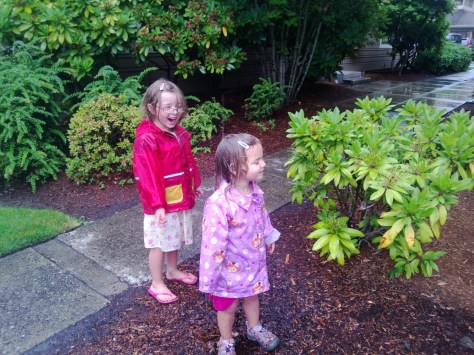
Take off your shirt and play with a stick.I’m going to have a shower. I’m getting very wet, now the rain is staying on me.
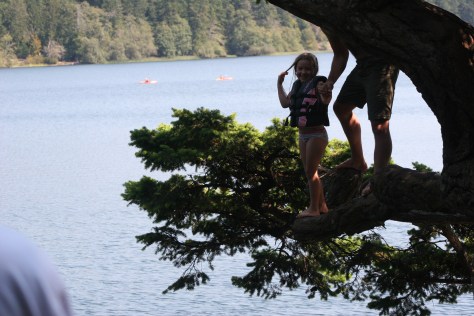
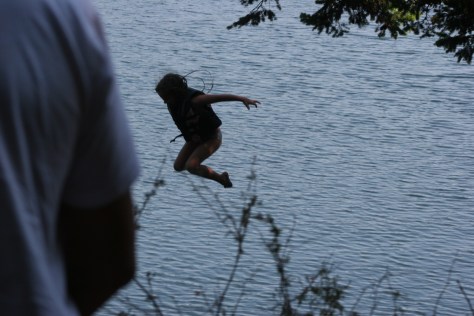
And when you let these things happen, with a little bit of support they will have the courage to jump.
You might only consider visiting Alki Beach in Summer when the children want to swim and soak up the sun, but there are many things to do when visiting out of season. Alki beach is more than just a beach, it also has great historical significance. Alki Beach is the site of the landing of the first white settlers in Seattle on a cold, stormy day in November of 1851. Chief Seattle and his tribe greeted them and helped them build their cabin to stave off the cold, wet winter.
You may be lucky and end up with a surprisingly warm, Spring day as we did. Some attractions, like speciality bikes, aren’t available until Easter and the ferry to Seattle only runs on weekdays but in some ways this gives children more chance to stop and take in the simple things. Here are some of the things my children enjoyed.
Build a sandcastle
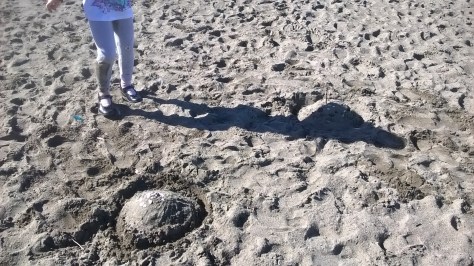
The first thing my kids want to do when they see sand is build a sandcastle. They found shells and feathers to decorate it and we had to judge whose was the best.
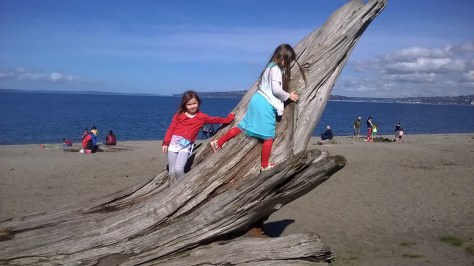
2. Climb on Driftwood
Alki Beach has an abundance of driftwood and uprooted trees for little climbers.
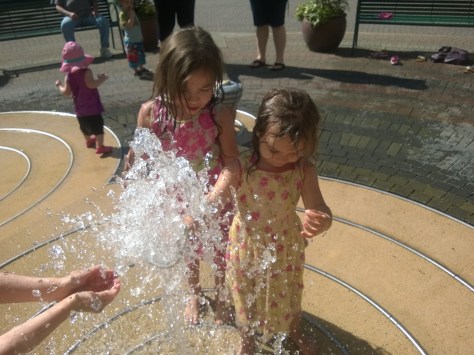
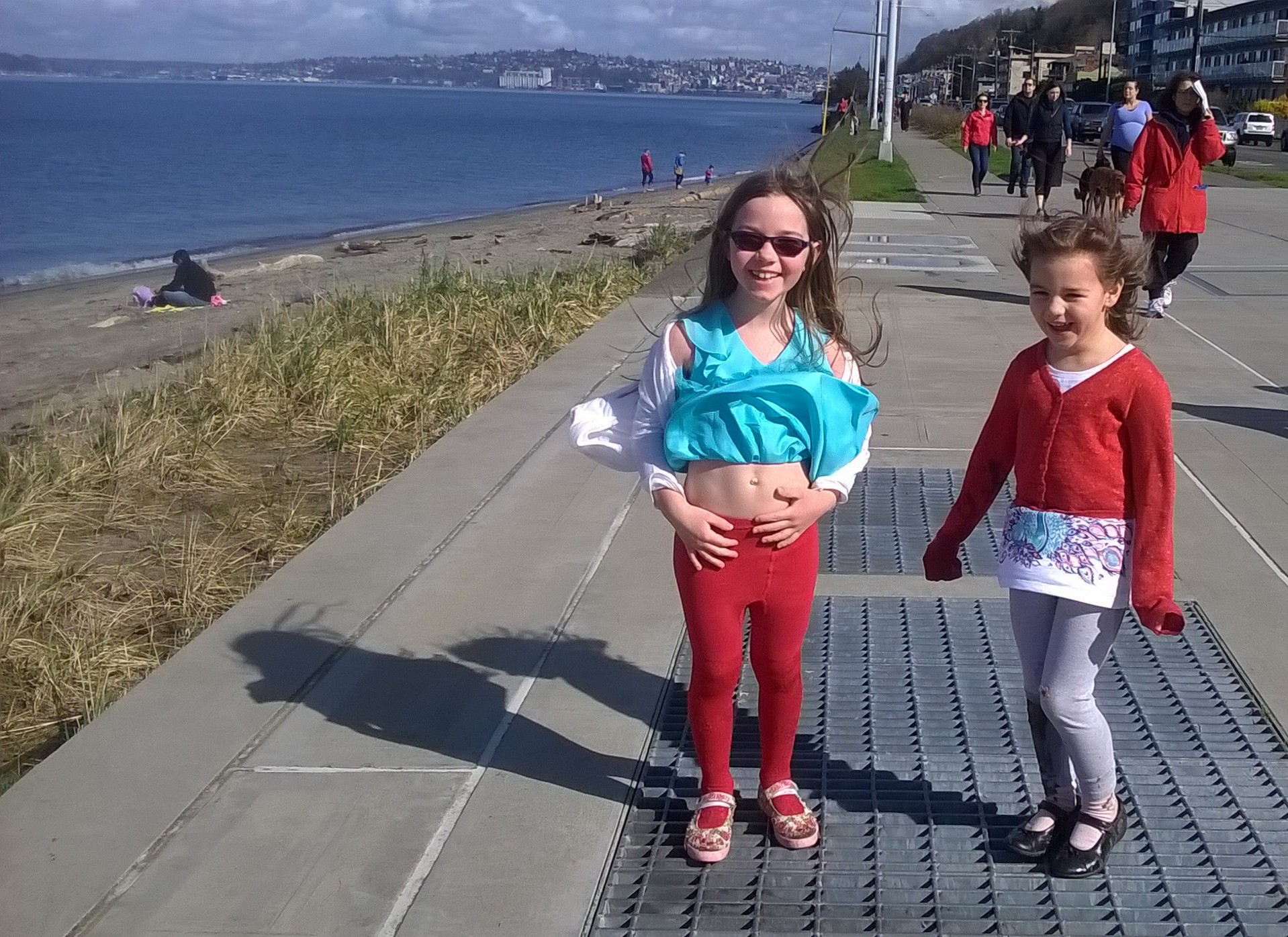
3. Let the Air Vents Blow your Clothes and Hair
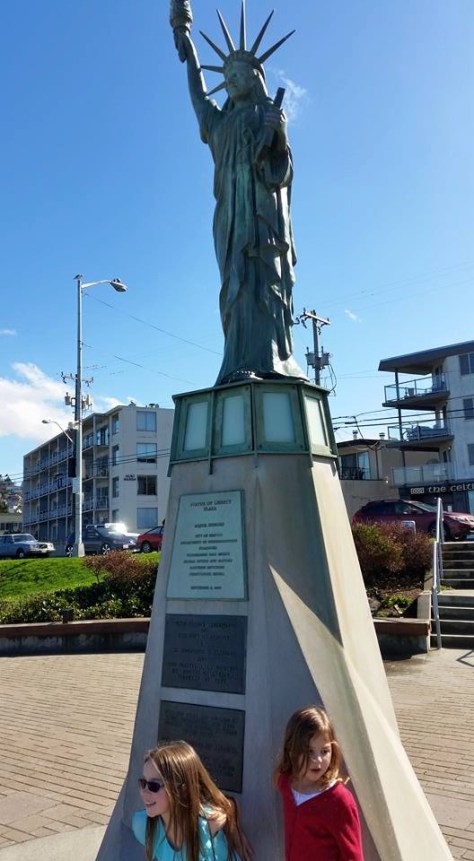
4. Visit the Miniature Statue of Liberty
The Statue of Liberty, a small replica of the original “Liberty Enlightening the World” in New York City, was a gift from Reginald H. Parsons and the Seattle Council of the Boy Scouts of America in 1952. The statue has become such a symbol of liberty and courage that it became a place to mourn, to reflect, and to leave mementos after the terrorist attacks of September 11, 2001.
5. Follow the Avenue of Stars
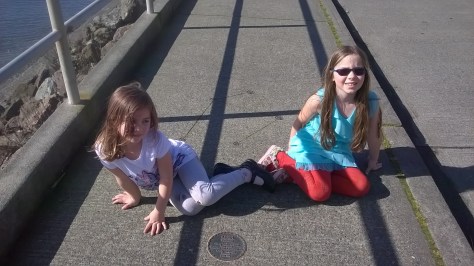
if you continue along the path past the lighthouse you will reach a stretch of path where all the constellations are marked along the path. Great for an evening stroll as in the spring as you won’t have to wait too long for the stars to come out.
6. Search for Signs of Marine Life
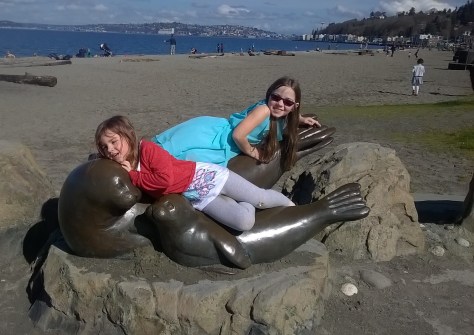
All along the trail are signs outlining the wildlife you may find. Seal pups are common between June and September but even in March you may see evidence of seals, sea otters or whales in the water. The girls were excited to see seagulls and enjoyed pretending to be seals.
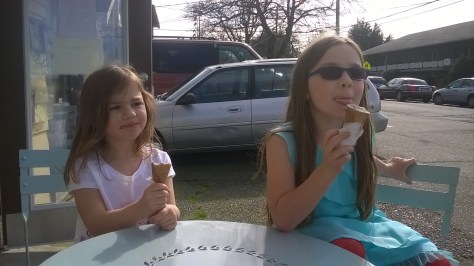
7. Stop for Ice Cream
Not just any ice cream, Italian fair trade, organic gelato from Gelarto
8. Find the Little Lighthouse
Lighthouse tours are available during the Summer at weekends.
We’ll definitely head back soon with our bikes, scooters and roller blades for a safe and beautiful place to practice.
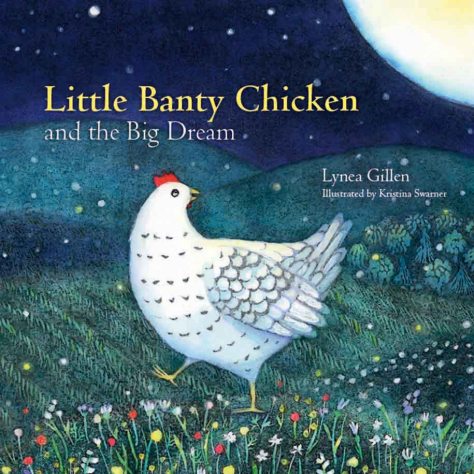
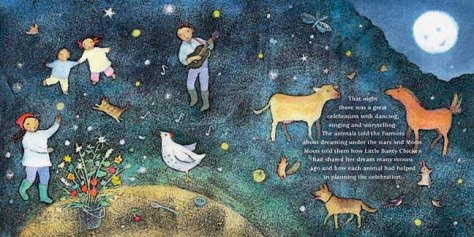
Little Banty Chicken is a tale about the importance of dreams and how sharing them helps them come true. Written in the style of a traditional fairy tale, it tells the story of a chicken who, on the moon’s advice, tells his dream to his friends. Each friend encourages him to move towards his dream and contributes to its realisation at the end the story.
Little Banty Chicken and the Big Dream is written by Linea Gillen, a teacher and counsellor for over 30 years and delicately illustrated by Kristina Swanson.
The story is both engaging and inspiring but I found the talking points and activities at the end really captured my children’s imaginations. The key question is “What is your dream?” a question that young children may need to think about for some time.
My-7-year-old knew immediately what her dream was but in a very deflated manner said,
” I don’t think anyone will be able to help me make my dream come true.”
“Why not?” I asked.
“Well, I want to stop all the animals from becoming extinct and I don’t think anyone can make that happen”.
This particular dream began after we read an article about the danger of large carnivores becoming extinct in the next 25 years. She often asks how we will be able to stop people killing animals. This is a big dream indeed and doesn’t have a simple solution.
We talked about how this is the kind of dream that can’t be achieved on your own. Asking other people to help could be a way forward.
“But who could I ask? I don’t think anyone will know.”
“Well perhaps not now, but as you get older you will be able to find people who know how to help and work together.”
“You mean like a scientist?”
“Exactly, or groups of people who work together to help it to stop”.
Real, face-to-face communication is necessary for developing essential life skills such as empathy, conflict resolution, problem solving, and more. And when problems arise – when life hurts us – we need real world communities for support. Many adults see asking for help as a weakness and find it hard to delegate. These skills are an important part of children’s social and emotional learning. ‘Little Banty Chicken and the Big Dream’ is a perfect way to introduce these concepts to young children.
Disclaimer: I received a complimentary copy of the book for review purposes.
For this months art lesson with First Graders, I wanted a project that came from their own imaginations and displayed their creative expression.
Knowing that my own children had invented wonderful monsters with charcoal, I decided to make colourful ones with oil pastel.
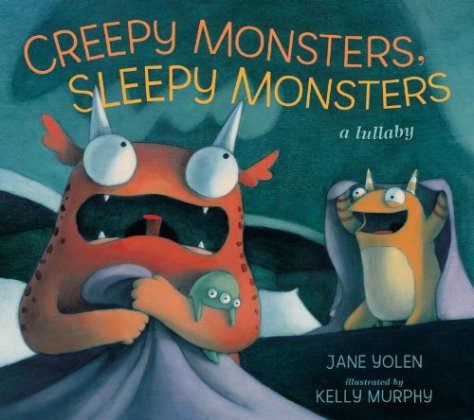
Some children struggle with inventing a character from their imagination, so I started the lesson with a book to provide inspiration and illustration of shape, texture and size.
I chose the book Sleepy Monsters, Creepy Monsters because the text is simple and does not distract from the visual images and the illustrations depict a variety of monsters.
We talked through the pictures, noting features such as eyes on sticks, number of legs, spikes and shapes and discussing the function of these features.
Once the story had finished I instructed them to think for a few minutes about what they would like their monster to be.
Did it have a particular function?
Where did it live?
What would it eat?
Was it a kind or scary monster?
The children then drew their outline shapes on the paper. Once I had checked the size of the monster, the children were given oil pastels to add detail and colour it in. I asked them not to leave any white spaces, except for the background so that they would be as vibrant as possible.
When the children were satisfied with their drawings, they were show how to use a Q tip/ cotton bud dipped in baby oil to blend the oil pastels to a smooth finish, without any white spaces.
Finally they outlined their drawings with a black sharpie to add definition.
The background was applied with a watercolour wash.
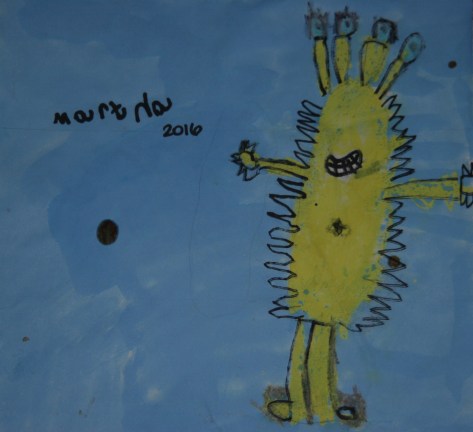
I asked my daughter about her monster.
The 2 eyes on the right can turn all the way back, so they can see behind them.
It has spikes to protect itself from people. Monsters are scared of people, that’s why they attack us.
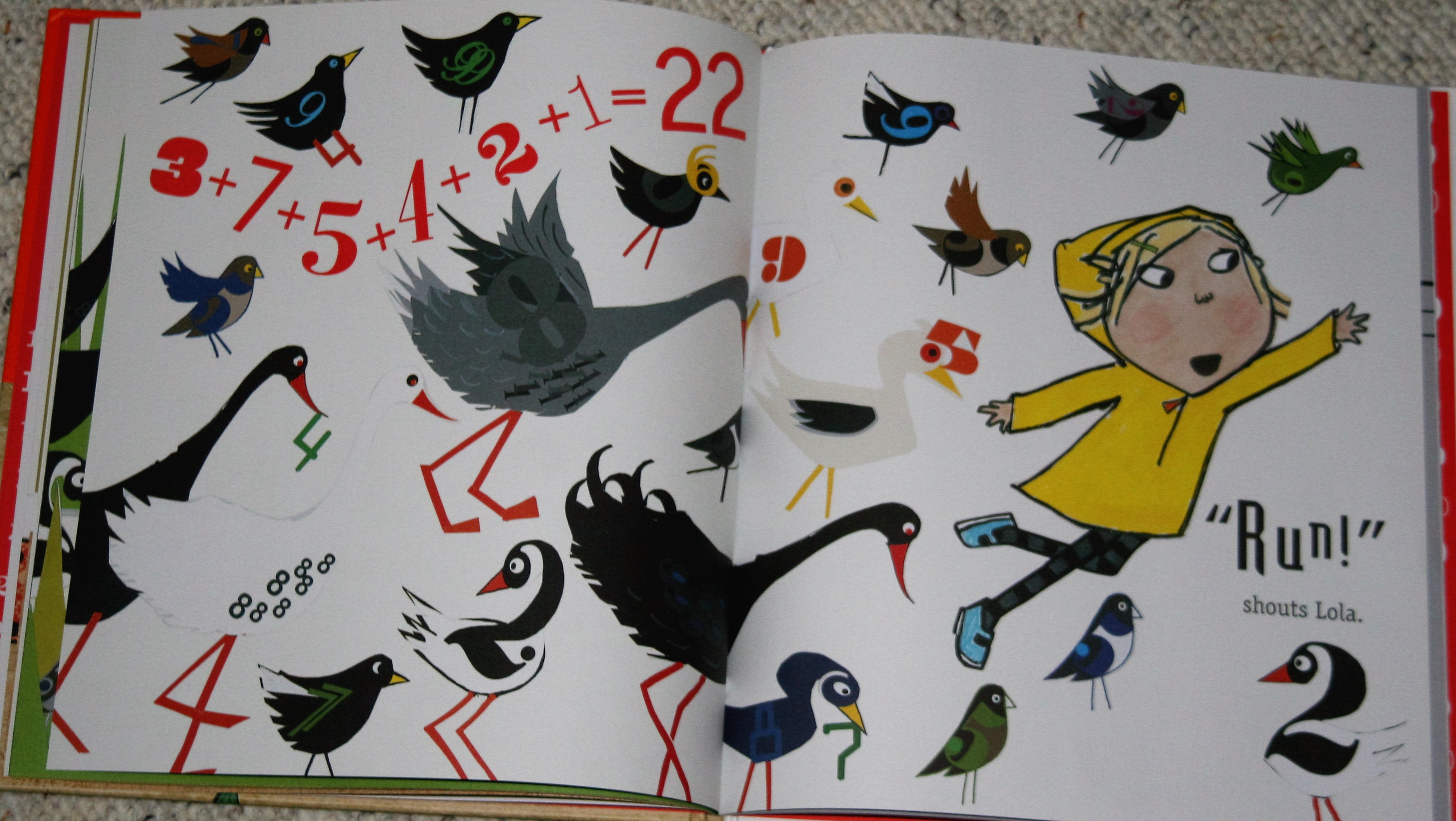
Don’t turn the page yet! Let me start with the biggest number; so 7 plus 3 is 10, plus 2, plus 1 is 13, plus 4 is 17, plus 5 is……. 22. Now turn the page -Yes! I was right, 22.
This wasn’t a maths homework exercise but a bedtime story for my 5 and 7-year-old.
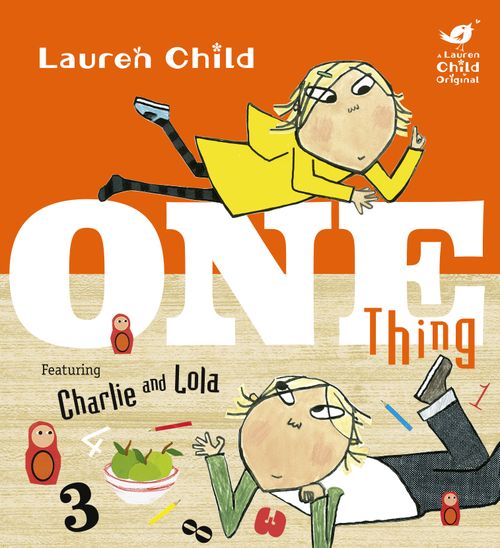
Regular readers will know that I am a huge Lauren Child fan. Her version of Goldilocks and the 3 Bears features in my top 5 books for the Under 5’s, my eldest daughter read and re-read the Clarice Bean series and our visit to Lauren Child’s exhibition was like a step into Wonderland.
As I was browsing books for the younger ones for Christmas, I discovered a brand new Charlie and Lola book called ‘One Thing’. With great excitement, I quickly contacted friends from the UK who were coming to visit and asked them to bring a copy. I didn’t know what it was about but as the Charlie and Lola books are amongst our favourites, I was looking forward to finding out.
As an additional surprise, a new Ruby Redfort book popped into my recommended items. It may seem a little sad, but I react in the same way to a new Lauren Child book as I would to news of a concert from my favourite artist. My eldest daughter loves Ruby Redfort and I usually pre-order them but somehow I had missed this one. Her face was a picture when she unwrapped it on Christmas day. She says this is her 2nd favourite in the series, beaten marginally by the first book. On finishing the book, she immediately wrote a letter to Lauren Child, explaining how much she enjoyed it, asking her questions and telling her about her own life. Through Lauren Child’s writing, children sense a genuine interest in what they think, feel and do which I believe, compelled my daughter to correspond.
One Thing is Lauren Child’s 5th Charlie and Lola book. Most Charlie and Lola books are adapted from the television scripts. The television series is based on Lauren Child’s characters and she collaborates closely with the script writers but there are only 5 Charlie and Lola books written by Lauren Child:-
We love the television series but the Charlie and Lola books from the series don’t have the same sparkle for me, so I am always brimming with excitement when a new one from Lauren Child is released.
‘One Thing’ did not disappoint my giant expectations. In usual Lauren Child fashion, ‘One Thing’ captures perfectly the workings of a young child’s mind. The story begins when ‘mum’ promises Charlie and Lola ‘one thing’ when they go shopping. The book takes you on a number journey, tapping into the minds of children like my own, who count everything and work out number problems in their head.
Lola talks about numbers and Charlie gets frustrated, adding up the time it takes Lola to get anywhere. All of the number references are displayed as sums, puzzles or hidden numbers in the illustrations. It is a wonderful introduction to maths for young children but ‘One Thing’ is more than an educational number book. The book recognises the natural way that children see numbers everywhere and is full of discoveries for an inquisitive mind.
One Thing is a delight for adults to read. I particularly identified with Lola’s constant distractions and Charlie and mum’s negotiations with her,
“What are you doing?” I say.
Lola says “I am just trying to count the dots on my dress but I am not sure what comes after twelve.”
I say “Missing going to the shops comes after twelve.”
It is a perfect example of a picture book where text and illustrations are dependent on one another, each enriching the other. I asked the girls what they liked about the book,
“I like finding all the numbers” said my 5-year-old “and I like Charlie and Lola”.
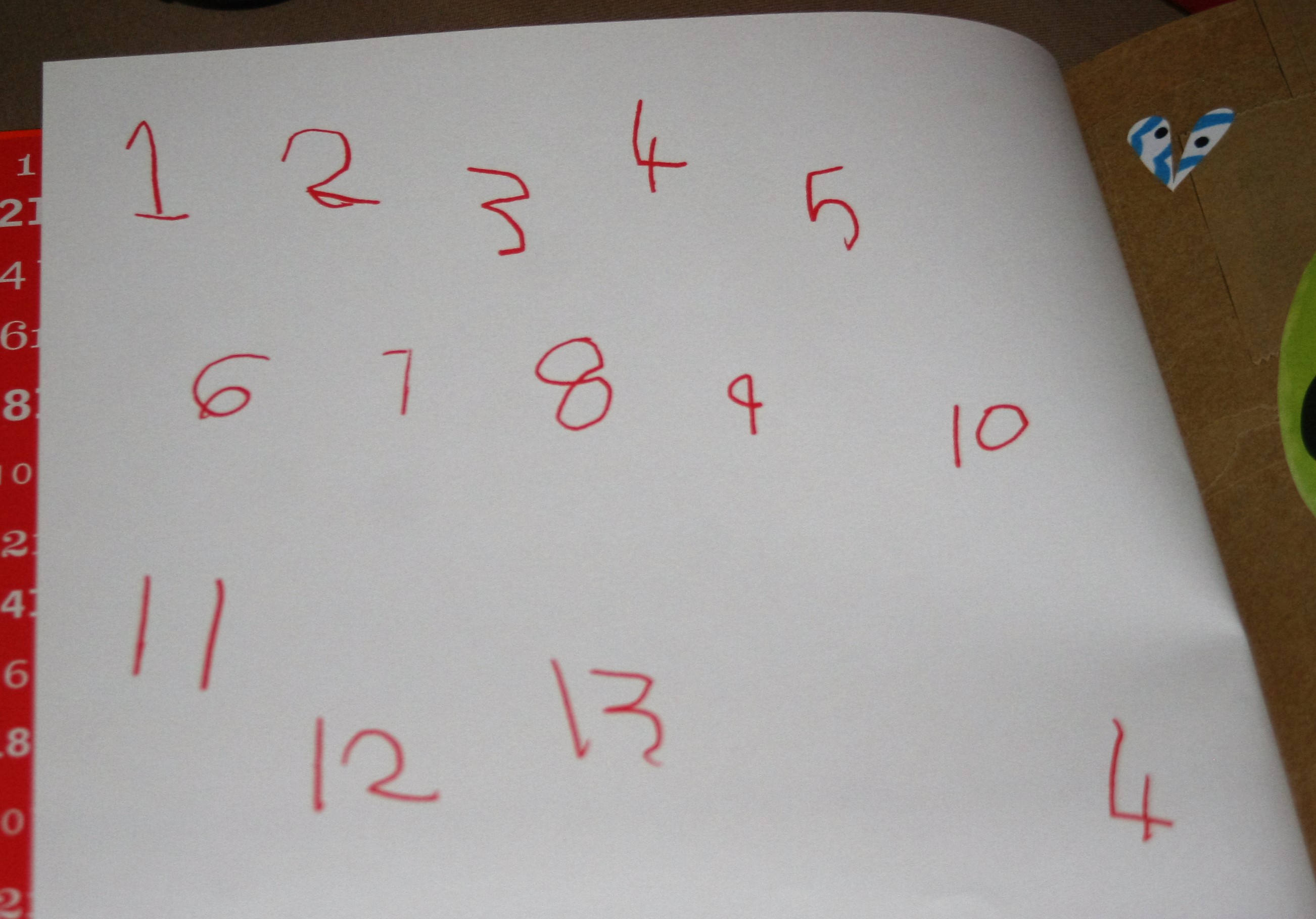
Each time we read it we find something new, from the title page with handwritten numbers,
Why did someone write on it?… Oh, I think it’s meant to be like that. I think it is meant to be Lola’s writing.
…to discovering the number of minutes it takes Charlie to get ready hidden in the pictures,
“Oh look the toothpaste is a number 3”.
This was their favourite page.
They returned to it multiple times, trying to find the numbers hidden on the birds. We couldn’t find a number 3, perhaps you will have better luck.
Thank you Lauren Child for another book to treasure.
One Thing is available in hardback in the UK and for pre-order in the US.
Disclaimer: This is a personal recommendation. I completely, absolutely did not get paid or get free stuff for writing this post.
Toy shop shelves are laden with toys claiming to be educational. For toddlers and babies, this usually means something noisy, requiring batteries. I have always held that there is little educational value in such toys. In my experience children play with them for a short period of time before moving on to something else.
Alison Gopnik discusses the manner in which children experiment with toys in her book the Philosophical Baby. A toy that worked by moving levers was presented to a group of 4-year-olds. The adults demonstrated to the first group, how it worked, while the second group were left to work it out for themselves. The second group spent significantly more time playing with the toy than the first, who quickly abandoned it once they understood its function.
Another recent study led by Professor Anna Sosa of Northern Arizona University focused on children between the ages of 10 and 16 months old. She gave families three different kinds of toys to play with; books, traditional toys like stacking blocks and electronic toys. The toys that stimulated most conversation were books, closely followed by blocks. The families playing with the electronic toy shared very little conversation, allowing the toy to do the talking for them.
If you are considering which toys to buy for a young child, these points may help.
The most important resource we can give to babies and toddlers is ourselves. Spend time playing tickling games, singing to them, playing rhyming games, blowing bubbles or rolling a ball.
Other suitable toys for babies and early toddlers include small musical instruments for exploring sound ( saucepans, spoons and homemade shakers work equally well), a treasure basket or board and cloth books.
Think about toys that they will play with for a long time. The best toy investments for our family include magnatiles, wooden blocks, paper and pencil, a magnetic drawing board and play food.
Toys do not need to be expensive. Children can have hours of fun with a balloon, pot of bubbles, home-made play dough or a cardboard box.
The infographic below has many more developmentally appropriate ideas for play.

 For those of you who aren’t familiar with the term loose parts, check out my post on the theory of loose parts. In simple terms, loose parts are moveable objects that can be used to create, explore and discover.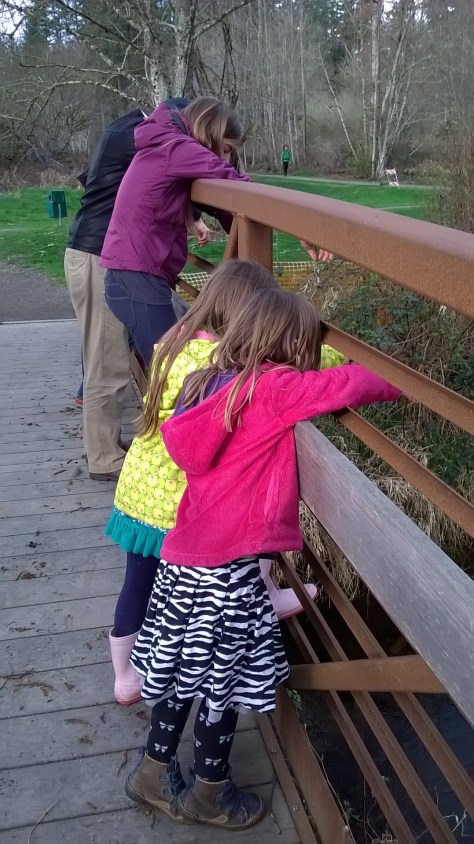

 One way to ensure that you don’t end up with a wall of identical paintings is to introduce children to abstract art. We used the book
  as a starting point. The book tells the story of Kandinsky’s ability to ‘see music’ and ‘hear paintings’.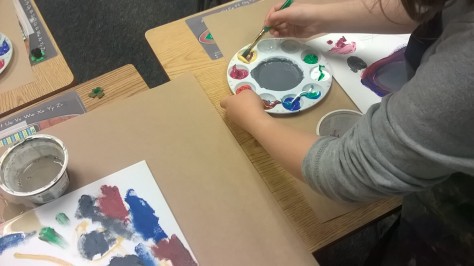
![FullSizeRender [345550]](https://rightfromthestart.blog/wp-content/uploads/2016/03/fullsizerender-345550.jpg?w=474)
![FullSizeRender [345562]](https://rightfromthestart.blog/wp-content/uploads/2016/03/fullsizerender-345562.jpg?w=474)
![FullSizeRender [345556]](https://rightfromthestart.blog/wp-content/uploads/2016/03/fullsizerender-345556.jpg?w=474)
![FullSizeRender [345552]](https://rightfromthestart.blog/wp-content/uploads/2016/03/fullsizerender-345552.jpg?w=474)






 Right from the Start