We have recently received some very exciting news. Our family have been selected from over 700 applicants as one of 50 semi-finalists in America’s Most Playful Family Contest. To enter we were asked to answer a number of questions about our play, including why it is important and how we make time for play.
I strive very hard to make my children’s lives playful and to share the things we do with others, so to be chosen as a semi-finalist makes me very proud.
As a semi-finalist we receive a video camera and have been asked to create a 90 second video sharing tips to encourage other families to be more playful and showing that play can happen anywhere. I have a huge list of things that I would like to show and it will be a big challenge to my editing skills to fit everything into 90 seconds. Brevity isn’t always my strength, so it will be good for me to pin down the most important messages to share.
The videos will be posted on a You Tube channel, so families can get tips and ideas about play and will be judged by a panel. You will be relieved to know that I won’t be asking for votes but it would be nice if you would view the video and tell us what you think (I’ll embed the link here once it goes live).
The winner gets to choose a community in their state that deserves a very special playground. This will be a great way to learn about local worthy causes and help disadvantaged kids. Of course there are prizes for us too but for me being chosen as a playful family is a great prize in itself.
Springtime in Seattle is as unpredictable as springtime in the UK. Today we have glorious sunshine, yesterday we played in the ice and frost and a week ago we were playing in the rain.
Whatever the weather the girls are drawn to the outside and unlike the summer when they sometimes complain that it is too hot, they tend to stay outside for a long time.
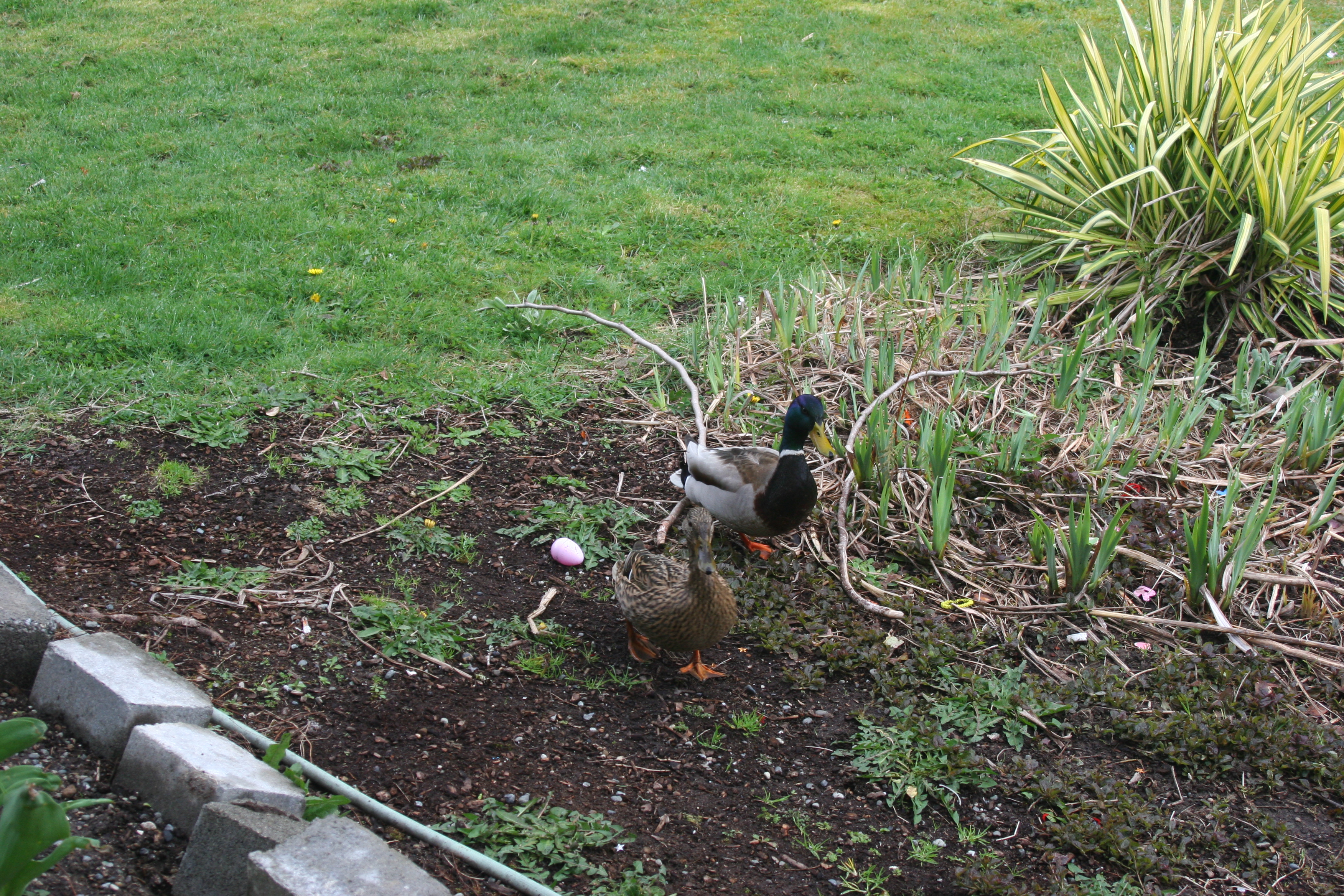
We have a pair of ducks that are regular visitors to our garden in the spring. What better way to get the girls outside than to send them out to find the ducks and feed them.
A Bug Hunt
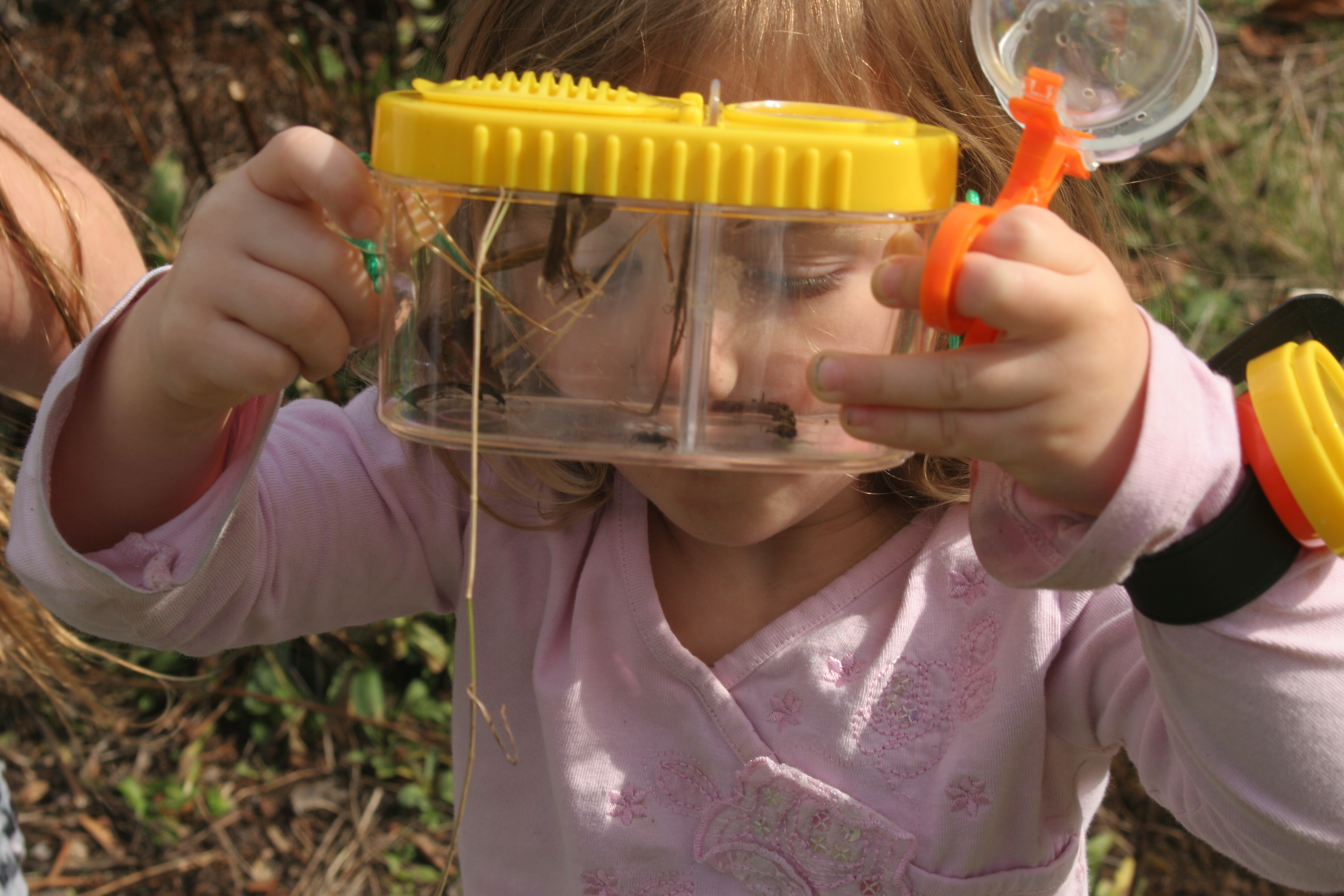
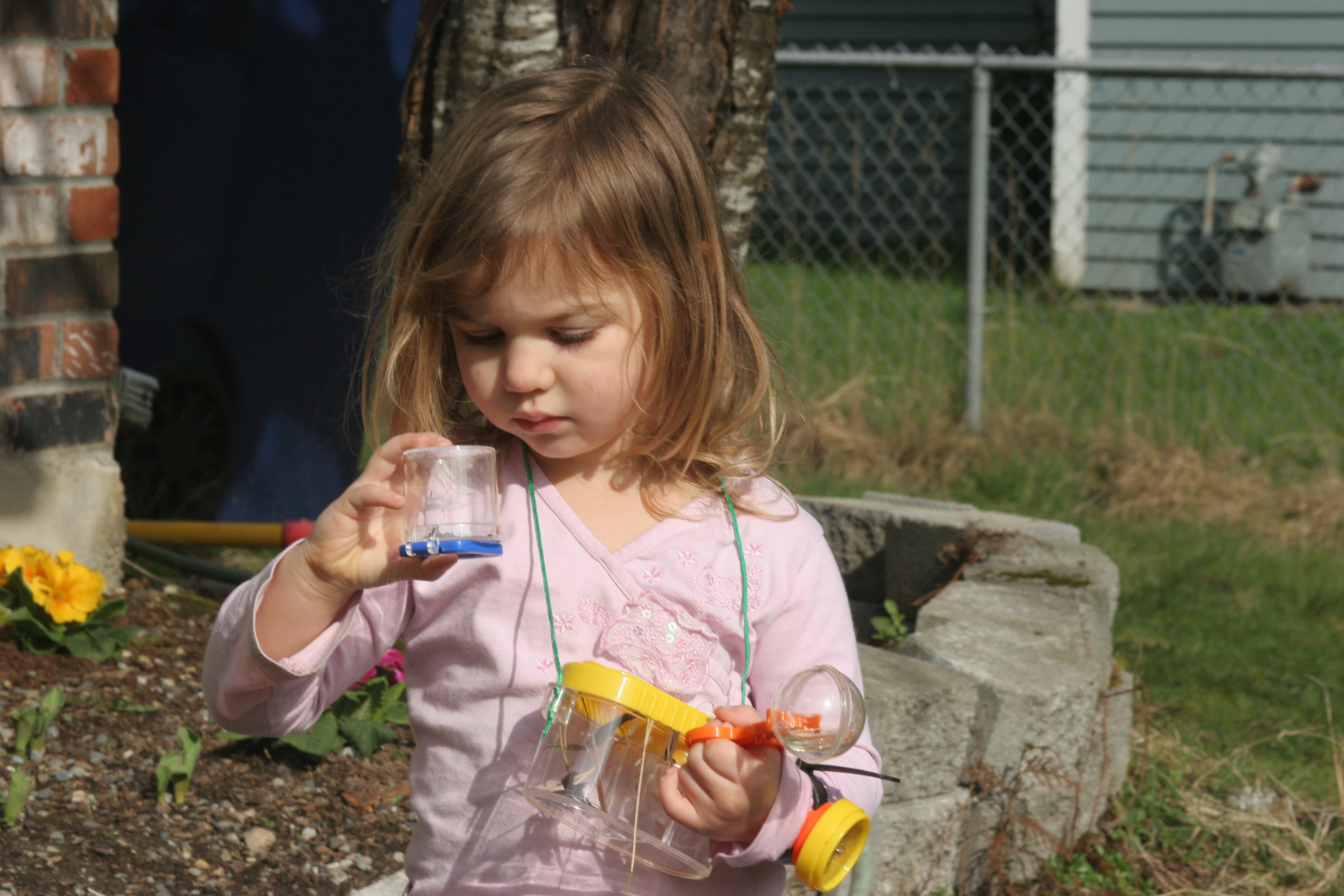
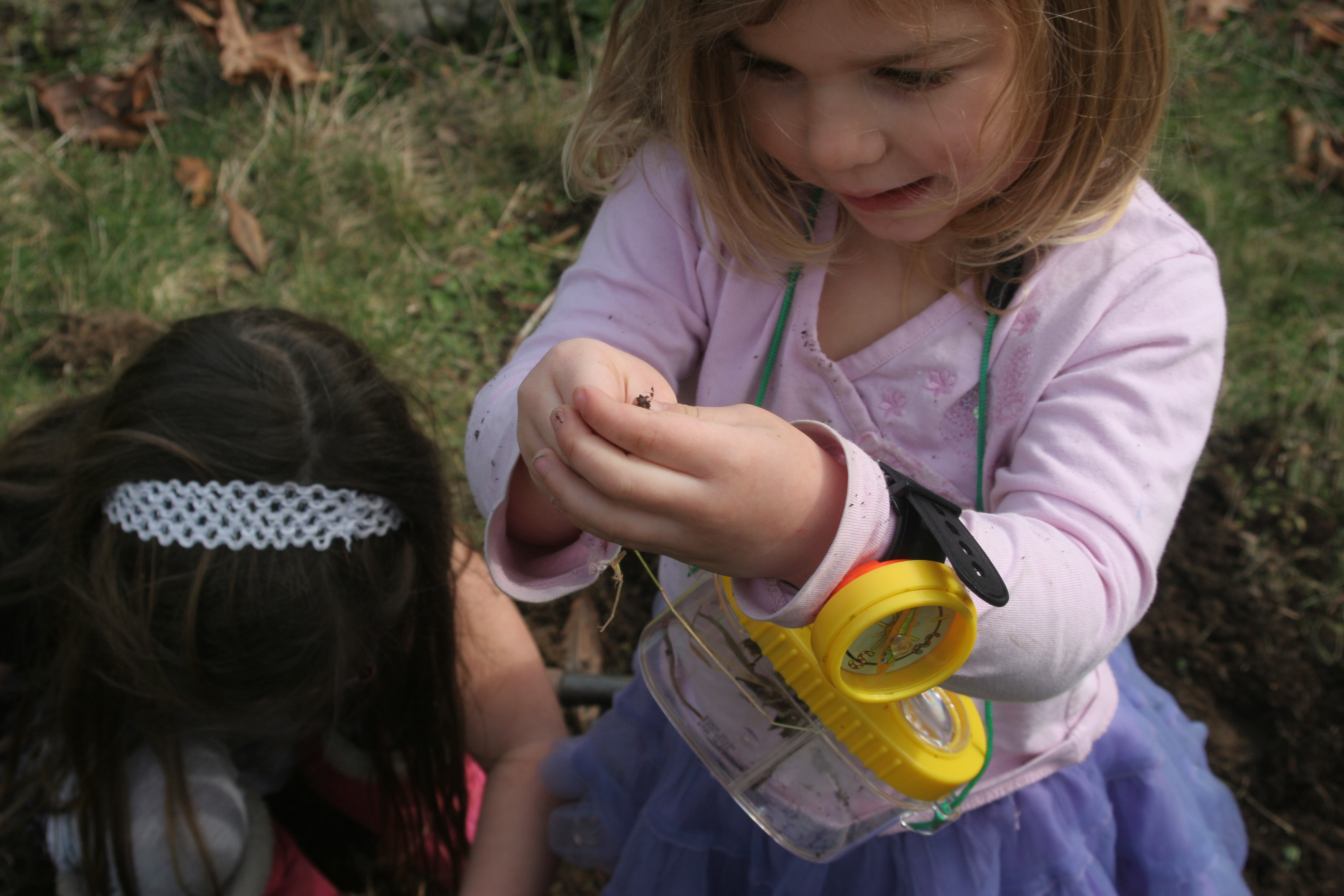
We had a bug explore kit for Christmas, so while I was doing a little gardening, the girls decided to look for bugs. The warm weather had brought lots of spiders and beetles to the surface. They were fast and quite difficult to catch.
I found a beetle.I have a spider
As I was turning over the soil, the girls decided to dig with trowels for worms and observe them in their pots.
The worm is very wriggly.
Gardening
I’ve tried for years to grow wildflowers without any success. We chose to mix the seeds with sand from the sandpit, scatter them and rake them in. We don’t need to water them too much this time of the year because of the rain and they are slowly starting to grow. Each day we check on their progress and talk about how delicate they still are, so to be careful where we tred.
Painting the Ground
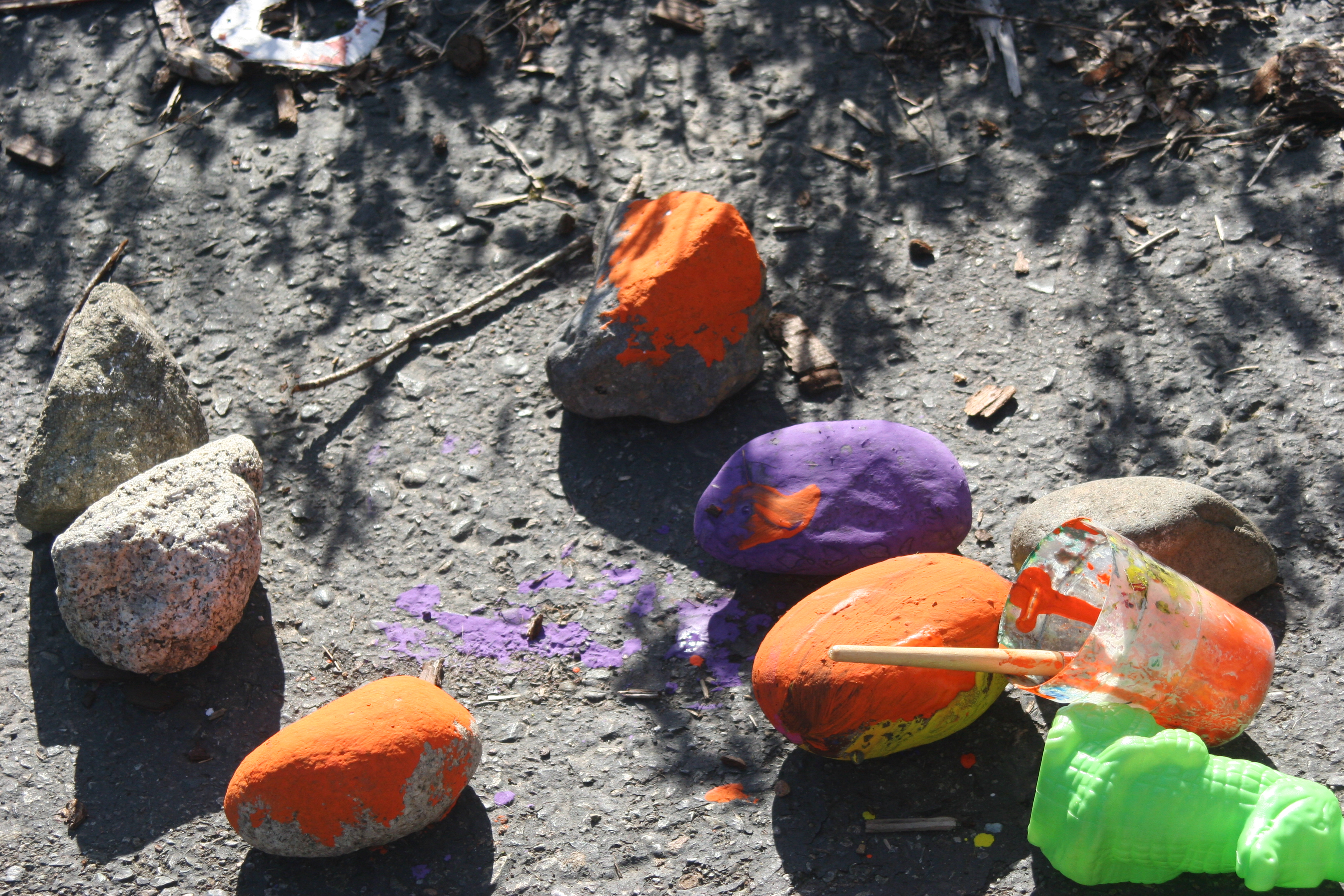
The girls began by painting pebbles with bright colours and then decided to paint pictures on the driveway.
I suggested that they might like to paint the stepping-stones, they thought this was a great idea.
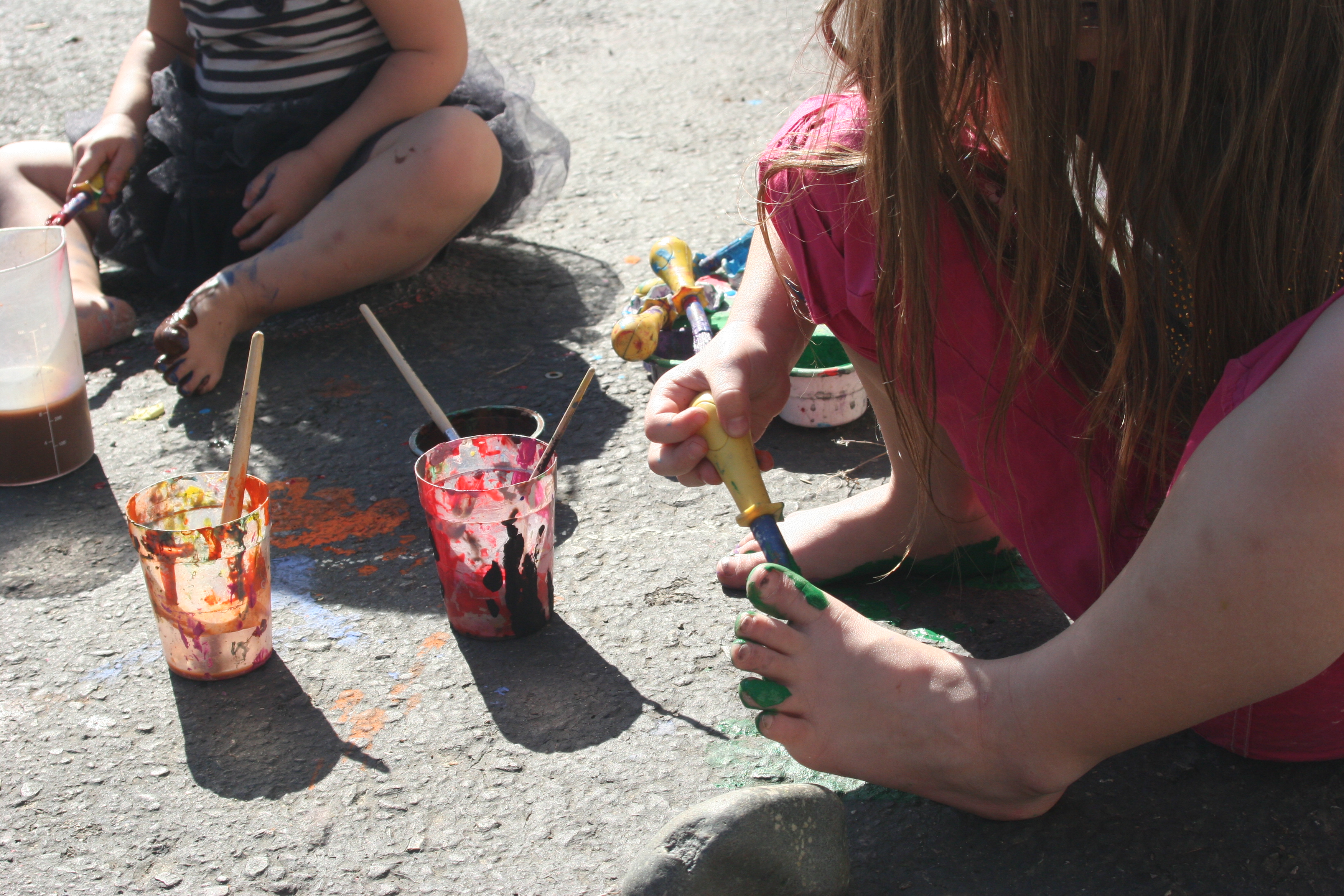
When we take paint outside they nearly always decide to paint hands or feet. The paint left footprints on the driveway.
I know, we could play an easy kind of hide and seek. One person hides and we have to follow their footprints.
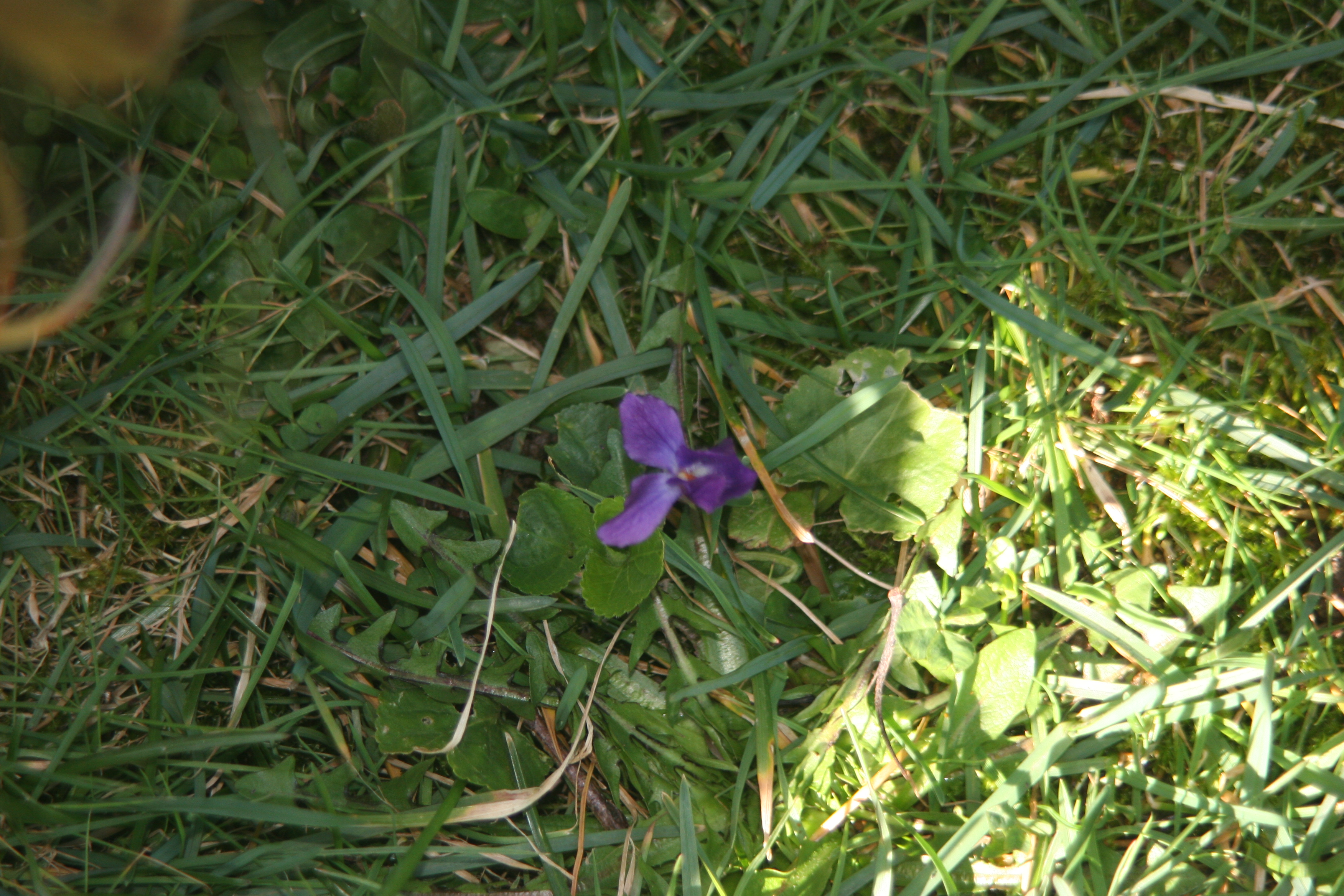
They followed the footprints across the path. When they got to the grass, they were difficult to follow, so they made arrows from sticks. We found a little piece of treasure, in the shape of one lonely violet.
Echoes
As we were sat on the driveway painting they noticed that their voices were echoing.
Mummy why do our voices sound all echoing?
I don’t know, do they still echo when we stand up?
Yes
We moved something to see if that made a difference.
We are still echoing.
How do you make echoes?
You need a sort of tunnel. It works when we talk in a tube. The driveway doesn’t look like a tunnel.
I’ll have to dig out ‘Little Beaver and the Echo’ and explore this further.
Flowers and Plants
I love it when they explore the flowers and plants. Heather is great for playing rain showers and we are looking forward to the blossoms falling from the trees and making ‘fairy rain’. The girls were so excited that the trees are full of blossom and ran to tell the other children in the street.
Harry Potter
Pavement chalk is a big favourite. When the children play in the street together they draw towns on the ground and play that they are visiting the shops or hospital. Recently, they were playing Harry Potter and drew a huge Hogwarts castle in the road. They collected sticks for wands and branches for broomsticks (I left them the cuttings from trimming the trees) and with a tennis ball they played Quidditch. The potion station is also perfect for mixing spells.
Water Spritz
I suggested that we take water spritzers outside filled with paint. The girls tried the painting but were much more keen to take them out with only water in.
First they wanted to clean.
I’m spraying Bob
Bob is really dirty, let’s clean him.
I’m going to spray the water tray
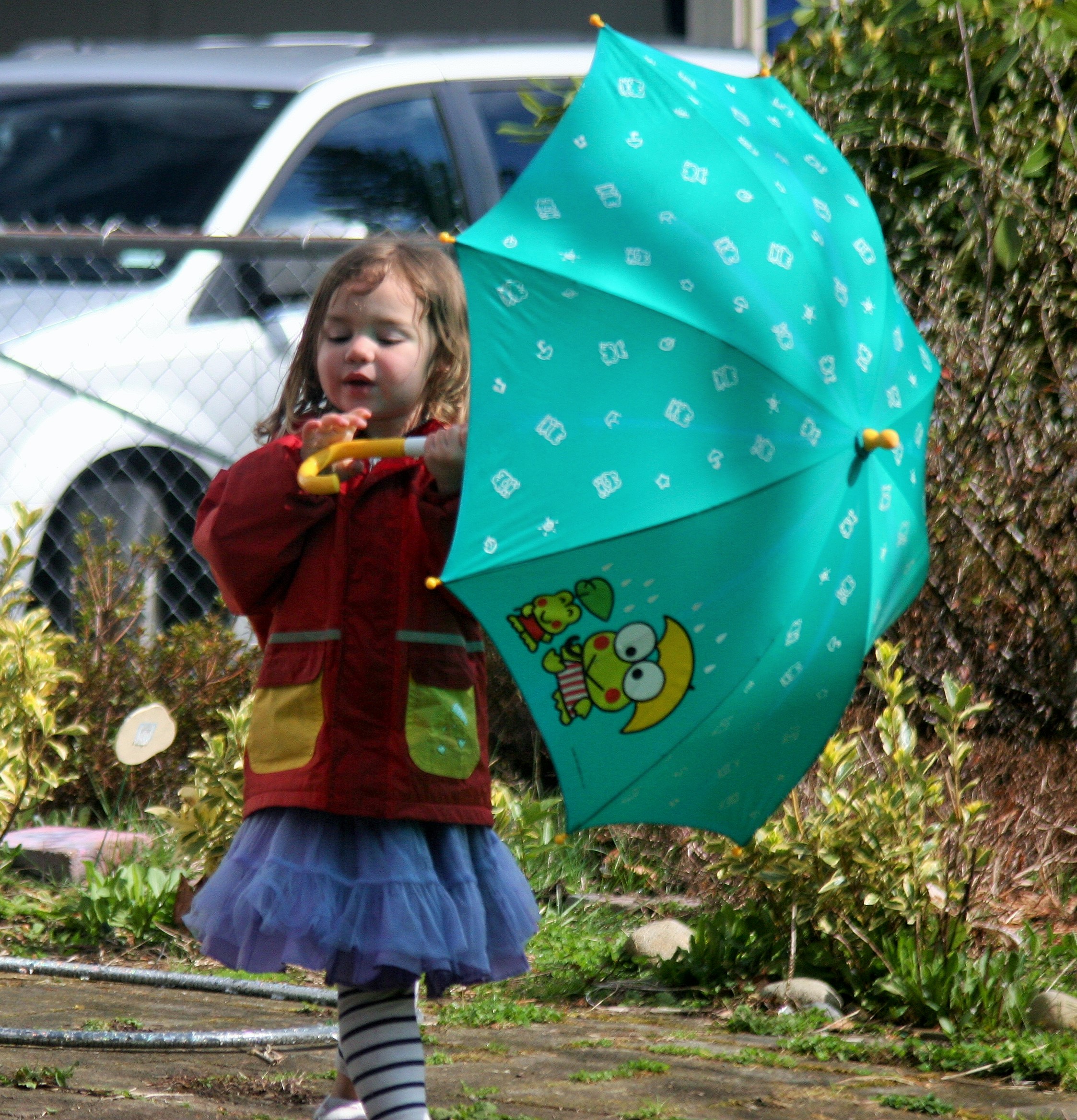
They wanted to spray each other, it wasn’t really warm enough but my 3-year-old had a good idea. She ran to fetch her umbrella.
I know we could use this as a shield.
Got you.
With rain expected for the weekend – I wonder what other ideas they will come up with.
It always feels good to get a little something from CBeebies drop into my inbox. We miss CBeebies quality programming featuring British accents and no adverts. American children’s television isn’t all bad though. Through childhood, student years and as a mother I have always been a huge Sesame Street fan. The wonderful documentary Being Elmo made me an even bigger fan. The latest news from CBeebies was the most exciting I’ve received in a long while. CBeebies and Sesame Street are working together to create a new series, The Furchester Hotel.
Filming started on Monday 24 February, and will continue for just over three months. The enormous Furchester Hotel set fills all 700 square metres of the HQ2 studio at dock10, MediaCityUK, and was transported in 10 lorries from the three construction companies employed to build it over two and half months. It shows the interior and the garden of The Furchester Hotel and is raised 1.1 metres off the floor in order for the puppeteers to perform standing in the main areas. The set is double height with a sweeping staircase that guests take to the bedrooms when the lift isn’t working – which is almost always.
How amazing does that set sound and how disappointed am I that I can’t accept an invite to visit the set for myself? It makes me want to jump on a plane right away.
What is The Furchester Hotel?
The Furchester Hotel, is about a close-knit family of cheerfully incompetent Muppet monsters who own and operate an ‘almost’ world-class hotel. The proprietors are Funella Furchester, the welcoming monster owner, her loving husband, Furgus Fuzz, and their daughter, the unflappable Phoebe Furchester-Fuzz. The Furchester family is joined at the hotel by Elmo, Phoebe’s cousin who is on an extended visit, and Cookie Monster, who has landed his dream job as room service and dining-room waiter.
The Furchester Hotel aims to promote and build creative problem-solving skills for its young viewers. As the Furchester family scrambles to meet the needs of its guests, the monsters use their exceptional thinking skills to brainstorm possible solutions to problems that arise. And even when they think they have exhausted all the possibilities, their perseverance prevails because their family motto is, “A Furchester never gives up!” The daily mishaps and mix-ups at The Furchester Hotel will provide many opportunities for our young Muppet friends to model ways in which pre-schoolers’ natural curiosity and creativity can be harnessed to collaborate and solve problems.
Cookie Monster and Elmo are in Town
It takes approximately 70 cast and crew to make the series, including nine puppeteers and four assistant puppeteers. Experienced puppeteer Louise Gold plays Funella; Mak Wilson, who has been designated Puppet Captain, performs many of the guest Muppets, including resident guest Harvey P Dull; Andrew Spooner performs Furgus; and Sarah Burgess plays Phoebe. Elmo and Cookie Monster are played by Sesame Street puppeteers Ryan Dillon and David Rudman respectively and the head writer for the series is Belinda Ward.
“We’re so excited to be starting work on The Furchester Hotel. The studio set is truly amazing, and to see the puppets arriving on site really brings the project to life,” says Alison Stewart, Head of CBeebies Production. “We’re delighted to welcome The Furchester family, Elmo, Cookie Monster and their friends to Salford.”
“The excitement in MediaCityUK is palpable as we begin production on The Furchester Hotel,” says Carol-Lynn Parente, Executive Producer, Sesame Workshop. “We know this series will engage children with humorous problems and quirky solutions in ways that only the beloved Muppets can. We look forward to seeing The Furchester Family, along with their friends Cookie Monster and Elmo, delighting children and families on CBeebies for years to come.”
“Me cannot wait to ‘work’ as dining-room waiter at The Furchester Hotel,” says Cookie Monster. “Me hear their cookies are delicious. Om nom nom.”
The Furchester Hotel is co-produced by Sesame Workshop, the nonprofit educational organisation behind Sesame Street, and the In House Production team at CBeebies, the BBC’s pre-school children’s channel. The 52×11-minute series is set to debut on CBeebies in Autumn 2014 in the UK.
Once children are helped to perceive themselves as authors or inventors, once they are helped to discover the pleasure of enquiry, their motivation and interest explode. – Loris Malaguzzi.
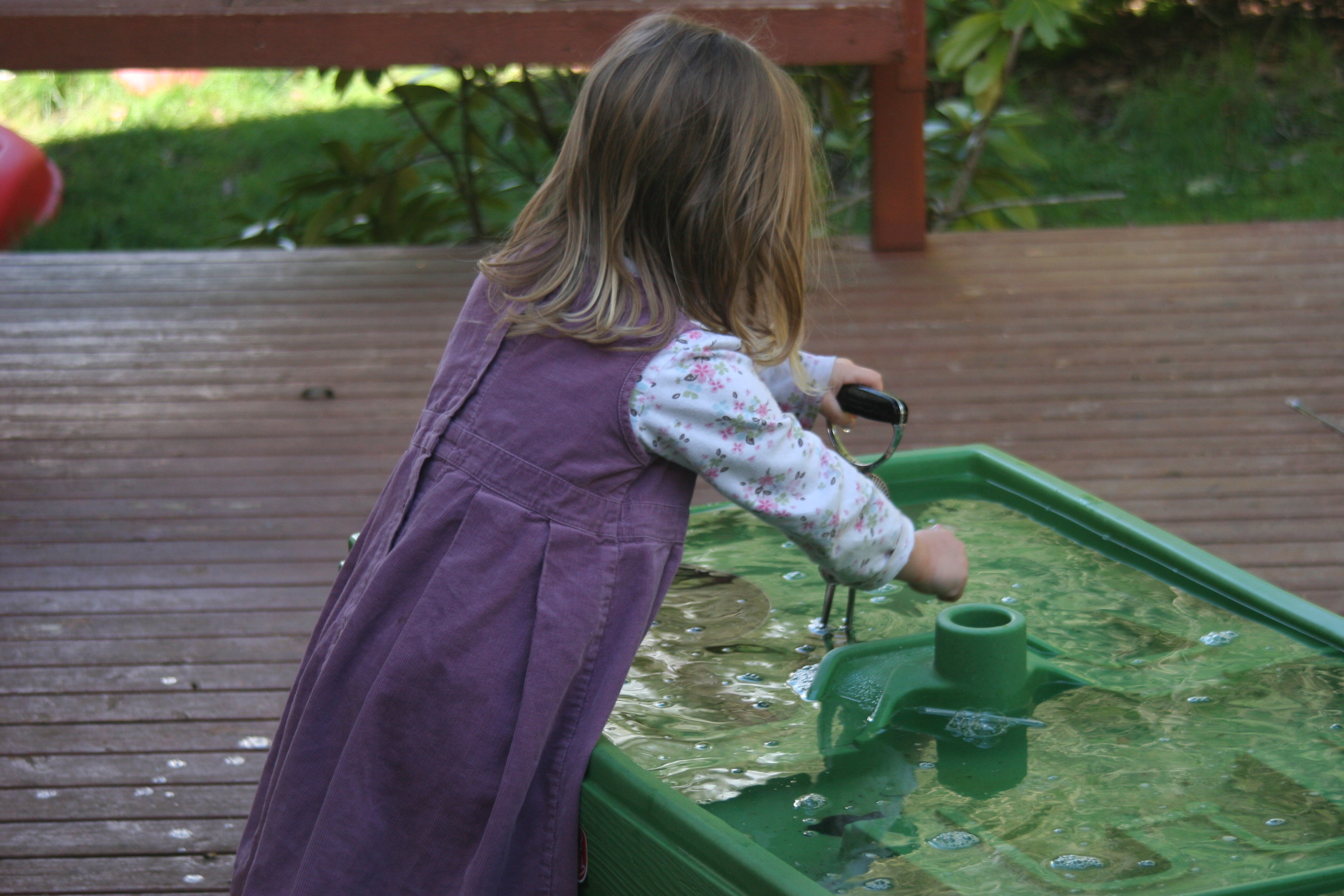
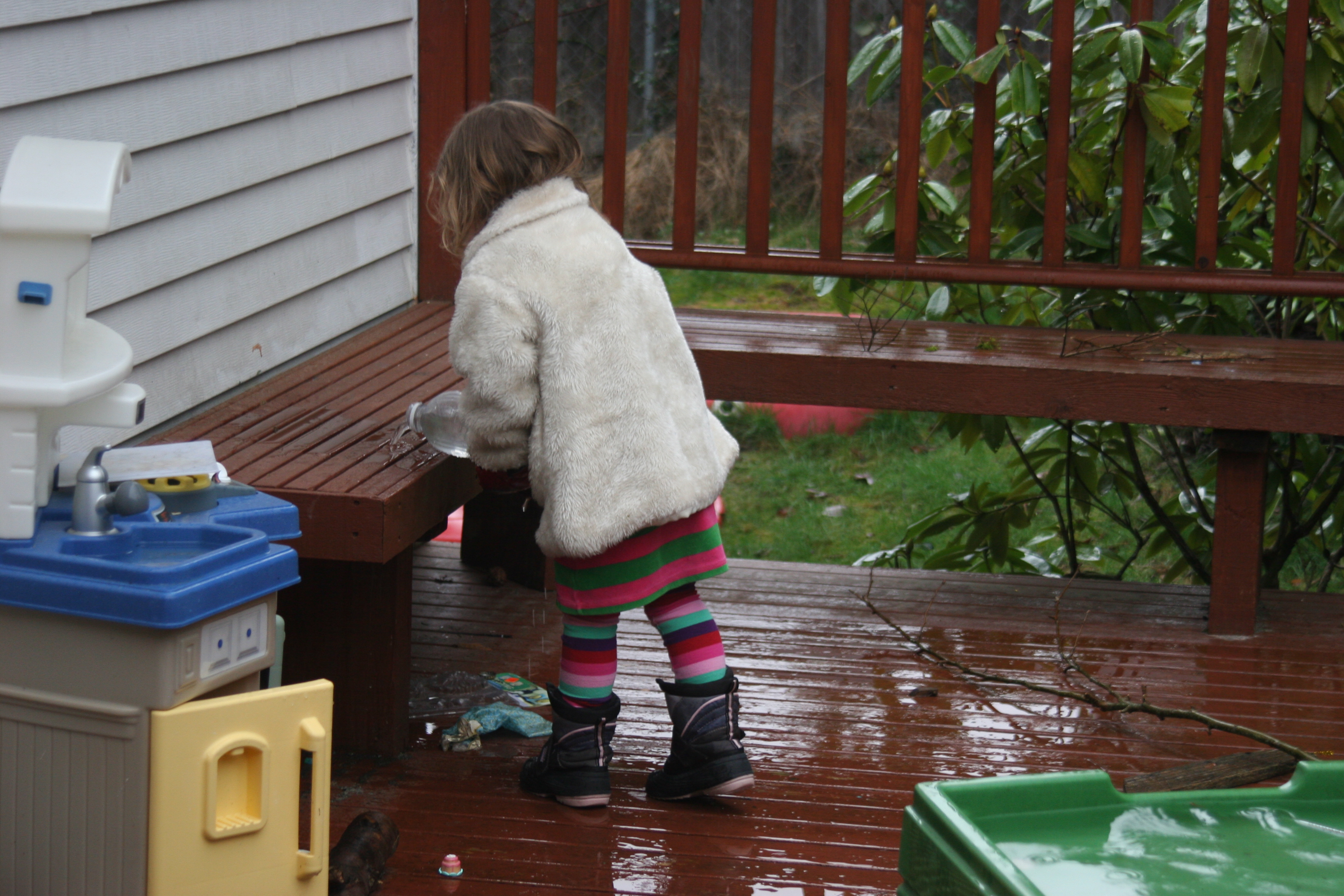
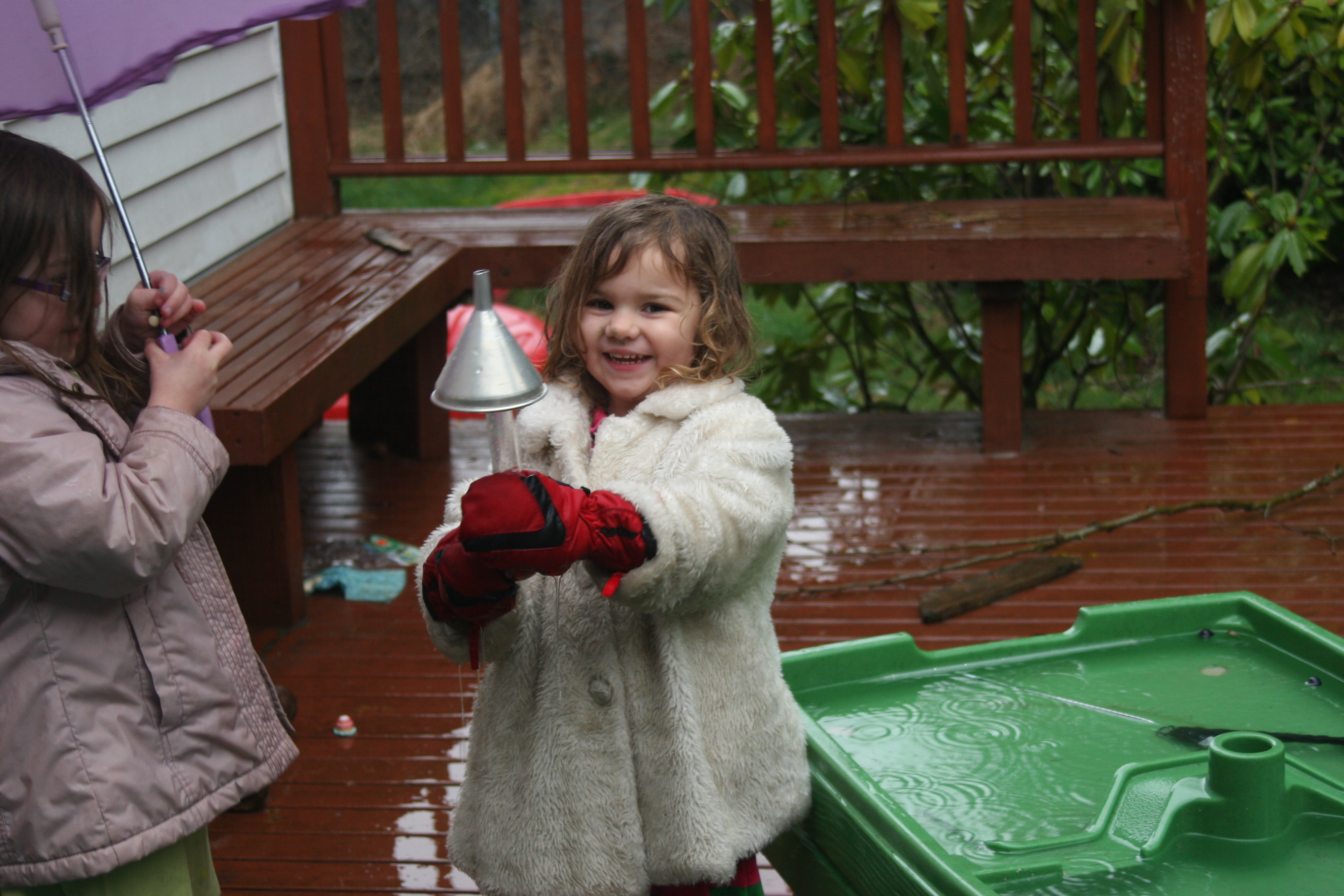
We’ve had a few rainy days so I decided to leave the lid off the water table to catch the rain. We’ve had so much rain that it was nearly overflowing. My girls looked out at the rain and decided to play in the water. They know from experience that rain water is very cold so my youngest put on her waterproof gloves so that she could tolerate the cold water for longer.
I gave her a bottle and a funnel to add to the other materials. I have recently noted her eagerness to transport things from one place to another and predicted she would probably use the bottle to empty the water from the table. True to form she filled the bottle, carried it to the bench and poured the water through the slats before returning for more.
Her sister is less eager to play outside but loves umbrellas so when I suggested she take her umbrella outside, she was out like a shot. Of course her sister needed her umbrella too.
It looks like winnie the Pooh’s boat
Bob needs to stay dry
I can’t quite reach…
Here you go
Perfect.
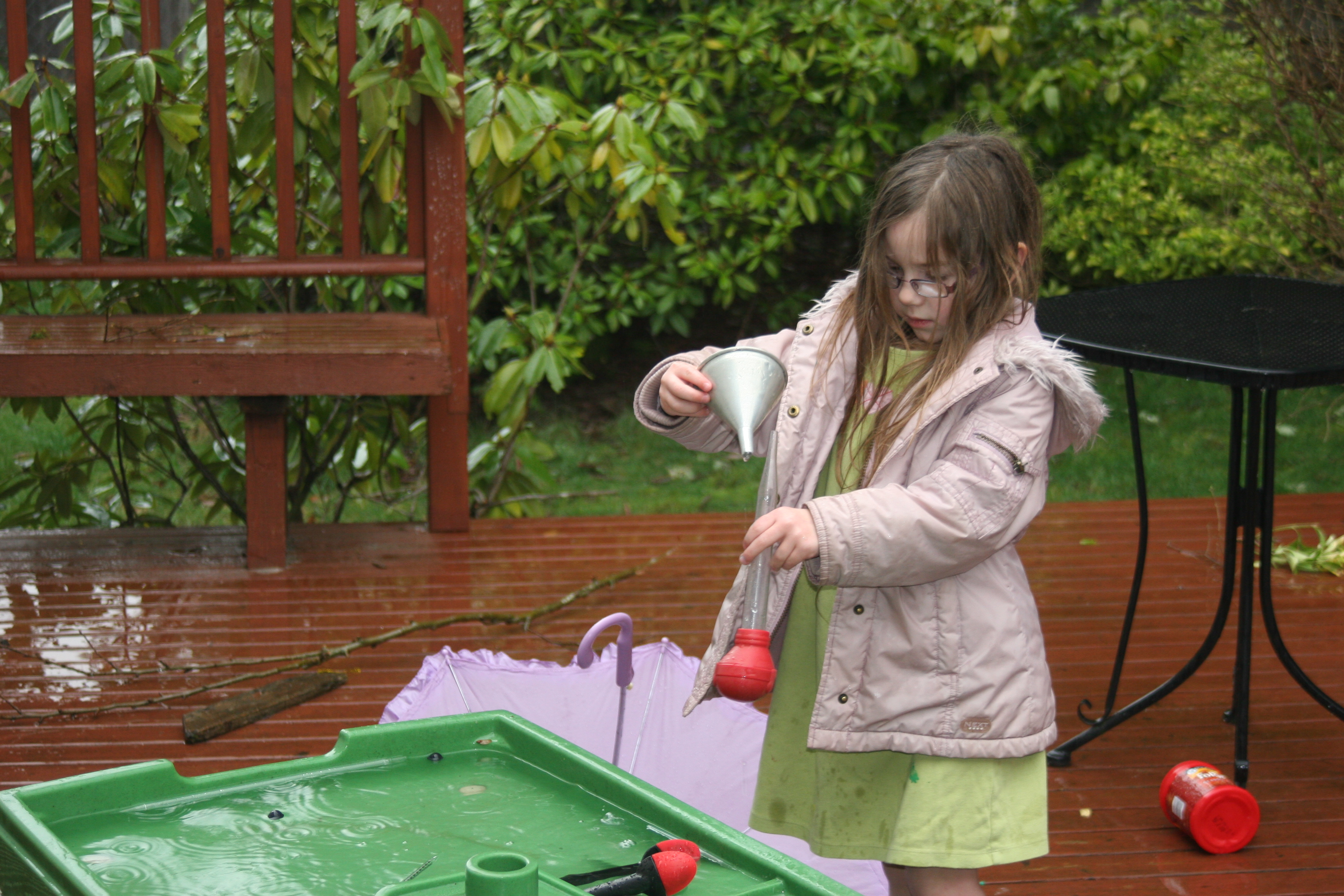
I want to make an invention
What kind of invention?
Like we made before for serving drinks.
Last summer the girls had inserted a straw into a hole in a milk carton and made a drink dispenser. They worked out how to turn the tap off and where to place the tap so that they could drain the container of all the water.
What do you need?
A cup – this will be good (finding a coffee container) a tube or something and some small cups.
I found a piece of plastic tubing and plastic wine glasses.
I need another pipe. One to blow into and the other one for the water to come out of.
I gave her another piece of tubing that her sister had been using to make a contraption the previous day.
It’s not working mummy, when I blow nothing happens.
Are there any bubbles coming when you blow.
No
The air isn’t getting through the pipe.
We put the container onto the floor so that she could keep the pipe straight without any kinks and still reach to blow into it.
I have to be honest I didn’t expect it to work but look what happened.
You have to blow so, so hard to make it work that it hurts your mouth, but that’s okay.
Meanwhile her sister was trying to catch floating objects with the tongs.
I’d never heard of a Children’s Museum before I moved here but as I entered the door I was greeted by a little bit of play heaven. I think I was more excited than the girls. My 9 -year-old remarked
It’s not really a museum is it?
True not in the traditional sense.
According to Wikipedia, Children’s museums are institutions that provide exhibits and programs to stimulate informal learning experiences for children. In contrast with traditional museums that typically have a hands-off policy regarding exhibits, children’s museums feature interactive exhibits that are designed to be manipulated by children. The theory behind such exhibits is that activity can be as educational as instruction, especially in early childhood.
In essence it’s like walking into a really well- resourced nursery or pre-school. I loved that many of the exhibits used simple, cheap materials that could be replicated at home, like a blackboard with a pot of water and brushes. I particularly like these; they would be a great addition to a child’s bedroom wall, garden fence or in a toddler room at nursery.
The girls loved this one and played with it for ages – even my 9-yr-old was fascinated.
The water area was a huge hit with my youngest. My favourite was a water bath with a transparent window so that you could see what was happening under water.
This slideshow requires JavaScript.
Behind the glass is an area for art based activities – musical instruments, painting, movement with ribbon sticks and scarves and drawing. The metallic walls made it so easy to dry and display pictures. What a great idea for a messy play room.
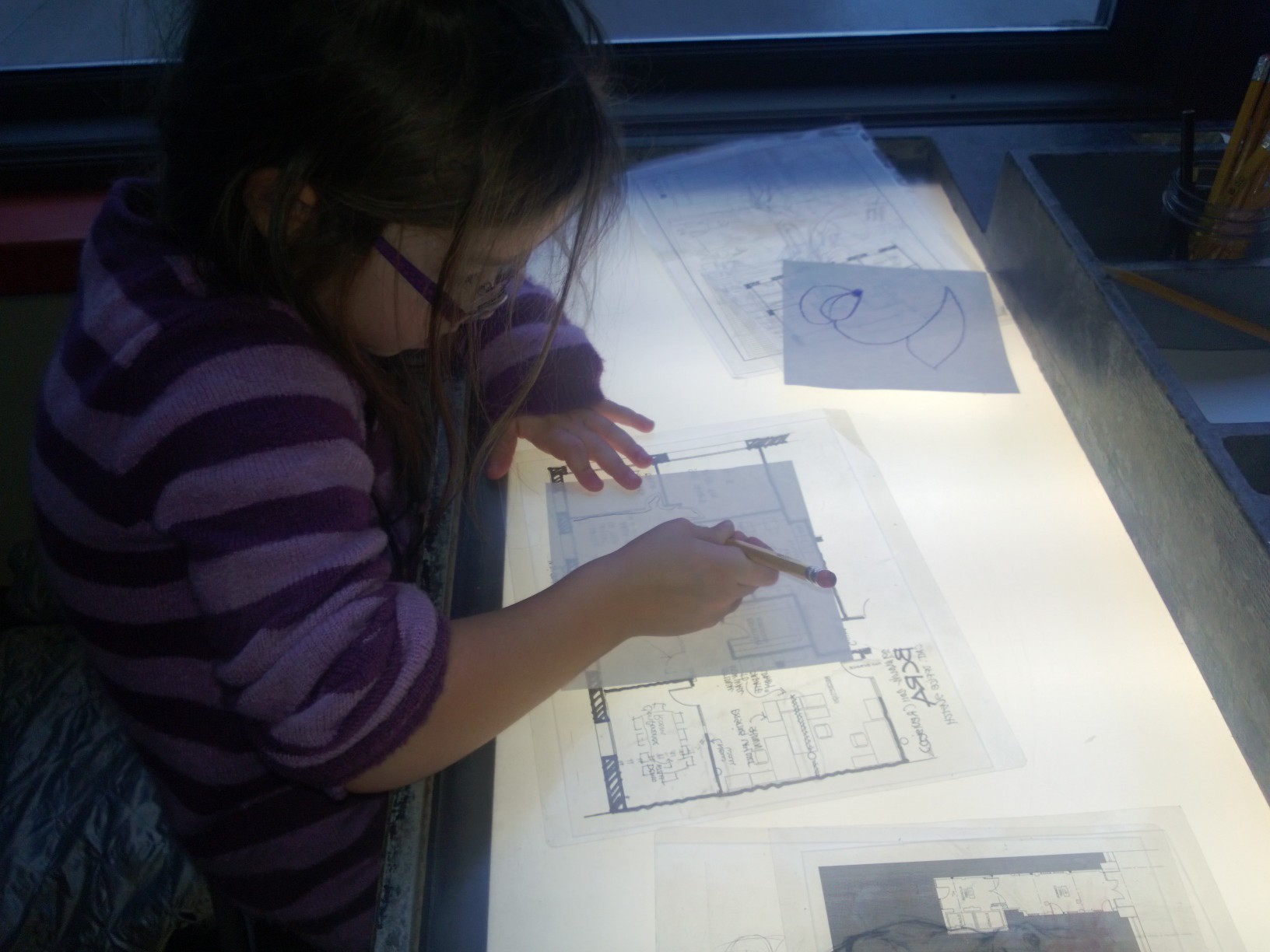
There were 2 light tables in the space with very different activities, the girls chose to trace and draw.
My eldest loved den building best of all. The smaller structures were not very stable so she negotiated with the other children in the space to create a big den together.
It isn’t very good – it keeps falling down
We built one together
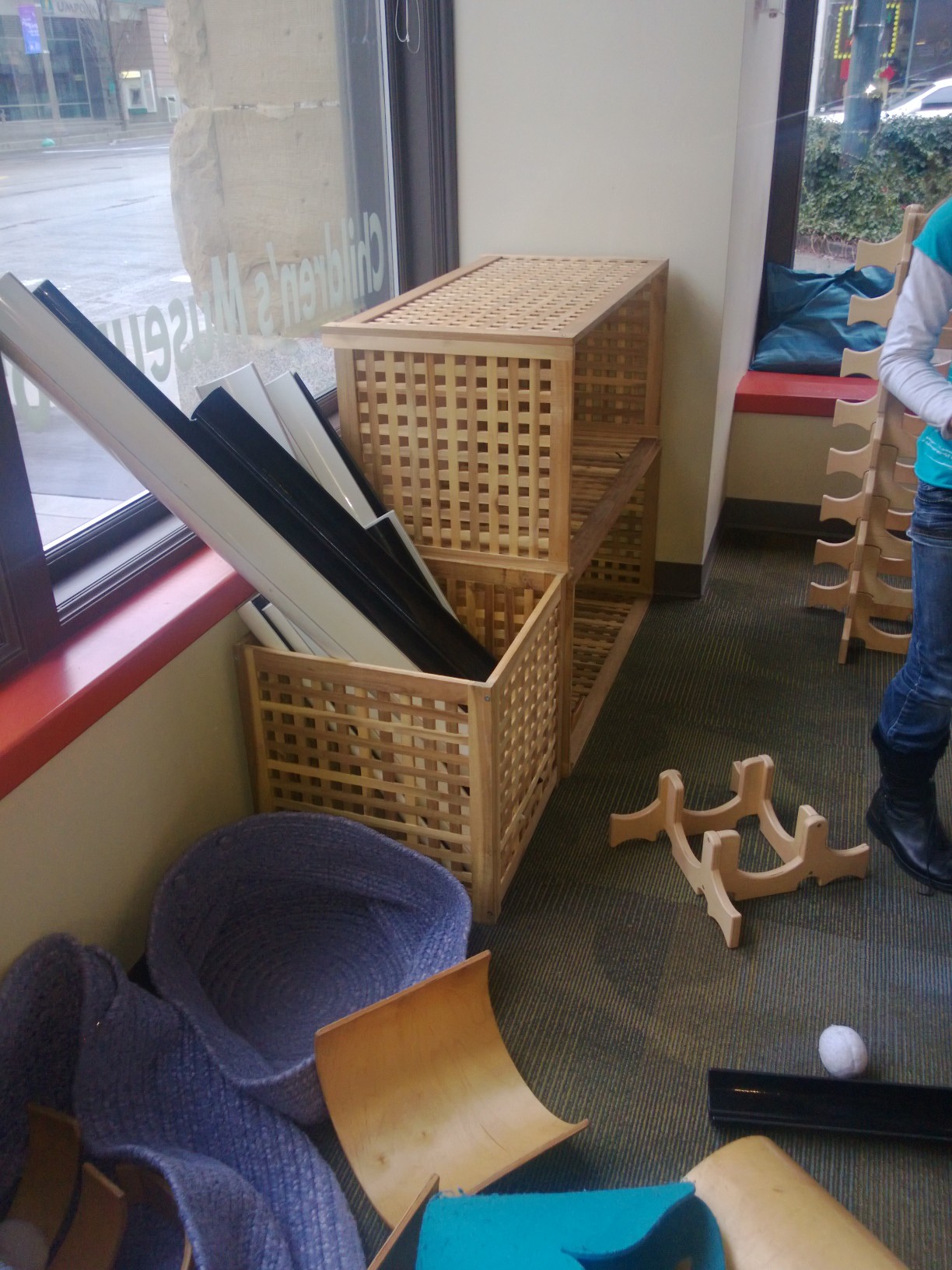
More building – drainpipes and gutters
I’m so glad we discovered Children’s Museums and I’m looking forward to visiting the others in the area and sharing more ideas.
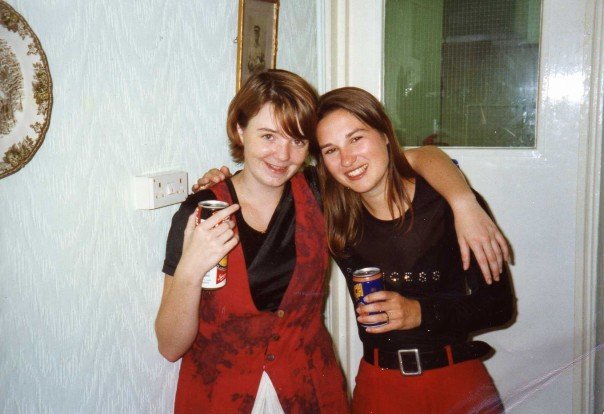
Today we have a St. David’s Day guest post from Penni Carr. I met Penni during my musical theatre days (sorry Penni for the old photo). She went on to become a professional actress and since becoming a mum, has founded Babi Bach a bilingual music class for babies and toddlers. Penni writes about the connection the Welsh have with singing and how the Welsh language is an integral part of that. Are Welsh people good singers? Why do we love singing so much? Read on the find out more…
Welsh people often get asked if they are born being able to sing? As if it is some magical power that Celtic people posses from birth. Now, some people may believe this is true but I believe something slightly different. I believe that Welsh people are born into a heritage rich in tradition and passion and one way that we pass this on is through song.
Children will be taught nursery rhymes and songs in Welsh and English, even if English is the only language spoken at home (which Welsh people here have ever sung “Mi Welais Jac y Do” or “Calon Lan” without learning any other welsh?!) I think that, from birth, singing is something that we usually hear every day and so it becomes something very natural for children to do; to sing along and join in with the song – to pass on the history, the tradition and the language.
Music is one of the only things that engages the WHOLE brain and, as such, is an incredibly useful teaching aid. I bet you can remember songs that you sang at school when you were five far more easily than you can remember the periodic table! Unless you can sing that too like the fabulous Tom Lehrer!
I founded Babi Bach in September 2013. We are a bilingual baby music class suitable for little ones from birth to three and we use music and songs to help little ones learn languages. We believe that music and language help children develop communication skills, social skills, gross motor skills, fine motor skills, spatial awareness, community links and, most importantly, it’s FUN! So pass on your song and watch your little ones flourish. All together now…
When considering the question of how to teach preschool art it is helpful to first consider the meaning of ‘art’ for our youngest children.
What is Children’s Art?
As adults, artists are generally referred to in terms of the product they create – painters, sculptors, musicians or dancers. When we create ‘art’ we might think about what we are going draw or make before we begin.
When children explore art there is much less emphasis on the finished product – they might say they are going to draw or make something specific but often this evolves into something else during the process.
As I watch my children involved in what we may traditionally term ‘art’, I find that creative expression isn’t their only interest and there is certainly very little focus on the finished product. Sometimes they are practising skills. My youngest for example likes to snip paper into tiny pieces but if I suggest she might like to make a picture with the pieces, she isn’t interested. As children get older the finished product becomes more important. My pre-schoolers will often remark that they don’t know what it is going to be yet, whereas my 9-year-old often has an idea before she starts. Does this change occur naturally or do adults teach them that this is what ‘art’ is?
My younger girls’ ‘art’ is about exploration. They ask questions like ‘what happens if?’ Through this exploration they see themselves as competent in the knowledge that there is no right or wrong way to do things. This give them the confidence to explore further.
The Salad Spinner Project
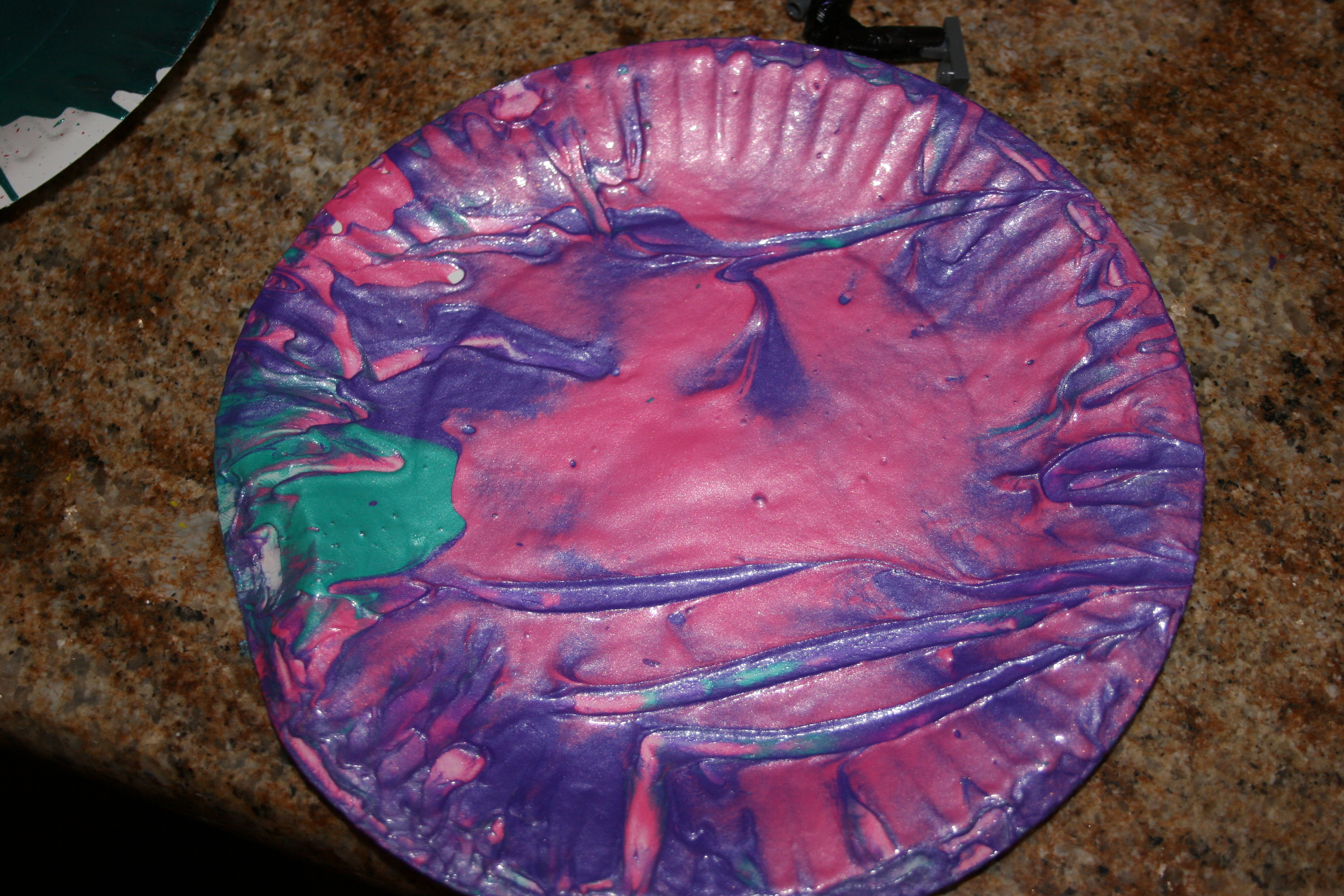
An example of a process oriented art project was inspired by a visit to the Children’s Museum where the children made pictures using a salad spinner. The directions were simple:
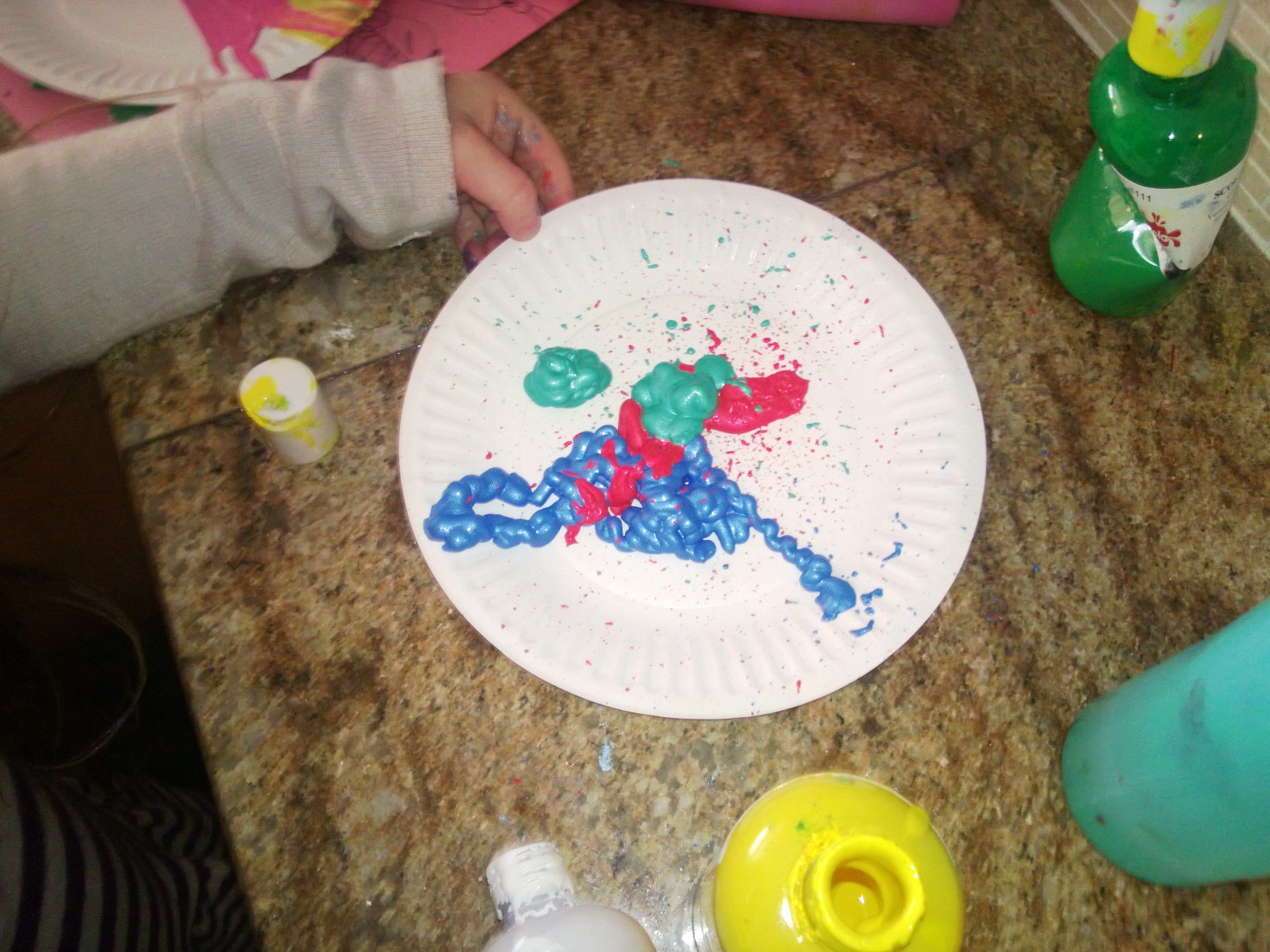
1. Put paint onto a paper plate
I’ve chosen 3 colours
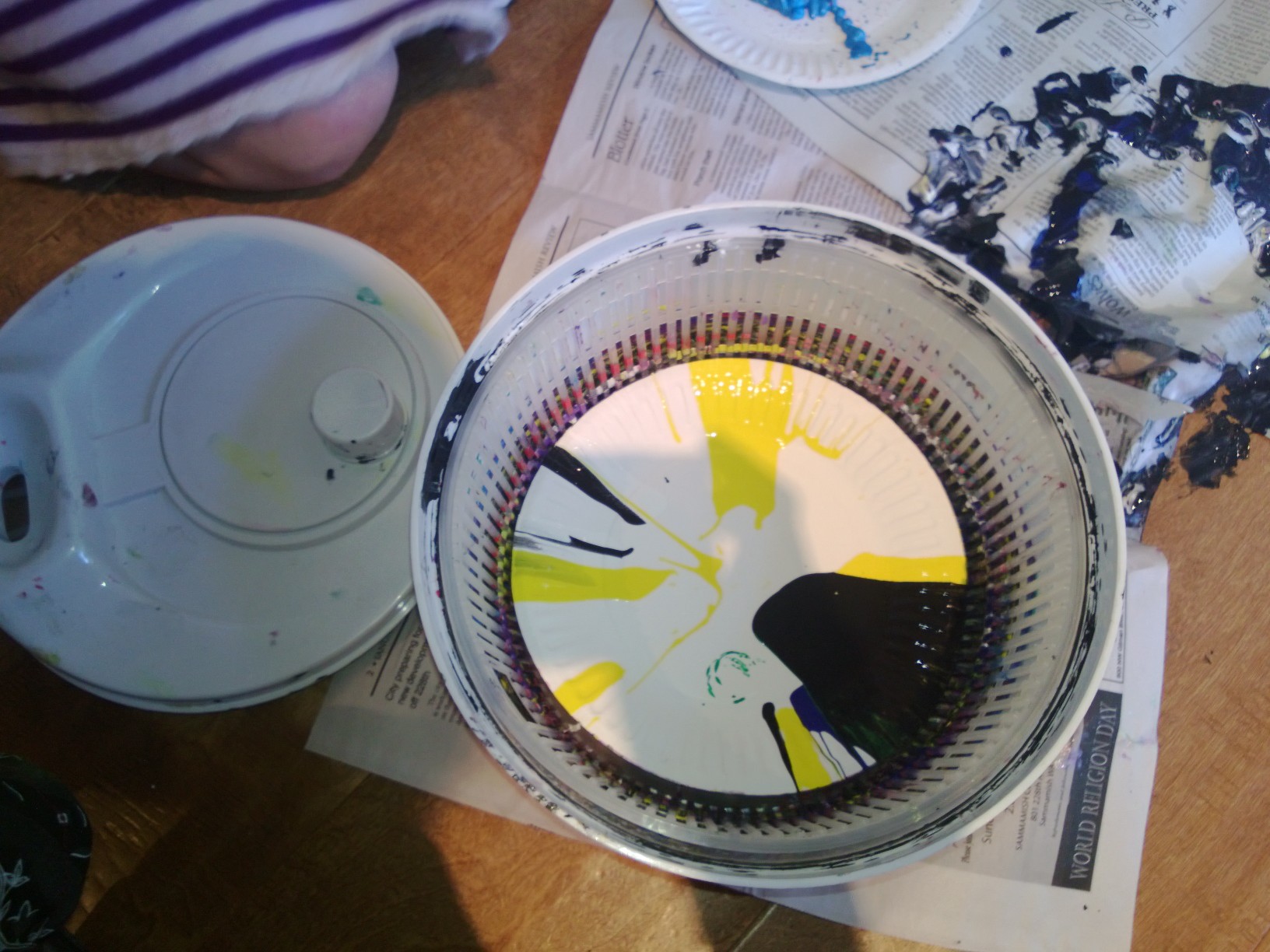
2 .Place the plate inside the spinner and put on the lid. Place the spinner onto a cloth or newspaper, the holes in the bottom of the spinner allow the paint to come through.
3. Spin
4. Check results
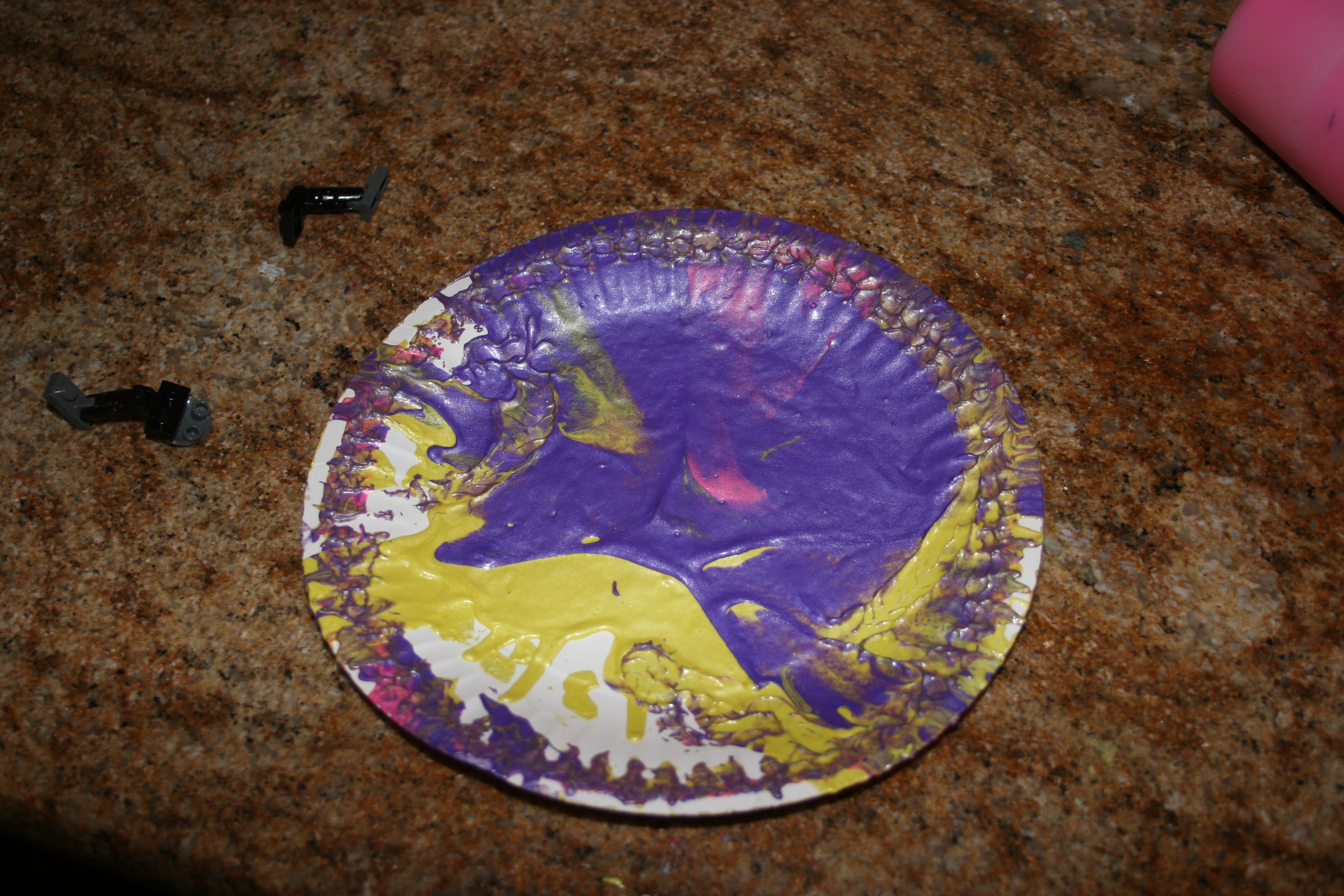
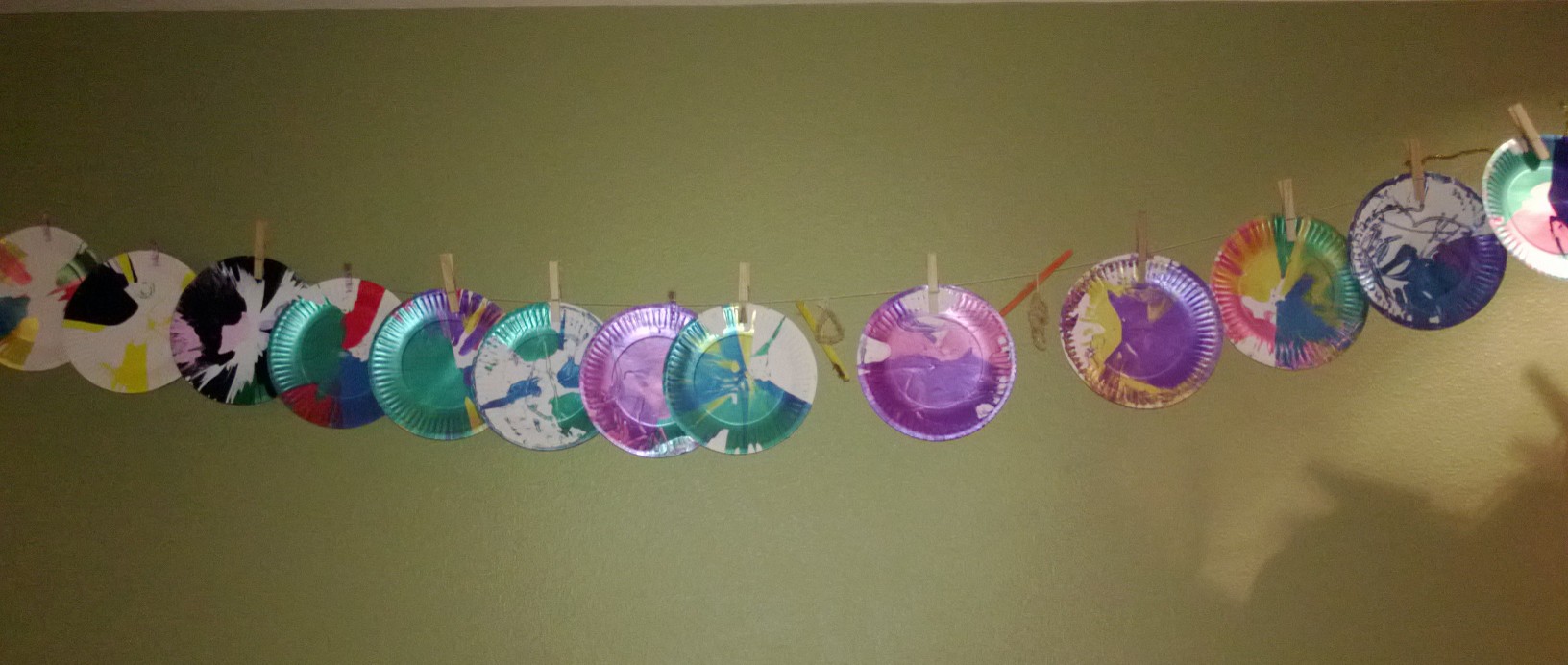
They watched as the pictures took shape changing according to the colours chosen and how much paint they put on.
There is potential for this activity to become a product oriented if the adult takes over. The key to making it process oriented is to offer choice and allow the children to freely explore the materials.
How the Project Evolved
The pictures the girls had made at the museum had colours that ran into one another producing a marbled effect but the paints we used at home were thicker so produced very clear lines with little mixing.
They explored all the possibilities:
I’m choosing two colours.
What if I just put a bit of paint on?
I’ve put lots of paint on this one.
Which one is your favourite?
The next time we got the salad spinner out I suggested they might like to add things to the spinner to see what happened.
I know lets put balls in.
First they tried a golf ball
It makes a kind of bumpy pattern
They put it back in a number of times spinning the spinner at different speeds to see how the pattern evolved.
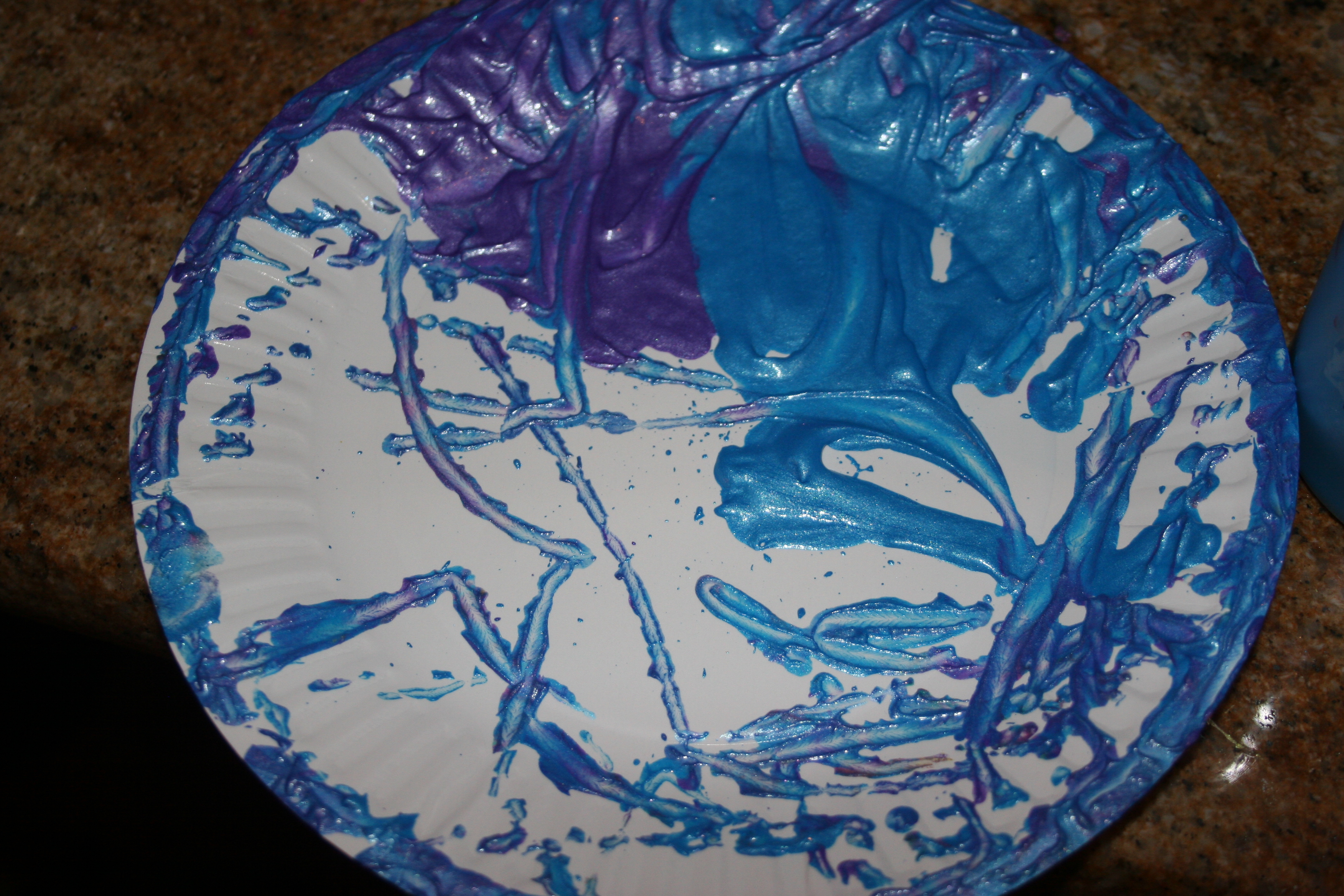
Next they tried marbles. The marble made tracks across the plate
It looks like a puzzle
The next attempt came out differently
When we put marbles in it makes a noise. Sometimes they get stuck in the sides and we have stop.
Hmm, Maybe if I spin it faster
Still no change.
I could try more marbles
Still no change.
Suddenly my 5-year-old had an idea
I know; it’s because I used too much paint. The one with tracks on didn’t have so much paint on so I need to use less paint.
The learning and creative thinking in this project is clearly evident so why would we plan art with a finished product as our starting point?
Process v Product
Sometimes as early educators and parents it is difficult not to plan art projects in terms of the finished product. Certainly years ago when I worked with older children we would often plan workshops and sessions in terms of what we would make. We all like our children to come home from preschool with something they have made. Teachers sometimes argue that parents expect their children to come home with something at the end of the day. It is difficult to be enthusiastic about yet another drippy painting or cardboard box construction.
This is often given as a justification for producing heavily adult directed arts and crafts. Starting from an adult viewpoint in this way often means that the children don’t do very much themselves. I have observed teachers presenting children with pre-drawn templates, ready cut outlines and telling them what they need to stick where – sometimes the child isn’t even allowed to do the sticking themselves. The children may come home with something pretty to put on the wall but what have the children learned, how much enjoyment have they had and have they actually made it themselves? Furthermore, if we show children at a young age that there is only one way to do things we destroy their enthusiasm to do things for themselves. Is this why we often hear older children say ‘I can’t draw’, ‘ I don’t know what to make’ or ‘It doesn’t look right’.
When you allow children to freely explore materials they begin to understand the properties of media, they learn that art can be a series of explorations and they are allowed to become absorbed in the joy and relaxation of the artistic process. Sometimes they will want to make something specific but allow them choice in the materials and tools they use and encourage them to try out things for themselves.
Creative thinking isn’t neat and tidy. An artist will paint many sections of a painting exploring colour texture and shape before finally coming up with a finished product. Think about the work of an author who writes and rewrites many times with crossings out, arrows and notes all over the paper. A finished product will come eventually but it is a long way off. Allow children to explore in this way, let them make a mess and do things their own way.
As Peter Dixon puts it
Your children are at a stage where the process of doing things
LOOKING, SEEING, FINDING, FEELING, INVESTIGATING etc.
is far more important than the end product sought by some parents. …The process of their work – might look messy, scribbly or completely unrecognisable to us but to your children it is utterly meaningful and an essential part of their mental and physical growth and development. Please honour – please respect your child’s own way of thinking. It might seem unusual but it is their birthright. It is the foundation upon which they will build all future understanding.
The Adults Role
Process oriented art doesn’t mean that you leave children alone with a huge amount of materials. The adults role is to organise the materials so that the children can find what they need easily. Sometimes this means setting out particular materials for example you may want them to explore with charcoal and erasers. It can also mean setting up an organised art station with neatly labelled pots and drawers that the children can choose materials from.
If the adult works alongside the child creating their own projects then they can inspire children and demonstrate techniques. They will be able to encourage children to develop their projects by asking questions
What happens if…..?
Have you tried this……?
What else could you add?
persuading them to try different materials and techniques.
If you log children’s comments and questions, displaying them alongside finished pictures and photographs of the process, it will help to show the value of process oriented art.
My regular readers may remember that during the London 2012 Olympics we staged our own Olympics in the garden. Record low temperatures have arrived at the perfect time for us to stage our own Winter Olympics.
We built skis and bobsleigh for the Lego men and took them out onto the frozen water table. I also put a small layer of water in the paddling pool to make an ice rink ( a difficult task since the hose was frozen).
And to add to the fun, today we had a snow day.
Even if you don’t have snow or ice many of our events have been staged on grass or indoors. Mirrors are great for creating ice rinks for Lego men or small figures, car tracks make good ski slopes and hard wood floor and socks are perfect for ice skating events.
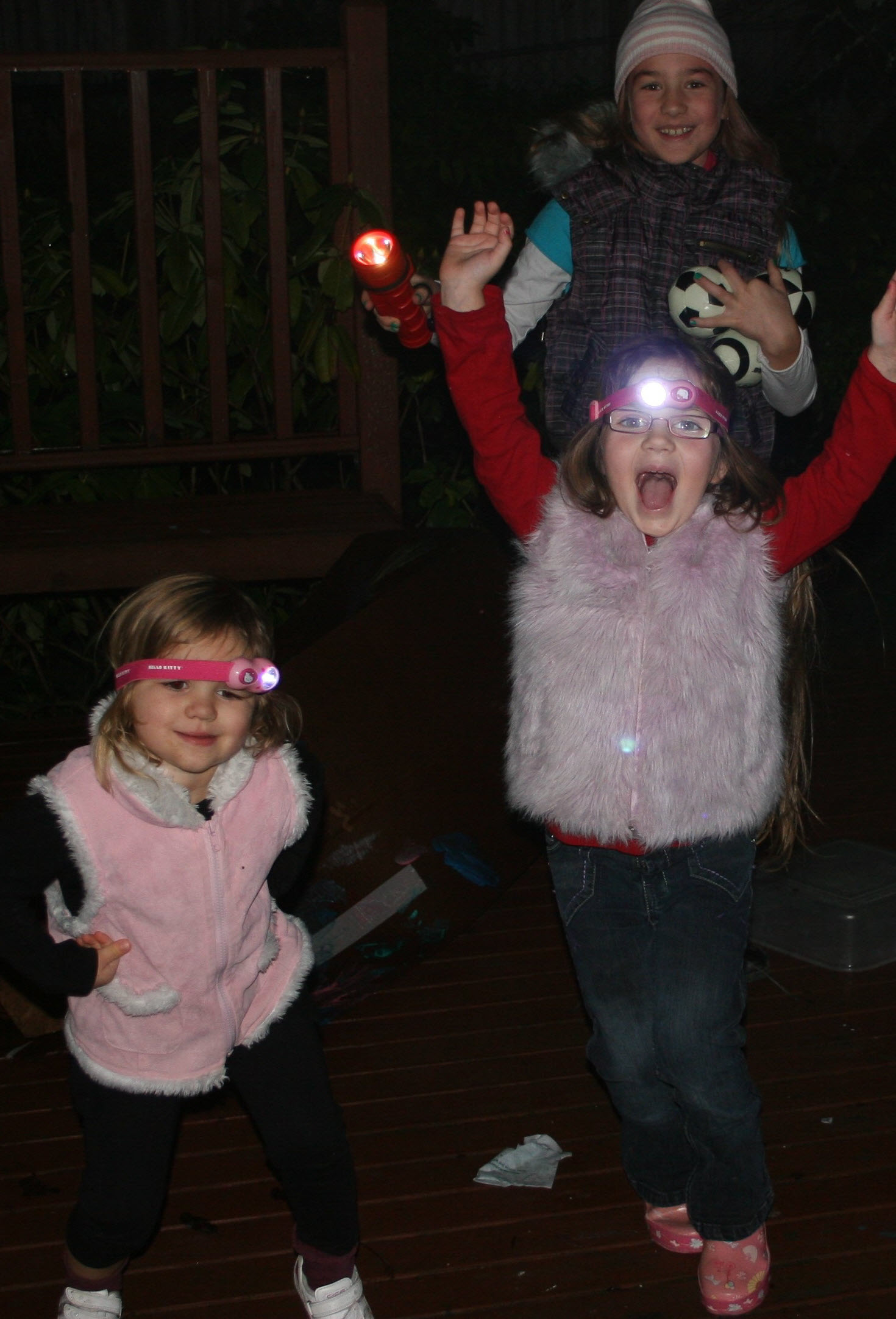
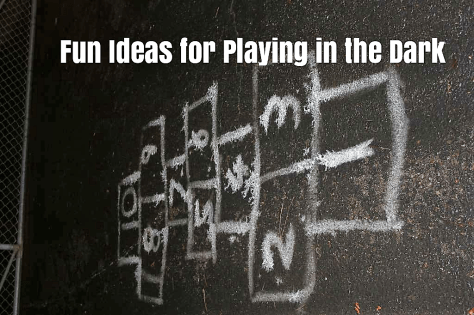
My 5-year-old was petrified of the dark when she was younger. She couldn’t even bear to have the curtains open and see the blackness outside. Only later did we discover that she had really poor eyesight and her fear gradually decreased once she had glasses. It is so lovely to see the progression from a terrified toddler to an excited child who loves to play outside in the dark with a torch.
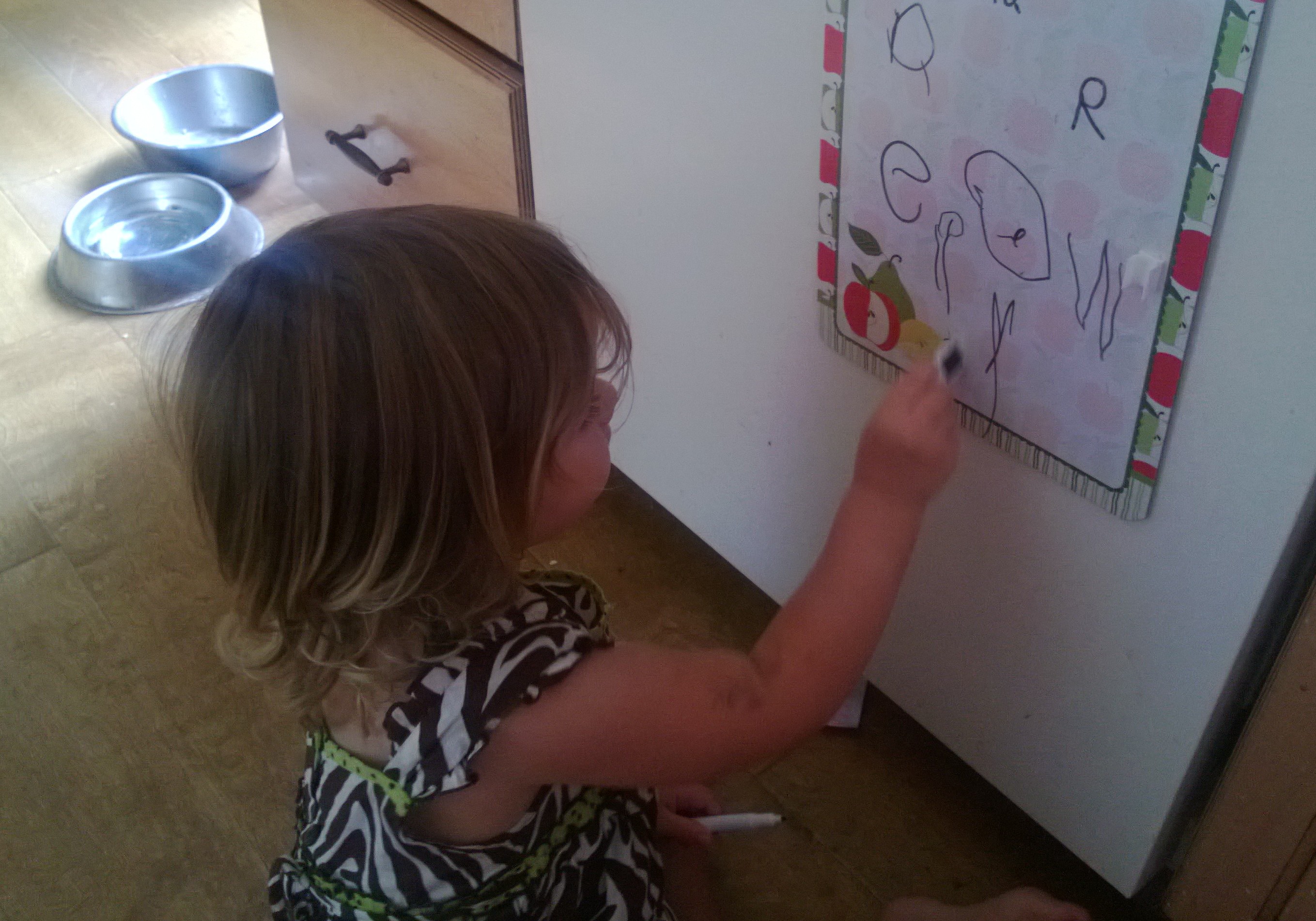
The lead up to Christmas was a great time for writing messages in our house. Our visiting elf Christopher Poppinkins left notes for the girls and they responded with their own notes, we made gifts for the neighbours with a little note attached, wrote Christmas cards for the family, shopping lists and yesterday the girls helped me write a list of songs for my music class.
As children approach school age, parents are often anxious about their children’s emerging literacy and how best to support them at home.
When is the right time to introduce writing?
Does my child need to be able to write their name before they go to school?
How do I start?
Do they have to form letters in a particular way?
Writing is a complex skill involving much more than the correct formation of letters. I can’t guarantee that my girls will continue to love writing but I think we are headed in the right direction.
If you are interested in finding out how I encourage the girls to write and keep it enjoyable I am sharing some of my experience in a guest post for ‘What to Expect.’



















 Right from the Start