Category Archives: early education & play

Minion Themed Party

img_6551

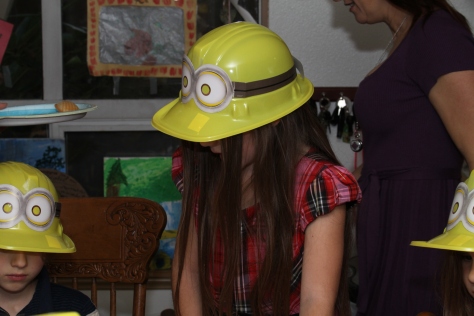
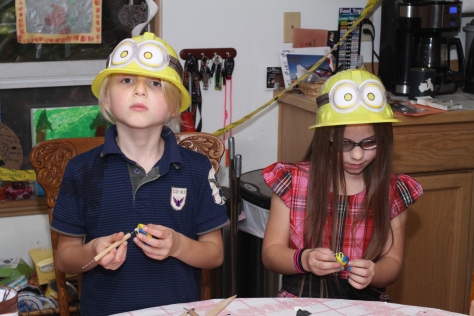
It was party time again recently and this time my six-year-old chose a Minion theme. On arrival they were given a Minion hat made from a builders hat with a pair of cardboard goggles attached.

Food

minion-banana

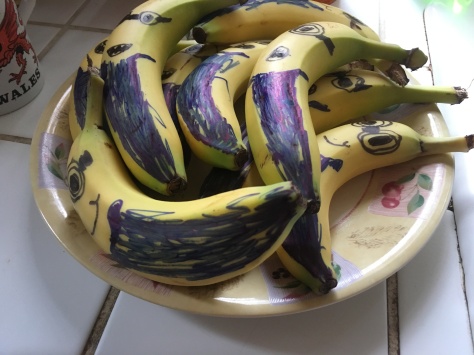
Minions love bananas, so they had to be on the menu. My eight-year-old decorated each banana to look like a Minion.

minion-cheese-stick

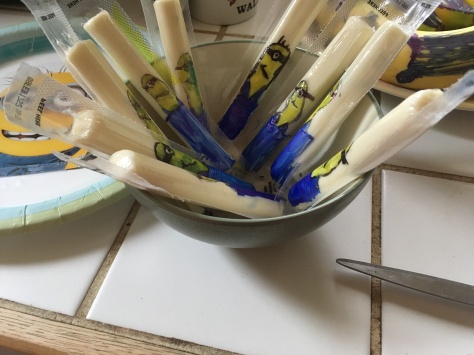
My six-year-old did the same with the cheese sticks.

I found Minion shaped fruit snacks and we had a selection of fruits and snacks.

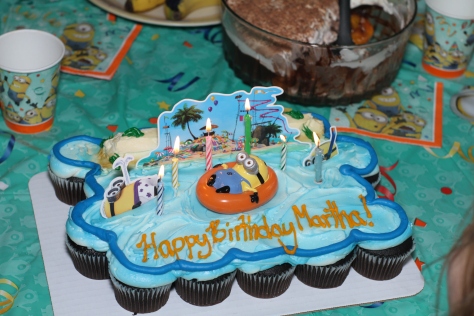
It was all topped off with a Minion beach party cake.

IMG_6615.JPG

Crafts

Whilst we were waiting for guests to arrive, I printed colouring sheets for the children.  My daughter had requested cookie decorating, so we decorated mandolins ( a perfect shape for a minion) with blue and yellow icing, black icing to add detail and edible eyes to make a Minion cookie.

img_6566

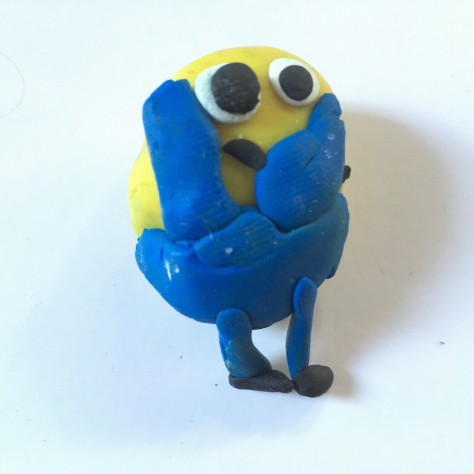
I laid out pictures of Minions and gave each child a piece of yellow and blue polymer clay to make Minions. They added black and white for the eyes.  I love how they turned out and that they were all so different.

minion polymer.jpg

Games

Pin the hat on the Minion

This was a pre-bought game and acted as a good time filler while I laid out the food.

Pass the parcel

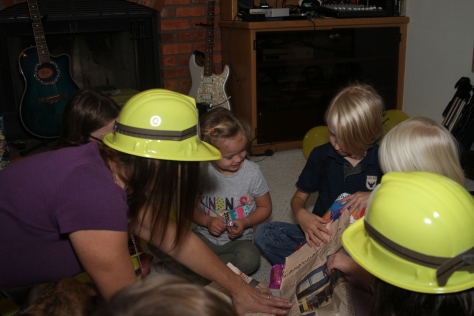
A Minion themed gift was wrapped and then covered in multiple layers.  The parcel is passed around a circle to music and each time the music stops a layer is unwrapped.  In previous parcels we had an activity to complete in each layer but this time I simple placed a lollipop in each layer.  The person to unwrap the last layer, gets to keep the gift.

img_6648

Musical bananas

A variation of musical chairs. Lay out the same number of laminated pictures of bananas on the floor as there are children.  The children dance and move around the room and one banana is taken away.  When the music stops everyone runs to collect a banana and the child left without one is out (but gets a treat as consolation). The last child left in wins a prize.

img_6654

Races

Balance a banana on your head and walk to the other side of the room. Complete it successfully and win a prize. This was a big favourite. We ran out of time for more games but below are a few more banana games you may like to try.

  • Race to peel a banana wearing a pair of gloves
  • Hide bananas for a banana themed treasure hunt.
  • Stick pictures of bananas to a blow up palm tree and hold it high.  Jump up and pick as many bananas as you can in a given time frame.

Disclaimer: This post contains affiliate links

Art Project for Kids: Oil Pastel Still Life Inspired by Georgia O’Keefe

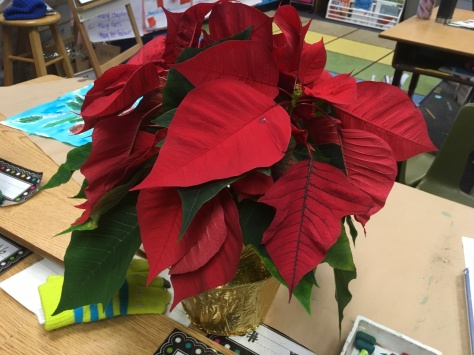
img_0664December’s Art project with Kindergarten and 2nd Grade was a still life Poinsettia using oil pastel.  The Kindergarteners had only used chalk pastel up until now, so our first lesson introduced them to oil pastel techniques.

The children were given a selection of oil pastels and a piece of paper and asked to try them out and think about how they might be different to the chalk pastels we used in the previous session.

Here are some of their observations.

The colours are brighter and you can press harder.

When you press hard it gets softer and easier to mix

They are like crayons

It didn’t blend across the colours like the chalk pastels but it worked when you put one colour on top of another.

You can blend chalk pastel with your finger. You can still blend with oil pastel but it is harder.

I can add white to blue to make light blue.

I showed them how to blend the pastels using baby oil and a Q-tip/cotton bud. the children practised making pictures using the blending technique.

I can colour just a little bit with oil pastel  and then use the oil on my Q tip to fill in the rest – it makes a lighter color.

It looks like paint when we add oil to the pastels, it makes it smoother

 You can use the Q tip like a paint brush

If you use too much oil it rubs the color away.  You need just a little bit to blend.

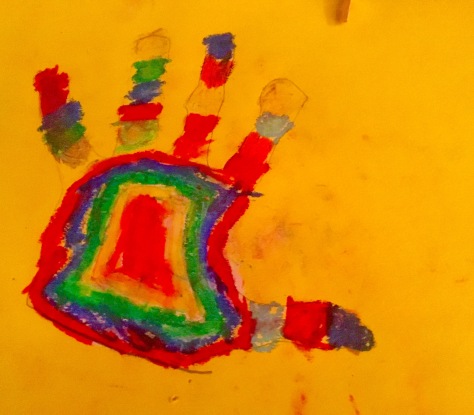
I gave them another piece of paper and they drew around their hand using pencil.  They then coloured the hand in stripes using the oil pastels.  The colours were blended using oil. We painted the background with liquid water-colour. They thought it was very cool that the pastels repelled the paint.

oil-pastel-hand

Still Life

img_0644

For the follow-up session and with the 2nd Graders who are familiar with oil pastels, I chose a still life drawing of a Poinsettia.  The Kindergartners haven’t followed a project inspired by an artist, so I asked for suggestions of still life oil pastel artists on a Reggio-inspired Facebook group. After a bit of research, I decided upon Georgia O’Keefe.  I liked the way that O’Keefe draws flowers but doesn’t always focus on the whole plant. I felt that if we looked at examples of her work as inspiration, the children could choose to zoom in on one part of the flower,if they didn’t feel confident enough to tackle the whole thing.

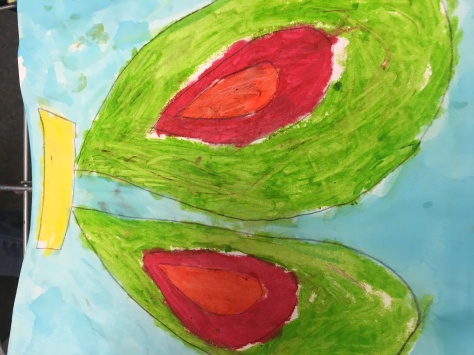
I limited the  oil pastel colours to shades of red and green, black for shade and yellow and white for highlights.  The children drew the picture with the pastels and then blended using oil.  The final touch was painting the background with liquid watercolour.

Since the children hadn’t done anything like this before, I was aware that they may find it challenging.  To start the lesson we read ‘Ish’ by Peter Reynolds. This is the story of a boy who gives up drawing in frustration because his pictures do not look like the real thing.  His sister persuades him to look at his pictures in a new light, as tree-ish, afternoon-ish and vase-ish .  I wanted the children to understand that this was not an exercise in replicating exactly the plant in front of them because each of us view it differently.  My aim was for the children to study the plant and replicate it in their own way.  I think we achieved that aim perfectly.

Kindergarten Class


Interestingly the Kindergartners were less anxious about the task than the 2nd graders, who found it hard to decide which part to draw and spent a lot of time considering how to make the shapes. A few children needed a lot of encouragement and support to make their own marks on the paper.

2nd Grade Class

I love how different they all are. The Kindergartners really focused on the shapes of the leaves and the 2nd graders paid more attention to the details in the leaves and petals and were more abstract with their use of colour. I’m really impressed with the finished results and it was a really valuable exercise to see how differently we all see things.


Home-Made Teacher Gift: Reindeer and Chocolate Sleigh

wp_20151217_004-2

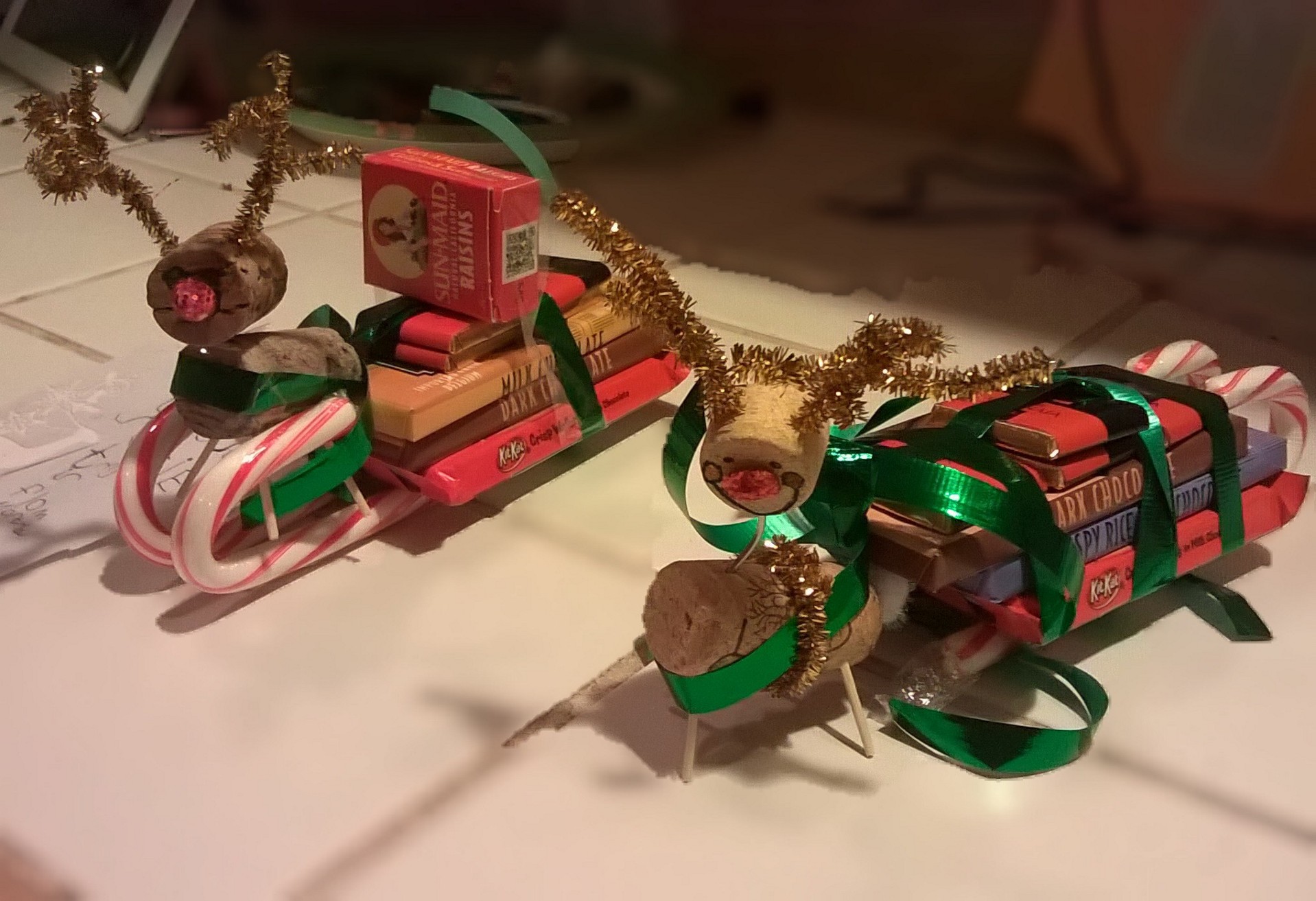
At Christmas time I always like my teacher gift to be home-made to add a personal touch.  This is a simple gift we made last year.


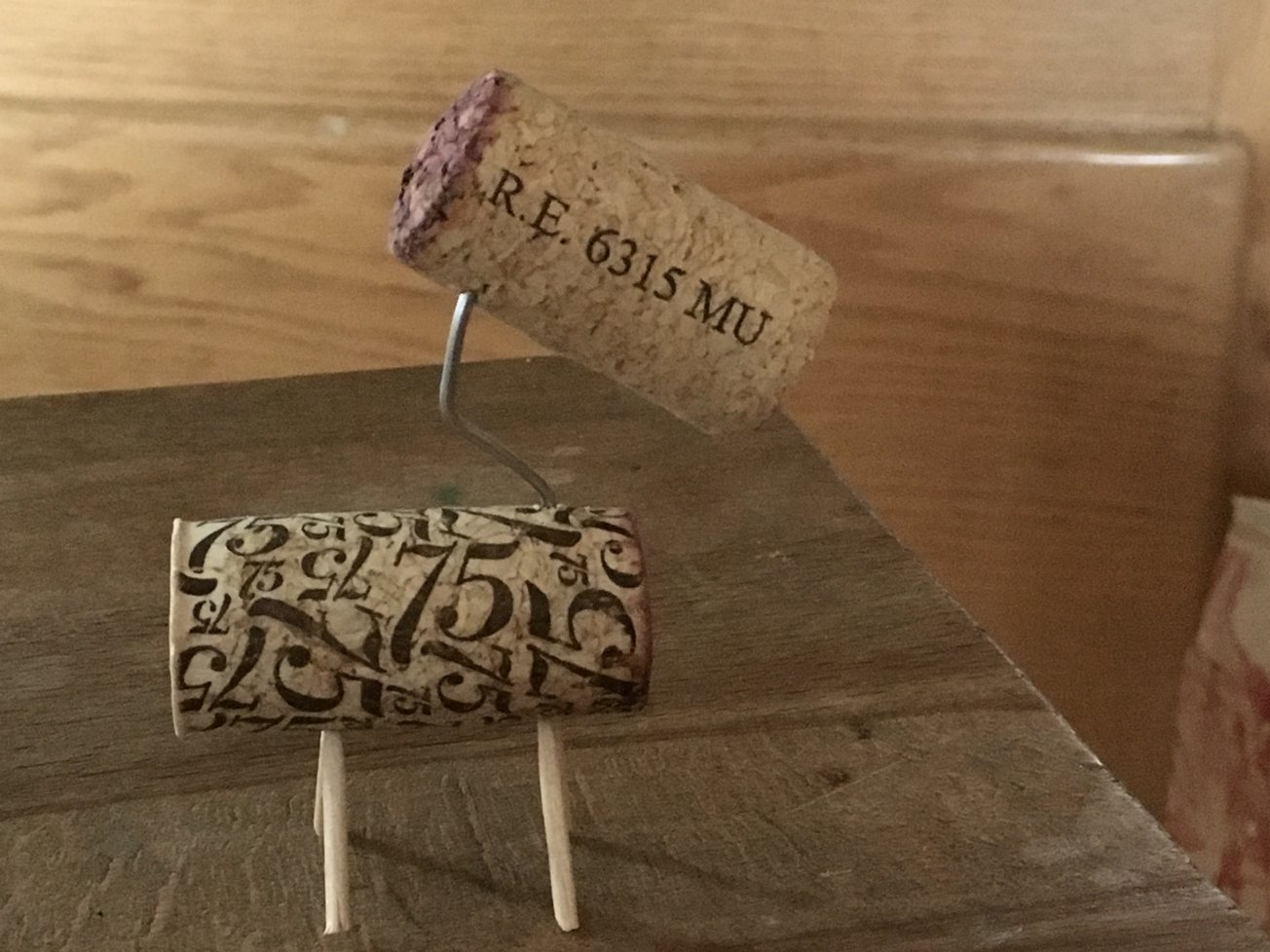
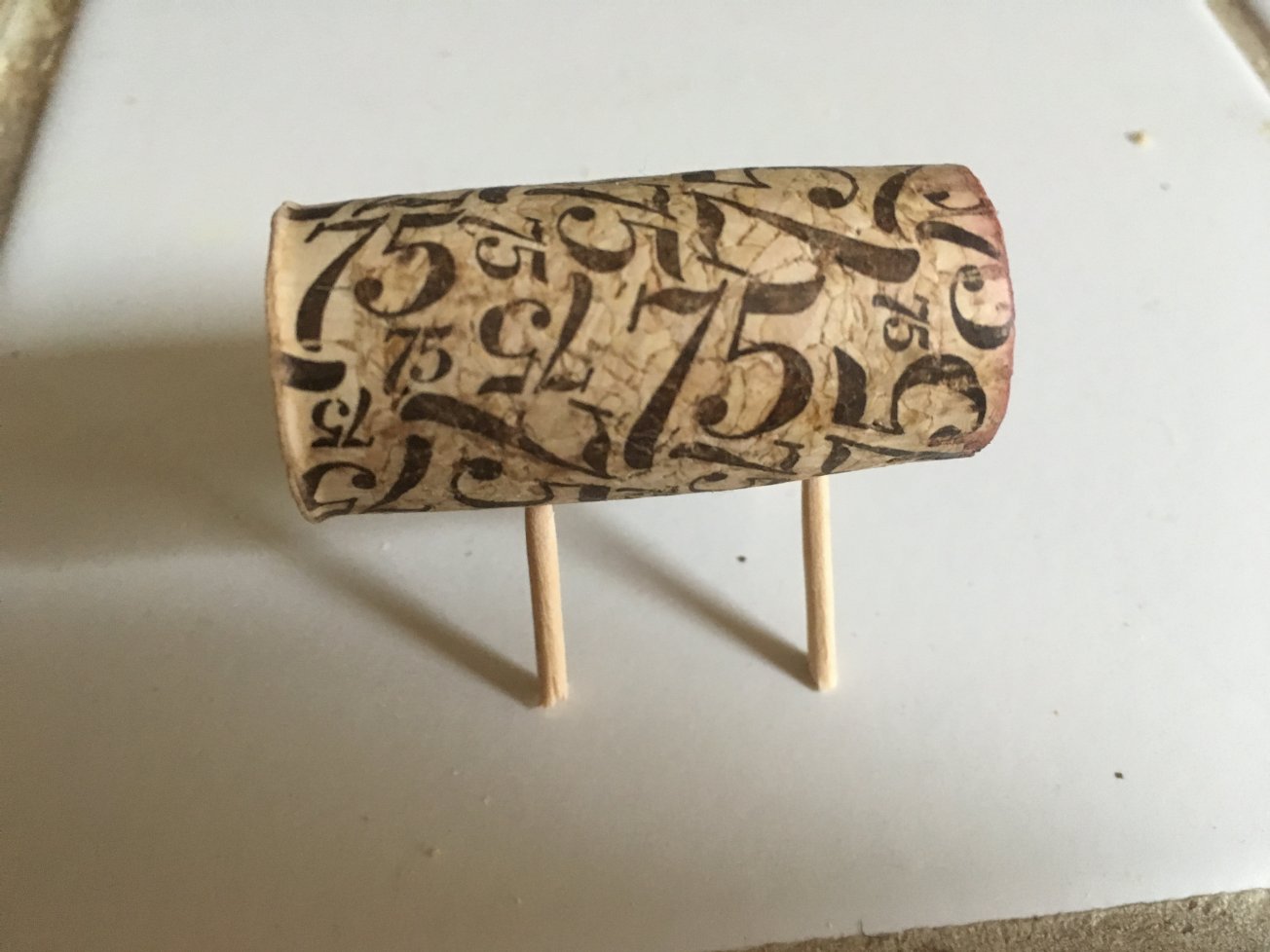
The reindeer were made from wine corks, with tooth picks for legs and pipe cleaner antlers.

Push the toothpicks into the corks at an angle to make legs and cut them to an equal length.

base-reindeer


We joined the necks to the body using craft wire. It is Easier if you push holes into the cork using  a skewer or knife before adding the wire. Add the Antlers and draw a face adding a pom pom nose if desired.

body-reindeer

To make the sleigh, tape bars of chocolate together with two candy canes taped to the base.  Wrap the sleigh in gift ribbon and attach to the reindeer.

wp_20151217_004-2

A simple inexpensive gift for a teacher, neighbour of friend.

Art Lessons: Clay Cup Cake Pots, Inspired by Wayne Thiebaud

img_0623

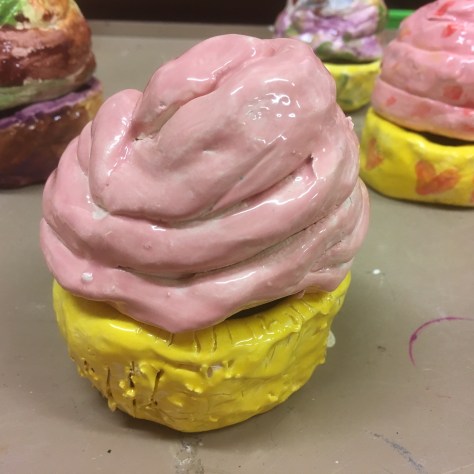
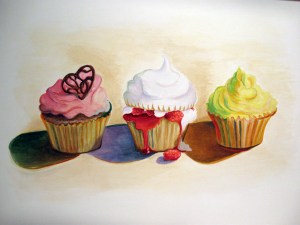
Wayne Thiebaud is an American artist, known for his paintings of everyday objects.  These include many works depicting food; in particular, cakes, pies and pastries.  For our second grade clay project, we used Thiebaud’s cupcake paintings as inspiration for teaching two basic techniques for making pots.

The base of the pot was a simple thumb pot and the lid a coil pot.

Preparation

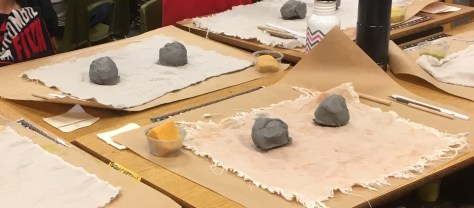
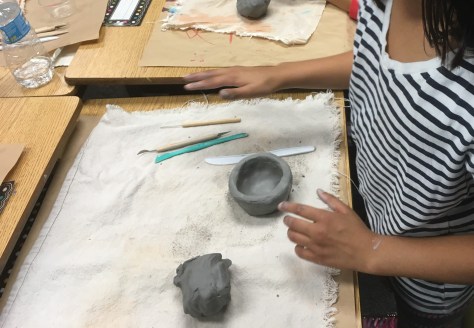
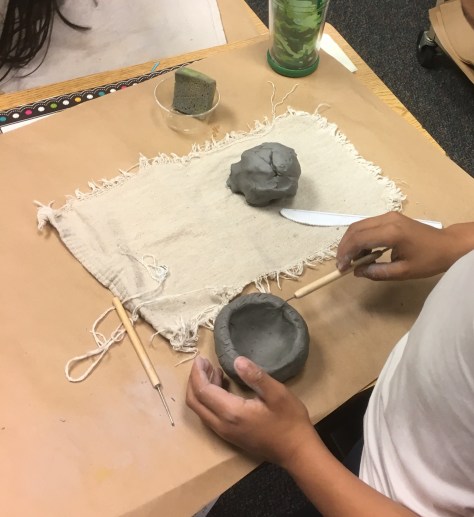
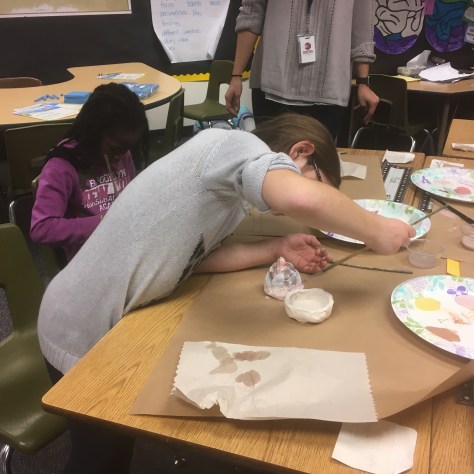
Each child was given two pieces of clay, a selection of clay tools and a damp sponge in a pot, all laid on a slightly damp cloth.

clay-set-up

Step 1.

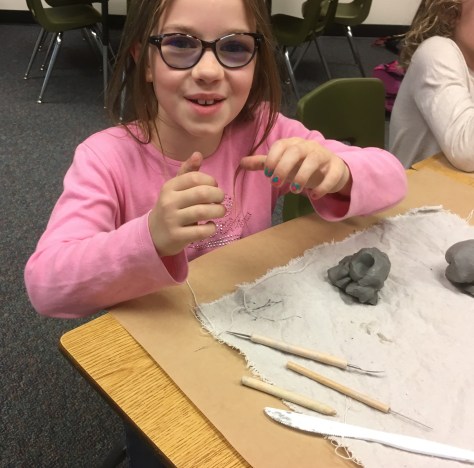
Take one of the balls of clay and knead it to get rid of any air bubbles.  Then press thumbs into the centre to make a hole.

thumb-pot

Step 2

Push thumbs outwards to make a pot shape.

thumb-pot-2

Step 3

Smooth fingers around the top edge to make it flat and even.

complete-thumb-pot

Step 4

Carve patterns into the bowl.  Some children made lines to make it look like a cupcake case and others chose their own designs or carved names into the sides.

thumb-pot-carving

The coil pot lid

The base was put to one side and the second piece of clay kneaded to make the lid. The lid was coiled to look like frosting.

Step one

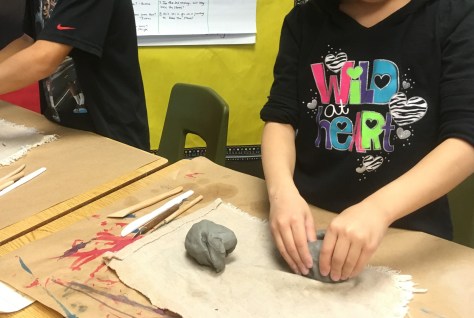
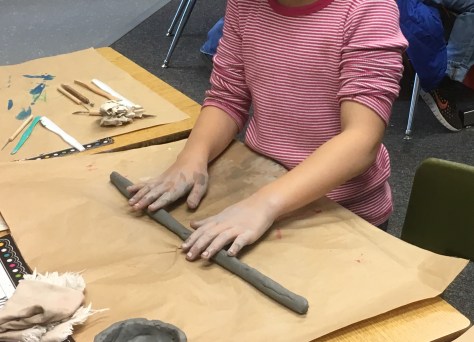
Shape the clay into a cylinder with your hands and roll it on the mat until it makes a large sausage shape to equal the length of the mat.

rolling-coil-pot

Keep moving hands along the length of the clay to avoid thin parts that will break off.  The paper moved around a bit so it was helpful to have their partner hold their mat down whilst they rolled.

Step 2

Measure the sausage around the top of the thumb pot.  Keep coiling, sloping the sides inwards until it closes at the top. Add a  clay cherry, if desired.

Step 3

Dampen the inside of the coil pot with a sponge and rub your fingers over the joins on the inside, until the surface is smooth.  This will stop it collapsing and falling apart.

Fire in the kiln

 Session 2 :The Glaze

I showed the children pictures of Thiebaud’s cupcakes for inspiration.cupcakes

The glaze colours were selected to match those used in Thiebaud’s paintings. Pastel shades, along with red for the cherries and brown for chocolate.

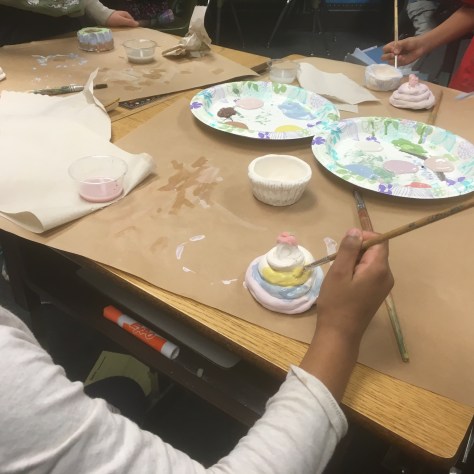
Each table had a paper plate with a selection of glaze colours on it and every child was given a fine and a thick paintbrush, a pot of water and a paper towel.

img_0606

They applied two layers of glaze, being careful not to leave white spaces.

img_0607-copy

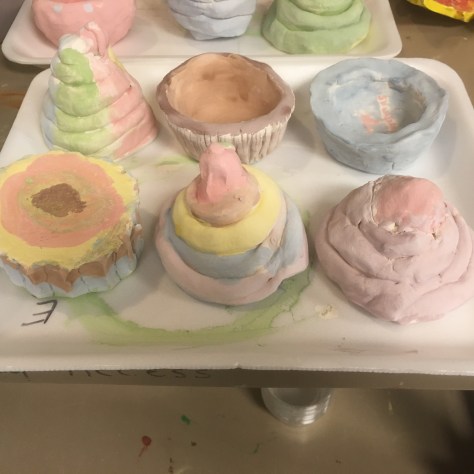
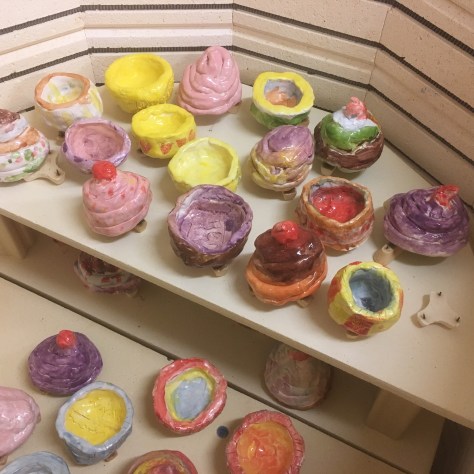
The finished results were pale and matt. I explained that the colours would become vibrant and glossy once they had been fired.

img_0608-copy

The Finished Results

img_0613-copy

The glazed pots are placed on stilts when fired in the kiln, so they don’t stick to the shelves.

I love the results. I think they will make a perfect Christmas gift.


8 New Picture Books to Add to Your Christmas List

At this time of the year I love to add books to my children’s wish list, but it often takes a lot of research to find new books that I know we will all love. I have received a large number of books to consider for review during 2016, so to help those of you who are seeking inspiration, I compiled a list of some of my favourites.

The Barefoot Book of Children

The Barefoot Book of Children is an absolute joy of a book and a clear favourite.  I would urge any parent or teacher to add it to their collection.  This non-fiction title is a celebration of our common humanity and helps facilitate discussions about race, diversity and inclusion. It looks at how other children live, how we are different and most importantly how we are alike.  The book is full of questions that provoke discussion , “How do you share your love? ”  “What would you like to do if you had a chance?” “Do you have a special place?” As a teacher, I would share a few pages each day to lead a discussion or topic.  Detailed descriptions of the illustrations can be found in the reference materials at back of the book. Children who love facts, can find out about the cultures depicted in the book including names of houses, meanings of names, special celebrations or cultural foods. This section has further talking points, to develop the thinking of slightly older children.  My youngest daughters shared this book together and were completely absorbed by discovering new things and discussing the questions together.

The Barefoot Book of Children is not available until the Spring in the UK but is currently available in the US.

The Branch by Mireille Messier illustrated by Pierre Pratt

The Branch is a charming story book featuring a little girl, who has a favourite branch on her tree where she likes to play and watch the world go by.  One stormy night, she is devastated to find her branch laying on the ground. Her mother agrees that she can keep the broken branch, for a while. Mr Frank, her neighbour understands the little girls sadness and seeing  potential in every piece of wood, he crafts the perfect gift from her favourite branch.The relationships in this book are portrayed beautifully through the text and illustrations.  I particularly love the sequence where the old man and the little girl, work together in the workshop to create something special. The Branch is a perfect book for children like mine, who love to climb trees.

The Littlest Family’s Big Day by Emily Winfield Martin

The Littlest Family’s Big Day is about moving to a new home and is perfect for younger readers.  The simple text will keep their interest and the beautiful, detailed illustrations have plenty for children to explore. This would make a wonderful bedtime book as you snuggle together and point out all the tiny details of this woodland world.

A Squiggly Story by Andrew Larsen and Mike Lowery

A Squiggly Story is the tale of a little boy who wants to write stories like his big sister, but hasn’t yet learned to write words.  His sister encourages him to tell his story, using individual letters and shapes. He tells the story to his class at school, who contribute more ideas.  This is a great read aloud  book for pre-school or kindergarten teachers, perfect for showing children that you can tell a story even if you can’t write words.  It would also make a lovely gift for an older sibling to give to a younger sibling practicing emergent writing.

Lily the Fancipoo and Piper was Afraid

These books come in gift sets, complete with a soft dog and adorable little mouse. The toys are of excellent quality and are totally irresistible.  I didn’t get chance to review Lily the Fancipoo as it was held up in transit, but we received Piper was Afraid. Piper was Afraid, is about a big dog who misses out on all kinds of fun because he is afraid.  The book had two features that made it an instant hit with my kids – the added bonus of the cuddly toys and an interactive element where you find the mouse hidden on every page.  Either book would make a perfect gift for young children.

Leonard’s Beard by Nancy Cote

Leonard’s Beard, is a comical story about a writer who becomes so absorbed in his stories, he forgets about the outside world. His beard grows and grows until one day  during a storm, Leonard realises how out of control it has become. He cuts his beard, revealing all manner of interesting objects. As he removes them, he discovers that being absorbed in writing has stopped him having his own adventures. This would be a good book to encourage children to get outside more or move away from a screen.

This or That: A Busy Morning by Wendy Kronick

A perfect book for babies and toddlers.  It follows the RIE parenting model , offering choices  to the child as he moves through his day. This is a lovely, interactive book to share with a young child.  At transitions during the day the toddler is presented with two options, “the bib keeps your clothes dry and clean, which will you wear, the red or the green?” Simple rhyming text will appeal to small children and it is perfect for promoting early social, emotional and communication skills.

Mr Matisse and his Cutouts by Annemarie Van Haeringen

Mr Matisse and his Cutouts is an ideal book for teachers or parents wishing to inspire art projects.  The story focuses on the latter part of Matisse’s life, when due to cancer he was no longer able to create art as he had done before.  Matisse found new ways to create, by cutting shapes from paper and displaying them around the room.  I’m looking forward to using this one in my art lessons next year.

Disclaimer: This post contains affiliate links.  I recieved review copies of the books featured in either digital or traditional format.

Leavenworth in Winter


IMG_1225 (2).JPG

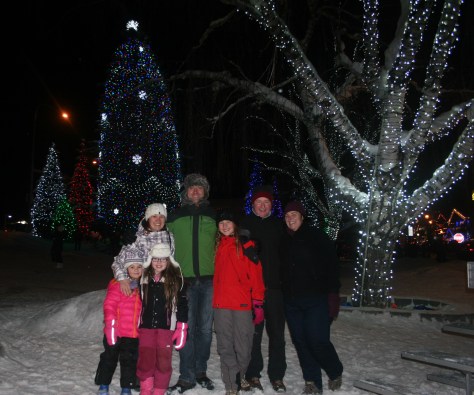
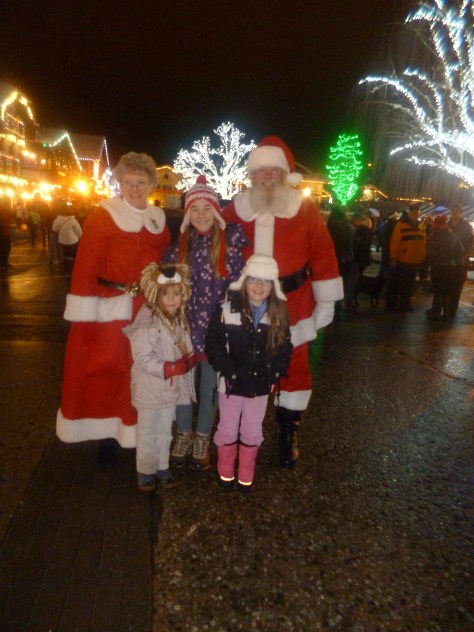
Last year was our first trip to Leavenworth during the Winter.  We have visited a number of times in the summer and had heard great things about the Christmas lights, so decided to take a trip. The Christmas lighting festival takes place during the first three weeks of December. There are plenty of activities at the festival and the girls loved seeing Santa and Mrs Christmas.

santa 2015

It gets very busy, so parking can be difficult.  If you prefer to go when it is quieter,the lights remain lit until February. We took another trip with guests after Christmas, which personally I preferred as it wasn’t so crowded.

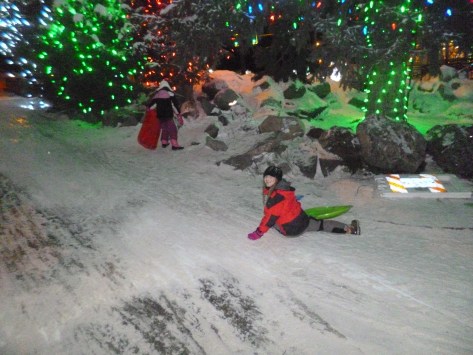
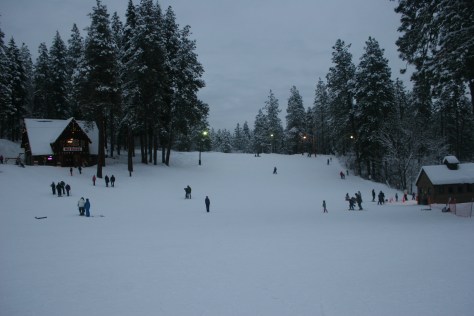
Leavenworth is the perfect place to find snow. Take your sledges with you and go down the hill in the town centre.  It is pretty bumpy so your sledge may not survive evidenced by the pile of broken plastic sledges at the bottom of the hill at the end of the evening. Surprisingly, the sledges we brought over from the UK survived, but the ones we bought here cracked.sledging in leavenworth

On our first visit we weren’t quite prepared for how cold it would be. We took our dog , who shivered the whole time and since we arrived in the evening for the lights, we really needed an extra layer of clothing.  On our next visit we came fully prepared with our ski gear and left the dog at home.

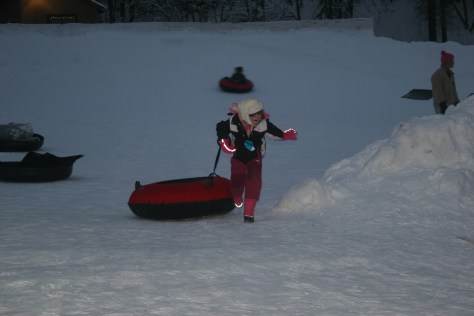
Ski hill was the perfect place for my eldest to try out her snow board for the first time. Our guest skied on the larger slope and the younger ones tried out tubing.

IMG_1207.JPG

IMG_1217

The view was spectacular too. When we had all had too much cold, we had hot drinks at the lodge on the hill and warmed ourselves by the fire.

IMG_1204.JPG


I think if I were to go again, I would book early for an overnight stay.  A day trip is fine in the Summer but I think a warm fire, hot drink and comfortable bed nearby would top off the day perfectly.

What is my Responsibility as an Early Educator in the Wake of the US Election?

Yesterday, in the wake of the US election, I was filled with  questions.  These were not questions about my role as a parent or about my future as a resident of the US but about my role and responsibility as an educator.

My core educational philosophy is to encourage children’s critical thinking and creative expression. Children should be valued for who they are and children, teachers and parents should work collaboratively, in an environment of respect and dialogue.  I draw inspiration in my thinking from Loris Malaguzzi, the founder of the preschools of Reggio Emilia.  He worked with the community, to create  new schools in the aftermath of World War II that would bring hope for a new generation. He created an environment that encouraged critical thinking and creative expression, and a culture of working together with respect for one another.  Malaguzzi achieved his goal with a community of like-minded individuals.

Yesterday, a key question for me was; if I only work with liberally minded families is there really anything to change and  am I really making a difference? If I want to encourage a different way of thinking, shouldn’t I be helping children who have not been encouraged to think in this way?

I struggled with the juxtaposition between encouraging critical thinking and respecting family beliefs and cultures. I believe that it is our duty to create an environment of tolerance and open-mindedness, and to promote a culture of children who think for themselves and whose opinions and emotions are valued. However, I also believe that we should work alongside families, respect their beliefs and work together for the good of the child.

More questions arose.

Can you do both and is it even possible to foster a new way of thinking if there are opposing values at home?

If a family believes something is a fundamental truth should I give the child the tools to question their world or would this be disrespectful to the families beliefs?

Perhaps it is my own issue and not theirs and I should instead seek to understand them better and why they uphold those beliefs?

Yesterday, that is where I left it, but today things are clearer, particularly in regard to the final question.

When there is hatred, unease and unrest in the world it is because of misunderstanding, ignorance and lack of knowledge. I can criticise people if they believe in things that I find fundamentally wrong, but should not condemn them until I have listened to their story, understood why they feel that way and looked into the contexts of their beliefs.  America is divided; there is a clear feeling of them and us, but who is looking to understand why the other side holds their beliefs and the reality of their lives?
I grew up in Wales. In Wales we dislike the English because we are fed a history of English wealthy landowners who treated the working classes badly and took away our language.  We see the English as arrogant toffs who think they are above us.  Of course this is ludicrous and there is as much diversity in England as there is in Wales,but if you rarely cross the border, ignorance prevails. The same is true here. Liberals see Trump supporters as racist, bigoted individuals and people outside of the cities, see city people who are ignorant to their way of life and take away their values and livelihoods.
I think I now know my role. All children should have their minds opened.  This isn’t only about questioning and critical thinking, it is also our duty as educators, to partner with other educators from other parts of the country and the world, to help them understand what the world is like for others. Show children the diversity of the world, teach them to ask questions of one another. Do they have the same questions? Do they think the same things as me? How are they different and how are we the same?  We have a new opportunity in the world of the internet and social media to open children’s eyes so that they will not grow up in ignorance and fear.

We are all different but in many ways we are also all the same – let’s celebrate that for a while instead of trying to outdo one another all the time.


8 Spooky Picture Books

Perhaps a little late for Hallowe’en, but if you have kids who love spooky things, wizards, witches or monsters here are a few recommended picture books to share.

1. The Ghosts go Scaring

My kids love this one. Set to the tune of ‘ants go marching’, you can read or sing along as different ghosts come out to scare people.  My children loved counting the ghosts and finding their favourites on each page.  If you are looking for new rhymes and songs to add to the Hallowe’en preschool collection, this book is a perfect choice.

2. Brunhilda’s Backwards Day

An amusing tale about Brunhilda the witch, who likes to cause mischief with her spells. One day her cat decides to make trouble and casts a spell that turns Brunhilda’s mischief into good deeds. Brunhilda’s Backwards Day is a charming story, with vibrant illustrations and I’m sure will become a firm favourite.

3. I Want to Eat Your Books

A zombie book that really isn’t scary.  The rhyming text tells the story of a zombie who comes to school to eat books but soon discovers a love of reading.  The book has a nice message and would make a good class read aloud book, as the children chant ‘I want to eat your books’.

4. Winnie the Witch

We love the Winnie the Witch stories and the audio books are also a nice addition to the collection. These comical  books share the adventures of Winnie and her cat Wilbur as they get themselves into all kinds of situations through casting spells.

5. Titchy Witch

Titchy Witch is another family favourite.  Titchy Witch is a little witch who faces the challenges of life as a young witch.  She deals with challenges that many children face, like having a new baby, bullies, inviting her school friends to her party,  learning to read and having a pet, but through the eyes of a witch.

6. Creepy Monsters, Sleepy Monsters

We bought this book for an art project and fell in love with the illustrations.  This is a perfect book for little ones who are afraid of monsters, to help them see that monsters are really just like them.

7.Monsters Love Underpants

My youngest daughter’s favourite monster book. A silly, rhyming  tale about monsters who love to wear underpants, from the authors of Aliens Love Underpants, Pirates Love Underpants and Dinosaurs Love Underpants.

8. The Dark at the Top of the Stairs

An old one, but a great story that captures the suspense that children feel as they encounter the unknown. The anticipation of the little mouse as he wonders what is at the top of the stairs makes this a perfect book to read at Hallowe’en.

Let me know your favourite spooky books in the comments.

Disclaimer: This post contains affiliate links.

The Book of Kringle: Legend of the North Pole. (Review)

When I was a child, Christmas picture books had a very special place in our celebrations.  Every Christmas Eve, my dad would settle down with us and read “The Night Before Christmas” from a tiny square book, that was his when he was a boy. Despite the size of the book, the illustrations were truly magical and it was a Christmas tradition that my brother and I would look forward to.  Books also held a special place in our gift list. Every Christmas we would receive a new hardcover book, my mother would preserve the dust cover by wrapping it in plastic and sign the book with a loving message.  To this day, I treasure hard backed children’s books. When I enter a children’s book shop, it still feels as though I am entering Aladdin’s cave and I’m compelled to cradle a new book like a baby.

The Book of Kringle could easily ignite a similar magic and love of books for young children. I could imagine its reading becoming a Christmas tradition in many families.  I have only viewed a digital copy of the book, but other reviewers have praised the look and feel of the physical book, especially its resemblance to an old leather-bound document. This would make it a very special gift that could be enjoyed by all the family. Perhaps if you have a visiting elf, he could leave it as a gift to explain the history of the elves.

The story is simple and charming, written in the style of an old fairytale. The Book of Kringle tells of the days when the North Pole was ruled by a greedy king who didn’t allow elves to have fun.  The king’s friendly brother spreads kindness amongst the elves and the story of Santa unfolds.  I liked the traditional tone but sometimes I felt the language didn’t  flow. That may have been because it was more difficult to follow in the digital format and it loses some of its magic without a physical book to hold.

The real magic though, lies in the illustrations. The soft watercolour illustrations are stunning, full of detail and fit beautifully with the traditional feel of the book. They transport me back to my childhood treasures, illustrated by the likes of Arthur Rackham, Mabel Lucy Atwell and Kate Greenaway.  A pre-reader could happily spend hours pouring over the illustrations and the longer text would keep older children entertained.

If you visit the Book of Kringle website, you can watch Santa himself talk about the book and how the legend was discovered after all these years. It will hopefully give you a taste of this visual delight. The Book of Kringle retails on Amazon at $19.99


Cat Themed Children’s Party Ideas

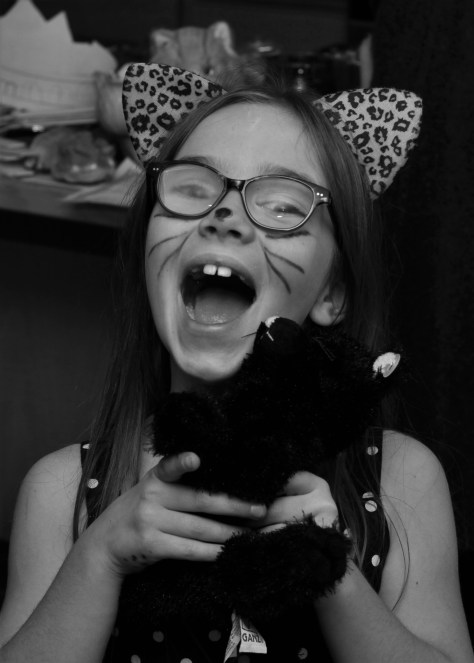
IMG_5562.jpgMy daughter wanted a cat party for her eighth birthday.  I hosted a dog themed party for a friend’s daughter a few months ago, so we re-used some of the ideas and added a few new ones.
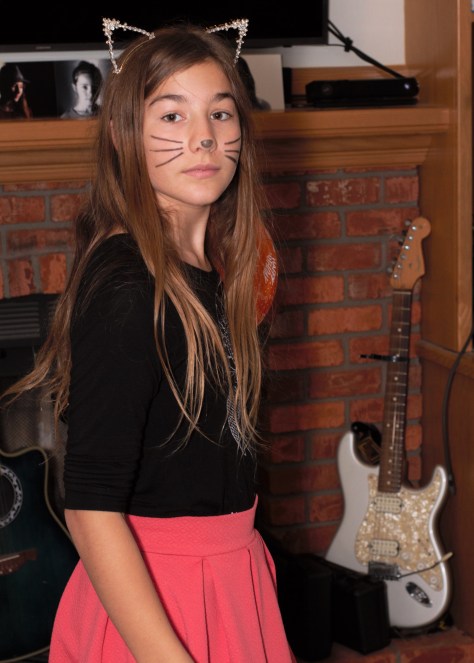
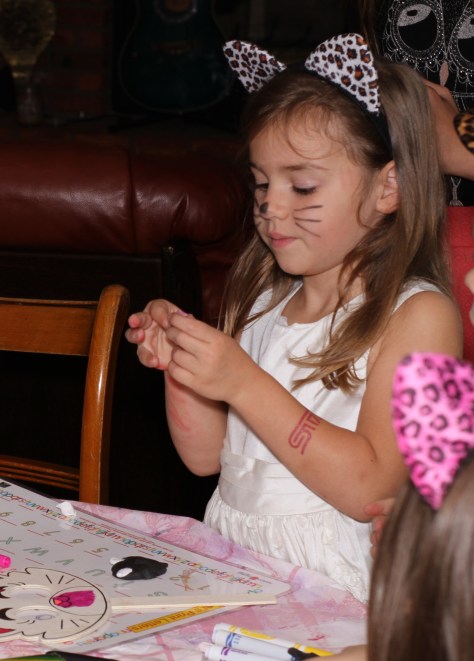
For their arrival, each child had a pair of cat ears and my eldest drew noses and whiskers on their faces.

Food

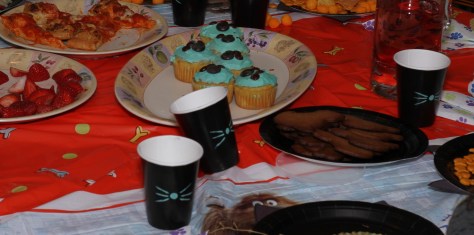
The food was simple. My daughter asked if they could have tuna fish sandwiches and I cooked a pizza cut into triangles to look like a mouse.  We had cheese triangles with slices of cheese string for mouse ears and tails and strawberries with strawberry lace tails. My daughter baked cat shaped cookies and cupcakes with paw prints made from M&M’s and Minstrels (British chocolates that are bigger than M&M’s). Goldfish and other snacks completed the ensemble.

Plain, black plates were decorated with cat ears and  faces and whiskers  drawn on black paper cups.

food

Crafts

One of the parent’s commented that it was the calmest party they had ever seen, as the group of mostly girls settled down to crafts.

  • First they coloured in wooden cat masks from Michaels, which gave us time to wait for everyone to arrive.

colouring-cats

  • Once everybody had arrived, we made cat faces with polymer clay.  At the dog party we made dog faces into necklaces but this time I decided to turn them into fridge magnets by attaching magnetic tape.

plymer-clay-cats

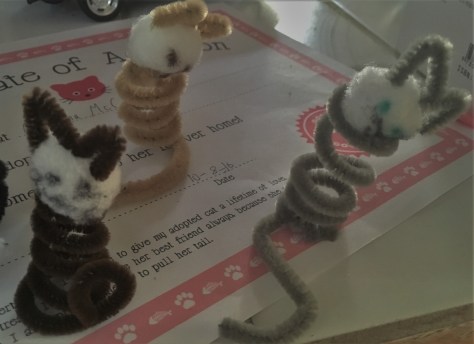
  • Finally we made pipe cleaner cats.  The pipe cleaner was coiled around a finger, leaving  a piece for the tail. Pom pom heads were attached and ears and faces added.

pipecleaner-cats

Games

Fishing

The first game was a magnetic fishing game.  I made a fishing rod with a magnet attached and cardboard fish, labelled with numbers and a paperclip attached. Each guest caught a fish and then were handed a package with a corresponding number.  Inside the package was a cuddly cat and a certificate for them to adopt the cat and take it home.

img_5577-2Pass the Parcel

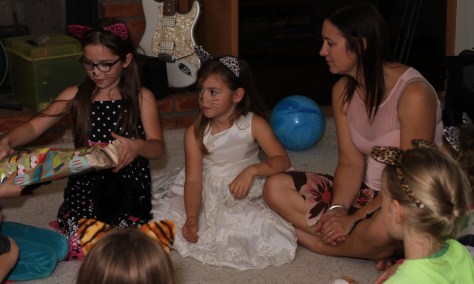
Pass the parcel is a traditional British party game and one of my kids favourites.  A gift is wrapped in multiple layers and passed around a circle.  When the music stops the child holding the parcel unwraps one layer.  Inside each layer was a cat themed action that the children had to perform, if they performed it correctly they received a treat.  The child who unwraps the final layer wins the gift.

pass-the-parcelMusical Cat Beds

Following the same rules as musical chairs but using cushions as cat beds.  When the music stopped, the children had to find a cat bed to sit on. Each time one cushion was removed.  When a chid was out, I let them choose a sweet from the bag and the winner chose a larger prize from our goody bag.

Silly Races

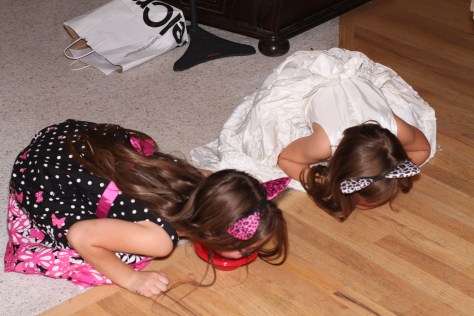
We played this game at the dog party and it was a big success, so decided to use it again.  Two bowls with a small amount of chocolate cereal are placed side by side (the cereal looks like pet food).  Two children race each other to see who can finish the cereal first, by only using their mouths.  The winner received a prize from the goody bag and the runner-up a sweet treat.

img_5604

The second silly race, was to push a ball of wool/yarn across the floor to the finish line, using their nose.  Some children worked out very quickly that if they gave it a significant nudge, it would roll a long way.

Pass the flea

I found a glow in the dark bug to act as our flea. This was an adaptation of hot potato.  The children pass the flea quickly around the circle to music. When the music stops, the child holding the flea is out.  The last child left in, is the lucky cat not to catch fleas and wins a prize from the goodie bag.

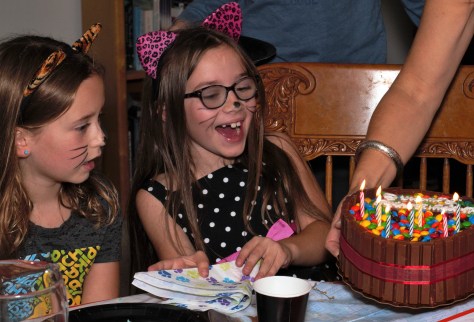
The party was a great success – I think the birthday girl would agree.

img_5567