Category Archives: parenting

Picture Books for Children Who are Afraid of the Dark.

Fear of the dark is fairly common amongst young children. It often arises around the age of two or three when their imaginations develop and they begin pretend play.  Often, children become fearful about what might be lurking in the darkness but sometimes it is also tied up with other anxieties.

Sharing a book is the perfect way to invite a child to talk about their fears. Children’s fears are real so it helps to listen to them and work out strategies for alleviating fears together .  When my daughter was young, she developed an extreme fear of darkness, so bad that she would cower and cry if I left the curtains open as it was getting dark. It turned out that she had very poor eyesight but was too young to articulate it.  When it was dark, she could barely see anything at all.  Once her eyes were tested and she wore glasses, her fear was more manageable.  She still gets scared sometimes when she gets up in the night, but having a night-light by her bed (preferably one she can carry) helps a lot. When her fear was at its height, sharing stories helped a lot. I even wrote a book just for her, about a magic elf that she could call upon whenever she was scared.

Fears are helped when children can talk to you about them and what better way to start a conversation than reading a good book together. Below are some of my favourites; let me know in the comments if you have any other suggestions.

  1. The Moon Inside by Sandra V. Feder, illustrated by Aimee Sicuro

This new title, is the story of Ella who grows more comfortable with darkness as her mother gently encourages her to appreciate  nature’s night-time wonders. Ella’s favourite colour is yellow and she feels sad as the yellow disappears at dusk.  The illustrations move from an indoor world of yellow, black and white to an outdoor twilight of green, red, blue and oranges.  Ella looks and listens as she explores with her mother and finds many beautiful things. She finally decides that if she leaves fewer lights on inside, then she can experience the glow of the moon from her bedroom.

Talking points for children

  • What can you see at night?
  • What can you hear at night?
  • Does it feel darker inside or outside?
  • How does it feel to look out of your window at night?
  • What would happen if we didn’t have night? What would you miss?

2. The Dark by Lemony Snicket, illustrated by Jon Klassen

Lazlo is afraid of the dark but the dark usually lives in the basement. That is until one night when the dark, in its personified form, enters Lazlo’s bedroom and takes him on a journey through the house to the basement. Once there, the dark shows him  a drawer where he finds night-light bulbs and Lazlo and the dark live in harmony ever after.  This book combines sumptuous, descriptive text with pictures that show the stark contrast between the shiny blackness and the light of the flashlight.

Talking points for children

  • What does dark look like?
  • What does dark feel like?
  • What can we do to make the dark feel different?

3. Can’t you Sleep Little Bear by Martin Waddell, illustrated by Barbara Firth

This timeless classic tells the story of Big Bear and Little Bear. Little Bear can’t go to sleep because he is afraid of the darkness all around. Big Bear brings lamps of different sizes to help Little Bear, but he is still afraid.  When Little Bear still can’t sleep, Big Bear takes him outside to see the light of the moon and stars. Finally convinced that he is safe, he falls asleep in Big Bear’s arms, in front of a warm fire.  If comfort food came in book form, this would be it.

Talking points for children

  • What helps you when you can’t sleep?
  •  Why aren’t grown-ups afraid of the dark?
  • How do you feel when you look up to the sky when it is dark?

4. The Owl who was Afraid of the Dark by Jill Tomlinson, illustrated by Paul Howard

Another timeless classic, this time in early chapter book format.  Plop is a barn owl, but unlike all of his friends, Plop thinks the dark is scary.  Each chapter deals with a different aspect of darkness as Plop learns  through his many adventures, that dark is exciting, kind, fun, necessary, fascinating, wonderful and beautiful. This is a perfect read-aloud book for young children.

Talking points for children.

  • Why do you think dark is fun, fascinating, beautiful etc.?
  • Can you think of other adjectives to describe the dark?
  • Have you ever been convinced by someone else that something you thought was scary wasn’t actually that frightening at all?

5. I’m Coming to Get You by Tony Ross

I first came across this picture book as part of a children’s literature module back in my student days and it is a personal favourite. Though not strictly about a fear of the dark, it is a book about putting fears into perspective.  As a creature from outer space hurtled towards Earth, it warns Tommy , “I’m coming to get you”.  Tommy  searches for it as he goes off to bed but can’t find it. In the morning, the monster gets ready to pounce, only to find that he is smaller than a matchstick in the human world.

Talking points for children

  • If you could squish one fear with your shoe, what would it be?
  • What things are you scared of that might in reality be more frightened by you?

Disclaimer: This post contains affiliate links.
The Making of a Harry Potter Fan’s Holiday – Warner Bros. Studio Tour

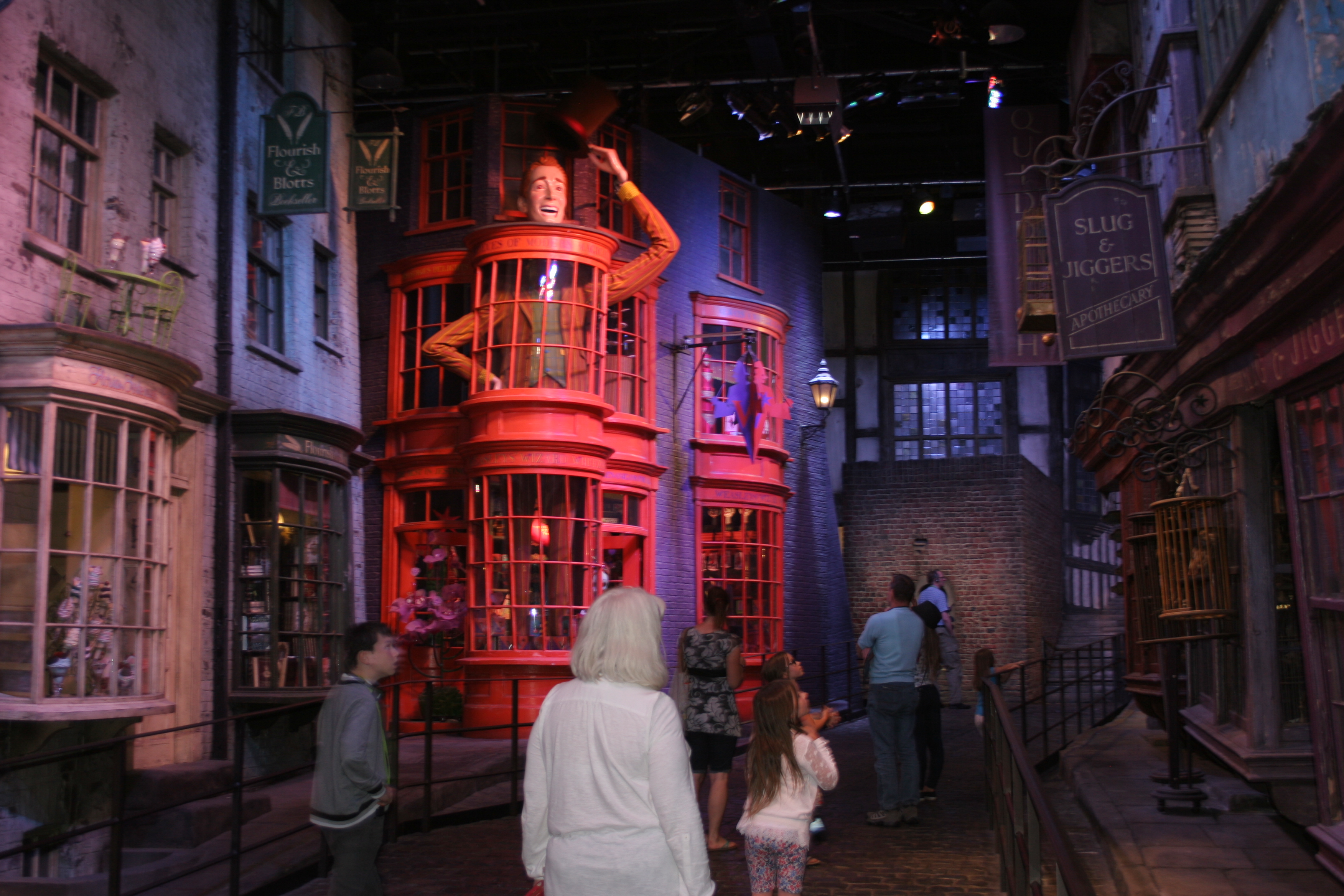
Diagon Alley

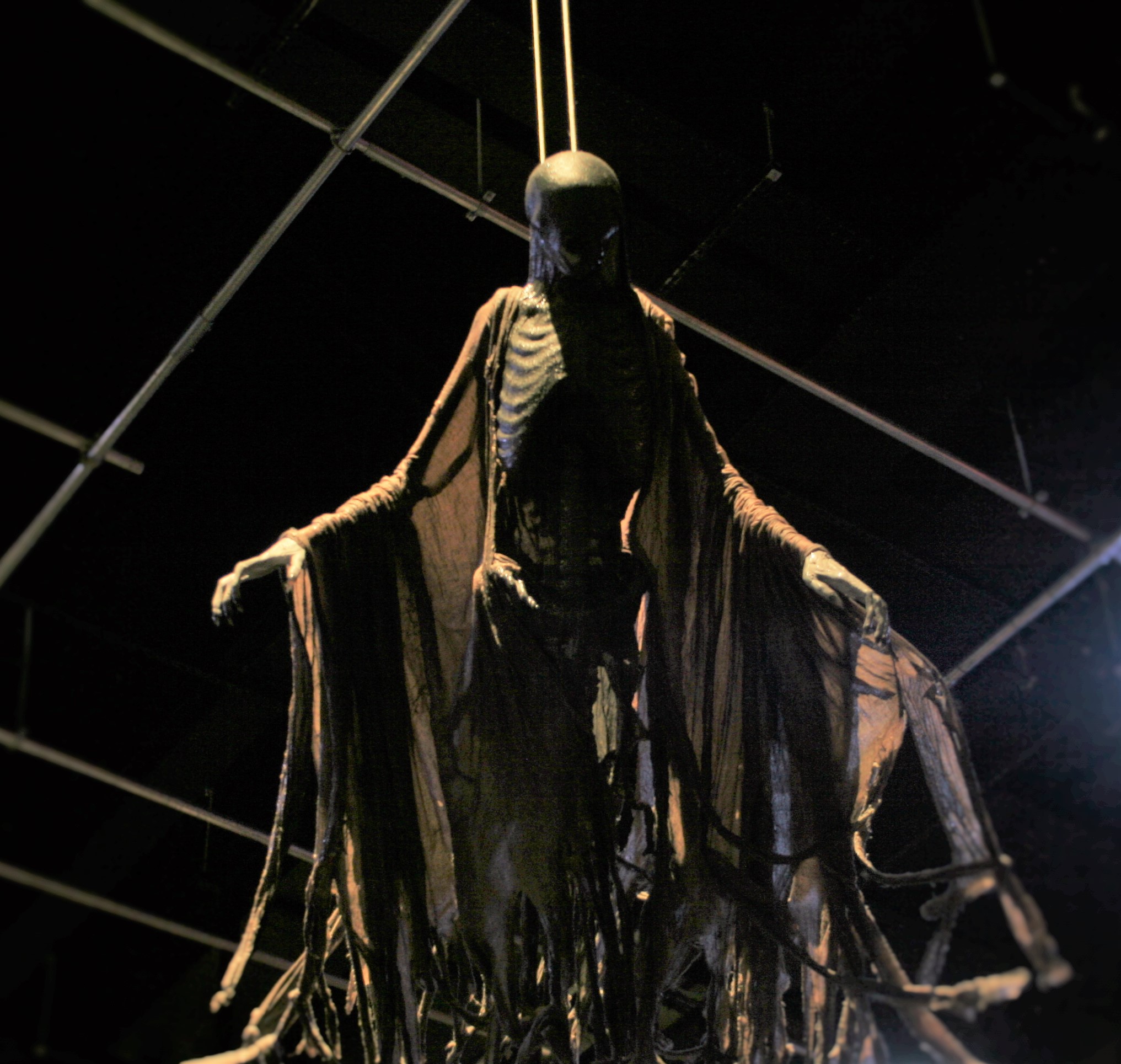
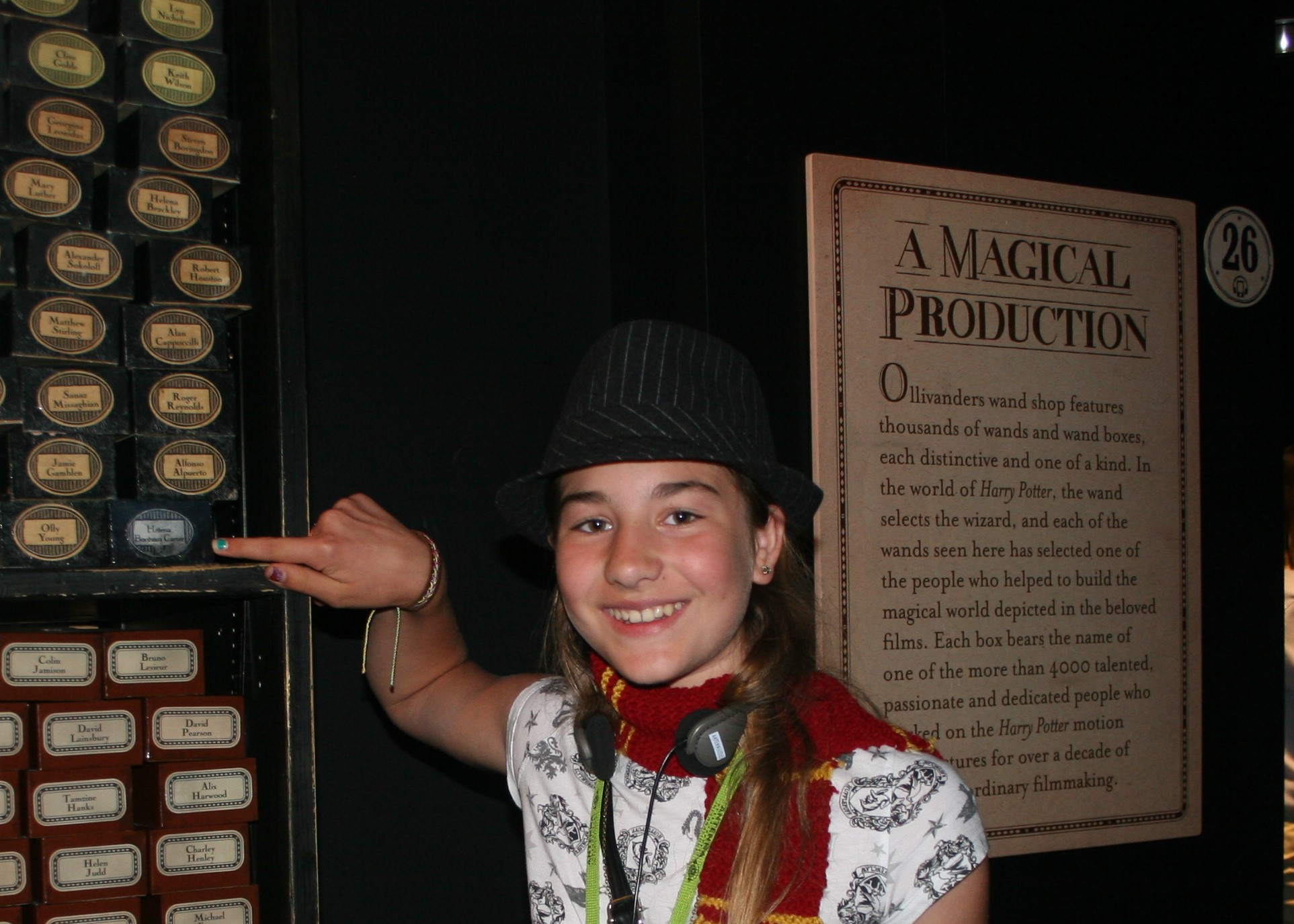
My twelve-year-old placed the Harry Potter Warner Bros. Studio tour firmly at the top of her list of places to visit when we were in the UK.  Following our visit to the Dr. Who Experience her younger sisters were more cautious.  Friends who had visited previously, assured them that it was amazing and not a bit frightening but I’m not sure they were totally convinced. Of course, their friends were right, it wasn’t a bit scary.  You are taken on a journey to see how the film was created and  seeing the special effects behind the film alleviated all their fears, especially seeing how tiny the dementors are in real life.

dementors

Warner Bros Studio Tour is located North of London so we stayed nearby at North Hill Farm. As a family of five it can be difficult to find hotels and B&B’s that allow us to share one room.  The family room at North Hill Farm slept five and was perfect for all of us.

Excitement mounted as we drove into the car park and saw the signs and statues outside.  All visitors require advance booking with timed slots and this allows for a wonderful experience where you never feel overwhelmed by crowds and everything is easy to see without queues.

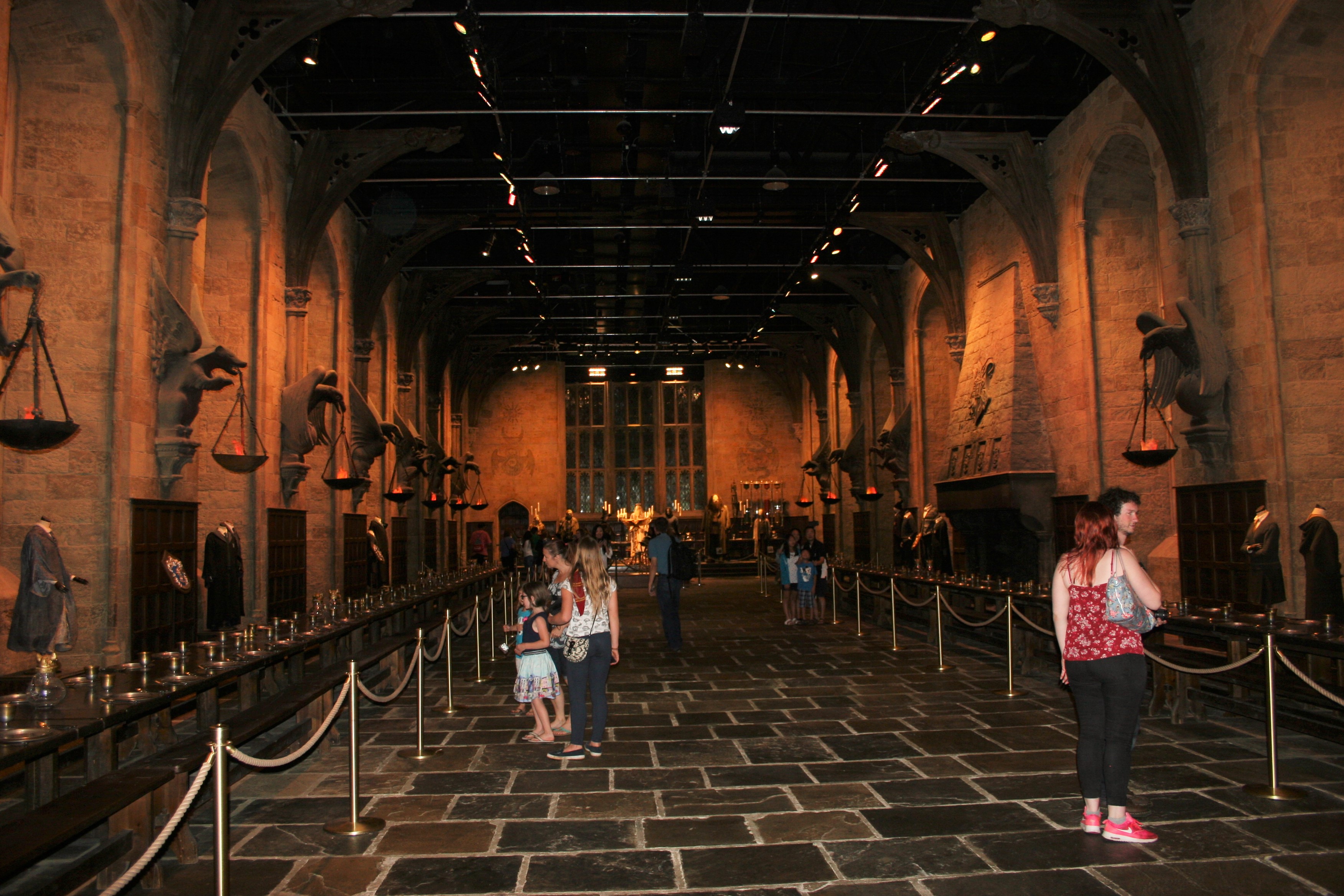
Hogwarts great hall

I have to admit to feeling a little emotional watching the introductory film and completely awestruck when the doors opened onto the great hall. Groups are led by a guide into these first two sections, while the rest of the tour is self guided.

audio tour warner bros studio tour

As a Harry Potter geek, my daughter listened to the audio tour.  I knew she would appreciate facts and figures but without it most exhibits have a guide or video screen telling you more about it.  My seven-year-old was enraptured by the talk at the wig stand and delighted in telling me stories about Malfoy’ wig.

There are plenty of exhibits young children can interact with from making magic to wand workshops and riding on a broom. The guides were so good at encouraging the kids as seen in this video clip.

Next stop Platform 9 3/4. Inside the Hogwarts Express, the carriages move through the movies in sequence , decorated with appropriate props.

Platform 9 3/4

This takes you to the outside lot where you can sample butterbeer or butterbeer ice cream. The detail in Privet Drive is wonderful, each certificate on the wall depicting Dudley’s pointless achievements.


The final lot features special effects, illustrated by a series of clever videos and the art of Harry Potter.  The tour ends with a surprise that truly takes your breath away, so I’m not going to offer any hints to spoil it.

Olivanders
Olivanders


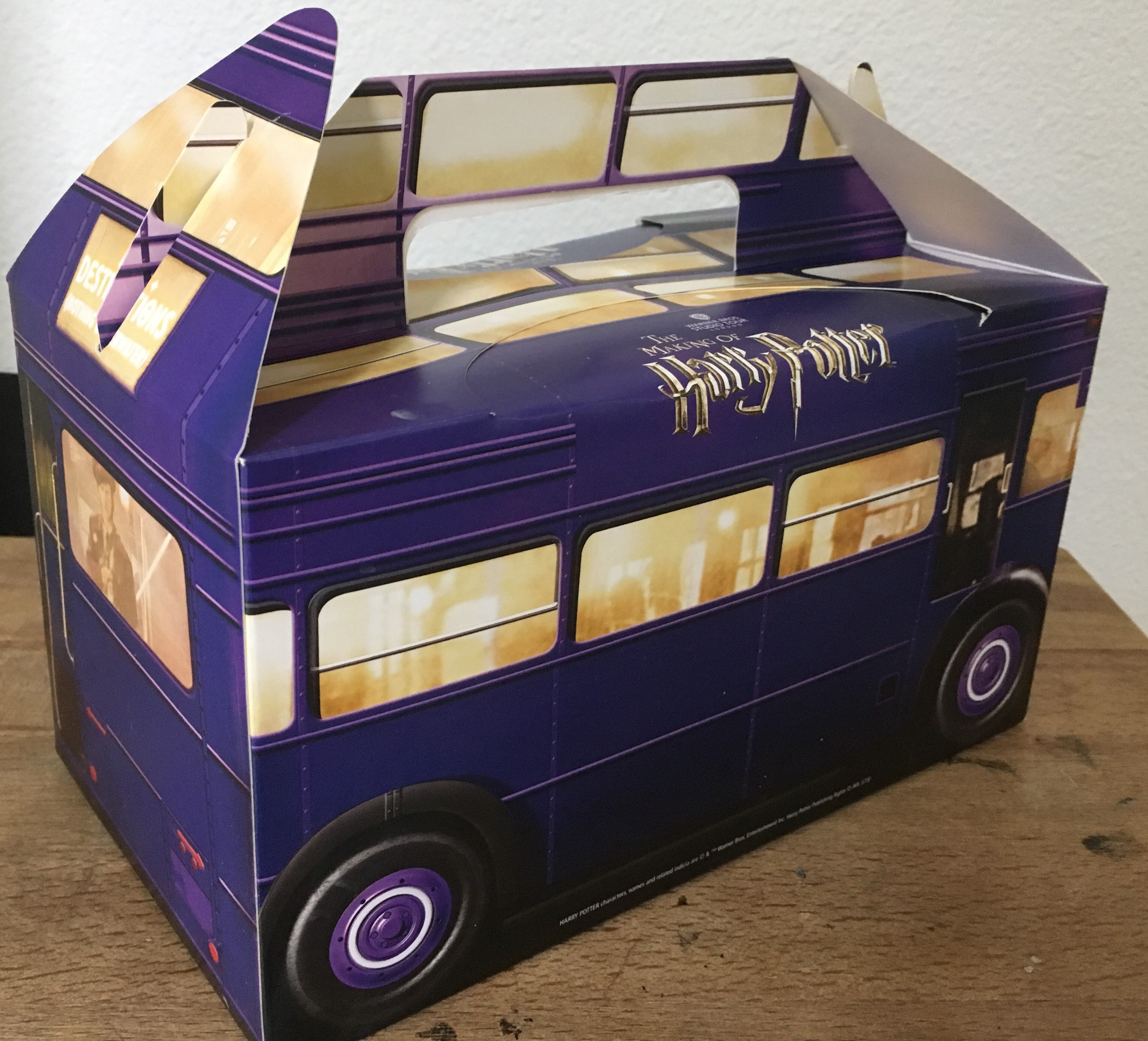
There is so much to see at the Warner Bros. Studio tour. I would plan to stay at least three hours and allow extra time  for shopping. There is a lot of exclusive merchandise and entry to the shop is not permitted without a ticket for the tour.  We found some cool stuff although sadly I ruined my husband’s Slytherin Quidditch top with bleach after he had worn it once.  Looks like I have the perfect excuse to return some time. If you visit the café, the kids lunches come in this really cool knight bus box.

knight bus lunch box

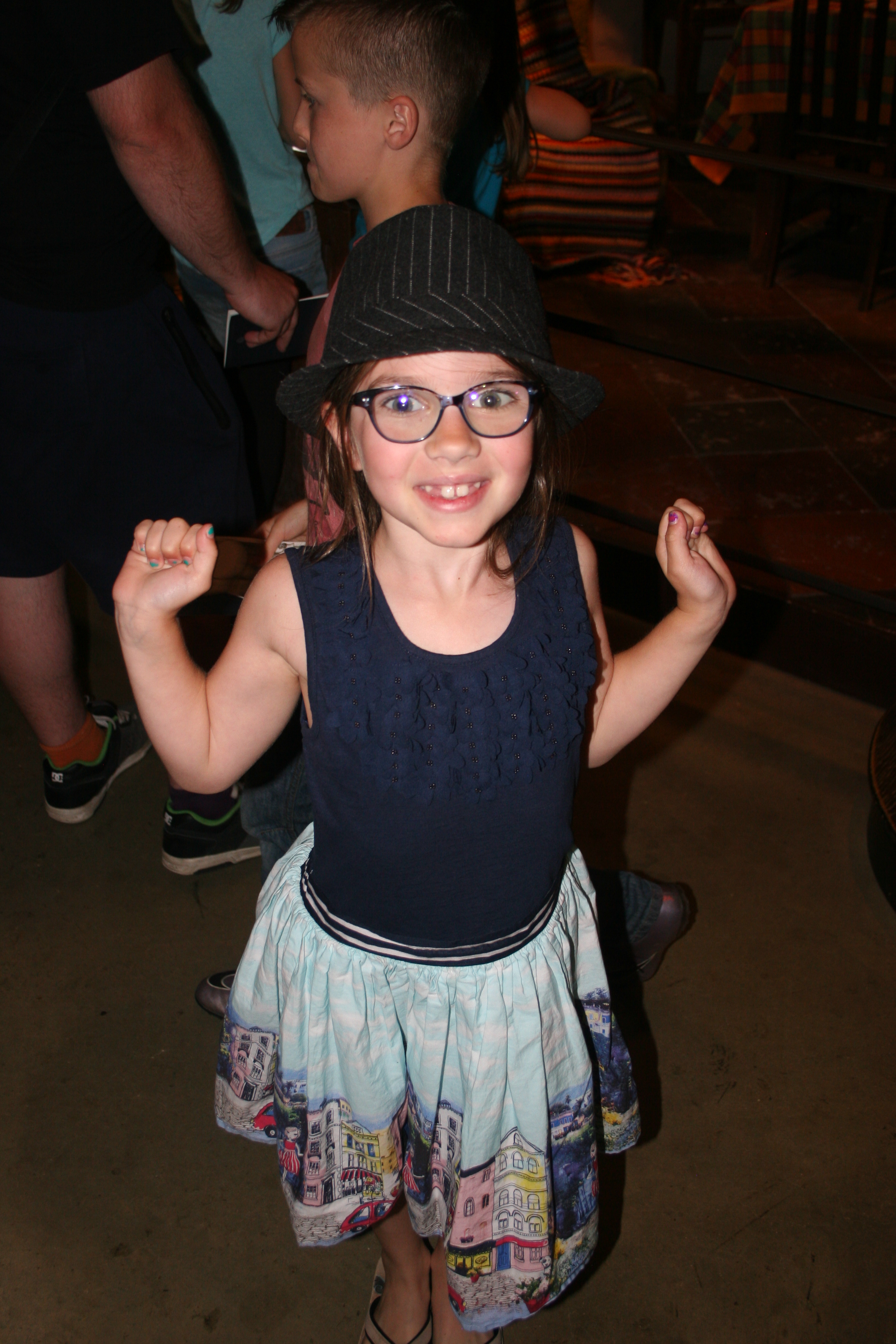
There was never a complaint from any of the kids that they had seen enough, the whole experience was utterly engaging and we wouldn’t hesitate to return.  If you are looking for a full, well organised and good value experience I would put this top of your list. When I asked the girls what their favourite part of our trip was, the unanimous response was Harry Potter!  In case you need further confirmation, just look at these faces.

happy childrenimg_2125-2

Disclaimer: No payment or complimentary tickets were received for writing this post.


Are Your Kids Fussy about What They Wear? Let Them Design Their Own

All three of my girls have gone through a fussy stage at some point. My eldest wouldn’t wear anything on her waist and had to pull everything down to her hips and all three have gone through a phase of only wearing dresses.  My youngest is the most particular about what she wears. We have a wardrobe of clothes that her sisters loved but for some reason she turns her nose up at.

We were very excited therefore, when we won a custom-made dress from The Patchery in a prize giveaway.   The Patchery began when a mum was sewing clothes for her kids. Immersed in the creative process, she thought, “Why can’t this be available to everyone, even if you can’t sew?” And that was the beginning of The Patchery.

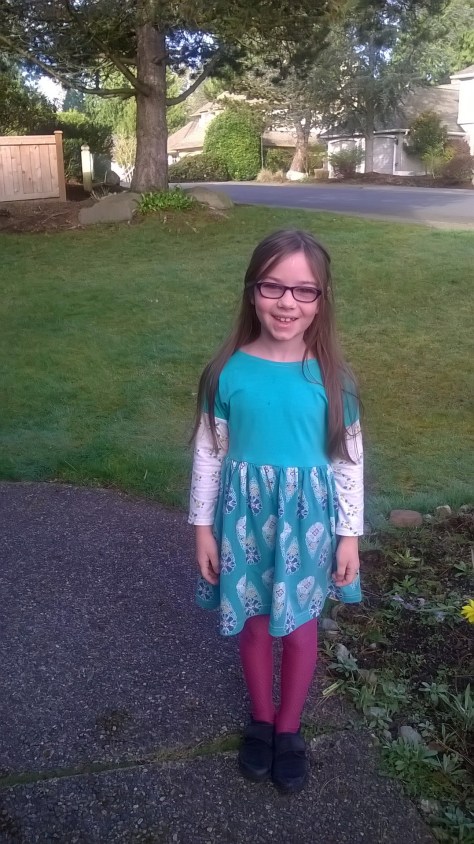
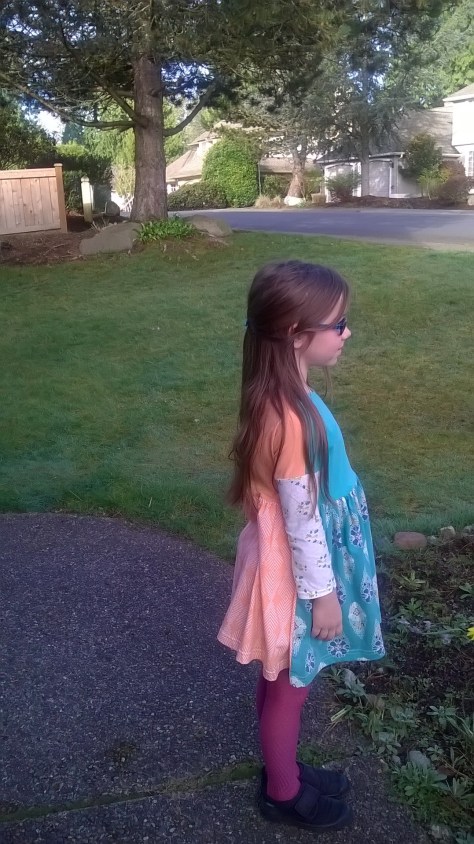
To design your own clothes you choose a design and fabrics and then the garments are custom-made and shipped to your address.   My daughter chose the kimono dress. She chose her fabrics for the bodice , skirt and sleeves and then chose a different fabric for the back. We went through the design a few times to make sure she was happy.

WP_20160329_001

Her face was a picture when the dress arrived and she tried it on.  “Do you think people will think I’m weird because I have different colours on the front and back?” she asked. I told her that nobody else would have a dress quite like it, so they would think it was really cool.  “Could I wear it both ways? The blue side one day and then turn it around to the orange side?” she asked.  “Perhaps if we cut the label out” I replied. I think she has a pretty cool idea for making her dress even more unique.

WP_20160329_002

It turned out so beautifully and the quality is stunning. It is such a great concept, I just had to share it.  It makes a wonderful gift for young children.  Baby clothes are also available so next time someone I know has a baby, I’m going to order a custom-made outfit. What a special gift that would be.

disclaimer: this is a personal recommendation. I did not receive payment or products for writing this post.

You’re My Kind of Mum Friend Because…..

A few weeks ago I went for a walk to the park with my  daughter. She likes to climb to the top of the climbing frame and play pirates. The game involves roaming the edges of the park for interesting treasures and on this day, she discovered big rocks.  She proceeded to pick them up and roll them down the bank, watching them crash at the bottom. The only other child at the park was a little younger than my daughter and after observing her for a while, she found her own rock.  She used all of her efforts to lift the rock and proudly show it to her mum. At which point, she was greeted  with a look of horror and her mum quickly took the rock away and ushered her to ‘more suitable’ pursuits.

This kind of reaction is very familiar.  When my children were toddlers, other parents would often ask me if my children were okay when they climbed a ladder and slid down the longest slide, as I observed from a distance. I have never been a parent to shadow my child’s every move and rarely feel the need to step in.

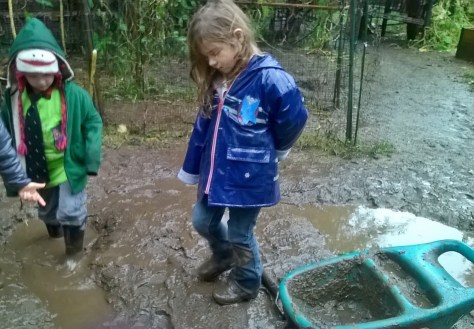
It is always refreshing to find a parent who shares my attitude.  On a recent trip to the park with a friend, I was so happy to find someone who not only didn’t bat an eyelid when my eldest started paddling barefooted in the cold wet mud but actively encouraged the others to join in. When the children threw rocks on the ground to see if they would break , she gave them advice on how to do it safely, rather than stopping them because it was too dangerous.

You are my kind of mum friend because you let all these experiences happen.

FullSizeRender [345550]
It’s fun to stand on the roundabout, when we fell, we worked out how we needed to balance to stay on.


WP_20160322_003 1
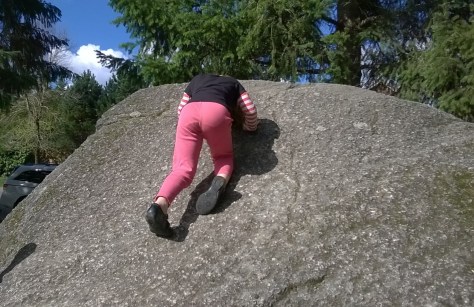
When you are 5 you can climb a big rock without any help.
WP_20151130_001
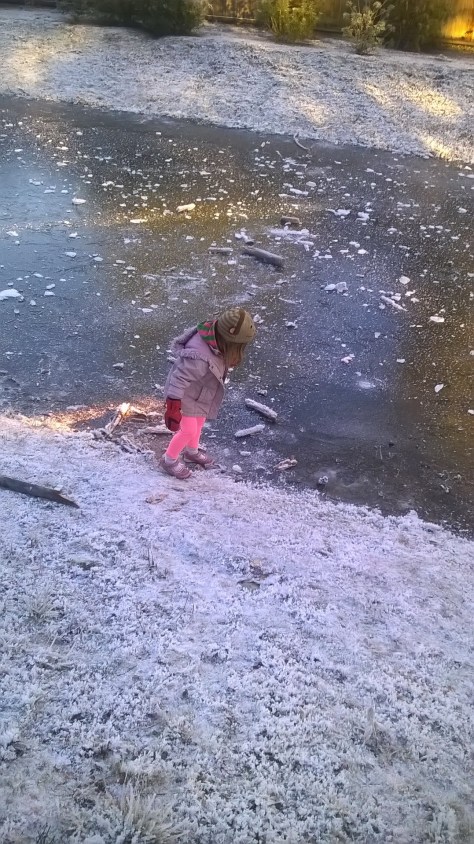
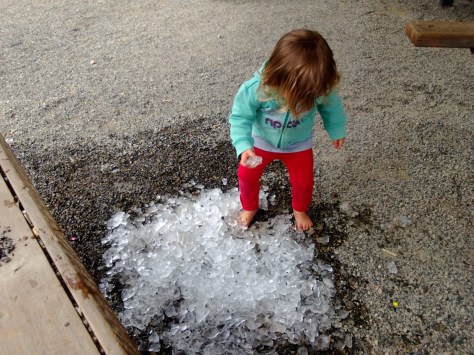
I can test the ice if I stand on the edge and throw sticks to see if it will break.


WP_20151124_005
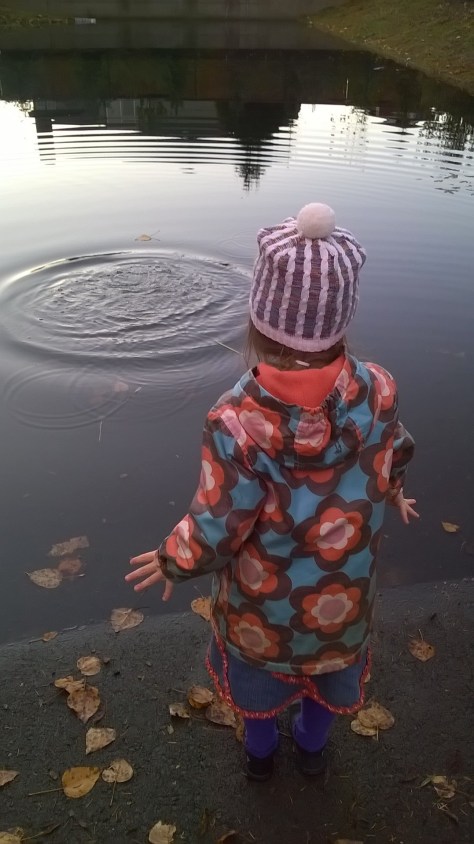
I explore the size of the ripples as I throw stones into the pond.  If I get too close I might get wet and the water is cold!
WP_20151113_002 1
Mud is good – the squishier the better!
WP_20140501_005
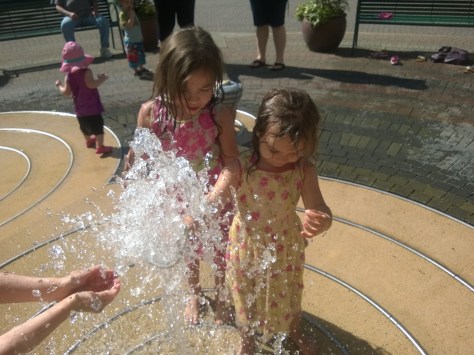
We don’t need a swimming costume to get wet.
WP_20140123_008 (1)
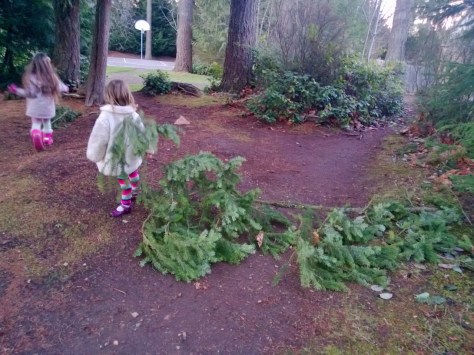
Who can find the biggest branch?


WP_20130619_011
Don’t tell me it’s cold, I need to feel it!
WP_20130628_004
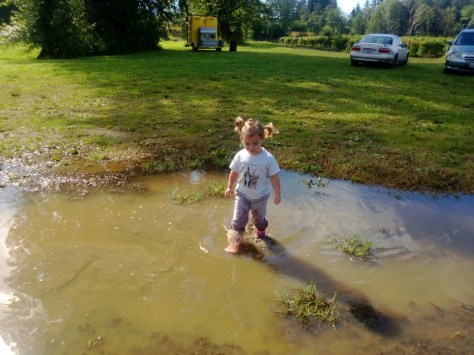
Puddles are the best!

FullSizeRender [345562]
It’s okay to play – even when you’re almost 12.
FullSizeRender [345556]
If I ride on my coat, I go faster.
FullSizeRender [345552]
It’s okay to remove your shoes and coat when it isn’t quite Spring.

blossom
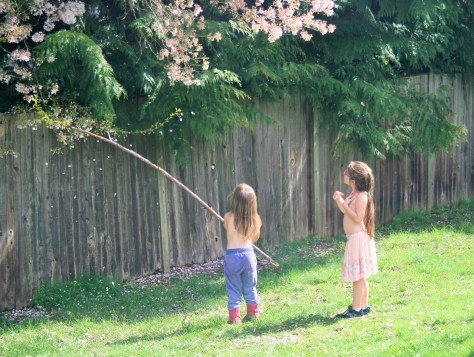
Take off your shirt and play with a stick.
getting wet
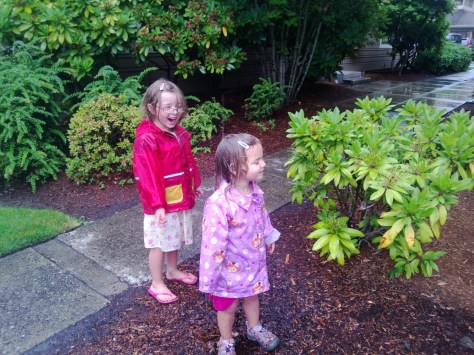
I’m going to have a shower. I’m getting very wet, now the rain is staying on me.

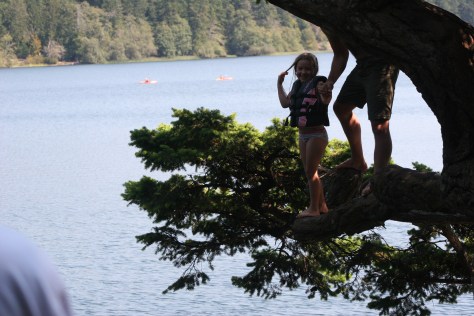
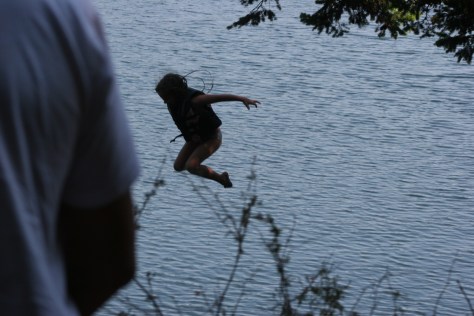
And when you let these things happen, with a little bit of support they will have the courage to jump.


IMG_0904

IMG_0905

”A

A Spring Day Out with Kids at Alki Beach

beach

You might only consider visiting Alki Beach in Summer when the children want to swim and soak up the sun, but there are many things to do when visiting out of season. Alki beach is more than just a beach, it also has great  historical significance. Alki Beach is the site of the landing of the first white settlers in Seattle on a cold, stormy day in November of 1851. Chief Seattle and his tribe greeted them and helped them build their cabin to stave off the cold, wet winter.

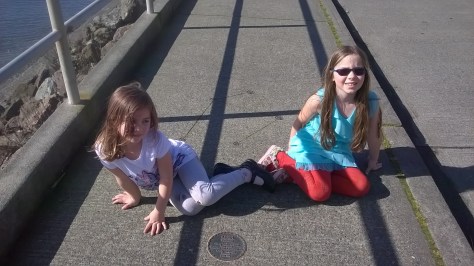
You may be lucky and end up with a surprisingly warm, Spring day as we did.  Some attractions, like speciality bikes, aren’t available until Easter and the ferry to Seattle only runs on weekdays but in some ways this gives children more chance to stop and take in the simple things. Here are some of the things my children enjoyed.

  1. Build a sandcastle

sandcastles

The first thing my kids want to do when they see sand is build a sandcastle.  They found shells and feathers to decorate it and we had to judge whose was the best.
2. Climb on Driftwood
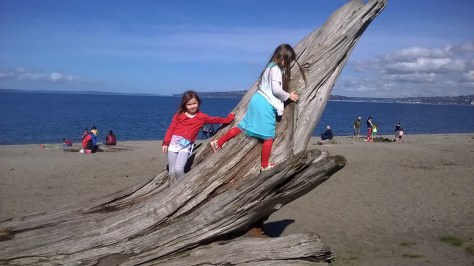
climbing on driftwood at Alki


Alki Beach has an abundance of driftwood and uprooted trees for little climbers.

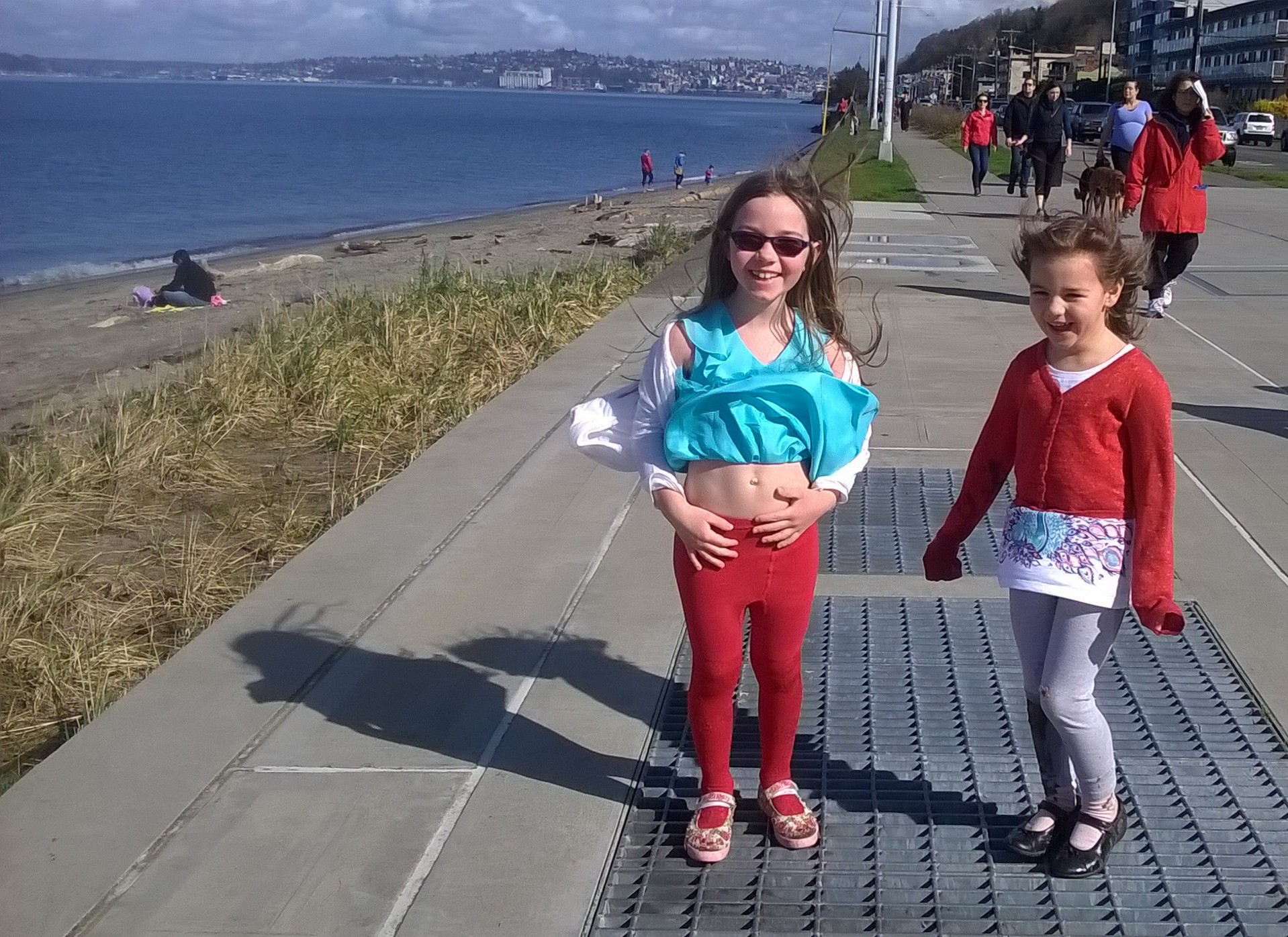
3. Let the Air Vents Blow your Clothes and Hair

air vents at Alki

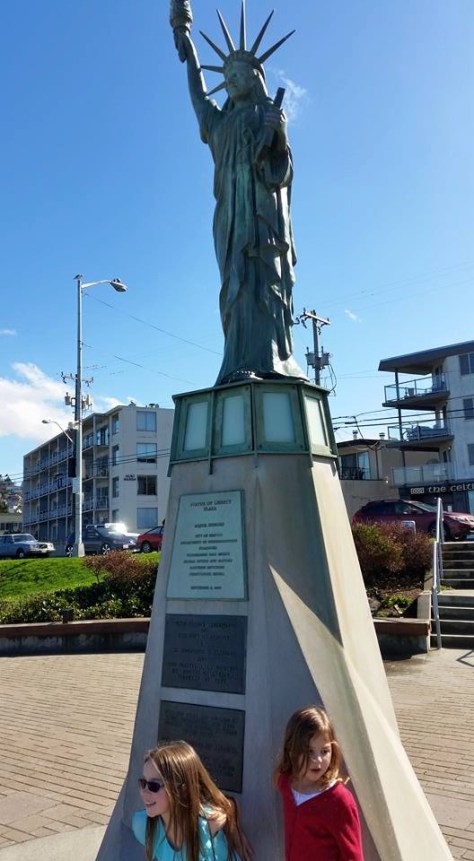
4. Visit the Miniature Statue of Liberty

liberty alki

The Statue of Liberty, a small replica of the original “Liberty Enlightening the World” in New York City, was a gift from Reginald H. Parsons and the Seattle Council of the Boy Scouts of America in 1952. The statue has become such a symbol of liberty and courage that it became a place to mourn, to reflect, and to leave mementos after the terrorist attacks of September 11, 2001.

5. Follow the Avenue of Stars

Avenue of stars Alki

if you continue along the path past the lighthouse you will reach a stretch of path where all the constellations are marked along the path. Great for an evening stroll as in the spring as you won’t have to wait too long for the stars to come out.

6. Search for Signs of Marine Life

seal statue Alki

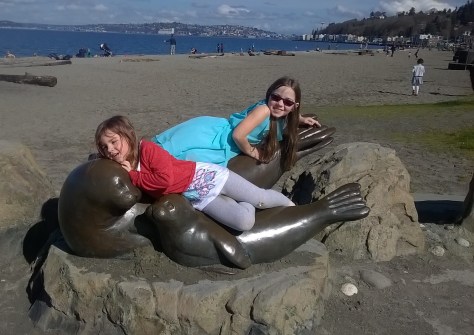
All along the trail are signs outlining the wildlife you may find. Seal pups are common between June and September but even in March you may see evidence of seals, sea otters or whales in the water.  The girls were excited to see seagulls and enjoyed pretending to be seals.

7. Stop for Ice Cream

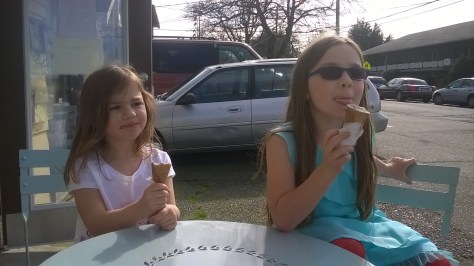
ice cream at gelarto alki

Not just any ice cream, Italian fair trade, organic gelato from Gelarto

8. Find the Little Lighthouse

lighthouse alki

Lighthouse tours are available during the Summer at weekends.

We’ll definitely head back soon with our bikes, scooters and roller blades for a safe and beautiful place to practice.

What Toys Should I Provide for Babies and Toddlers?

Toy shop shelves are laden with toys claiming to be educational. For toddlers and babies, this usually means something noisy, requiring batteries.  I have always held that there is little educational value in such toys. In my experience children play with them for a short period of time before moving on to something else.

Alison Gopnik discusses the manner in which children experiment with toys in her book the Philosophical Baby.   A toy that  worked by moving levers was presented to a group of 4-year-olds.  The adults demonstrated to the first group, how it worked, while  the second group were left to work it out for themselves.  The second group spent significantly more time playing with the toy than the first, who quickly abandoned it once they understood its function.

Another recent study led by Professor Anna Sosa of Northern Arizona University  focused on children between the ages of 10 and 16 months old. She gave families three different kinds of toys to play with; books, traditional toys like stacking blocks and electronic toys. The toys that stimulated most conversation were books, closely followed by blocks. The families playing with the electronic toy shared very little conversation, allowing the toy to do the talking for them.

If you are considering which toys to buy for a young child, these points may help.

  • The most important resource we can give to babies and toddlers is ourselves. Spend time playing tickling games, singing to them, playing rhyming games, blowing bubbles or rolling a ball.
  • Other suitable toys for babies and early toddlers include small musical instruments for exploring sound ( saucepans, spoons and homemade shakers work equally well), a treasure basket or board and cloth books.
  • Think about toys that they will play with for a long time.   The best  toy investments for our family include magnatiles, wooden blocks, paper and pencil, a magnetic drawing board and play food.
  • Toys do not need to be expensive. Children can have hours of fun with a balloon, pot of bubbles, home-made play dough or  a cardboard box.

The infographic below has many more developmentally appropriate ideas for play.

Helping Your Child Develop Through Play
Helping Your Child Develop Through Play by Wooden Toy Shop

5 Picture Books to Inspire Children’s Art Projects

Art is not part of the curriculum in our school district, instead all elementary art lessons are taught by parent volunteers.  Once a month I volunteer to teach in my daughter’s class.  A monthly art lesson seems a little piecemeal and I often wish that there was time to delve deeper into projects. With this in mind, I often teach lessons that inspire children to discover a new medium or learn about an unfamiliar type of art.  Picture books can be a good starting point. Below are some of my favourites .

  1. The Noisy  Paint Box

My children are fascinated by abstract art. I recently introduced them to the works of Kandinsky after they created abstract art on our mirror table. This book tells the story of Kandinsky’s life as an artist and explains how he expressed his feelings and senses through painting.  As a boy he felt he could hear the paint box hissing and at a classical music concert saw colours and shapes before his eyes, that expressed the music.

After reading the book,encourage children to paint what they feel as they listen to a piece of classical music. Discuss their feelings and document some of their comments with the painting.  Try playing different genres of music to see how their reactions change and explore together how this was reflected in their painting. A large scale collaborative painting to music could develop this theme further.  Explore the differences in expression and how they all fit together to make a complete painting.

2. Korgi 

The captivating black and white illustrations in this textless graphic novel inspired this project about monsters.  The drawings here were in charcoal but pencil drawing or pen and ink would work equally well.


3. The Mr Men

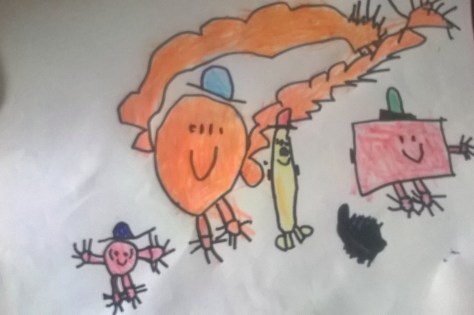
Strangely, the Mr Men have been one of the girls favourite things to draw and  model for some time.  The book’s back cover displaying all the Mr Men make it easy for them to choose a Mr Man to copy.

WP_20151119_001 1

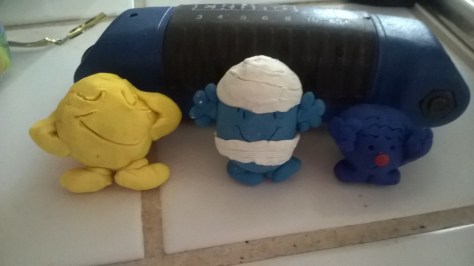
They used polymer clay to make 3D representations. Their simple forms make them perfect for introducing young children to polymer clay or modelling smaller characters.  It also helps them to see how their drawings can be translated into a 3 dimensional model.

Mr Men polymer clay models

They even created their own Mr Man – Mr Tae Kwondo.

Mr Tae kwondo


4. How are you Peeling?

We loaned this book from the library and it was a firm favourite.  On each page fruit and vegetables are photographed to represent an expression or emotion.  It has inspired us to search the supermarket for interesting vegetables and would be even more fun if you grow your own. It would make a wonderful photography project.

5. Leaf Man

Leaf Man is a good introduction to collage and art using natural materials.  The story of leaf man is illustrated using photocopies of leaves on a colourful torn paper background.  We used this for an art lesson in my daughter’s Kindergarten class and here are some of the finished projects.


 Further Suggestions

The Tiny Seed – paint flicking

The Hungry Caterpillar – collage (Eric Carle describes how he creates his pictures in this slideshow.)

Camille and the Sunflowers – a story about Van Goch


Why Singing and Dancing Promote Social Skills and Friendship

singing kidsResearch has shown that singing increases happiness and emotional well-being.  People feel happier after singing than simply listening to music, probably due to the release of neurochemicals in the brain.

It isn’t news to me that singing lifts your mood.  The quiet teenager that would skip along the road after my weekly singing lesson, head held high and ready to conquer the world is testament to that. When I sang I came alive, through singing I could truly let go. I grew up loving musicals, perhaps because it is perfectly acceptable to sing and dance down the road in a musical and everyone is always happy.

Singing as a group has additional benefits, according to recent research from Oxford University.    Singing in a group encourages social bonding, and singing groups form friendships more quickly than in other group activities. Group dancing also produces similar results, suggesting that a shared musical experience and working together are key factors.  Many of my closest friends were made during my musical theatre days and joining choir was the perfect way to meet people and make friends, when moving to a new country.  A large proportion of the ladies in my choir joined because they were new to the area and wanted to meet new people, whilst sharing their passion for singing. Perhaps if we mix in a little dance we will be even closer?

Singing is a natural way for parents to bond with babies .  As a singer, I instinctively sang to my newborn babies when I was alone with them for the first time.  Often a parent will get their first reactions from a baby when they sing to them. Smiles, laughter, calming, eye contact or gesture can all be encouraged through singing.

When my eldest was born, I felt privileged that as an early education teacher, I  knew lots of songs to share with my baby. With this in mind, I started a baby music group with my antenatal group. My aim was to reach out to others and introduce them to songs that they could share with their babies.  With hindsight, this not only helped the babies but also gave this group of new mothers the chance to socialise, at one of the most vulnerable times of their life. As new mothers singing to their babies, it didn’t matter if they felt they ‘couldn’t sing’  and we quickly built strong friendships.

Group singing was an important part of my teaching day and something I was very comfortable leading.  This confidence wasn’t shared by all the teachers but some approached singing time with enthusiasm and energy, even if they believed their own singing voices to be terrible. The children responded to the teachers who could have fun and draw them in, musical proficiency was never a factor. Singing in a group is a fundamental part of many preschool settings and is one of the ways in which children learn to work together. In order to create a unified sound the children have to listen to one another and share in the experience together.

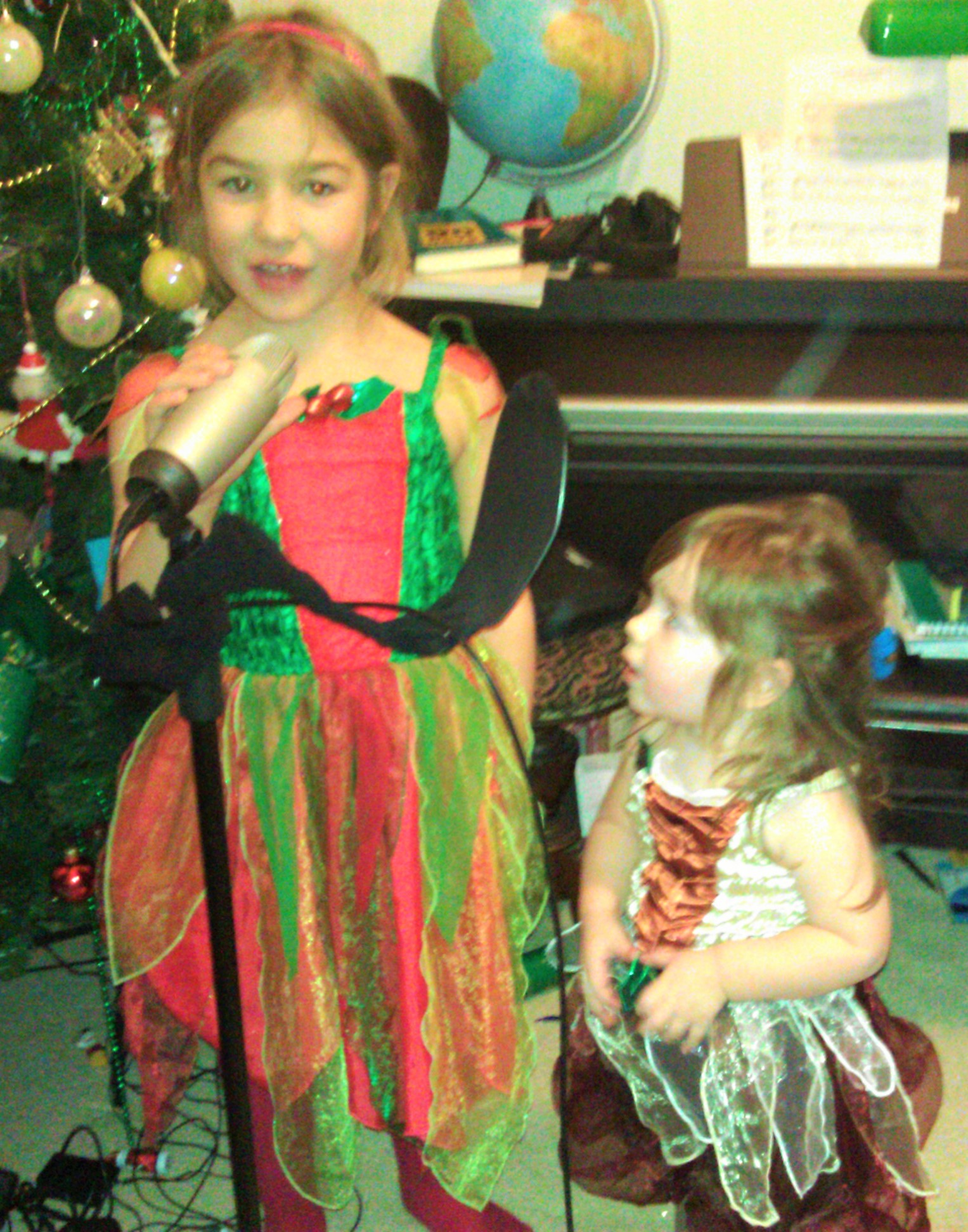
Young children are instinctively drawn to music and dance and sing without restraint. This usually remains with them until the age at which they become self-conscious and concerned about whether they are good enough. Reluctance to sing may also arise as singing becomes  performance focused rather than purely for pleasure.

One of my favourite memories of Christmas time, was the year my great aunts came to visit my grandparents. The sisters sat around the keyboard as my Auntie played and we all sang for hours.  That family togetherness is difficult to replicate in other situations. My great aunts grew up in the era before television, when singing around the piano was part of everyday life.  I believe that it is important for children to see that singing (and dancing) isn’t about winning a talent show.  Sing along to the radio on car journeys, make up silly songs or fire up some karaoke videos and sing along.

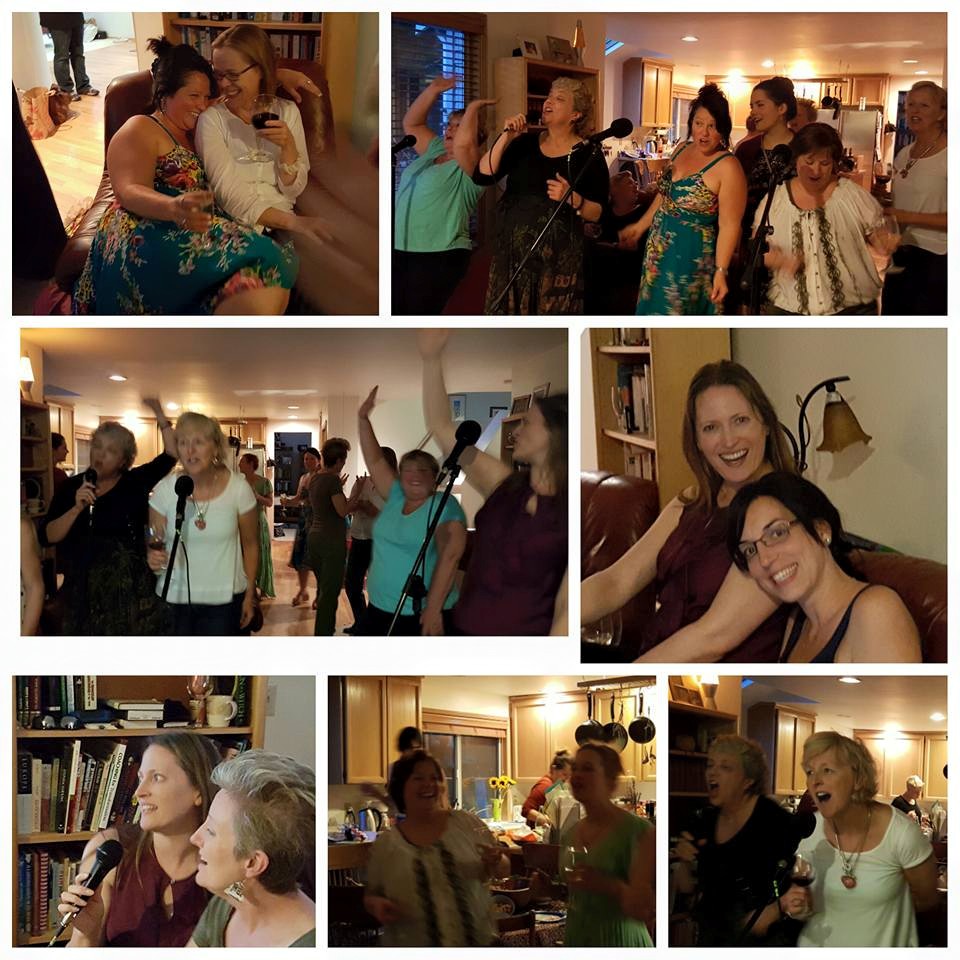
When we have friends around it nearly always ends up with a round of karaoke and it has paved the way to some of the best parties. I love that young and old, singers and non-singers join in and it is always accompanied by laughter and friendship.singing

The Elephant and the Bad Baby: Why DoToddlers Like Repetitive Books?


All 3 of my girls had the same favourite book at the age of 2. I didn’t encourage it, but somehow ‘The Elephant and the Bad Baby’ by Elfrida Vipoint hit the spot for all of them.
The story is highly repetitive, so much so that it drove my husband insane every time he read it. It is also quite long.
So why would it be so popular?

The repetitive text is most likely what they love the most.

Repetition is important for young children as it helps them to remember and learn. Knowing what comes next is comforting in a generally unpredictable world. Small children love repetition, it means that they can join in and demonstrate how much they know. As they hear the story language time and again, they come to anticipate words and phrases and will insert the vocabulary if the reader pauses at key points, as seen in the video clip.  They will even correct you if you get it wrong (as I did).   Children, as they become older, memorise repetitive books and can be seen to be ‘reading’  them to themselves, before they can actually read the text.  This is a very important starting point for learning to read.

Other repetitive books:

We’re Going on a Bear Hunt – Michael Rosen

The Very Busy Spider – Eric Carle

Peepo – Allan Ahlberg

Hairy Maclary – Lynley Dodd

Farmer Duck – Martin Waddell

A Squash and a Squeeze – Julia Donaldson

The Little Red Hen

Dear Zoo – Rod Campbell

Bark George – Jules Feiffer

The End of an Era – Goodbye Under 5’s

As an early education consultant, today is a momentous day. Tomorrow is my youngest daughter’s 5th birthday and so, after 11 and a half years, this is the last day I will have children under 5.

A few years ago I looked forward to the day when my children would be growing up but today I am a little sad for all the things I will miss.

  1. Their chubby little faces and hands
striped hat

2. Watching them play

3. Cute drawings

child's drawing

4. Messy faces

Finished!
Finished!

5. Thumb suckers

thumb

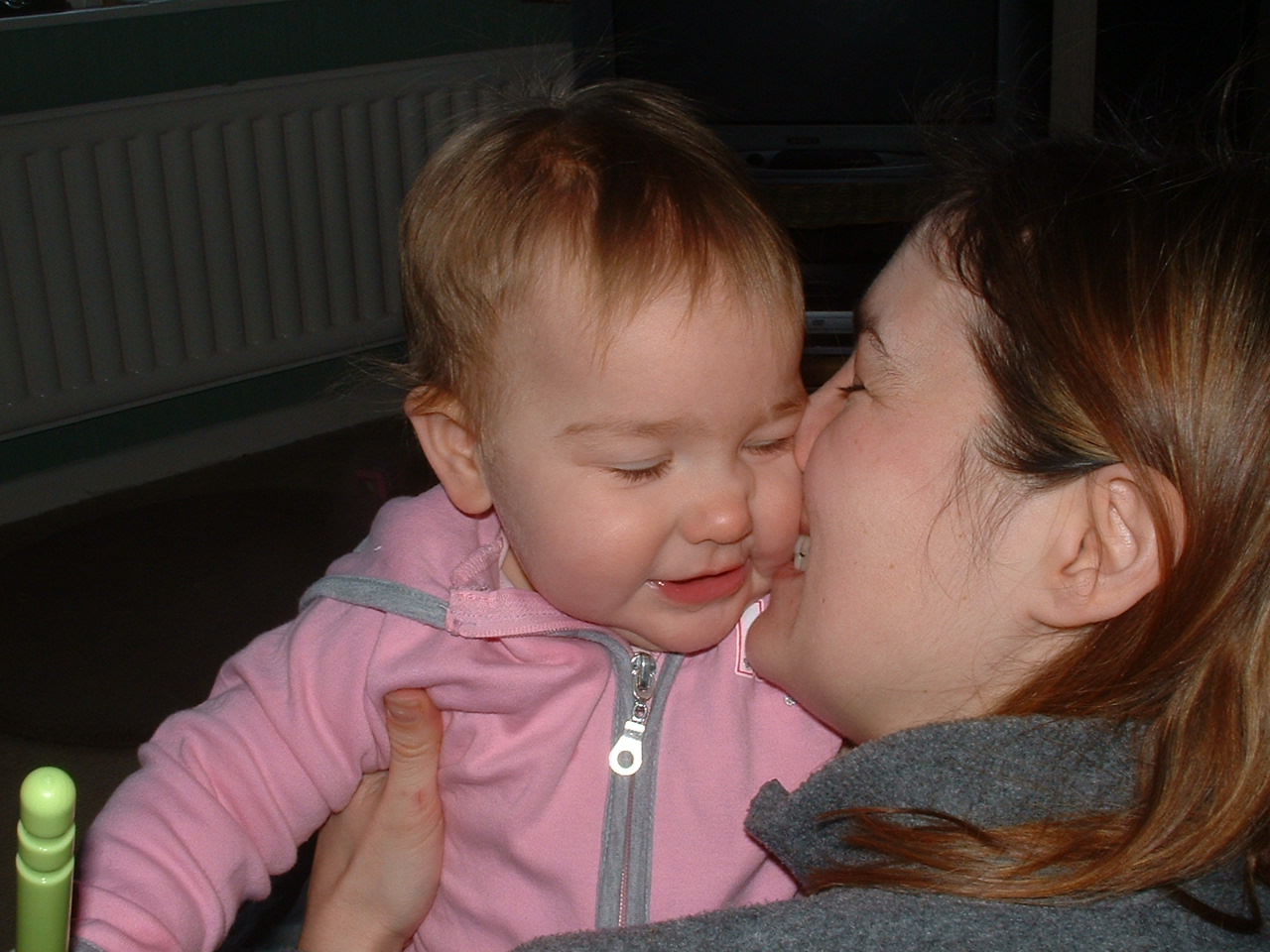
6. Kisses, cuddles and holding hands

mother kissing baby

7. Having a constant companion

pap

8. Learning to sing

9. Sleeping babies

Had enough now mum
Had enough now mum

10. Everything about this

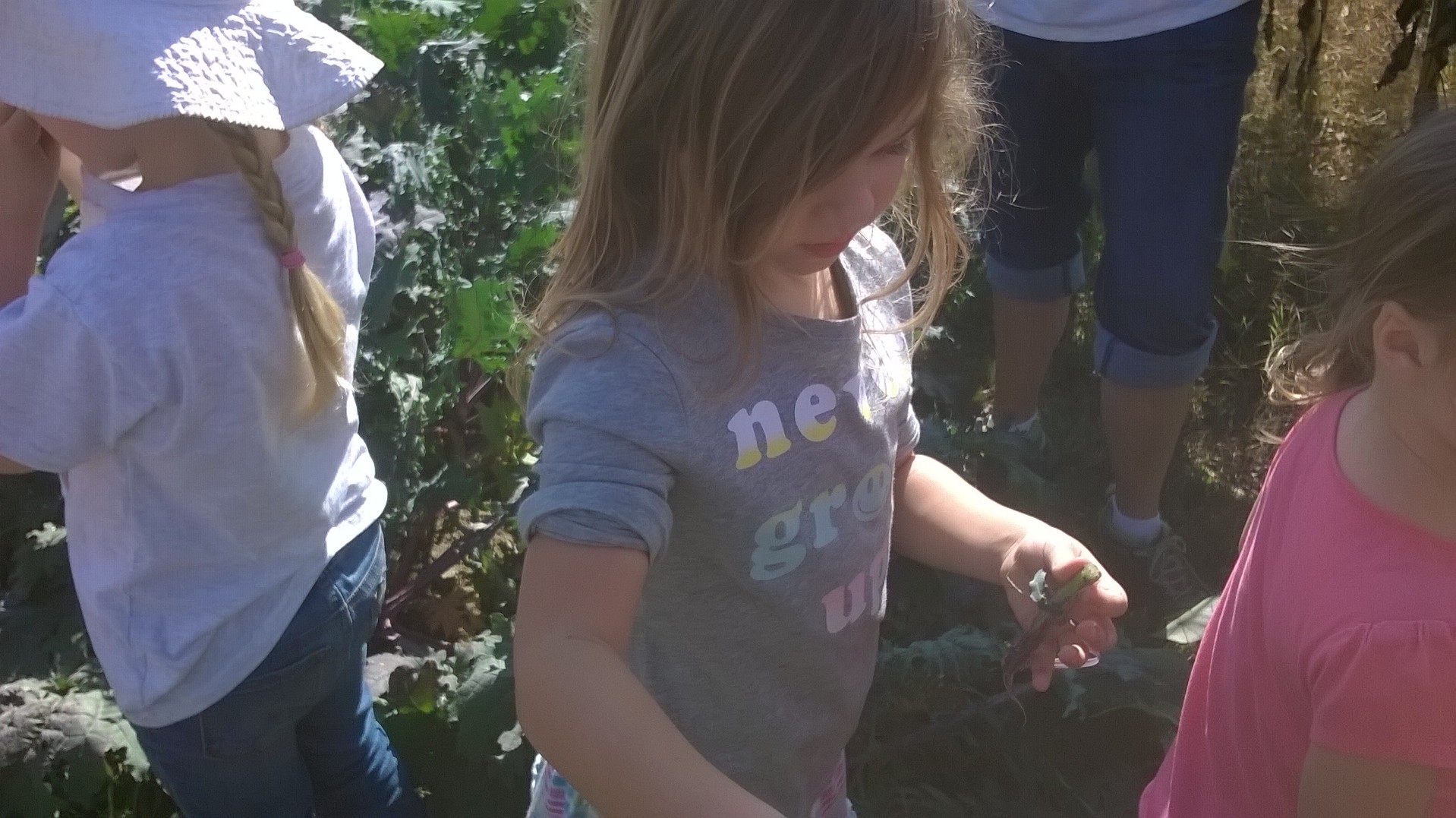
Luckily, I have almost a year before she goes to school, so lots of time left as a pre-schooler. Happy Birthday little one and as your t shirt says ‘Never Grow Up’
never grow up