Category Archives: parents

You’re My Kind of Mum Friend Because…..

A few weeks ago I went for a walk to the park with my  daughter. She likes to climb to the top of the climbing frame and play pirates. The game involves roaming the edges of the park for interesting treasures and on this day, she discovered big rocks.  She proceeded to pick them up and roll them down the bank, watching them crash at the bottom. The only other child at the park was a little younger than my daughter and after observing her for a while, she found her own rock.  She used all of her efforts to lift the rock and proudly show it to her mum. At which point, she was greeted  with a look of horror and her mum quickly took the rock away and ushered her to ‘more suitable’ pursuits.

This kind of reaction is very familiar.  When my children were toddlers, other parents would often ask me if my children were okay when they climbed a ladder and slid down the longest slide, as I observed from a distance. I have never been a parent to shadow my child’s every move and rarely feel the need to step in.

It is always refreshing to find a parent who shares my attitude.  On a recent trip to the park with a friend, I was so happy to find someone who not only didn’t bat an eyelid when my eldest started paddling barefooted in the cold wet mud but actively encouraged the others to join in. When the children threw rocks on the ground to see if they would break , she gave them advice on how to do it safely, rather than stopping them because it was too dangerous.

You are my kind of mum friend because you let all these experiences happen.

FullSizeRender [345550]
It’s fun to stand on the roundabout, when we fell, we worked out how we needed to balance to stay on.


WP_20160322_003 1
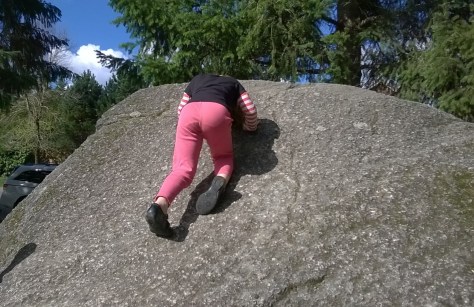
When you are 5 you can climb a big rock without any help.
WP_20151130_001
I can test the ice if I stand on the edge and throw sticks to see if it will break.


WP_20151124_005
I explore the size of the ripples as I throw stones into the pond.  If I get too close I might get wet and the water is cold!
WP_20151113_002 1
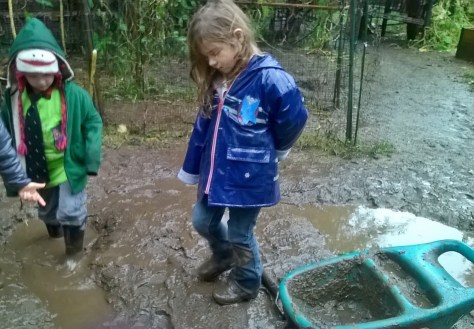
Mud is good – the squishier the better!
WP_20140501_005
We don’t need a swimming costume to get wet.
WP_20140123_008 (1)
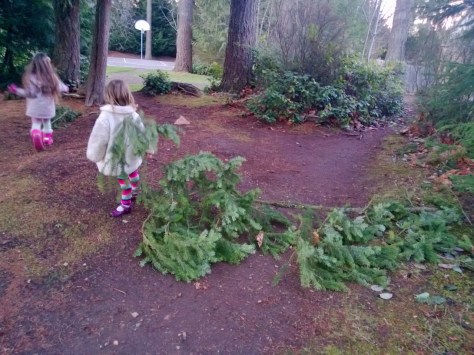
Who can find the biggest branch?


WP_20130619_011
Don’t tell me it’s cold, I need to feel it!
WP_20130628_004
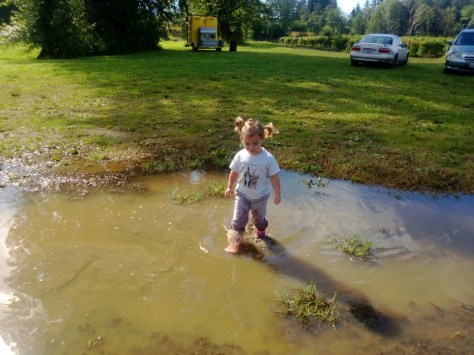
Puddles are the best!

FullSizeRender [345562]
It’s okay to play – even when you’re almost 12.
FullSizeRender [345556]
If I ride on my coat, I go faster.
FullSizeRender [345552]
It’s okay to remove your shoes and coat when it isn’t quite Spring.

blossom
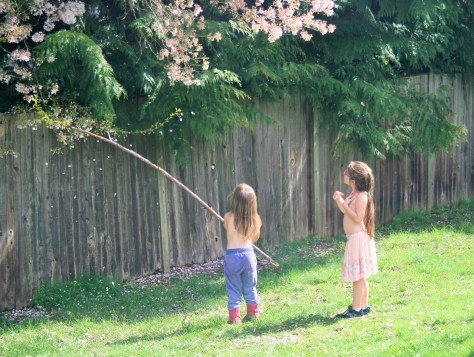
Take off your shirt and play with a stick.
getting wet
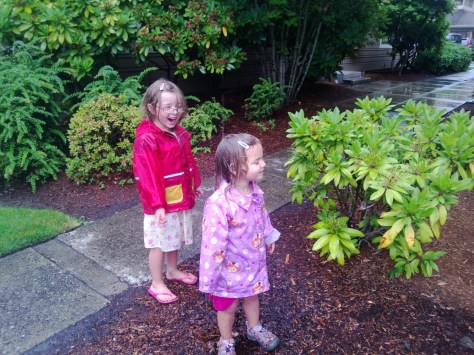
I’m going to have a shower. I’m getting very wet, now the rain is staying on me.

And when you let these things happen, with a little bit of support they will have the courage to jump.


IMG_0904

IMG_0905

”A

What Toys Should I Provide for Babies and Toddlers?

Toy shop shelves are laden with toys claiming to be educational. For toddlers and babies, this usually means something noisy, requiring batteries.  I have always held that there is little educational value in such toys. In my experience children play with them for a short period of time before moving on to something else.

Alison Gopnik discusses the manner in which children experiment with toys in her book the Philosophical Baby.   A toy that  worked by moving levers was presented to a group of 4-year-olds.  The adults demonstrated to the first group, how it worked, while  the second group were left to work it out for themselves.  The second group spent significantly more time playing with the toy than the first, who quickly abandoned it once they understood its function.

Another recent study led by Professor Anna Sosa of Northern Arizona University  focused on children between the ages of 10 and 16 months old. She gave families three different kinds of toys to play with; books, traditional toys like stacking blocks and electronic toys. The toys that stimulated most conversation were books, closely followed by blocks. The families playing with the electronic toy shared very little conversation, allowing the toy to do the talking for them.

If you are considering which toys to buy for a young child, these points may help.

  • The most important resource we can give to babies and toddlers is ourselves. Spend time playing tickling games, singing to them, playing rhyming games, blowing bubbles or rolling a ball.
  • Other suitable toys for babies and early toddlers include small musical instruments for exploring sound ( saucepans, spoons and homemade shakers work equally well), a treasure basket or board and cloth books.
  • Think about toys that they will play with for a long time.   The best  toy investments for our family include magnatiles, wooden blocks, paper and pencil, a magnetic drawing board and play food.
  • Toys do not need to be expensive. Children can have hours of fun with a balloon, pot of bubbles, home-made play dough or  a cardboard box.

The infographic below has many more developmentally appropriate ideas for play.

Helping Your Child Develop Through Play
Helping Your Child Develop Through Play by Wooden Toy Shop

Woodland Park Zoo for Under 8’s

zoo offer

When I ask the girls where they would like to go, a popular response is the zoo.  In the UK we were members of Bristol Zoo and visited there regularly.  Having membership made our visits more relaxed, we didn’t have to run around trying to see every animal and if the children wanted to play in the playground all day that was fine too.

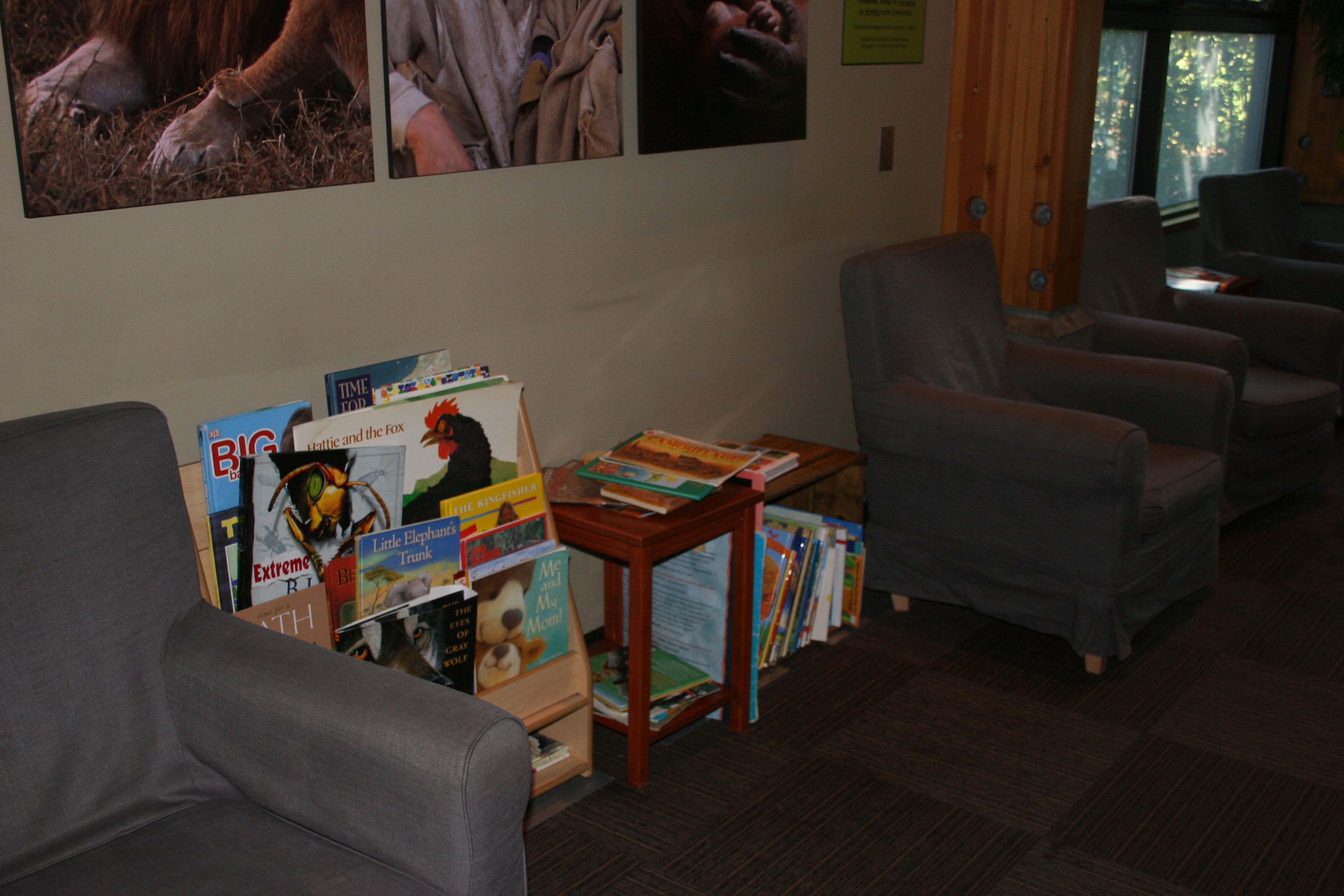
Woodland Park Zoo is more spacious than the zoo back home so we are able to see larger animals. Recently, we were invited to Woodland Park to see some of the activities available  in the Zoomazium  – a nature inspired play space for the under 8’s.  To be honest we have always avoided Zoomazium during previous visits, expecting it to be a large, noisy soft play.  I was pleasantly surprised however, to see a mix of play spaces and activities.  There is a designated space for toddlers, fully enclosed and safe, with a library  area to the side.  The children can also explore the cricket exhibit.

toddler play space
toddler play space
library area
library area
cricket exhibit
cricket exhibit

The play area for older children has rope bridges, places to climb and lots of little caves that are perfect for hide and seek.  There are also tables with toys for building, a stage area and a sensory area to explore.

IMG_0756

IMG_0755

Zoomazium is the perfect place to explore if you want to escape the heat (or cold) for a while but it is also a good starting point for your visit to the zoo.  Creature Feature occurs every morning at 10.30 and encourages children to get close to some of the smaller animals at the zoo and learn about them from zoo staff.  Our visitor was an armadillo.

armadillo

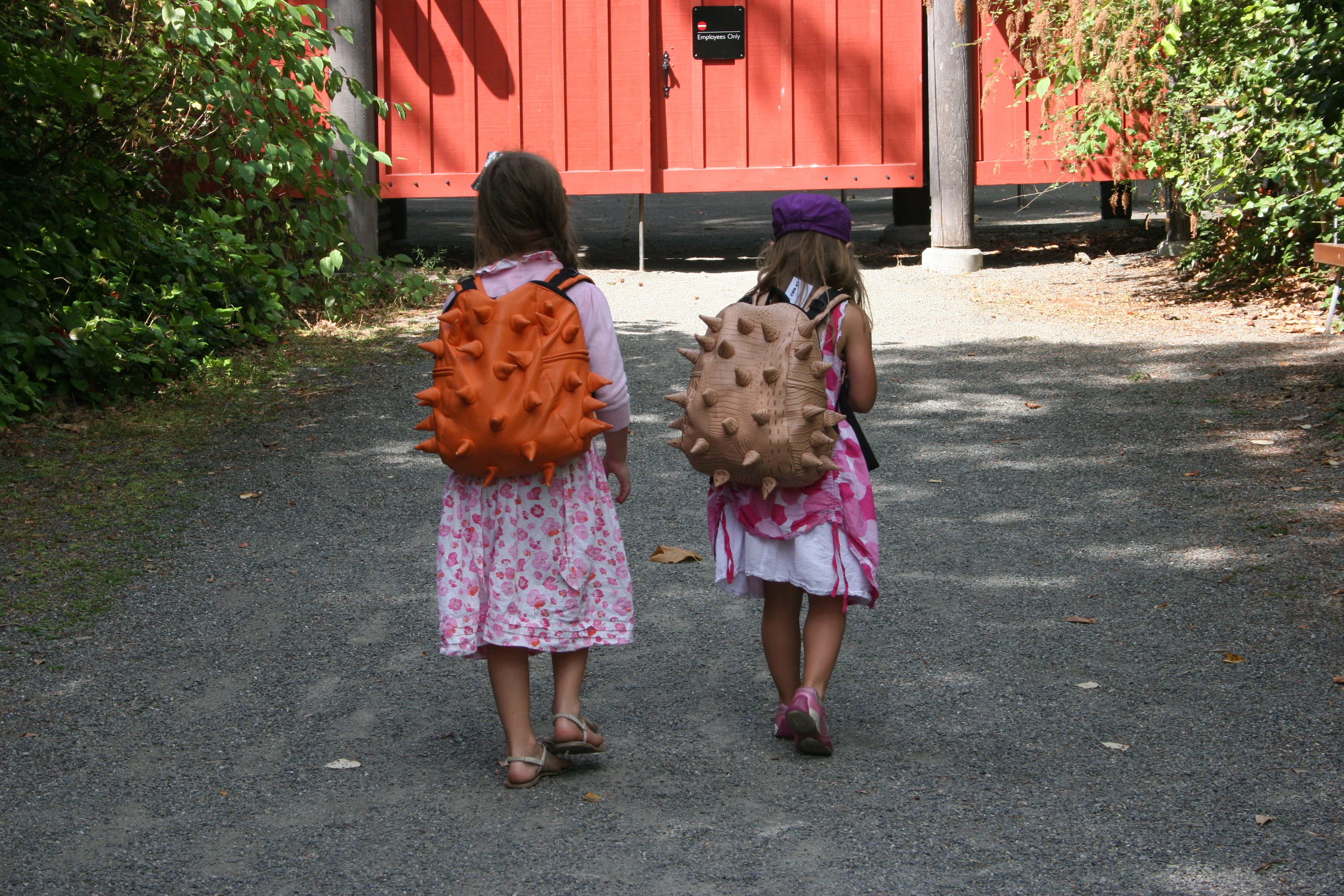
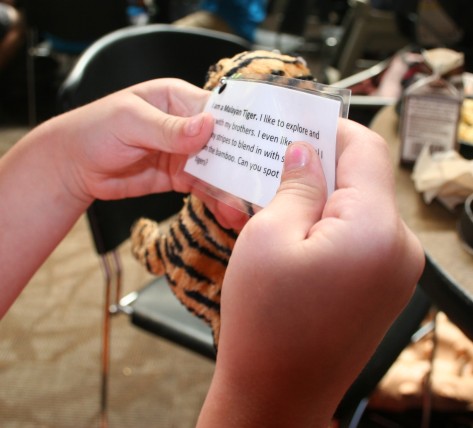
My favourite Zoomazium offering was activity backpacks that the little ones can take with them around the zoo.  Each one has a different theme and they are packed with activities, toys, books, magnifiers and things to look out for during your visit.  After a lot of deliberation,the girls chose one each; the back yard and big cats.

zoomazium backpack

I love the design of the backpacks, they look so cool and we had lots of comments as we wandered around.  The backyard backpack had a number of activities to complete in the backyard of the Zoomazium or  when exploring the rest of the zoo.

Can you find these things?
“This feels smooth”

The big cats backpack was a good starting point for exploring the new Banyan Wilds exhibit.

finding big cat markings

tiger markings
I found a tiger.

Having the backpacks, encouraged us to take it slowly as the girls wanted to stop and take in the contents of their packs.

IMG_0793

IMG_0803

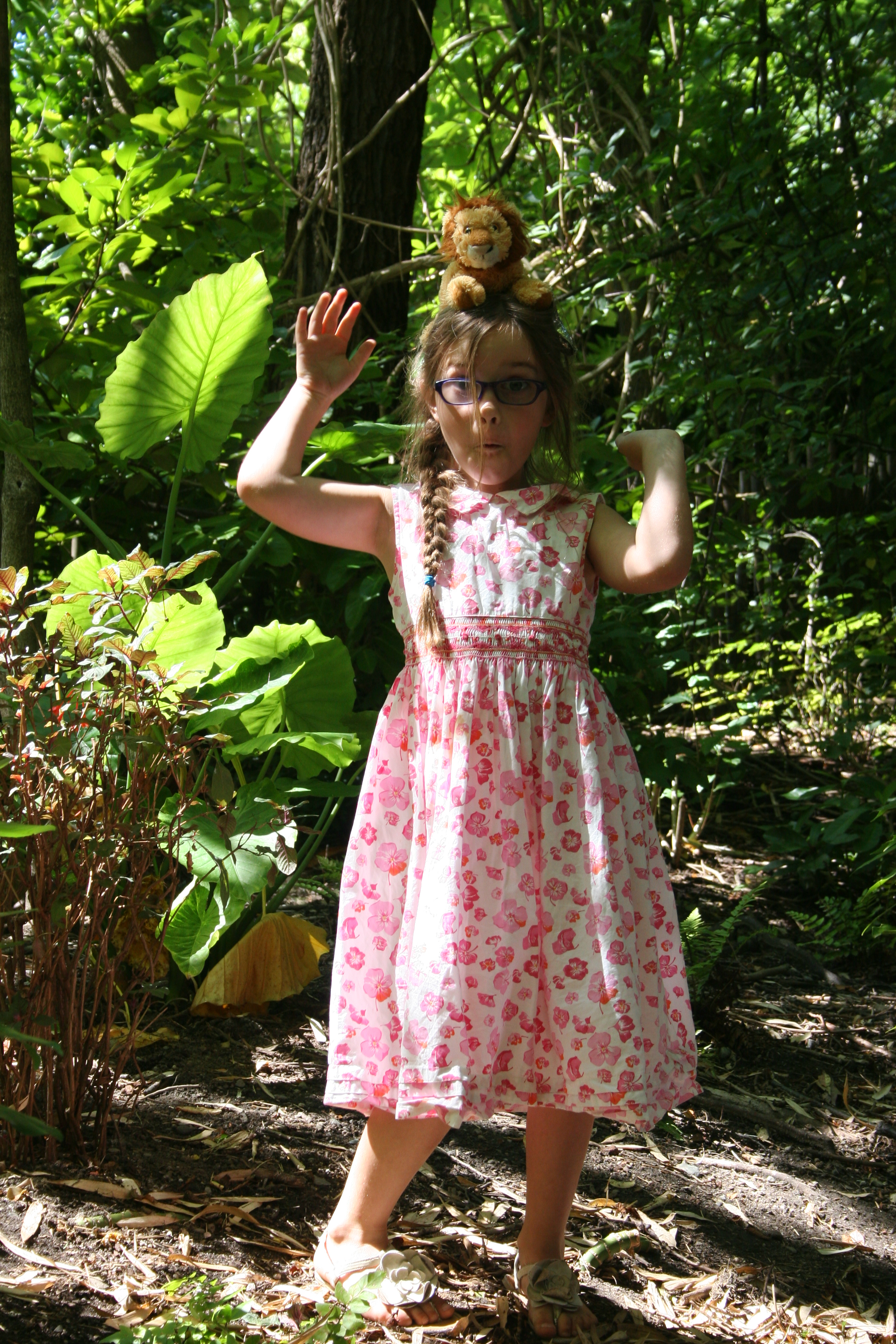
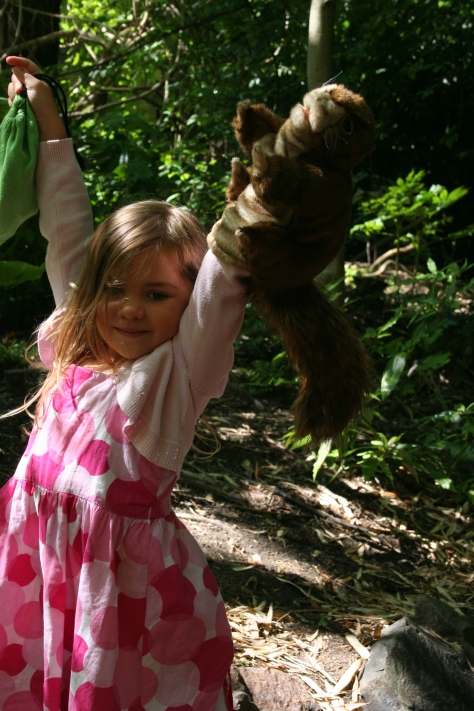
The squirrel puppet from the Backyard pack was a definite favourite and was a constant companion.

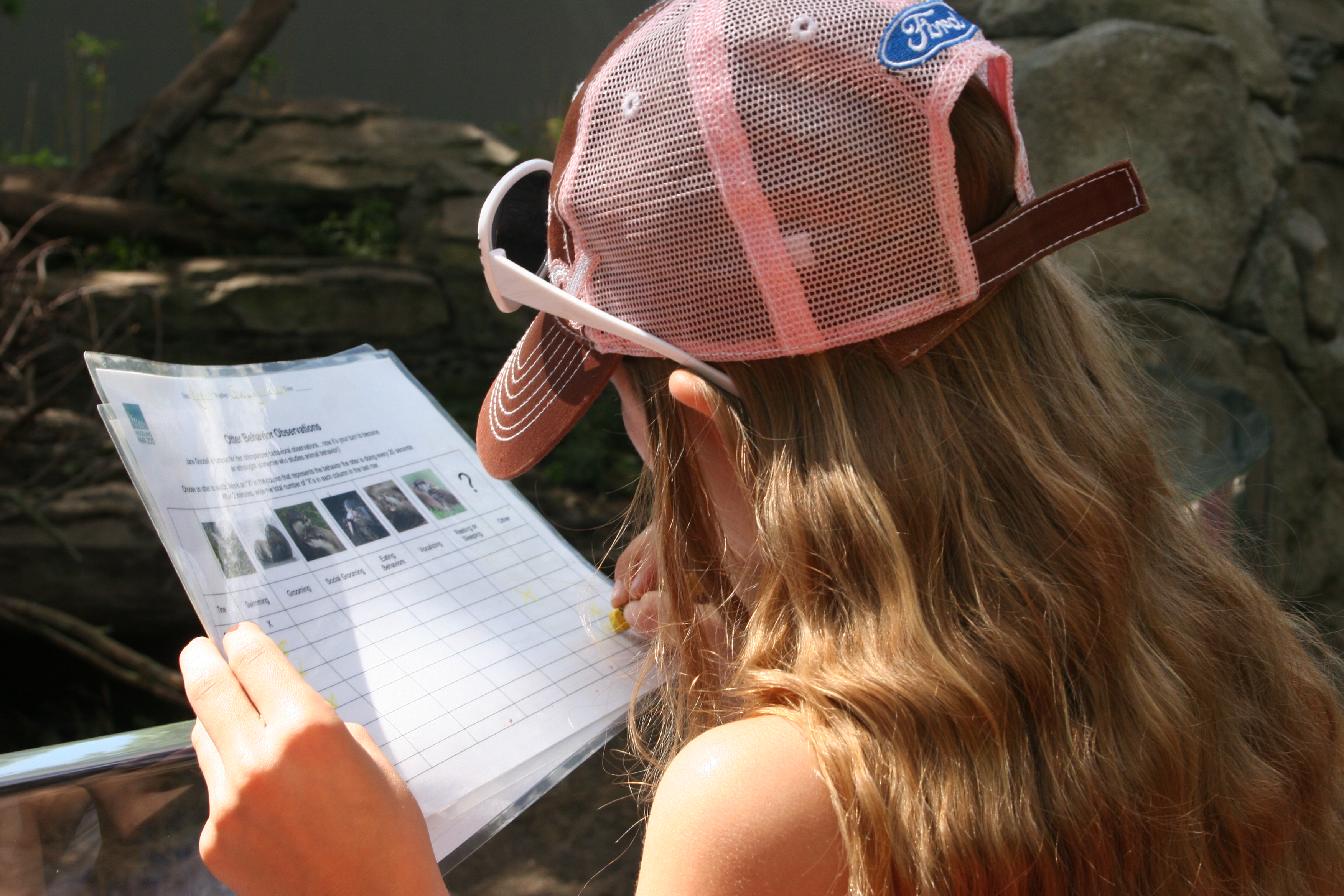
IMG_0802Completed activities can be traded for Nature points at Zoomazium’s Nature Exchange.  The points can be exchanged for interesting, rocks, fossils and natural materials on display.  Nature loving children can also create projects at home to earn additional points. Older children are not left out, there are activity sheets to suit all ages. My eldest chose a worksheet relating to the otter exhibit.

otter exhibit worksheetOur favourite part of the day was having the opportunity to feed animals.  Bird seed on sticks can be purchased for $1 and the birds fly down to feed from your hand.

Feeding the birds

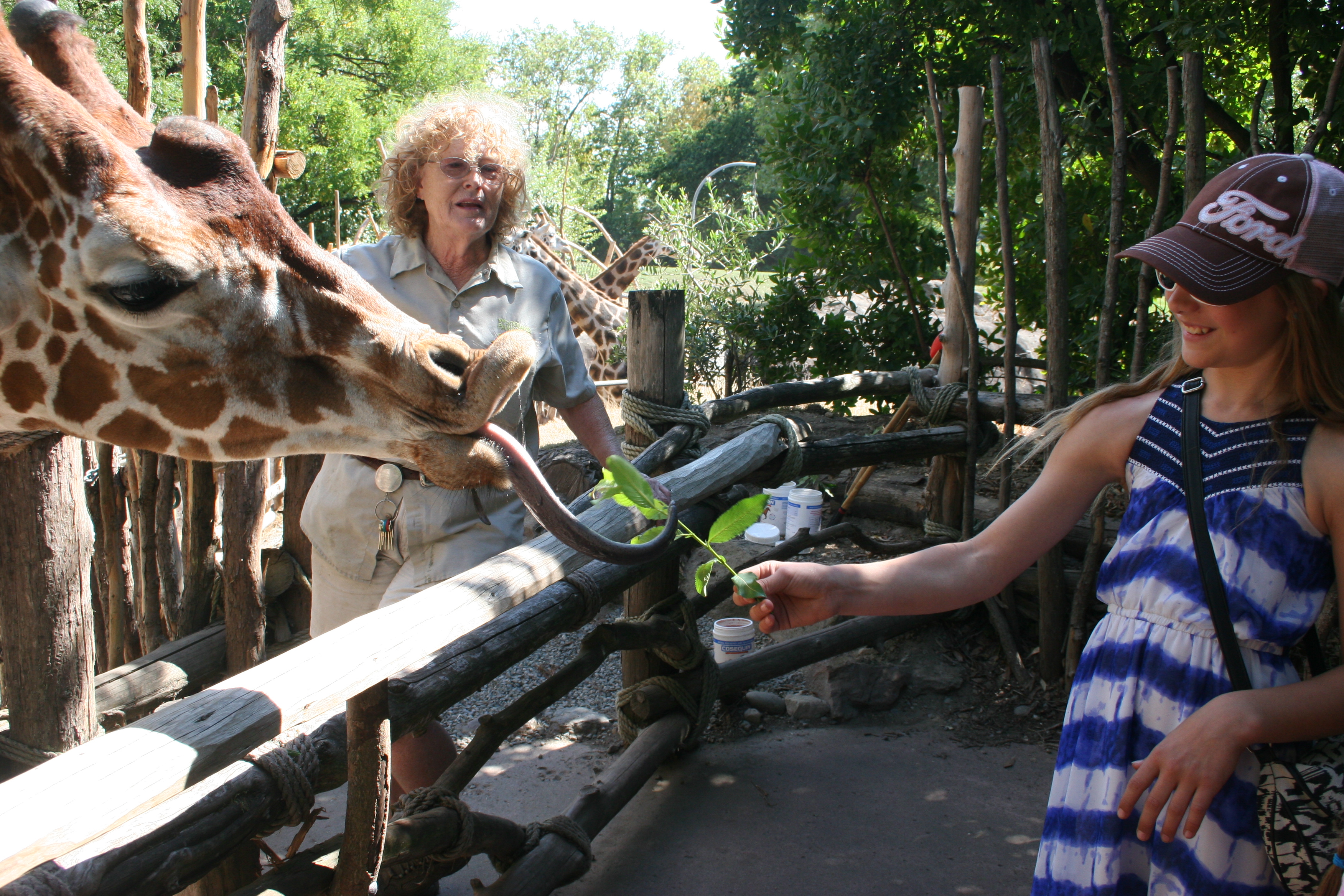
The best experience of all though was getting close to the giraffes and hand feeding them. The keeper was great at encouraging the children to ask questions and it was a truly memorable experience for all that I will definitely do again.  Giraffe feeding is $5 per person and under 5’s go free with a paying adult.

giraffe feeding

A day at the zoo was perfect for my nature explorers.

IMG_0826

Membership Offer

Zoo membership is perfect for families with young children. There are a number of membership options to suit different needs and admission is free for children under 3.

Right from the Start readers can benefit from a special offer.

Quote MOM15 at checkout to receive a 10% discount plus entry into a draw to win 2  giraffe feeding tickets and 2 tickets for a carousel ride.

Disclaimer:  Complimentary tickets for 4 people were received.  All opinions are my own and we were under no obligation to write about our visit.

Children’s Imaginations – What is the Adult’s Role in Nurturing Creative Children?

This post contains an amazon affiliate link.
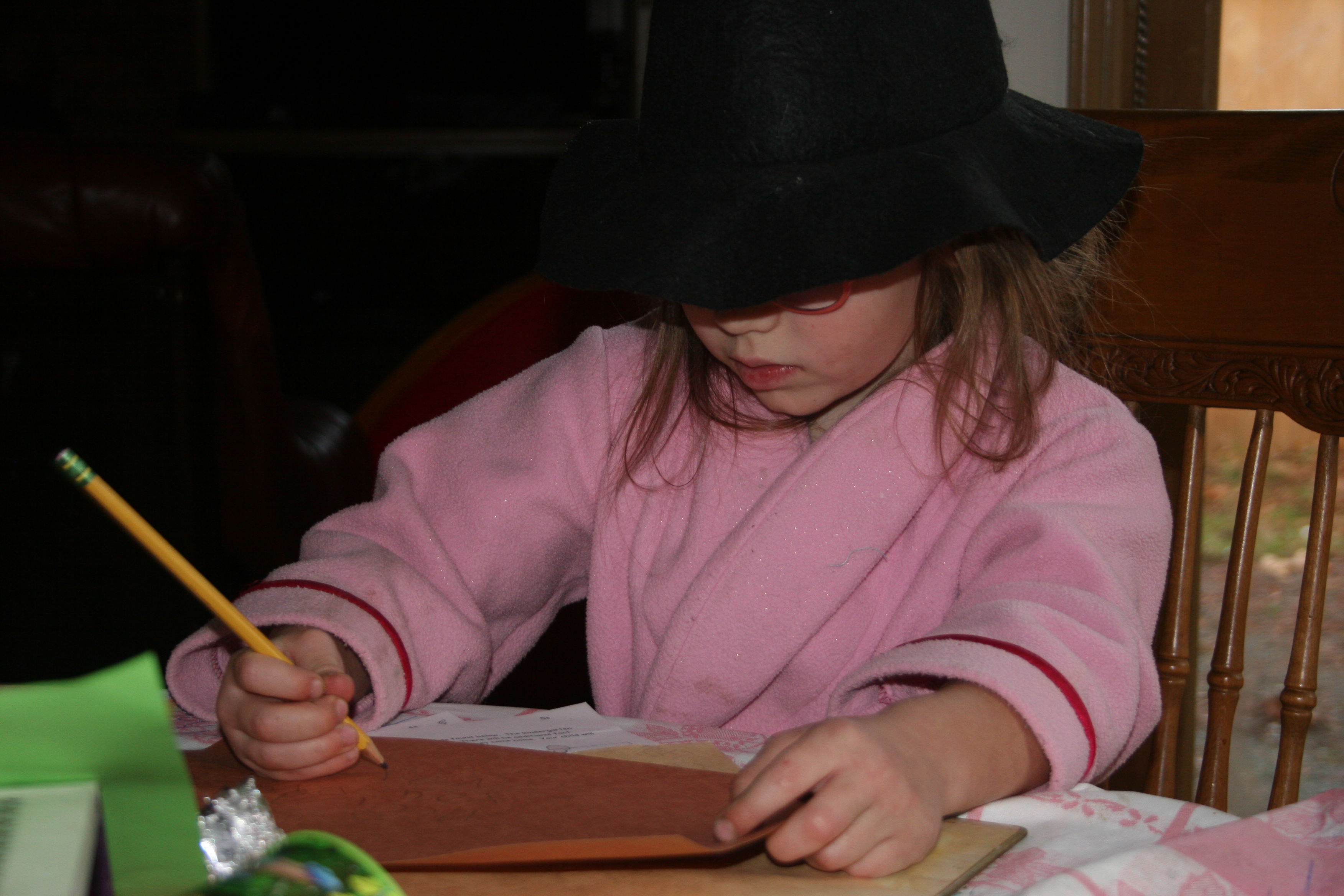
child in a witches hat writing a spell

I had an interesting conversation with a grandmother at one of my recent classes. In the class we decorated pebbles. The children were aged 2-4 and she had joined with a 2- year-old who was fascinated by stones. He drew on the pebbles and then she helped him to add eyes.

When she took her grandson home, her daughter looked at the stones and remarked that it was not his own work. She felt that during her own childhood, her mother had never been satisfied with her art projects. She would always offers suggestions for improvement, rather than accepting it the way that she wanted it and felt strongly that she would encourage her son to express things in his own way.

At the next art session, the grandmother was clearly reflecting on this with interest.  She stood completely back from the child as he was scribbling and snipping, without any interference and discussed her daughter’s comment with me.

I found her reaction interesting; she clearly wasn’t comfortable with the distance but wanted to respect her daughter’s wishes. We discussed the balance between taking over and being on hand to help or extend learning.  I explained my response to children when they are learning to draw, discussed in ‘I Don’t Know How to Draw Ducks’ Feet’ – How to Support Young Childrens’ Drawing,” Sometimes it is hard not to take over when a child says they can’t do something but a little support can encourage a child to trust in their own ability. Thankfully, I had recently finished reading Ursula Kolbe’s latest book Children’s Imagination: Creativity Under Our Noses
The role of parents in nurturing creative children is the main theme of the book. It encourages parents to see that creative play can arise from the simplest things and that letting go will foster children’s imagination.

childrens imagination

If we want to nourish children’s creativity what exactly is the adult’s role?

All too often we adults feel the need to label, to continually teach, wheras close attention and companiable silence are often more valuable. Valuable because then anything can happen”  Kolbe says.

The role of the adult is to:

Provide Resources

art and craft storageThe adult’s role is to provide interesting materials. A constant stream of new materials, however, leaves little room for development of expression. If, on the other hand, a variety of materials are easily accessible, children can choose those that interest them.

The greatest possibilities occur, as children ask “what can I do with this?”  Perhaps,this is why children love the outdoors, where loose parts are plentiful. At home, I keep paper, pencils, scissors, watercolour paint, brushes tape and glue next to our kitchen table. Most mornings the girls will go to the shelves, take a piece of paper and scissors and create something.  My kitchen table is rarely clear but I love to listen to their stories as they draw their latest picture or make a sign for imaginative play.

Observe and Listen

 One of the simplest pleasures is to sit and observe a child or group of children at play. The little pearls of wisdom that children offer could otherwise be missed. Observing encourages teachers and parents to question why things happen or how play can be extended . Loris Malaguzzi describes it as

“Catching the ball that children throw  us.”

It is easy for parents and teachers to find a wealth of activities for their children to do but most of the time it isn’t necessary. If we follow the children’s lead we can become their supporter, encourager and co-explorer explains Kolbe.

“A steady diet of adult-chosen, one-off activities denies children opportunities to find the extraordinary in the ordinary for themselves”

Time and Space

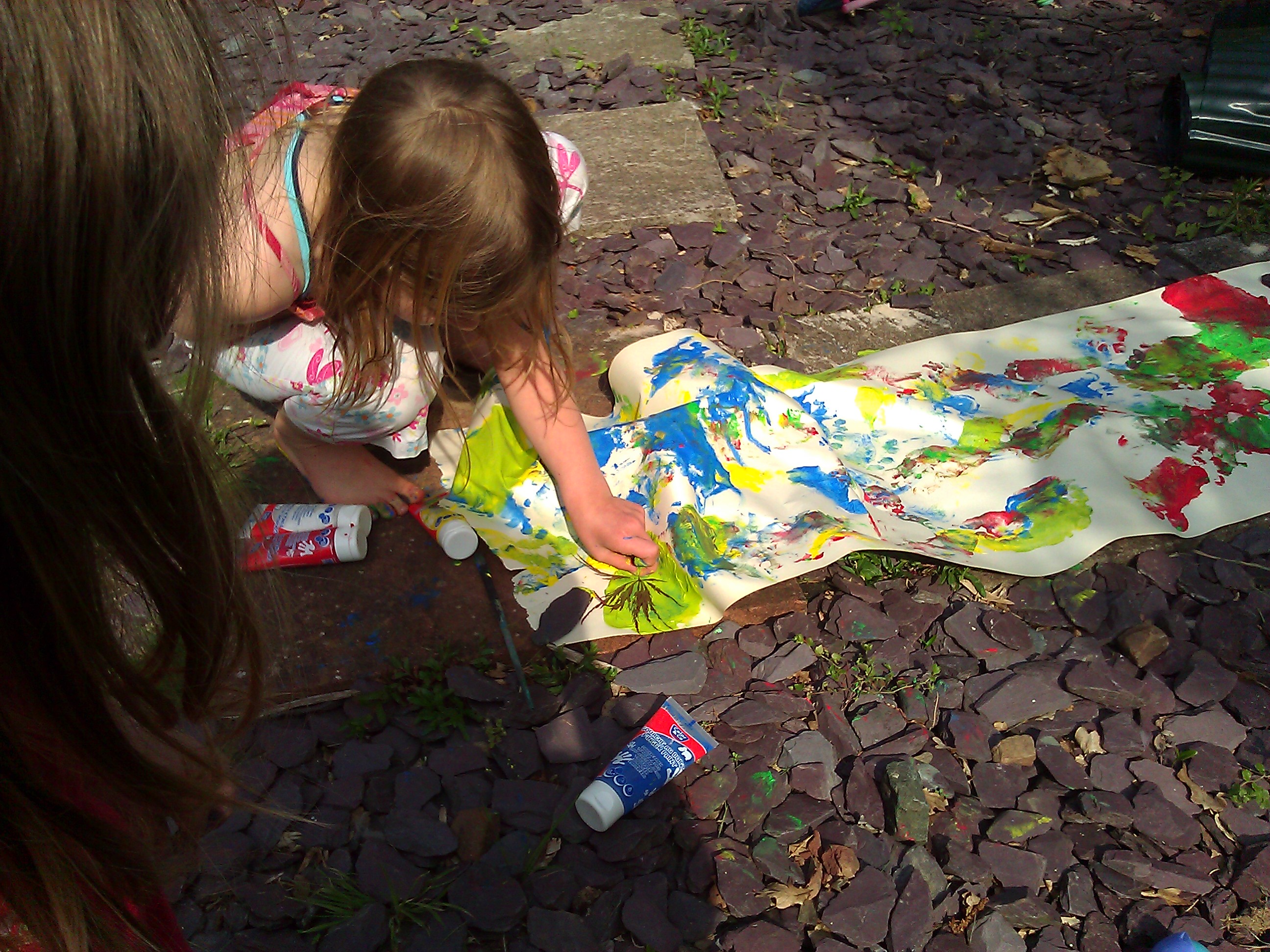
outdoor painting

The most important things we can give children are time and space.  Our role, is to provide inviting materials and allow children unhurried time to explore them, revisiting as many times as they would like. Unhurried time is almost impossible at school, where a strict timetable needs to be followed. I think it  is vital therefore, to provide this at home. My children were upset recently at a local playcentre, because their things were tidied away before they had finished playing.  Leaving things out for a while shows that their creations are valued and allows them to modify and expand their ideas. Ask children if they have finished before tidying or encourage them to clear their own materials, so that you can be certain they are finished.

Show Interest Without Intrusion

If we sit near children as they draw, build, paint and play imaginatively, they will begin to tell us the story behind it. We will learn far more about their inner thoughts and motivations than we would by questioning children about what things are and offering endless suggestions. Let them lead play and show interest in what they do. My children don’t mind when I observe their play, taking photographs and writing notes. They ask me what I am writing or if they can see the photographs.  It shows them that I am interested in what they do and value it enough to record their thoughts. I explain that I am telling the story of their play, so that we can remember and share with other people far away. Sometimes I stay indoors and watch from a window or listen from afar. It is  important that they have times without any adult nearby, to develop their own ideas and find their own solutions to challenges.

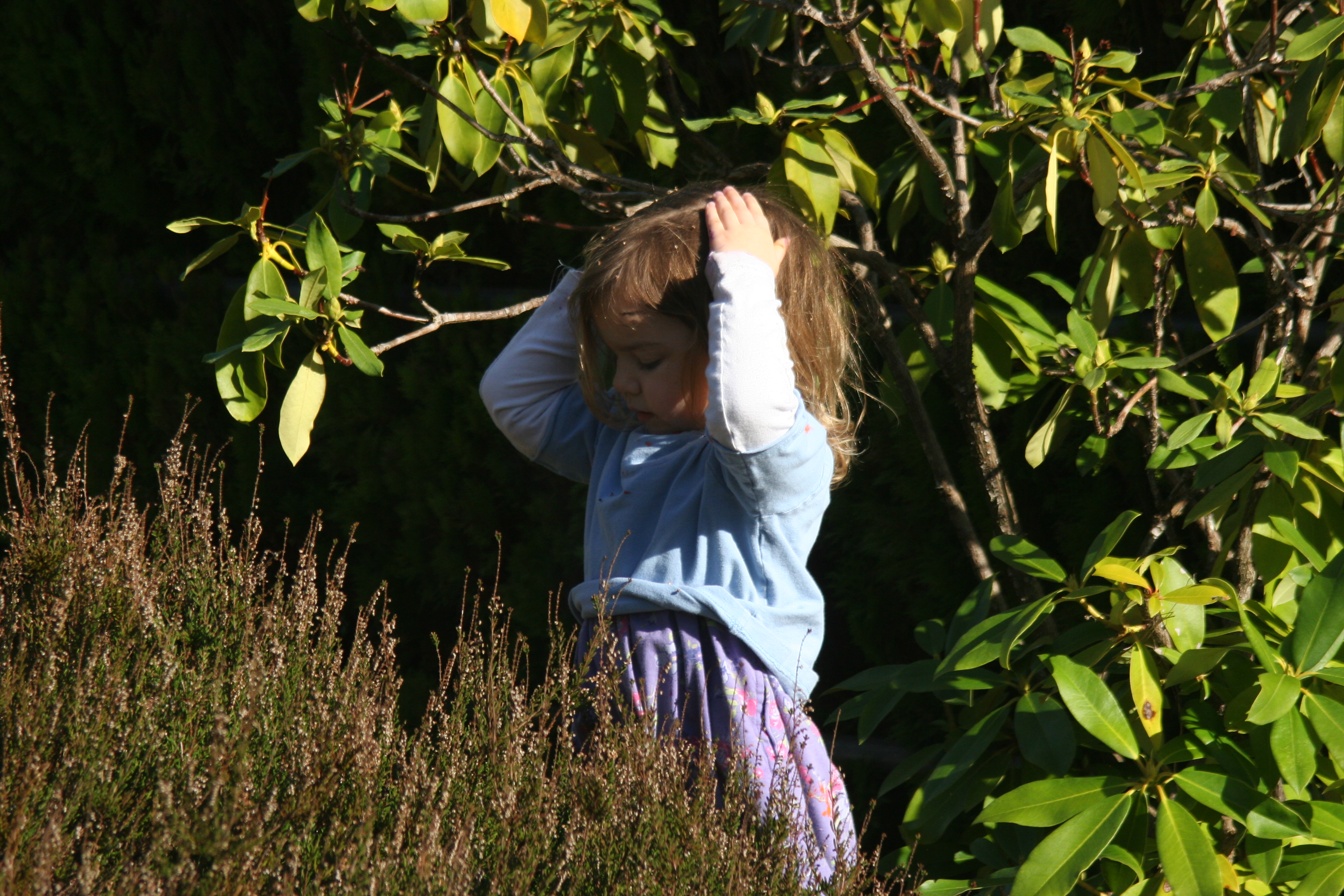
raining heather

Kolbe’s book is a wonderful insight into the things that ignite children’s imaginations and how parent’s can nourish and support this. The examples in the book are simple but inspiring  and  don’t require expensive resources or time consuming planning. The close of each chapter includes a written conversation between Kolbe and  Susan Whelan, a parent. They talk through their observations of the anecdotes in the book. I particularly liked this aspect, as it gives it a personal element and shows the importance of reflecting with others to obtain a deeper understanding.

I read this book at a time when my youngest daughter is eager to share her stories through drawing and painting, imaginative and sensory play.  It reminded me that these moments  are precious and to take time to listen and record them.

An Apology of Sorts.

This post is an apology of sorts.

When I started this blog I wanted to share my ideas and knowledge of early education but I also used it as a way of expressing the realities of life with 3 young children.

As I browse through my more recent material, you could be excused for believing that I have an idyllic life. The sun is always shining, my kids roam around outdoors all day, I come up with amazing things to do with the kids, I take them out to interesting places, they are creative, funny, clever and well-behaved, we bake, pick fresh produce and make fresh juices………

I find many inspirational articles from other blogs but for all the thought-provoking stuff I read, there are also a proportion that make me feel inadequate. I hope I’m not turning into one of them.

The amazingly organised Reggio inspired playrooms put me to shame. My boxes are neatly labelled, everything has its place but I am by nature a messy person so there always seems to be something that doesn’t quite fit or is not put away properly (if it is put away at all ).

Some positive parenting blogs show everyone acknowledging their child’s feelings, talking in a calm whisper and never using the word ‘don’t’. It’s great in theory but I sometimes need to read stories of people whose kids are too loud or women who are struggling to make it through each day.

The reality is:

  •  When I’m trying to sort out paying a bill, finish a spreadsheet  or manage a booking and the kids keep nagging me for food over and over – I shout.
  •   When I’m almost at the end of my task and one of them knocks something over, needs help on the toilet or they start arguing with each other I get exasperated.
  • At the end of the day when I’ve just about used up all my resources and they are still running around challenging every instruction, I speak to them in a frustrated tone.
  • When I’m trying to keep a train of thought in my head for more than 5 seconds and they have asked me yet another question – I discourage their inquiring minds.
  • When I’ve stayed up late and I just can’t seem to get going in the morning I allow them to sit and watch television for a lot more than the recommended 30 minutes.
  • When I rush them around from place to place and they stop to admire a stick, a bee or a flower, I tell them to hurry up.
  • When I feed them pasta and pesto for the 3rd time that week because I’m not organised enough to prepare food in advance.
  • When my eldest wants to read me a chapter of Harry Potter, I’ve always got something more important to do.

So, if you feel inadequate when you look at the things we do, remember they are just a snap shot and really I am just like you.

If I’ve burst your bubble and you’d really like to think I’m perfect that’s okay too, the things we do are real, but who can be perfect for 24 hours a day?

Outdoor Play: Making Potions


This slideshow requires JavaScript.

My eldest daughter has been an avid potion maker all her life.  We are always finding concoctions in her bathroom and when she was young she would leave them on the windowsill of her bedroom or on the side of the bath and if you knocked them off whilst having a relaxing bath the cold would give you the shock of your life.  She is now a huge Harry Potter fan, having read all of the series 4 times and her potions are taking on new meaning. Her younger sister is following in her footsteps. Now that the weather is nicer I set up a little potion station for them in the garden – they love it.

It is a great  sensory play activity and science experiment, they got their hands in, testing and smelling the potions and used all kinds of things from the garden. Best of all I love how the imaginary play scenarios evolved.  I suggested to my 9-year-old that she might like to make a book of potion recipes.

‘Yes’ she exclaimed excitedly, ‘ But we’ll need about 70 pages, the McClary recipe book’


This slideshow requires JavaScript.

Country Kids from Coombe Mill Family Farm Holidays Cornwall

Autism Awareness Month: Parenting a Child on the Autistic Spectrum # Story 3: The Wilkins Family–A Step Parent’s Story.

188974_210144349012735_4390559_nThe Wilkins family; Kirsty, Mark and Connor(4). Kirsty separated from Connor’s father when he was small. Kirsty and Mark lived in Local Authority housing and were expecting a child together. Connor received a diagnosis of autism at the age of 3 years 2 months. A home tutor visited the home for 2 sessions per week focusing largely on behaviour and communication.  Connor attended full time nursery in a specialist nursery school with a support worker.

Causes of Stress

Kirsty had no experience of parenting a child without ASD thus it was difficult to say whether or not it was more or less stressful.  Parenting any child was difficult but when she compared him to other children his behaviour was better.

“I wouldn’t change him for the world, it (autism) is part of him, part of his characteristics.”

The only aspect that she found more difficult than parenting a ‘normal’ child is that he required more supervision because he had no sense of danger.

1. Communication/Understanding

The majority of Connor’s difficult behaviours stemmed from communication problems. Connor understood simple sentences and commands and spoke in short phrases, though some of it was difficult to understand. Kirsty found it frustrating that he didn’t understand what she was saying and that she couldn’t always understand him. His language improved since attending nursery full time and having input from speech therapists, a play worker and tutor but Kirsty still found it difficult.

Connor’s lack of understanding meant he would do things that were not allowed but had no concept of why it was wrong.  He would take food from the fridge just before mealtimes or play with the toilet and bathroom products.

They couldn’t ask him what he was doing because he was unable to answer; they had to go into the room to check what he was doing.

“With a ‘normal’ child you can say don’t touch that and they will say ‘why?’. With Connor you say it is hot and he has to touch it to find out what hot means”

As Connor’s understanding improved and he was able to ask for things he became a much happier child and therefore family stress reduced.

2. Disobedience

Mark didn’t find Connor’s behaviour stressful, but the effect that this had on Kirsty was.   Kirsty felt that there were a number of behaviours that Connor only displayed for her,

“He is like any kid, he will play up for his mum”.

This included running away and when Kirsty said ‘no’ to him he treated it as a game,

“Sometimes I feel like I am always yelling at him, I know it’s not his fault but then I feel stressed because I feel guilty for yelling at him….it’s a no win situation”.

Kirsty also acknowledged that if Connor started the day badly this affected her stress levels all day. If she began the day badly, small things caused her stress that wouldn’t usually.

Mark and Kirsty felt that Kirsty’s family had a tendency to give in to Connor and allowed him to do things that they wouldn’t normally allow. They feel that because of this it was difficult to set boundaries for his behaviour.

3. Going to Public Places

Going anywhere outside of the house was particularly stressful for Kirsty. She didn’t drive and anytime she walked Connor anywhere he would run away and has no road sense.  Kirsty avoided going places on her own. Kirsty’s mum would take Connor out because she had a car and often had Kirsty’s sister to help.  His behaviour improved, he stopped wearing reins and would walk around shops without running. The difficulty for Kirsty was getting him to the shops in the first instance.

4. Concerns about the New Baby

Kirsty worried that when the new baby was born Connor would regress. He liked to imitate babies and animals therefore the family worried that he would want to wear nappies or have a dummy like the baby. The family prepared him for the baby by talking to him, involving Connor in shopping for the baby and decorating the baby’s room. Nursery,his tutor and play worker also encouraged  imaginative play using baby dolls.

Coping Strategies and Support
1. Support from Professionals

Kirsty felt that all professionals were extremely supportive. Since Connor attended full time nursery his understanding and behaviour improved significantly. He developed many good habits such as eating different foods and sitting still for a period of time. Having a tutor and play worker come to the home  helped Connor to cope with new people. In the past he was frightened of people outside of the family but he became more sociable. Kirsty also found the tutor valuable as a source of information. Mark felt that if Connor continued to progress at the same rate as he had in the last 6 months then they would not have any significant worries about his future.

2. Support from Parents

Kirsty felt able to turn to her mum for advice and as a primary school teacher she often had useful strategies. Kirsty’s mother looked after Connor overnight every Wednesday; this gave Kirsty a regular break, which she found particularly helpful.

A Wish List for the Future

Kirsty and Mark couldn’t recommend any further/ different support as they valued all the help they got from professionals. The only thing that might help slightly would be for Kirsty to be on her own less so that when she was feeling stressed she could take a few minutes to calm down without being in the heat of the situation.

Story 2 is a Single Parent’s Perspective and Story 1 Taking Time off Work

Disclaimer: all names are pseudonyms.

Autism Awareness Month: Parenting a Child on the Autistic Spectrum # Story 2 : The Simpson Family–A Single Parent’s Perspective

autism awareness monthThe Simpson family are Leanne, Chloe (age 6) and Robert (age 3). Leanne separated from the children’s father before Robert was born. Robert received a diagnosis of autism when he was 2 years 4 months. The main concerns at this time were communication and social interaction. Leanne also felt that she needed a lot of information because she knew very little about autism. Robert attended pre-school for 5 mornings per week supported by a tutor, a tutor also visited at home.

Causes of Stress

Leanne felt that parenting a child with ASD wasn’t significantly more stressful than parenting any other child but different things caused her stress. The knowledge that he would always be autistic in particular changed the way she thought about things.  Once she knew that he was autistic she felt unable to allow him to be content to do his own thing, there was pressure  to ‘get him to do things’ so that he would reach his full potential’.

  1. Smearing

Robert as a very tactile child  often sought sensory stimulation, including tickling, walking on bricks and exploring paint, water and sand with his hands. Often, when he had dirtied his nappy he would play with the contents and smear it over the room. This usually only occurred when he was on his own. At night Robert wore an all in one pyjama suit with the fastenings sewn together so that he couldn’t  get his hands in his nappy. This worked well,  and Robert stopped smearing every night. Leanne felt that bathing him after an incident was offering him a reward because he enjoyed baths. Leanne avoided  this and instead made minimal fuss and put Robert in the shower (which he disliked).

The most stressful aspect of this behaviour was that it had to be dealt with alone. Leanne felt that school would help with other things, like communication but this was primarily a home problem.

2. Communication

On the whole the most stressful aspect of parenting a child with ASD was communication.

“Smearing is the most stressful thing day by day but communication is the most stressful thing on the whole”

Robert’s inability to communicate was less stressful than his inability to understand. It was often possible to guess what Robert wanted or offer alternatives.

Robert’s communication improved significantly since his home tutor first became involved. Initially Robert’s only form of communication was to push Leanne towards desired objects.   A picture exchange system (PECS) was introduced to enable Robert to exchange a picture for a desired object. Initially this was very difficult for Robert to grasp and although he was able to pass one card to an adult he could not make a choice between 2 or more. Eventually Leanne discovered that he was interested in fridge magnets, the pictures were mounted on magnetic strips and placed on the fridge. Desired objects were placed out of Robert’s reach and each time he would reach for something Leanne would ask ‘What does Robert want?’ whilst signalling to the pictures. Robert quickly learned to pass the correct picture spontaneously. Robert developed a wide range of vocal sounds and used some words in context including ‘go’ and ‘again’.

3. Going to Public Places

There were 2 difficulties when taking Robert to public places: –

  1. Throwing himself on the floor and refusing to walk .
  2. Grabbing things from shop shelves.

Robert had a large pushchair that was generally used when Robert went out. This enabled Leanne to visit a variety of places that would not otherwise be possible. However, Leanne was anxious that as he got older it would be less appropriate to take him out in a pushchair. When Robert was expected to walk even short distances (e.g. from the car to his sister’s school) he would drop to the floor and refuse to move. Leanne’s main strategy for dealing with this was to walk away and wave good-bye, Robert usually responded by following. When this didn’t work Leanne tried to make it into a game. Robert enjoyed playing ready, steady go games and running on the word ‘go’. The game was used to encourage him to walk.

4. Impact on Siblings

Chloe was old enough to be aware that Robert was autistic but Leanne found  it difficult to explain things to her in a comprehensive manner,

“Only the other day she said ‘if I was autistic Robert wouldn’t be’, which is quite hard.”

As a single parent it was also difficult to go to places that Chloe would like to visit. Leanne found it difficult to cater for both of their needs.

5. Diagnosis

The diagnostic process in itself was not stressful but Leanne felt that her health visitor/doctor did not prepare her for a diagnosis of autism,

“When they were asking me questions that I know now was to do with autism, nobody mentioned to me at all; it could be this, which meant that when I did go to the paediatrician and they said it probably was autism it shocked me”.

Leanne would have liked to have been prepared for the possibility so that she could have found more information.

6. Nursery and Schooling

Finding the right nursery place for Robert was stressful for Leanne. Robert was offered a place at a specialist nursery from September but in the meantime Leanne felt it would be valuable to attend a local pre-school to see how he would interact with other children. Many of the pre-schools she visited didn’t feel right, as it seemed they had no experience of autism and were less than enthusiastic about taking him. On the contrary Hawthorn’s pre-school had experience of autism and appeared very flexible in their approach.

After a few weeks at the pre-school Leanne became worried because nursery workers gave comments that they were unhappy about Robert attending without a support worker,

“Hawthorn’s was a complete nightmare that really did stress me out…knowing what I do now I wouldn’t have put him in that school”.

With time and negotiation Leanne felt more comfortable about Hawthorn’s but feels that it was an unnecessary burden.

Leanne was also worried about choosing the right school for Robert; she felt that ultimately it was her decision but that it was a huge weight on her shoulders,

“If you get the right school and the right help then wherever he goes in life that will help him get to the highest potential, because that will be the majority of his learning.”

Coping Strategies and Support

1. Professional Support and Information

The Support Leanne had from professionals was particularly valuable, the most notable of these being his home tutor and the Early Bird course. These helped share information about autism and suggested strategies for dealing with problem behaviour.

Leanne had a particularly good experience with her Early Bird group. The group of parent’s bonded particularly well and they continued to support one another and meet socially both with and without their children.

The most important contribution from the home tutor was the introduction of PECS. Leanne felt that she needed to be taught from scratch how to communicate with Robert and the regular contact with the tutor helped. They also helped Leanne to see what Robert was capable of,

“Before I used to say he is never going to do that, it’s taught me not to think that way”

Having someone to talk to on a regular basis, particularly someone with knowledge of autism and experience with other children was invaluable. The flexibility of the early intervention programme and informal relationship with the tutor meant that there was no pressure,

“You feel like you aren’t on your own”.

2. Support from Friends

Leanne’s close friend Helen had a child slightly older than Robert who was also autistic. They spent a lot of time together both with and without the children. Leanne often telephoned Helen when she was having a particularly stressful time. Helen had first hand experience of autism and the practical advice she gave was refreshing,

“I don’t want to hear ‘aah’, I want to hear ‘yes I’ve been through that as well’ ”.

A Wish List for the Future

Leanne would like to continue having someone help her develop strategies for dealing with Robert’s behaviour.

If Leanne could have any additional help the most useful thing would be to have a regular break.  Someone looking after the children for one night per week would give Leanne something to look forward to.  It would be important that she could trust the person caring for her children, being sure they were safe would help her relax.  Leanne felt  support of this kind was lacking, her parent’s would baby-sit but never have the children overnight.

“ If you don’t have anything to look forward to it is a constant thing. If you’re having a bad week, which you do, and your child’s having a bad week as well you can see no end to it.”

As a single parent this is particularly important. Single parents are more likely to require  respite care and support from other families.

Story 1 : Taking Time off Work Story 3: The Step Parent’s Perspective

Disclaimer: all names are pseudonyms.

Moving Abroad with Children – What Do My Children Think of Their New Home in America?

It is difficult to know what my children really think of their new life in America. They seem happy and my 8-year-old says she enjoys school. I know she misses her friends but I sometimes wonder whether she really fits in with her loud American classmates who chatter endlessly about One Direction.

We have recently allowed her to have her first laptop so now for the first time she can check email on a regular basis. In some weird late at night moment, I decided to email her some questions about life in America to share here and asked her to think of some questions for me that she could post on her blog. I’m still waiting for those but here are her thoughts.

  1. What do you like best about living in America?

The best thing is the fact that I have my own bathroom. (Yes she does spend a lot of time in it, a taste of things to come I fear).

2. Are there any things that annoy you here in America?

Adverts ie. bla bla bla very fatty pizza 🙂

3. If you could bring one thing from England to America what would it be?

My friends  (ditto).

4. What do you miss most from England?

I miss my old school.

5. If you were to go back to England, what would you miss from America?

I would miss laughing when people try to do a British accent

6. Are American children different from English children and if so how?

Children are different mainly because of the words they use i.e. perenthusees.

7. What advice would you give to someone moving here?

Be prepared for the adverts.

What I found interesting about her responses was her focus on the immediate, day-to-day aspects of life. I expected  places we had visited or new activities to feature in her answers.

I tried asking my 4-year-old the same questions. We had to spend additional time talking through the questions and she was keen to see what her sister had said before answering but she gave some interesting responses.

As expected the things she misses most are friends and her old playgroup. When asked whether children were different here she thought for a while before saying

They don’t know how to share. All the children in my old playgroup shared their things but none of the children here do.

She found it very difficult to say what she liked about America because she couldn’t think of anything she  likes to do here that she can’t also do in England – she likes learning to do cartwheels with her imaginary friend, playing nail salons with her big sister, making up shows and playing Mastermind.

A Musical Family Christmas with Jingle Bells Music Book

mfk100089My idea of the perfect family Christmas is a little clichéd but involves mince pies, mulled wine, a roaring fire and singing around the piano. This is becoming a reality in our house.  With an array of instruments including piano, guitar, clarinet and saxophone and a whole family who enjoy singing and music, we are loving making and recording music together. When I was asked if I would like to review Jingle Bells, from music-for-kids, I thought it would be a good chance to add Christmas songs to our repertoire.

The Jingle Bells book and CD features 18 well-known Christmas carols and songs. The book is nicely presented with each song displaying the notes of the melody plus chords written along the top.  There is also a handy chord chart at the back of  the book for both guitar and ukulele. Being a beginner, I photocopied the chord sheet to make it easier to reference while I was playing guitar. With my basic guitar skill, I found that there were a few too many chord changes to play many of the tunes with confidence but with most songs you could leave some of the chords out.

The piano music is basic (right hand melody and chords) and was great for my 8-year-old to practice sight-reading and play a simple tune . The chords could be added by a more experienced pianist to play accompaniment, I even managed to sing along to my own rudimentary playing during silent night.

The CD contains all the songs in the song book and is a nicely sung collection of Christmas carols. Younger children may find the keys too high.

mfk100089_lb02_iMy little ones enjoyed filling out the sticker pages and singing along to Jingle Bells while their sister played the recorder.  I was disappointed that there weren’t more songs for the little ones like ‘Rudolph the Red Nosed Reindeer’, ‘When Santa got Stuck up the Chimney’ or ‘Away in a Manger’.  They joined in with Jingle bells and We Wish you a Merry Christmas and there are a few other simple melodies that they could learn but I would have liked to have seen more simple songs that weren’t carols.

If you are looking for a simple book and CD of traditional Christmas Carols, at £7.95 this is excellent value.


No payment was a received for this review, a copy of  the material was received for review purposes.