Category Archives: teaching

Teacher? Play Worker? Educator? What’s in a Name?

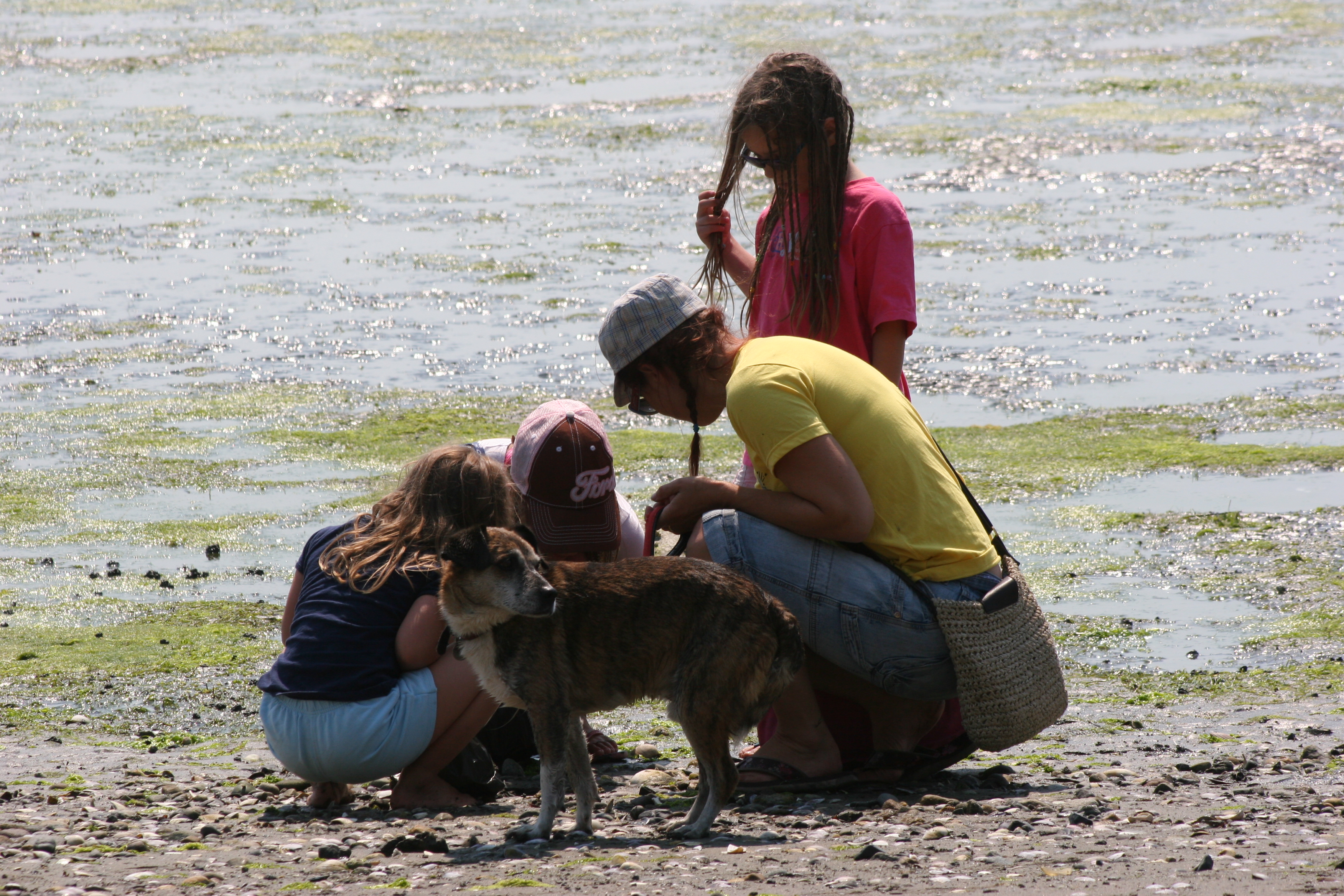
beachcombingMany years ago, straight from college and failing to find a teaching opportunity in my locality, I accepted a job  leading a play scheme. This was a new concept at the time, the first after-school and holiday club in my town. I learned a lot. I learned that play doesn’t need to have an end product in mind, I learned the importance of open-ended materials and space, I learned how to work with parents and the huge responsibility of being in charge of somebody else’s child.  Through play work I learned that I loved working with the youngest children  in a play-based environment. I no longer looked for teaching posts with 7-11 year olds but volunteered at a local nursery school to learn the trade of being an early years teacher.

As a young aspiring teacher, I was never proud of my title – play worker.  I was always sure to let people know that I was actually a qualified teacher, that I had been to university for four years and wasn’t just a child care worker. When I got my first teaching post, it wasn’t all it was cracked up to be. Stuck in a classroom of five and six-year olds with nothing to play with apart from a pack of modelling clay, I was quickly disillusioned.

My next job, in a nursery was very different. I worked with a team of teachers and nursery nurses who bounced ideas off one other, who valued play, who cared that the kids were happy and were passionate that teaching was far more than imparting knowledge.  I watched, I listened and I learned. One of my colleagues was wonderful with the children and the parents loved her but she didn’t have a single child-care qualification. I quickly learned that having a teaching qualification didn’t make me better than those less qualified ; we could all learn from one another and had our own contribution to make.

Teacher Tom’s post, I’m Not Sure That’s Teaching ,reminded me of this. Tom questions the meaning of the word teacher and whether or not those who follow the children’s interests, supporting them as they go, are teachers as most people perceive them.

Peter Moss describes Loris Malaguzzi’s role in the schools of Reggio Emilia, as an educational leader whose role was

Not to tell others what to do, not to lead a pliant following wherever he chose – it was to create and evolve an educational project in his city, but always in relation with others and in a spirit of participation and co-operation

I’m currently reading a selection of Loris Malaguzzi’s writings and speeches. The rise of the preschools in Reggio Emilia as a reaction to education built on pre-determined knowledge imparted bit by bit, seems to ring truer today than it ever has.

Labels are complicated and to this day I’m not really sure what I’d prefer to be called. A teacher? educator? play worker? early childhood professional? I’m not sure any of them are quite right. Perhaps that is why I often struggle for a title when people ask me what I do.

Most of the children I have worked with in my career have called me Rachel. Not teacher Rachel, Miss Rachel or Mrs McClary  but simply Rachel. Perhaps titles don’t matter that much after all.
 

Art Lessons: Abstract Painting to Music


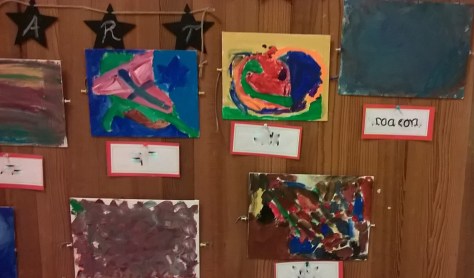
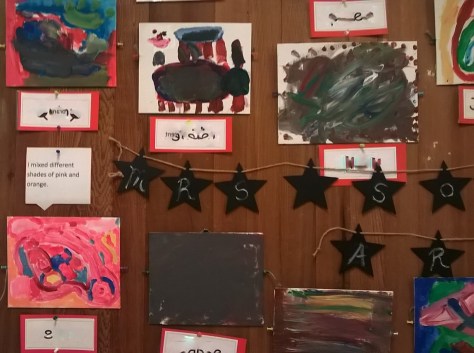
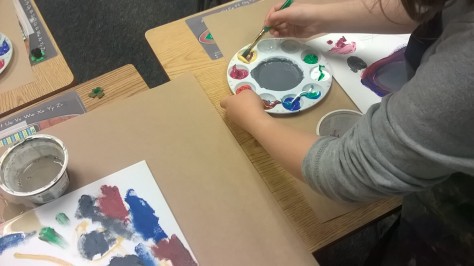
WP_20160318_003One way to ensure that you don’t end up with a wall of identical paintings is to introduce children to abstract art.  We used the book The Noisy Paint Box: The Colors and Sounds of Kandinsky’s Abstract Art as a starting point.  The book tells the story of Kandinsky’s ability to ‘see music’ and ‘hear paintings’.
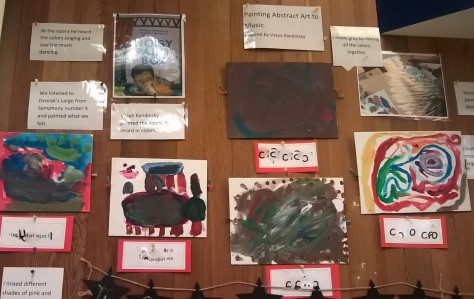
I explained that abstract art is not about creating a particular thing but is about expressing how you feel.

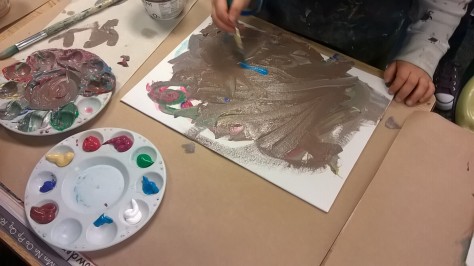
Each child had a pallet of acrylic paints, 2 different sized paintbrushes, a canvas, a pot of water and paper towel to wash and dry  the brushes.  I showed them how to clean their brushes by washing it in the water and drying it with the paper towel.

WP_20160318_002

The children began when I played the music – I chose a quiet piece to add focus, Dvorak’s Largo from Symphony no. 9.

Some children were engrossed in colour mixing, while others enjoyed layering colours one on top of the other.  Some concentrated on texture and others focused on shape and colour.

WP_20160324_004

The strong focus on process lead to an interesting discussion with the teacher after class.  We lamented the lack of time children in Kindergarten and beyond, to experiment with paint and the impact this has on their motor development. I always feel my lessons should be in at least 2 parts, one for discovery and process and the another to create a product. I wish there was time for the children to practice skills and develop.  My eldest daughter attends a school where the whole curriculum is taught through the medium of visual and performing arts – are there any creative elementary teachers out there doing the same?

WP_20160324_001

WP_20160324_003

A Book to Encourage Children to Achieve their Dreams?


front-cover banty chicken

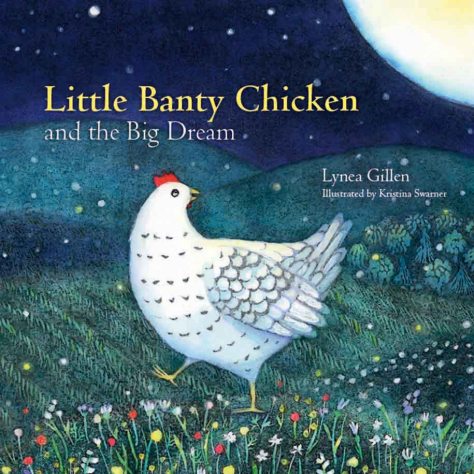
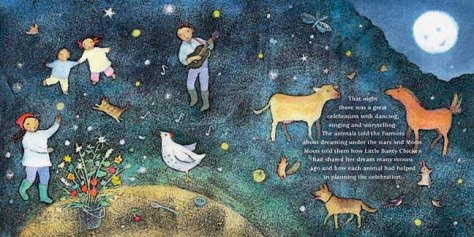
Little Banty Chicken is a tale about the importance of dreams and how sharing them helps them come true. Written in the style of a traditional fairy tale, it tells the story  of a chicken who, on the moon’s advice, tells his dream to his friends. Each friend encourages him to move towards his dream and contributes to its realisation at the end the story.

Little Banty Chicken and the Big Dream is written by Linea Gillen, a teacher and counsellor for over 30 years and delicately illustrated by Kristina Swanson.

banty chicken page

The story is both engaging and inspiring but I found the talking points and activities at the end really captured my children’s imaginations.  The key question is “What is your dream?”  a question that young children may need to think about for some time.

My-7-year-old knew immediately what her dream was but in a very deflated manner said,

” I don’t think anyone will be able to help me make my dream come true.”

“Why not?” I asked.

“Well, I want to stop all the animals from becoming extinct and I don’t think anyone can make that happen”.

This particular dream began after we read an article about the danger of large carnivores becoming extinct in the next 25 years.  She often asks how we will be able to stop people killing animals.  This is a big dream indeed and doesn’t have a simple solution.

We talked about how this is the kind of dream that can’t be achieved on your own.  Asking other people to help could be a way forward.

“But who could I ask? I don’t think anyone will know.”

“Well perhaps not now, but as you get older you will be able to find people who know how to help and work together.”

“You mean like a scientist?”

“Exactly, or groups of people who work together to help it to stop”.

Real, face-to-face communication is necessary for developing essential life skills such as empathy, conflict resolution, problem solving, and more. And when problems arise – when life hurts us – we need real world communities for support. Many adults see asking for help as a weakness and find it hard to delegate. These skills are an important part of children’s social and emotional learning. ‘Little Banty Chicken and the Big Dream’ is a perfect way to introduce these concepts to young children.

Disclaimer: I received a complimentary copy of the book for review purposes.


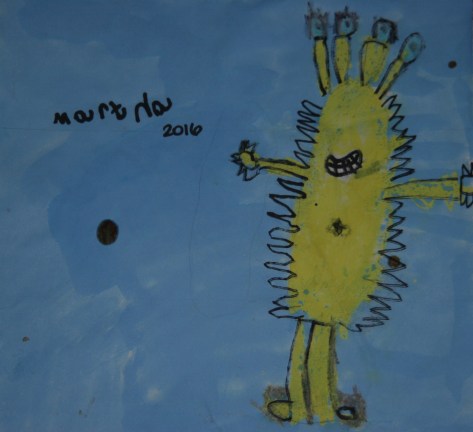
Art Lessons: Designing Monsters with Oil Pastels.

IMG_1331

For this months art lesson with First Graders, I wanted a project that came from their own imaginations and displayed their creative expression.

Knowing that my own children had invented wonderful monsters with charcoal, I decided to make colourful ones with oil pastel.

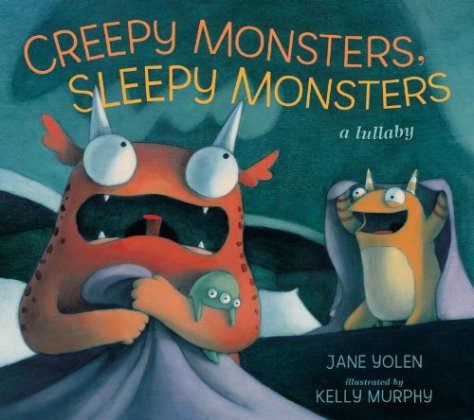
Some children struggle with inventing a character from their imagination, so I started the lesson with a book to provide inspiration and illustration of shape, texture and size.

sleepy monsters

I chose the book  Sleepy Monsters, Creepy Monsters because the text is simple and does not distract from the visual images and the illustrations depict a variety of monsters.

We talked through the pictures, noting features such as eyes on sticks, number of legs, spikes and shapes and discussing the function of these features.

Once the story had finished I instructed them to think for a few minutes about what they would like their monster to be.

Did it have a particular function?

Where did it live?

What would it eat?

Was it a kind or scary monster?

The children then drew their outline shapes on the paper.   Once I had checked the size of the monster, the children were given oil pastels to add detail and colour it in.  I asked them not to leave any white spaces, except for the background so that they would be as vibrant as possible.

When the children were satisfied with their drawings, they were show how to use a Q tip/ cotton bud dipped in baby oil to blend the oil pastels to a smooth finish, without any white spaces.

Finally they outlined their drawings with a black sharpie to add definition.

The background was applied with a watercolour wash.

IMG_1331

I asked my daughter about her monster.

The 2 eyes on the right can turn all the way back, so they can see behind them.

It has spikes to protect itself from people. Monsters are scared of people, that’s why they attack us.

It’s favourite food is carrots.

He is 8.

He likes to make monsters out of pipe cleaners.

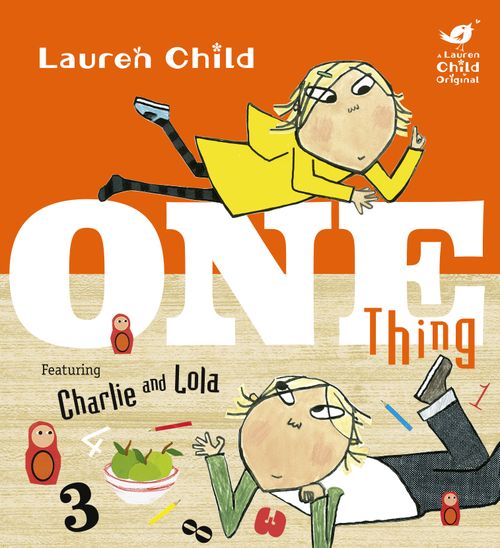
‘One Thing’ – One More Absolutely Wonderful Charlie and Lola Book by Lauren Child


one thing

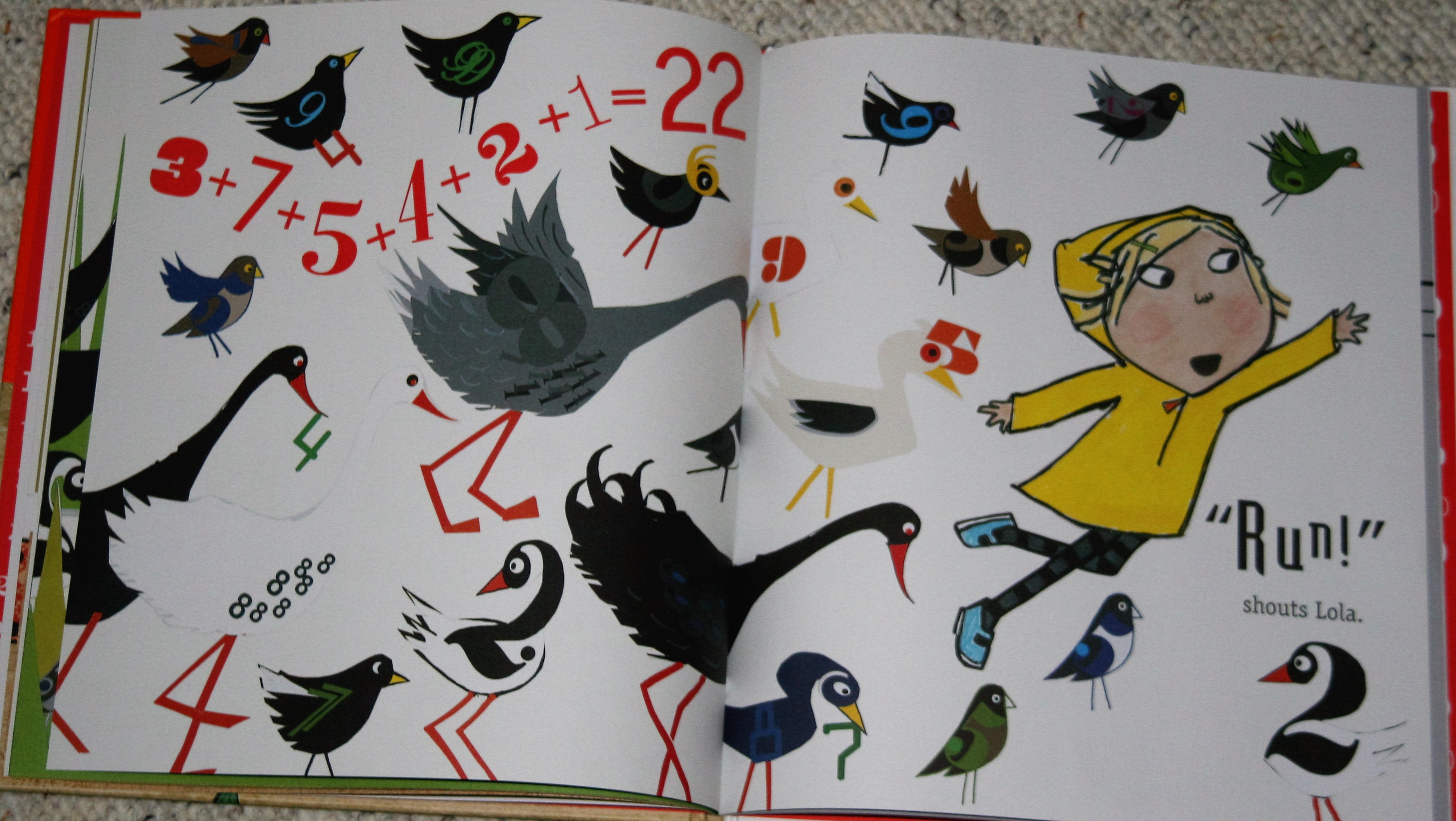
Don’t turn the page yet! Let me start with the biggest number; so 7 plus 3 is 10, plus 2, plus 1 is 13, plus 4 is 17, plus 5 is……. 22.  Now turn the page -Yes! I was right, 22.

This wasn’t a maths homework exercise but a bedtime story for my 5 and 7-year-old.

Regular readers will know that I am a huge Lauren Child fan.  Her version of Goldilocks and the 3 Bears features in my top 5 books for the Under 5’s, my eldest daughter read and re-read the Clarice Bean series and our visit to Lauren Child’s exhibition was like a step into Wonderland.

As  I was browsing books for the younger ones for Christmas, I discovered a brand new Charlie and Lola book called ‘One Thing’. With great excitement, I quickly contacted friends from the UK who were coming to visit and asked them to bring a copy. I didn’t know what it was about but as the Charlie and Lola books are amongst our favourites, I was looking forward to finding out.
As an additional surprise, a new Ruby Redfort book popped into my recommended items. It may seem a little sad, but I react in the same way to a new Lauren Child book as I would to news of a concert from my favourite artist. My eldest daughter loves Ruby Redfort and I usually pre-order them but somehow I had missed this one. Her face was a picture when she unwrapped it on Christmas day. She says this is her 2nd favourite in the series, beaten marginally by the first book. On finishing the book, she immediately wrote a letter to Lauren Child, explaining how much she enjoyed it, asking her questions and telling her about her own life. Through Lauren Child’s writing, children sense a genuine interest in what they think, feel and do which I believe, compelled my daughter to correspond.

One Thing is Lauren Child’s 5th Charlie and Lola book. Most Charlie and Lola books are adapted from the television scripts. The television series is based on Lauren Child’s characters and she collaborates closely with the script writers but there are only 5 Charlie and Lola books written by Lauren Child:-

Charlie and Lola: I Will Not Ever Never Eat A Tomato

Charlie and Lola: I Am Too Absolutely Small For School

Charlie and Lola: I Am Not Sleepy and I Will Not Go to Bed

Charlie and Lola: Slightly Invisible

and the new book  Charlie and Lola: One Thing

We love the television series but the Charlie and Lola books from the series don’t have the same sparkle for me, so I am always brimming with excitement when a new one from Lauren Child is released.

‘One Thing’ did not disappoint my giant expectations. In usual Lauren Child fashion, ‘One Thing’ captures perfectly the workings of a young child’s mind. The story begins when ‘mum’ promises Charlie and Lola ‘one thing’ when they go shopping. The book takes you on a number journey, tapping into the minds of children like my own, who count everything and work out number problems in their head.

Lola talks about numbers and Charlie gets frustrated, adding up the time it takes Lola to get anywhere. All of the number references are displayed as sums, puzzles or hidden numbers in the illustrations.  It is a wonderful introduction to maths for young children but ‘One Thing’ is more than an educational number book. The book recognises the natural way that children see numbers everywhere  and is full of discoveries for an inquisitive mind.

One Thing is a delight for adults to read. I particularly  identified with Lola’s constant distractions and Charlie and mum’s negotiations with her,

“What are you doing?” I say.

Lola says “I am just trying to count the dots on my dress but I am not sure what comes after twelve.”

I say “Missing going to the shops comes after twelve.”

It is a perfect example of a picture book where text and illustrations are dependent on one another, each enriching the other. I asked the girls what they liked about the book,

“I like finding all the numbers” said my 5-year-old “and I like Charlie and Lola”.

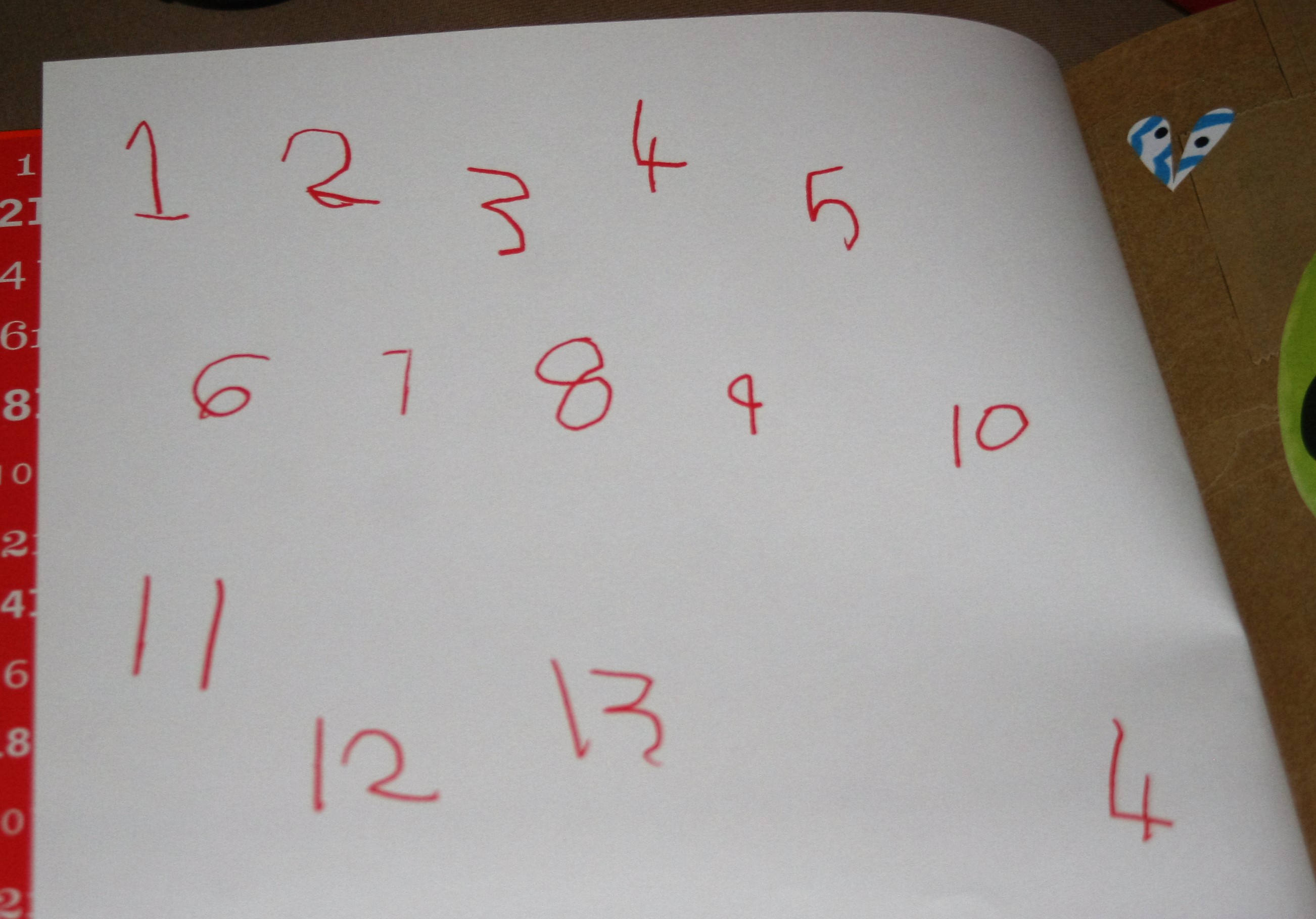
Each time we read it we find something new, from the title page with handwritten numbers,

Why did someone write on it?... Oh, I think it's meant to be like that. I think it is meant to be Lola's writing.
Why did someone write on it?… Oh, I think it’s meant to be like that. I think it is meant to be Lola’s writing.


…to discovering the number of minutes it takes Charlie to get ready hidden in the pictures,

“Oh look the toothpaste is a number 3”.

This was their favourite page.

one thing

They returned to it multiple times, trying to find the numbers hidden on the birds.  We couldn’t find a number 3, perhaps you will have better luck.

Thank you Lauren Child for another book to treasure.

One Thing is available in hardback in the UK and for pre-order in the US.

Disclaimer: This is a personal recommendation. I  completely, absolutely did not get paid or get free stuff for writing this post.


5 Picture Books to Inspire Children’s Art Projects

Art is not part of the curriculum in our school district, instead all elementary art lessons are taught by parent volunteers.  Once a month I volunteer to teach in my daughter’s class.  A monthly art lesson seems a little piecemeal and I often wish that there was time to delve deeper into projects. With this in mind, I often teach lessons that inspire children to discover a new medium or learn about an unfamiliar type of art.  Picture books can be a good starting point. Below are some of my favourites .

  1. The Noisy  Paint Box

My children are fascinated by abstract art. I recently introduced them to the works of Kandinsky after they created abstract art on our mirror table. This book tells the story of Kandinsky’s life as an artist and explains how he expressed his feelings and senses through painting.  As a boy he felt he could hear the paint box hissing and at a classical music concert saw colours and shapes before his eyes, that expressed the music.

After reading the book,encourage children to paint what they feel as they listen to a piece of classical music. Discuss their feelings and document some of their comments with the painting.  Try playing different genres of music to see how their reactions change and explore together how this was reflected in their painting. A large scale collaborative painting to music could develop this theme further.  Explore the differences in expression and how they all fit together to make a complete painting.

2. Korgi 

The captivating black and white illustrations in this textless graphic novel inspired this project about monsters.  The drawings here were in charcoal but pencil drawing or pen and ink would work equally well.


3. The Mr Men

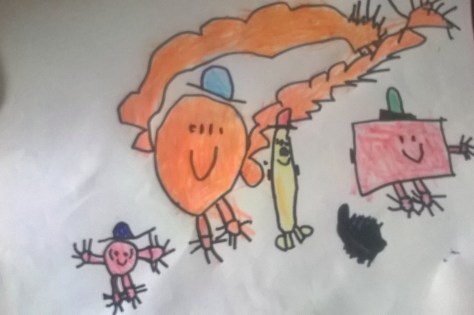
Strangely, the Mr Men have been one of the girls favourite things to draw and  model for some time.  The book’s back cover displaying all the Mr Men make it easy for them to choose a Mr Man to copy.

WP_20151119_001 1

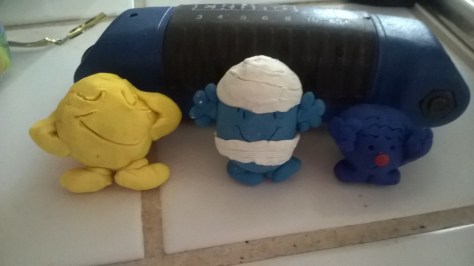
They used polymer clay to make 3D representations. Their simple forms make them perfect for introducing young children to polymer clay or modelling smaller characters.  It also helps them to see how their drawings can be translated into a 3 dimensional model.

Mr Men polymer clay models

They even created their own Mr Man – Mr Tae Kwondo.

Mr Tae kwondo


4. How are you Peeling?

We loaned this book from the library and it was a firm favourite.  On each page fruit and vegetables are photographed to represent an expression or emotion.  It has inspired us to search the supermarket for interesting vegetables and would be even more fun if you grow your own. It would make a wonderful photography project.

5. Leaf Man

Leaf Man is a good introduction to collage and art using natural materials.  The story of leaf man is illustrated using photocopies of leaves on a colourful torn paper background.  We used this for an art lesson in my daughter’s Kindergarten class and here are some of the finished projects.


 Further Suggestions

The Tiny Seed – paint flicking

The Hungry Caterpillar – collage (Eric Carle describes how he creates his pictures in this slideshow.)

Camille and the Sunflowers – a story about Van Goch


9 Spider Web Activites for Children

spider web activities

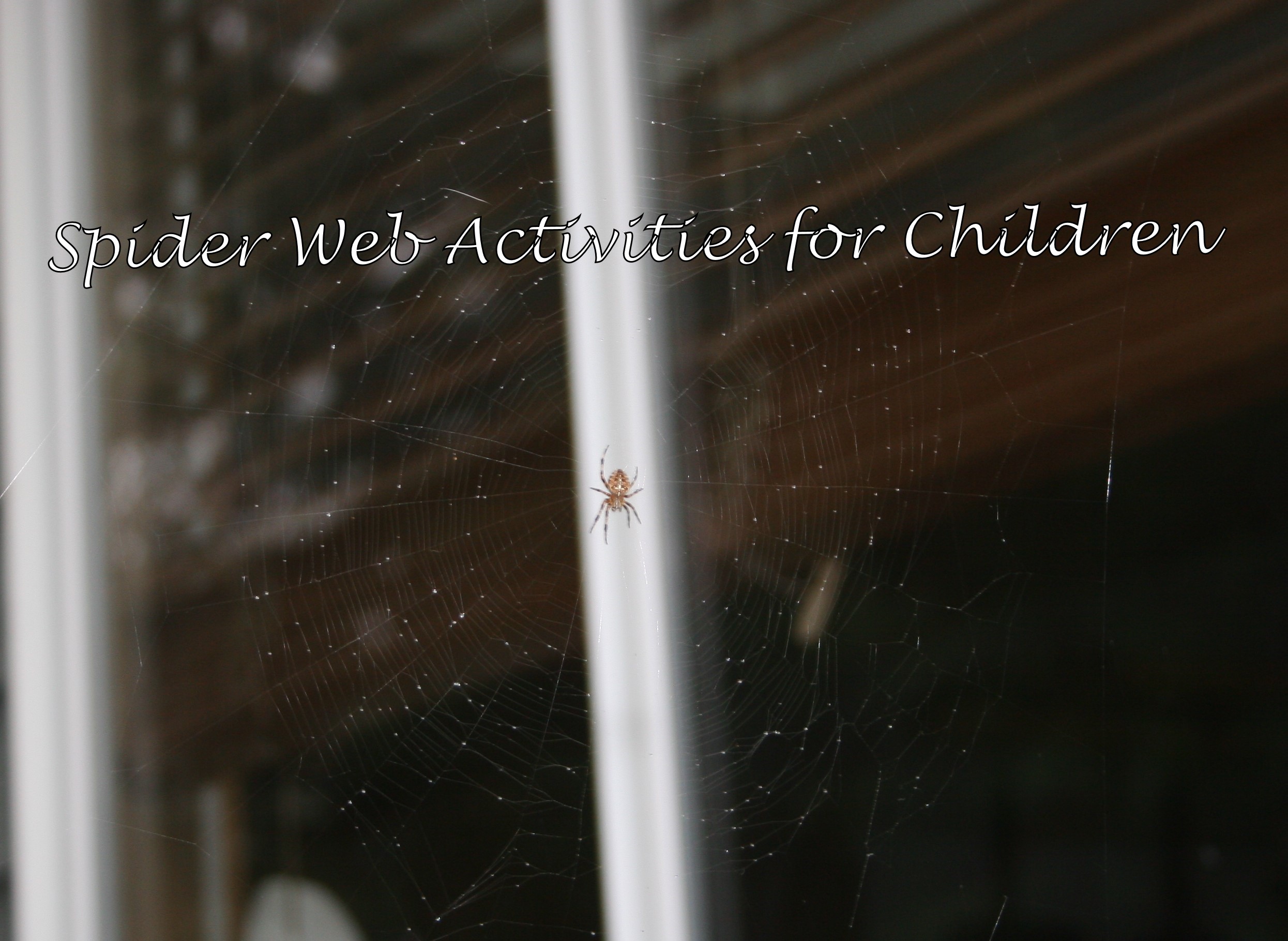
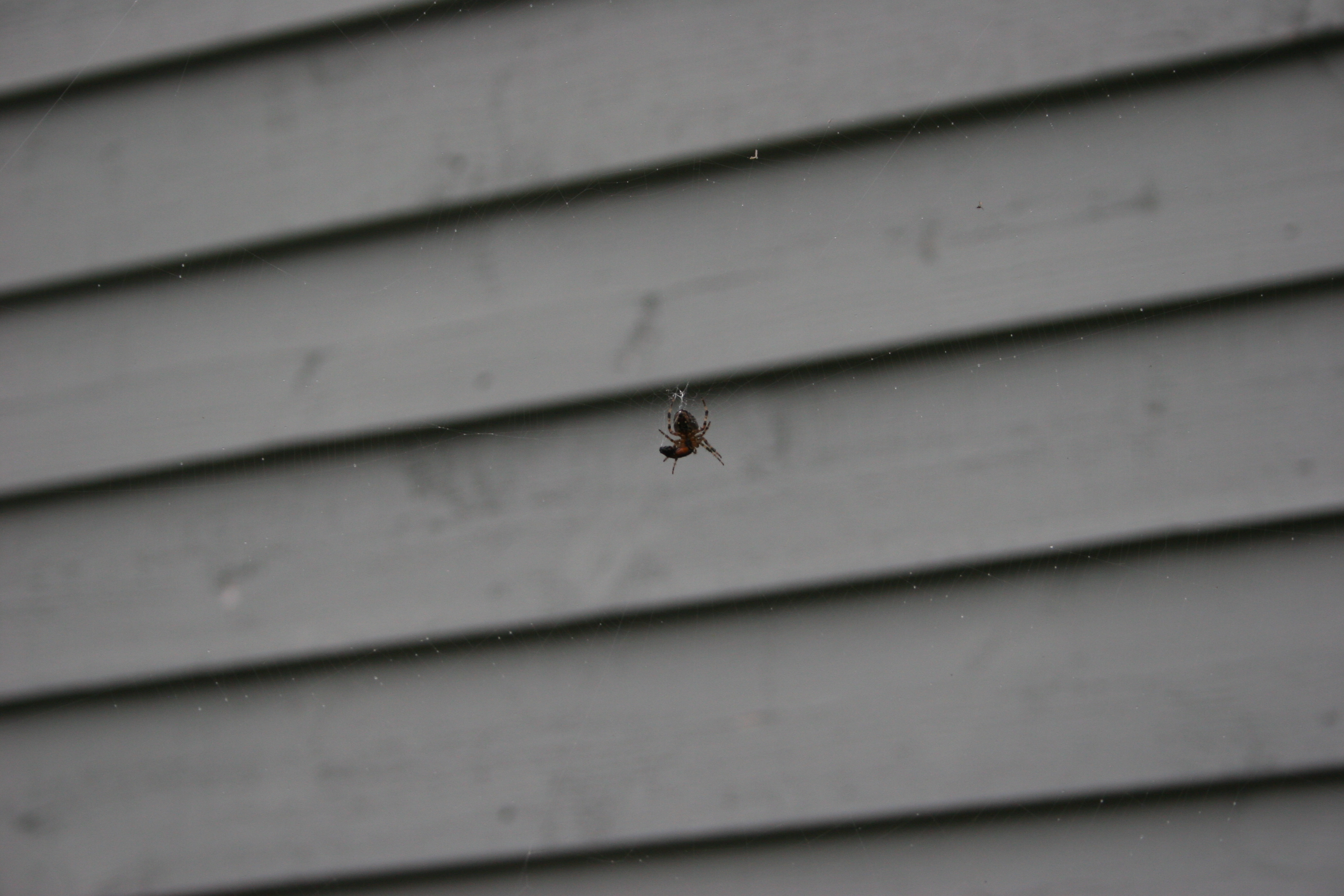
This time of the year there are spider webs everywhere. We stopped to watch a spider devouring a fly on our walk home from school and one has built a web right outside our window, so we watch his antics everyday. If your children are interested in spiders or you are looking for spider activities for Hallowe’en, here are a few we have tried.

  • Tie sticks together into a star shape and weave a web  with wool or string around them, wrapping around each stick as you go.

spider web

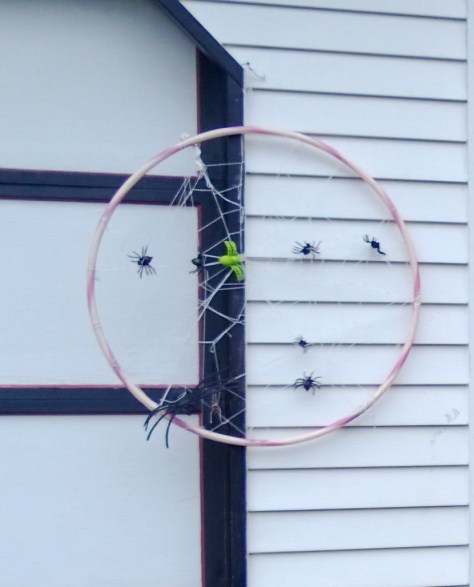
  • Weave a spider web inside a hula hoop for a large-scale decoration.

spider web on a hula hoop

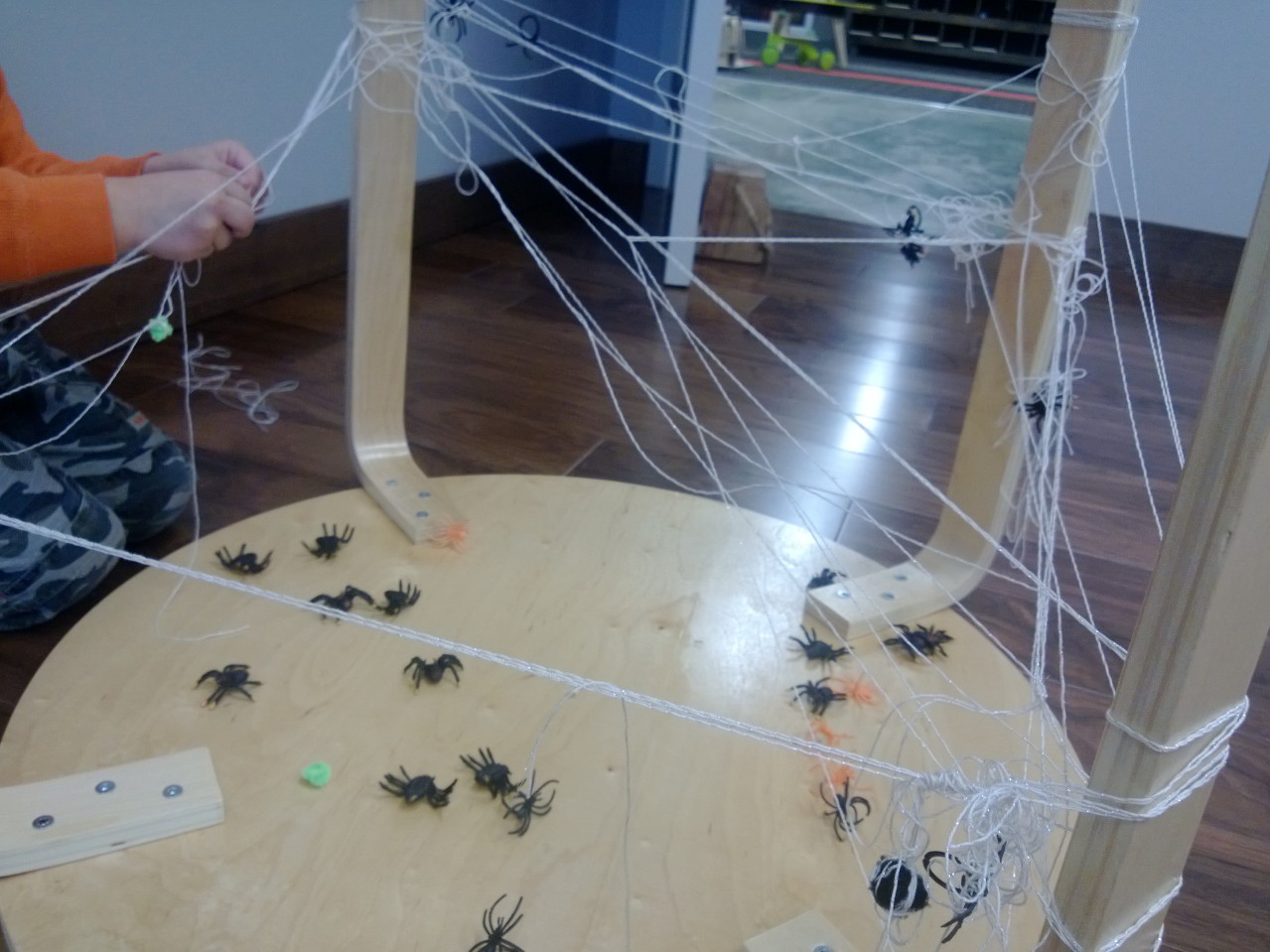
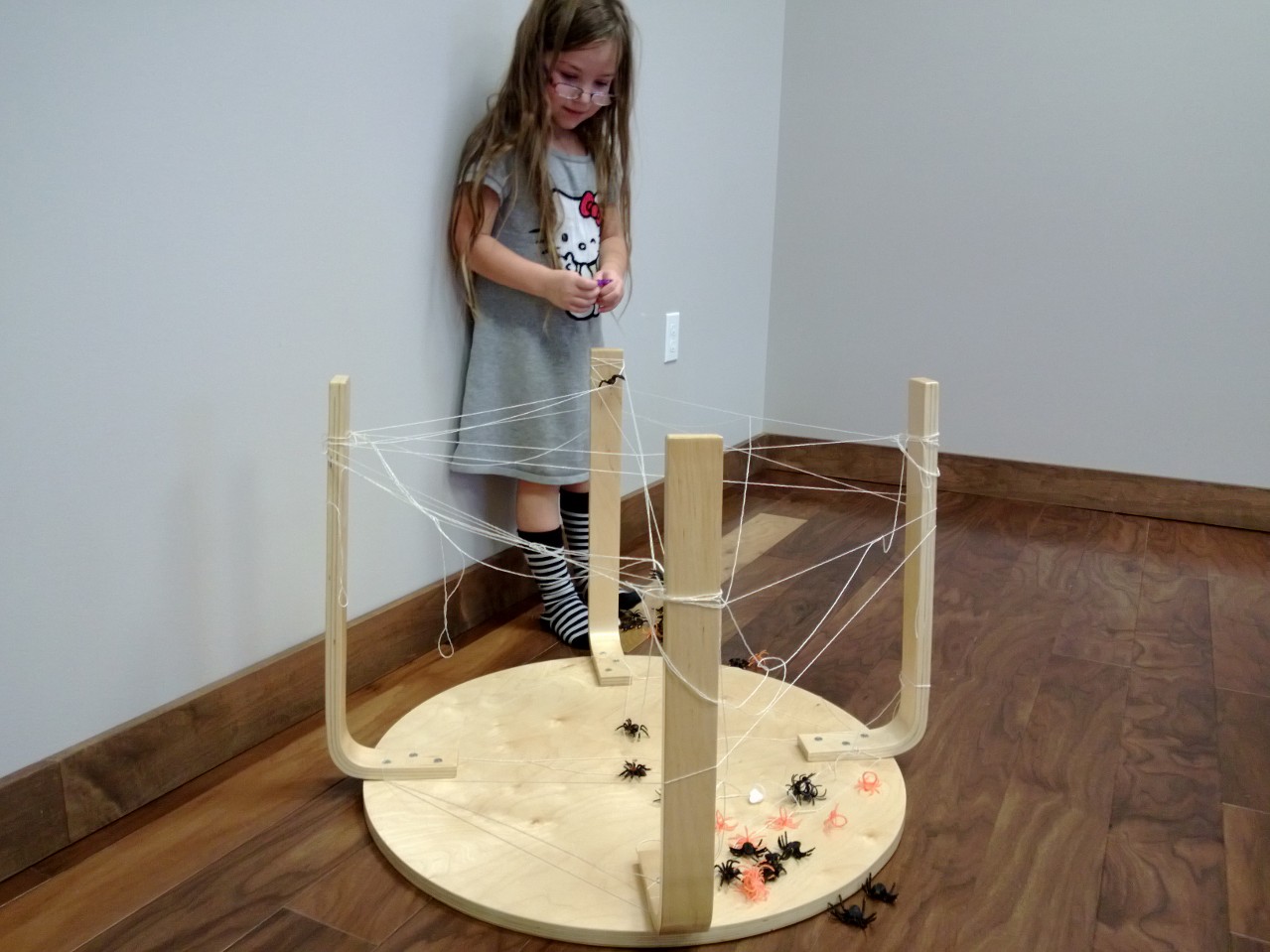
  • Turn a round table upside down and give the children a ball of string or yarn to make a web around the table legs.
table spider web
spider web on table
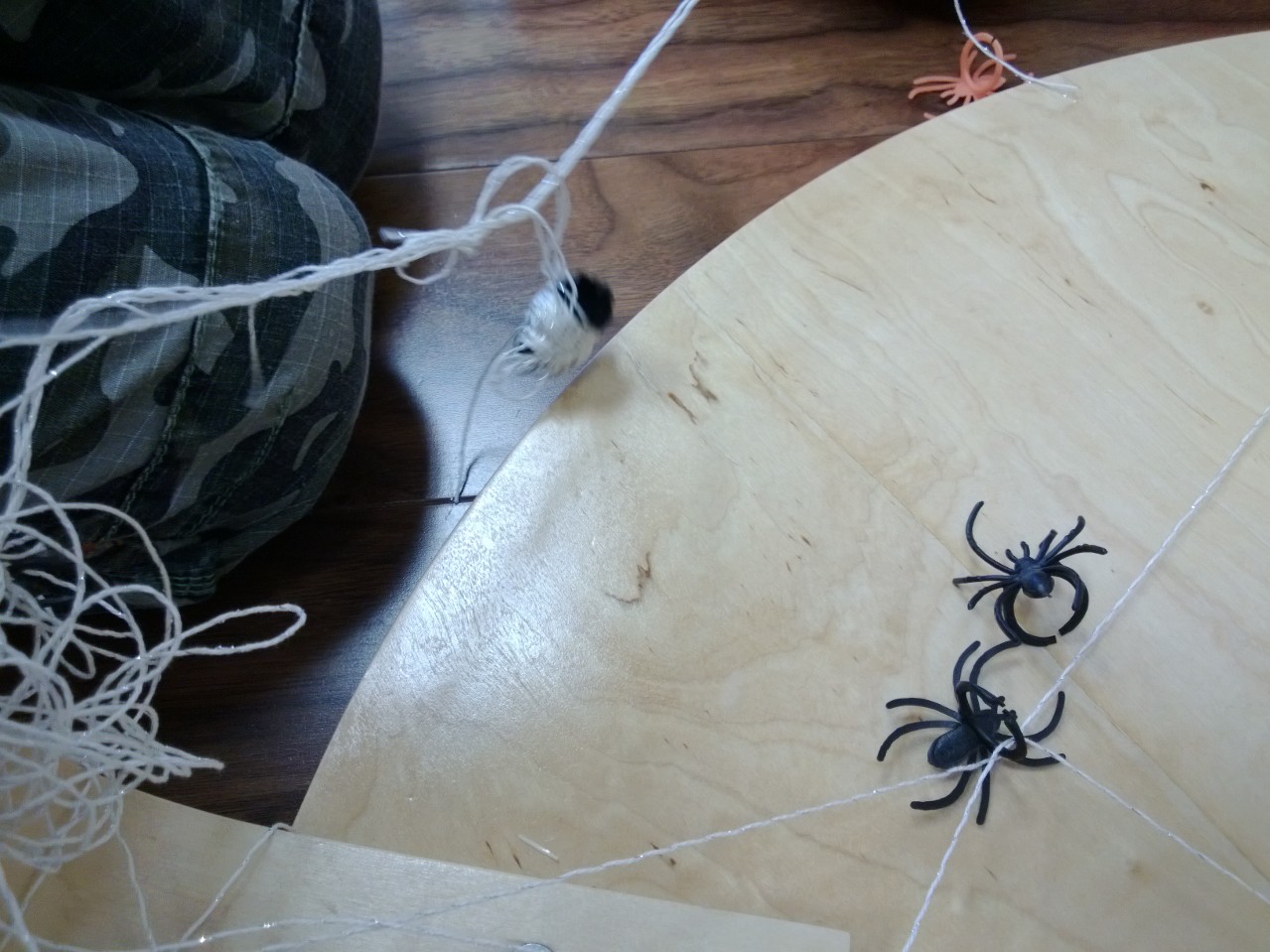
This child had watched the spider wrap up it's prey, so hung these around the web.
This child had watched the spider wrap up it’s prey, so hung these around the web.
  • Make a Velcro web and bugs from old socks or pairs of tights.   Throw the bugs at the web and see how many  get stuck.
velcro spider web
Spider web game At-Bristol
  • Sing the elephant and the spider web song
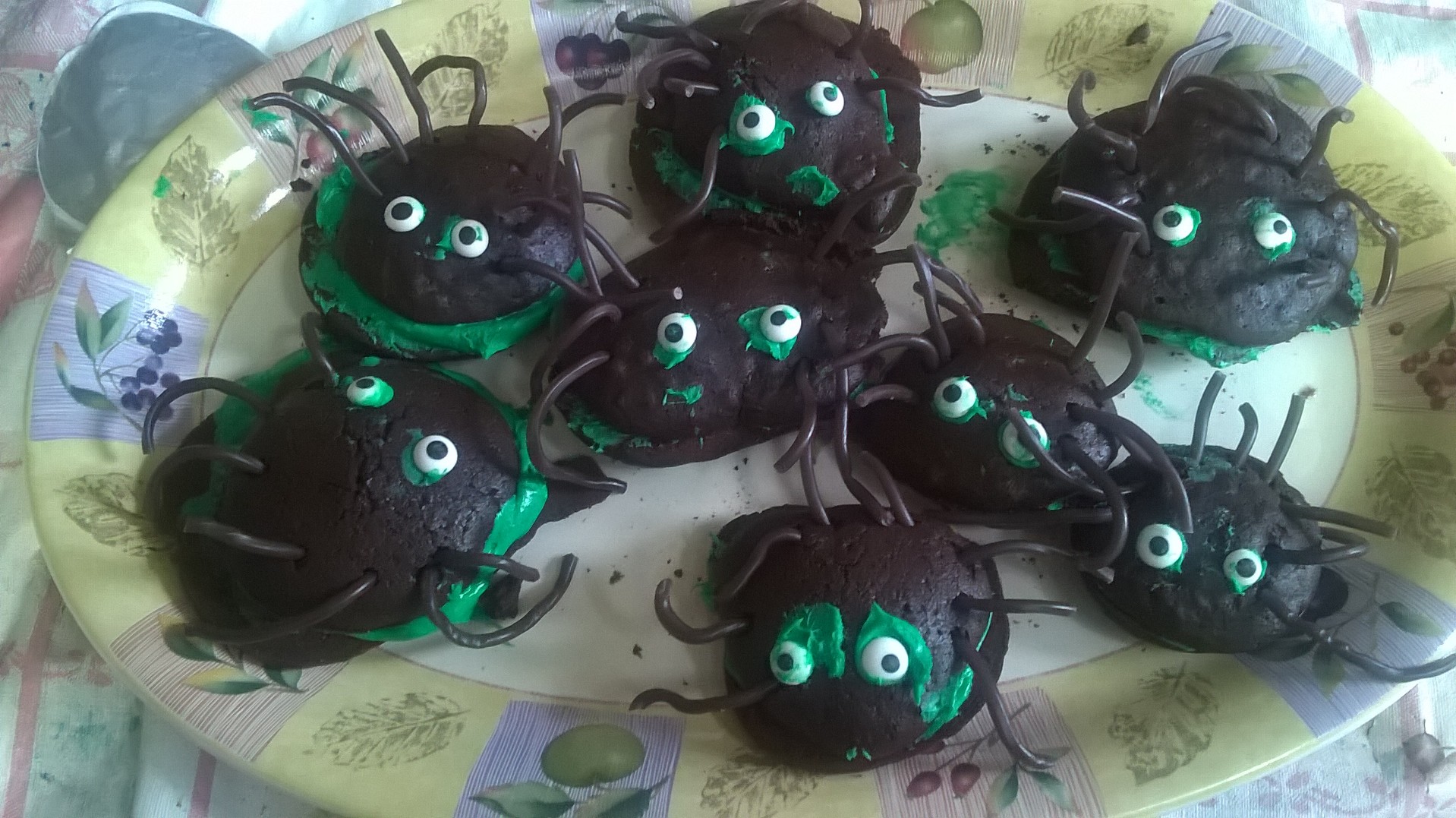
  • Pipe an icing spider web onto a plate and make spider cakes to fit inside.

spider cakes

  • Find a spider web to climb inside
dr mazes farm
Giant spider web at Dr Maze’s farm
  • Read books about spiders

  • Observe real spider webs
spider eats fly

How Do You Know When You Have Found the Perfect Preschool?

muddy feet
A place where I can kick my shoes off and sink my toes in the mud.

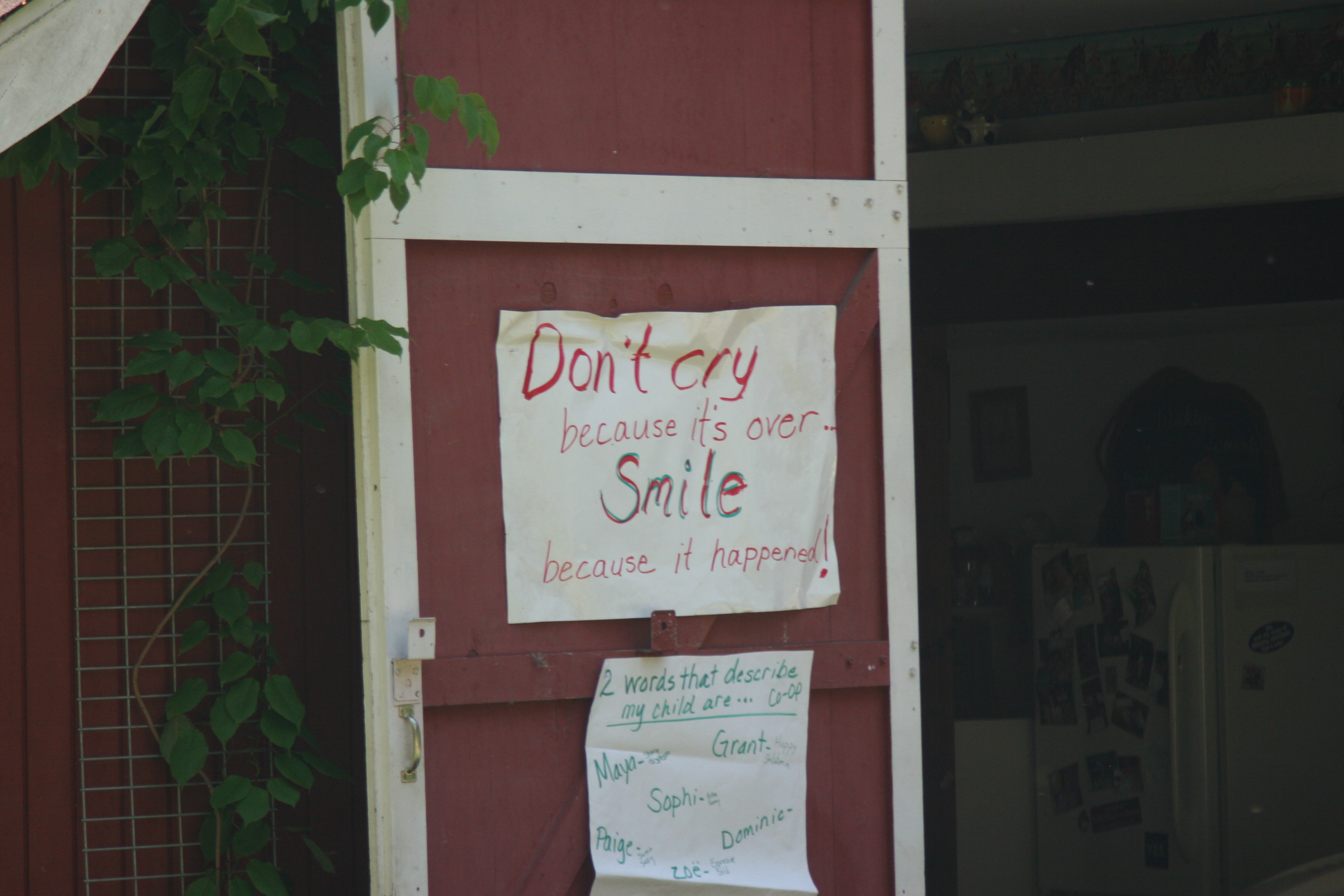
Regular readers will remember that when I moved to the US, I struggled to find a preschool that I was entirely happy with.  I became so disillusioned that I decided to home preschool for a year. I’d lost faith of ever finding a preschool that valued play, independence and individuality above academics and rigid schedules until a friend told me of a preschool situated on a farm.  The preschool shared my belief that children learn best by doing things that have relevance in their lives through exploring, discovering and creating.

The school is so popular that it was a whole year before I had a chance to visit and see the school for myself. Children were busy pulling apart sunflower heads on the covered deck area whist others moved freely between the different activities indoors and outdoors. The teacher’s enthusiasm and passion for both the children and the setting was evident immediately and a bubble of excitement rose up within me. Our name was put on the waiting list for Sept 2015 but before Christmas a place became available in the co-op class so finally my youngest daughter had the chance to attend.  This was perfect as I also had the chance to be involved in this wonderful experience as a parent helper.

ducklings

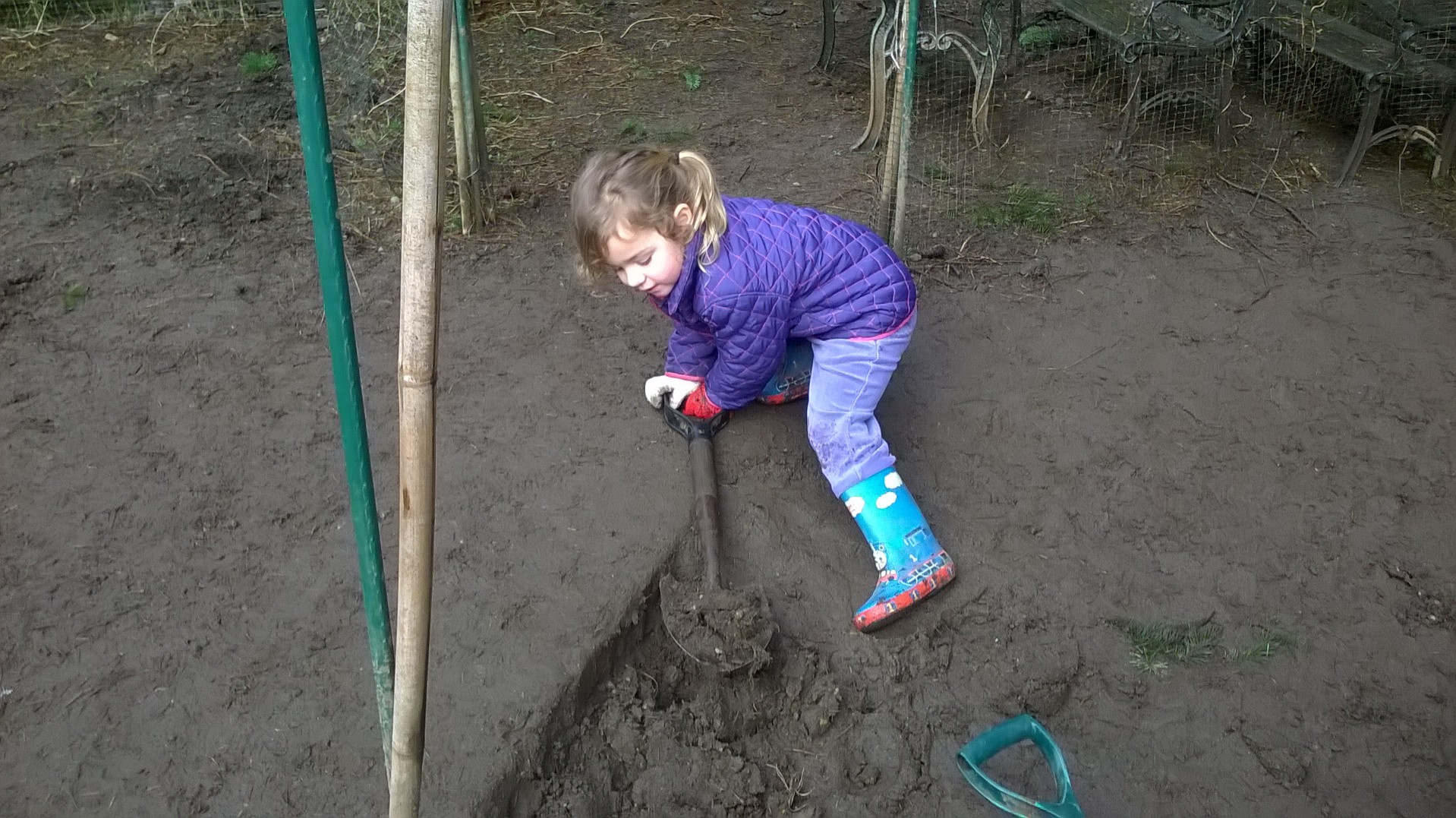
There was little doubt in my mind that this was the perfect preschool for my outdoor loving daughter. My expectations were high. I have been fortunate to teach at a highly acclaimed nursery in the UK and to visit the best preschools in my local authority as an advisory teacher. My experience of this school has surpassed all my expectations, I couldn’t have hoped for a more perfect preschool for my daughter and I am only sad that my older daughters didn’t have a chance to go there. After she started, it just seemed to get better.  Regularly she would come home covered from head to toe in mud.  To some parents this would be horrific but to me it meant she had the freedom to be herself and have fun.

Being a part of the co-op class means that I get to help out once a month. This is the most exciting part for me as I get to join in.   I love the covered deck area which enables the children to play outdoors all year.  The children explore the whole farm for the 2nd part of the session, mud, water, animals, climbing and balancing. They are actively encouraged to take risks.

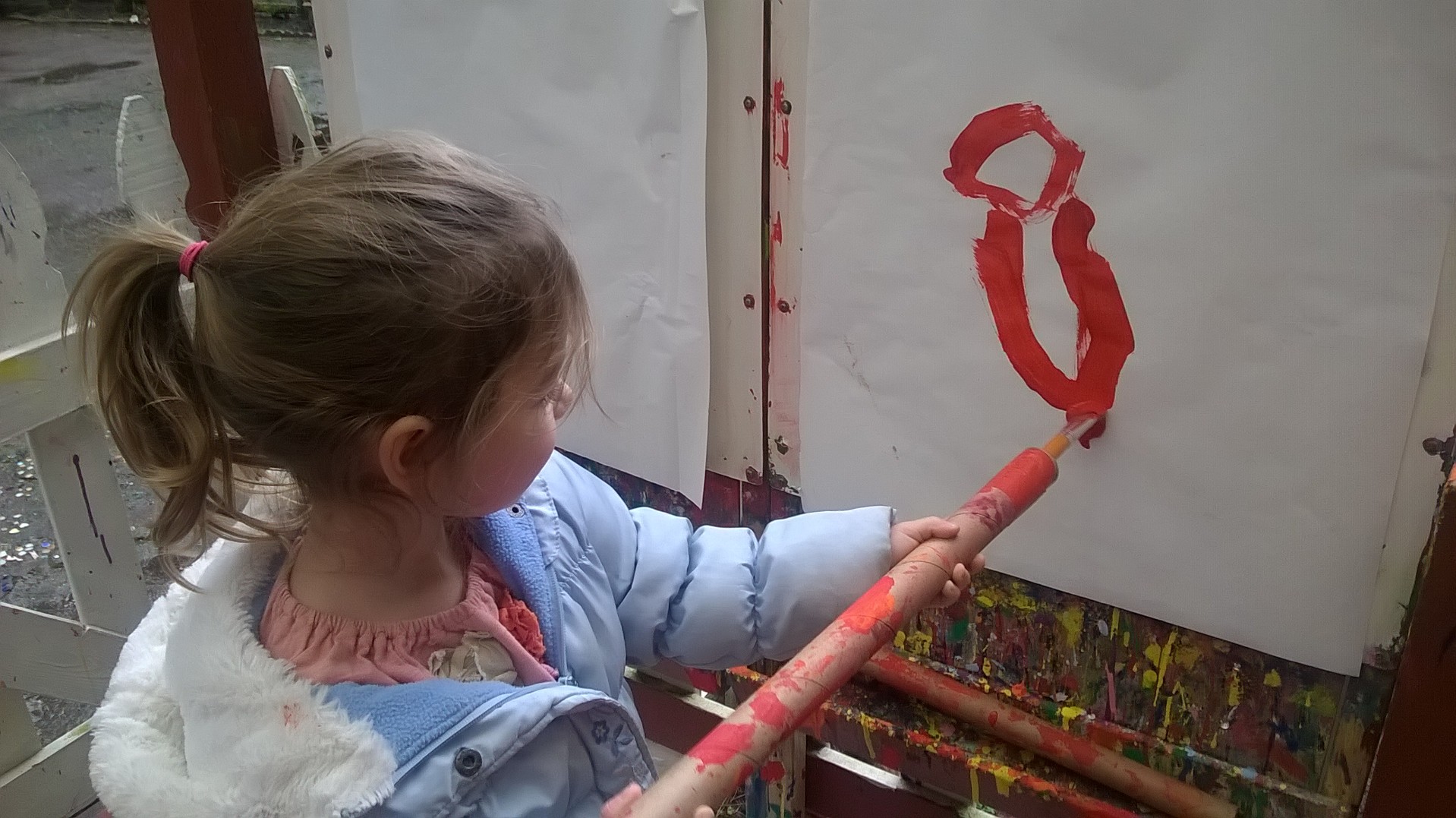
long paintbrushes.
As we arrive my daughter always chooses to paint . She liked this painting activity with paintbrushes placed on extended poles.
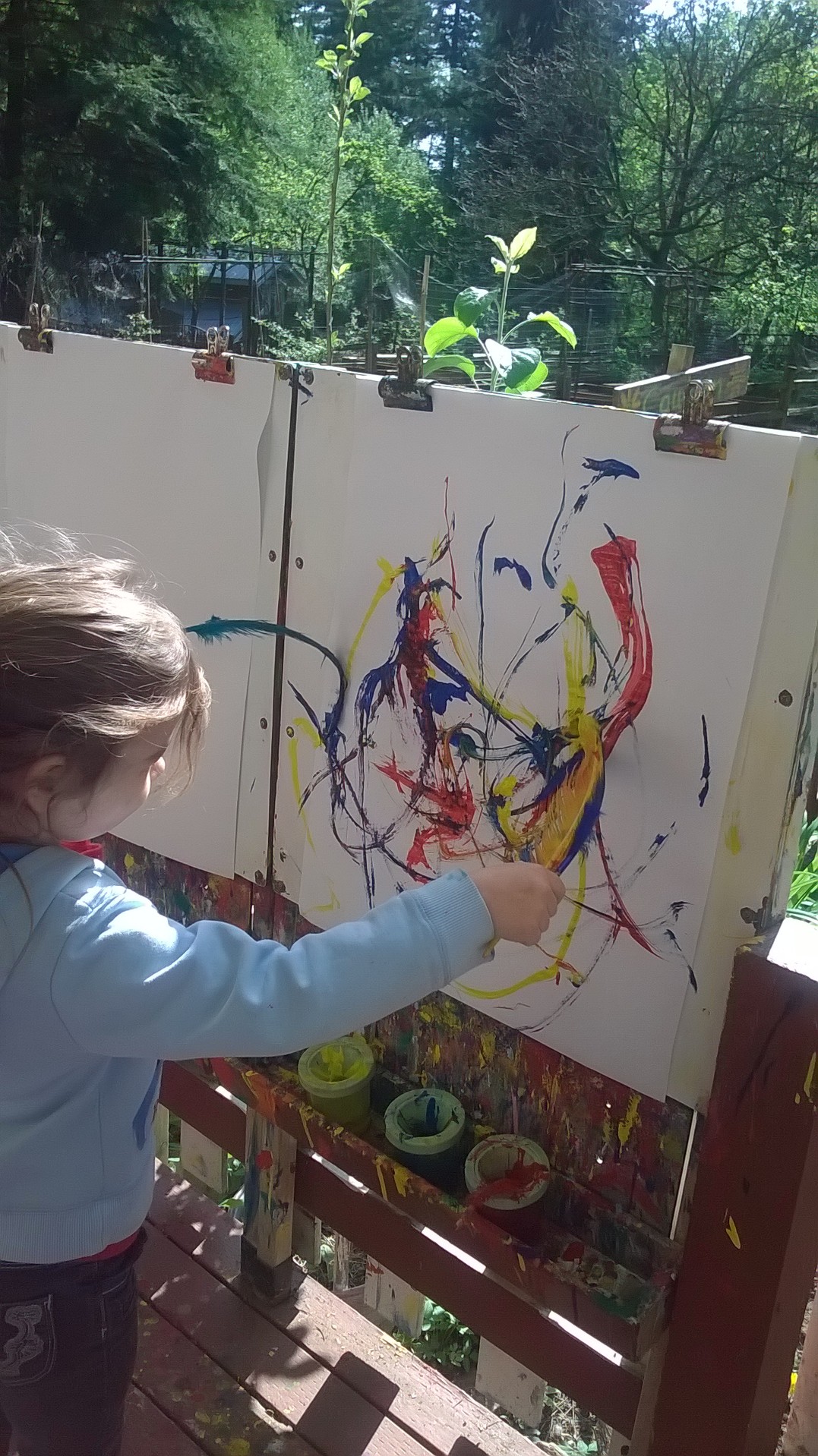
painting with feathers
Painting with feathers

What makes it so perfect?

1. Children are individuals

Small classes and the dedication and experience of the teacher, mean that she understands each child as an individual. My daughter who is uncomfortable speaking in a group or to unfamiliar adults is given time to think about what she wants to say, often being presented with a question at the start of a session and returning for a response later.  The child who hates to get his hands dirty is offered alternative tools and all the materials are open-ended so that children can use them as they see fit.

2.Children are competent

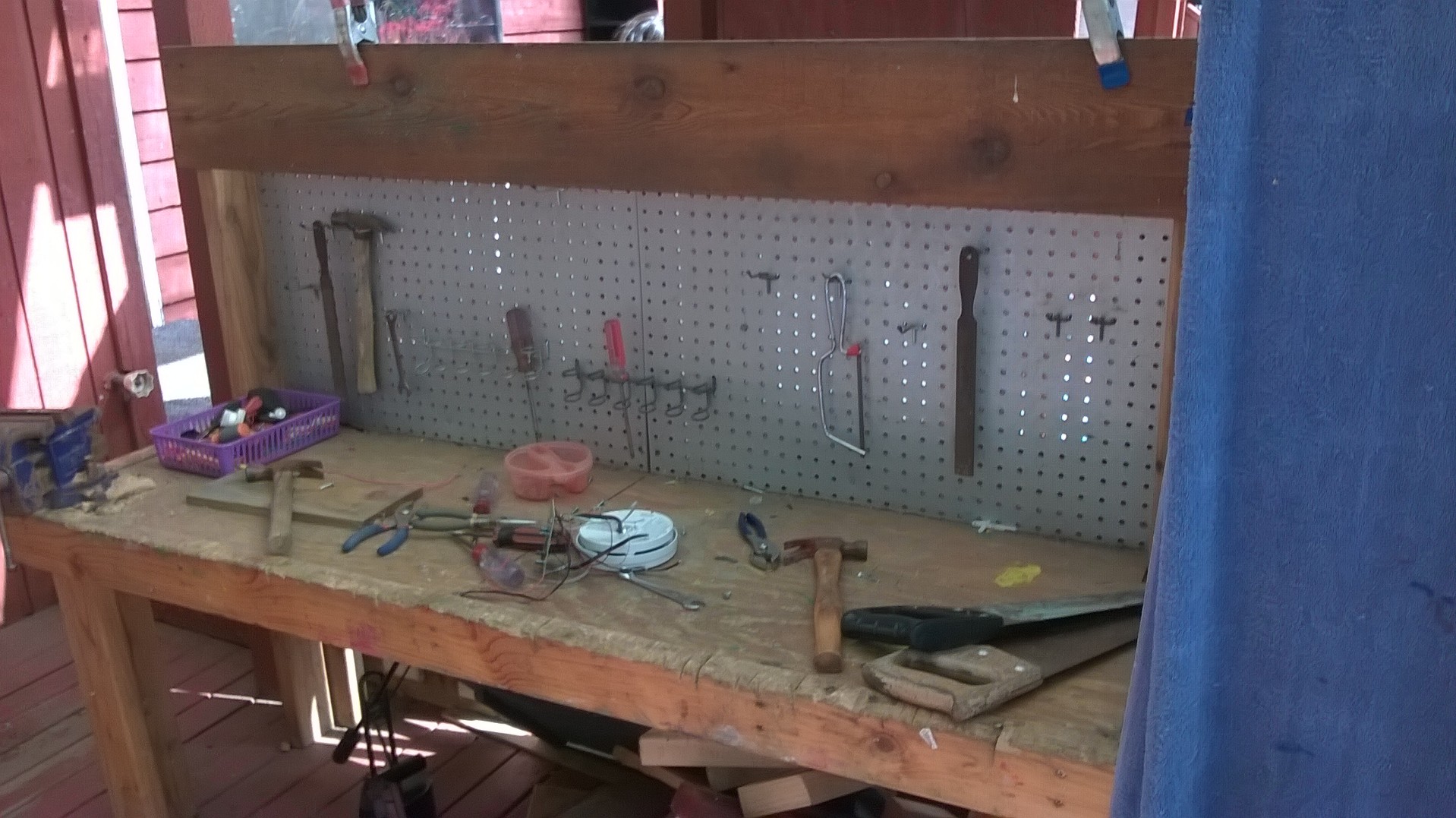
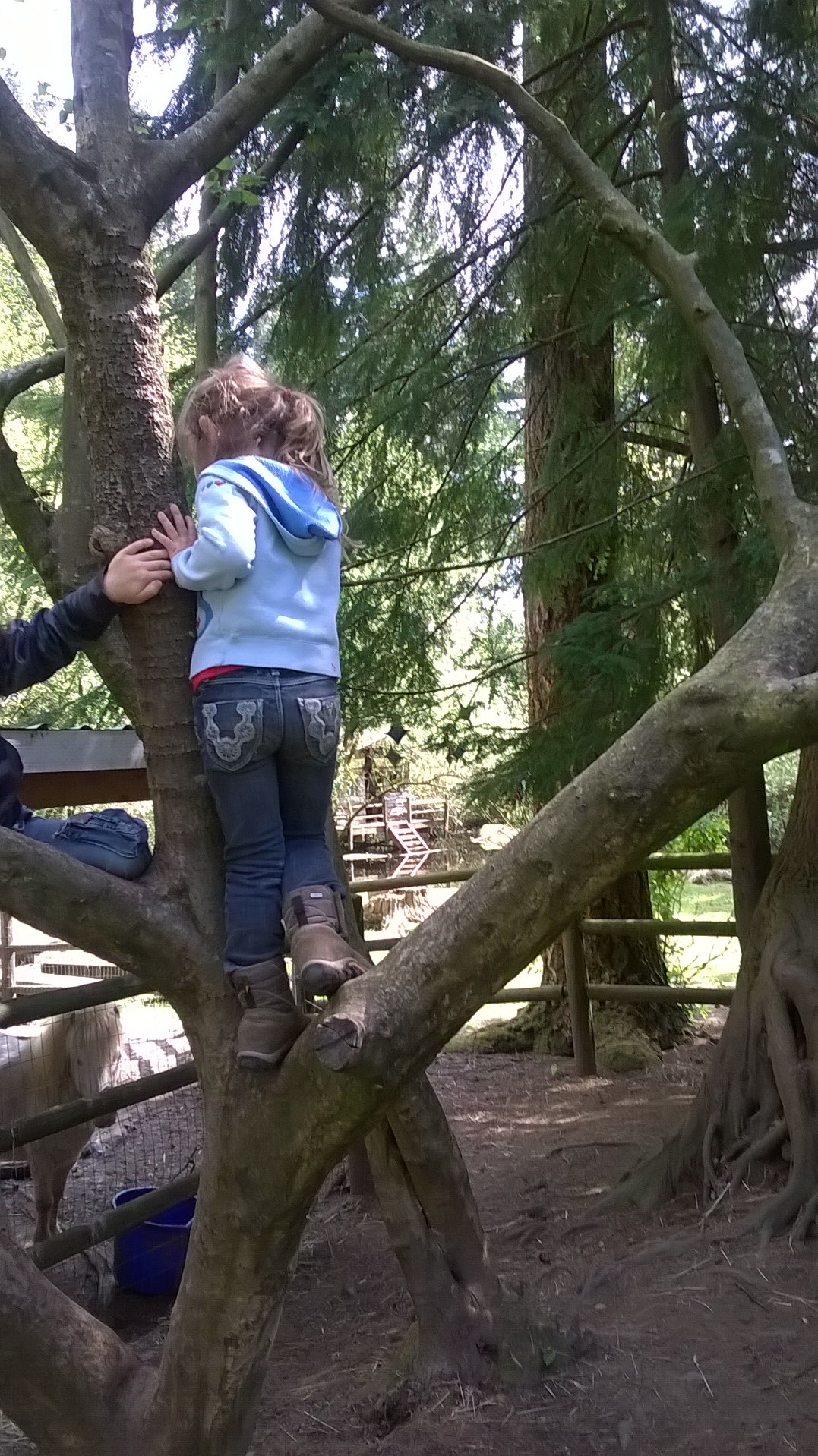
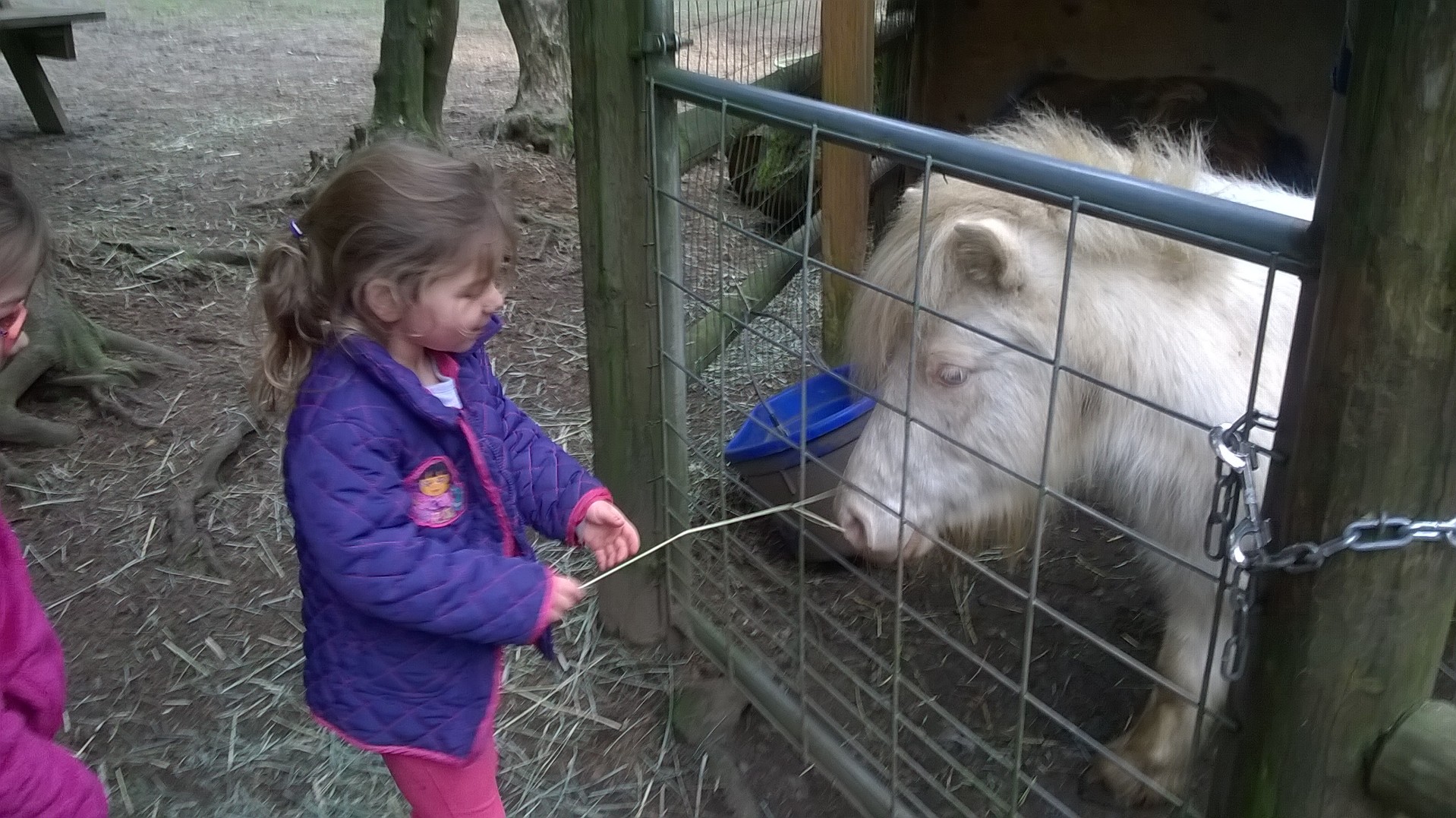
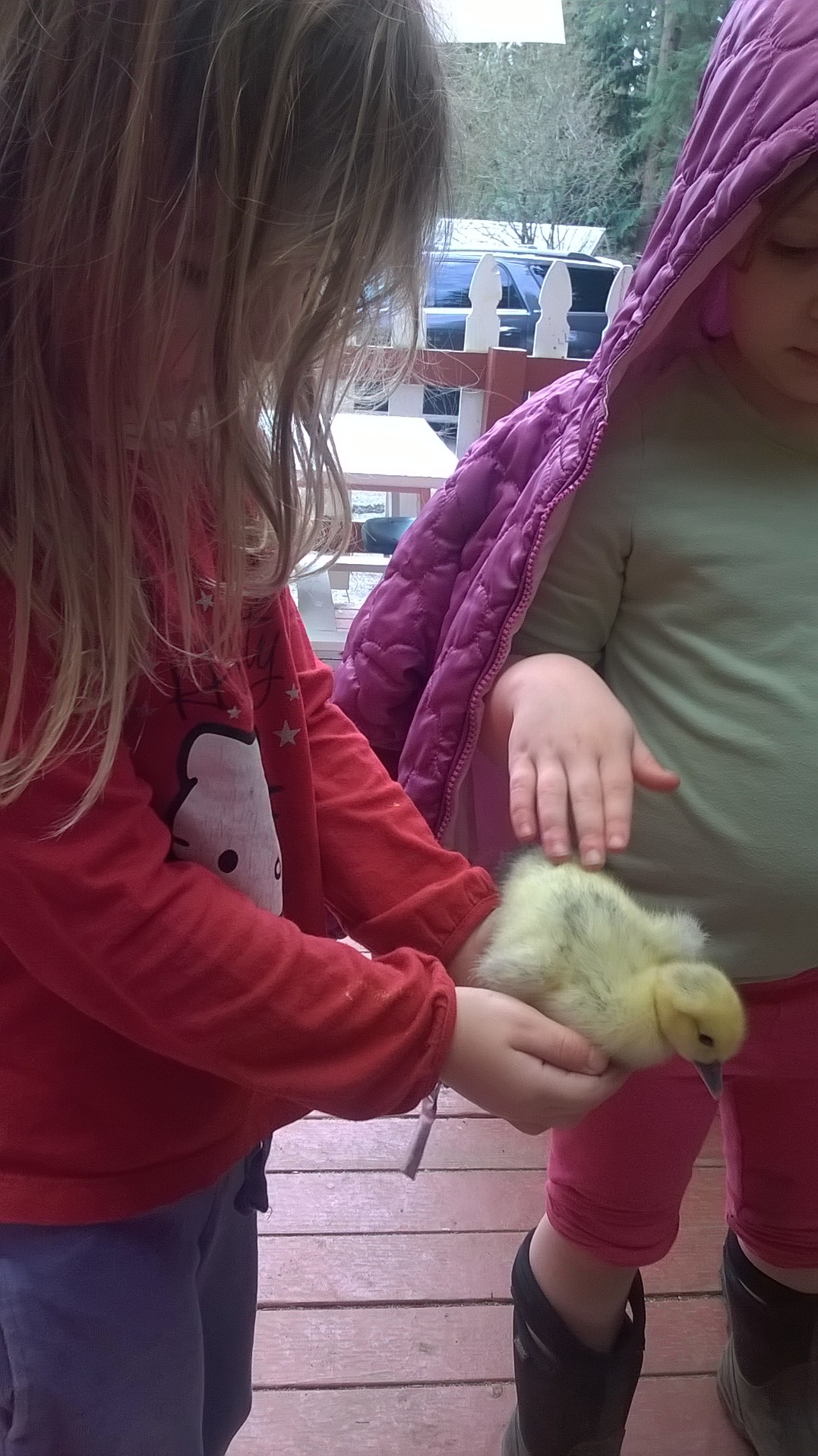
Children are always encouraged to try things for themselves, even when they ask for help they are first encouraged to try.  The children are trusted to use adult tools for woodworking and tinkering, peeling vegetables and cooking.  The teacher shows them how to use the tools safely and responsibly and thereon in they are trusted with them.  The children cook their own green eggs and ham on the tiny stove, they dig with metal shovels, they observe candle flames and peel carrots with a peeler.  Outside they are permitted to climb trees, feed the animals, hold guinea pigs and dig in the mud. The children are trusted to handle precious materials like birds eggs, chicks and nests.

WP_20150501_004

This tinker table is always available. I regularly see children sawing pieces of wood placed in the clamps, hammering nails or taking apart electronics with a screwdriver. In the nursery I taught at we had a tool bench with real tools but we weren’t confident enough to leave it out all of the time. I have never seen a child have an accident or do anything dangerous with the tools.

climbing trees at preschool
My daughter loves to climb trees – I’m not sure I could find anywhere else where this would actively be encouraged.

3. The Preschool fosters understanding and respect for nature.

Many of the activities involve the natural rhythms of the farm, collecting the produce, understanding the cycles of the plants and learning about the animals and creatures they find.

WP_20150225_002

After the first few sessions, my daughter told me they had unicorns at preschool but that it was too small to have grown a horn yet. A preschool with unicorns? Could it get anymore magical?

ducklings.
When the duck’s eggs hatched the children were allowed to hold them.
bug hunt
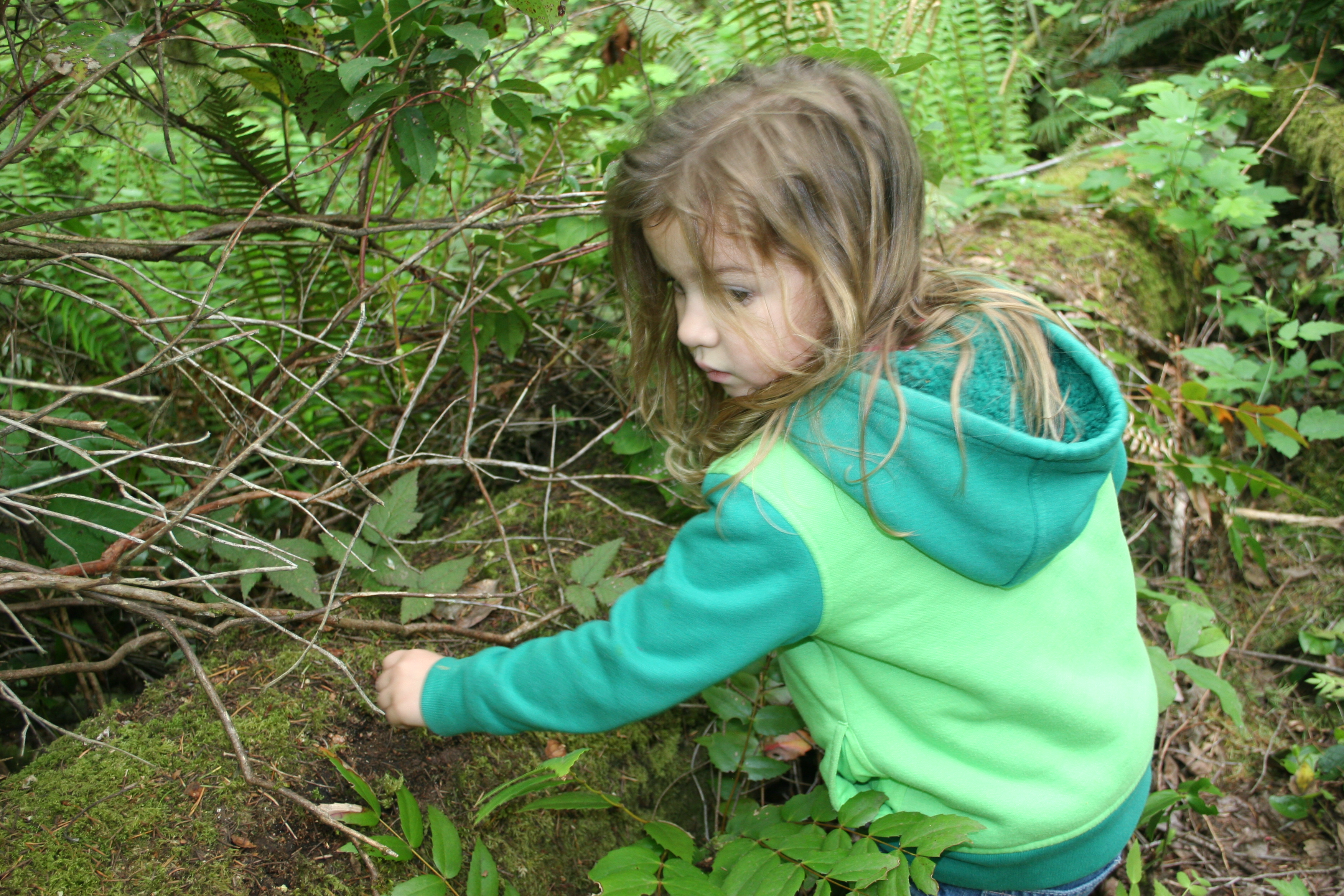
A bug hunt in the woods

4. Children’s thoughts and opinions are important

Each session the children are asked a question and the answers are recorded for parents to read on the wall outside.  The children listen to each others responses and discuss them with respect.  The children’s choices are respected as they are presented with a number of activities to choose from at leisure. They also have opportunities to choose the songs they will sing and are confident at asking for things.  The children are offered a snack, they choose when and if they would like to eat it .

5. They have fun.

wading in the swamp
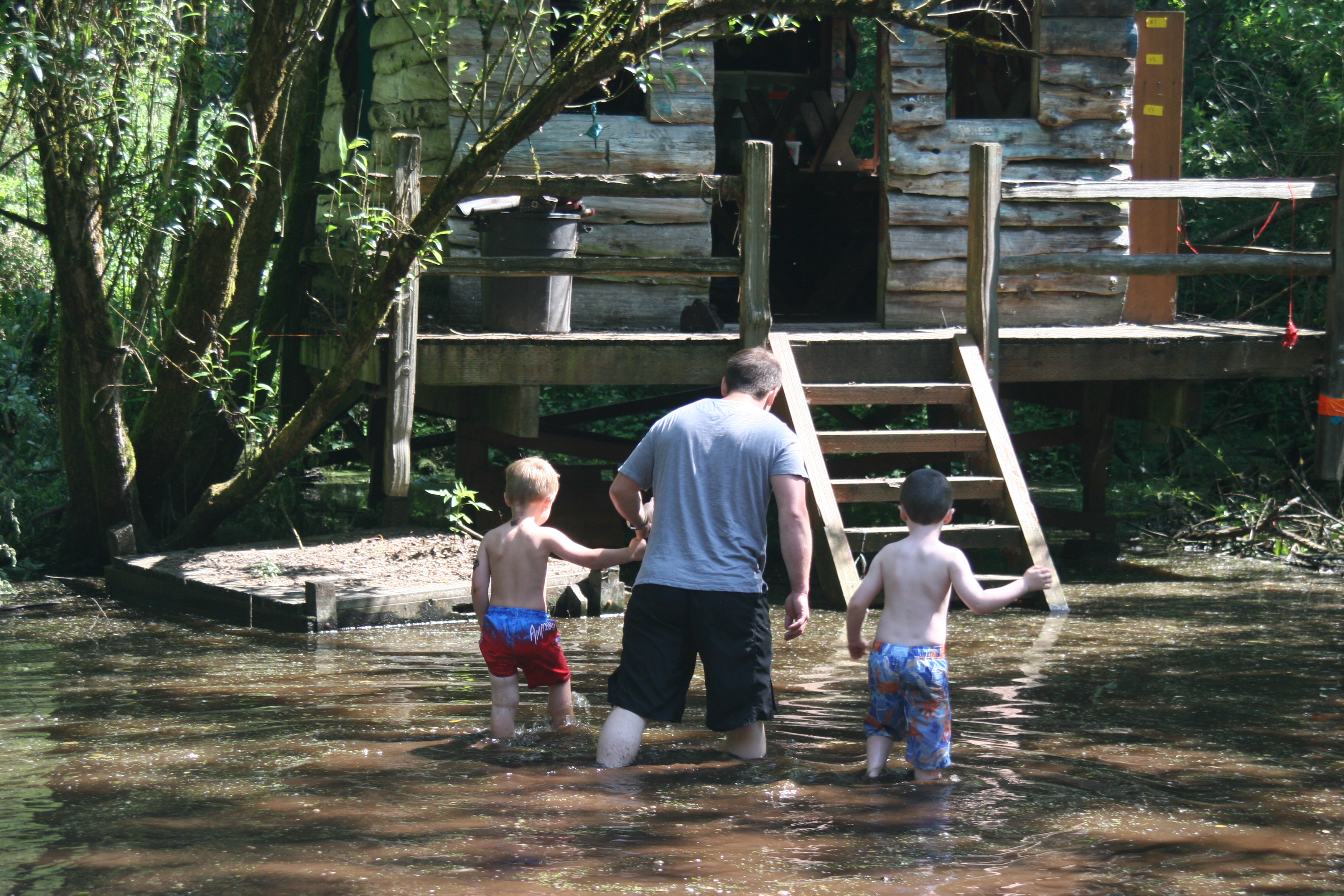
On the last day of school, parents are invited to join the children as they wade in the swamp.
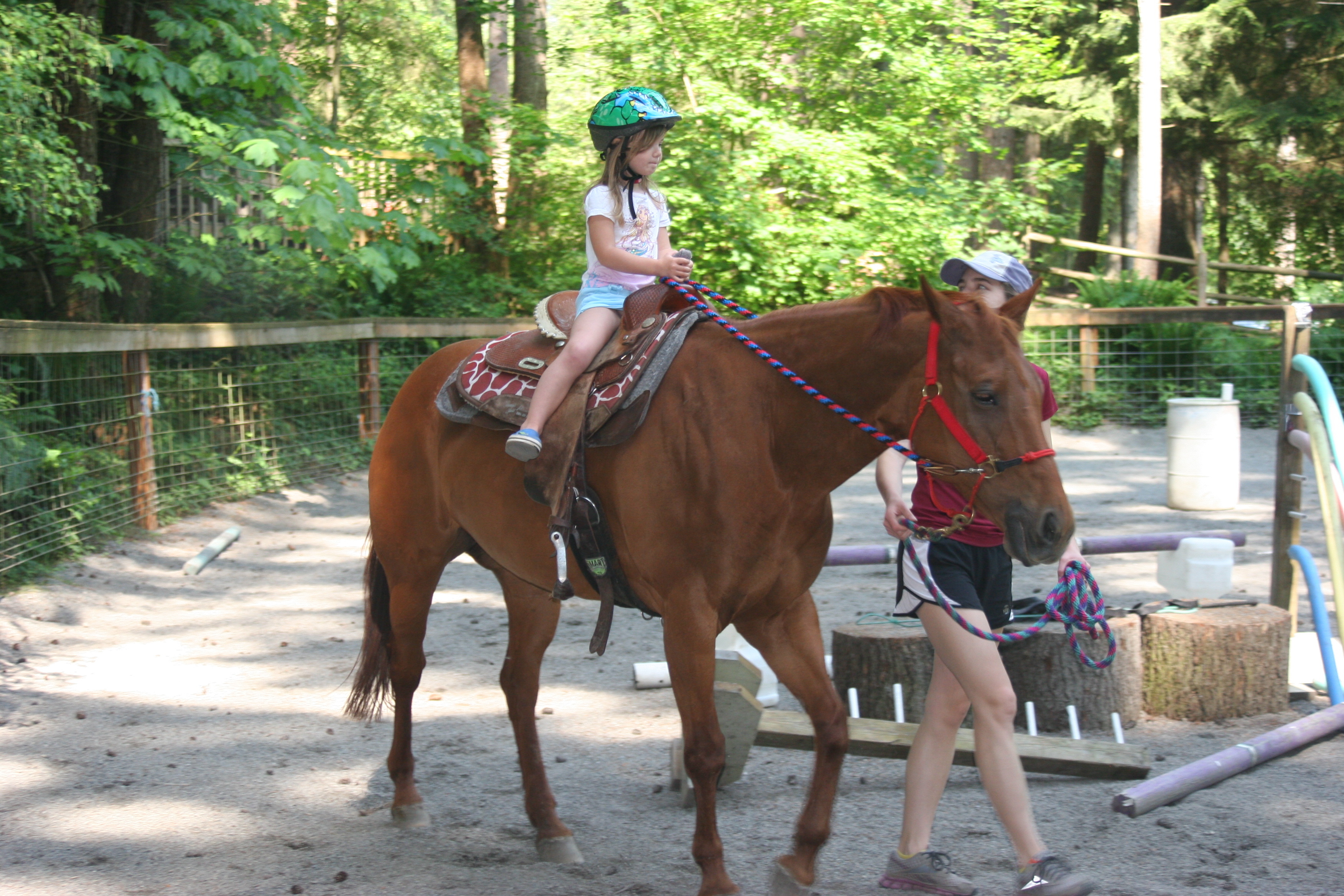
horse riding on the last day of term

.

Best of all, I feel that my daughter experiences something here that she would never have the chance to experience elsewhere.  I feel so fortunate to have found this preschool and that my daughter has one more year there.  When our time is over I will be so sad but I hope I can remember her teacher’s words of wisdom.

IMG_0626

British Children Learning to Read and Write in the US.


I knew my youngest children would learn to read and write in the US and as a result I would have to accept that they would spell differently and use American phrases and grammar.  There are some unexpected differences however that I hadn’t considered.

A few days ago my 4-year-old remarked,

“Mummy, all the other children at preschool don’t write t’s properly”

“Really! Can you show me”

It is a bit like an x, like this……

t

My youngest is 4, I taught her to write her name but it never crossed my mind that letter formation might be different here.

I asked my kindergartener

” Do you write a curly bit on the bottom of the letter t at school?”

“No we do it like a cross”

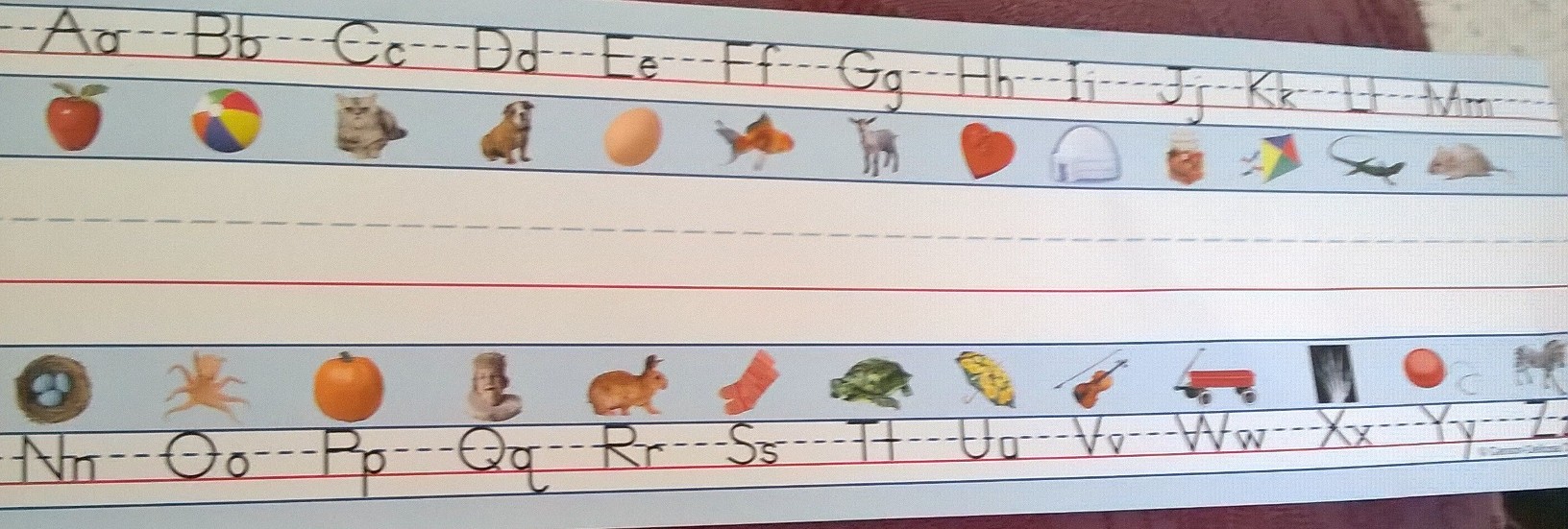
I checked with the teacher and she explained that they use the ball and stick method where  letters such as t, w and y use straight lines rather than curves as they feel it is easier for the young children to master. It is one of many differences that I hadn’t anticipated.

alphabet ball and stick

I always believed the transition would be most difficult for my eldest, who went  to school in England until she was 8, so learned to read, spell and write ‘the English way’. The first thing she noticed, was that punctuation had different names; full stops were periods and brackets became parentheses.  We were really keen that she wouldn’t lose her knowledge of British spelling, so school agreed that she could learn both.  As an avid reader and proficient speller this wasn’t really difficult.

Choosing books wasn’t simple either. Most books by British authors are rewritten for an American audience.  When we borrow books by British authors from the library or buy books here, they are American versions.  My daughter is really eager to maintain her ‘Britishness’, so we often order books from the UK. This way she can still read books with British spelling and vocabulary and is able to read literature from both cultures. Tonight we read an American translation of Pippi Longstocking. This was my daughter’s favourite book for many years, so she knew much of the text by heart.  Every time she spotted a difference, she would quote the British text. In the end we got her old battered copy down to compare. I was surprised that though the meaning remained the same, the texts were very different. The monkeys name was different and the language in the British version was more detailed and poetic (although I am sure that the original Swedish is even more rich).

“A remarkable child” said one of the sailors, wiping a tear from his eye when Pippi disappeared from view. (British translation)

” A remarkable child” said one of the sailors as Pippi disappeared in the distance (American translation)

My daughter’s desire to maintain her British identity isn’t without its pitfalls.  Once she was marked down in a piece of writing because she referred to a ladybird rather than a ladybug (which I felt was a little harsh).

I thought things would be simpler for the younger ones because they started school here but they have been faced with different challenges:

1. The alphabet ends with zee (my daughter has decided that it makes more sense the American way because the song rhymes).

2.  What sound does a short ‘o’  make? To us it is o as in fox, box and top but American pronunciation is different, instead it makes the sound a as in fax, bax or tap. Confusing but also a little amusing to the girls who still have perfect English accents. I think I was fortunate that my daughter was beginning to read when she went to school and had already learned basic phonics so this wasn’t too much of an issue.

3. School reading books have American phrases which to a Brit’s ears sound totally wrong and often make me shudder. An examples from today’s reading book is :

Let’s go find Leo.

The omission of “ly’ at the end of adverbs is common as in ‘We need to be real quick’. I suppose one positive is that the girls generally notice and remark that it sounds different.  When my daughter reads a word that we don’t use, she substitutes it for the British word “I’m just going to say mum not mom”.

4. Sometimes they complete worksheets where they have to circle pictures that begin with particular letters. This can be confusing if the British word is different from the American or if it is something traditionally American like baseball equipment.

On the whole I think the girls awareness of the differences gives them a far richer experience of the written word.  It certainly gives us a lot to talk about.


Why Is Pretend Play Important?

WP_000447


Great Pretenders recently asked if I could write a guest post for their blog.  I hadn’t come across them before but I was blown away by the wonderful play costumes that they create.  So of course I said yes .  Why Schools Need to Embrace Pretend Play? talks about my experience about a lack of pretend play in schools and why I think it is important that schools embrace it.