Category Archives: Uncategorized

Choir is Not for Geeks

When I was young, Musical Theatre was my life. While my friends spent their Saturday afternoons choosing lipstick in Woolworths, I was rehearsing for my next show. When my job sent me into a frenzy of boredom, the excitement of finding out which show we would do next and what part I would play  kept me going.  My husband and I met doing Musical Theatre together and we had a huge network of theatre friends. Now that family life has taken over those days are long gone but I miss it.

It took me a long time to realise that my voice didn’t always need to be the one that stood out in a group and that I could enjoy singing even if I wasn’t a soloist. Once I encountered the sheer pleasure of singing in a perfectly blended chorus, I realised what I had been missing. The end of Act One chorus from ‘The Pirates of Penzance’, the nuns Gaudeamus from ‘The Sound of Music’ and ‘Requiem for Evita’ all send shivers down my spine as I remember the moment I sang them on stage.

Even though singing was my hobby, I never sang at school.  The only avenue for singing at school was choir but choir was for geeks. My perception of choir was of singing ‘boring hymns’ probably because church was the only place I had encountered a choir.   As I grew older my perceptions changed but I still felt choir wasn’t my thing.

I tried to continue with theatre once I had children but the weekend rehearsals, complicated schedule of babysitters and the week of the show nearly killed me. So now I have broken the mould and joined a choir. Choir is so much simpler, I no longer have to stand at the back of the stage silently oohing and ahhing, I don’t have to learn dance moves (or sing in the wings with the old people because my dancing isn’t good enough),I don’t even have to learn the words because we carry our music with us.

My perception has changed about the people too. Recently we went on a weekend choir retreat – a large group of women in one house, singing, eating, drinking and getting to know one another.  I was quite excited about making new friends but being in new company isn’t my strength, so was also a little nervous.  The choir is very diverse, there is a huge mix of ages, nationalities, cultures and backgrounds but without exception each member sees choir as their ‘thing’, their chance to be themselves for one evening a week. Fuelled with the euphoria of a whole day of singing, ocean views, relaxing in hot tubs and a few glasses of wine, we began to get to know one another.  There is something extraordinarily powerful about getting people together in one place away from their ordinary lives. I used to feel it on my annual blogging conference weekends in London, the connection with like-minded people and the sense of relief that we all have the same insecurities.

I felt a connection with every woman on the retreat, many of whom were very different to me. It made me wonder about judging people by appearances; often people who we perceive to be ‘not our type’ based on appearance, become our closest friends.  The openness  of the choir members was refreshing and sent me home with the feeling that it is ok to be imperfect. All of the women talked of their very different and complicated lives and for a brief moment we were able to leave them behind.

In the modern world there is an immense amount of pressure to be perfect. When everyone admits that they are not it’s like you’ve been set free. Nobody is a perfect, wife, mother, career woman, friend, cook, housekeeper or icon of beauty and on the whole nobody expects you to be either. The pressure to be flawless comes from within.

I returned from the retreat with a new perspective, with a belief that it is okay to be flawed, we are all flawed, people like me for who I am and I like them more because of, not in spite of their imperfections.
10 Preschool Activities using Leftover Pumpkins

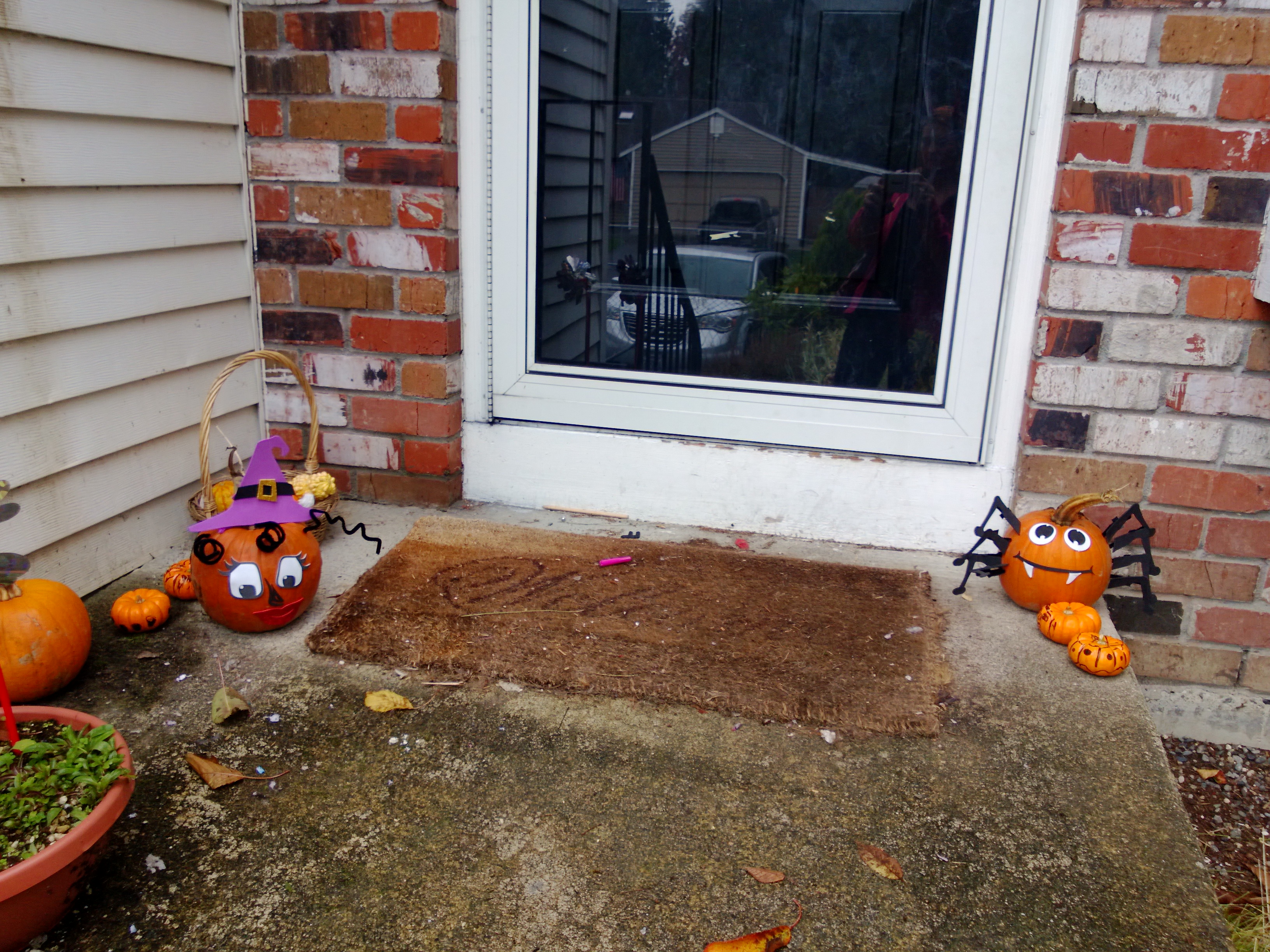
Hallowe'en pumpkinsWe were a little disorganised this year and didn’t get our pumpkins until Hallowe’en.  It seemed such a shame to throw them away almost as soon as we had made them.  To avoid  this the pumpkins were incorporated into our play, building on the children’s interest in pattern making and investigating some of the questions and discoveries they  made when we visited the pumpkin patch.

One of the things I love about living here is that we don’t have to go to the supermarket to buy our pumpkins because there are pumpkin patches everywhere.  I love that the children can find out how pumpkins grow by wading their way through the leaves and mud to find the perfect pumpkin.

This slideshow requires JavaScript.

Pumpkin Play

  1. Exploring Inside a Pumpkin and Learning about Seeds

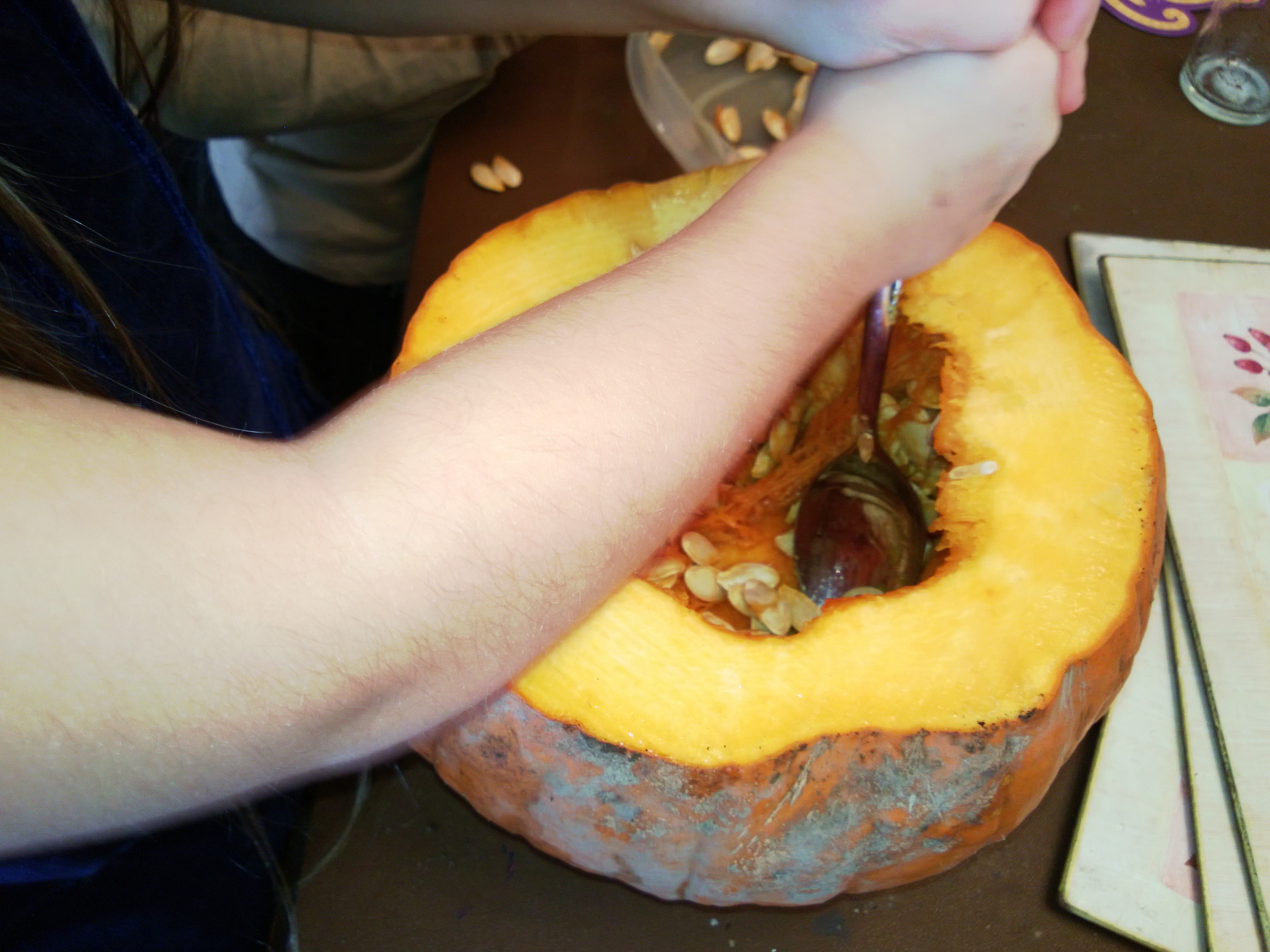
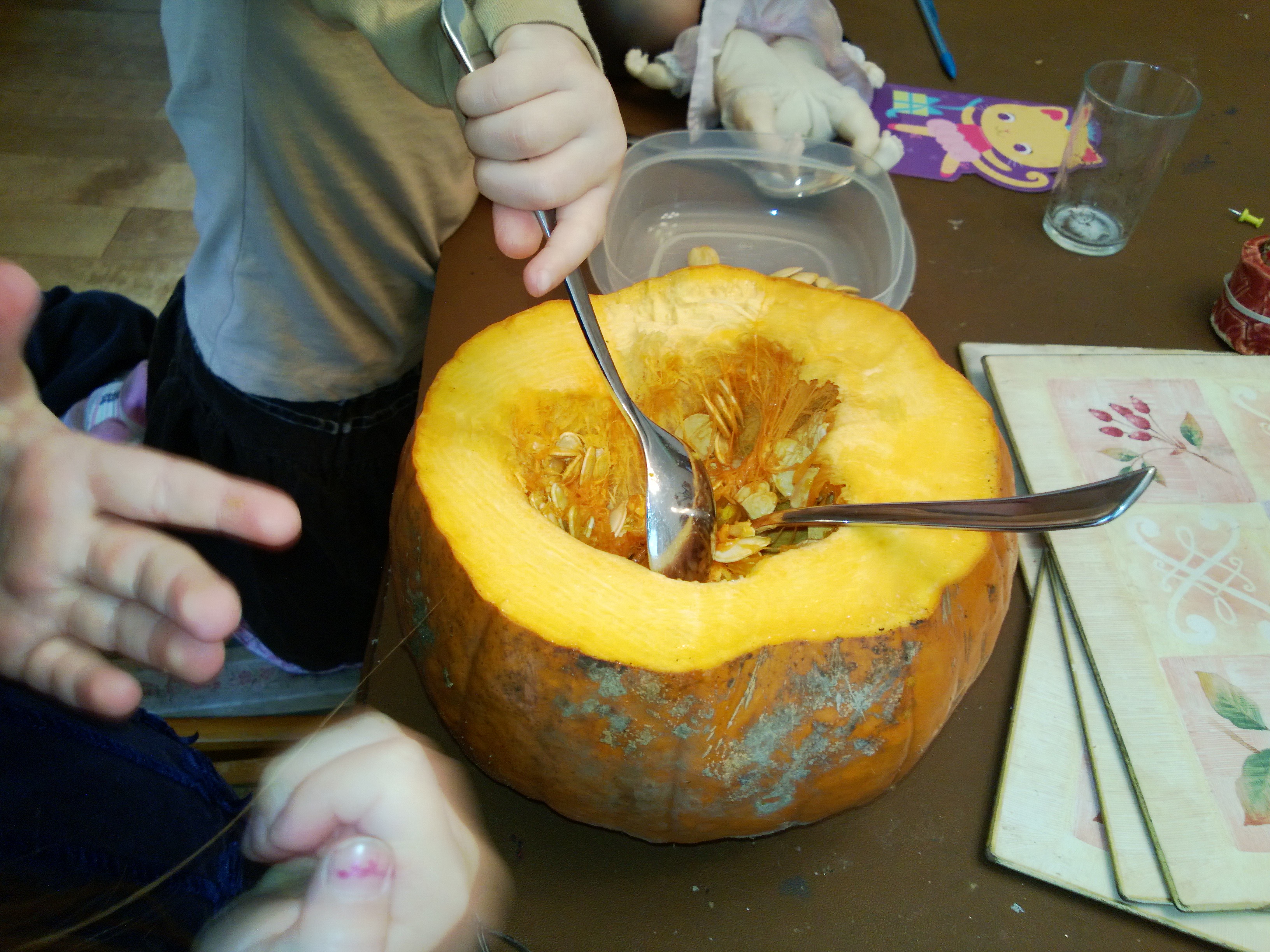
I removed the top of one of the pumpkins and gave the girls spoons to explore what was inside.

Look at all the seeds, they look like lemons but with no other side
It's a slother pumpkin. It feels really cold. There are lots of stringy bits, they look like messy hair.
It’s a slother pumpkin.
It feels really cold.
There are lots of stringy bits, they look like messy hair.

We talked about saving the seeds for the Spring, so that we could try to plant pumpkins in the garden next year. This lead to a discussion about how the seeds were spread.

How do the seeds get out of the pumpkin if they are in the pumpkin patch?

The pumpkin gets mouldy and then the seeds can come out.

Do you know how the seeds are spread?

No

What happens to a dandelion seed?

Where are the dandelions seeds?

The seeds are on the dandelion clock.

Oh so they get blown around.

Yes. Does this happen to the pumpkin?

No

We talked about how the animals spread the seeds – the girls thought it was a bit disgusting to talk about poo so we left it at that but later read ‘The Tiny Seed’ by Eric Carle to remind ourselves how other seeds are spread.

2. Scientific Experiments

How Does the Pumpkin get Soft?

I think we eat this bit because it’s all juicy but it is hard. How do we make it soft?

Hmm, can you think of any ideas?

I know we could make it wet and then dry it.

We could sprinkle it with soft sugar.

We could cover it with a bag.

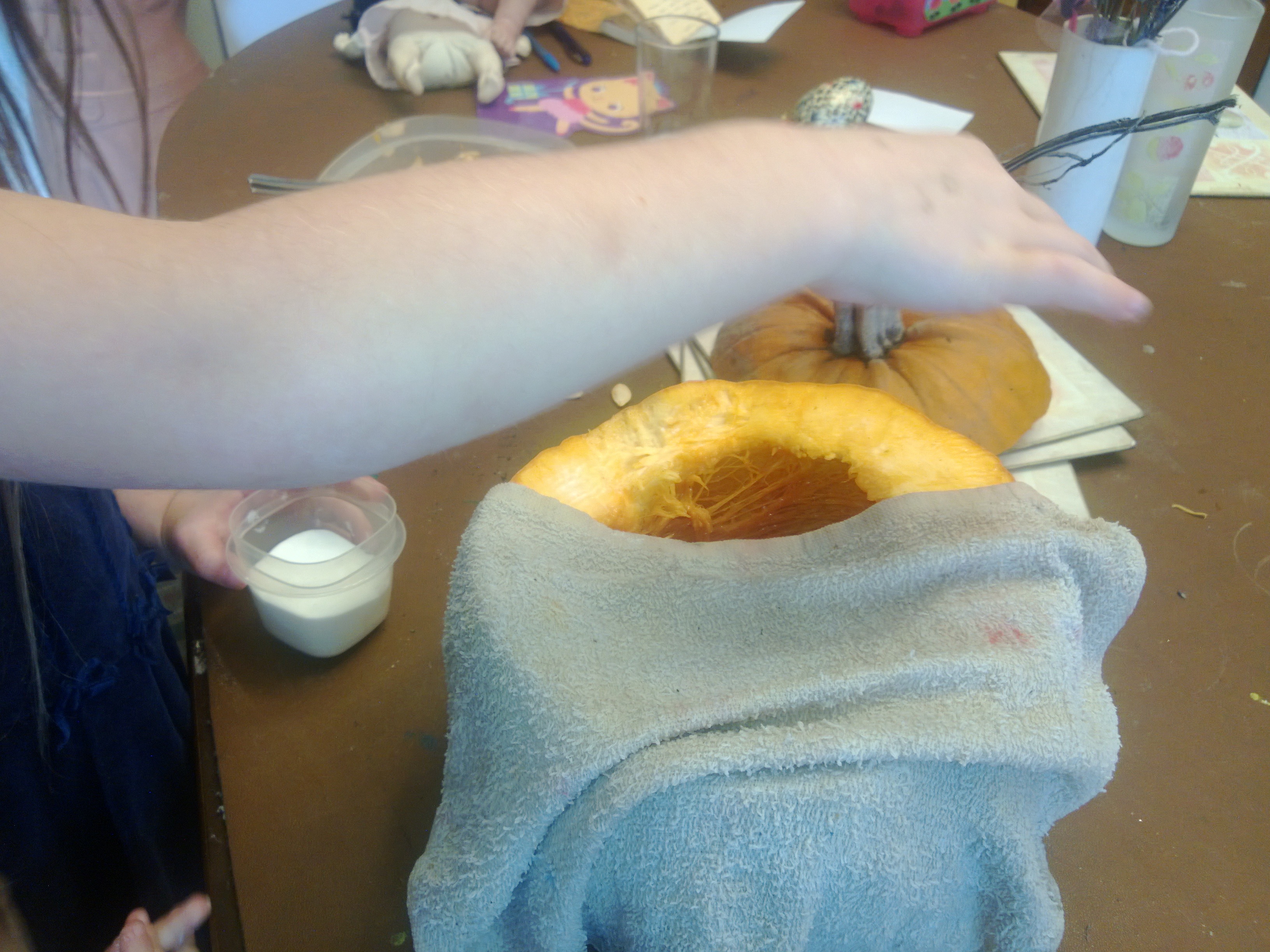
We covered one half odf the pumpkin with a warm flannel to see what would happen.
We covered one half of the pumpkin with a warm flannel to see what would happen.
We sprinkled the other half with caster sugar.

After 30 minutes we checked to see what had happened.

It didn’t work, it just got wet on my side.

What about the sugary side?

It feels softer, the sugar is softer but the pumpkin is hard.

I asked the girls if they could remember how I made spaghetti squash soft (when I tried to cut it, it was so hard I cut my finger instead). They couldn’t remember. I said that they had been along the right lines when they decided to warm it.

How could we warm it?

Put it in the microwave

or?

The oven.

Yes that’s how I made the squash soft.

3. Paint a Pumpkin

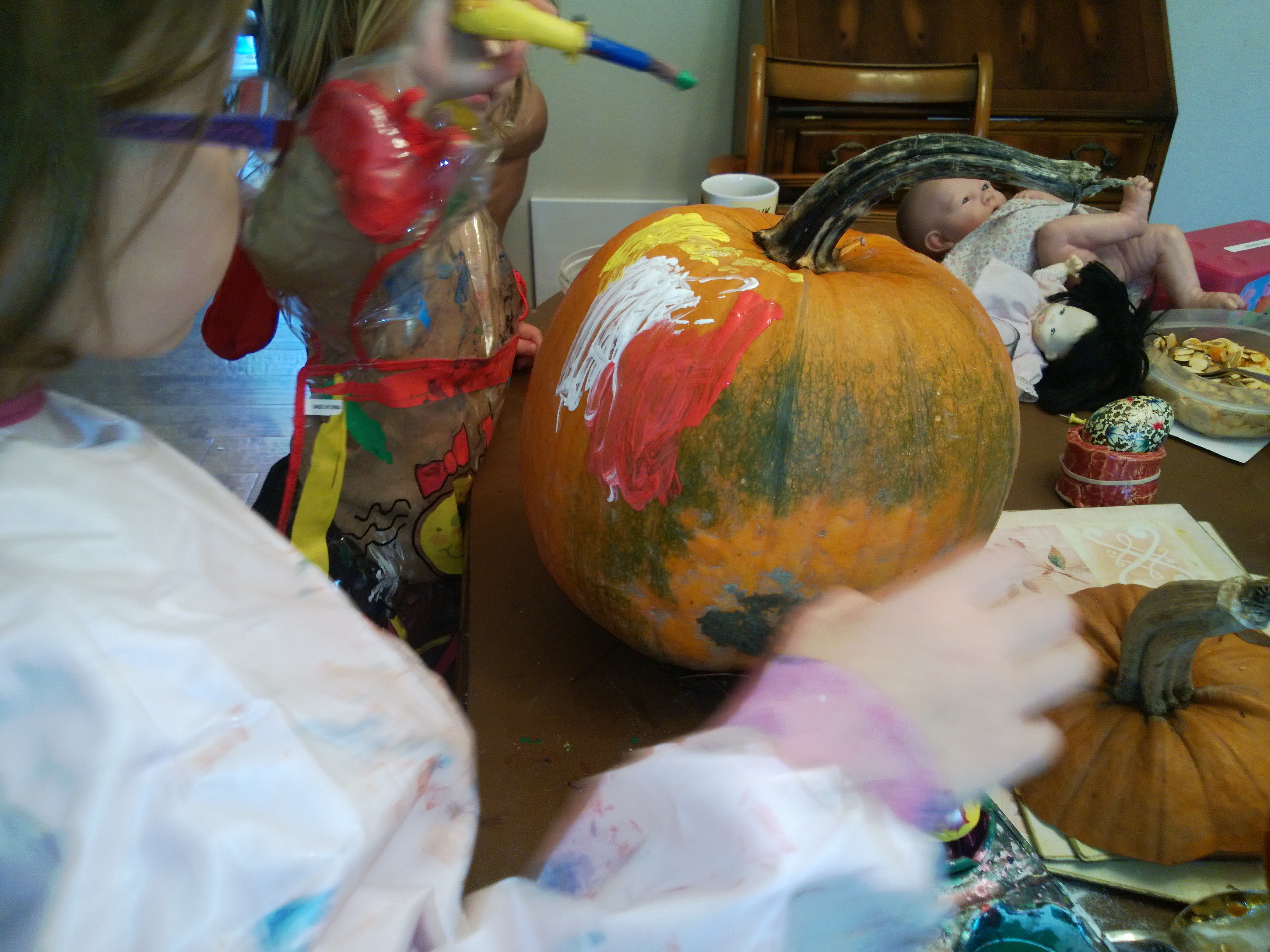
We painted our largest pumpkin with acrylic paint. The acrylic paint remains shiny .

painting a pumpkin

4. Make a Squirrel Feeder

With the painted pumpkin we made a squirrel feeder by removing a section at the front and sprinkling it with birdseed.  We often have squirrels in the garden but this gave us a good opportunity to watch them close up.

5. Fairy Toadstools

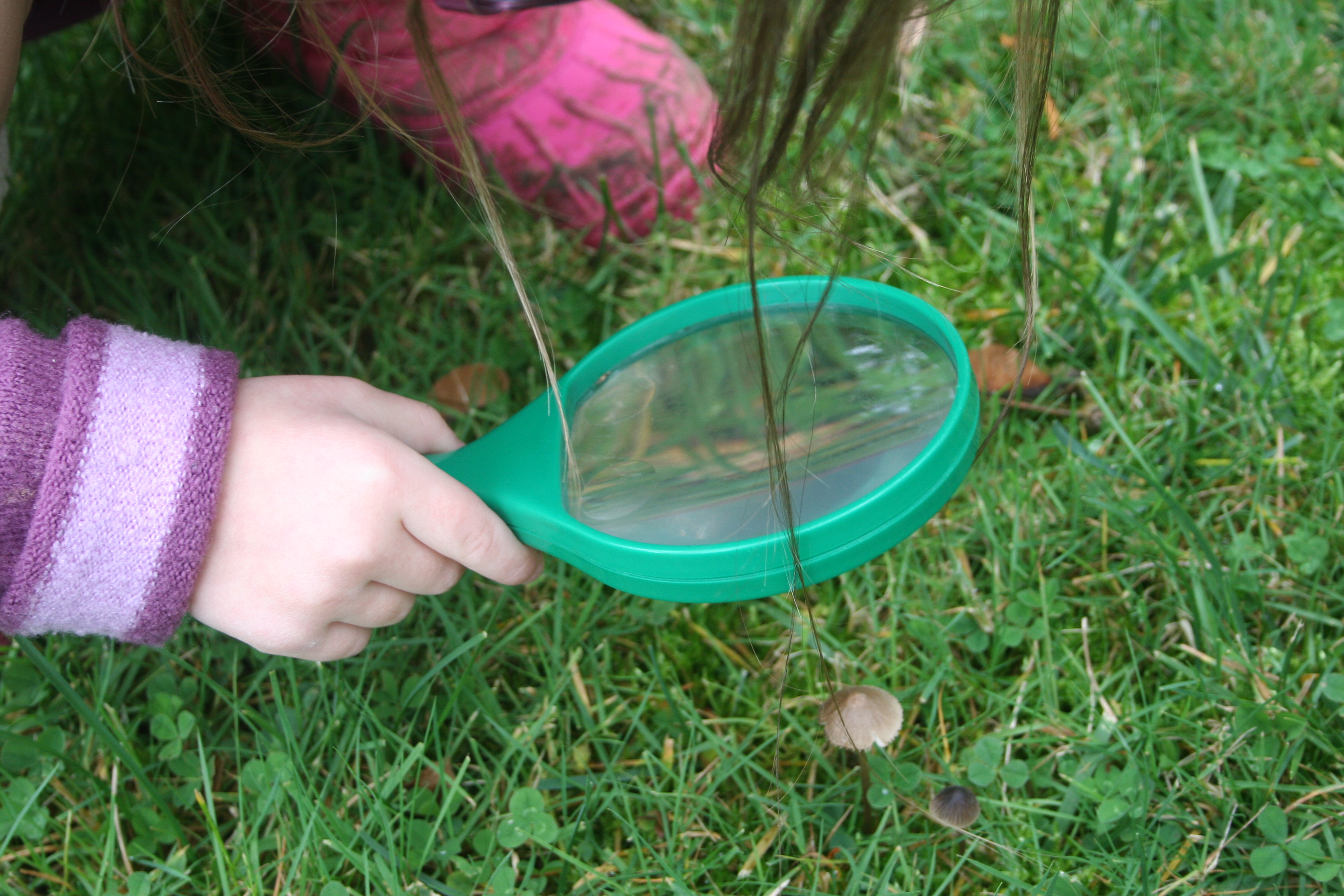
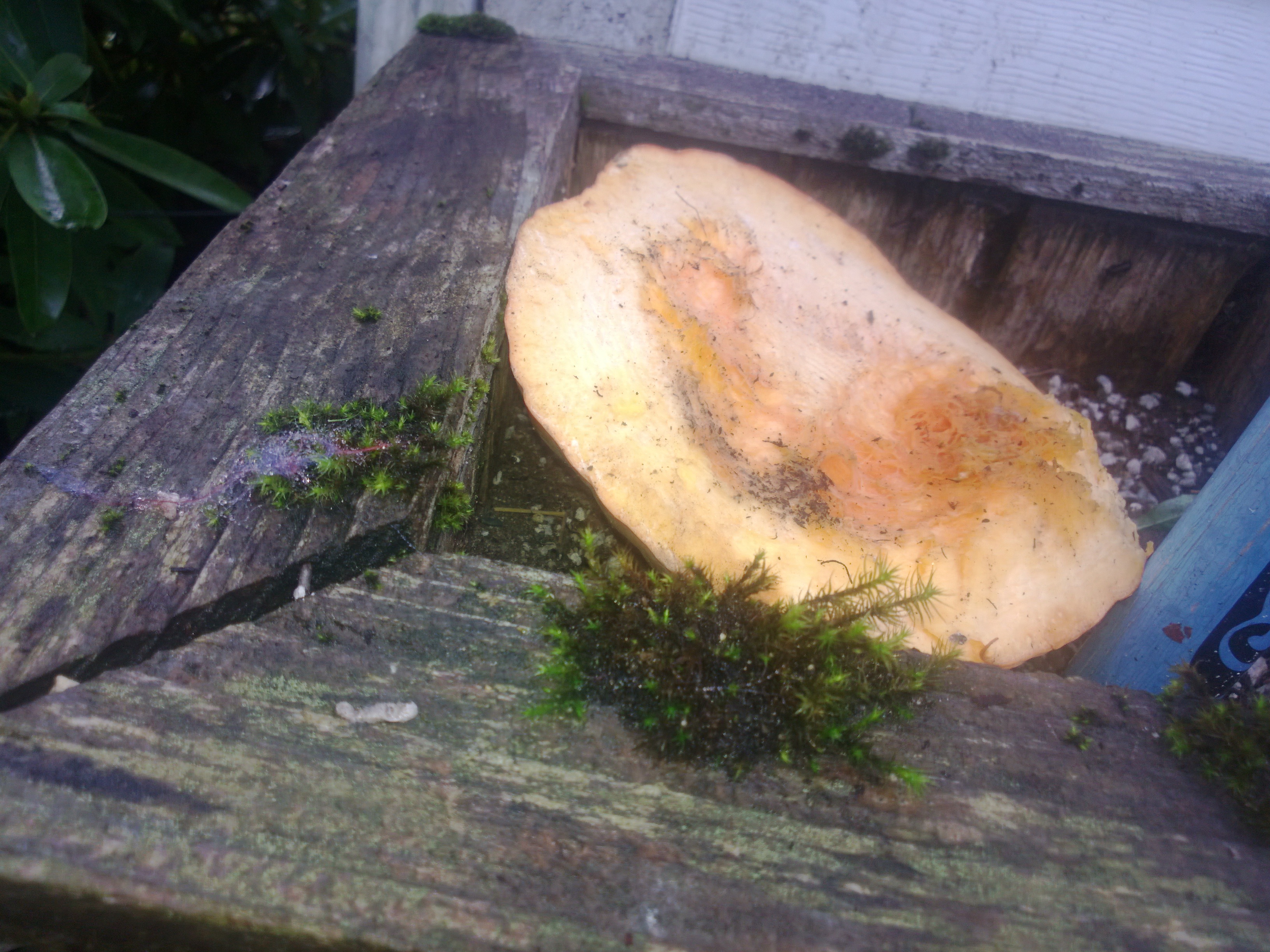
Our garden is full of toadstools in this damp Autumnal weather and we have been exploring them to see if we could find any fairies.

toad stools

Turning the top of the pumpkin upside down made a perfect fairy toadstool for our flower-pot.  We are also going to watch and document what happens as the pumpkin starts to decay.  It might make a nice art or photography project for the girls.

toadstool from a pumkin lid

6. Pumpkin Poetry

I helped the girls to make up a poem about a pumpkin using some of the descriptions I had recorded them saying.

Pumpkins by my 5-year old

Pumpkins are very orange

Inside they have seeds

The seeds look like lemons

And feel slimy and cold.

Around the seeds it is orange and stringy

It looks like crazy hair.

The bottom is lumpy and chunky

I call it the core.

7. Pumpkin Juice.

pumpkin juice

I sliced and peeled the pumpkin we had been exploring and we used it to make pumpkin juice.

Ingredients (quantities according to taste)

Pumpkin

Apple

Carrot

Ginger

Sprinkle with cinnamon.

8. Seed Collage

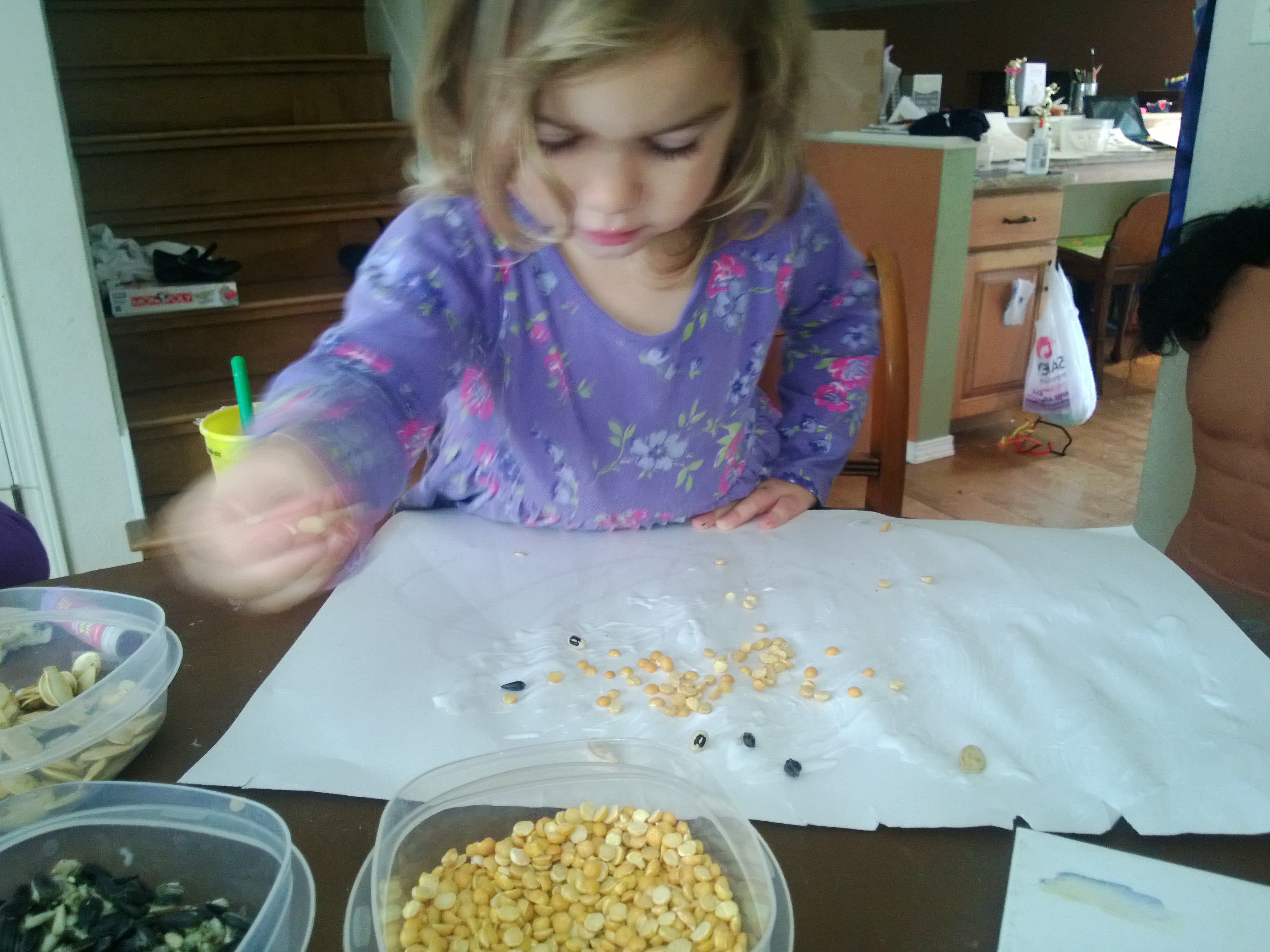
One of our current topics is pattern.  We used the pumpkin seeds alongside other seeds and pulses to make collages.

seed collage.

9. Roasted Pumpkin Seeds

As a healthy snack we tried roasted pumpkin seeds.  Sprinkle with oil, salt and pepper and roast in the oven for 25 minutes.

10. Mr Potato Head


We still have one small sweet pumpkin left to make into a pumpkin curry.

Further ideas

  • Use the seeds for measuring in a balance scale
  • Use the seeds in a play or mud kitchen
  • Put a hollow pumpkin in the water tray
  • Make pumpkin cookies
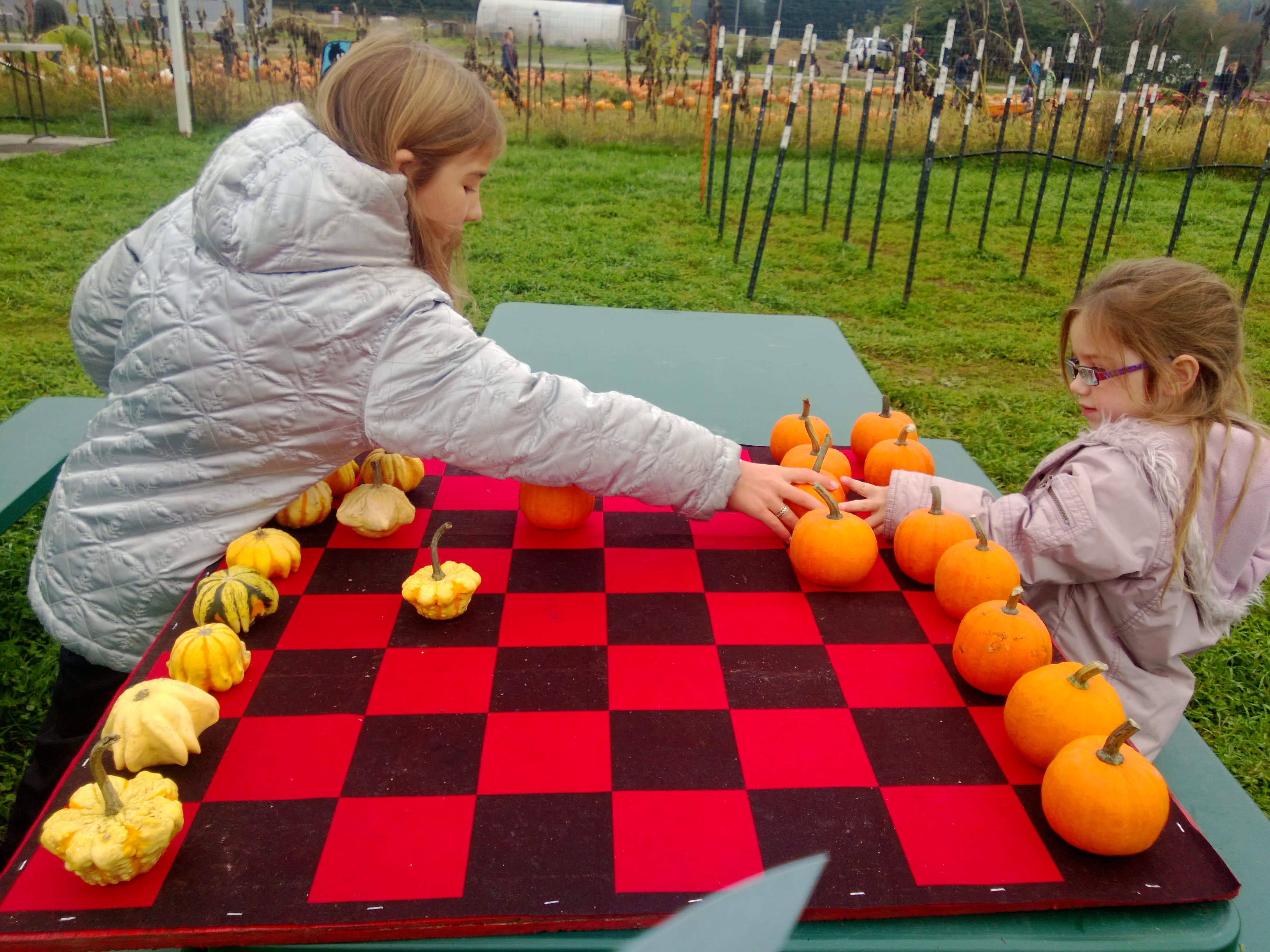
  • Make pumpkin drafts or checkers

pumpkimn checkers

  • Roll pumpkins down a hill and see which one reaches the bottom first.
  • Give children trays of seeds with scoops and containers.
  • Use the seeds with clay or pumpkin scented playdough.


Home Preschooling – Doing it My Way

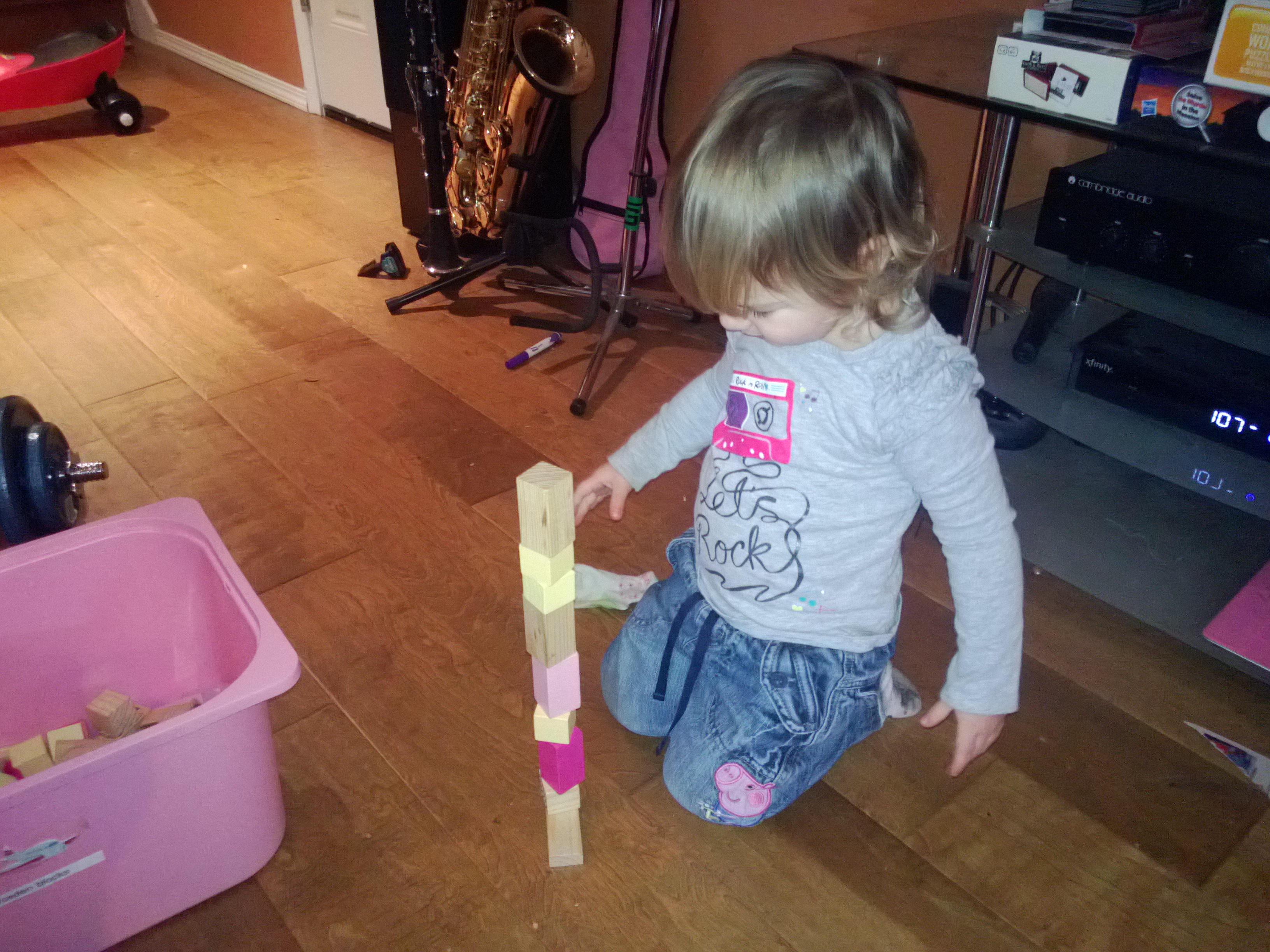
blocksThis year I am home preschooling my 2 youngest, not something I ever thought I would find myself doing but my reasons for making this choice can be found in a previous post Why I am Home Preschooling my Children.

I get a mixed reaction from people, some give me a glazed expression as if to say really? Can’t you just send them to preschool like the rest of us?  Others wonder why on earth I would want to. Some look at me as if I am some kind of Supermum and others as if I am denying my kids a normal social life.  Some however, just want to know how it all works and what exactly I do with them – this post is for you.

It really isn’t rocket science, I don’t follow a rigid schedule and  home schooling allows us loads of flexibility. My 5-year-old said today

I’m glad we are doing your preschool because it means we can go to the zoo whenever we want.

It isn’t entirely without structure though – I plan for the learning environment and have a timetable .  I suppose it is a little like having a plan for how you spend time with your children. It isn’t an academic preschool, we play and explore together, sometimes they play alone and we share interests, questions and ideas.

What about interaction with other children?

One day a week we have no preschool the girls go to ballet class, meet with friends and help me with normal everyday things like grocery shopping.

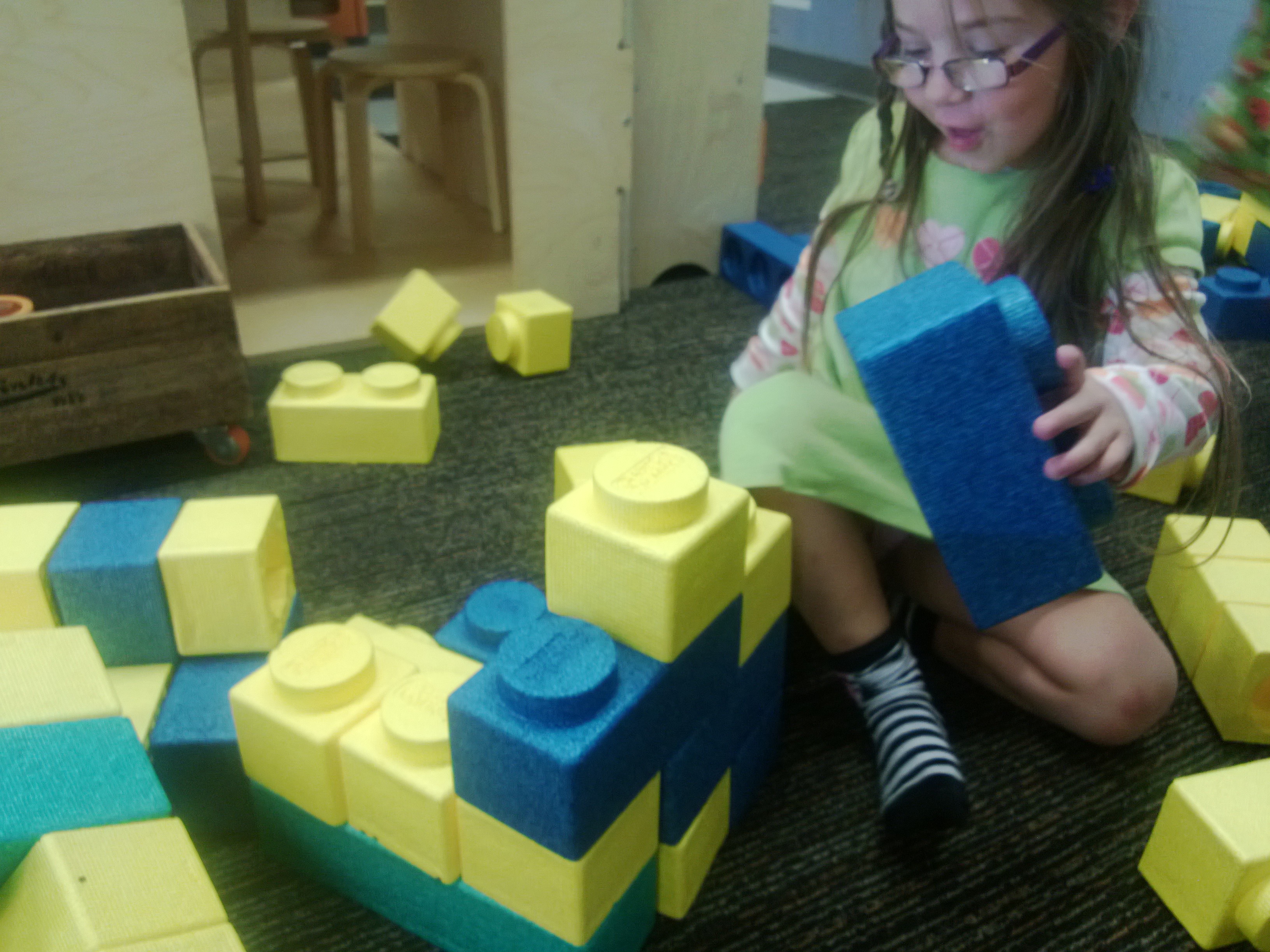
large blocks
Building a mountain with the large blocks.

Two days a week we attend a local membership based playspace, it’s a little like a toddler group in the UK except that it is a purpose-built space and is open all day. Some  of the music and language games we play at home don’t work very well with only 2 children  so I run music and movement, craft, sensory play or storytelling sessions here which gives us an opportunity to do activities in a larger group.  The rest of the time I allow them to free play but take their learning diaries to record what they may be interested in or achieving  in a different context.  The girls get chance to play with other children and use different materials than those we have at home.

The other 2 days are home based but sometimes we will use one of them to go out on a trip.

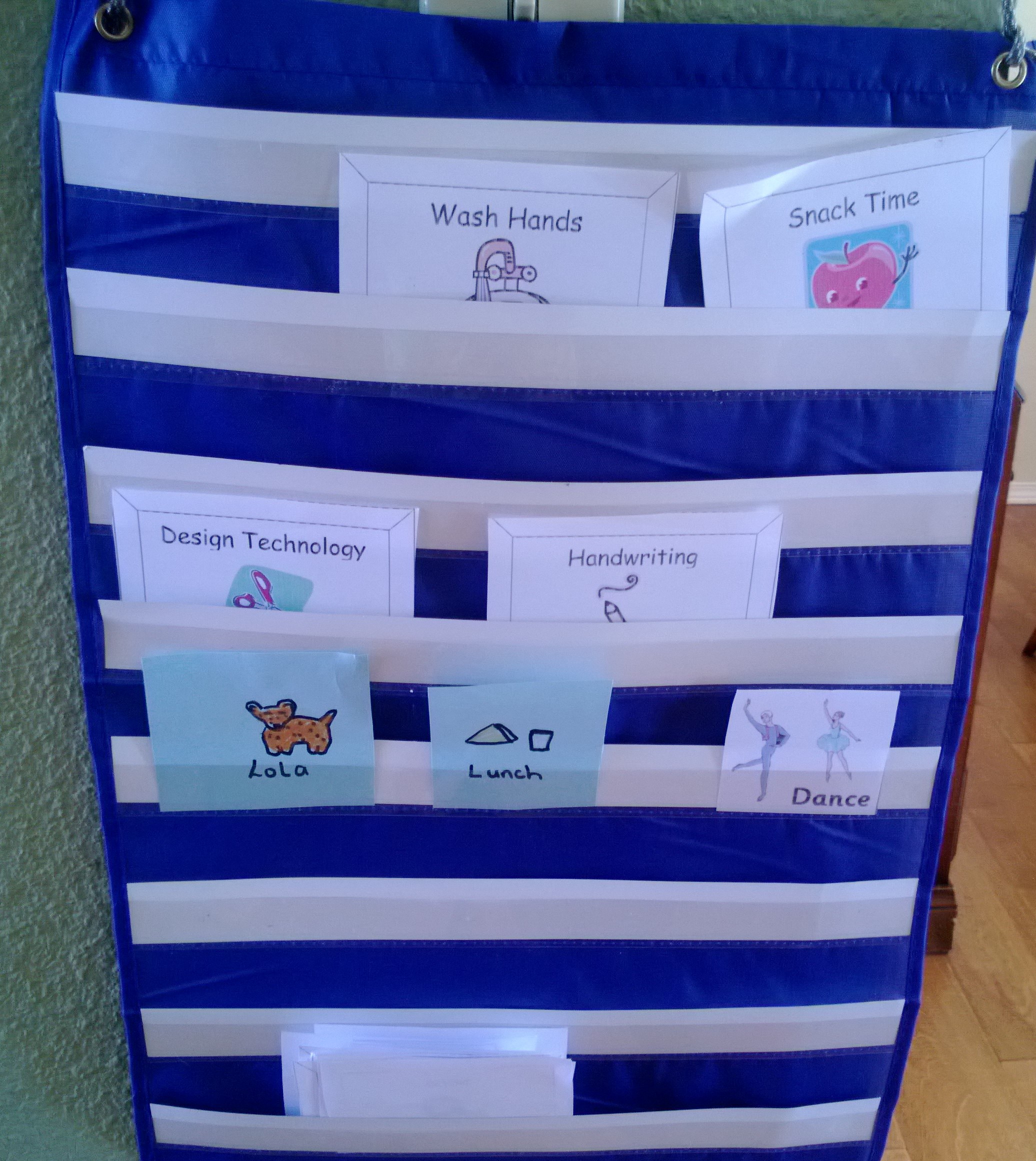
Timetabling

visual timetable)One of the things I have disliked about many preschools is the rigidity of their schedules.  There seemed to be little time for the children to become absorbed in a project or flexibility about what they might do each day.  I did however feel it was important to have some schedule in place.  I created a visual timetable using printed symbols.  Certain symbols are always present – Snack, lunch, free play and others I add in based on what we might do that day.  The symbols can be moved around and often if we don’t have time for an activity I move it to the bottom of the timetable to be saved for next time.  Sometimes I let the children plan the timetable  although they don’t exactly have a realistic understanding of time so we usually end up with far too many activities to get through in one day. It is also a really good way of regulating screen time, this usually goes into the timetable for after lunch followed by outdoor choosing time and if they ask for it earlier in the day I point them to the timetable. I’m surprised at how well the timetable works , the girls really respond to it and look forward to knowing what they are doing next.

How we Plan

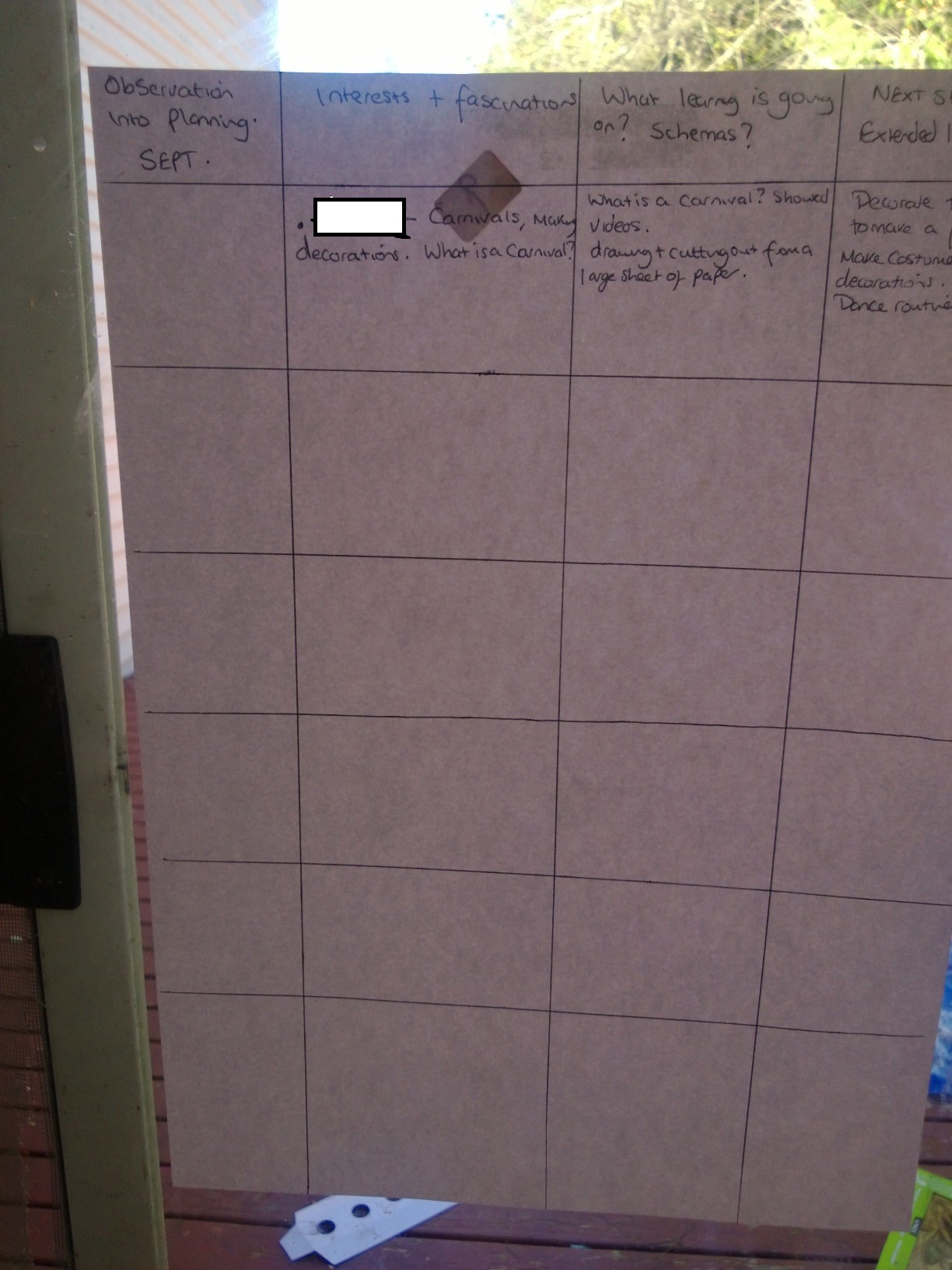
observation into planning

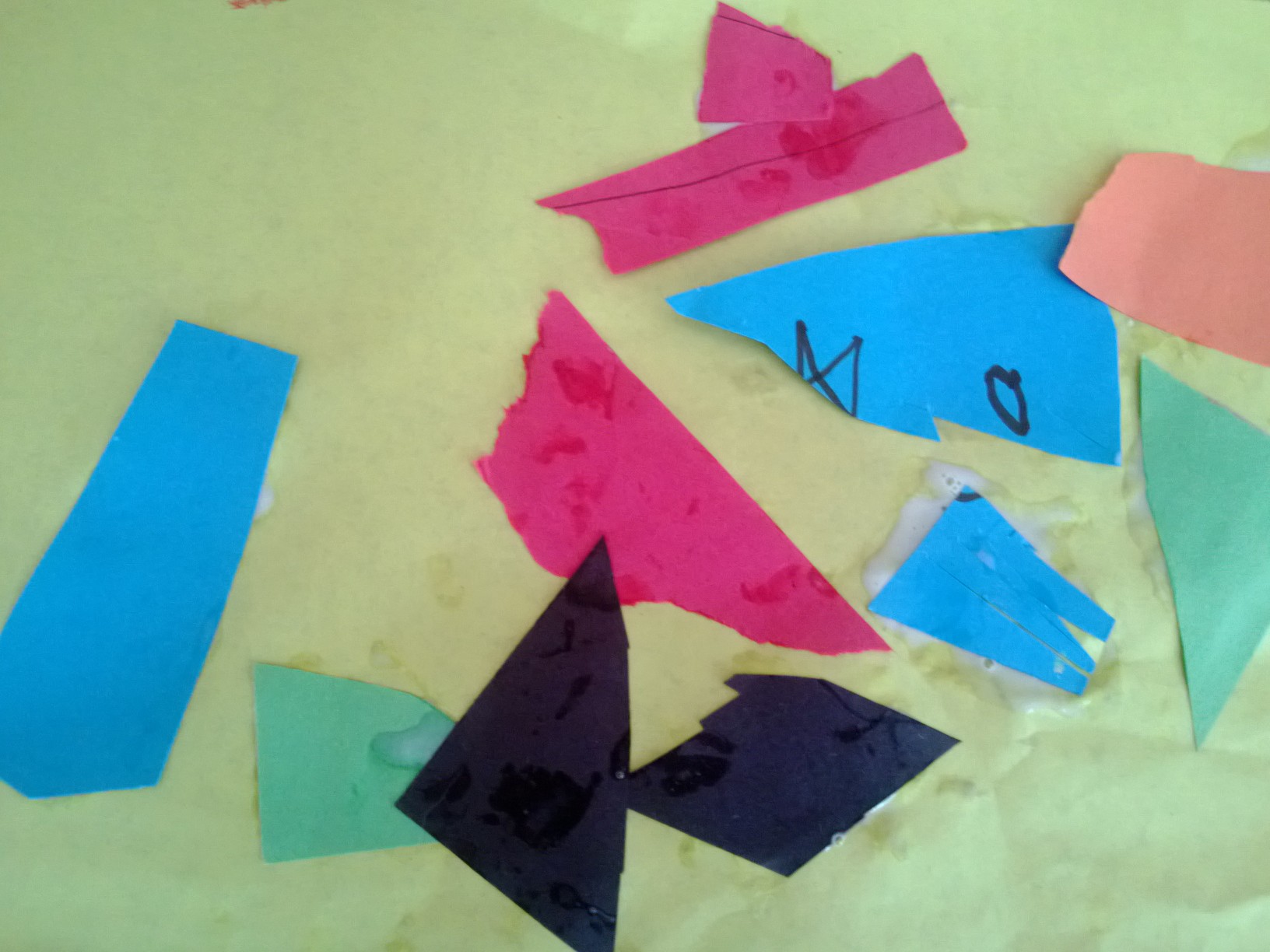
I plan, building on the children’s interests to provide next steps in their learning.  If I observe the children following consistent patterns of play, enjoying particular materials or asking questions, I record them and consider what I might plan next to enable the children to use this skill or interest in a different way or to extend their learning further.  For example, my  youngest daughter has just learned to cut with scissors and loves to  snip paper into tiny pieces.  She also loves gluing so I suggested they use the pieces to make a collage. As an extension to this we are going to look at pictures of mosaics for further inspiration and play with wooden pattern tiles. Only having 2 children to observe means that their learning experiences can be truly individualised in a way that might not be possible in a bigger setting.

collage

Planning for the Learning Environment

environment planning

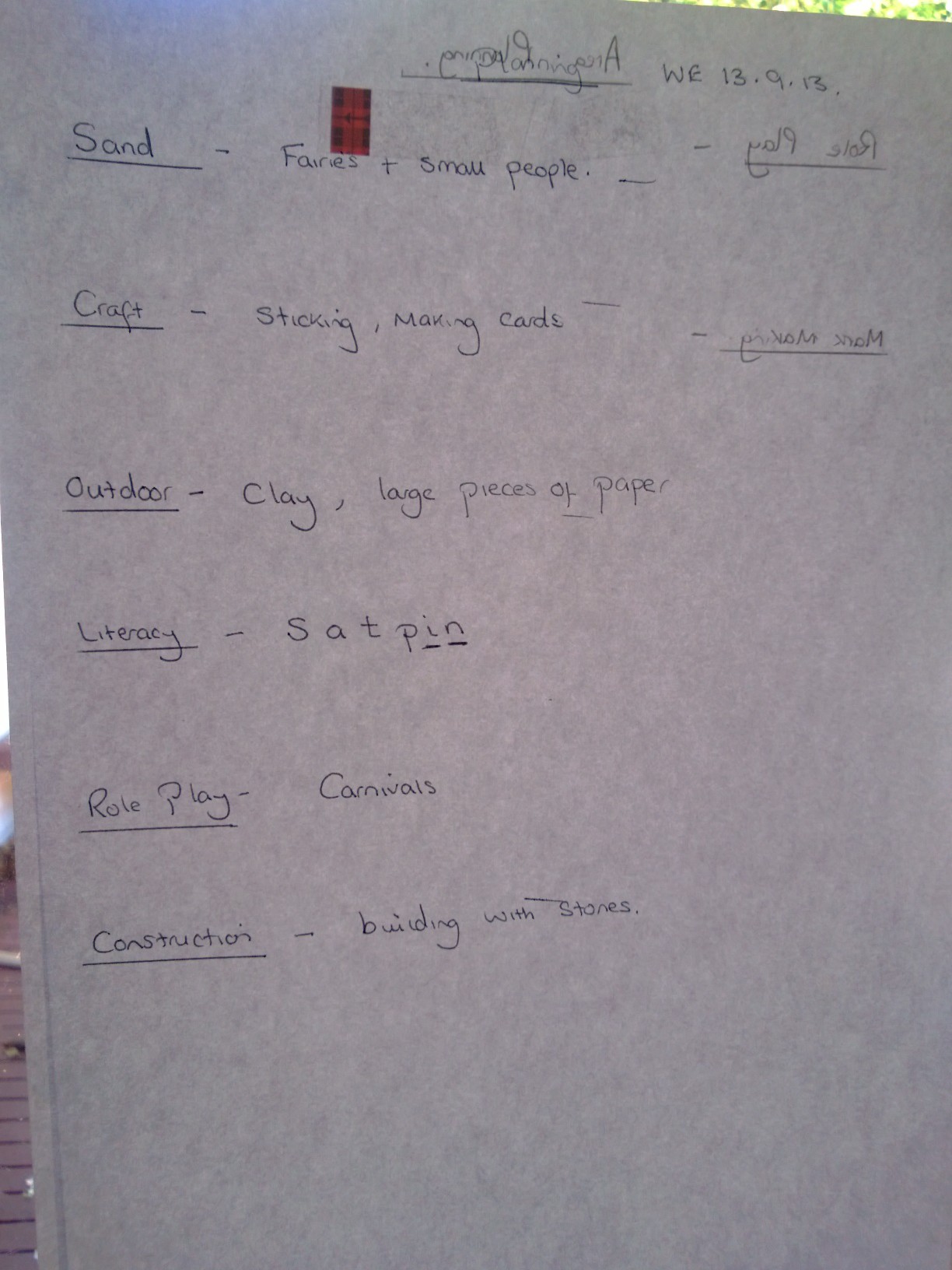
In addition to this I also have a plan for the environment.  How often this changes is fairly flexible. Using  information from the observation into planning, I might decide to include particular materials with the sand or water, put a particular craft activity out, lay out particular toys, set up a new role play area or display materials in a certain way. For example the girls were playing cafes at the play centre so at home the next day I gave them  notebooks to take orders and a chef’s hat.  I laid the table and I was the customer. This also allowed them to build on some of their other current interests like emergent writing and playing picnics. Sometimes we may just try something new and see if they like it and how they play with it – they are usually good at making suggestions as to what we might do next.

The Learning Environment

There are certain materials I like to always have available to the children

  • sand (outside)
  • water (outside)
  • craft materials
  • paper and pencils
  • books
  • loose parts
  • construction
  • small world toys
  • role play and dressing up

In an ideal world clay and paint also but this is a little messy even for me especially in the winter when we don’t use outside as much.

All these materials however are difficult to manage. I have recently reorganised our playroom but I still feel that there are too many things on view.


It isn’t as easy to have the environment you would like when it is your own home but I’m constantly re-evaluating how we display things and adding new ideas to the outside area.

This slideshow requires JavaScript.

#Get Outdoors: Children Connecting with Nature

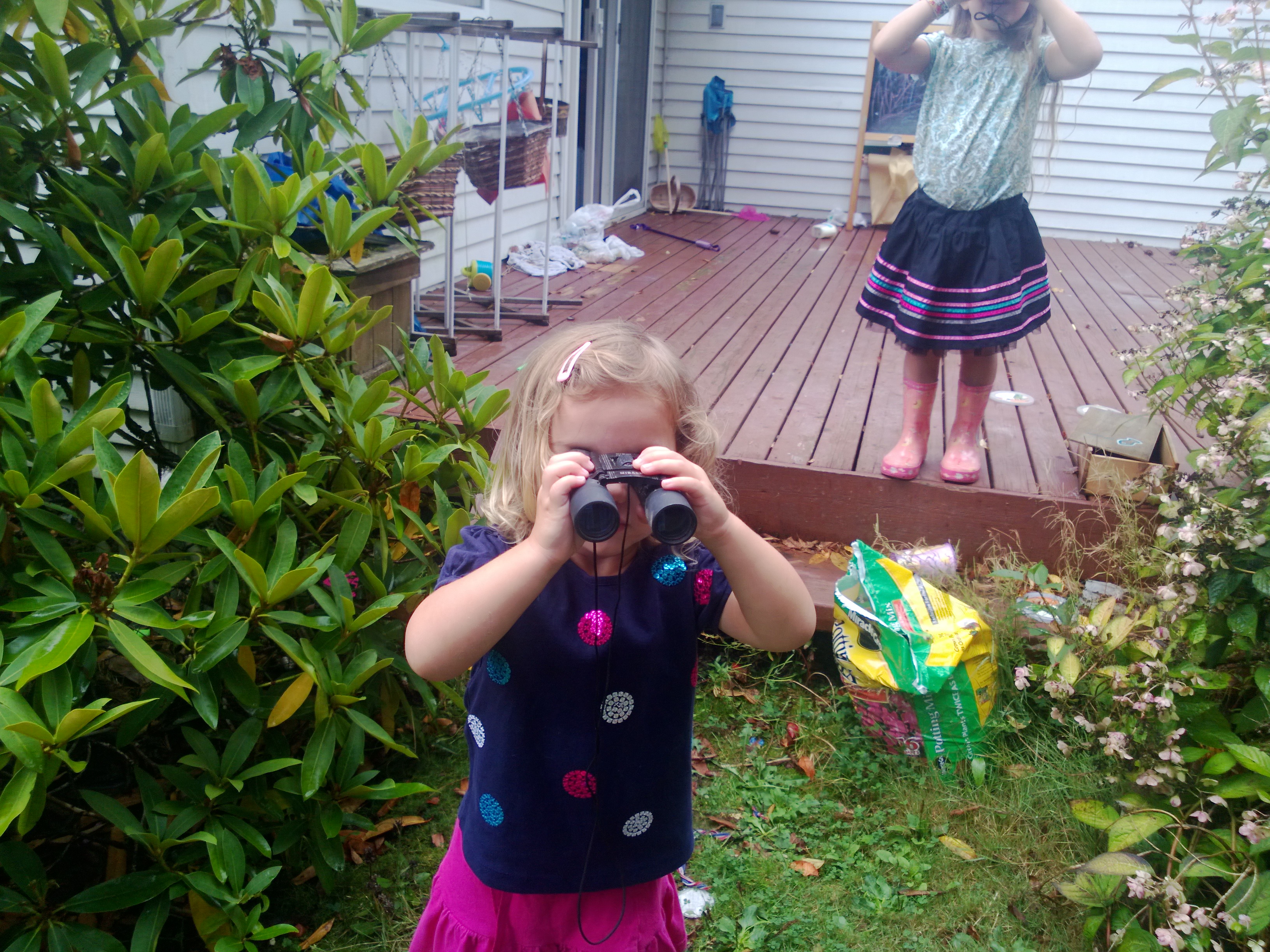
binocularsAutumn is a time for woodland walks, collecting interesting things along the way and looking out for animal homes and habitats.  As a child we had nature tables at school and we were encouraged to bring in conkers, sticky buds, acorns and leaves.  I used to love to walk in the woods and collect things.  We’d put nuts and conkers in their cases in the airing cupboard until they opened.  I used to lie in the grass scouring the leaves for 4- leafed clover. I found one when I was about 6 years old. I looked after it all weekend and on Monday carried it to school as the prize exhibit for the nature table. The temptation to fiddle with it however, was so great that on the way one of the leaves fell off. I turned up with an ordinary clover and a loose leaf and so no-one believed me.

autumn leaves

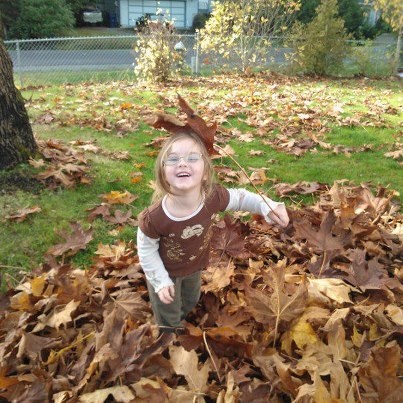
We’ve been foraging for Autumn things this week.  In the garden we have an abundance of Fir Cones, Maple Seeds and coloured leaves but we wanted to find other things like acorns and conkers.  I asked a friend where we might find conkers.

Conkers? What are they?  was her reply.

I found a single, solitary conker that had managed to make its way with us from England.

Oh, it’s a bit like a chestnut.

Yes, a rounder chestnut and the casing is different, with larger more spaced out spines and they are poisonous.

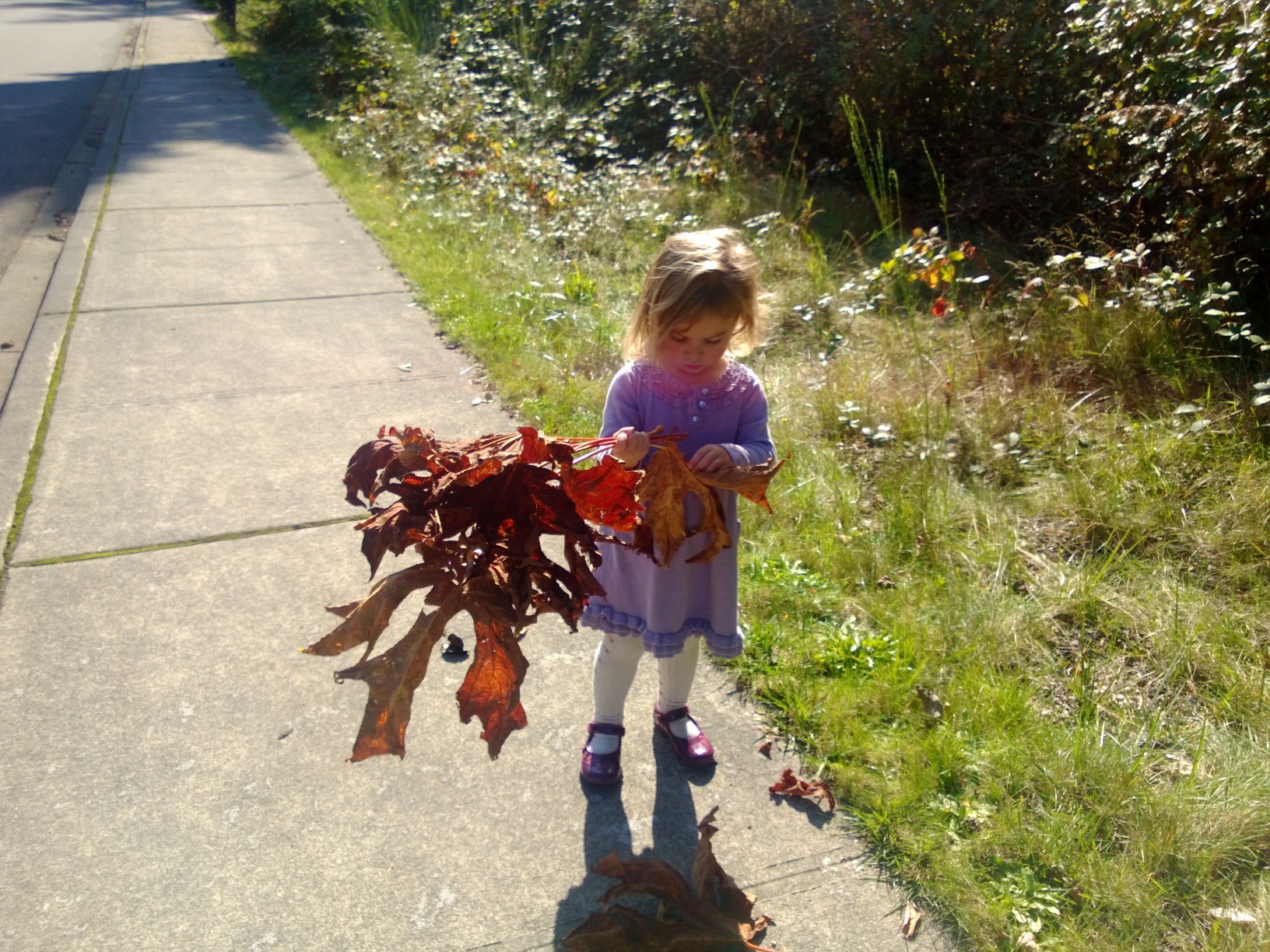
maple leaves

Outside the girls ballet class we found a variety of different pine and fir cones from tiny ones in clusters to great big narrow ones.  We walked in the woods to see what else we might find.  We found….. more pine cones, …. more maple seeds,… more maple leaves but nothing different.  I suppose we often take the things we have in our environment for granted – I love the towering Evergreens we have here, mixed in with the colours of the Maples but I do miss conkers and acorns.

woodland walk

Wild animals on the other hand are extremely varied.  We watched huge salmon jumping in the river, saw enormous yellow butterflies and watched a small snake basking in the sun.  Our favourite visitors are hummingbirds.  The first time I saw one I thought it was a dragonfly but when it rested on a flower I was so excited to discover it was a hummingbird.  I had no idea hummingbirds were native here. I read up about attracting them to the garden and bought a hummingbird feeder that we fill with 4 parts water to 1 part sugar.  We now have regular visitors outside our window.

This slideshow requires JavaScript.

Of course there are also the more scary types of wildlife. The ‘ballet moms’ were talking about finding bobcats, cougars and coyotes in their garden and black bears on woodland walks, especially near the rivers now that the salmon are spawning.

RSPB Get Outdoors

As  I was musing about our appreciation of the natural world and the things we miss from home, a new report from the RSPB was brought to my attention. Connecting with Nature presents the findings of a three-year RSPB research project measuring just how connected to nature the UK’s children really are. Connection to nature is measured in 4 areas:

  • Enjoyment of Nature
  • Empathy for Creatures
  • Sense of Oneness
  • Sense of Responsibility.

You can take the questionnaire to see how connected your children are. If you are outside of the UK, the report also gives you the criteria used for the questionnaire so that you can investigate how connected children are in your area.

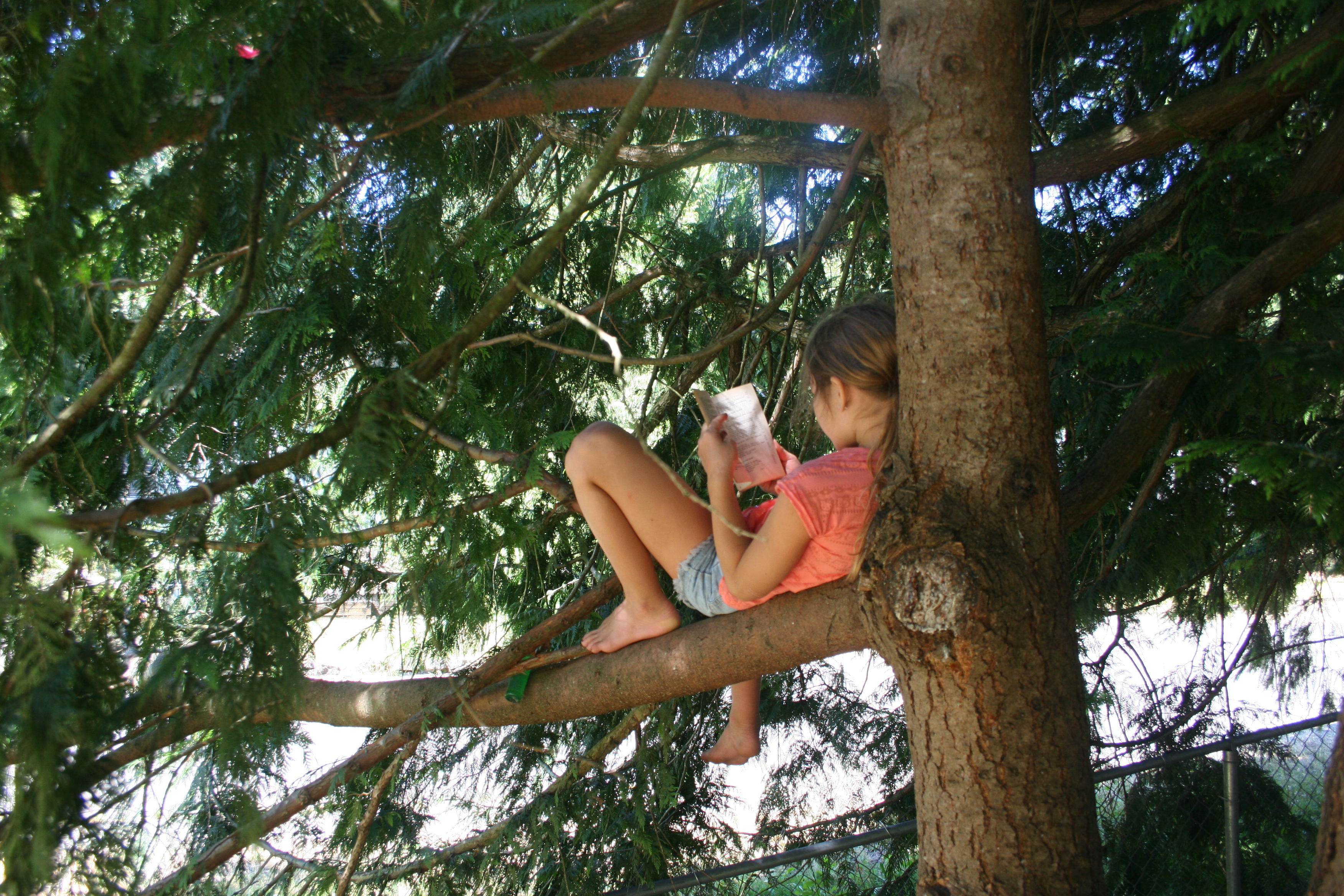
I think the sense of oneness is an interesting one.  How young was I when I first felt a sense of oneness with nature? I know my youngest daughter will always choose to go outside collecting sticks, pouring rainwater and arranging stones – is this an early sign of oneness with nature?  My eldest daughter emphatically announced that she felt peaceful when she was in a natural environment.  In a household with 2 noisy pre-schoolers her favourite haven is reading a book in a tree in the garden.

reading in the tree

I know for me, I feel at peace by the sea or in a woodland, both places I spent a lot of time in as a child. I can’t wait to visit the National Parks here in the US, to see the amazing diversity of the natural world here.

Connecting with nature has many benefits from physical activity, mental health and a sense of well being, education, social interaction, empathy and the impact on the sustainability of the natural environment.  The study found that  only 21% of children aged 8-12 in the UK have a connection with nature at a level that is realistic to their age.

“ There are statistically significant differences between children’s connection to nature at a national level across the UK, as well as between boys and girls, and British urban and rural homes.”

Surprisingly girls are more likely than boys to connect with nature and urban children more likely than rural children.  Further studies will be undertaken to determine why this might be. Looking at the questionnaire I think it may be that the questions are angled at more feminine pursuits, feeling peaceful in nature, collecting shells, listening for sounds and taking care of animals are not exactly cool for young boys.

investigating natural materials

The research will add to the growing evidence base about children and nature. This includes a study by Natural England which suggested that factors contributing to connection are in decline. It reported that only 10% of children in the UK played regularly in natural places in 2009, compared to 40% in the 1970s.

Getting children out in the natural world when they are young won’t guarantee a continued interest once the world of school, clubs, homework and computer games takes over but it will certainly put them on the right track.

The environmental identity developed by children between the ages of 3 and 7 is  an emotional affinity towards a specific aspect of nature which had been strengthened by providing positive experiences with nature on a regular basis.   (Karls and Ittner 2003).

Some researchers also believe that there is an optimal moment usually between the age of 6 and 12 which form a person’s attitude to nature;  perhaps the 4 leafed clover was mine.

Other Posts You May Like to Read

20 Outdoor Things to do Before you are 5

Woodland Activities

Self Portraits Using Pencil and Clay

clay portraitIn my previous post about using clay with young children , I mentioned a project where the children had closely observed their faces, drawn self portraits and then created clay models from the portraits. It was a really successful project at nursery and the level of detail in both the drawings and models was astonishing.  Children love to look at themselves in the mirror, exploring expressions and actions. I thought my children would enjoy examining their faces in this way.

The girls like to make a present for their dad on his birthday and as this was a special birthday, I wanted to them to make something that he could keep. When I suggested the self portraits to the girls, they thought it was a great idea.

I gave the girls small hand mirrors and we looked at our faces in them. We talked about the shape of their face, the shapes of their features, we looked closely at any marks or scars they may have and then they began to draw.

As they drew I prompted them with further questions such as

  • What shape are your glasses?
  • Don’t forget your eyebrows.
  • Does any of your hair go on your face?
  • Can you see your ears?
  • What shape is your chin?
  • Can you see any scars or freckles ?
  • Would you like to draw your teeth or have a closed mouth?

I would recommend doing this activity on a 1-1 basis to help the children to make the drawings detailed.  My 9-year-old became really frustrated. She felt that the drawing didn’t look like her and worried about the shape of her eyes, nose and mouth.  I suggested she take a break and come back to it later. My 4-year-old had no such anxieties. It is interesting that in the development of children’s drawing anxiety about  realism in drawing occurs from the age of 8, and this dissatisfaction increases as they get older. I assume this is why most adults believe they can’t draw.

The Portraits

The girls used the portraits to create their clay faces

This slideshow requires JavaScript.

The most difficult part was their long hair because it kept breaking.

When the models were dried, I asked the girls if they would like to paint their models or leave them as they were.  They really wanted to paint them. I helped them to mix skin tones, hair and eye colours.

I’d love to find a way of displaying them alongside the portraits. Making the faces on a tile might make this easier.

Next Steps

  • The girls love exploring expressions. We have a series of photos of the girls copying their dad’s expressions.  We could extend this into a photography project about expressions.
  • Read the book ‘Making Faces’ by Nick Butterworth  and explore some of their favourite expressions from the book.
  • Draw portraits of their own or one another’s faces making different expressions.
  • Translate these into clay models.
Roald Dahl Day Activities: George’s Marvellous Medicine

marvellous medicine 2Some of Roald Dahl’s books are a little gruesome for pre-schoolers but I have just started reading some of the less scary ones to my 4-year old. We are currently reading ‘James and the Giant Peach’, she has watched the film of ‘Charlie and the Chocolate Factory’ and we recently finished ‘George’s Marvellous Medicine’.

One of her favourite activities is potion making, so she really loved the story of a boy who empties out every container in the house to make a special medicine.  I have to leave the girls toiletries out of reach to avoid them emptying bottles to make potions but that doesn’t stop them sneakily taking their dad’s, sister’s or my toiletries or climbing onto the stool to get food colourings from the cupboard.

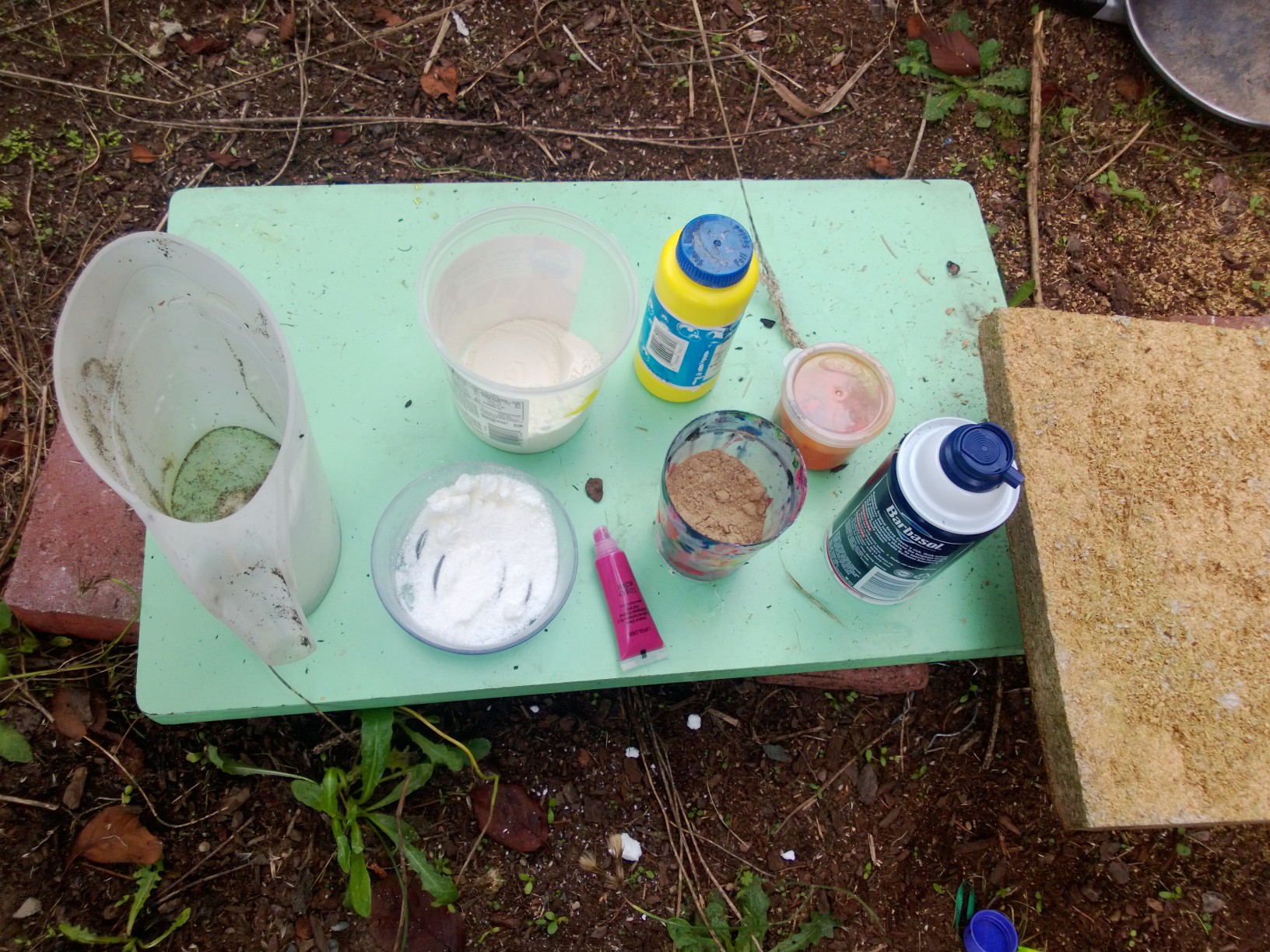
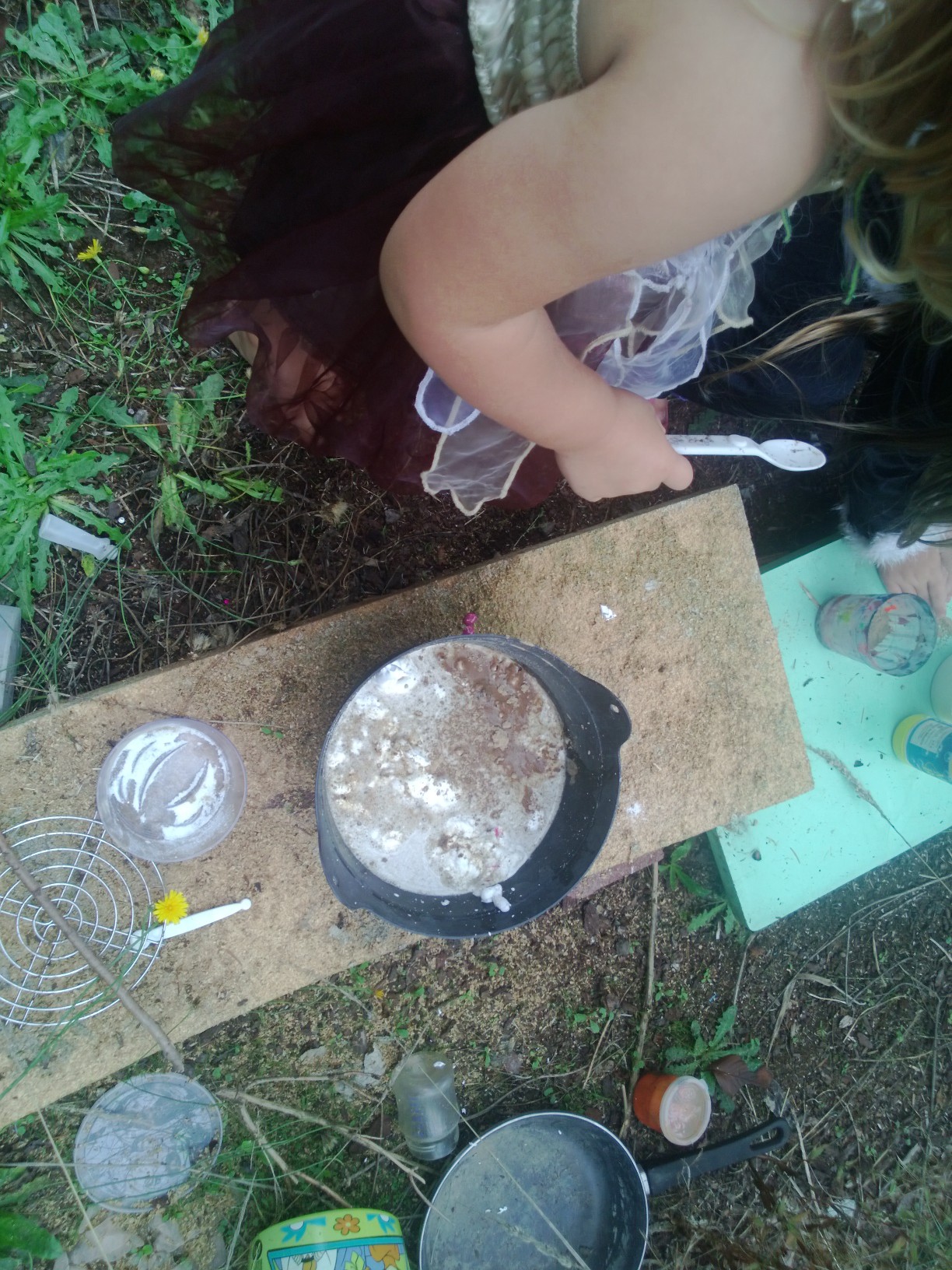
I set up the mud kitchen in the garden with some of the ingredients from George’s Marvellous Medicine and a cauldron for mixing it in.

marvellous medicine 4

I set up the following ingredients:-

Save the Children Food for Thought – The Link Between Literacy and Nutrition

save the children, food for thoughtI write a lot about the pre-requisite skills to learning to read.  Talking with children, playing with language, reading to your child and developing listening skills are all important but for some children even with these things they will fail to thrive educationally.

Why? Because of poor nutrition.

Malnutrition is an underlying cause of 2.3 million children’s deaths a year, and for millions more children contributes to failures in cognitive and educational development. As a result, the life chances of millions of children around the world are devastated. The long-term consequences of child malnutrition for health and resilience to disease are well established. But new evidence commissioned by Save the Children, for the first time identifies the impact of malnutrition on educational outcomes across a range of countries.

The Story of Ngouth a 12-Year Old from South Sudan

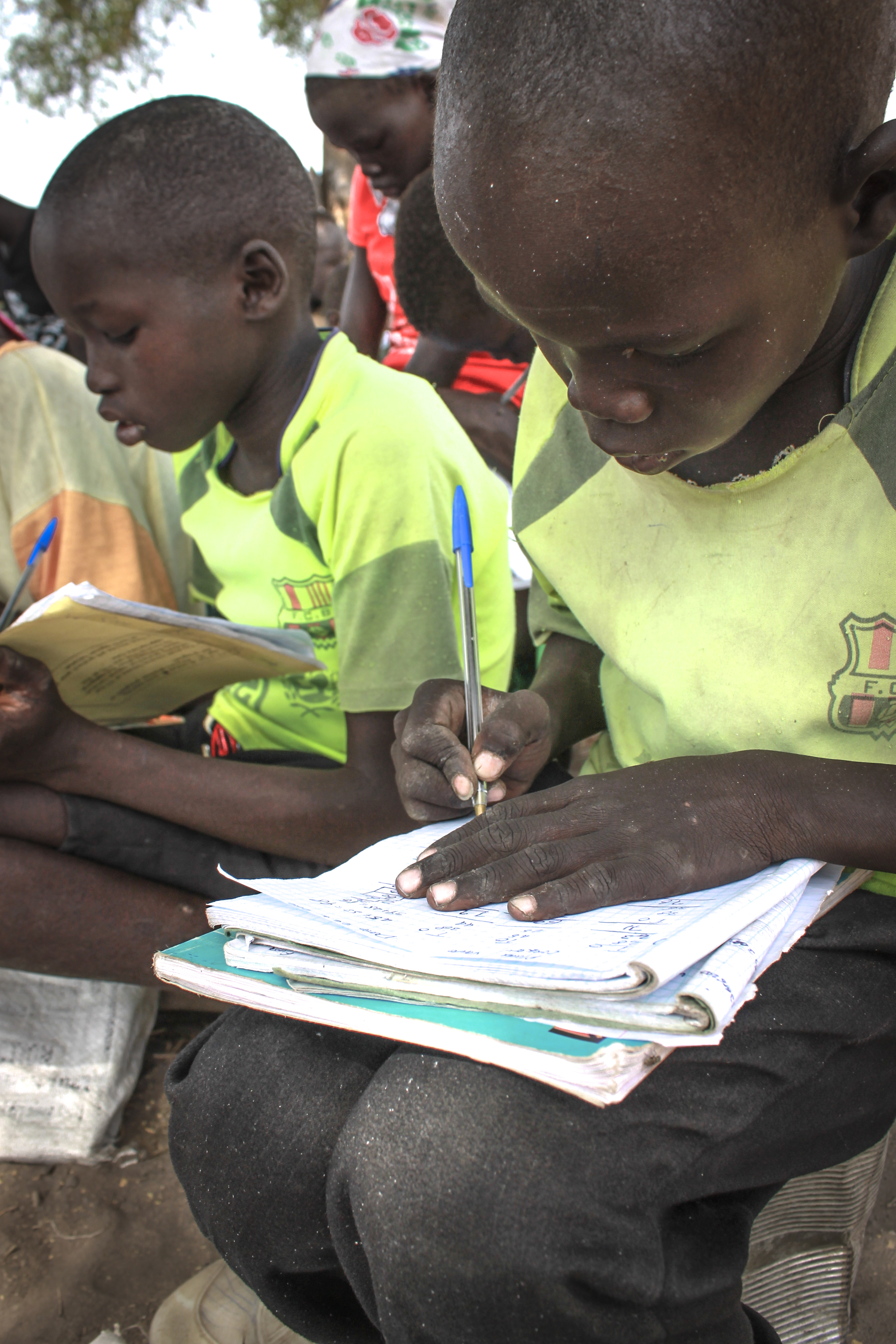
RS55849_Nguoth studying_Wechpuot Primary School1Although he is 12 years old, Nguoth looks about eight. Like many students in his class, for two years he had to drop out of school because there wasn’t enough food at home. He still misses school at least two days a week to go into the bush to find wild fruits. On the other days, he comes to school hungry. In 2010, the UN declared Akobo, the region where Nguoth lives, the ‘the hungriest place on earth’. Drought, floods and inter-communal conflict have left a third of children malnourished.

I was five years old when I started school. Sometimes I had to stop coming because I was hungry.  For two years I dropped out because I had to go to the river to fish and to the bush to collect wild fruits for my family. I think the situation is getting worse and more children are stopping coming to school to help their family.

Hunger is very bad in this area. We have no gardens to grow food because the floods destroyed them. The people are angry with each other and there’s no peace [referring to inter-communal conflict and cattle raids affecting the area]. People are very sick, malaria is very high and lots of children are absent from school. It’s hard for children to be happy and take part in class because they’re hungry.

My favourite subject is science and when I finish school I’d like to be a doctor.

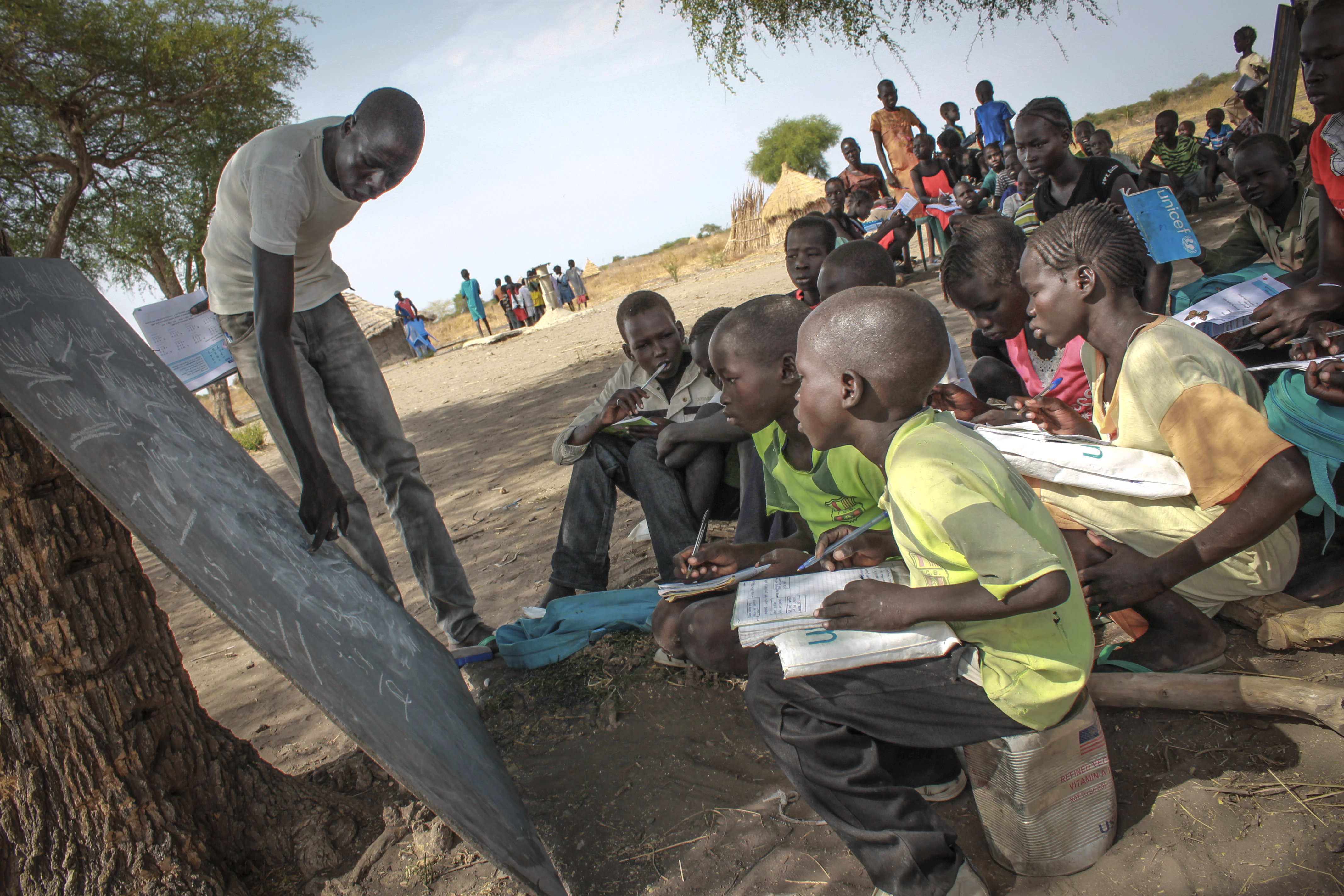
RS55844_Nguoth in class_Wechpuot Primary School_Akobo5Nguoth is currently studying at one of 20 schools supported by Save the Children through a DFID funded project in Akobo East. Save the Children is providing these schools with text books, desks and other school supplies, training teachers and has set up and is supporting Parent Teacher Associations and Student Advocacy Teams that encourage more children to enrol in school.

To enable  Ngouth and thousands of children like him to achieve their dreams they  need adequate food.

Food for Thought forms part of the IF campaign where 170 charities have joined together to call for the G8 to take action on World Hunger. A number of high-profile children’s authors have also agreed to support the Food for Thought report with an open letter to G8 leaders – these include Julia Donaldson, Eric Carle and Philip Pullman.

Julia Donaldson, the Children’s Laureate and author of the bestselling book The Gruffalo, said:

“The devastating impact of malnutrition shouldn’t be underestimated. It stunts a child’s development, sapping the strength of their minds as well of their body, depriving them of the chance to be able to read or write a simple sentence”

How can you help?

Read the full report

Sign the petition

Follow the IF Campaign

Follow the campaign via Britmums

Two Mother’s Days: One for Remembrance and One for Me

vase of daffodilsI never really enjoy Mother’s Day, for me it is a day of sadness mixed with guilt. If I don’t have a good time I’m not recognising the love of my own children and denying them a day of spoiling me and making me happy.

I lost my mother before I had children so Mother’s Day has always been  bittersweet. This year for the first time I had the opportunity to change that. Mother’s Day in the US is not until May, so on Sunday (Mother’s  Day in the UK) I was able to remember Mum without feeling guilty that I wasn’t getting into the spirit of the day for my own kids.

I wasn’t able to visit Mum’s grave with flowers but it was fine to be sad and reflective.

In fact my children now appreciate that Mother’s Day is tough. My husband and the girls brought me breakfast in bed, with a vase of daffodils from the garden. They went out shopping and came back with proper Cornish pasties for lunch and my favourite sweets in a Welsh mug. It was really lovely to feel that they had bought them to say, we know it’s a tough day but we love you and want to make it better. I could even spend the day cleaning the house because it made me feel better.

I’m so glad that I no longer need to wrestle with my conscience on Mother’s Day and when US Mother’s Day comes, I’ll make sure it is a special, happy family day.

Making Daffodils for St David’s Day.

For a Lady that I Do not Know

There is a lady that I do not know,
She gazed at her sleeping baby
And found that life had left her.
Her soul released a desperate cry.

There is a lady that I do not know,
Her milky breasts are heavy and ache
As she searches for ways to explain
That their sister has gone.

There is a lady that I do not know
She’s planning her baby’s funeral
Deciding how best to say goodbye
Without a hug or a kiss.

I can’t write about what my children have played
Or how my life moves from day to day.
I can’t show you pictures of beautiful views
Or comment on the latest news.

There is a lady that I do not know
I can’t feel her pain or sorrow
But her life could easily be my life
And it haunts me.

For Jennie at Edspire a lady that I do not know.