Category Archives: woods

Building a Fairy Garden

Years ago, when my eldest was small, there was a tree stump at the bottom of our garden.  I thought it would be magical to put a fairy door on it and pretend that fairies lived there.  My daughter left notes for the fairies (some suitably spoiled by the great British weather) and they replied in tiny writing.  The stump was soon forgotten as the winter set in and the bottom of the garden seemed such a long way to travel.

When we moved here we made a rudimentary attempt at creating a fairy garden in a planter.  The little ones saw this as a perfect opportunity to smother it in glitter leaving my eldest a little disappointed with the messy results.

tree trunks

The moment I saw the garden in our new house, I knew that the cluster of trees would make the perfect fairy garden.  When I suggested it to the girls they were very excited and we collected ideas, requested materials and made plans.

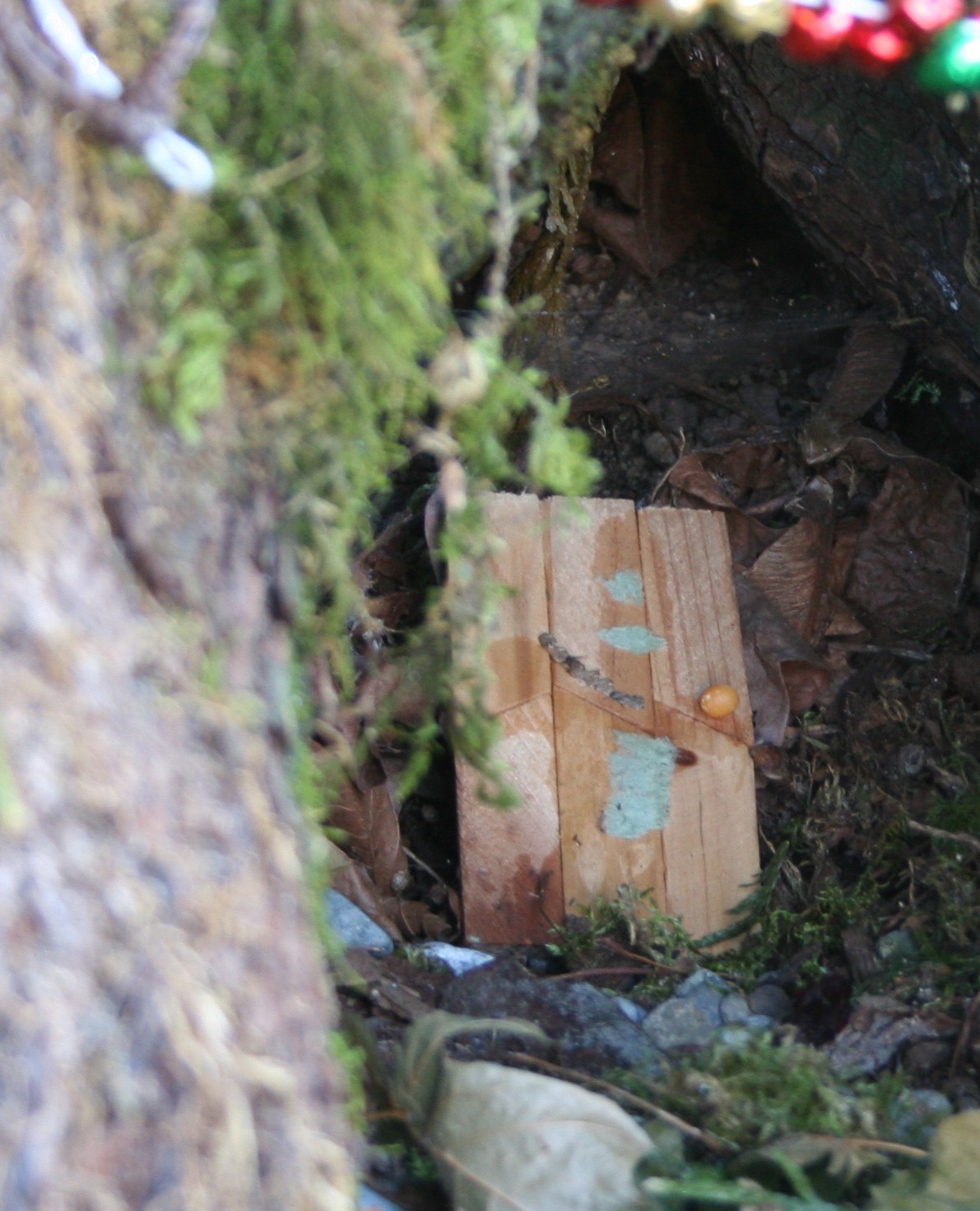
The fairy door was made from those mysterious small pieces of wood that come attached to a painting canvas.  A lentil was chosen for the door knob.

fairy door

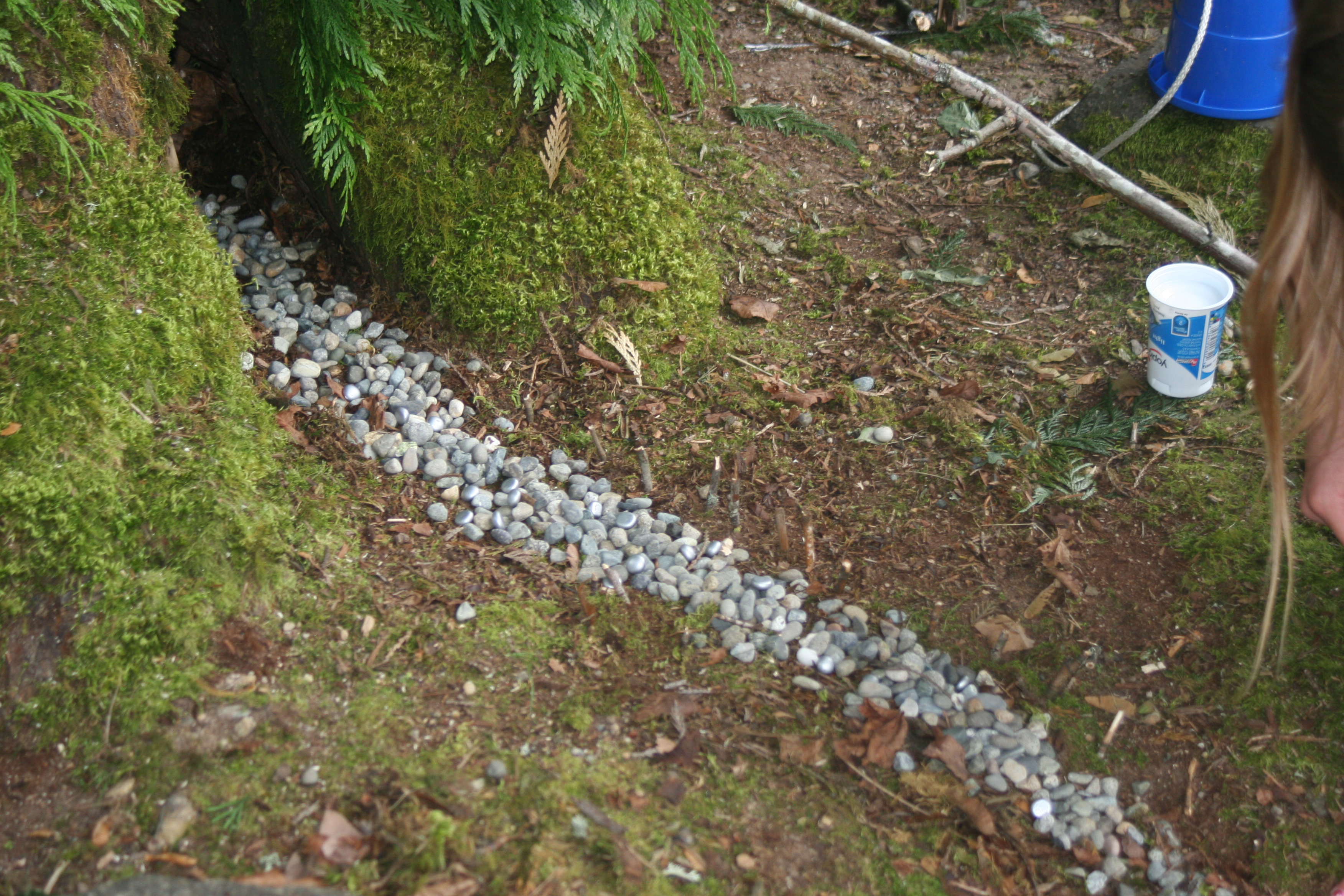
Next we collected small stones to make a pathway to the door.

pathway to the door in a firy gardenWe made gates from the same pieces of wood as the door and placed small sticks around the edge of the path to create a barrier.

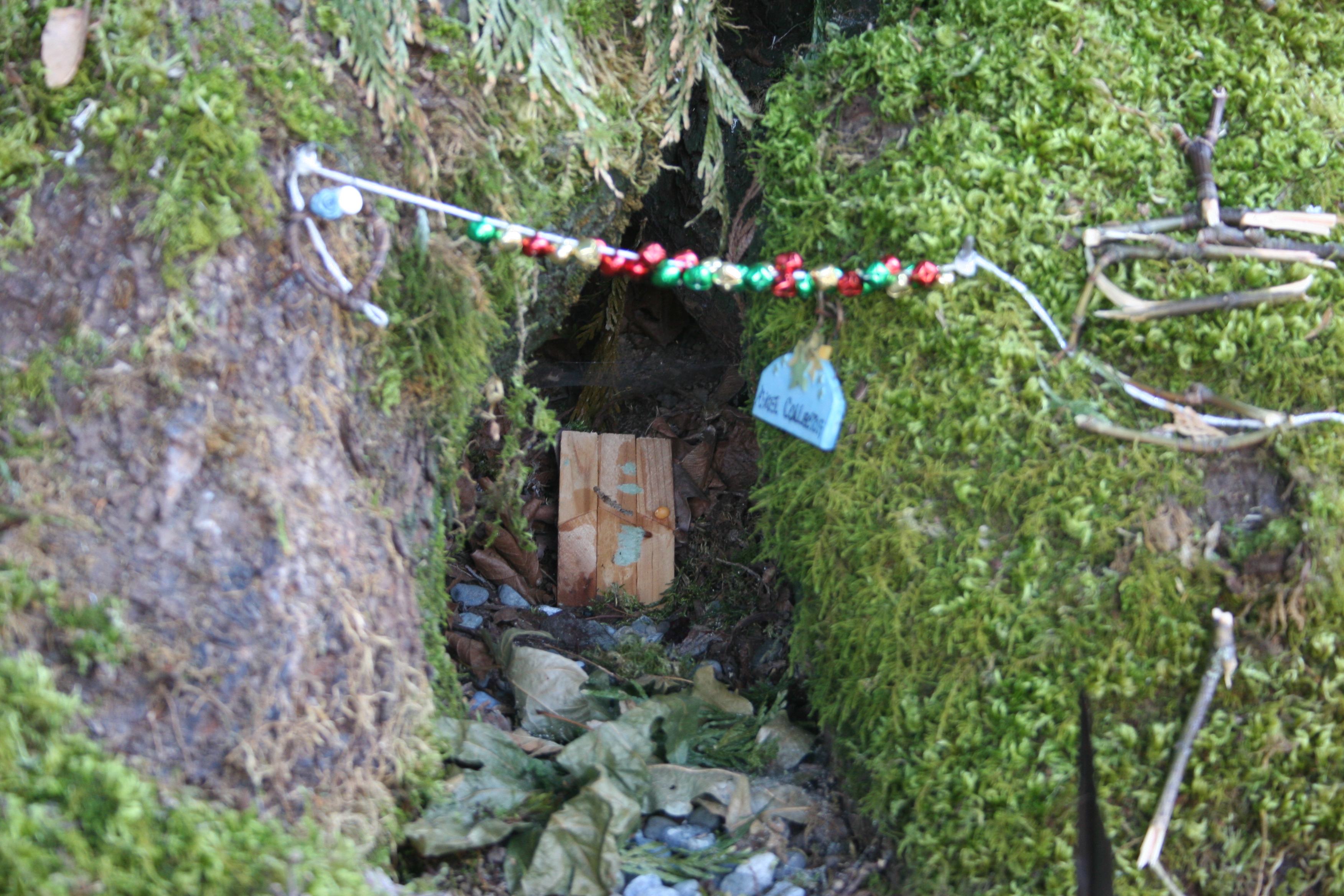
fairy garden doorway

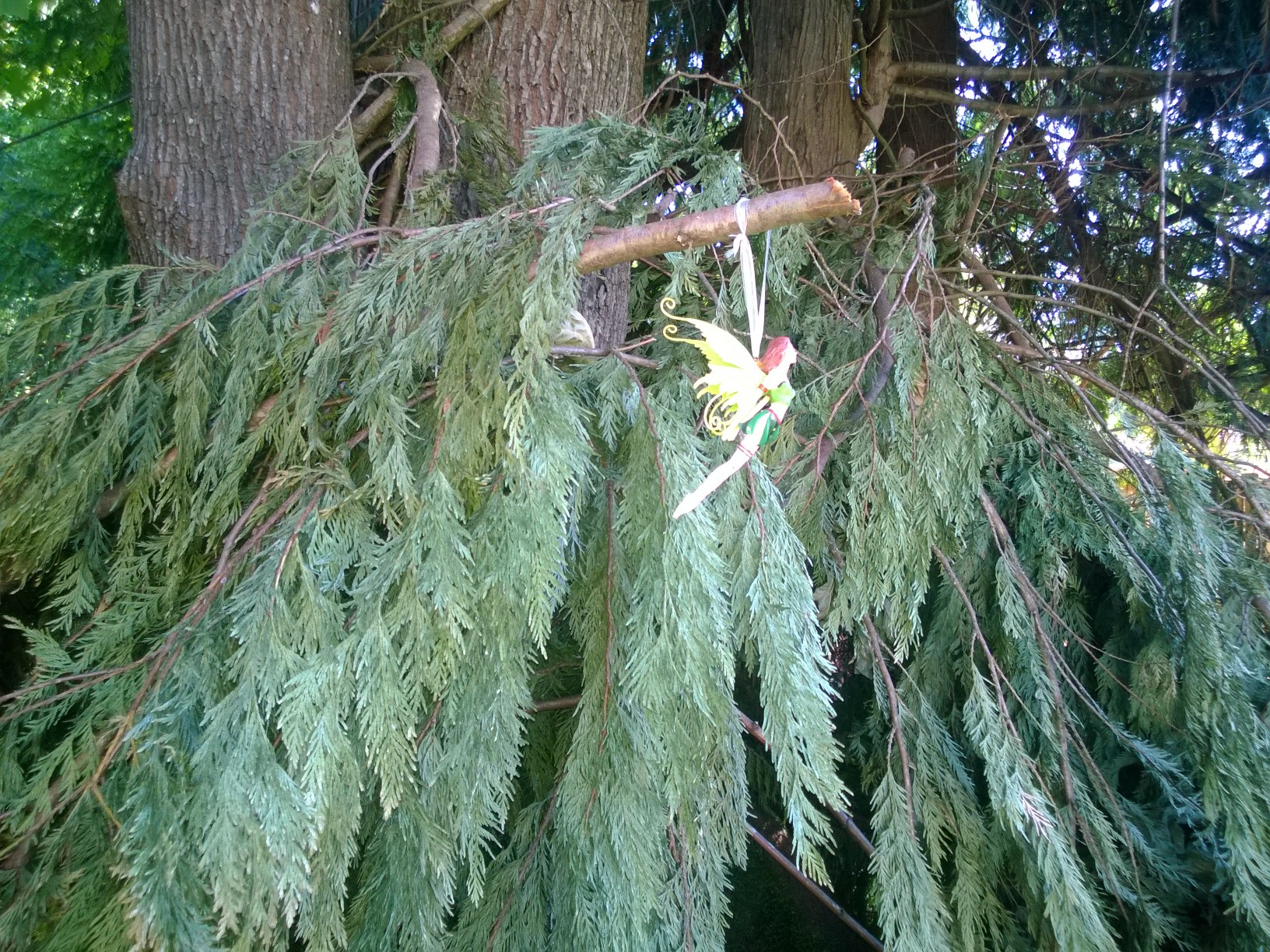
Many of the materials were gifted by the Buy Nothing Group including the little bells we hung across the entrance, glass beads to make the stream, jam jar lids for table tops  and our very own fairy.

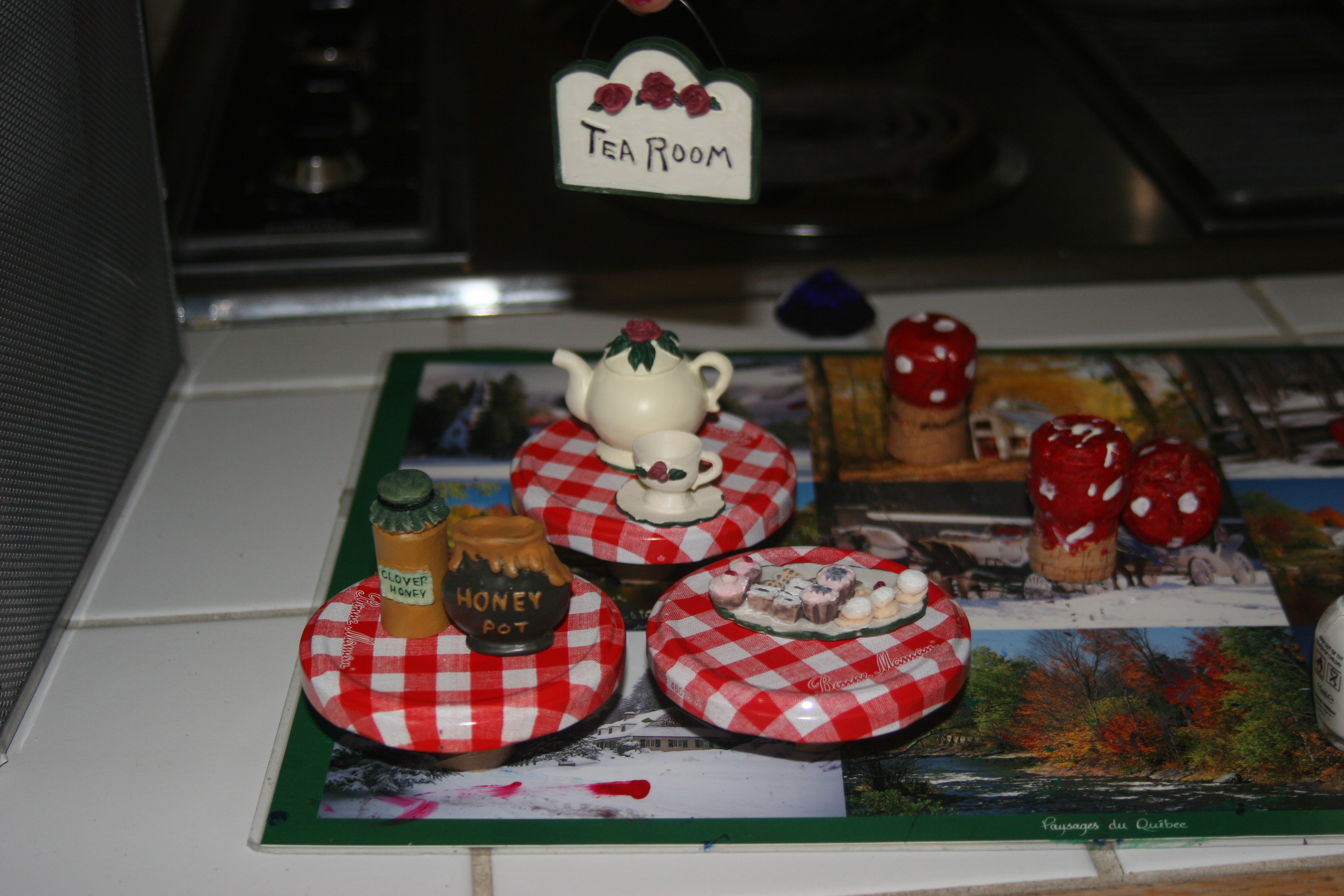
fairyAt a garage sale we found packs of miniature accessories for teddy bear collectors.  We decided to use them to make a tea room for the fairies.

The tables were made from jam jar lids and cardboard cylinders.

Making toadstools for a fairy garden

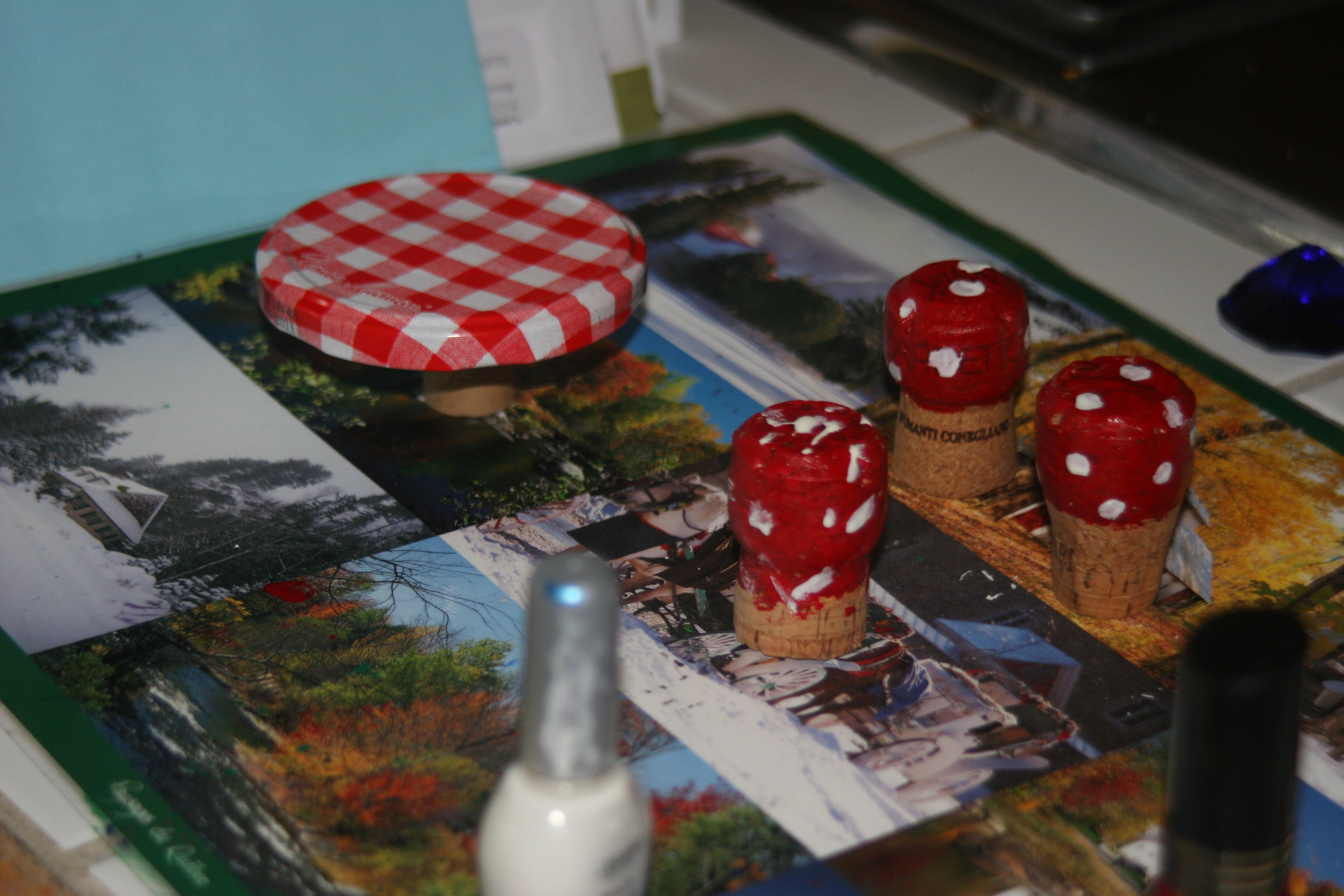
Corks were painted with nail varnish to make toadstool seats.

toadstools from corks

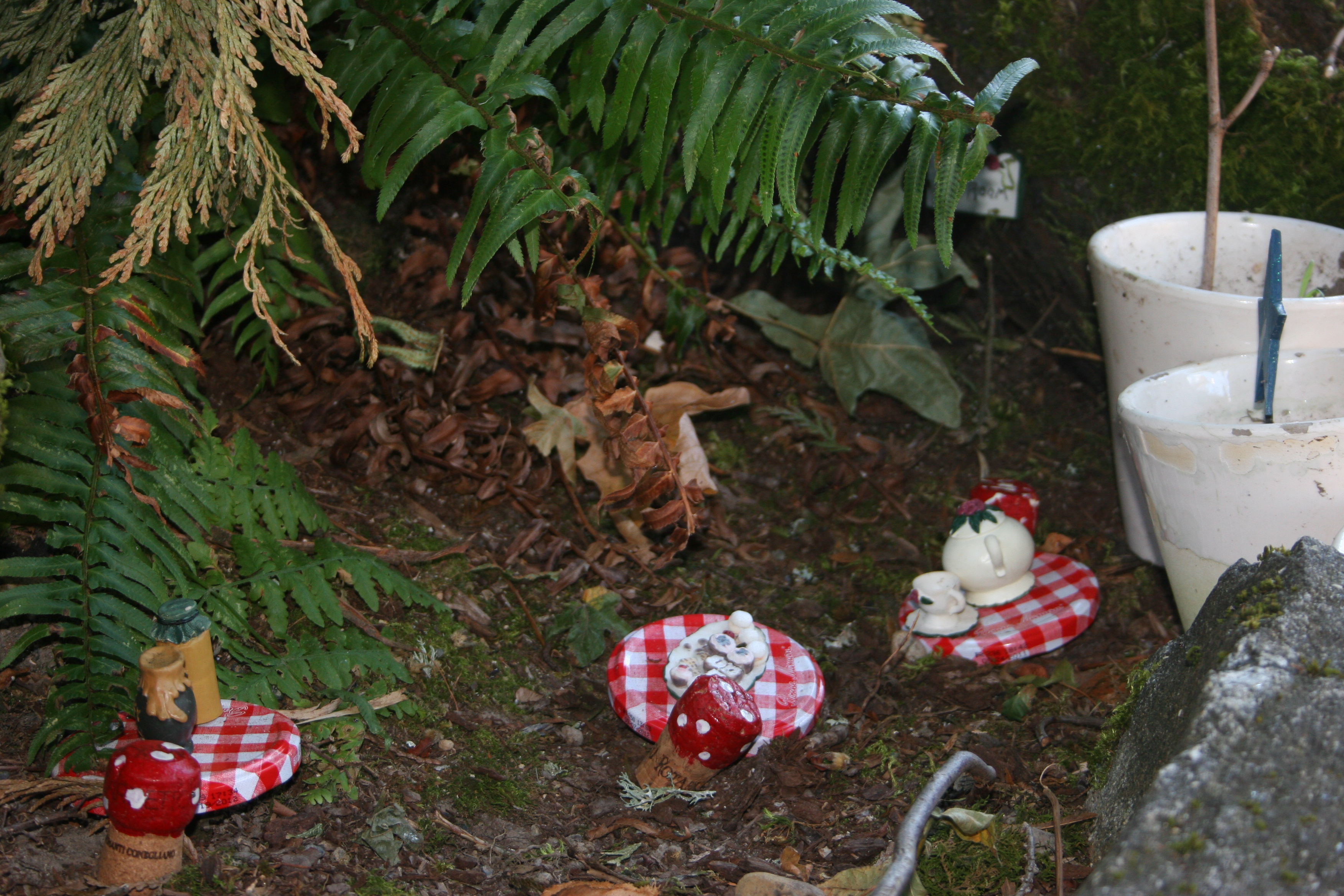
The embellishments were added to make a perfect fairy tea room.

fairy tea roomfairy tea room

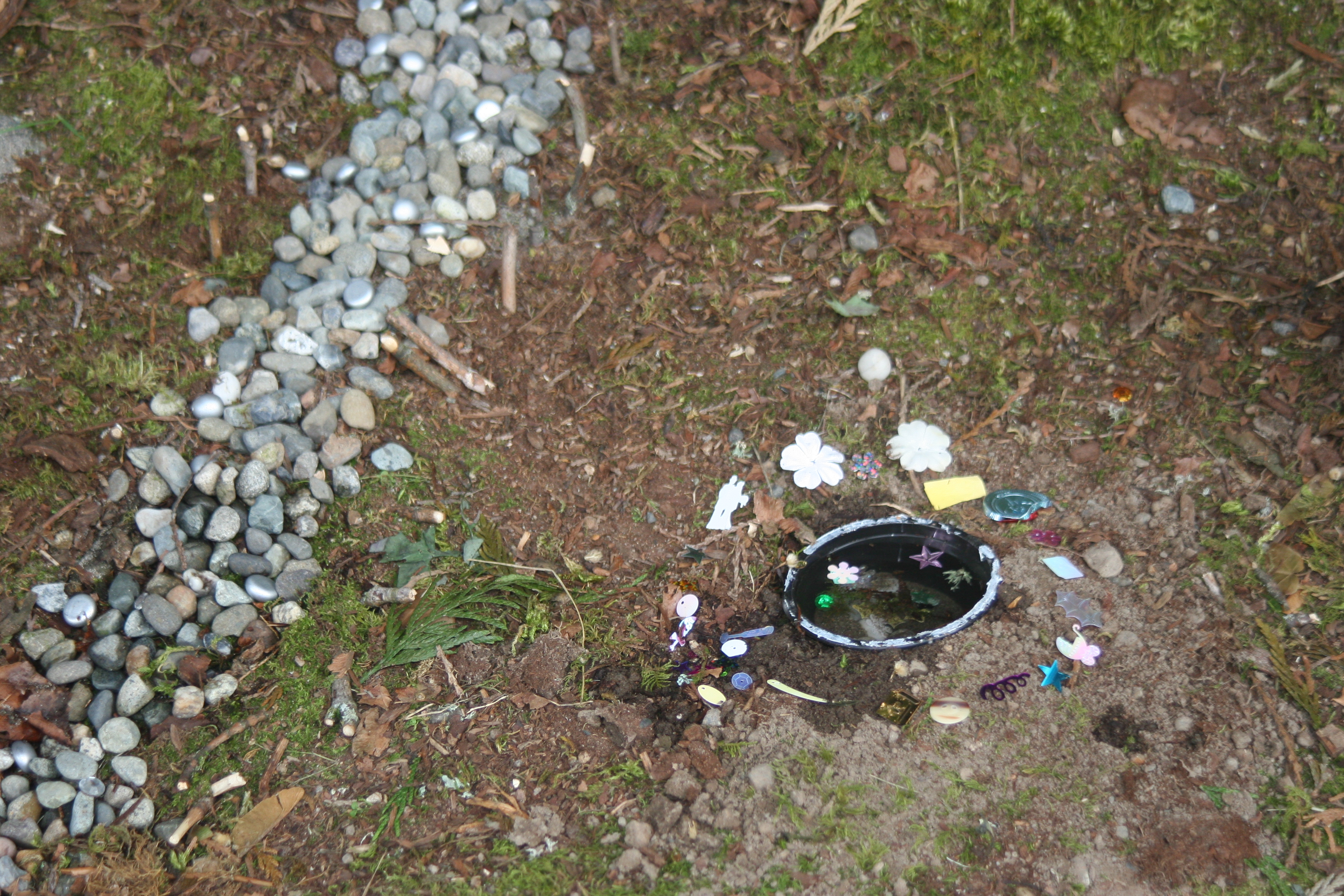
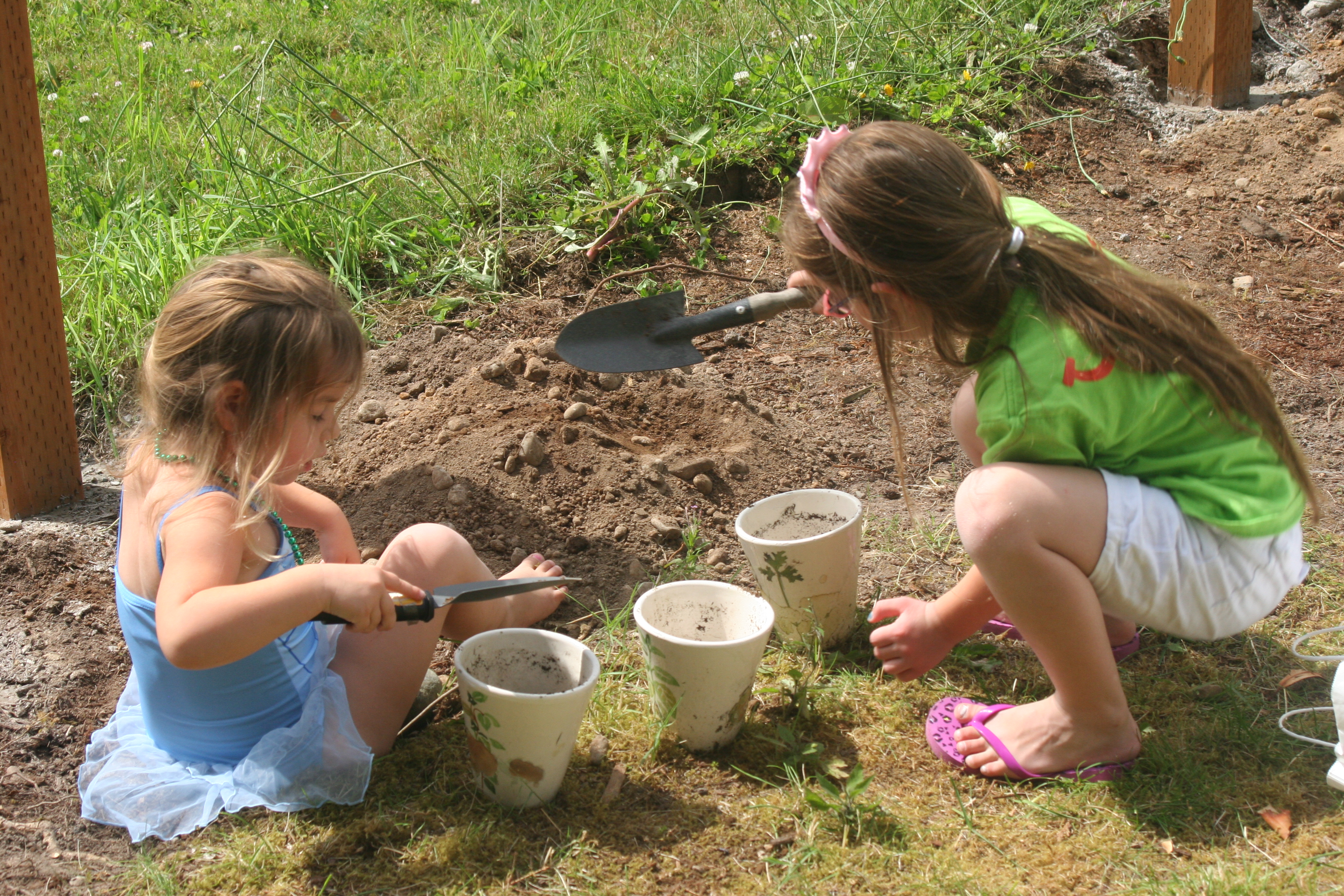
One of the girls wanted to make a pool for the fairies, we found a pot, dug it into the ground and she added glitter and sequins.

fairy pool

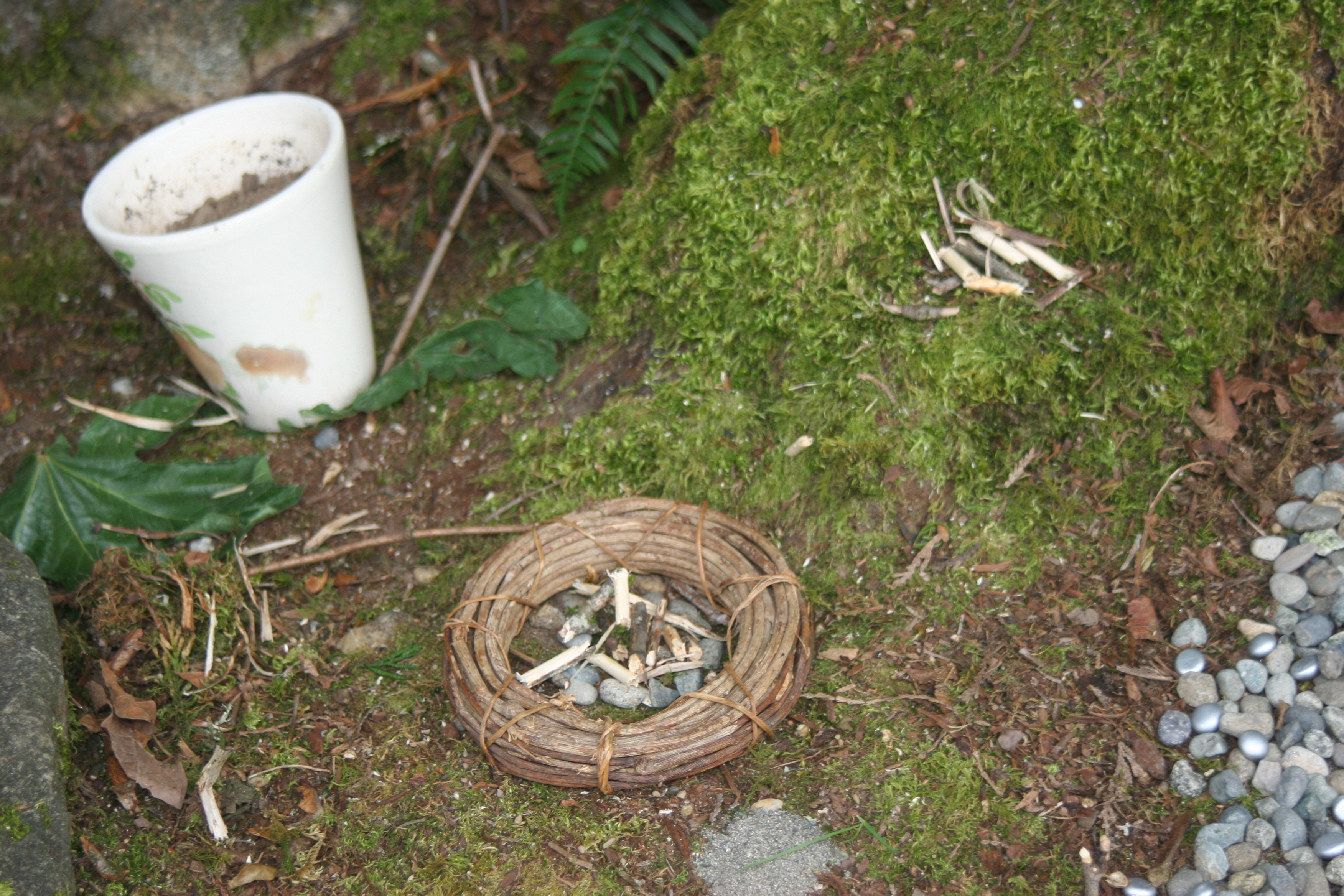
The girls decided to use a wicker ring  as a fire pit and arranged twigs inside for the bonfire.
fairy fire pit

Next we added a stream made of glass beads and outlined the edges with pebbles.

fairy stream

Small flower pots created a boundary between the stream and the tea room and we sprinkled a few seeds on top.

planting

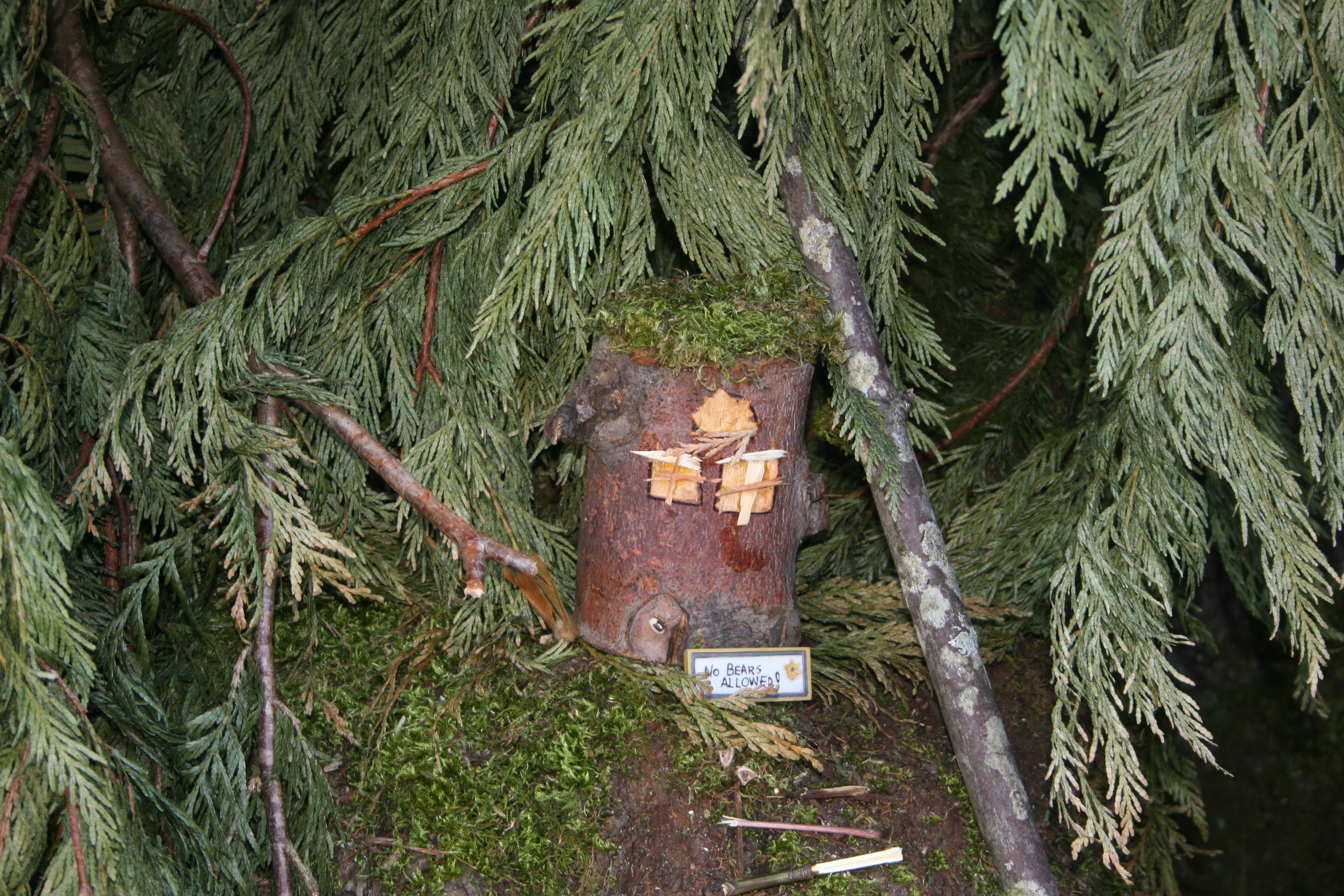
During the winter we found a log in the firewood with a knot that looked like a door.  My eldest saved it to make a fairy house.  She carved windows with a pocket knife and stuck twigs along the edges with wood glue.  The roof was made from moss.

fairy houseAs  a finishing touch we added steps leading up to the house.

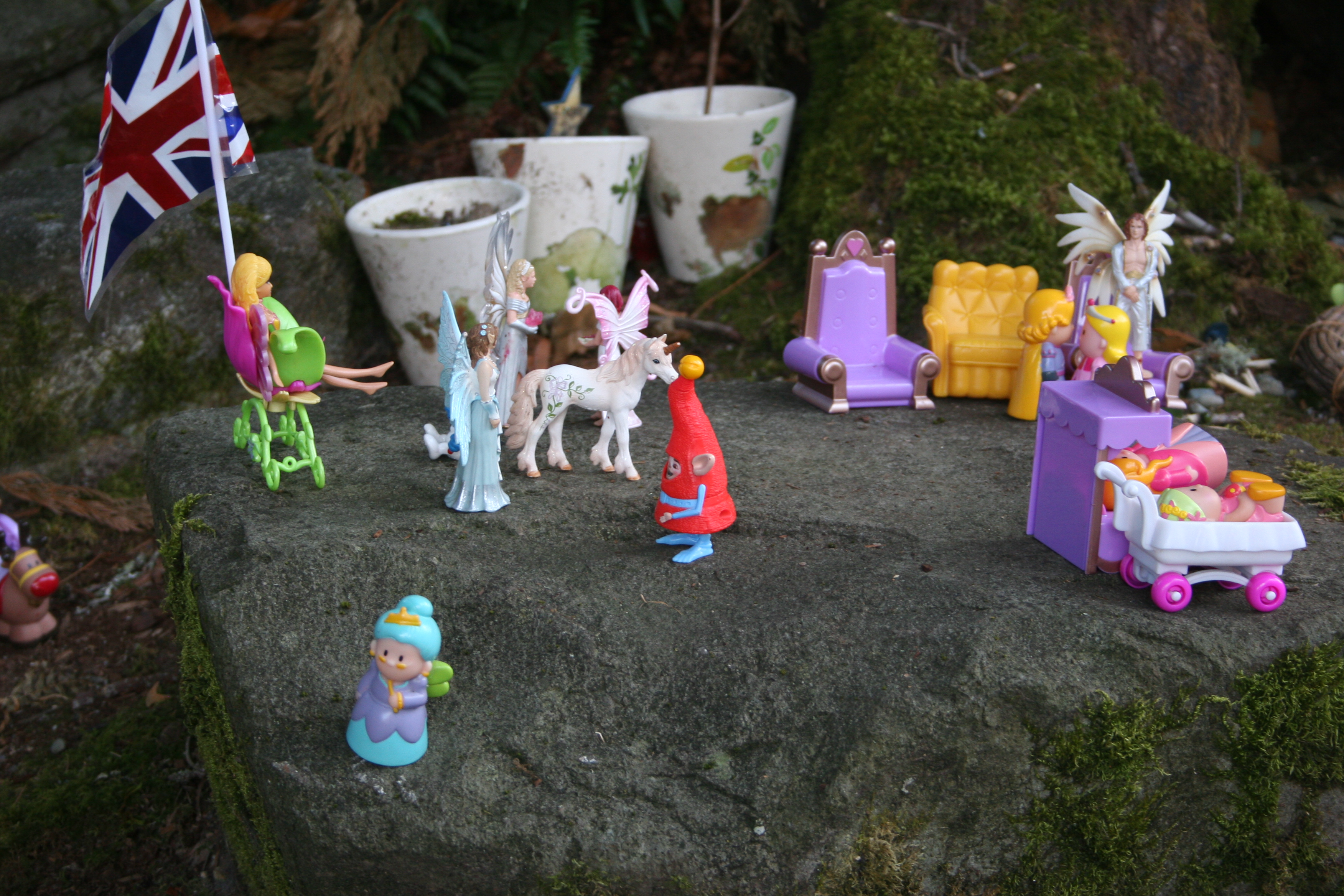
The fairies and elves seem very happy with their new habitat.

fairy garden


#Get Outdoors: Children Connecting with Nature

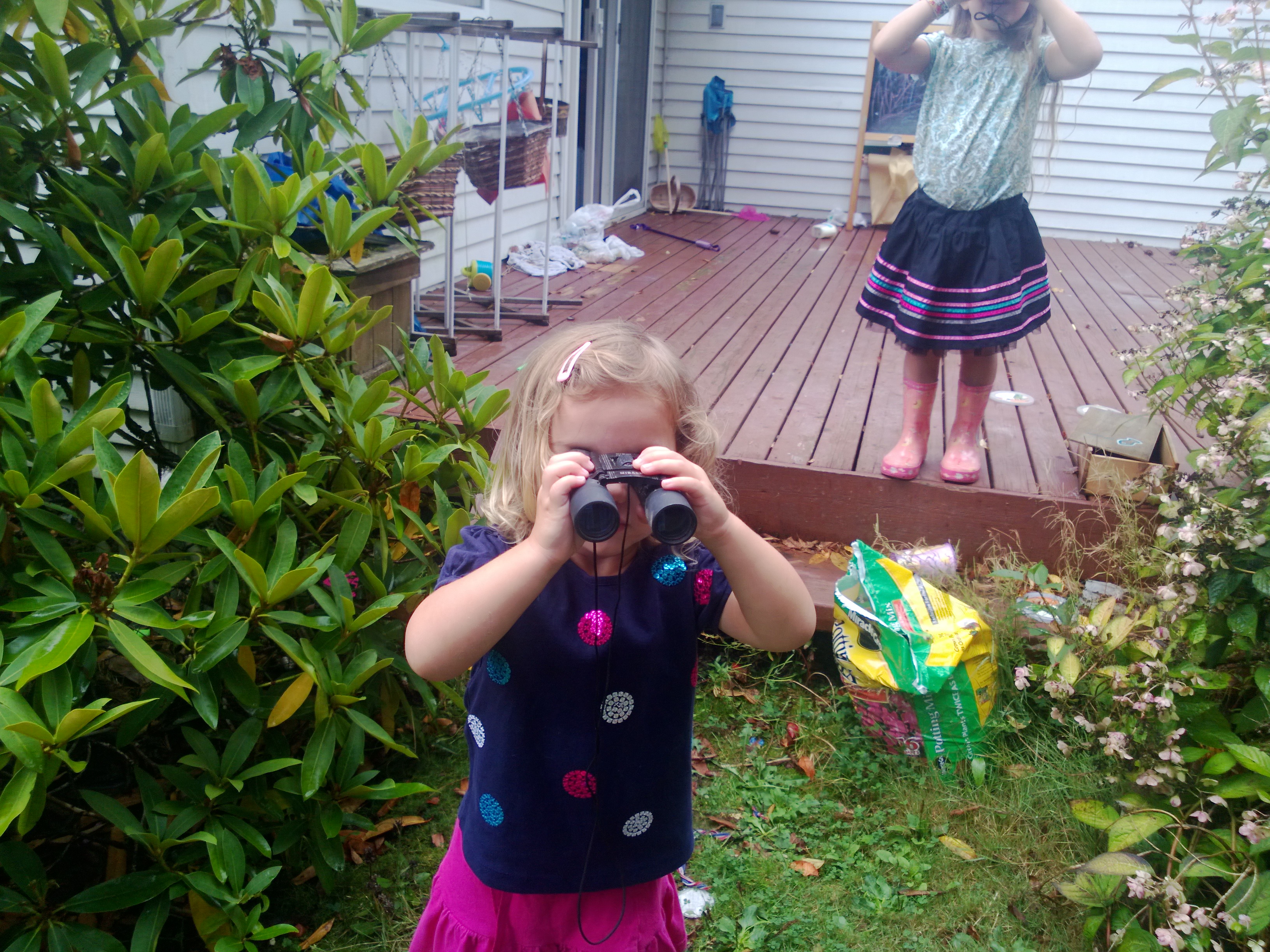
binocularsAutumn is a time for woodland walks, collecting interesting things along the way and looking out for animal homes and habitats.  As a child we had nature tables at school and we were encouraged to bring in conkers, sticky buds, acorns and leaves.  I used to love to walk in the woods and collect things.  We’d put nuts and conkers in their cases in the airing cupboard until they opened.  I used to lie in the grass scouring the leaves for 4- leafed clover. I found one when I was about 6 years old. I looked after it all weekend and on Monday carried it to school as the prize exhibit for the nature table. The temptation to fiddle with it however, was so great that on the way one of the leaves fell off. I turned up with an ordinary clover and a loose leaf and so no-one believed me.

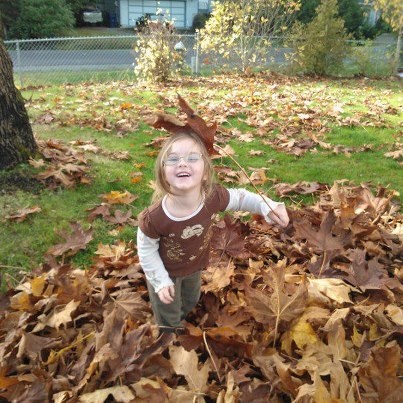
autumn leaves

We’ve been foraging for Autumn things this week.  In the garden we have an abundance of Fir Cones, Maple Seeds and coloured leaves but we wanted to find other things like acorns and conkers.  I asked a friend where we might find conkers.

Conkers? What are they?  was her reply.

I found a single, solitary conker that had managed to make its way with us from England.

Oh, it’s a bit like a chestnut.

Yes, a rounder chestnut and the casing is different, with larger more spaced out spines and they are poisonous.
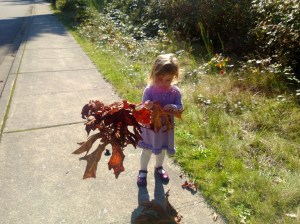
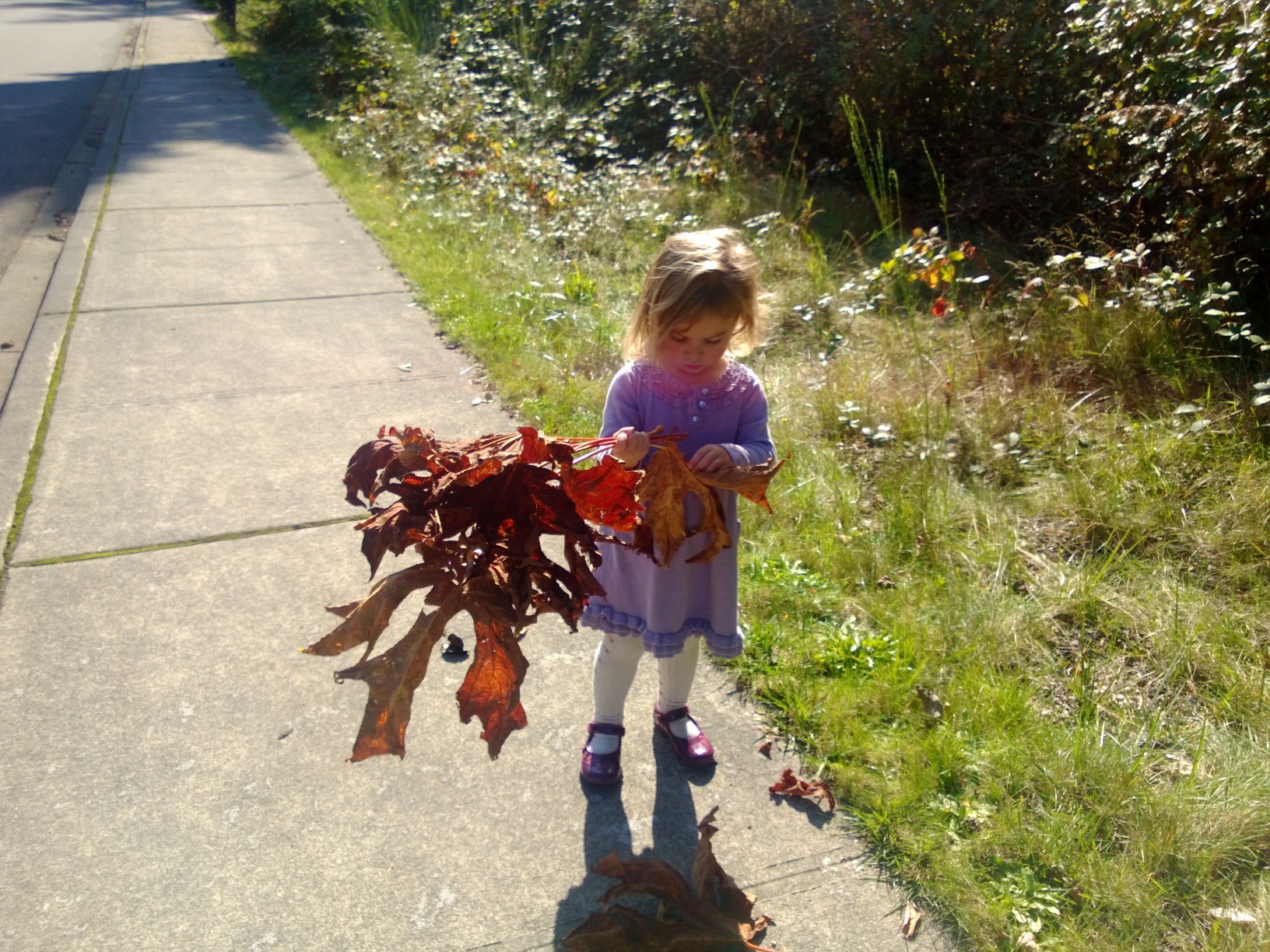
maple leaves

Outside the girls ballet class we found a variety of different pine and fir cones from tiny ones in clusters to great big narrow ones.  We walked in the woods to see what else we might find.  We found….. more pine cones, …. more maple seeds,… more maple leaves but nothing different.  I suppose we often take the things we have in our environment for granted – I love the towering Evergreens we have here, mixed in with the colours of the Maples but I do miss conkers and acorns.
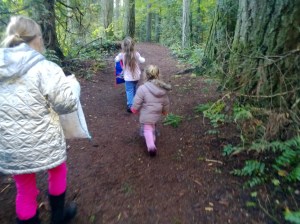
woodland walk

Wild animals on the other hand are extremely varied.  We watched huge salmon jumping in the river, saw enormous yellow butterflies and watched a small snake basking in the sun.  Our favourite visitors are hummingbirds.  The first time I saw one I thought it was a dragonfly but when it rested on a flower I was so excited to discover it was a hummingbird.  I had no idea hummingbirds were native here. I read up about attracting them to the garden and bought a hummingbird feeder that we fill with 4 parts water to 1 part sugar.  We now have regular visitors outside our window.

This slideshow requires JavaScript.

Of course there are also the more scary types of wildlife. The ‘ballet moms’ were talking about finding bobcats, cougars and coyotes in their garden and black bears on woodland walks, especially near the rivers now that the salmon are spawning.

RSPB Get Outdoors

As  I was musing about our appreciation of the natural world and the things we miss from home, a new report from the RSPB was brought to my attention. Connecting with Nature presents the findings of a three-year RSPB research project measuring just how connected to nature the UK’s children really are. Connection to nature is measured in 4 areas:

  • Enjoyment of Nature
  • Empathy for Creatures
  • Sense of Oneness
  • Sense of Responsibility.

You can take the questionnaire to see how connected your children are. If you are outside of the UK, the report also gives you the criteria used for the questionnaire so that you can investigate how connected children are in your area.

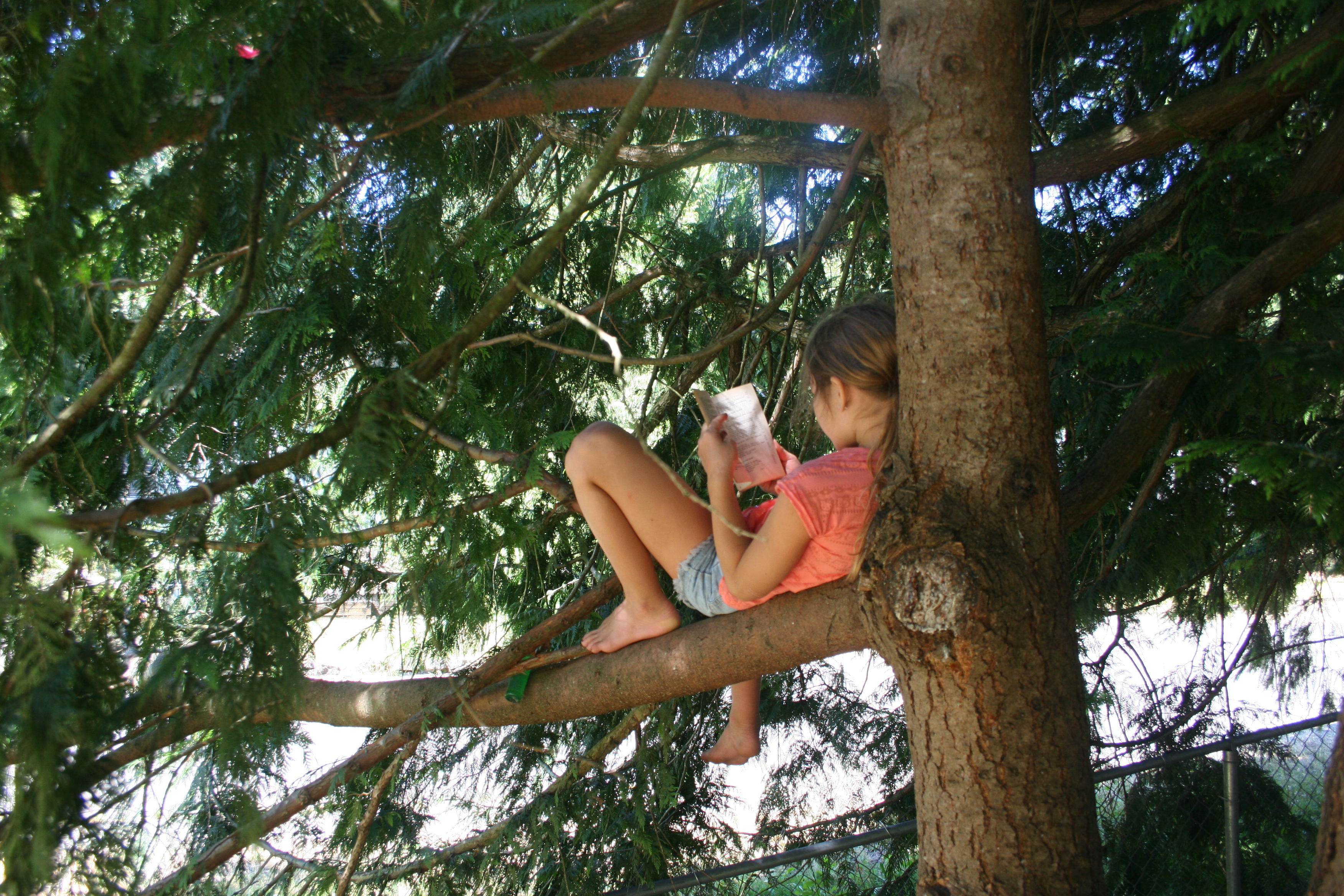
I think the sense of oneness is an interesting one.  How young was I when I first felt a sense of oneness with nature? I know my youngest daughter will always choose to go outside collecting sticks, pouring rainwater and arranging stones – is this an early sign of oneness with nature?  My eldest daughter emphatically announced that she felt peaceful when she was in a natural environment.  In a household with 2 noisy pre-schoolers her favourite haven is reading a book in a tree in the garden.
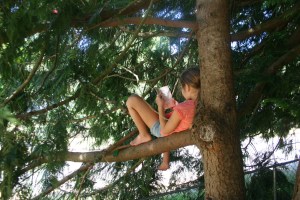
reading in the tree

I know for me, I feel at peace by the sea or in a woodland, both places I spent a lot of time in as a child. I can’t wait to visit the National Parks here in the US, to see the amazing diversity of the natural world here.

Connecting with nature has many benefits from physical activity, mental health and a sense of well being, education, social interaction, empathy and the impact on the sustainability of the natural environment.  The study found that  only 21% of children aged 8-12 in the UK have a connection with nature at a level that is realistic to their age.

“ There are statistically significant differences between children’s connection to nature at a national level across the UK, as well as between boys and girls, and British urban and rural homes.”

Surprisingly girls are more likely than boys to connect with nature and urban children more likely than rural children.  Further studies will be undertaken to determine why this might be. Looking at the questionnaire I think it may be that the questions are angled at more feminine pursuits, feeling peaceful in nature, collecting shells, listening for sounds and taking care of animals are not exactly cool for young boys.
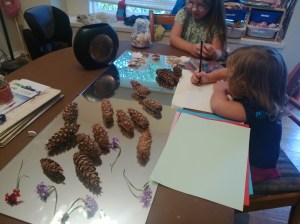
investigating natural materials

The research will add to the growing evidence base about children and nature. This includes a study by Natural England which suggested that factors contributing to connection are in decline. It reported that only 10% of children in the UK played regularly in natural places in 2009, compared to 40% in the 1970s.

Getting children out in the natural world when they are young won’t guarantee a continued interest once the world of school, clubs, homework and computer games takes over but it will certainly put them on the right track.

The environmental identity developed by children between the ages of 3 and 7 is  an emotional affinity towards a specific aspect of nature which had been strengthened by providing positive experiences with nature on a regular basis.   (Karls and Ittner 2003).

Some researchers also believe that there is an optimal moment usually between the age of 6 and 12 which form a person’s attitude to nature;  perhaps the 4 leafed clover was mine.

Other Posts You May Like to Read

20 Outdoor Things to do Before you are 5

Woodland Activities

Mud Faces for International Mud Day

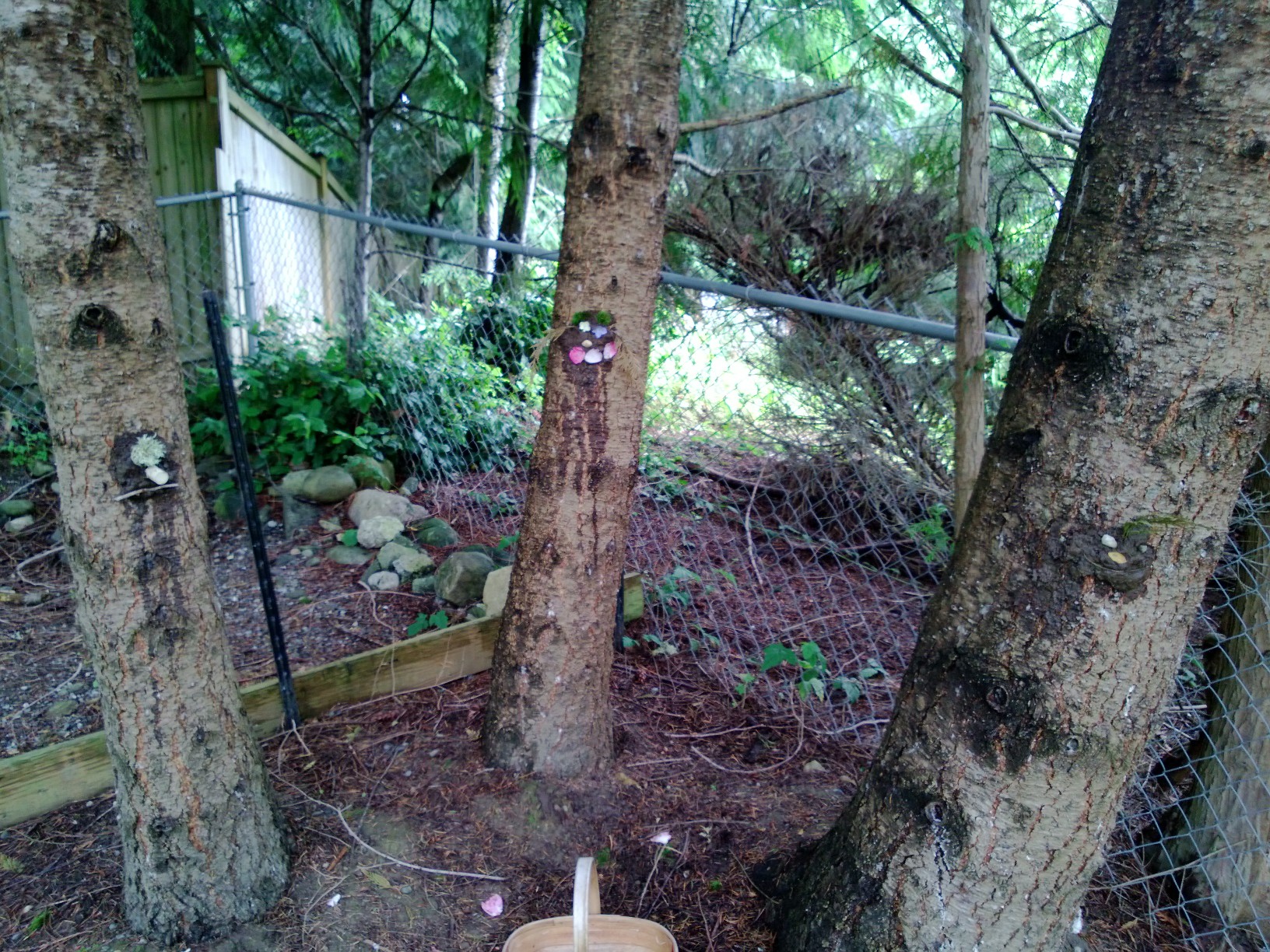
mud faces on trees for international mud dayOur first week of the school holidays has been rainy. Perfect for our preparation for International Mud day on Saturday.  We have been planting bulbs and sunflowers and finding bugs and worms under the ground.

Today we gave our trees mud faces. This is one of the many fabulous outdoor ideas that can be found in the Woodland Trusts  Woodland Adventure Booklets , free to download from their website.  We used materials from our loose parts station and from around the garden.

This slideshow requires JavaScript.

Other ideas for International Mud Day

Make a mud kitchen (Including why playing in the mud is good for you).

Make muddy footprints

Top Mud Ideas from the Woodland Trust

International Mud day on  Pinterest if you’d like to share any of your mud day activities on my Pinterest board contact me and I’ll send an invite.

Outdoor Play: When They Would Rather Play with Sticks and Stones (The Theory of Loose Parts)

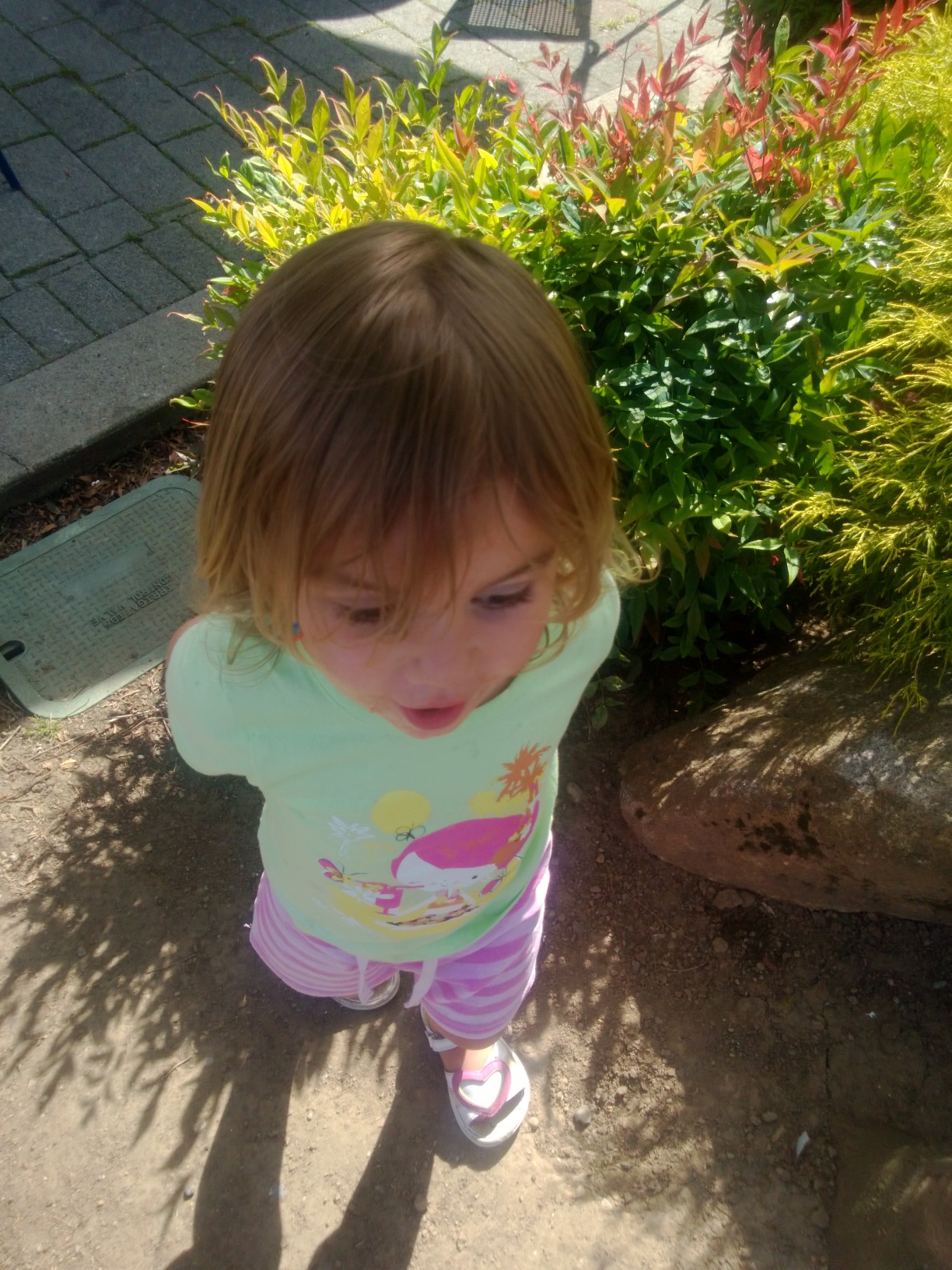
child playing in the dirt
I hid my stick, can you find it?

I laughed to myself as I watched my 2-year-old playing in the borders, hiding a stick in the bushes and drawing in the dirt.  A few feet away was a very expensive sensory playground with musical instruments, water features and a little bear cave. It was very impressive, but the lure of a stick was just too great. Given the choice I’m sure regardless of the expensive equipment we provide, most children are happy with a stick, a pile of stones, or a tub of water.

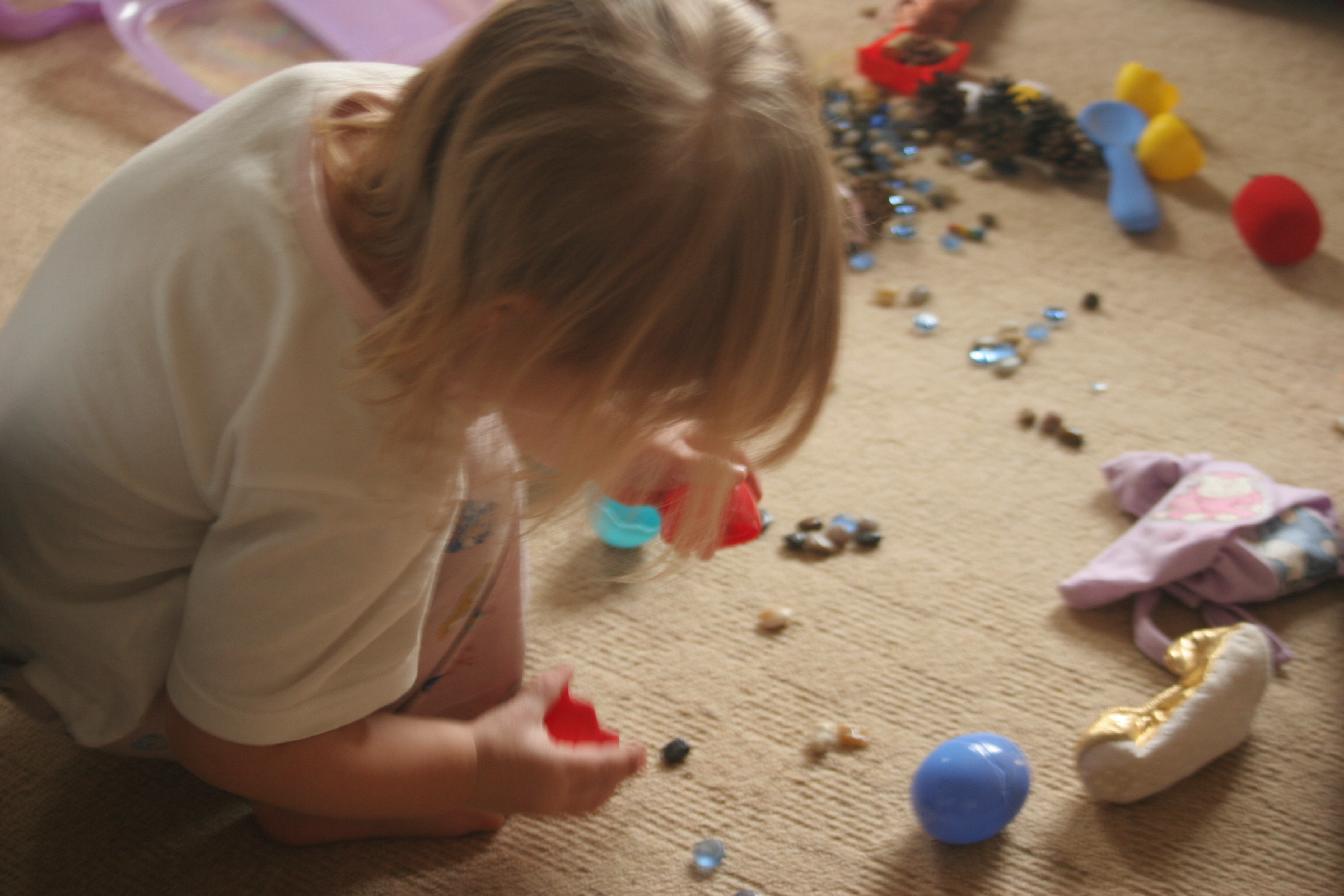
My eldest was obsessed with tiny stones when she was small. Everywhere we went she would stop to pick them up or take them home in her pockets. If we were in the garden she would make collections of little stones and spend hours moving them from one place to another. She was very young at the time but I never stopped her for fear that she may swallow them. I simply made sure I was sat nearby so that I could see what she was doing.

playing with loose parts
filling eggs with stones and glass beads.

My 2-year -old loves sticks. We have 2 rules:

  • No sticks in the house
  • Do not point sticks at people’s eyes.

Sometimes they are magic wands, Sometimes fishing rods or sometimes simply something to carry around. Every stick is greeted with equal excitement.

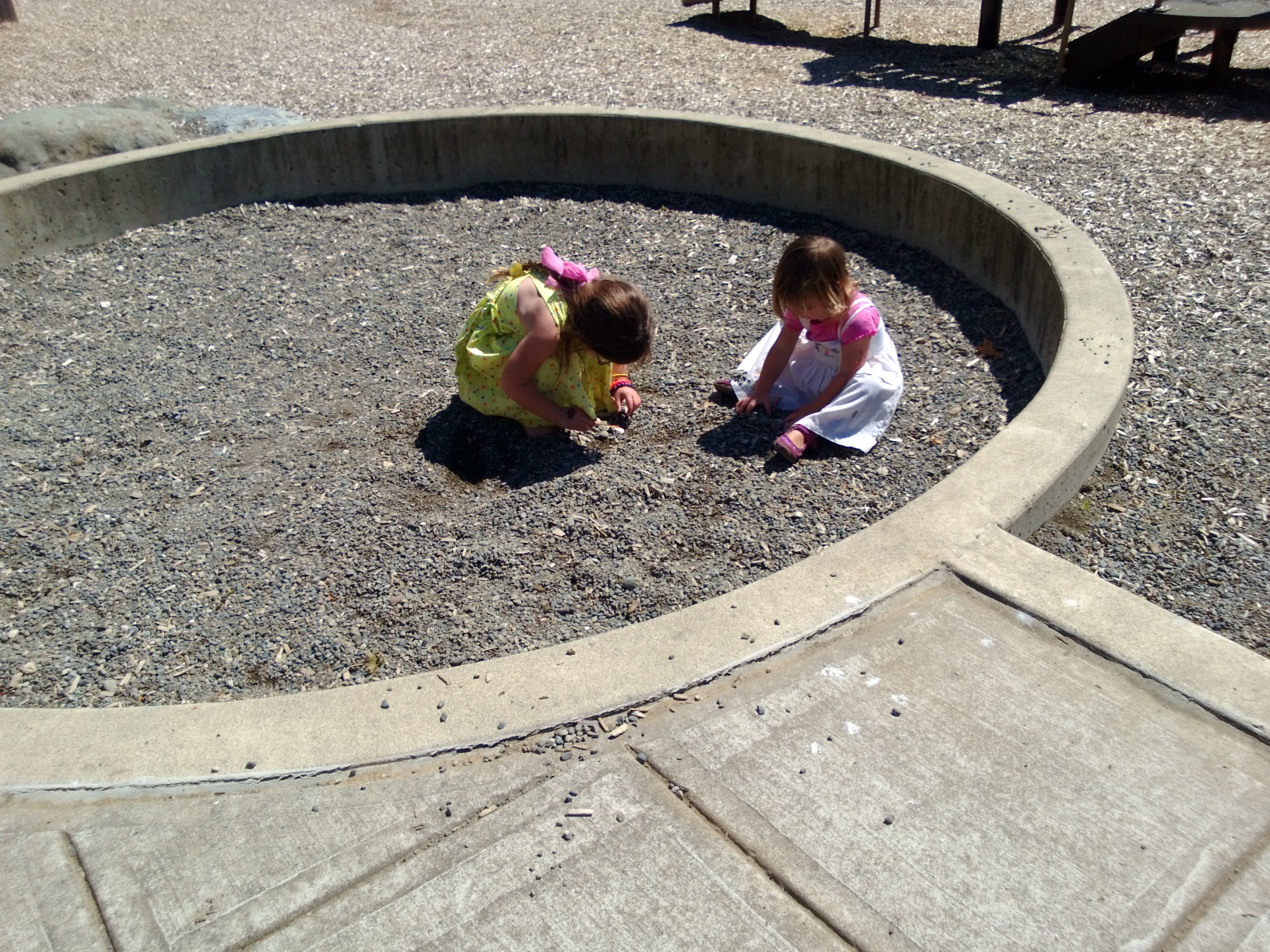
playing in the dirtAll 3 children play for hours in the sand pit. When I first moved to the US I didn’t think the girls would like the grey, gravelly play sand they have here. I was wrong, they love it as much, if not more than the fine golden sand we had in the UK. Even at the park they chose to play in the dirty gravel rather than on the equipment.

The Theory of Loose Parts

In 1972 the architect Simon Nicholson devised the Theory of Loose Parts. It grew from the notion that all children love to interact with variables. Variables can be anything from materials and shapes to media such as gases and fluids and are used to discover, invent and have fun. The theory of loose parts is as follows

‘In any environment, both the degree of inventiveness and creativity, and the possibility of discovery are directly proportional to the number and kind of variables in it.      (Nicholson 1972)

Put simply, the playground with static play equipment will not offer a child the opportunity to discover and create their own scenarios as freely as one that is less predictable or restrictive and offers moveable objects that can interact with the child’s play. A swing is a swing but the gravel can be a home for a bug, fairy dust, a cake, something to draw in, a track for a car and other endless possibilities.

We have the perfect garden for playing with loose parts, with an abundance of trees, pine cones, stones, dirt etc. I decided to organise these a little to see if it would change the way the children played with them.

Storage for Loose Parts

garden equipmentWe had an old clothes horse in the garden that was waiting for a purpose. I bought a few hanging baskets and hung them on the clothes horse along with a few other baskets I  had found. I also clipped a variety of containers to the clothes horse using  an underwear dryer (we also use this for drying paintings).

Using the clothes horse means that it is fully portable making  it easy to move out of the rain or to the sandpit, paddling pool or lawn .

The Slide show illustrates some of the things we collected .

This slideshow requires JavaScript.

Other ideas for loose parts that can be stored outdoors

  • sticks, twigs
  • glass beads, marbles, buttons, bells, beads
  • feathers
  • lolly sticks
  • pegs
  • acorns, conkers and seeds,
  • string
  • large things like pallets, tyres, flowerpots, fabric, boxes, pots and pans, tubes, guttering, bamboo canes, bricks, planks, logs, driftwood.

I love to see the children using their environment to stimulate imaginative and creative play. Here are some of my favourites.

Learning for Life

Country Kids from Coombe Mill Family Farm Holidays Cornwall

If You Go Down to the Woods Today – 10 Woodland Activities for Children

We had a lovely time today at Glenny Woods organised by our local Children’s Centre. Glenny Woods is a wonderful woodland centre owned by the Scouts Movement.  They have an indoor room with a veranda for when it is wet, an area for lighting fires with bench seating, adventure playground equipment and facilities for making dens.

However, even if your nearest wood doesn’t have these added facilities there are lots of simple fun things that you can do with children.  Try not to rush children on to looking at the next thing.  They may want to spend half an hour looking at a clump of moss or sliding down a muddy bank.  If you really want your children to appreciate and explore nature then allow lots of time and move at their pace (however frustrating this might be).

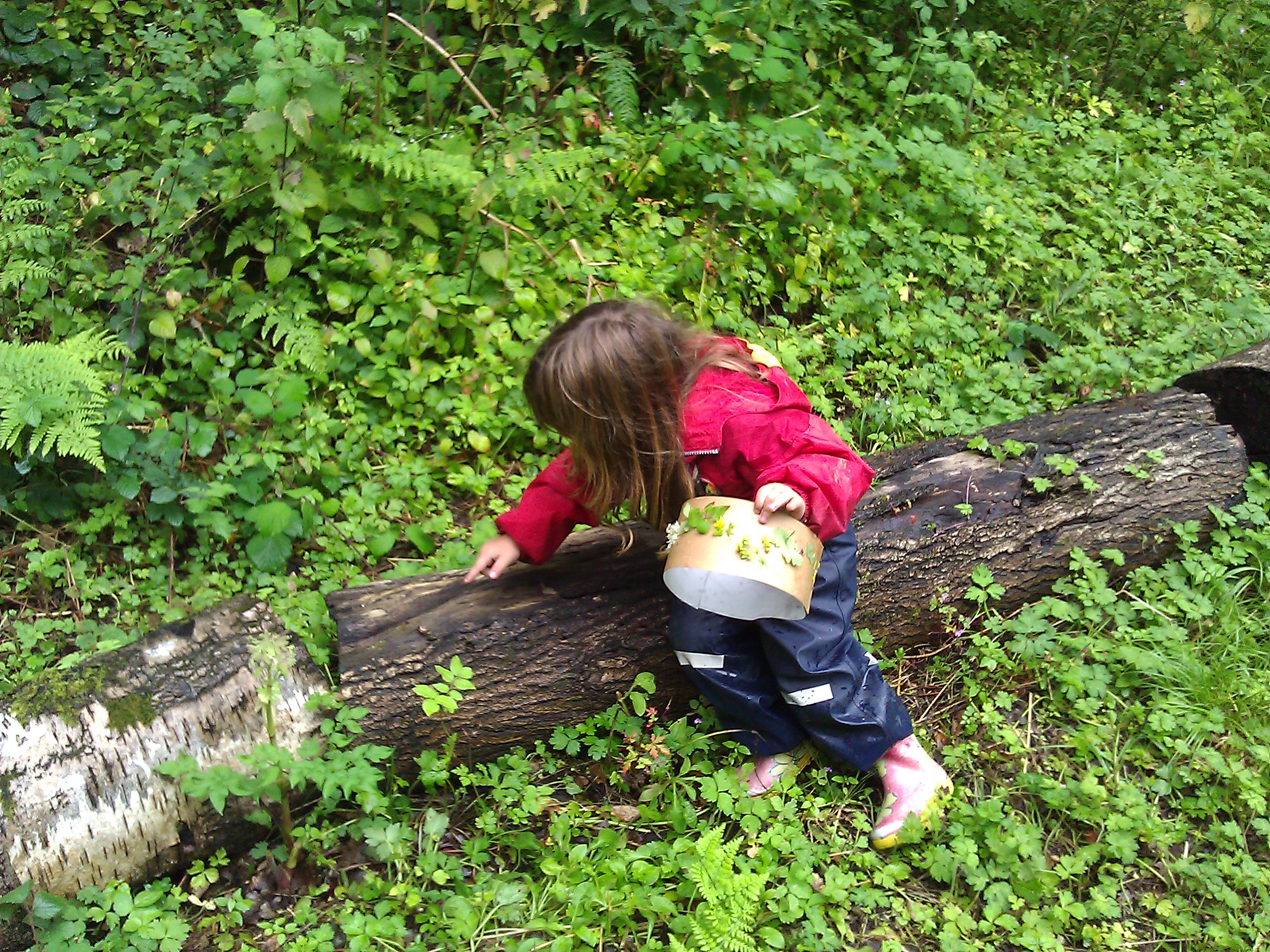
1. Give children a piece of cardboard with double sided sticky tape on and get them to make a hat collecting natural things.  This could be free choice or maybe have a colour theme.  You could ask children to create a pattern eg. large and small things or find specific items to make their hat.

WP_000553

2. Put double sided sticky tape around the top of your child’s wellies and ask them to collect items of interest and stick them to their wellies.

3. Take magnifiers or bug jars and look for creatures. Take photographs so that you can identify them when you get home.

Look Mummy I found a snail

WP_000552

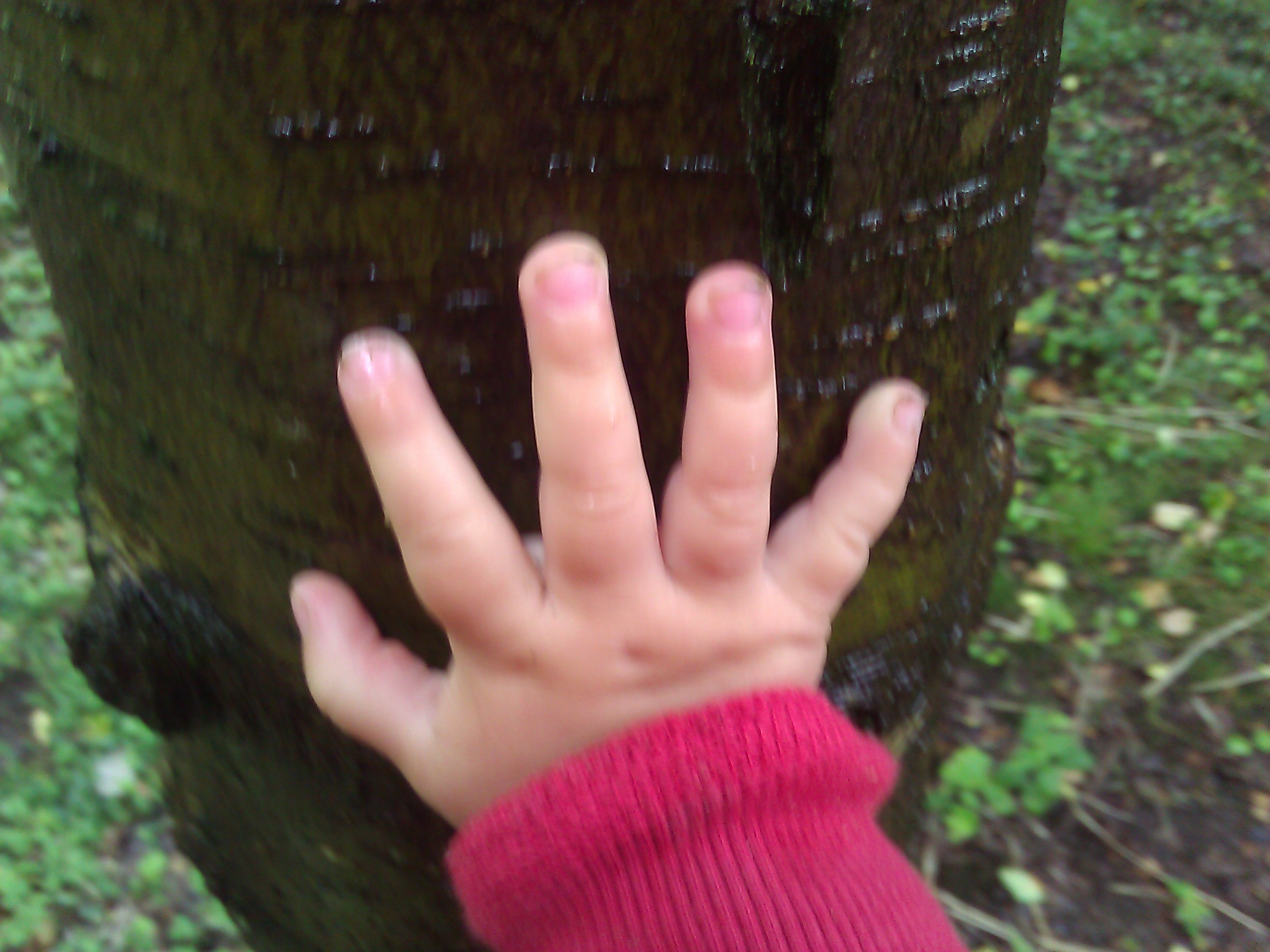
4. Young children will enjoy exploring the textures of things, moss, long grass, tree trunks, mud.  Give children a textural treasure hunt – find things that are soft, smooth, hard, spiky, slimy, cold, warm, rough etc. Make a feely box containing some of the textured things or use a blindfold and ask children to describe what they are touching.

hands on a tree.

5. Give children a piece of string and ask them to find and attach the following items: something natural, something manmade, something colourful, something heavy  and something with an interesting shape.  Hang a line of string between 2 trees and hang the completed pieces from it to make a natural work of art.

6. Build a fire, toast marshmallows on whittled sticks or bake potatoes in the bottom of the fire.

WP_000562

7. Go on a treasure hunt

WP_000568

8. Play in the mud.  Take tools and  to see what you might find or stamp and feel the texture of wet gooey mud. Find a stick and draw or write in the wet mud, or take large sheets of paper and use mud to paint with – use fingers or sticks to apply the mud.

3F16D16F

9. Collect natural materials to make a picture or sculpture .  Make a frame from sticks or stones and ask the children to make a picture inside it using what they have collected. For the youngest children let them arrange leaves into a nest or sticks or stones into a pattern.

Oct 07 045

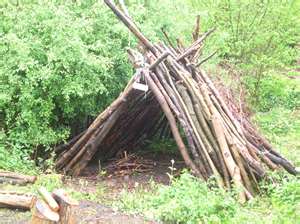
10. Build a den.  Use sticks and build a den in the style of Eeyore’s house.

You might also want to check out some of these ideas


Finding the alphabet in nature

Fairy houses in the woods

A natural playground

Children Connecting with nature

Mud faces