Category Archives: active learning

How Do You Know When You Have Found the Perfect Preschool?

muddy feet
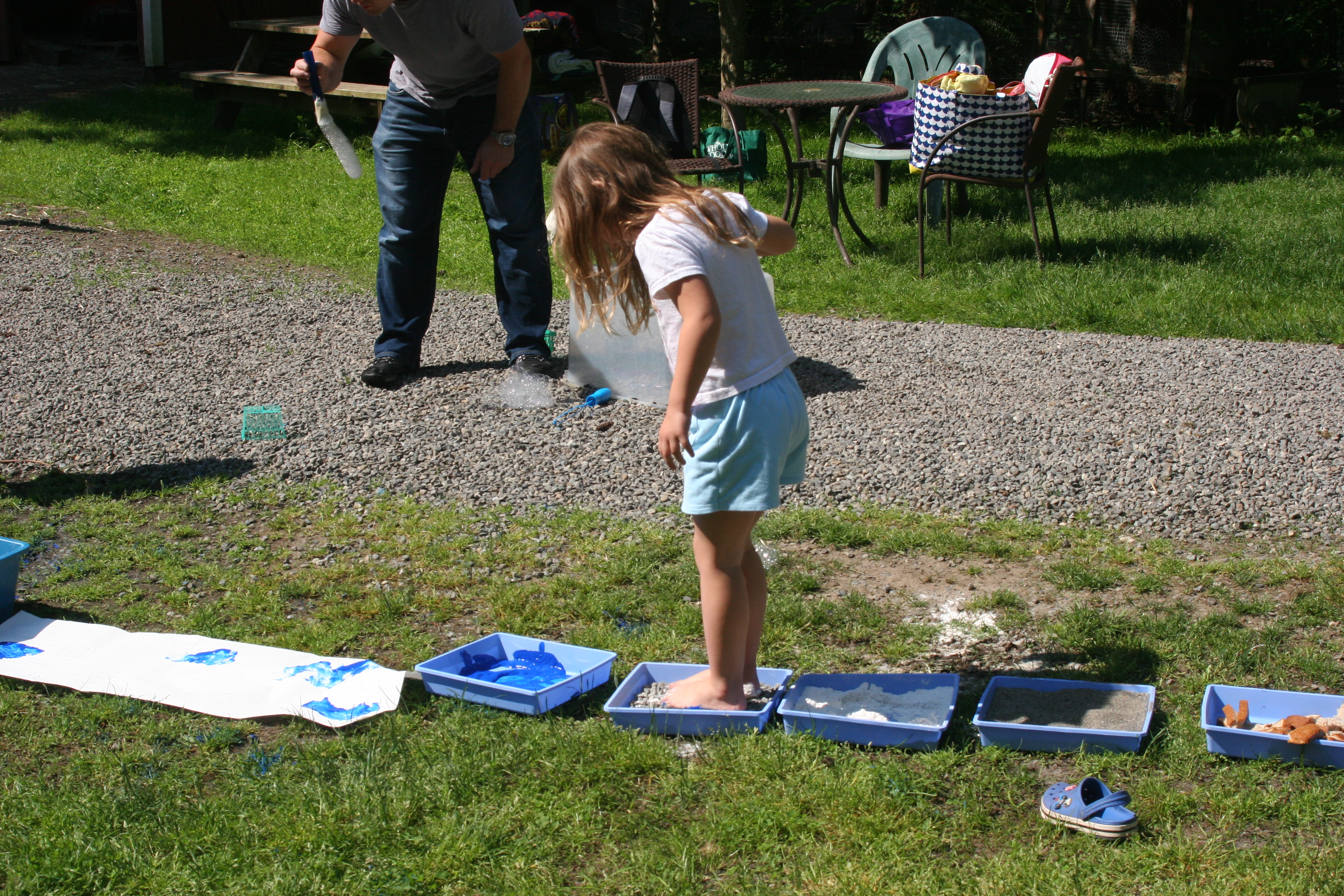
A place where I can kick my shoes off and sink my toes in the mud.

Regular readers will remember that when I moved to the US, I struggled to find a preschool that I was entirely happy with.  I became so disillusioned that I decided to home preschool for a year. I’d lost faith of ever finding a preschool that valued play, independence and individuality above academics and rigid schedules until a friend told me of a preschool situated on a farm.  The preschool shared my belief that children learn best by doing things that have relevance in their lives through exploring, discovering and creating.

The school is so popular that it was a whole year before I had a chance to visit and see the school for myself. Children were busy pulling apart sunflower heads on the covered deck area whist others moved freely between the different activities indoors and outdoors. The teacher’s enthusiasm and passion for both the children and the setting was evident immediately and a bubble of excitement rose up within me. Our name was put on the waiting list for Sept 2015 but before Christmas a place became available in the co-op class so finally my youngest daughter had the chance to attend.  This was perfect as I also had the chance to be involved in this wonderful experience as a parent helper.
ducklings

There was little doubt in my mind that this was the perfect preschool for my outdoor loving daughter. My expectations were high. I have been fortunate to teach at a highly acclaimed nursery in the UK and to visit the best preschools in my local authority as an advisory teacher. My experience of this school has surpassed all my expectations, I couldn’t have hoped for a more perfect preschool for my daughter and I am only sad that my older daughters didn’t have a chance to go there. After she started, it just seemed to get better.  Regularly she would come home covered from head to toe in mud.  To some parents this would be horrific but to me it meant she had the freedom to be herself and have fun.

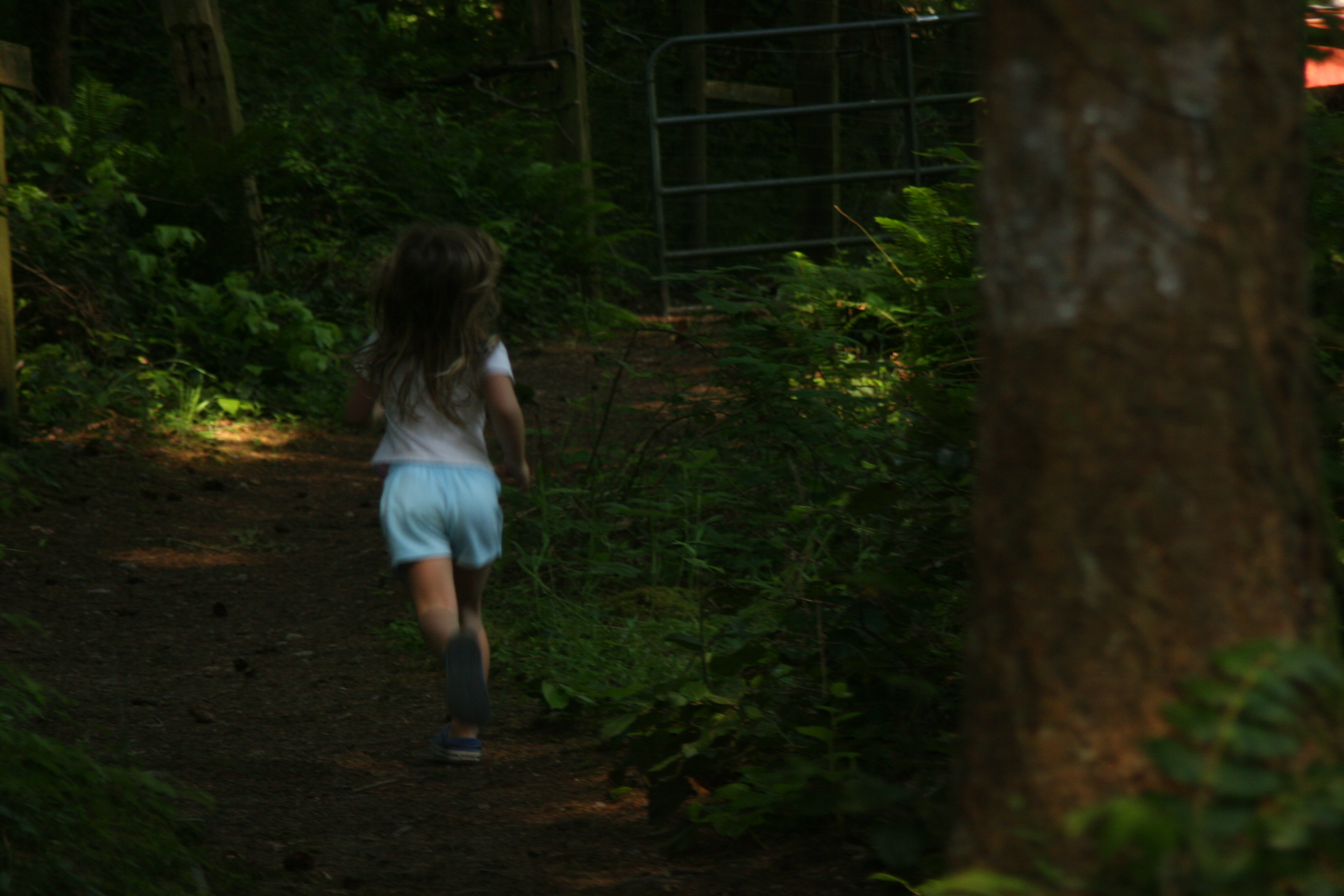
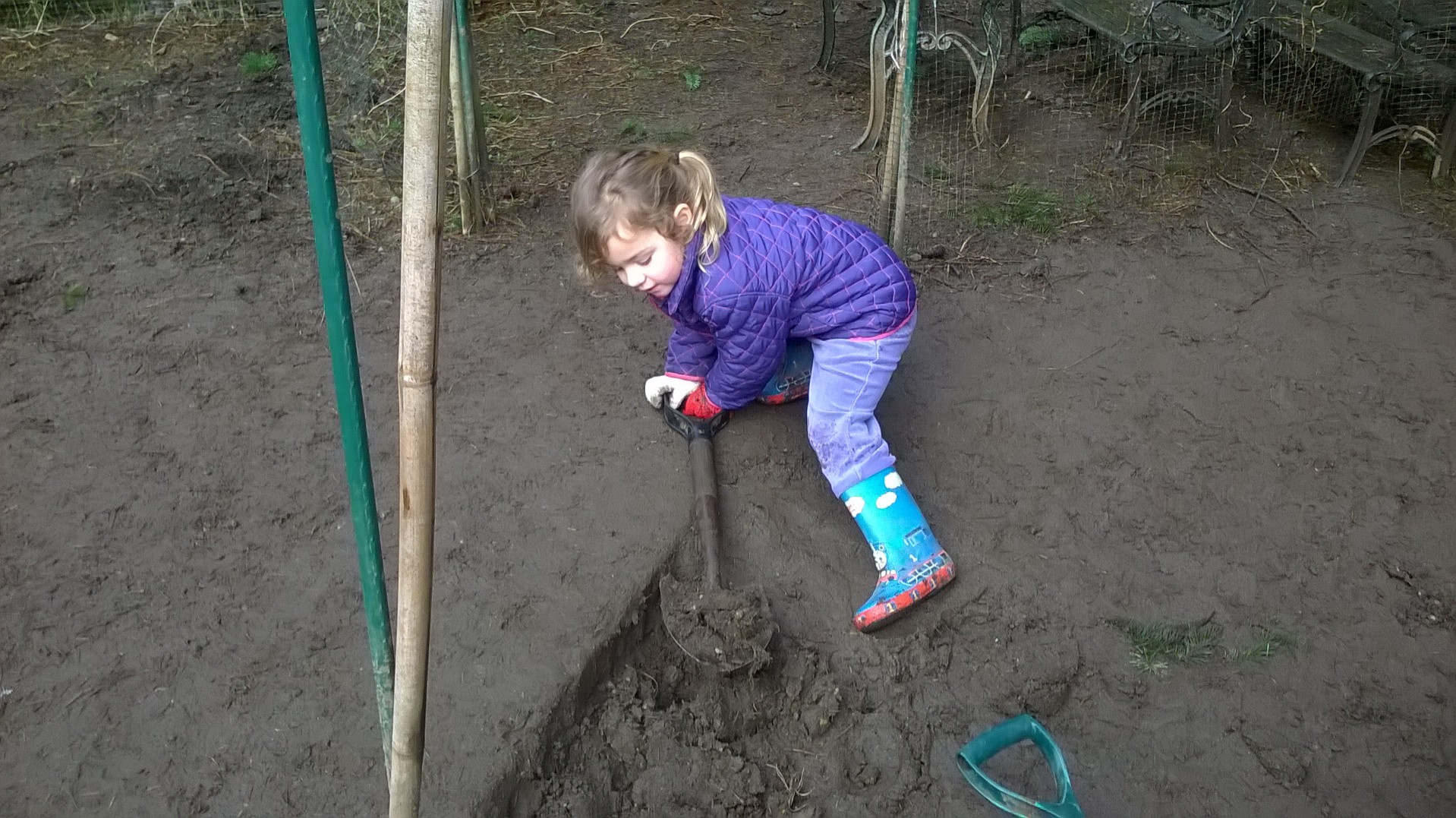
Being a part of the co-op class means that I get to help out once a month. This is the most exciting part for me as I get to join in.   I love the covered deck area which enables the children to play outdoors all year.  The children explore the whole farm for the 2nd part of the session, mud, water, animals, climbing and balancing. They are actively encouraged to take risks.
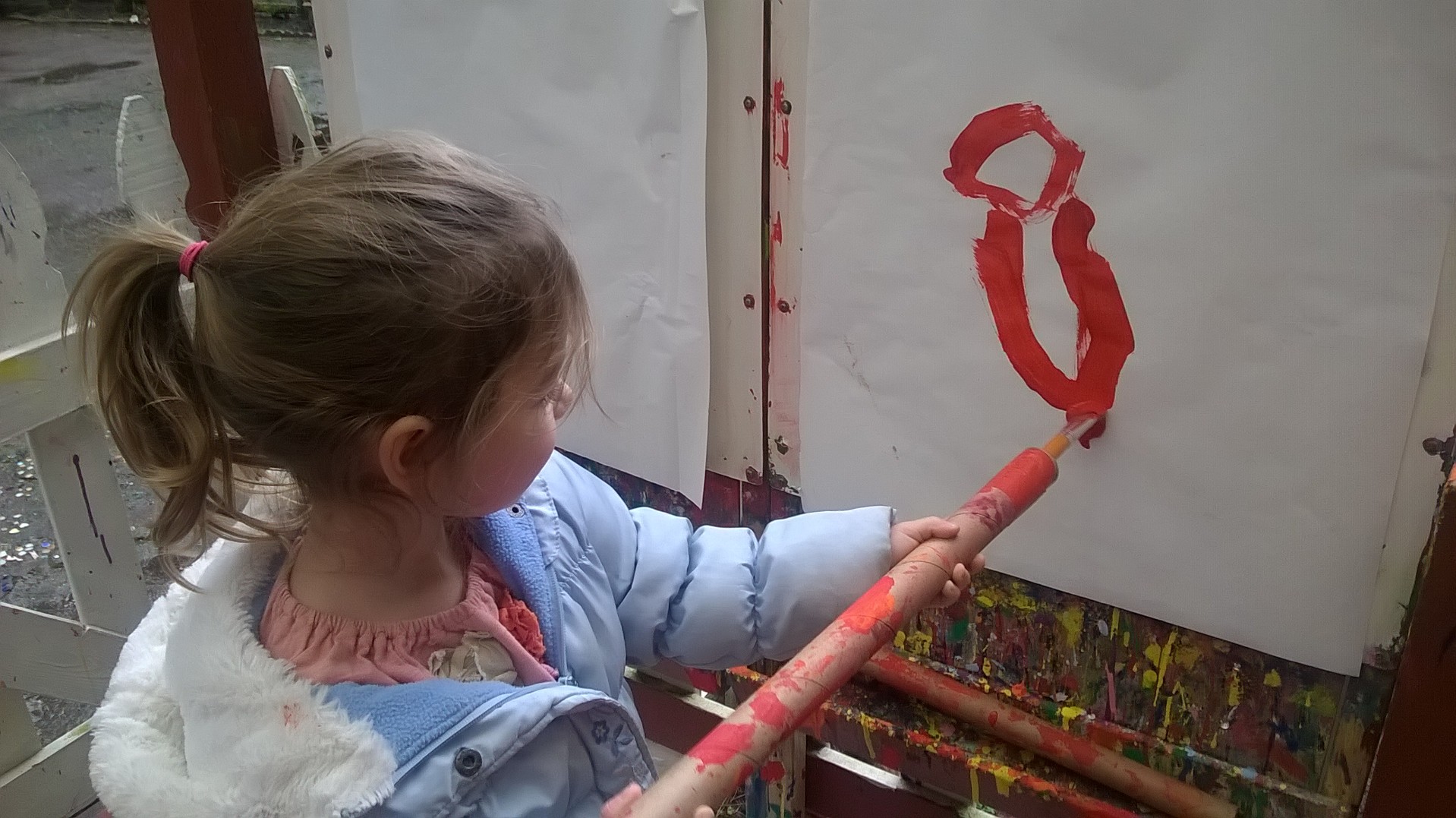
long paintbrushes.
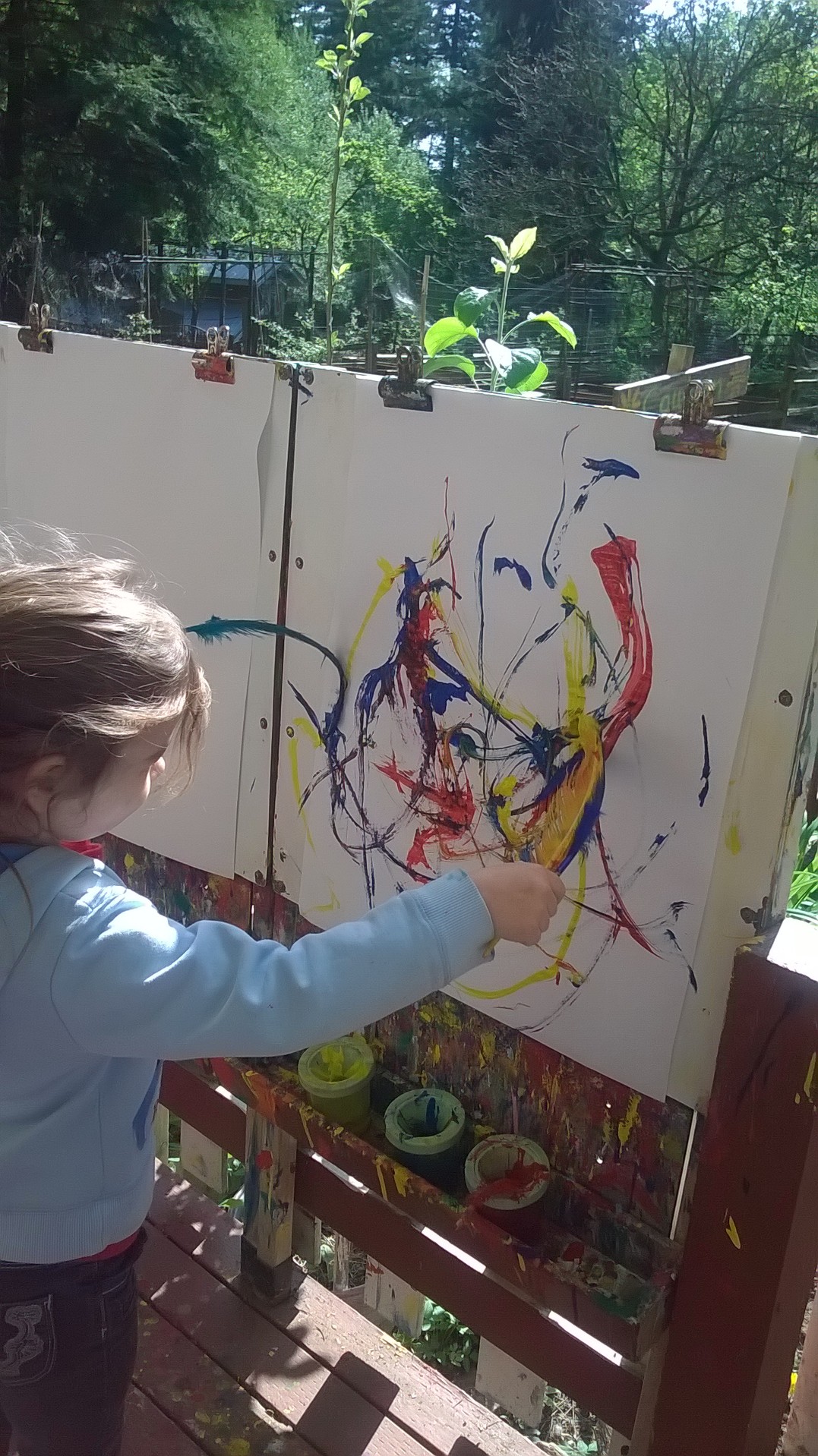
As we arrive my daughter always chooses to paint . She liked this painting activity with paintbrushes placed on extended poles.
painting with feathers
Painting with feathers

What makes it so perfect?

1. Children are individuals

Small classes and the dedication and experience of the teacher, mean that she understands each child as an individual. My daughter who is uncomfortable speaking in a group or to unfamiliar adults is given time to think about what she wants to say, often being presented with a question at the start of a session and returning for a response later.  The child who hates to get his hands dirty is offered alternative tools and all the materials are open-ended so that children can use them as they see fit.

2.Children are competent

Children are always encouraged to try things for themselves, even when they ask for help they are first encouraged to try.  The children are trusted to use adult tools for woodworking and tinkering, peeling vegetables and cooking.  The teacher shows them how to use the tools safely and responsibly and thereon in they are trusted with them.  The children cook their own green eggs and ham on the tiny stove, they dig with metal shovels, they observe candle flames and peel carrots with a peeler.  Outside they are permitted to climb trees, feed the animals, hold guinea pigs and dig in the mud. The children are trusted to handle precious materials like birds eggs, chicks and nests.
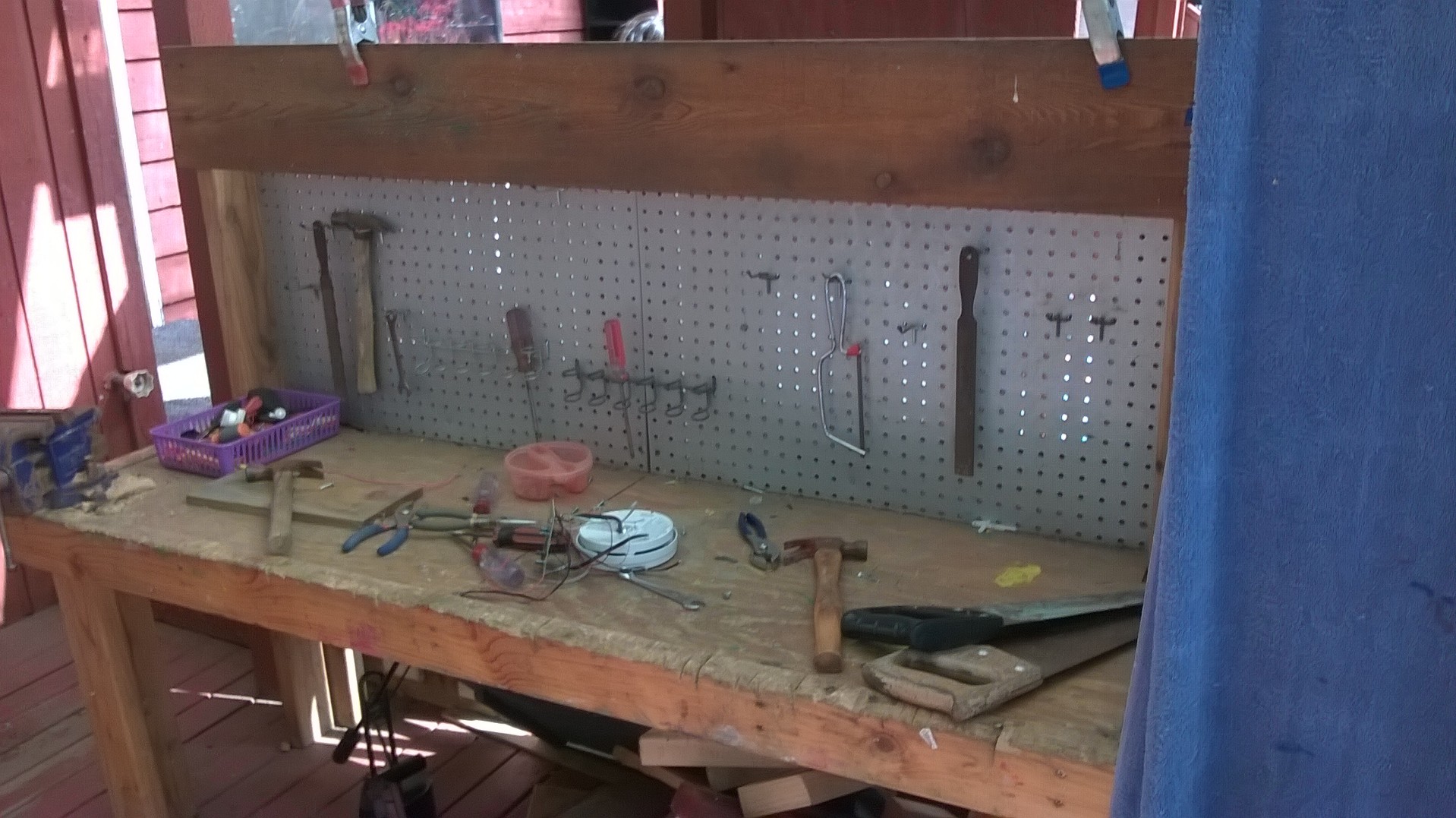
WP_20150501_004

This tinker table is always available. I regularly see children sawing pieces of wood placed in the clamps, hammering nails or taking apart electronics with a screwdriver. In the nursery I taught at we had a tool bench with real tools but we weren’t confident enough to leave it out all of the time. I have never seen a child have an accident or do anything dangerous with the tools.
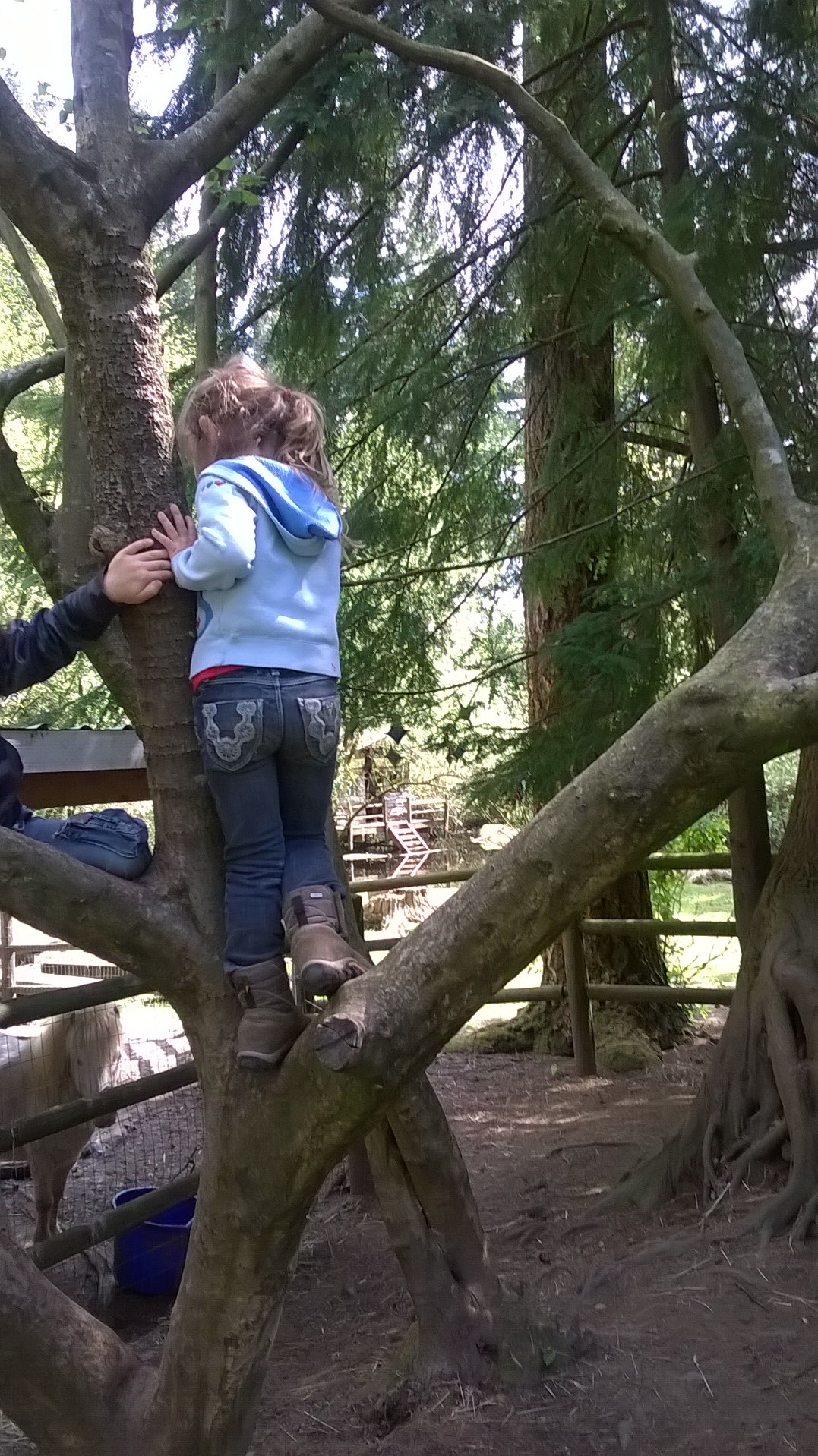
climbing trees at preschool
My daughter loves to climb trees – I’m not sure I could find anywhere else where this would actively be encouraged.

3. The Preschool fosters understanding and respect for nature.

Many of the activities involve the natural rhythms of the farm, collecting the produce, understanding the cycles of the plants and learning about the animals and creatures they find.
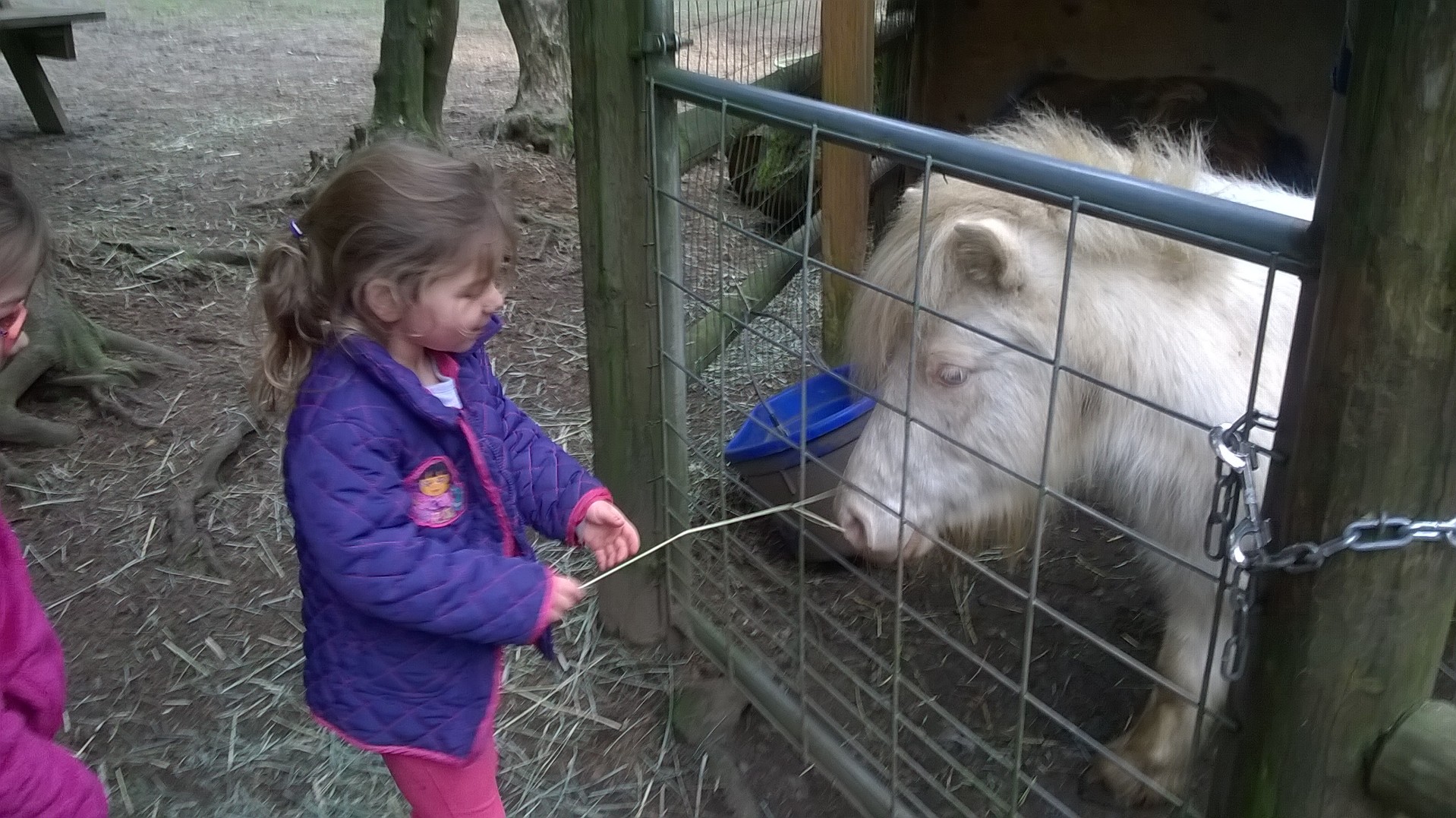
WP_20150225_002

After the first few sessions, my daughter told me they had unicorns at preschool but that it was too small to have grown a horn yet. A preschool with unicorns? Could it get anymore magical?
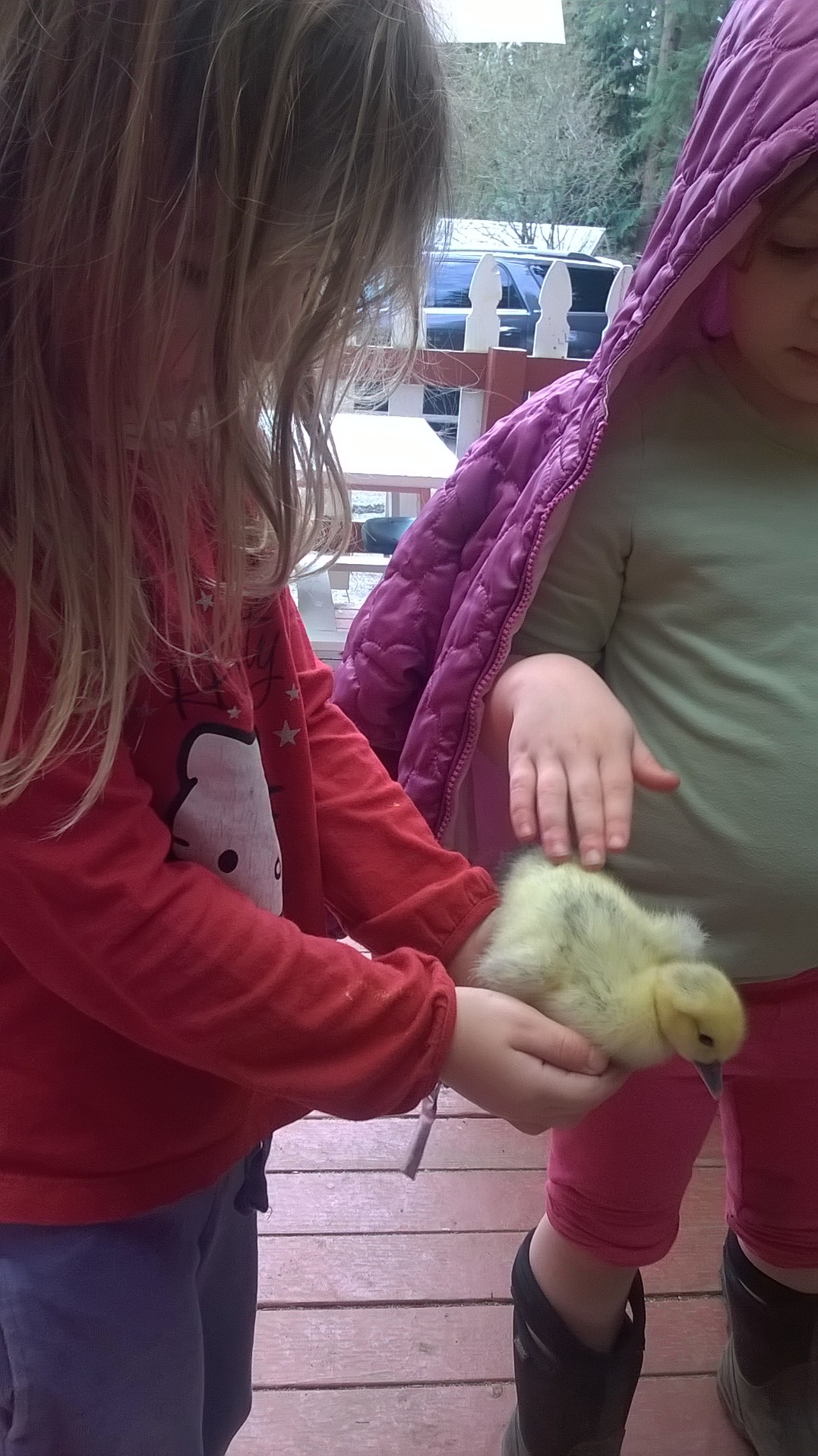
ducklings.
When the duck’s eggs hatched the children were allowed to hold them.
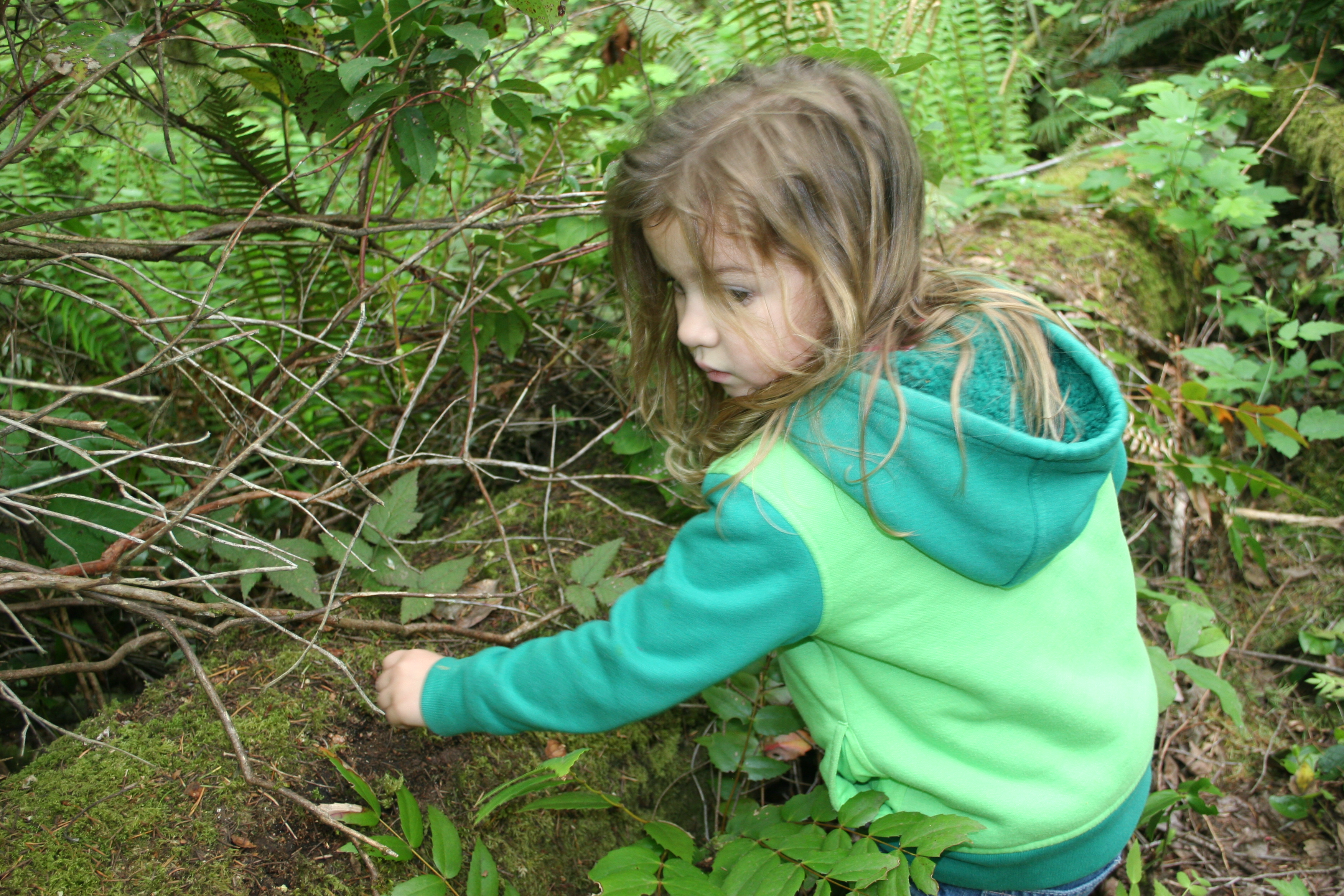
bug hunt
A bug hunt in the woods

4. Children’s thoughts and opinions are important

Each session the children are asked a question and the answers are recorded for parents to read on the wall outside.  The children listen to each others responses and discuss them with respect.  The children’s choices are respected as they are presented with a number of activities to choose from at leisure. They also have opportunities to choose the songs they will sing and are confident at asking for things.  The children are offered a snack, they choose when and if they would like to eat it .

5. They have fun.
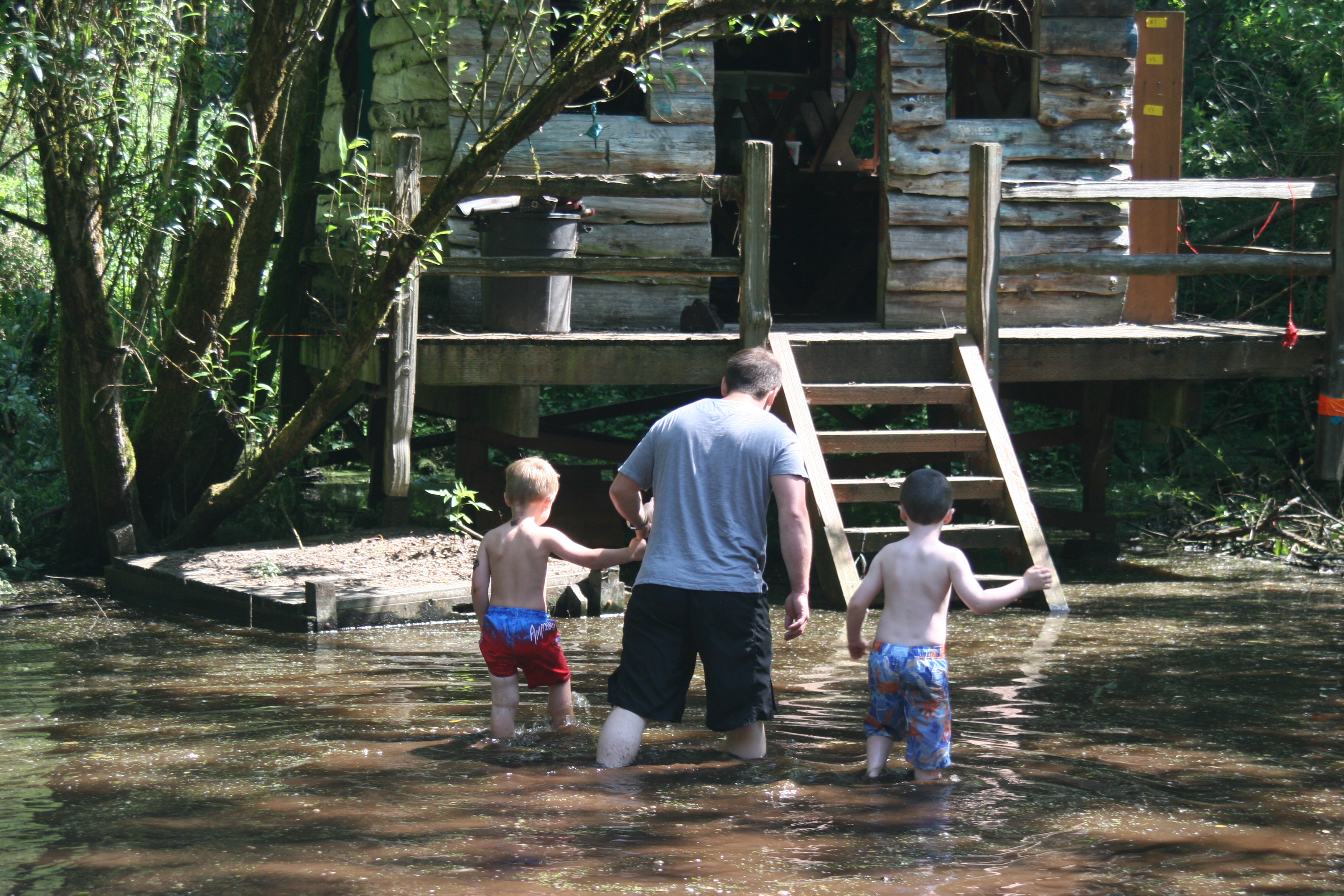
wading in the swamp
On the last day of school, parents are invited to join the children as they wade in the swamp.
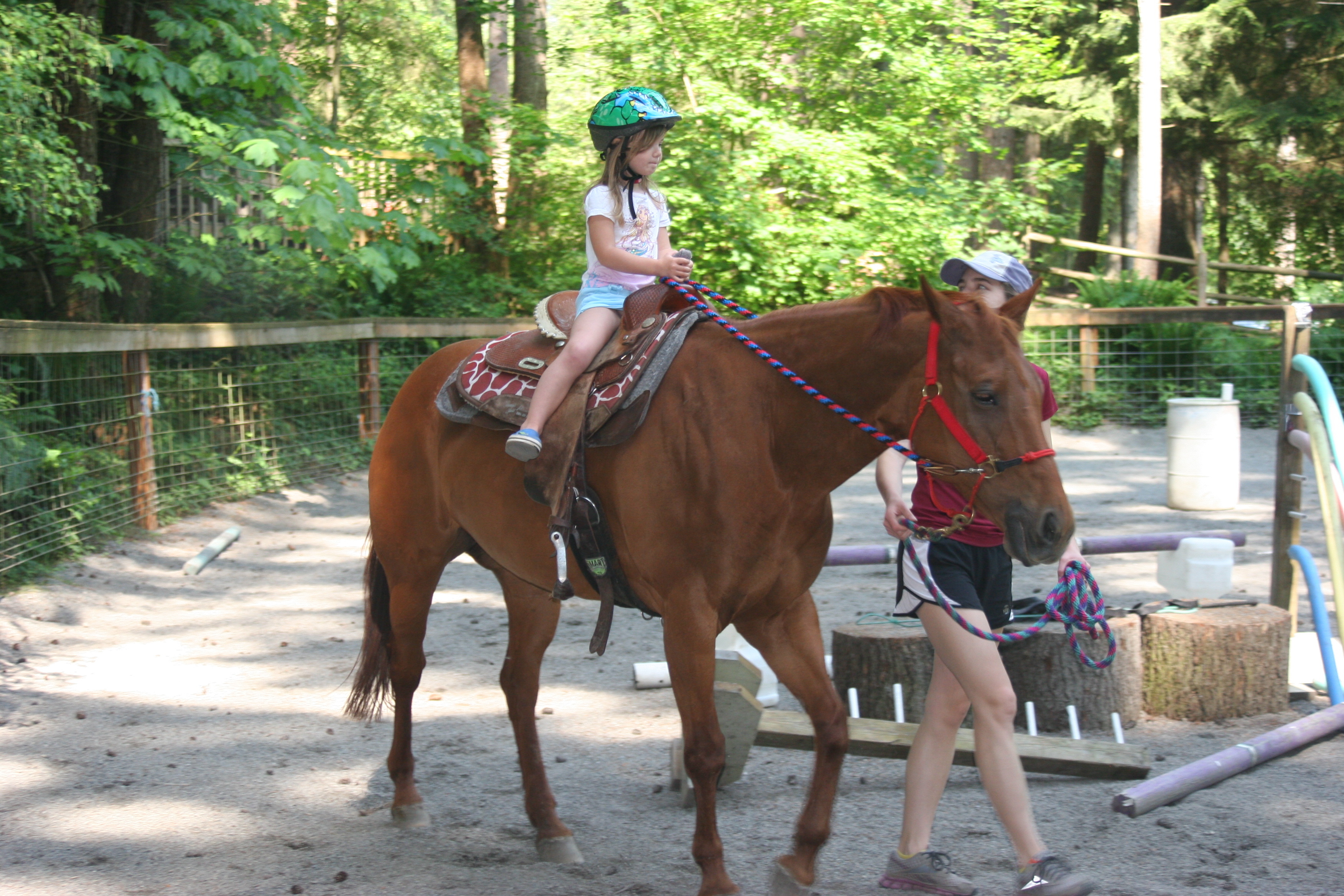
horse riding on the last day of term

.

Best of all, I feel that my daughter experiences something here that she would never have the chance to experience elsewhere.  I feel so fortunate to have found this preschool and that my daughter has one more year there.  When our time is over I will be so sad but I hope I can remember her teacher’s words of wisdom.
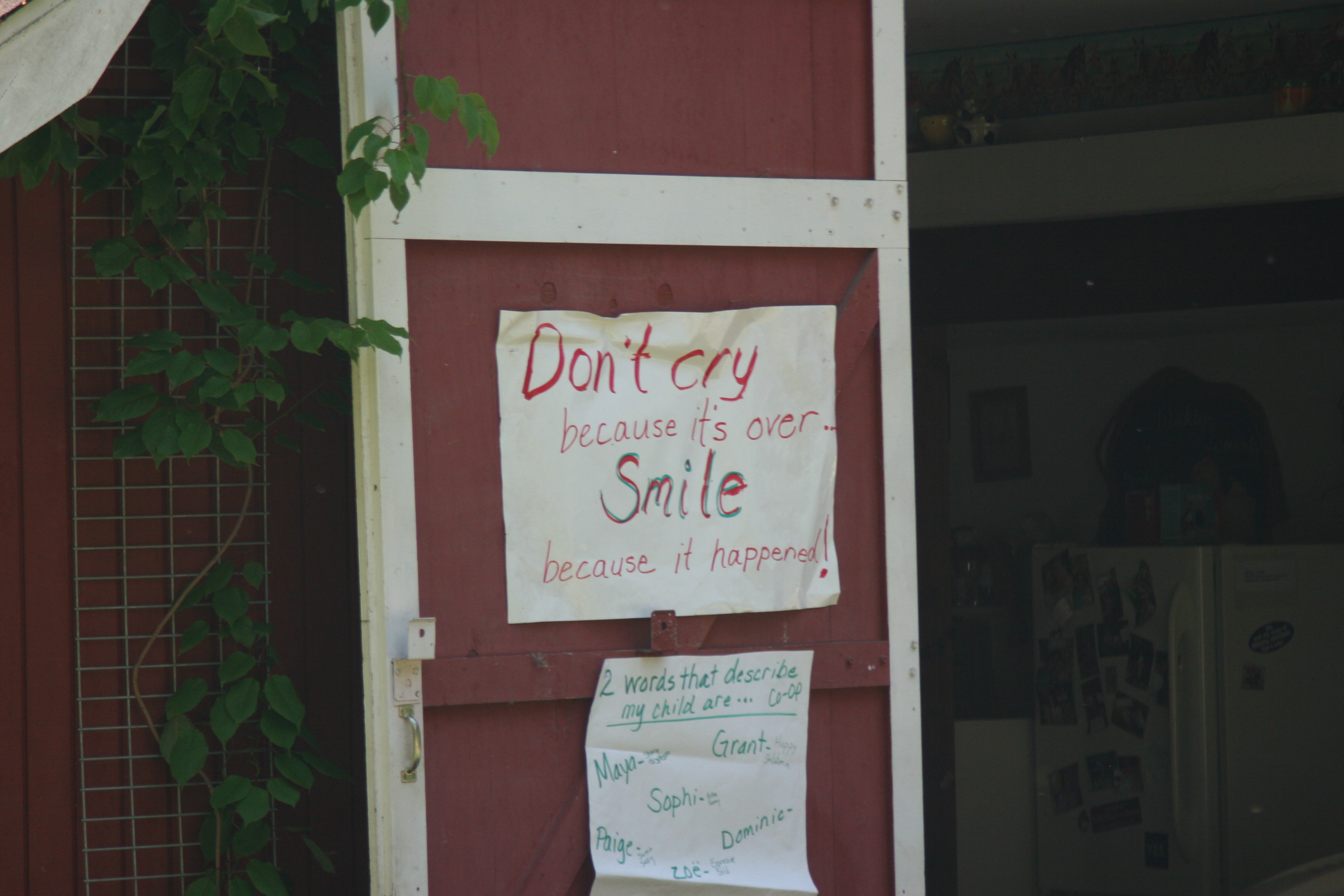
IMG_0626

A Natural Playground

Young children have an immense curiosity about the natural world – the challenge is to stop them from losing it! Nurture that precious sense of wonder …….. A little empathy and enthusiasm is all you need to encourage children to appreciate wild places.

( Nature’s Playground)

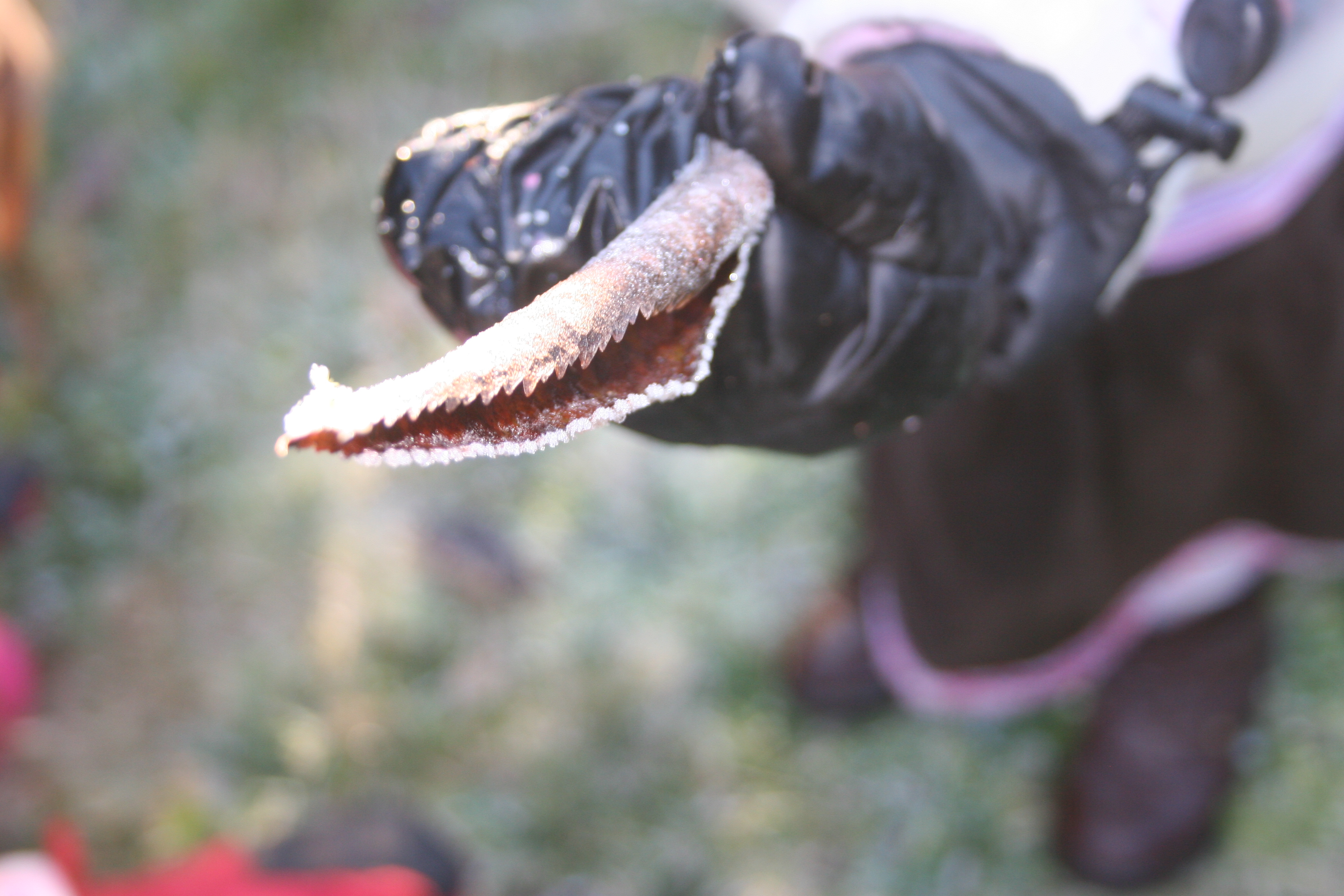
There is even frost on the leaf

Natural environments offer opportunities for adventure, which build confidence and instill bravery.

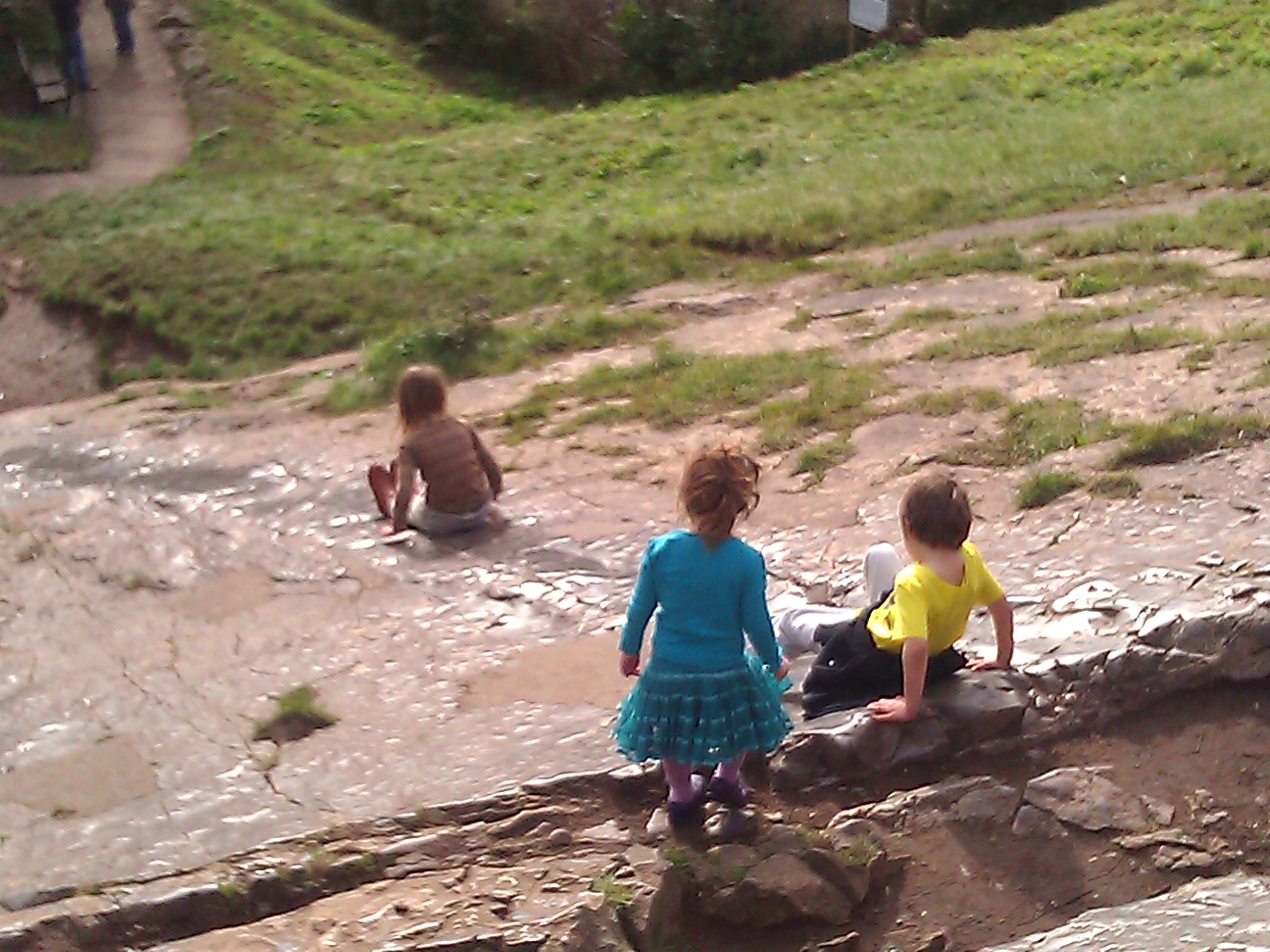
clifton slide
Take time to stop and explore. Rushing children along to the next thing, denies children the opportunity to make their own discoveries.
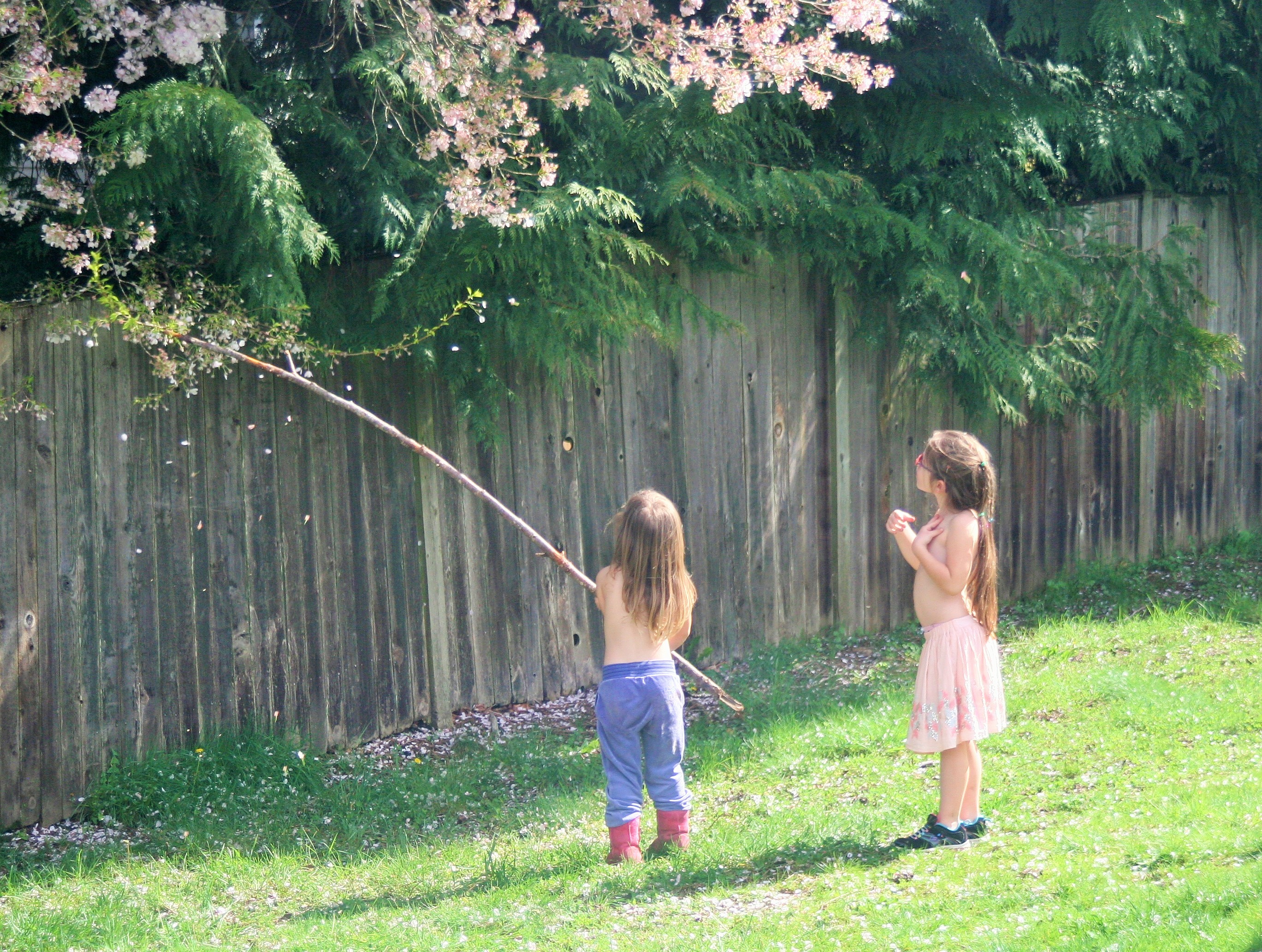
blossom
Using natural materials creatively helps us to appreciate them in new ways.

sand man
Wild places provide opportunities for quiet reflection.

musing over a blade of grass

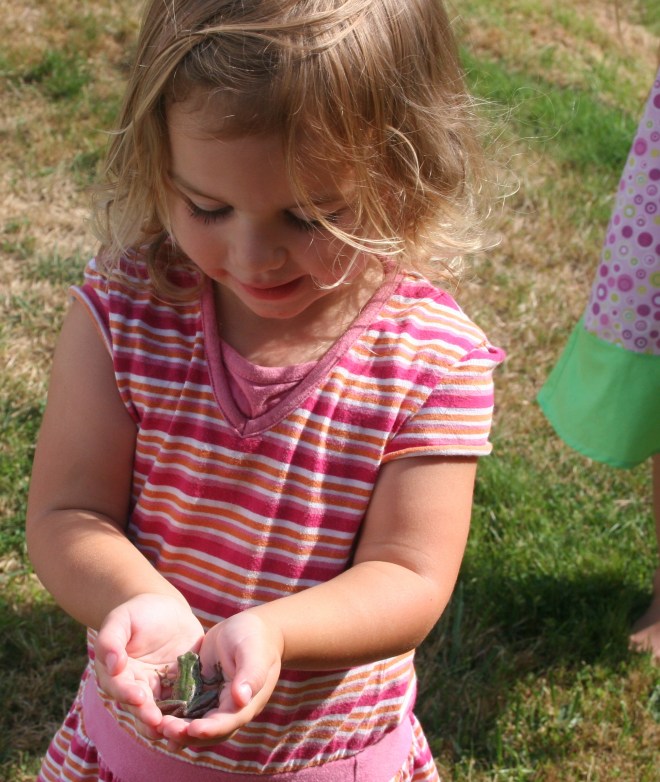
Finding creatures in their natural environment encourages respect and reduces fear.

holding a frog Explore all types of weather. Rain, snow, wind and sunshine offer many different experiences.
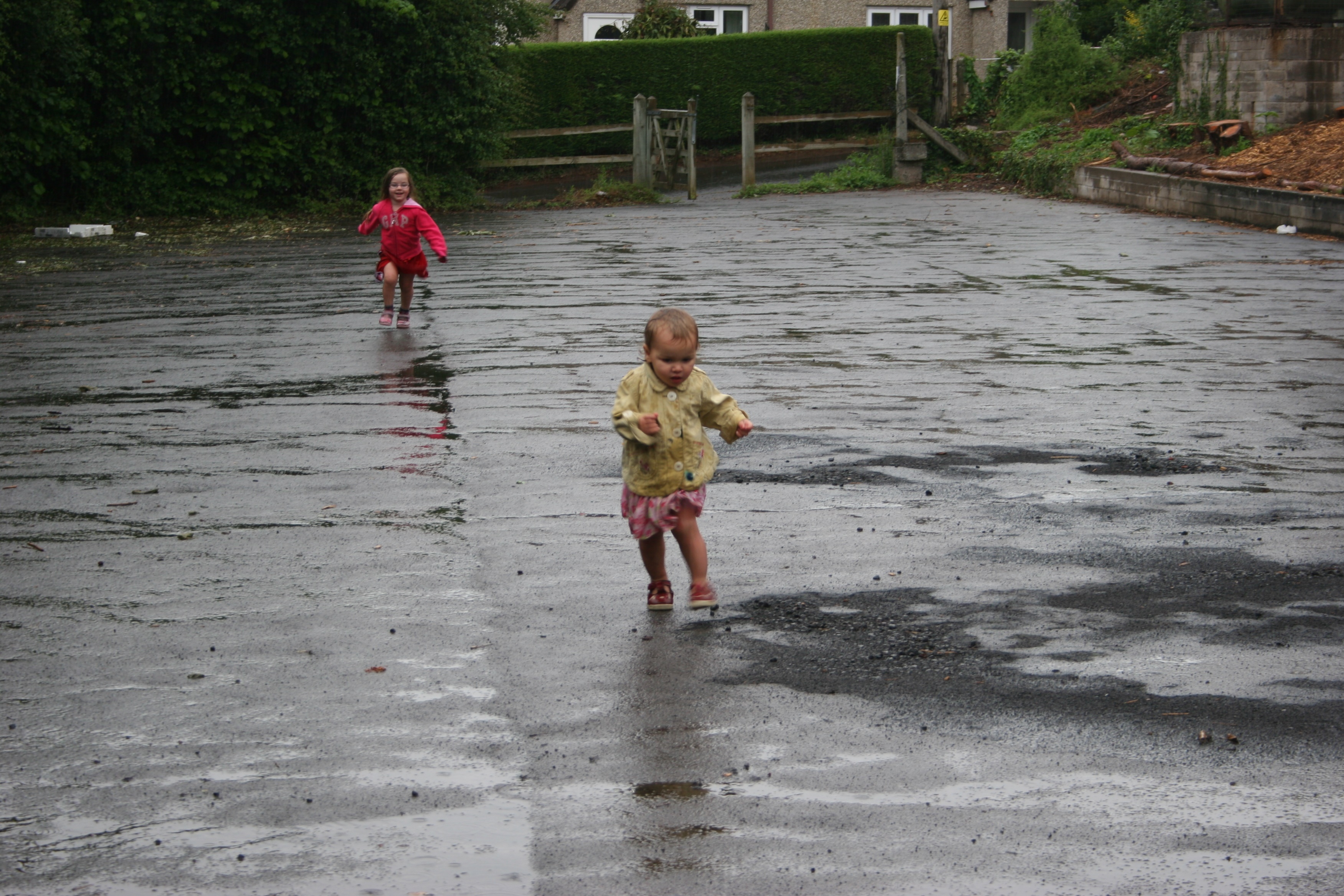
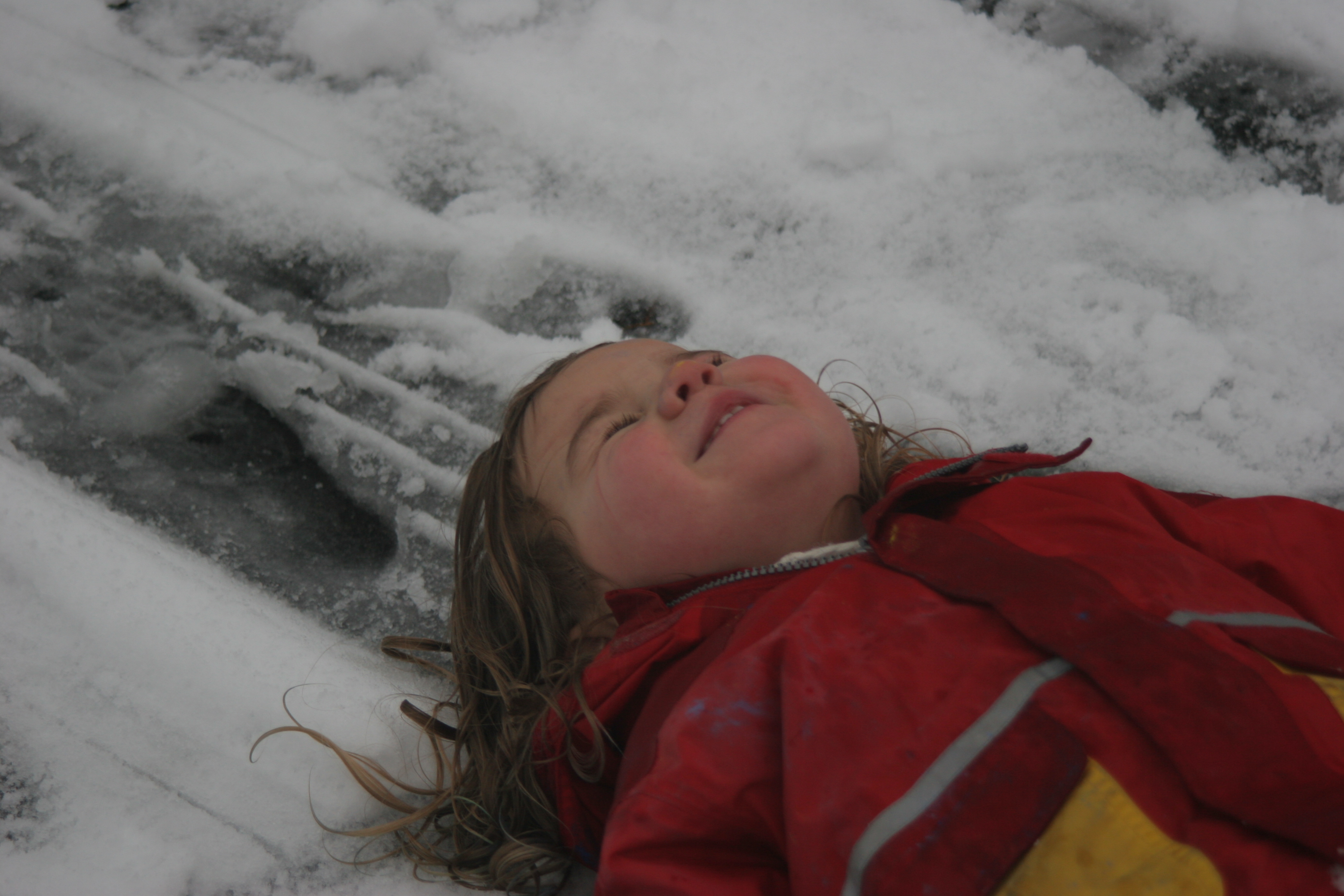
rain

I just want to lie in it

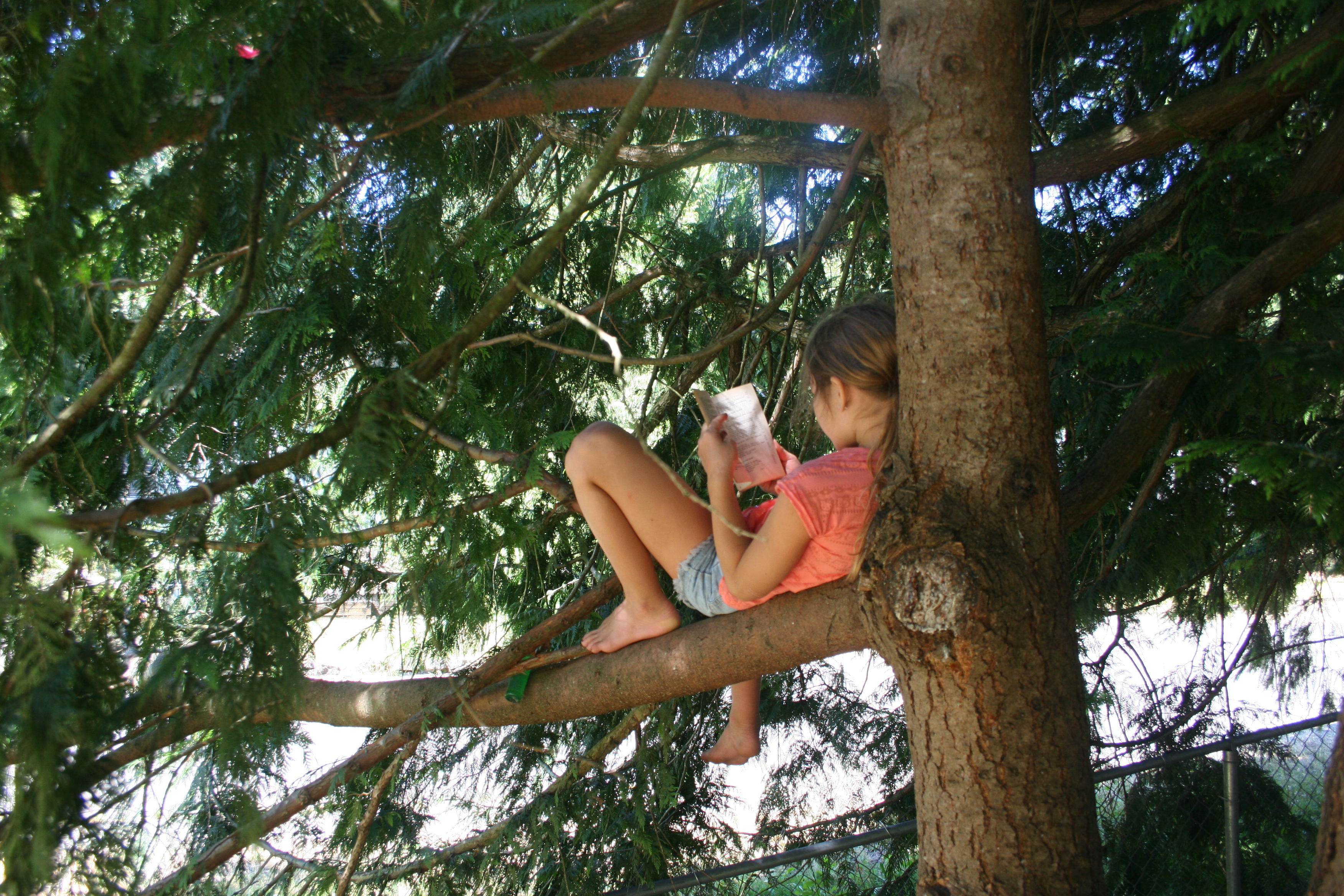
reading in the tree

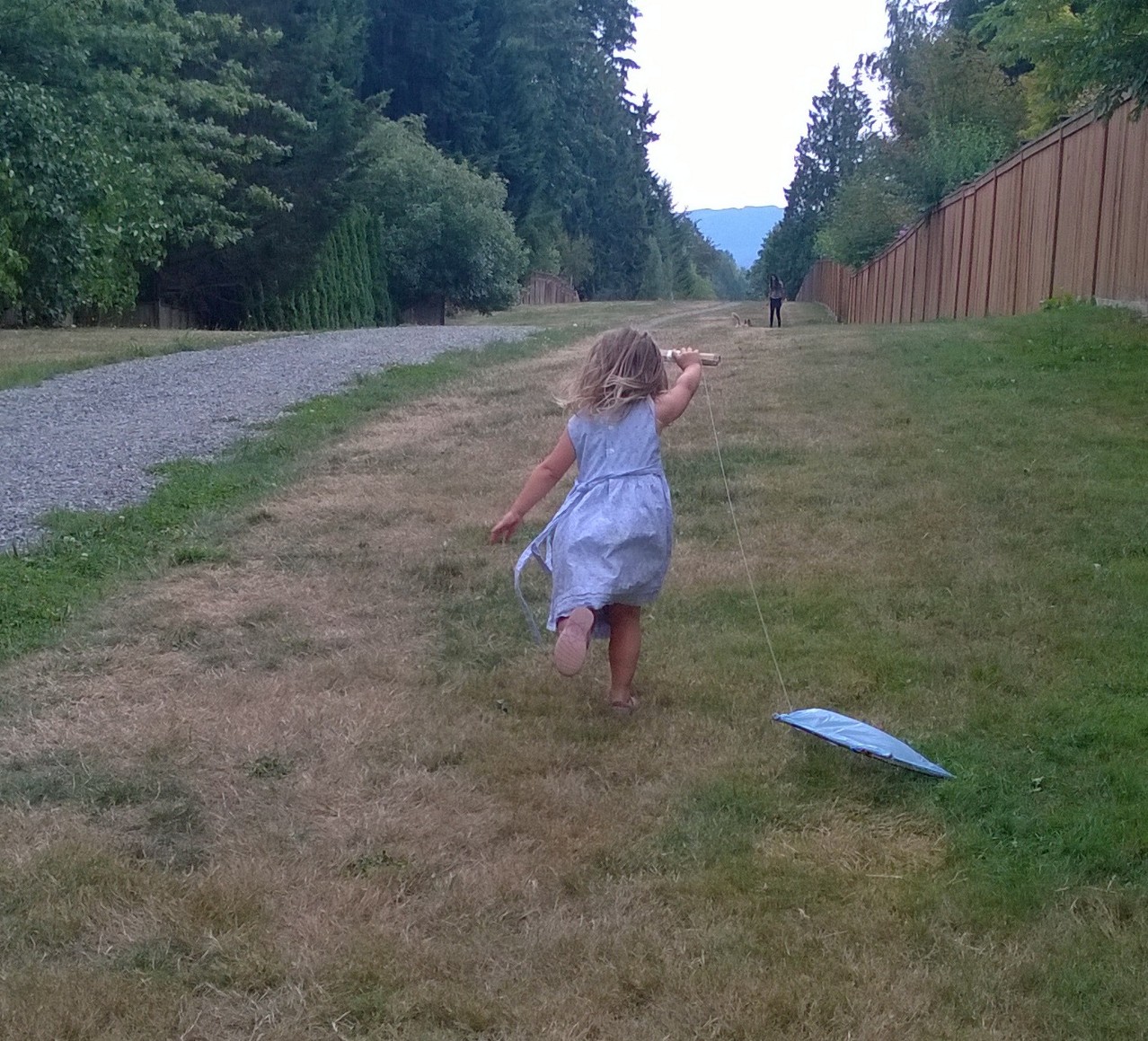
 kite(1)

Allow children time to be immersed in their experiences and they will adapt natural materials, weaving them into their own imaginative worlds.

building a bonfire

Sometimes nature is cruel but when children come across these things in the wild, it promotes discussion and allows them to navigate difficult concepts in a meaningful way.

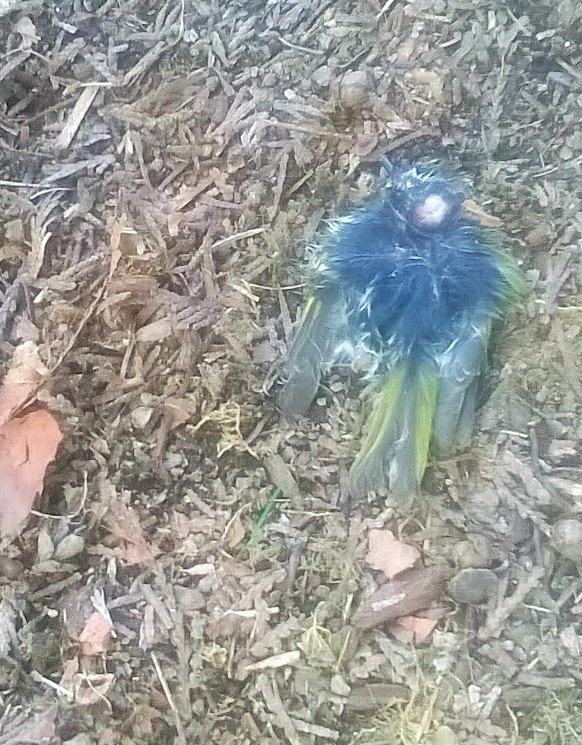
We found a dead birs in the garden. How did it get there? What shuld we do with it? We buried it under a tree.
We found a dead bird in the garden. How did it get there? What should we do with it? We buried it under a tree.

Being in a natural environment offers children opportunities to develop physical skills, through climbing , negotiating space, moving on different surfaces, reaching, touching and many more.

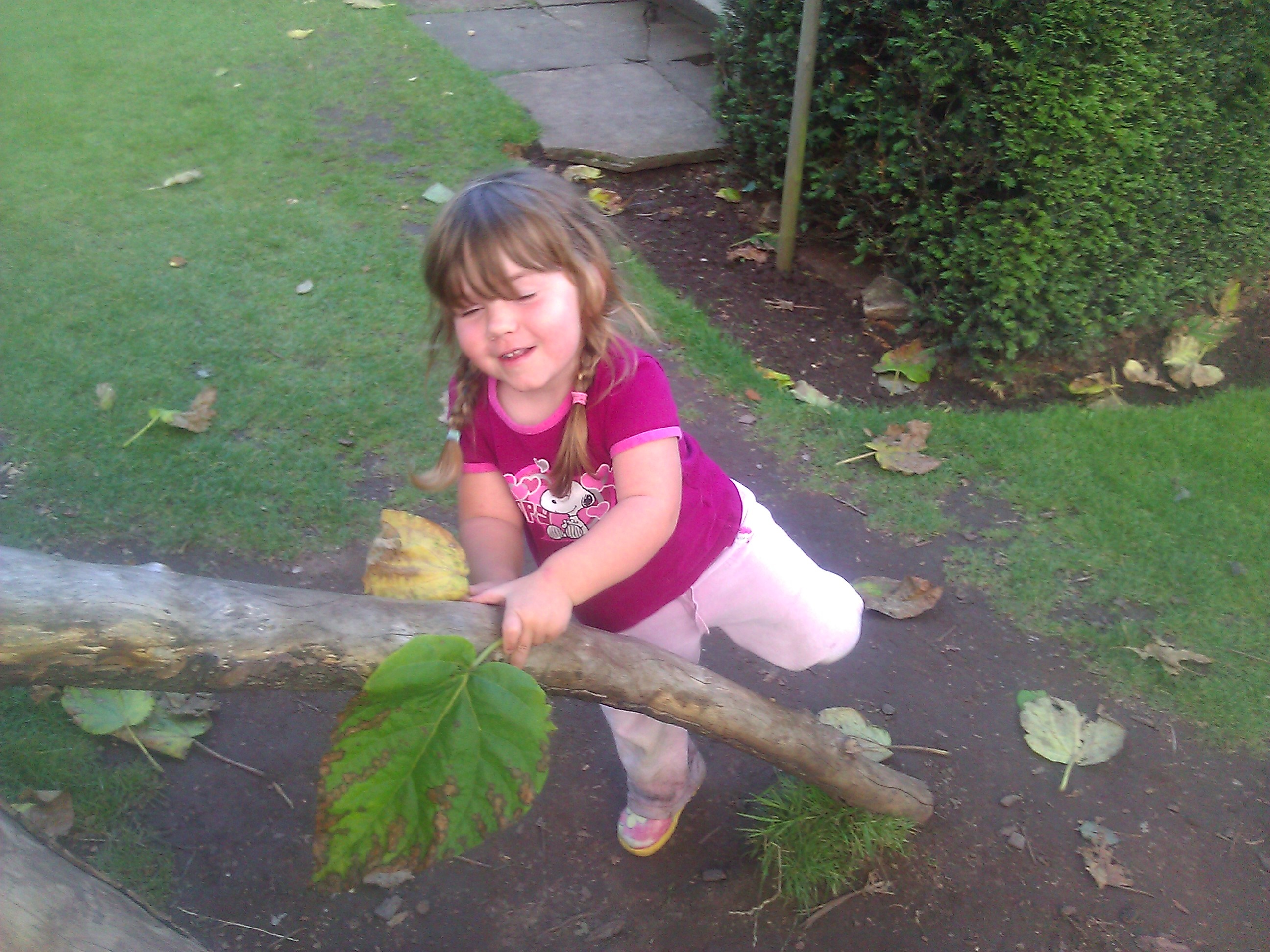
climbing tree
toddler on beach

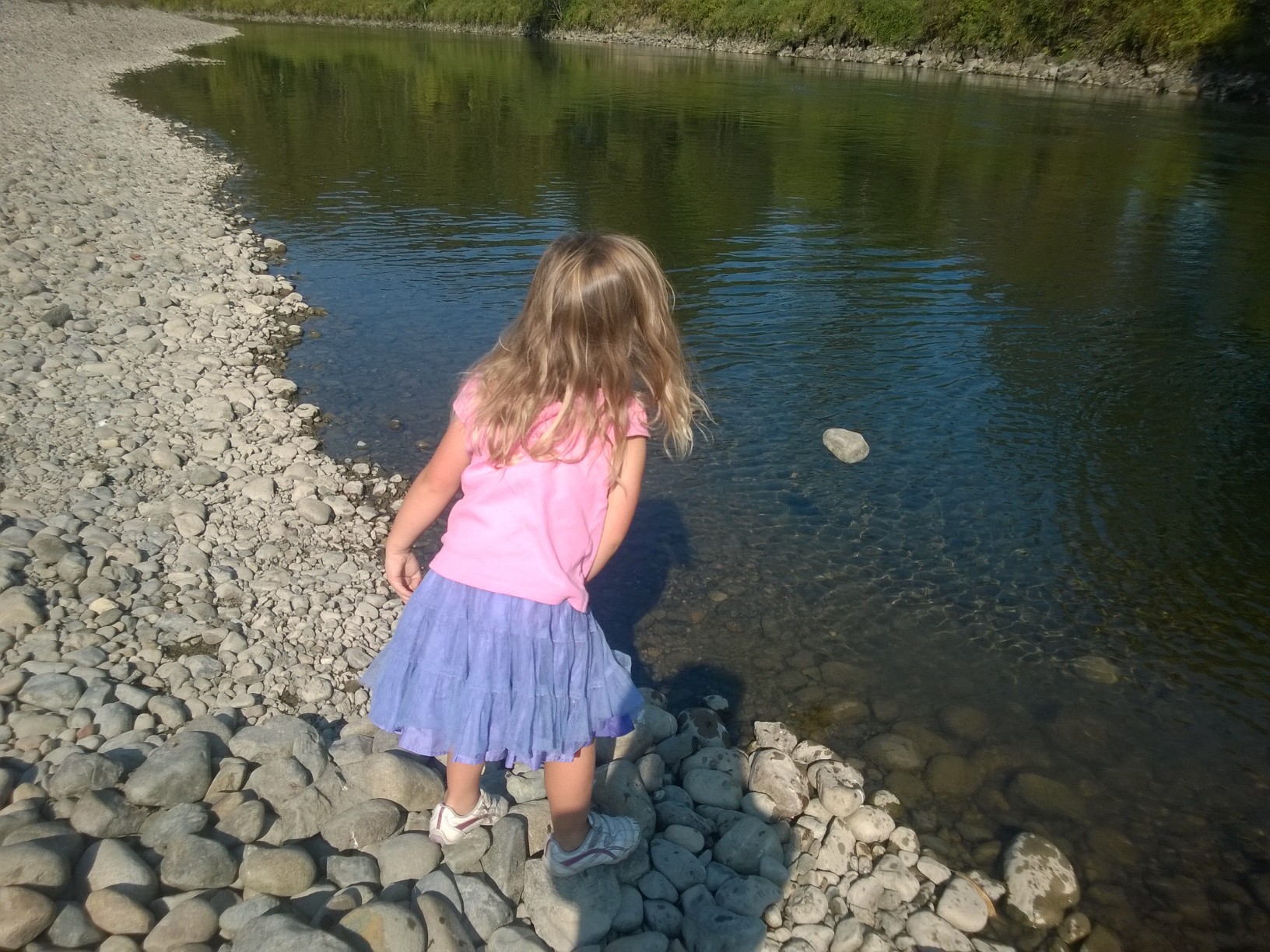
It makes a big splash. Plop!

Explore with all of your senses.

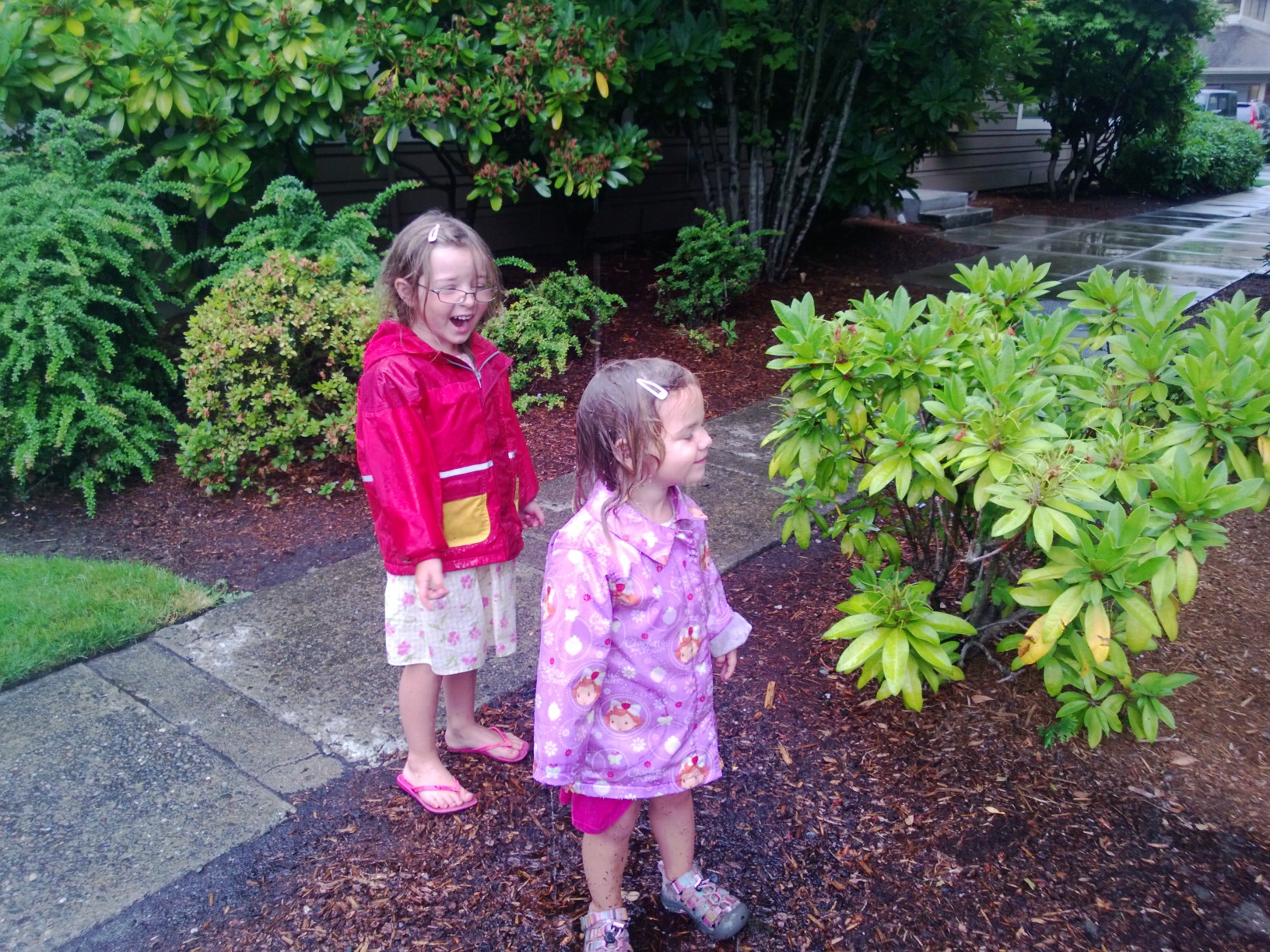
I'm going to have a shower. I'm getting very wet, now the rain is staying on me.
I’m going to have a shower. I’m getting very wet, now the rain is staying on me.

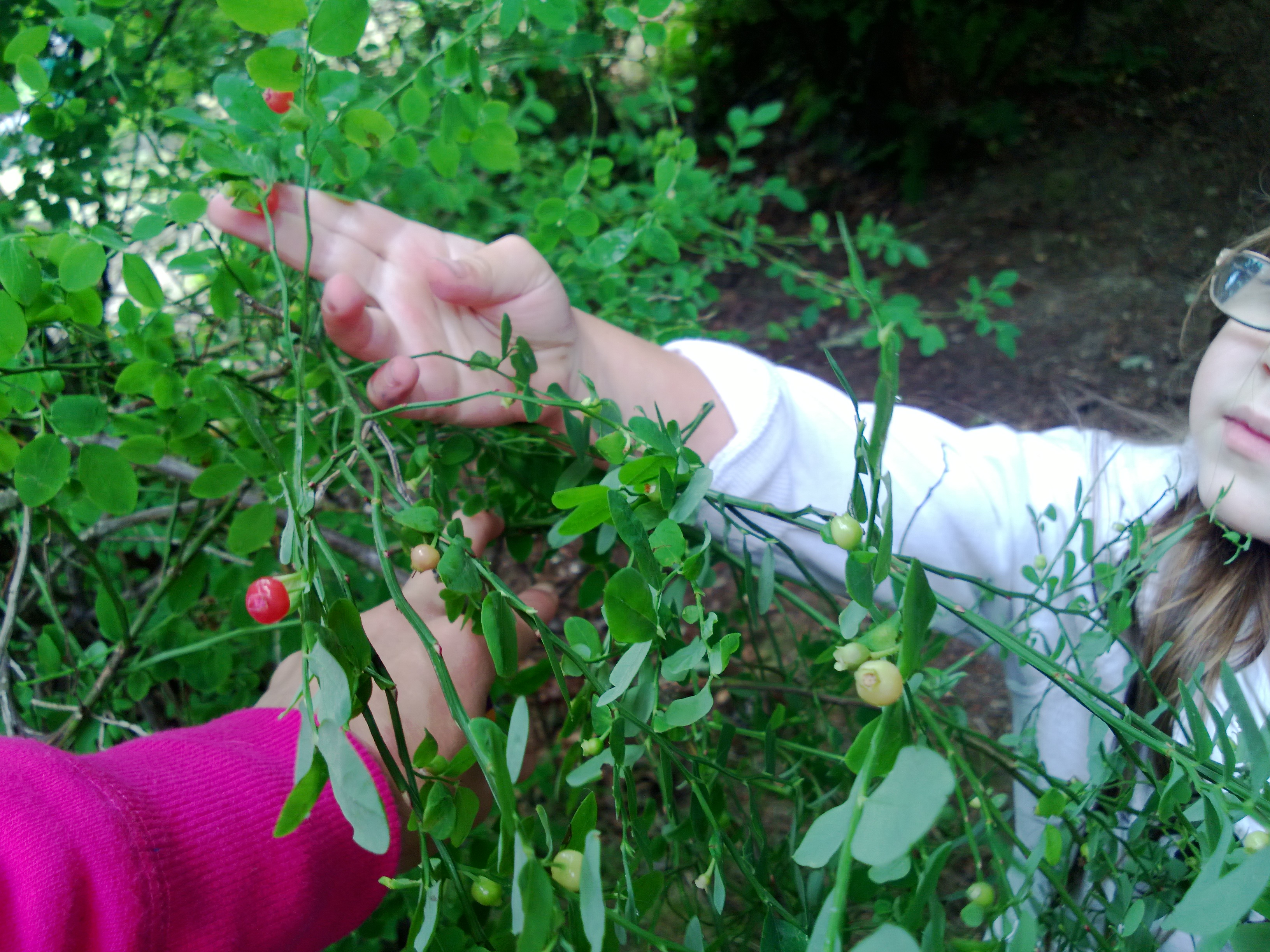
picking huckleberrieshands on a tree.

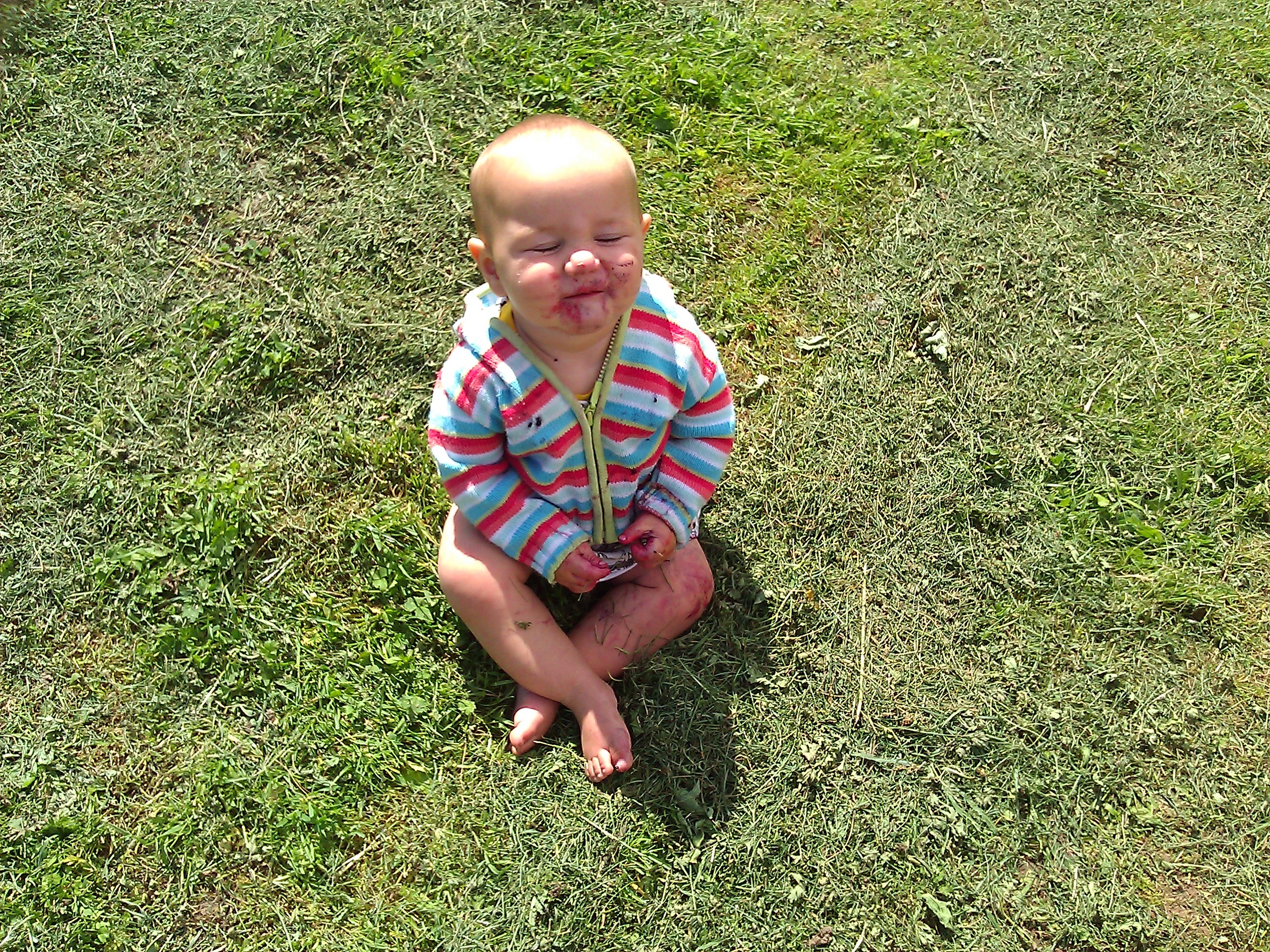
blackberris

If I need a little encouragement to go outside I only need to look at the joy, concentration and contemplation on my children’s faces.

If you need further inspiration I recommend reading Nature’s Playground.

This is not a sponsored post the book mentioned is a personal recommendation only.

The Mirror Table

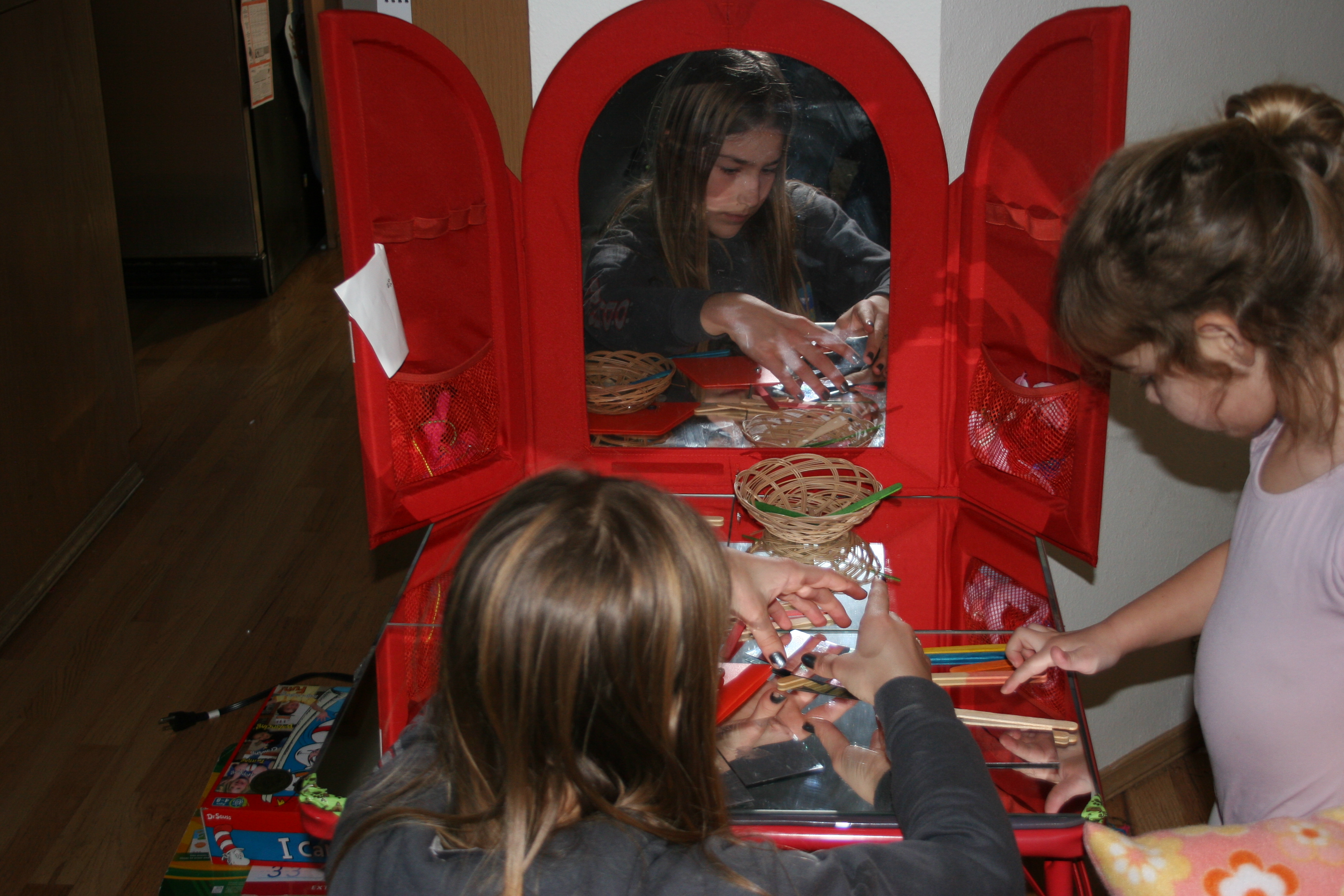
investigating natural materialsThe girls often enjoy mirror play, I’ve tried a number of different types. I love this big one but it is very fragile and difficult to store. For small projects, I have an oval mirror in a tray but it isn’t big enough for more than 2 children to play with.  Unframed circular mirrors work well, but I’m yet to find a suitable one. We also use Ikea mirror tiles, these are portable and I can change the arrangement to suit the project but the pointed edges bother me.

ice skating mirror

Suddenly it came to me – “why not stick the mirror tiles onto a table?” I sent out  a plea for a table to my Buy Nothing group. I didn’t expect to find one that was the perfect size but within 30 minutes I had been offered a table that would fit the tiles perfectly. The mirror tiles come with sticky pads for mounting to a wall. These were perfect for attaching the mirrors to the table.  I taped the sharp corners with duct tape and a vanity mirror was placed against the wall.  In a preschool setting I would mount more tiles to the wall and put the table in front to allow for seamless reflections. The border around our mirror makes it difficult for small items to be reflected in the upright mirror.

mirror table

A couple of small card mirrors and a few loose parts led to fun explorations.

mirror table loose parts

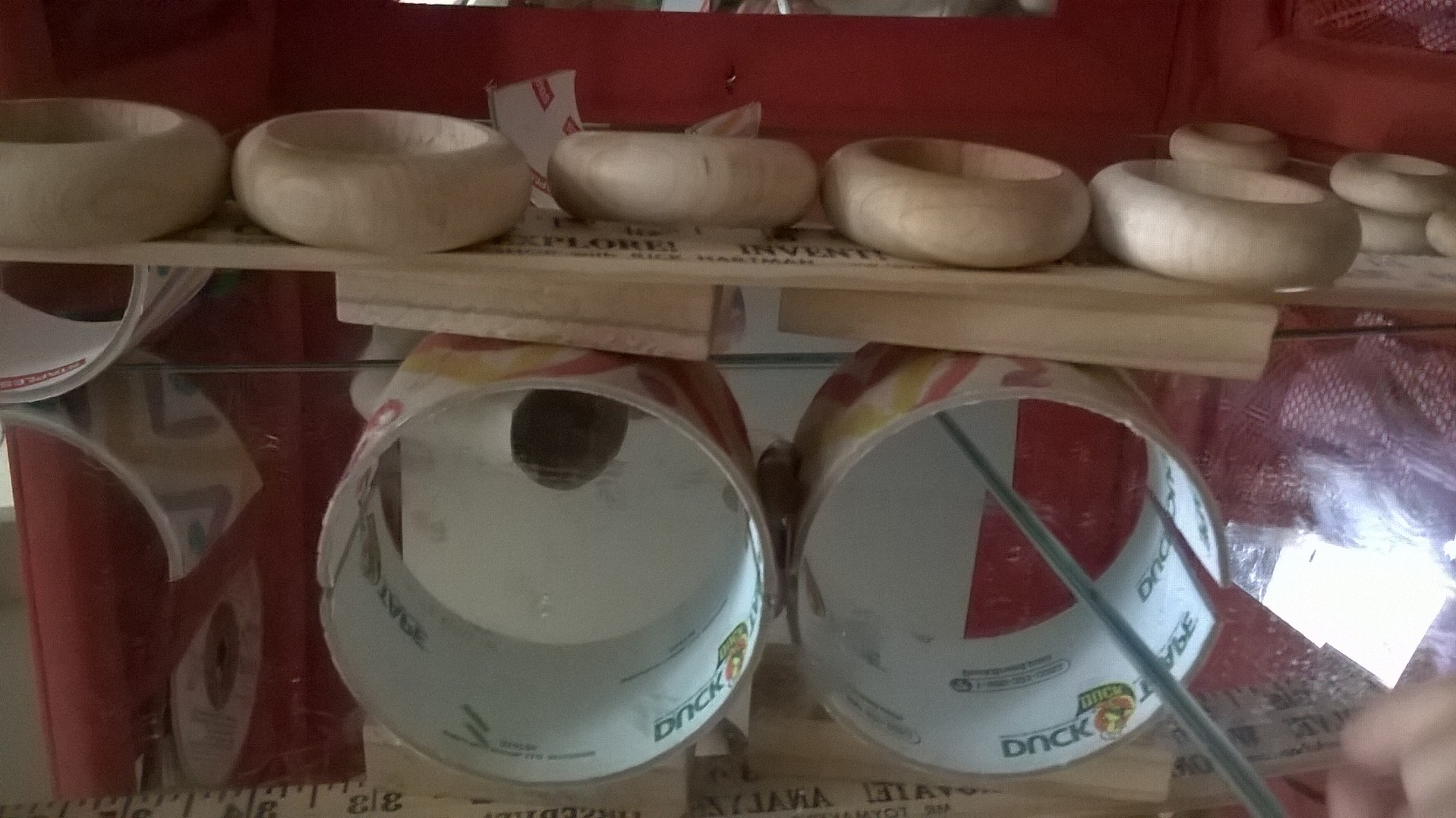
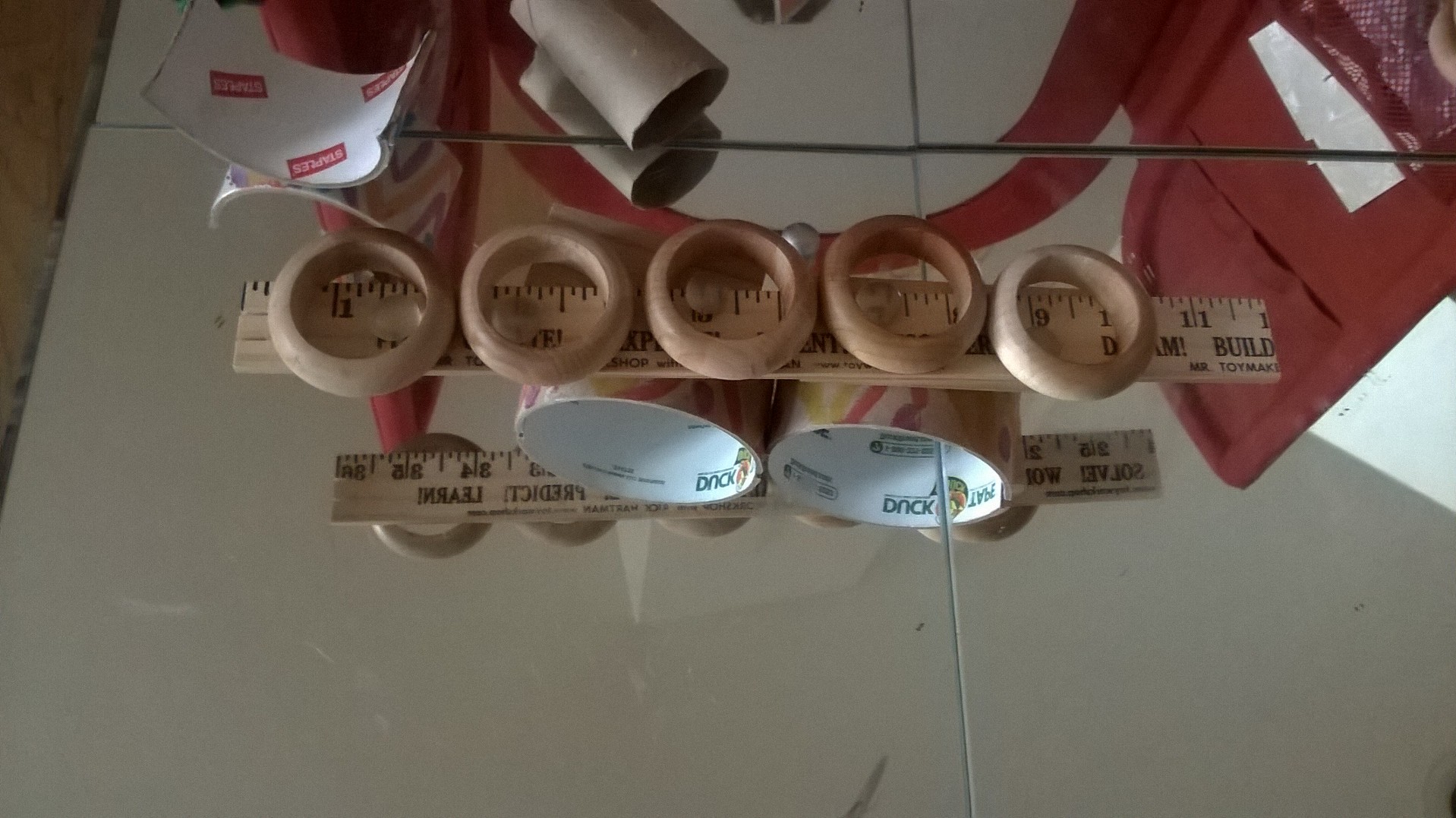
I cut the insides of a roll of tape in half and placed them on the table with a few wooden rings.

“It looks like wheels.  I’m going to make a car”mirror table car

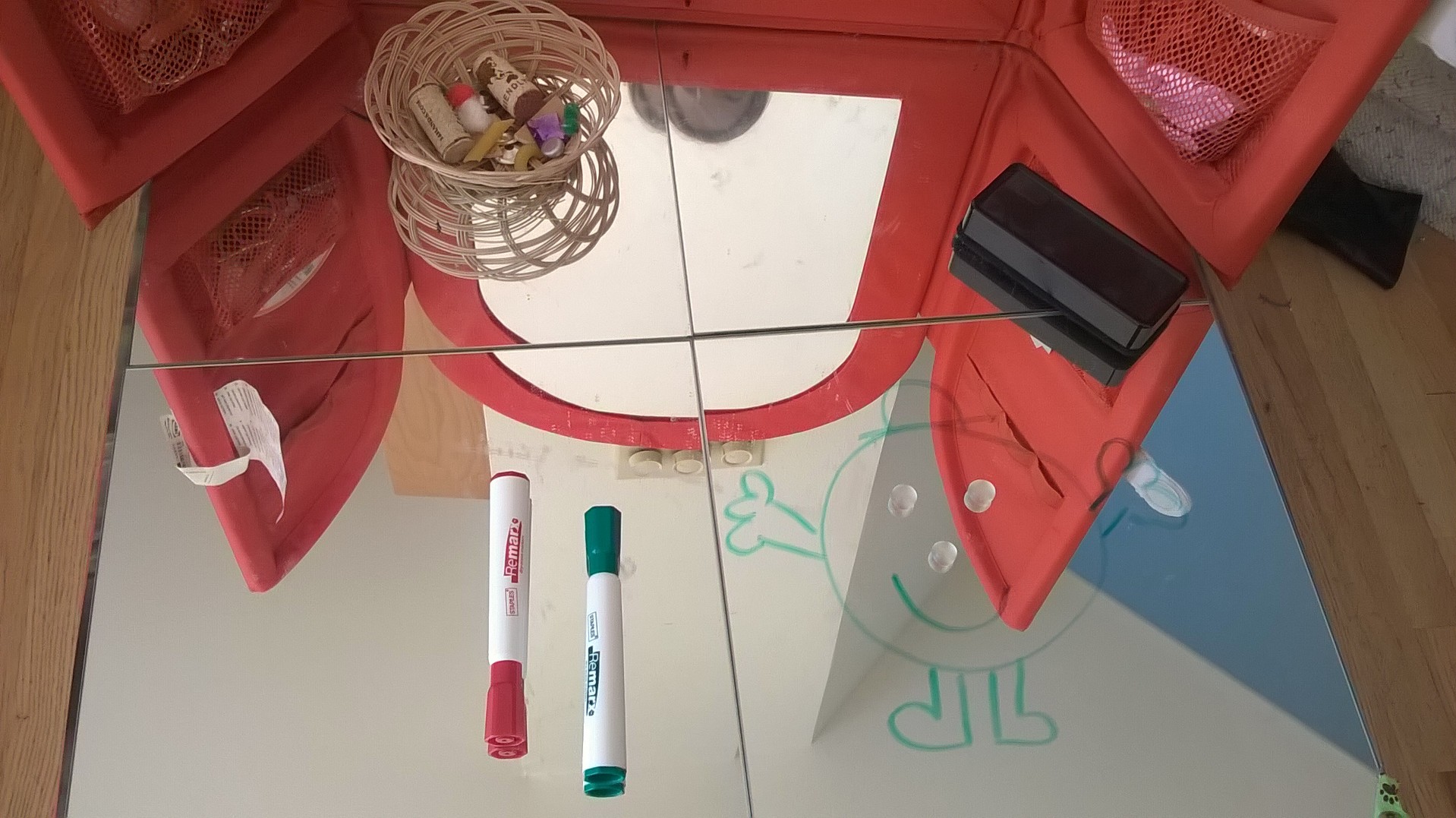
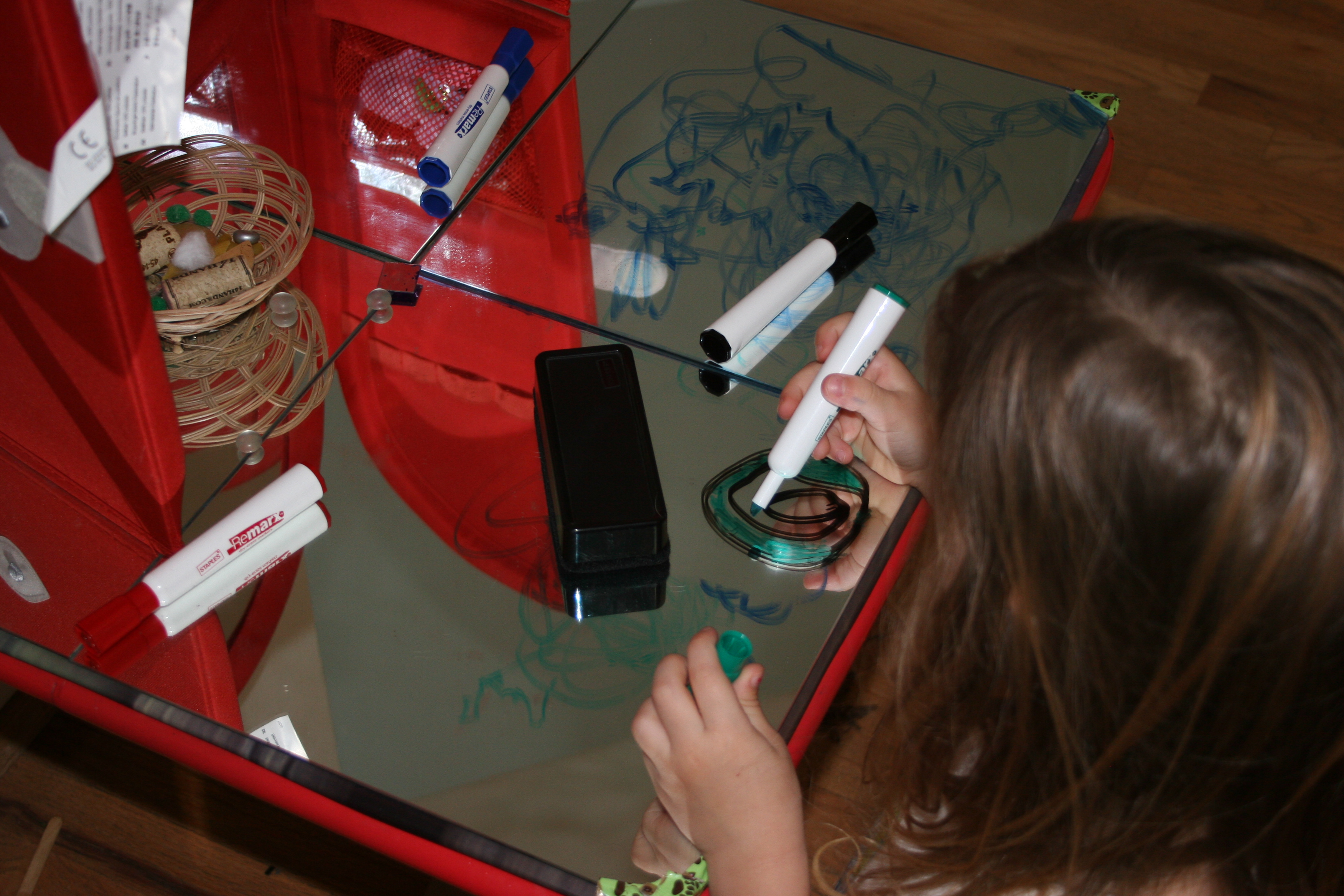
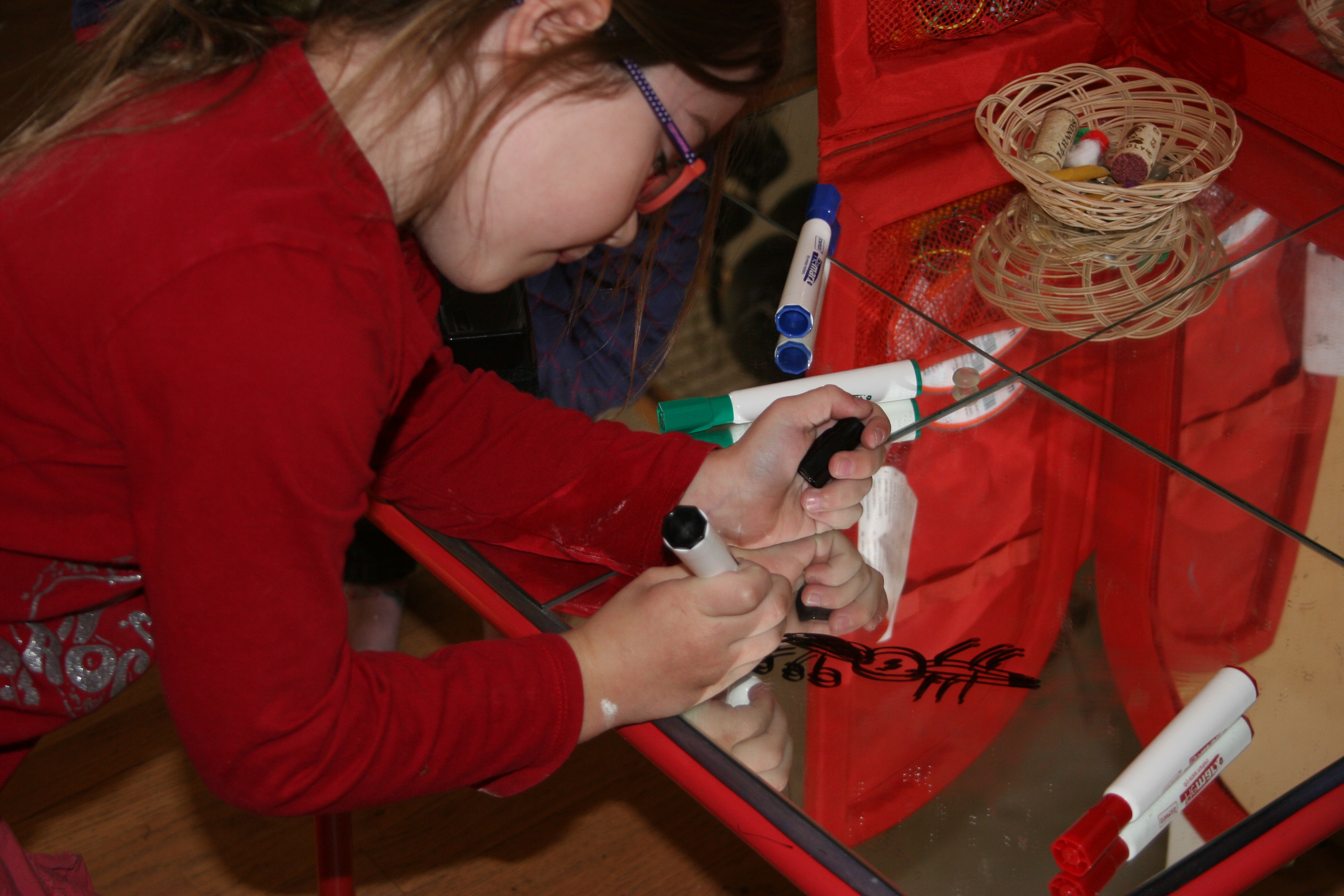
To keep the interest going, I changed the materials regularly. The loose parts, building bricks and mirrors maintained interest for only a short time. Knowing that my children love to draw and write, I decided to leave white board markers and a rubber on the table to see if this would engage them.

using a mirror table for drawing.

This arrangement was perfect and by far the most popular so far.

abstract drawing

writing on a mirror table

collaborative drawing

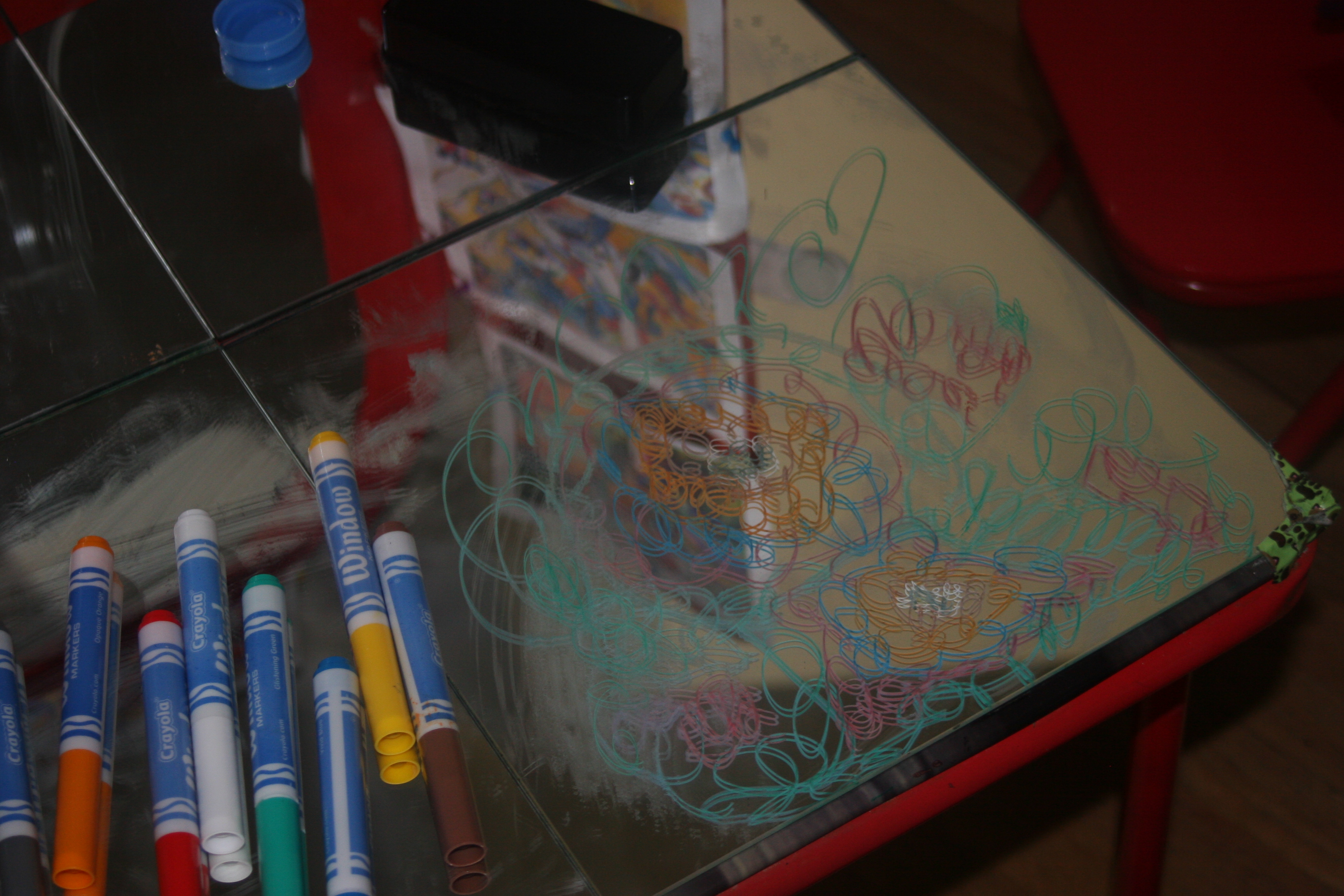
To add variety, I purchased a pack of glass markers.  This was a very different experience.  The girls discovered that the pens were difficult to erase. They liked that they no longer needed to avoid erasing part of the picture with their sleeve. It took more effort to erase and the girls experimented with the best ways to do this. Since they love to use cleaning sprays, I showed them how to use a small amount of glass cleaner to remove the pens quickly.

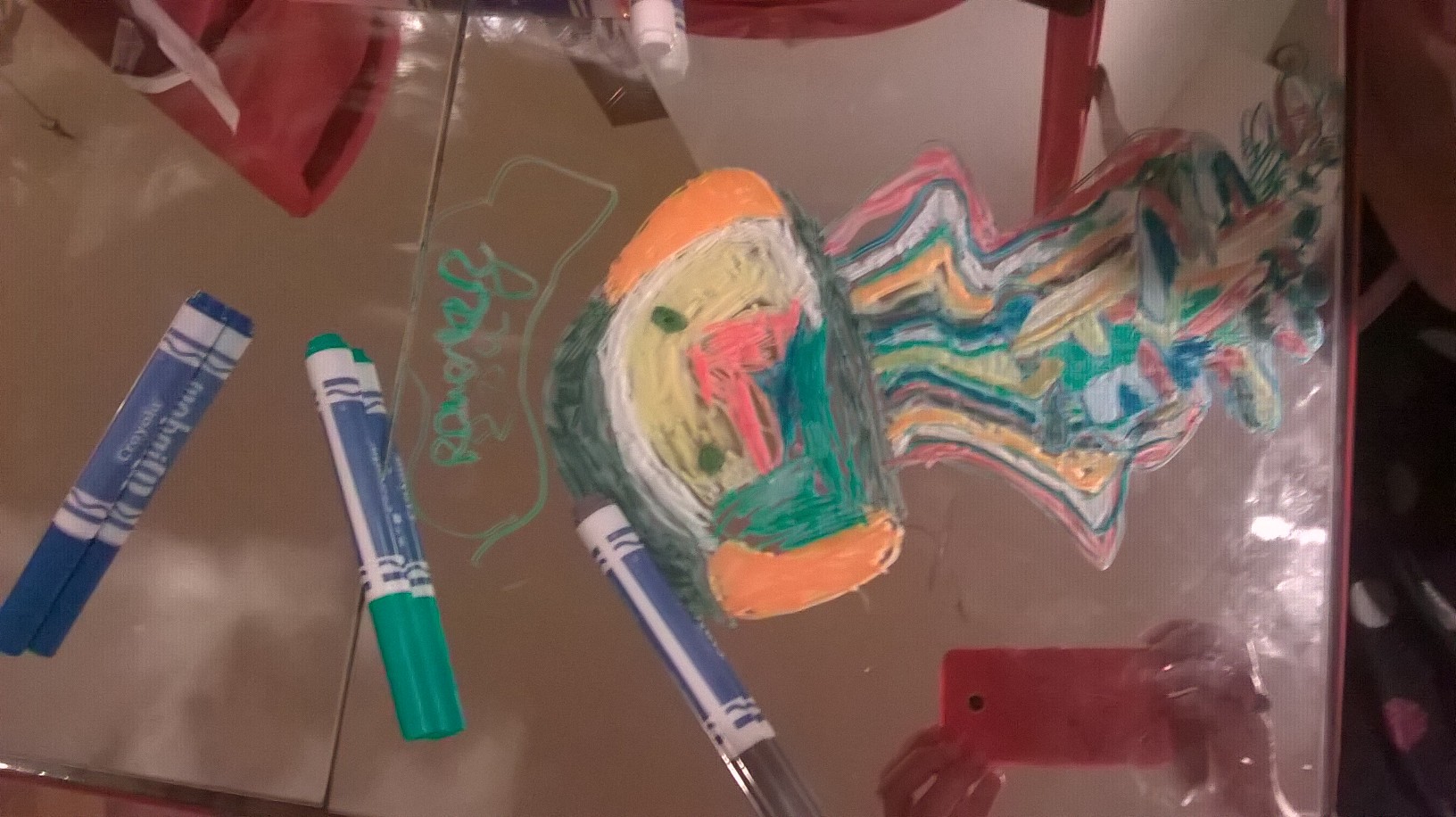
I noticed that the style of drawing changed when I introduced these pens. The girls drew intricate patterns using the colours and adapting their movements to light touch of the pens.

pattern and colour on mirror table

This one reminded me of Kandisky ( and a pattern in one of the earlier photographs is reminiscent of concentric circles).

“I like drawing random things that come into my head. Then they don’t have to be anything”   said my 6-year-old.

I explained that this is called abstract art. I have an artist friend and we all visited her exhibition recently. I told them that this was the kind of art that she makes.
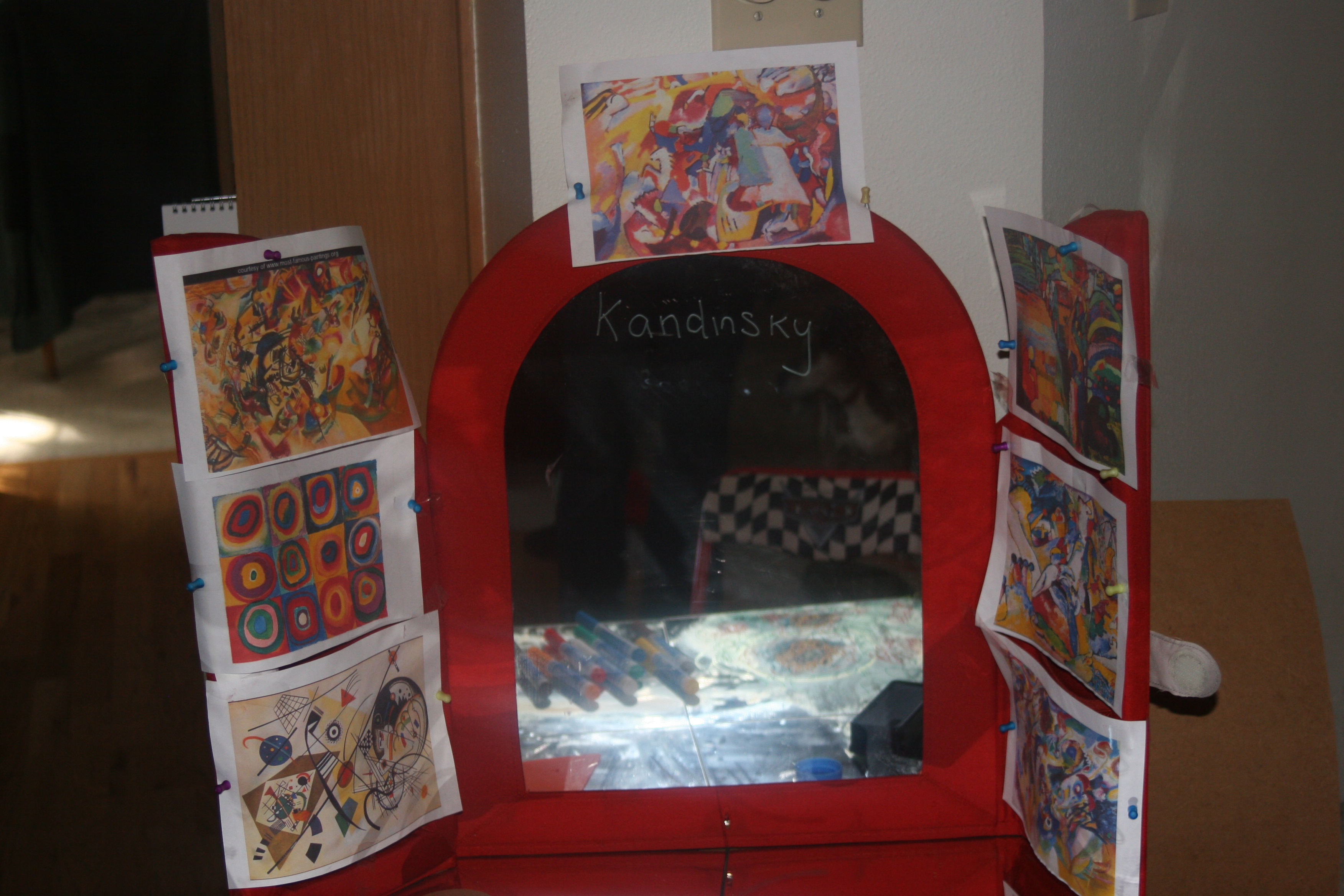
Later, I printed some Kandinsky paintings, placing them around the edge of the vanity mirror.
art on mirror table
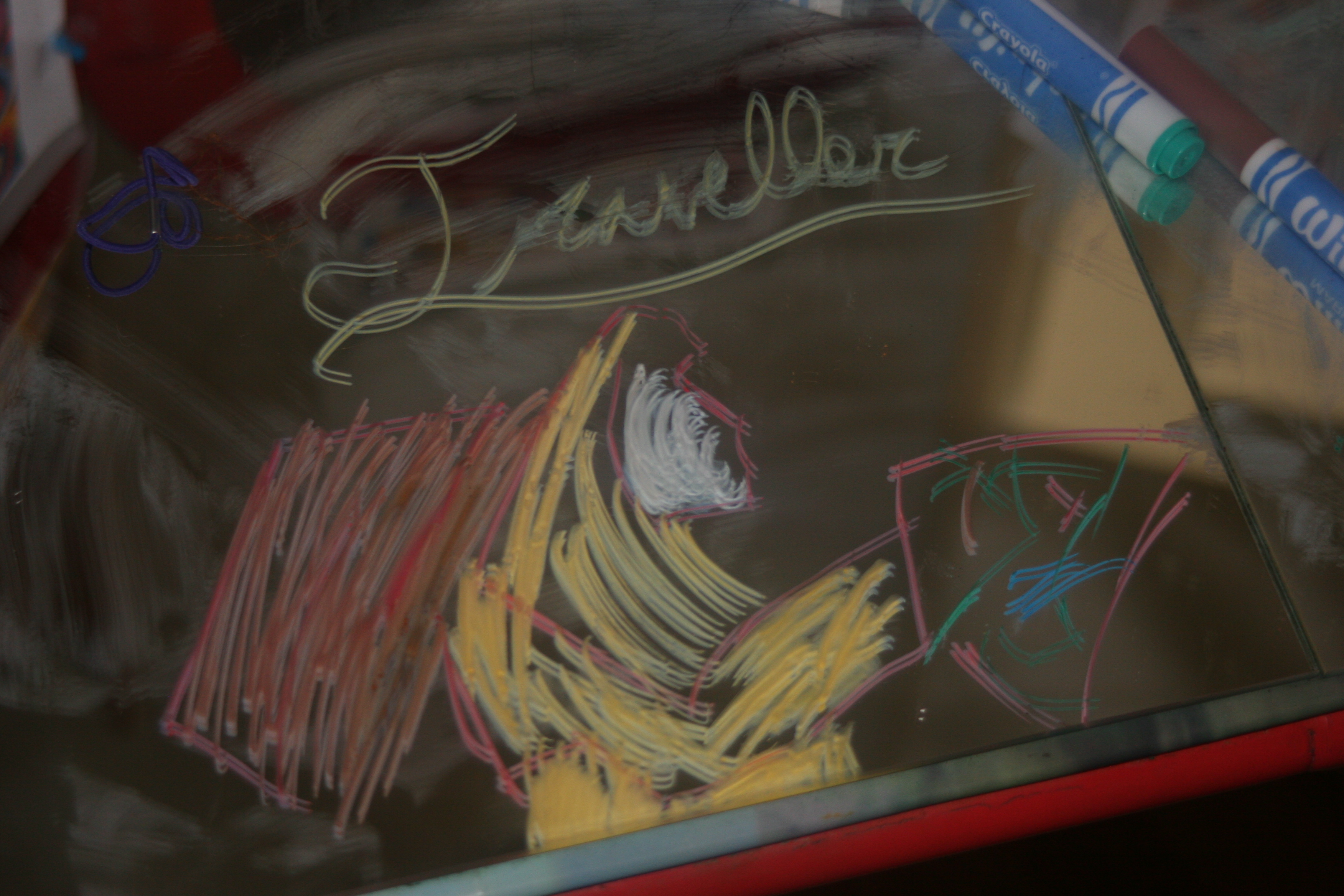
glass pens on a mirror table

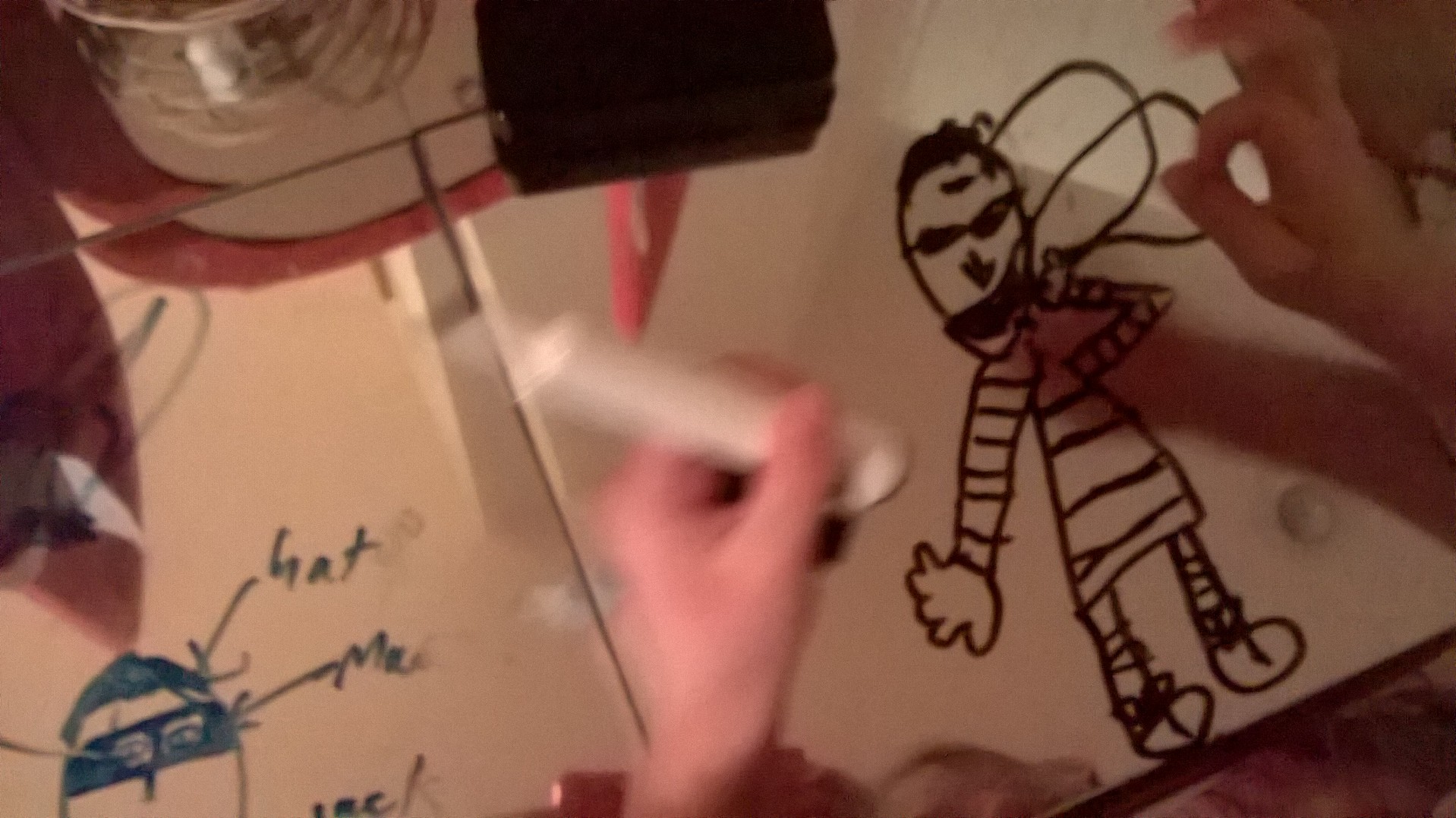
“Why did you name this one the traveller?” I asked.

“He looks like he has a bag on his back and the multi-coloured bits look like a map”

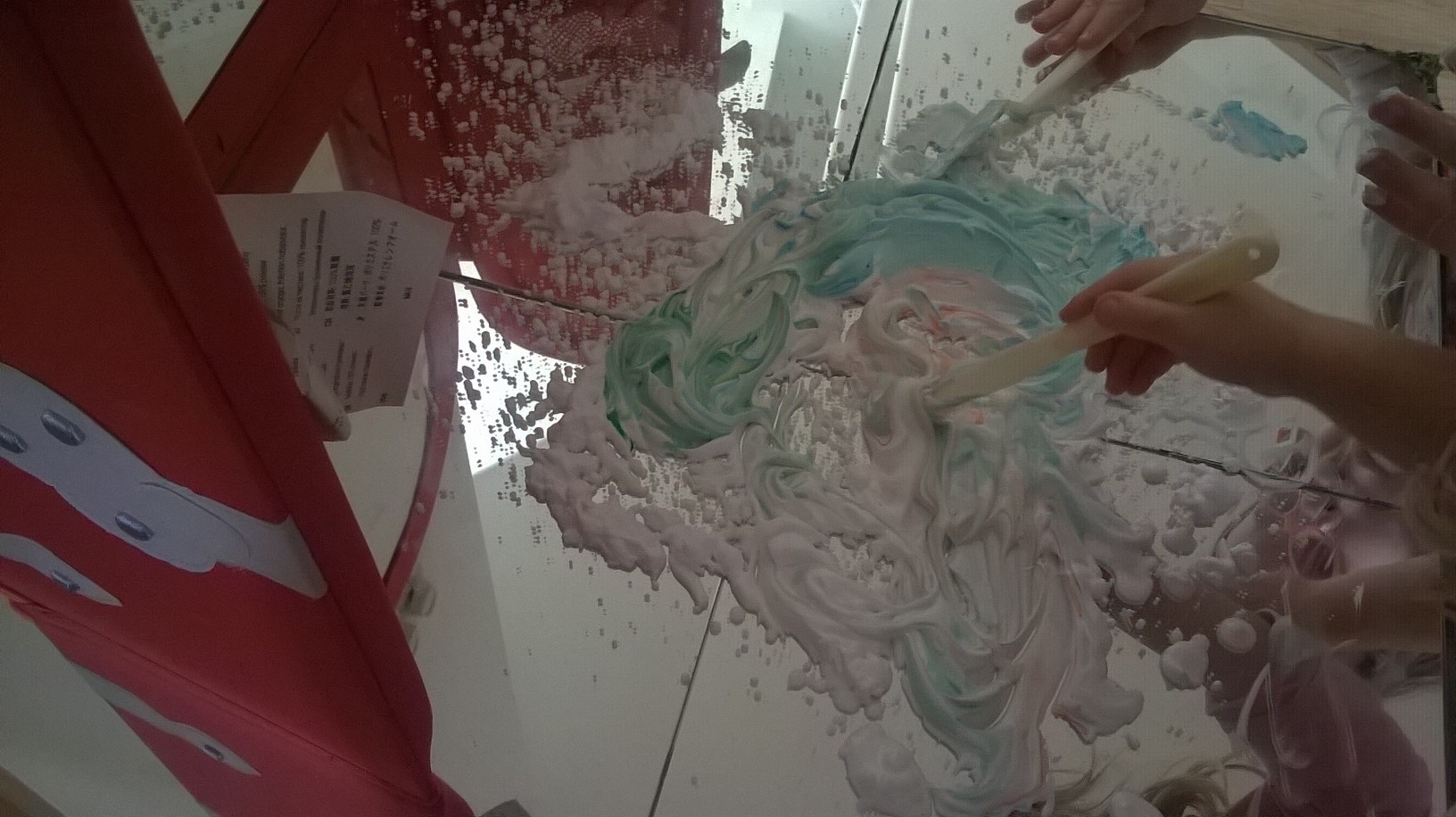
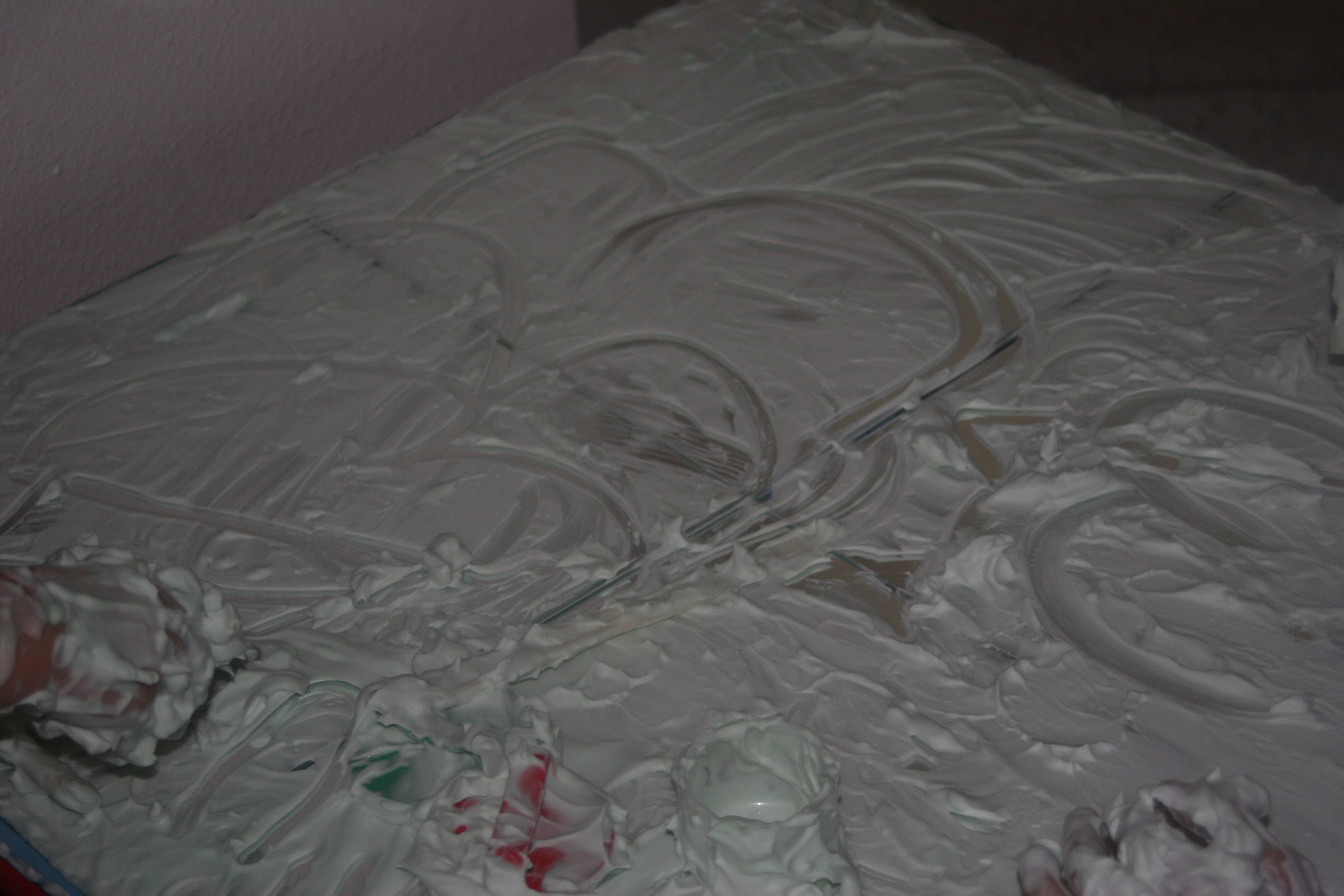
The mirror table is also the perfect surface for shaving foam.

mirror table shave foam

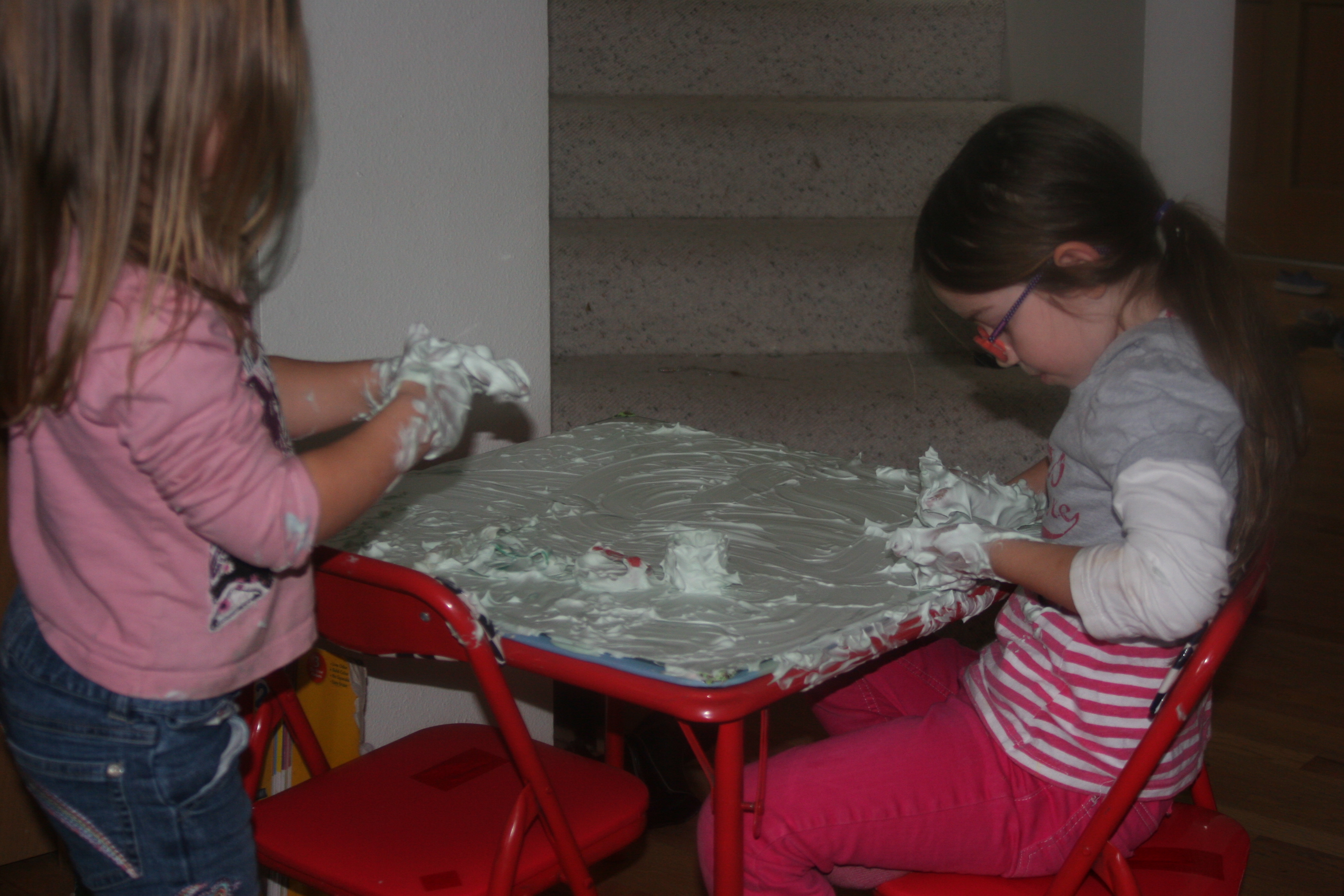
On a flat, even surface their natural instinct was to cover all the space, smoothing it over like icing a cake.

shaving foam on a mirror table

They began to create a story.

How about we’re the servants and it is the queen’s birthday and she wants us to decorate everything?

Now we need it all smooth again. We are the servants.

Wait, she said decorate everything. How about our hands? Oh no there are some gaps.

Maybe the queen will be mad. Come on we’ve got to make it smooth.

I don’t think she’ll be mad. She is the nicest queen. Everyday for pudding she gives us cupcakes.

It’s all textury, move your hands around like this.

Or I could do an M – like this.

IMG_0428

The scenario soon changed to one where they were at school.

There is lots and lots of art  but you don’t like doing it, do you?

Of course I do, why wouldn’t I? I love it

No, but remember we’re playing a game where you don’t like being creative . You just like playing video games and stuff.

I know, this is creative and you don’t like it. Pretend when someone asks you to do something creative you just say ” but when can I watch tv?”

Do you know what I’m going to do next?

No

Neither do I but it will be something creative.

How about you make a snowball?

The girls  abandoned a game of Minecraft when I put the foam out.  It is interesting that they were exploring ideas about creativity in their play.

Additional mirror table activities can be found on my mirror table Pinterest board.

Children’s Imaginations – What is the Adult’s Role in Nurturing Creative Children?

This post contains an amazon affiliate link.
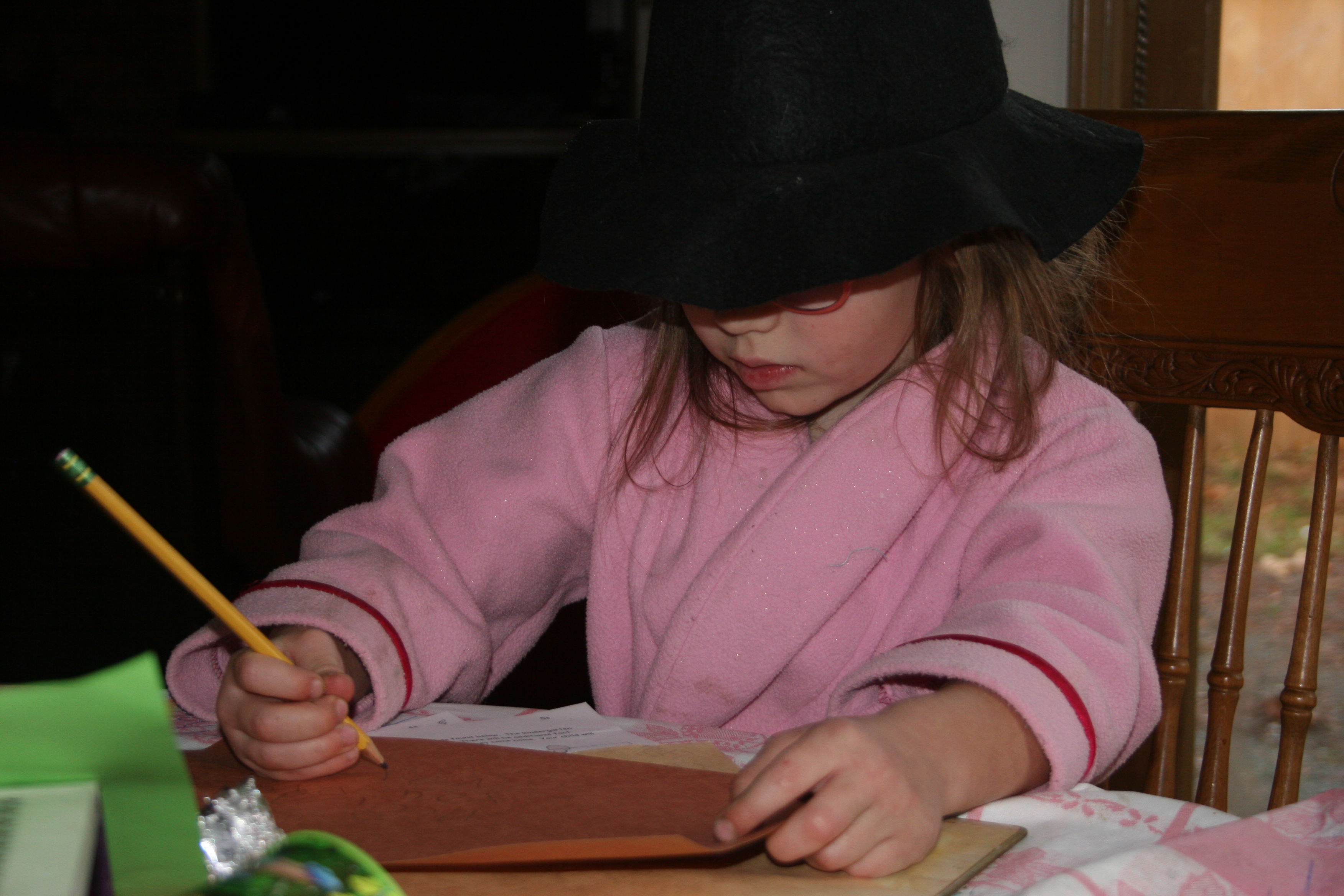
child in a witches hat writing a spell

I had an interesting conversation with a grandmother at one of my recent classes. In the class we decorated pebbles. The children were aged 2-4 and she had joined with a 2- year-old who was fascinated by stones. He drew on the pebbles and then she helped him to add eyes.

When she took her grandson home, her daughter looked at the stones and remarked that it was not his own work. She felt that during her own childhood, her mother had never been satisfied with her art projects. She would always offers suggestions for improvement, rather than accepting it the way that she wanted it and felt strongly that she would encourage her son to express things in his own way.

At the next art session, the grandmother was clearly reflecting on this with interest.  She stood completely back from the child as he was scribbling and snipping, without any interference and discussed her daughter’s comment with me.

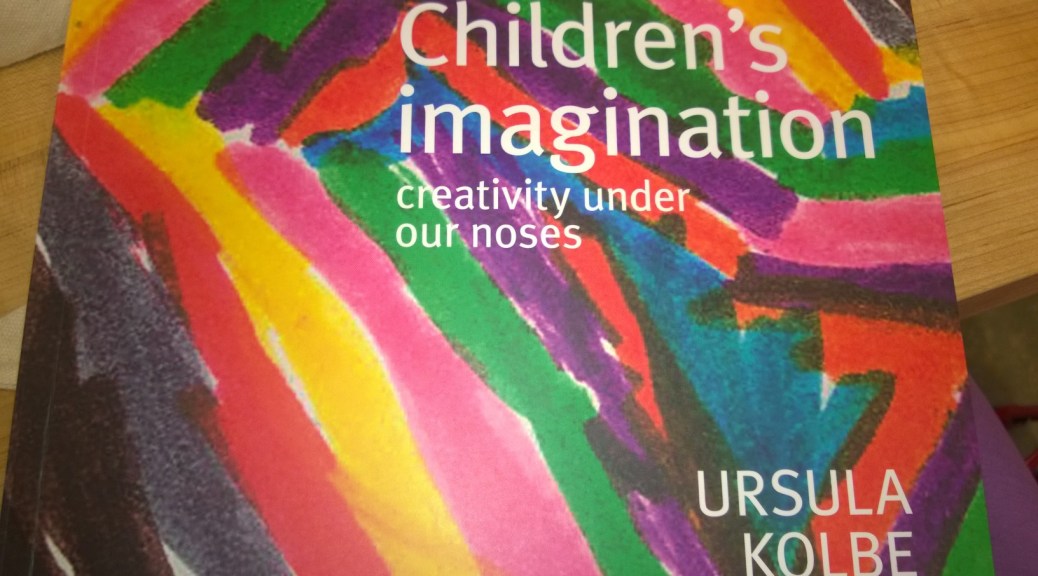
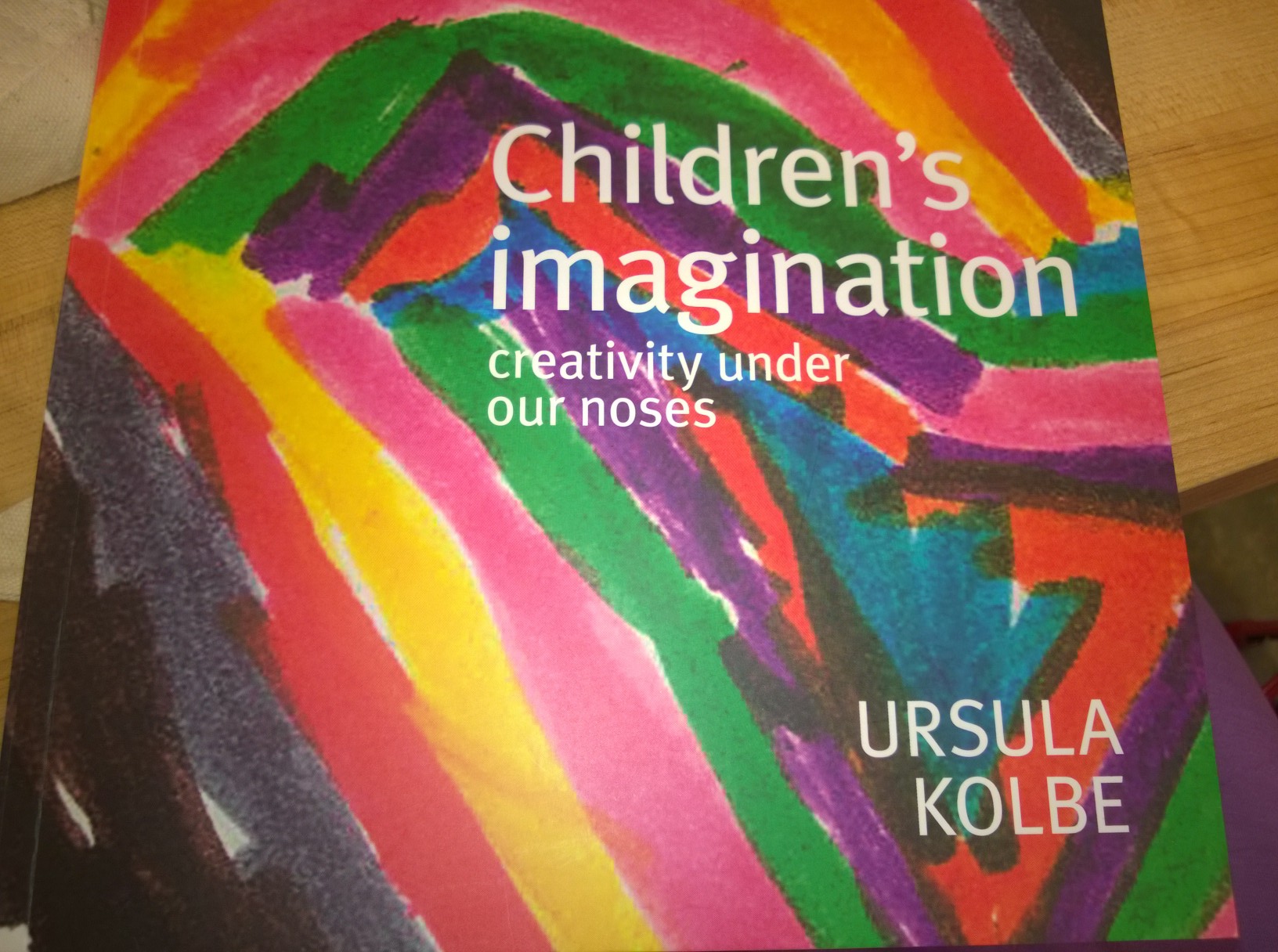
I found her reaction interesting; she clearly wasn’t comfortable with the distance but wanted to respect her daughter’s wishes. We discussed the balance between taking over and being on hand to help or extend learning.  I explained my response to children when they are learning to draw, discussed in ‘I Don’t Know How to Draw Ducks’ Feet’ – How to Support Young Childrens’ Drawing,” Sometimes it is hard not to take over when a child says they can’t do something but a little support can encourage a child to trust in their own ability. Thankfully, I had recently finished reading Ursula Kolbe’s latest book Children’s Imagination: Creativity Under Our Noses
The role of parents in nurturing creative children is the main theme of the book. It encourages parents to see that creative play can arise from the simplest things and that letting go will foster children’s imagination.

childrens imagination

If we want to nourish children’s creativity what exactly is the adult’s role?

All too often we adults feel the need to label, to continually teach, wheras close attention and companiable silence are often more valuable. Valuable because then anything can happen”  Kolbe says.

The role of the adult is to:

Provide Resources

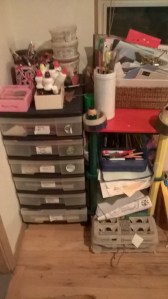
art and craft storageThe adult’s role is to provide interesting materials. A constant stream of new materials, however, leaves little room for development of expression. If, on the other hand, a variety of materials are easily accessible, children can choose those that interest them.
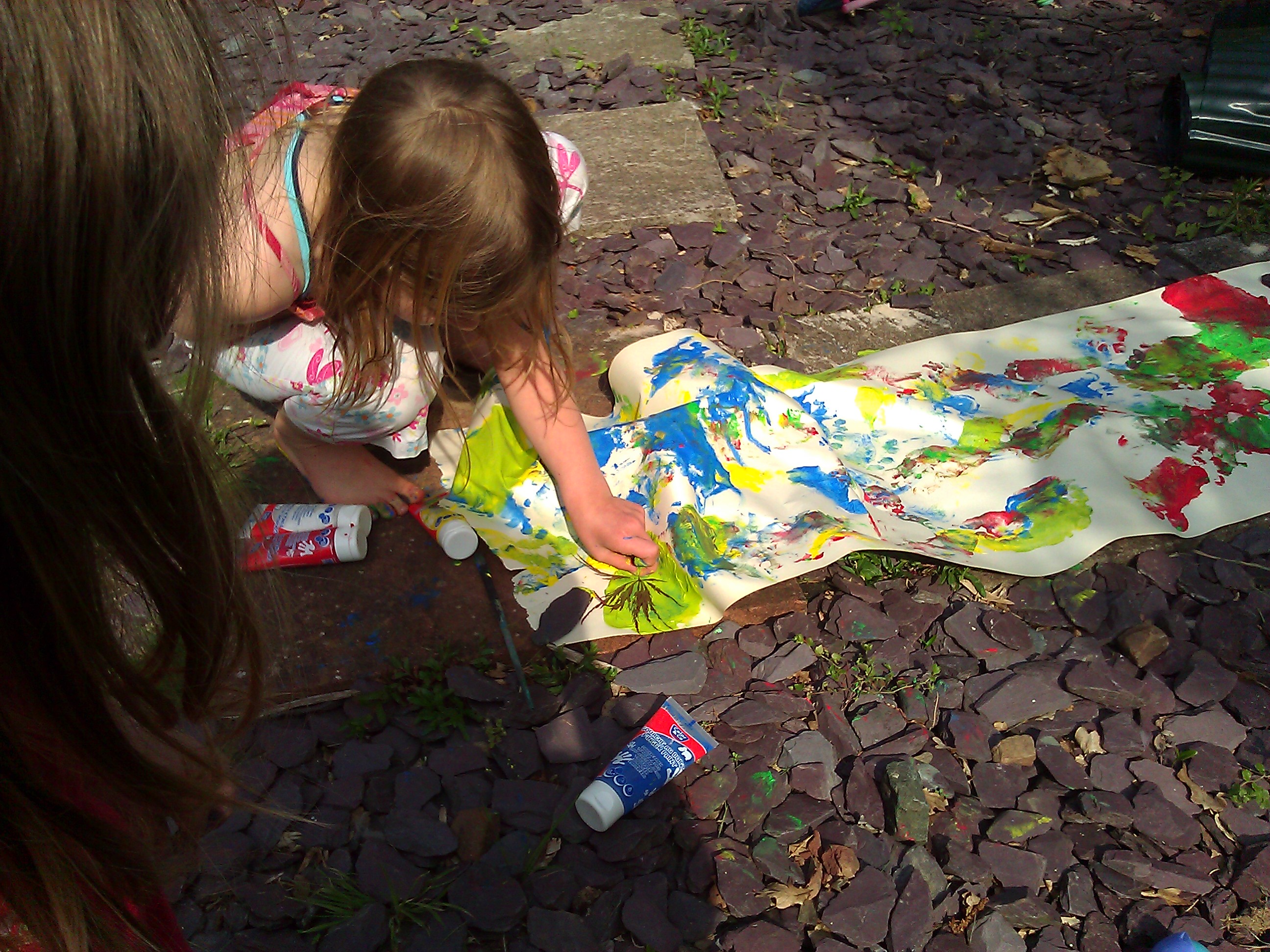
The greatest possibilities occur, as children ask “what can I do with this?”  Perhaps,this is why children love the outdoors, where loose parts are plentiful. At home, I keep paper, pencils, scissors, watercolour paint, brushes tape and glue next to our kitchen table. Most mornings the girls will go to the shelves, take a piece of paper and scissors and create something.  My kitchen table is rarely clear but I love to listen to their stories as they draw their latest picture or make a sign for imaginative play.

Observe and Listen

 One of the simplest pleasures is to sit and observe a child or group of children at play. The little pearls of wisdom that children offer could otherwise be missed. Observing encourages teachers and parents to question why things happen or how play can be extended . Loris Malaguzzi describes it as

“Catching the ball that children throw  us.”

It is easy for parents and teachers to find a wealth of activities for their children to do but most of the time it isn’t necessary. If we follow the children’s lead we can become their supporter, encourager and co-explorer explains Kolbe.

“A steady diet of adult-chosen, one-off activities denies children opportunities to find the extraordinary in the ordinary for themselves”

Time and Space

outdoor painting

The most important things we can give children are time and space.  Our role, is to provide inviting materials and allow children unhurried time to explore them, revisiting as many times as they would like. Unhurried time is almost impossible at school, where a strict timetable needs to be followed. I think it  is vital therefore, to provide this at home. My children were upset recently at a local playcentre, because their things were tidied away before they had finished playing.  Leaving things out for a while shows that their creations are valued and allows them to modify and expand their ideas. Ask children if they have finished before tidying or encourage them to clear their own materials, so that you can be certain they are finished.

Show Interest Without Intrusion

If we sit near children as they draw, build, paint and play imaginatively, they will begin to tell us the story behind it. We will learn far more about their inner thoughts and motivations than we would by questioning children about what things are and offering endless suggestions. Let them lead play and show interest in what they do. My children don’t mind when I observe their play, taking photographs and writing notes. They ask me what I am writing or if they can see the photographs.  It shows them that I am interested in what they do and value it enough to record their thoughts. I explain that I am telling the story of their play, so that we can remember and share with other people far away. Sometimes I stay indoors and watch from a window or listen from afar. It is  important that they have times without any adult nearby, to develop their own ideas and find their own solutions to challenges.

raining heather

Kolbe’s book is a wonderful insight into the things that ignite children’s imaginations and how parent’s can nourish and support this. The examples in the book are simple but inspiring  and  don’t require expensive resources or time consuming planning. The close of each chapter includes a written conversation between Kolbe and  Susan Whelan, a parent. They talk through their observations of the anecdotes in the book. I particularly liked this aspect, as it gives it a personal element and shows the importance of reflecting with others to obtain a deeper understanding.

I read this book at a time when my youngest daughter is eager to share her stories through drawing and painting, imaginative and sensory play.  It reminded me that these moments  are precious and to take time to listen and record them.

How to Teach 2-Year-Olds: Advice for Teachers Who are New to this Age Group.

Most Pre-school teachers in the UK are experienced at teaching children aged 3-5.  It is rare however, that graduates or teachers with Qualified Teacher Status are appointed to teach children of 2 or under. This may be set to change, as children from disadvantaged backgrounds are offered government-funded early education. There is lively debate as to the ‘best’ type of setting for these children but evidence shows that the quality of the setting is the most important factor. Graduate and teacher led settings have been shown to be the most effective at closing the achievement gap (Matters et al 2014).

‘Early Education’ have published an excellent briefing for school leaders considering offering provision to 2-year-olds. It also offers valuable advice to anyone considering teaching 2-year-olds. In the search for graduate teachers for this age group, it is possible that experienced and well qualified teachers will be asked to take on a new role of leading this provision. This may be daunting. It certainly was for me the first time I encountered this age group.

When I began working in a mixed age nursery environment for 2-5 year olds, I was used to teaching children who could sit on a carpet in a large group and listen, who could draw representational figures, talk and share ideas, were toilet trained and who played for the most part, cooperatively with their peers. Planning for the 2-year-olds terrified me at first but I soon learned that creating an environment in which they could freely explore and move around was the most important consideration.

Our mixed age setting was split into 3 rooms. Sometimes the 2-year-olds were in their own group (and always at small group time) but for a large chunk of time, they were mixed with 3 and 4-year-olds. Teaching in a mixed age setting comes with its own challenges.

Common Concerns About  Teaching in Mixed Age Settings

If you are a parent of more than one child, begin by thinking about how you manage the challenges below at home. In a mixed age family unit, compromises have to be made but the youngest children’s experiences are enriched by the older siblings and the older children learn to nurture, guide and understand different needs.

How do you find activities that are appropriate for 2 year olds but also challenging enough for the older children?

Choose activities that are open-ended.  Building blocks, small world play, painting, drawing, clay, water, sand and other sensory activities, imaginative play and recycled materials are perfect for all ages.  Make sure there are times during the day when children are in a smaller group with same age peers. Build an engaging outdoor learning environment and allow the children to move freely between indoor and outdoors.

How can you ensure safety without denying the older children valuable experiences?

Tools can be kept out of reach of toddlers inquisitive hands but in a place where older children can reach or ask an adult to get it. It is important to me that my children have ready access to mark making materials but when my youngest was at the drawing on walls stage, these were pushed back on the shelf where she could not reach but her sisters could.

If younger children want to use scissors, clay tools or small loose parts don’t deny them the opportunity; simply ensure an adult is sat with them to support them. Keep the materials to one area which has adult supervision.

How do you stop the younger ones spoiling older children’s games by knocking down things they have built or taking toys they are playing with?

Learning to negotiate with younger children is important, learning that children of different ages have different needs and they do not mean to spoil things for the older children. Encourage older children to play at building and knocking things down with the younger children and allow the older children to place their completed models out of the younger children’s reach. Have special places for ongoing projects and ensure that there is some time with their own age group. Projects requiring a finished product or advanced skills are best for small group time.

Additional things I learned about teaching 2-year-olds

  • They like to move around and explore.  Often, they will not stay at one activity for long  and prefer activities with lots of space rather than at a table top.
  • They find large groups distracting. Do not expect them to sit for a story session with 3 and 4-year-olds as they will more than likely lose interest before the end. They would much prefer to be read a short book in a small group, or better still 1:1 on an adult’s lap.
  • They like songs that are simple and short with actions, puppets, props or simple instruments to maintain interest .  Again this is best in a small group
  • They love messy, tactile or sensory play and are interested in exploring materials. They are fascinated by processes and how things work. This may mean they will use materials in unexpected ways – tipping, throwing or splashing, for example. Try to channel these investigations in positive ways.   Do not expect them to create a finished art product.
  • Some  are not yet talking, others may be difficult to understand. It takes time to build relationships with these children and understand their needs. Play alongside them and observe. Build positive relationships with parents and help the children to build a secure relationship with you
  • They are still learning to use tools and will need adult supervision when using scissors, small items and books.
  • They learn by repetition, so don’t be worried that your planning isn’t varied. Try to spot schemas and  re-occurring fascinations and plan a variety of experiences to support them.
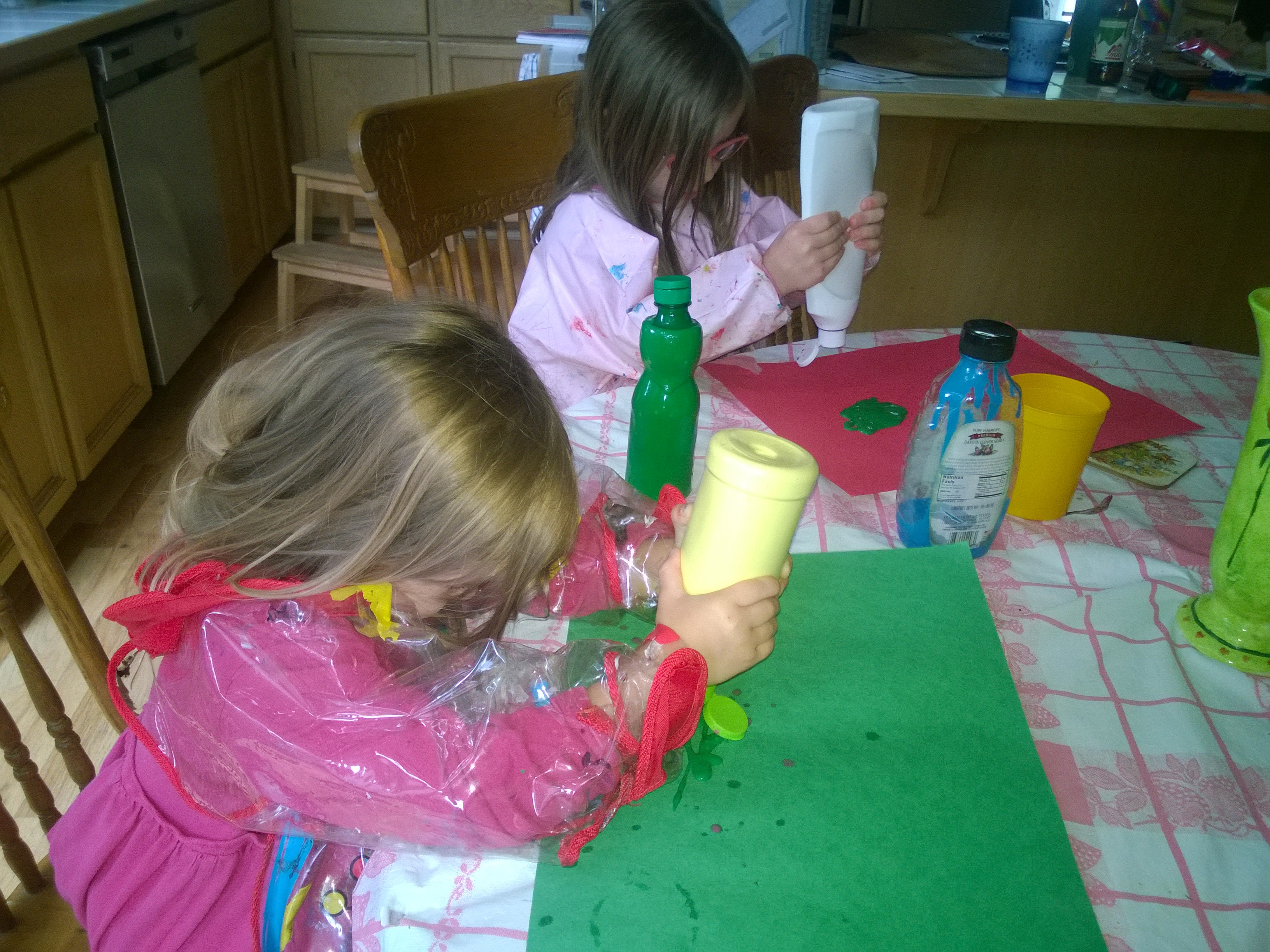
  • ‘Art’ projects work best on a large-scale. Rolls and large sheets of paper, chunky crayons, blocks of clay, pavement chalk and large brushes are all perfect for this age group.
  • They will assert their independence. Give them plenty of choices – I need you to come and have a drink, would you like a blue or a red cup?

Below are a selection of activities for 2-year-olds or in mixed age settings.

Pretend Play


potion making

Do not limit this to a home corner, use your imagination to create familiar experiences like shopping, new ones such as a vets or pure fantasy with pirates or fairies.

Water Beads

These are great for a water or light table.

water beads
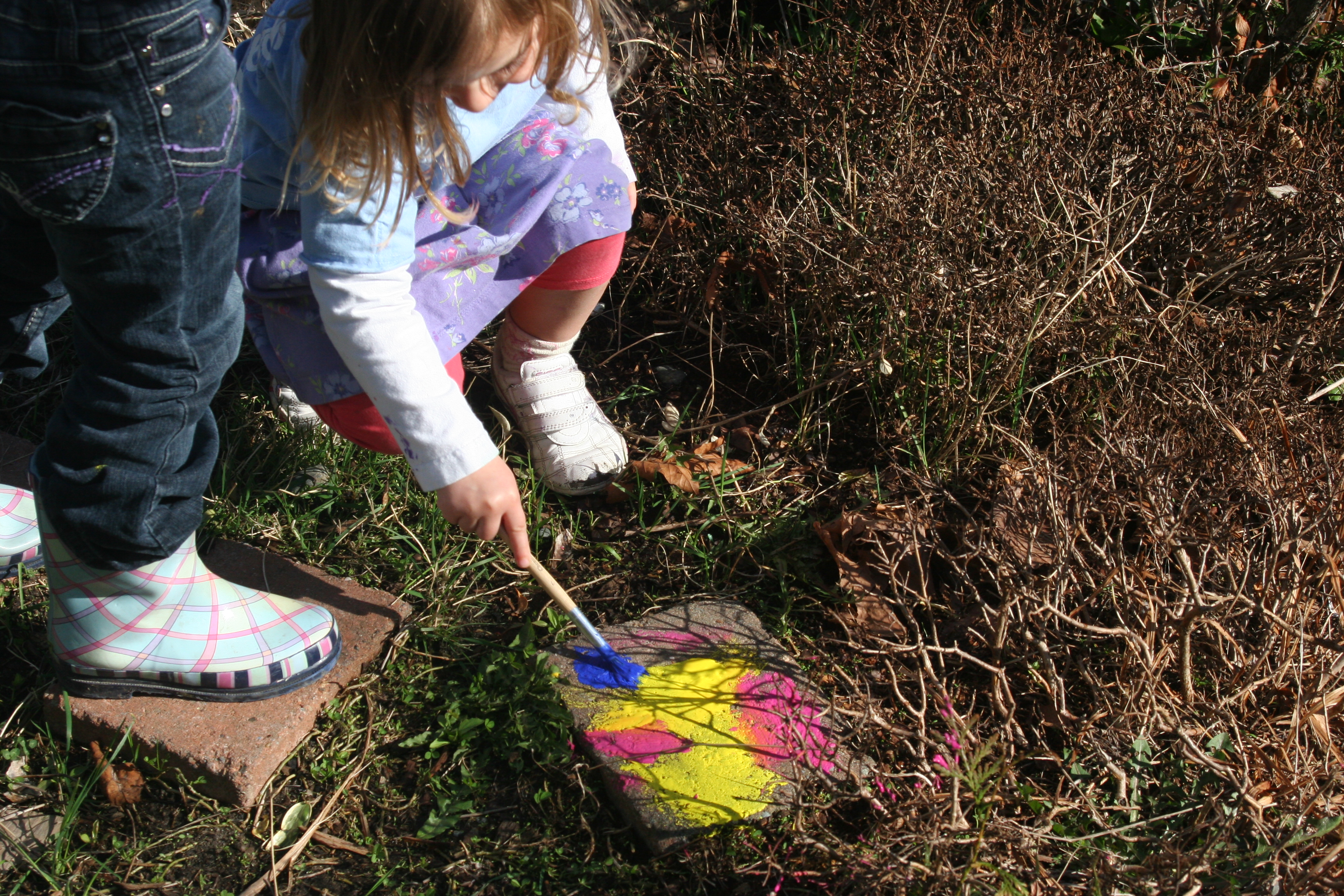
Painting on the Ground

With paint or with water. Decorating brushes are especially popular.
 painting stepping stones
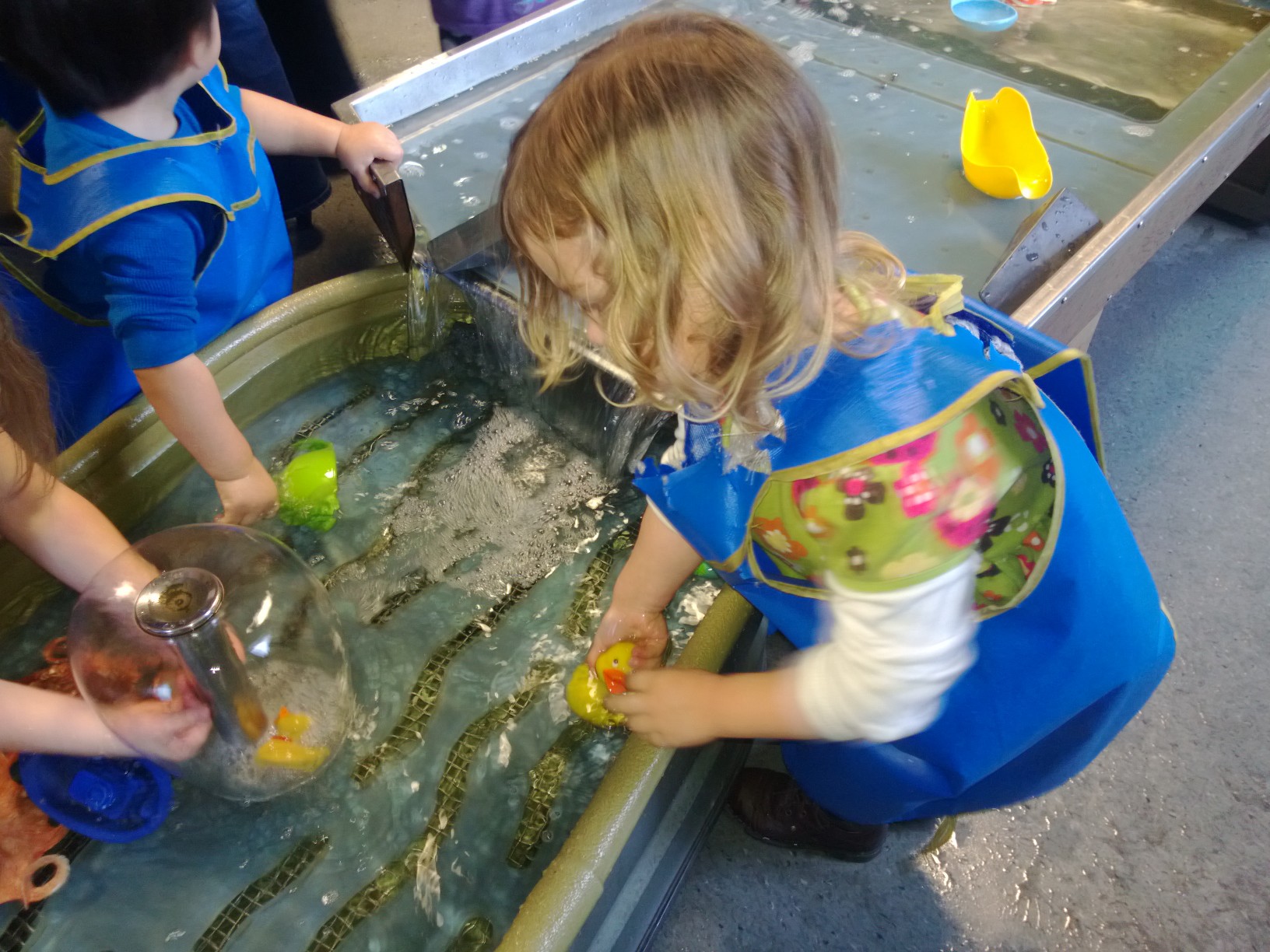
Water Play

Indoors,  outdoors or even in the rain.
duck swimming down the waterfall
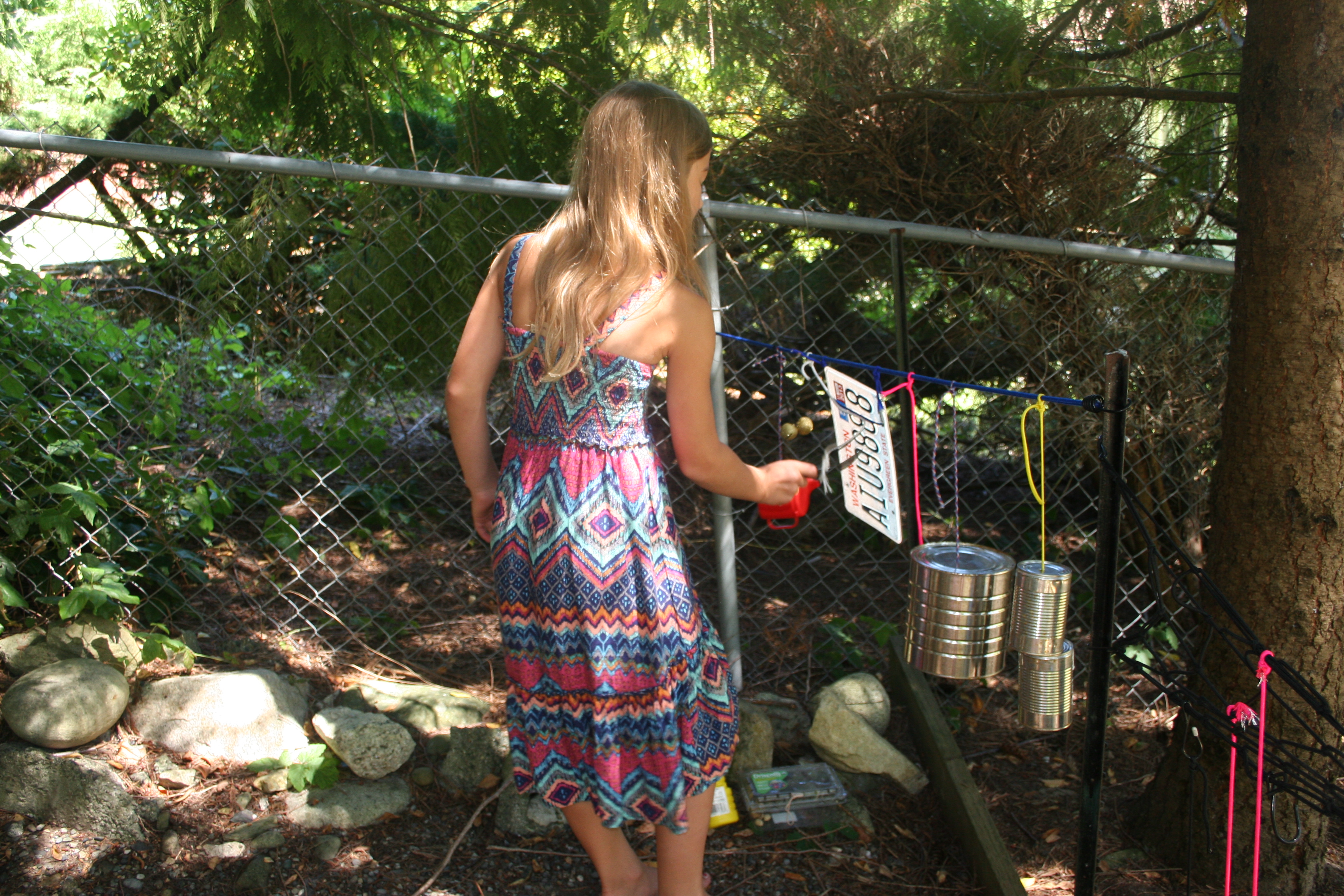
Exploring Sound

Create a music garden or sound wall

music garden
music garden

Clay

An essential material in any early years classroom.

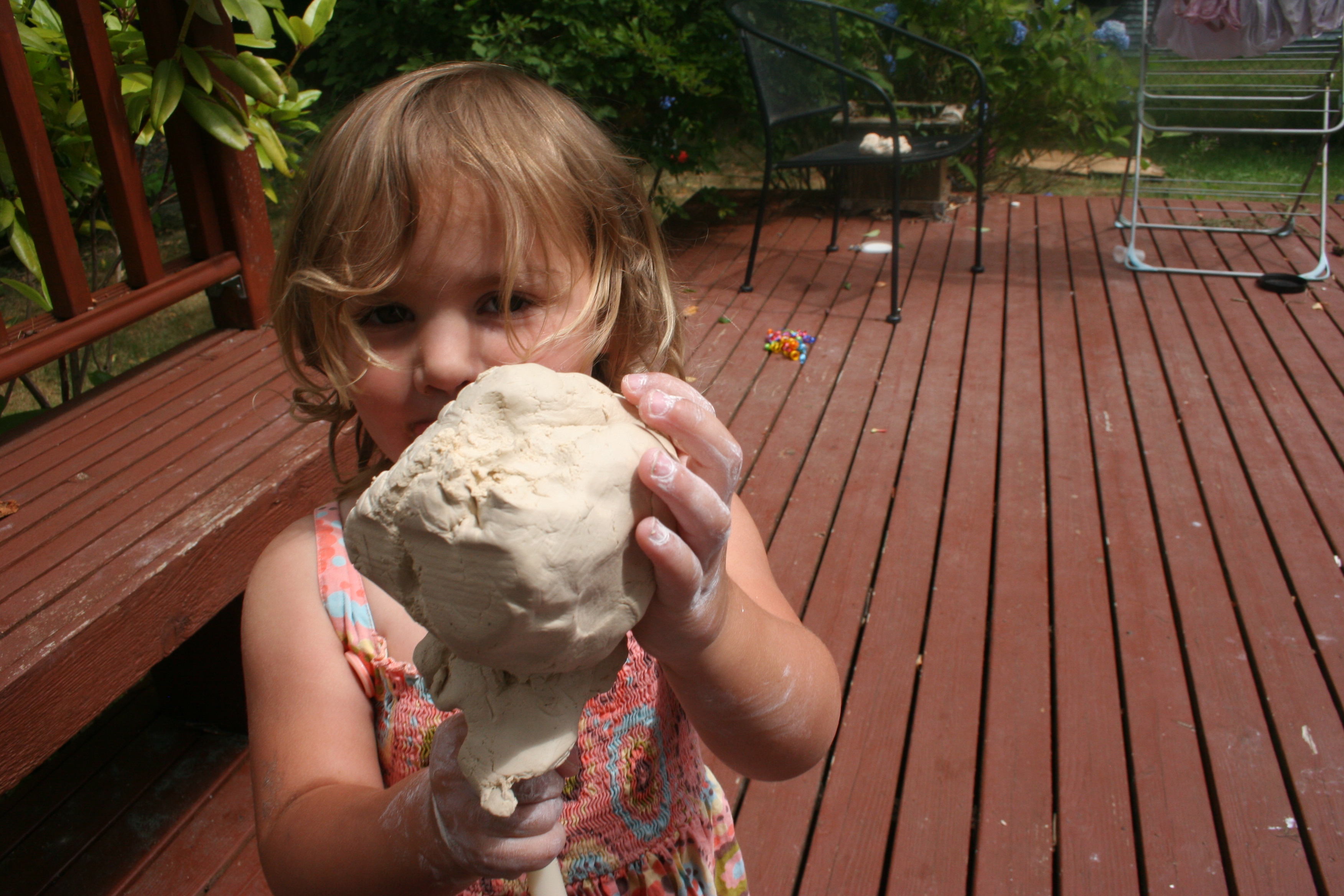
It's an ice cream
It’s an ice cr

Large Scale Projects

Paint on the ground, use large rolls of paper to print with feet, hands, leaves etc, paint large cardboard boxes, build with big bricks.
WP_000229
Treasure Hunt

Finding hidden objects, How many of a given object can they find, following a checklist, finding different coloured objects, searching for things of interest  or excavation.

I hid them in the bushes.  Found one!  Now I have 1,2,3.4 butterflies, only 4 left to find.
I hid them in the bushes. Found one! Now I have 1,2,3.4 butterflies, only 4 left to find.

Loose Parts and Nature Play

Loose parts don’t have to be small and young children are fascinated by mud, sticks and other natural materials.

Oct 07 049

Potion Making

Potion Making is great for water tables or outdoors for sensory exploration and scientific experimentation.

IMG_2255

Sensory Materials

Many sensory materials can be made with simple materials, for example, Goopplaydough, slime, or bubble mixture. A list of sensory recipes  is available for downloadfrom TES Connect.

goop

Stories and Songs

Bookfinder is an excellent resource for finding books suitable for a particular age groups as are the booklists provided by the National Literacy Trust.

Words for Life have an excellent list of songs for young children complete with lyrics and MP3’s. This list of songs for 2-year-olds from teaching 2 and 3 year olds is also worth consulting.

Waiting for the Fish

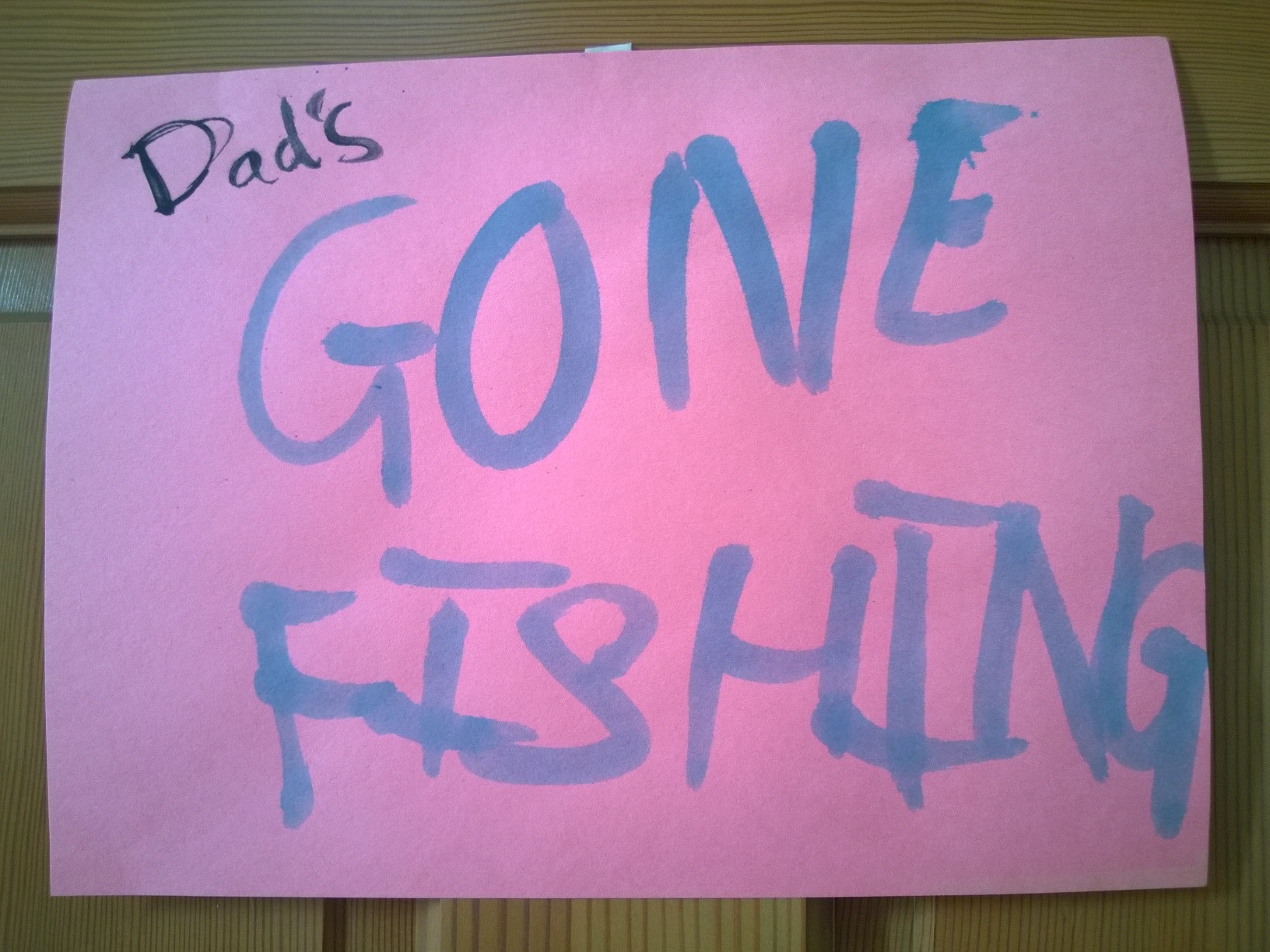
dads gone fishing‘ Let’s just go camping for our Summer holiday this year’

Hold on a moment, did those words really come from my mouth?  Until my mid twenties I recoiled in horror at the thought of camping. After I left girl guide camp half way through the week because I hated it so much, I convinced myself that camping wasn’t for me. In truth, I didn’t hate it at all. A rumour that newcomers would be pushed in the cesspit if they didn’t pass initiation had worried me so much that I begged to go home.  My views changed after a few great camping trips as an adult but I’d never have considered a camping trip for my main holiday.

A yearning to explore the beauty of the Pacific Northwest, good weather and the children’s eagerness to go camping, convinced me it was a good idea.  An eight hour car journey with a canoe on top of the car, three young children, a dog and a heatwave; perhaps I had lost my mind?

Amazingly, the car journey was fine.  The first couple of hours were spent playing ‘would you rather….’ and guessing the names of characters from books or screen.  The rest of the journey we listened to cd’s of musicals and admired the view.

Our destination Curlew Lake State Park, chosen for its beauty, a place for the children to swim and for my husband and the girls to go fishing.  “Fishing!” I hear my 20- year-old self, with an irrational fear of fish exclaim, ” are you intent on sending me on the holiday from hell?”  Strangely none of those sentiments cross my mind as we set up the tent in a quiet corner of the campsite on the shore of the Lake.

curlew lake

Without a shop or a playground in sight, would the children be happy? For now the excitement of sleeping in a sleeping bag, cooking outside and trying to catch their first fish fuelled their enthusiasm.

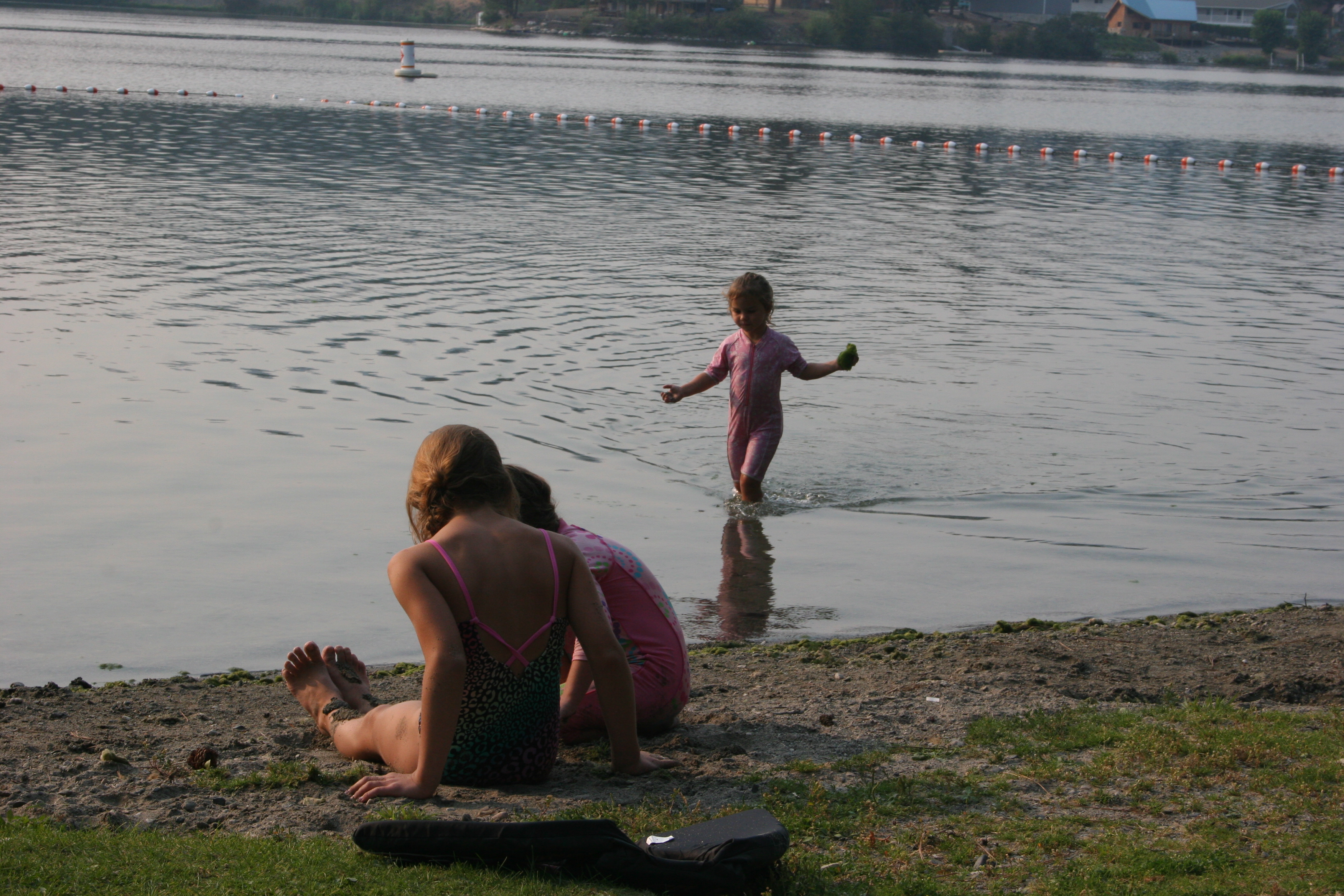
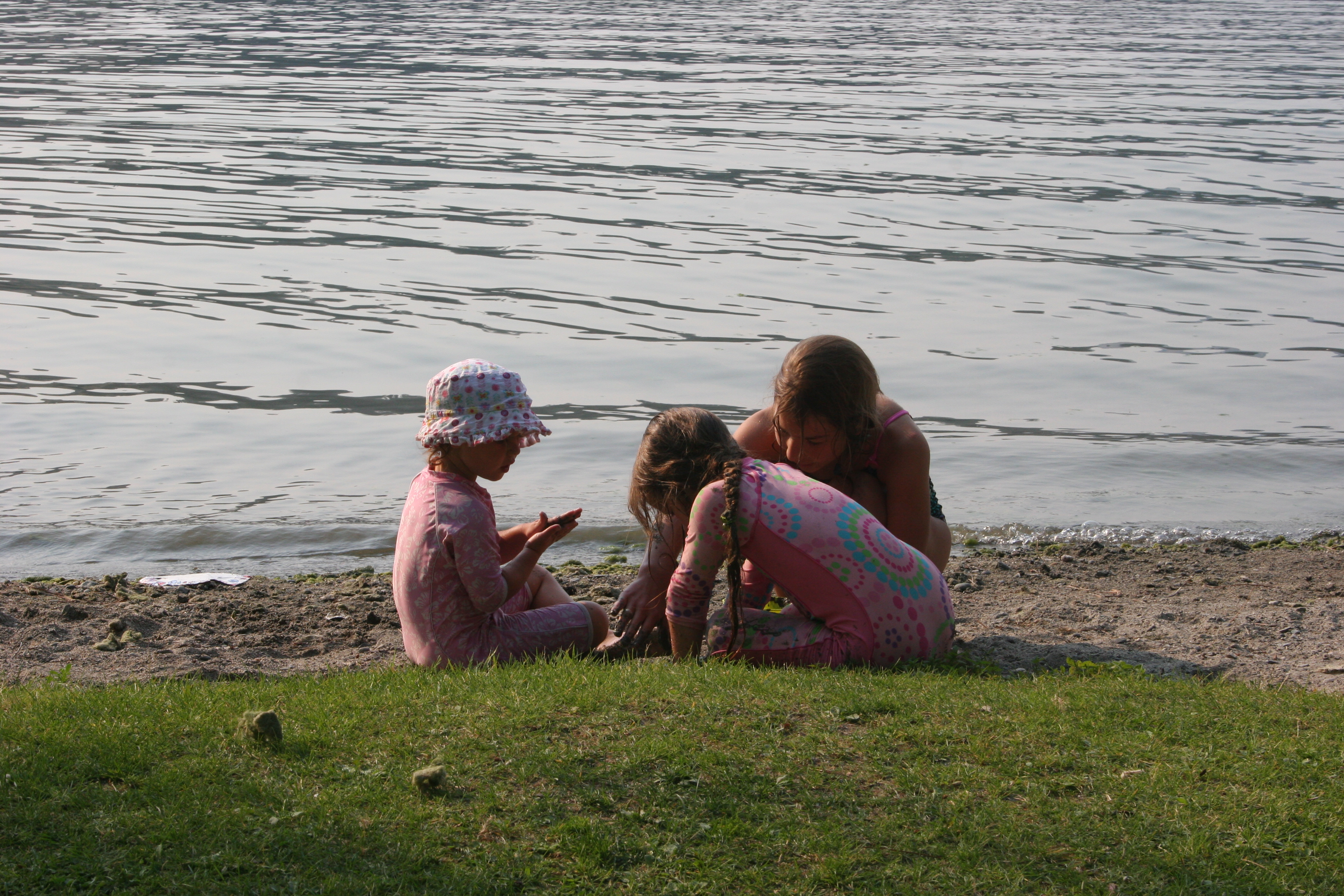
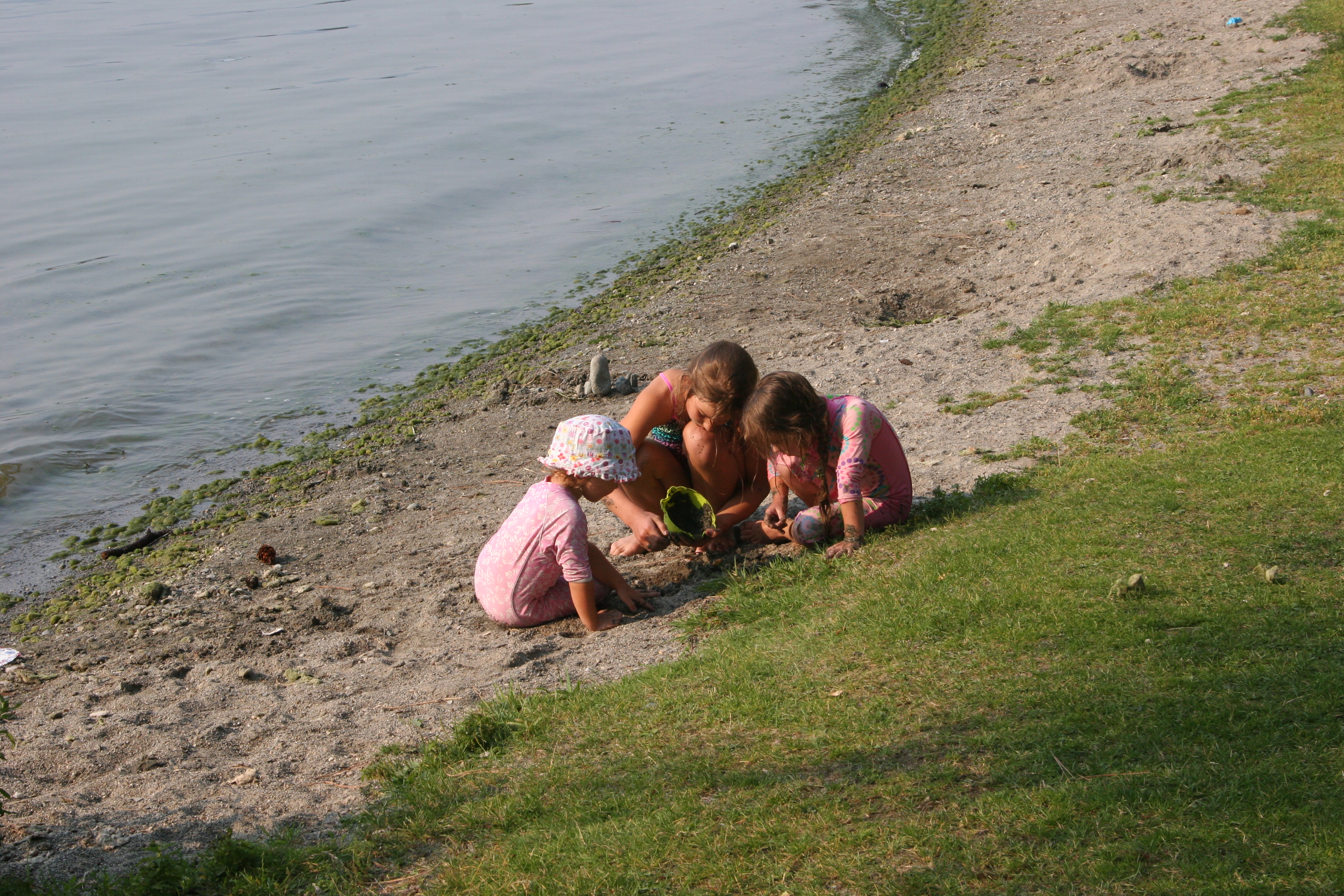
They were eager to go to the beach to swim. I was amazed that we were the only people on the beach.  The ground wasn’t soft like the lake at home but filled with slippery algae.  It didn’t put them off.  They used the algae and stones to create patterns on the ground and then set up their own foot spa, spreading the algae over their feet and washing it off.

curlew lake

The Foot Spa
The Foot Spa
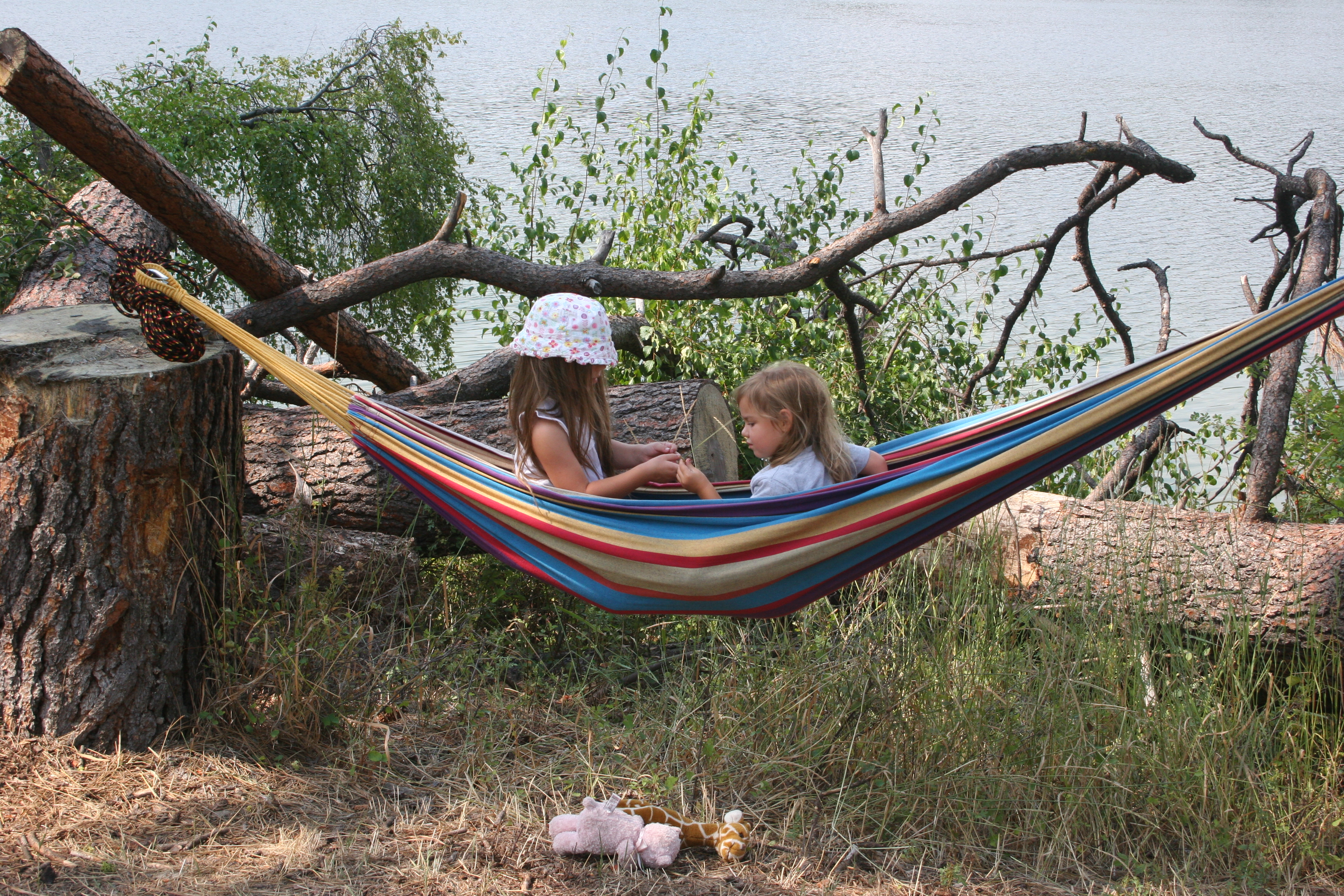
I sat and watched from a distance, joining in when they asked me to. At that moment I knew why this holiday was no longer my biggest nightmare. The children were immersed in the moment, playing, discovering and sharing. In the distance, my husband was on the lake in the canoe and I was here in a rare moment of quiet. This wasn’t one of those family holidays where we rushed to cram in every little experience.   I’m sure that these unhurried moments are the ones they will remember most.

There was a child went forth everyday,
And the first object he look’d upon, that object he became.
And that object became part of him for the day or a certain part of the day, Or for many years or stretching cycles of years.

WaltWhitman

They found magic in the simple things.

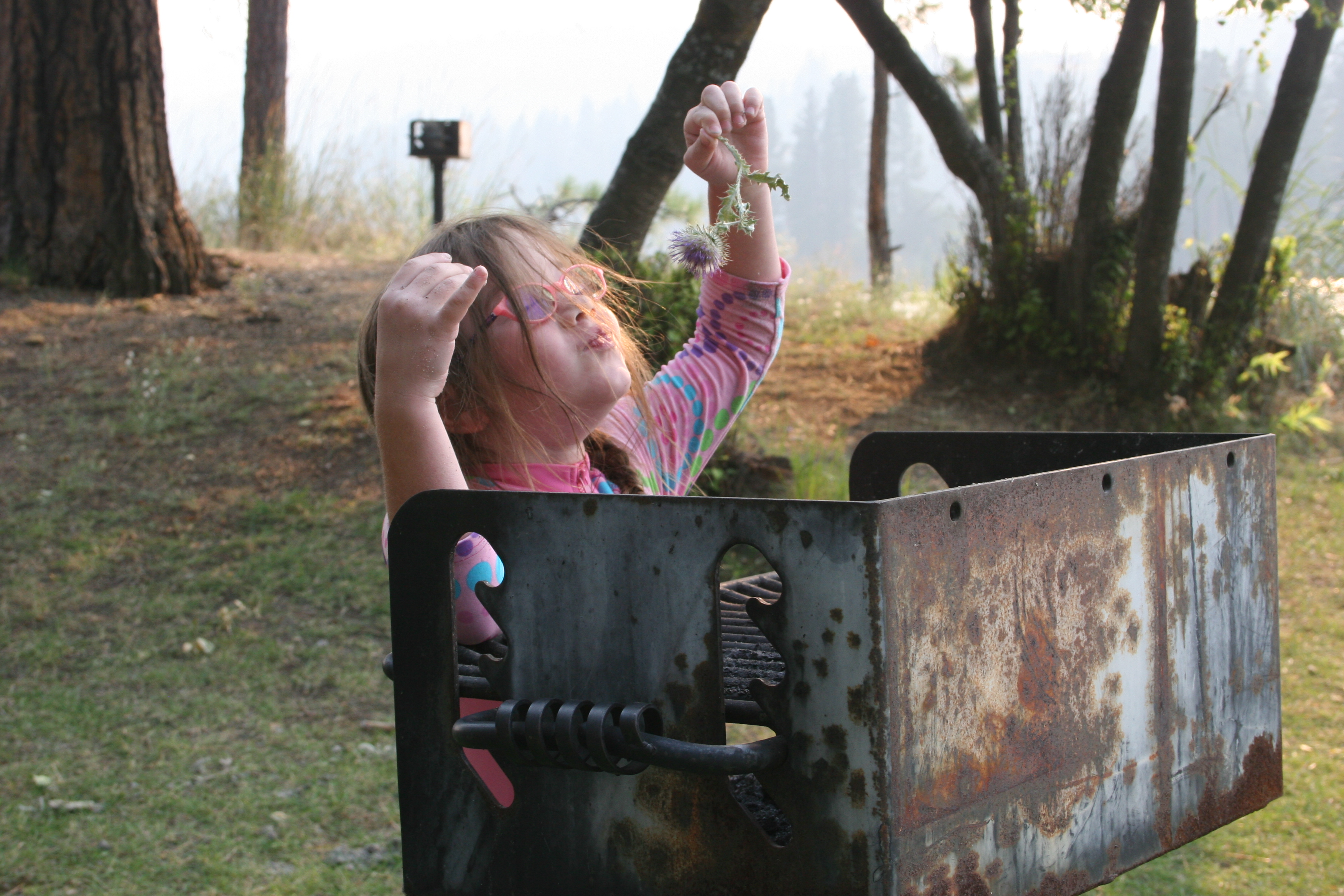
Eeyore's bbq

Look I think Eeyore has been here

Maybe it’s his barbecue?

Really! Do you think so?

musing over a blade of grass

curlew lake
building sculptures
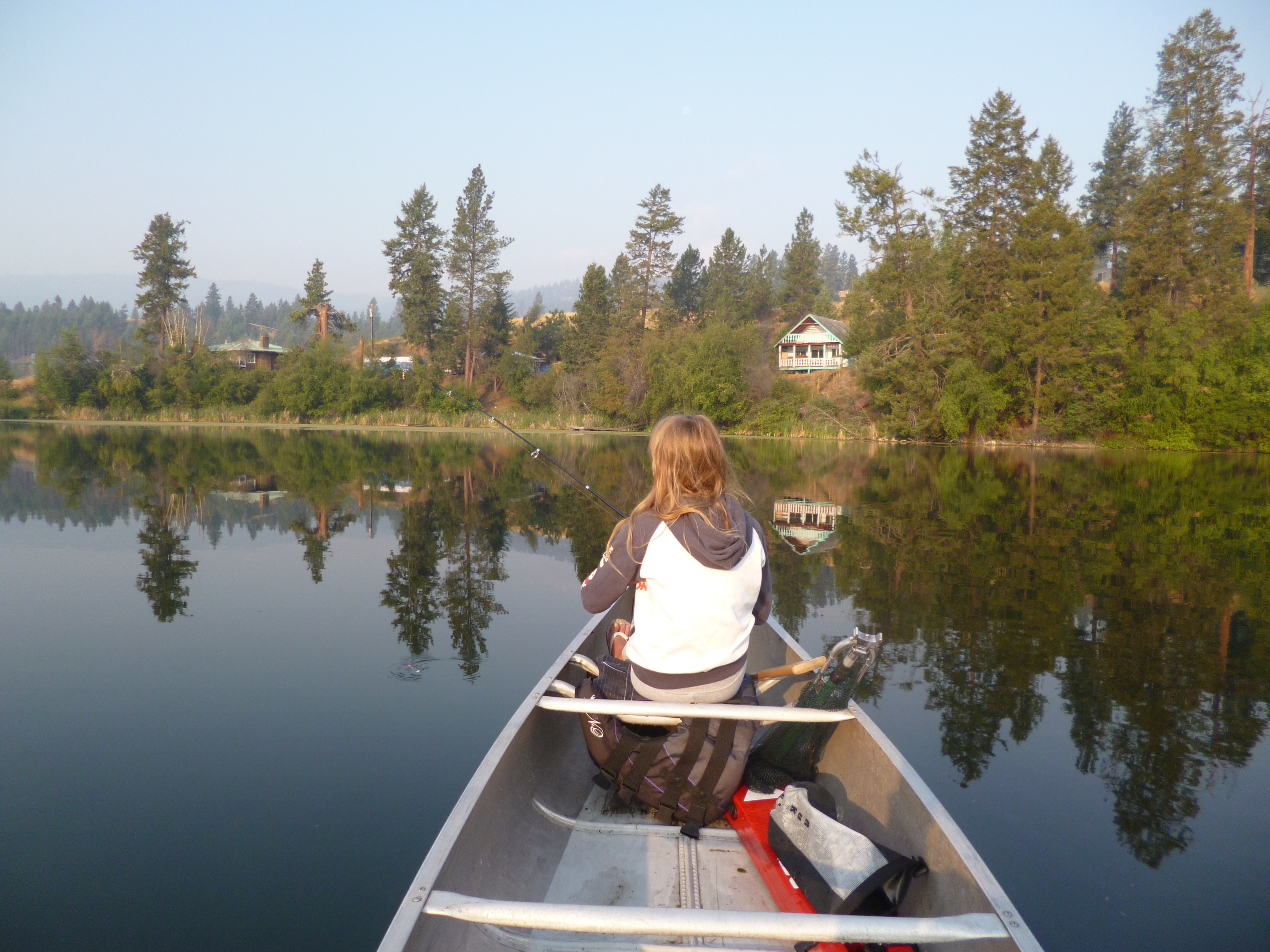
My eldest had big girl time with dad, paddling the canoe at sunrise. Nights weren’t the most restful we had ever had, with five people and a dog in the same tent but there are few things more peaceful than the middle of a lake in the early morning.

canoe on curlew lake

It didn’t take us long to understand the rhythms of nature; the time of day that the deer would wander down the hill to visit,  geese would fly across the lake, fish would start to bite or that darkness would fall.

Sometimes though, nature takes you by surprise.  One night, as we were snuggled in the porch of the tent telling stories, the poles holding the porch open, fell down. As if from nowhere,  the winds whipped up and tugged at the tent. Before we knew it dad and big sister had us zipped up inside while they battled against the wind and dust to secure the tent. I tried to drown out the rangers talk of trees blowing down, by telling the story of  ‘My Favourite Things’  from the ‘Sound of Music’ and singing.  Enraptured, the little ones soon forgot about the storm. They implored me to tell the story of ‘The Sound of Music’- the whole story, all 3 hours of it complete with every song. Thankfully the storm was short, the tent and trees survived and unlike my 11-year old self, I didn’t get the urge to run home.

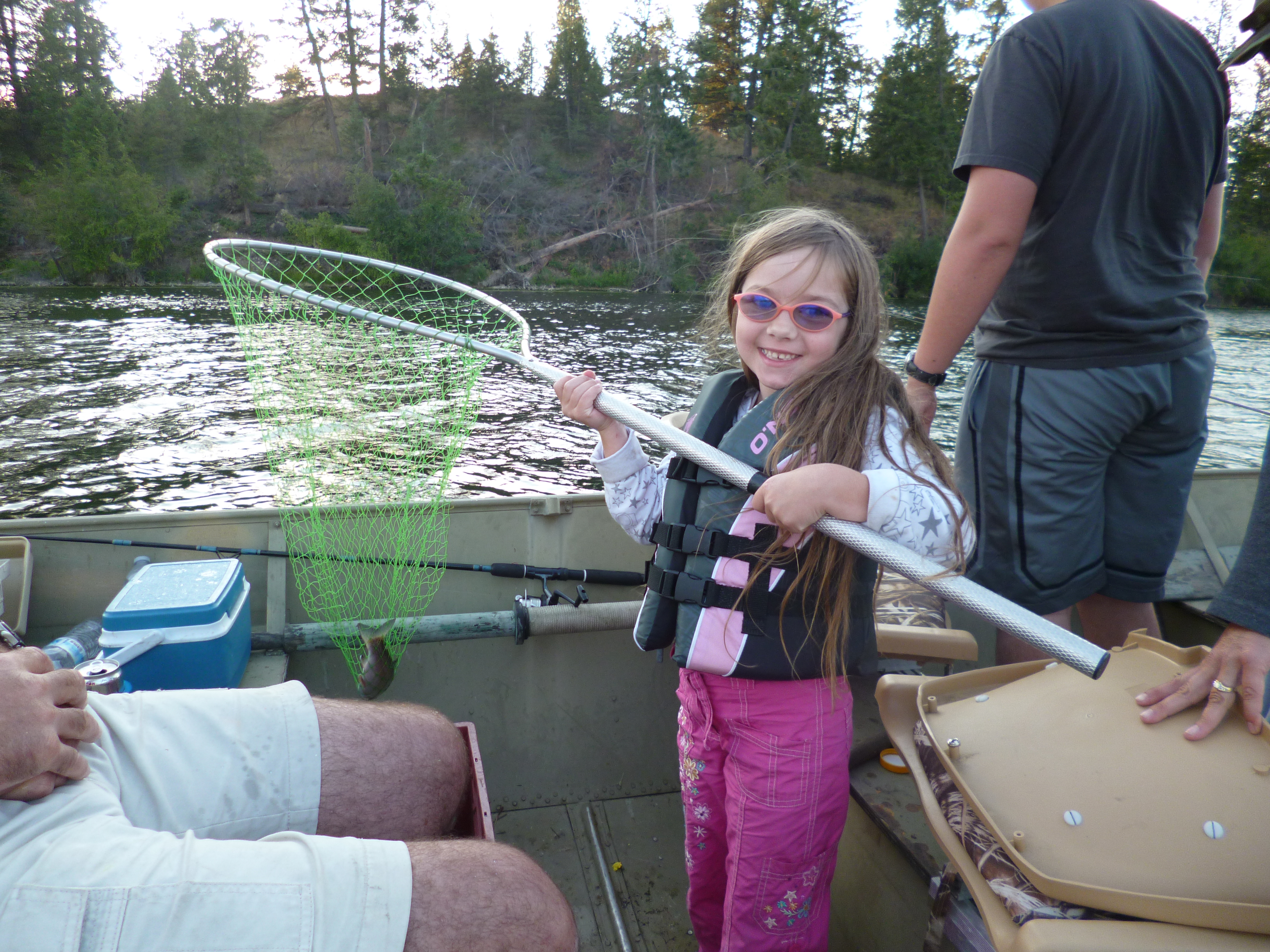
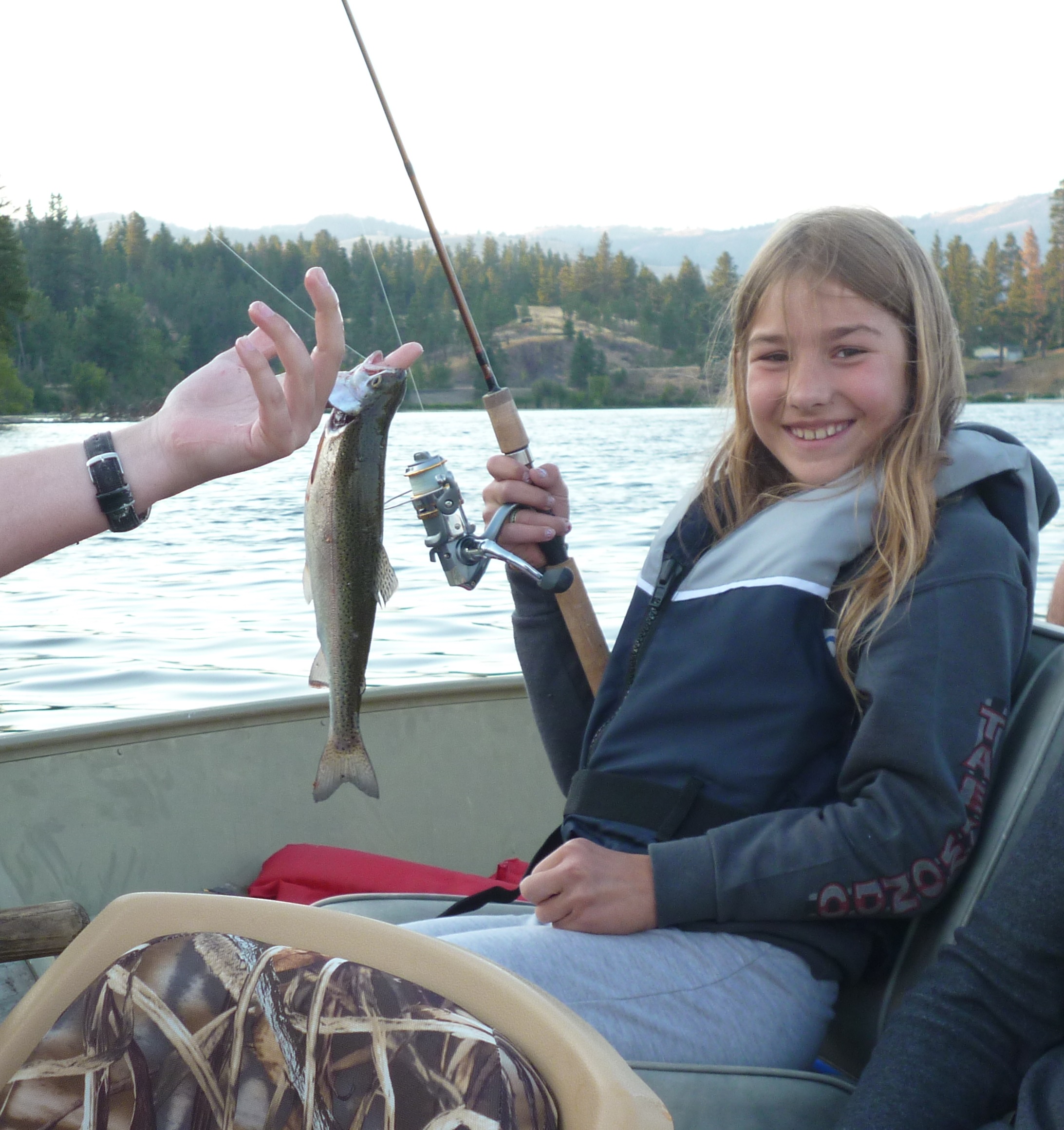
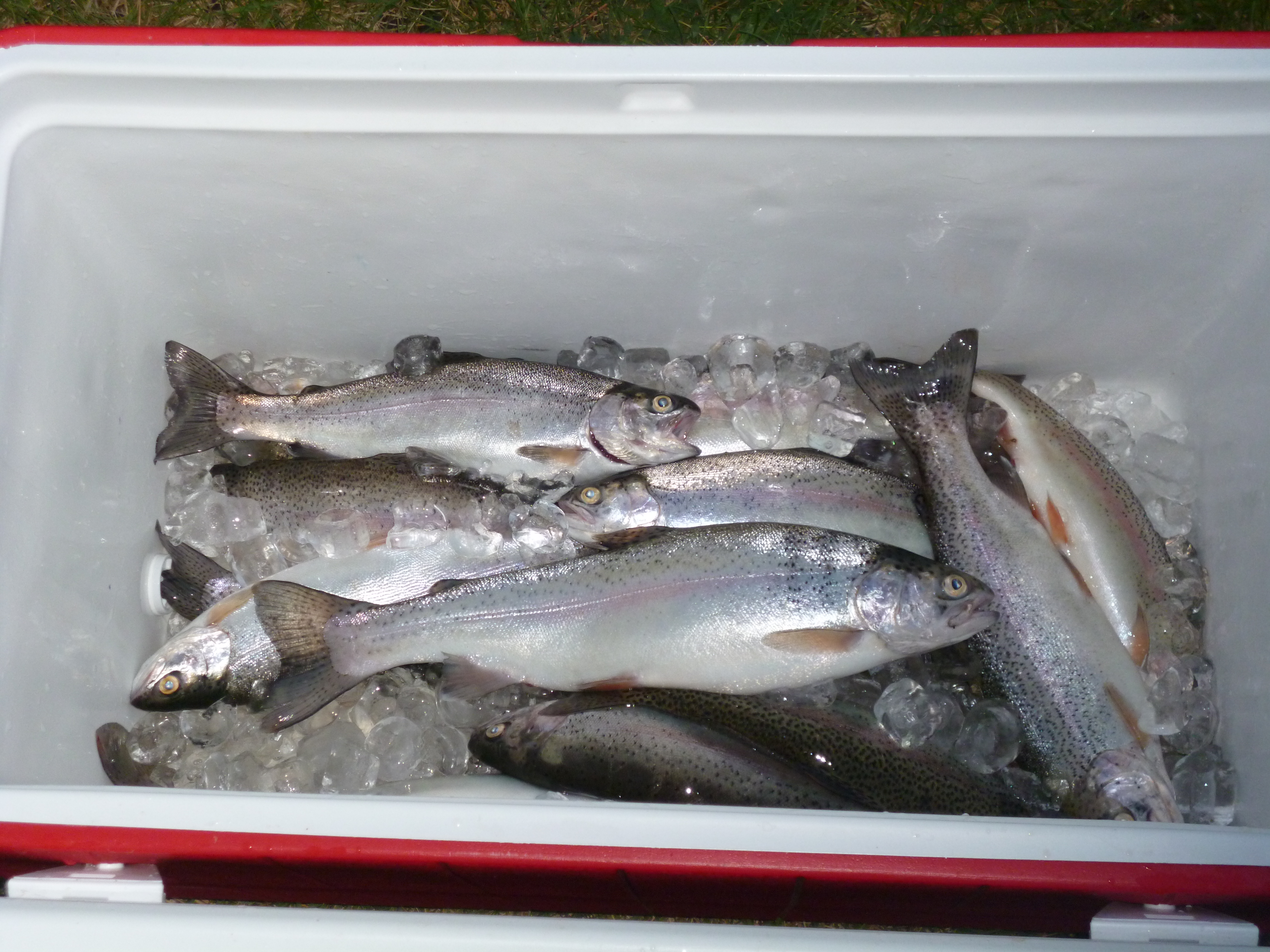
One of the reasons for choosing Curlew Lake was the fishing, so in the early evenings we took the canoe out to explore the lake and try to catch fish.  The girls had only ever caught small fish and were eager to catch one they could eat. Our family trips in the canoe lacked the quiet and patience needed to catch anything of note.  However, on the last day their wish came true. Our neighbouring campers, who visit every year to fish, offered to take us out in their boat and help the girls to catch trout.  The fish came one after the other.

Here we go
Here we go

My first fish
My first fish
Then the fish got bigger

fishing
They were so proud of their catch.
trout

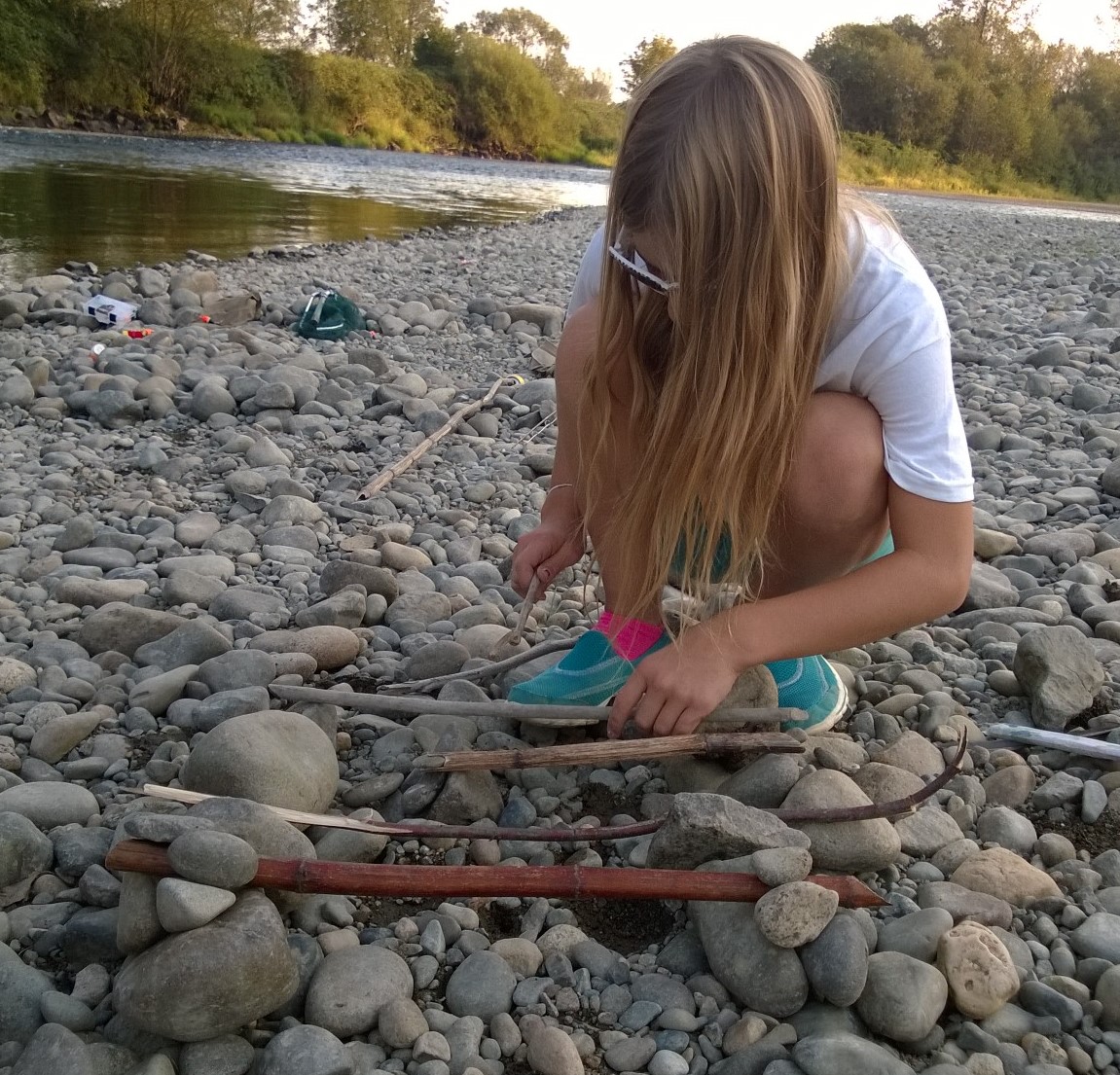
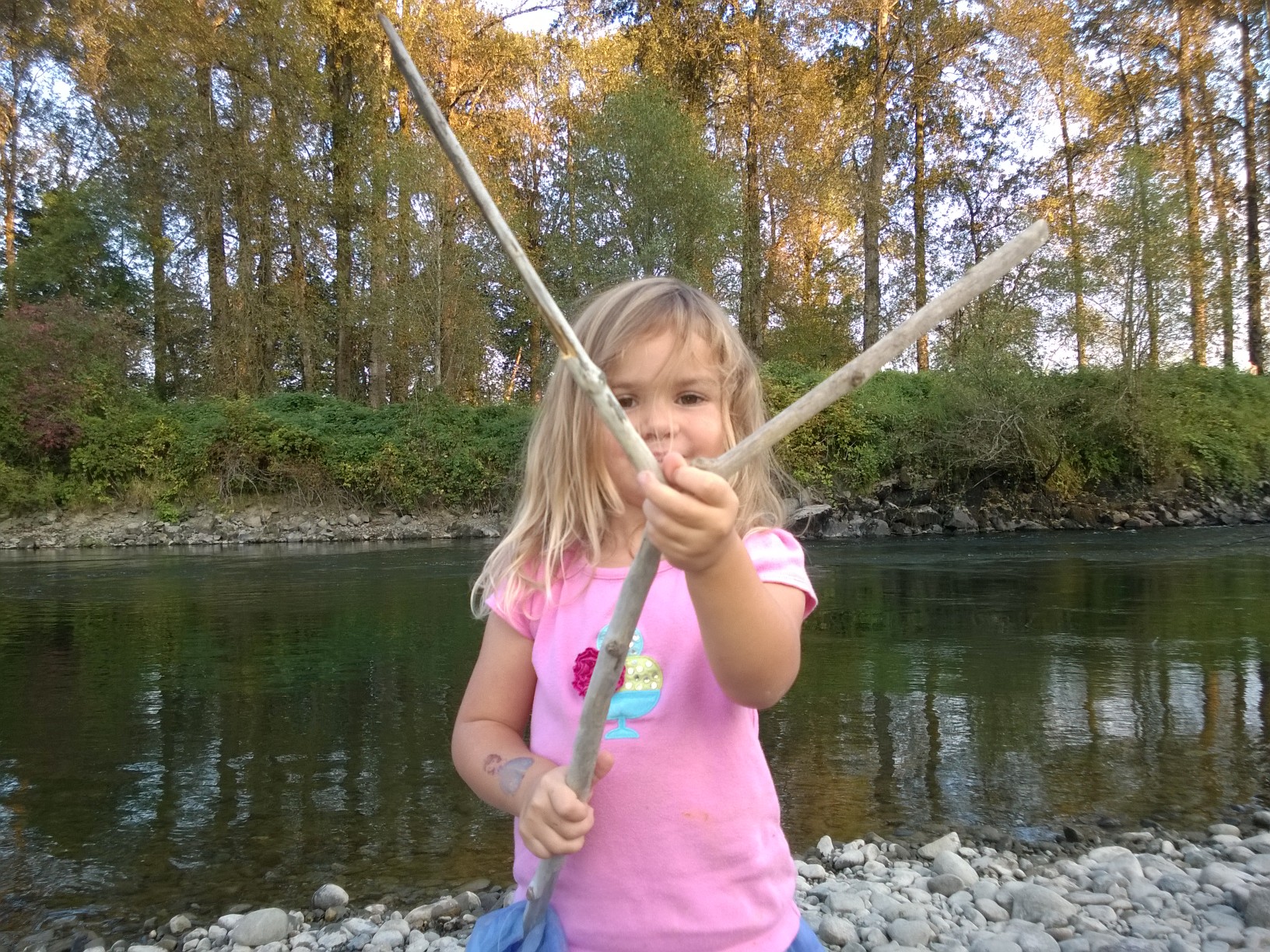
After the holiday, fishing has become a regular pastime. When dad goes out on his own, the girls greet him eagerly to see if he has caught anything we can eat. Other times, we all go to the lake together and mix up fishing with swimming and playing.  On a recent trip, we explored the river bank , a place we probably would never have visited if it weren’t for fishing .  Watching the girls excitement at their discoveries and creating with sticks and stones was magical. We returned home with a pile of sticks and ideas for making things with them.  Moments like this are important for all of us. Resting our minds through daydreaming and play increases productivity and creativity says Daniel Levitin author of ‘The Organized Mind’. Without time for spontaneity, children lack the mental space to come up with new ideas and ways of doing things.

It makes a big splash. Plop!

Drawing with sticks on rocks

building a xylophone

Let's see how many 'Y' sticks we can find.
Let’s see how many ‘Y’ sticks we can find.

Look what it can do.
As I looked out across the river at the jumping fish, the blue skies and the green trees, I could picture an old couple; man fishing, wife painting the landscape or writing in a notebook.  I suppose fishing isn’t so bad after all.  I’m happy to spend many more years waiting for the fish.


Free Resources for Play and Ideas for How to Use Them.

We have recently joined a wonderful group called Buy Nothing. The idea is that people in the local community share, via a Facebook group, the things they no longer need and offer them to others for free.  It is a great way for an outsider like me to feel part of the community. Our group also has a central meeting point, where you can drop off and collect reserved items or look through the other items, to find little gems.  Browsing the things people have offered has inspired lots of new play opportunities.  Here are a few to share. You may be inspired to use some of the things you have stashed away or maybe even set up a Buy Nothing group of your own.


The Flower Shop

We were given a huge amount of fabric flowers from a member. I  had often considered  setting  up a play flower shop at nursery but the flowers were so expensive and we needed a large quantity.  I was very excited to finally have the chance to try it out. The girls have been making flower arrangements, taking telephone and internet orders and delivering the flowers in a little car.  After posting  photographs of the shop on the group page, we have been gifted even more flowers; such is the beauty of a community like this.

The girls have loved this so much and it looks really beautiful in the garden.  They asked if there was such a thing as a real flower shop; so that’s next on the agenda.

Baby Bath – Water Beads and a Nail Salon

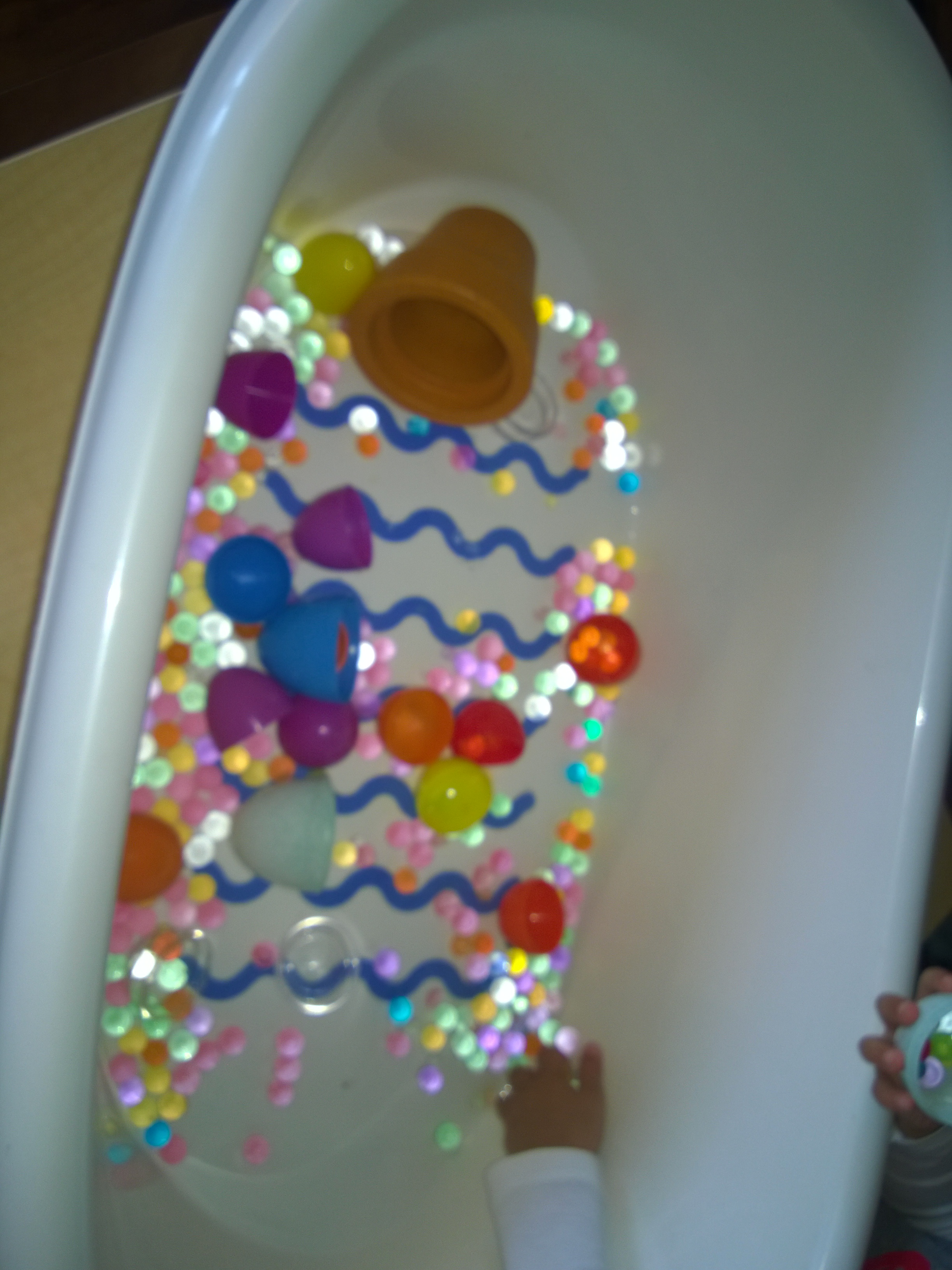
There was a poor, lonely baby bath, crying out for attention on one of our recent visits.  A few water beads and hollow eggs later and we had an activity for my toddler class.

water beads

The girls had more great ideas when I brought it home. The water beads in the bath made a perfect foot spa for a nail salon.

foot spa

Squeezy Bottles for Puffy Paint

Someone was giving away squeezy bottles, they were perfect for  puffy paint.

puffy paint

My eldest was very impressed

Wow! What is this?

she remarked, when she spotted the dry pictures.

Mirror Play

I saw an image of a beautiful mirrored table recently, so when someone offered mirrors, I thought we could recreate something similar.


I am so lucky to be able to provide my children with these opportunities due to the generosity of others. Inspired? Why not create a Buy Nothing group in your locality?


How to Be a Playful Family

As a finalist in America’s Most Playful Family contest our task was to create a 90 second video showing tips that will help families become more playful. With so much to say about what we do and why play is important to us, this was a real challenge but here is the finished product.

For further detail about the activities and ideas featured in the video, follow the links below:-
Play Don’t Throw Away

Mud Kitchens –Why Playing in the Mud is Good for You

Music Garden – How to Build a Music Garden

Heuristic Play – Now Playing

Loose parts – When they Would Rather Play with Sticks and Stones

Playing With Household Objects

Water painting – Painting with Water

Playing Without Toys – Do Children Need Toys?

Outdoor Events – How to Stage a Garden Olympics    How to Stage a Winter Olympics

Playing in nature

Snow Day

Spring

Frost and Ice

Connecting with Nature

 Woodland activities

In the Rain

In the Dark

When Life is Busy

Literacy Games in the Car

Passing Down Traditions
Playground Games

 Party Games


Water Play in the Rain

Once children are helped to perceive themselves as authors or inventors, once they are helped to discover the pleasure of enquiry, their motivation and interest explode.  – Loris Malaguzzi.

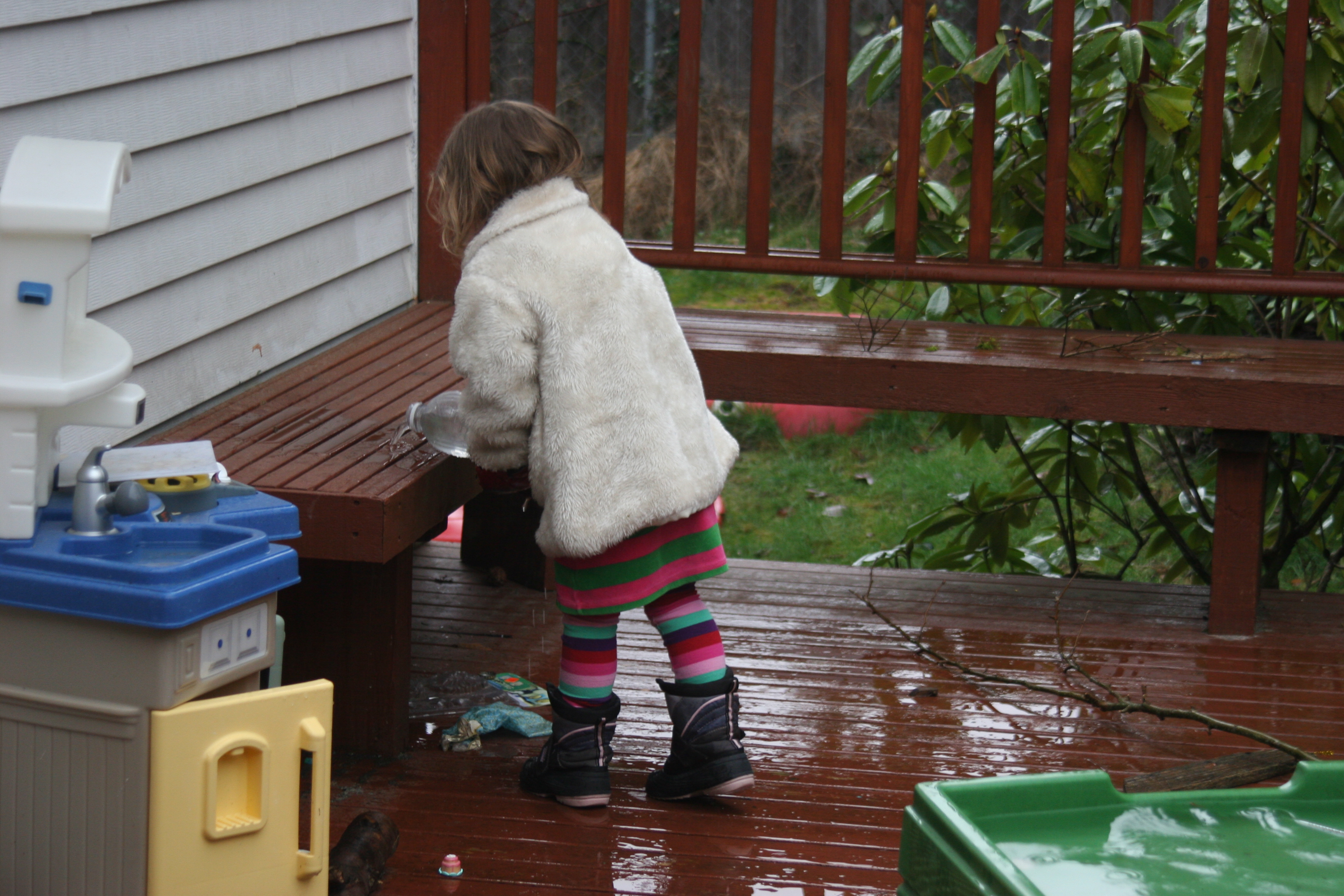
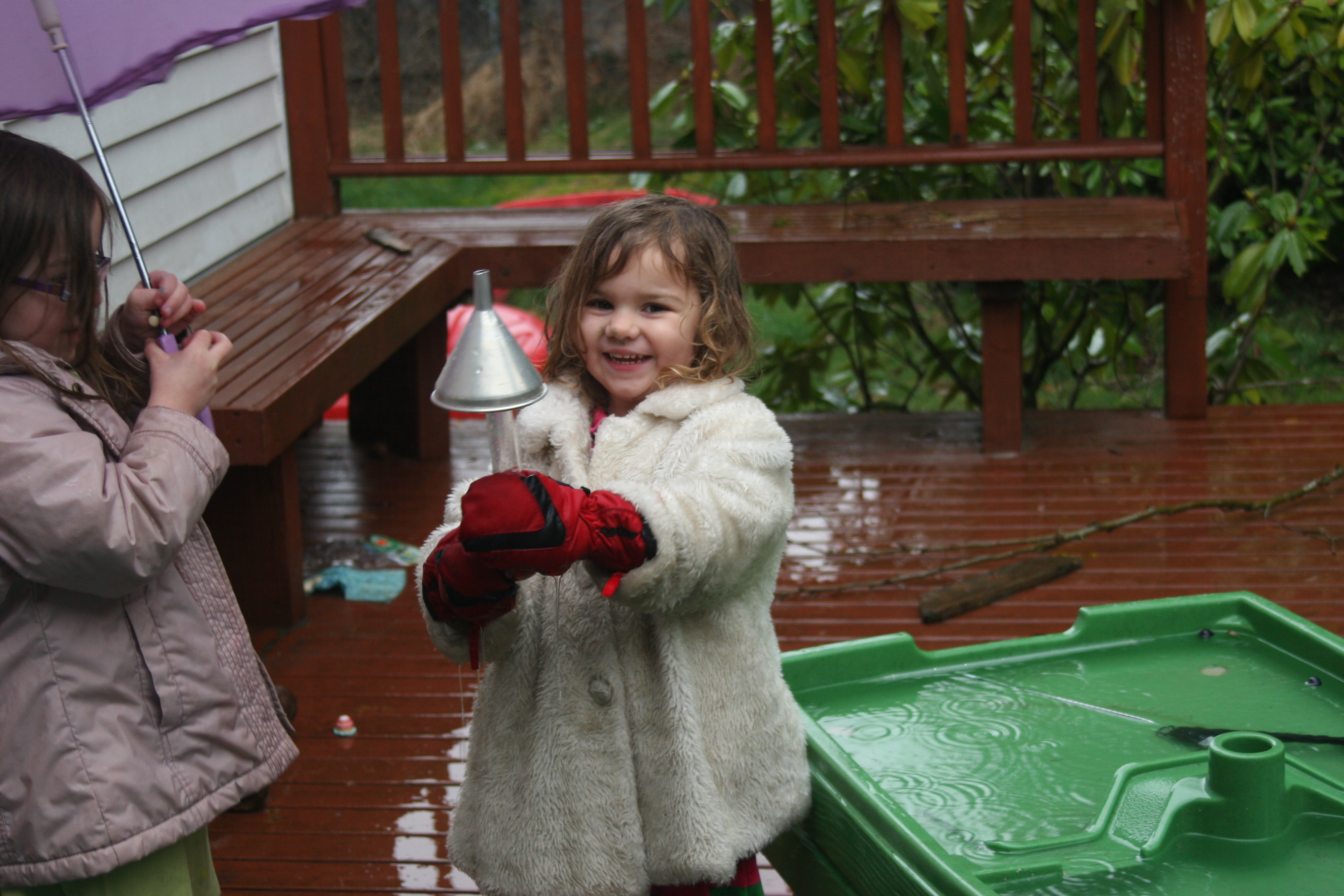
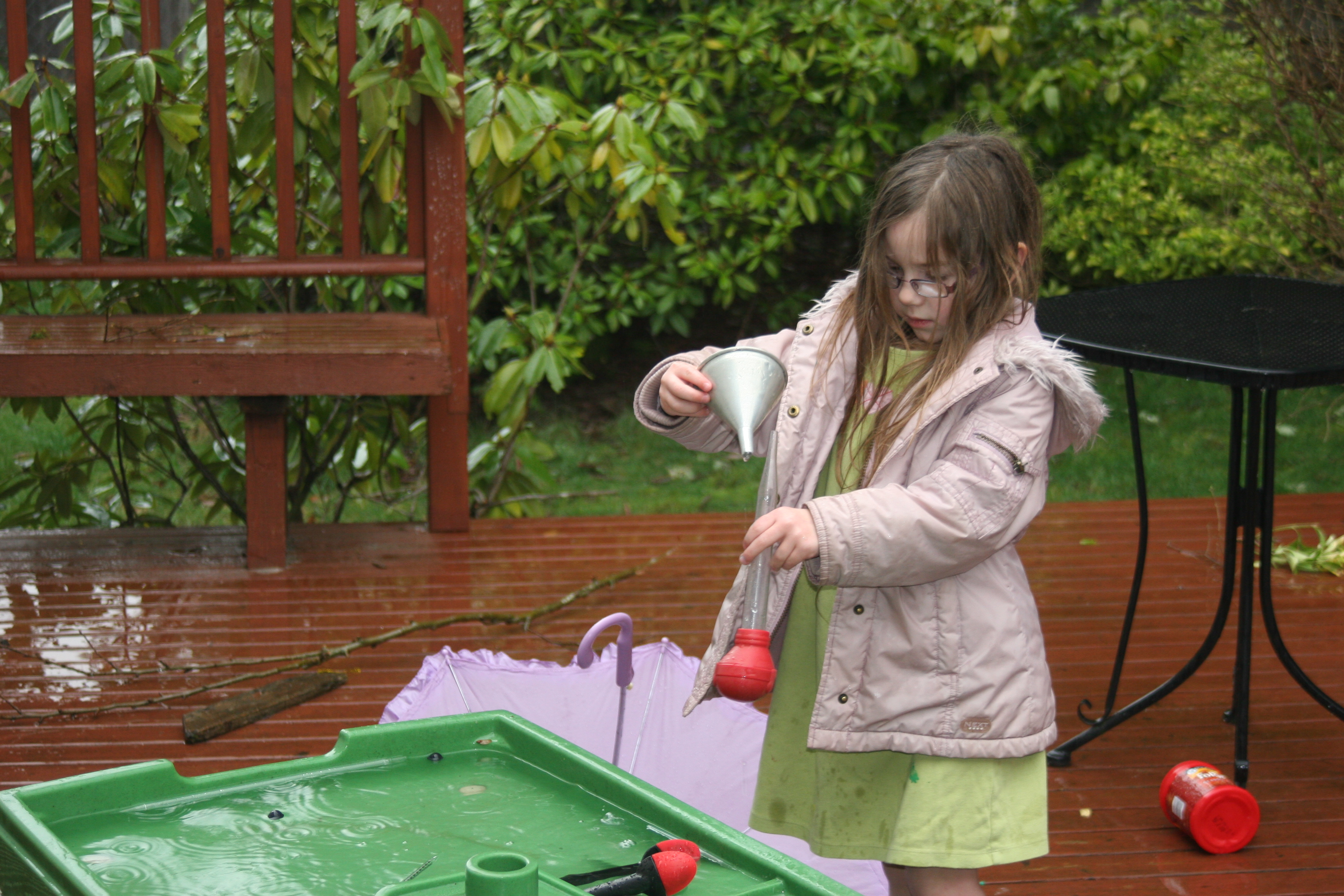
We’ve had a few rainy days so I decided to leave the lid off the water table to catch the rain.  We’ve had so much rain that it was nearly overflowing.  My girls looked out at the rain and decided to play in the water.  They know from experience that rain water is very cold so my youngest put on her waterproof gloves so that she could tolerate the cold water for longer.

I gave her a bottle and a funnel to add to the other materials.  I have recently noted her eagerness to transport things from one place to another and predicted she would probably use the bottle to empty the water from the table.  True to form she filled the bottle, carried it to the bench and poured the water through the slats before returning for more.

water play

Her sister is less eager to play outside but loves umbrellas so when I suggested she take her umbrella outside, she was out like a shot. Of course her sister needed her umbrella too.

I want to make an invention

What kind of invention?

Like we made before for serving drinks.

Last summer the girls had inserted a straw into a hole in a milk carton and made a drink dispenser. They worked out how to turn the tap off and where to place the tap so that they could drain the container of all the water.

What do you need?

A cup – this will be good (finding a coffee container)  a tube or something and some small cups.

I found a piece of plastic tubing and plastic wine glasses.

I need another pipe. One to blow into and the other one for the water to come out of.

I gave her another piece of tubing that her sister had been using to make a contraption the previous day.

It’s not working mummy, when I blow nothing happens.

Are there any bubbles coming when you blow.

No

The air isn’t getting through the pipe.

We put the container onto the floor so that she could keep the pipe straight without any kinks and still reach to blow into it.

I have to be honest I didn’t expect it to work but look what happened.

You have to blow so, so hard to make it work that it hurts your mouth, but that’s okay.

Meanwhile her sister was trying to catch floating objects with the tongs.

More fun

IMG_1701

IMG_1700

More play activities for a rainy day

Ideas for Learning Environments Inspired by Children’s Museum of Tacoma

I’d never heard of a Children’s Museum before I moved here but as I entered the door I was greeted by a little bit of play heaven. I think I was more excited than the girls.  My 9 -year-old remarked

It’s not really a museum is it?

True not in the traditional sense.

According to Wikipedia, Children’s museums are institutions that provide exhibits and programs to stimulate informal learning experiences for children. In contrast with traditional museums that typically have a hands-off policy regarding exhibits, children’s museums feature interactive exhibits that are designed to be manipulated by children. The theory behind such exhibits is that activity can be as educational as instruction, especially in early childhood.

In essence it’s like walking into a really well- resourced nursery or pre-school.  I loved that many of the exhibits used simple, cheap materials that could be replicated at home, like a blackboard with a pot of water and brushes.  I particularly like these; they would be a great addition to a child’s bedroom wall, garden fence or in a toddler room at nursery.

The water area was a huge hit with my youngest. My favourite was a water bath with a transparent window so that you could see what was happening under water.

This slideshow requires JavaScript.


Behind the glass is an area for art based activities – musical instruments, painting, movement with ribbon sticks and scarves and drawing.   The metallic walls made it so easy to dry and display pictures. What a great idea for a messy play room.

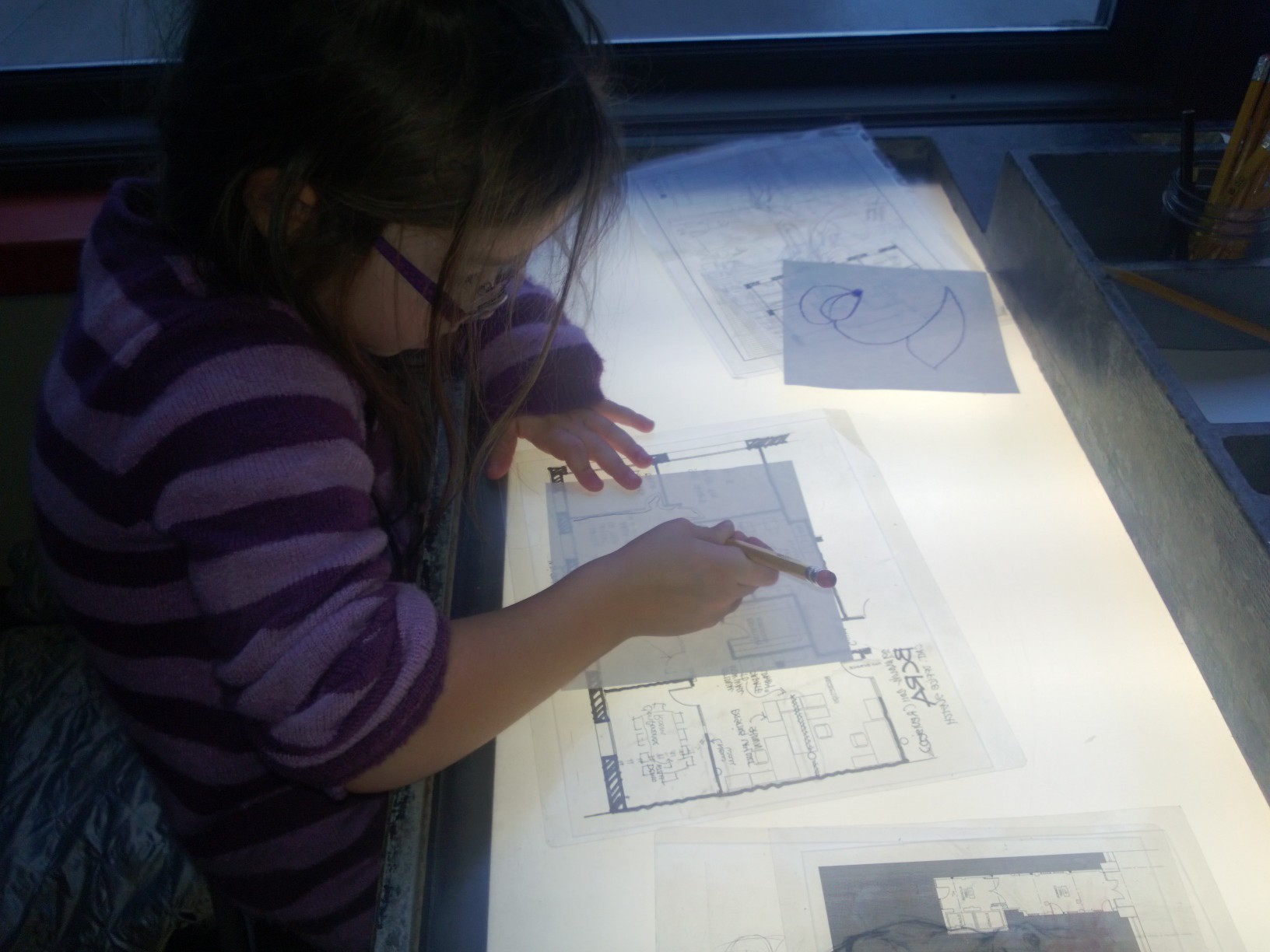
There were 2 light tables in the space with very different activities, the girls chose to trace and draw.

light table with maps and plans

My eldest loved  den building best of all.  The smaller structures were not very stable so she negotiated with the other children in the space to create a big den together.

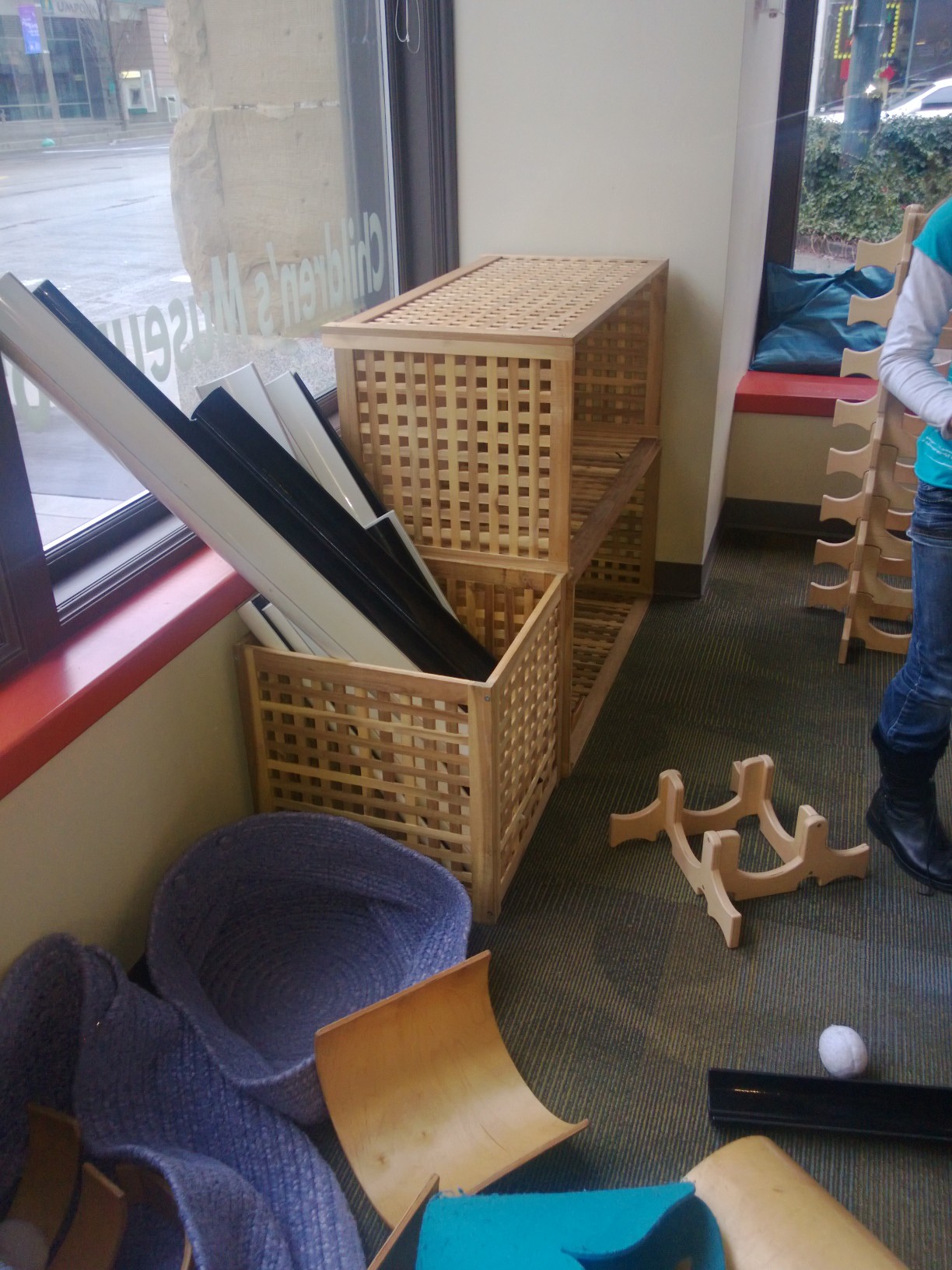
More building – drainpipes and gutters

drainpipes and gutters

I’m so glad we discovered Children’s Museums and I’m looking forward to visiting the others in the area and sharing more ideas.